
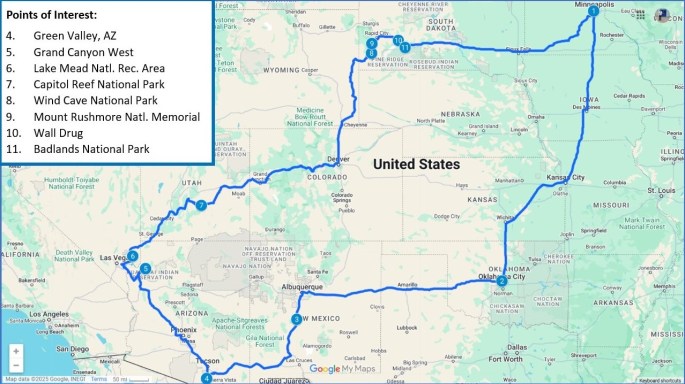
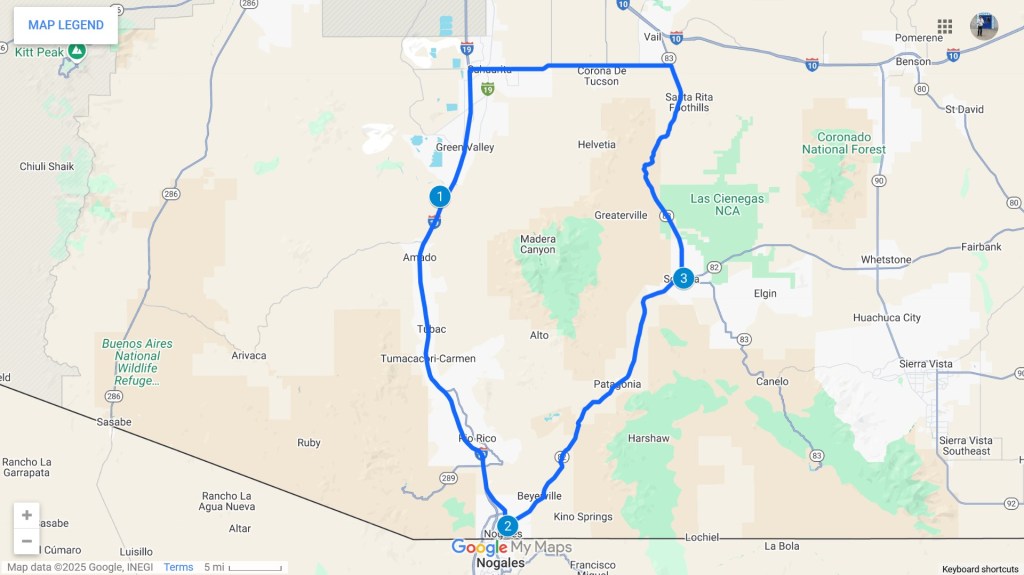
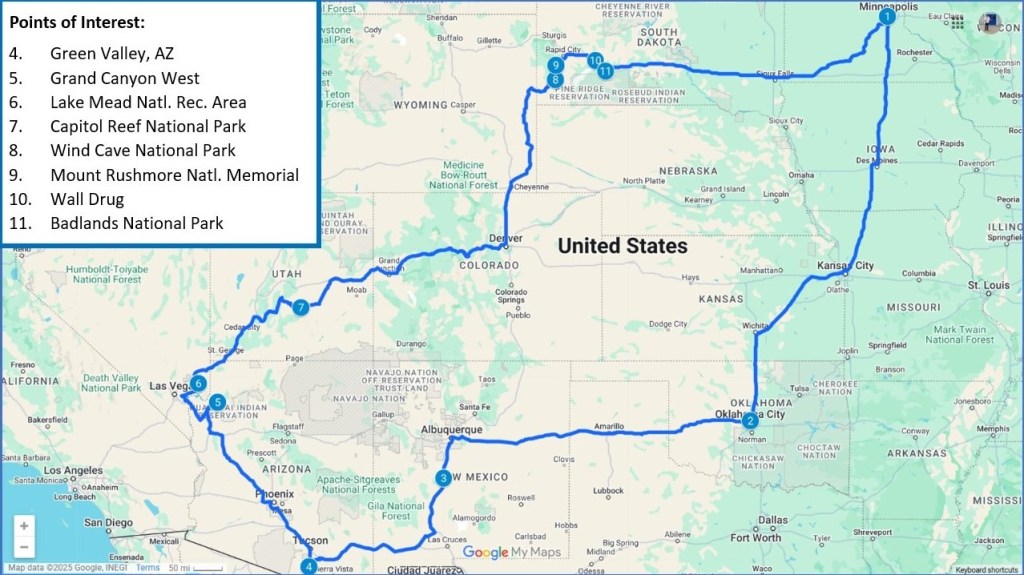
Part 2 of this travel blog series described the places of interest we saw in and around Green Valley, AZ. This final installment describes the fun stuff we did as we drove back home to Minneapolis. As a reminder, here is a map of the overall journey, including the main points of interest covered in this installment:
Grand Canyon West: We departed from the Canoa Ranch Golf Resort at 8:30 AM on Friday, March 28, heading northwest toward Kingman, AZ, where we stayed the night. On Saturday morning, we drove north toward Grand Canyon West, the recreation area owned and operated by the Hualapai native American tribe and best known for the Skywalk, which is billed as “a horseshoe-shaped bridge made of glass allowing visitors to walk 4,000 ft above the canyon floor.” (More about that language later.)
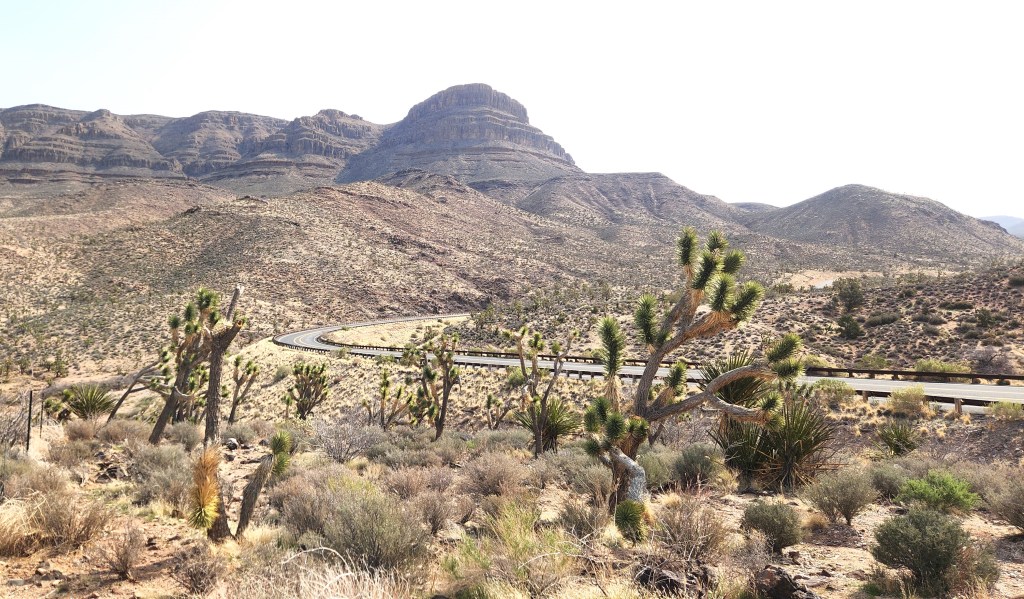
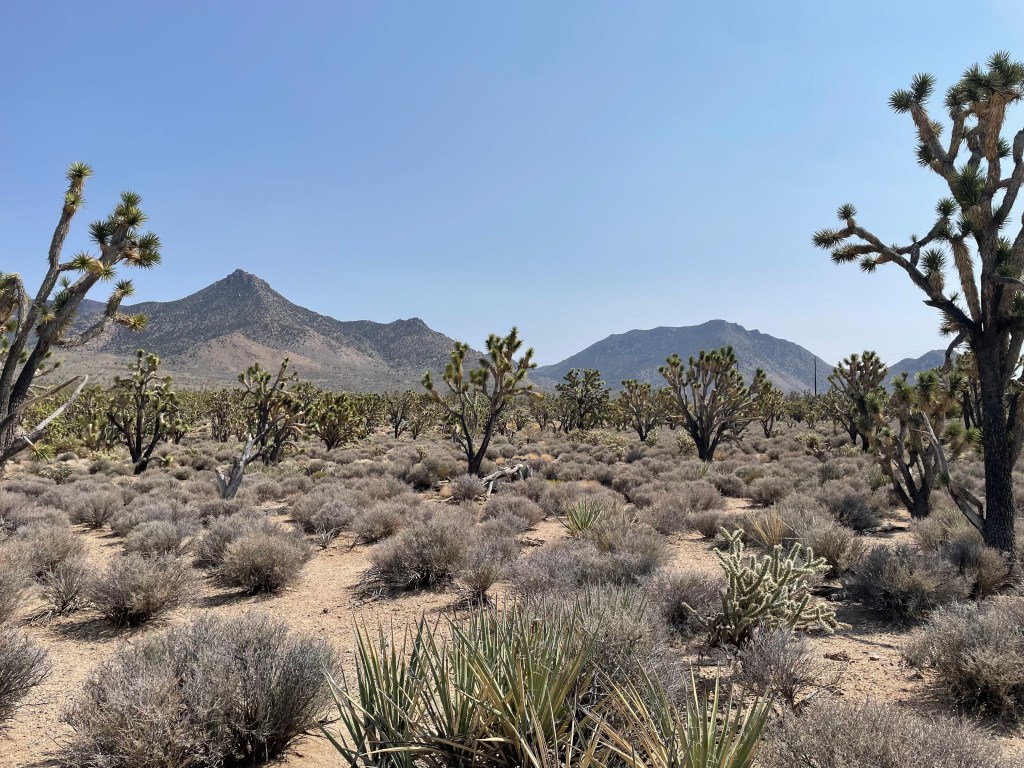
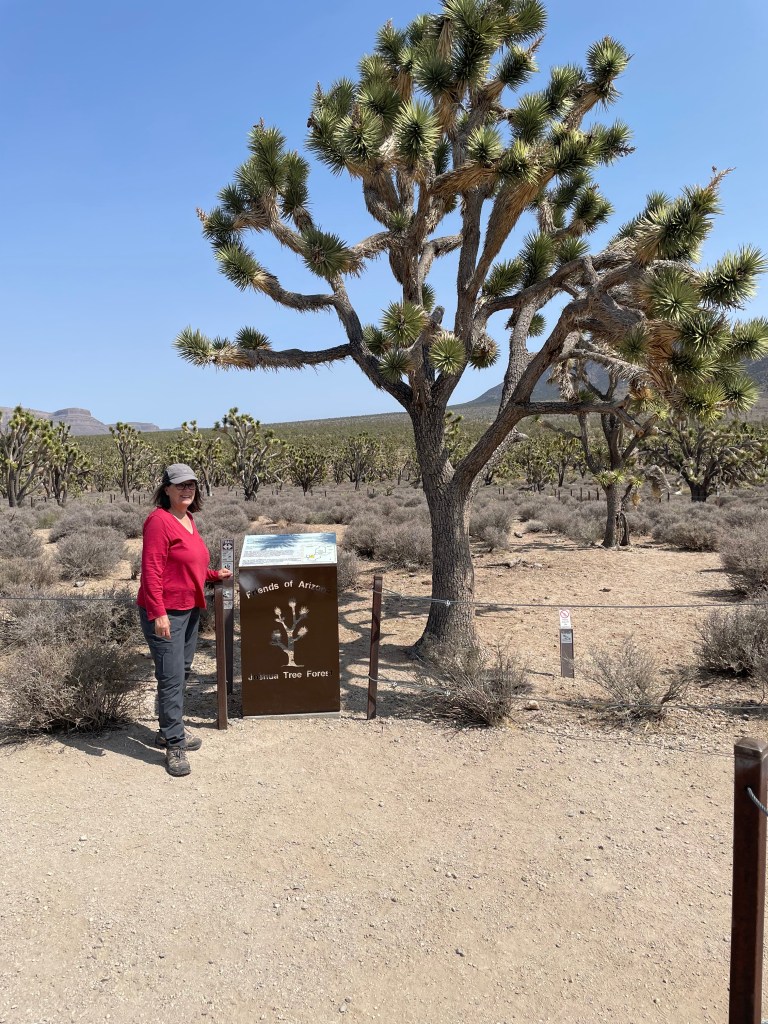
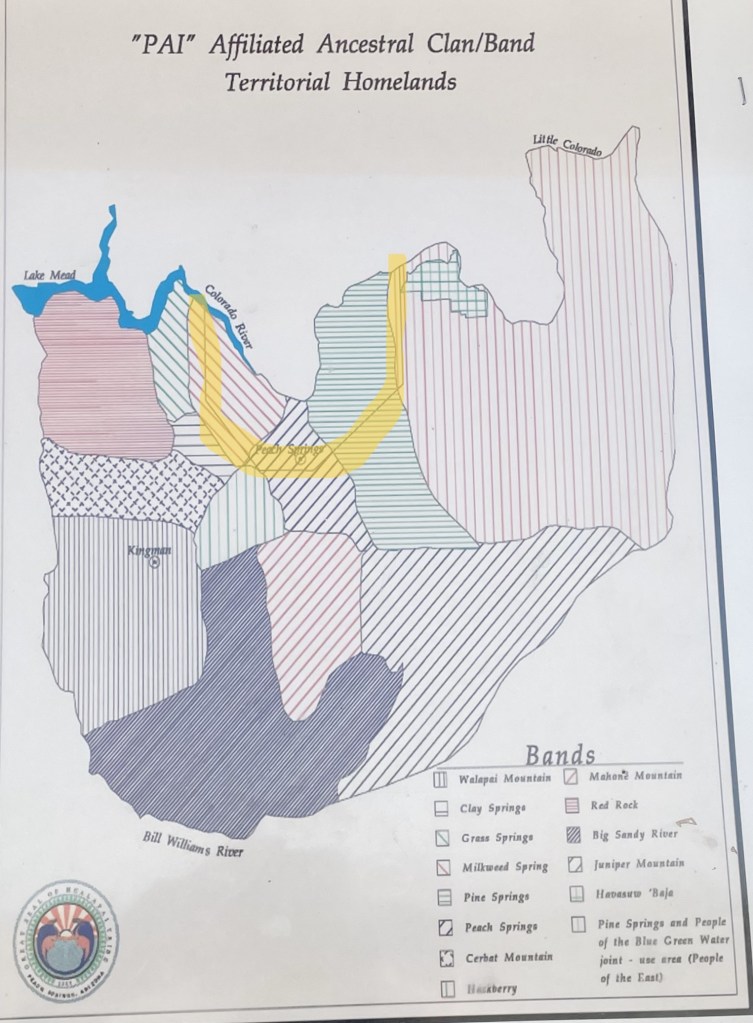
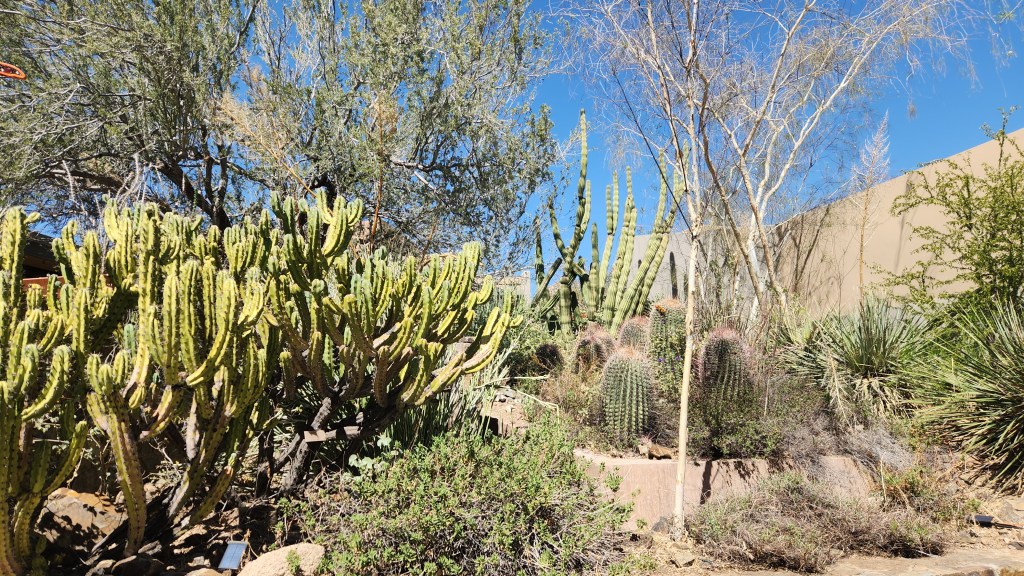
After driving for some 40 or 50 miles through dry scrubland which seemed to be used almost exclusively for cattle grazing, we were quite surprised to find ourselves driving past Joshua trees, then what appeared to be thriving orchards growing nut trees of some sort, perhaps walnuts. As we continued in a northeasterly direction toward Grand Canyon West, the Joshua trees became more and more abundant, until they completely dominated the landscape. Road signage informed us that we were in the Arizona Joshua Tree Forest, which seemed to me to have many more Joshua trees than the more well-known Joshua Tree National Park located 230 miles to the southwest in California. We stopped at a nice little nature preserve where we admired the trees and other desert flora and also learned something about the Hualapai tribe.
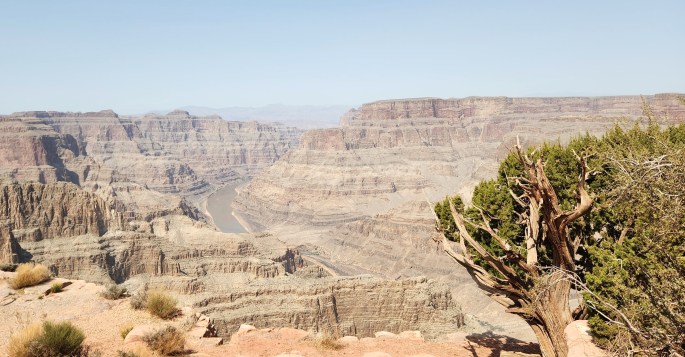
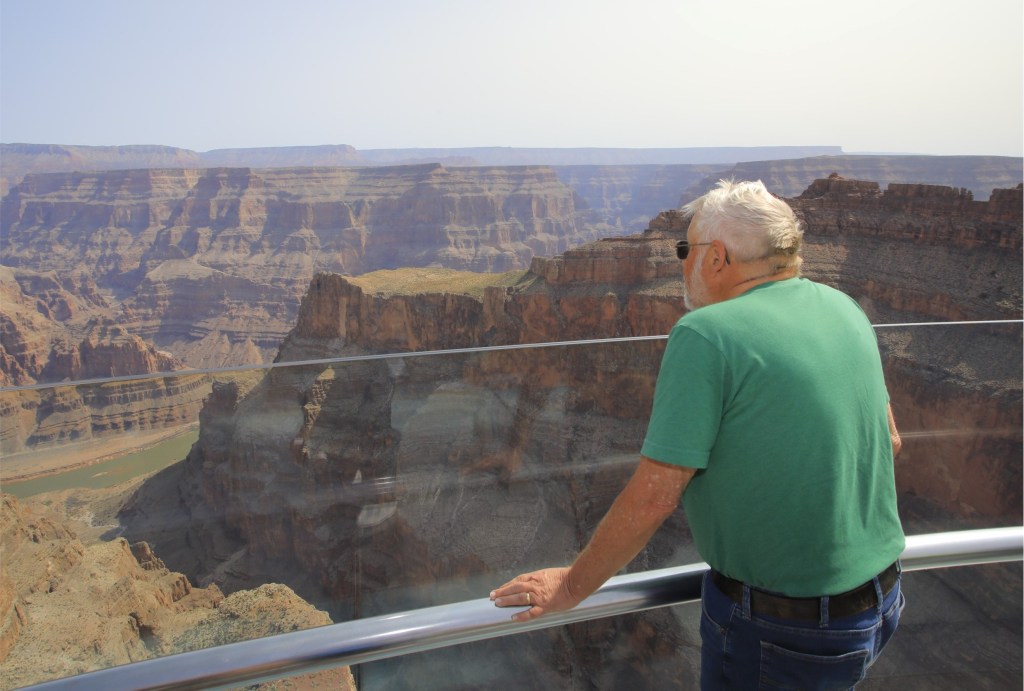
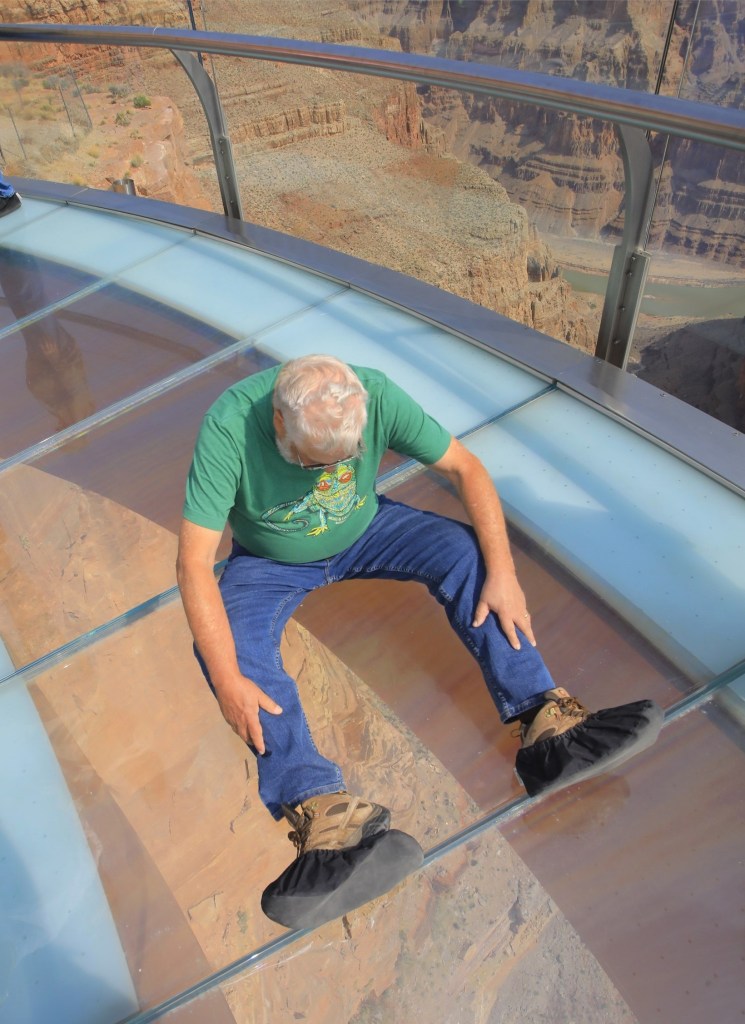
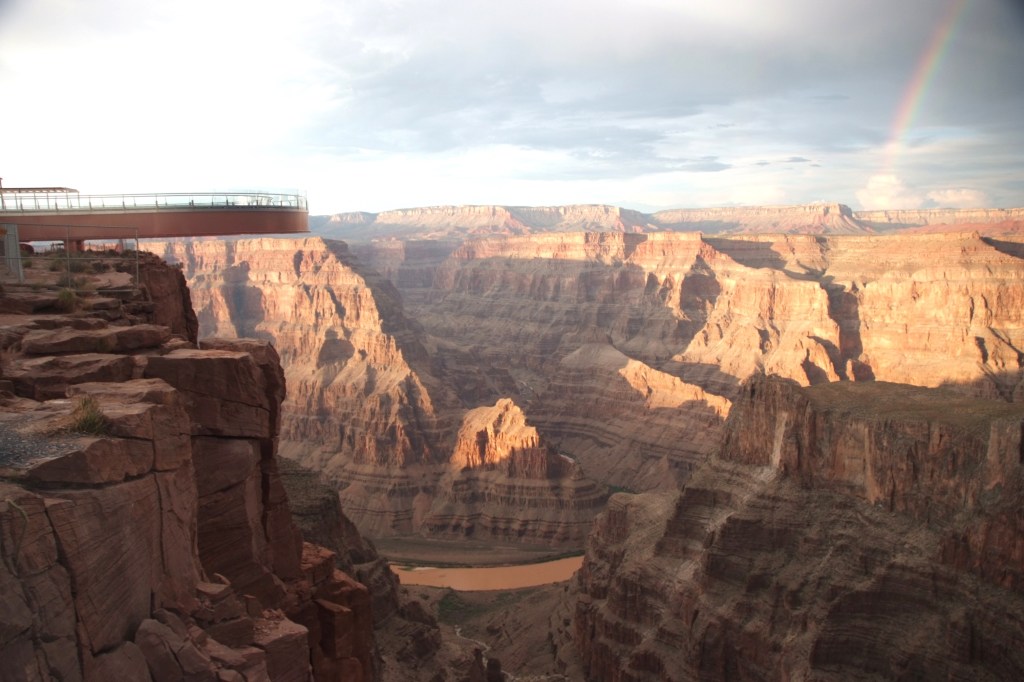
We arrived at Grand Canyon West at about 12:30 to find the huge parking lot something like 10% occupied by vehicles. We strolled over to the Visitor Center, where the electronic tickets I’d purchased the day before were scanned and we boarded a bus to take us a few miles north to Eagle Point, the first of two stops near the canyon rim. Its name derives from the huge natural rock formation resembling an eagle with outspread wings. Once there, I scanned my ticket to enter the famous Skywalk, while Pat wandered around nearby – she was too much of a chicken to go on the Skywalk.
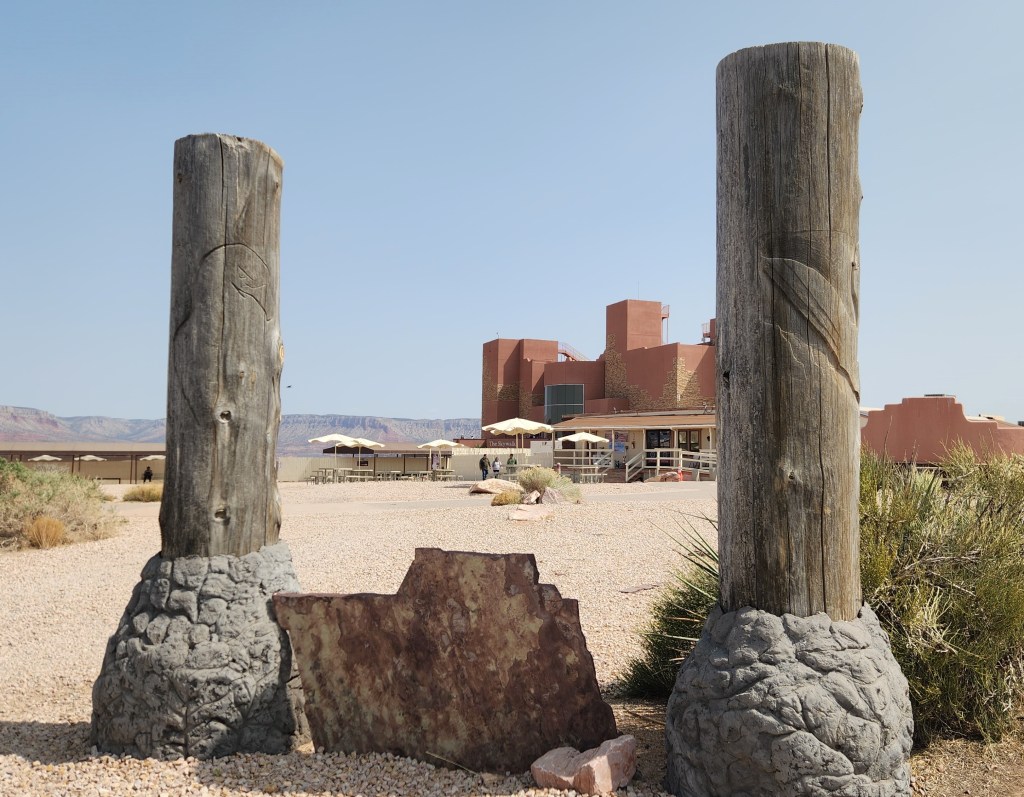
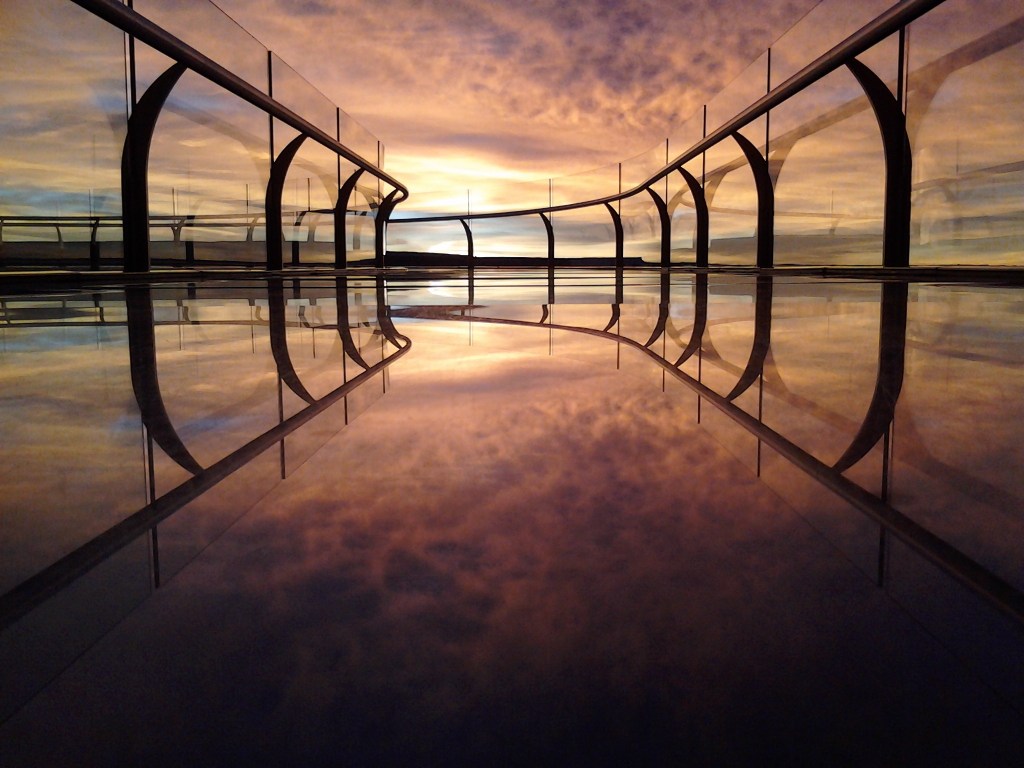
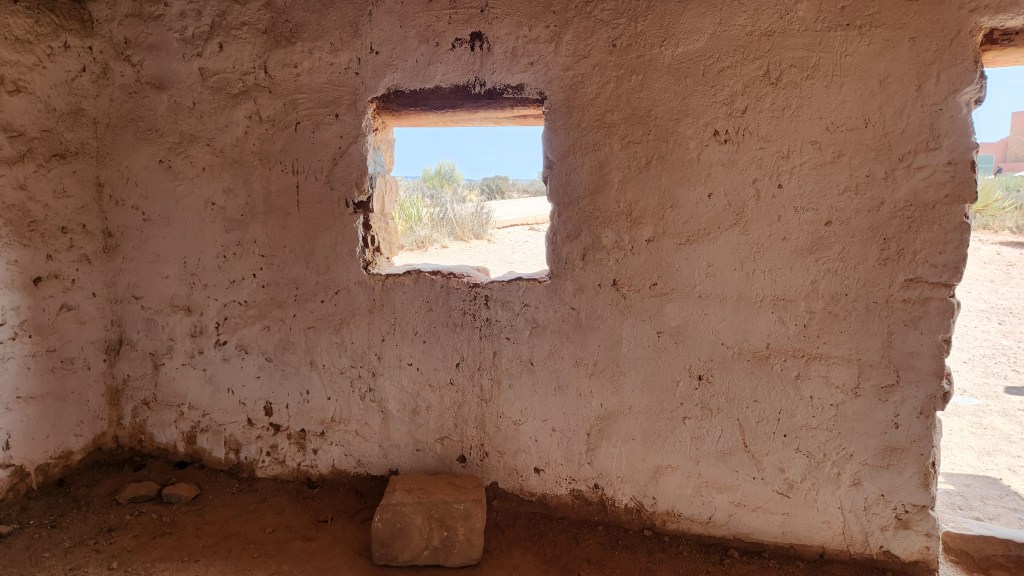
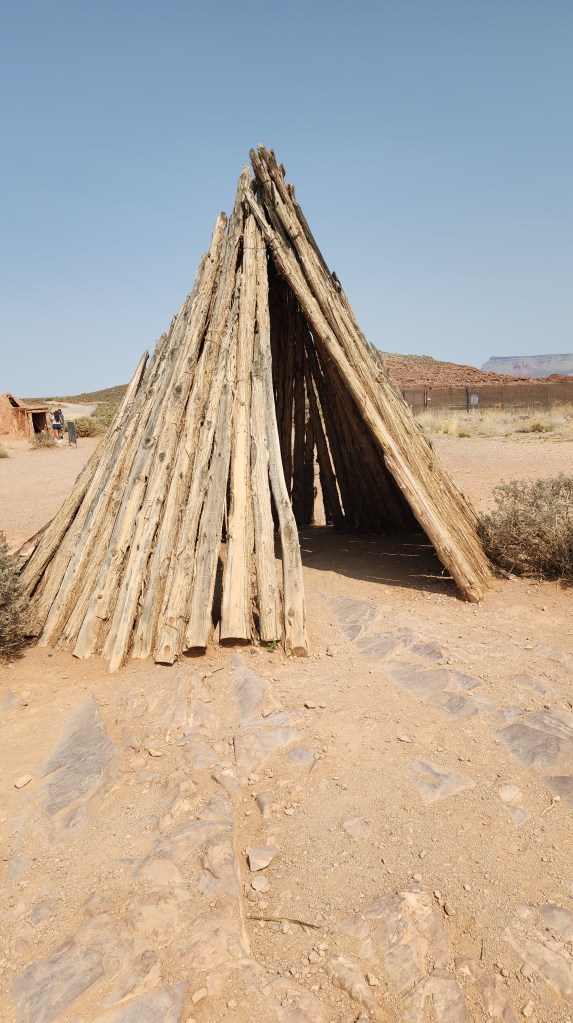
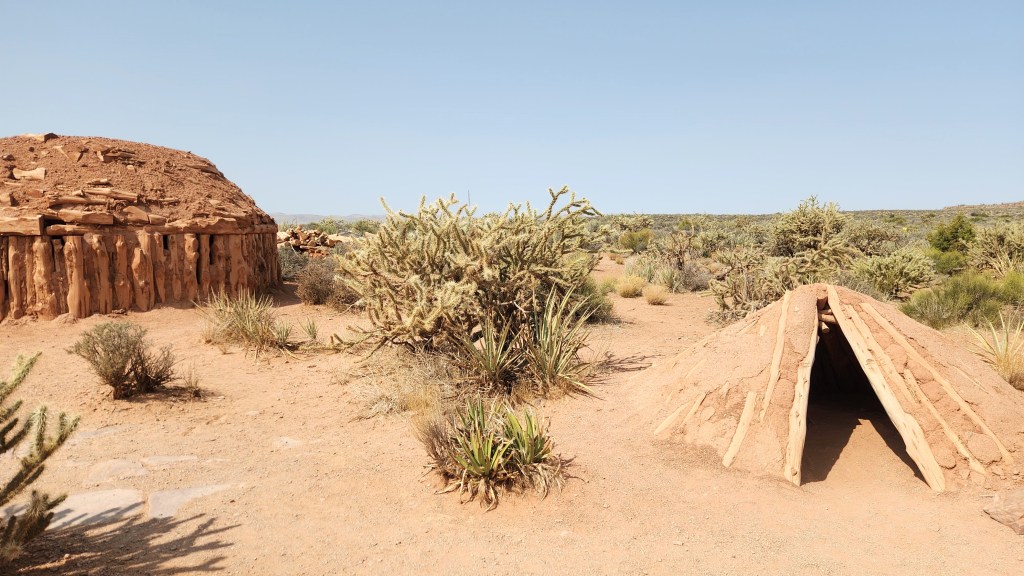
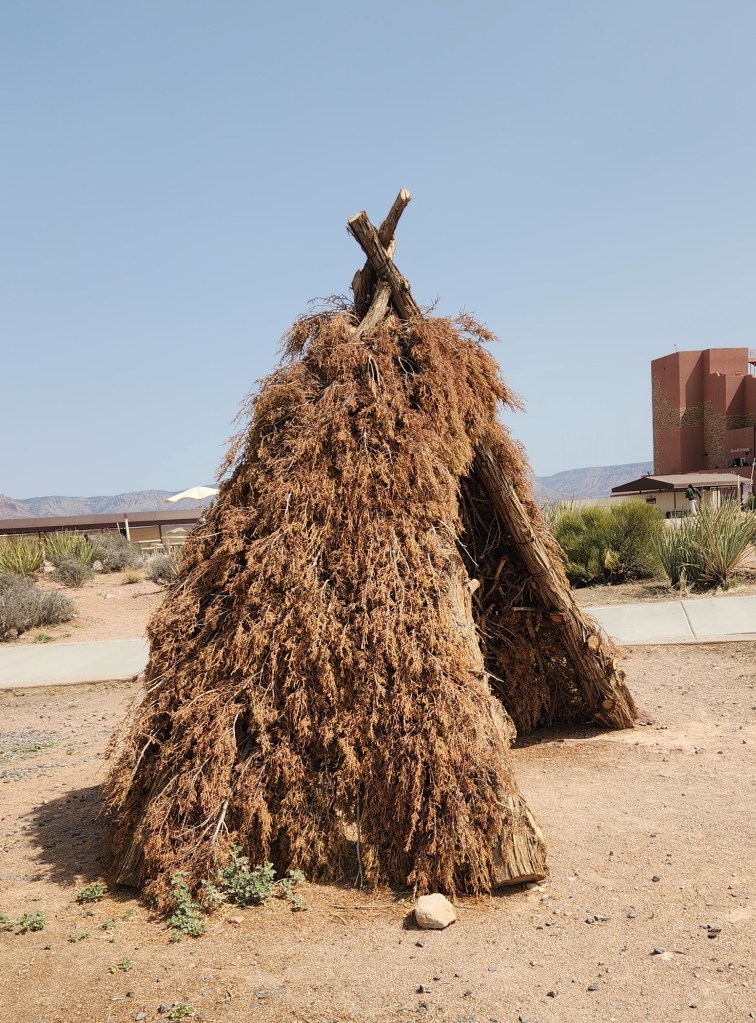
After the Skywalk, we walked along the canyon rim and then along a loop trail that passed by several types of traditional native American dwellings and structures. Pat and I both felt that the Hualapai tribe has done a very nice job of providing educational materials honoring the cultures of their own and other neighboring tribes.
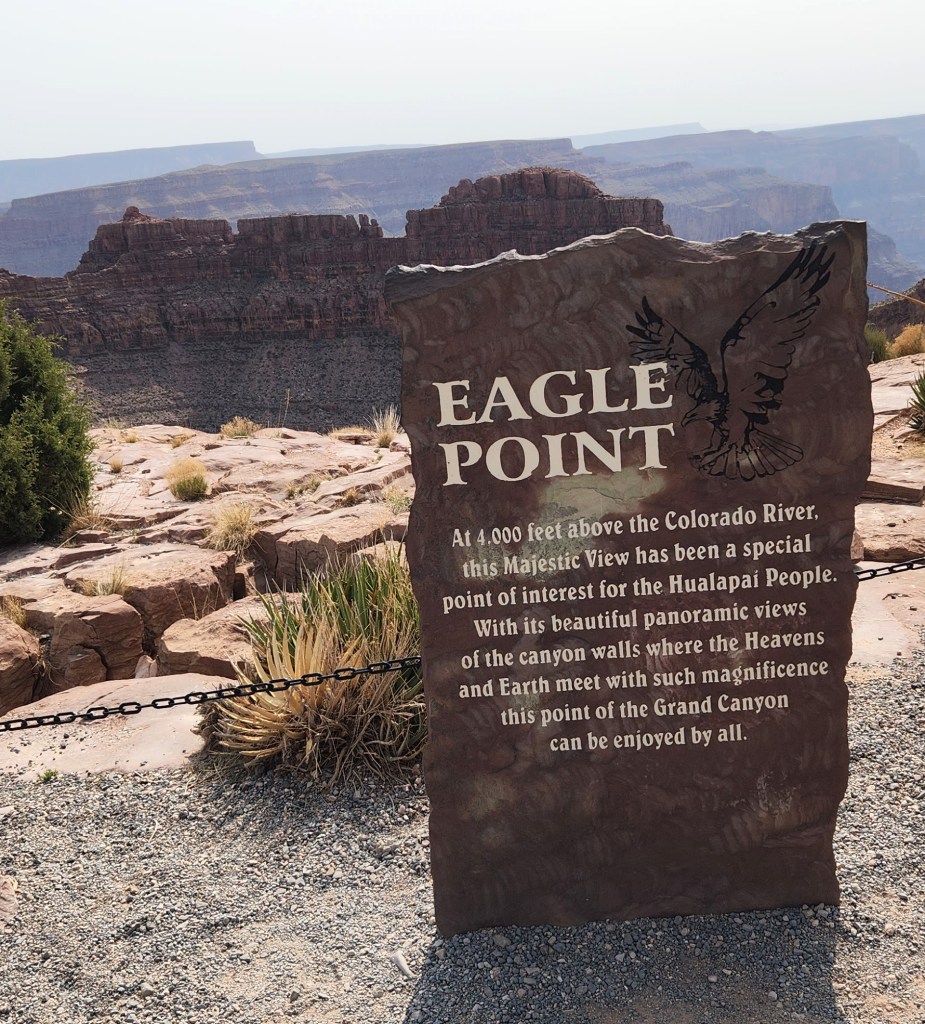

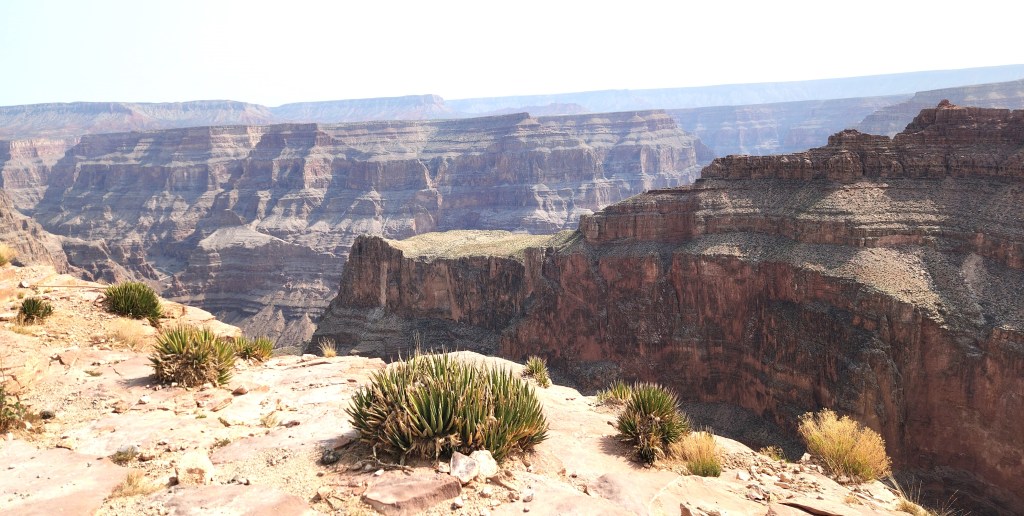
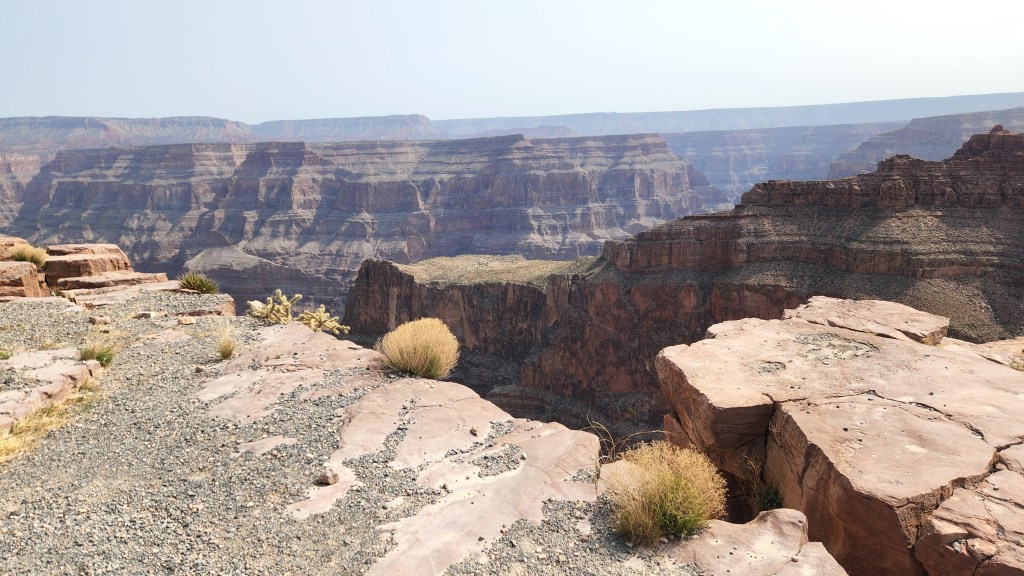
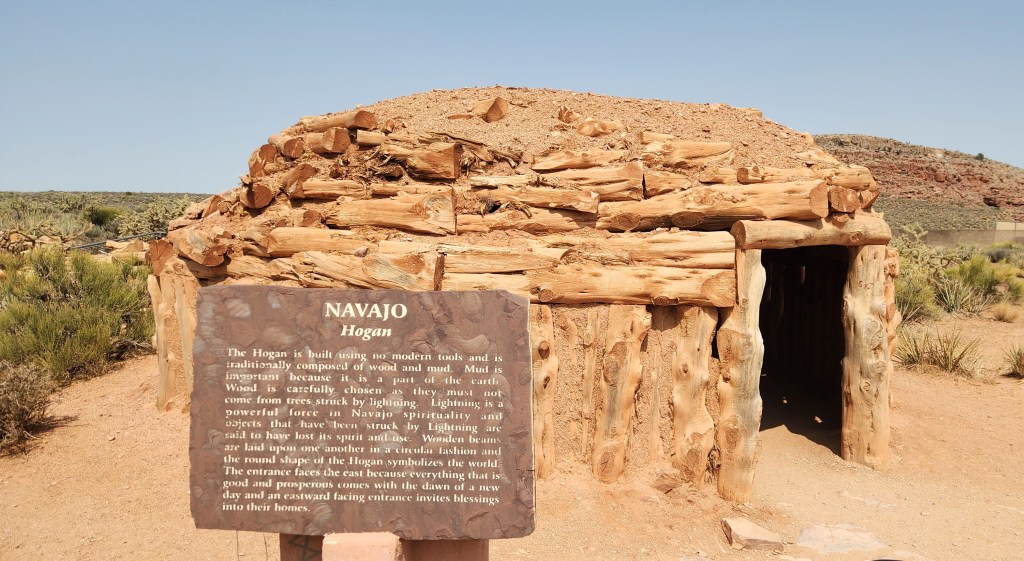
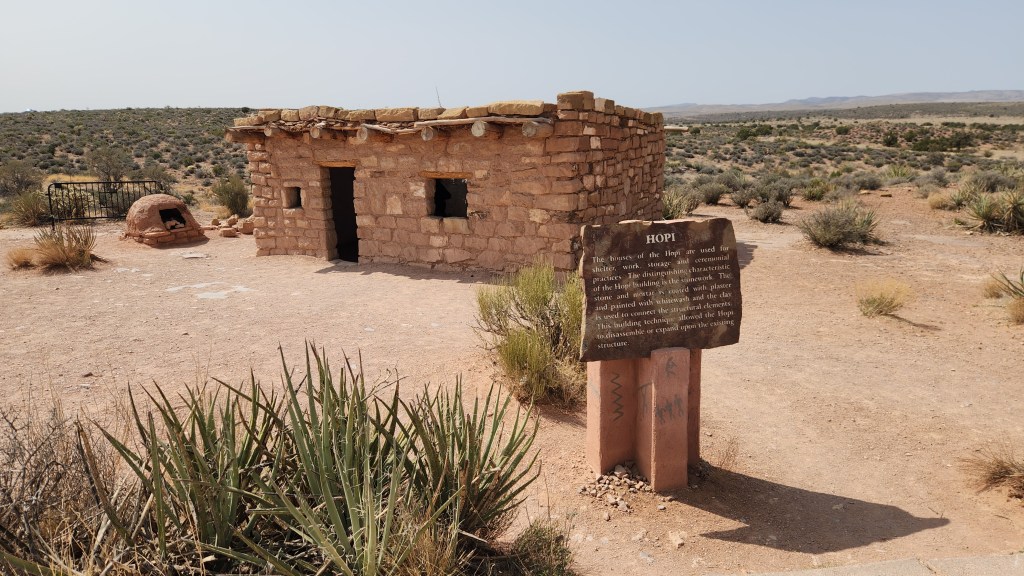


We then boarded the bus again for a short drive to the second stop, Guano Point. This name came about as a result of a bat cave discovered by boaters on the Colorado River in the 1930s. They successfully sold their dream of riches from guano mining to the U.S. Guano Corporation, who constructed a tramway system to extract guano from the cave to the canyon rim at what became known as Guano Point, as well as roads to transport the valuable shit to market. The cave’s guano supply, having been vastly exaggerated by the original discoverers, ran out in 1959. To add insult to injury, a U.S Air Force Top Gun wannabe wiped out the tram cable while hot dogging in the canyon some years later. Presently, the tramway structures have been left intact as a monument to man’s attempt to mine the Canyon, and the roads built by the mine operators are now used for Grand Canyon West tourism buses. At any rate, we disembarked at Guano Point, had a nice lunch of pulled pork and coleslaw, and walked around the site with our mouths agape as we took in the stunning views.
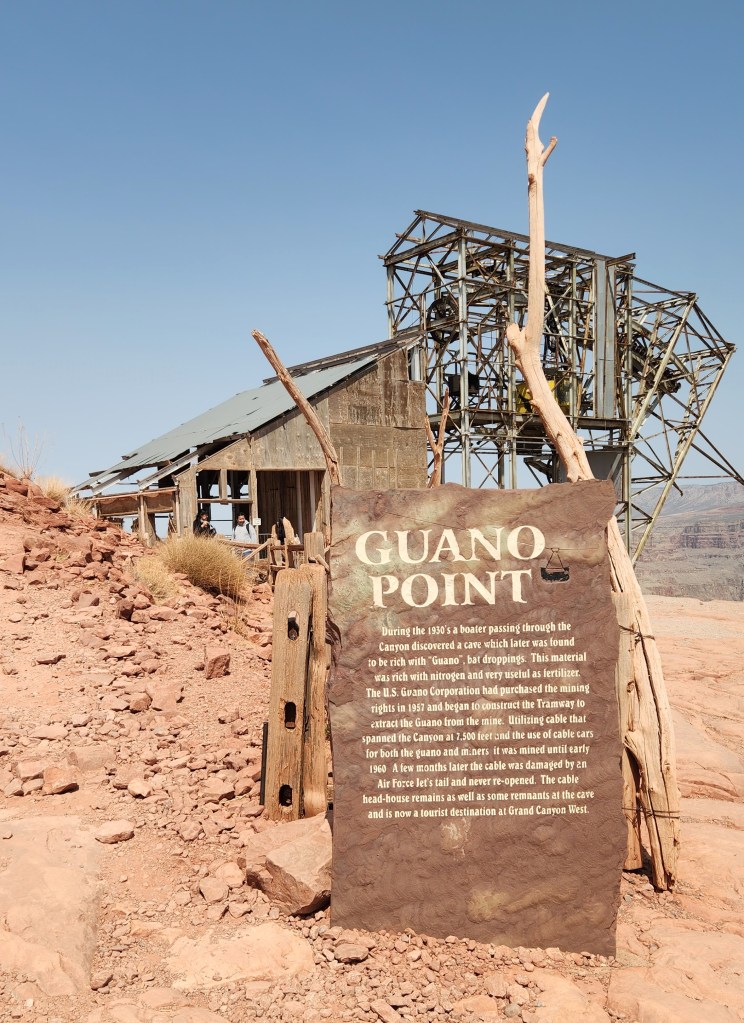
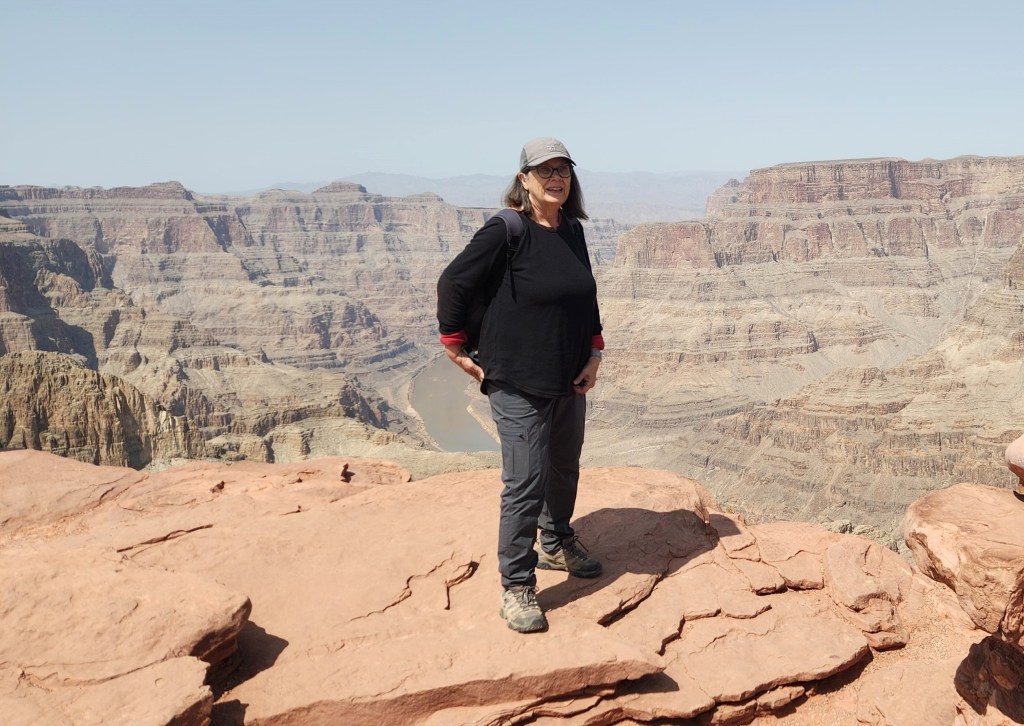
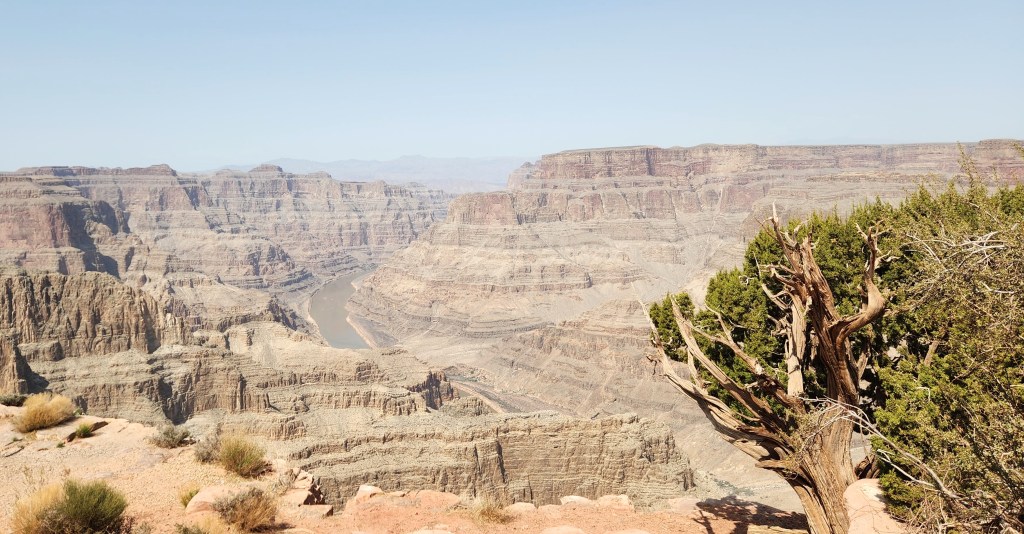
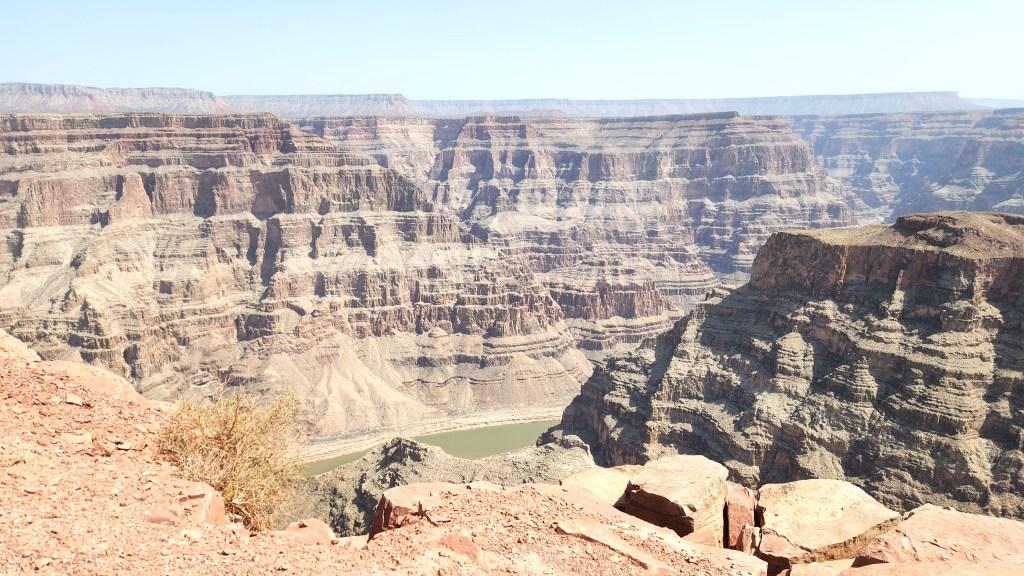
As we were leaving the recreation area, the Visitor Center had become jam-packed with people and the number of cars in the parking lot had probably quadrupled or more. This bore out the advice we had heard that the busiest times were between about 1 and 4 PM.
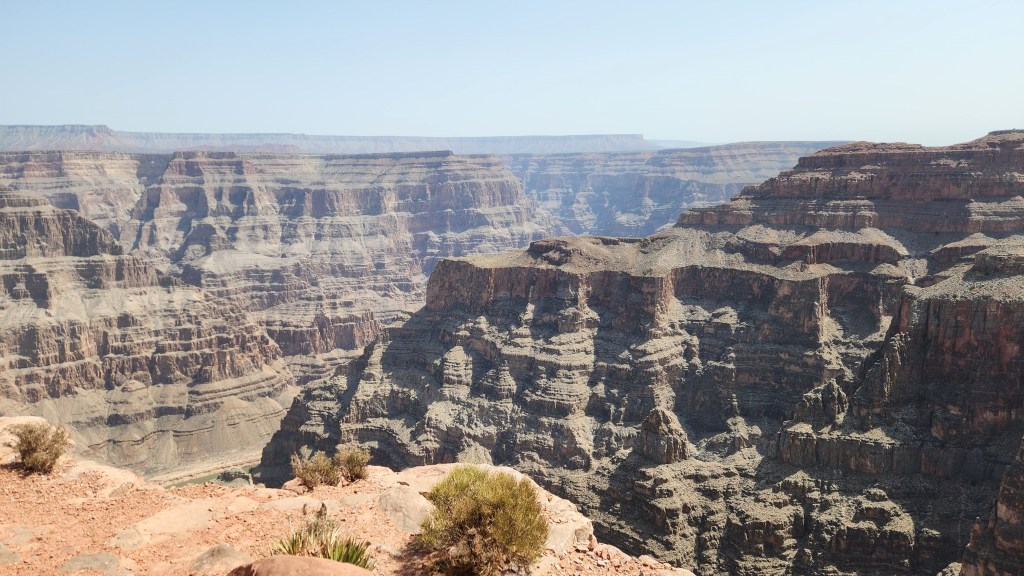
Before I move on to our subsequent points of interest, let me say a few words about the Skywalk and the recreation area in general. Perhaps you will have noticed from the words I quoted above that the Hualapai do not actually state that the Skywalk overhangs the Grand Canyon, although I suspect most people think it does – until they actually visit the place. You’ll notice from the pictures above that the Skywalk, while in fact some 4,000 feet higher than the Colorado River, does not actually extend beyond the canyon rim. Once I thought realistically about it, I realized that it would probably be impossible to construct such a structure – it would need to be extremely long, would probably cost billions, and would probably cause irreparable damage to the natural beauty of the canyon. The Skywalk does provide beautiful views of the canyon from an entirely safe vantage point, actually much safer than walking near the canyon rim, and does provide a feeling of being suspended in the air. It’s a great marketing “hook” and probably is the primary reason that many people go to the recreation area. In fact, it’s what hooked me.
At first, I was a bit annoyed by this discovery, but the sheer beauty of the rugged overlooks at Eagle Point and Guano Point were well worth the price of admission. Our experience at Grand Canyon West was much more intimate than our visits to the Grand Canyon National Park. The crowds were smaller, there were no CCC-built walls along the rim, leaving a much more natural view, and the vistas were as spectacular as anything at the National Park. If anyone asks me which of the two places to visit, I’d say go see both. They each offer something a bit different and very rewarding. Oh, and I failed to mention that the Hualapai recreation area also has a zipline for the adventurous, which both Pat and I were too chicken to try.
I’ll add one final note regarding the Hualapai tribe and their great success in drawing tourist dollars to their reservation. I learned that Guano Point is sacred to the Hualapai for a very poignant reason. In 1874, the U.S. military forced the Hualapai people to march from their traditional lands in western Arizona to a relocation camp at La Paz, on the Colorado River Indian Reservation. This journey was physically demanding and resulted in many deaths due to disease and lack of resources. Many Hualapai weren’t able to escape the “Long Walk to La Paz.” These tribespeople, called the lost souls, jumped off the canyon edge to their deaths at what is now called Guano Point rather than be captured by the military. The tribe was eventually given their own reservation, a small portion of their ancestral homeland, and allowed to return. I find it very hard to begrudge a people so resilient as to have reestablished themselves once again and discovered a way to thrive in the modern world. Far from feeling “fleeced” by the slight deception regarding the Skywalk, I’m thrilled that Pat and I got to experience this special place.
Lake Mead National Recreation Area and St. George, UT: After leaving Grand Canyon West, we drove to the Hoover Dam Lodge, overlooking Lake Mead, to spend the night. On Sunday, March 30, we drove to Richfield, UT, via St. George. Rather than take the faster freeway route through the Las Vegas area, we drove through the Lake Mead National Recreation Area, using my priceless Senior National Parks Pass for free entry. We didn’t actually stop anywhere except at St. George to charge the car, but we thoroughly enjoyed our leisurely drive (pulling over frequently to let impatient drivers speed past) and the beautiful scenery around Lake Mead, which we have visited several times during previous travel adventures. The mountain passes following the Virgin River into St. George are also absolutely gorgeous, so that Sunday’s travels were among our most enjoyable of the entire trip.
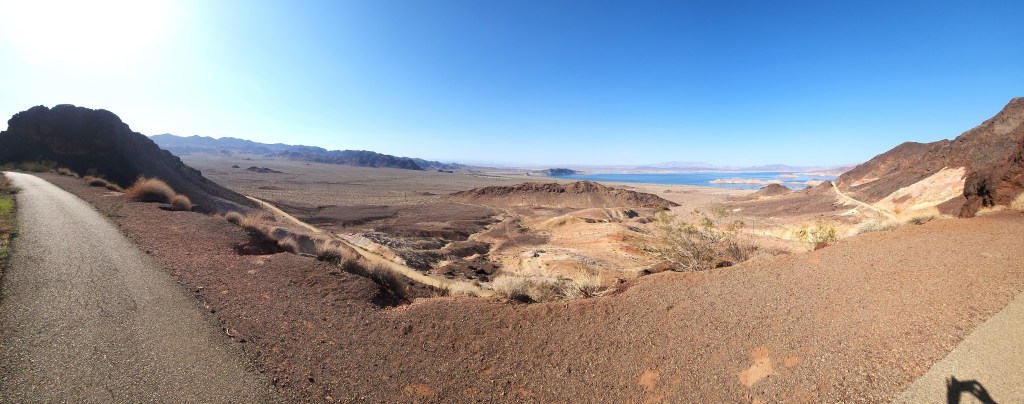
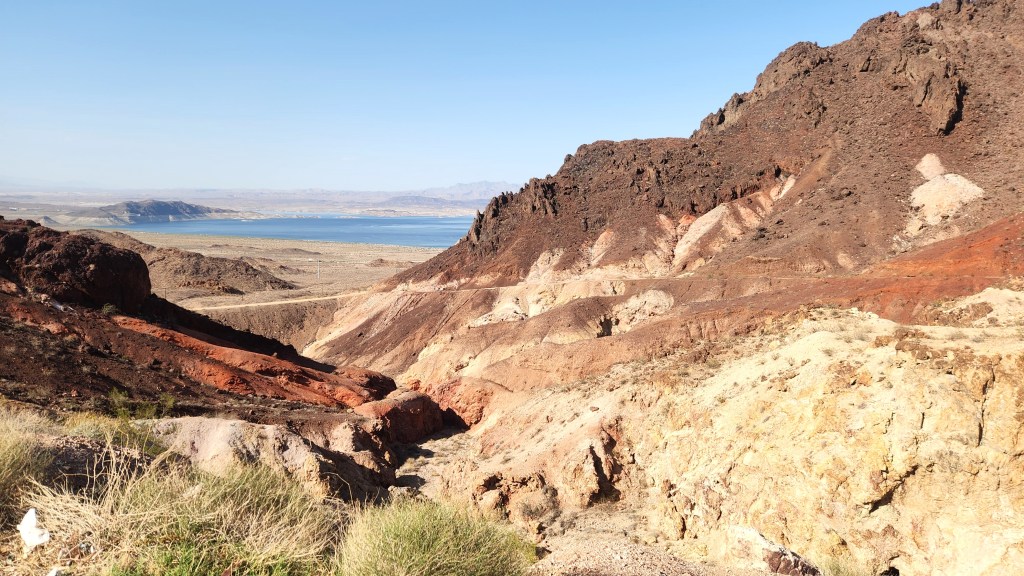
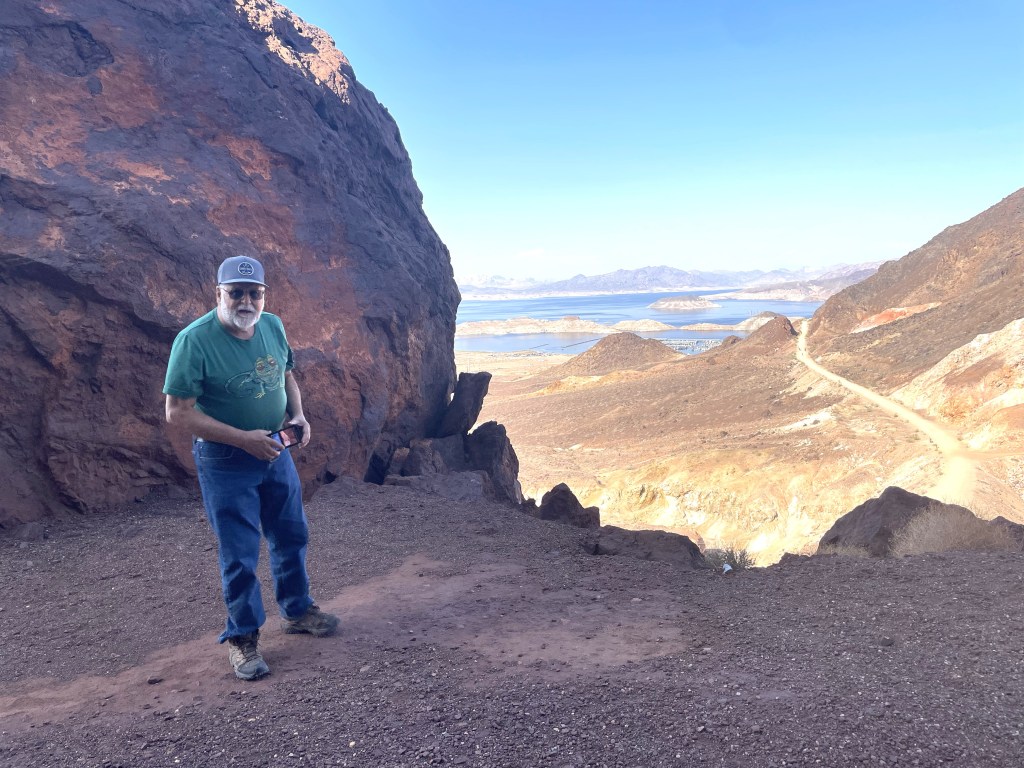
So, why aren’t there more pictures? Since I did most of the driving, I couldn’t be taking pictures, and Pat doesn’t like to take pictures out the car windows because they usually turn out to be disappointing. Sorry.
Capitol Reef National Park: After spending Sunday night at a hotel in Richfield, we drove to Capitol Reef National Park, the 29th National Park we’ve visited so far and the only one in Utah that we hadn’t visited previously. The park takes its name from white domes of Navajo Sandstone that resemble the dome of the U.S. Capitol building, and a formidable ridge of rocky cliffs that early Mormon settlers, who settled in a town they named Fruita due to the fruit orchards they established there, likened to a “reef.” Per the National Park Service brochure:
“Capitol Reef’s defining geologic feature is a wrinkle in Earth’s crust, extending nearly 100 miles from Thousand Lake Mountain to Lake Powell. It was created over time by three gradual yet powerful processes: deposition, uplift, and erosion. The result is a classic example of a monocline, or one-sided fold, in the otherwise horizontal rock layers.”
This “wrinkle” is known as the Waterpocket Fold, and it created a land of fascinating and spectacular scenery. The National Park is very large, comprising nearly a quarter million acres. The maps below show the entire extent of the park and the portion that we explored over several hours.
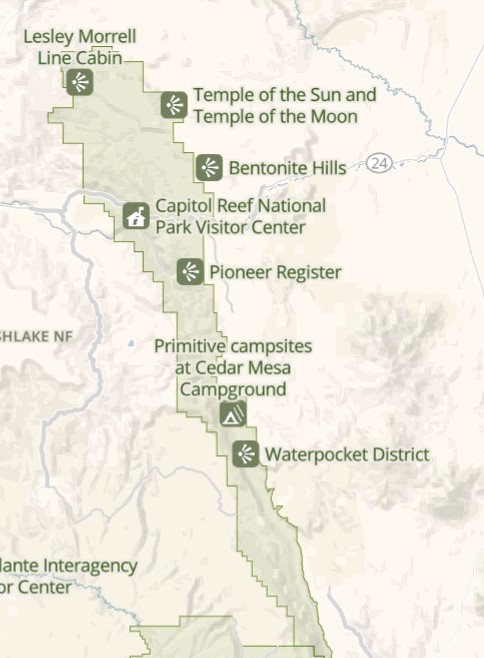
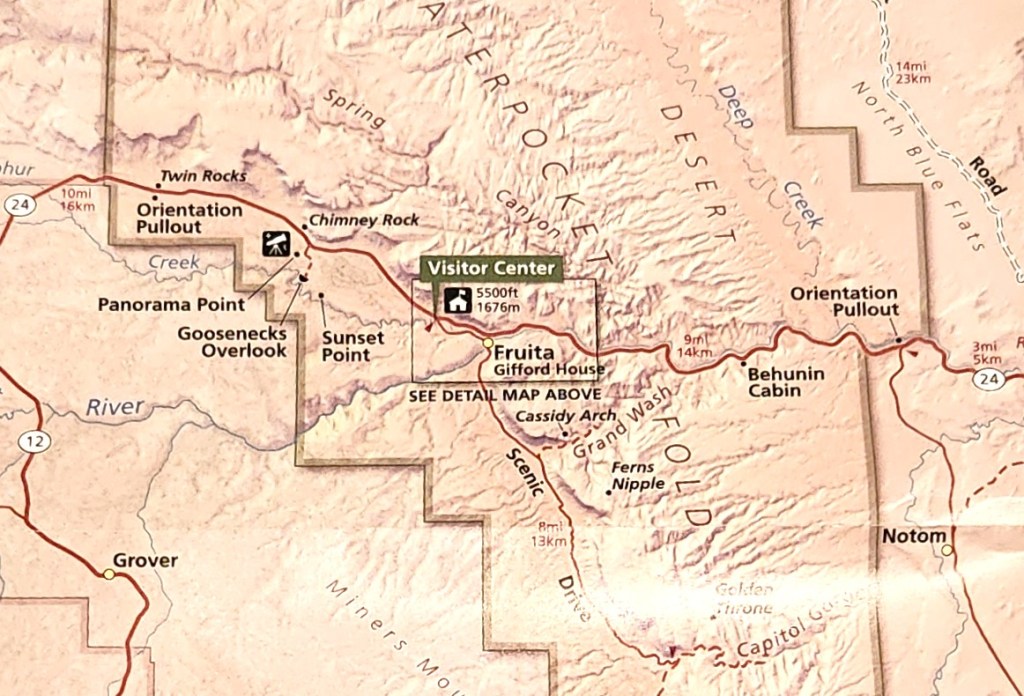
We drove into the park on Highway 24 from the west and stopped at the Visitor Center to watch the National Park Service video overview, then drove 8 miles south along the Scenic Drive until the pavement ended. Along the way, we stopped to hike along the Grand Wash trail and then stopped at multiple overlooks along the rest of the Scenic Drive. I was jumping in and out of the car like a jackrabbit and snapping pictures like a crazed documentarian, and Pat was doing her best to put up with my antics. After the tenth or twelfth stop, she suggested that maybe she could drive and I could just gawk out the windows.
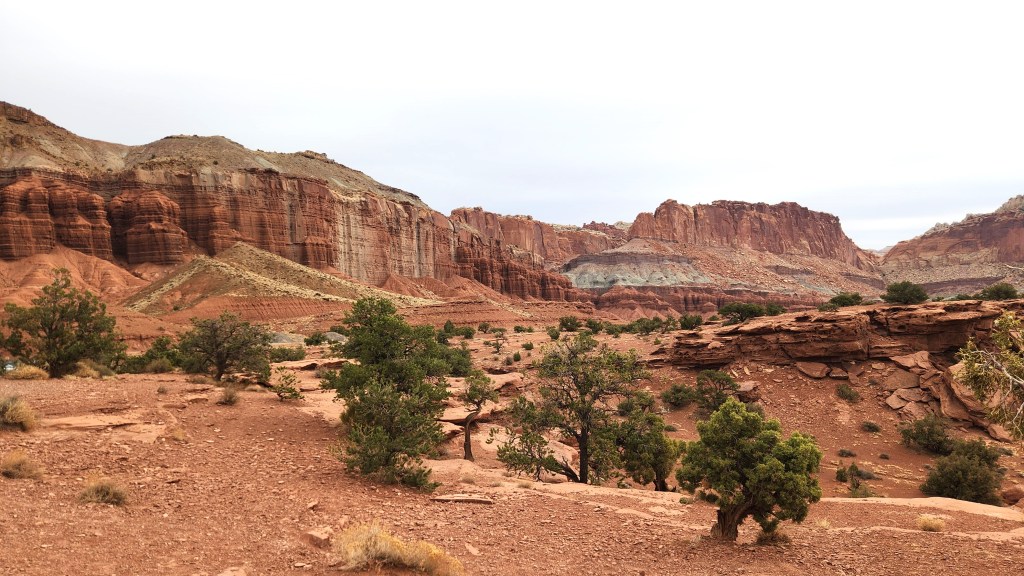
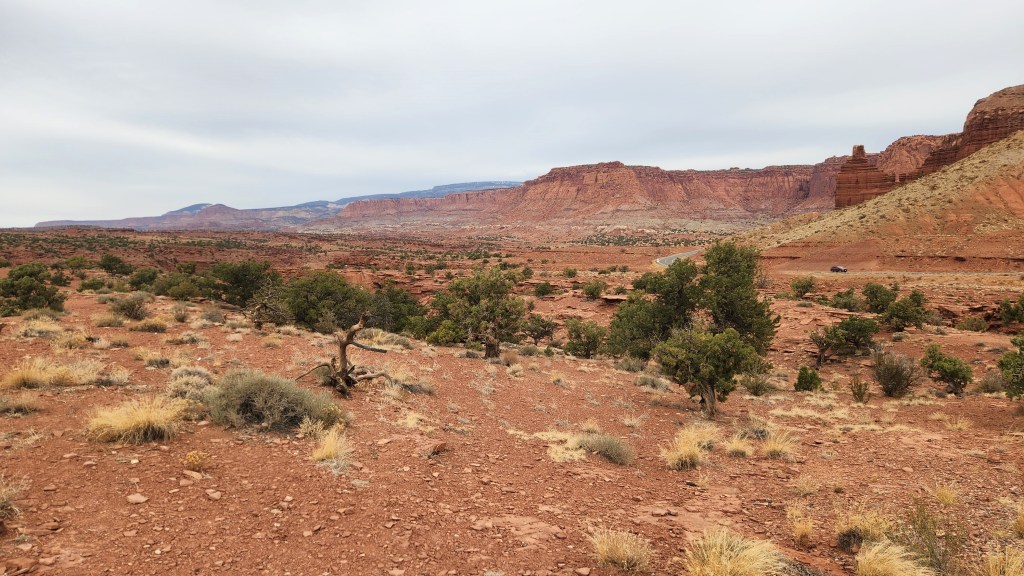
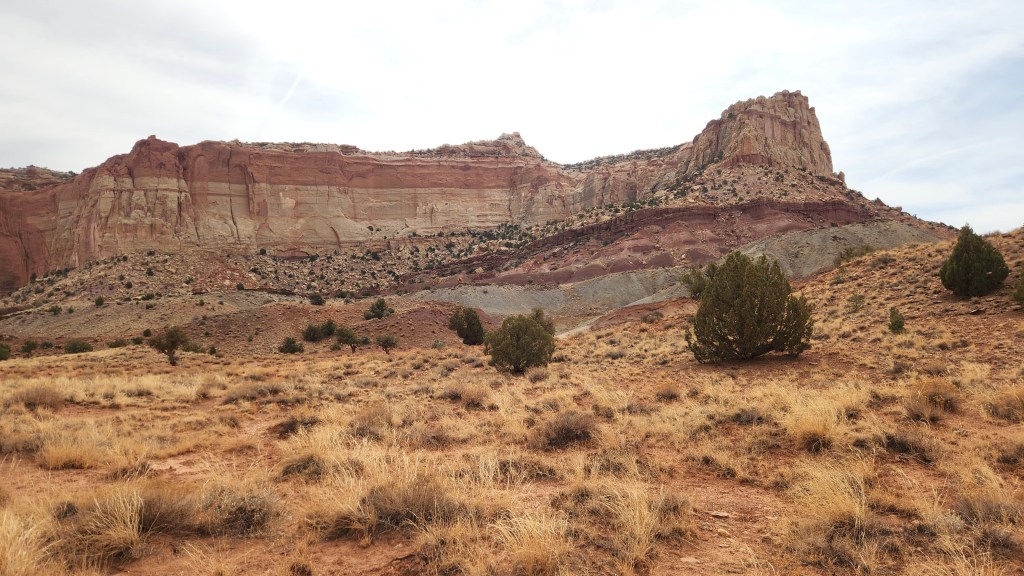
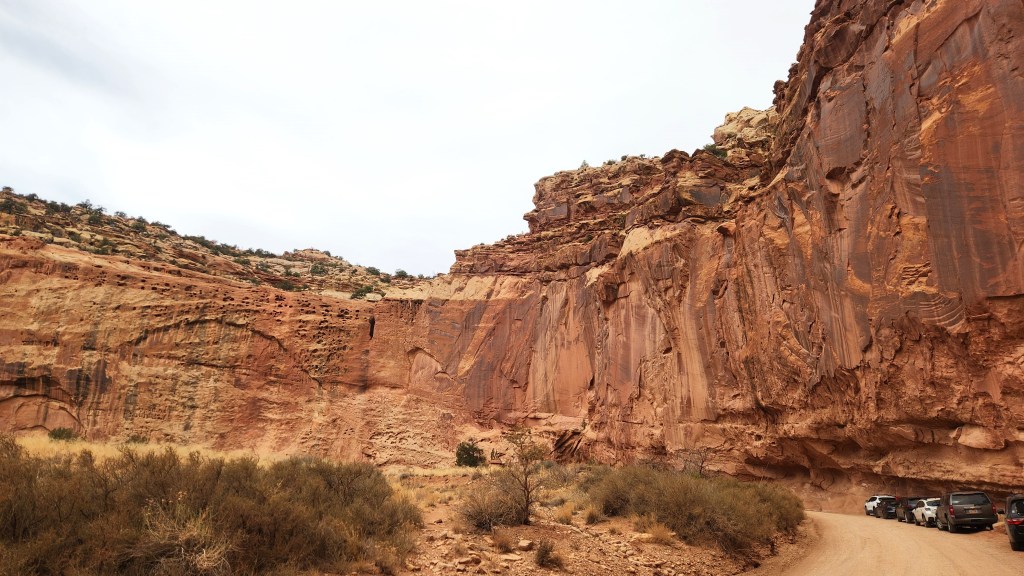
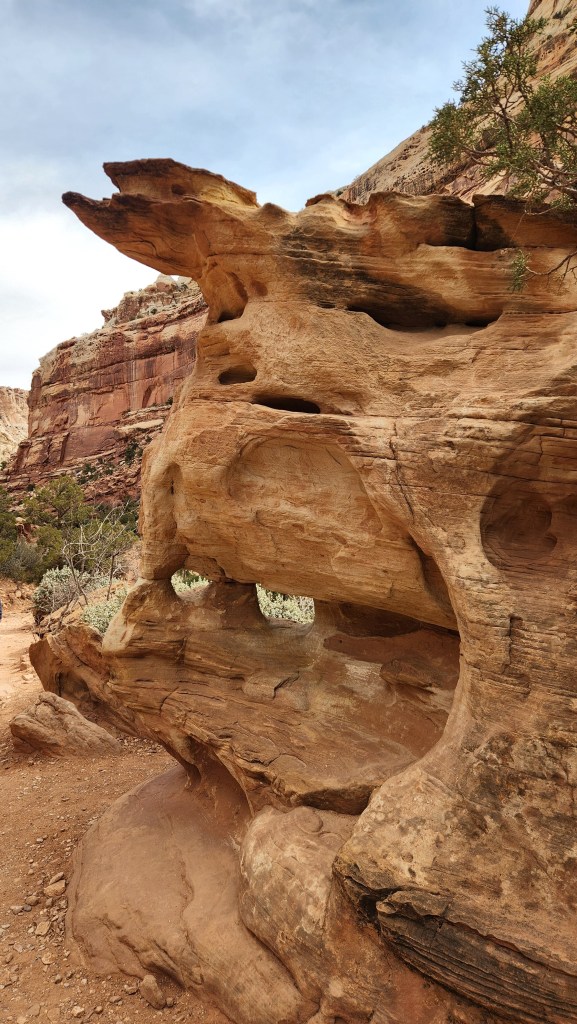
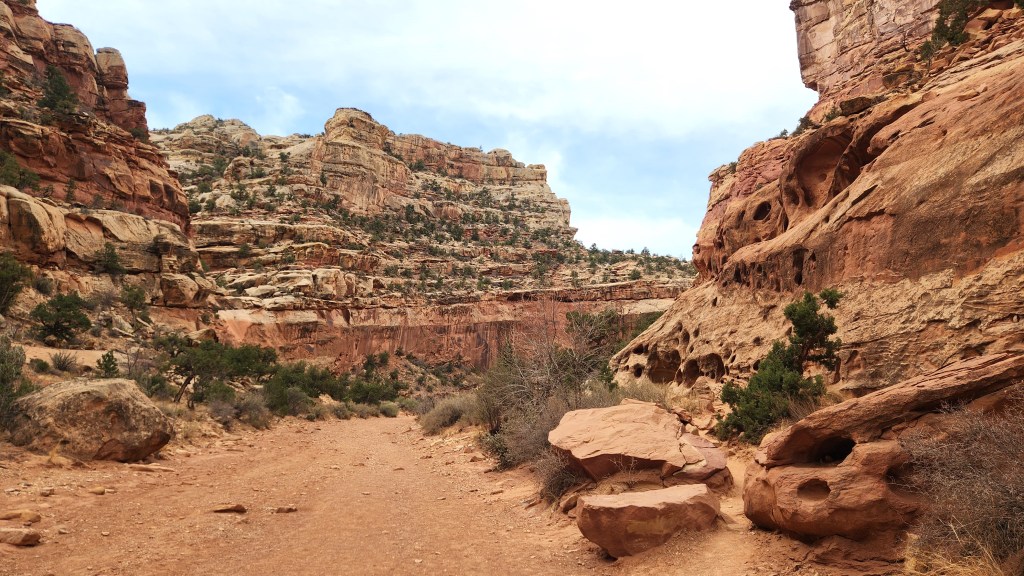
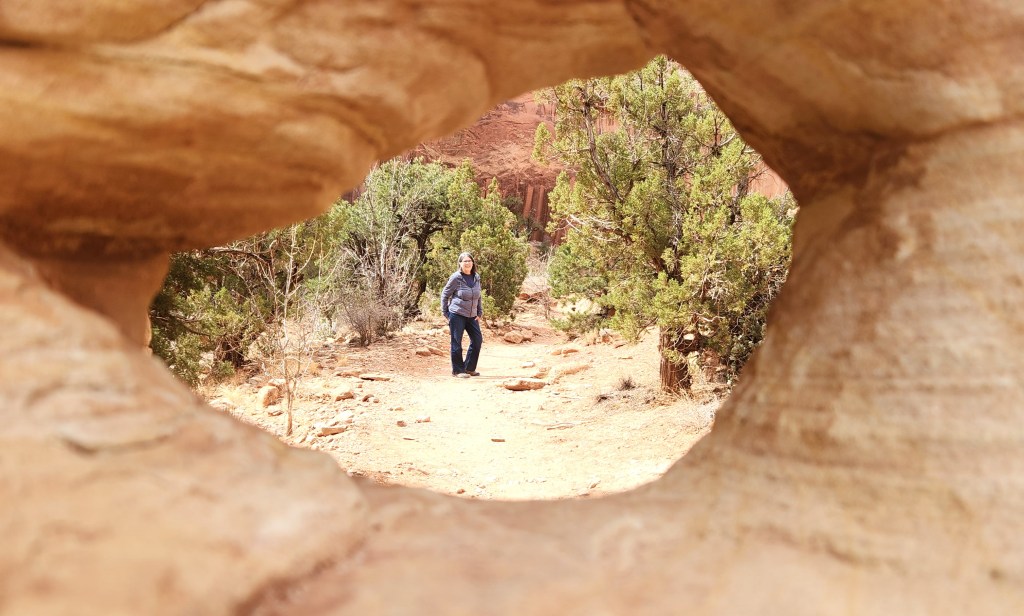
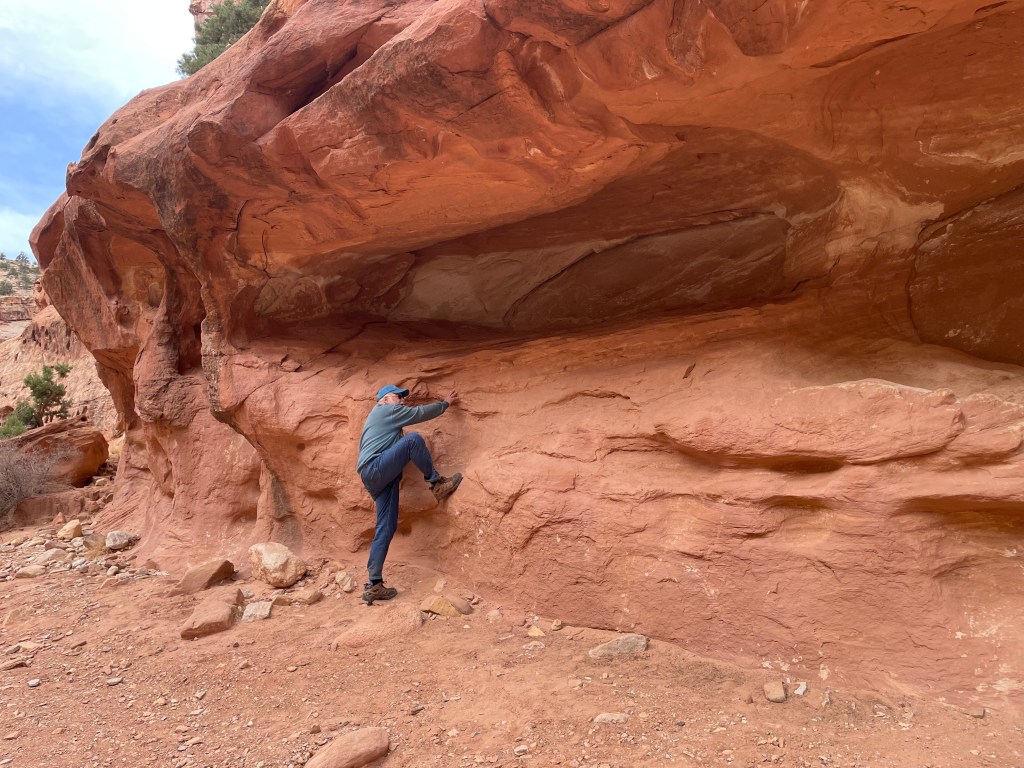
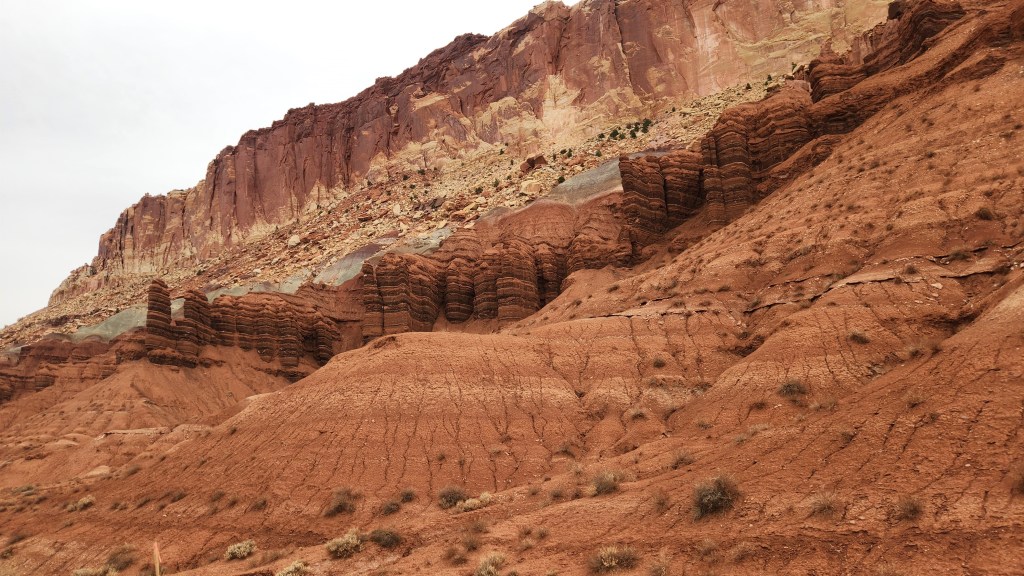
With Pat at the wheel, we returned to the Visitor Center area and stopped to explore a walkway with views of a cliff containing ancient petroglyphs.
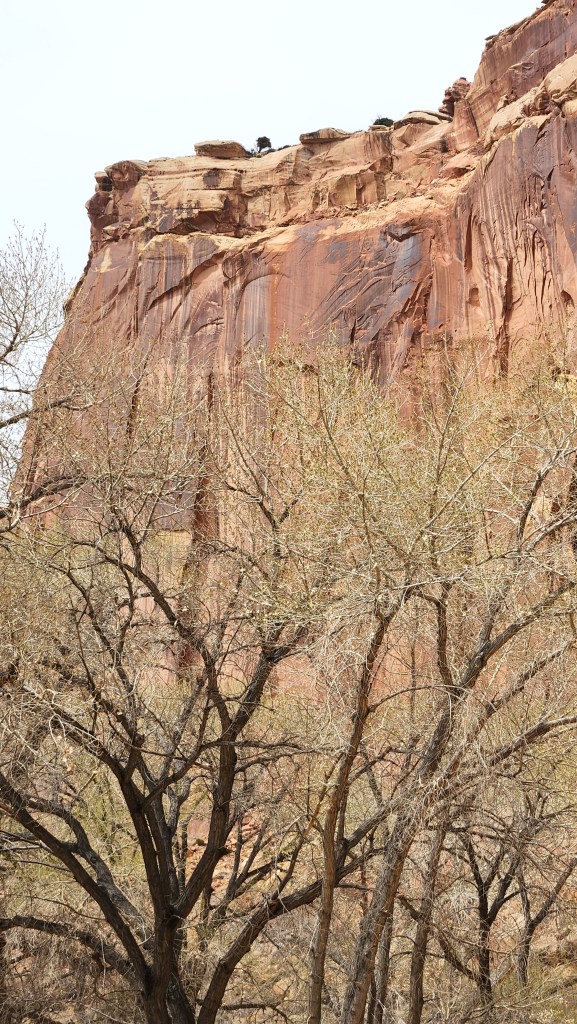
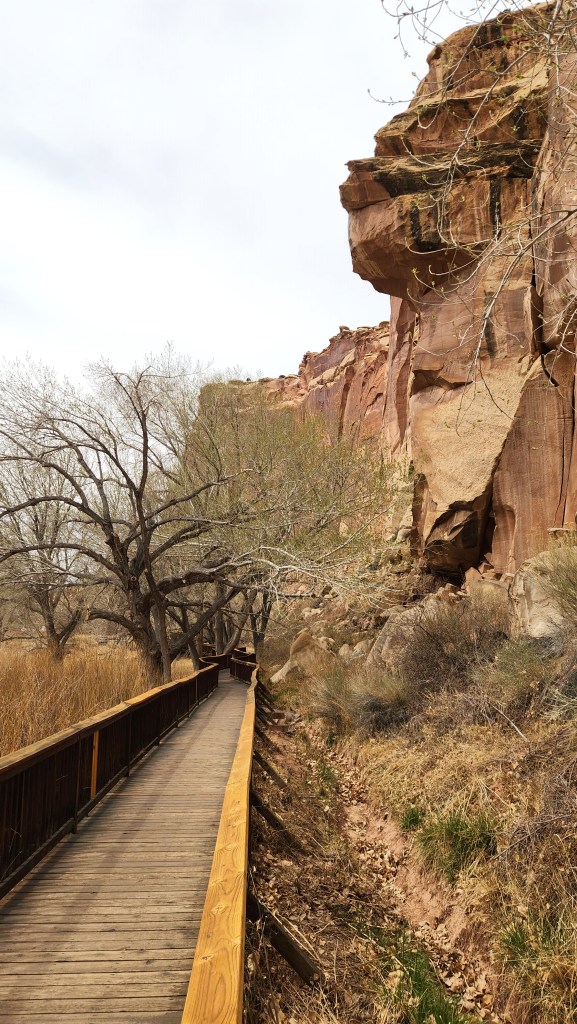
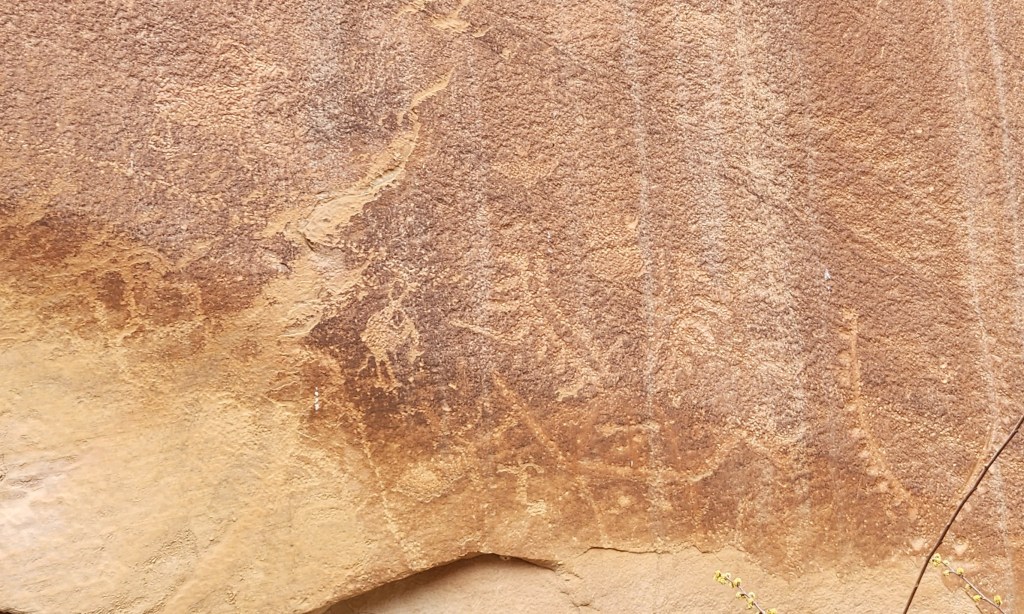
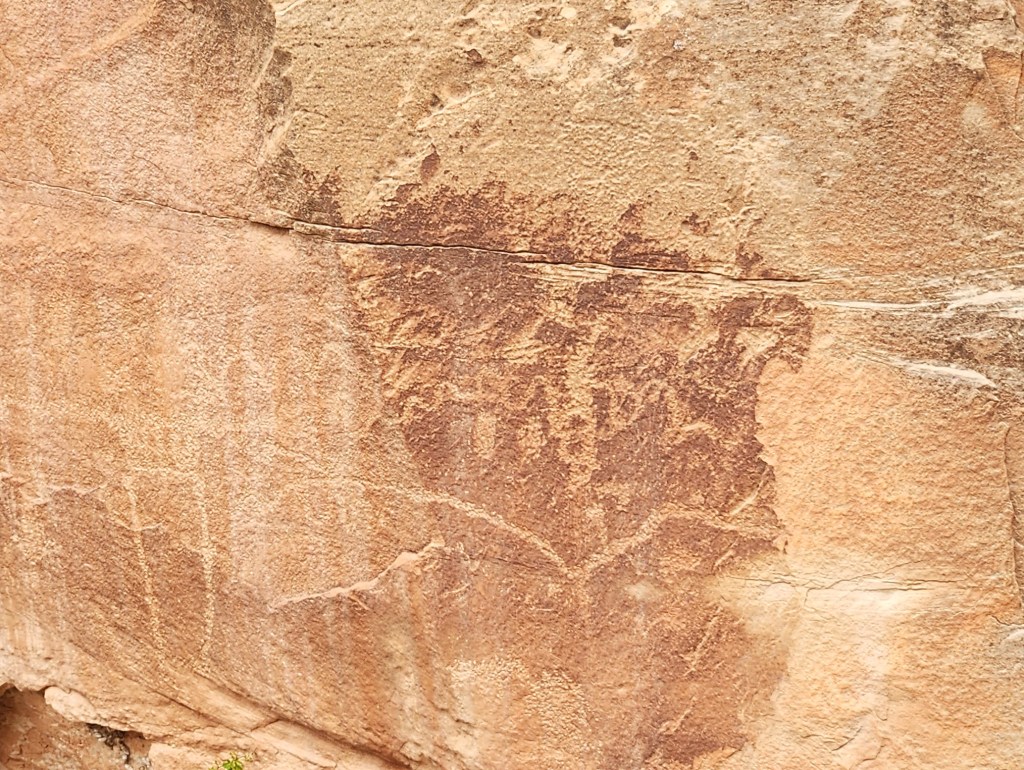
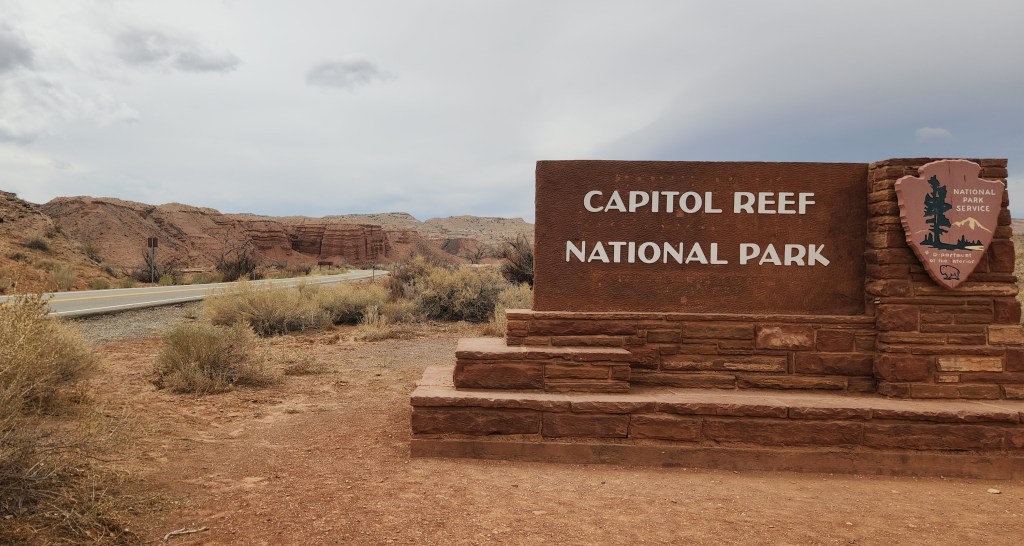
We then headed east again on Highway 24, and I contented myself with window gawking until we made one last stop at the eastern entrance to the park before heading on toward our next hotel in Green Valley, UT. Incidentally, we passed by those Capitol dome-like mounds along the way, but I failed to get a decent photo from the car, so you’ll just have to use your imagination.
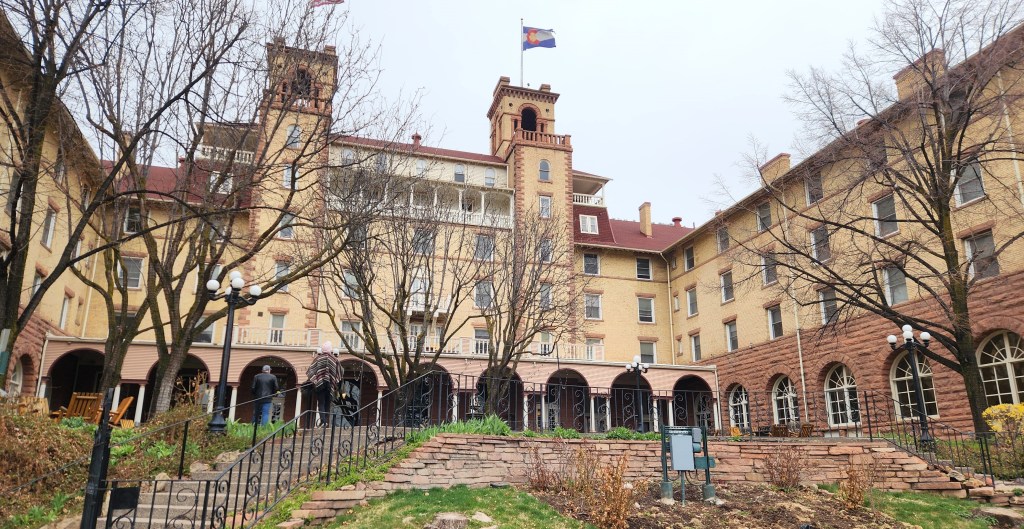
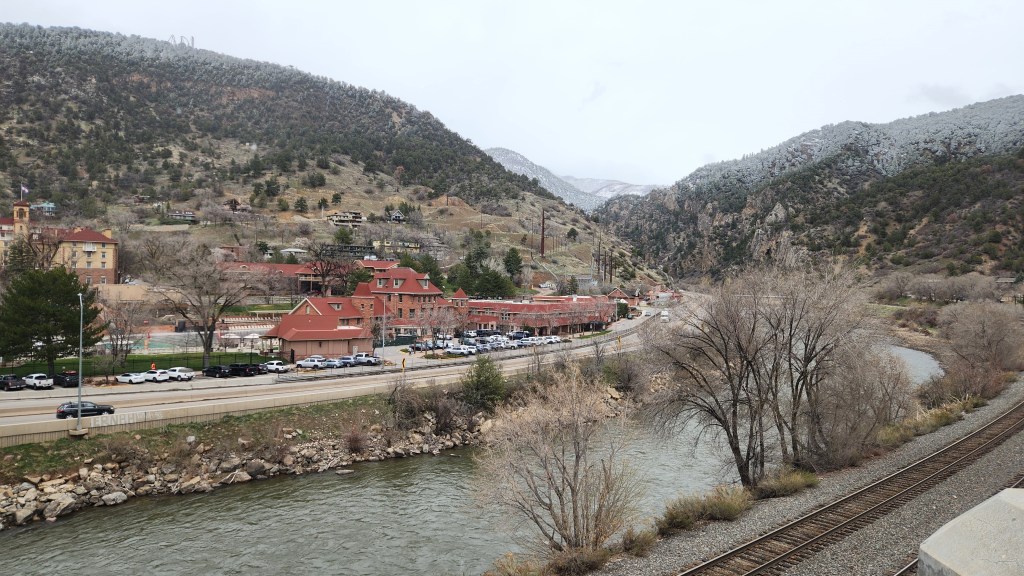
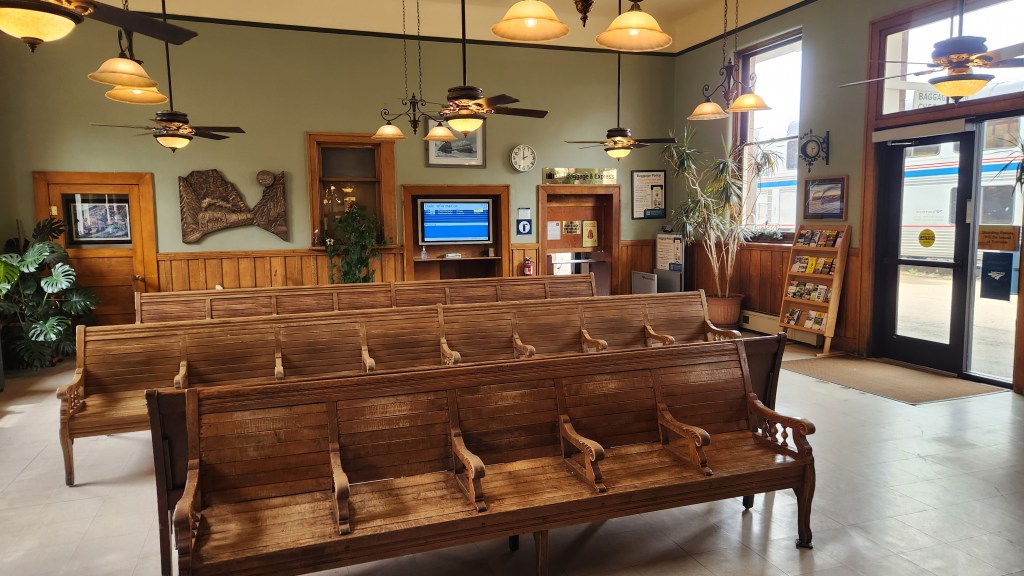
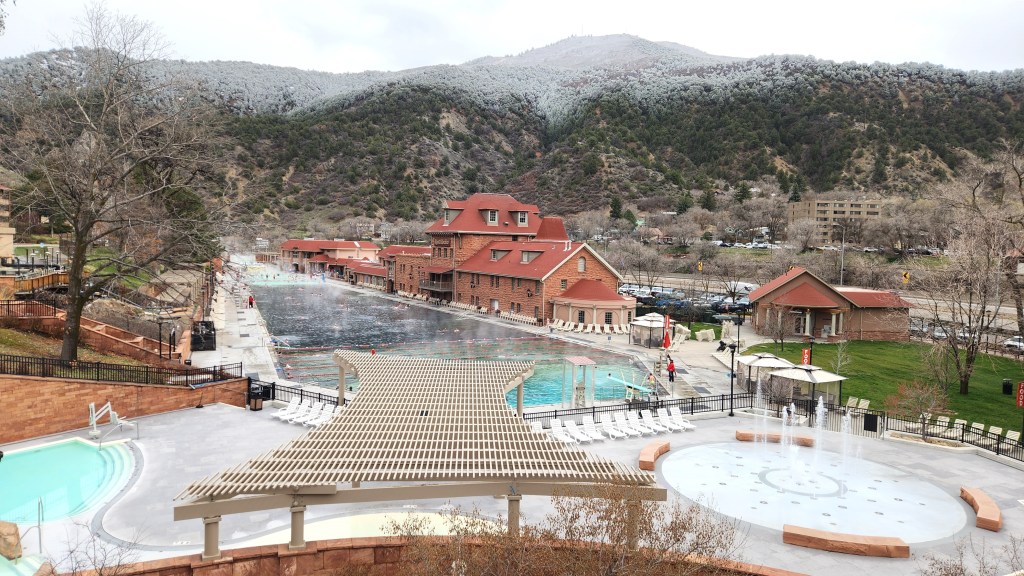
Glenwood Springs, CO: Our original plan for Tuesday was to drive from Green Valley to Golden, CO, for our next night’s stay. However, weather reports indicated that a heavy snow storm was developing in the Vail Pass, complete with avalanche warnings. The prospect of battling the elements as we navigated the high altitude crossing through Colorado ski country was a bit unsettling, so we changed plans and booked a hotel in a cute little town called Glenwood Springs instead. We got there around lunchtime and spent a couple of hours walking around before checking into our Holiday Inn. We had lunch at the Colorado Hotel, a grand old place founded in 1893 and now included on the National Trust’s list of Historic Hotels of America, before wandering off to the nearby railroad station and passing by an impressive Hot Spring and Spa.
Wind Cave National Park: On Wednesday, we resumed our eastward journey along I70, passing through the remnants of the storm in the Vail Pass and beyond. We passed a number of snowplows clearing the shoulders and experienced a few spots where the road was still icy, but by the time we reached the Eisenhower-Johnson Memorial Tunnel through the Continental Divide (11,132 feet elevation) all was clear. We drove on to a hotel with a destination charger that we had stayed at last October in Wheatland, WY, then drove on into South Dakota on Thursday morning and visited Wind Cave National Park. Unfortunately, all the cave tours were sold out for weeks in advance – we should have made on-line reservations before leaving Green Valley, but didn’t have enough foresight for that. As a result, our visit to the National Park (number 30 on our list) was limited to the Visitor Center, a short hike along a trail near the center, and a brief jaunt along a portion of the scenic drive. At least we saw some interesting rocks and some friendly animals. We’ll have to go back there some time to see the cave, which is said to be the seventh longest cave in the world with 154.2 miles of explored cave passageways (as of 2021) and the third longest cave in the United States. The cave was discovered in 1881 by a pair of brothers due to the sound of a strong wind blowing out of the hole (it blows in or out depending on the atmospheric pressure) and subsequently developed for tourism.
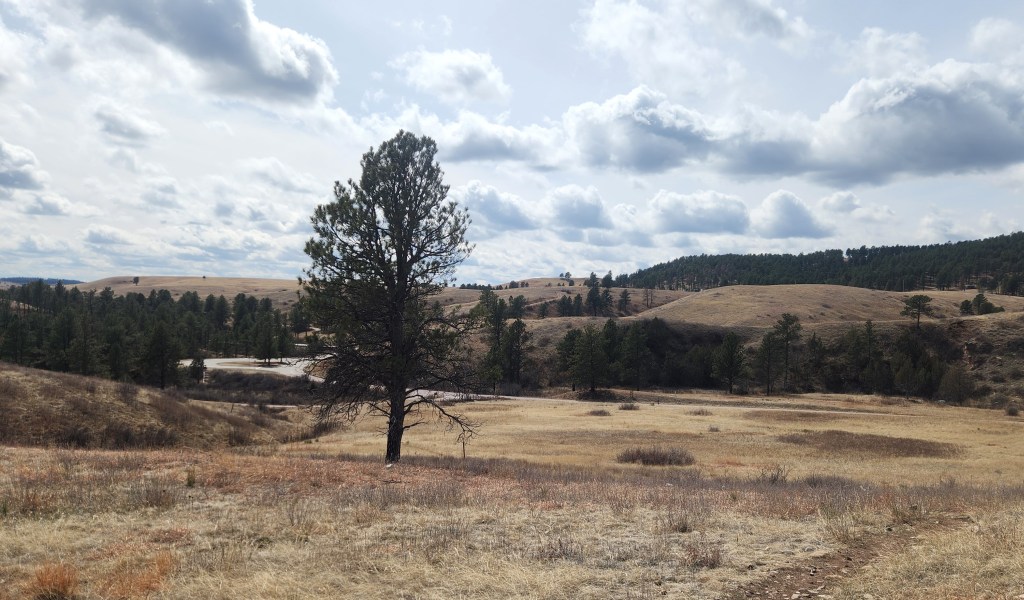
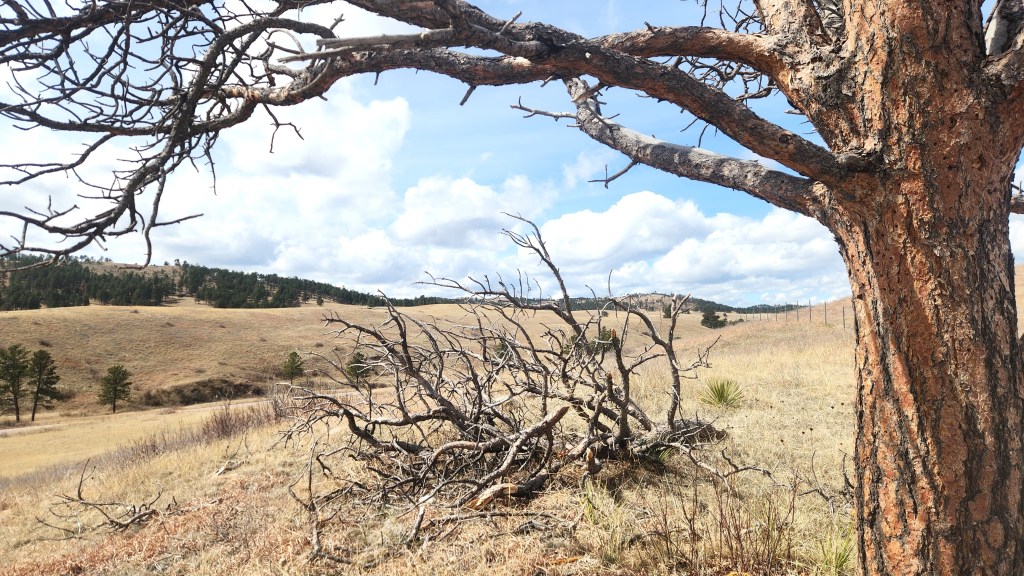
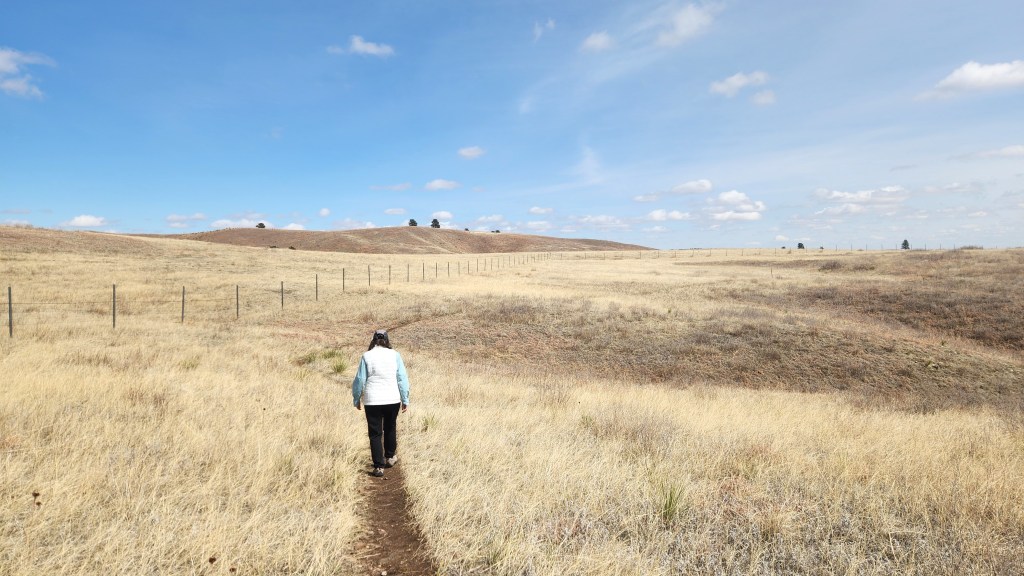
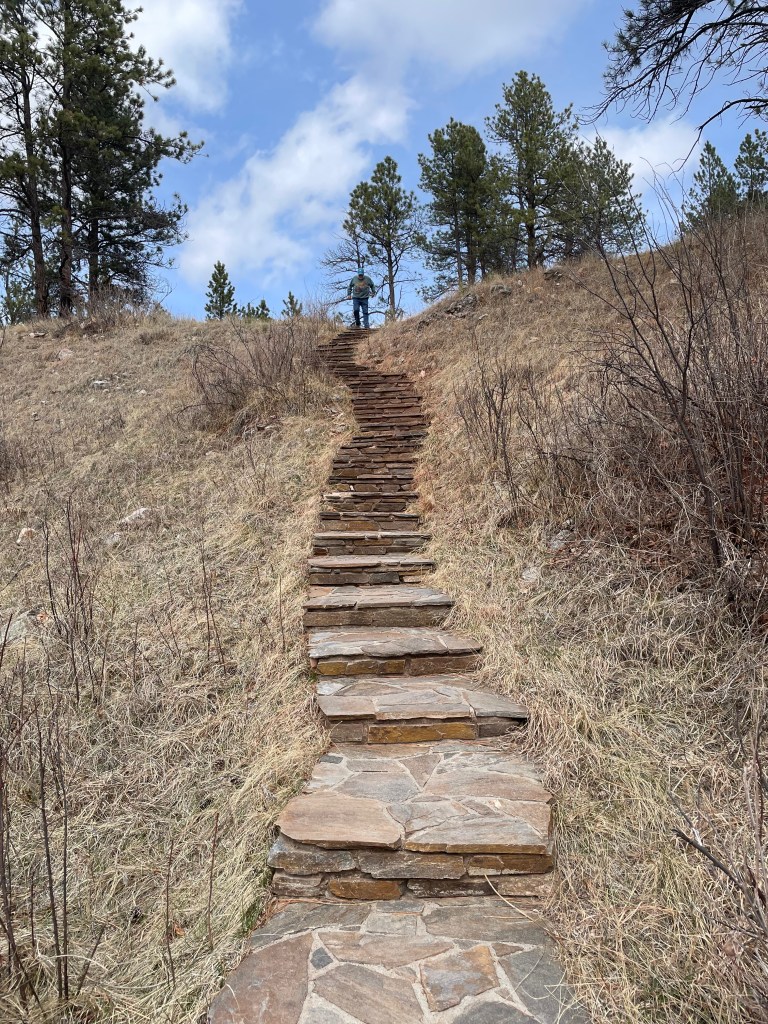
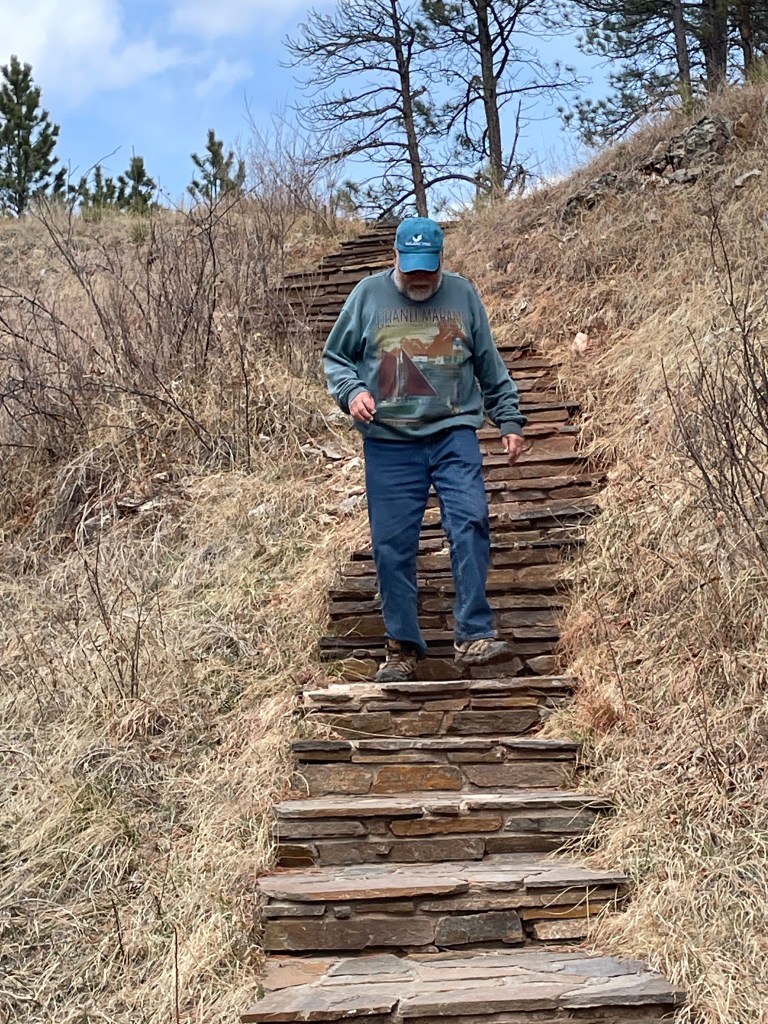
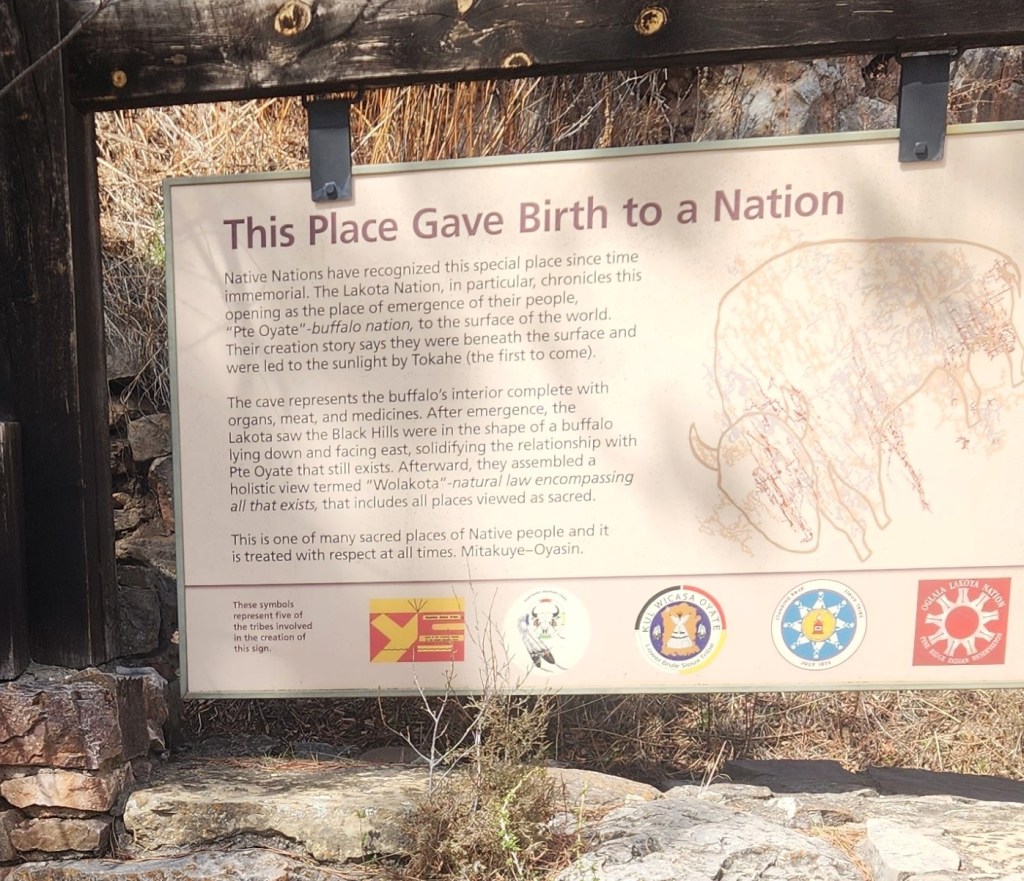
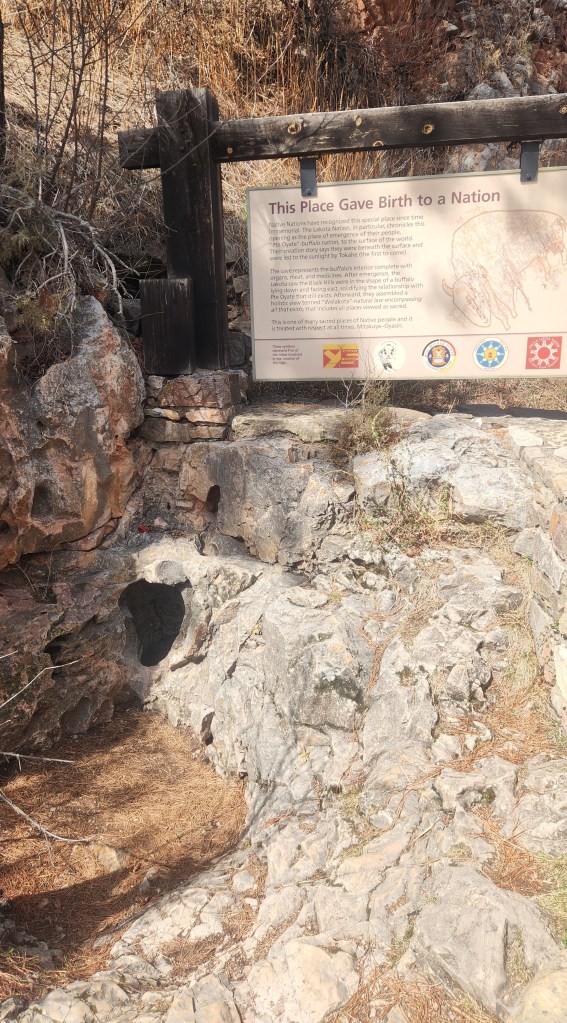
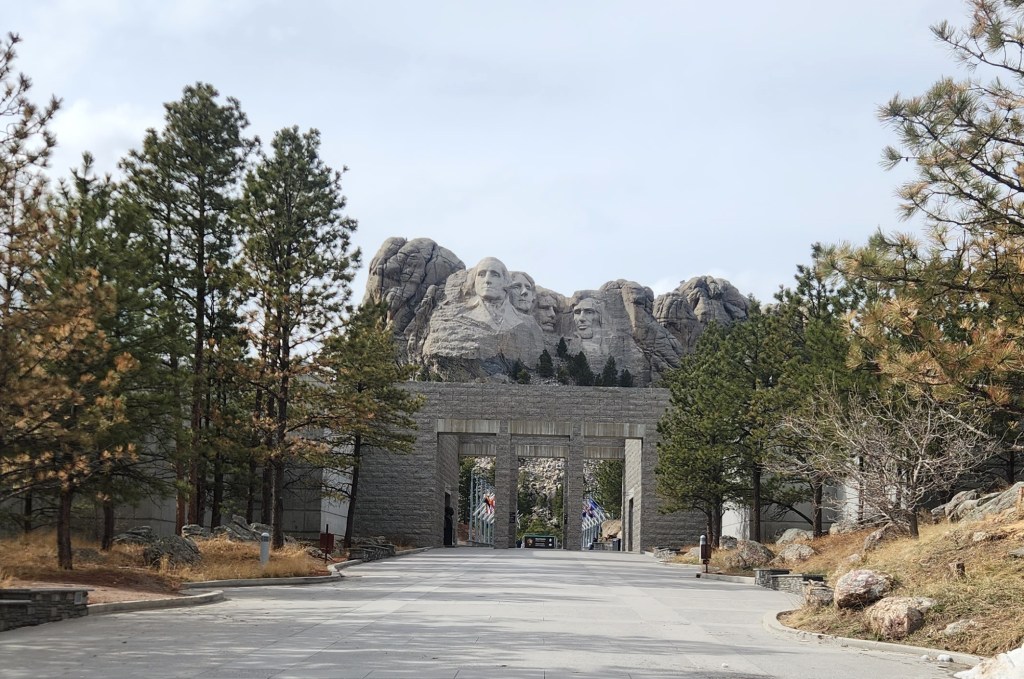
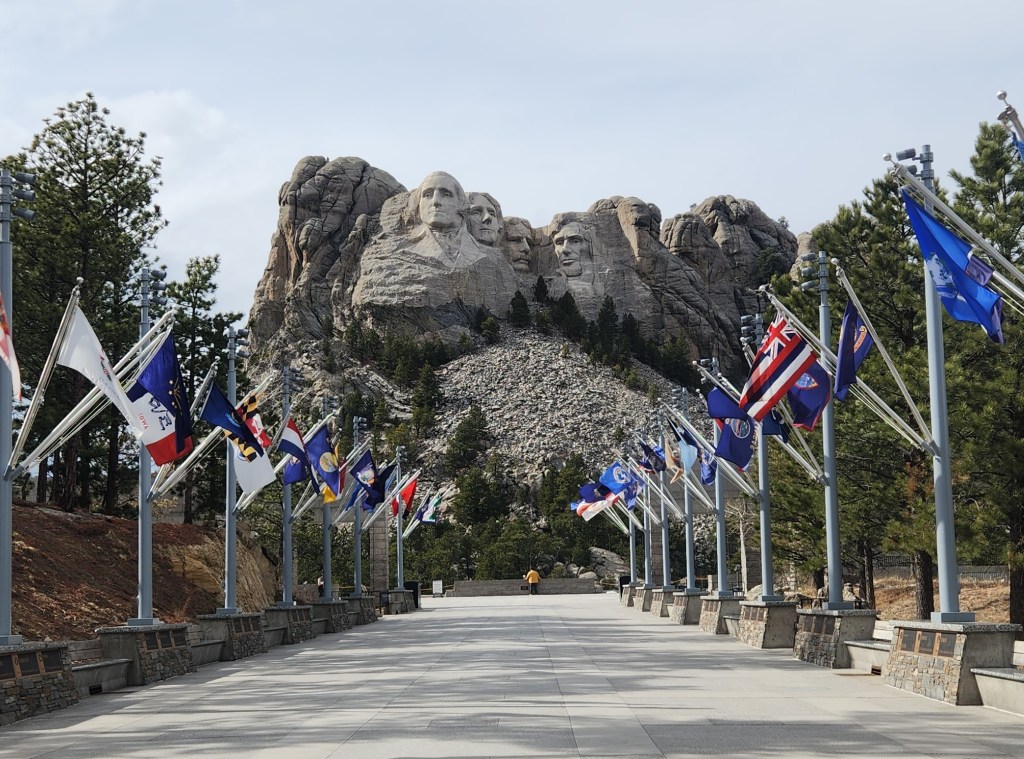
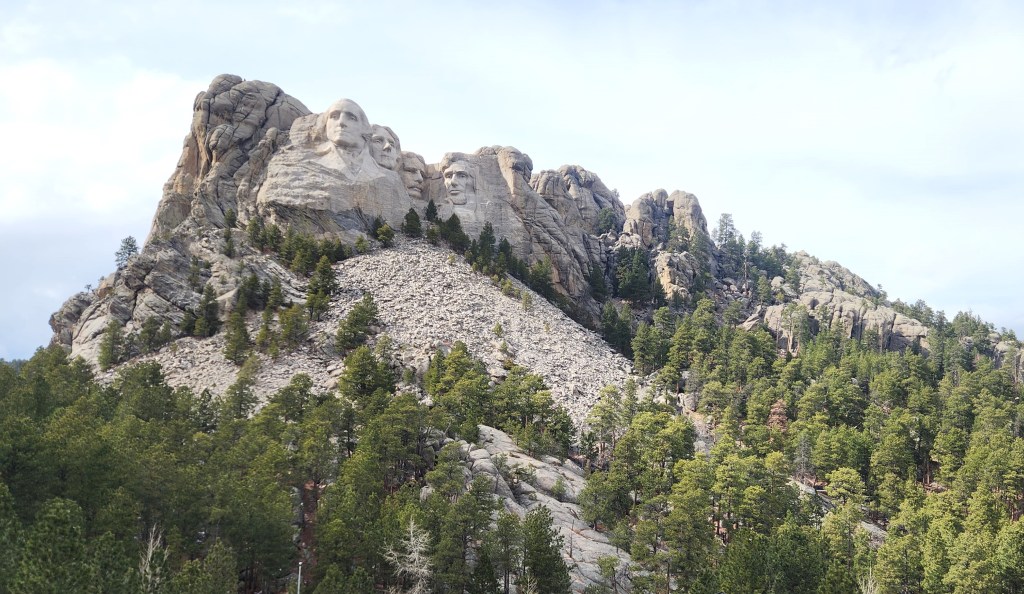
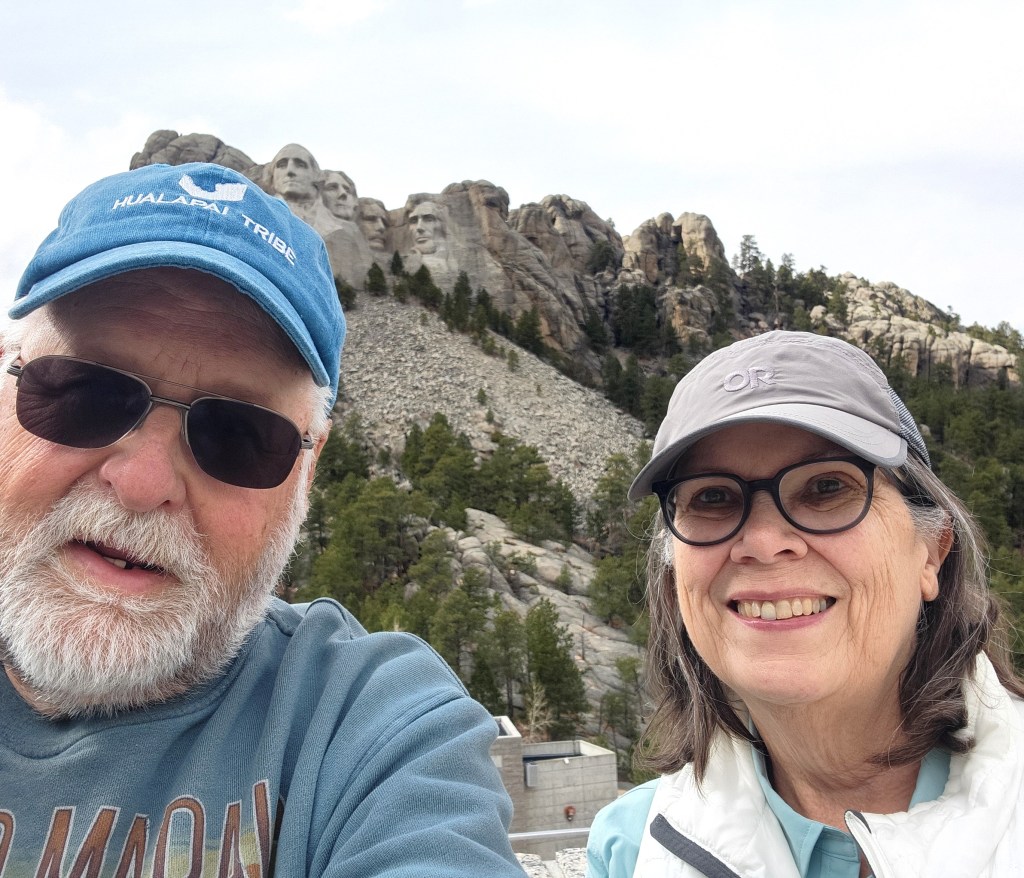
Mount Rushmore National Memorial: Since we were so close to this iconic piece of Americana, we had to stop and check it out. Unfortunately, the temperature was falling precipitously and the wind was rising, so, lacking appropriate cold weather wear, we didn’t spend a whole lot of time checking it out. There are some nice trails there, but they were closed due to the weather and we were too cold to go on them anyway. We did sit by a fireplace to watch a nice video and have some refreshments before leaving, though. One neat thing: it cost us only $5 to enter and park the car (half-price for seniors), and our ticket is valid for an entire year, so if we make it back out that way during better weather, we’ll stop in again.
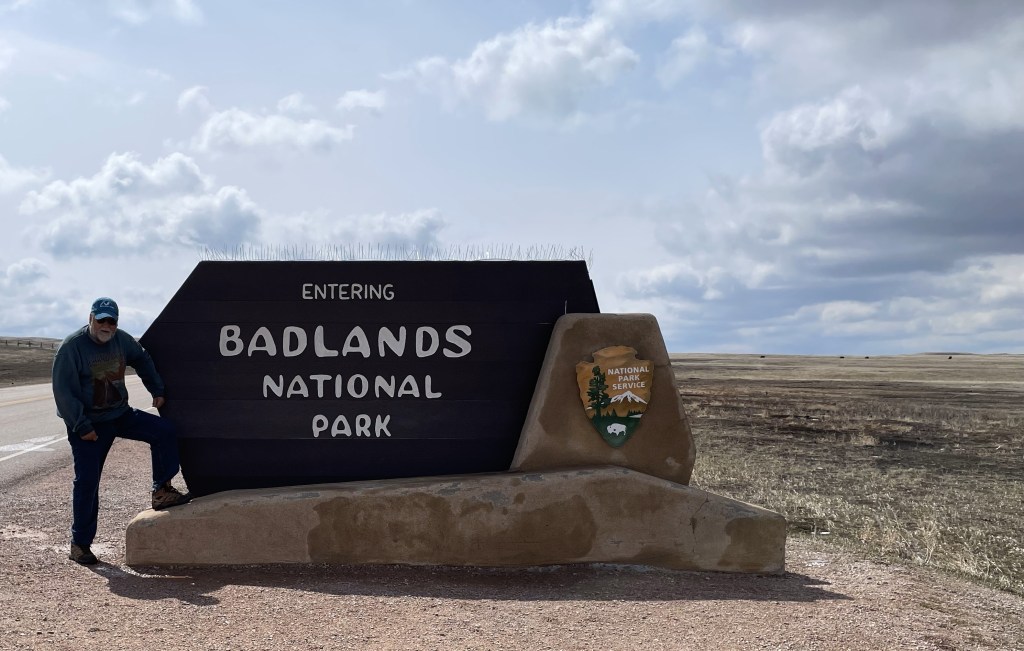
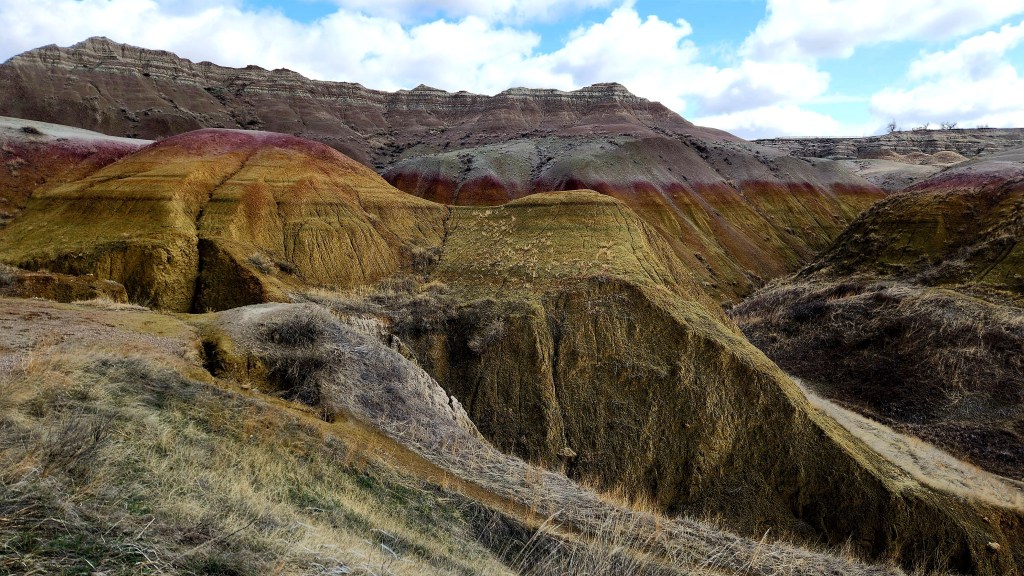
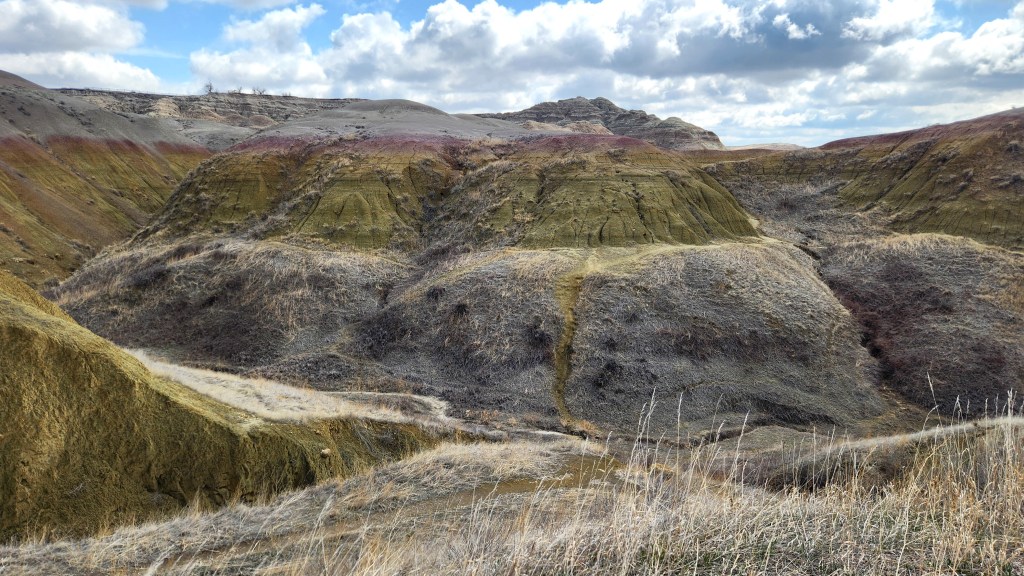
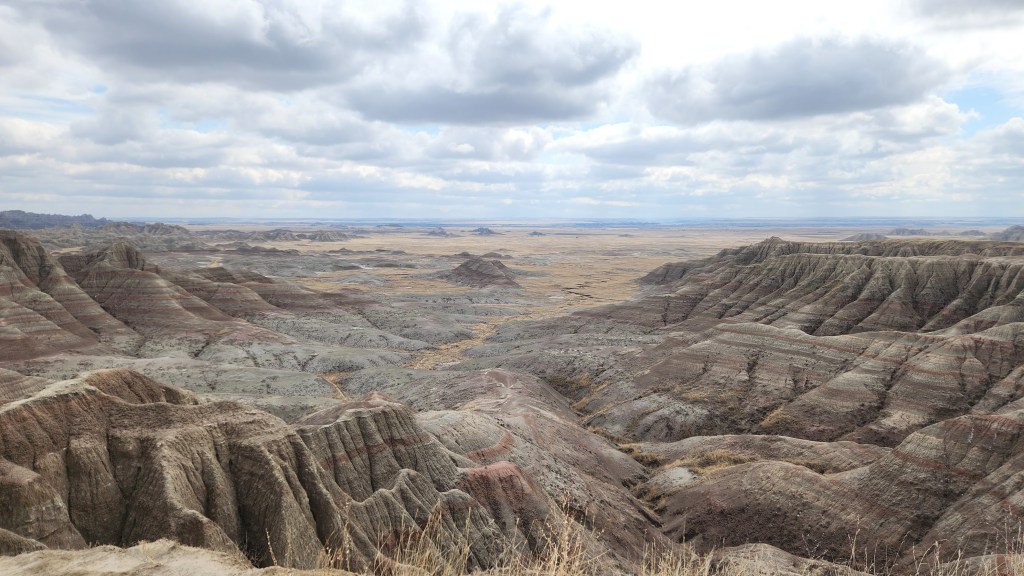
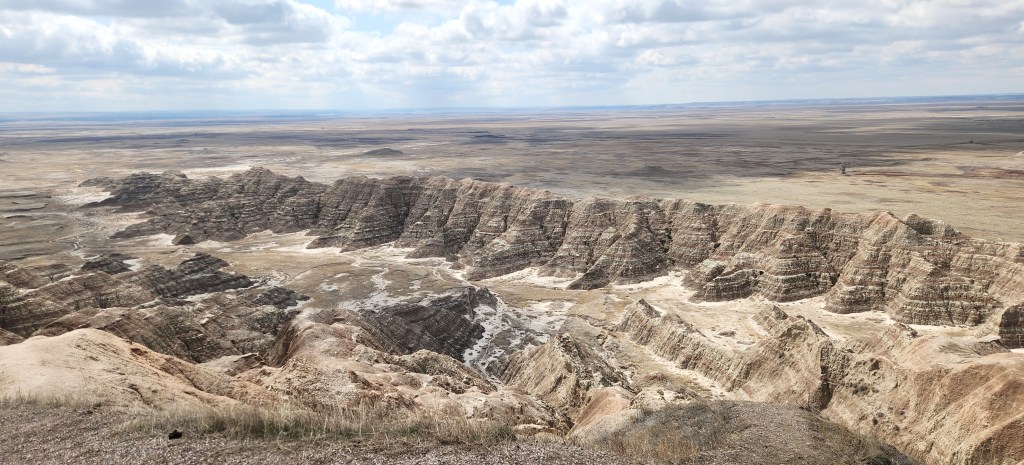
Badlands National Park: Afterspending Thursday night in Rapid City, SD, we drove to Badlands National Park, which brought our total number of National Parks to 31 so far. As you see on the map above, we failed to avoid Wall Drug as I had planned, but the only reasons we went there were: 1) to charge the car, and 2) to get on the road that enters Badlands from the north. I’ll admit that we did go inside – to use the rest rooms, not to bathe in the kitsch. At any rate, after surviving Wall Drug, we drove south to the park entrance.
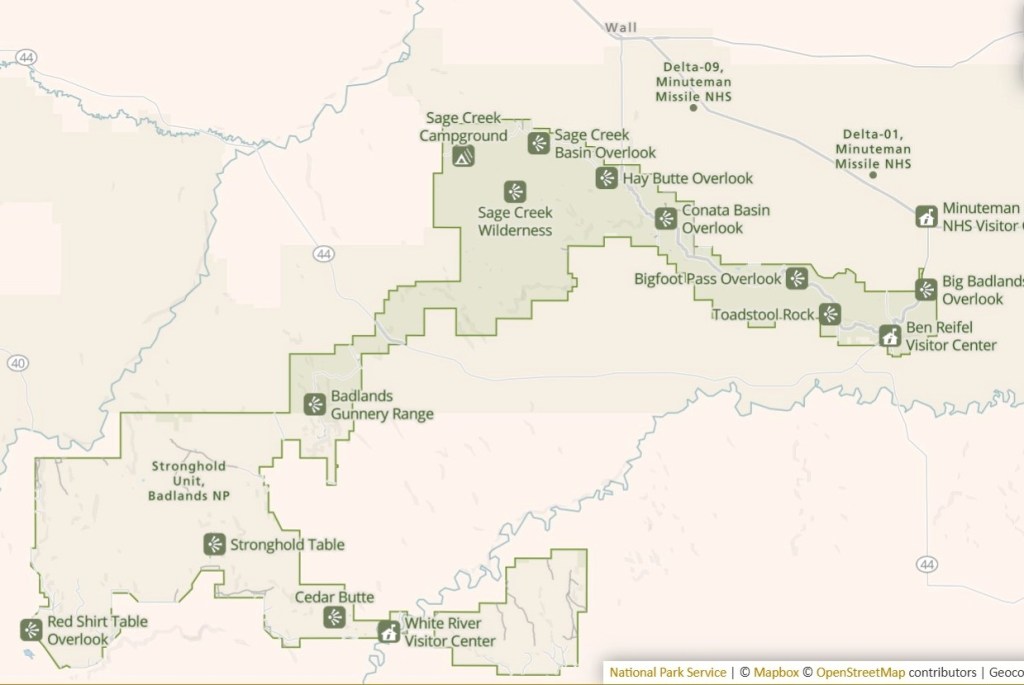
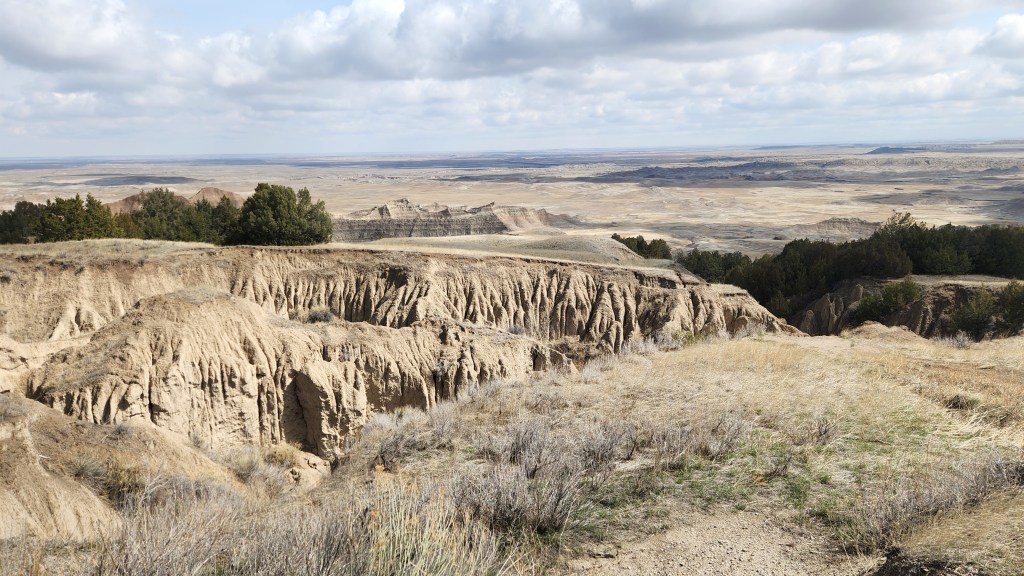
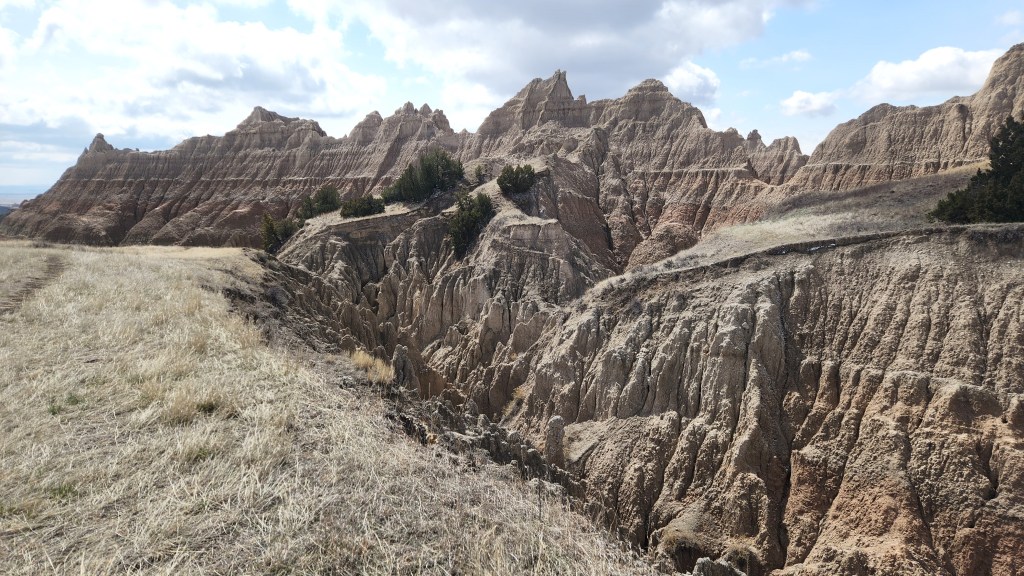
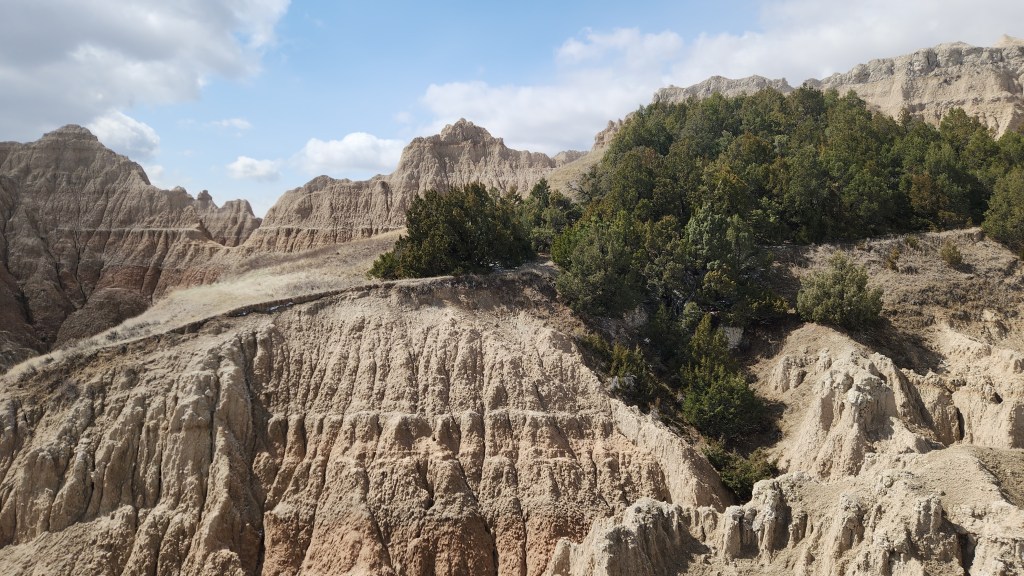
After stopping at the entry gate and showing my Senior Parks Pass, we headed southeastward through the park to the Ben Reifel Visitor Center. We had somewhat of a repeat of the Capitol Reef experience – jackrabbit Dave, Pat growing impatient until she took over driving, and Dave gawking and taking crummy pictures through the car windows. At the Visitor Center, we watched a video (of course) and perused the exhibits before heading off to the east toward Sioux Falls. If I can sum up the park in one simple statement, I’ll use a quote from the video, which was something like: “Badlands is a geologist’s wonderland.” As is sort of becoming a pattern with these travel blogs, I’m running out of gas, and you probably are, too, so I’ll just finish off with pictures.
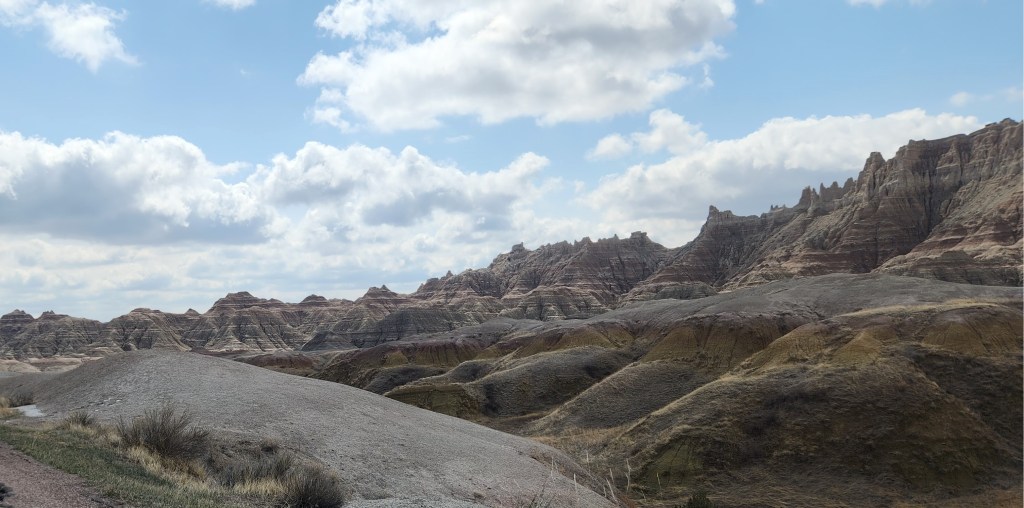
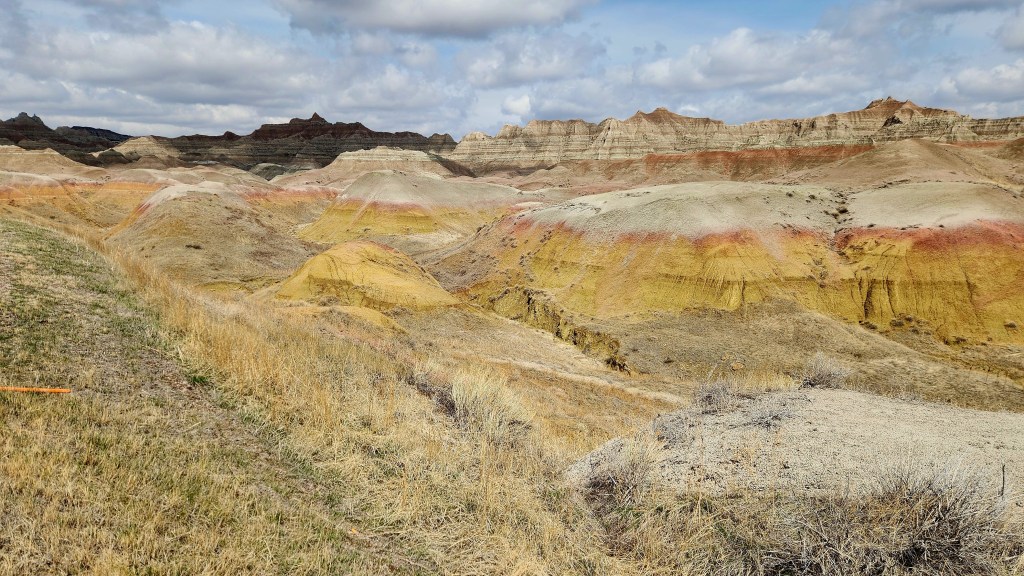
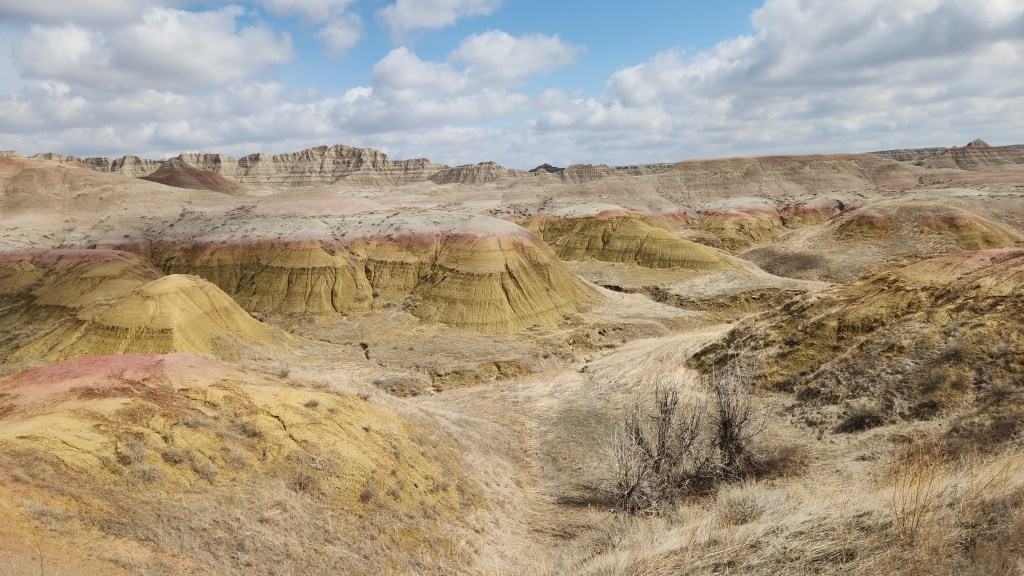
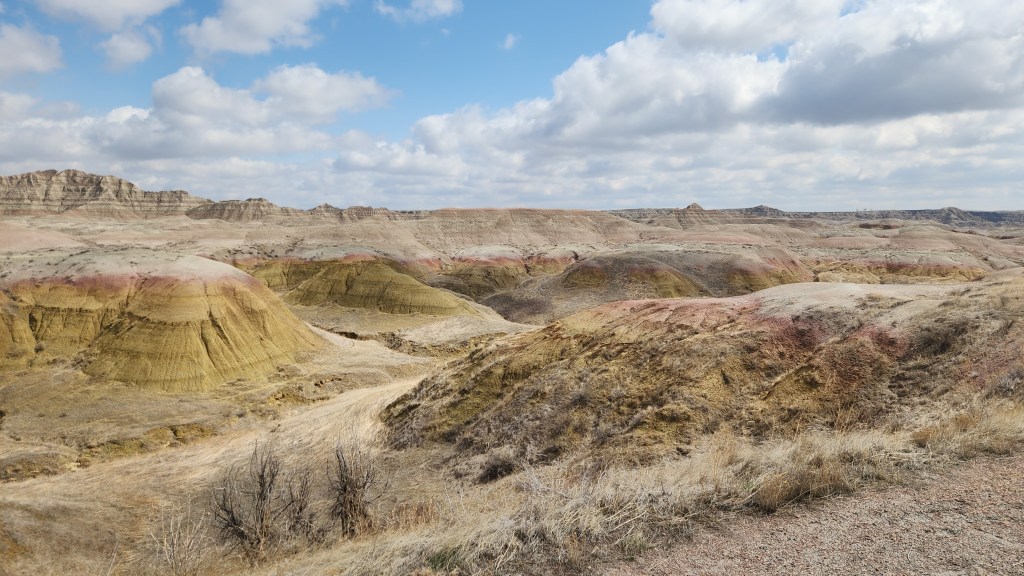
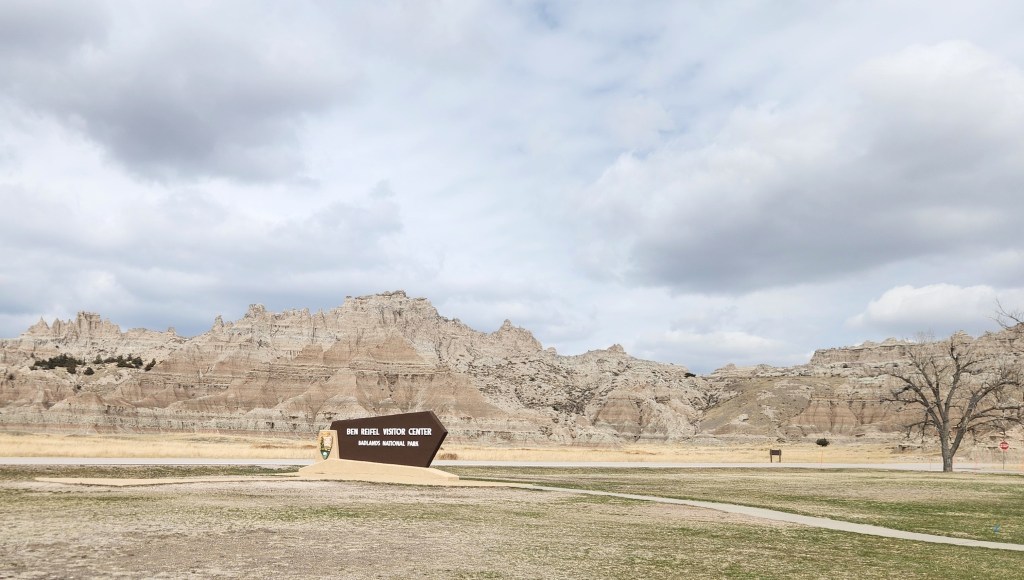
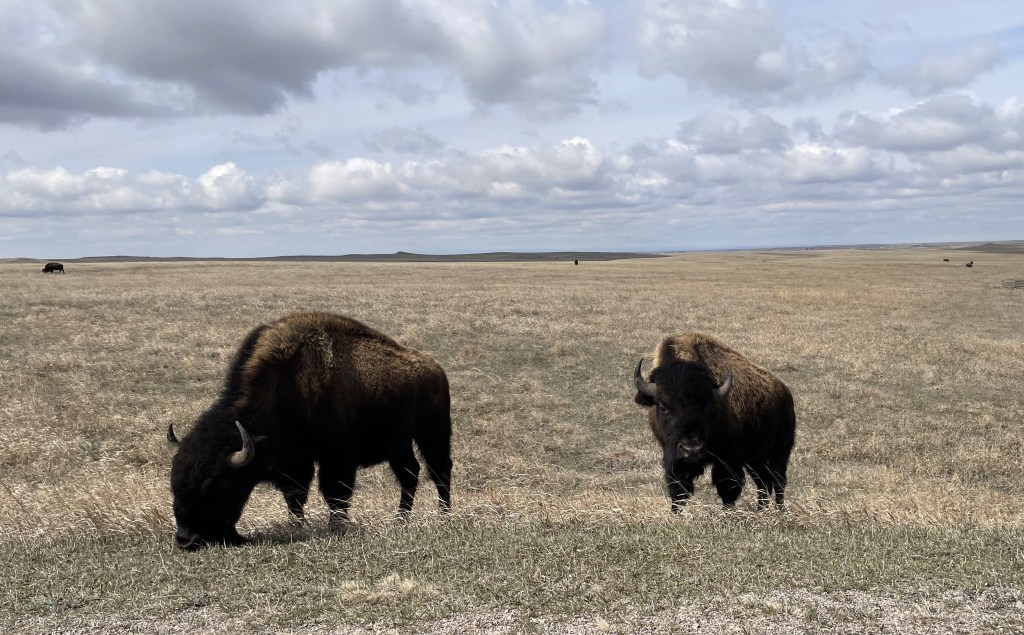
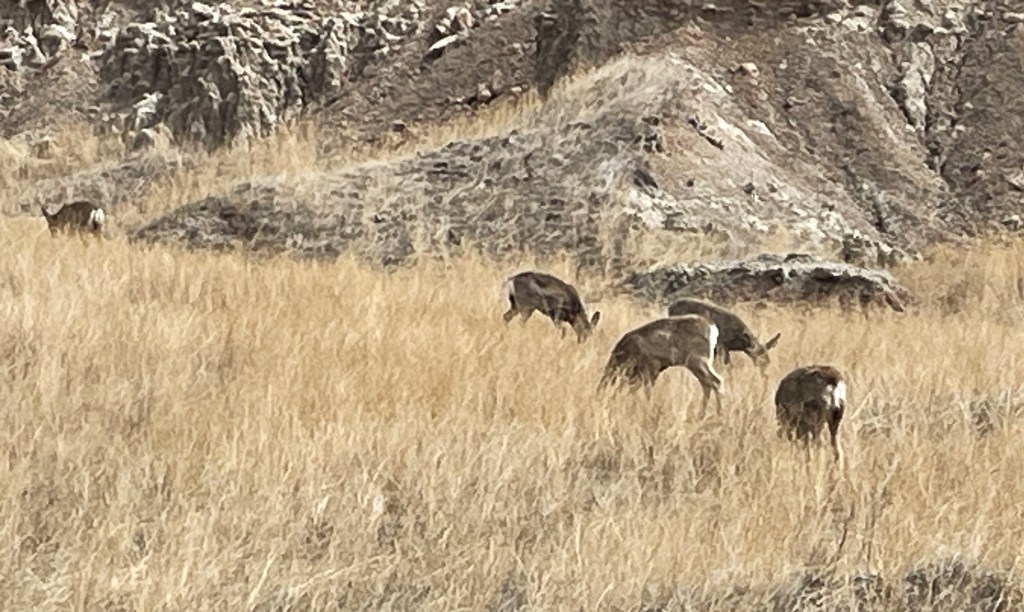
Okay, that’s a wrap for Pat and Dave’s Winter Warmup. After a night in Sioux Falls, we arrived safe and sound back home in Minneapolis on Saturday, April 5. We once again enjoyed traveling to the beautiful southwestern United States, visiting some familiar locales and some new ones, each and every one interesting and enjoyable. I hope readers enjoyed sharing the adventure with me!
Our next planned travel adventure (no doubt to be documented in yet another travel blog series) will be in October and November of 2025, when we go on a Viking Ocean Cruise with pre- and post-cruise extensions. This time, Viking will be escorting us from Baveno, Italy to Athens, Greece.
Thanks for reading! Bon voyage, until next time …





 Dave Saari