
Fall has arrived and the golf courses are closed in northeastern Minnesota, which can only mean one thing. It must be time for another road trip travel blog! Sure enough, Pat and I have just recently returned from a road trip outing, which I will now attempt to memorialize. The trip was a classic example of our rather spontaneous, some might say haphazard, approach to car travel. In contrast to certain unnamed relatives, we do not go in for detailed planning of such things, though at least some aspects, such as lodging in high-demand locations, do need to be arranged in advance to ensure availability when desired. So, here’s how this latest trip began and then developed as time went by.
The central idea for the trip was actually born some two-and-a-half years ago, in May of 2022, when we spent one day visiting Bryce Canyon National Park as part of a previously documented road trip. In that earlier blog post, I made a vague reference to my aching knees. In fact, it was at Bryce Canyon that I finally decided I needed to have my severely arthritic knees replaced, since walking on the trails was extremely difficult for me. Add to that the fact that we did not actually drive our car into the park and were thus unable to visit places where the convenient shuttle bus route does not reach. Further add that we very much admired the look of the in-park lodge cabins as we strolled past them. As we were leaving, we decided that we would come back for a longer visit once I had my new knees, that we would stay in one of those nice cabins, and that we would drive all the way to the end of the park road to take in the full park experience. Fast forward to February of this year: I made a reservation for three nights in one of those little cabins, from October 5 through October 8, by which time I assumed the golf season in Grand Marais would be winding down. (Incidentally, the process for making the reservation was really convoluted, requiring multiple phone messages and callbacks rather than the expected few clicks on a web site. Government contractor inefficiency at its finest.) We put the dates on the calendar, leaving all further details of the trip to be determined later, and went on with our spring and summer activities.
Sometime around the end of September, Pat began to suggest that we maybe ought to start thinking about what else we might do as part of the road trip. After all, it seemed like a long way to drive for only a three-day visit to one National Park. “Let’s just book some hotels near EV chargers for the trip out there, and we can add some other stuff for the way back,” I suggested. So that’s what we did, after deciding that we would leave on October 1st. Once we took off, the trip developed organically, eventually turning out to cover 4,128 miles in our Tesla Model 3 with visits to six National Parks and one National Battlefield. Here’s a map of the journey:
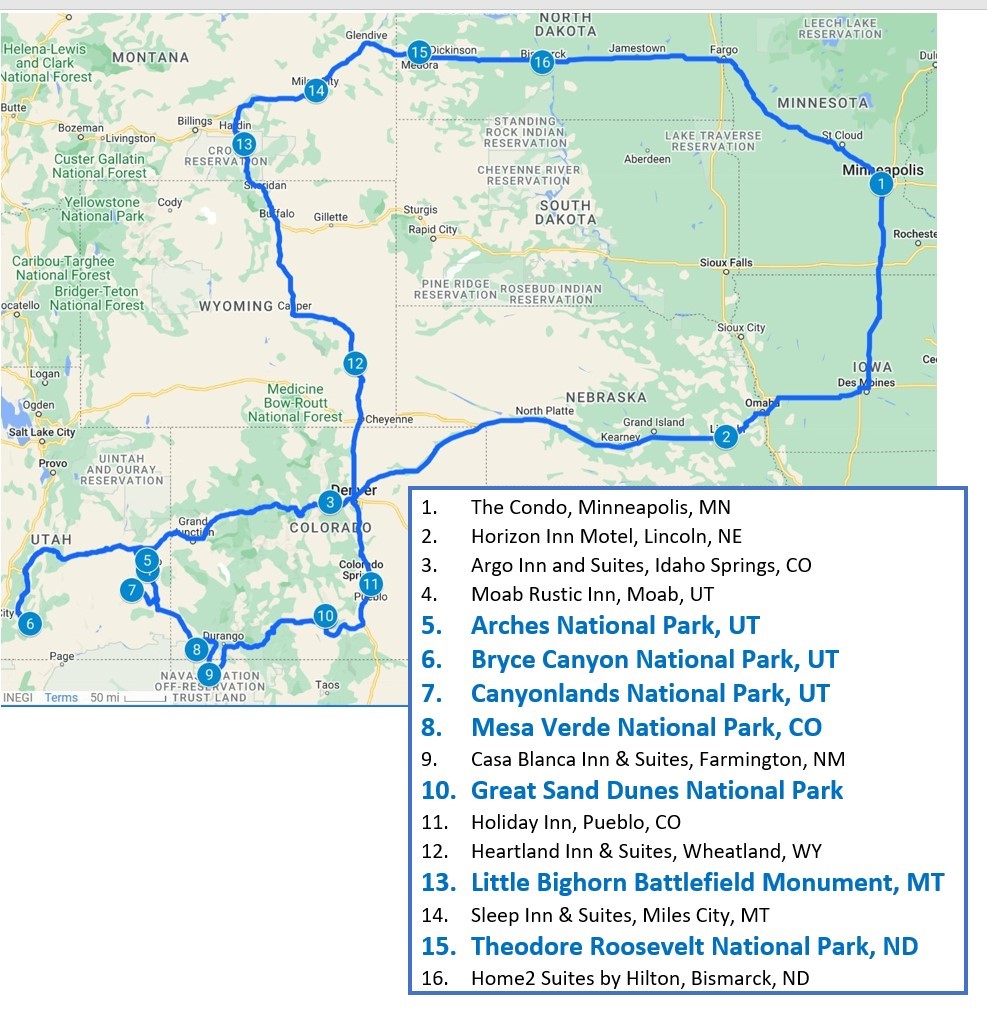
NOTE: This brings our total of National Parks visited to 27, or 43% of all the National Parks in the US. Maybe we’ll get to them all someday, or at least a majority of them. We’ve now also visited 20 other paces operated by the National Park Service, including National Monuments, Conservation Areas, Wildlife Refuges and Sanctuaries, and Battlefields. All of these national treasures represent socialism at its finest, if you ask me.
Although I’ve included the various hotels on the map to illustrate our actual route (I left off the Moab Valley Inn for visual clarity), I won’t spend any time describing them, since we only spent one night at each of them except for two nights at the Moab Rustic Inn. Suffice it to say that reserving all of these places was very easy using various travel and lodging apps on Pat’s iPhone and that all of the accommodations were convenient and comfortable. (A side note for EV drivers: both the Casa Blanca Inn and Suites in Farmington, NM, and the Heartland Inn and Suites in Wheatland, WY, had free Tesla Destination Chargers. The Heartland one was unusual in that there was also a Tesla Supercharger at a different location in the hotel parking lot.)
OK, now let’s move on with some descriptions of the main attractions, in chronological order.
Arches National Park (October 4): We arrived at the Moab Rustic Inn shortly before 4 PM on October 3. At 7 PM, I used the Recreation.gov app on my phone to obtain a timed visitor’s pass for access to the National Park between 10 and 11 AM the following morning. The National Park requires these passes, which cost $2 per car, during prime visiting hours in order to manage traffic in the park. (As I understand it, a pass is not needed for access before 7 AM or after 5 PM.) We obtained free entry to the park using my Lifetime Senior Pass, as we did at all of the other NPS sites during the trip. Here’s a map of the park, which covers 76,680 acres (120 square miles):
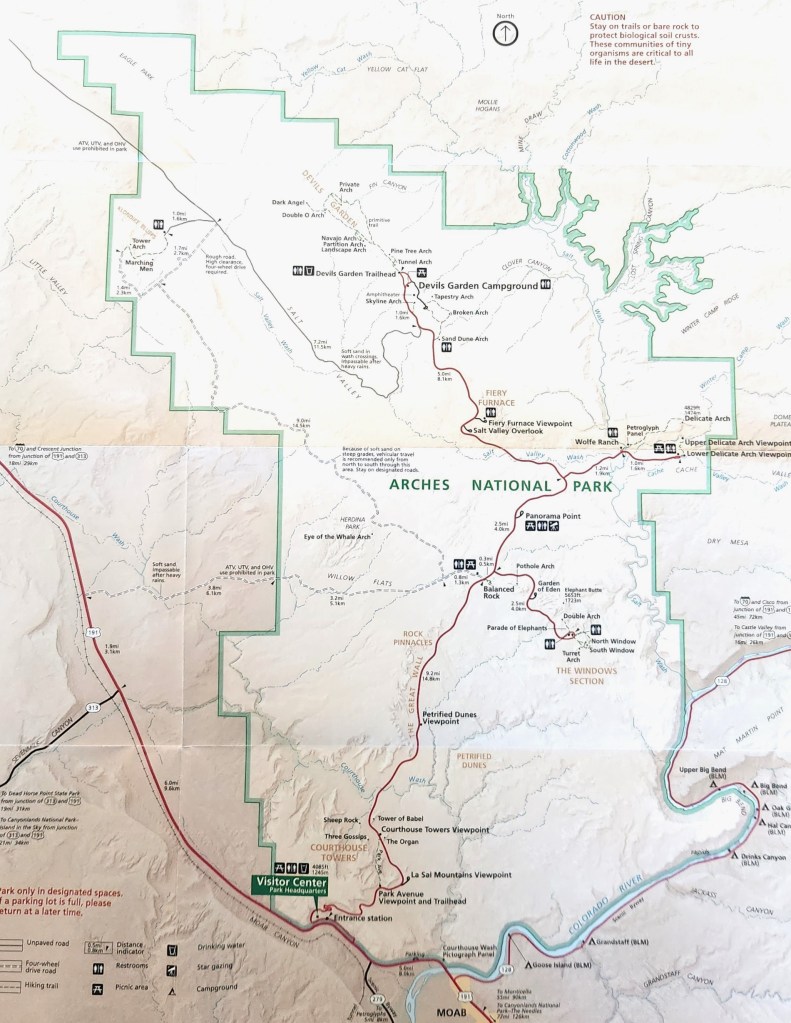
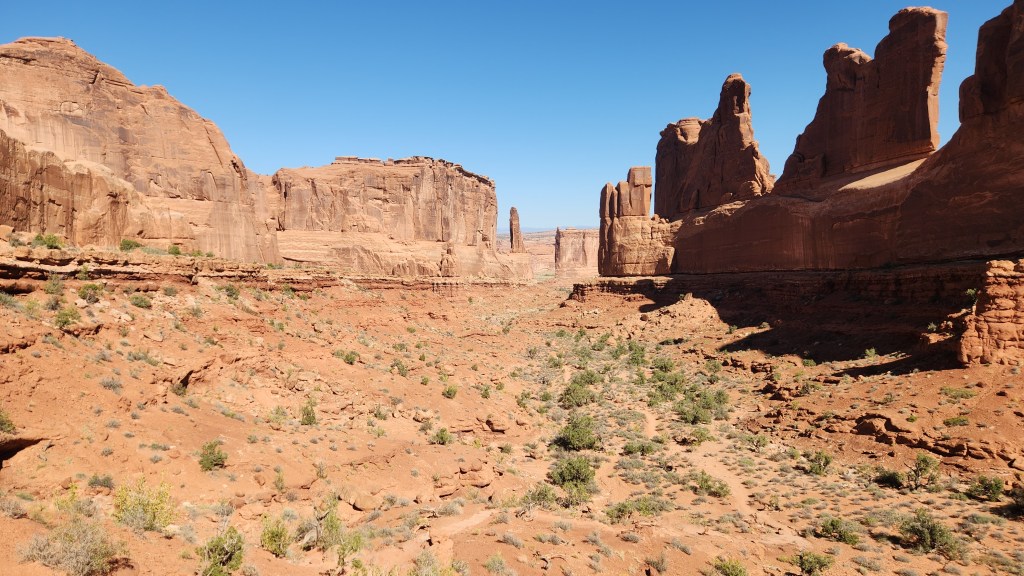
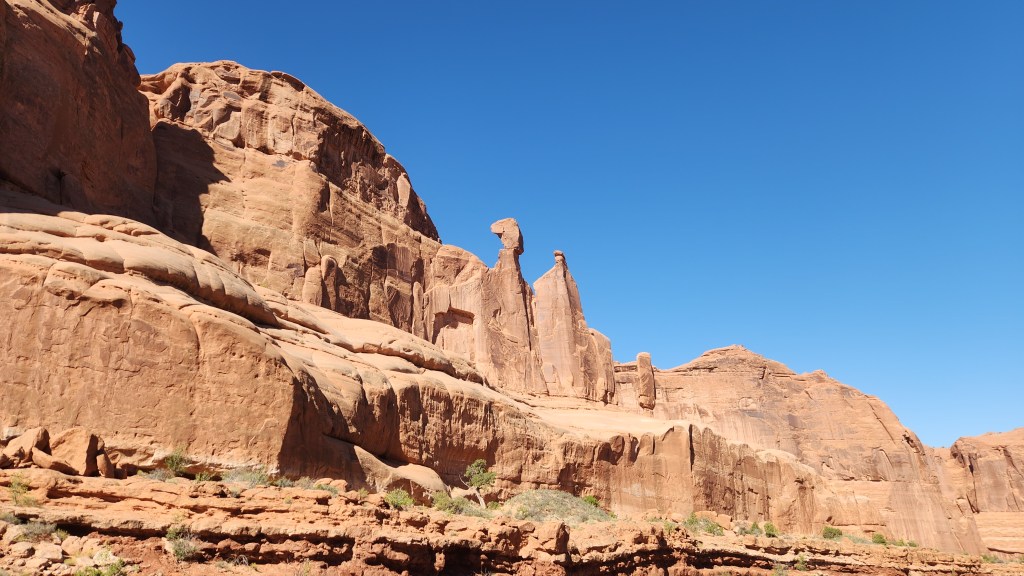
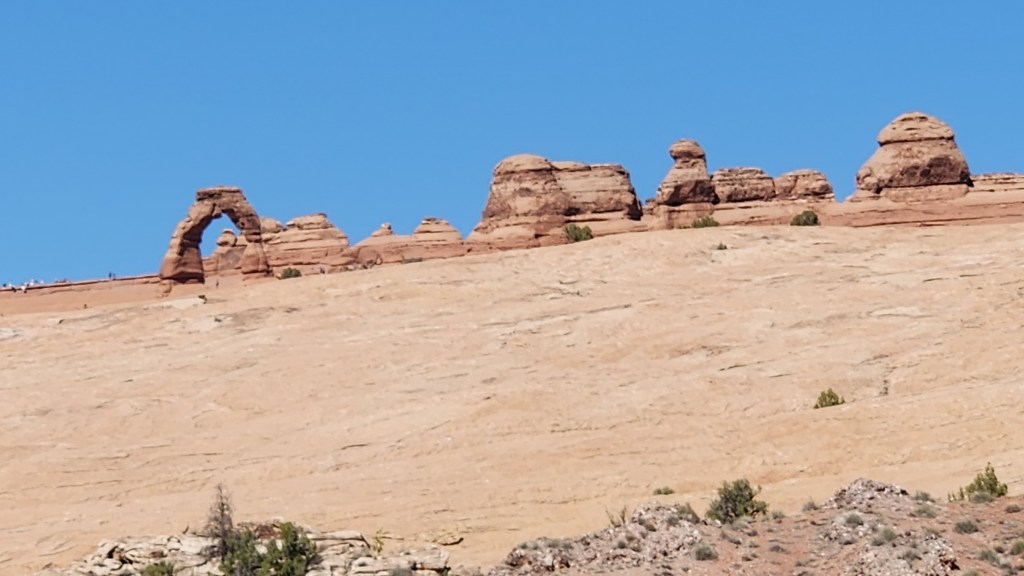
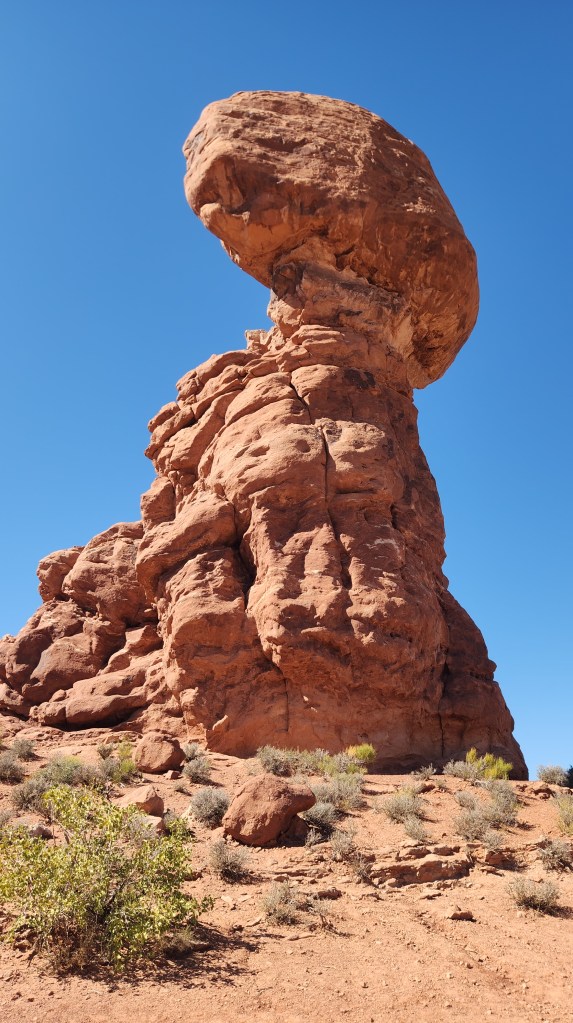
After stopping at the Visitor Center to watch an excellent movie about the park and buy a souvenir T-shirt, we spent about 6 hours driving along the excellent road through the park and stopping at multiple points of interest. The park includes over 2,000 natural sandstone arches, of which we saw about 20, a multitude of fascinating rock formations, and a limitless number of stunning vistas. We walked along the one-mile Windows Trail for some excellent views of the Windows Arches, then returned by the 1.2-mile primitive trail, which provided a good test for my new knees. I did use walking sticks due to the rough terrain on the primitive trail, but I was quite pleased with how it went. I couldn’t quite keep up with my younger and spryer wife, but I didn’t feel like a near invalid as I did back in 2022.
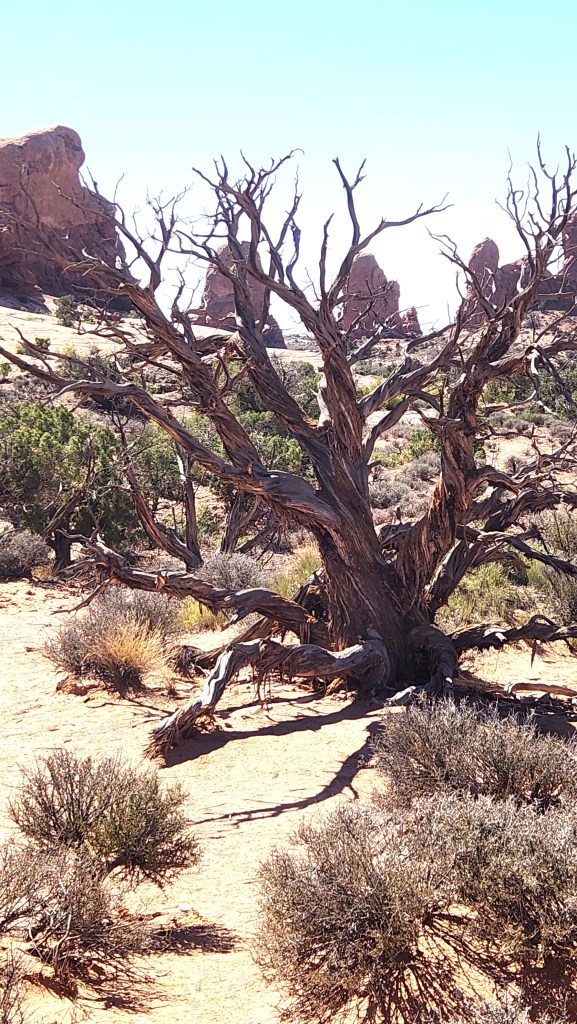
Enough words – here are some pictures:
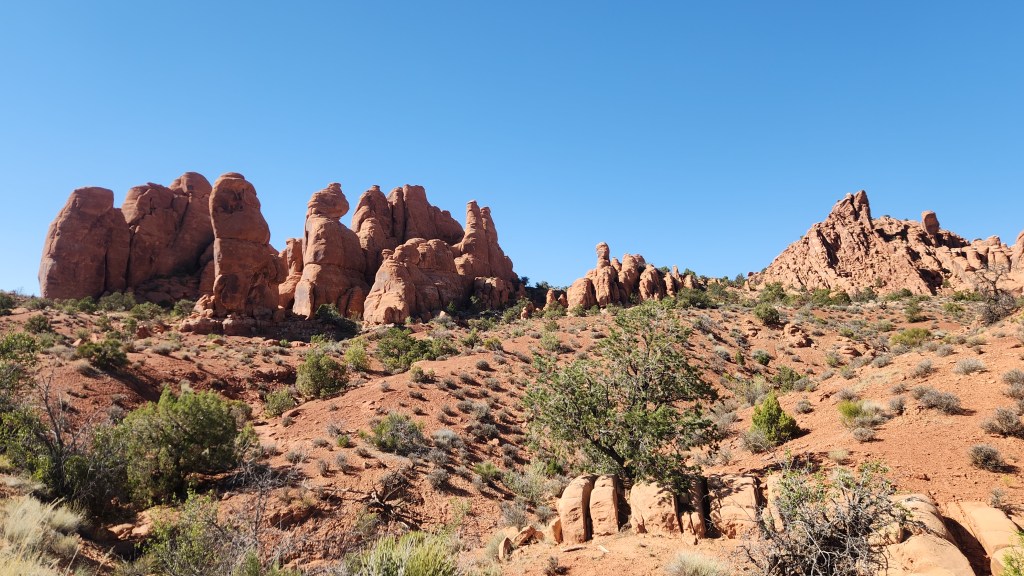
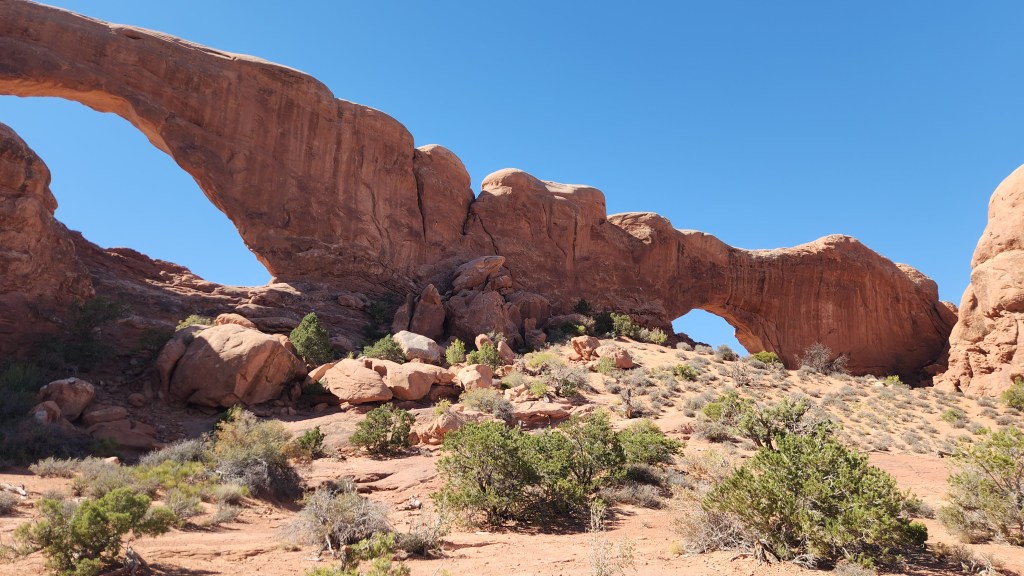
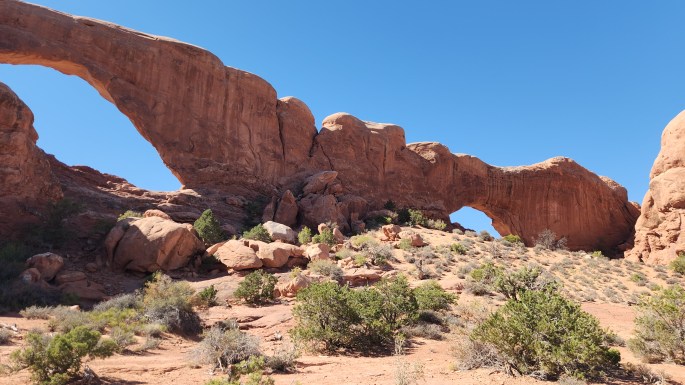
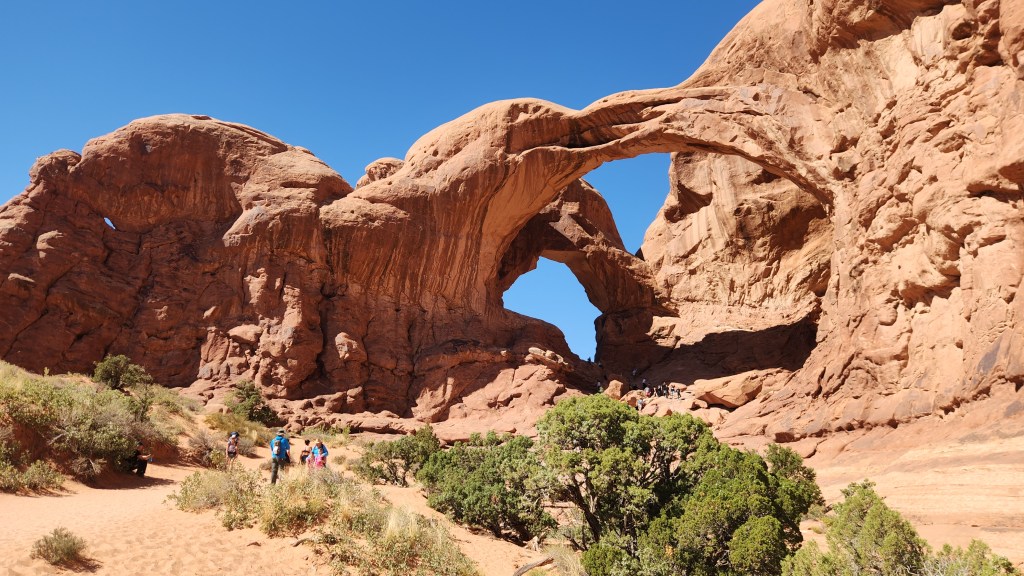
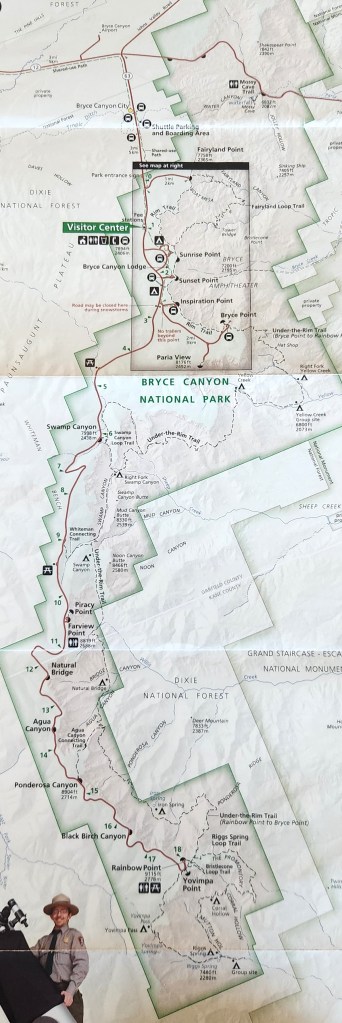
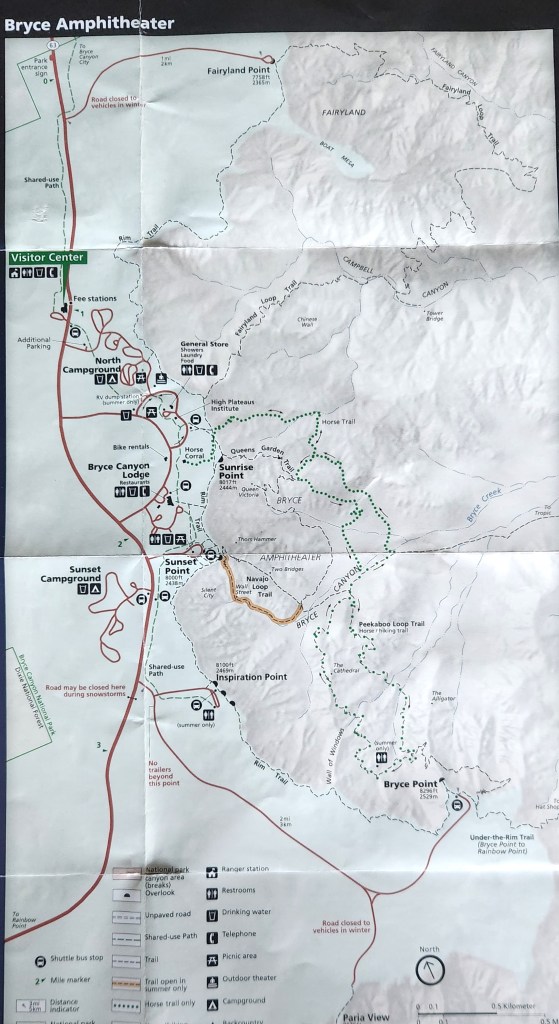
Bryce Canyon National Park (October 5 – 7): After our second night at the Moab Rustic Inn, we drove to Bryce Canyon National Park, which, as noted above, was the central idea for the road trip. Bryce manages traffic in the park by means of their free shuttle service and thus does not require timed entry passes. The shuttle picks up passengers who stay in the nearby town of Bryce Canyon City (as we did for our 2022 visit) or at the Visitor Center and ferries them around a loop to various points of interest in the Bryce Amphitheater as shown in the following maps:
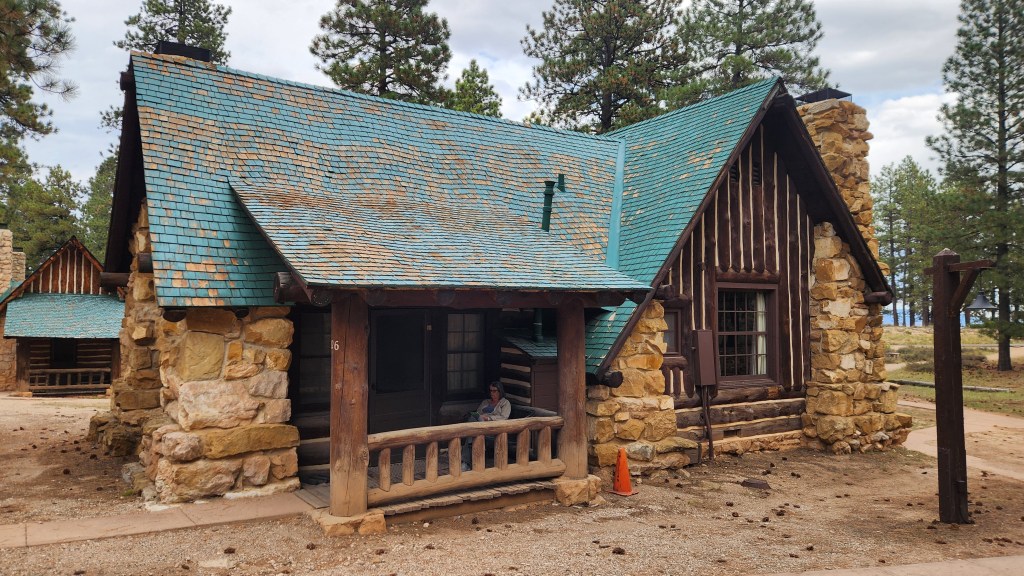
This time, we drove directly into the park (using my Senior Pass for entry) and to the Bryce Canyon area Lodge, where we checked in to Room 526, one-half of a lovely duplex cottage. The accommodations were very comfortable, with a gas fireplace, two queen beds, a bathroom, and a dressing area – the only drawback was the lack of Wi-Fi (heaven forbid!) in our room. Wi-Fi was available in and around the main lodge, however, and I occasionally got a cell signal in our room, so we weren’t exactly roughing it. The lodge has an excellent dining room, where we had breakfast and dinner each day, and there are a couple of nearby places where we could get lunch. Here’s a photo of the cottage – note the interesting roof tile construction which gives an optical illusion of a wavy surface.
We spent the afternoon and evening of the 5th walking along the paths near the lodge, oohing and aahing at the spectacular views from the canyon rim, and I easily traversed the very same paths I was nearly unable to manage in 2022.
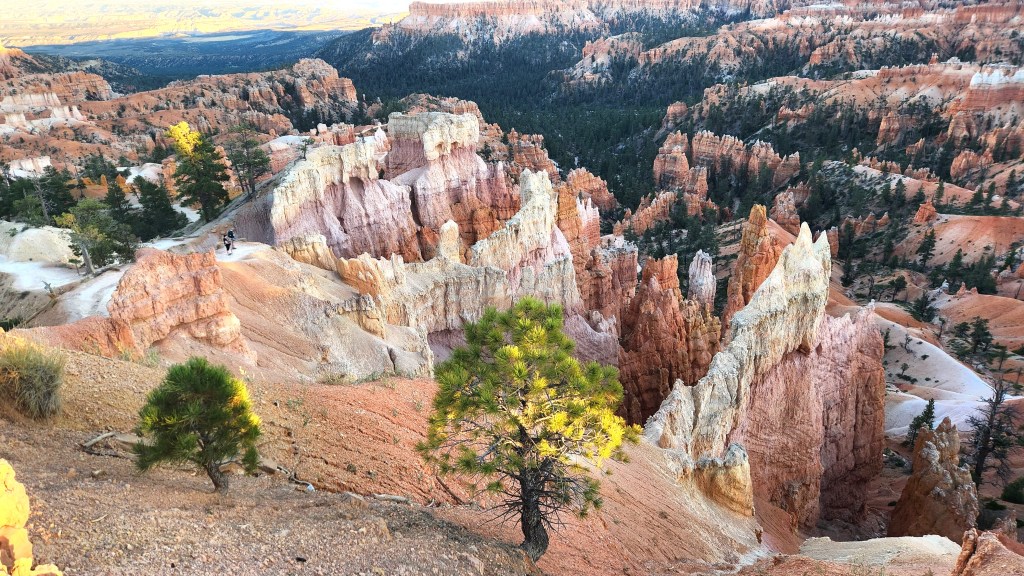
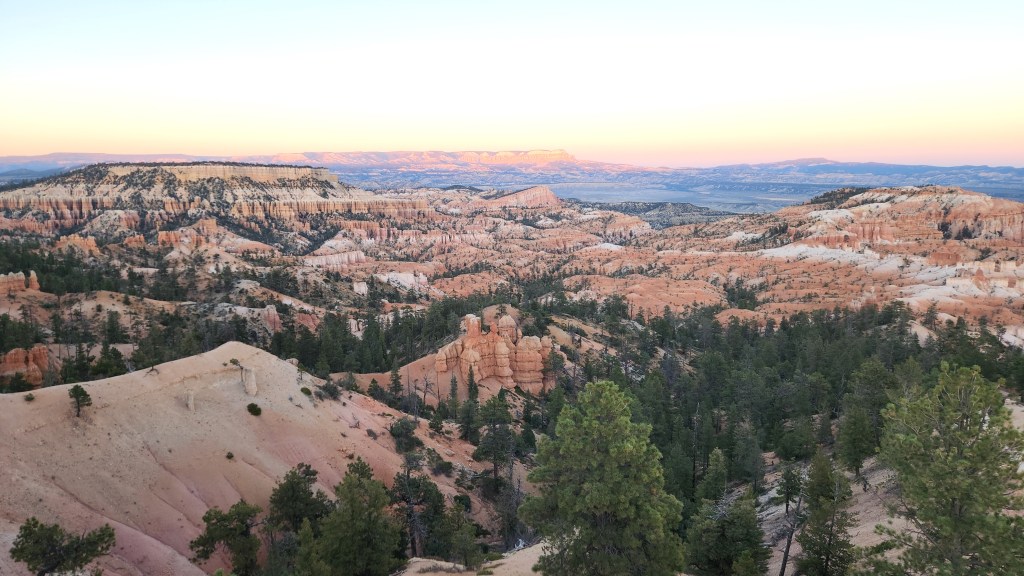
The next day, we took a hike on the Navajo Loop Trail, which meanders 450 feet down into the canyon, then returned to the rim on the Queen’s Garden Trail, some 2.9 miles in total. It was especially fascinating to see the rock formations and the foliage from the canyon floor, which provided a very different perspective than the view from the rim.
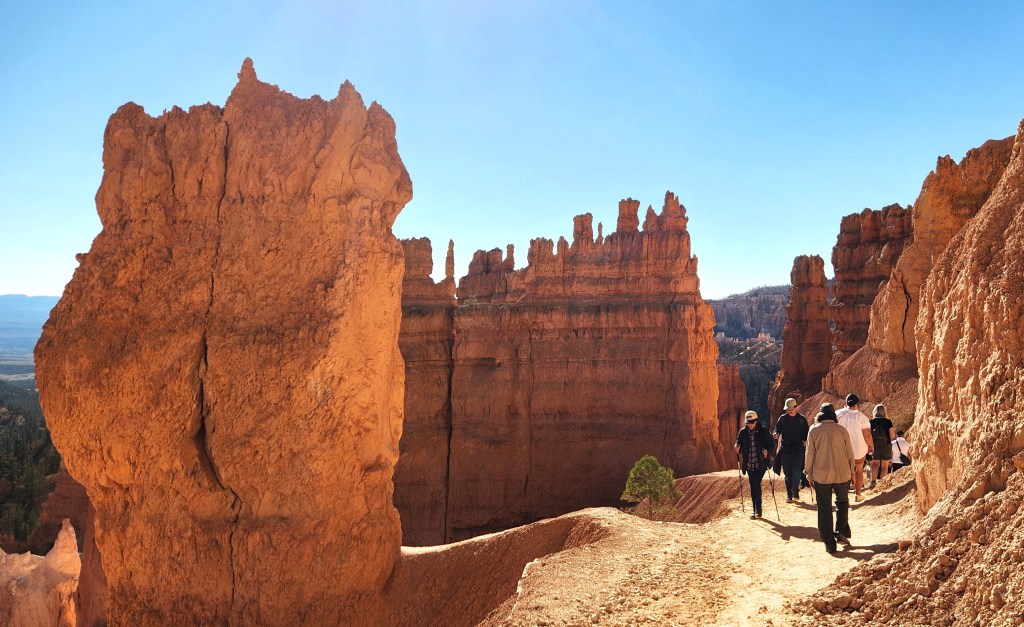
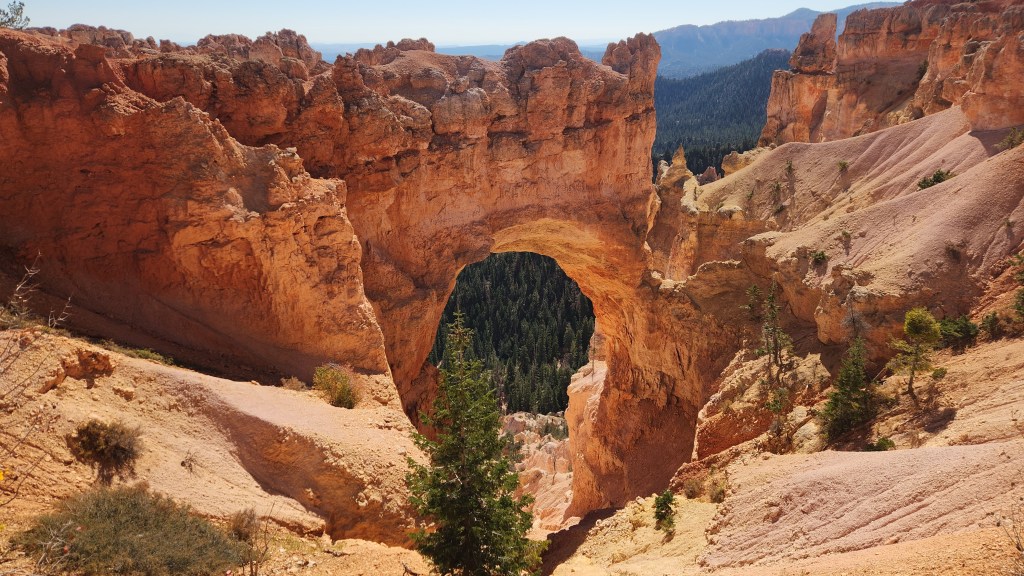
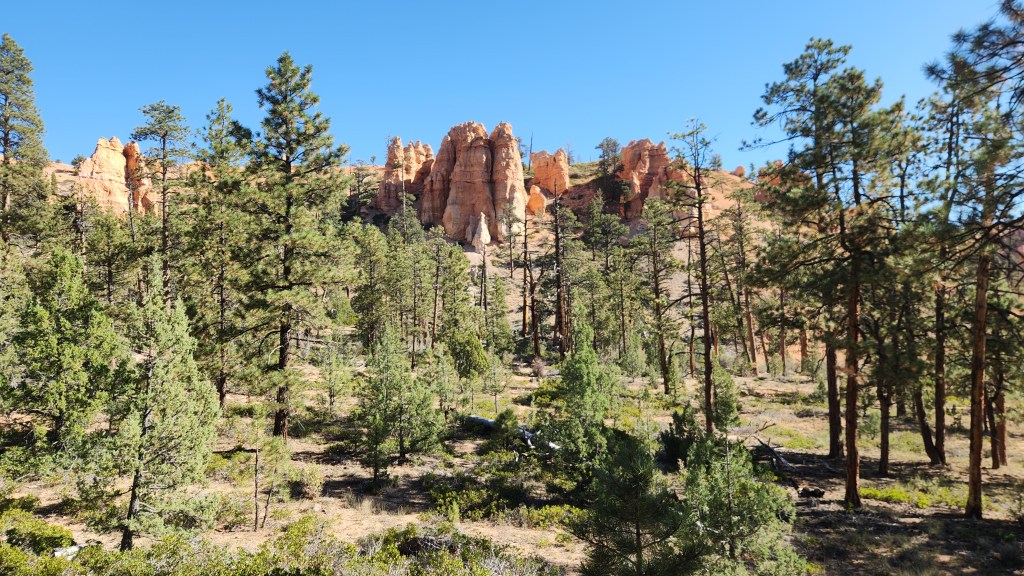
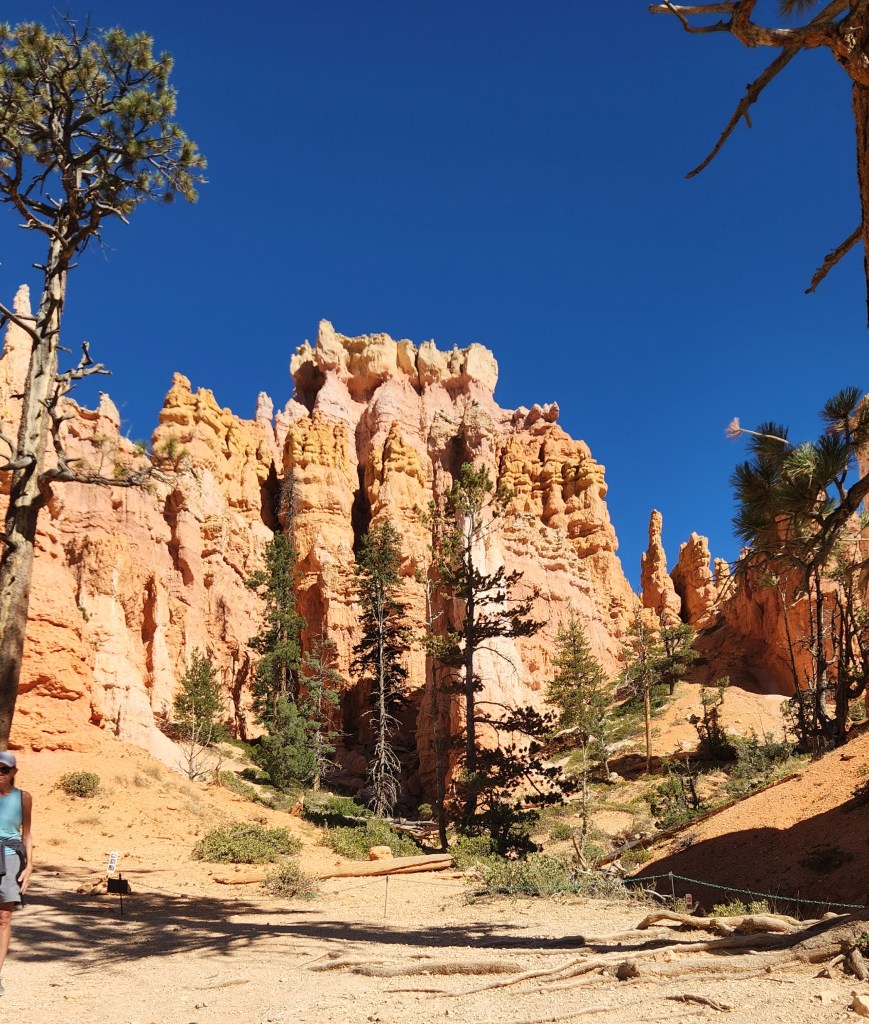
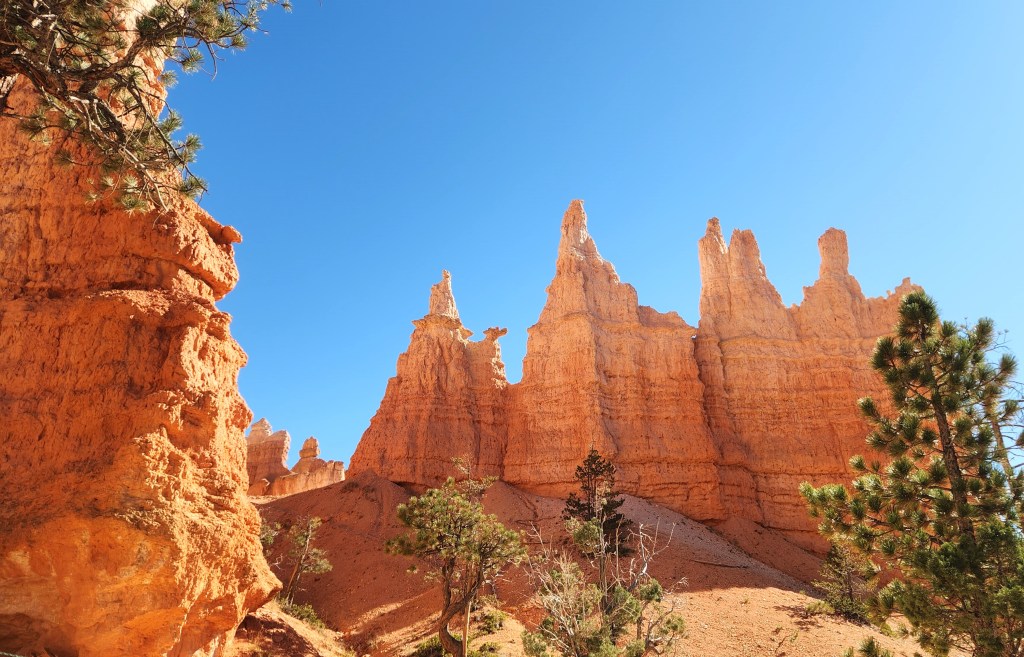
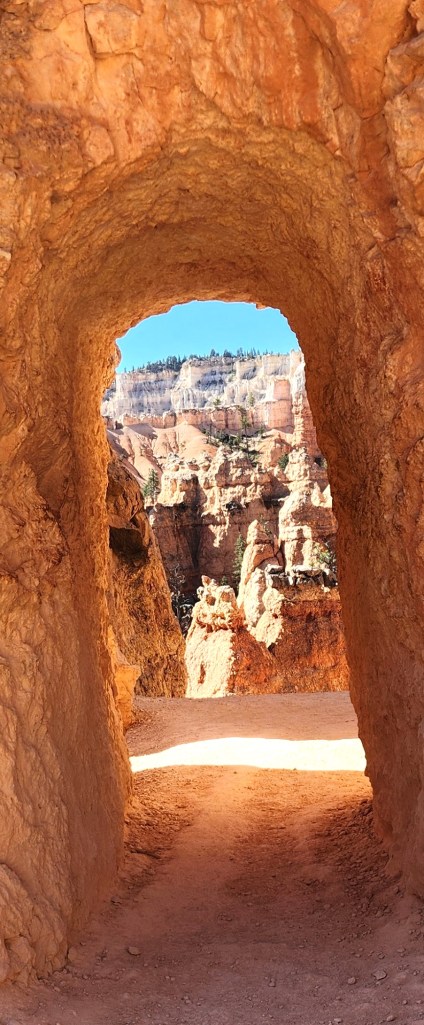
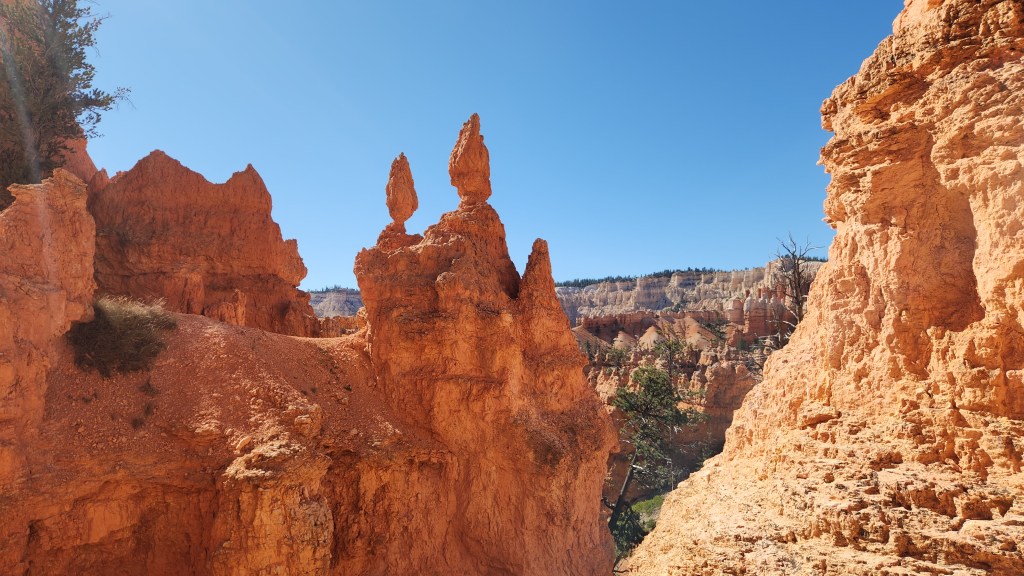
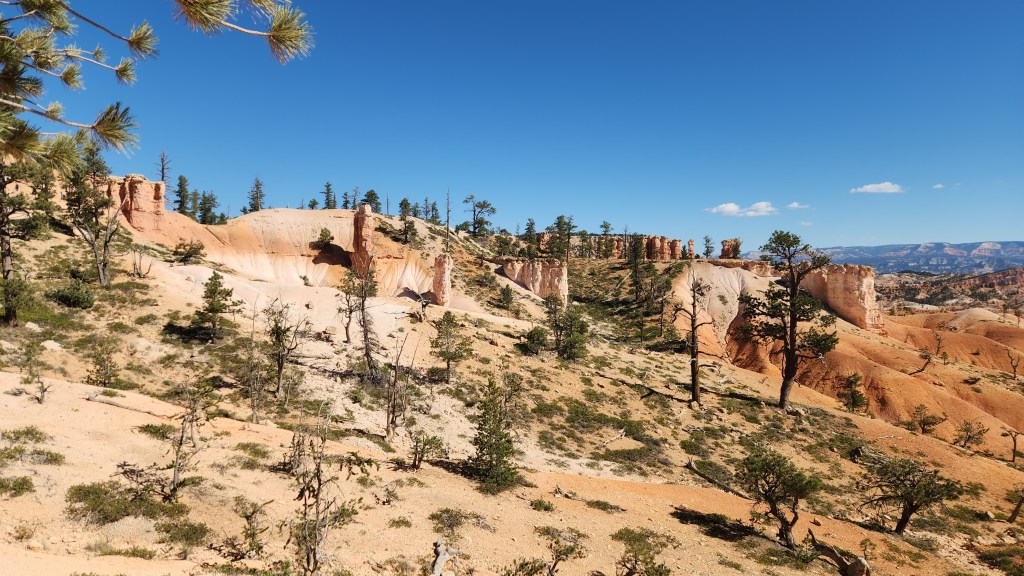
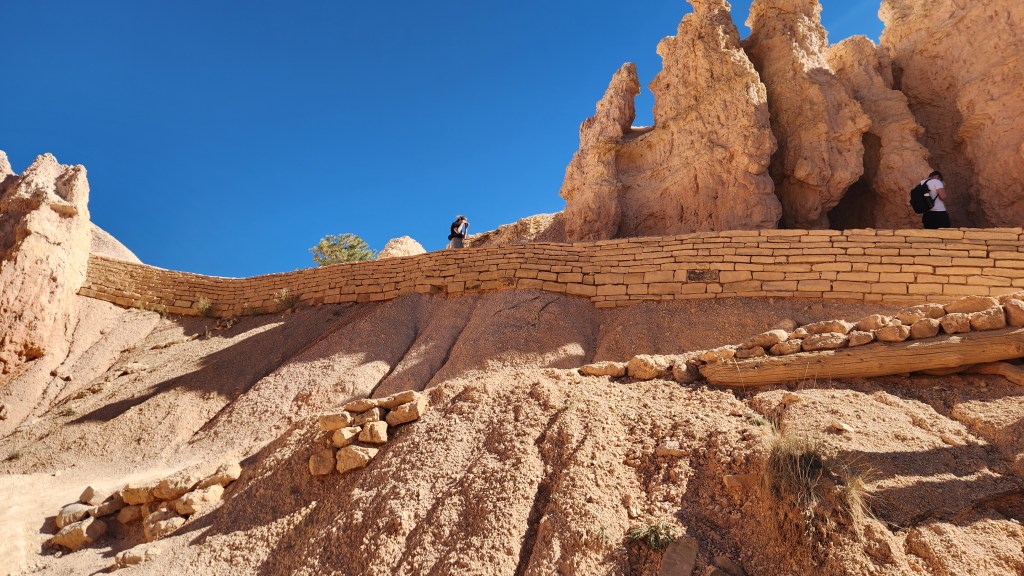
After our hike, we took the shuttle bus to the Visitor Center for, what else, a movie about the park and a souvenir T-shirt, then rode the shuttle back to the Lodge. On the third day, we drove along the excellent park road to Rainbow Point, the highest elevation in the park at 9,115 ft, and walked along the easy, 1-mile Bristlecone Trail. On the way back to our cottage, we stopped at all the points of interest and took another short walk from Fairview Point to Piracy Point.
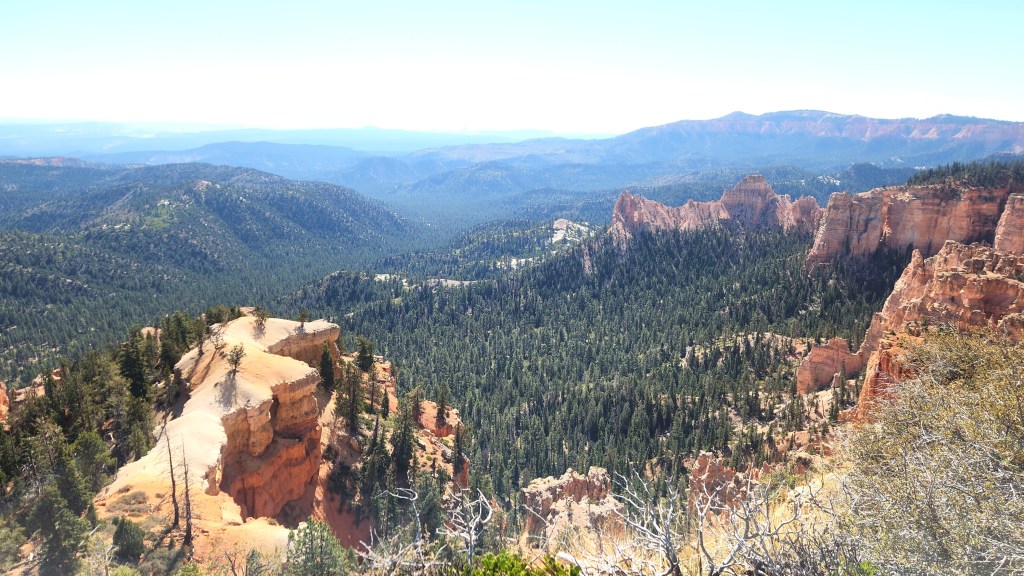
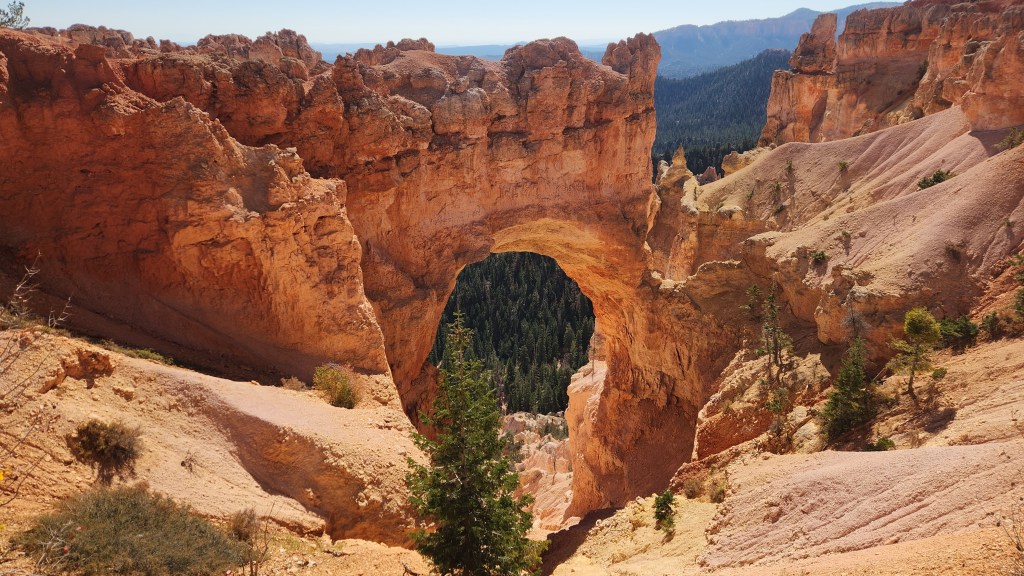
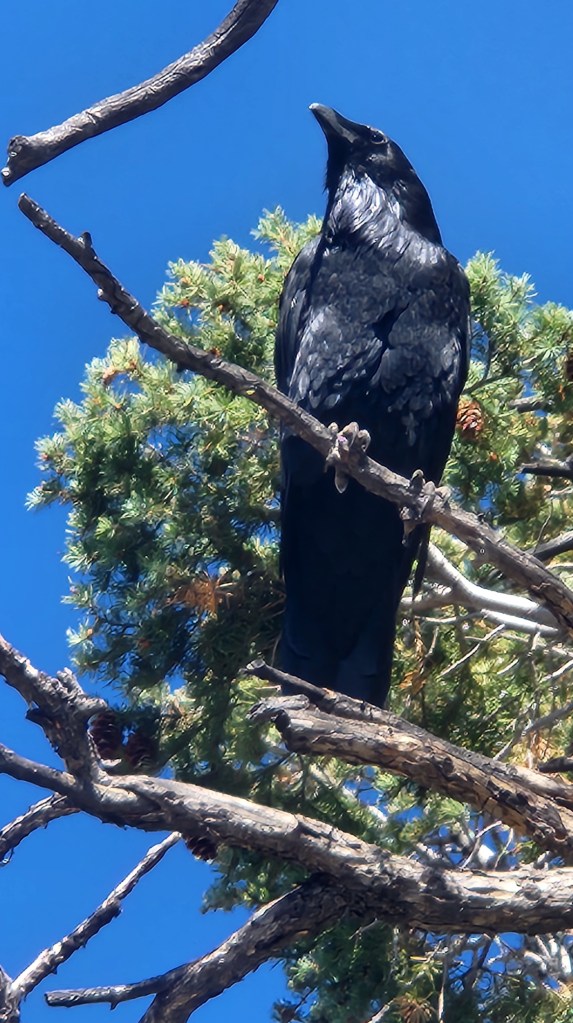
Another feature of the park is its certification as a dark skies location. I stepped outside a couple of times during the night to take in the stars, which looked especially bright in comparison to the views from the various hotels we had been staying in, or for that matter from our Minneapolis condo, but not too dissimilar to that from our Grand Marais summer home. All in all, the Bryce Canyon visit was an excellent cornerstone for our road trip.
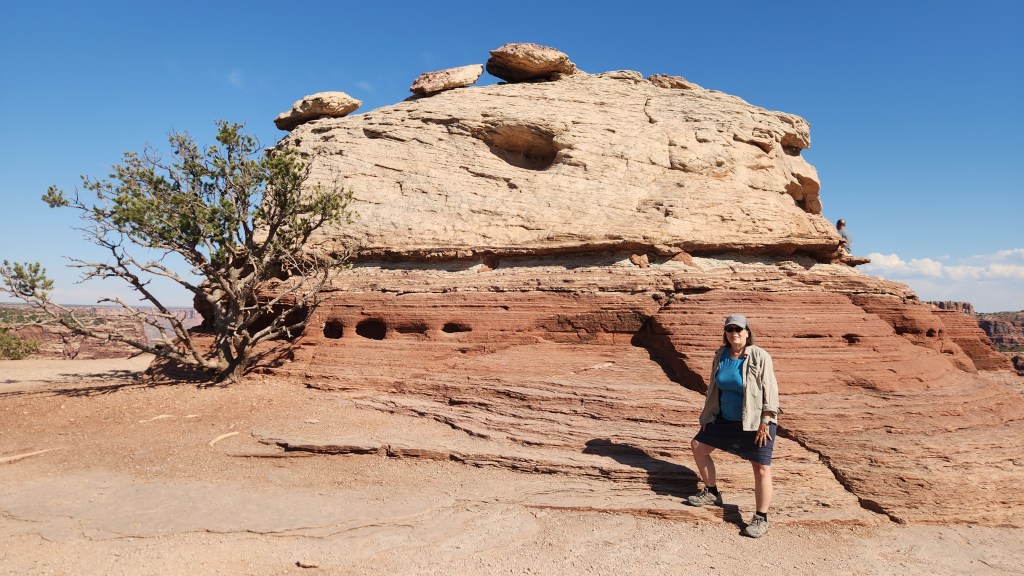
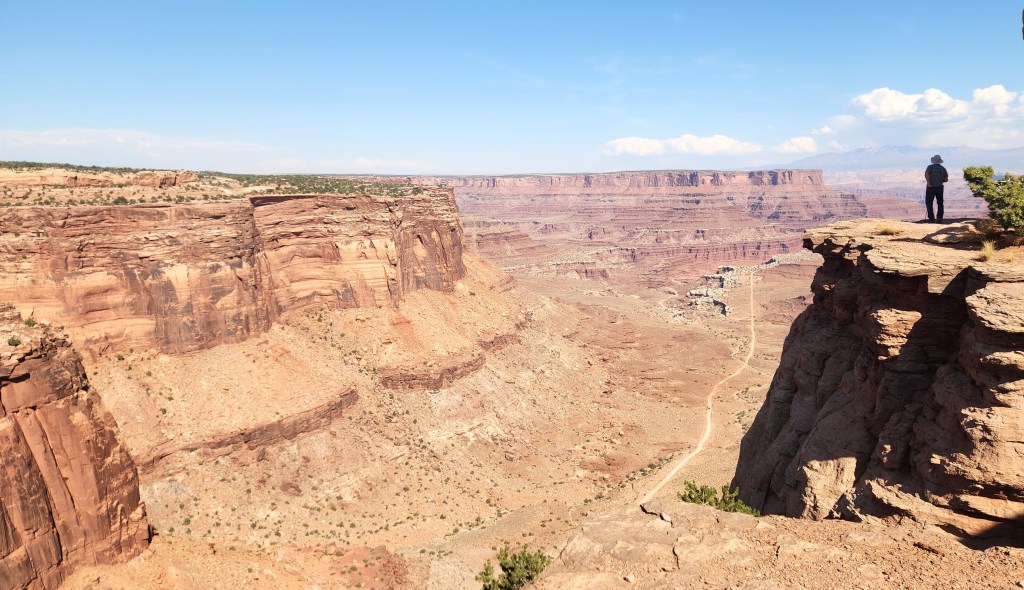
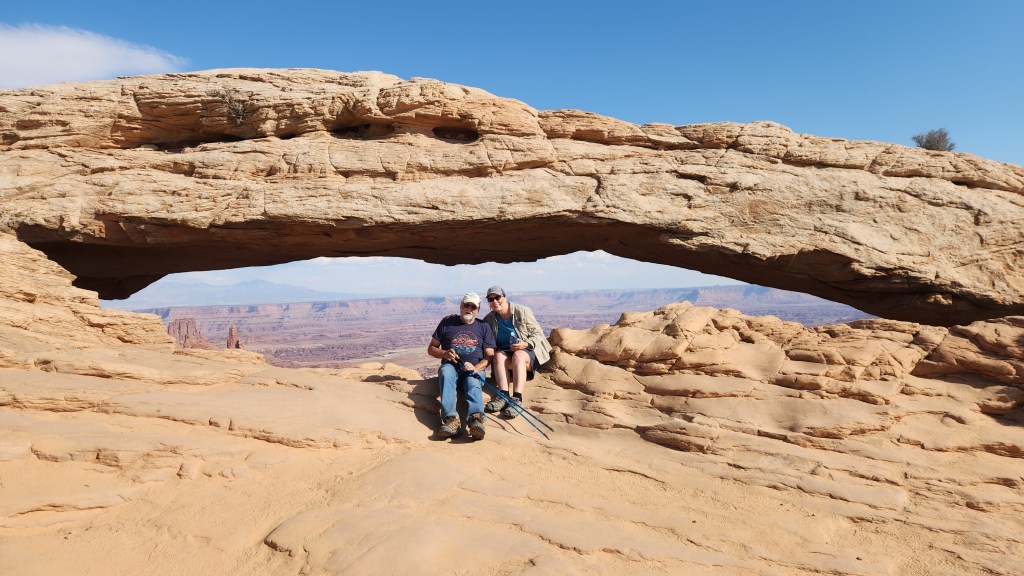
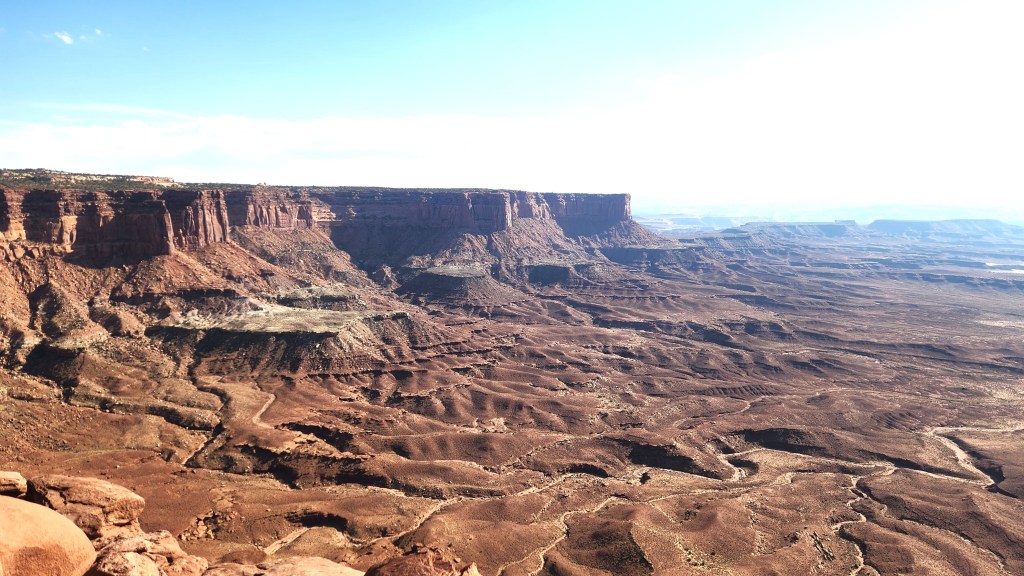
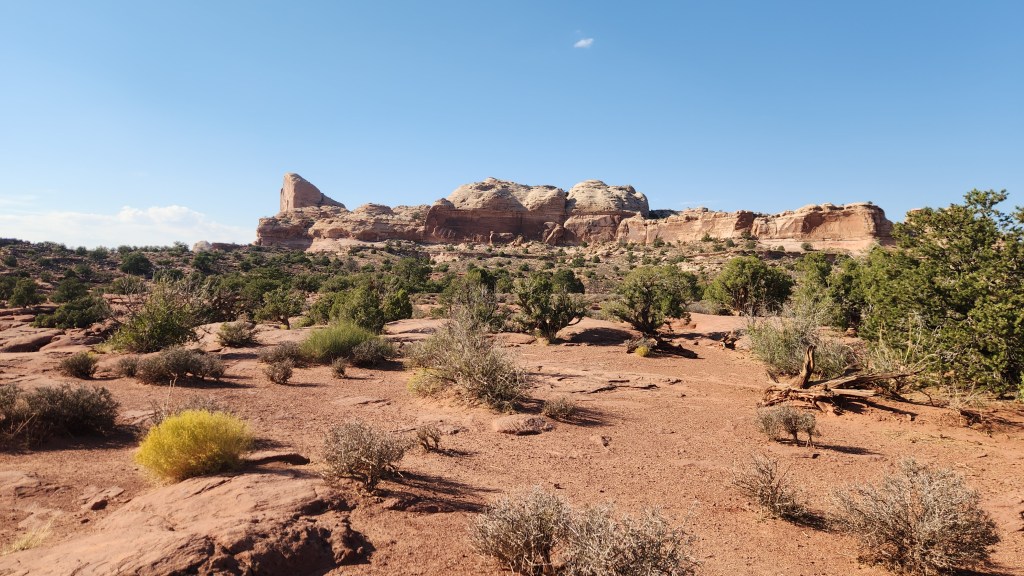
Canyonlands National Park (October 8): After leaving Bryce Canyon, we retraced our steps toward Moab and then drove to the Canyonlands Island in the Sky Visitor Center from the north. The visitor center was smaller than those at Arches and Bryce, and there were fewer visitors. This may be due to the presence of the Needles Visitor Center which is accessed from the south and which we did not visit. We arrived at the Visitor Center at around 3 PM and, after watching another excellent movie (no T-shirt this time), spent about two hours driving to the Grand View Overlook and back again, with several stops including a short walk to see the Mesa Arch.
OK, that’s it for Part 1. Thanks for reading, and stay tuned for the three remaining National Parks and the National Battlefield, as well as some pictures of the scenery we encountered at various points during the journey, all coming in Part 2.
 Dave Saari