
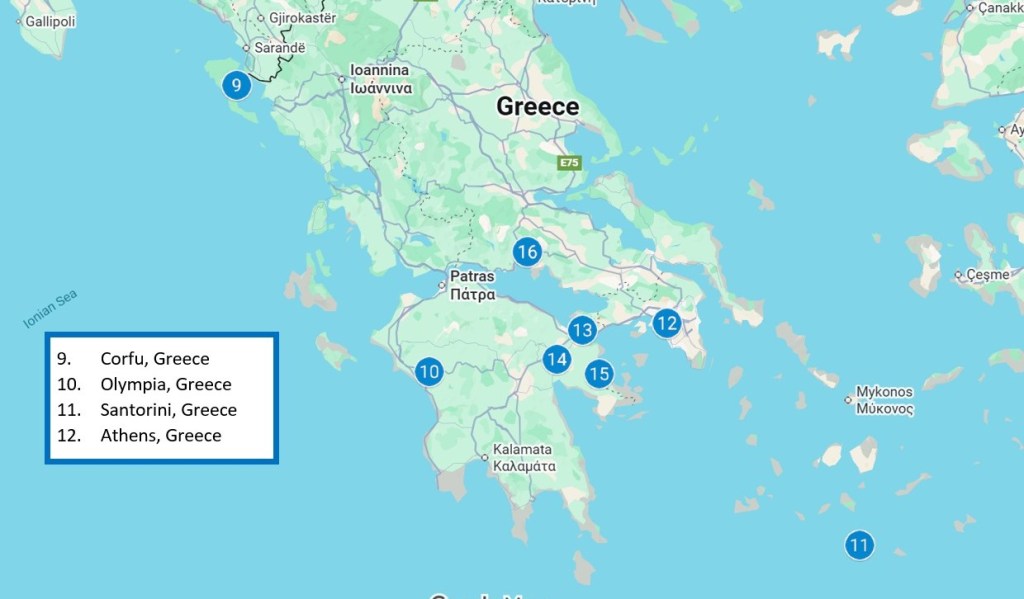
Welcome back for Part 3 of this travelogue series. Part 2 concluded as we sailed away from Kotor, Montenegro, down the Adriatic Sea toward Greece. Here’s a map showing the places I’ll describe in this part of the travelogue: Corfu, Olympia, Santorini, and Athens, all in Greece.
Now let’s continue the story …
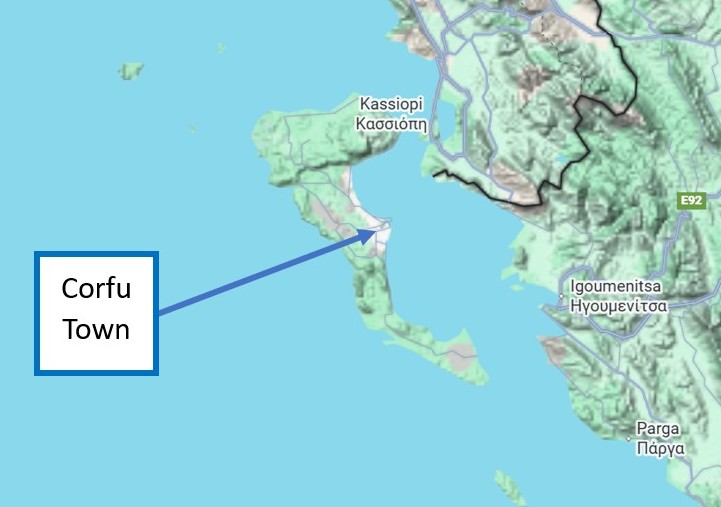
Corfu, Greece (Wednesday, November 5, 2025): After sailing overnight from Kotor, we docked in the Corfu Cruise Port Terminal on the island of Corfu (known as Kérkira in the Greek Language) at about 8 AM on Wednesday. Here’s a map showing the Island and our docking port:
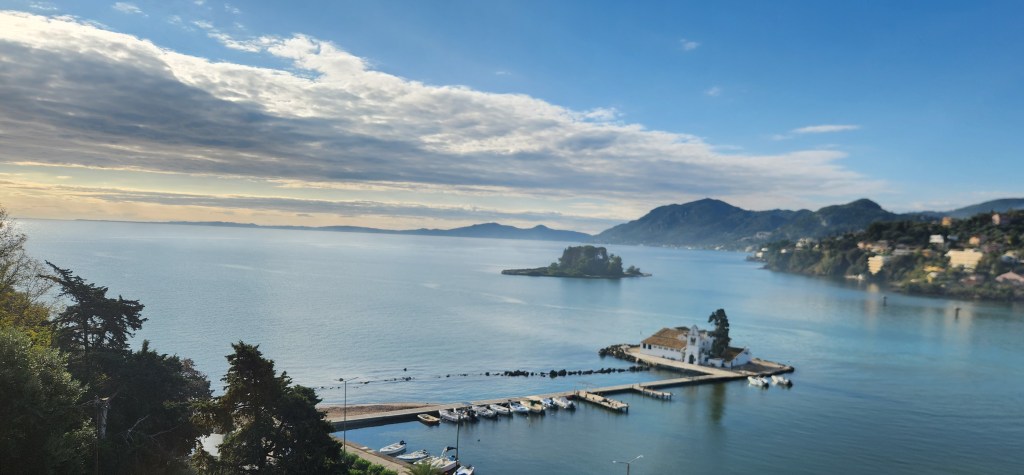
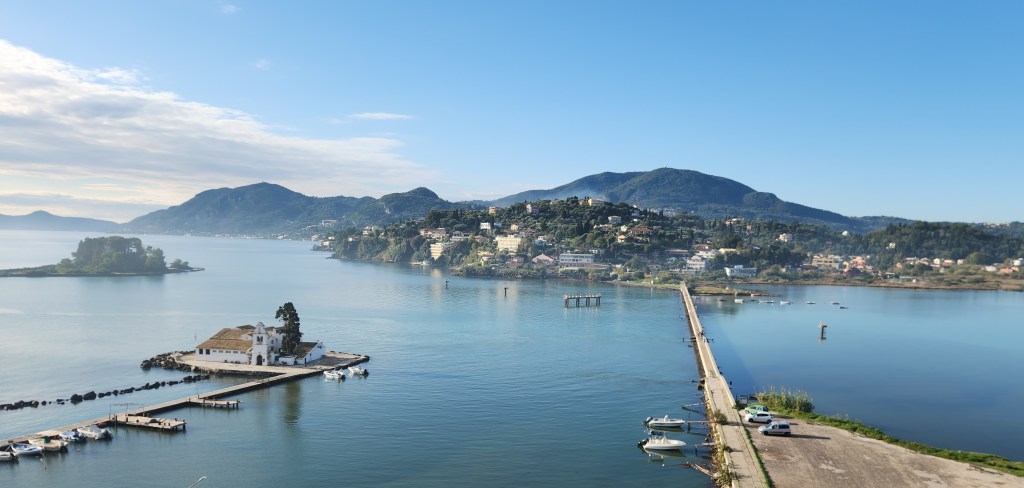
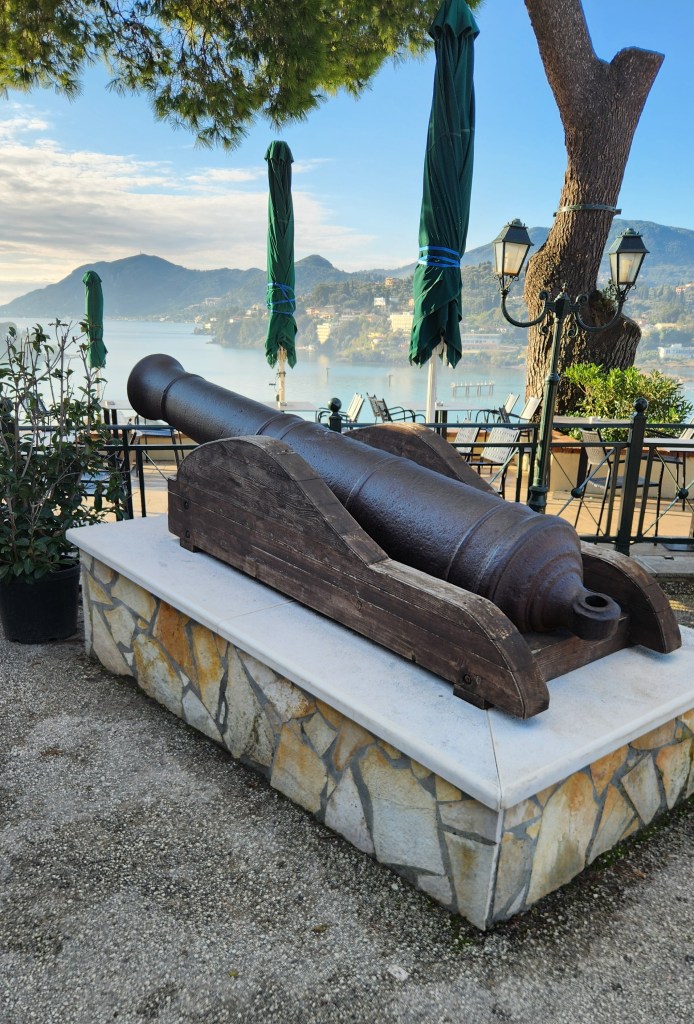
Our shore excursion began with a bus trip through the countryside to the Kanoni viewpoint, a popular lookout spot high above the harbor of Corfu Town named for the old cannon facing the sea. From there, we had beautiful views of the Straits of Corfu and the Greek mainland in the distance. The most famous island near Corfu town is called Mouse Island, supposedly for its mouse-like shape; the island is famous for its Byzantine church and connection to the Odyssey legend. Closer to shore sits the 17th century Vlacherna Monastery, situated nearby on a separate islet connected to the mainland by a causeway.
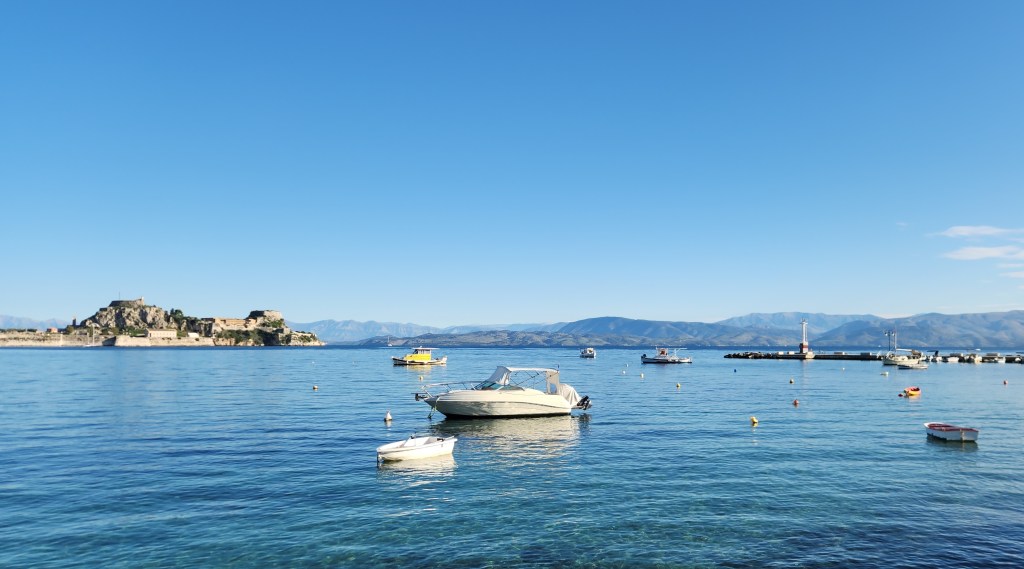
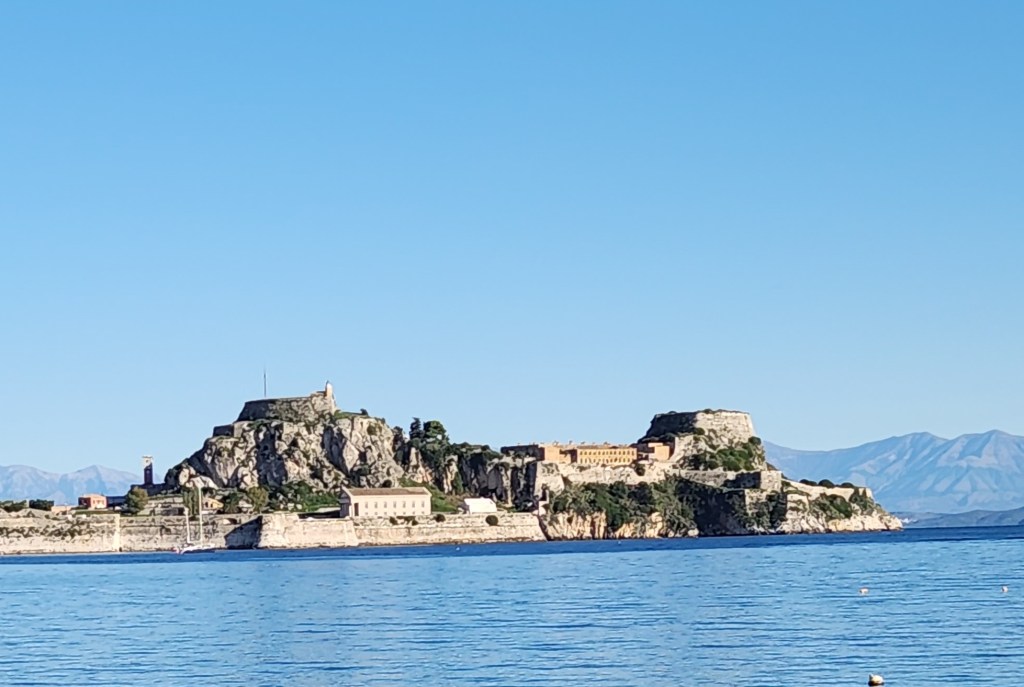
The bus then delivered us to the Corfu Town marina. Across the water we could see the Old Fortress, built by the Venetians in the 15th century on a site originally fortified by the Byzantines in the 12th century. The fortress was isolated from the mainland by a large moat and was used for successful defense of the city during multiple sieges by the Ottomans in the 16th century. The fortress has two towers, or peaks, which gave rise to the name of the Island – the Byzantine Greek word “Koryfó,” meaning “city of the peaks,” refers to the two peaks of the old fortress.
We then had a brief walking tour before setting off on our own to explore the city. Here are some of the sights we saw.
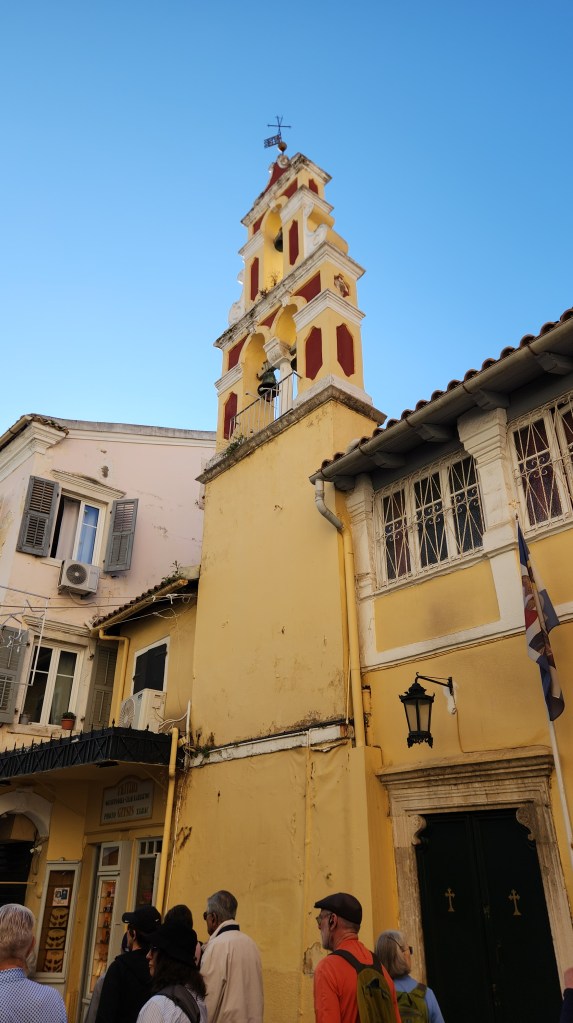
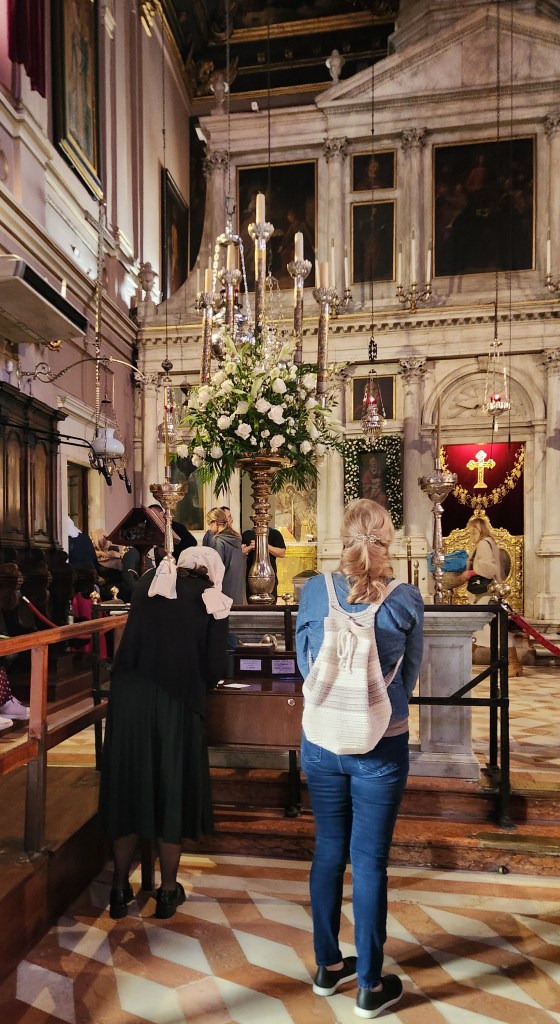
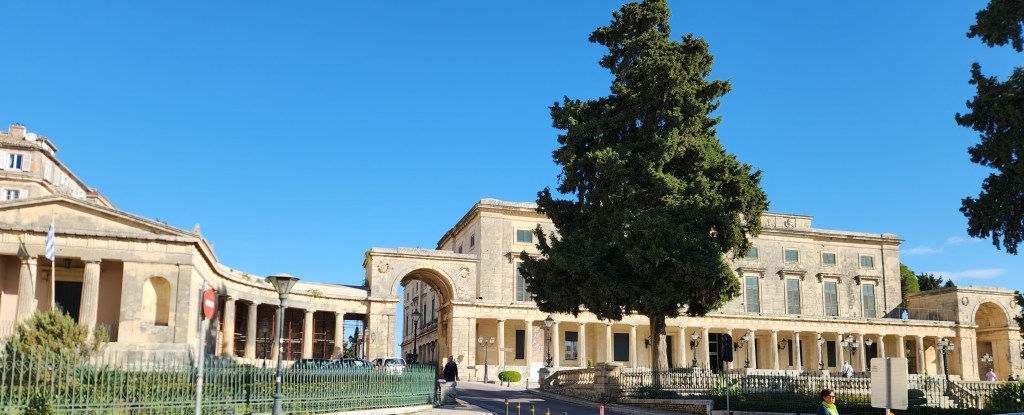
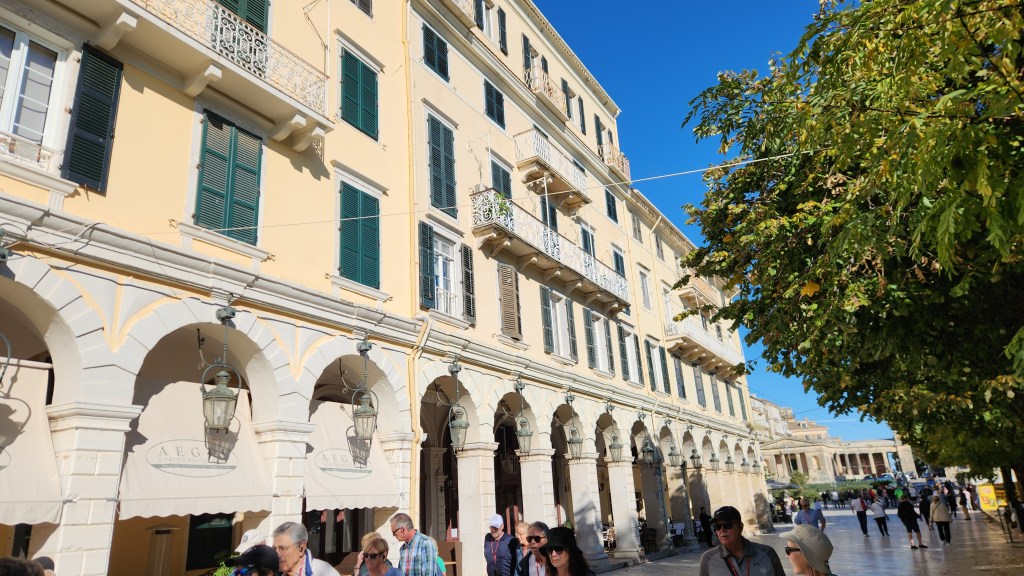
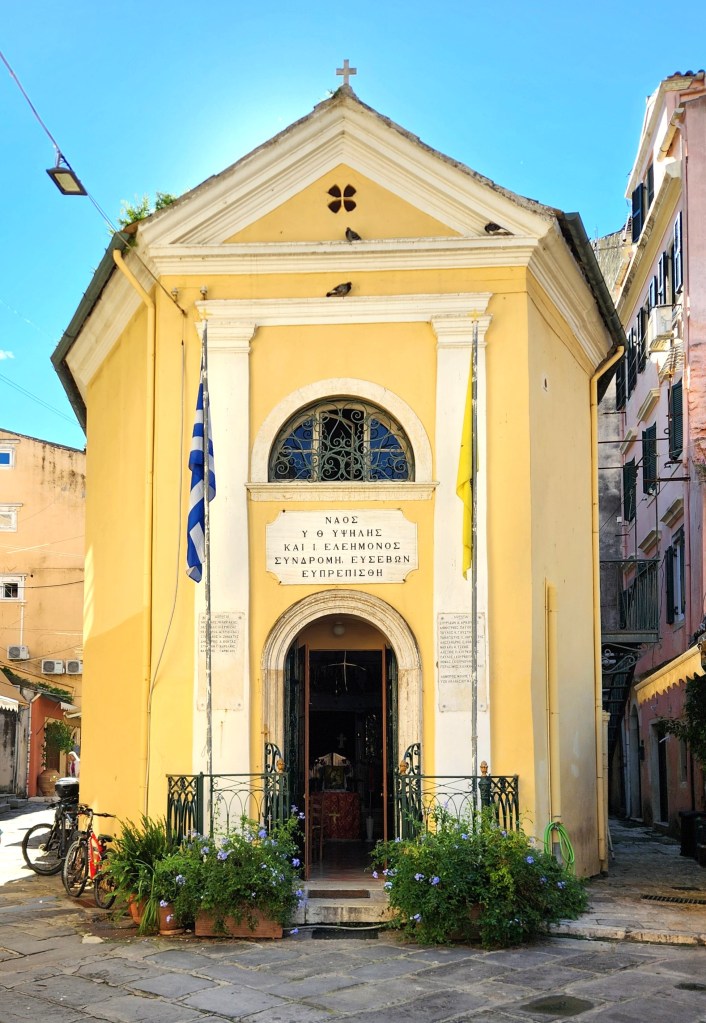
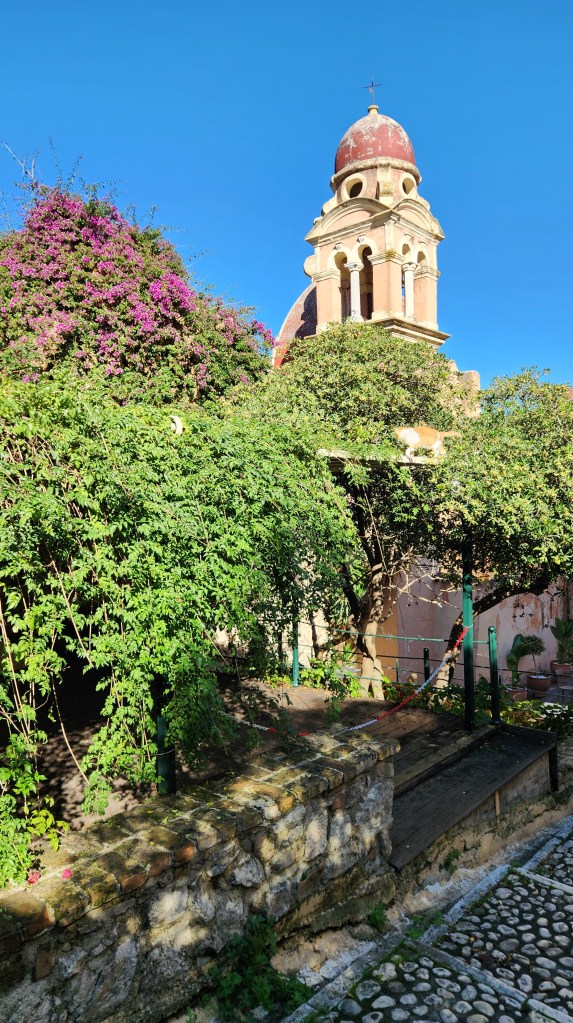
Of particular interest to me was the so-called New Fortress. It was built after the first major Ottoman siege of 1537 to provide additional fortification for the city, beginning in the mid-1570s. We were told that it was open to the public for tours, so we spent about an hour wandering around its periphery trying to find the entrance, but when we finally found the ticket booth, it turned out to be closed for renovations.
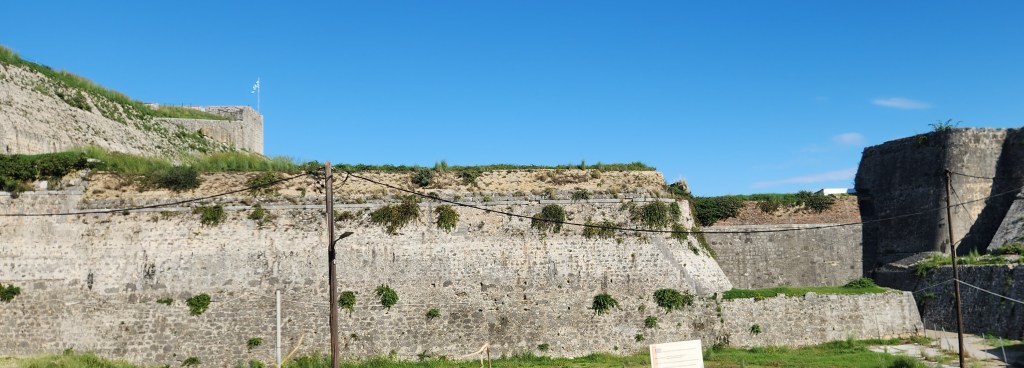
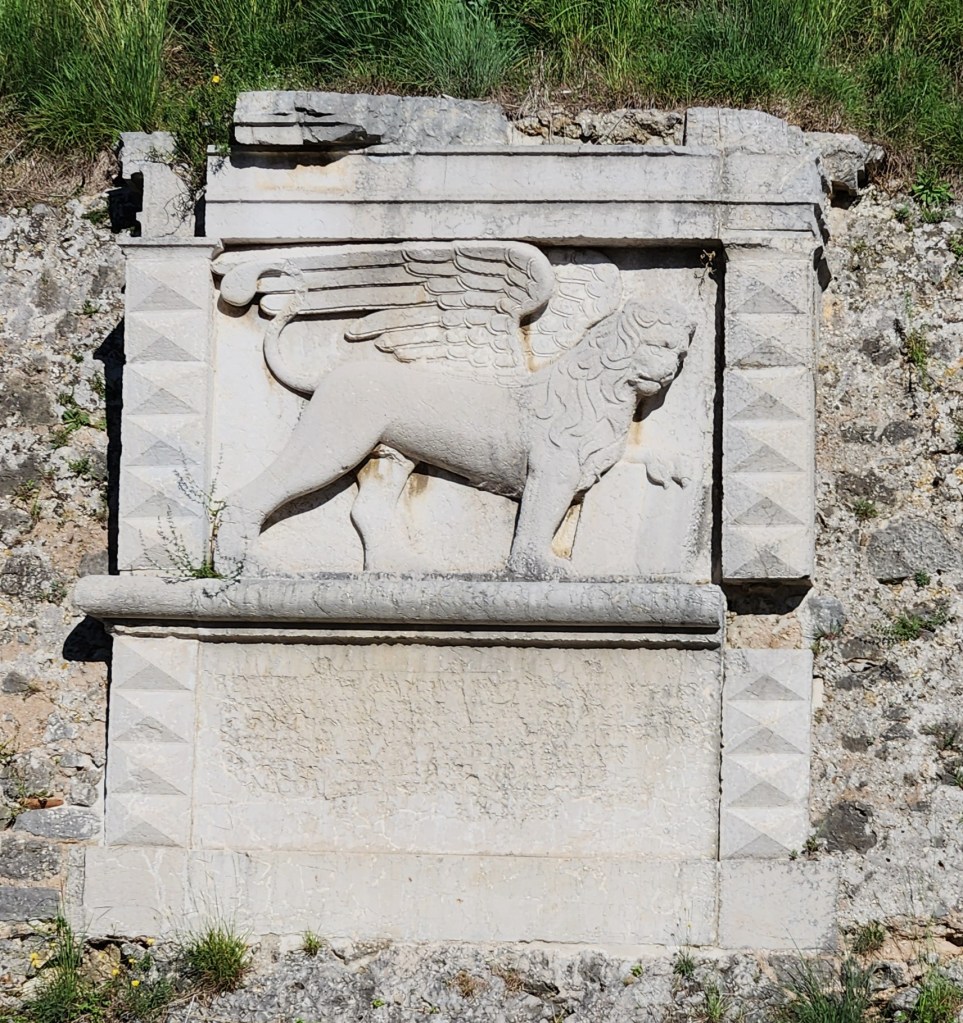
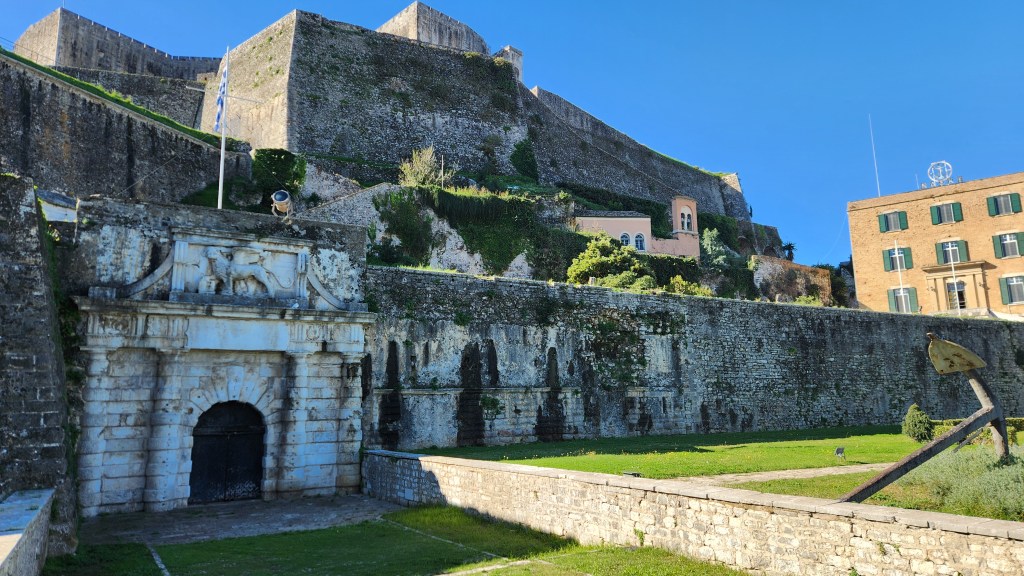
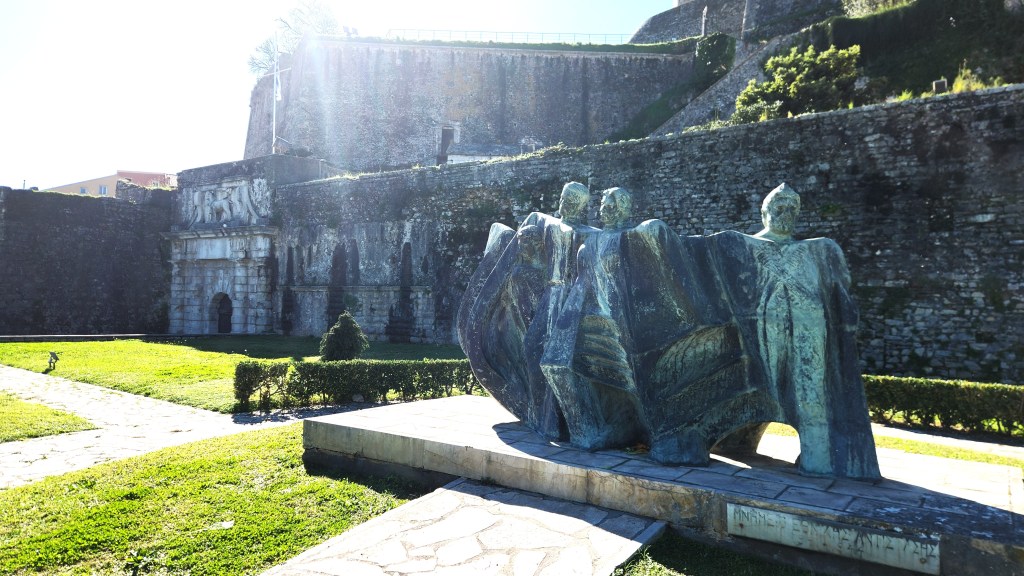
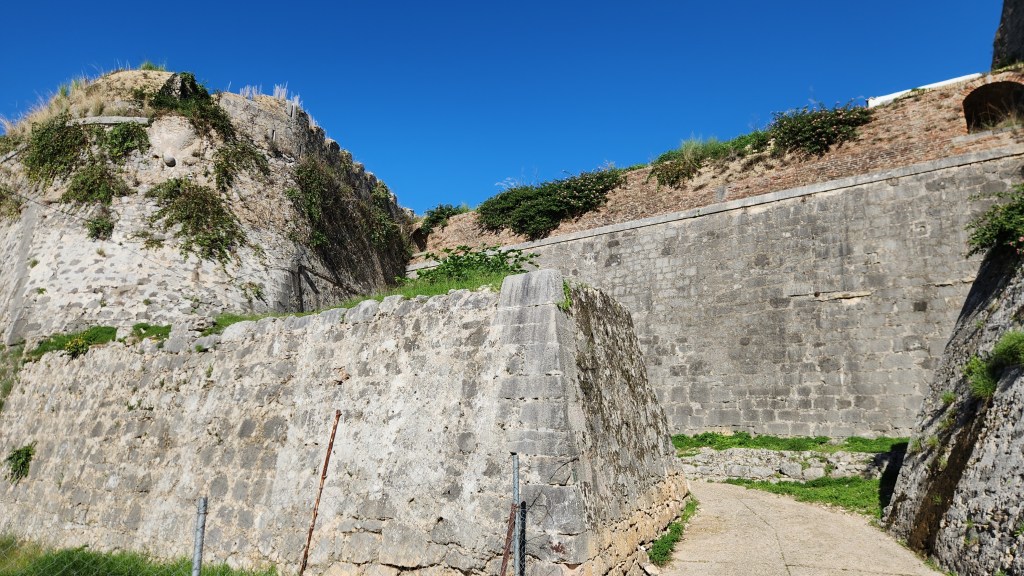
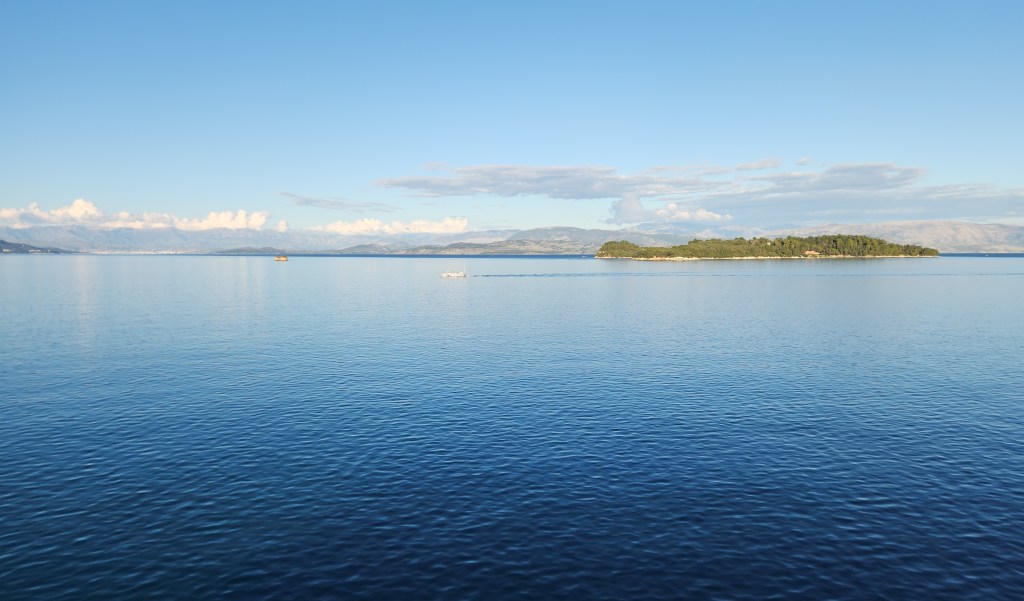
We still enjoyed the outing, however, which carried us through a good portion of the city before we returned to the marina to catch a Viking shuttle bus back to our ship. Here’s a final look at the Straits of Corfu as the ship sailed off for our next destination.
Olympia, Greece (Thursday, November 6, 2025): On Thursday morning the ship docked at the port in Kotakolon, on the northwestern edge of the Peloponnese Peninsula. Kotakolon serves as the main port for access to the ancient site of Olympia. Here’s a map showing Corfu, Kotakolon, and the ancient site:
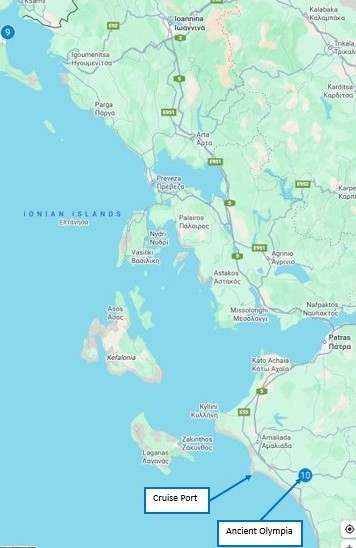
From the port, we departed for a 20-mile, 40-minute bus ride to the ancient site of Olympia, where the original Olympic Games were held every four years from 776 BCE until they were abolished in 393 AD by the Roman Emperor Theodosius I, who banned pagan festivals like the Olympics as part of his efforts to suppress paganism and promote Christianity.
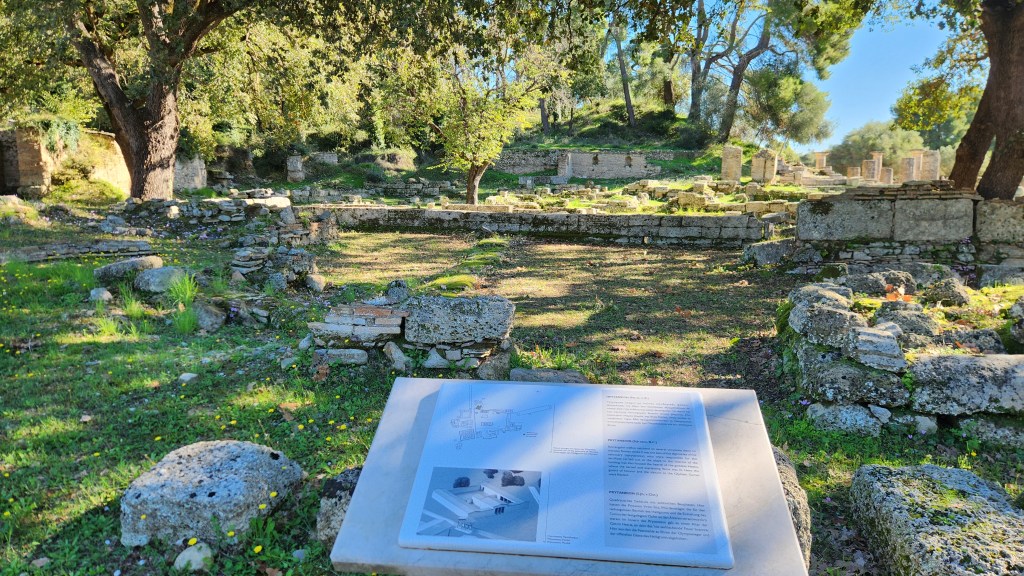
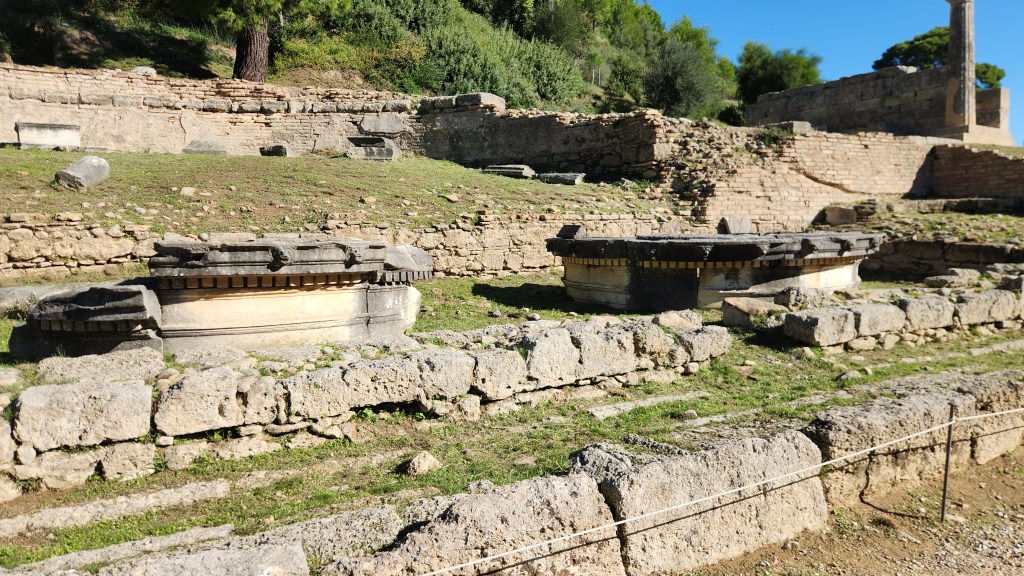
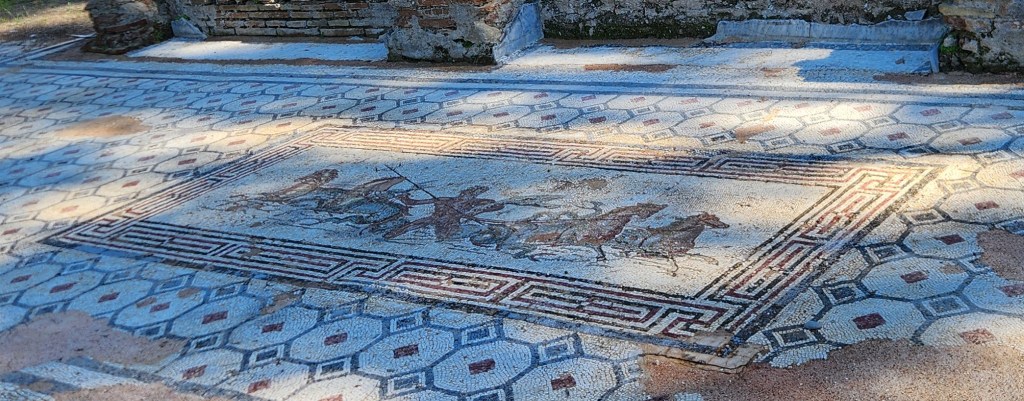
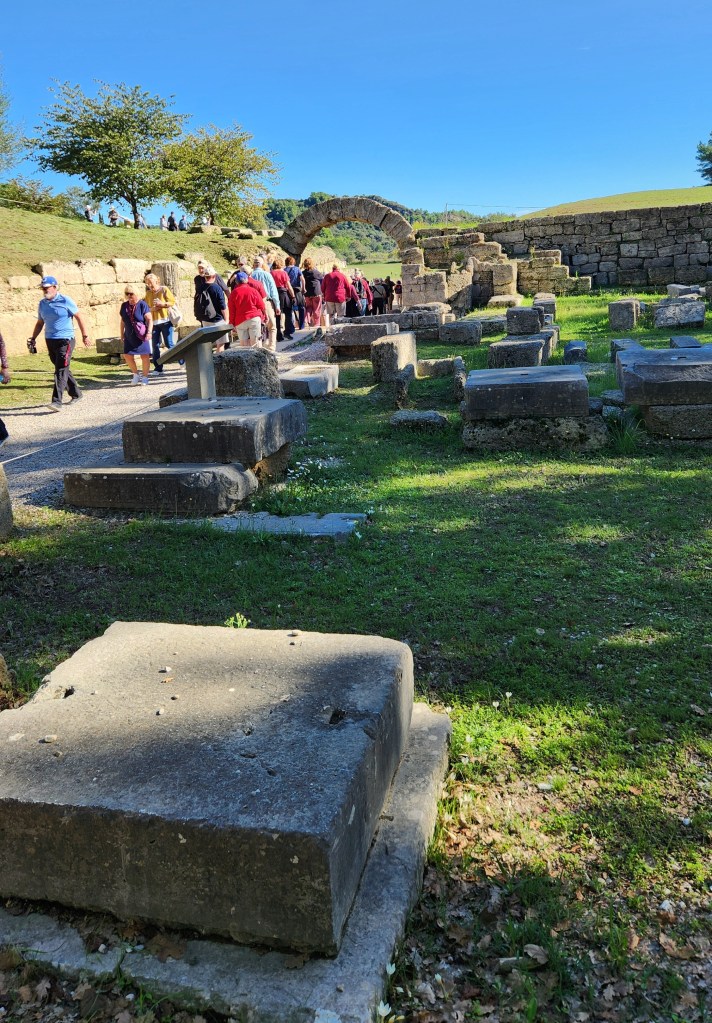
We spent a couple of hours on an extensive tour of the site, which was definitely among the highlights of the trip. I’ve included photos to try and portray the vast extent of the site and the amazing degree to which the ancient ruins have survived for up to 2,800 years. ’ll also pass along some of the interesting tidbits we learned from our local guide:
- The Olympic athletes were all male and competed in the nude, slathered with oil and covered in dust, with the aim of paying tribute to the god Zeus. Women were banned under penalty of death, except for the priestess of Demeter, goddess of fertility, who had a reviewing stand next to the stadium altar. One exception to the death rule was Kallipateira of Rhodes — she disguised herself as a male trainer to watch her son compete but, when caught, was pardoned because her father, brothers, and son were all Olympic champions.
- There were, however, separate competitions for unmarried women known as the Heraia Games, in honor of the goddess Hera, in which the participants raced a shorter course at the Olympic stadium while clad in costumes with short skirts.
- During the celebration of the games, the Olympic truce (ekecheiría) was announced so that athletes and religious pilgrims could travel from their cities to the games in safety.
- The prizes for the victors were olive leaf wreaths or crowns.
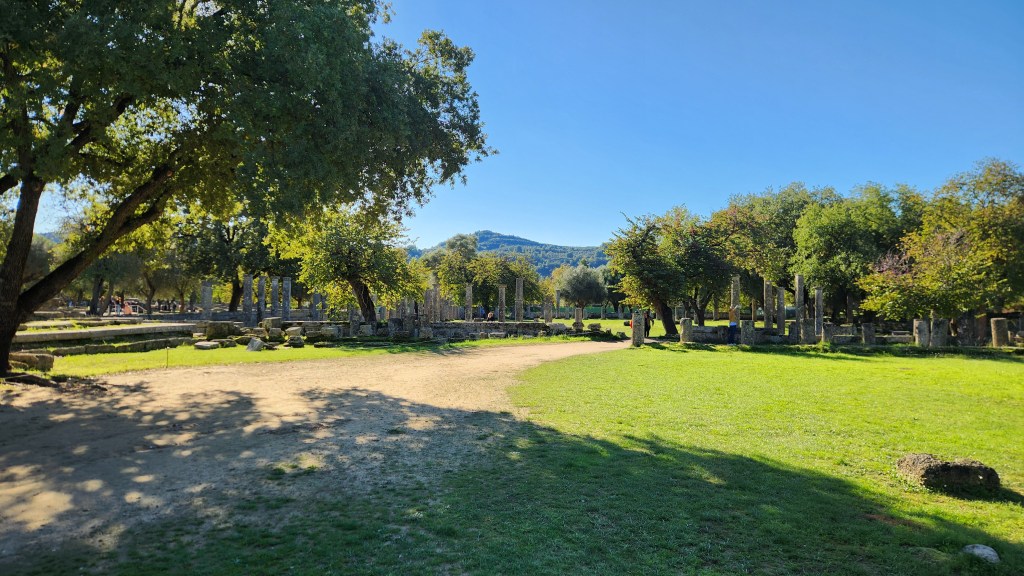
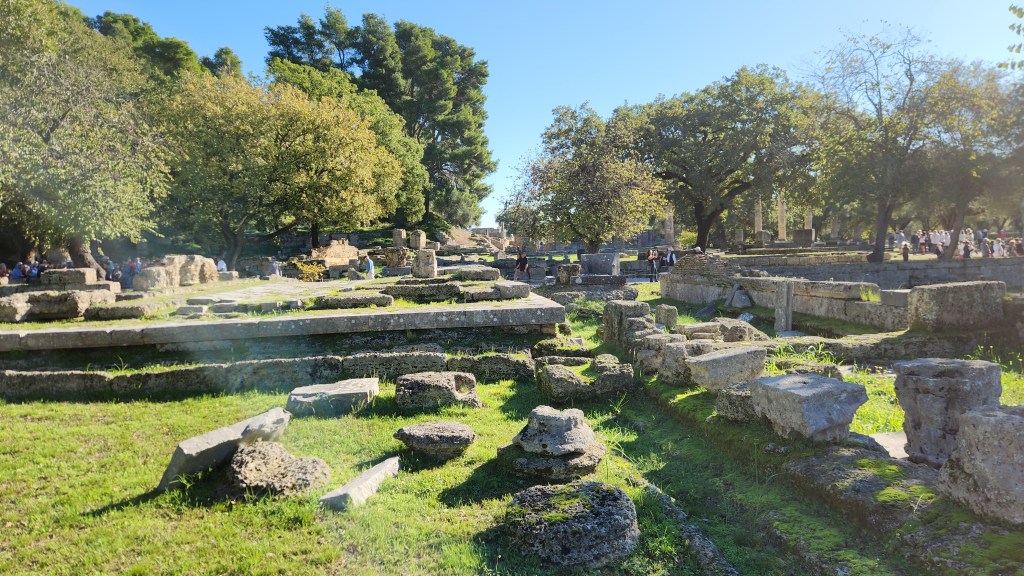
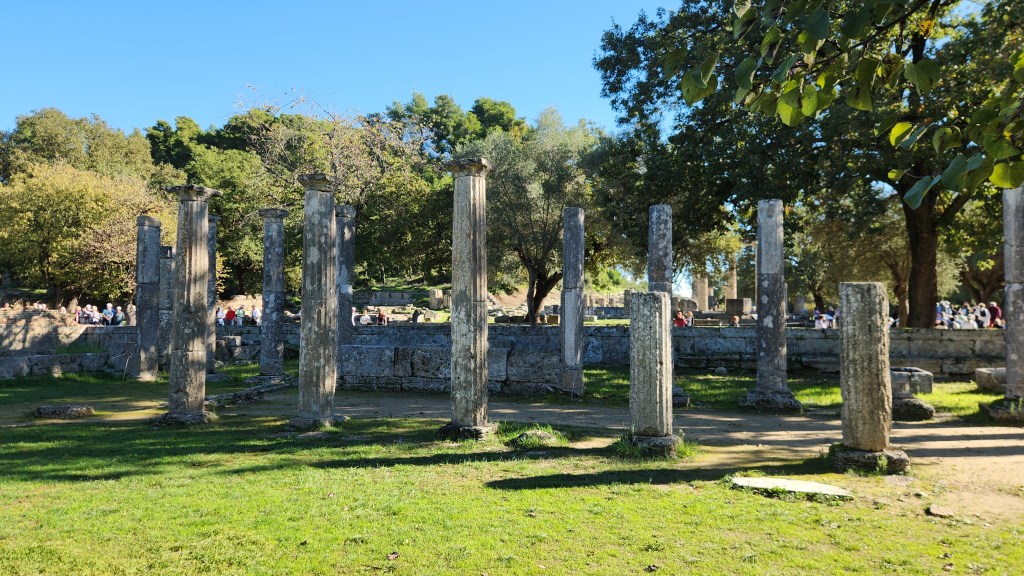
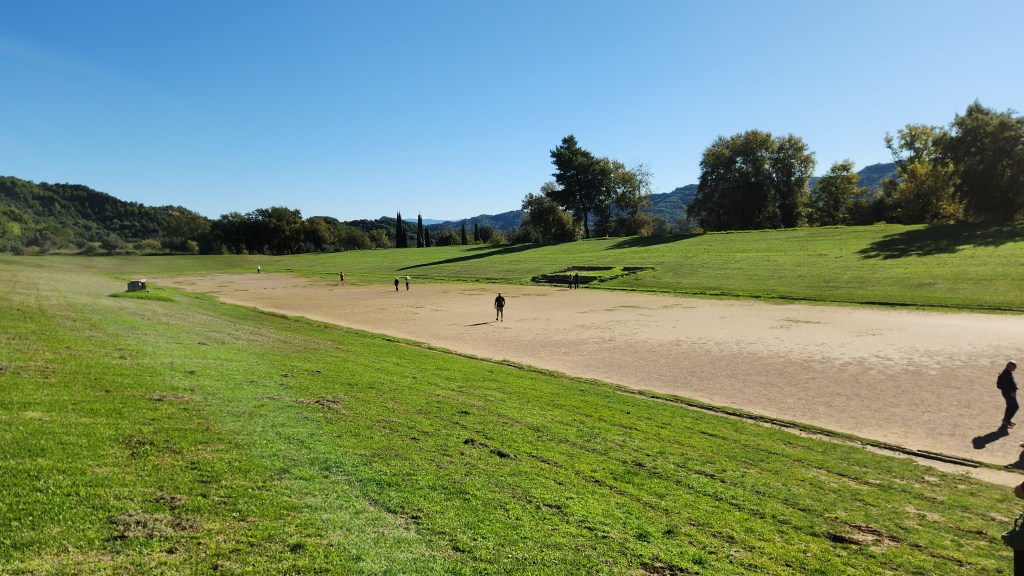
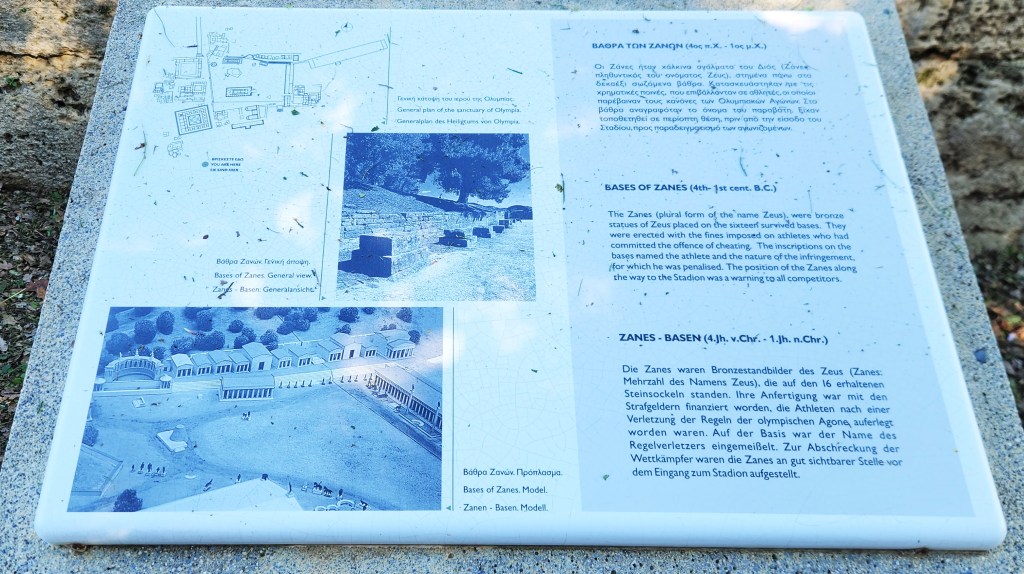
The path to the stadium is lined with bronze statues known as Zanes, which were paid for by athletes who cheated during the games. Known as the walk of shame, the walls feature inscriptions by the miscreants including their names and the misdeeds for which they were being punished, such as bribery, lying about their city-state, or other acts against the integrity of the games. The display was a reminder to all athletes entering the stadium of the importance of honesty and integrity.
After our tour of the Olympics site, we strolled into the nearby town of Olympia for lunch and a brief stop at a small museum dedicated to Archimedes. Photos were prohibited, so I can’t show any of the exhibits, but they were quite impressive, detailing many of the Greek genius’s inventions and relating the sad story of his death at the hands of a Roman soldier during the siege of Syracuse in 212 BCE, despite Roman orders to spare his life. (NOTE: We later went to a much larger ancient technology museum in Athens that also featured Archimedes; I’ll describe that in Part 4.)
After the shore excursion, we were driven back to the ship for departure shortly after 3 PM. I took this photo of the Port as the ship was preparing to depart:

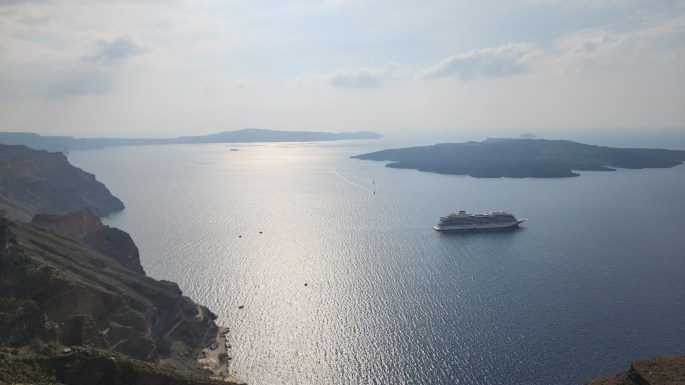
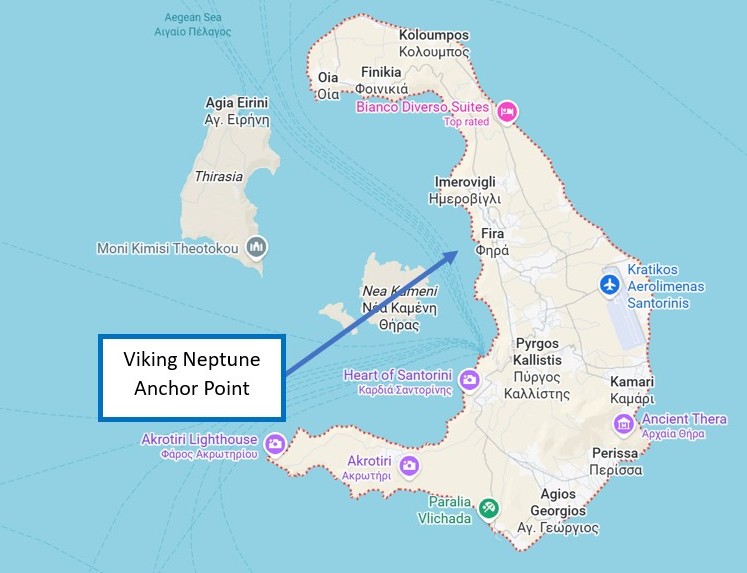
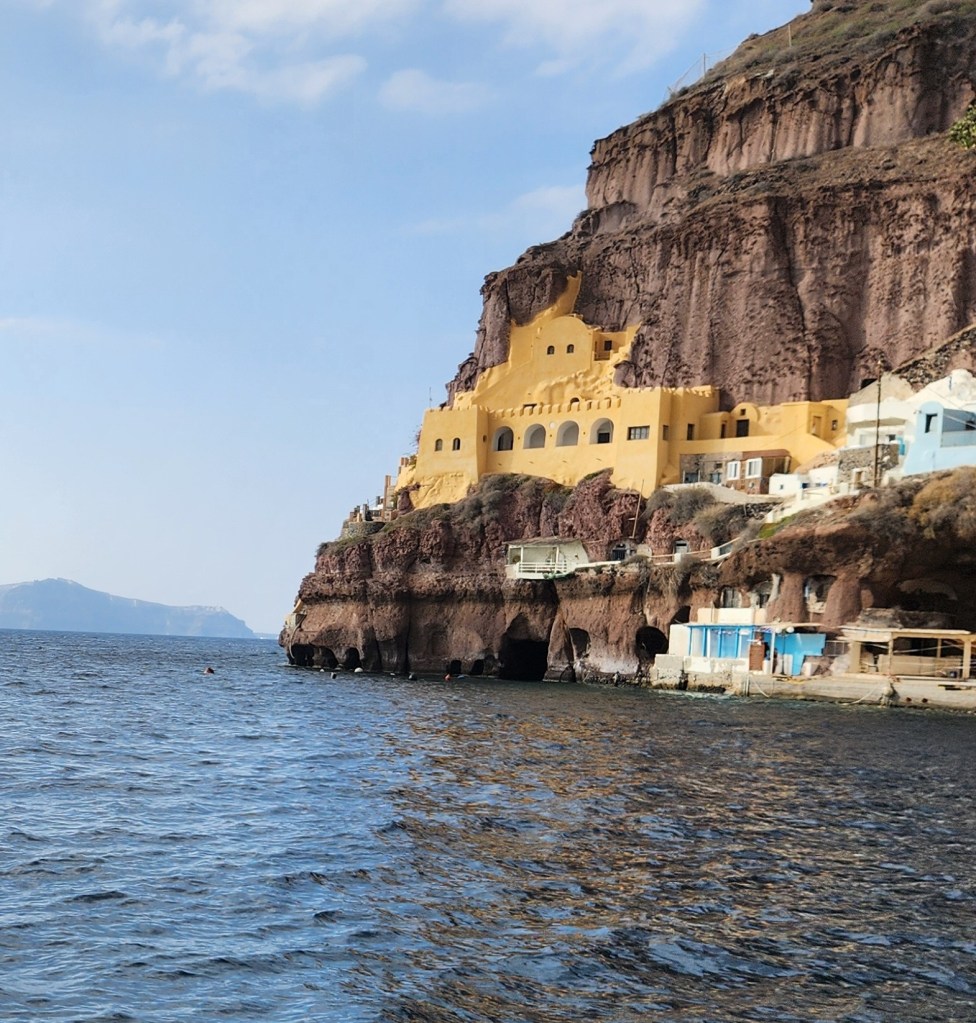
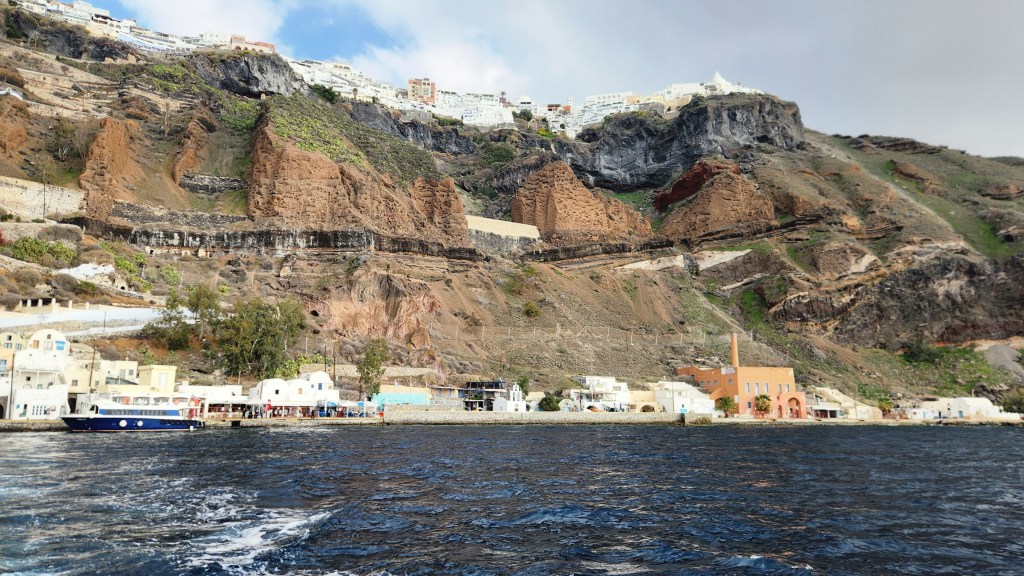
Santorini, Greece (Friday, November 7, 2025): On Friday morning around 9 AM, the Neptune dropped anchor in the waters off the island of Santorini, or Thi̕ra in Greek. Santorini in its present form was created by an enormous volcanic eruption circa 1600 BCE. The eruption destroyed the Minoan settlement at Akrotiri, as well as communities and agricultural areas on nearby islands and the coast of Crete with subsequent earthquakes and tsunamis. What remained behind is a partial caldera, the hollow that remains after a volcano disgorges its contents. Here’s a map of the island showing its configuration and the Neptune’s anchor point.
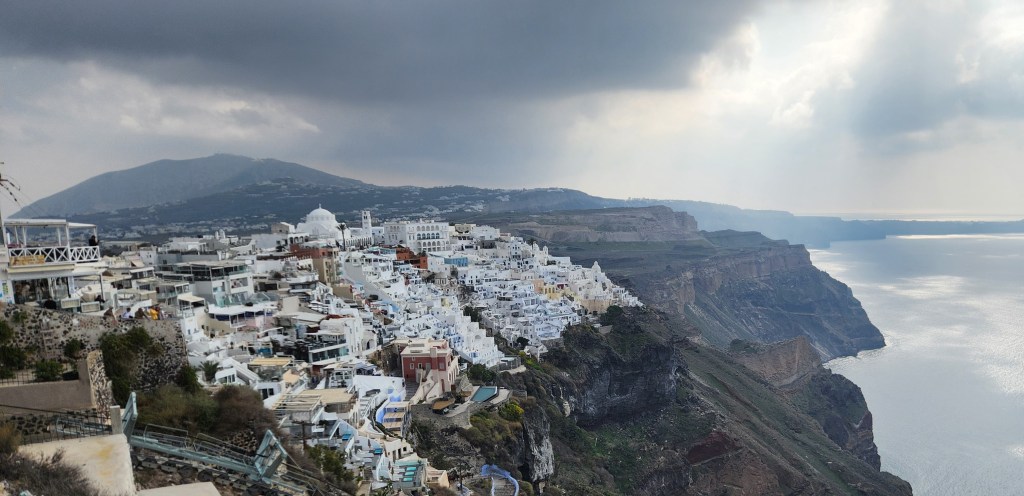
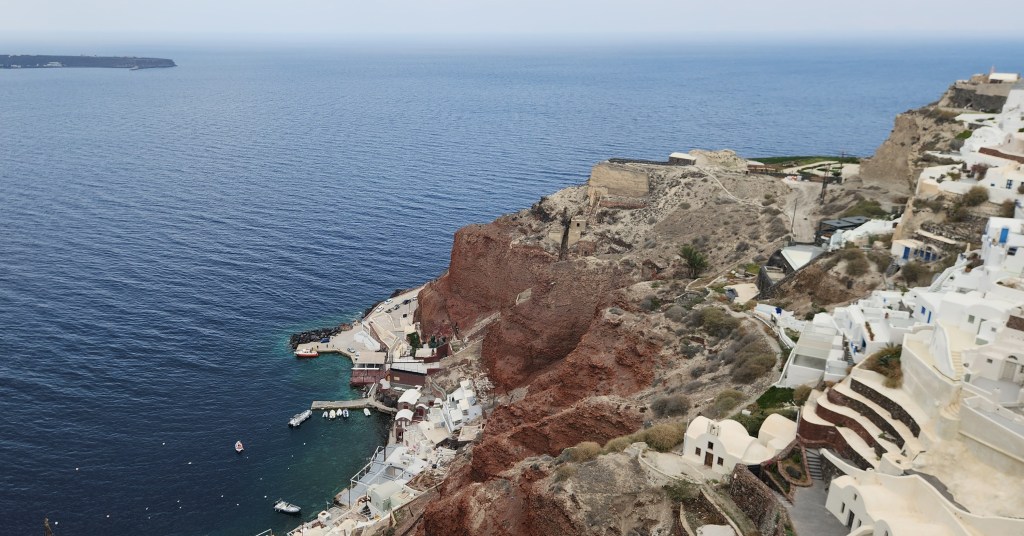
For our shore excursion, we boarded a tender boat operated by the local Greek authorities, which deposited us on shore. We then boarded a bus for a zig-zagging trip up the steep slope to the rim of the caldera and the capital city of Fira and then on to the village of Oia (pronounced “ee-ya”). In Oia, we had a brief walking tour before heading off for exploration on our own and lunch at a nice café, where we had lamb and Moussaka accompanied by an excellent Santorini wine. The village is known for its beautiful vistas, cliffside whitewashed buildings, blue-domed churches, and stunning sunsets over the caldera. (Unfortunately, the overcast skies hampered the views and we had to leave before dark so did not see the sunset. Such is life …)
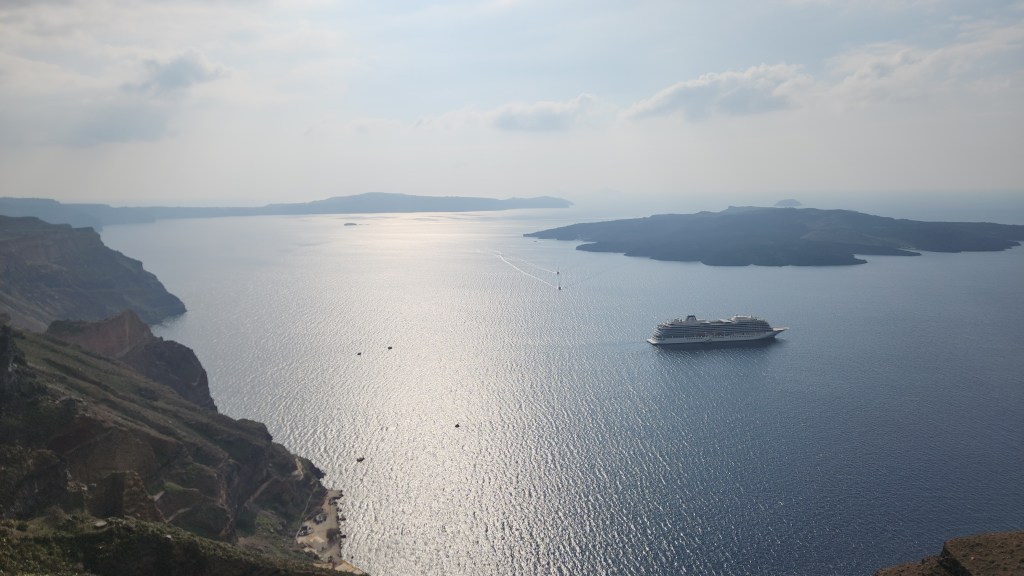
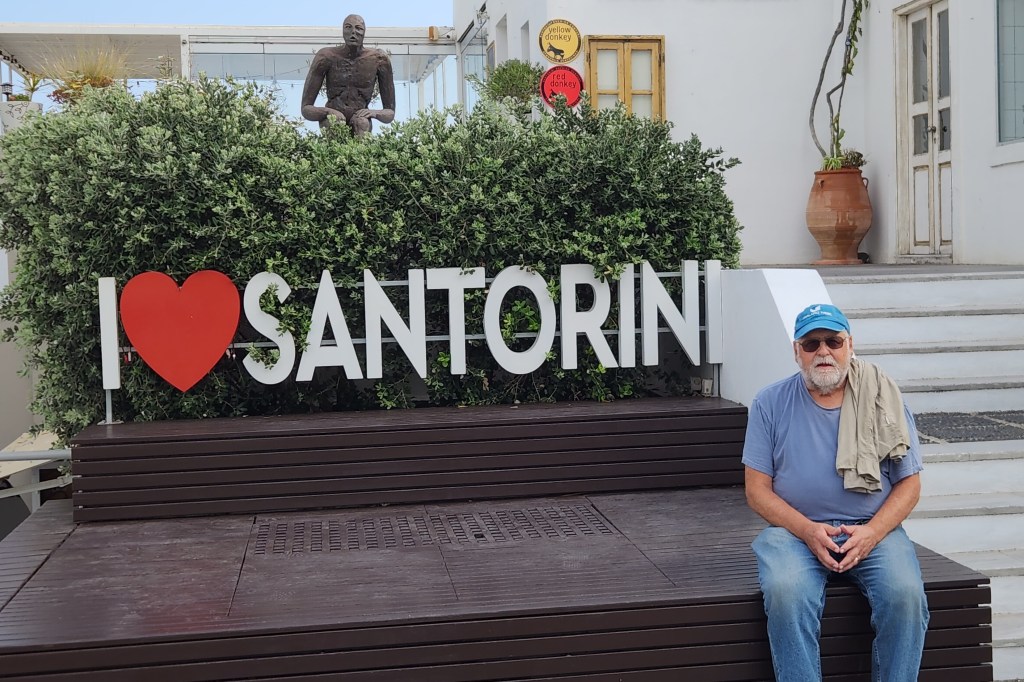
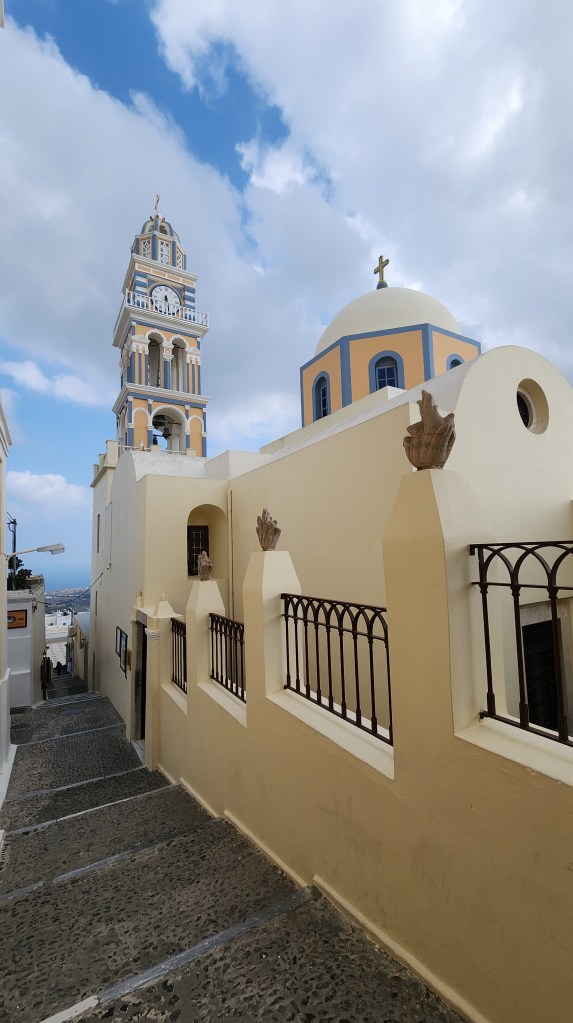
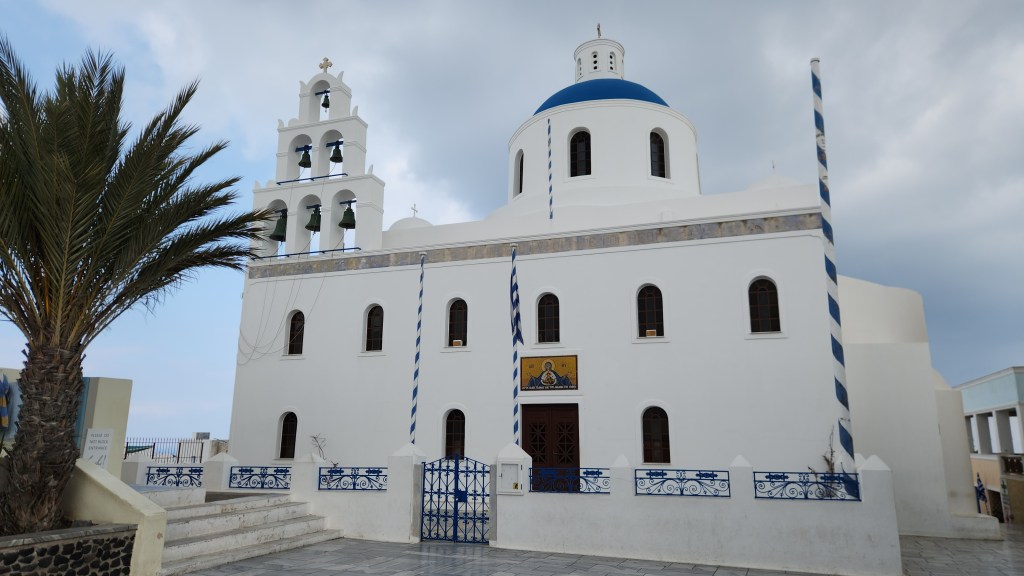
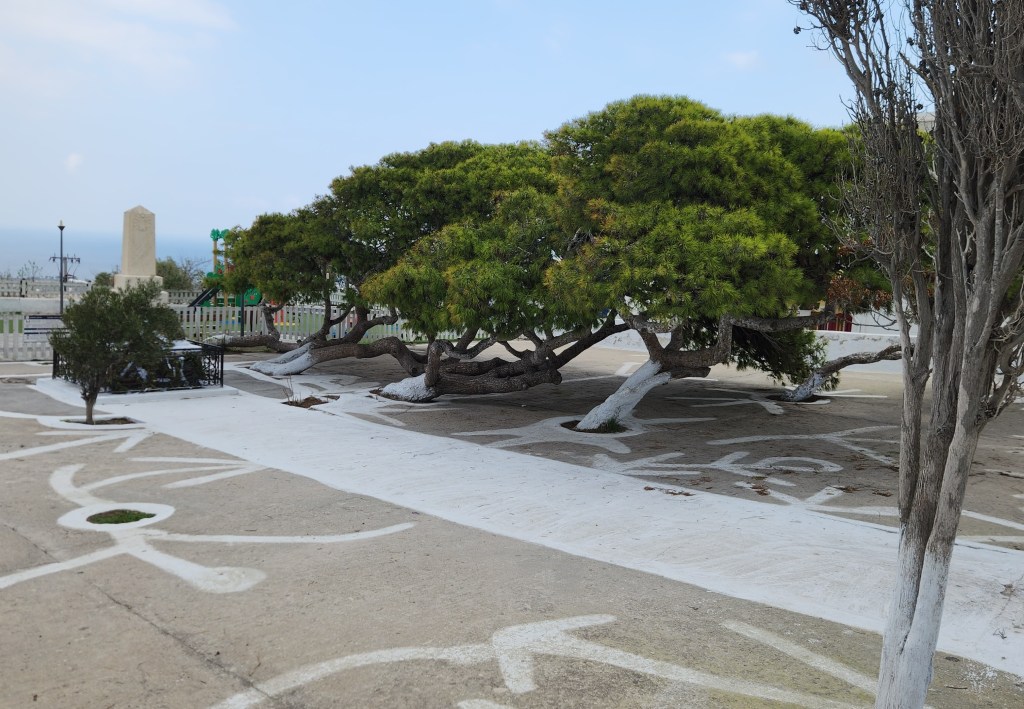
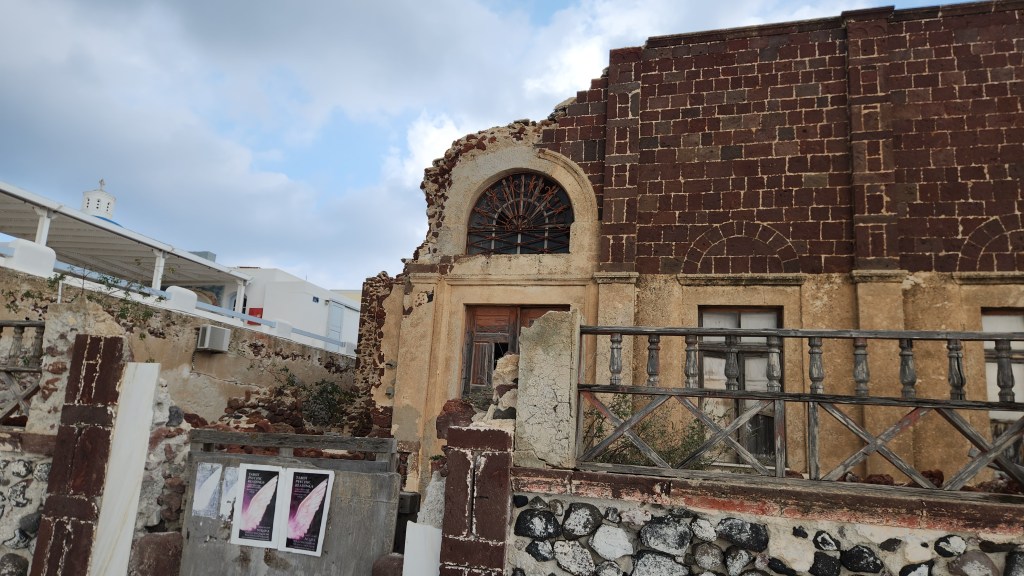
Earthquakes caused by a nearby underwater volcano have damaged some buildings over the years, such as this house we saw as we wandered around.
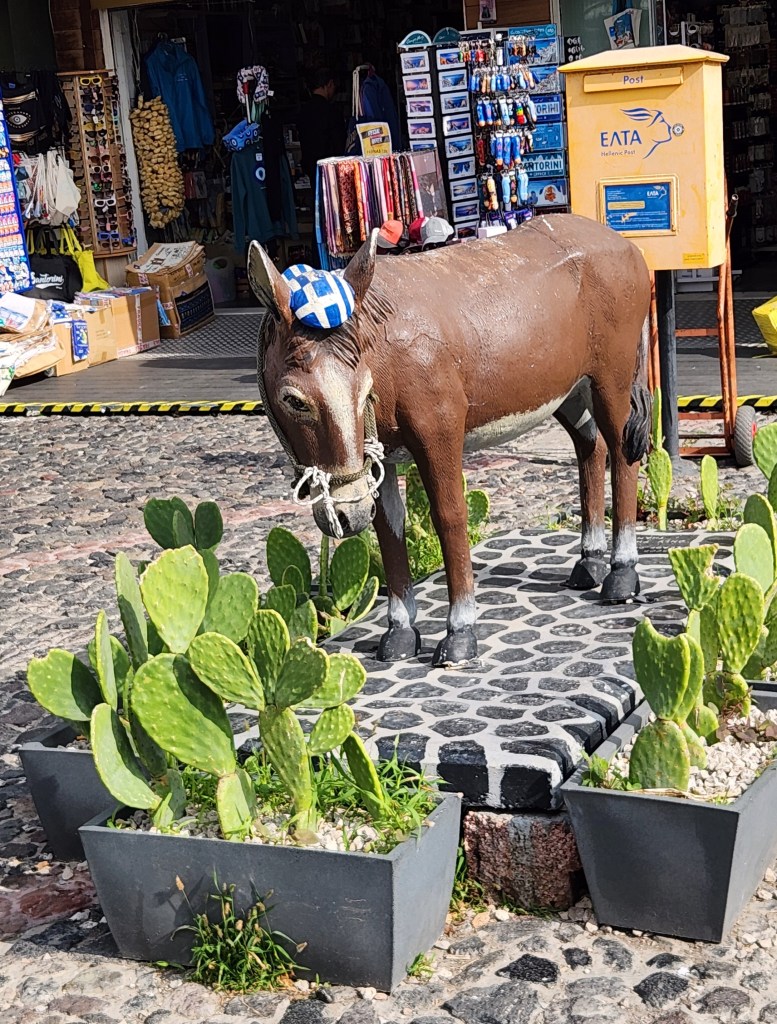
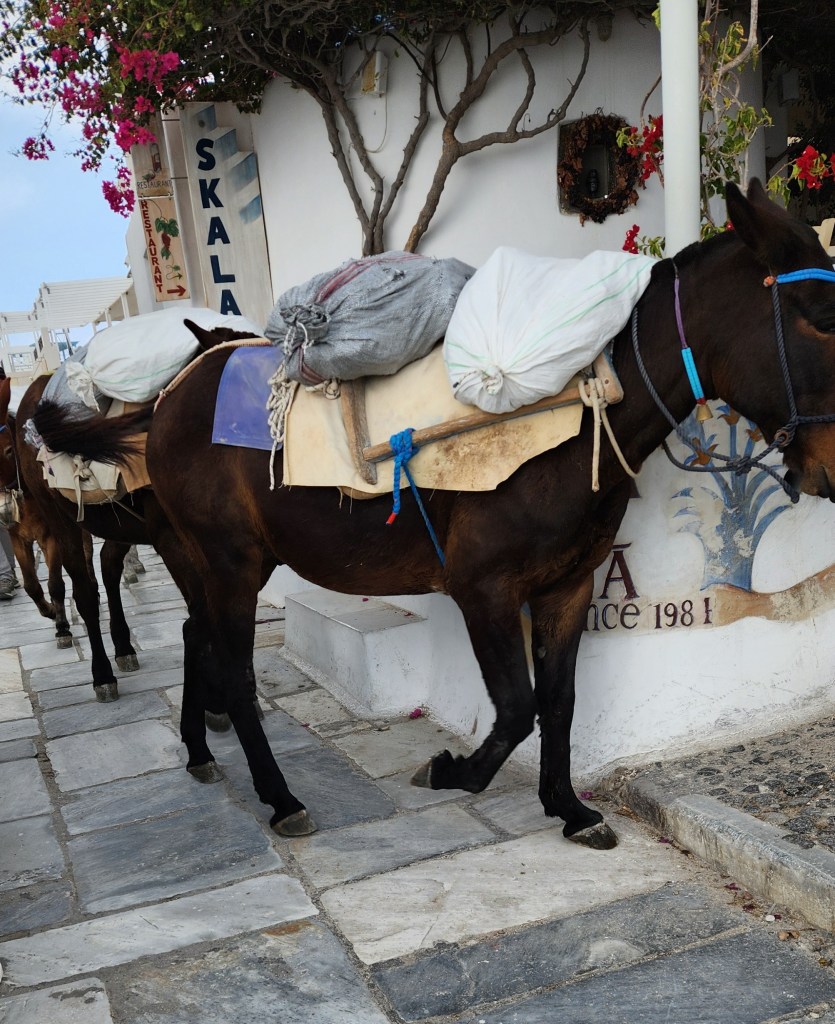
As in many Greek towns, cats are to be seen all over the place. Donkeys are also still used to transport goods from the harbor below, and we were lucky enough to encounter some during our stroll along the main pedestrian street.

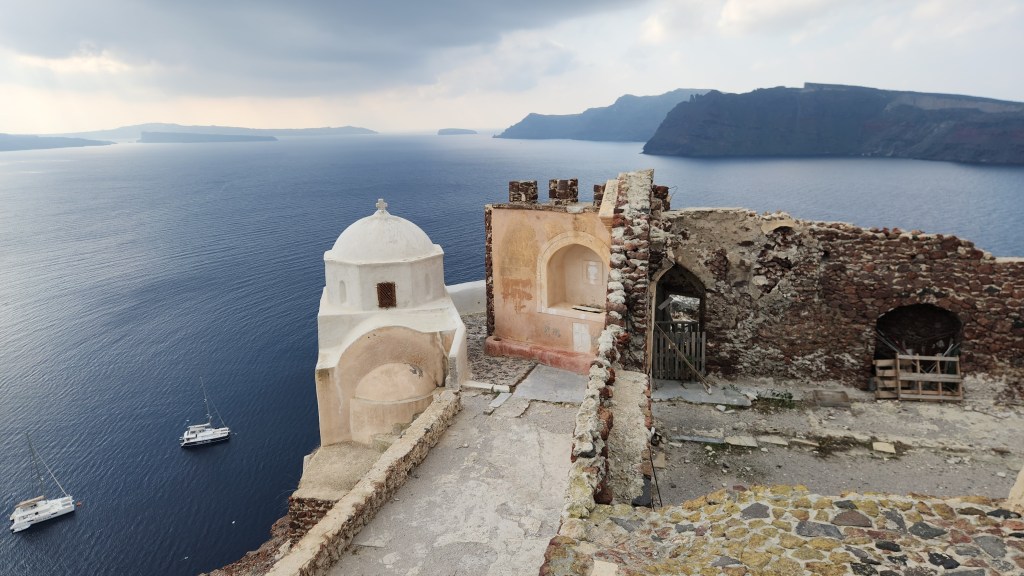
I was particularly taken by the remains of a castle on the edge of the village and naturally had to clamber around taking photos.
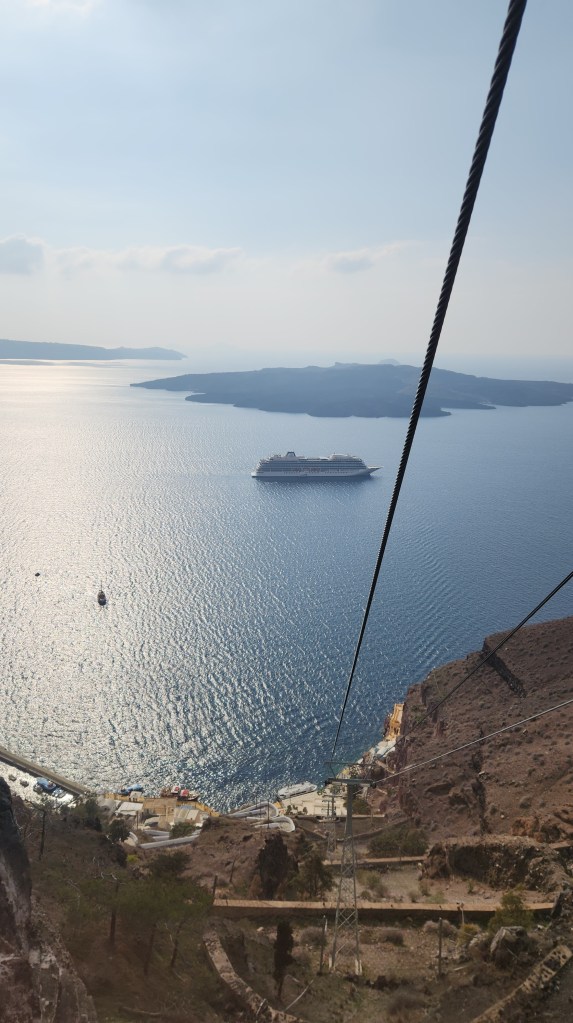
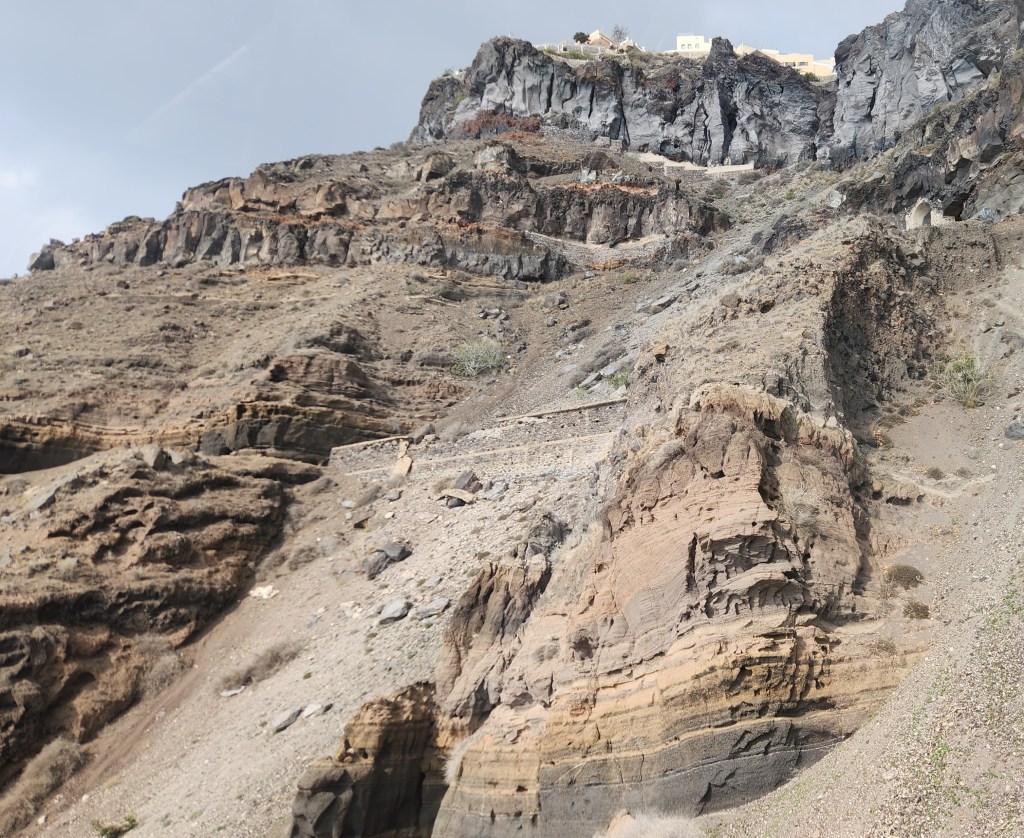
Once it was time to return to the ship, we took a very steep cable car ride down to the harbor below Oia. Two other tourists who rode in the same cable car with us seemed scared nearly witless, but to me it was a suitable thrill to cap off a thrilling day.
In the harbor, we caught another tender boat that returned us to the Viking Neptune. Here are a photo I took from the tender and one final look back at the harbor and Oia as the Neptune began to sail away shortly after 5 PM.
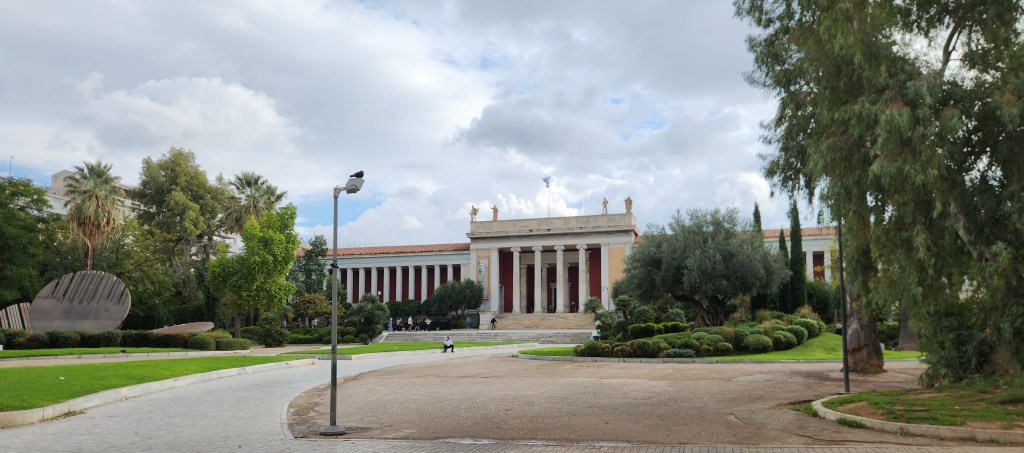
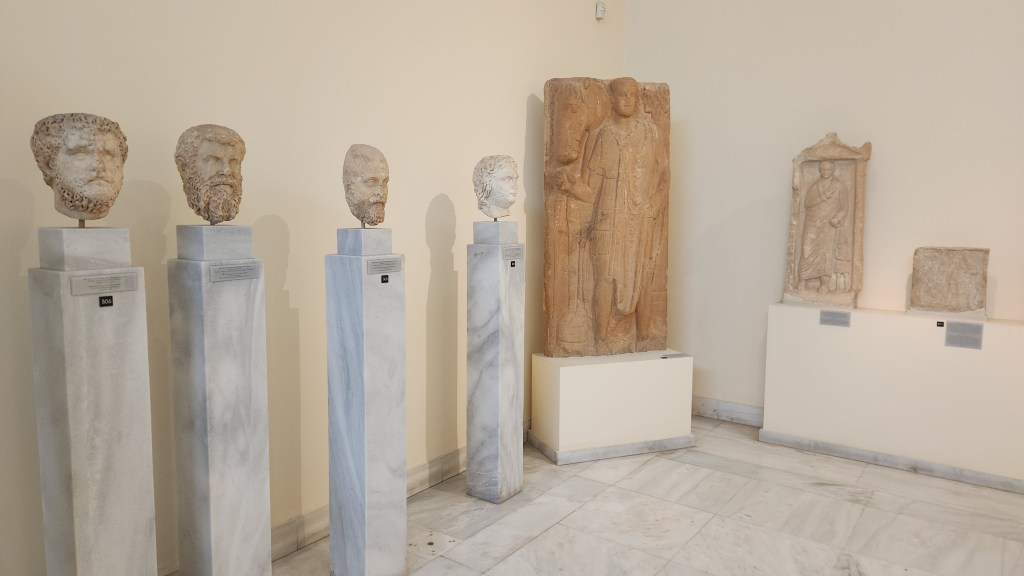
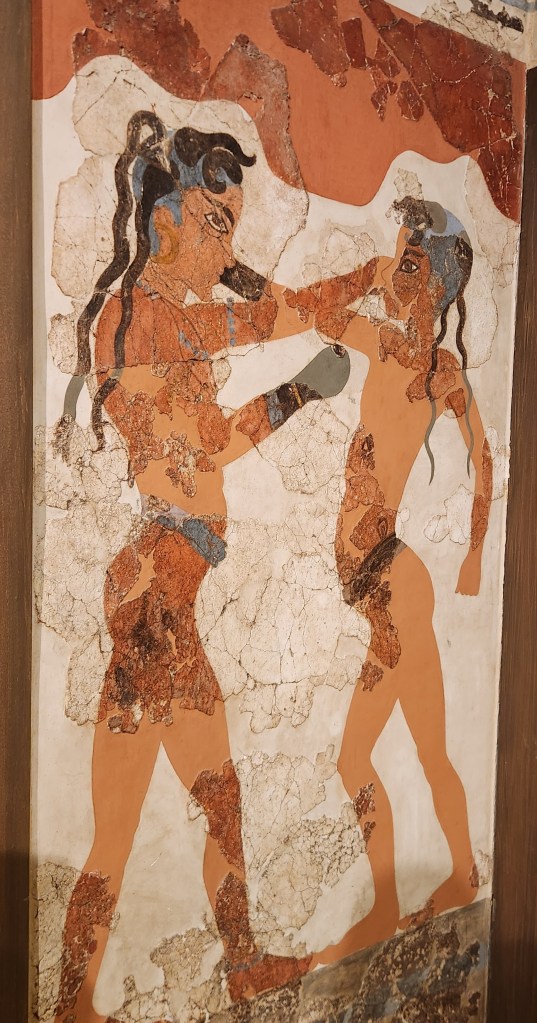
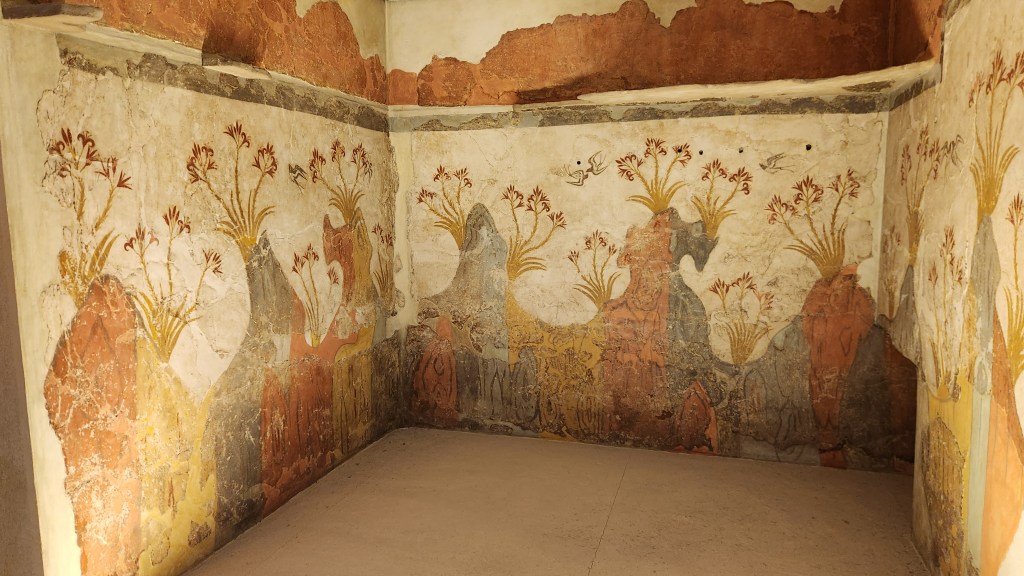
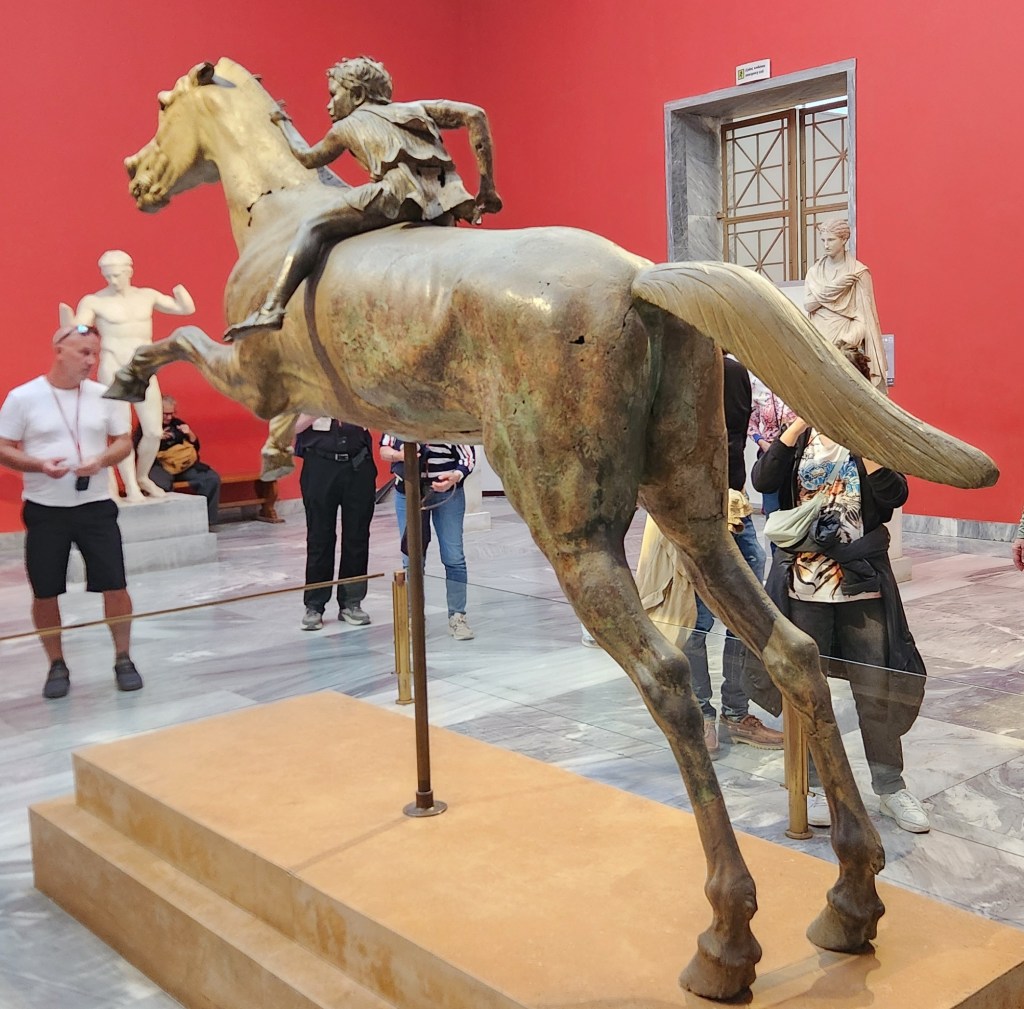
Athens, Greece (Saturday, November 8, 2025): Our ship arrived in the port of Piraeus, the largest of three ports serving the capital city of Athens, at 8 AM Saturday morning. Shortly after, we left for a half-day shore excursion to the city of Athens during which we saw the major sights out the bus windows before stopping for a thorough tour of the National Archaeological Museum. I’ve included some photos from the museum below. (I didn’t get any good photos from the bus, but don’t worry – you’ll see plenty more of Athens coming up in Part 4.)

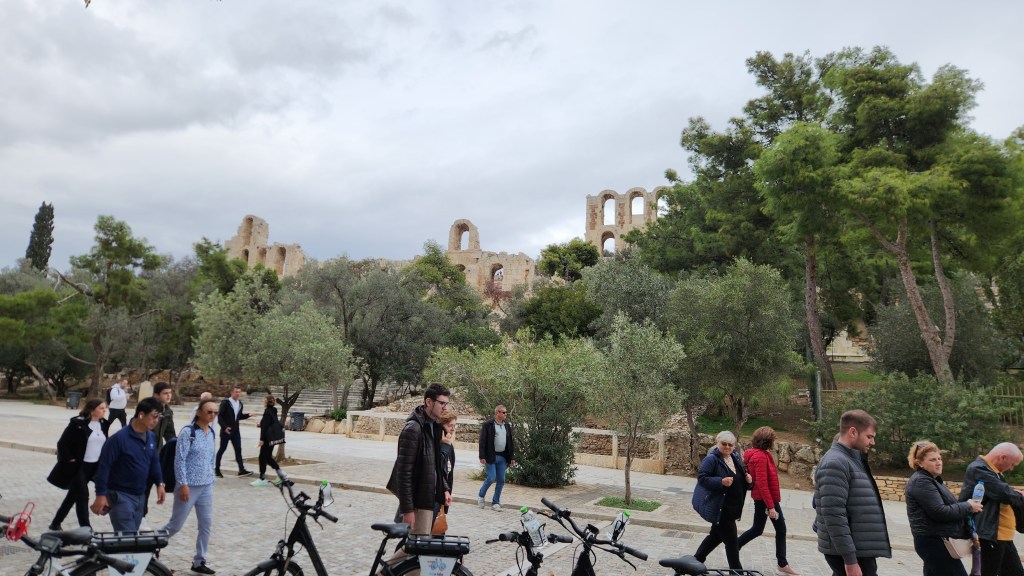
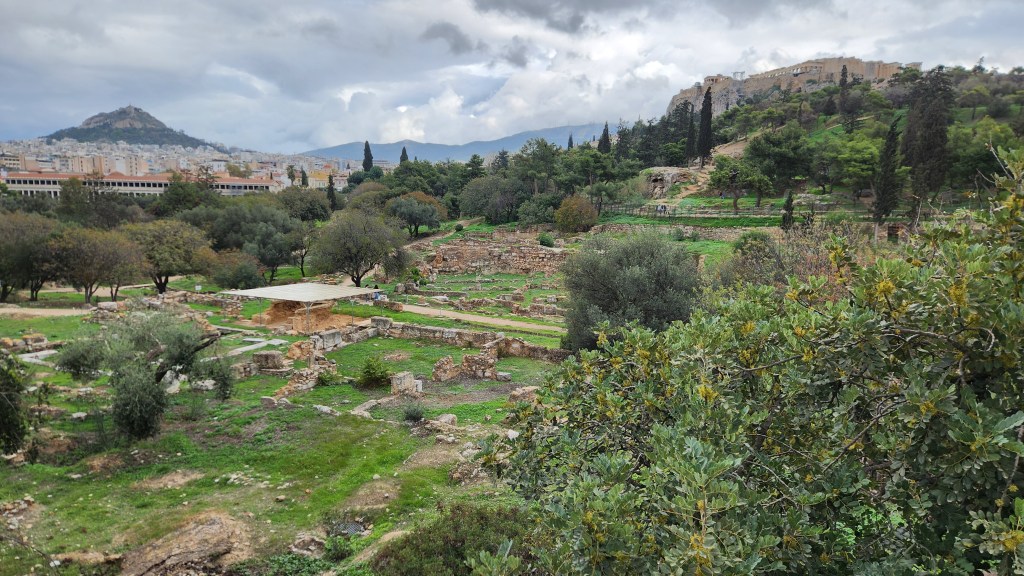
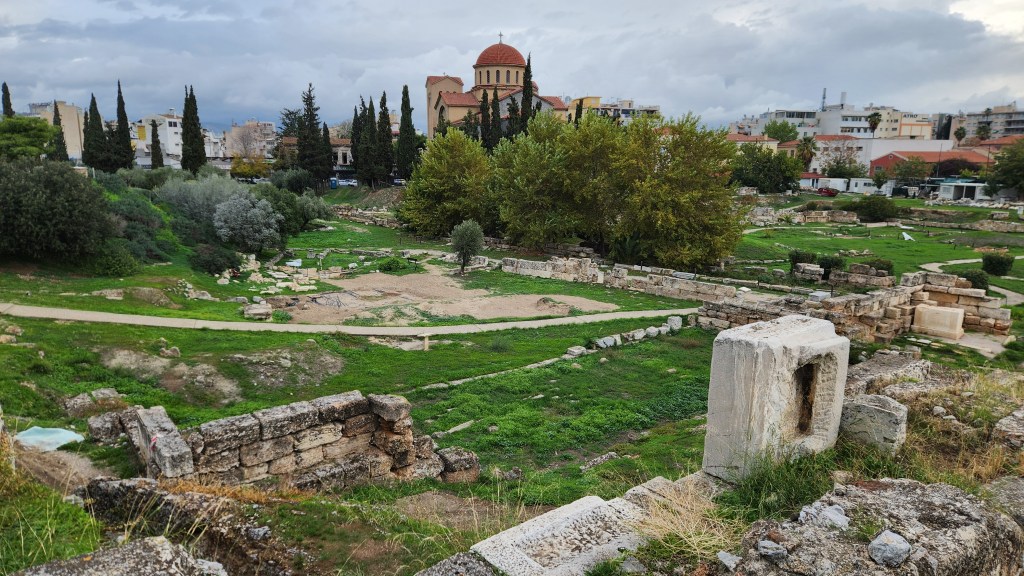
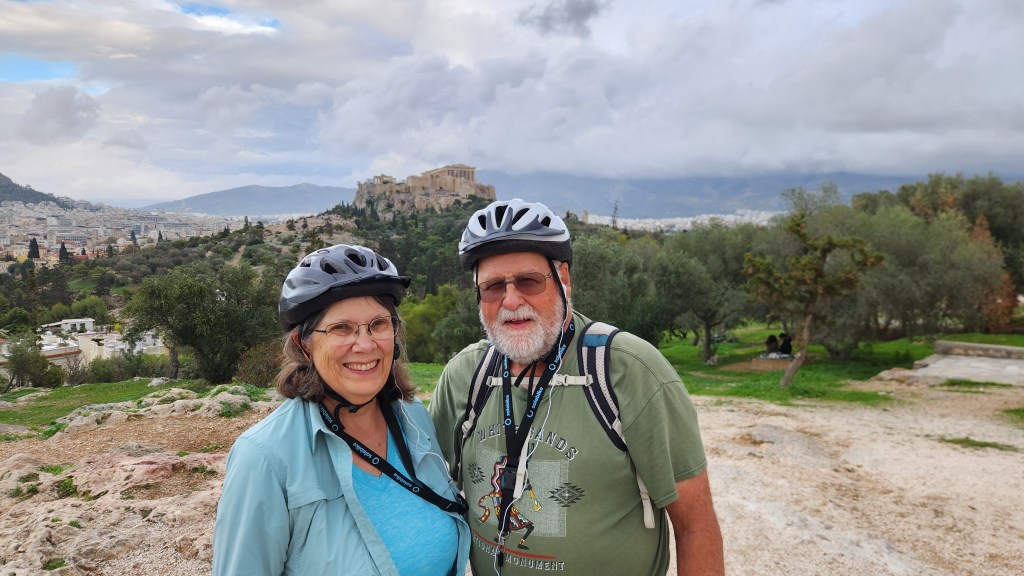
After returning to the ship, we set off again by bus back into Athens for a very enjoyable tour of the city on E-bikes, along with some 18 fellow Viking passengers (all senior citizens like us). For the most part, our ride followed spacious pedestrian boulevards, though we did need to intermingle with cars in a few areas. While a couple of the wobblier riders had spills and suffered minor scrapes along the way, nobody was seriously injured. The main difficulty was starting to ride again after our various stopping points because we had to ride so slowly, often dodging among hordes of pedestrians and motorbikes. Pat and I were unscathed, although her bike died about halfway through. Luckily, our guide, a fit young man some thirty or forty years younger, traded bikes with her and pedaled manually up some of the steepest hills. Here are some photos of the spectacular scenery we encountered during the ride.
Then it was back to the ship again via the Viking shuttle bus.
Okay, that’s it for Part 3. I hope you enjoyed the read and will come back for Part 4, which will cover the post-cruise extension in Athens including the most famous sites of Classic Greek culture.
Stay tuned …
 Dave Saari