

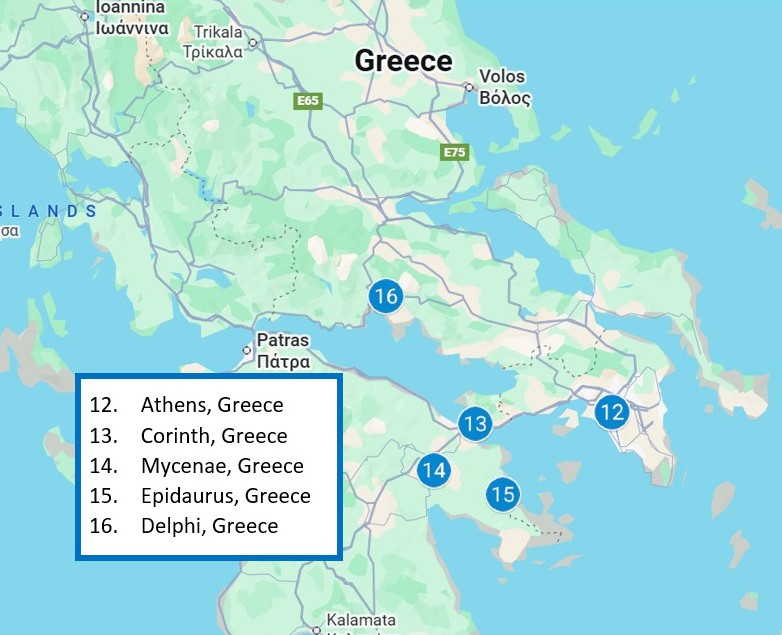
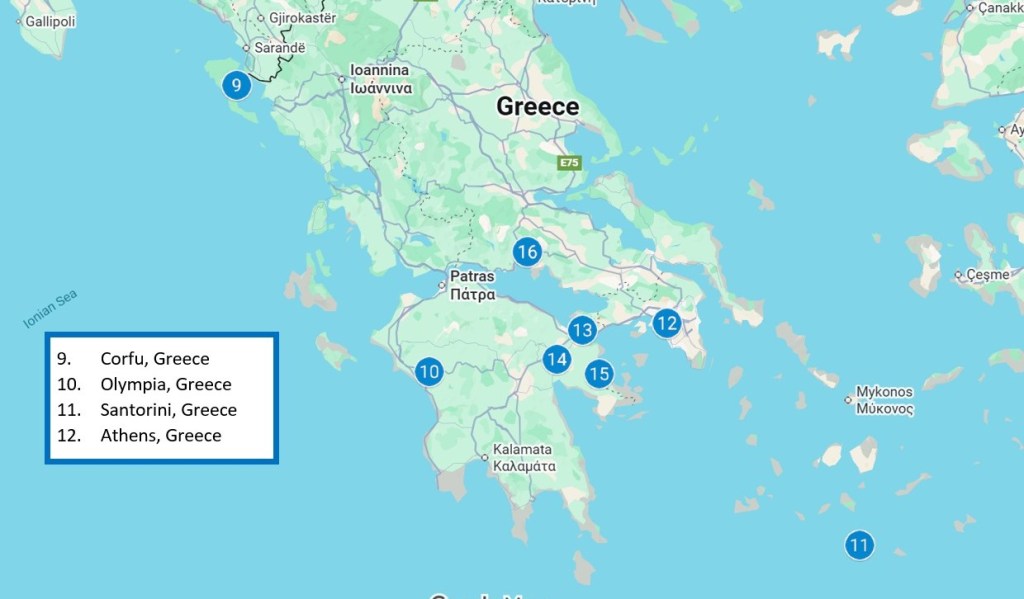
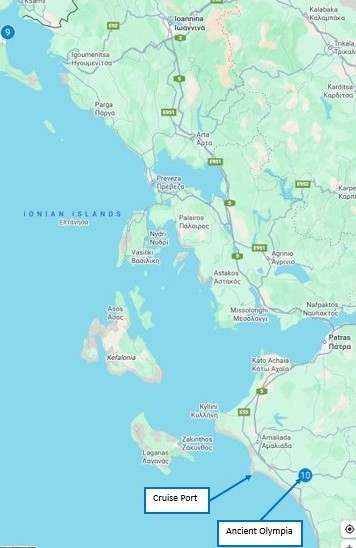
Welcome back for the concluding Part 4 of this travelogue series. Part 3 ended as we returned from our first tours of Athens for our final night abord the Viking Neptune, anchored in the Port of Piraeus. Here’s the final map of the journey, showing the places I’ll describe in this narrative.
Now let’s continue the story …
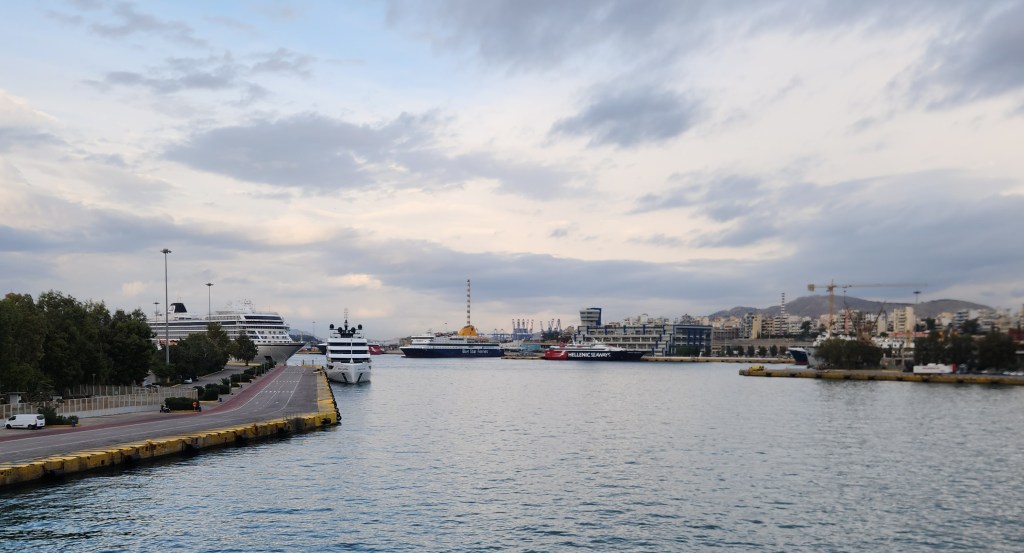
Athens, Greece (Sunday, November 9, 2025): Before we left the ship, I took one last photo of the port.
After breakfast, Pat and I and some 25 or so fellow travelers departed by bus for what the Viking itinerary called “The Full Acropolis Experience.” Before I describe that, here’s some very abbreviated history. Athens is one of the oldest named cities in the world, having been continuously inhabited for some 5,000 years. It became the leading city of ancient Greece in the first millennium BCE. The Acropolis (roughly translated as “high city”) sits on a rocky outcropping overlooking the city. Ancient Greeks built several impressive temples and monuments there, including the Parthenon, the Propylaea, the Erechtheion, and the Temple of Athena Nike, in the fifth century BCE. Over the following centuries, Athens fell under the control of various empires, including the Macedonians, Romans, Byzantines, Latins, Venetians, Florentines, and eventually the Ottomans, in the 15th century.
The Ottomans had little interest in ancient Greek cultural sites and began using the Parthenon as a storage site for gunpowder. During a siege by Venice in 1687, the Temple of Athena Nike was dismantled by the Ottomans and its materials used to fortify the Parthenon. Then, a Venetian mortar shell hit the gunpowder cache in the Parthenon, causing an explosion that severely damaged the structure. The Venetians briefly occupied the city before abandoning it once again to the Ottomans. Significant portions of the remaining structure were looted during the following years, and Athens lost much of its wealth and power. During the 18th century, the city began to regain its stature, but the ruling Ottomans still had no interest in ancient Greek culture.
Enter one Thomas Bruce, 7th Earl of Elgin, a rather shady British nobleman who became ambassador to the Ottoman Empire in 1798. Lord Elgin cut a controversial deal with the Ottomans under which he had about half the surviving Parthenon sculptures, as well as sculptures from the Erechtheion, the Temple of Athena Nike, and the Propylaea, removed and shipped to Britain in order to establish a private museum on his personal estate. However, the ship laden with these treasures sank in a storm off a Greek island shortly after sailing, and much of the cargo was lost. Elgin mounted a costly recovery effort, eventually bringing all of his booty back to England, but he incurred so much debt that he was forced to sell the entire collection to the British Museum in London in 1816, where they are proudly displayed to this day as the “Elgin Marbles.” (As a side note, Pat and I saw the impressive display at the British Museum back in 2016 during a Rick Steves tour of London, where our guide defended Elgin’s acquisition as a noble effort to save them from looting under the Ottomans, with no mention of his less-than-honorable intentions.)
In 1983, the Greek government formally asked the British government to return the collection to Greece and listed the dispute with UNESCO, but the British government and the British Museum declined UNESCO’s offer of mediation. In 2021, UNESCO called upon the British government to resolve the issue at the intergovernmental level, but so far nothing has been resolved. A large part of the British argument for retaining the collection has been that the Greeks had no suitable place to properly display them and did not have the capability to properly maintain them. Which finally brings me to the first stop on our “Full Acropolis Experience” tour – The Acropolis Museum in Athens.
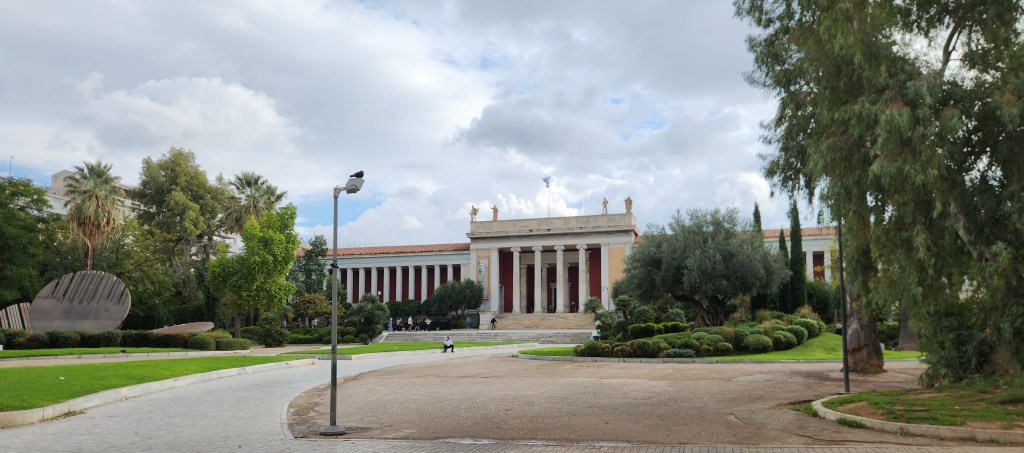
The Acropolis Museum is a beautiful, modern structure located a short walk from the Acropolis hill. It was completed in 2009 to replace an older museum and to house all of the artifacts found on the Acropolis, specifically including the missing pieces of the Parthenon, Erechtheion, Temple of Athena Nike, and Propylaea that now reside in London. Here is a photo of one portion of the Parthenon display, with some of the original pieces alongside plaster models of the pieces that will hopefully be returned by the British Museum someday:
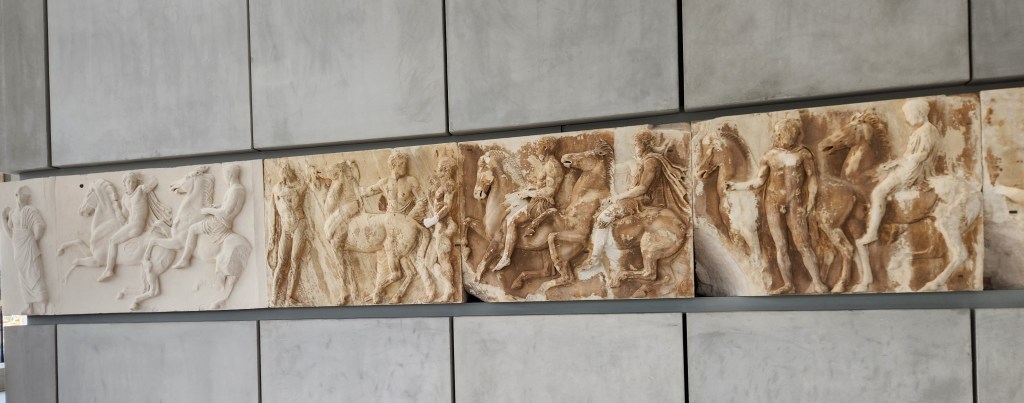
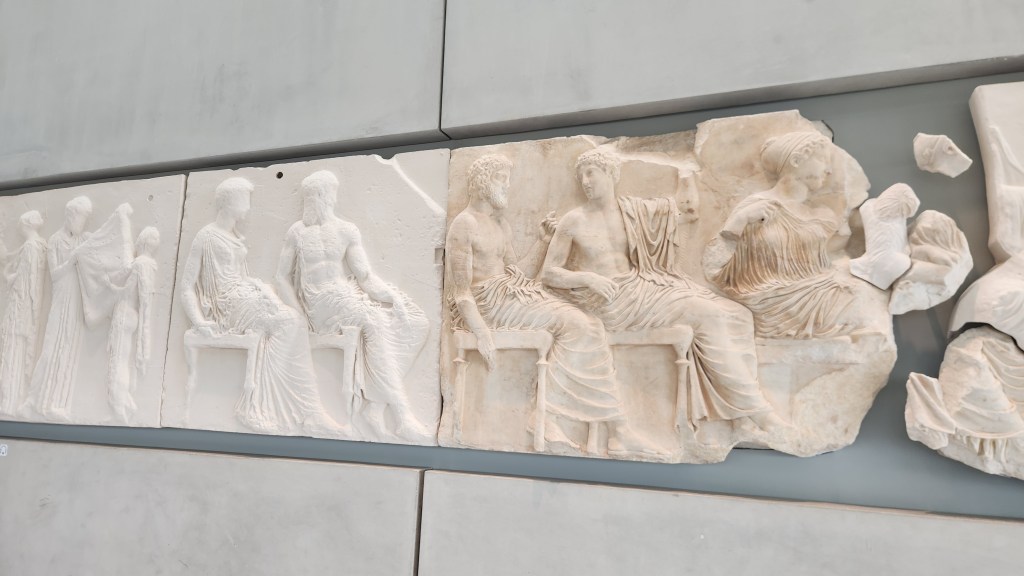
It was hard not to believe that the original marbles belong here, in Greece, next to the Acropolis, and not in a London museum, no matter how hard the British may try to justify past ethical lapses.
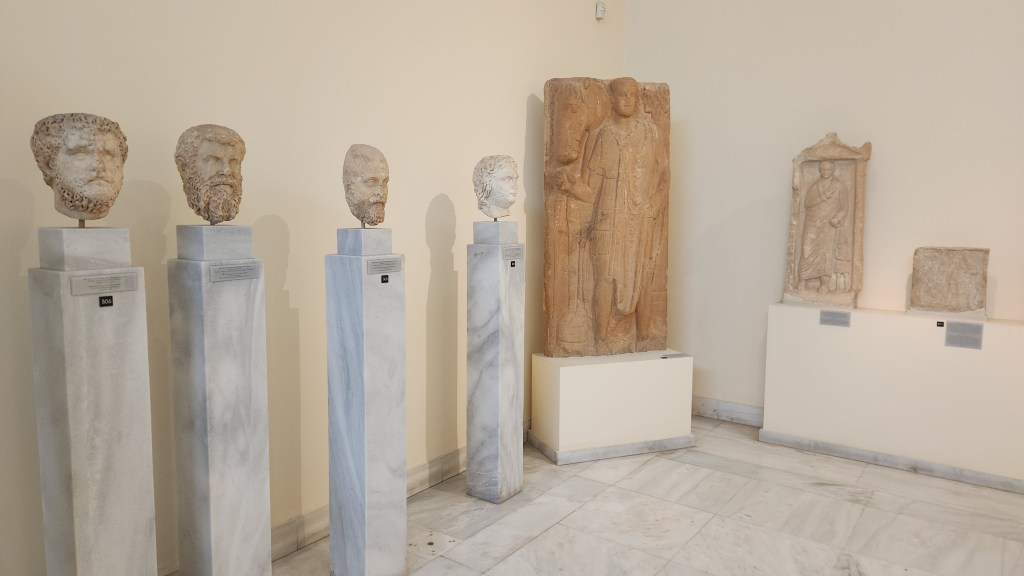
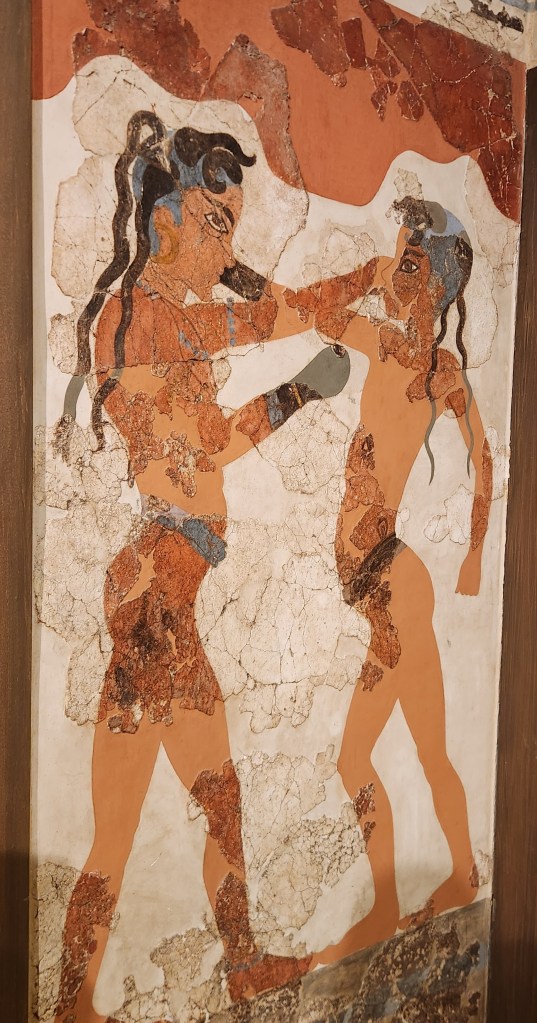
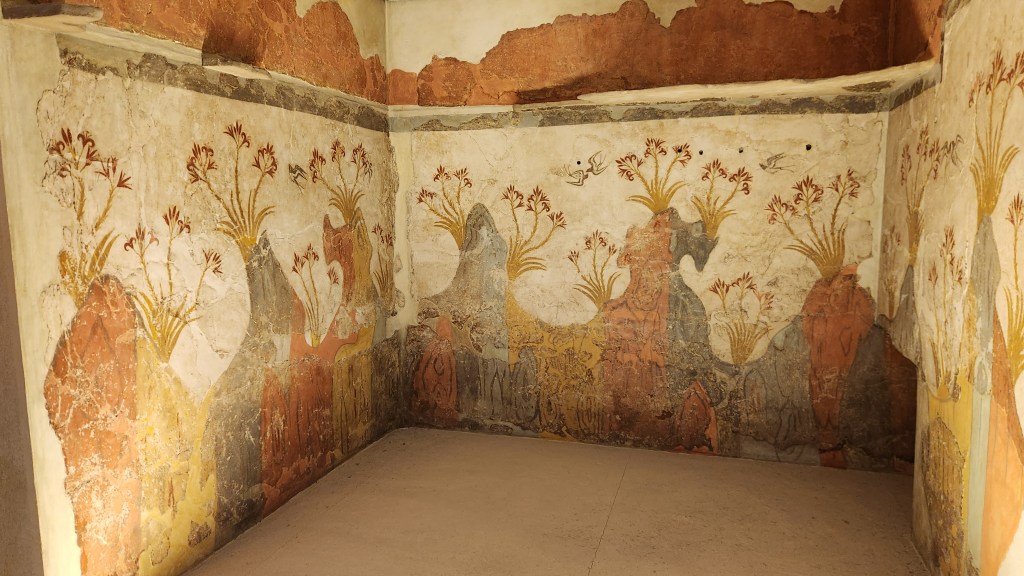
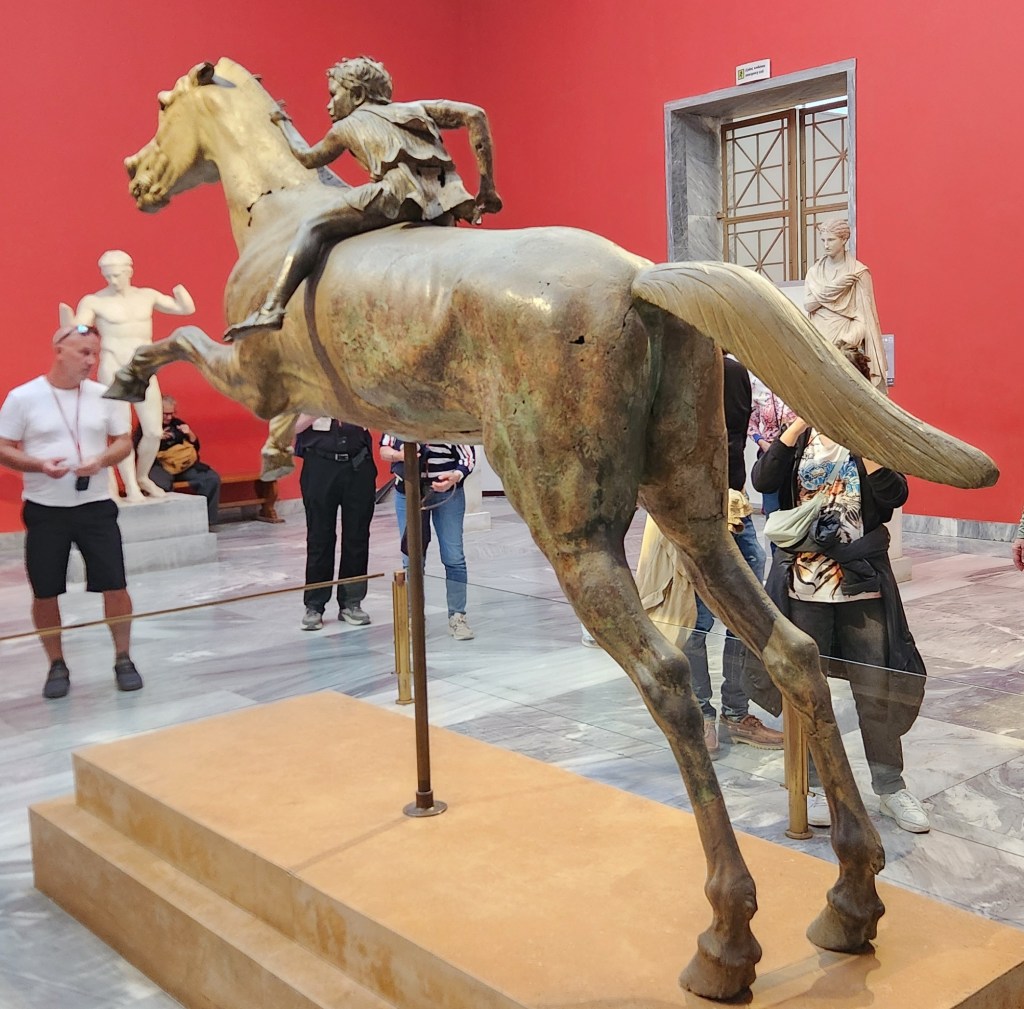
Moving on, the museum is also chock full of other gorgeous artifacts from the Acropolis, such as those below. (Unfortunately, I only managed to get these few photos due to the congestion, but hopefully you can get a feel for the place.)
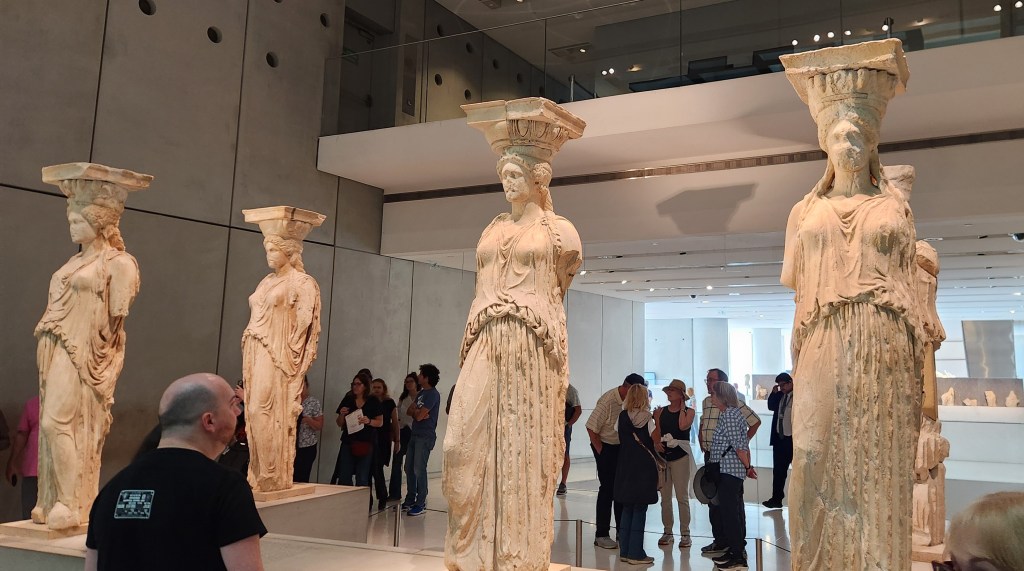
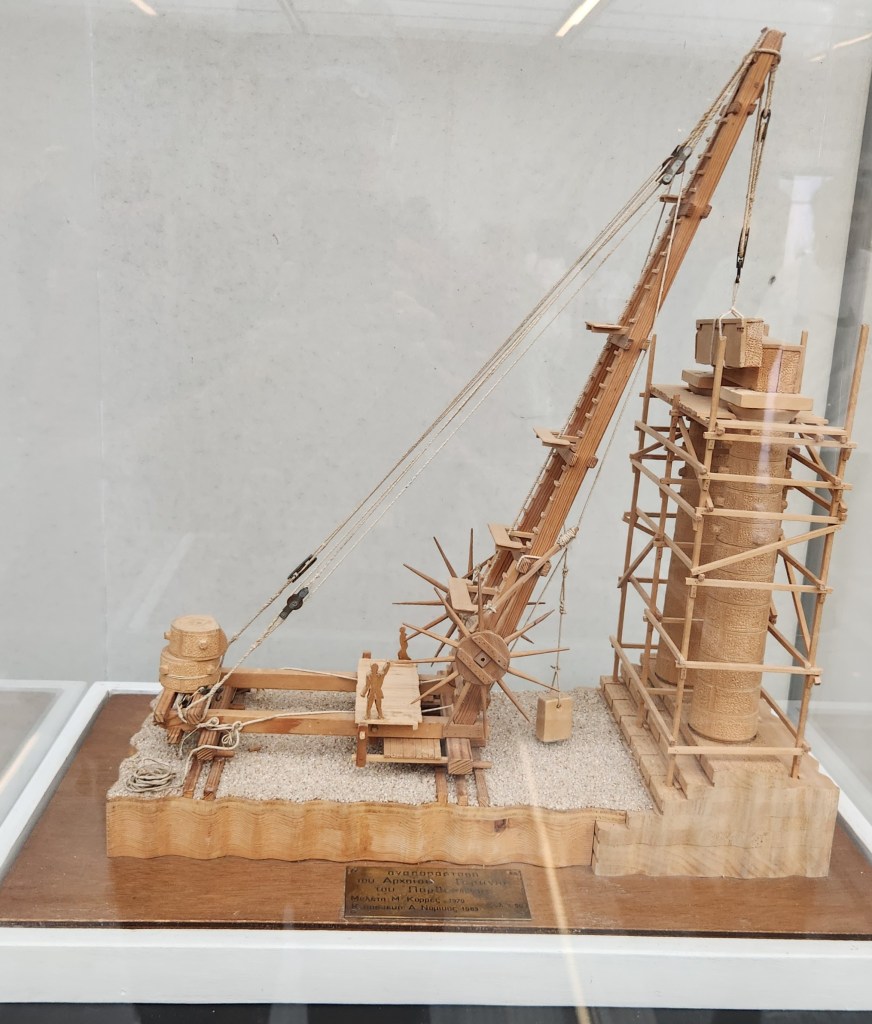
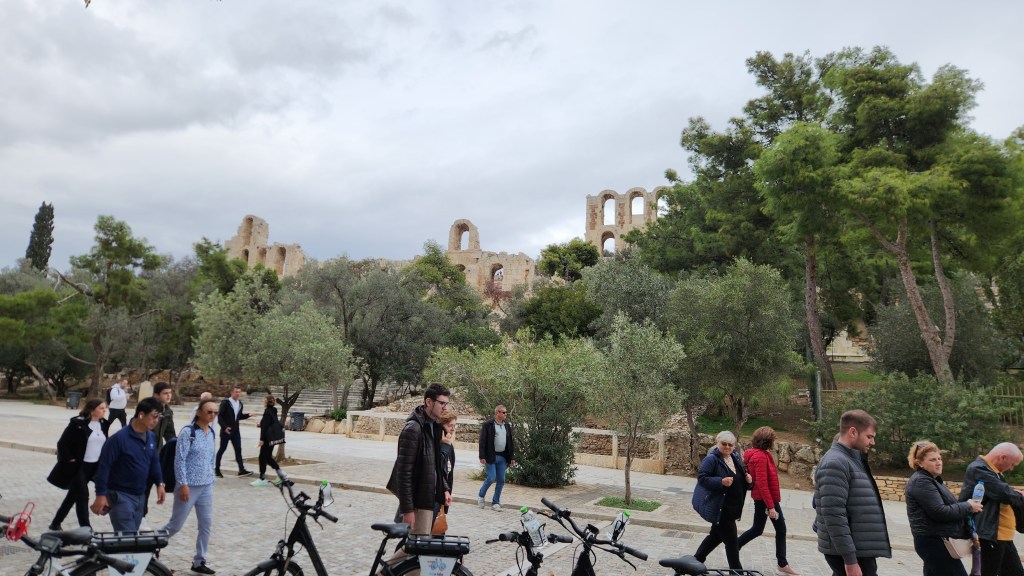
After the museum tour, our group walked up the hill to the Acropolis itself to marvel at the 3,000-year-old structures as well as stunning views of Athens and its surroundings. Since I’ve already written more words than I had originally intended, I’ll simply show the photos, which as we all know are worth a thousand words each.
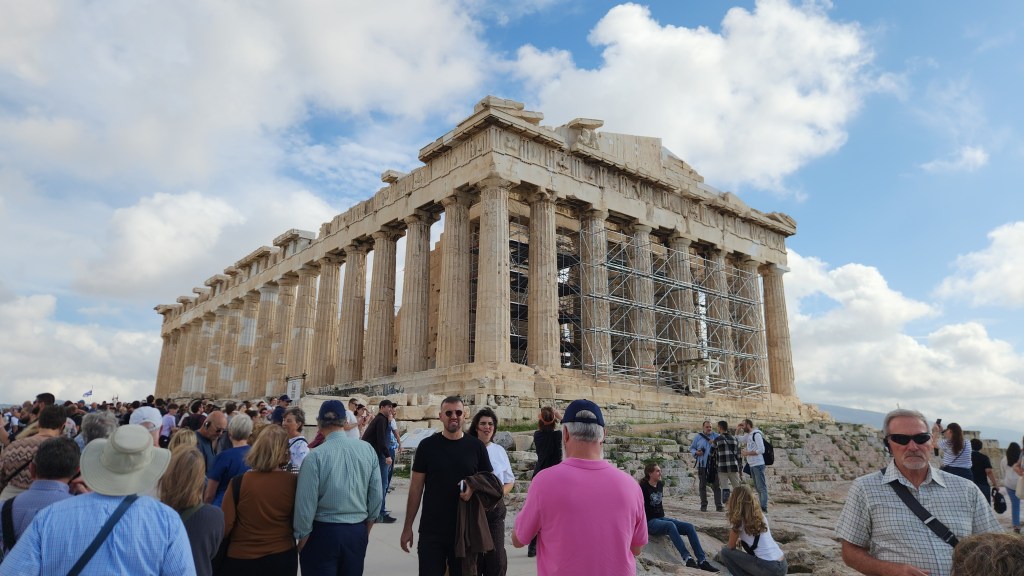

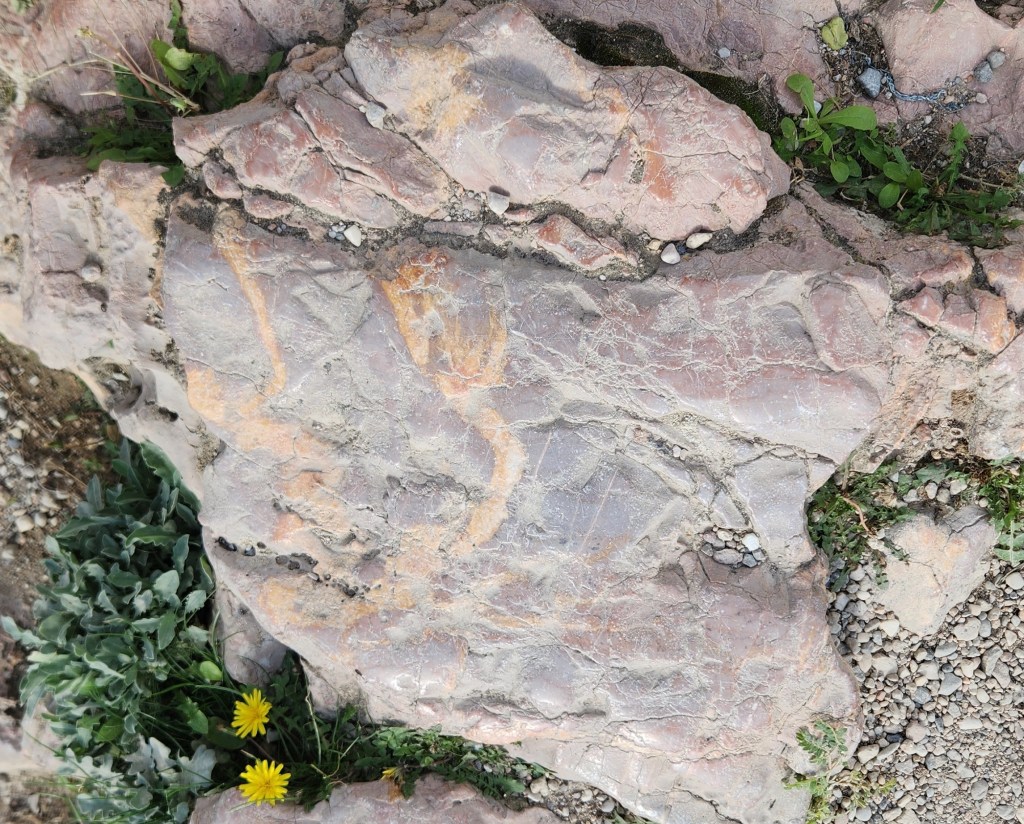
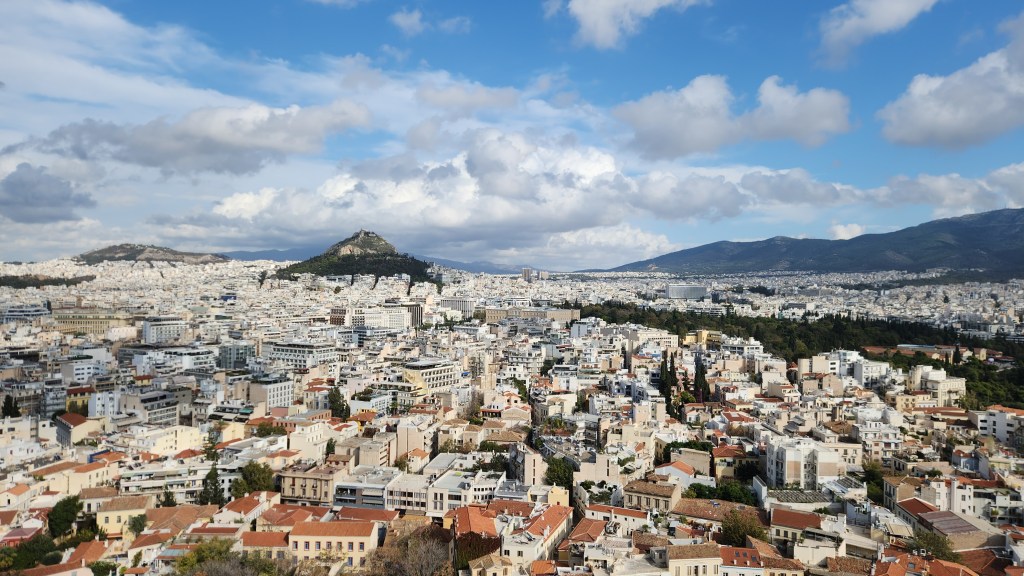
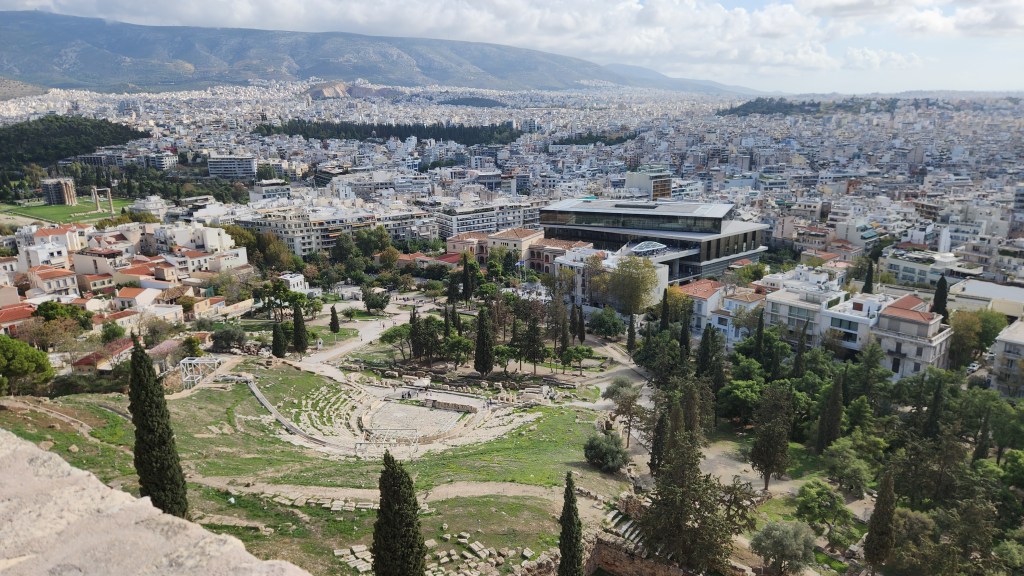
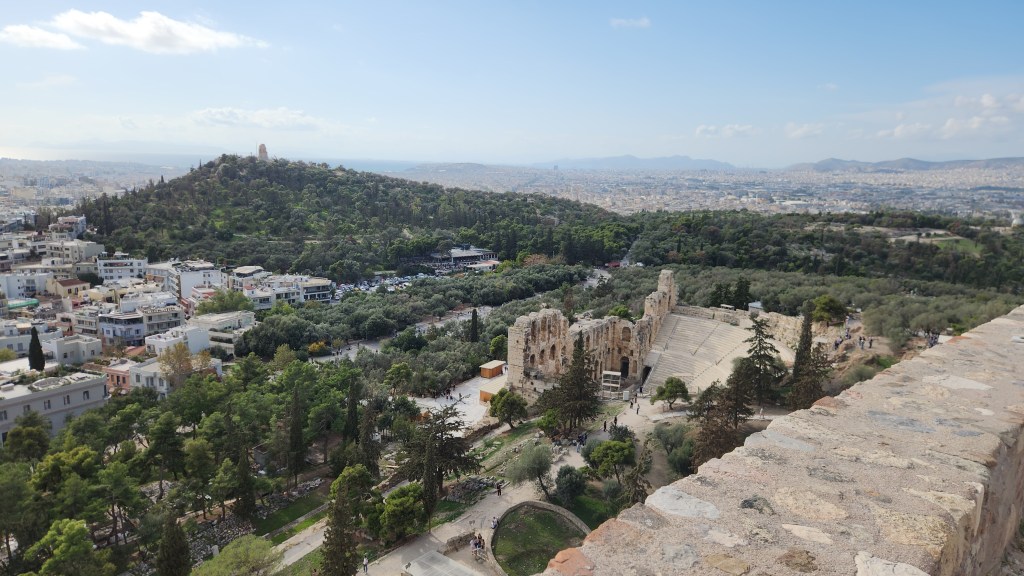
Following the Complete Acropolis Experience, our bus transported us to a hotel called the NJV Athens Plaza, where we would spend the next days while completing our tour of Classic Greece. The hotel is conveniently located in the well-known Plaka District of Athens, next to Syntagma Square, a popular and busy square which is also adjacent to an Athens Metro stop and the Hellenic Parliament Building. There are also multitudes of nearby shops, restaurants, museums, and other interesting sites in the vicinity, some of which I’ll describe below.
After we checked into the hotel, I strolled over to the Hellenic Parliament building to watch the hourly changing of the guard ceremony, a fascinating ritual in which two Evzone (Presidential Guard) sentries stationed outside the building are replaced by fresh troops. The Presidential Guard is an elite ceremonial unit founded in 1868 to guard the Tomb of the Unknown Soldier in front of the Parliament. The elaborate uniforms and the ceremony’s choreography trace back to Greek resistance fighters who battled the Ottoman occupation; their shoes include hobnails designed for traction in the snowy, mountainous regions of Greece, and the “pompoms” on the toes are said to have once concealed knives for defending against their enemies. Here’s an edited video of the ceremony that I took while watching (unfortunately my vantage point was not directly in front since I arrived too late for a prime, central viewing spot) and some photos I took afterward.
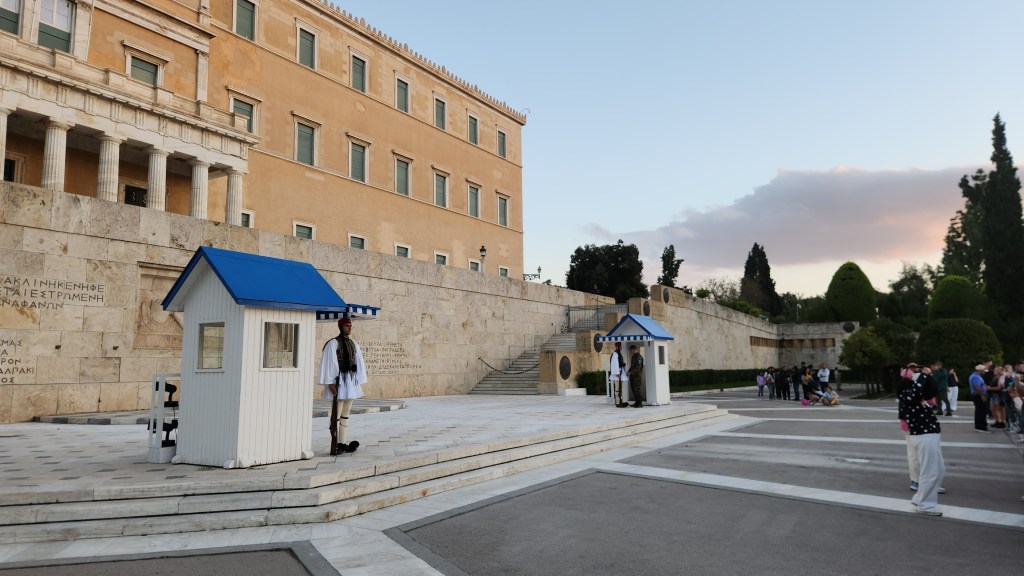
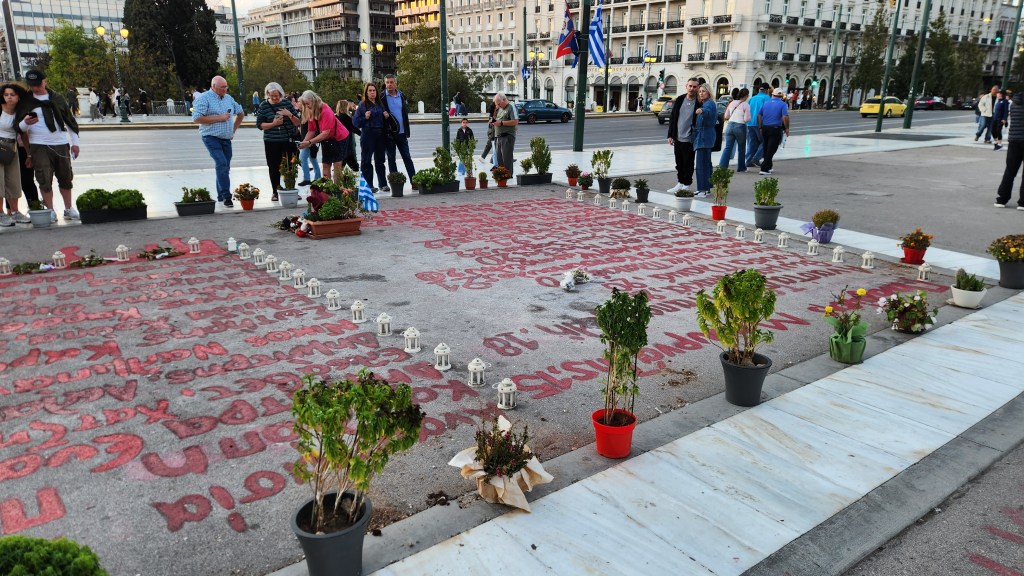
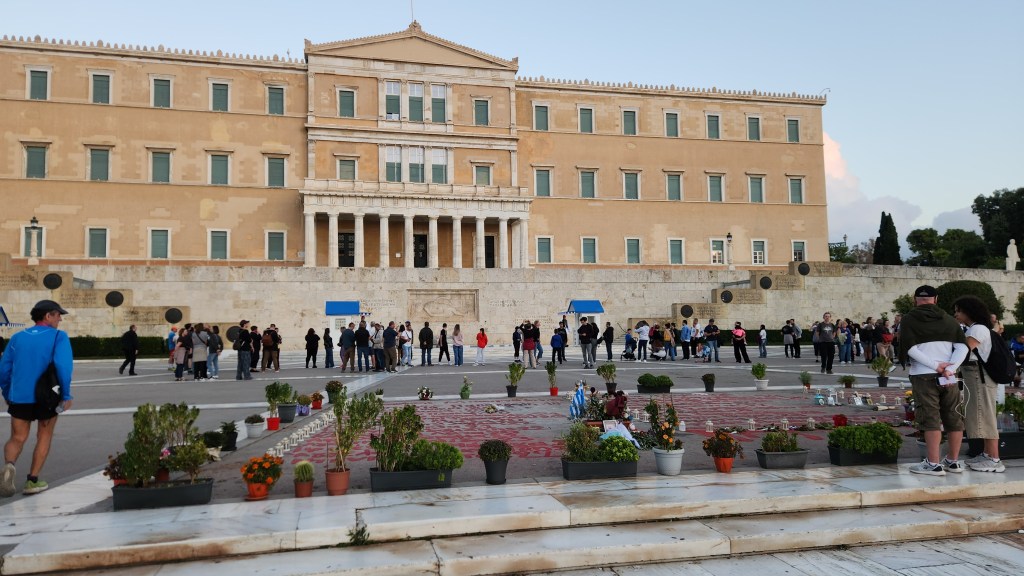
Interestingly, when we passed by the Parliament the following Tuesday, the guards were wearing different uniforms as seen below, which I later learned were the cold-weather version rather than the ceremonial version worn on Sundays.

I checked out the area around the square before returning to the hotel, telling Pat I’d found a good place for a quick dinner. However, by the time we got back there it had closed, so we wandered around for a half hour before deciding on a nice outdoor dining spot for some tasty Greek pizza.
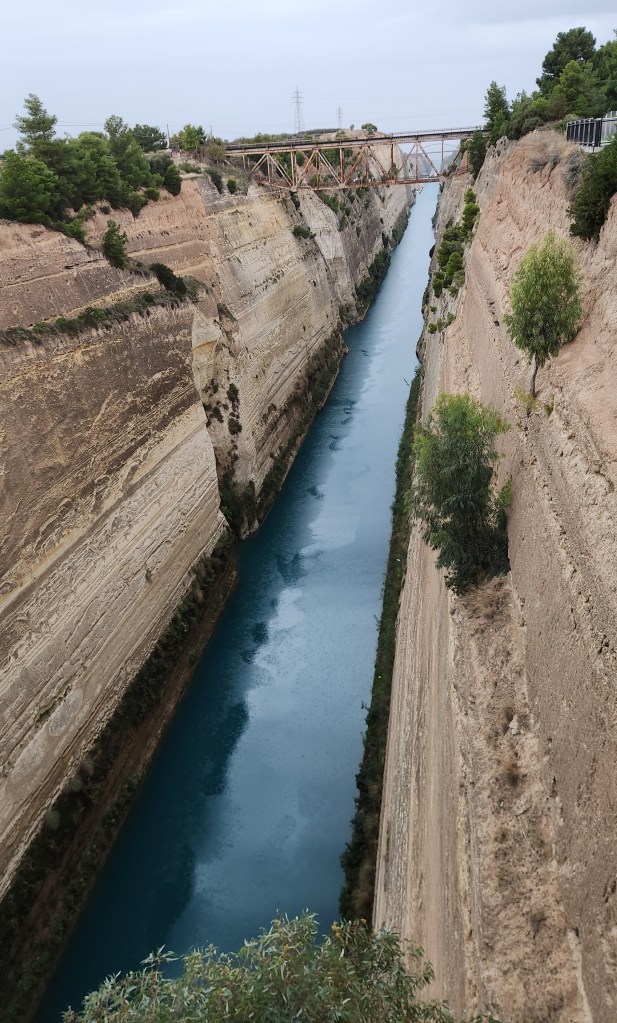
Corinth, Epidaurus and Mycenae, Greece (Monday, November 10, 2025): At 7:30 Monday morning, we departed for a bus tour of ancient sites on the Peloponnese Peninsula. We stopped along the way near Corinth, where we saw a 4-mile-long canal that connects the Ionian Sea with the Aegean Sea, cutting through the narrow Isthmus of Corinth, which separates the peninsula from the Greek mainland. The first attempt to build a canal there was made by Roman Emperor Nero in 67 AD, but an actual canal was not completed until 1881. Since it is much too small for modern ships, it has little commercial value today, but tourists like me love to see it anyway.
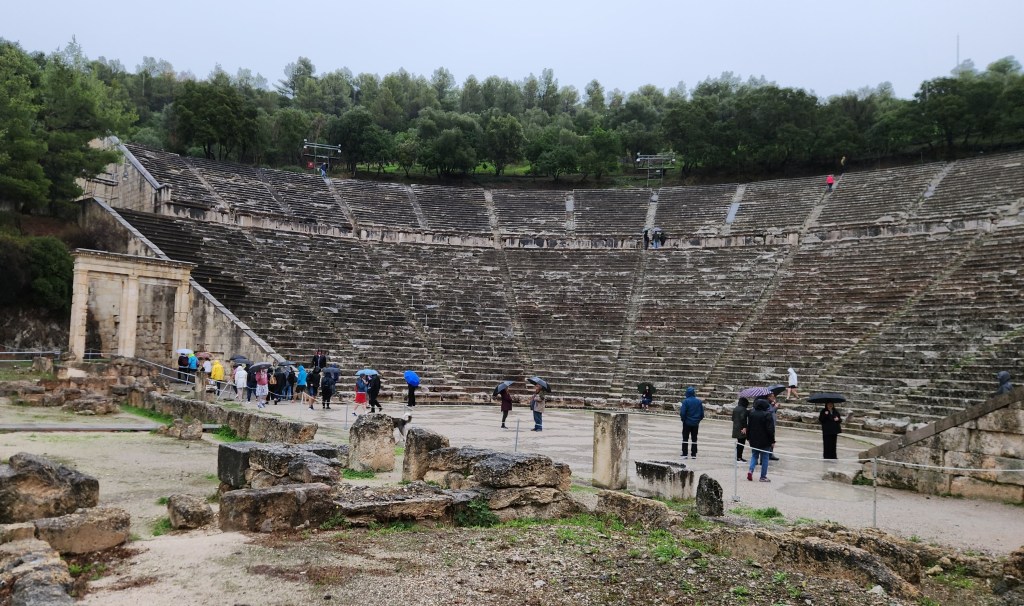
After the canal, we traveled on to Epidaurus, where we visited the Sanctuary of Asclepius, a famed healing center of ancient Greece where early physicians learned much about the human body and how to treat the ailments of the time. Many Greek physicians (possibly including Hippocrates?) learned their trade at the sanctuary, named for Asclepius the Healer, said to be a son of the god Apollo and reportedly born in Epidaurus. The site includes an impressive Odeon, or theater, which is still used for performances today due in large part to its excellent acoustics, as well as a museum displaying many artifacts from the sanctuary.
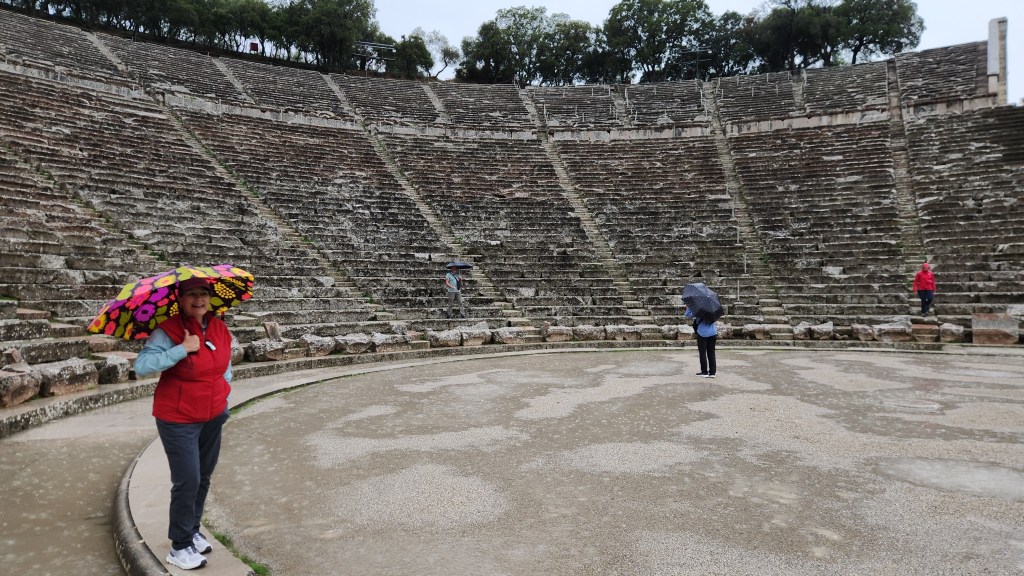
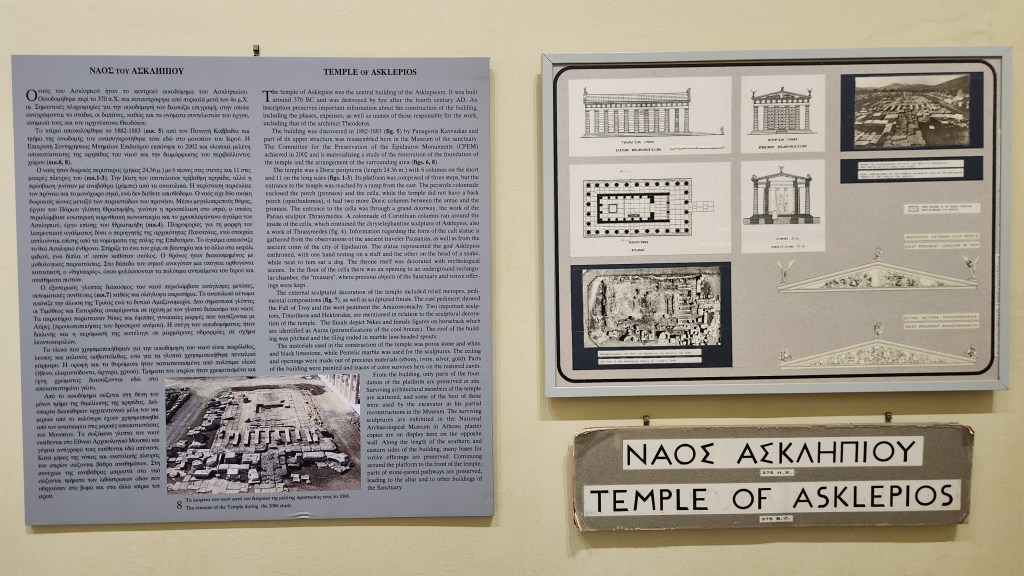

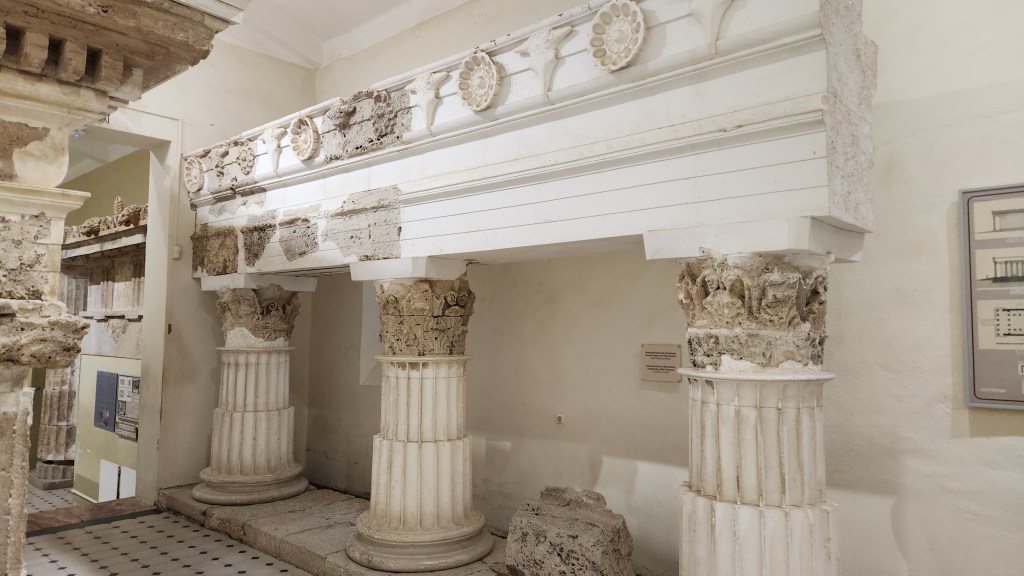
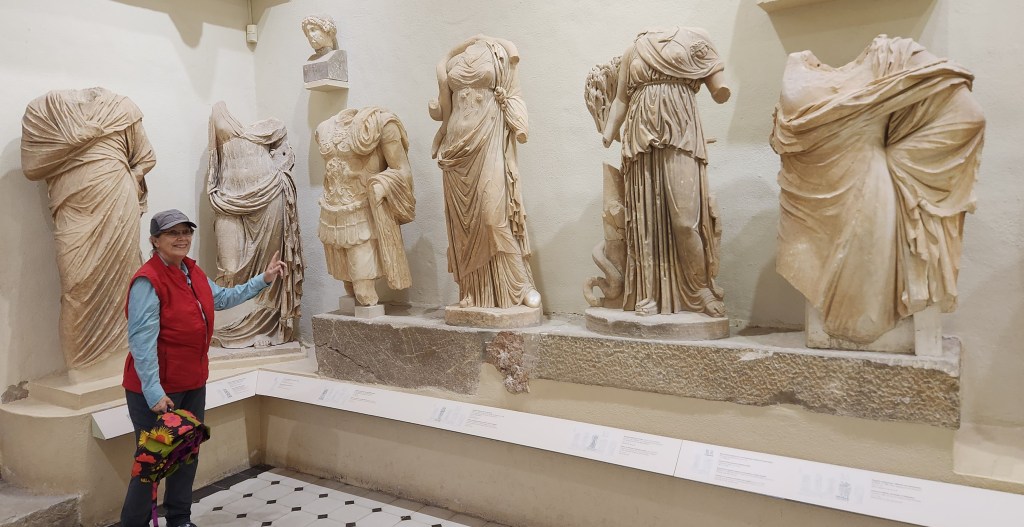
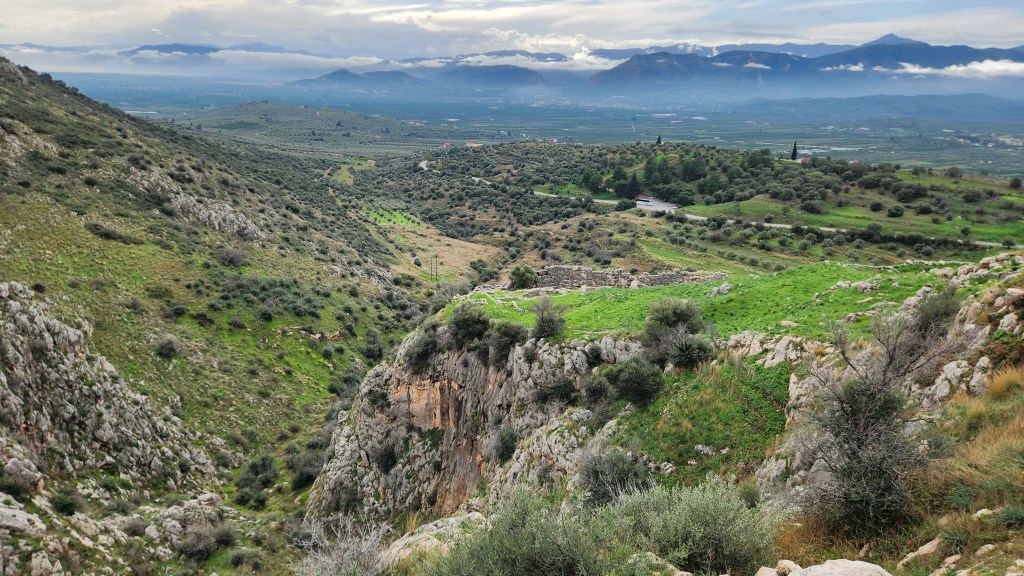
After Epidaurus, we stopped for lunch at a family-owned restaurant before driving on to Mycenae, which was one of the major centers of Greek civilization in the second millennium BCE. It was a military stronghold, an acropolis, that dominated much of southern Greece, Crete, the Cyclades and parts of southwest Anatolia. Multiple grave sites have been found in the surrounding area as seen in the photo below, and archaeological exploration is ongoing.

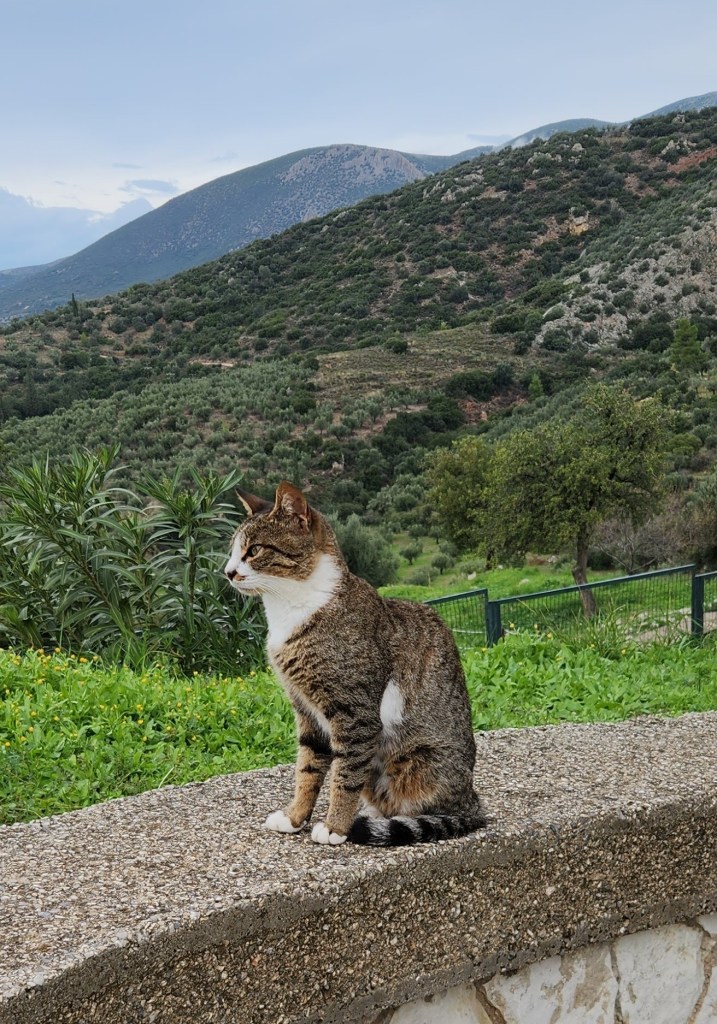
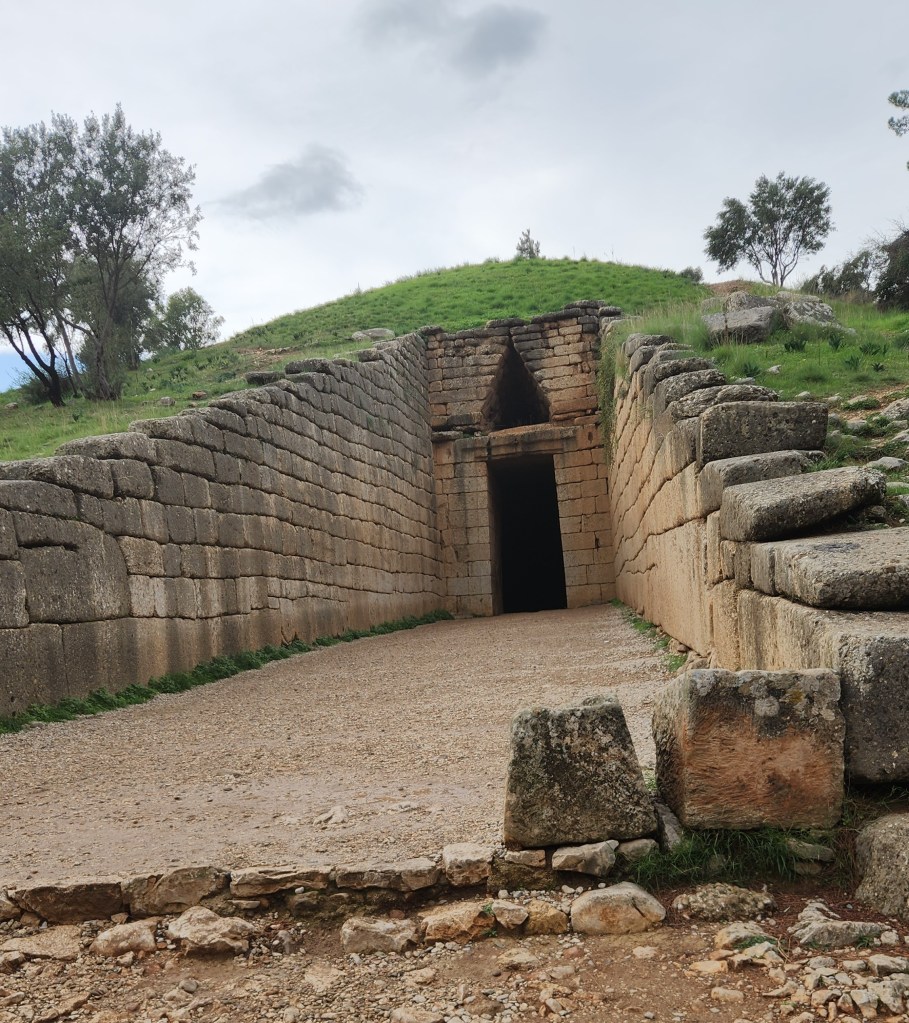
We climbed up the hill and passed through the Lion Gate to view the foundations of Agamemnon’s Palace, the Tomb of Agamemnon, and the Treasury of Atreus. I was especially impressed by the precise masonry work in which enormous stones were fitted together precisely to create the impregnable walls of the fortress. The fact that such works could be built 3,000 years ago is a tribute to ancient Greek technology. Once again, I’ll try to let the photos do the talking …
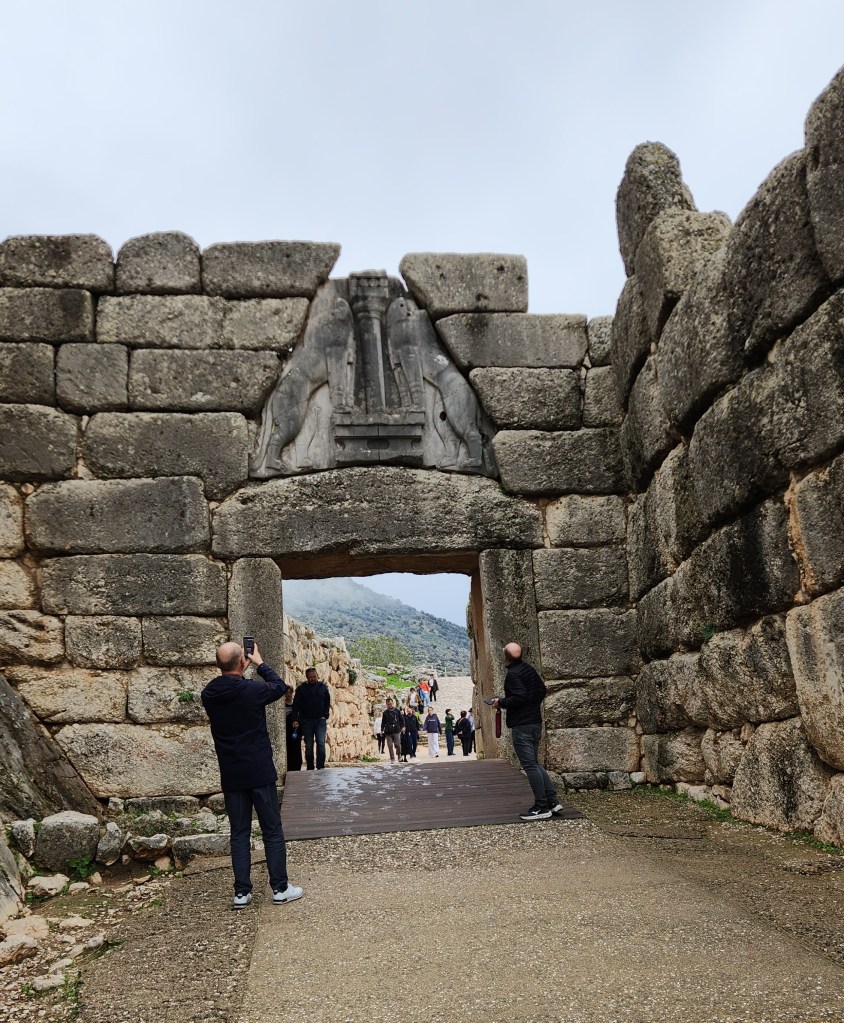
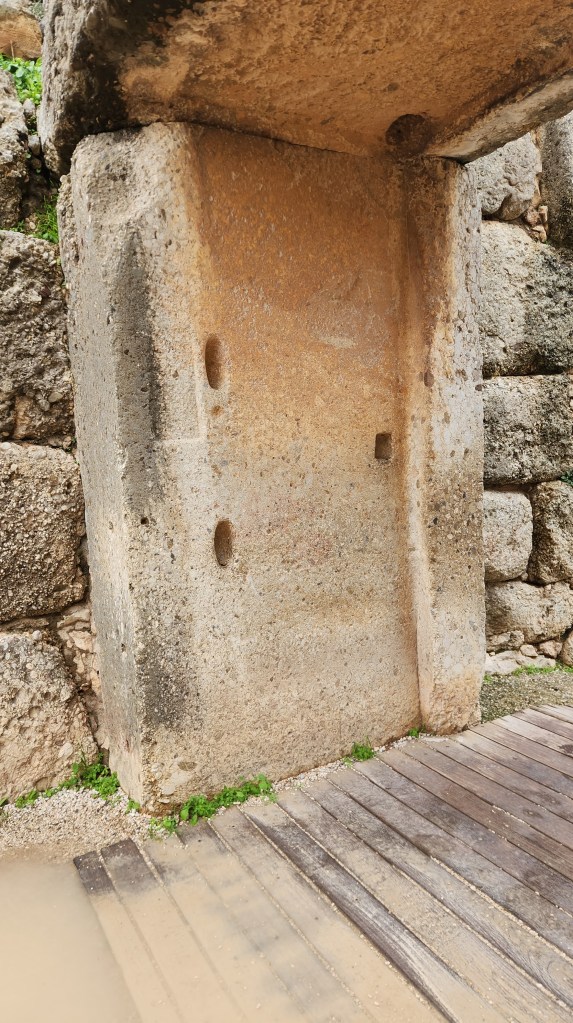
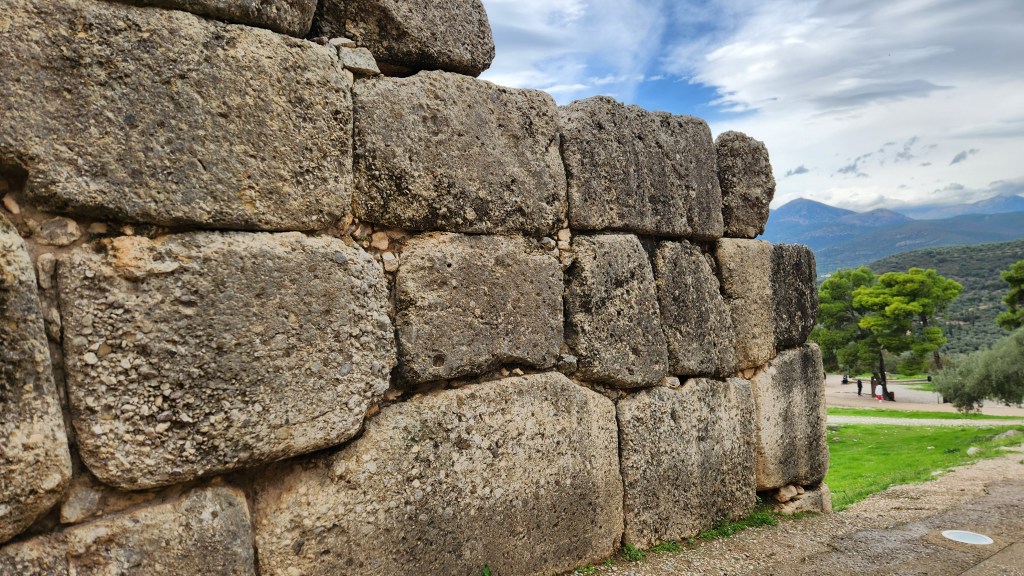
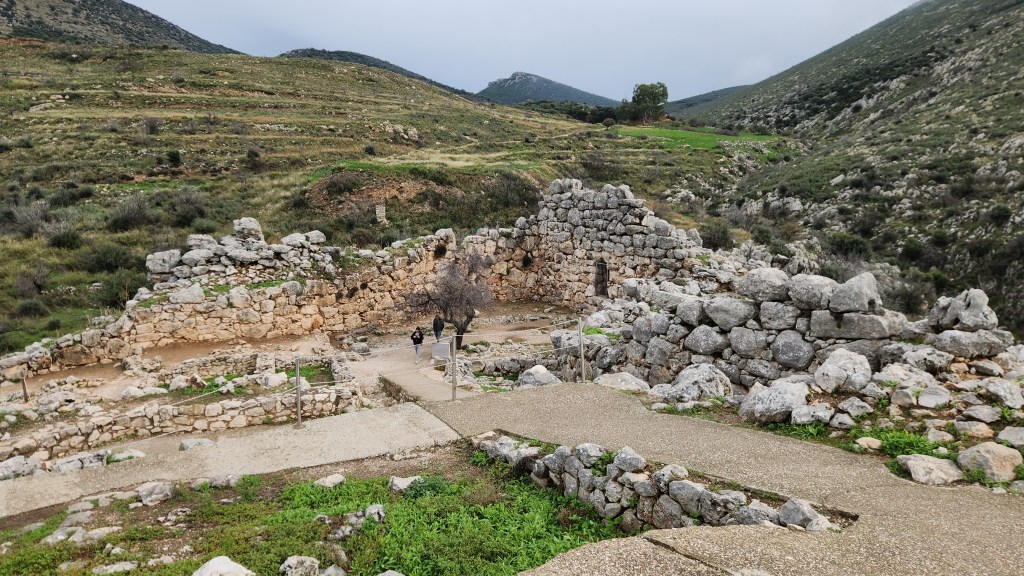
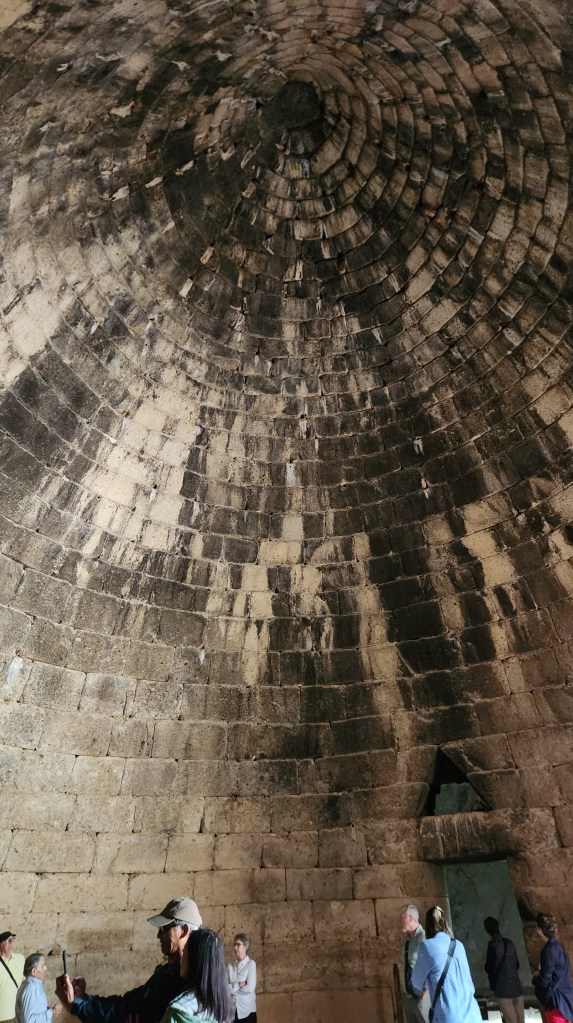
Our final point of interest was a huge underground chamber nearby, perhaps a tomb built for one of the noble inhabitants of the palace. Once again, what impressed me was the massive scale of the construction.
The return trip was slowed by brutal traffic as we neared Athens, and we didn’t make it back to the hotel until 5:30 PM. Pat wasn’t interested in any dinner, so after a brief rest, I ventured out into the square to take in the ambience as well as some very non-Greek food (the details of which I will only mention in private to anyone who presses me for details).
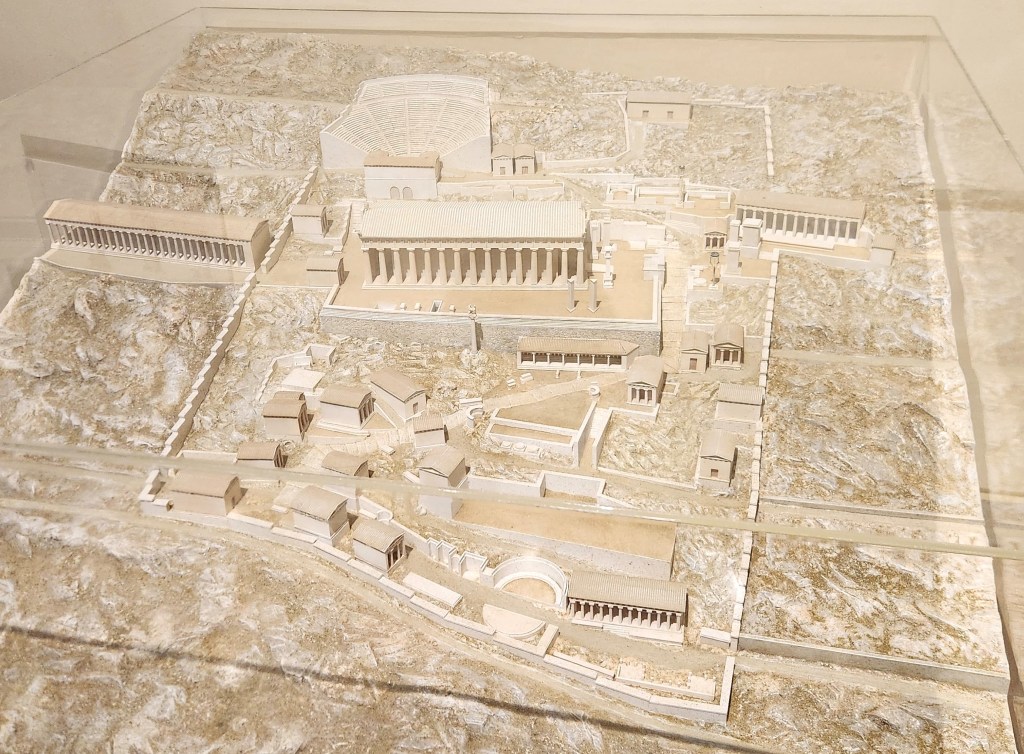
Delphi, Greece (Tuesday, November 11, 2025): We departed the hotel at 7:15 for another bus trip, this time to the site of the ancient Oracle at Delphi. Fans of the Greek classics know that the Oracle was responsible for all sorts of tragedies, as various protagonists went to learn their fates and then spent years trying in vain to prevent them from occurring. Luckily, no such tragedy has befallen us, as the Oracle was not in during our visit. Her place of business was beautiful, however – yet another example of the amazing architectural achievements of the ancient Greeks.
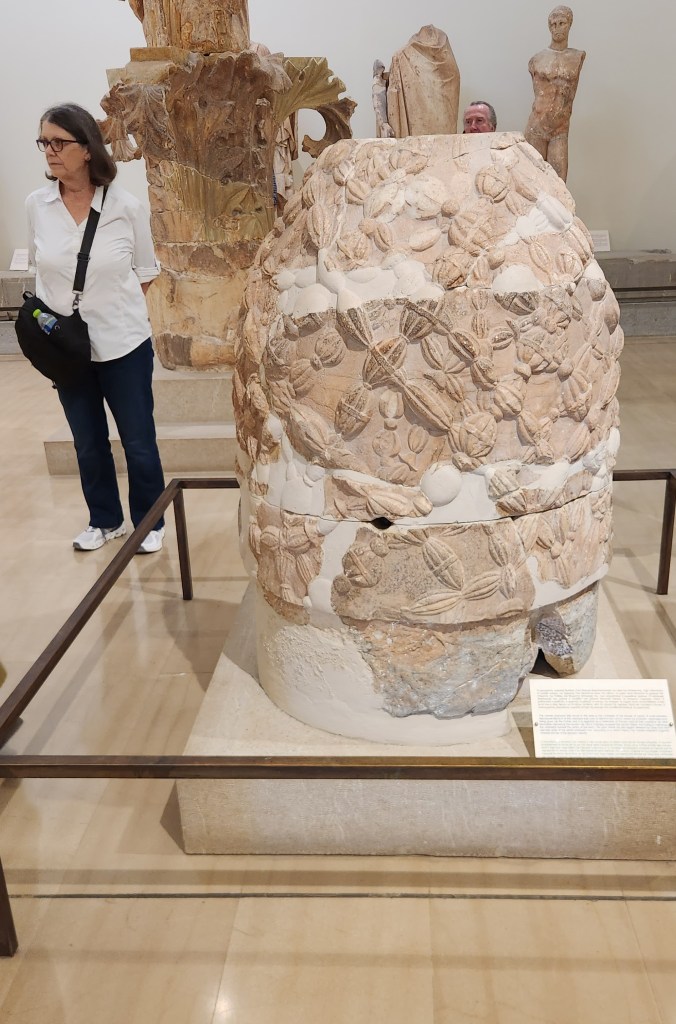
The site, in the shadow of Mt. Parnassus, was originally sacred to Gaia, the Earth goddess, but later became a temple to Apollo, who, in some myths, killed Gaia’s serpent child, Python, to claim the site from her. Our first point of interest was a replica placed at the location of the Omphalos, or “navel of the world,” believed by the ancient Greeks to be the center of the world, discovered by two eagles dispatched by Zeus.
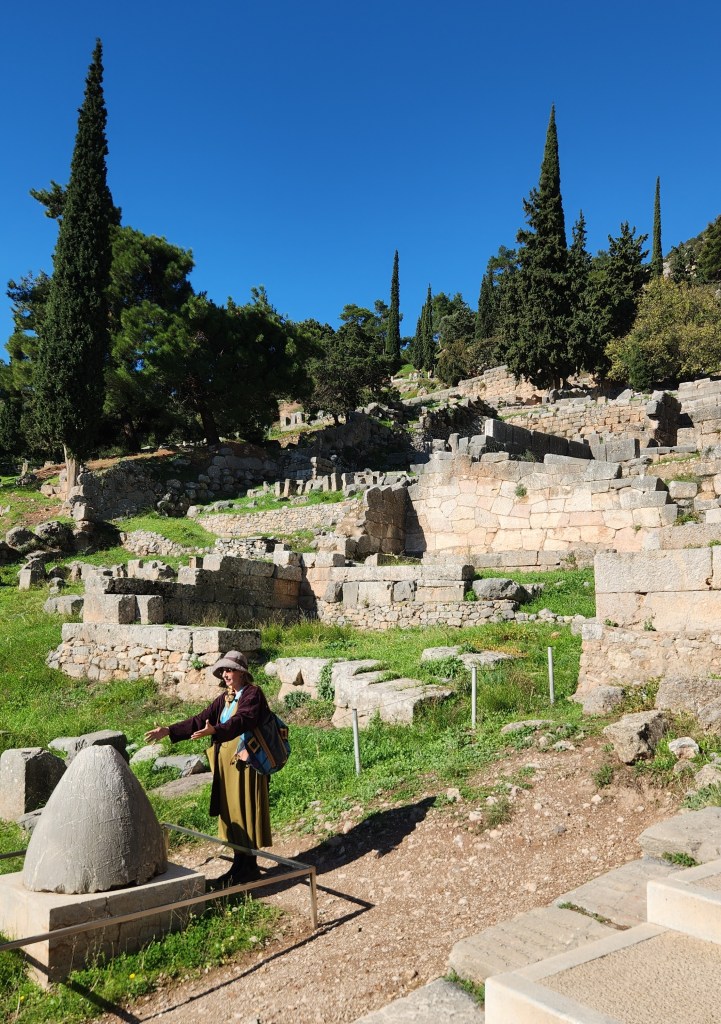
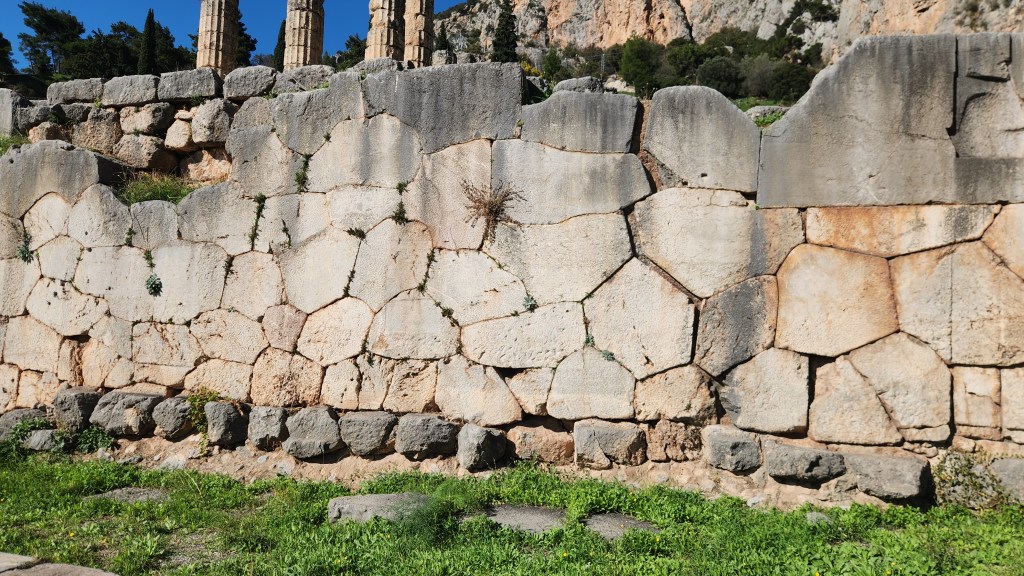
From there, we climbed up the hill to see the entrance to the Temple where the Oracle received visitors, the magnificent theater, and the site of an ancient race track where chariot races were held, not to mention spectacular views of the surrounding countryside.
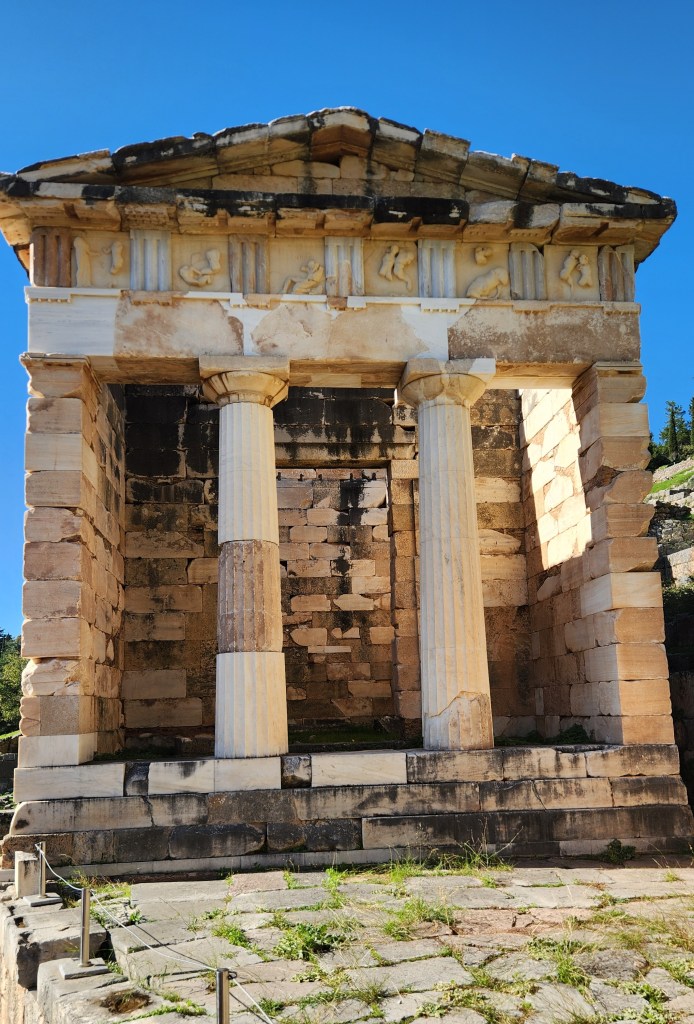
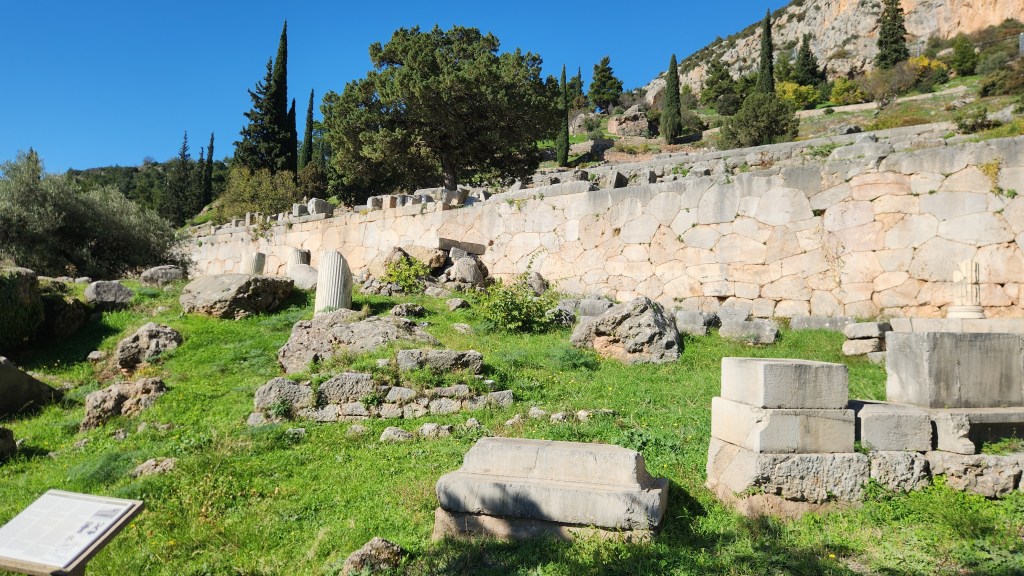
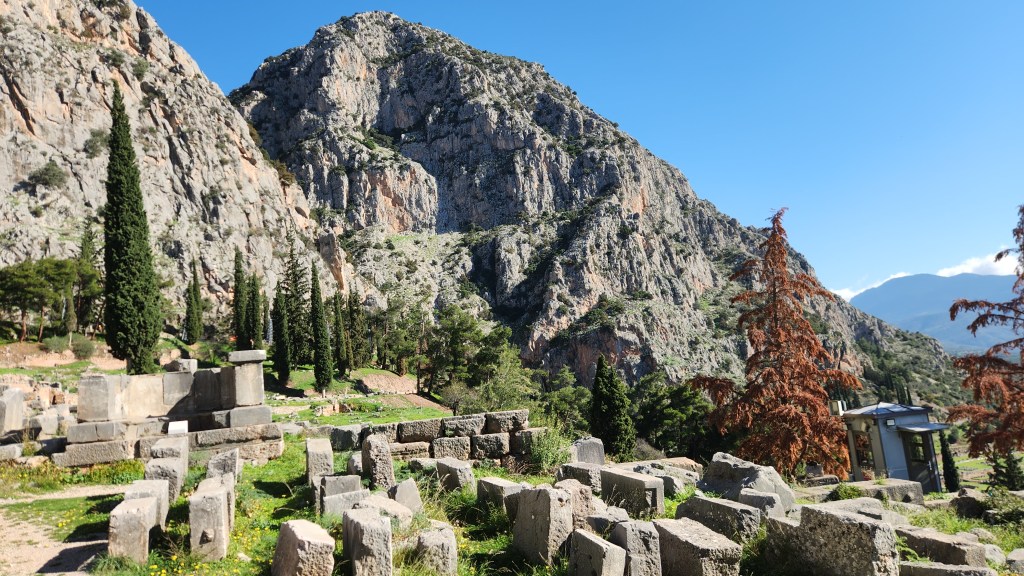
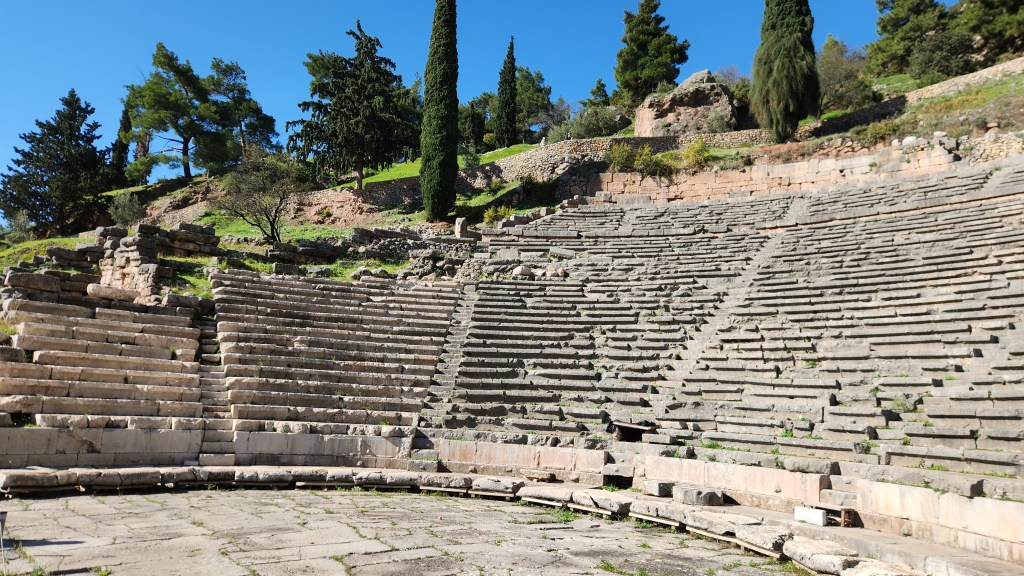
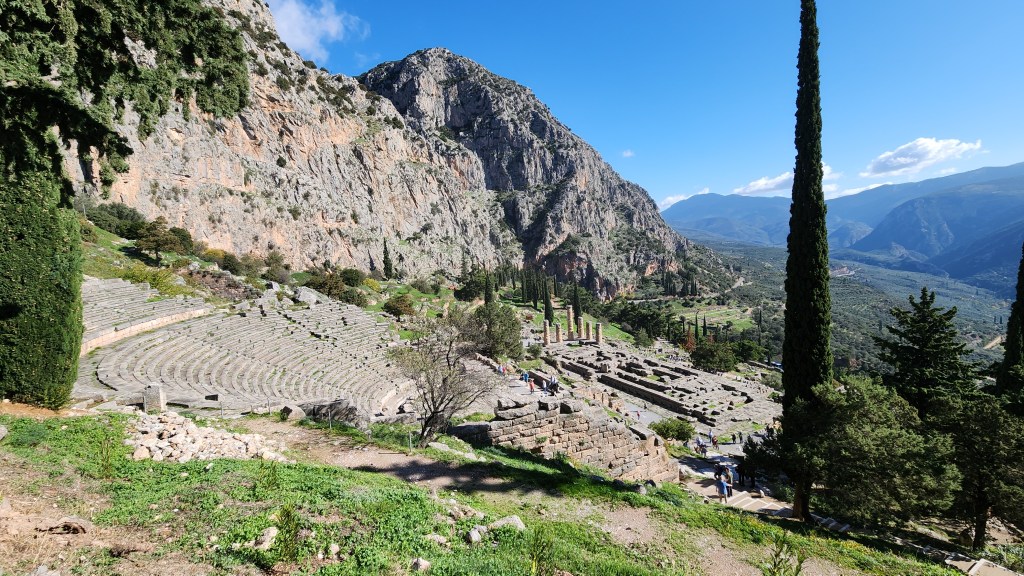
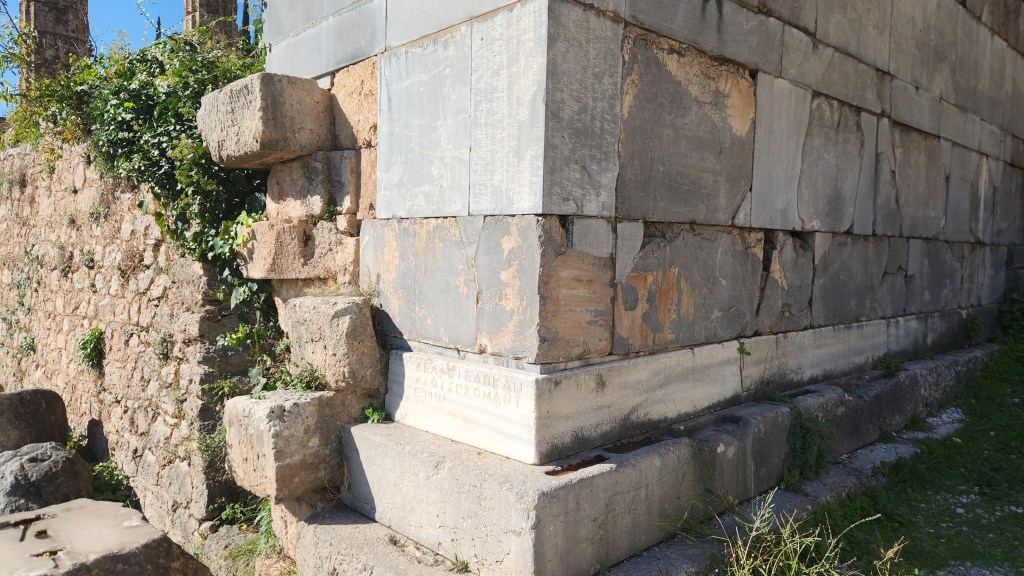
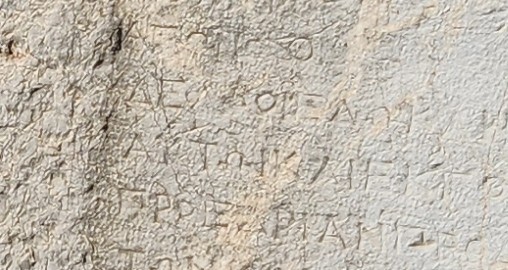
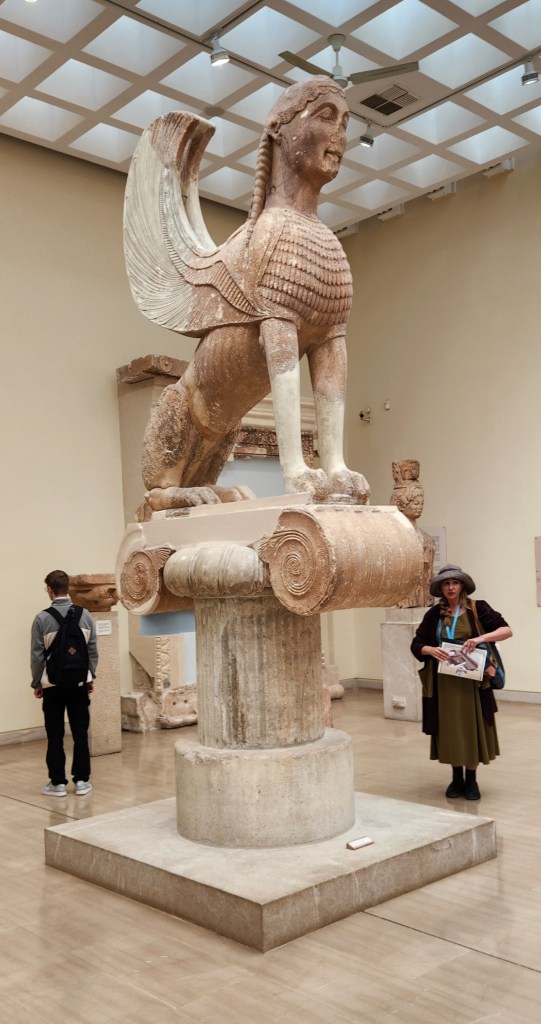
After touring the site, we proceeded to the adjacent Delphi Archaeological Museum, where we saw the original Omphalos along with many other ancient artifacts.
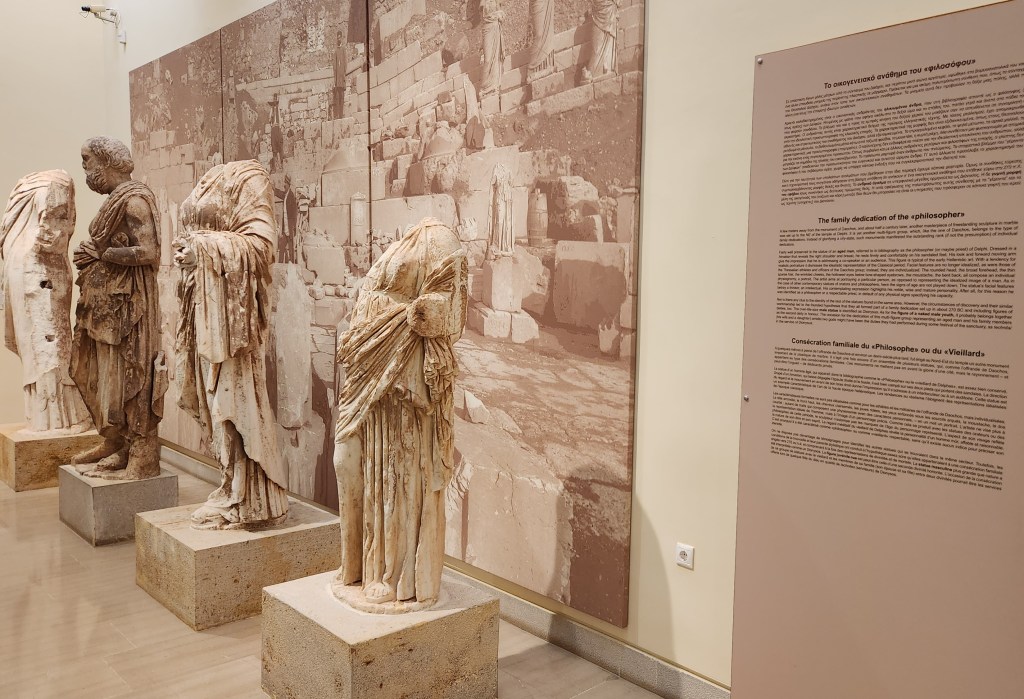
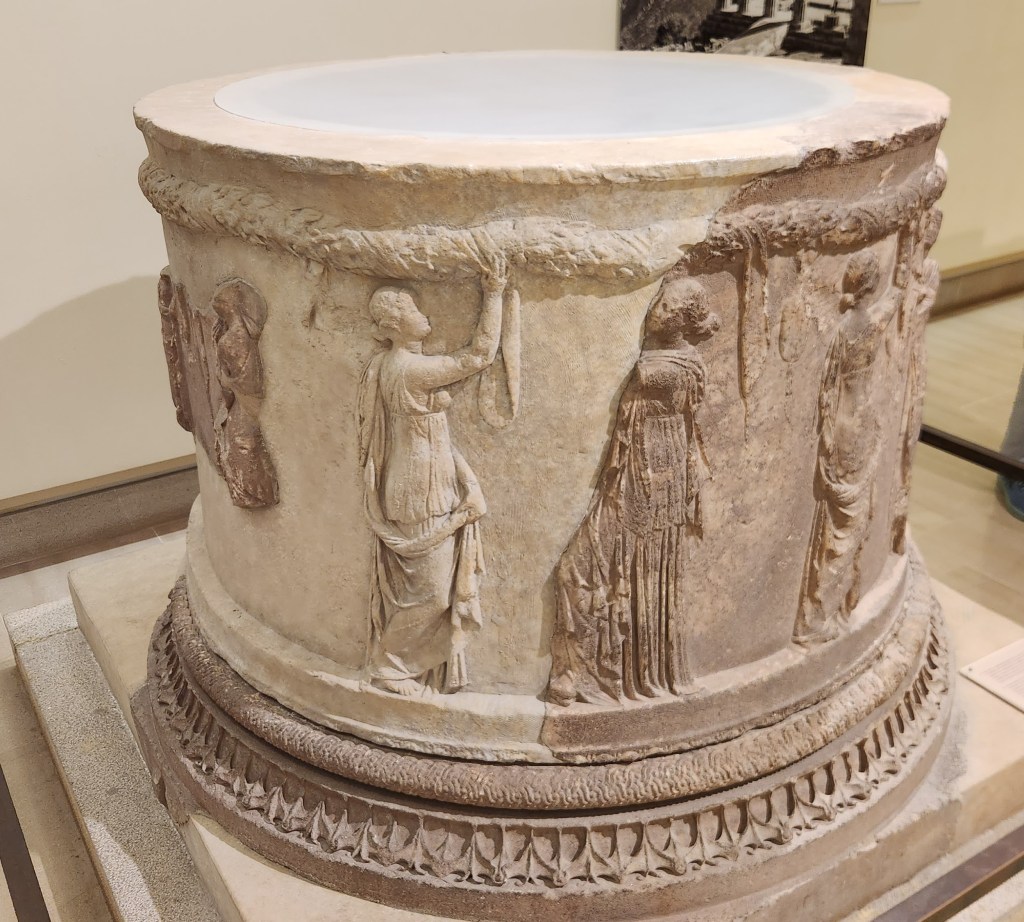
After a very filling lunch at another family-owned restaurant, the Omphalos Tavern, we headed back toward Athens. The return trip took even longer than Monday’s trip as traffic approaching from the northwest was even more brutal, and we didn’t make it back to the hotel until after 8 PM, making for quite a long day. We again dined at a restaurant near the hotel, enjoying actual Greek fare this time.
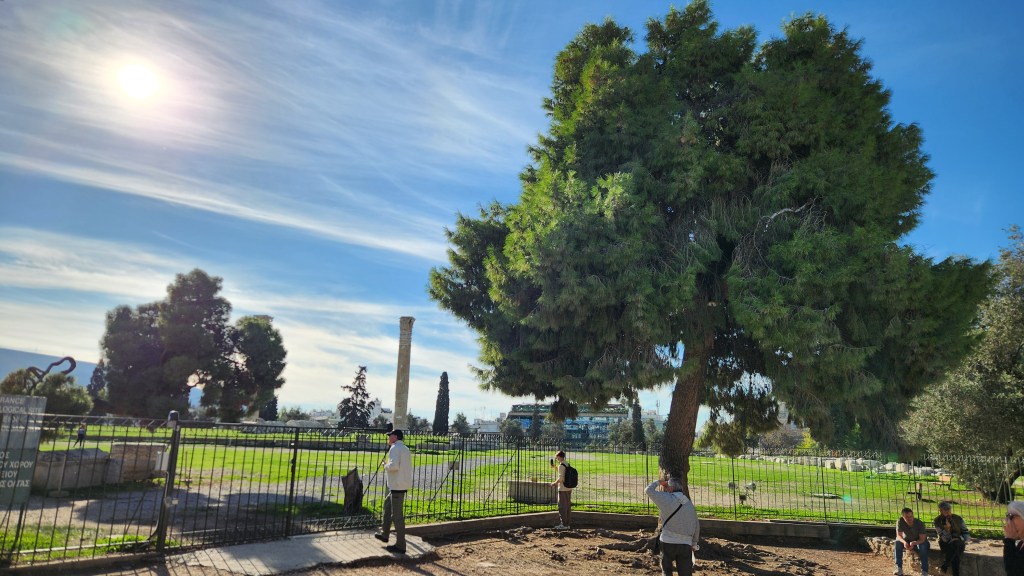
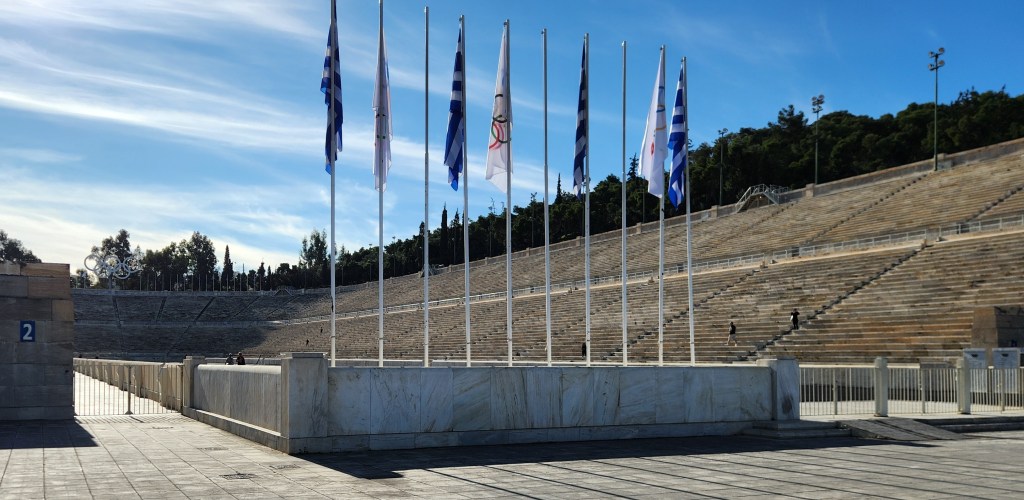
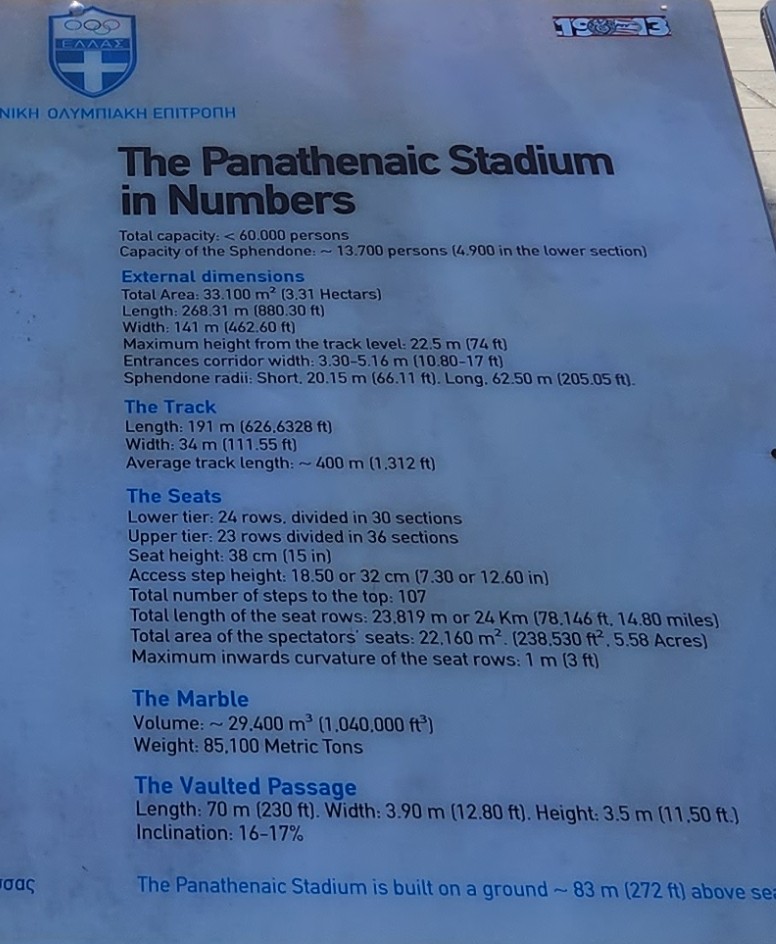
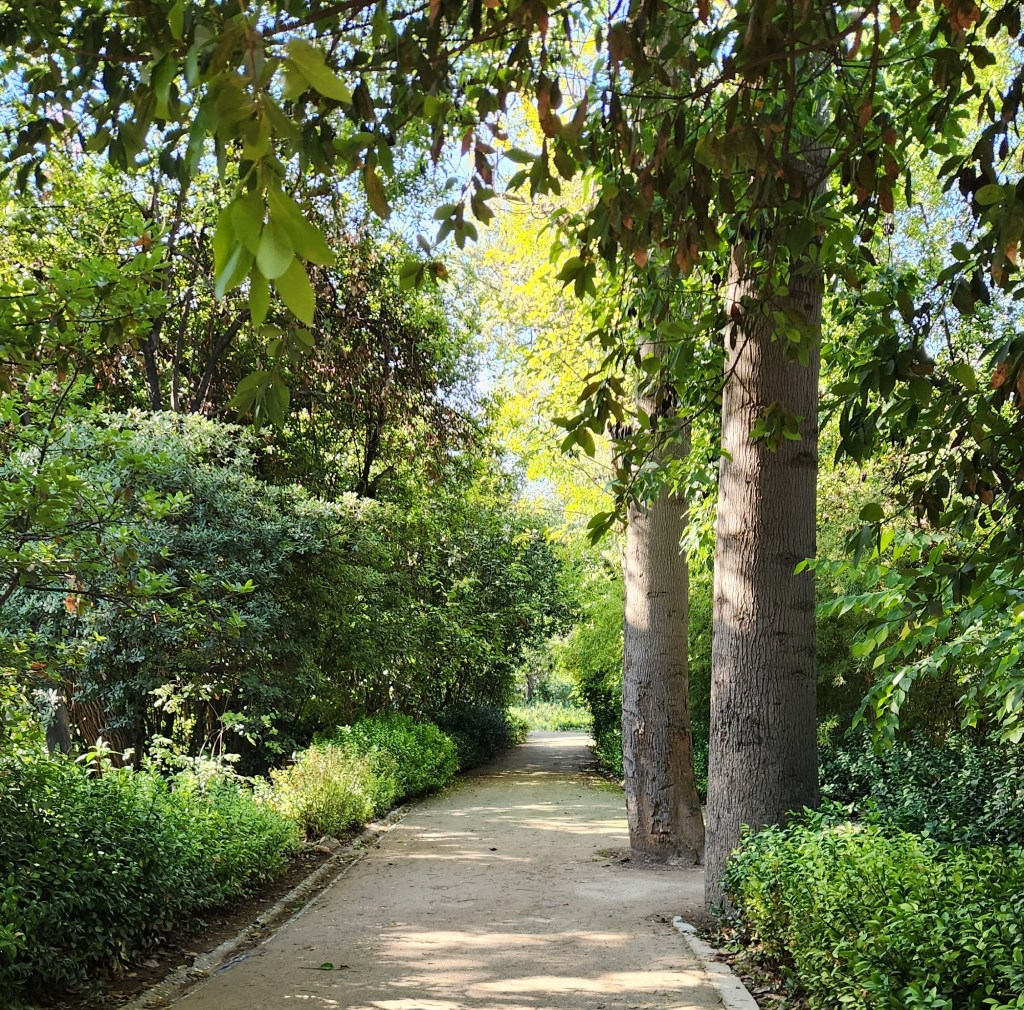
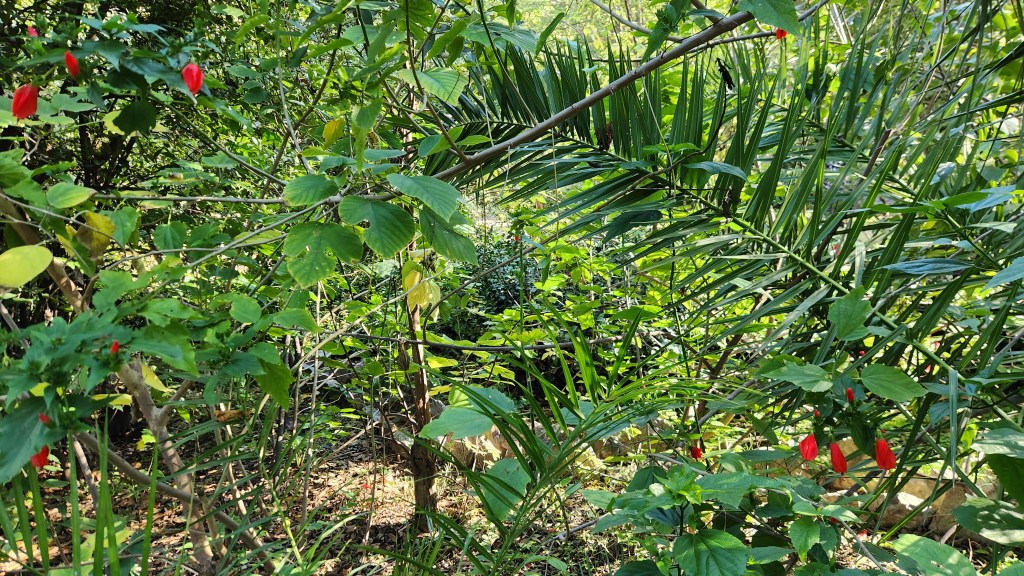
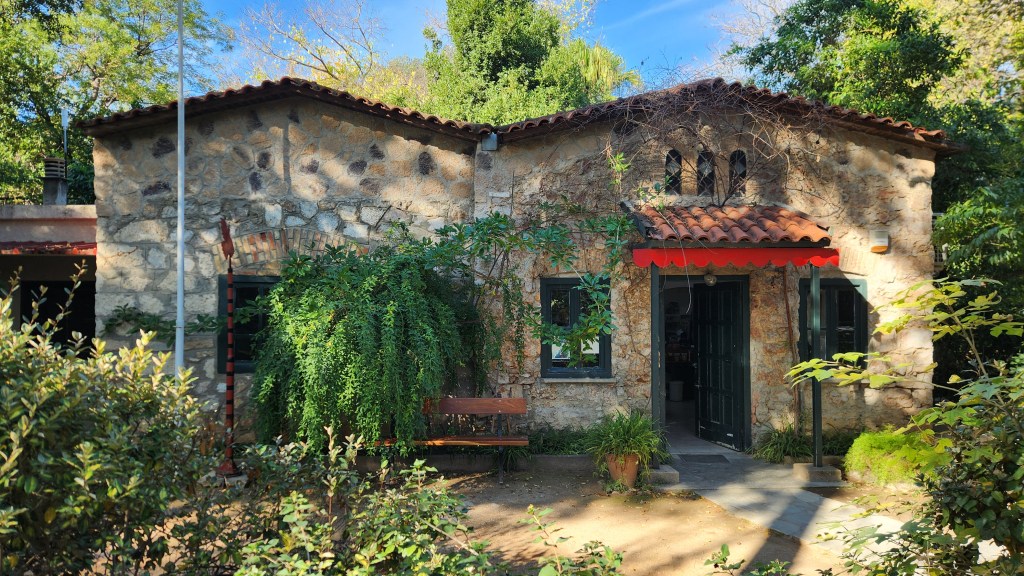
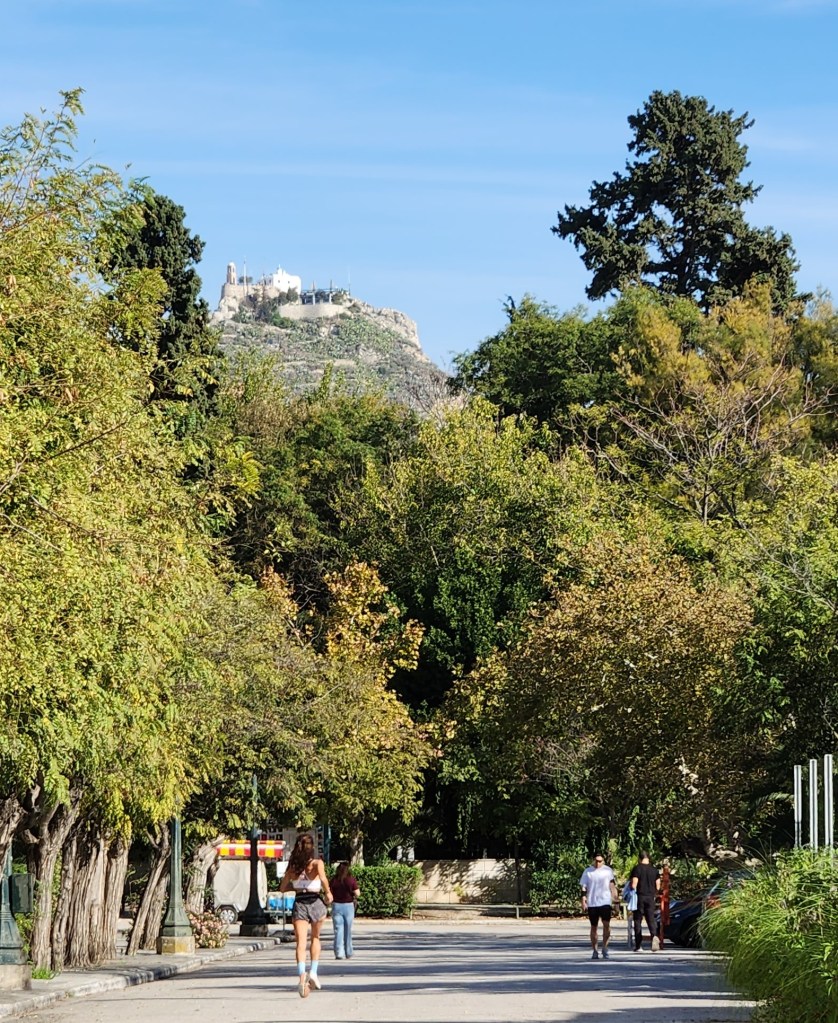
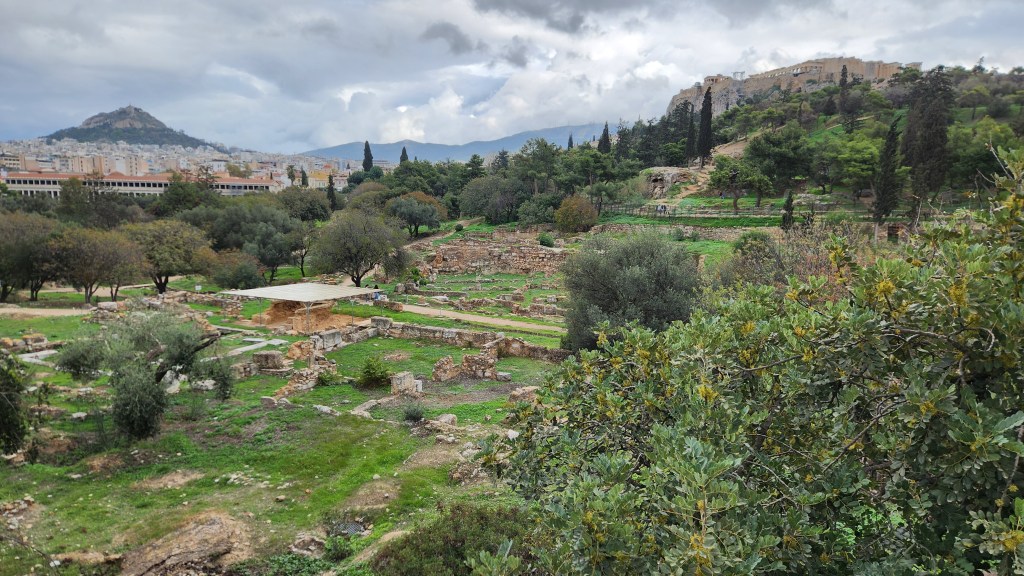
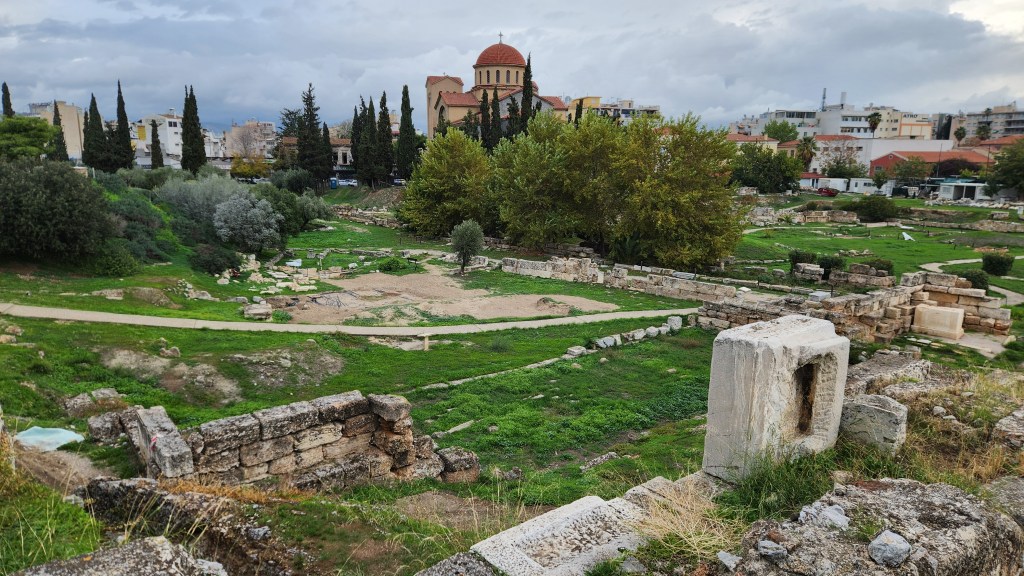
Athens, Greece (Wednesday, November 11, 2025): All of the organized Viking activities were over at this point, leaving us a day to wander about Athens at our leisure. We began the day by wandering around the Plaka District; the sites we saw included some ruins uncovered during excavation for the Metro system, Hadrian’s Arch, the ruins of the Temple of Olympian Zeus, the Panathenaic Stadium (site of the first modern Olympics in 1896), the Zappion Exhibition and Congress Hall, and the National Gardens.
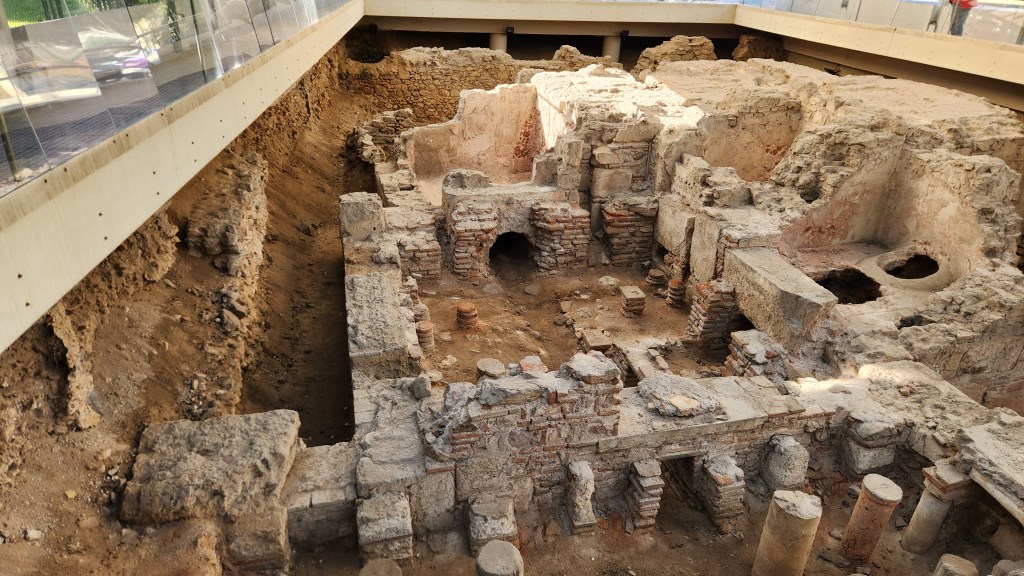
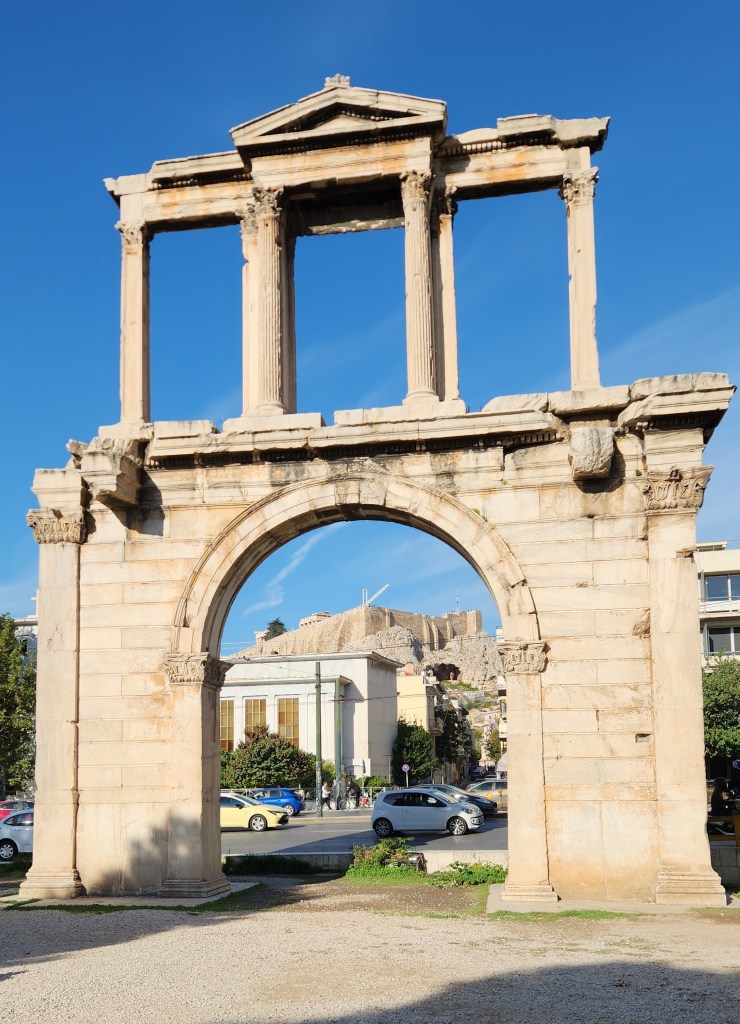



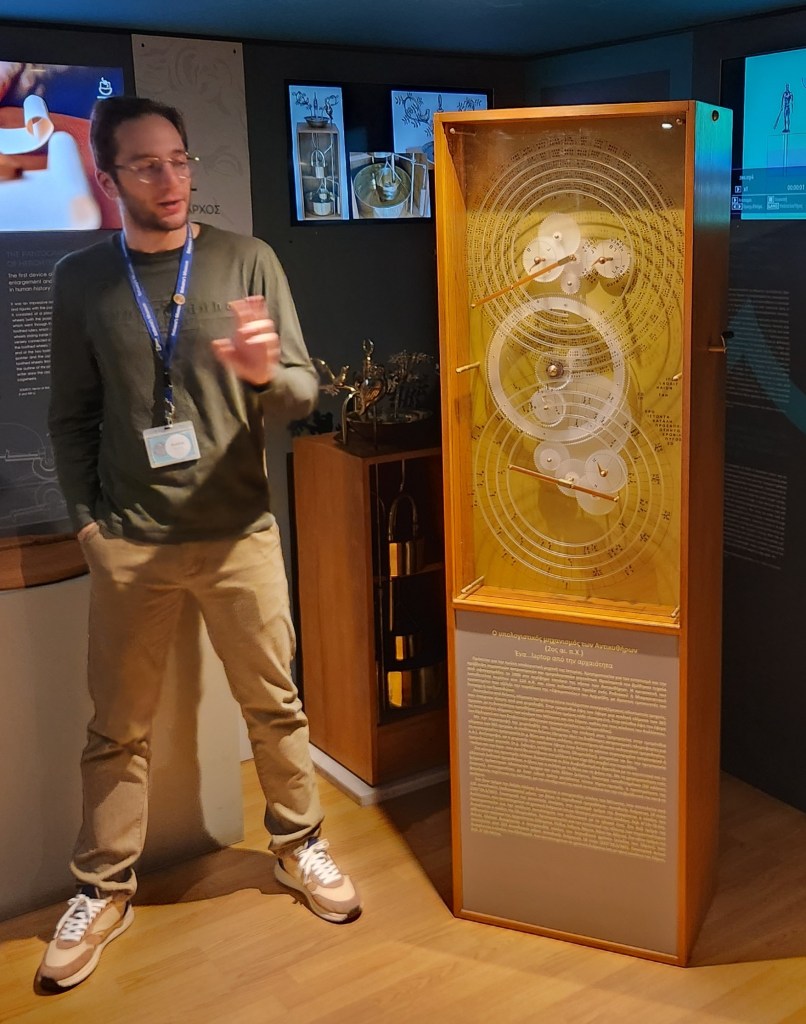
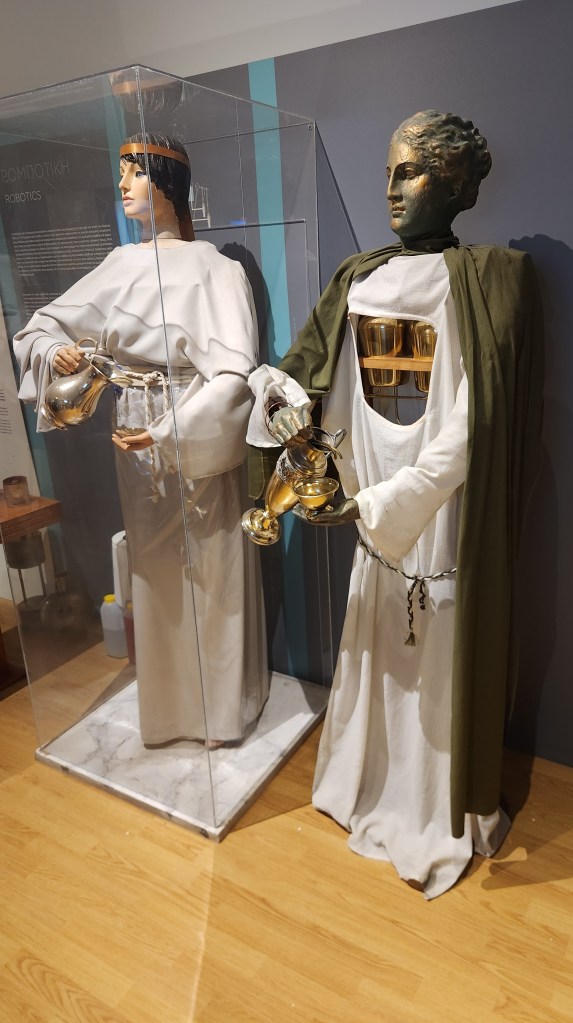
After that, we visited the nearby Museum of Ancient Greek Technology, which we were inspired to do by our earlier visit to the Archimedes Museum in Olympus as well as general awe at the technological achievements we’d seen over the past days. The museum had many impressive exhibits about ancient Greek inventions – such as an early computer, a hydraulic pump, an endless screw, a machine for creating enlarged or reduced copies of objects, even wine-serving robots! – as well as an extensive collection of ancient musical instruments.
We then had a lunch of pita sandwiches at a small bistro before continuing to wander through the Plaka District, encountering various interesting buildings and other sites along the way.
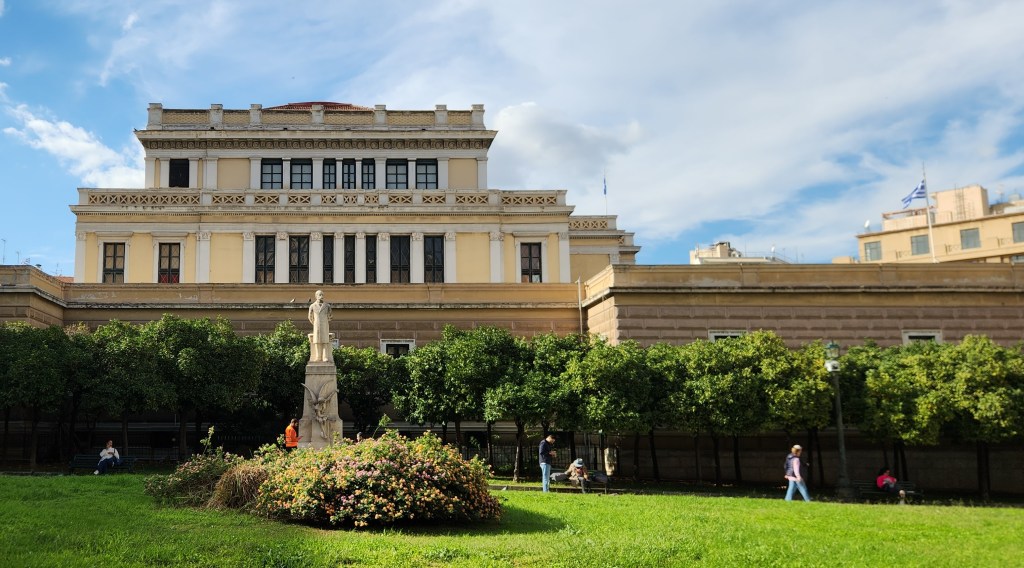
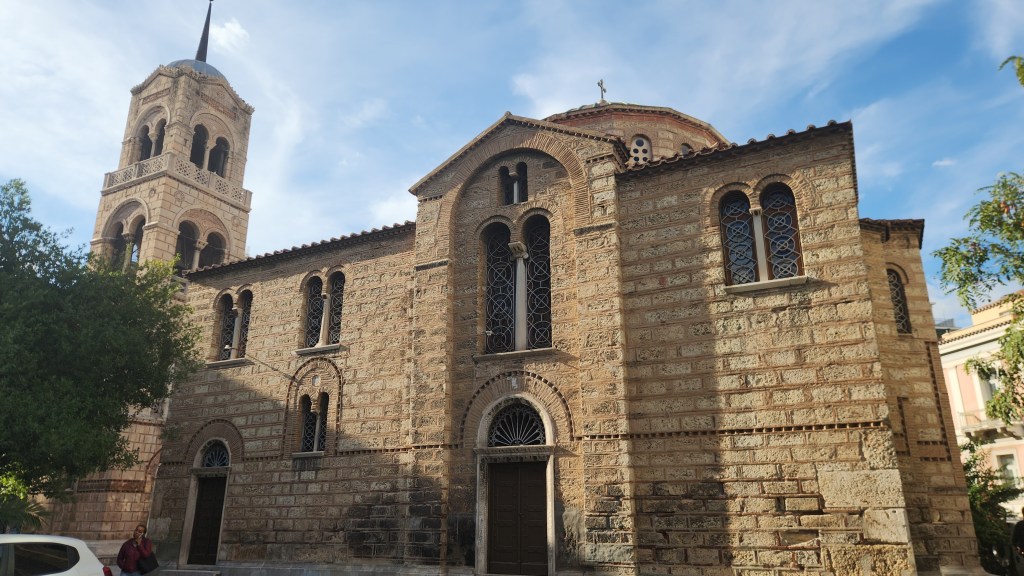
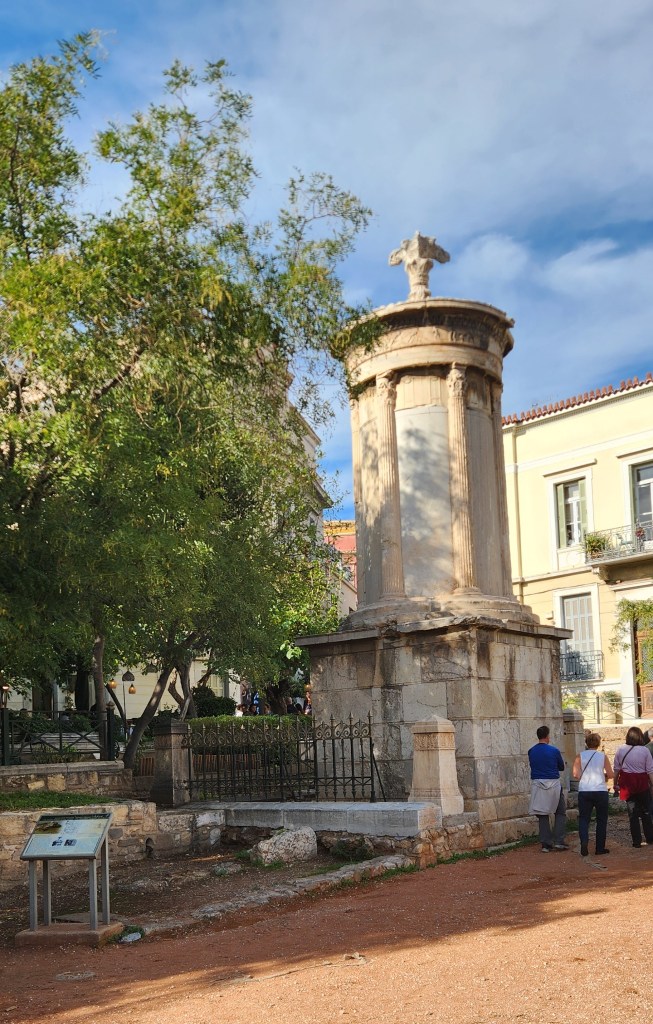
We capped off the day with our final Greek meal at the nearby Ella Restaurant before returning to the hotel at 8 PM for an early night’s sleep.
Final Thoughts: We got up Thursday morning at 3 AM, had our final included breakfast, and sleepily boarded a shuttle van which delivered us to the Athens International Airport. After a 29-hour trip (from wake-up in Greece to crash in our condo, including layovers in London and Chicago along the way), we returned safely back to our Minneapolis home. Since our return, I’ve been reflecting on the outstanding experience we had on the trip and appreciating how fortunate we are to be able to enjoy so many such experiences during our Golden Years of retirement. At the same time, having returned from the birthplace of democracy to a nation whose founders took their inspiration from the ancient Greeks, I feel somewhat depressed by the efforts underway by the current US administration to rewrite history, to retreat from the ideals set forth by those founders, and to undo the progress we as an immigrant nation have made over nearly 250 years to better define and more fully achieve those ideals. But the trip also helped me put the current situation in perspective. The first, though imperfect, democracy was established in ancient Athens starting in 507 BCE, 2532 years ago. Over the subsequent millennia, there have been many setbacks and steps forward throughout the world, yet the dream of democracy still persists. Now is not the time to give up hope. I urge all my readers to stay strong and help turn the tide in the right direction again.
Okay, that’s it for our monumental Mediterranean Empires tour. I hope you enjoyed the read and will come back in the future for more of my travelogue series.



 Dave Saari