

Welcome back for Part 2 of this travelogue series. Part 1 concluded in Venice, Italy, as we had returned to our ship after a brief jaunt into the city to begin the Ocean Cruise portion of the trip. (I’m not going to spend time discussing the ship, the Viking Neptune, since it is nearly identical in layout and features to the Viking Star, on which we sailed previously in 2023. I described that ship extensively in “Pat and Dave’s Tremendous Tropical Trek, Part 1,” so readers interested in learning about Viking Ocean Cruise ships can click on this link.)
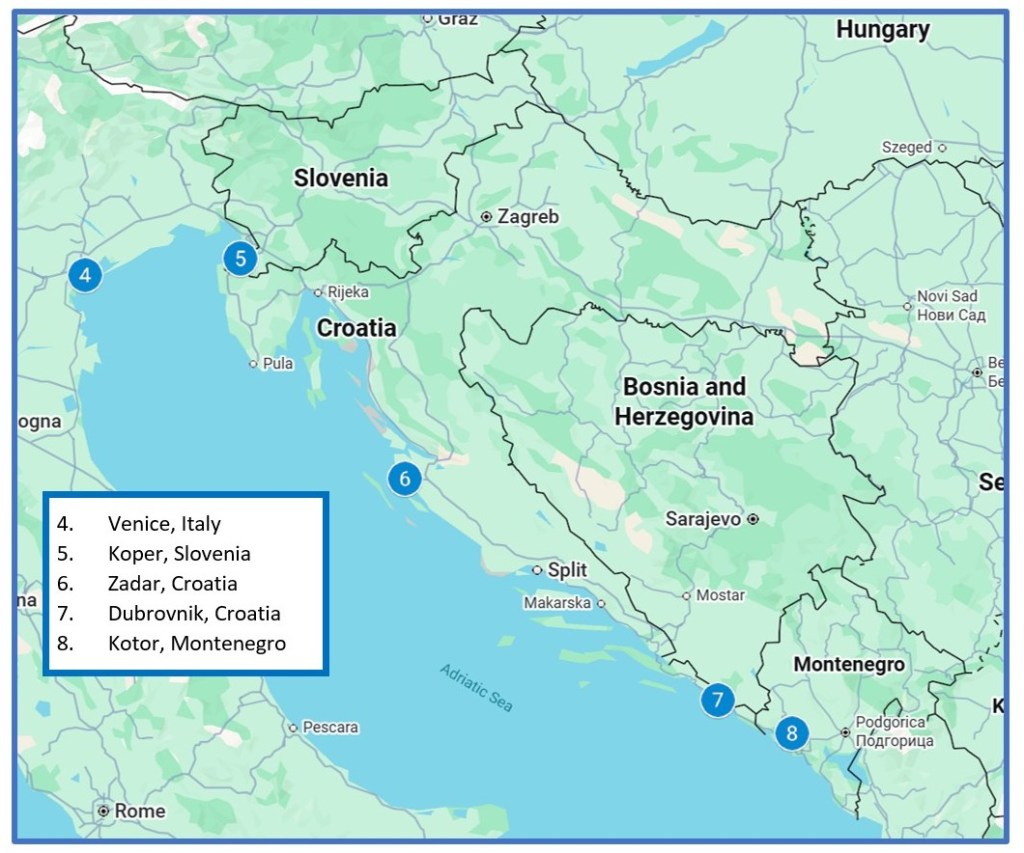
Here is a portion of the overall journey map showing the places I’ll describe in this part of the travelogue: Koper Slovenia, Zadar and Dubrovnik, Croatia, and Kotor, Montenegro.
Now let’s continue the story …
Koper, Slovenia (Saturday, November 1, 2025): After sailing overnight from Venice, we docked in Koper harbor on Saturday morning and departed for our shore excursion to the Old Town. Koper is the fifth largest city in Slovenia and the main urban center of the Slovene coast. The Port of Koper is the country’s only container port, a major contributor to the local economy and a popular destination for Mediterranean cruise lines. It was originally built on an island (Goat Island) by Roman settlers around 500 AD. Land reclaimed from the ocean in modern times now connects the city directly to the mainland. The city was a trading partner with Venice as early as 932 AD and eventually became a capital city of the Venetian Republic in 1278. After the fall of Venice, Koper became part of the Austrian empire in the late 18th century, then was assigned to Italy after World War I and to Yugoslavia after World War II. Slovenia became an independent country in 1991 following the dissolution of Yugoslavia.
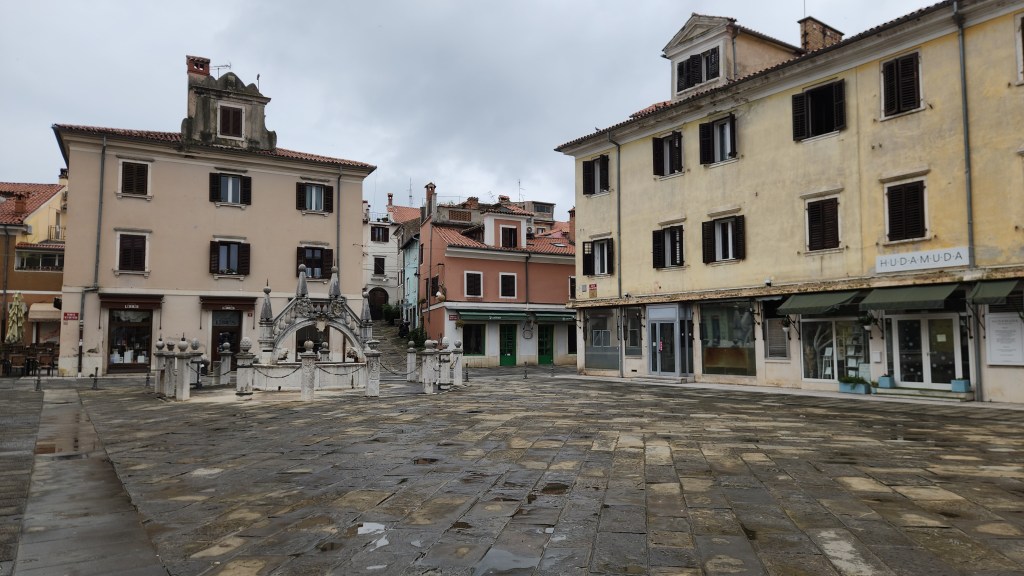
On our walking tour, we strolled through the Old Town where we saw some remnants of the old city walls, and a mix of old and new buildings, and many shops and restaurants.
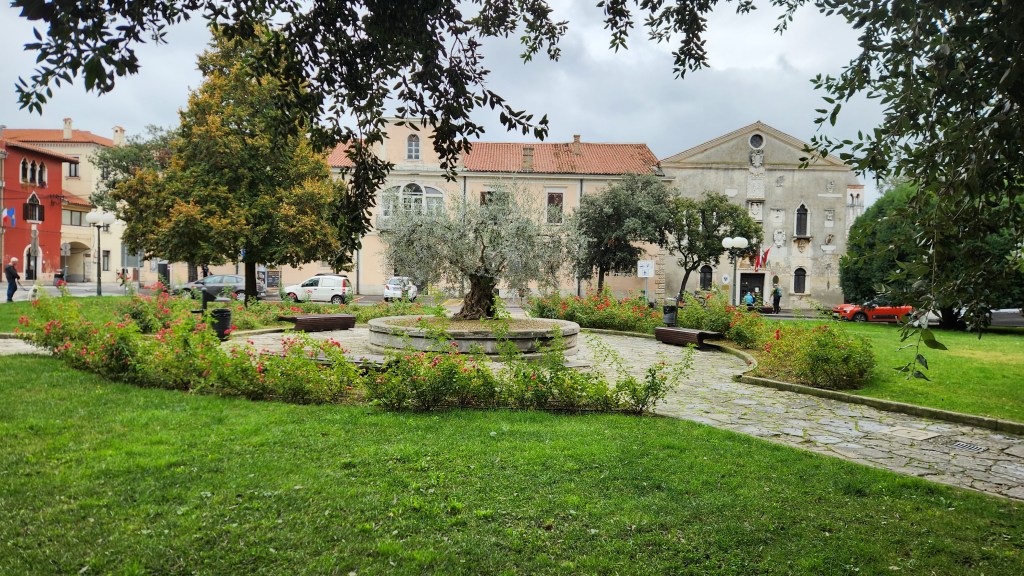

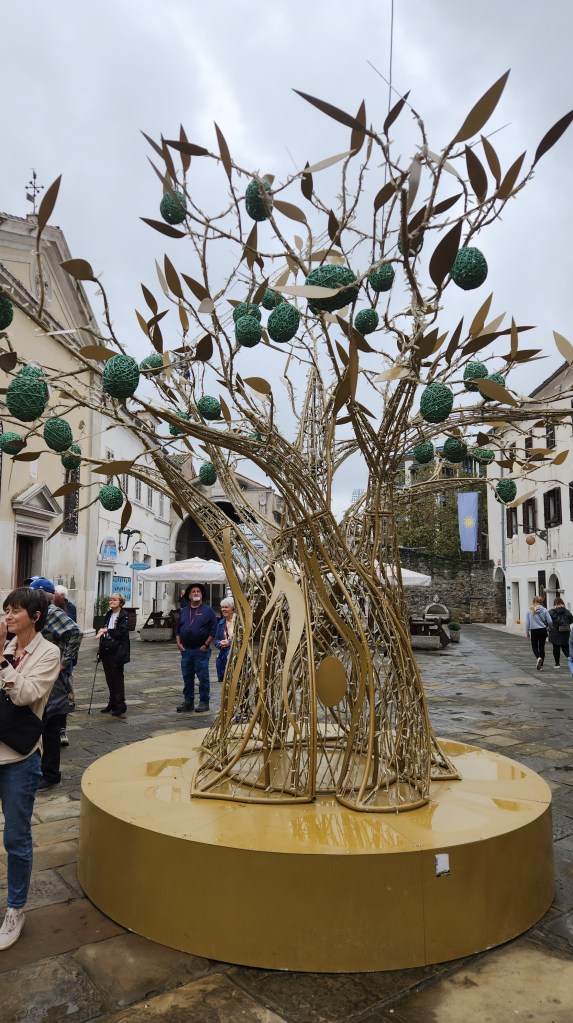
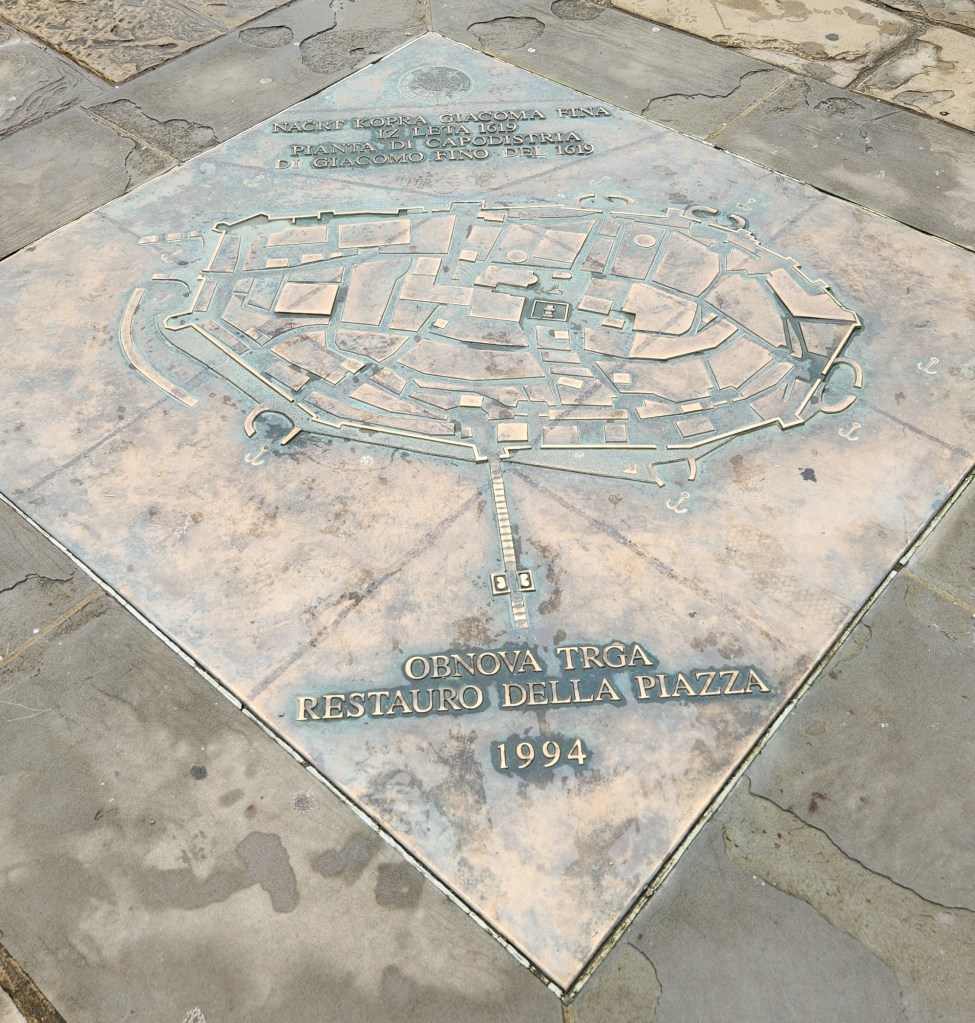
This photo is of the Prešeren Square, including the Muda Gate (completed in 1516), and the Da Ponte Fountain (1666), modeled after the Rialto Bridge in Venice.
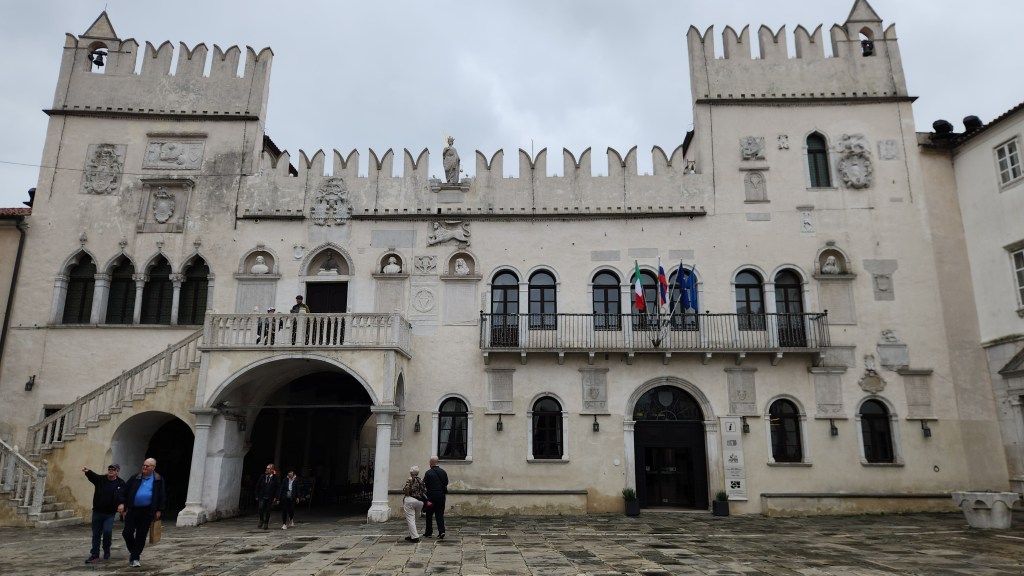
The tour ended at the main square, still known as Tito Square. Our guide explained that Tito, despite his many years as a dictator, is recognized by city residents as the man who saved their parents and grandparents from “slavery” under the Austrian Empire. The main buildings in the square are the Praetorian Palace and the Koper Cathedral.
The Praetorian Palace is a 15th-century Venetian Gothic structure. It was built on the site of an earlier municipal hall that was destroyed during a major revolt in 1348, and an incomplete replacement building that was destroyed in 1380 when the city was sacked and burned in 1380 by raiders from Genoa. It currently houses the Koper city government and a wedding hall.
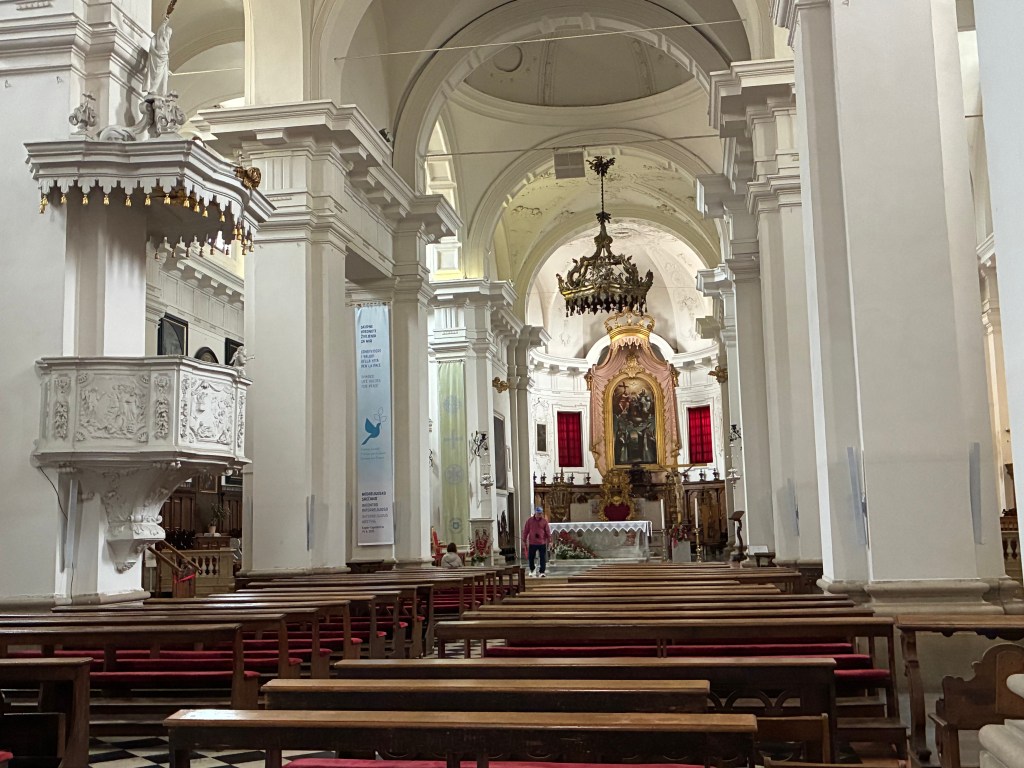
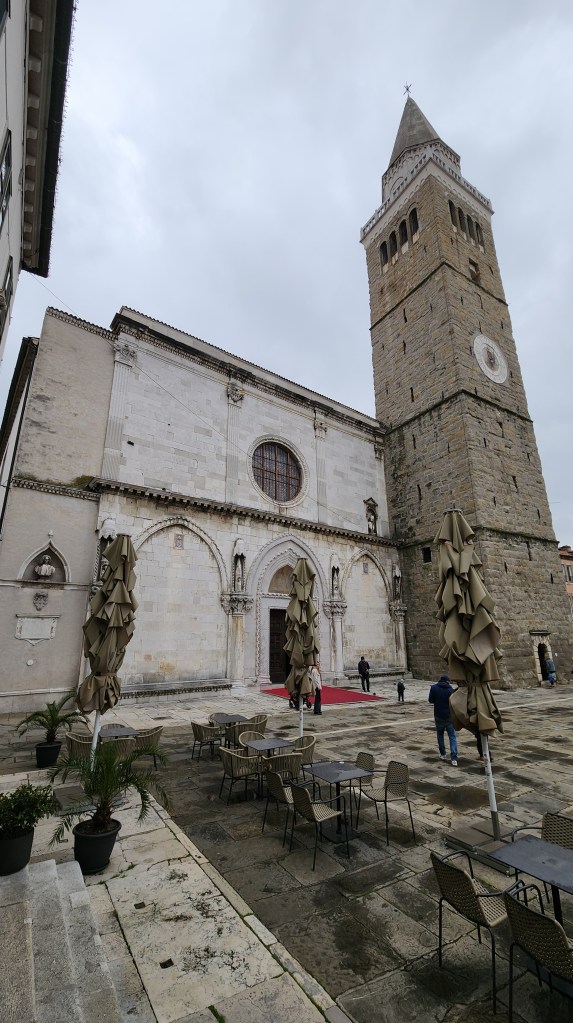
The 12th century Cathedral of the Assumption of the Virgin Mary was built in the Romanesque style, with three naves, each with an apse. Changes and additions continued until 1392, including the Gothic western facade. After an earthquake in 1460, the facade was redesigned in 1488, with the addition of Renaissance elements.
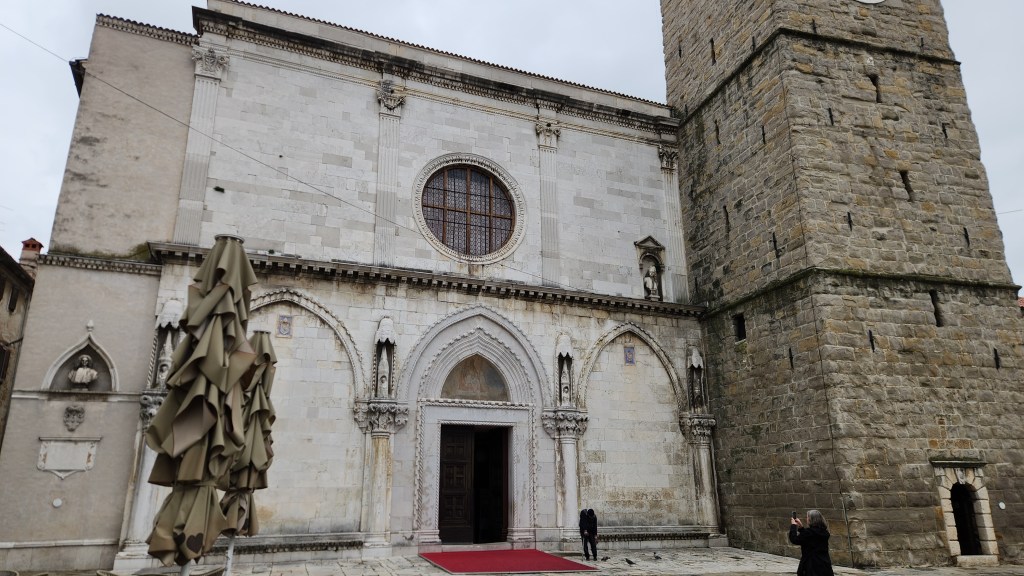
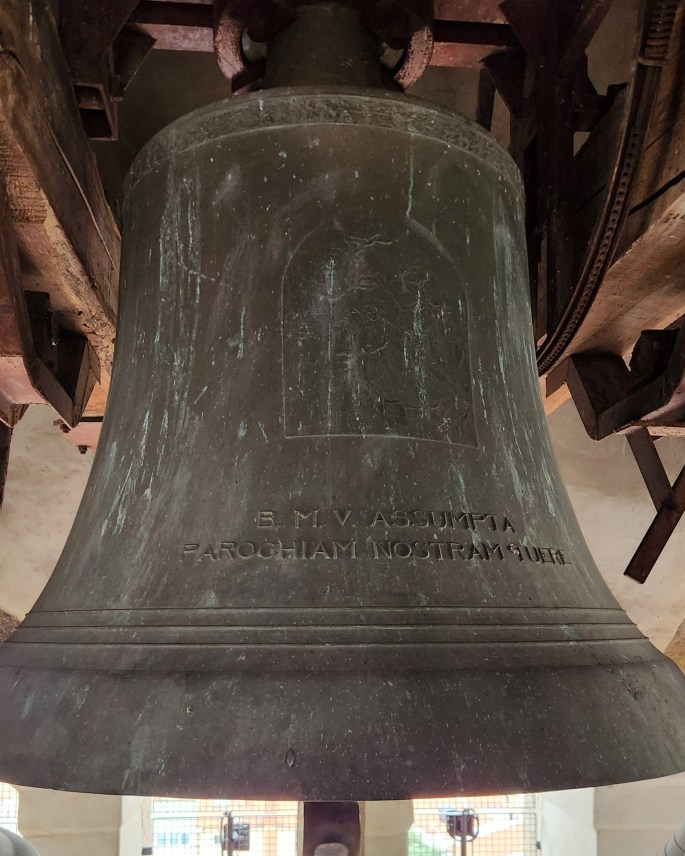
The adjacent 177-foot Bell Tower was originally part of a Roman fortification. I jumped at the chance to pay eight Euros (with senior discount!) to climb 204 steps to a platform at the 140-foot level, where I enjoyed beautiful panoramic vistas of the city and the Adriatic Sea. On the way up, I saw the oldest functioning bell in Slovenia, which was cast in Venice in 1333, though I couldn’t get a good picture of it due to the protective grating.


After I joined Pat in the square again (she had no interest in climbing the tower due to her acrophobia), we went back to the Cathedral to hear a beautiful organ concert. Here’s a video clip for your visual and aural enjoyment, and as a close to this segment about Koper.
Zadar, Croatia (Sunday, November 2, 2025): On Sunday, our ship docked in the harbor of Zadar. Zadar was originally built on an Island with a moat separating the walled city from the mainland. It is the oldest continuously inhabited city in Croatia, dating to prehistoric times. Zadar was laid out as a settlement by an ethnic confederation of Mediterranean and Indo-European people known as Liburnia in the 9th century BCE. I found this interesting list of historical affiliations on Wikipedia:
- Liburnia (9th century BC – 59 BC)
- Roman Empire (59 BC – 476)
- Byzantine Empire (476–800)
- Carolingian Empire (800–812)
- Byzantine Empire (812 – 10th century)
- Kingdom of Croatia (10th century – 1202)
- Republic of Venice (1202–1358)
- Kingdom of Croatia (1358–1409)
- Republic of Venice (1409–1797)
- Austrian Empire Habsburg monarchy (1797–1804)
- Austrian Empire Austrian Empire (1804–1805)
- Napoleonic Italy (1806–1809)
- France Illyrian Provinces (1809–1813)
- Austrian Empire Austrian Empire late Austria-Hungary (1813–1918)
- Kingdom of Italy (1918–1946)
- Italy (1946–1947)
- Yugoslavia (1947–1991)
- Croatia (1991–present)
Our shore excursion began at the modern pier, which has two unique and innovative features. The first is a large representation of the solar system, lit at night by solar-powered lights, which we unfortunately did not see since we sailed away before dark. It consists of true-scaled discs representing the sun and the planets, as shown in these photos.
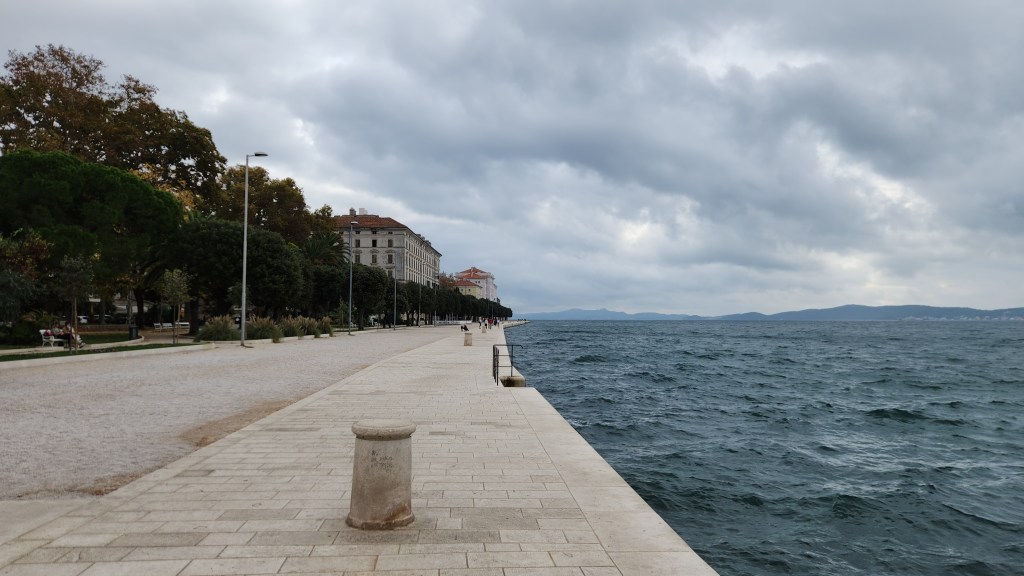
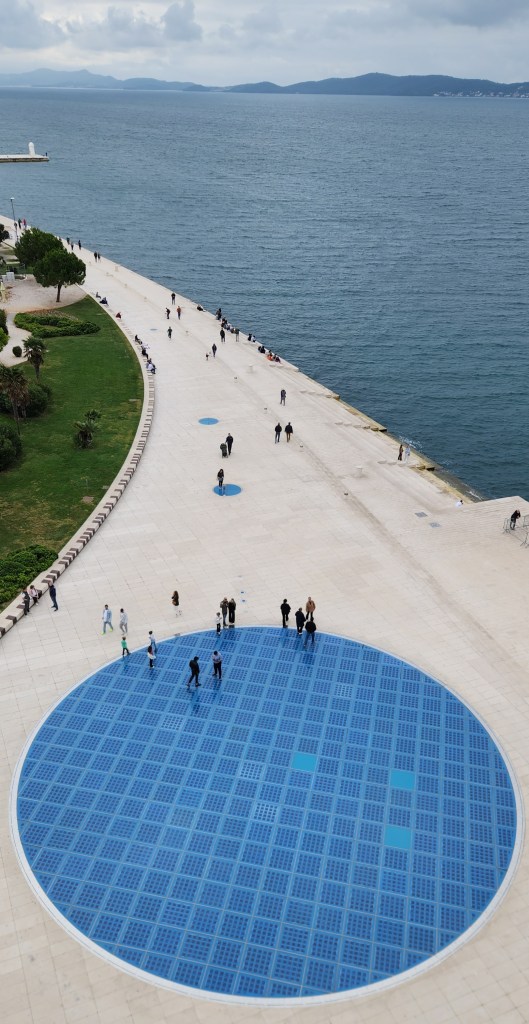
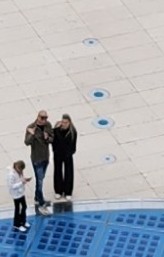
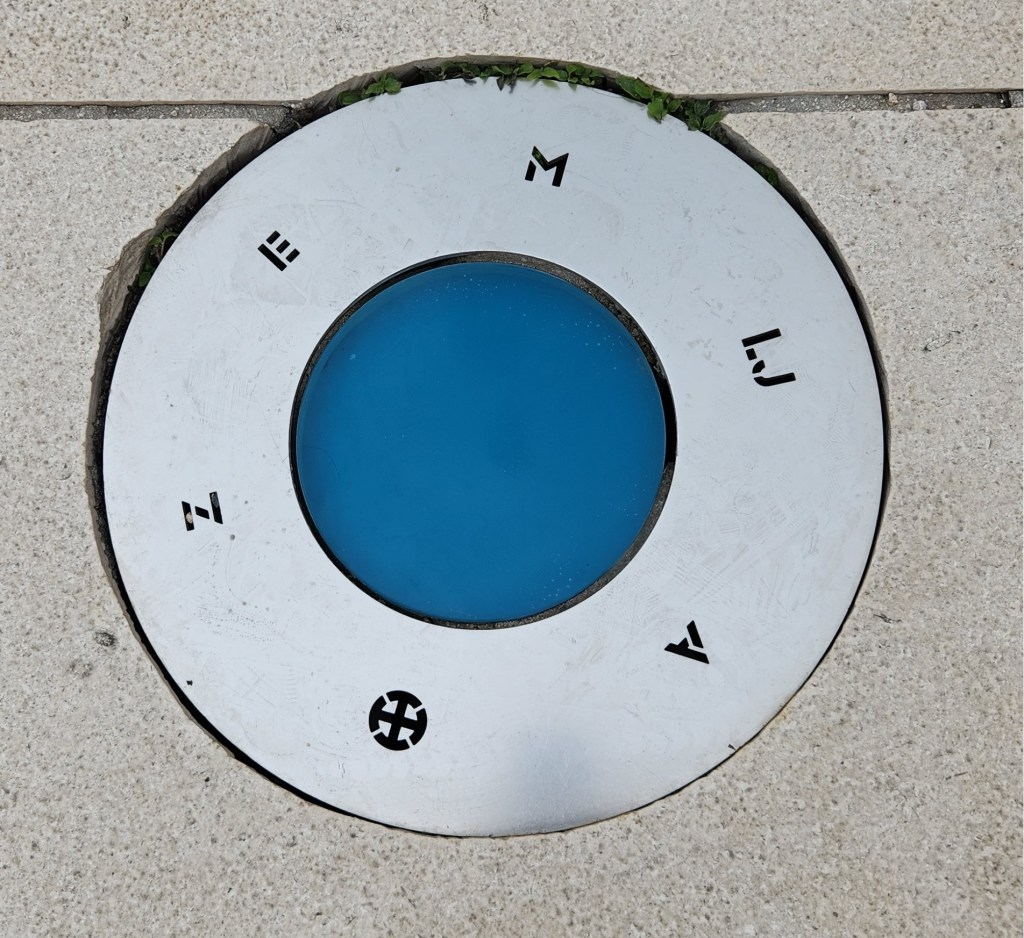
The second feature is the “sea organ,” consisting of tubes embedded in the concrete and extending into the sea, such that the wave action of the water creates lovely, soothing sounds.
From the pier, we walked through a scenic park into the main city and on to the nearby Old City.

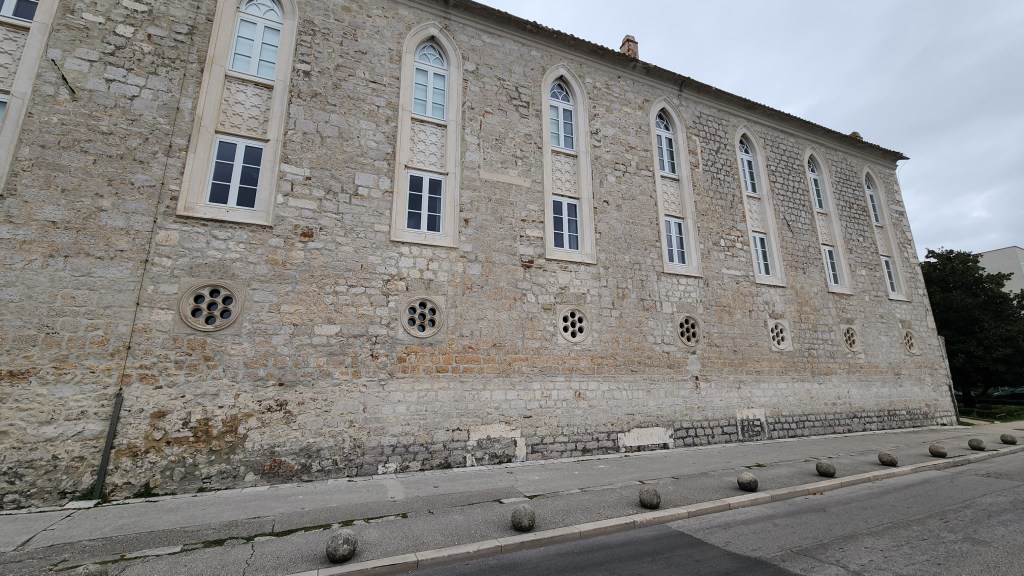
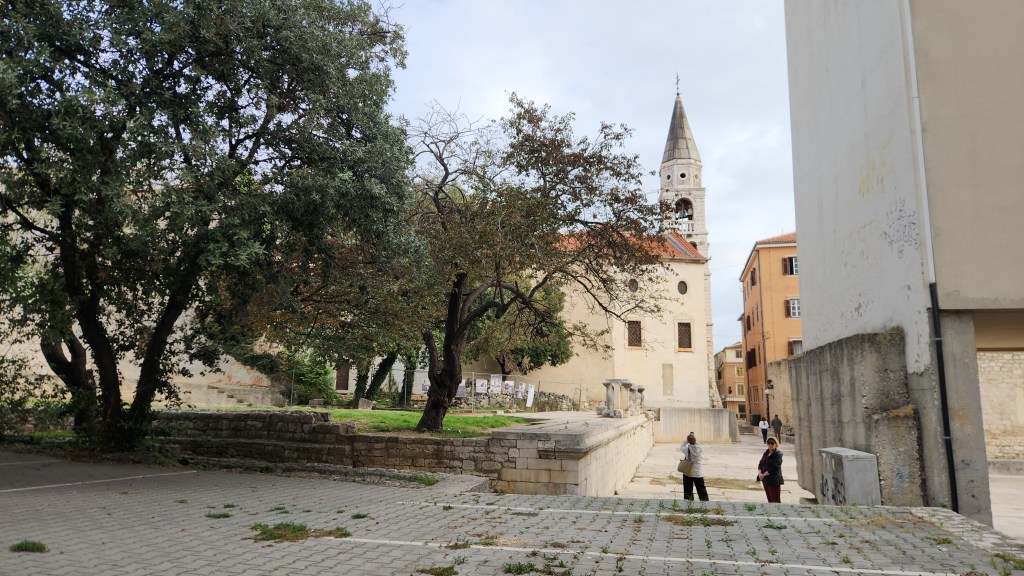
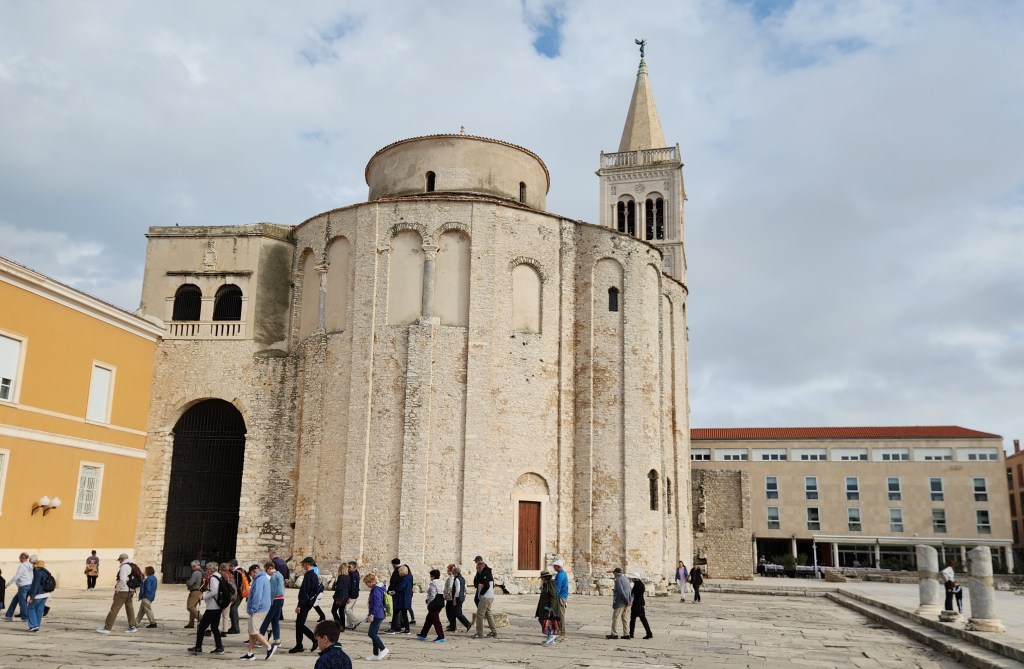
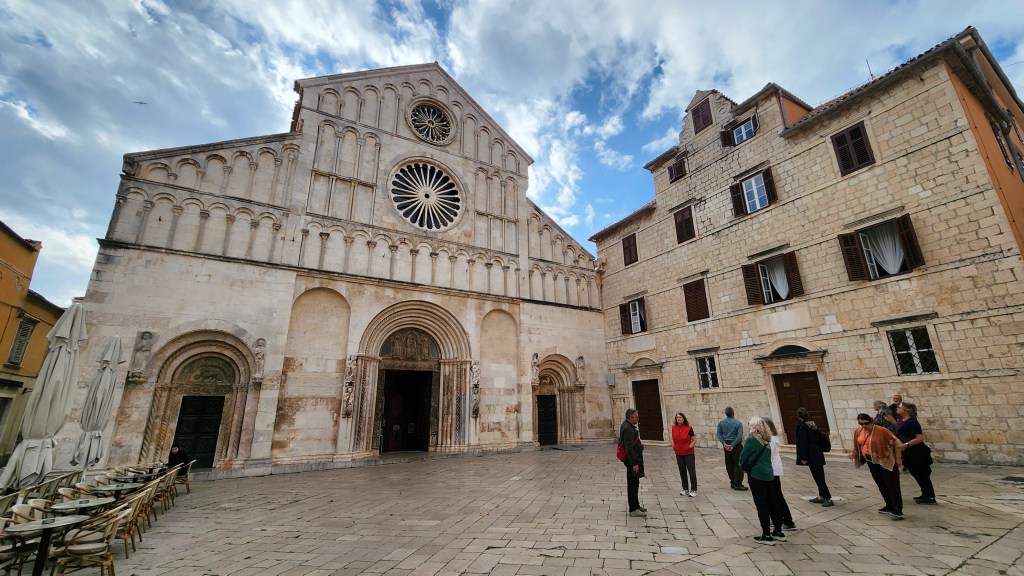
The Cathedral of St. Anastasia was originally built as a basilica in the 4th and 5th centuries. Much of the currently standing three-nave building was constructed in the Romanesque style during the 12th and 13th centuries. The cathedral was heavily damaged during a siege of Zadar by the Venetians and Crusaders in 1202. For the entire 13th century, the building was under repair. It was reconsecrated in 1285, although the new building was not completed until 1324.


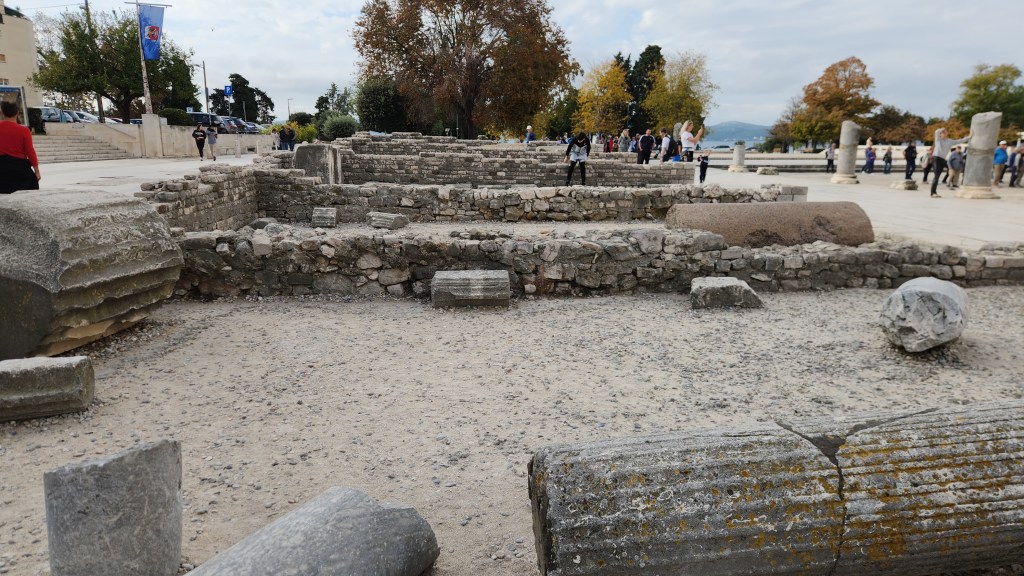
The tour ended at the ruins of the ancient Roman forum, after which we returned to the ship, which sailed off for the next stop shortly after 3 PM.
Dubrovnik, Croatia (Monday, November 3, 2025): Dubrovnik is a spectacular, walled city near the southernmost border of Croatia and Montenegro. The city dates to approximately the 7th century, when the town known as Ragusa was founded by refugees from Epidaurum, an ancient Greek city under Roman rule at the time. Ragusa was a protectorate of the Byzantine Empire and later part of the Republic of Venice. Between the 14th and 19th centuries, Dubrovnik ruled itself as a free state. As the capital of the maritime Republic of Ragusa, it achieved a high level of development, particularly during the 15th and 16th centuries, as it became notable for its wealth and skilled diplomacy. During this time, the city was governed by a series of Rectors elected to one-month terms by the noblemen who ruled over the city.
Dubrovnik was almost destroyed in a devastating earthquake in 1667 but was rebuilt. More damage was sustained in 1991 during the Croatian War of Independence, when Dubrovnik was besieged and shelled by the Yugoslav People’s Army for seven months. However, extensive repair and restoration work in the 1990s and early 2000s completely restored the old wall and the damaged buildings. Known as “The Queen of the Adriatic,” Dubrovnik is one of the most popular destinations in the Adriatic and in Europe.
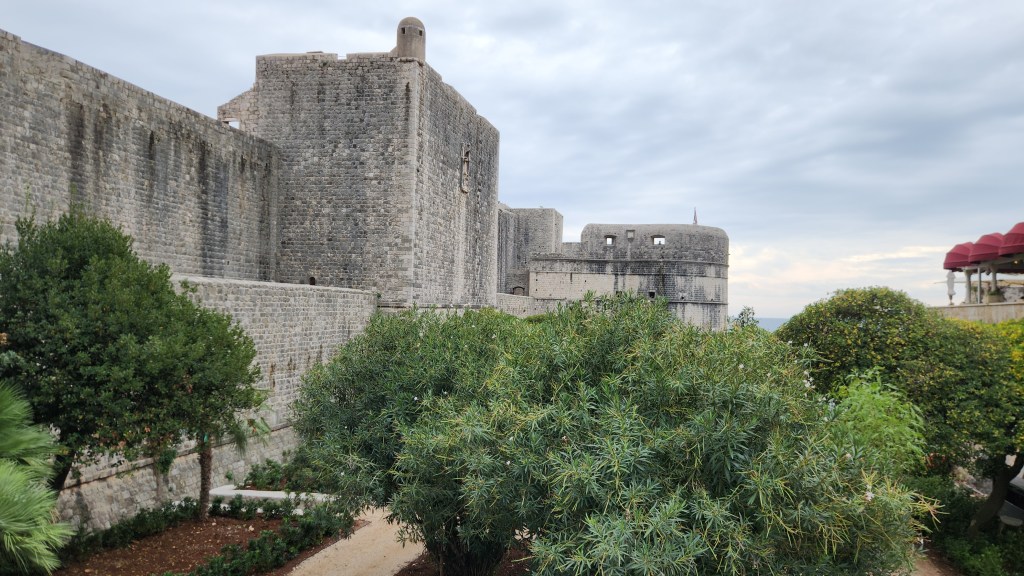
Our shore excursion on Monday was a walking tour of the Old Town. Access to the walled Old Town is via the Pile Gate, built in 1537. The gate has a drawbridge, since the entire Old Town was originally surrounded by a moat.

Naturally, we went to see a Cathedral. Construction of the Cathedral of the Assumption was begun in 1671 and completed in 1713.

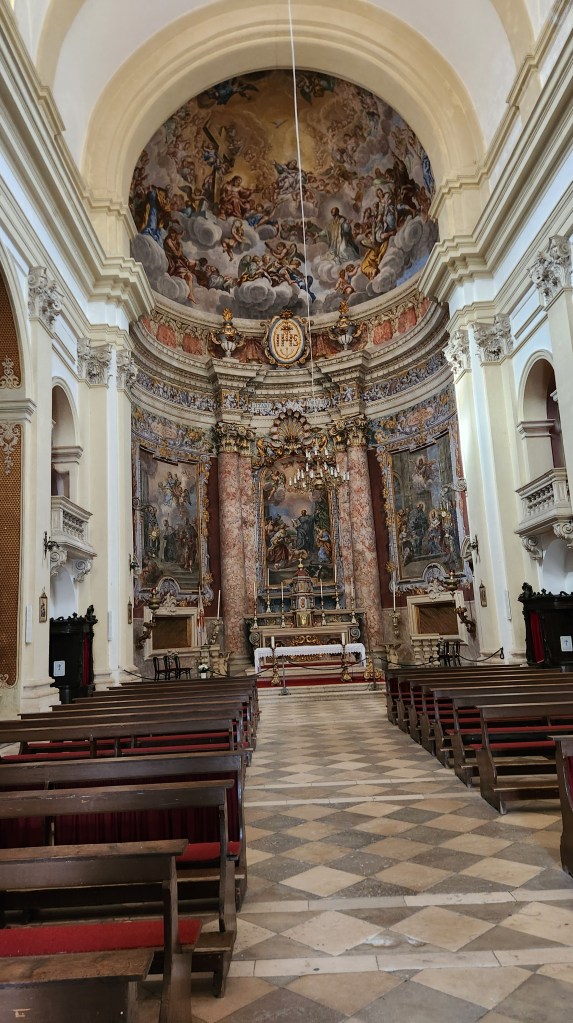
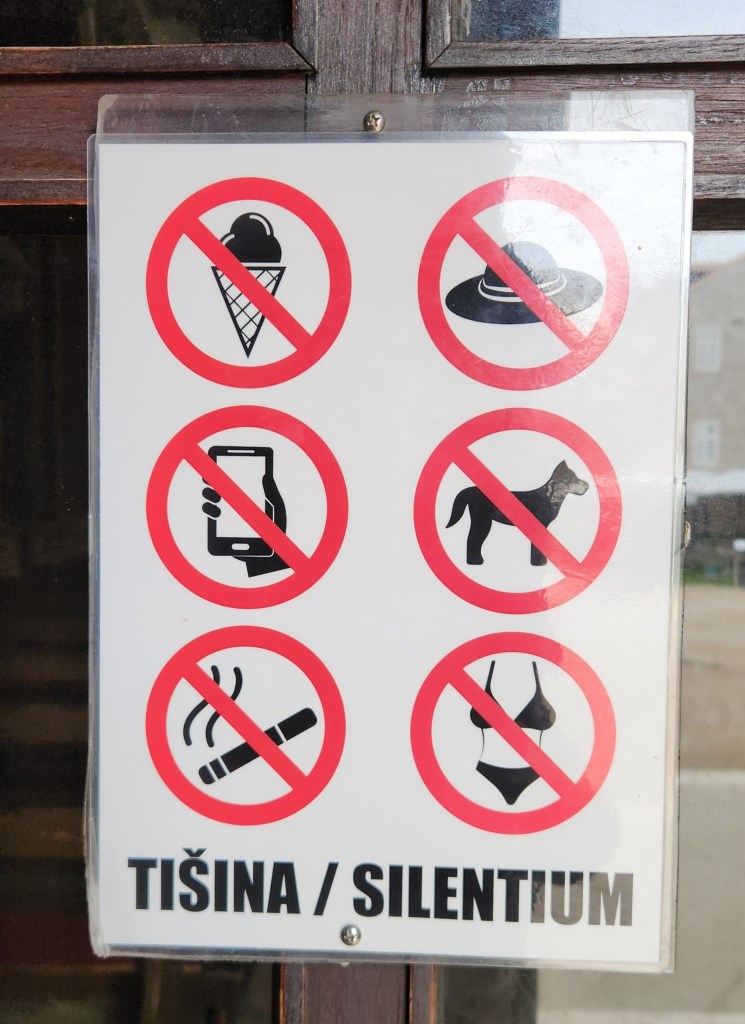
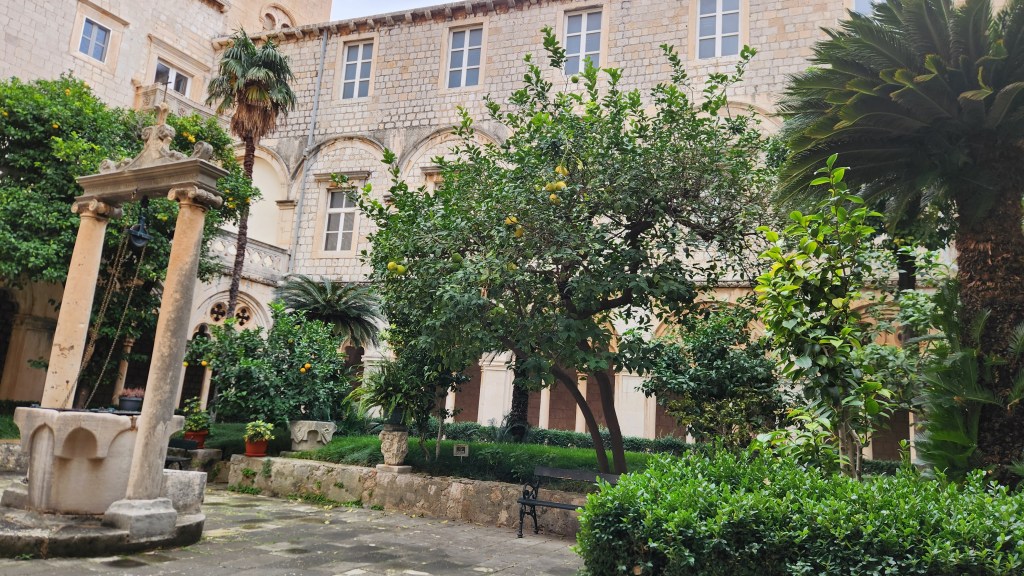
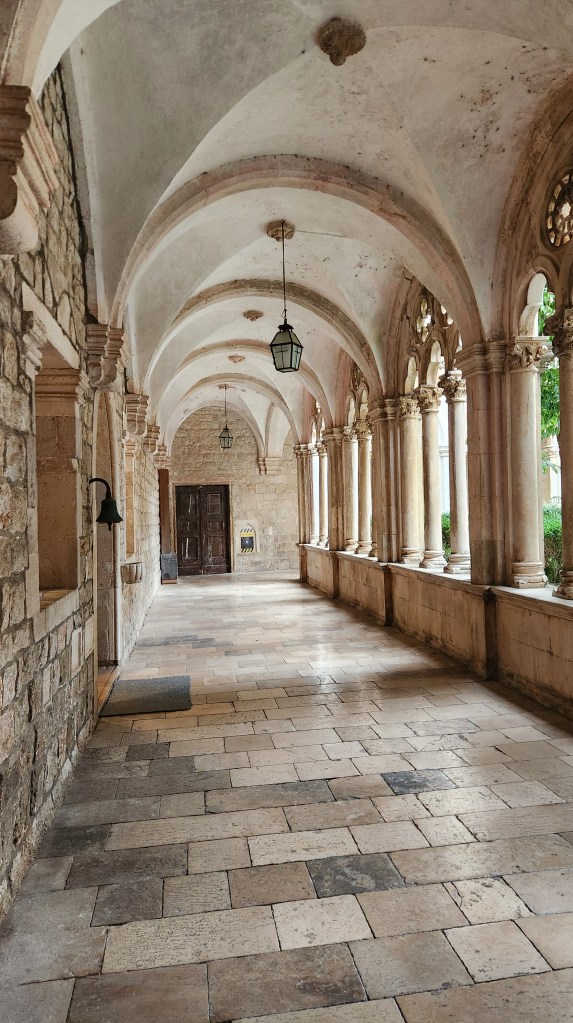
The Franciscan Church and Monastery is a religious complex featuring a historic church, a tranquil cloister, a library with over 70,000 manuscripts, and one of Europe’s oldest continuously operating pharmacies, dating back to 1317. The monastery is a significant cultural and historical landmark, showcasing a mix of Romanesque, Gothic, and Baroque architectural styles.
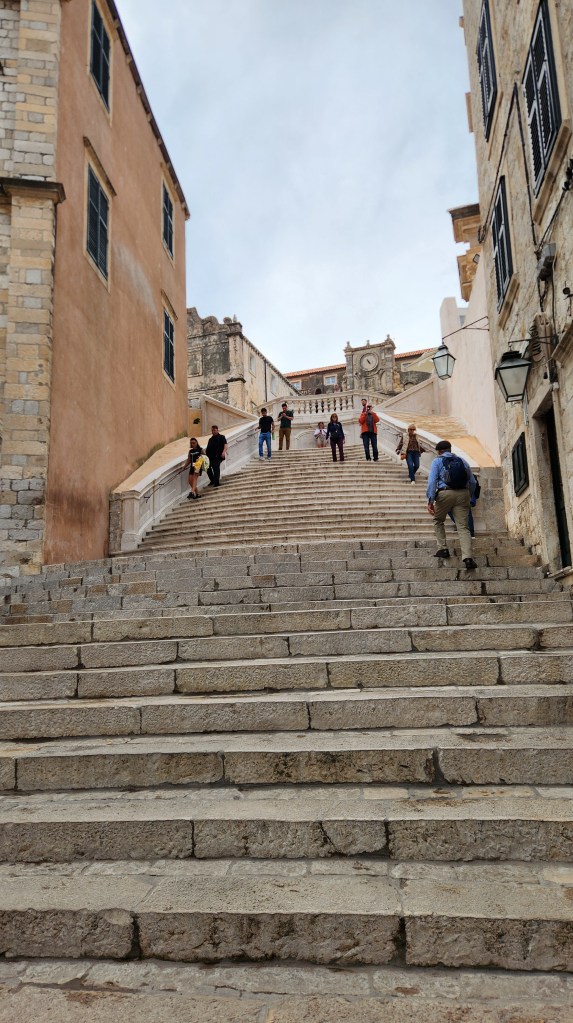
The Jesuit staircase, similar in appearance to the Spanish Steps in Rome, is a popular tourist destination, in part because the infamous “Walk of Shame” scene in Game of Thrones was filmed there. We saw many GOT souvenir shops throughout Dubrovnik.
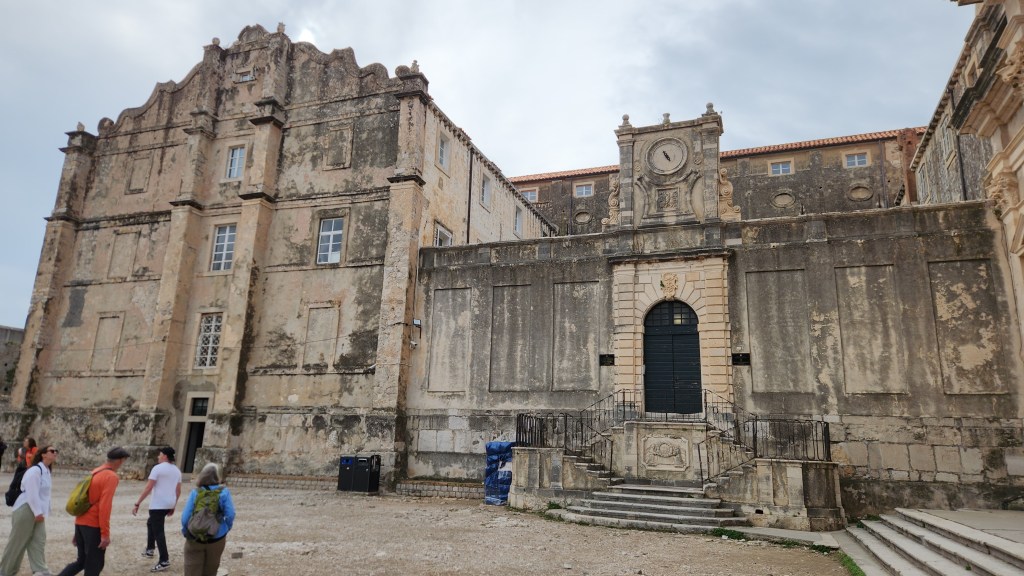
The Church of St. Ignatius of Loyola, a Baroque-style church, is located at the top of the Jesuit staircase, next to the Jesuit college. It was built between 1699 and 1725.
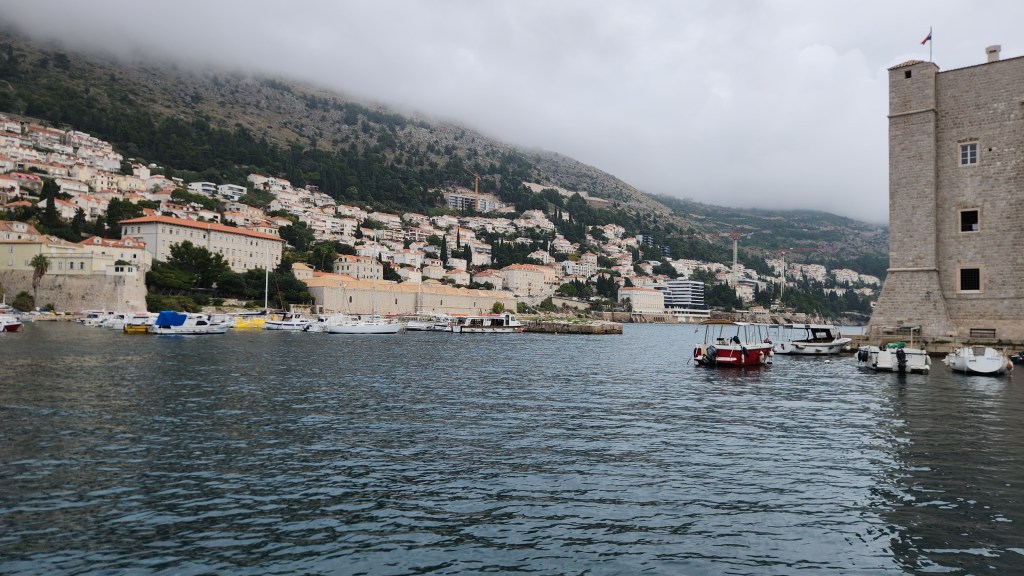
The Old Town harbor was the original access point for seagoing vessels. During the plagues in Europe, the city officials required that all new arrivals had to stay in isolation from the city to determine whether or not they were sick. Not knowing what duration might be most appropriate, they settled on an isolation period of forty days, or “quaranta” in Italian. Henceforth, a protective stay in isolation became known as “quarantine.”
After the tour, we roamed all around the city and traversed the inner periphery of the city walls. Public access to the walls is available at a cost of 40 Euros per person. Given the overcast skies, which limited visibility and most likely obscured what would have been spectacular views on a sunny day, we elected to forego that activity. Here are some of the memorable sights from our wandering.
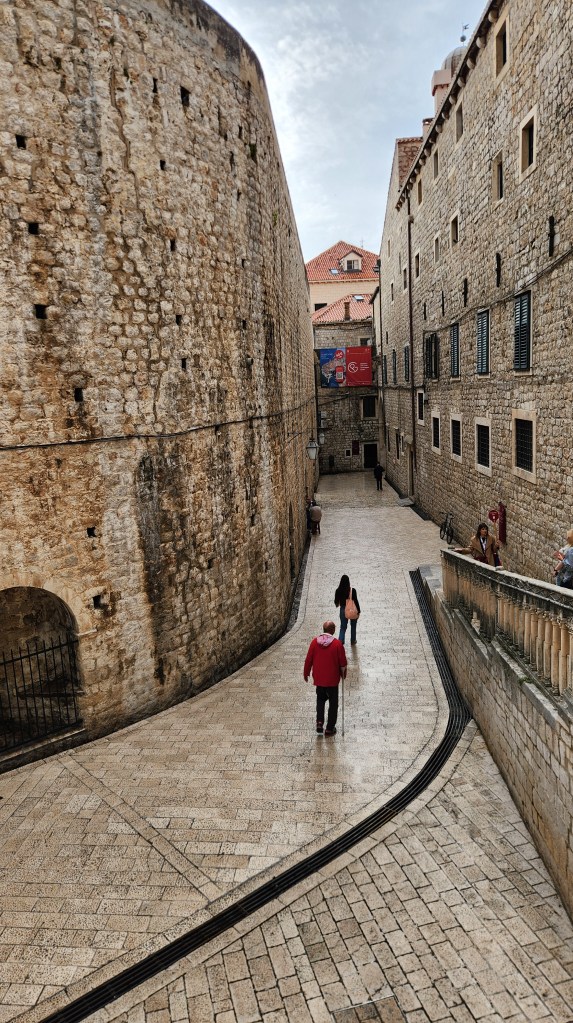
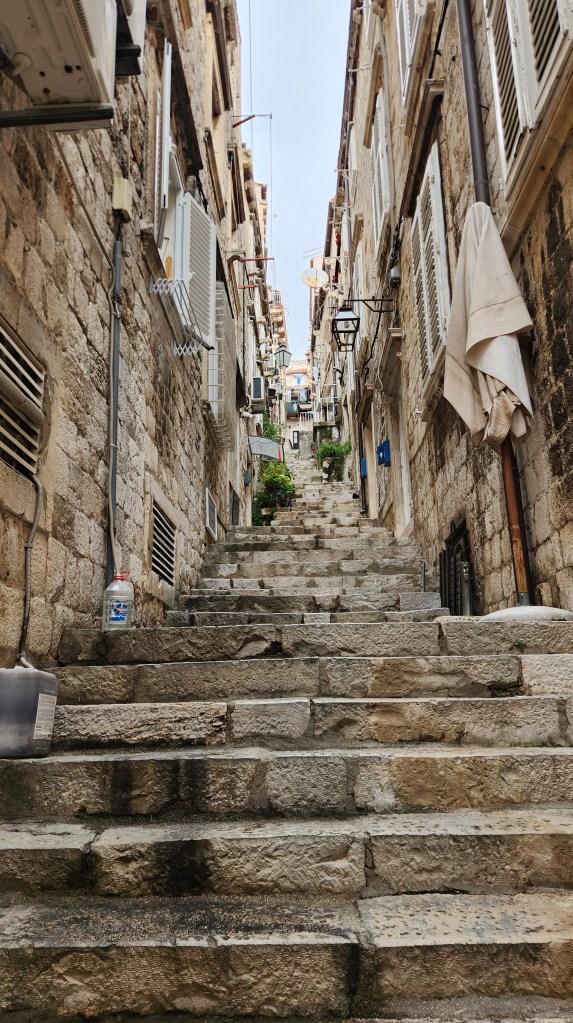
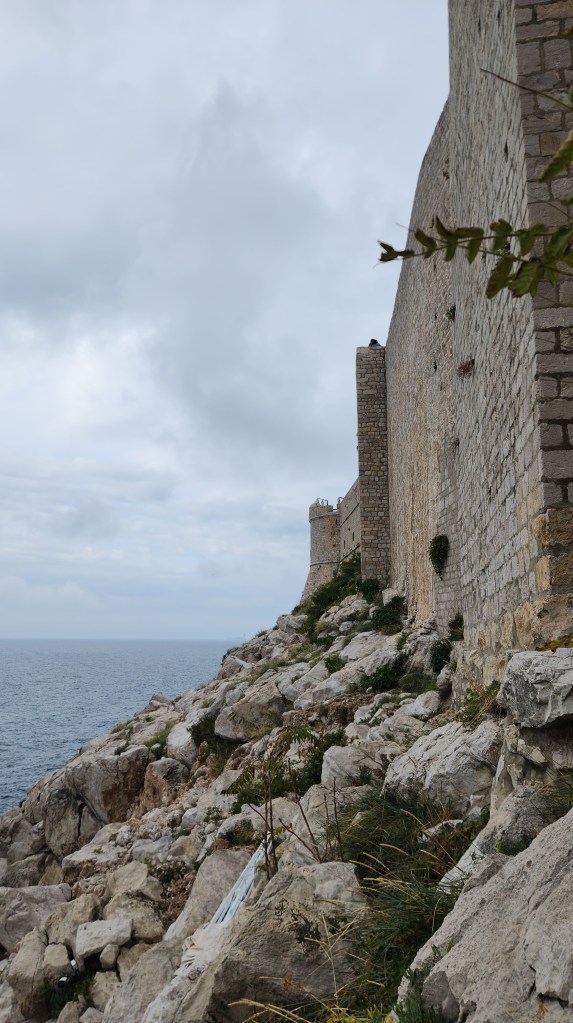
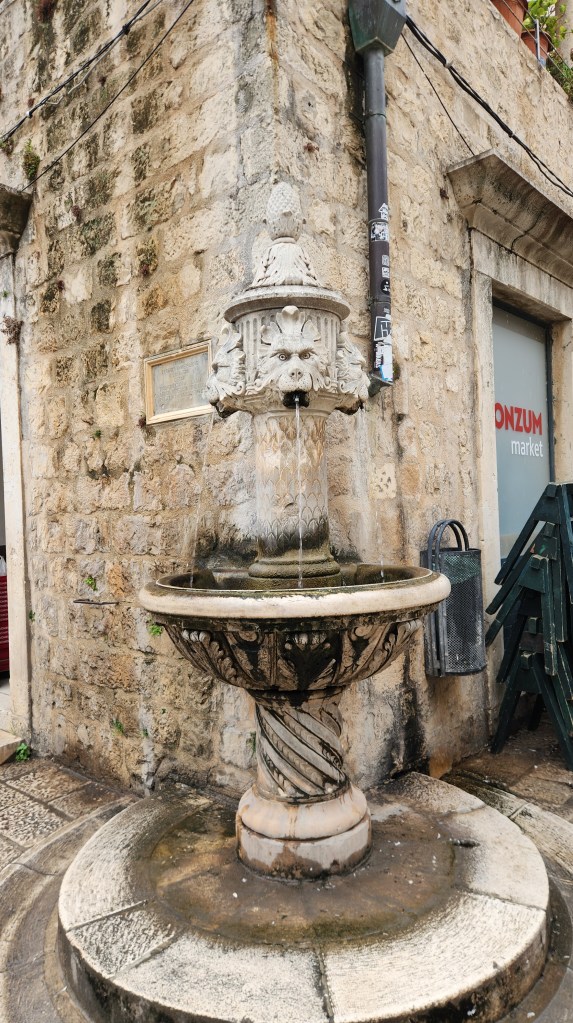
One of the things we saw was a ritual in which a man throws out grain for the local birds every day at noon. The birds begin gathering on the rooftops shortly beforehand and descend on the booty in a frenzy when the man appears. I found it quite fascinating, but Pat was creeped out by the Hitchcockian scene.
Eventually we returned to the ship, docked at the cruise ship pier, where I took a few photos.

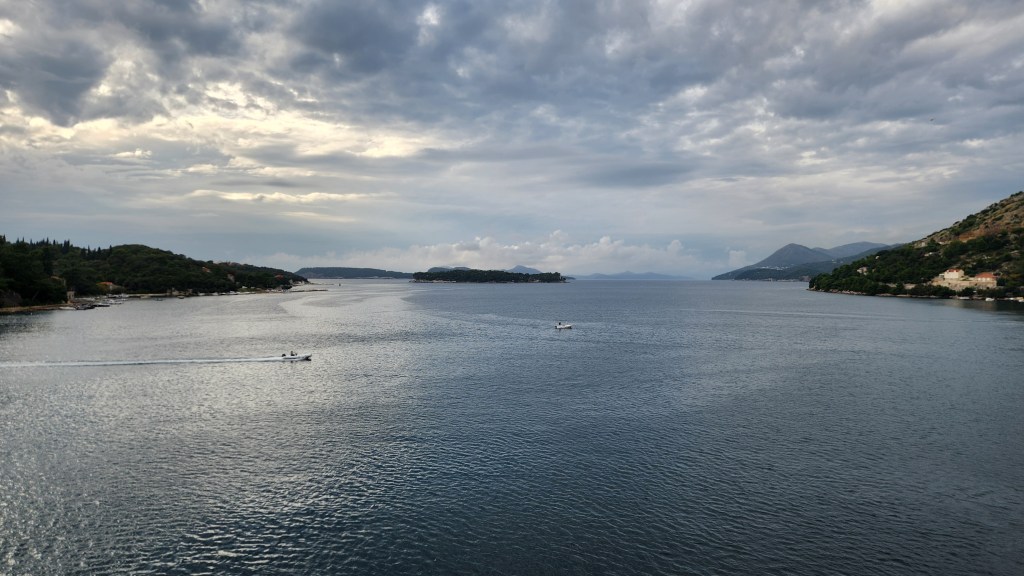
The ship sailed off for the next destination shortly after 8 PM.
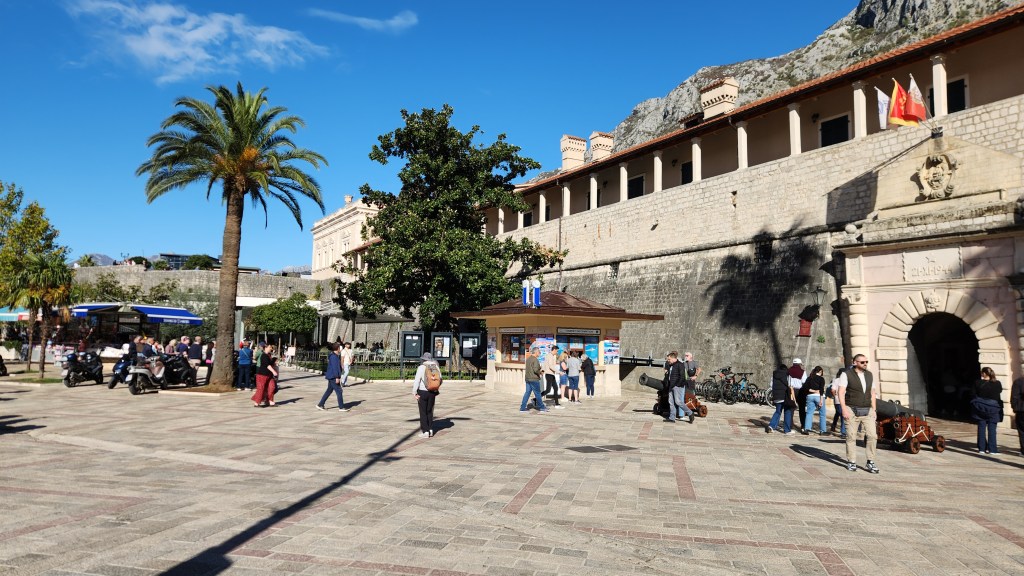
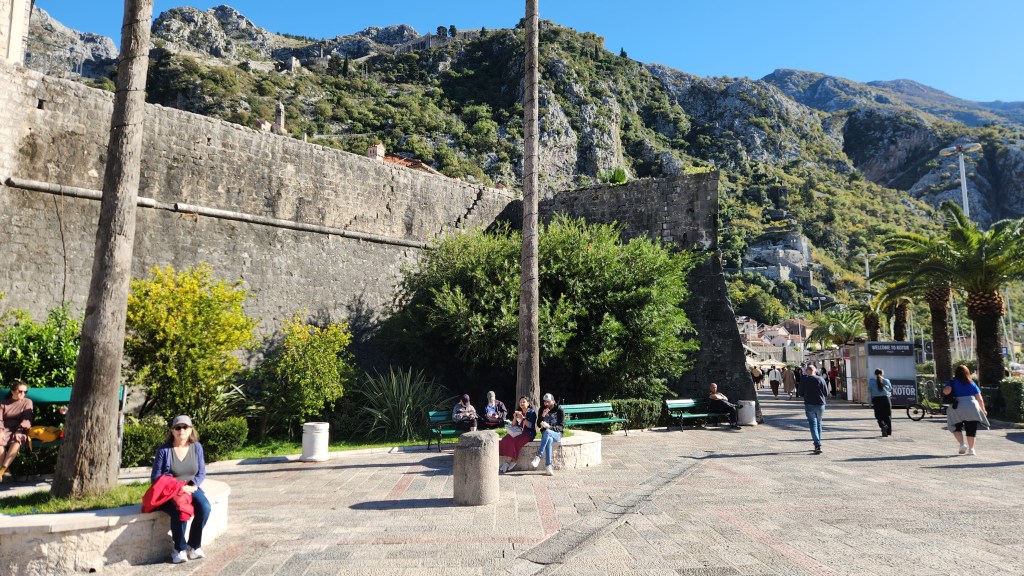
Kotor, Montenegro (Tuesday, November 4, 2025): Kotor is a medieval city, designated as a UNESCO World Heritage Site, nestled between limestone cliffs and a bay. For our shore excursion, we walked with a local guide through Kotor’s network of cobblestone streets. In the main square, we viewed the Venetian walls that surround the city. Constructed in 1420, they have been reinforced through the centuries and are well-preserved today.
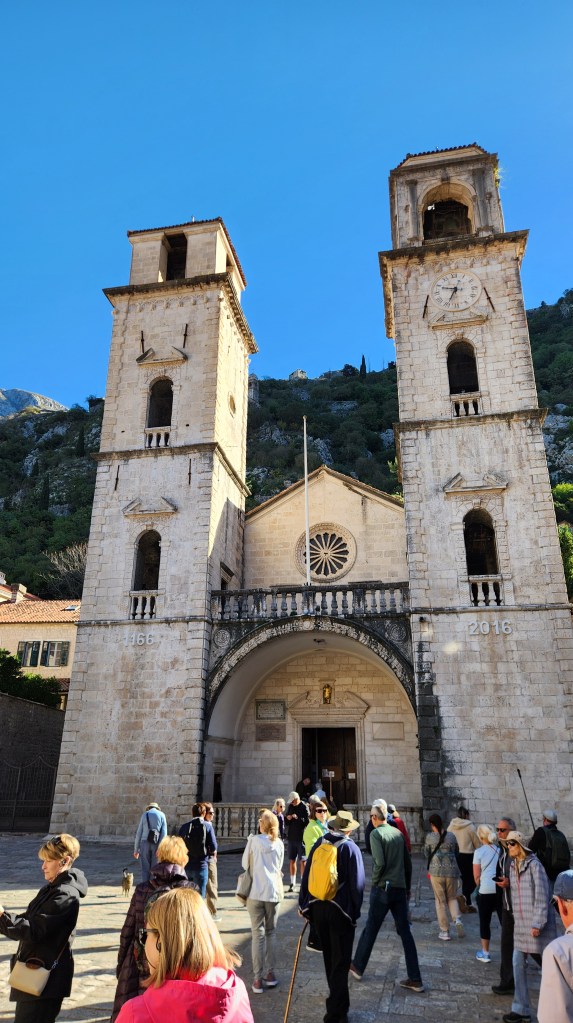
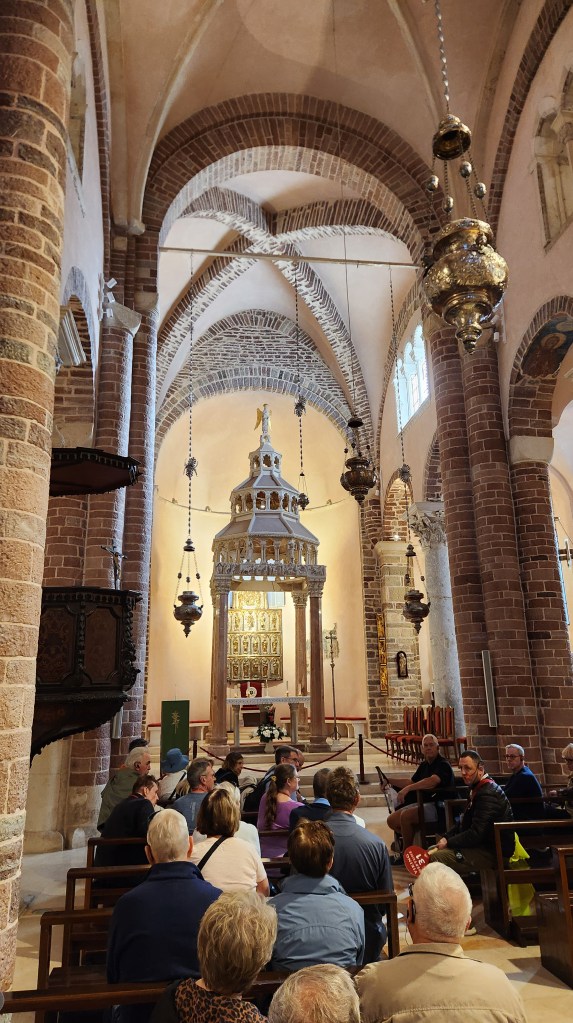
We visited the 12th-century Romanesque Cathedral of St. Tryphon, a remarkable repository of 14th-century frescoes and valuable artifacts. Over the centuries, the building has suffered earthquake damage—as evidenced by its mismatched towers, one of which was rebuilt with meager funds after a tremor. It was particularly interesting because of the Byzantine and Orthodox influences on the architecture, although it is a Roman Catholic church.
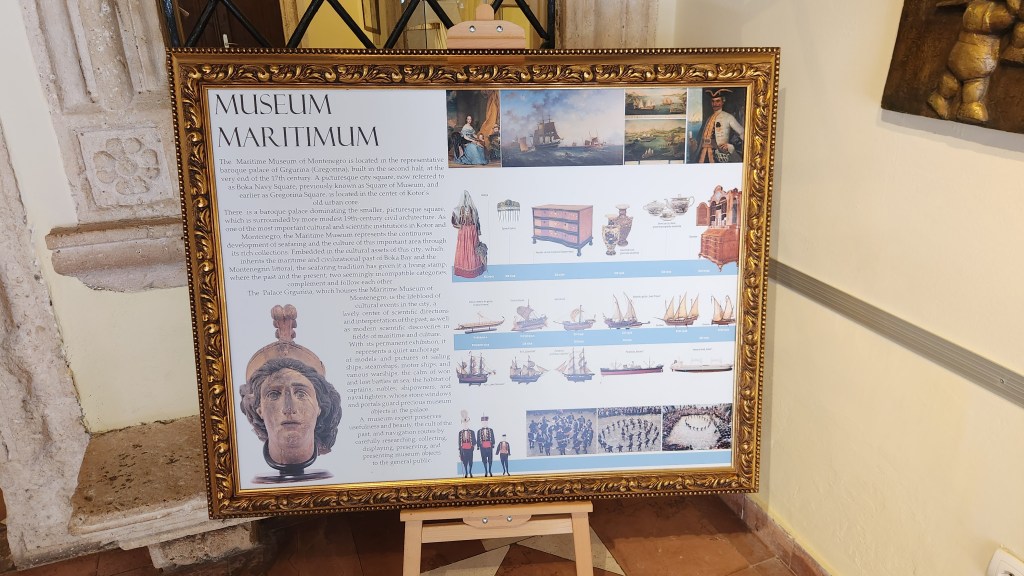
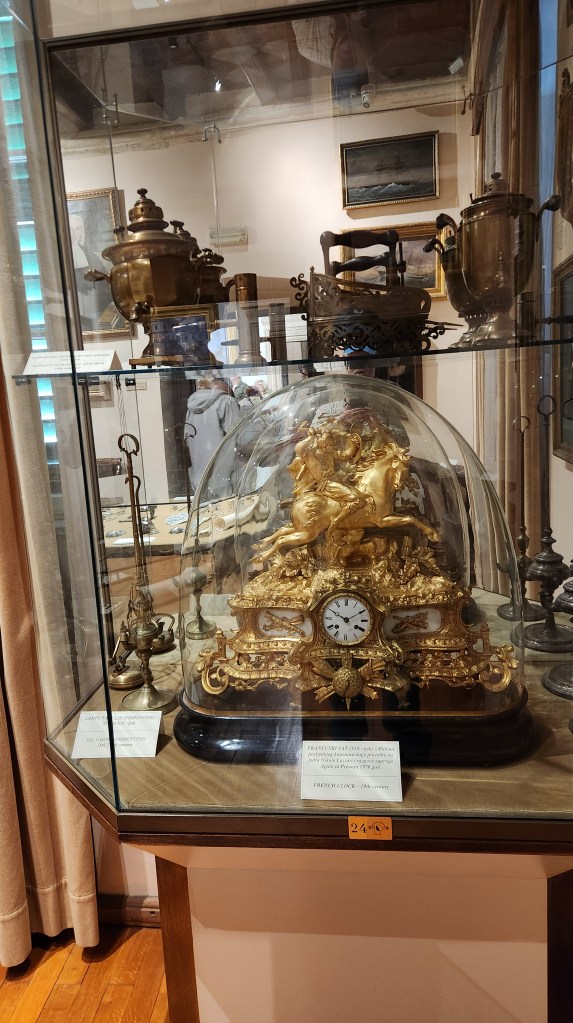
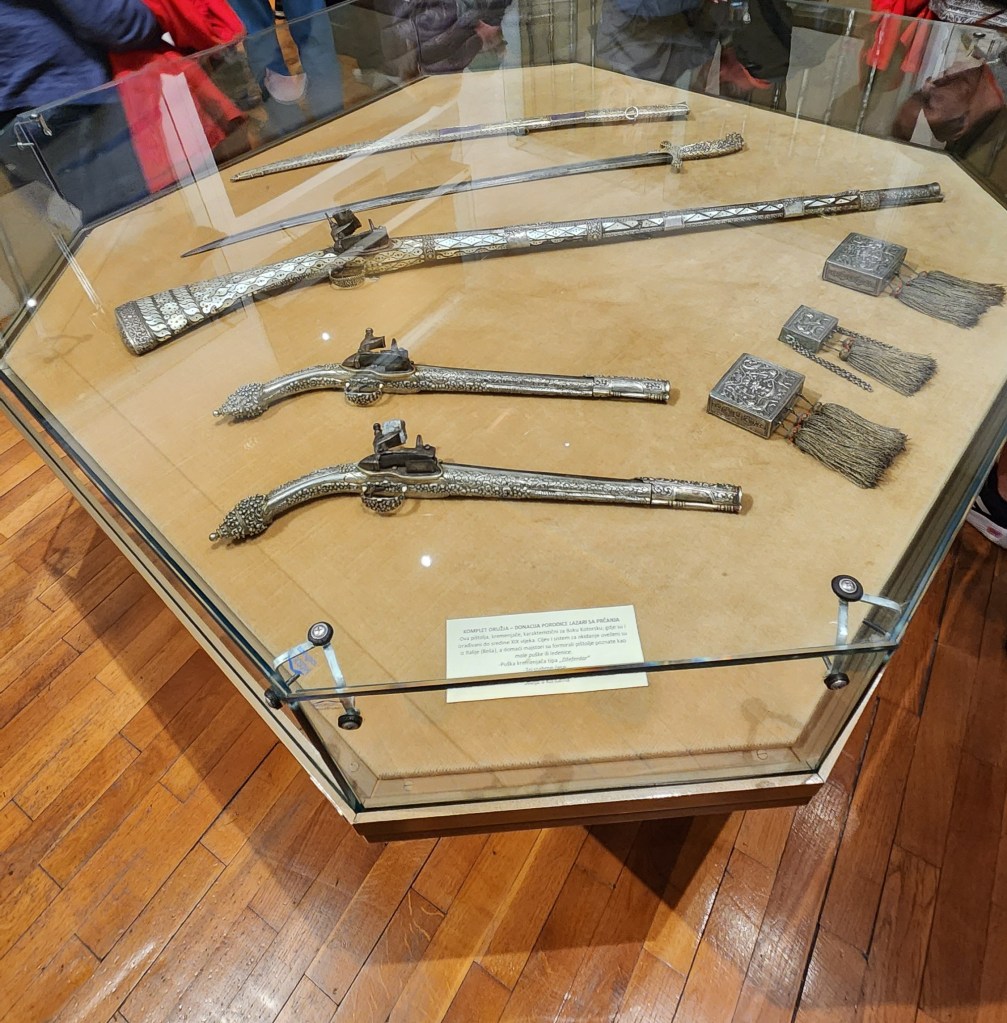
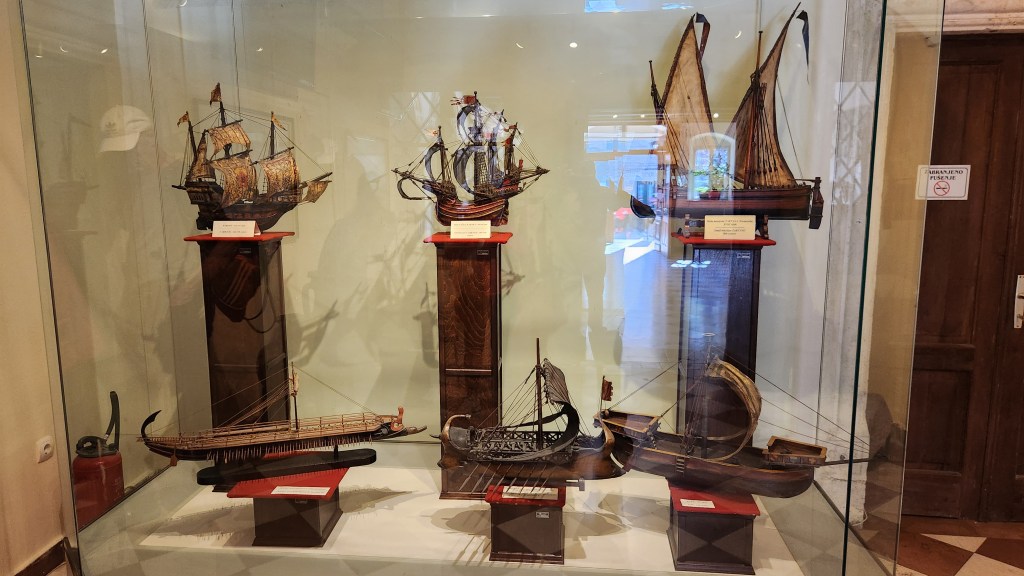
Next, we visited the city’s Maritime Museum, which houses many artifacts of Kotor’s history.
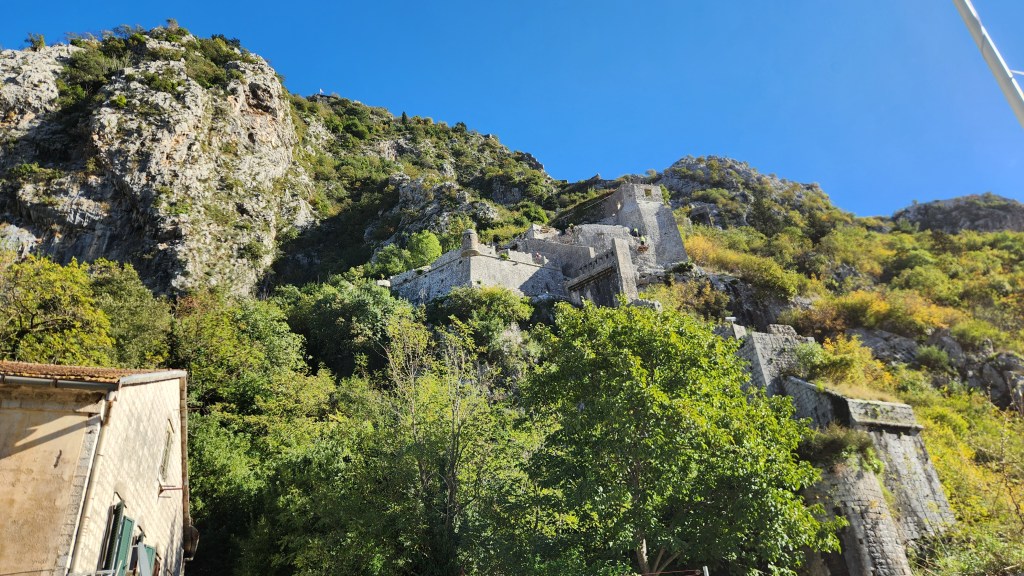
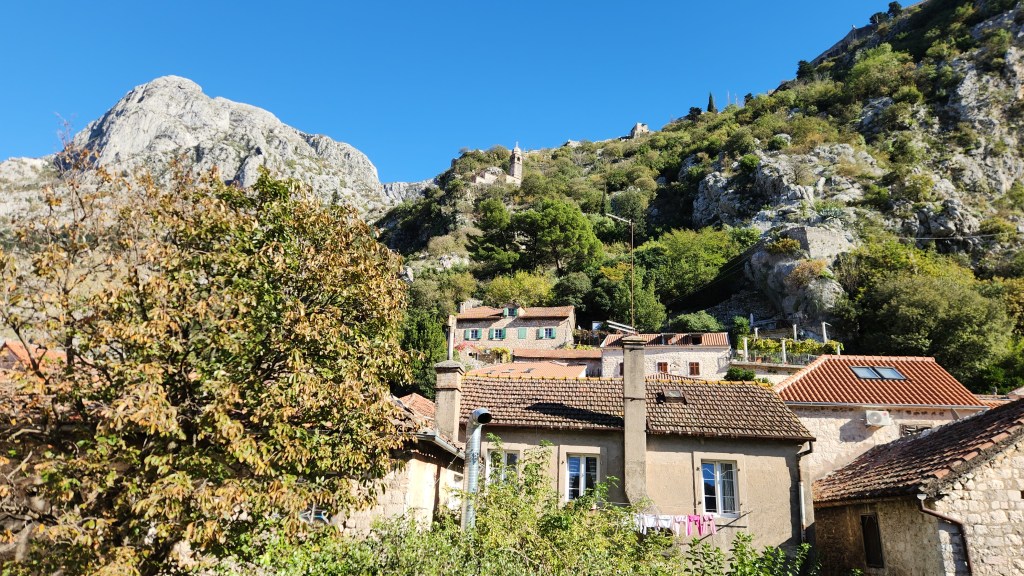
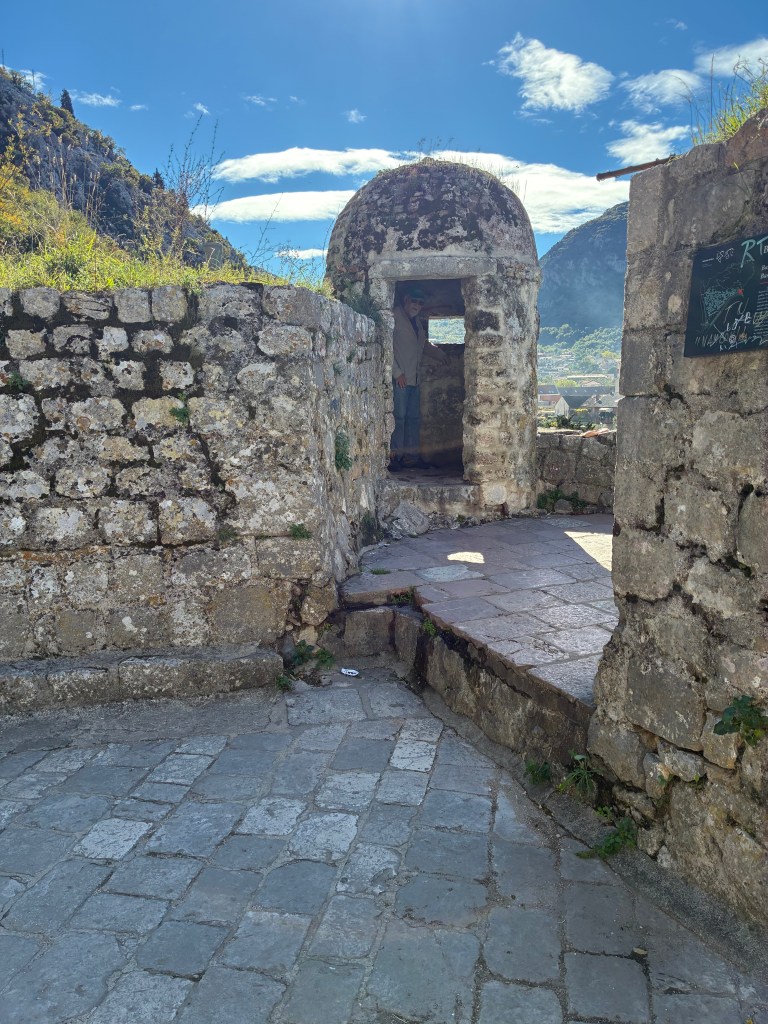
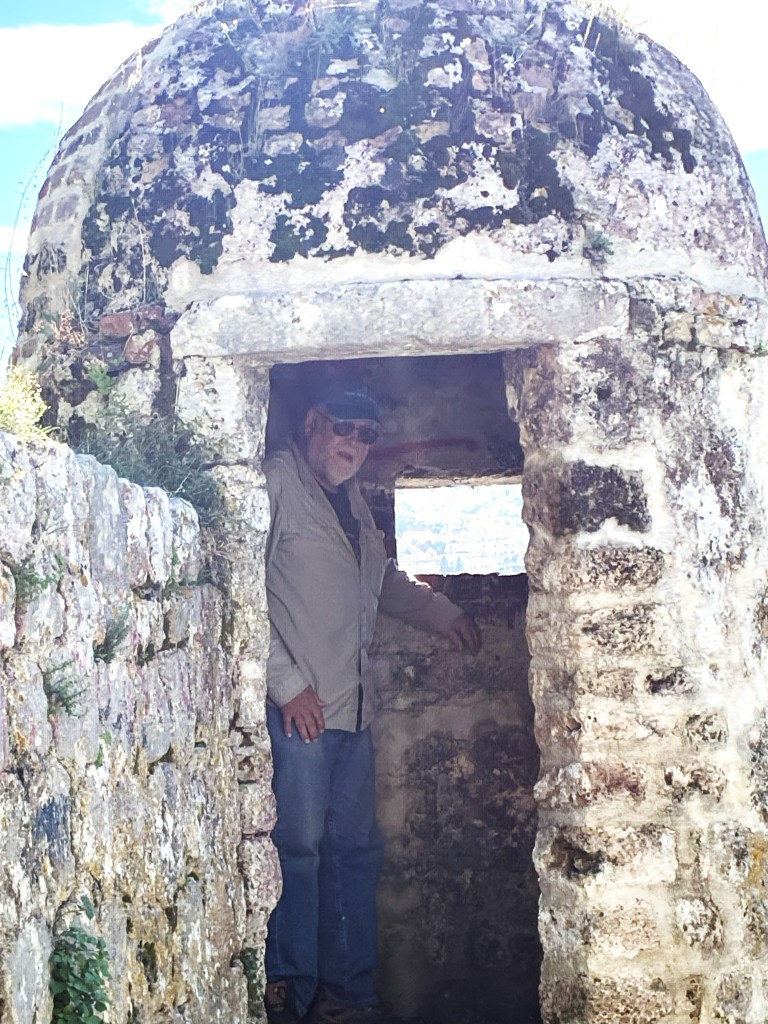
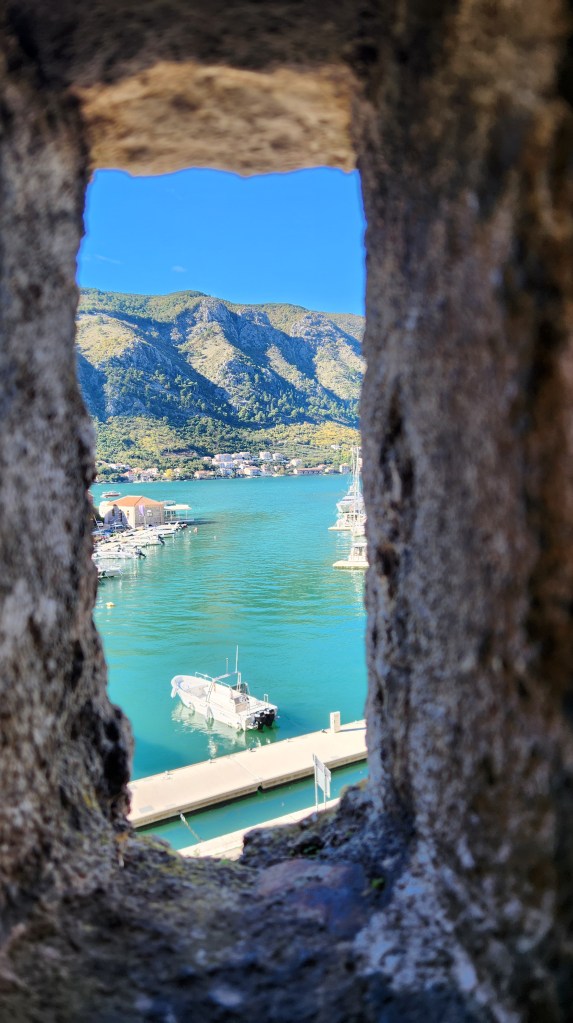
After the tour, we walked along the city walls and enjoyed the spectacular views of the mountainous terrine and the ruins of ancient Roman and Venetian structures and fortifications. Not only was the sky clear and sunny, but access to the walls was free, so this compensated somewhat for missing the wall walk in Dubrovnik.
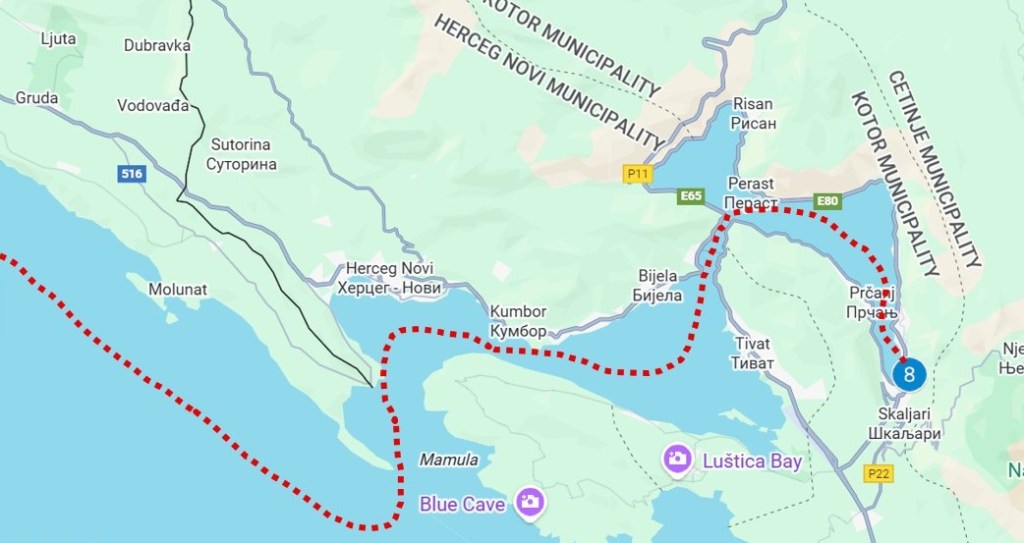
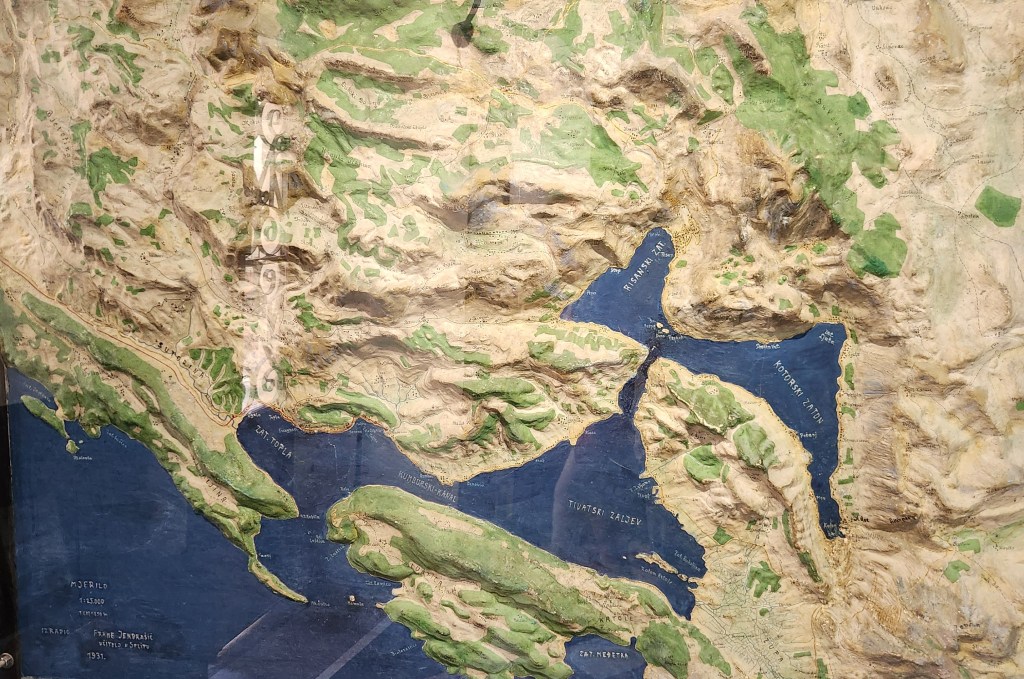
Access to Kotor from the Adriatic requires a sail of some 20 miles through a winding passage as illustrated in these maps.
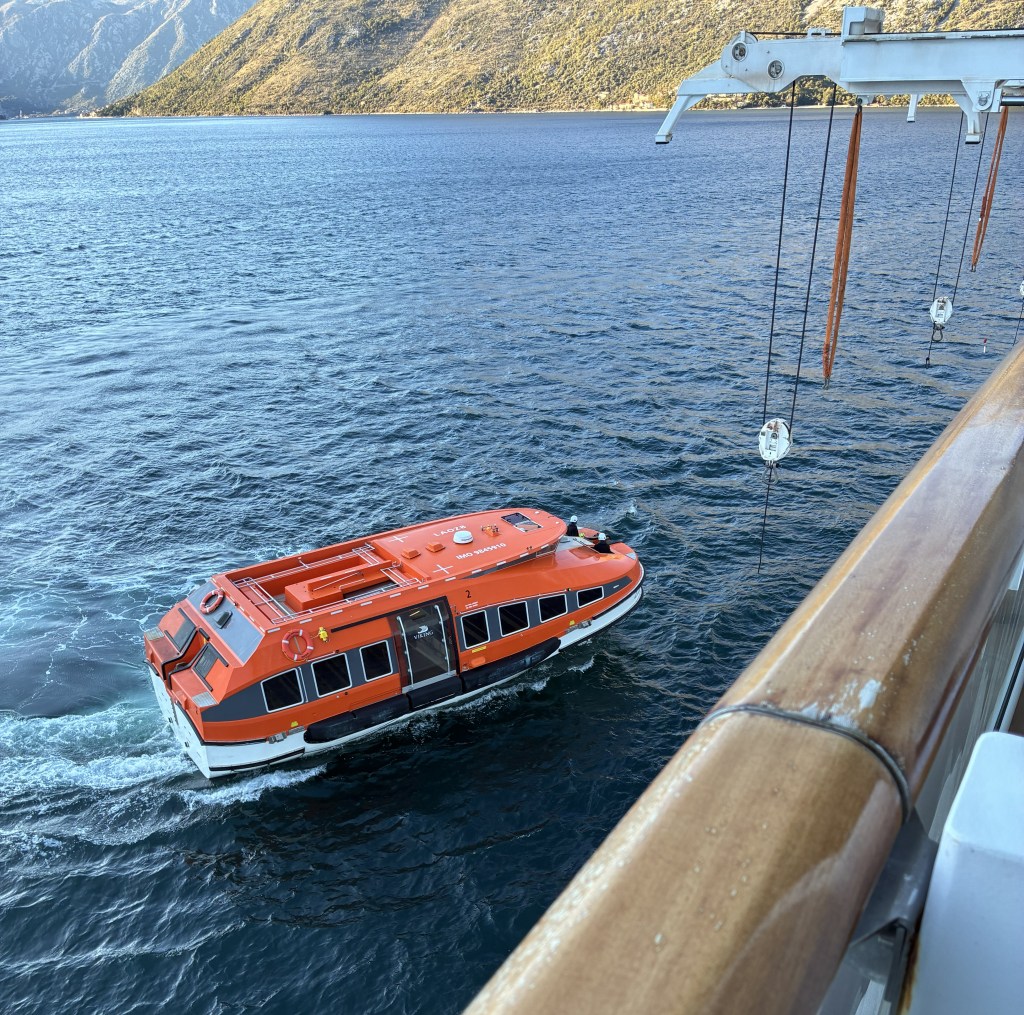
Given the limited access to Kotor harbor, the ship dropped anchor in the bay and we used the Viking Neptune’s tender boats to go into town for our excursion and to return to the ship. I took this photo and video from the ship as the last tender returned. (This is one major difference between the Neptune and the Star – the Star had no tender boats.)
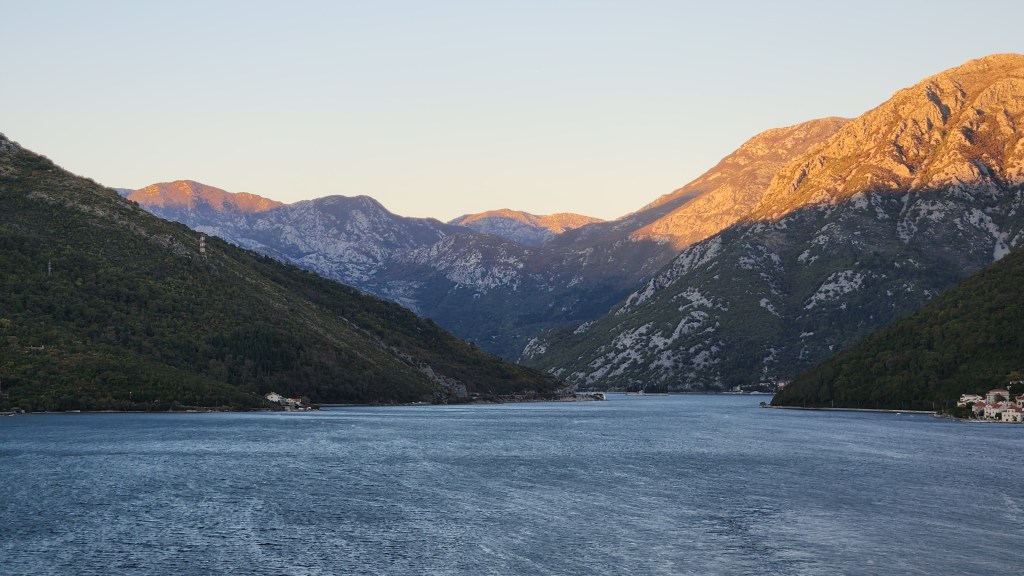
And, for a finale, here are a couple of photos as the ship sailed away from its anchor point in the bay.

Okay, that’s it for Part 2. I hope you enjoyed the read and will come back to read future installments:
- Part 3 will cover the rest of the Ocean Cruise, with shore excursions in Greece (Corfu, Olympia, and Santorini).
- Part 4 will cover the post-cruise extension in Greece.
Stay tuned …
 Dave Saari