
Welcome back for Part 3 of this narrative of our recent trip to the Iberian Peninsula. Part 2 described our travel from Lisbon to Porto, via Coimbra, and our journey up and down the Douro River. In this episode, I’ll describe three of the shore excursions we took during the river cruise.
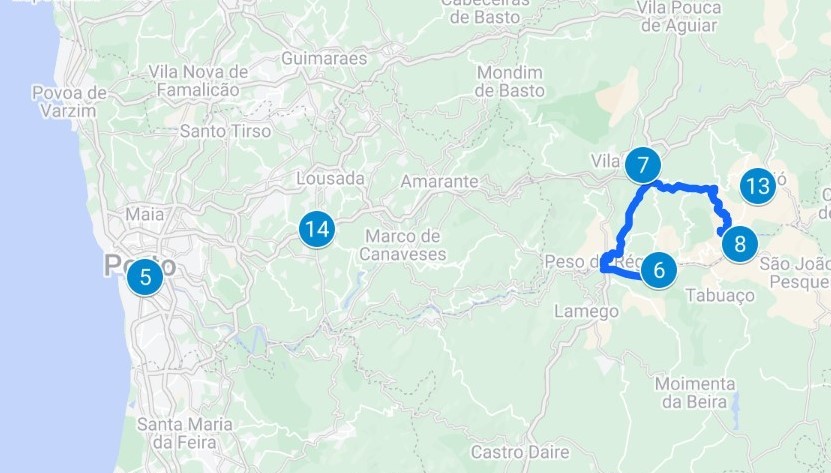
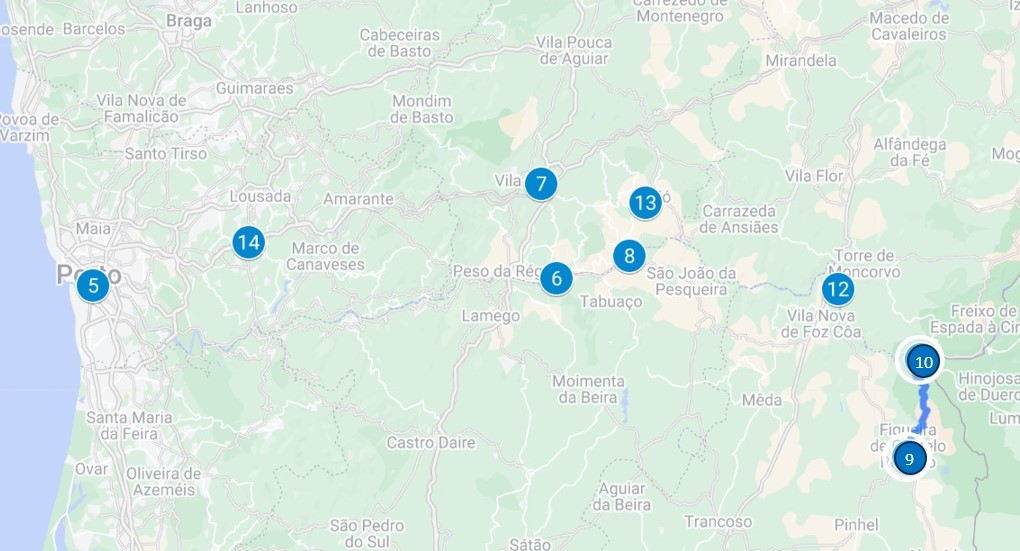
Mateus Palace and Gardens (November 13): On Wednesday the 13th, after sailing from Vila Nova de Gaio to a pier near Lamego, we disembarked at 2:30 PM for a 20-mile bus drive to the Mateus Palace located in the Mateus parish of the city of Vila Real. After touring the palace and its magnificent garden, we drove back to the ship, which by then had sailed further upriver to Pinhão and docked for the night.
The Mateus Palace was built around 1740 on the site of an estate originally built in the early 1600s by a family of wealthy vineyard owners. The third-generation owner, António José Botelho Mourão, had it designed and constructed by Nicolai Nasoni, an Italian architect widely-known for his work throughout Portugal. It was designated as a National Monument in 1910 and is now a major tourist attraction. The interior decoration includes intricately carved chestnut wood ceilings, furniture from several periods, 17th and 18th century paintings, and an impressive library with hundreds of books.
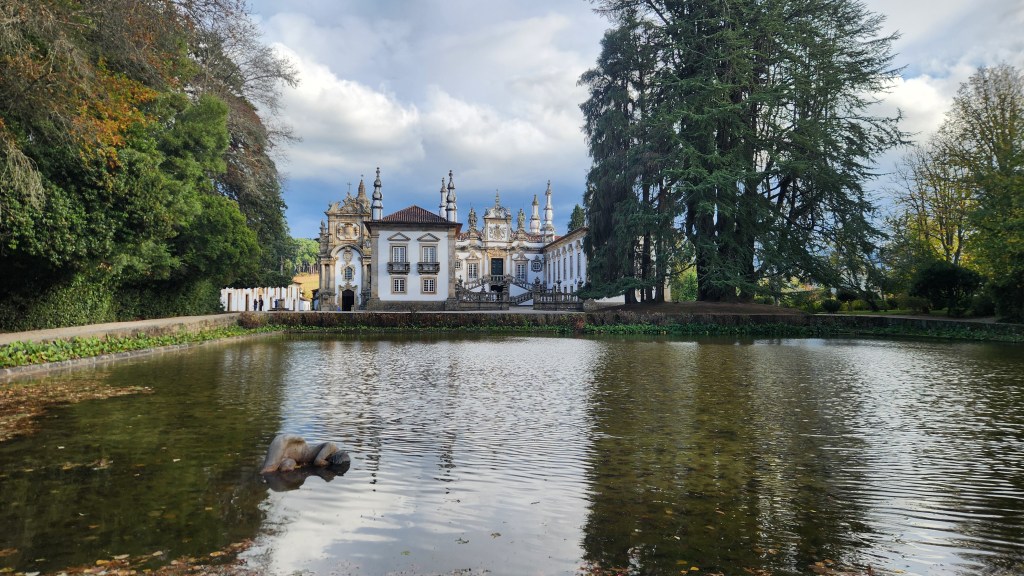
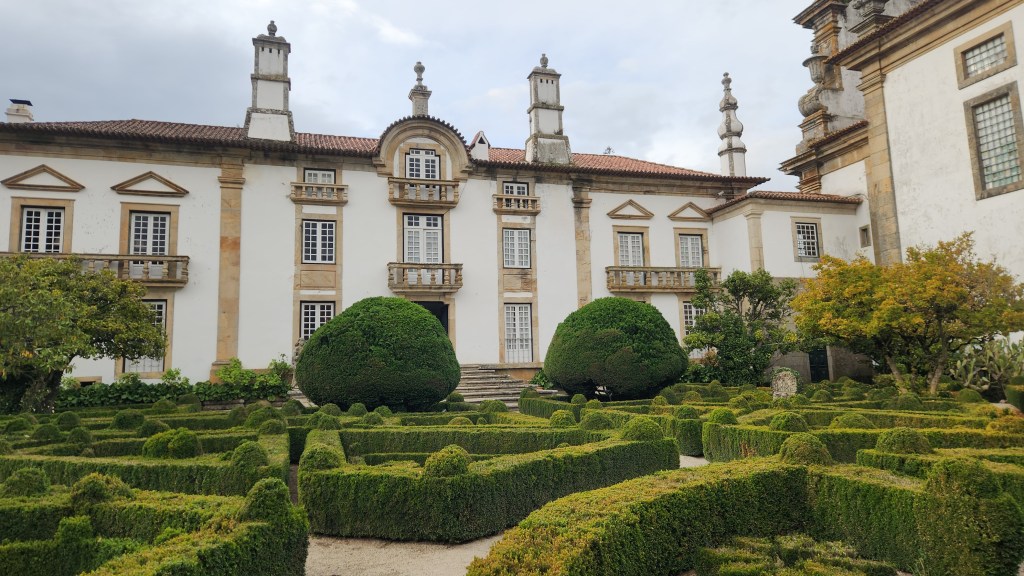
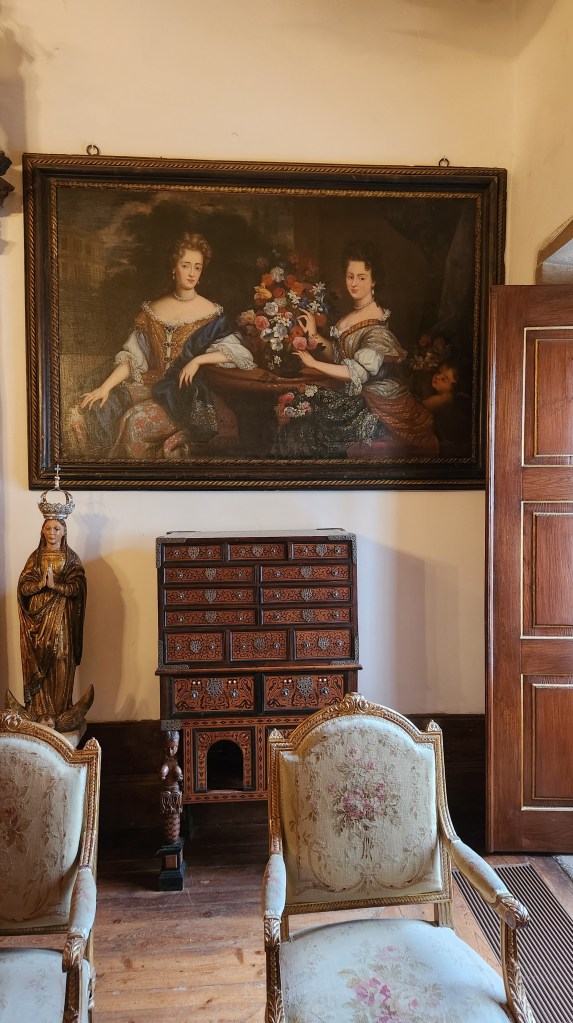
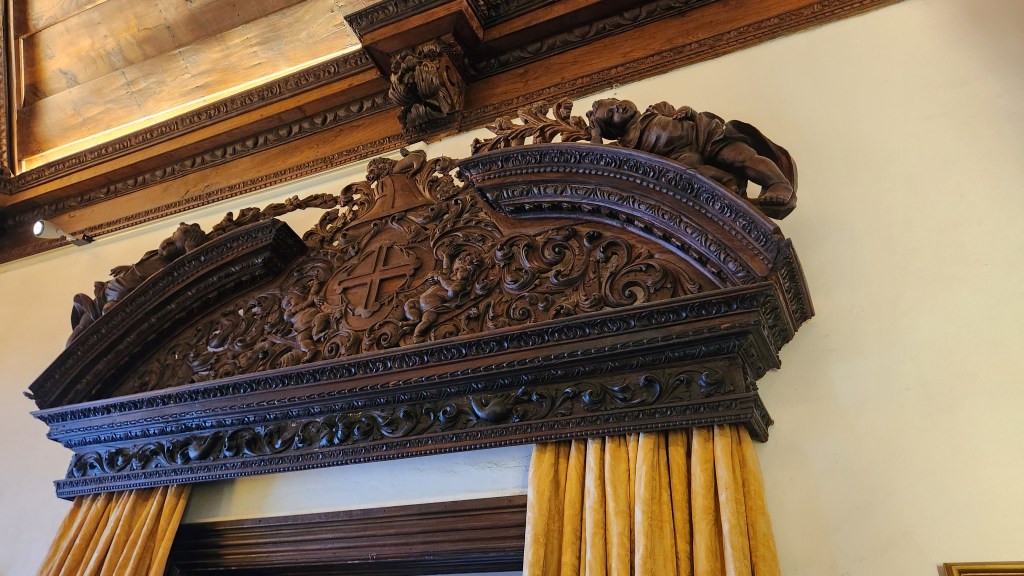
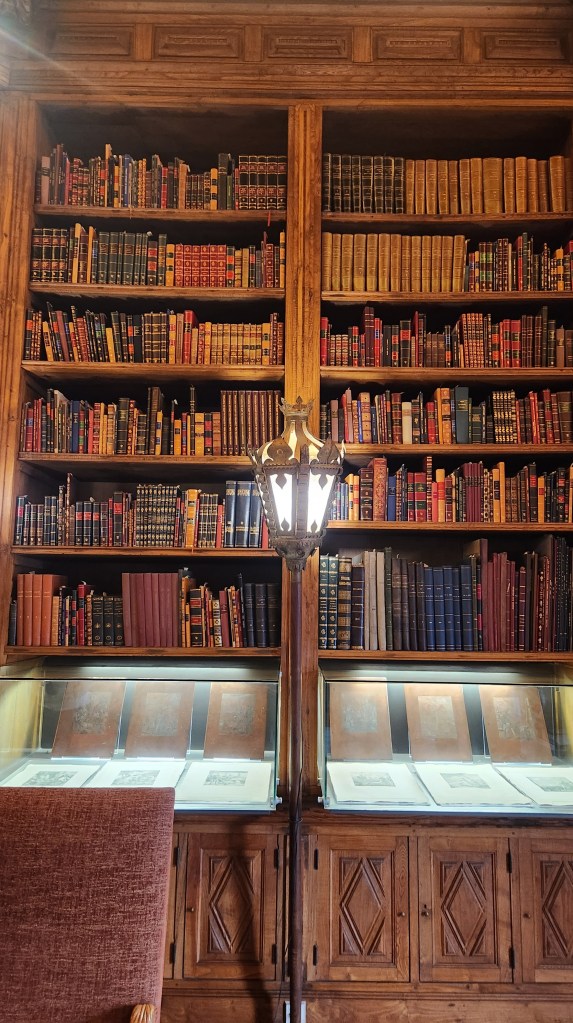
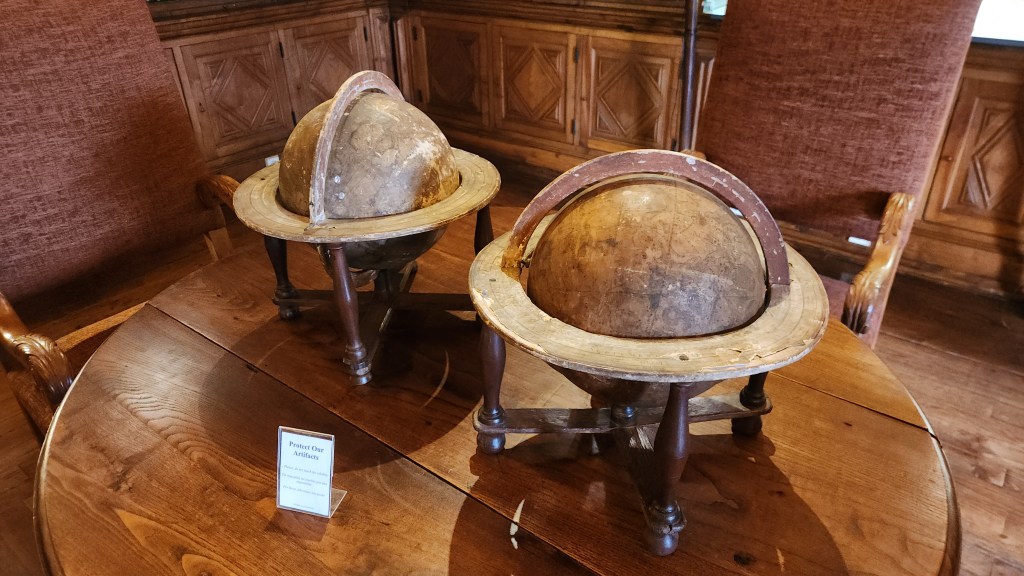
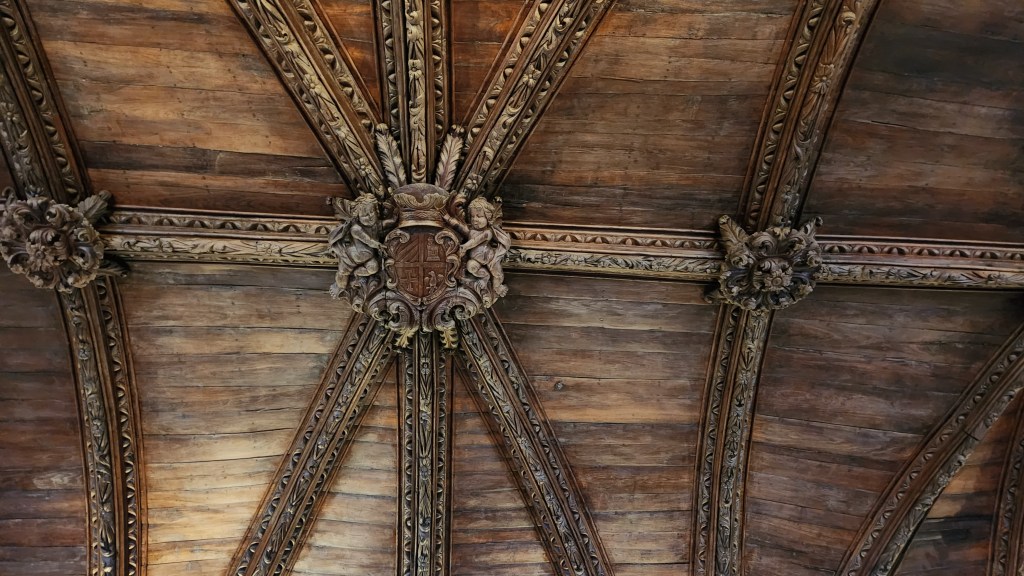
The palace is surrounded by an immense garden originally planted in the 1700s, then modified in 1870 and expanded in 1930. In the 1950s and 1960s, the garden area was extensively modified and a lake was added to act as a mirror reflecting the manor house. A dense planting of chestnut and oak trees was added in the 1970s. Amazingly, the garden is overseen by a single, full-time gardener, though our guide told us that he has help from multiple volunteers.
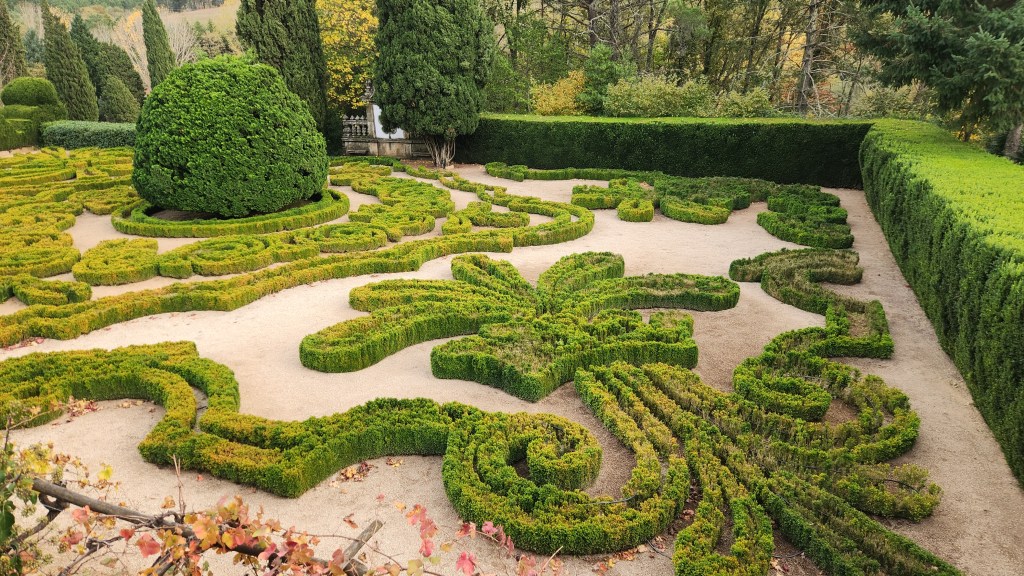
We arrived back at the Helgrim at 7 PM, just in time for the usual sumptuous Viking dinner.
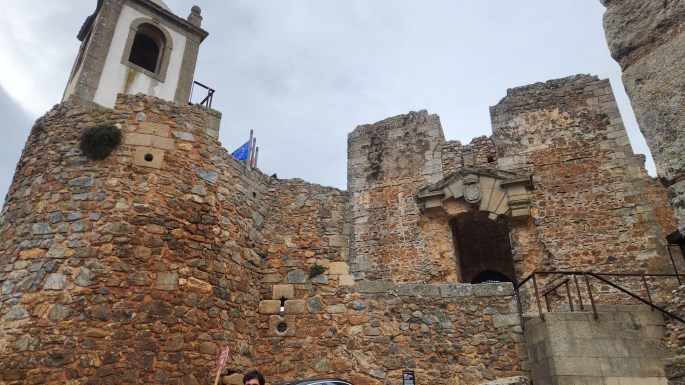
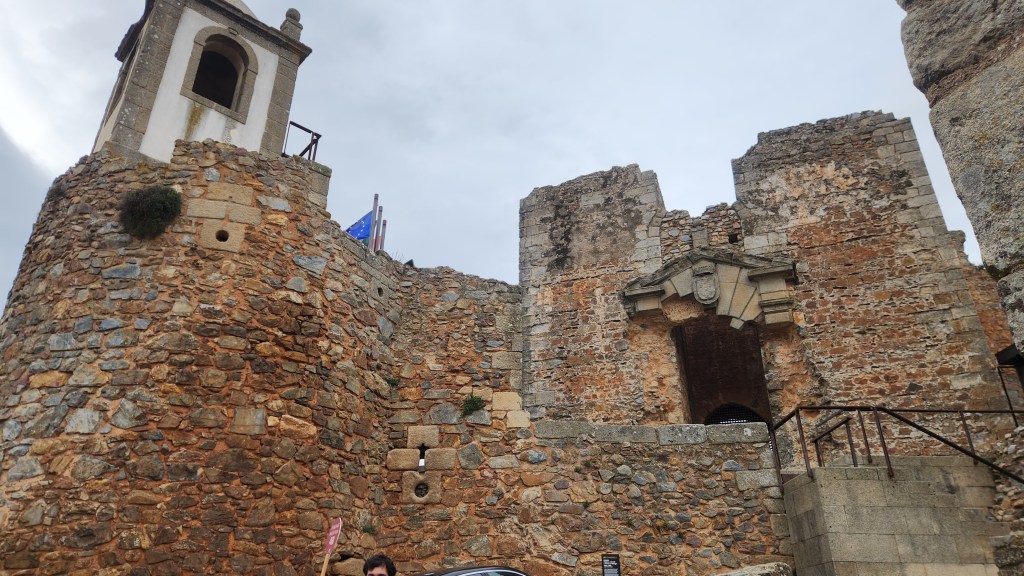
Castelo Rodrigo (November 14): We spent the morning and early afternoon of Thursday the 14th sailing upstream to Barca d’Alva, then disembarked for a tour of an ancient town called Castelo Rodrigo.
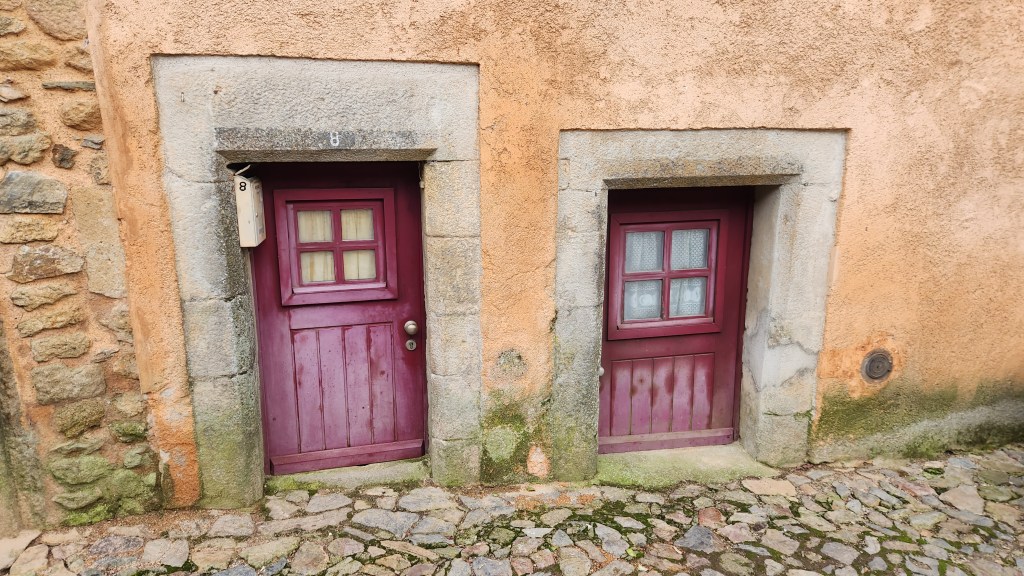
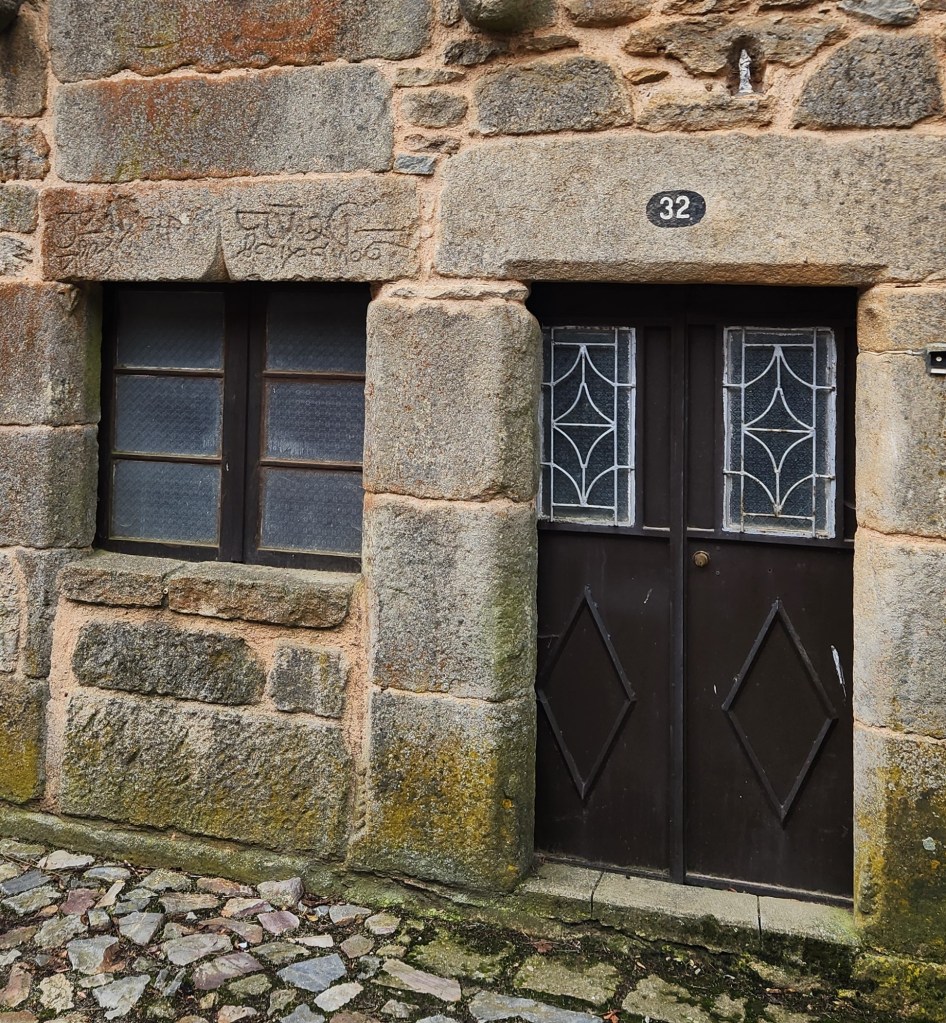
It is believed a castle and village were founded on the site in the 6th century and subsequently inhabited by Romans and Moors before being conquered by King Alfonso IX of Leon in the 1200s. Alfonso had the city fortified and the walls reinforced, placing Count Rodrigo Gonzalez de Girón in charge of its defense, and he became its namesake. It was incorporated into the Kingdom of Portugal in 1297, ceded by Leon to King Denis after extensive battles. The fortress and walled fence were rebuilt, and 13 turrets, a keep, a fortified entrance gate, and moats were constructed by Denis in the 14th century. It has been listed as a National Monument since 1922. Our tour group strolled through the town on the cobblestone streets, visiting among other places a medieval church, the ruins of an ancient synagogue, and a lovely shop where we bought some delicious roasted almonds.
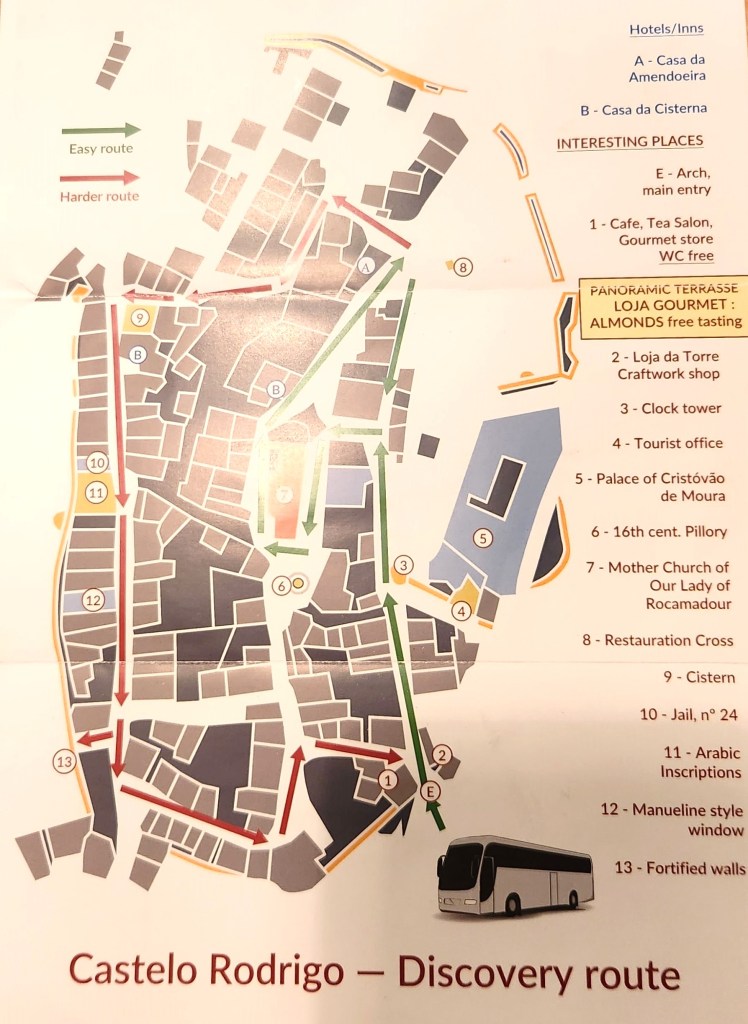
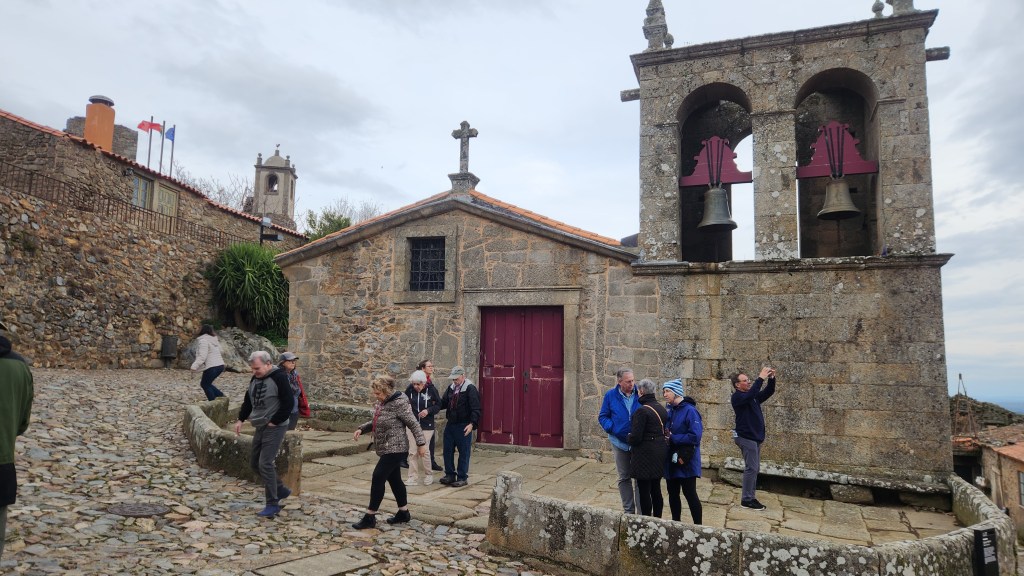
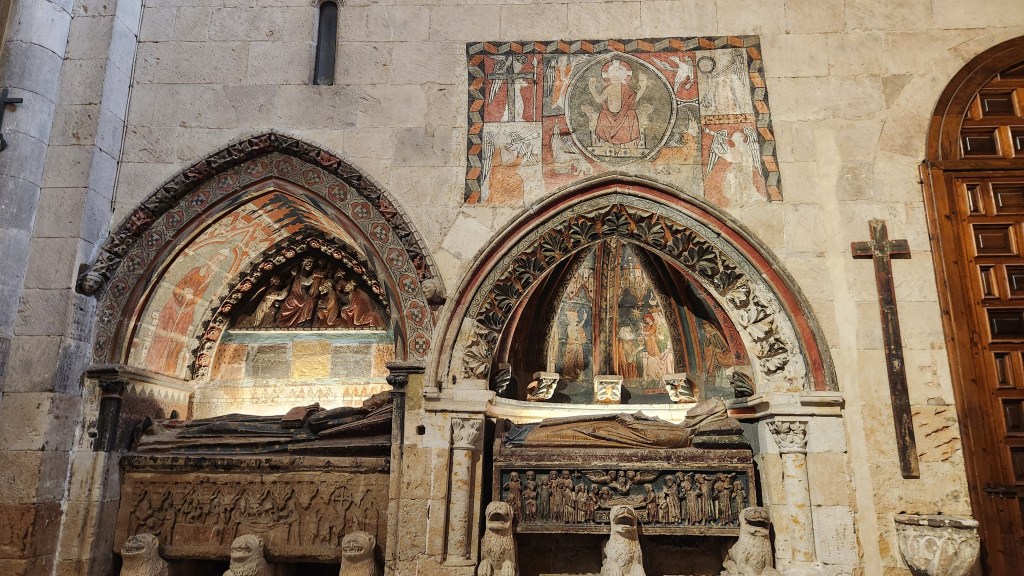
The church, Mother Church of Our Lady of Rocamadour, located on the path to the famous shrine, Santiago de Compostela, and marked by images of seashells, was established in the 12th century by the Brothers Hospitallers. It contains some interesting artwork as shown in the photos.
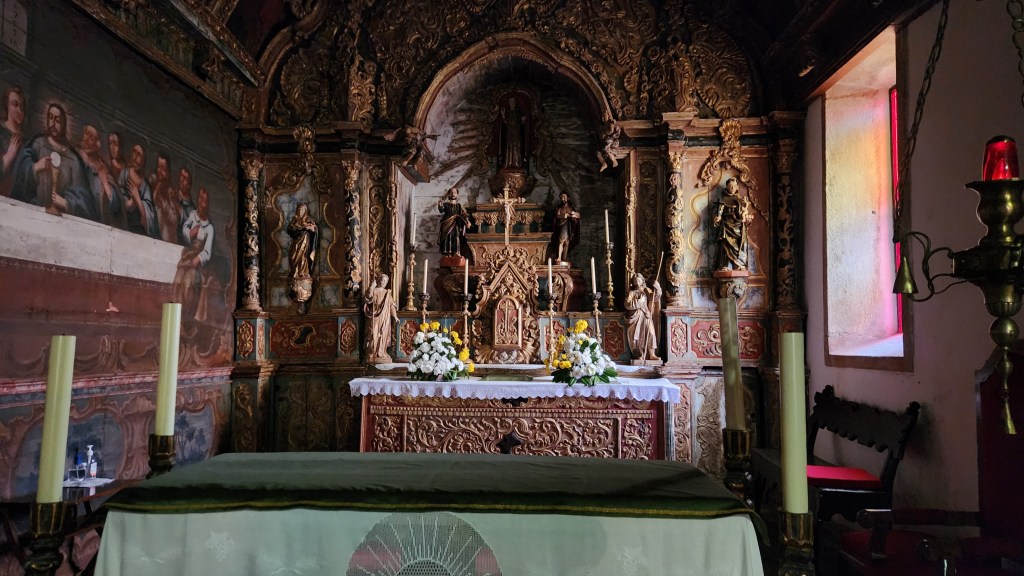
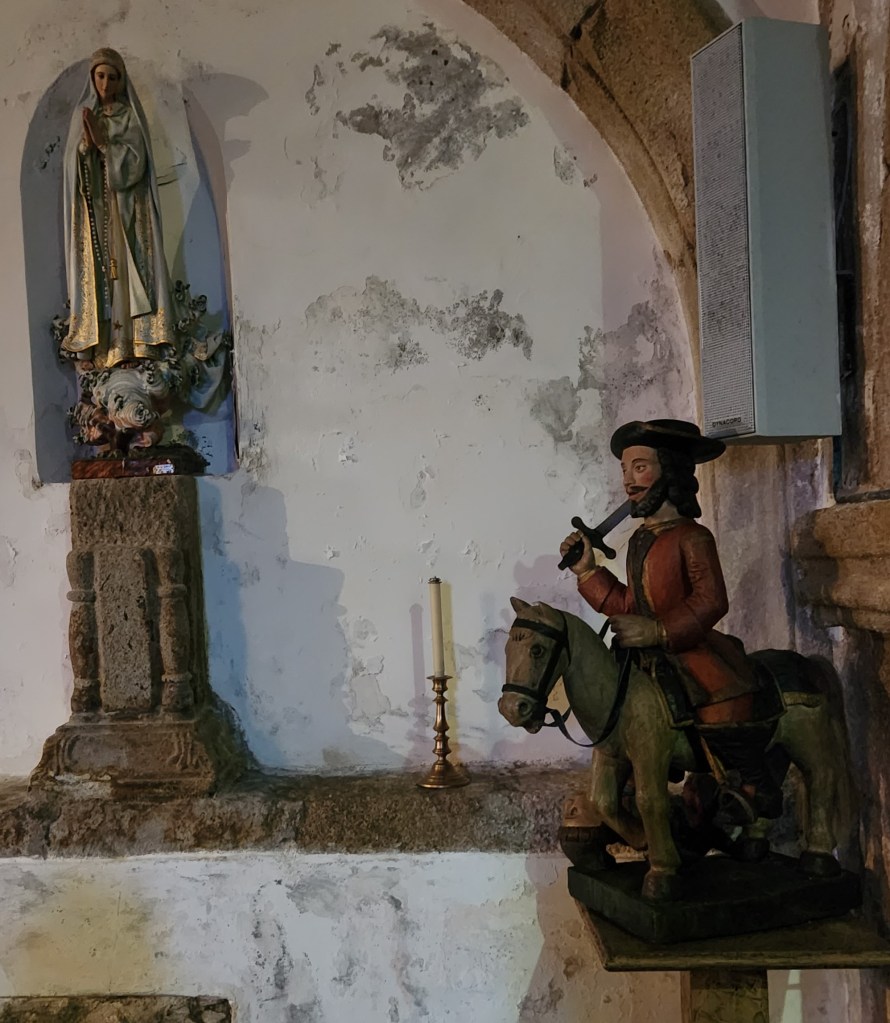
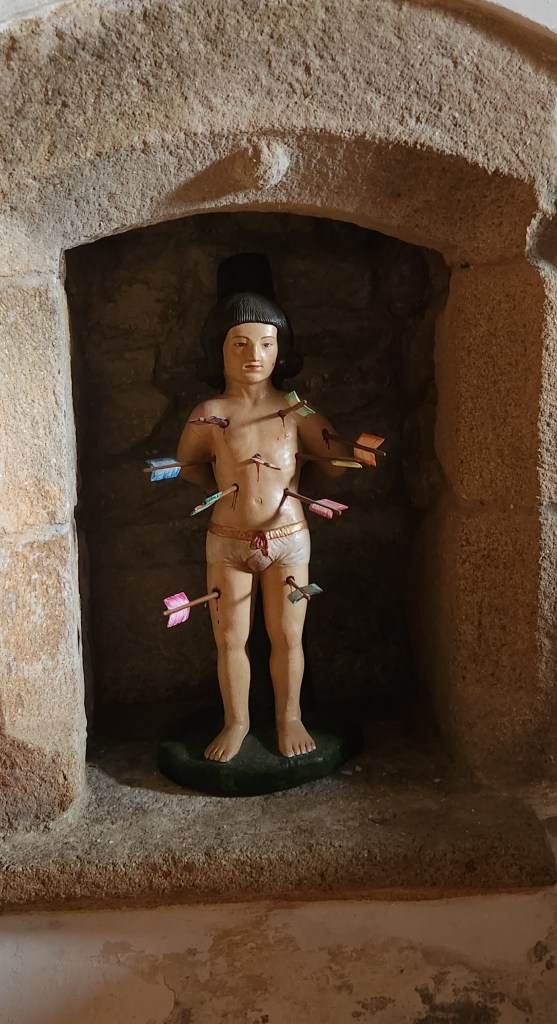
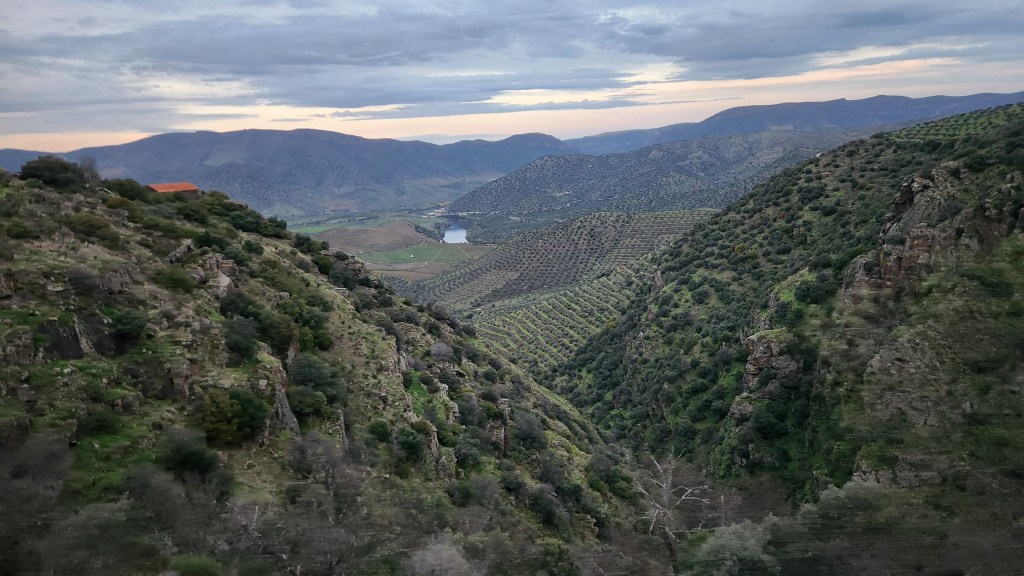
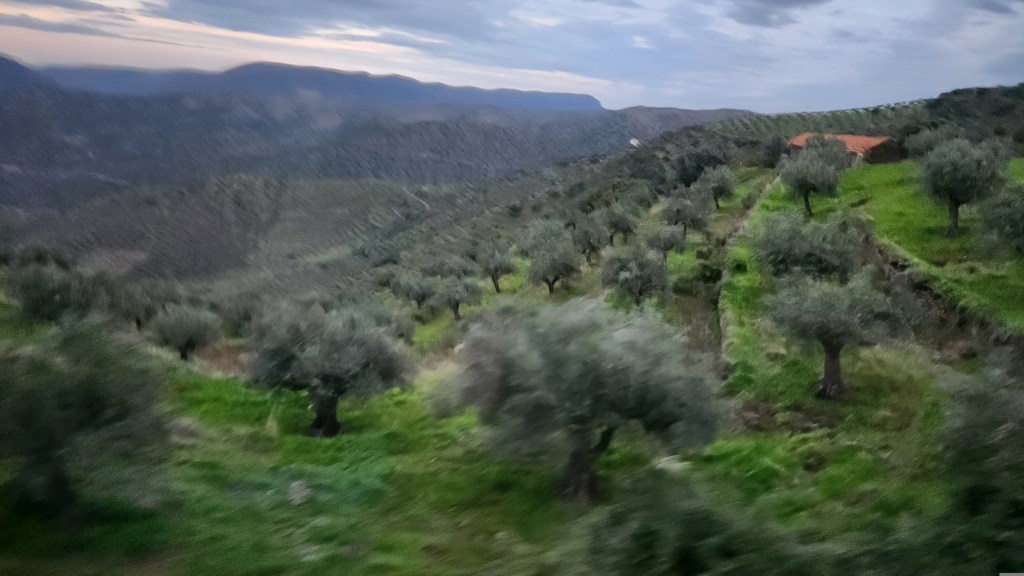
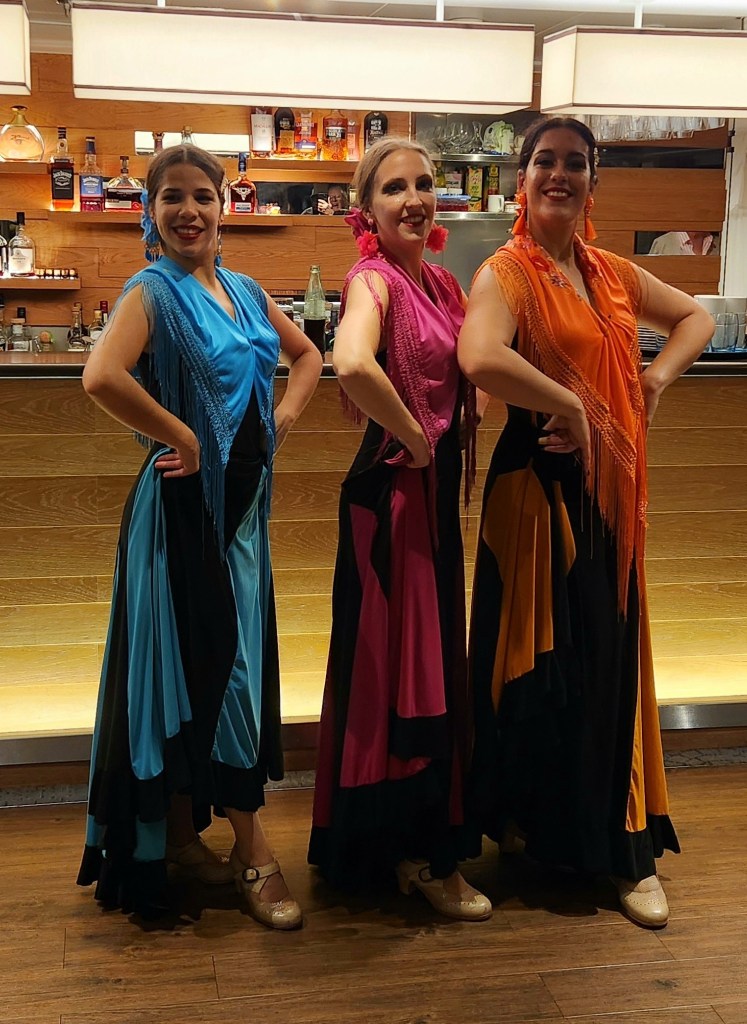
On the way back to the ship, we passed by acres and acres of almond and olive trees, both of which are major products in the areas outside the Douro Valley. Back on the ship, we were treated to a Flamenco Dance exhibition by a trio of professional dancers to cap off a lovely day.
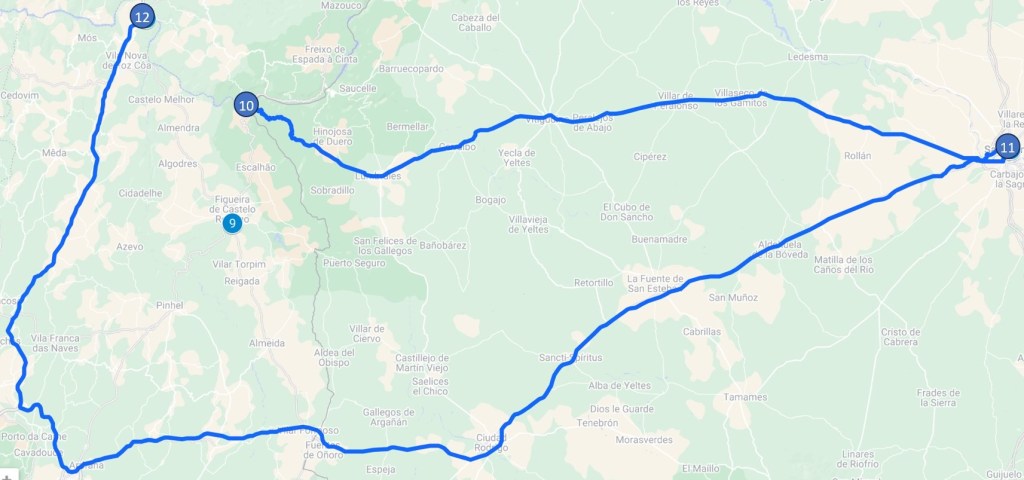
Salamanca, Spain (November 15): On Friday the 15th, we left the Helgrim at its dock in Barca d’Alva at 8:30 AM for a bus ride to Salamanca, Spain. While we and a majority of the 102 passengers traveled to Salamanca, the Helgrim began the return journey down the Douro, and we eventually returned to the ship at its overnight position in Pocinho at 9:20 PM.
The earliest human habitation of Salamanca occurred in the first millennium BCE, and the earliest stable settlement in the 7th century BCE. As throughout Spain, the city was subsequently occupied by Romans, Alans, Visigoths, and Moors before being recaptured by Alfonso VI of Leon in 1085. It is known for its two Cathedrals and for the University of Salamanca, and these were the primary focus of our tour. The Old Cathedral of Salamanca was built between 1120 and 1236. The adjacent New Cathedral was built between 1513 and 1733. The first school buildings were established nearby to the Old Cathedral in 1134, and it was officially founded as a university in 1218, and many of its current buildings were constructed from 1401 through 1611. Here’s a map of the Old City:
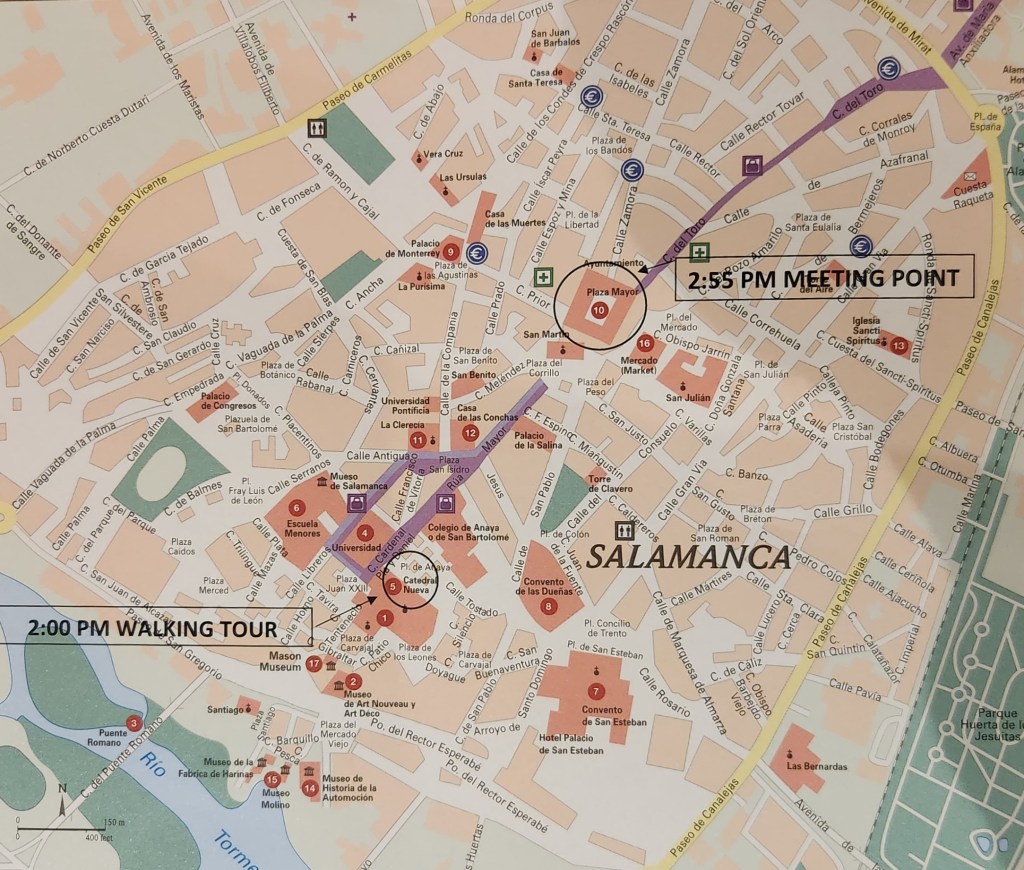
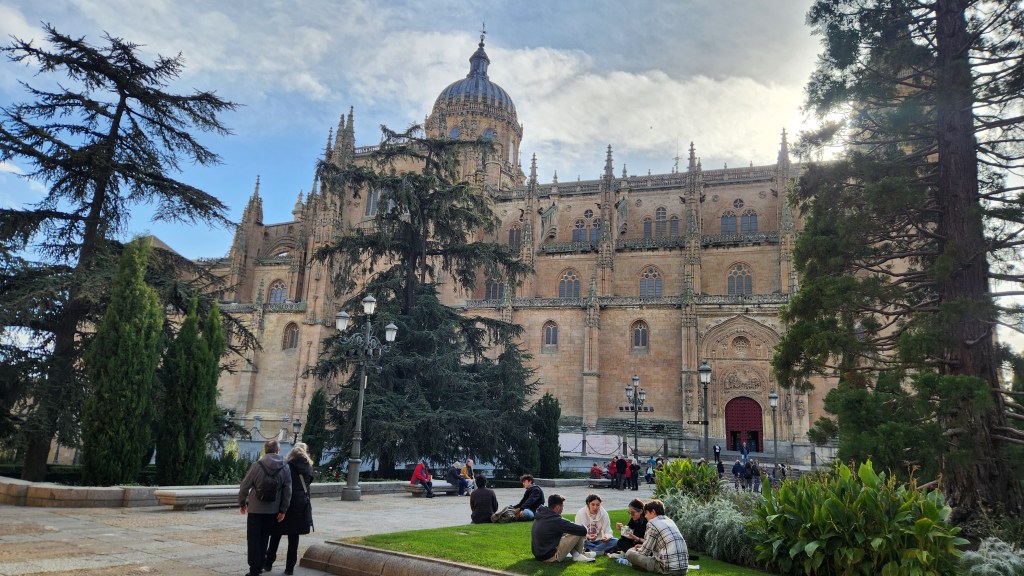
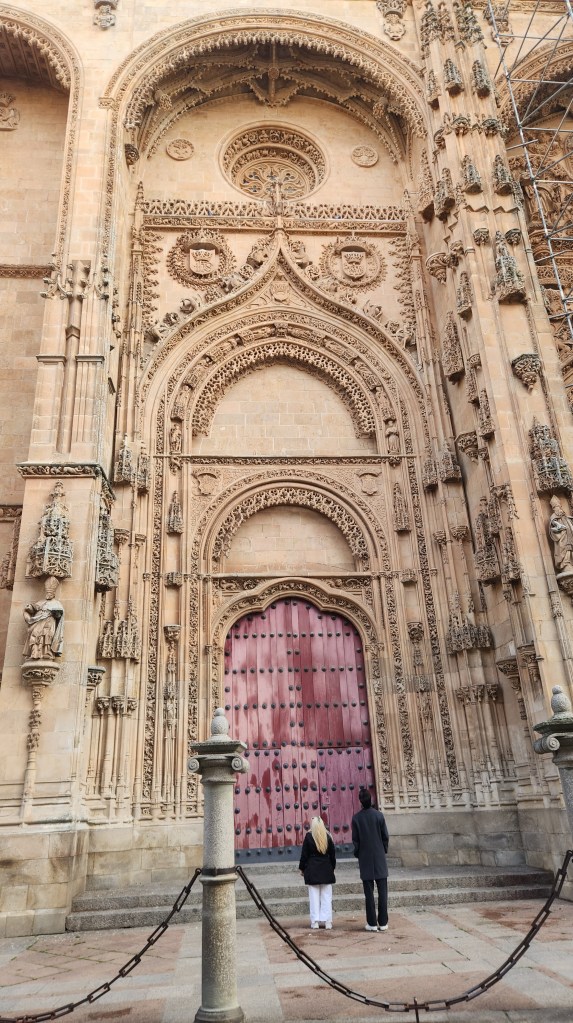
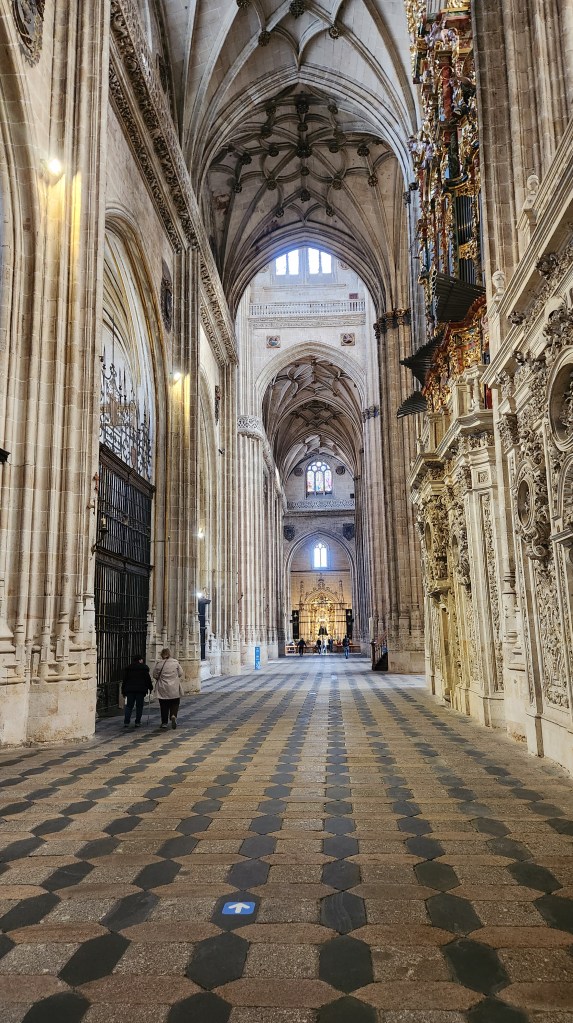
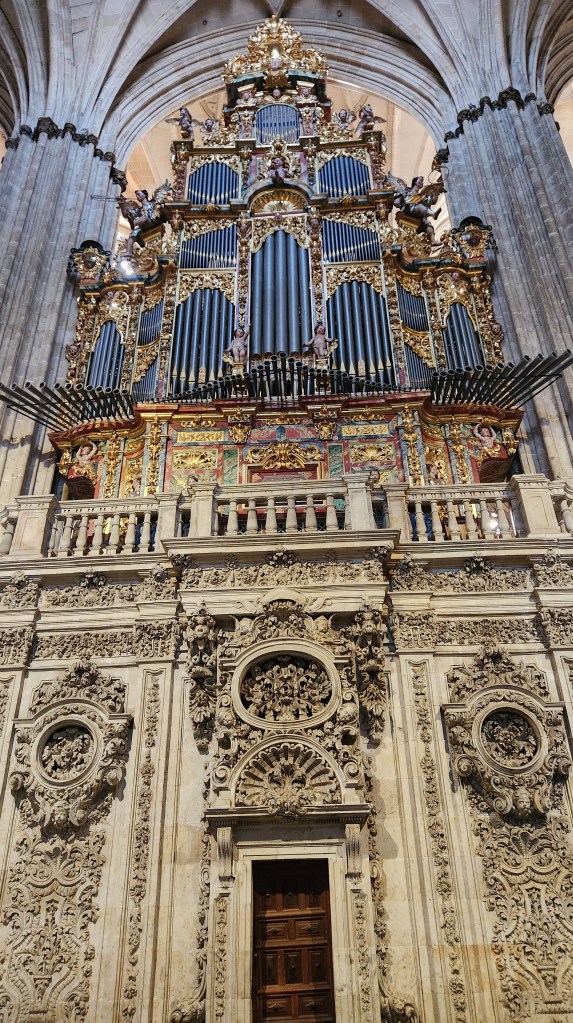
After strolling to the Plaza Mayor with our Viking guide, we had some free time to explore the area before joining a local guide at the entrance to the New Cathedral. This was far and away the biggest and most magnificent church we saw on the entire trip, rivaling anything I’ve seen anywhere in Europe. Maybe the photos below will give you a feel for it, but the scale was so grand that I couldn’t really capture the essence of it with my puny little cell phone.
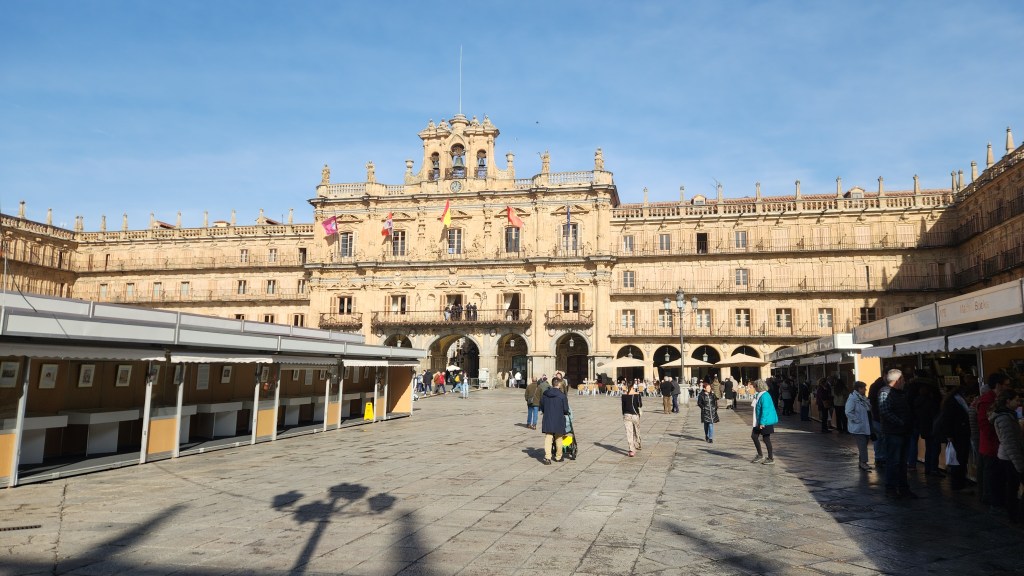
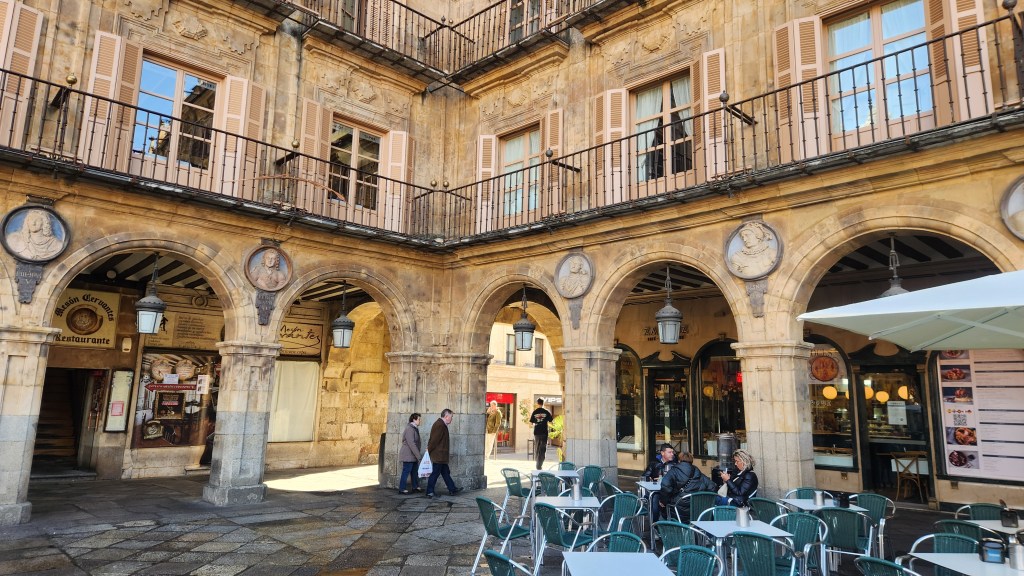
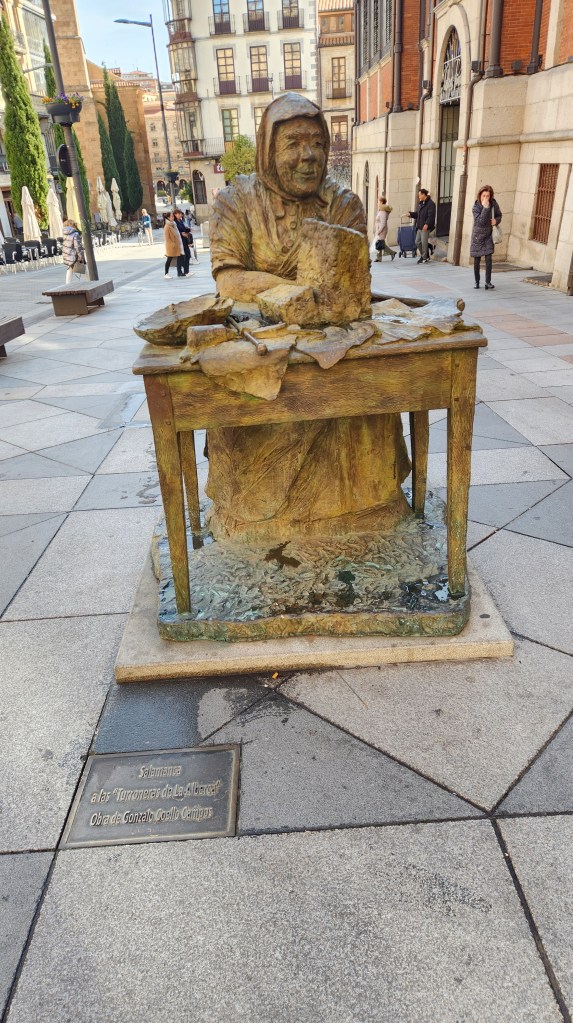
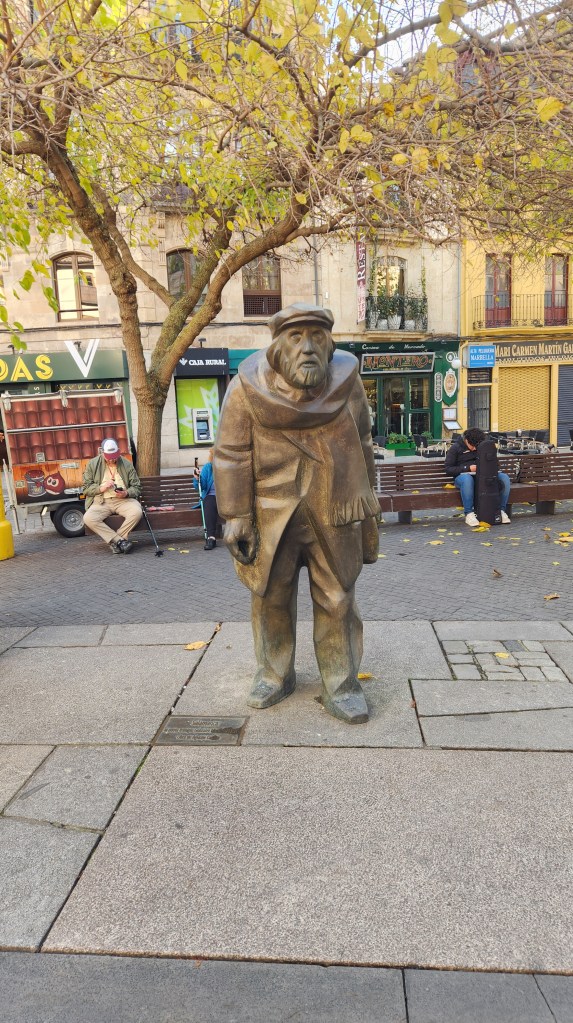
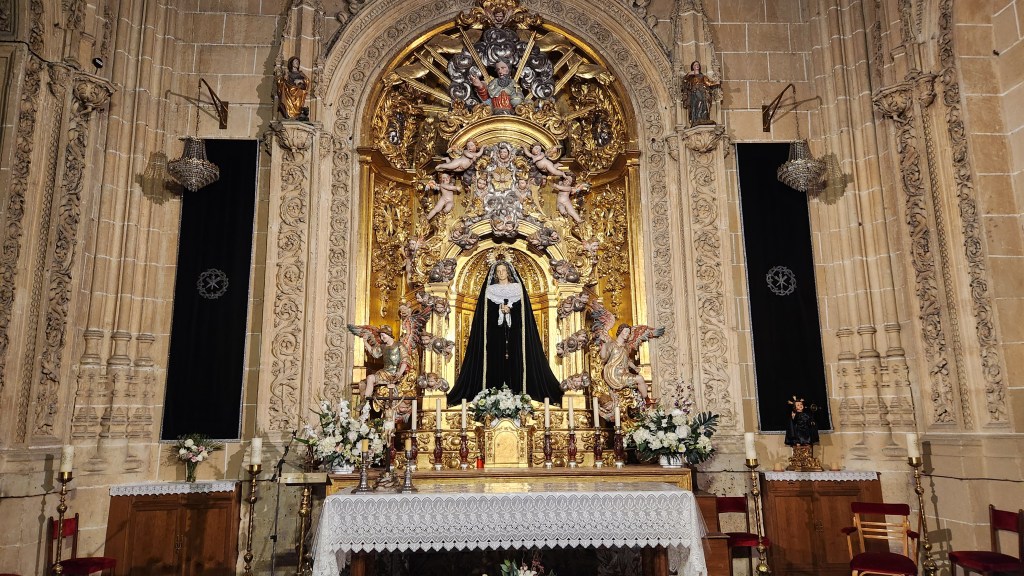
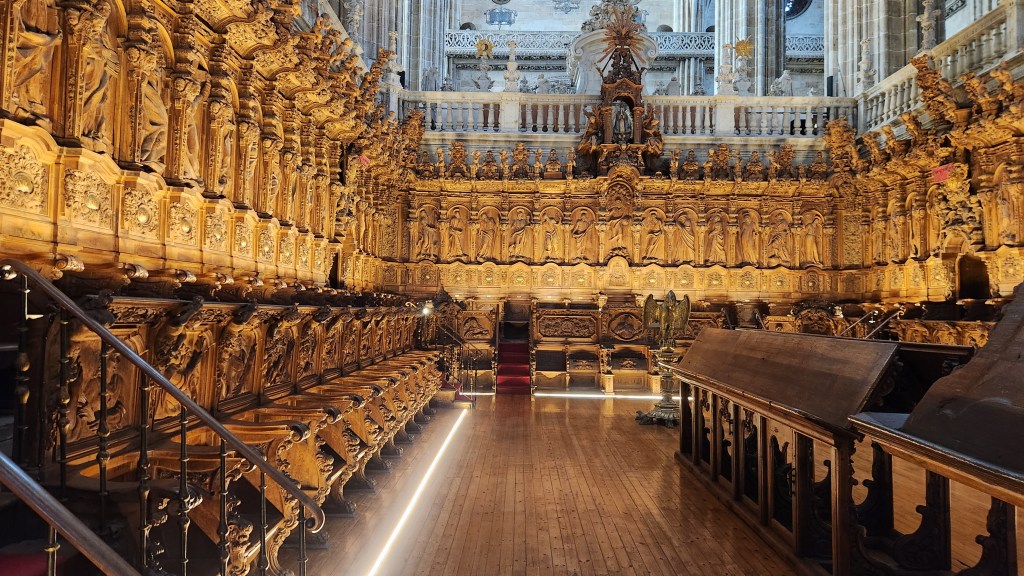
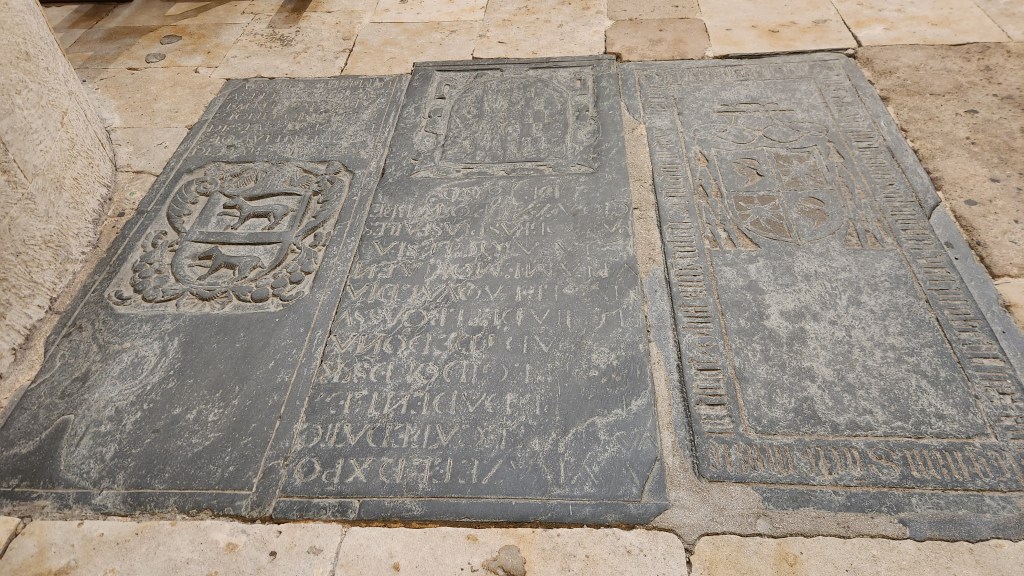
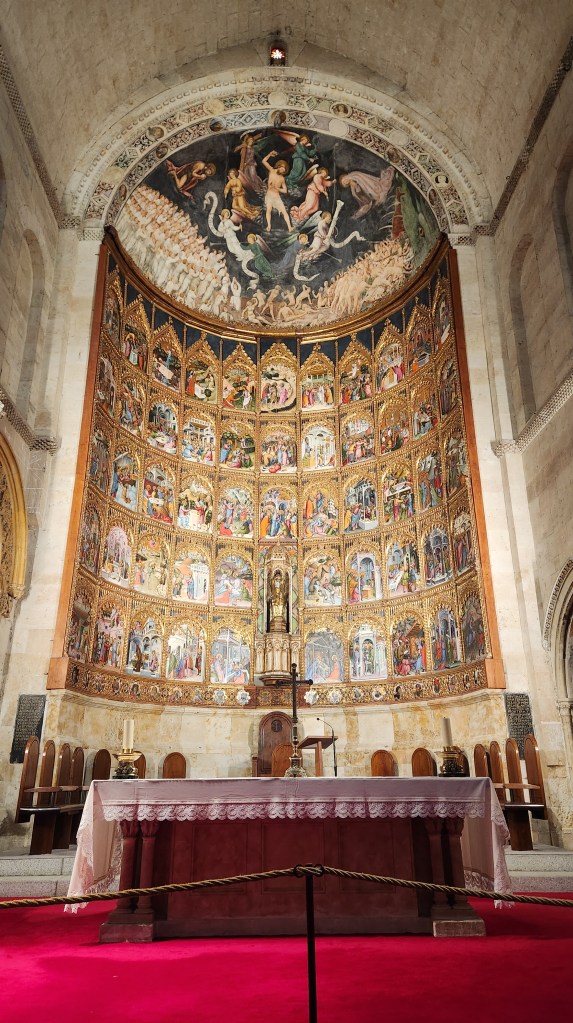
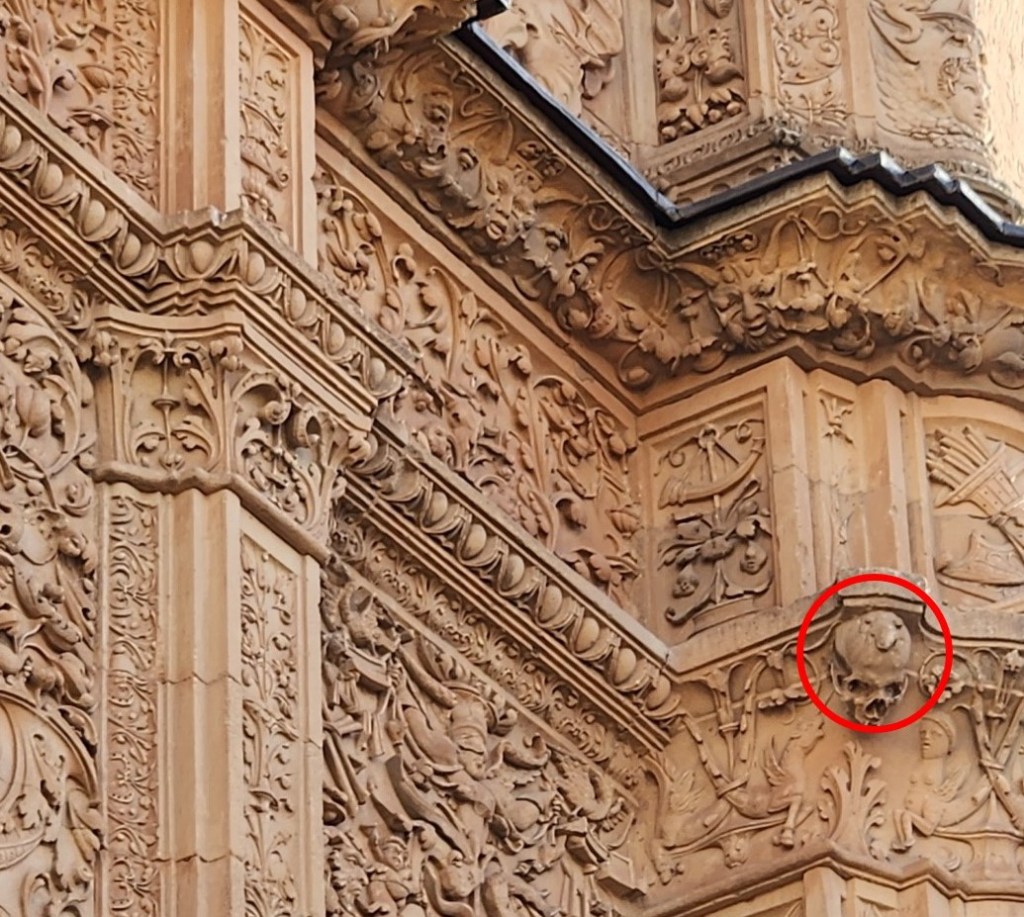
After the Cathedral, we strolled with our guide among the University buildings where our guide told us some interesting stories about the history of the place. Many of the building walls sported names and dates inscribed with bull blood; these were written by doctoral students to celebrate and commemorate the day when they survived a days-long period of isolation and intense study followed by severe questioning by the professors to earn a degree. (And I thought my Ph.D. orals were tough!) The University Chapel has exceedingly ornate carvings around the entry door, including a skull on top of which a frog is perched. Many of the carved images, including the frog, were intended as a warning to the students that misbehavior of any sort while attending the University was forbidden (I didn’t quite “get” the frog connection myself). This frog became world famous, and souvenir frogs of all sizes and colors are sold at gift shops throughout the city and in the wider region around Salamanca.
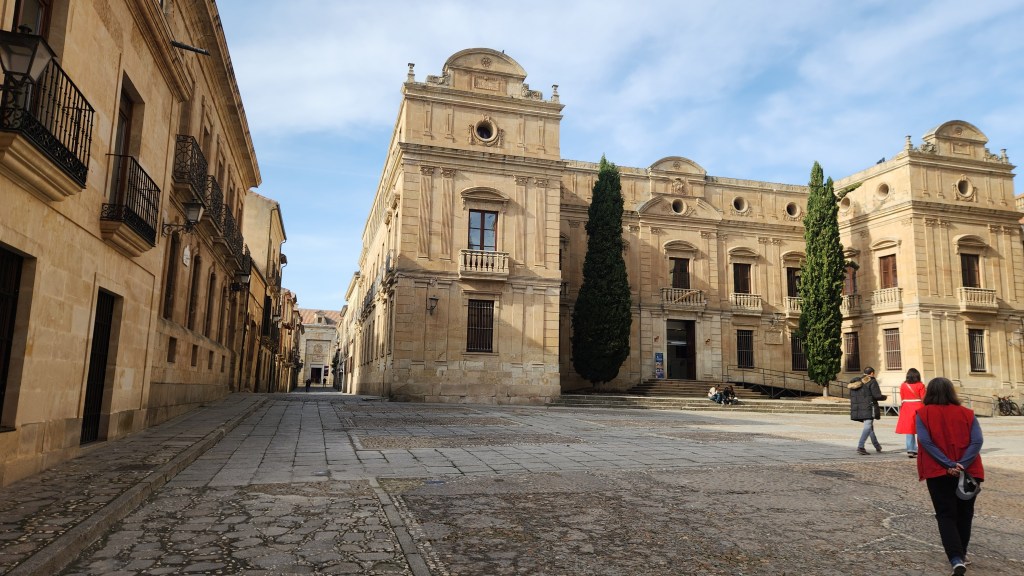
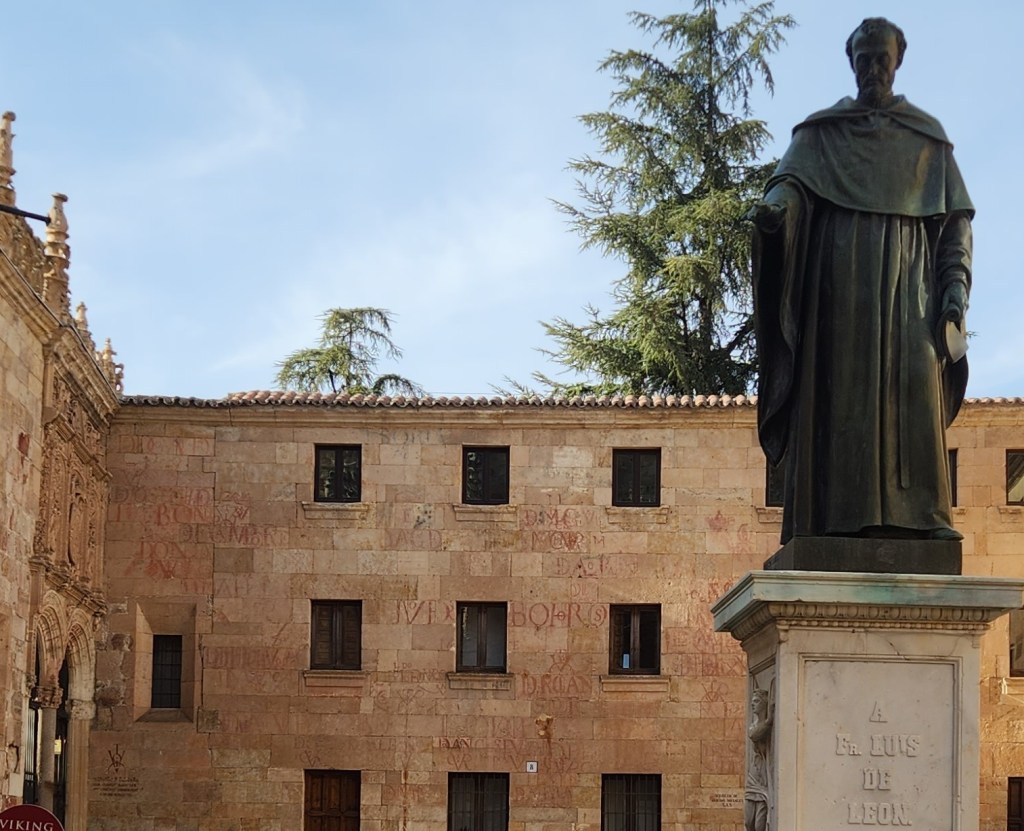
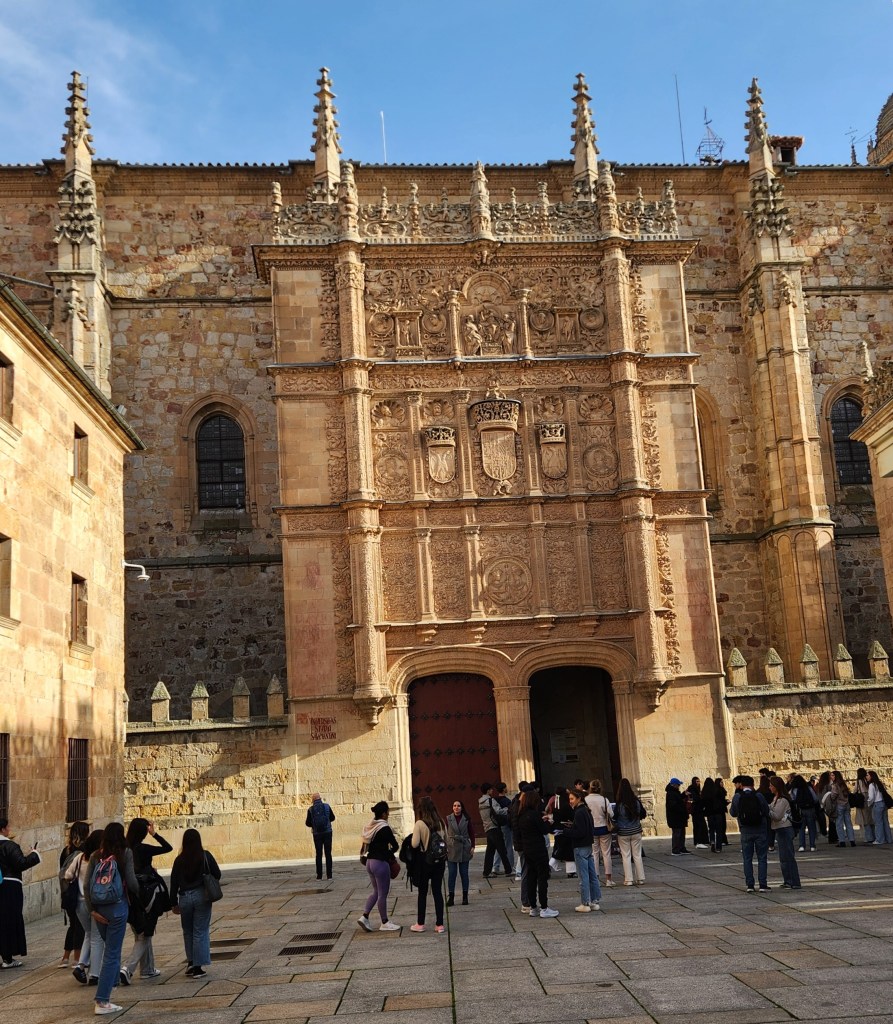
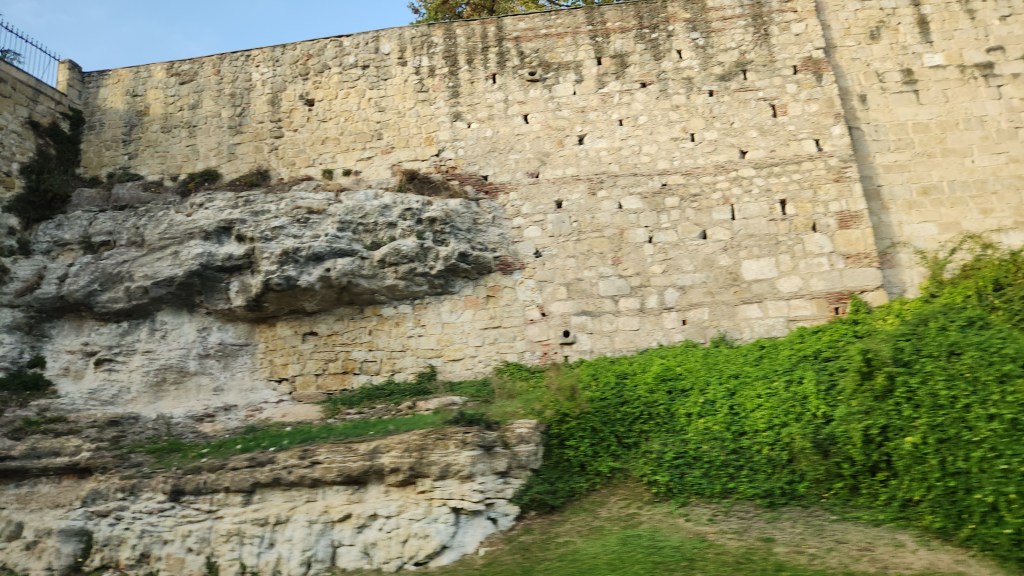
We then followed our guide along Rua Mayor back to the Plaza Mayor before boarding the bus back to the ship, catching a glimpse of the crumbling old walls as we drove past.
OK, that’s it for Part 3. In the final episode, I’ll describe the last four shore excursions we took during the river cruise and our travels (and travails) getting back home to Minneapolis.
 Dave Saari