The Saaris’ Summer Sanctuary – PART 2

This is the second and final part of a travel blog installment describing some of the places we visited during the summer season of 2025. Part 1 covered some interesting sites near our cabin on Lake Superior’s North Shore (the titular Summer Sanctuary) as well as several places along the shore that we visited during June of 2025. In this post, I’ll describe some additional places along the shore and in our great neighbor nation to the north over the course of the summer season (my generous definition of summer extends into the first week of October).

Near the Summer Sanctuary: I forgot to add this tidbit to Part 1. On August 25th, for the first time ever in my life, I encountered a pelican swimming in Lake Superior just off the mouth of Durfee Creek near the cabin. It was very calm as I approached, gently paddling out into the lake until it was out of view.

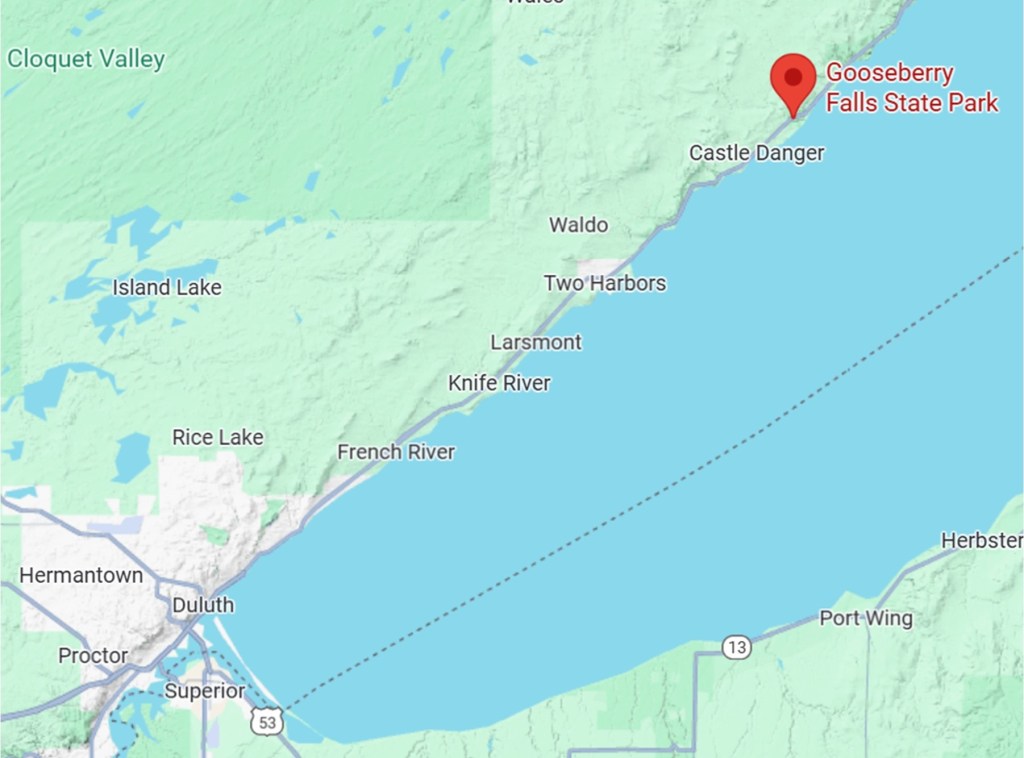
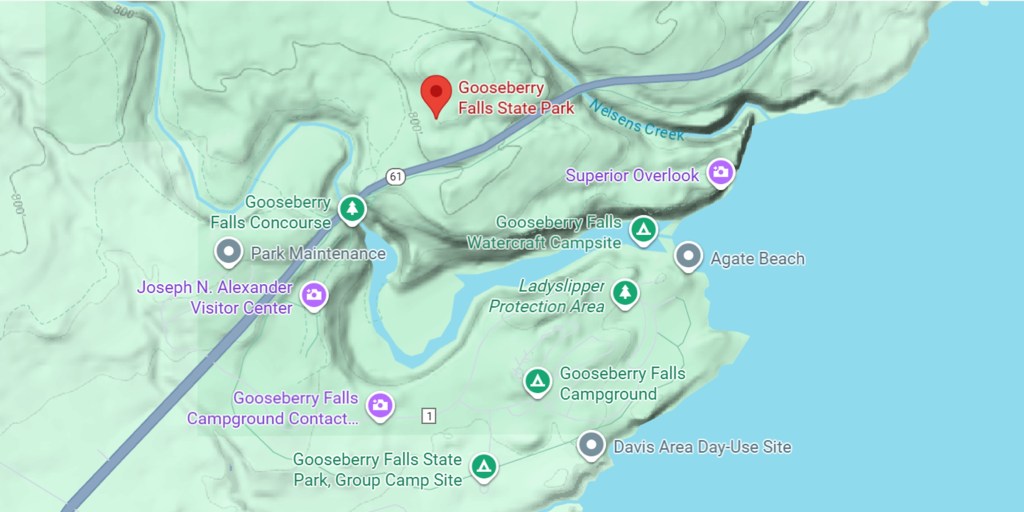
Gooseberry Falls State Park: Gooseberry, located 40 miles northeast of Duluth, MN, on Highway 61, is the most-visited of the eight state parks along the North Shore.

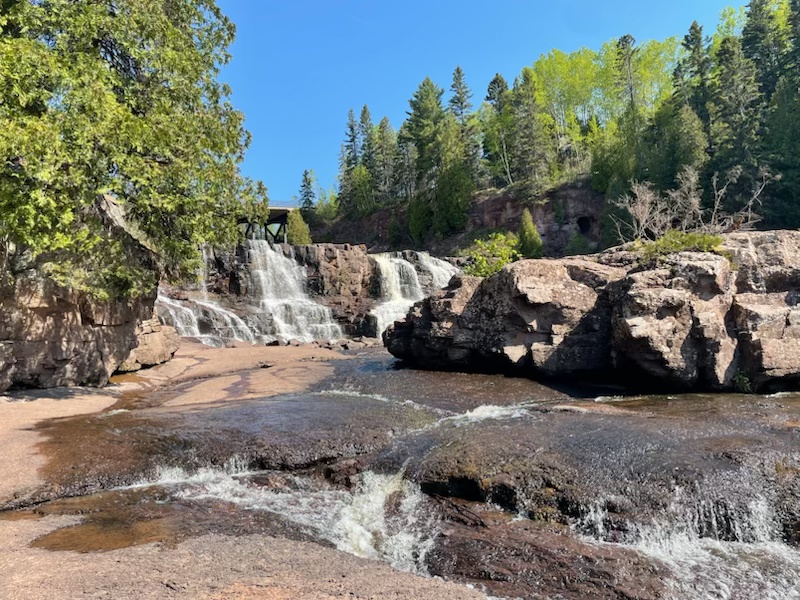
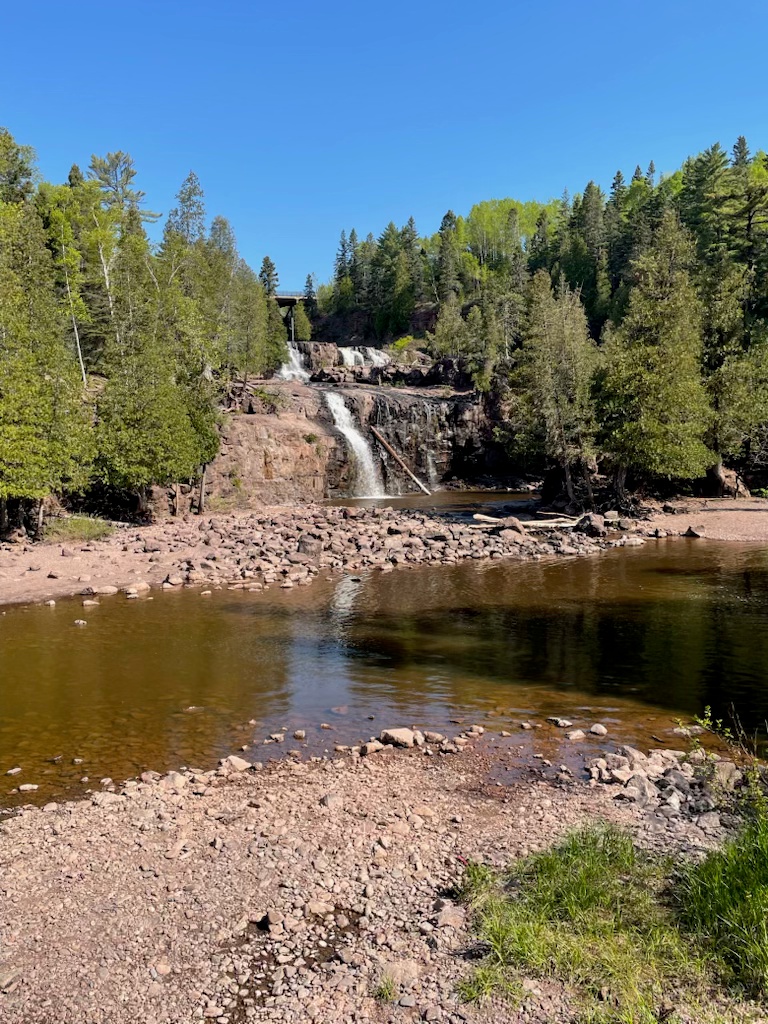
We stop there at least once every year on the way to or from the Summer Sanctuary. There is free access to the visitor center and the multiple trails on both sides of the Gooseberry River. There are two free EV chargers located in the parking lot, and for the first time in my experience when I stopped by on September 18, both chargers were being used. A sign of progress? Pat took these photos and video when she visited the falls on May 31 – they illustrate exactly why visitors love to stop there to hike the various trails and admire the scenery.

Probably the Most Popular View of the Lower Falls
View from Downstream of the Falls
The Upper Falls

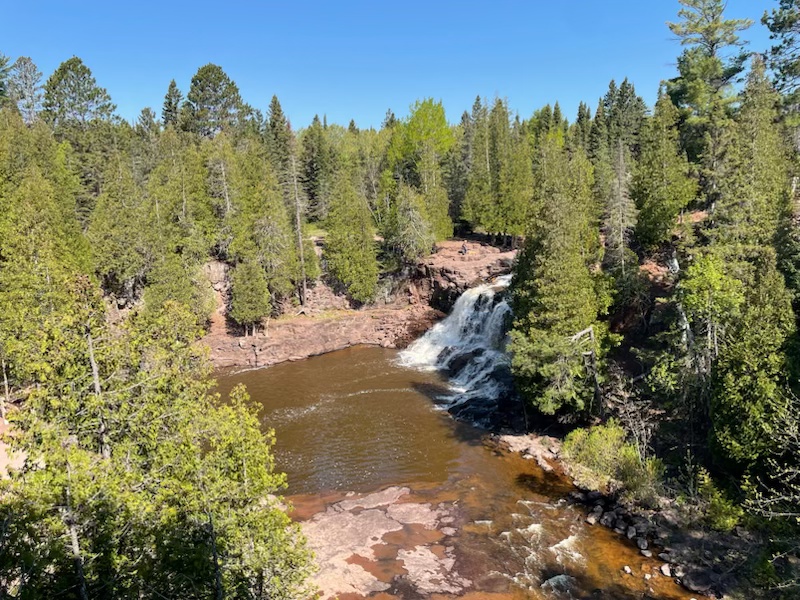
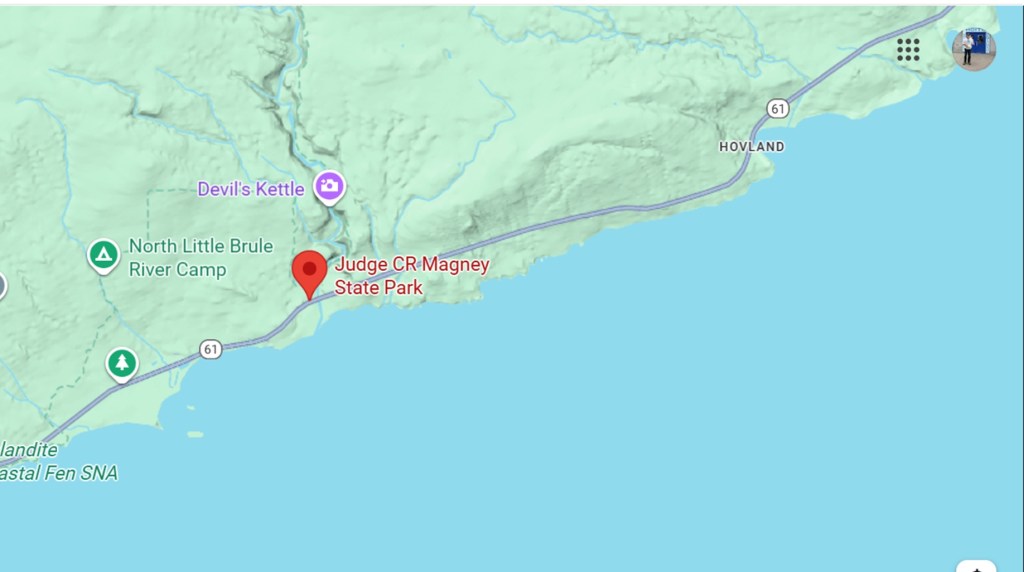
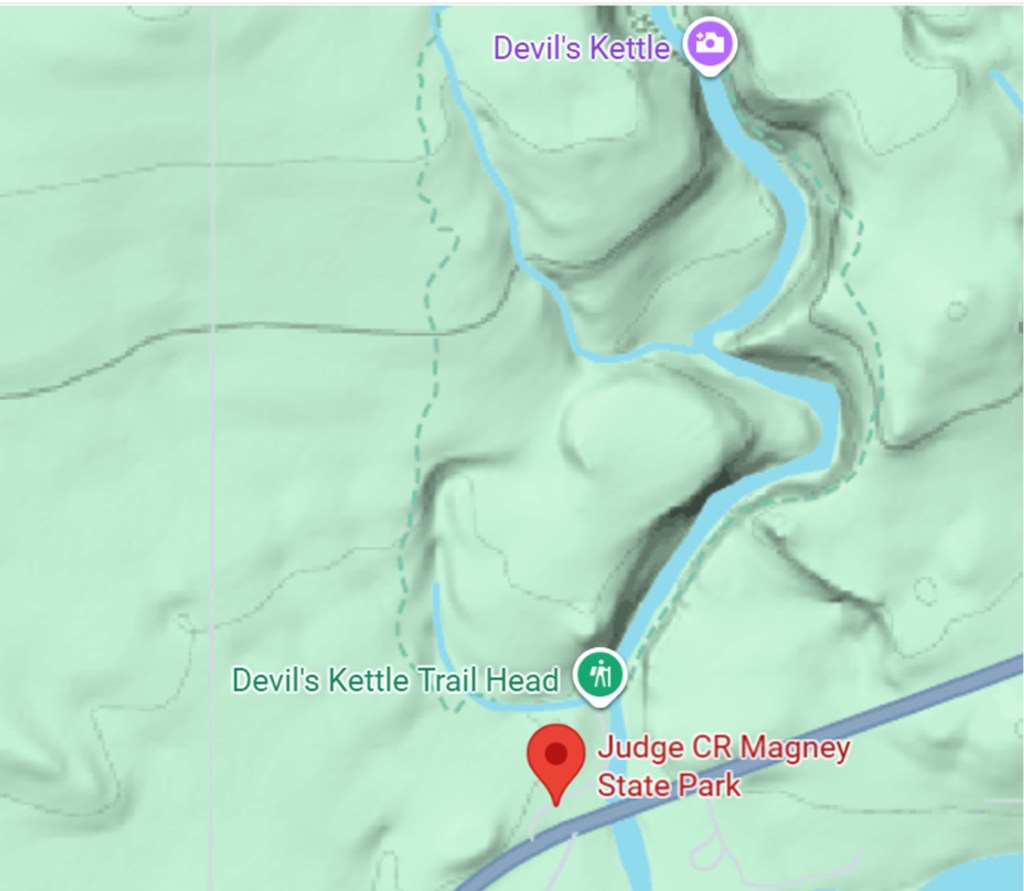
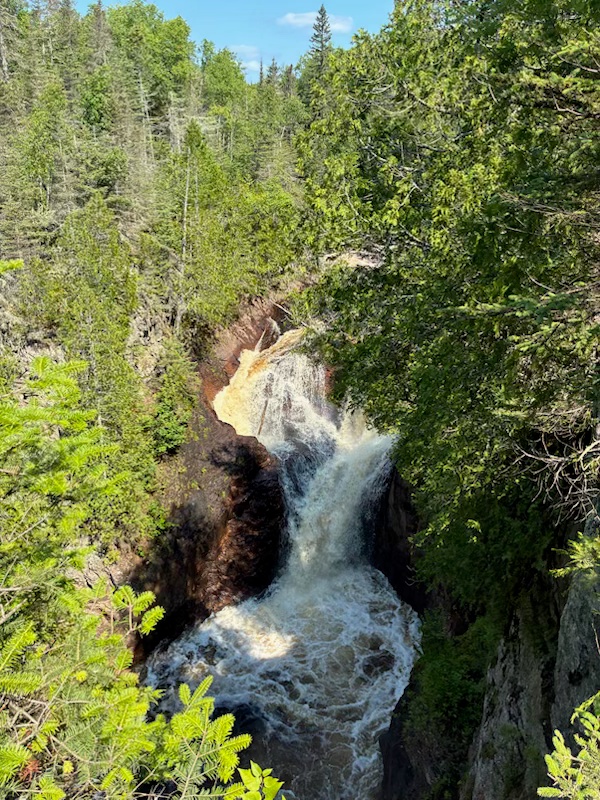
Devil’s Kettle: This interesting natural phenomenon is located on the Brule River within the Judge C.R. Magney State Park, located on Highway 61 four miles southwest of Hovland, MN.

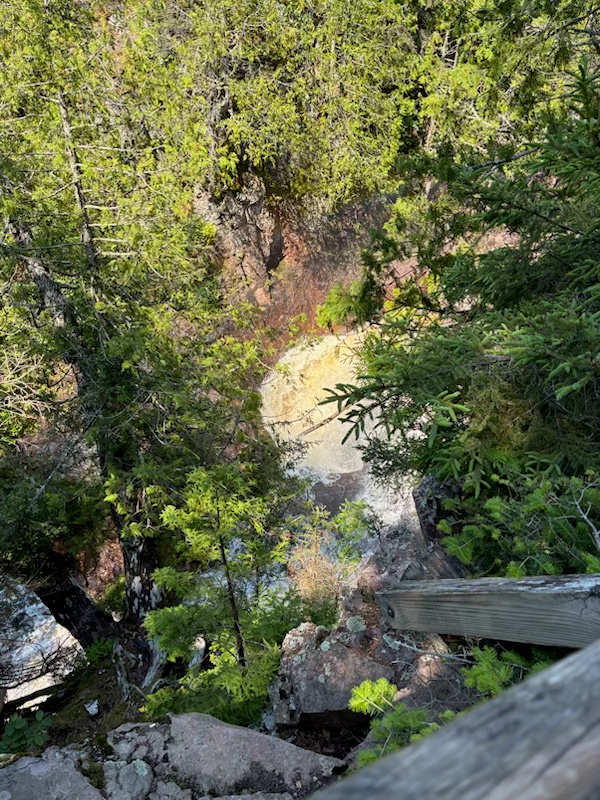
The Devil’s Kettle is a place where roughly half of the river disappears into a hole in the rocks while the rest of it flows on to a beautiful waterfall. I’ve read various stories about people trying, unsuccessfully, to find the outlet for the missing half of the river by putting various substances in the water. Wherever it may go, it’s a fascinating sight to see, after a hike of roughly a mile from the trailhead. Pat took these photos there on July 6th.

The Devil’s Kettle viewed from Above
The Devil’s Kettle and Brule River Waterfall

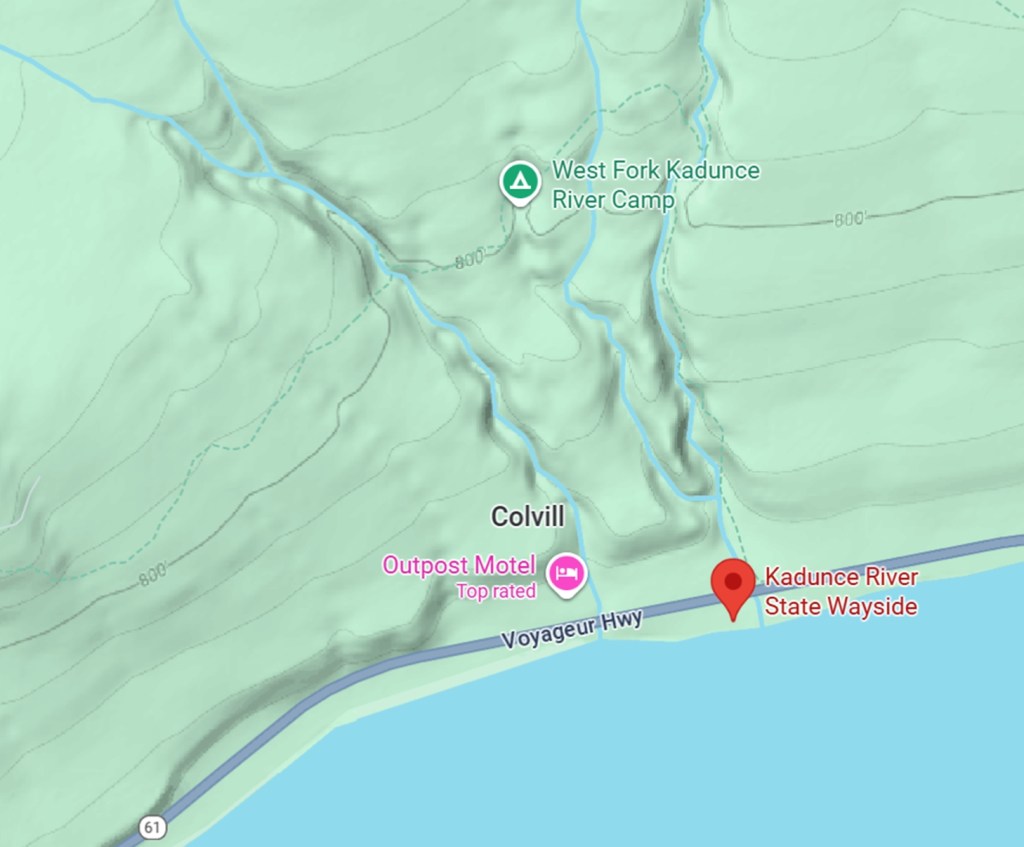
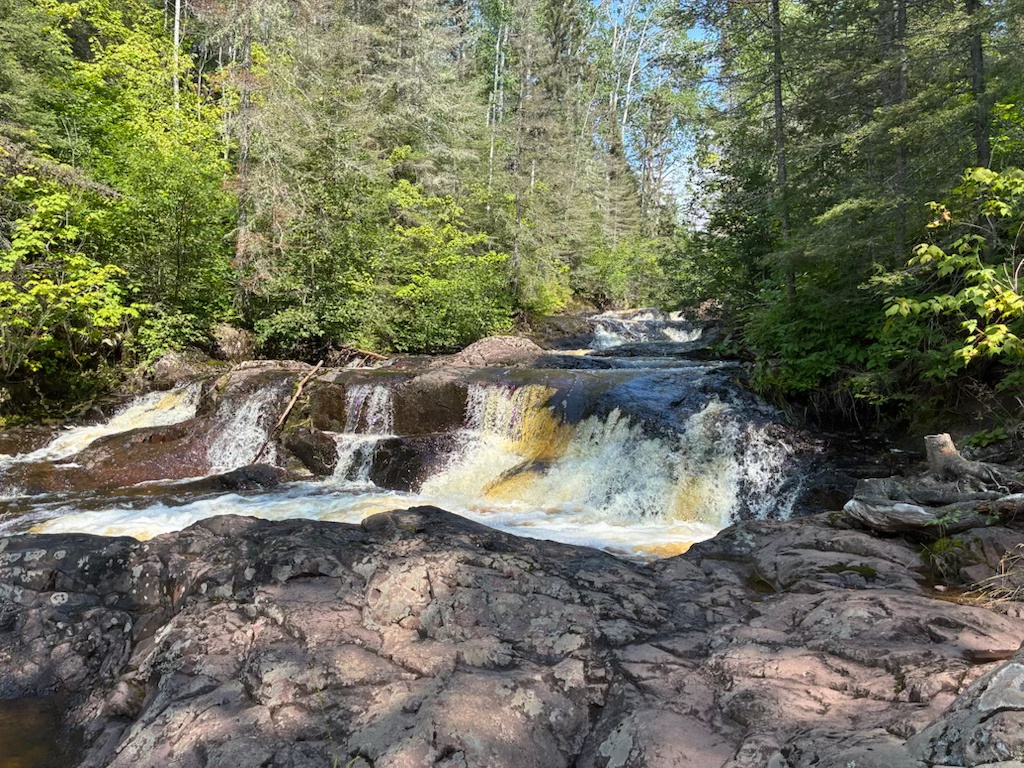
Kadunce River: The Kadunce River State Wayside is located just past Colvill, MN, on Highway 61.

From there, a 0.9-mile spur trail follows alongside the river to a bridge that is part of the Superior Hiking Trail. We have walked along that trail dozens of times over the years. It begins at essentially the same elevation as the river, but then climbs steadily until the river can only be seen in glimpses flowing far below the trail through the adjacent canyon. At the upstream end of a series of some seven or eight waterfalls, however, the trail is again essentially at the same elevation as the river. The walk is quite enjoyable, passing through scenic woods, listening to the birds, glimpsing the river periodically, and then emerging next to a beautiful waterfall at what we call “decision point.” (If you want to hear the backstory for that, I’ll be happy to regale you in person with an epic tale, or you could read the book Snowman, whose climactic scene was inspired by the very tale I’m talking about.) At any rate, Pat took the photo and video below on August 11th.

“Decision Point” on the Kadunce River
One of Many Waterfalls on the Kadunce River

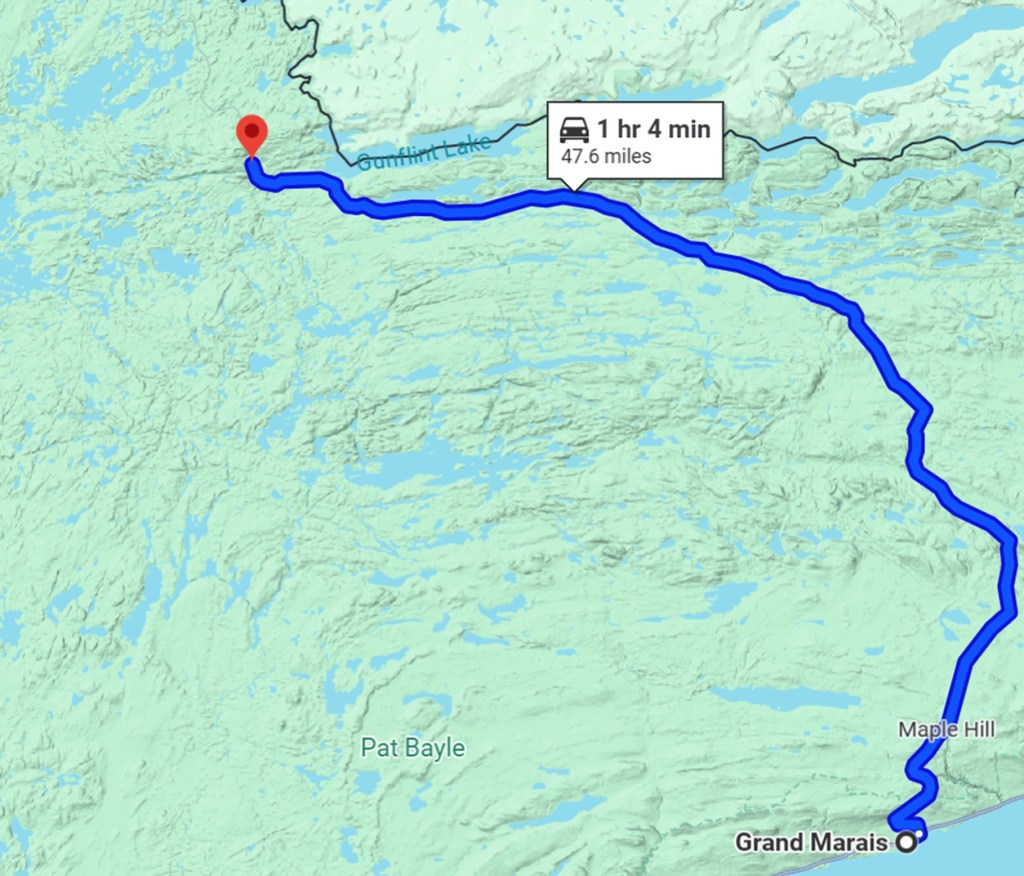
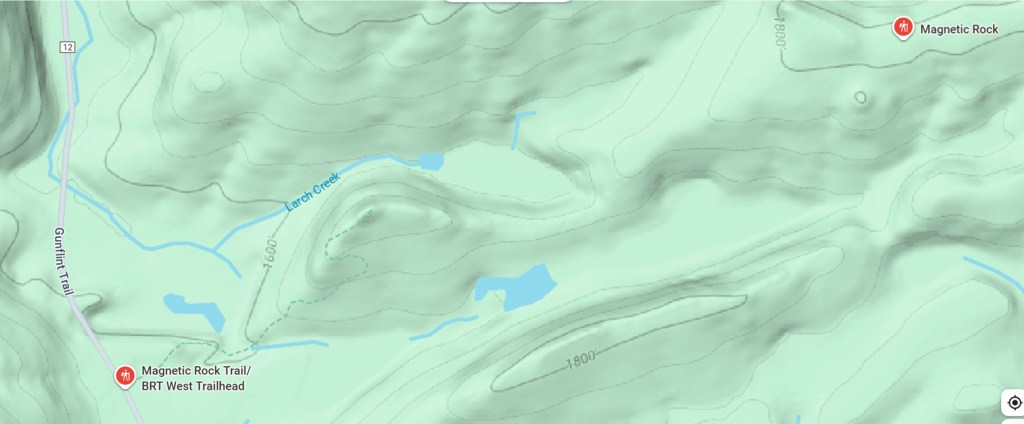
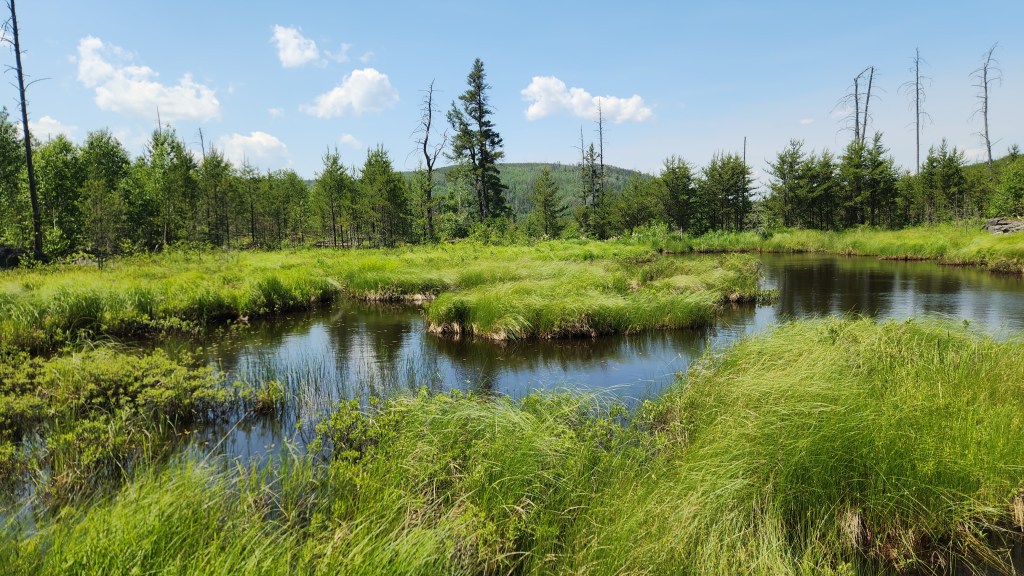
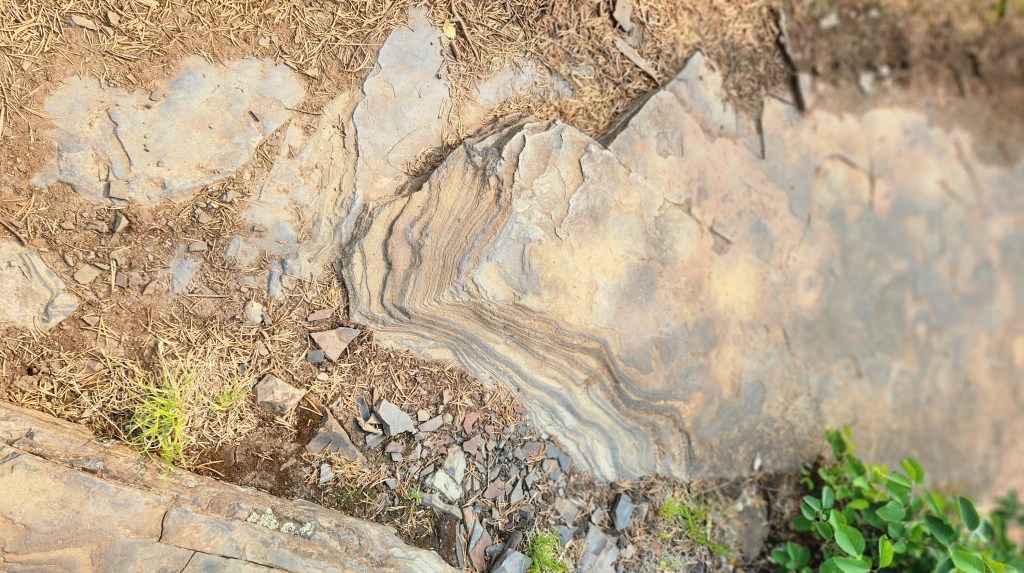
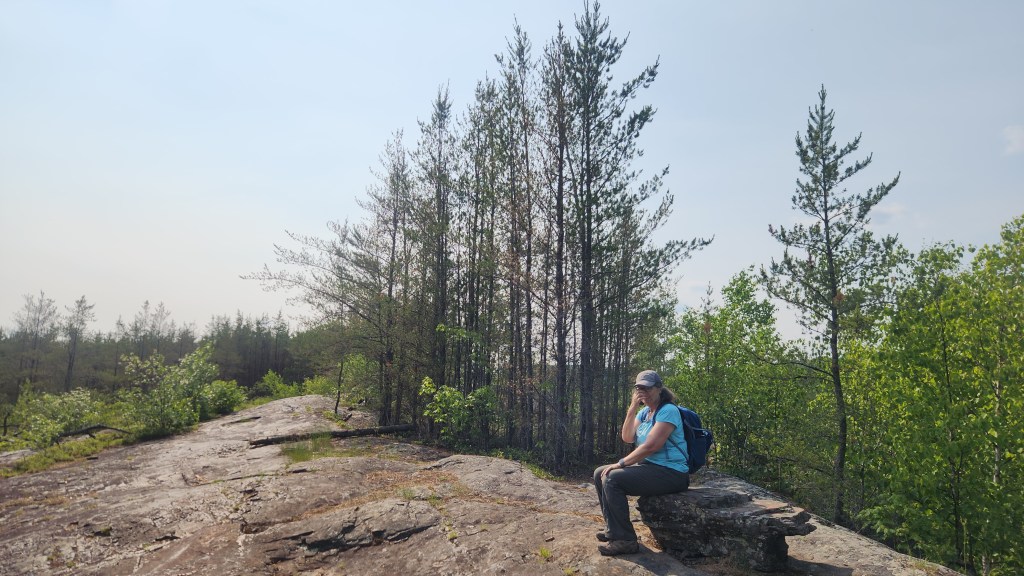
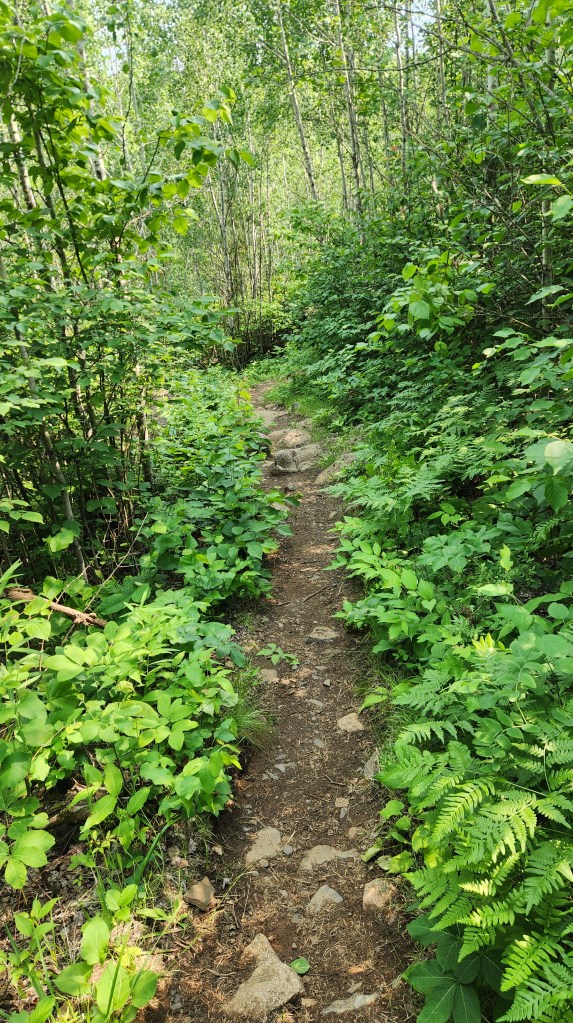
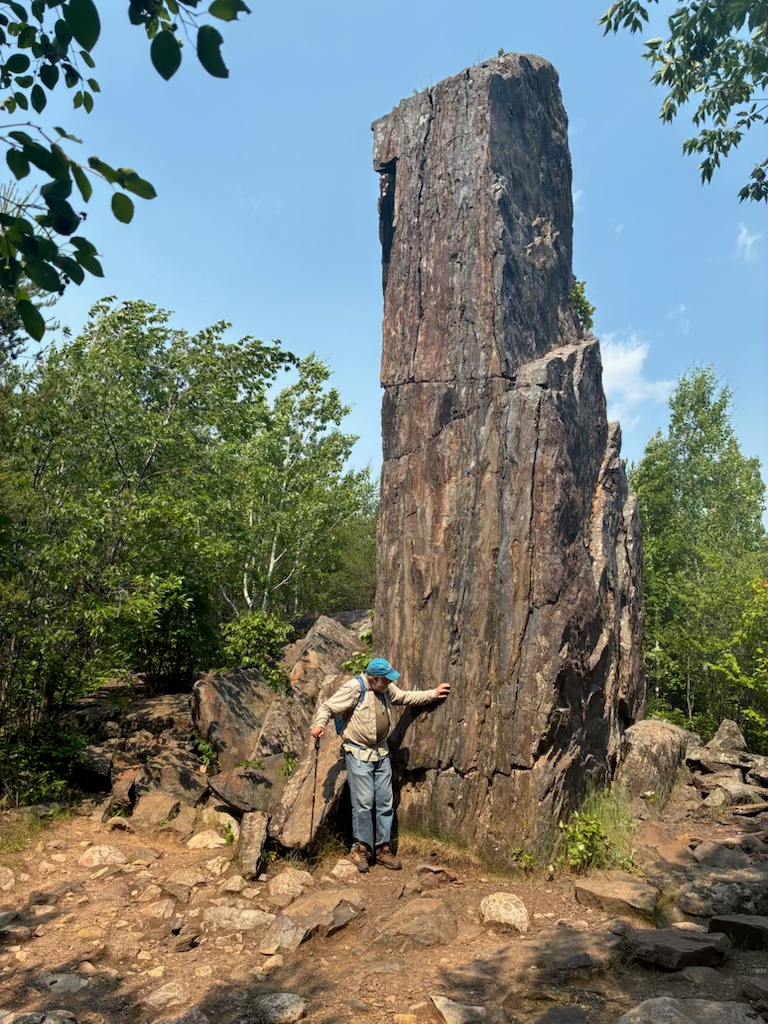
Magnetic Rock: The Magnetic Rock Trailhead is located 47.6 miles from Grand Marais, MN, on the Gunflint Trail. From there, a 3-mile trail passes through a diverse landscape – over bare and/or lichen covered rocks, through open meadows, through thickly forested areas – to a monolithic rock protruding from the earth.

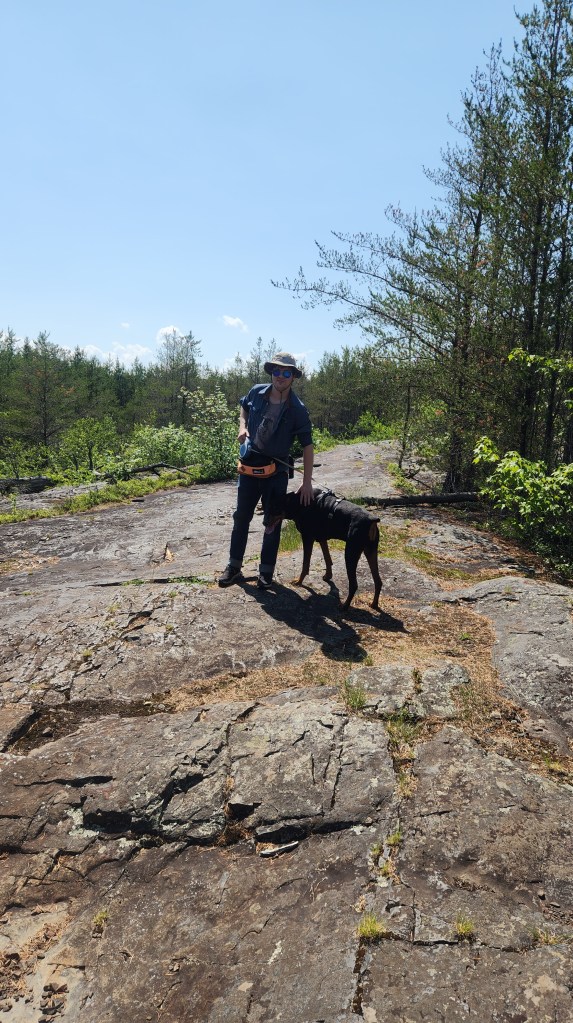
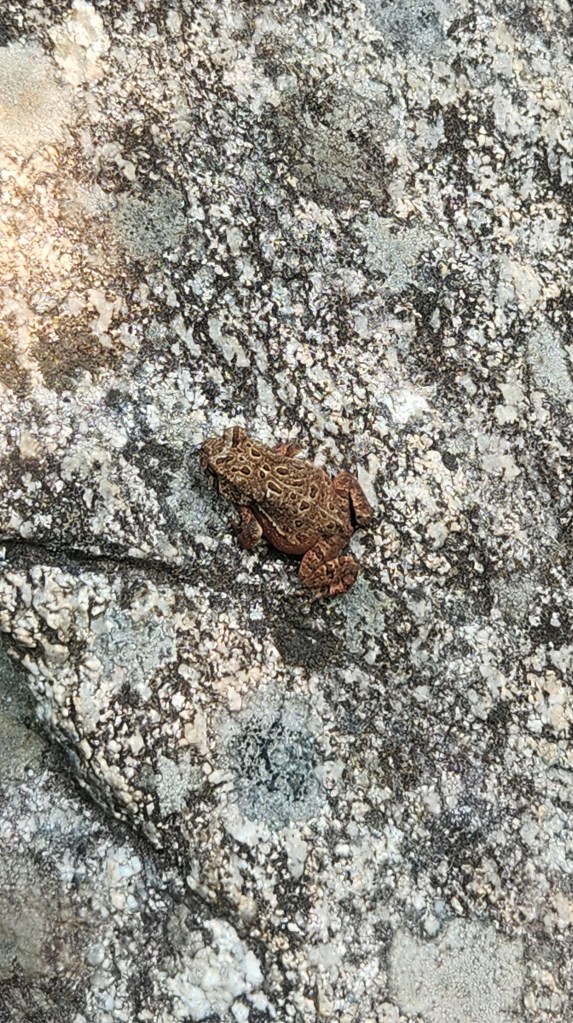
The rock contains so much iron that it can distort a compass needle to give a false indication of true north. We’ve probably walked this trail ten times or more over the past thirty-five years. The surrounding vegetation was severely damaged by fire in 2007, and we saw it begin to regenerate very quickly over the subsequent years until it is now almost at its pre-fire condition. There are still charred remnants of trees visible in some areas, though they are not readily noticeable. If the timing and climatic conditions are right, you can find quite a few blueberries along the trail. This year we went there with son Brian and his dog, Pippin, on July 1st, and there were no berries. Pippin nearly got heat stroke, so Brian stopped about halfway along and helped his pet back to the trailhead, but Pat and I made it all the way to the rock and back in two and a half hours. Here are some photos.

View from Magnetic Rock Trail
Rocky Surface Near Start of Magnetic Rock Trail
Brian and Pippin on Magnetic Rock Trail
Natural Bench on Magnetic Rock Trail
A Friendly Denizen of the Magnetic Rock Trail
Forested Portion of Magnetic Rock Trail
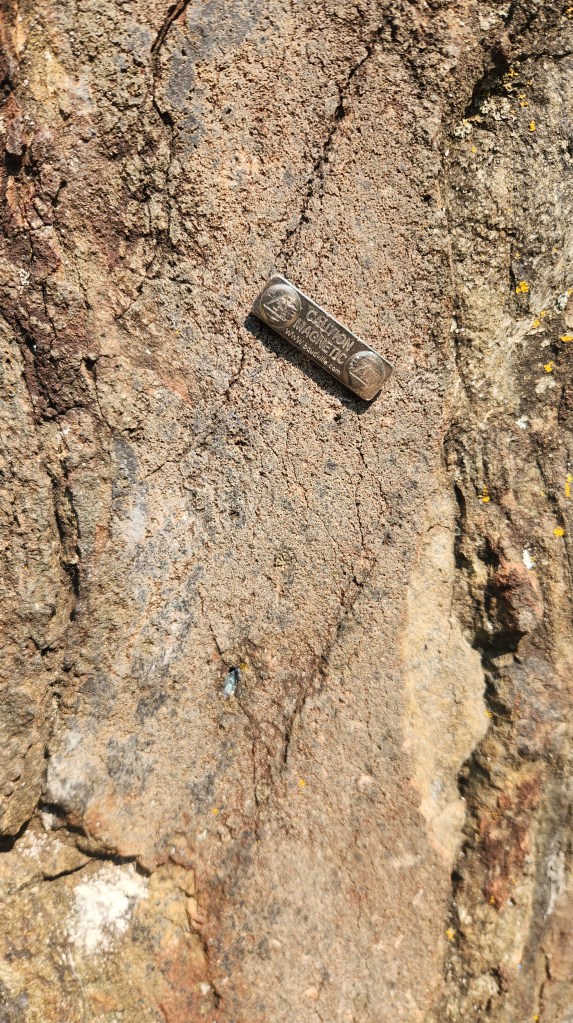
The Magnetic Rock (I’m examining the artifact pictured below)
Magnet Left Behind by a Previous Visitor

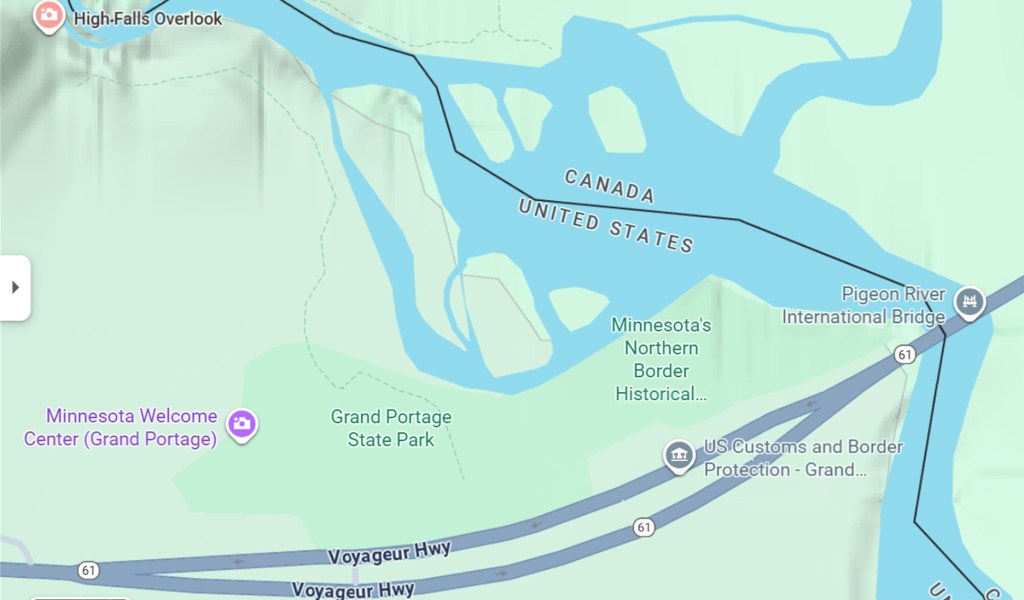
Pigeon River High Falls Overlook: The Grand Portage State Park, located on Highway 61 about a mile from the US-Canada border, is jointly operated by the State of Minnesota Department of Natural Resources and the Grand Portage Band of Lake Superior Chippewa.

It includes a very easy, paved walking path from the Visitor Center to the High Falls Overlook. The High Falls can also be reached from the Canadian side of the border, but the view isn’t as good from there. The State Park is only a 36-mile drive from the Summer Sanctuary, so we manage to visit once or more every year. This year, we visited on August 2nd.

High Falls on the Pigeon River
That’s a Lot of Water …
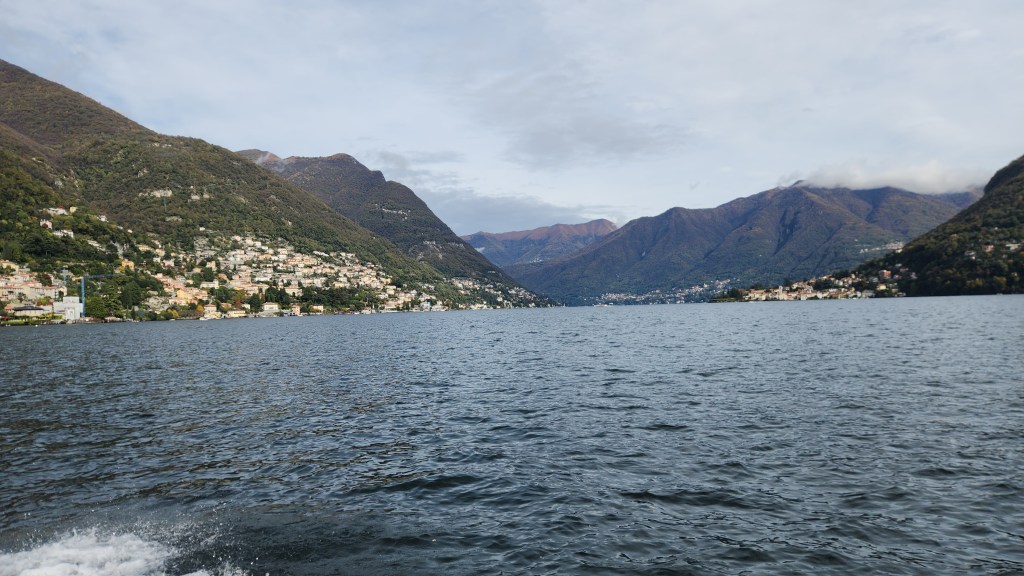
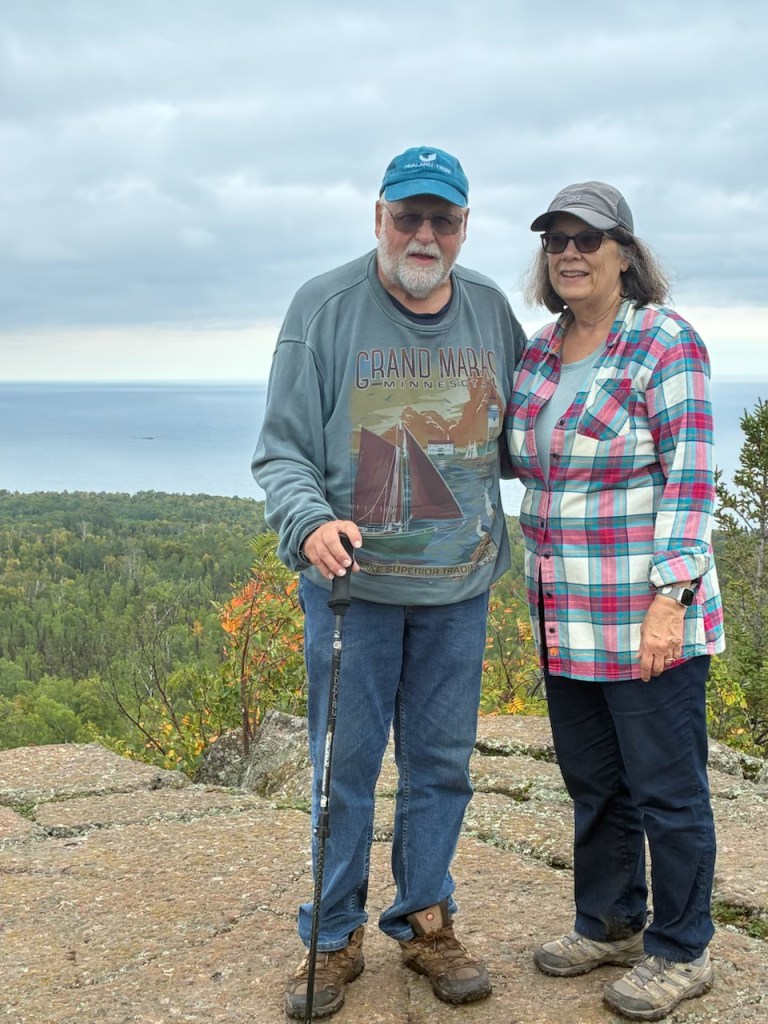
Pincushion Mountain: The Pincushion Mountain Overlook is accessible via a three-mile drive from Grand Marais up the Gunflint Trail. From the parking lot at the overlook, there are multiple trails that lead to Pincushion Mountain, which we have walked many times over the years. This year, we walked on the Superior Hiking Trail for 4.5 miles to the Pincushion Summit on September 20th. While there, a friendly hiker snapped our picture, with Five Mile Rock on Lake Superior barely visible in the background.

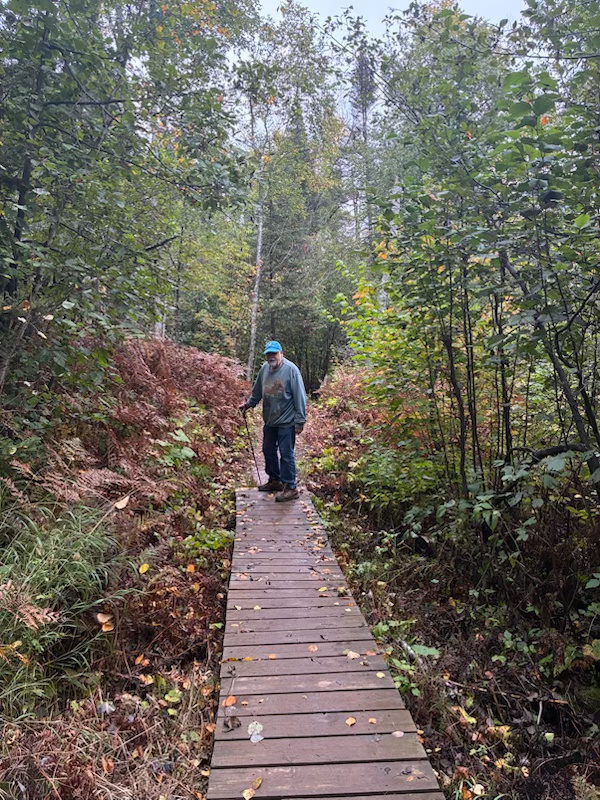
Heading Toward Pincushion Mountain on the Superior Hiking Trail
At the Summit of Pincushion Mountain

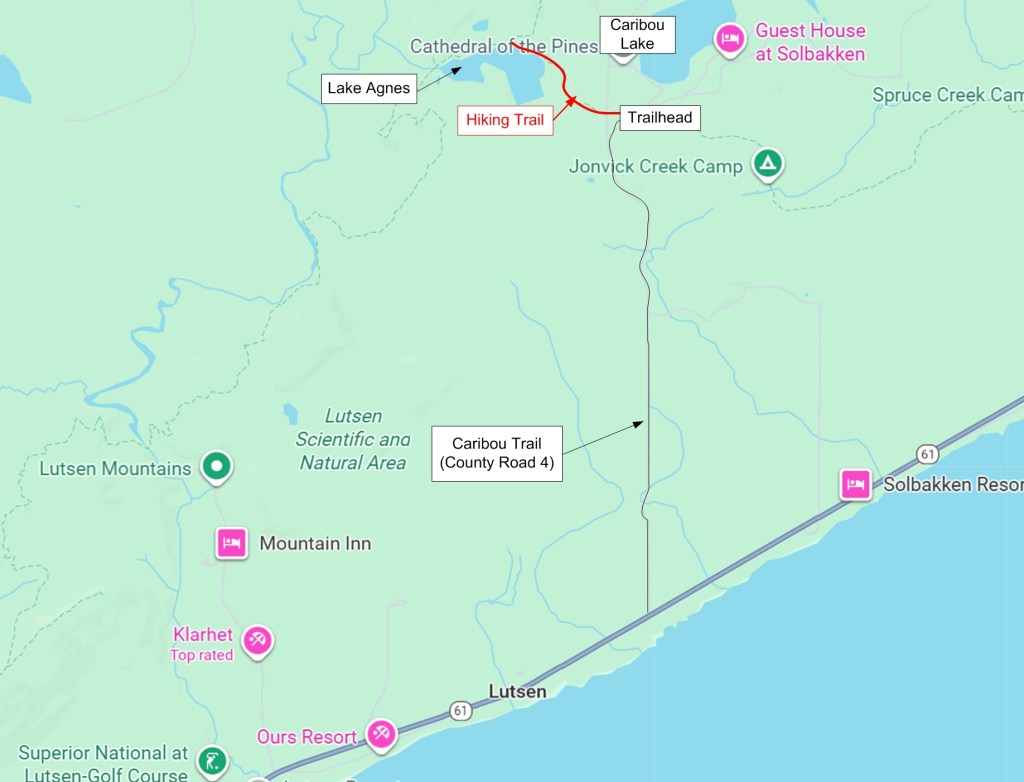
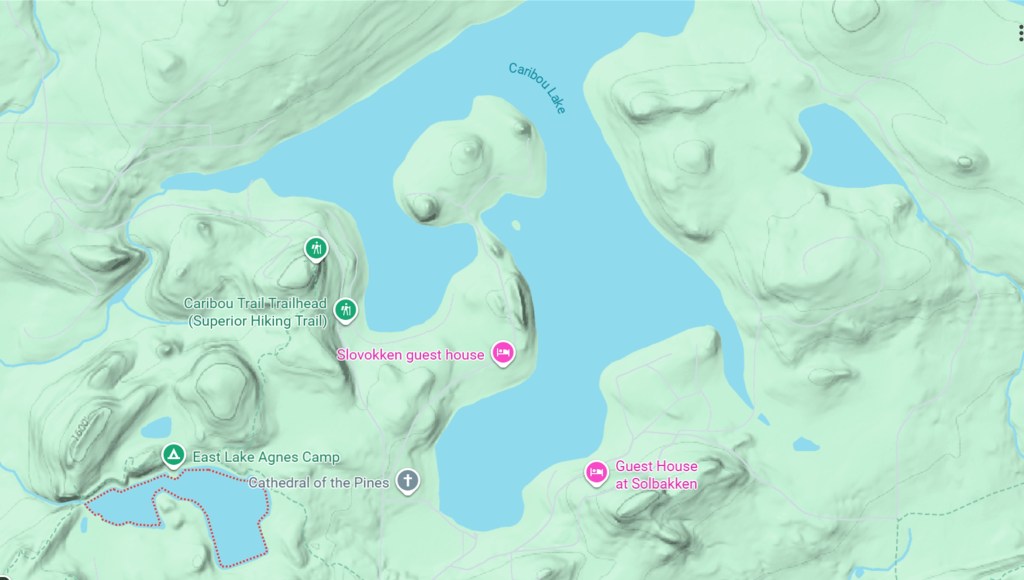
Lake Agnes and Lutsen Mountains:  This was our last hike of the season, on October 10th. After driving southeast on Highway 61 to the Caribou Trail near Lutsen, MN, then north about 3.2 miles to a trailhead for the Superior Hiking Trail, we embarked on a 2 ½ mile round trip hike to a campground on Lake Agnes.

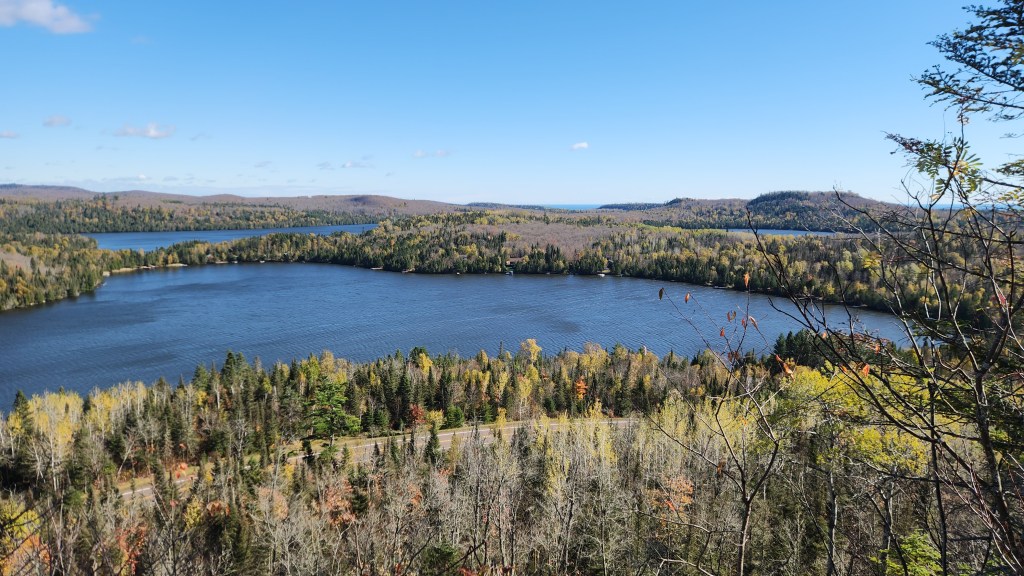
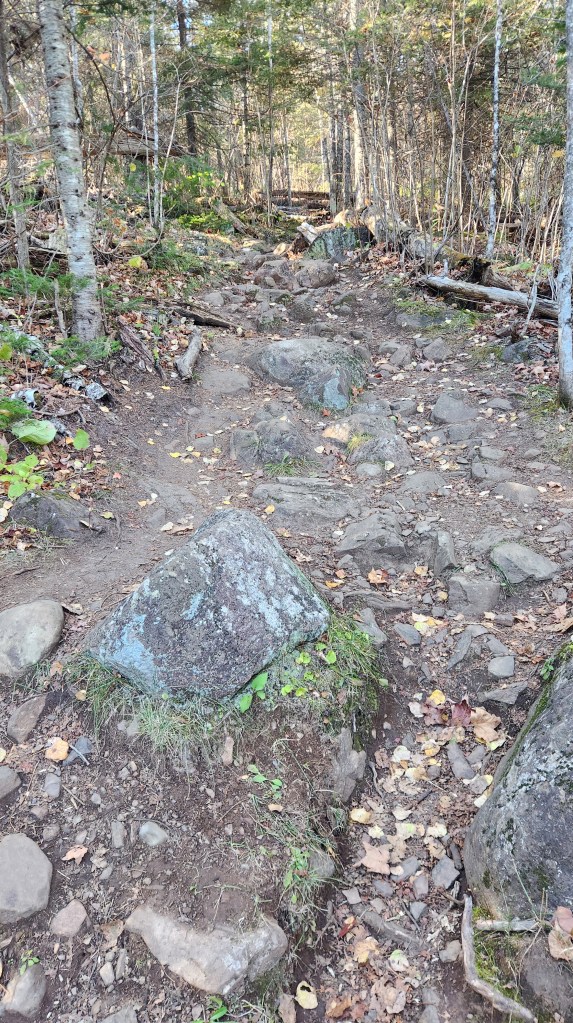
The hike started out with a steep, rocky climb to a short spur trail which led to what is known as White Sky Rock, an outcropping that provides a spectacular view of Caribou Lake.

Caribou Lake View from White Sky Rock

After taking in the view from White Sky, we returned to the Superior Hiking Trail and headed west to Lake Agnes. The trail was surprisingly diverse – sometimes rugged and rocky, sometimes easy; sometimes forested, sometimes surrounded by steep bluffs and rock outcroppings.

Superior Hiking Tral Heading Toward Lake Agnes

The trail hugged the northern shore of Lake Agnes as we headed to The East Lake Agnes Camp, where I had camped once (with son Brian, brother-in-law Andy, and nephews Chris and Dan) some fifteen years ago, at which point we turned around and headed back to our car parked at the Caribou Trail trailhead. I would rate this hike among the best we’ve ever had on the North Shore due to the diversity I mentioned above.

Panorama of Lake Agnes from Superior Hiking Trail
View from East Lake Agnes Camp
Almost Back to the Car …
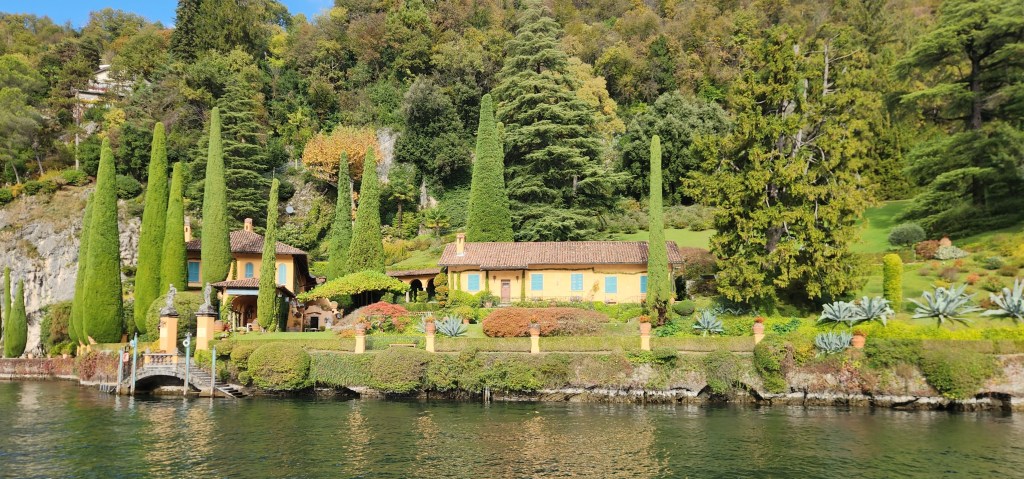
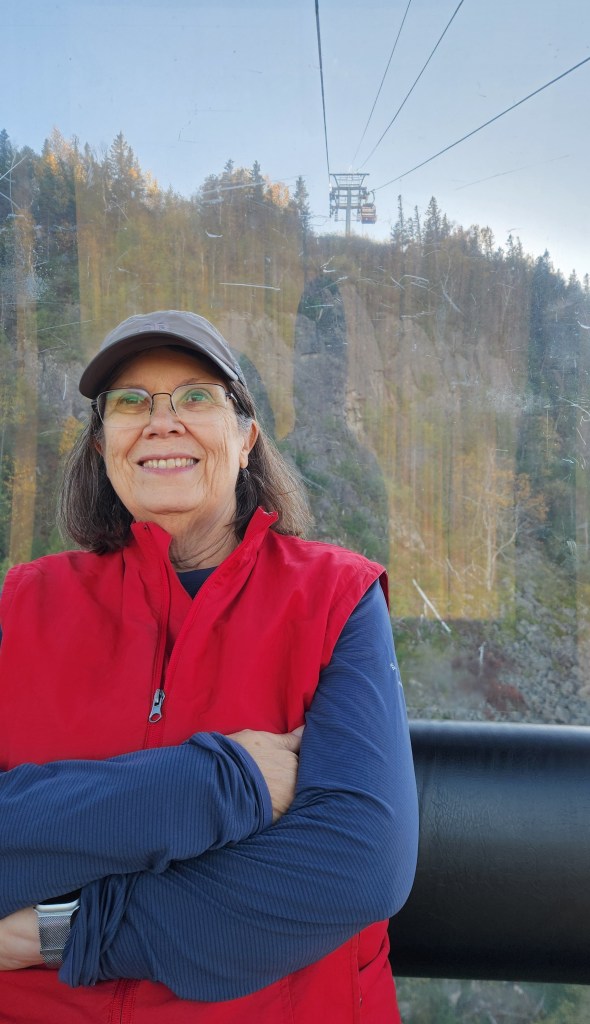
After the hike, we took a short drive to Lutsen Mountains to ride the gondola up to top of Moose Mountain, where we enjoyed the beautiful views.

Riding the Lutsen Mountains Gondola
View from Moose Mountain
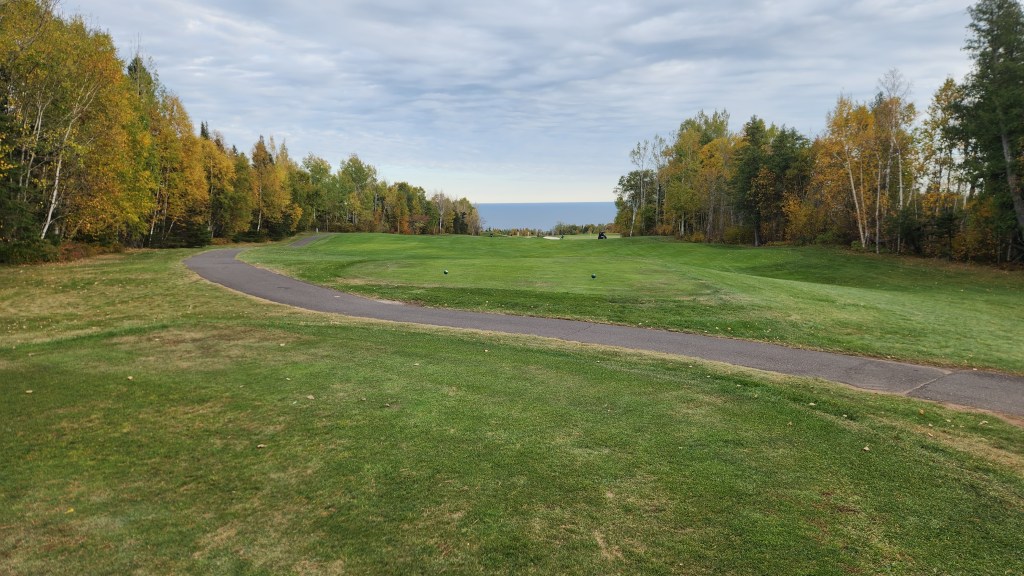
7th Hole at the Superior National Golf Course (in case any readers are golfers)

Canada:  We also made a few forays into Canada, as we usually do each year. (We like the fact that our Summer Sanctuary is so close to our northern neighbor, so that if we ever decide we can no longer tolerate the disgusting manner in which the current United States Government “leaders” are dragging the country, we can quickly escape to a place where we feel safer and more welcome. Not that I wish to inject politics into my travel blogs, but sometimes it’s just hard to cope.)

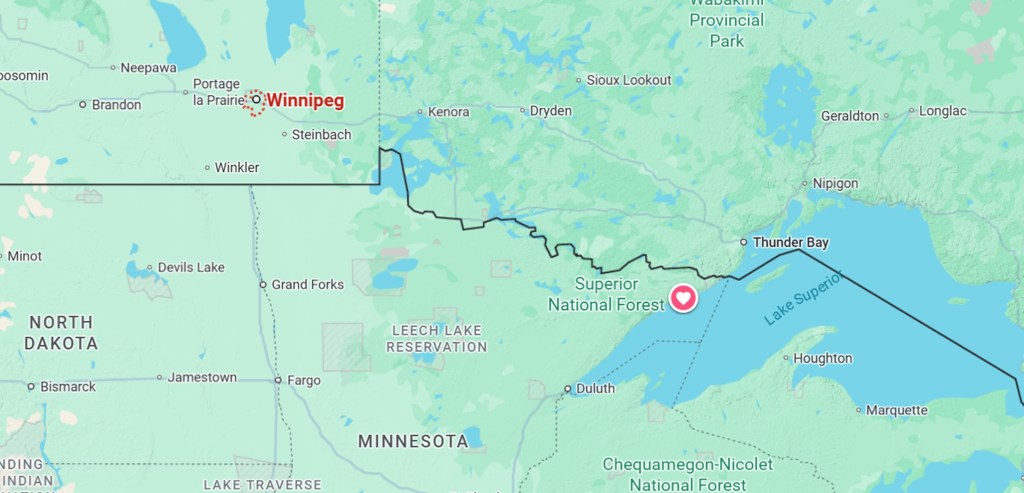
Thunder Bay, Ontario, Marina:  Pat and I made our annual summer visit to Thunder Bay, Ontario, on August 8th this year. Thunder Bay is located 75 miles northeast of the Summer Sanctuary via MN Highway 61 and Canadian Highway 61.

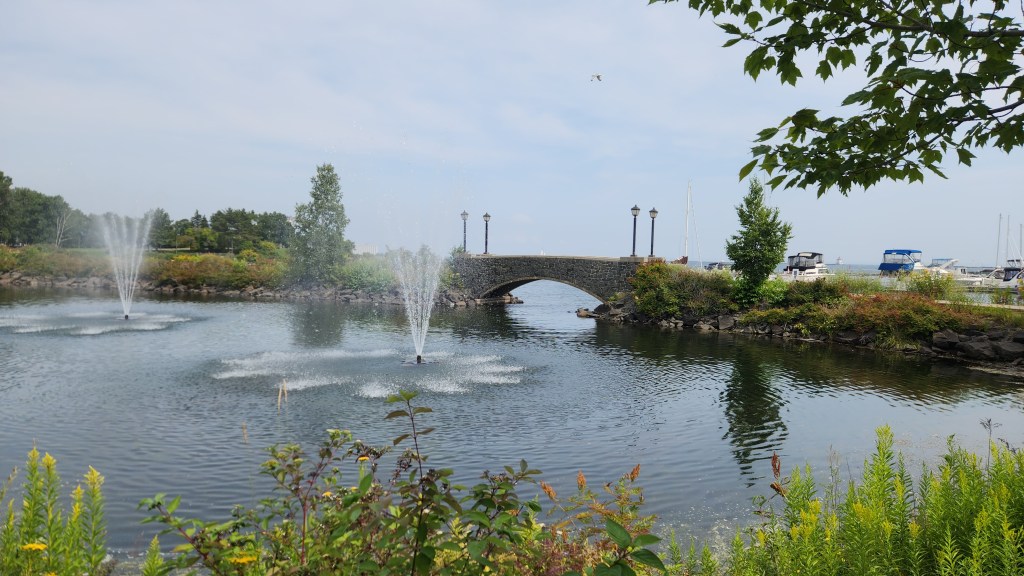
As usual, we went to the Algoma and Bay “Finntown” neighborhood to visit the Finnish Bookstore, the Finnport shop, and the Cheese Encounter store. Unfortunately, the Hoito Hose Restaurant reconstruction has ground to a halt, with only a large foundation waiting sadly for a future recreation of the iconic landmark following its total destruction in a fire several years ago. We continue to wait with hope in our hearts. We also stopped at the Thunder Bay Marina for a nice lunch at the Bight Restaurant and a stroll around Marina Park.

Thunder Bay Marina Park
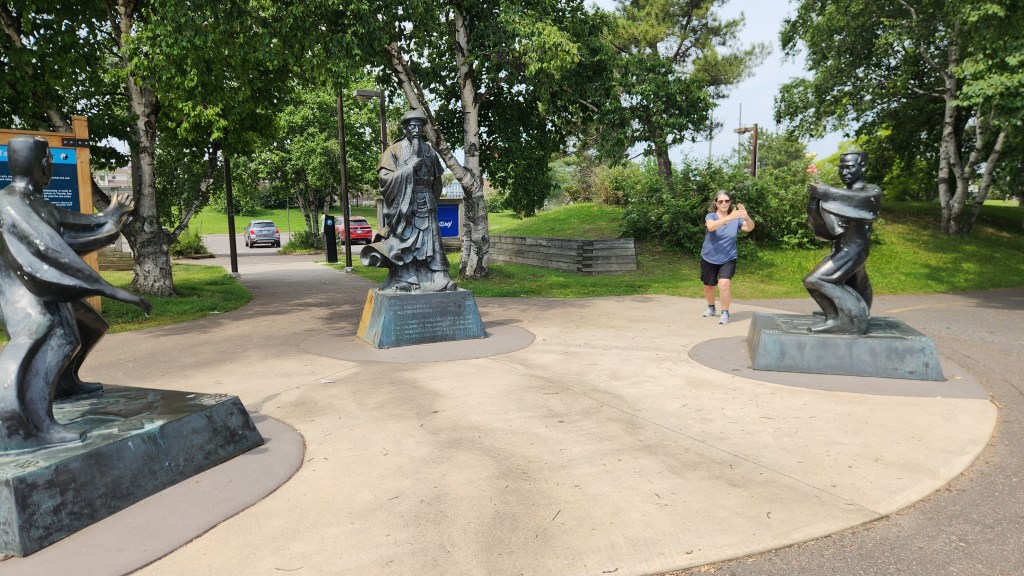
Communing with Tai Chi Masters in Marina Park

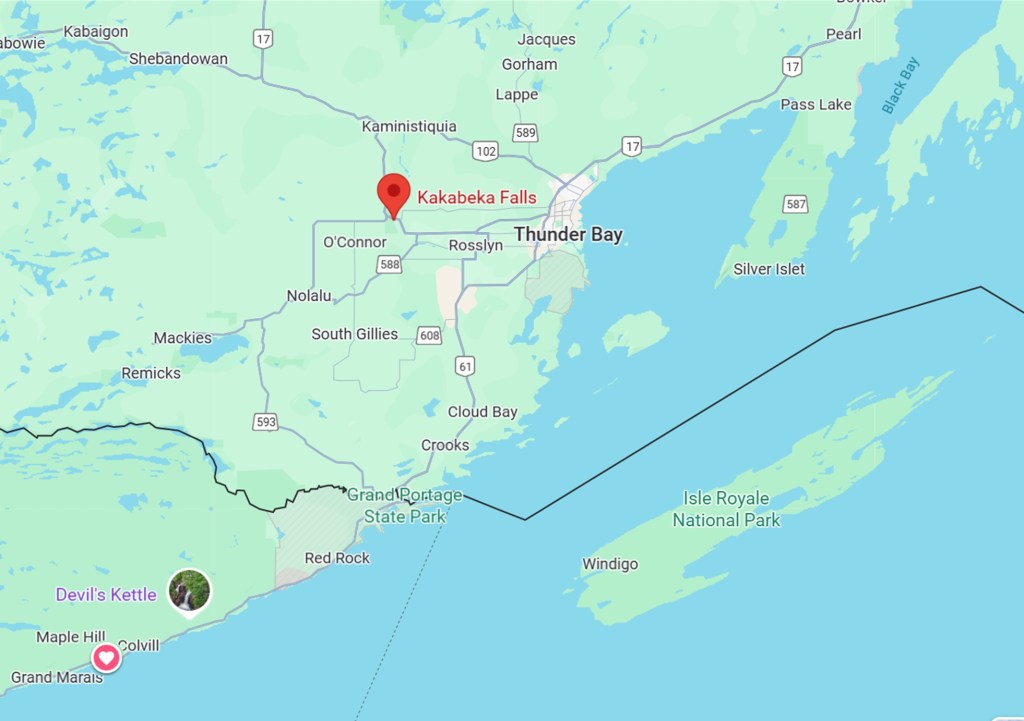
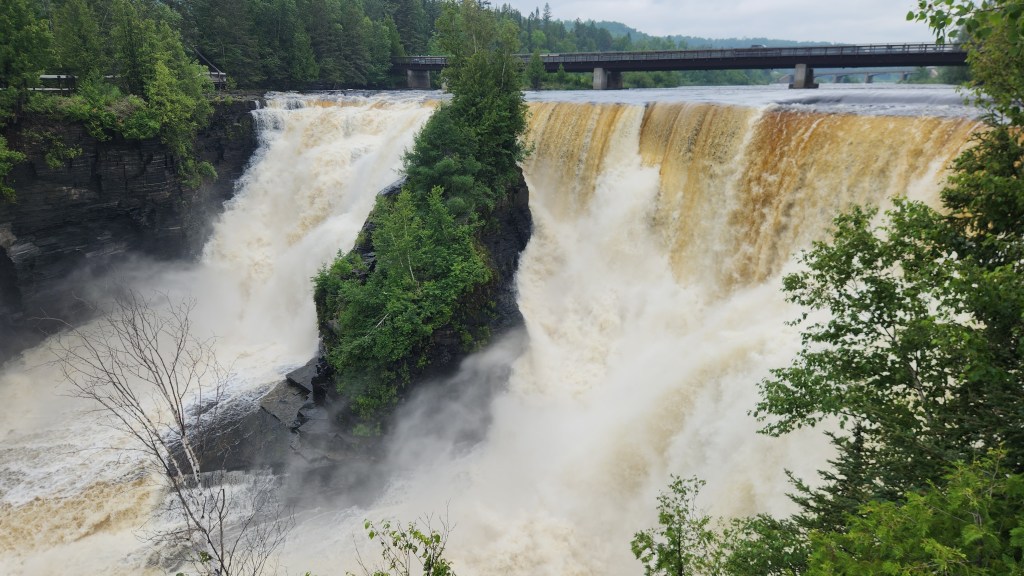
Kakabeka Falls, Ontario: This 130-foot-high waterfall on the Kaministiquia River is a fairly frequent stop for us when we venture up north to Thunder Bay, but this year Pat didn’t go there at all, and I only made one quick stop with my frequent golf partner after we played at the nearby Whitewater Golf Club on July 15th. I always feel a thrill when observing the awesome power of the thunderous water, and perhaps readers will feel the same way as they check out the following.

Kakabeka Falls from North Side Viewing Platform
Kakabeka Falls from North Side of River
Through the Mist from Downstream Viewing Platform

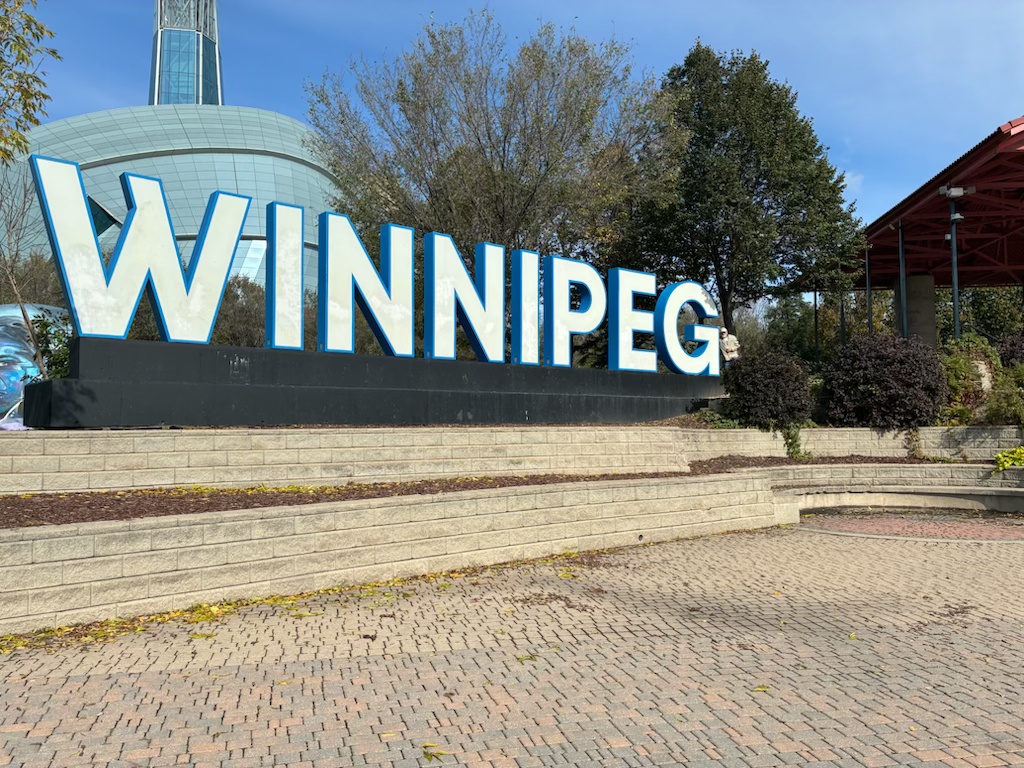
Winnipeg, Manitoba: As our final foray of the season, we decided to visit Winnipeg, Manitoba, departing from Minneapolis on October 4 and returning to the cabin on October 7. We’ve discussed going to check out Winnipeg several times over the years, but had never seemed to make it happen until this year, when we deiced to emulate the marketers from Nike and “just do it.”

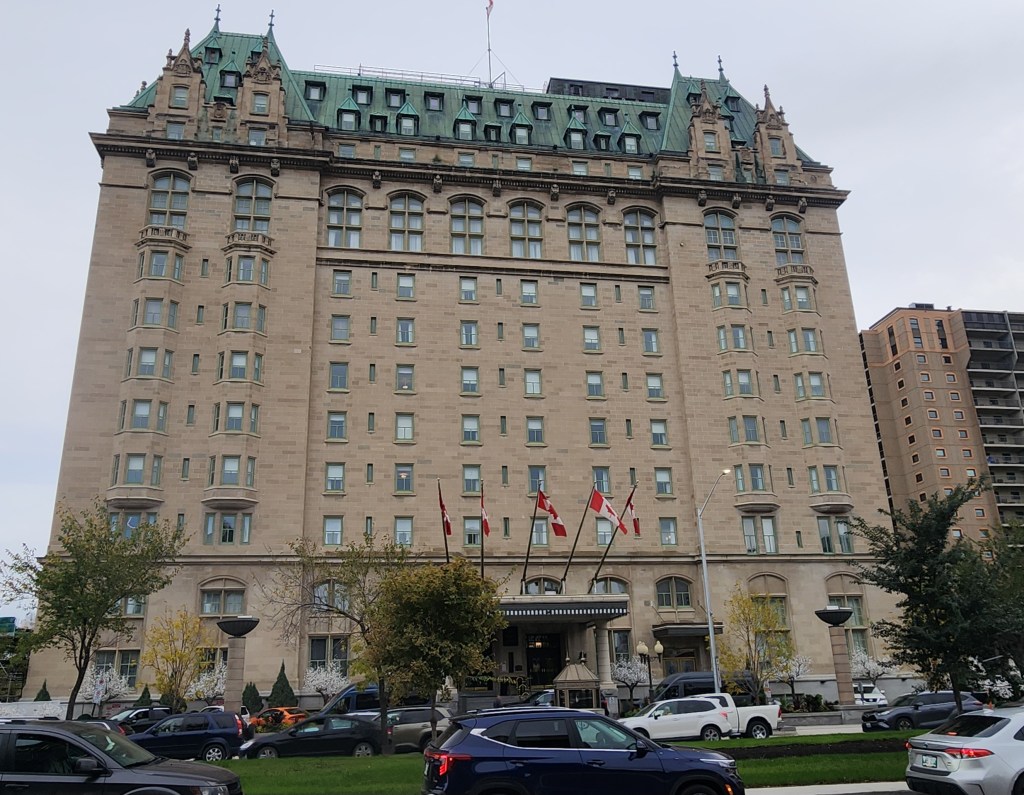
We stayed at an impressive place called the Fort Garry Hotel, Spa, and Conference Centre, built by the Grand Trunk Pacific Railway in 1913 as one of Canada’s grand railway hotels. While there were a few quirky aspects of the place, like an elevator that occasionally decided to do something other than what you had in mind, it was very conveniently located near the places we wanted to visit.

The Fort Garry Hotel, Spa, and Conference Centre

First, a bit of history. The confluence of the Assiniboine River and the Red River, known as The Forks, is located within the city of Winnipeg. The Forks was a focal point for canoe river routes travelled by Aboriginal peoples for thousands of years before the arrival of European traders and settlers. Populated by First Nations peoples, the area was used for camps, hunting, fishing, trading, and (further north) agriculture. The rivers linked the Assiniboine, Ojibway, Anishinaabe, Mandan, Sioux, Cree, Lakota, and others for trade and knowledge sharing.

The Red River flows north from the confluence of the Bois de Sioux and Otter Tail Rivers near Wahpeton, ND, and Breckenridge, MN and empties into to Lake Winnipeg, which then drains into Hudson Bay via the Nelson River. This made The Forks a natural place for the indigenous people to supply firs to the Hudson’s Bay Company which, along with British colonialists, laid claim to the entire Hudson Bay drainage basin, including what is now Winnipeg, in the late 17th century. However, French traders worked the area for the rival Montreal-based North West Company decades before the first English traders arrived in about 1767. During these years, various French and British forts were built in the area to facilitate operations of the rival fur companies.

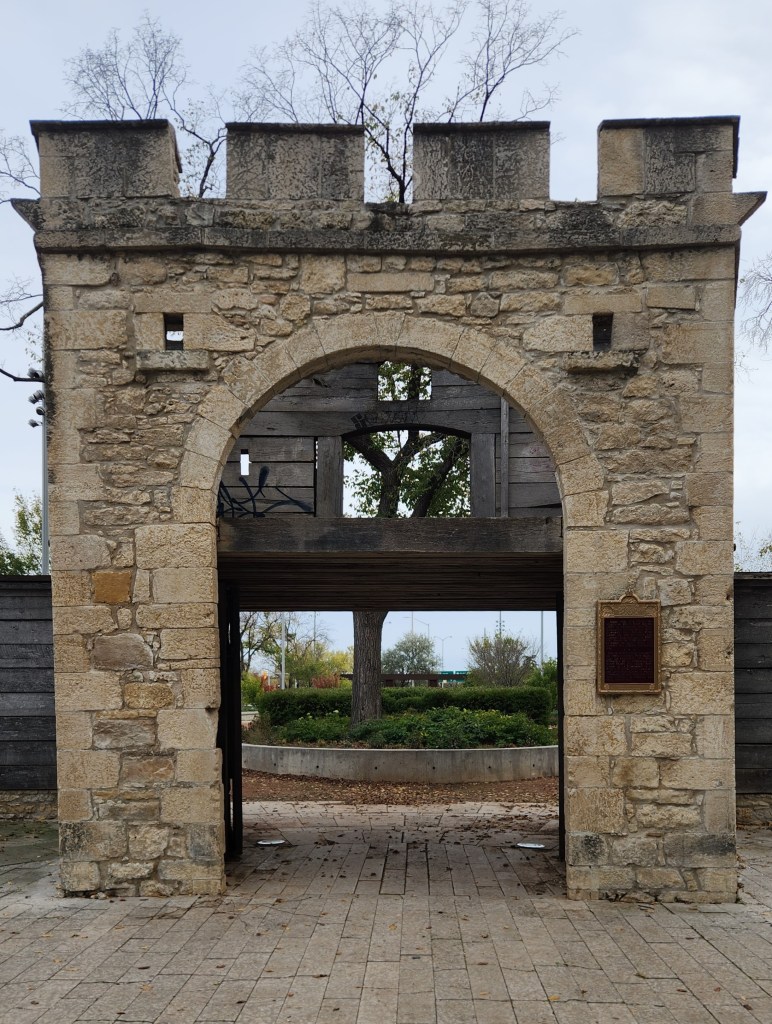
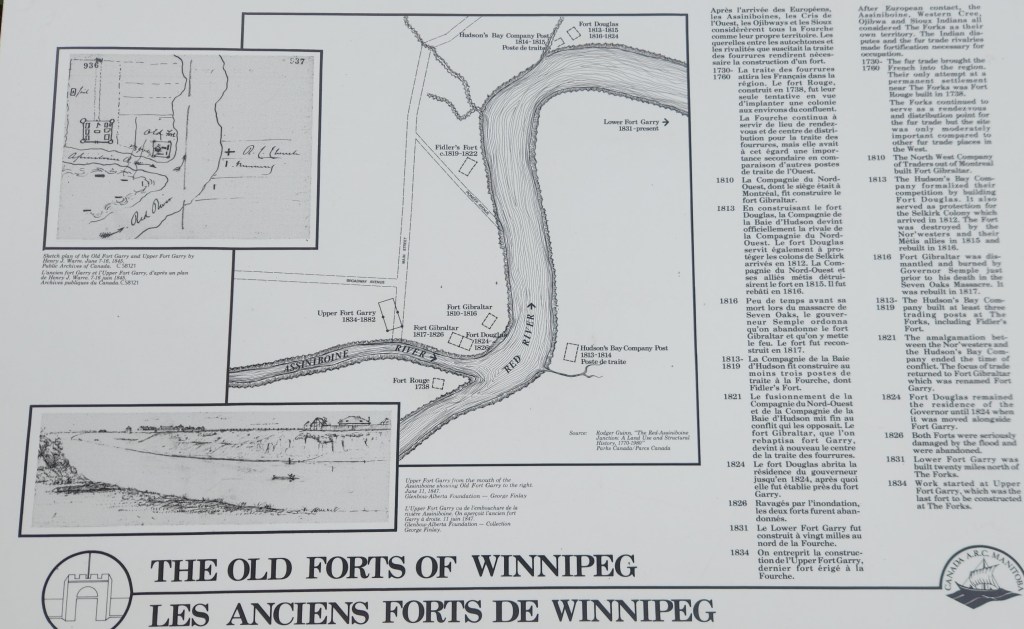
In 1811, Scottish aristocrat and humanitarian Thomas Douglas, Earl of Selkirk, received a grant of 116,000 square miles in the basins of the Red and Assiniboine Rivers from the Hudson’s Bay Company, which he named Assiniboia, and established an agricultural settlement populated by displaced Scottish Highland families and retired Hudson’s Bay Company workers. The Red River Colony (or Selkirk Settlement) was founded in 1812 and built Fort Douglas a short distance upriver from Fort Gibraltar, the area headquarters of the North West Company. The two fur companies fought several battles for control of the area until the Hudson’s Bay company succeeded in forcing a merger in 1821. Fort Gibraltar was taken over as the Hudson’s Bay Company headquarters in 1822 and renamed Fort Garry. During this period, the Métis, an ethnic group descended from the mixing of indigenous Canadians and European traders, began settling in the Red River Valley. As their numbers grew, the Métis instituted a rebellion against the new federal government imposed by Canadian Confederation in 1867 and eventually established a provisional government under Luis Riel in 1869. During these turbulent times, the Catholic Church beefed up its presence in the area; a Cathedral was bult and the so-called “grey nuns” established hospitals which remain today. Eventually, Riel agreed to have the Red River Settlement join the newly formed Province of Manitoba, and Winnipeg was formally incorporated in 1873. Fort Garry was demolished in the early 1880s to make way for Winnipeg’s Main Street, although the fort’s gate was retained. The site was designated as a National Historic Site in 1924 and stands a mere stone’s throw away from the Fort Garry Hotel.

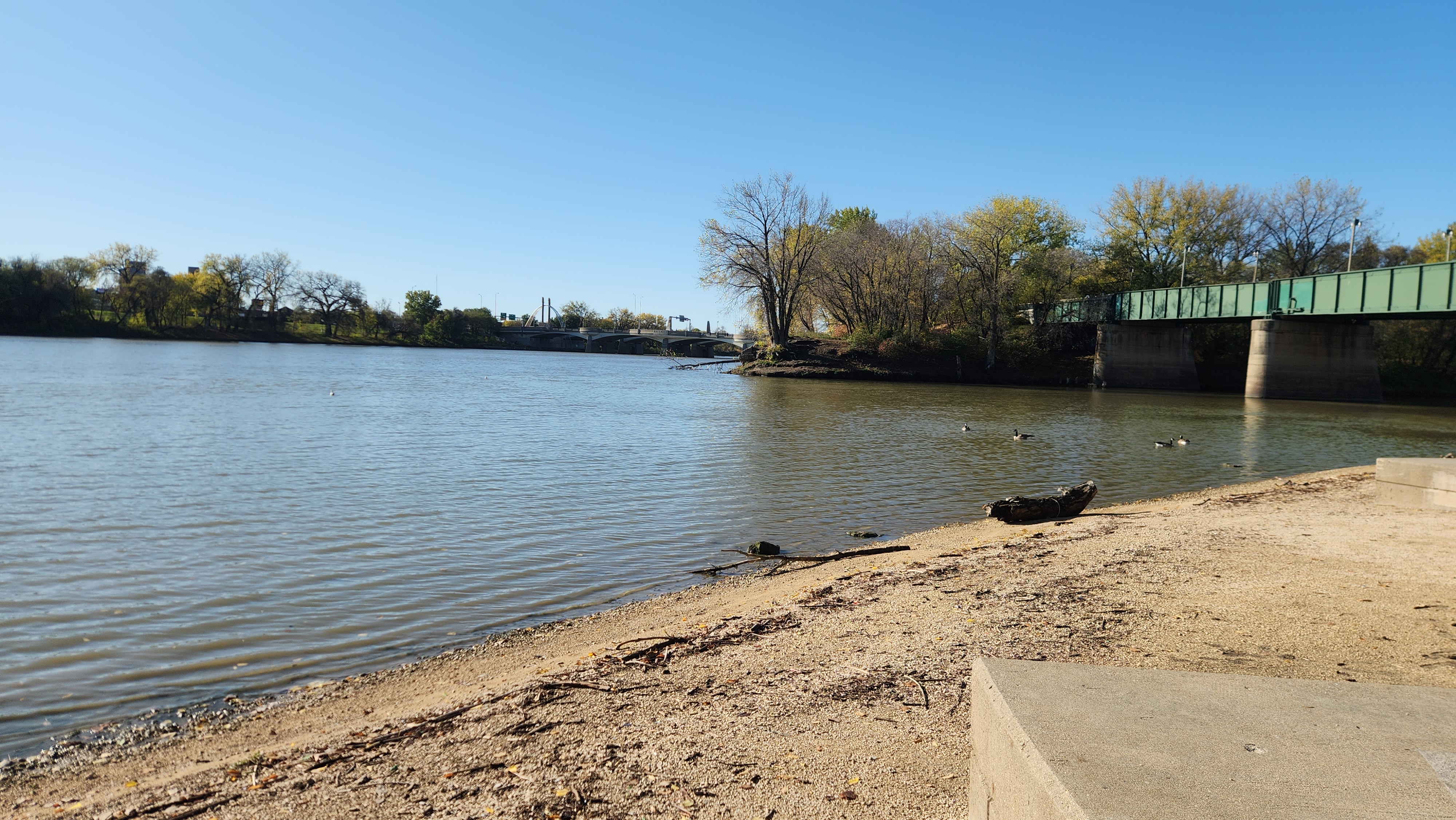
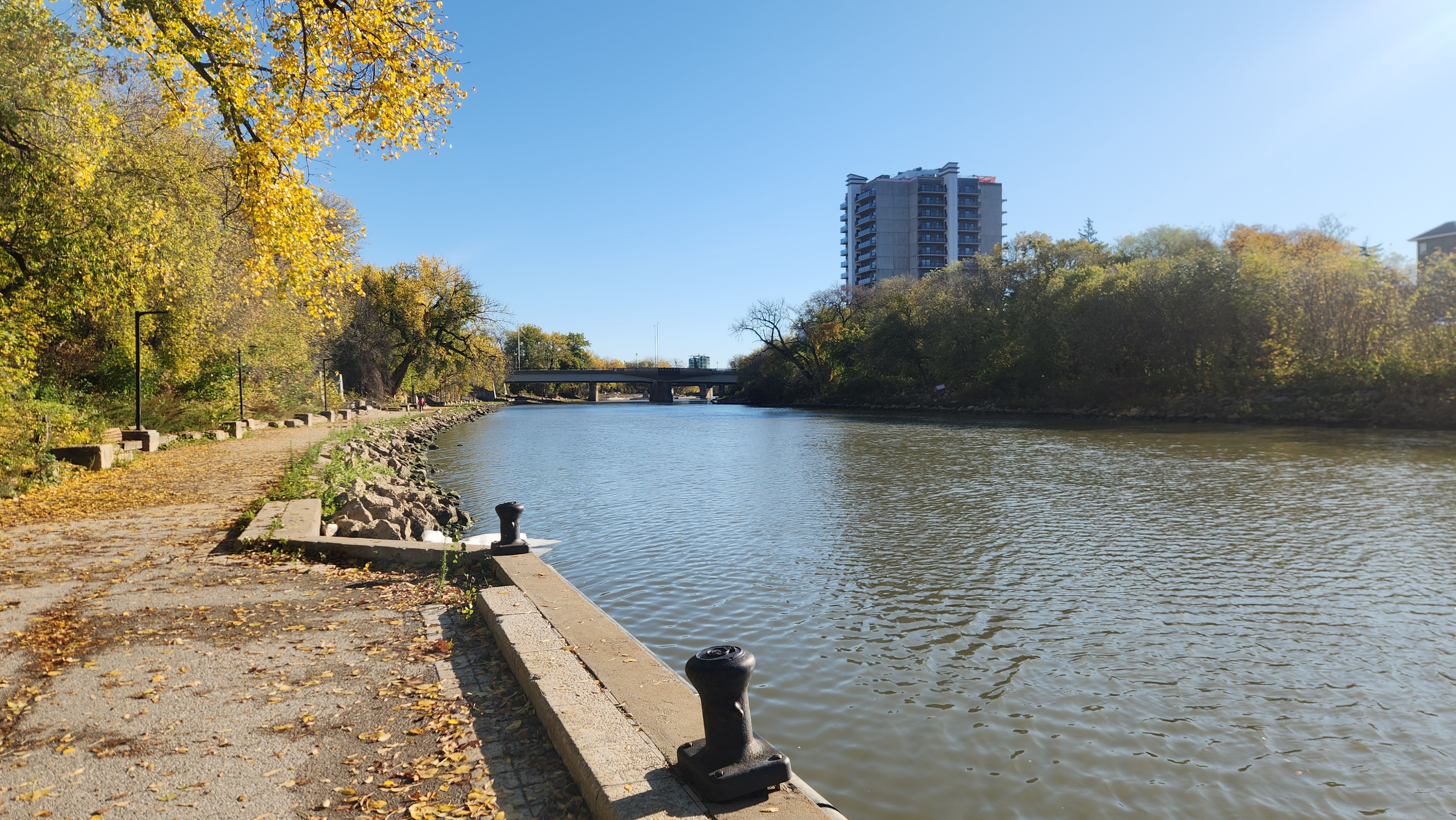
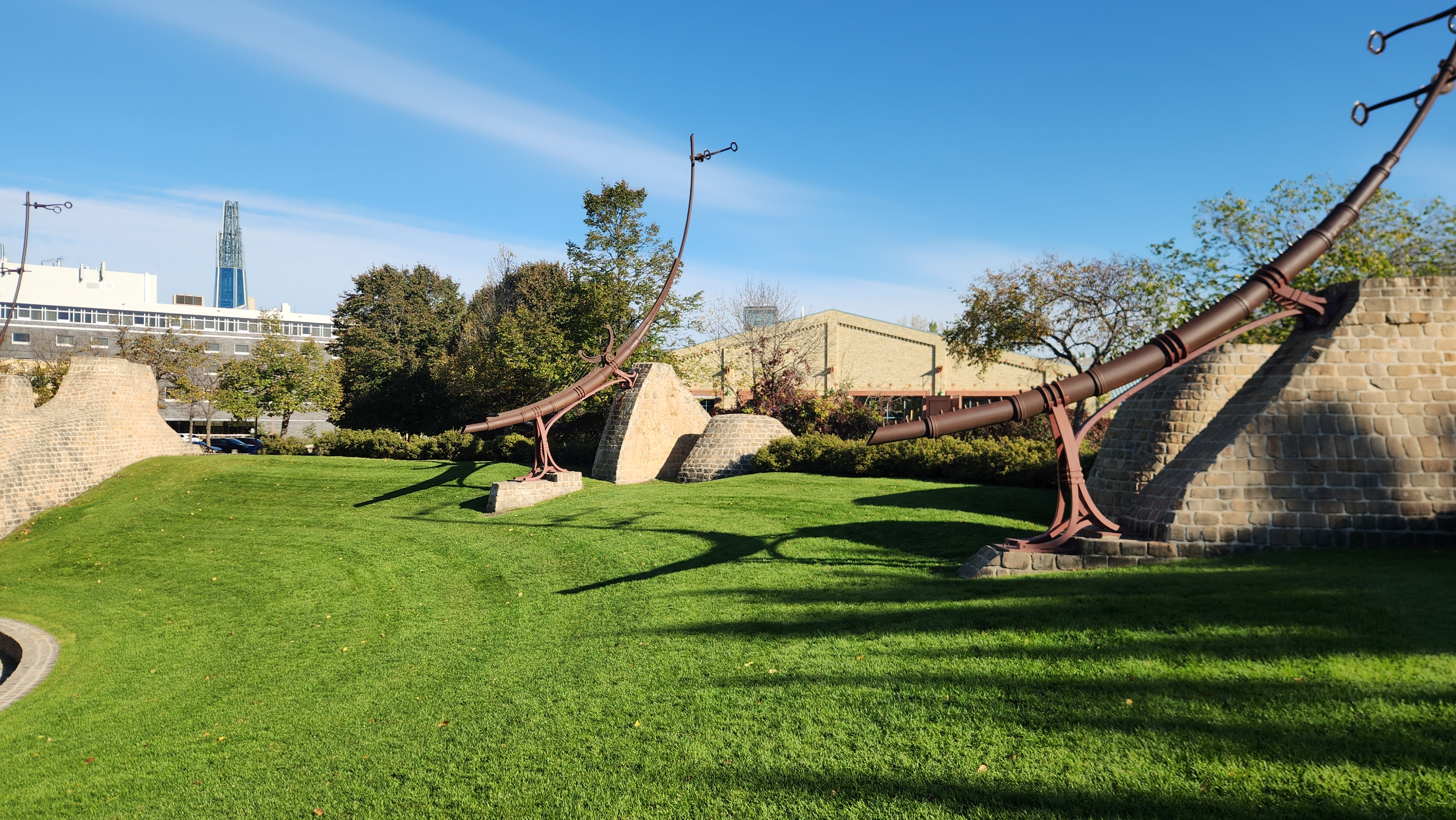
Wow, that was confusing! Sorry I couldn’t condense all that to a more cogent description, but the point of it all was to explain how Winnipeg’s history has resulted in a fascinating collection of various ethnic groups and interesting historical sites. In the two days we spent exploring Winnipeg by foot, we visited The Forks Historic Harbor, The Forks National Historic Site, the French Quarter, the Upper Fort Garry National Historic Site, the Forks Market, the CN Stage and Field, and the Winnipeg Railroad Station, all of which are shown in the photos below.

The Fork: Red River on Left and Assiniboine River on Right
The Forks Historic Harbor
The Forks National Historic Site
The Forks Market
CN Stage and Field
Upper Fort Garry Gate
An Old Map at the Upper Fort Garry National Historic Site
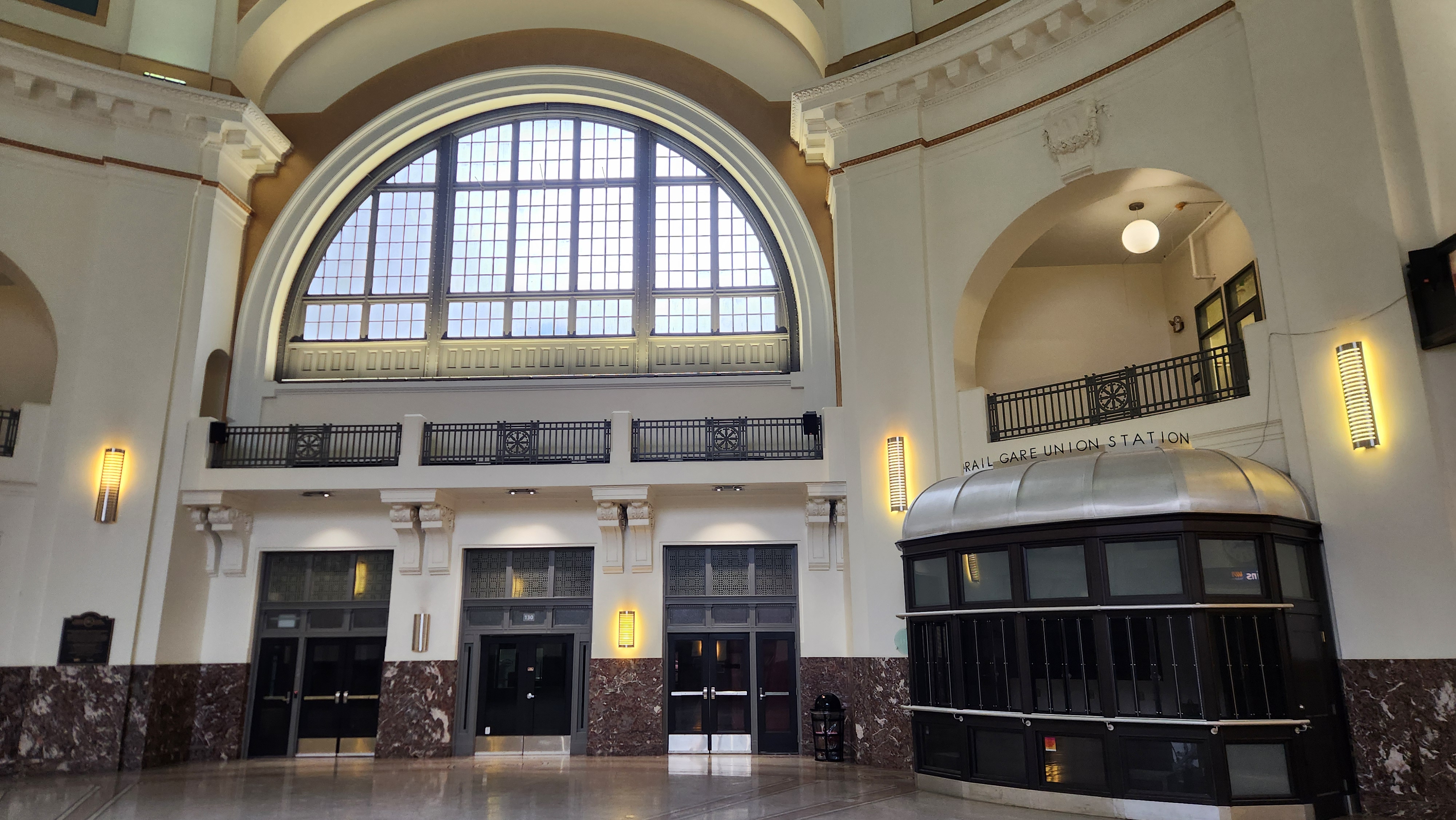
Railroad Station

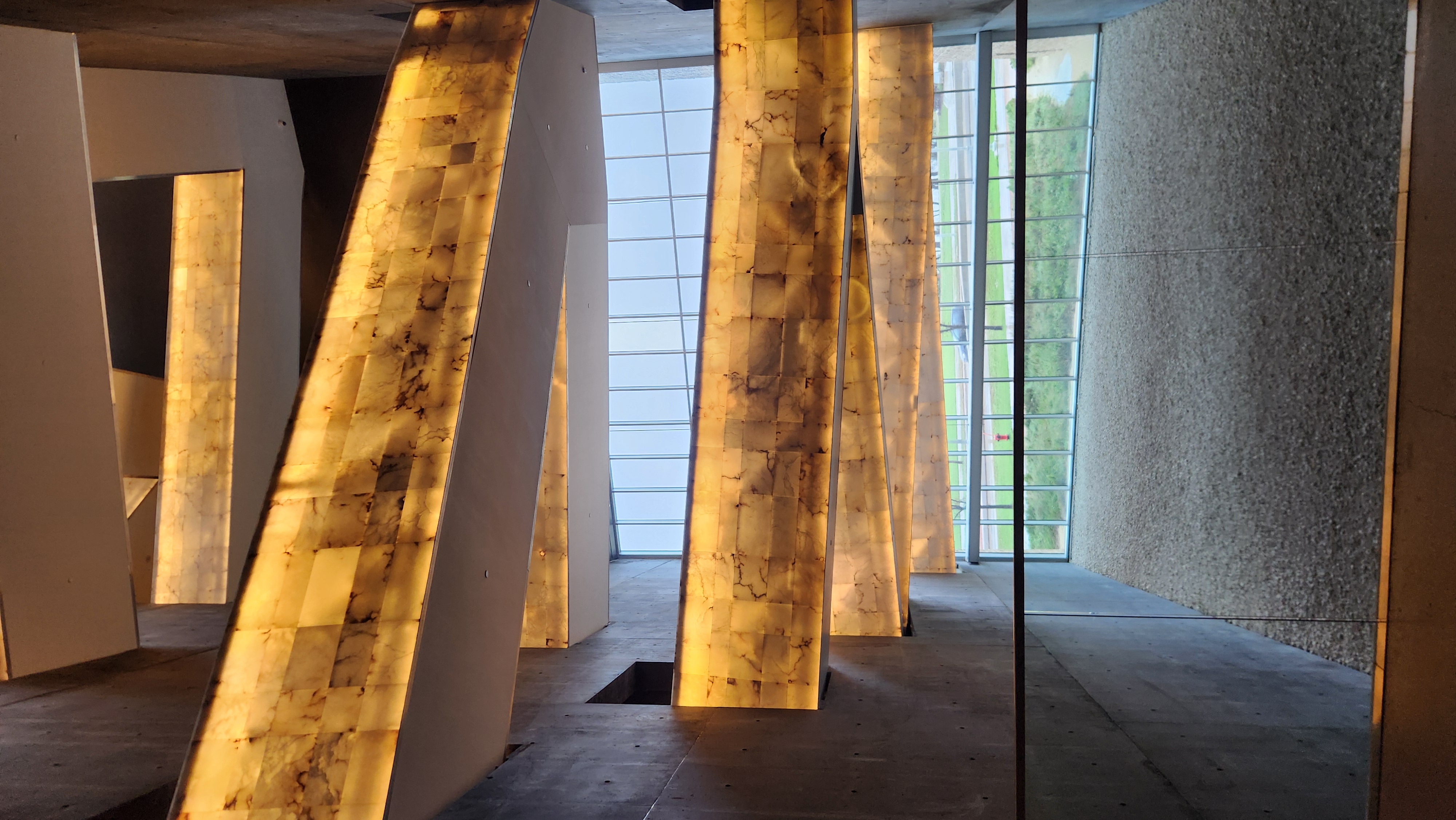
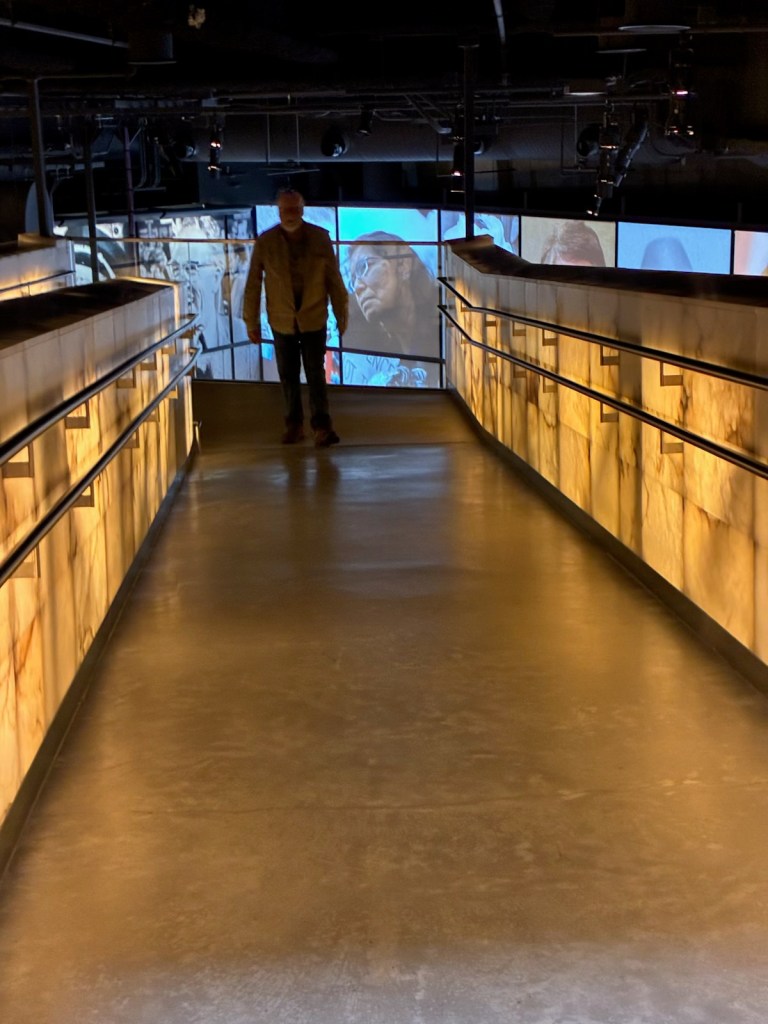
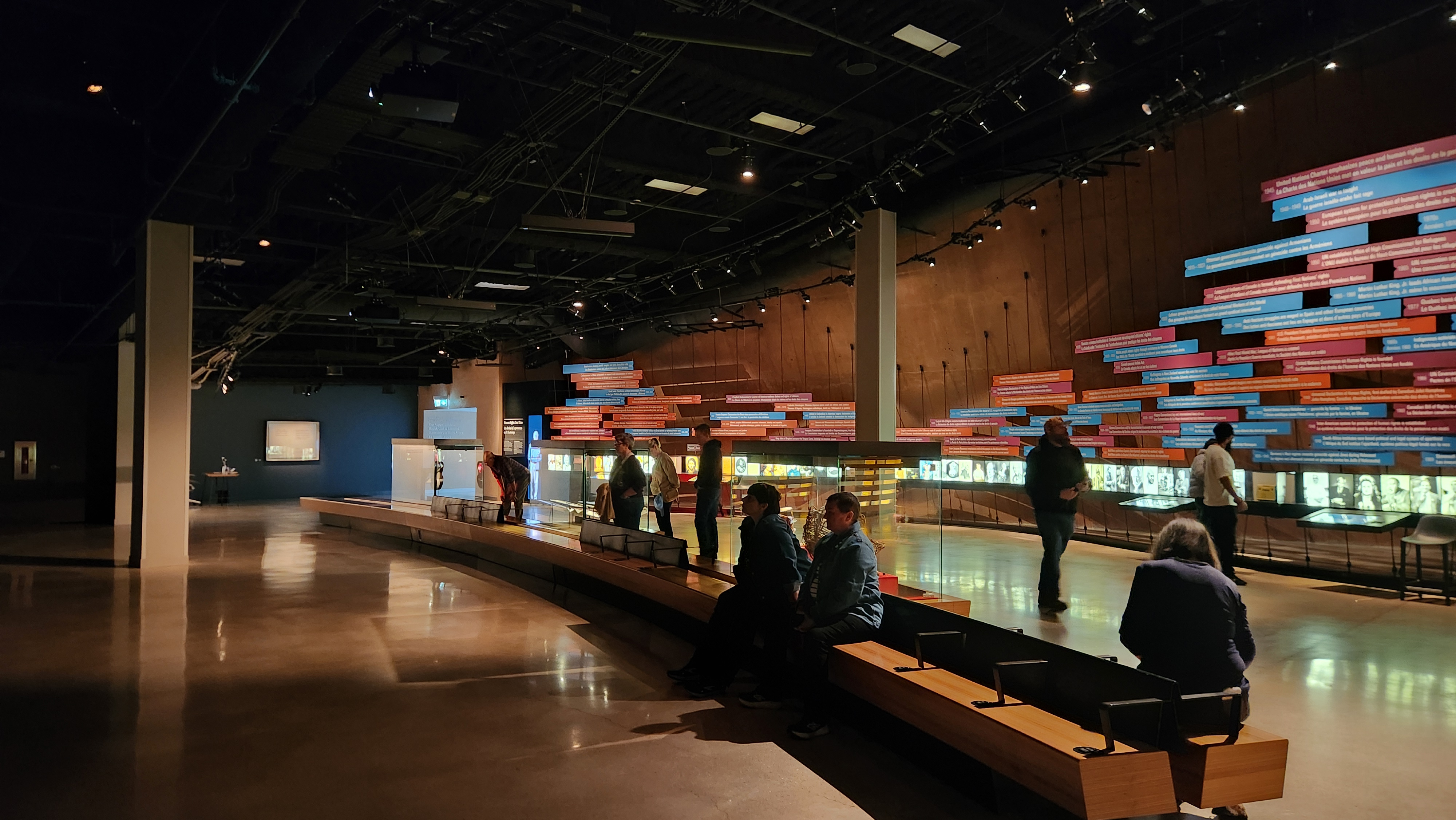
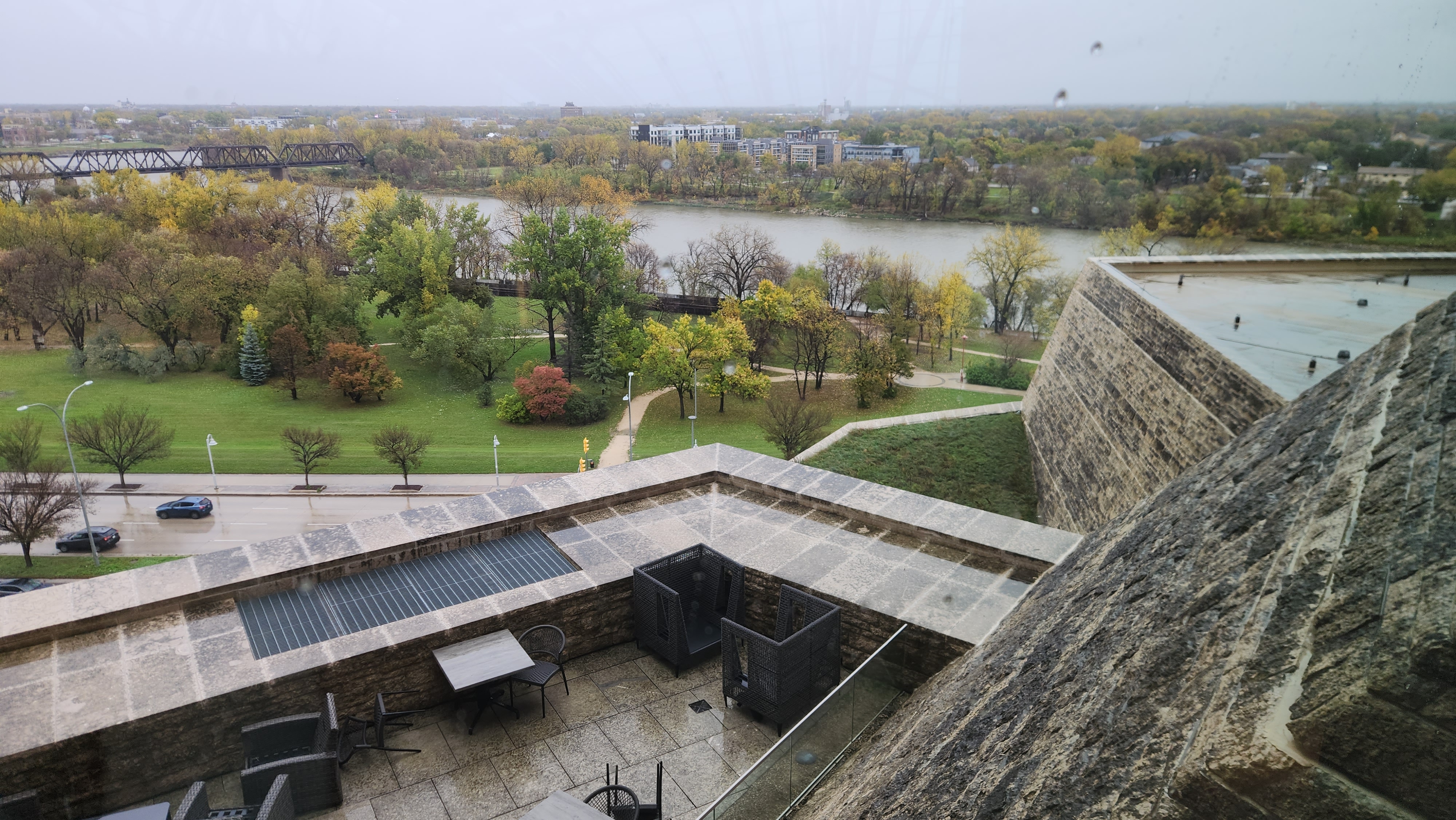
I’ve saved one more Winnipeg site for last – the Canadian Museum for Human Rights. We spent about five hours touring the museum (including lunch at the cafeteria), and if we had stayed another day in Winnipeg we would have gone back again. The building is architecturally stunning, both inside and out, spanning seven floors with multiple display rooms of various shapes and sizes. The floors are linked by angled walkways in a central column. The walkways have translucent alabaster walls. One of the docents told me the idea was that you emerge from the darkness into the light. At the time, I took that to mean from the metaphorical darkness of human wrongs into the light of understanding. The displays documented some of the worst episodes in history – such as the Holocaust and antisemitism in Canada and elsewhere, the forced internment of Japanese Canadian citizens during World War II, discrimination against indigenous Canadians – while highlighting the important steps that have been taken to advance human rights throughout history.

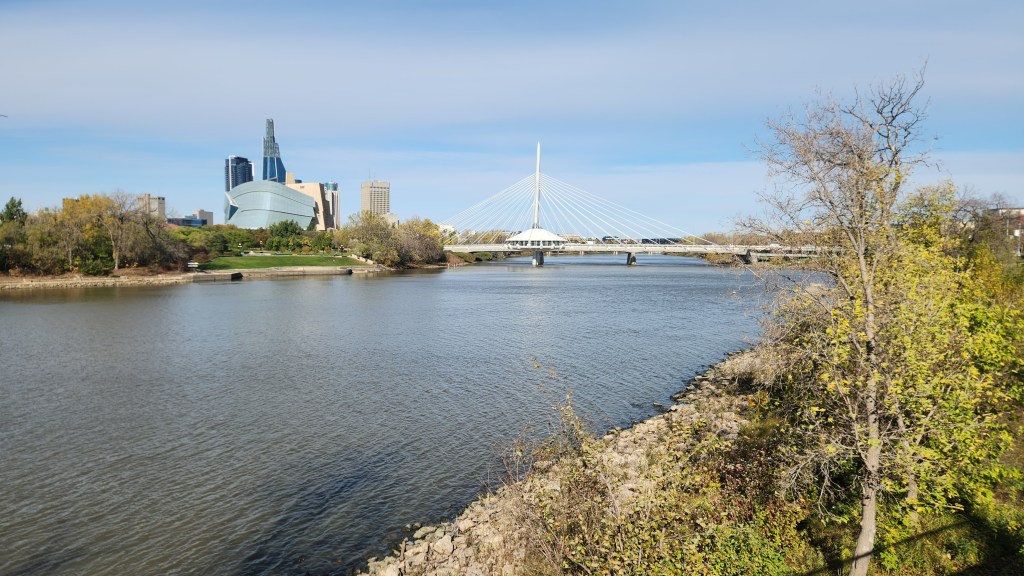
Canadian Museum for Human Rights and Peace Park — View from Across Red River
Walkways in the Museum
Passing from Darkness into Light
Main Floor Gallery with Human Rights Timeline
View from Seventh Floor of Museum

The museum’s Visitor Guide includes this statement:

“This national museum invites you to reflect on human rights in Canada and around the world. It’s a place for people to explore the idea that respect and understanding of human rights can serve as a positive force for change in the world.”

And we certainly did reflect, for a long time after we left the site. I was reminded of the famous quotation paraphrased by Martin Luther King: “The arc of the moral universe is long, but it bends toward justice.” The museum showed that to be true, and in these times when so-called populists are doing their utmost to bend it back the other way, it gave me some hope to cling to.

On that note, that’s it for this blog installment. Thanks for reading, and stay tuned for our upcoming Viking Ocean Cruise, which I’ll hopefully post by the end of November.

The Saaris’ Summer Sanctuary – PART 1

Readers of this travel blog series may recall that it was born back in 2018 when, at the urging of family members, I began documenting a 10,200-mile RV trip. Since then, I’ve documented a total of thirteen domestic and international trips. Next up will be our fourth trip with Viking Cruise Lines, this time starting at Lake Como, Italy, and ending in Athens, Greece. As I was looking over the list recently, it dawned on me that I have neglected a major aspect of our travel experiences. We are most fortunate to be able to spend most of our summers at our cabin on Minnesota’s beautiful North Shore of Lake Superior, and we regularly visit various points of interest along and near the magnificent lake. So, purely in the interest of furthering readers’ knowledge of excellent travel destinations, I decided to write a travel blog installment describing some of the places we visited during the summer and early fall of 2025. Which I will now proceed to do …
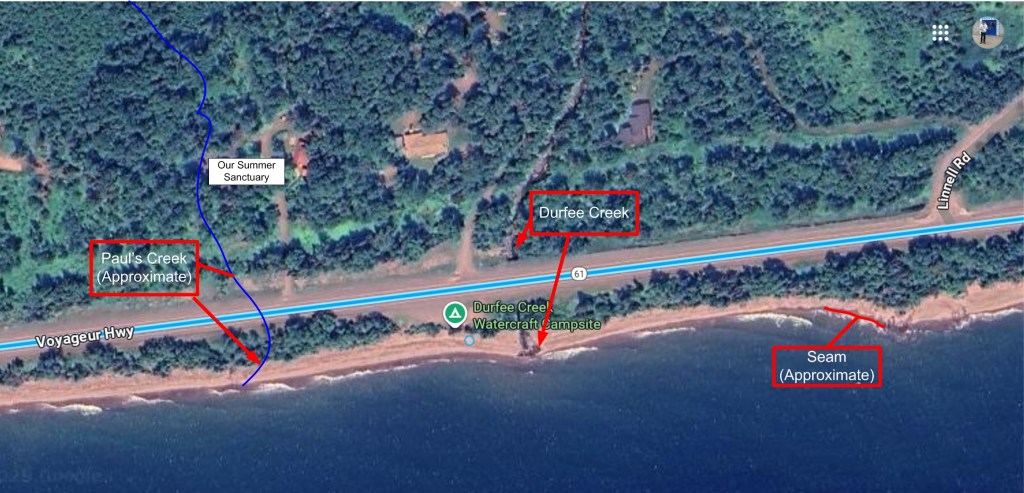
Sites Near the Cabin: Our peaceful cabin (which I’ve now dubbed The Saaris’ Summer Sanctuary) is located on Minnesota Highway 61, also known as the Voyageur Highway, some 5.6 miles east of the harbor in Grand Marais, MN. I’ll describe three nearby features that we frequently visit by strolling down a path from the cabin and crossing the highway. Readers interested in checking out these features can travel by car or kayak to a public access point denoted on the satellite image below as the Durfee Creek Watercraft Campsite. (I may seem friendly on these blog posts, but I will not be charitable to anyone dropping in at the cabin for an unannounced look-see.)

Features Near our Summer Sanctuary

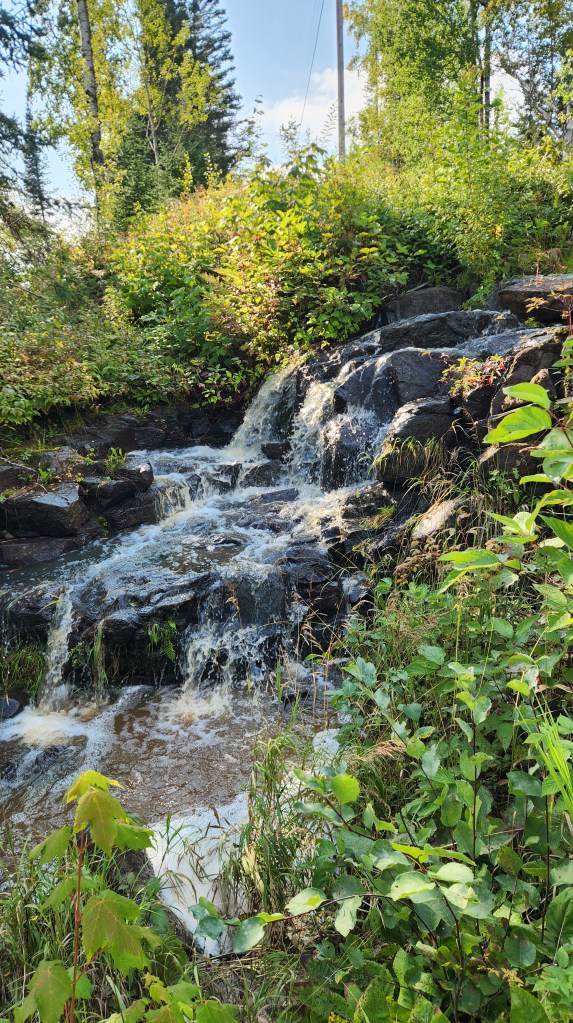
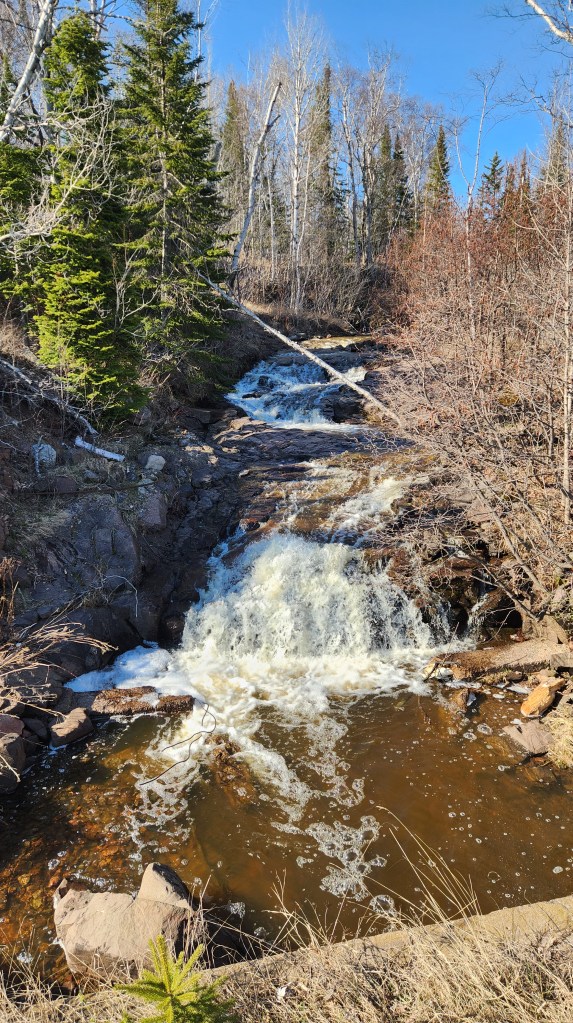
On the satellite image, I’ve hand sketched a line labeled Paul’s Creek. You won’t find such a creek on any map, although Google Maps indicates a nonexistent, unnamed creek that supposedly flows into Lake Superior somewhat to the east of the actual, unnamed creek. I gave it the unofficial name of Paul’s Creek in honor of my late father, who enjoyed constructing makeshift footbridges across the creek bed. For most of the year, this little stream is barely a trickle, but after a significant rainfall it can look quite impressive. Here are some photos of the waterfall on the north side of Highway 61 and its subsequent discharge point into Lake Superior.

Paul’s Creek on June 21, 2025
Paul’s Creek Waterfall on September 13, 2025
Paul’s Creek Discharge on September 13, 2025
Paul’s Creek Discharge on September 16, 2025

A few hundred yards to the east there is a much larger stream known as Durfee Creek, which flows steadily year-round but also becomes engorged after a rainfall. The most interesting aspect of Durfee Creek is its discharge into Lake Superior, which can change dramatically from day to day depending on the volume of water flow in the creek as well as a particular day’s wave action on the Lake.

Durfee Creek Waterfall on May 10, 2025
Durfee Creek Discharge on May 7, 2025

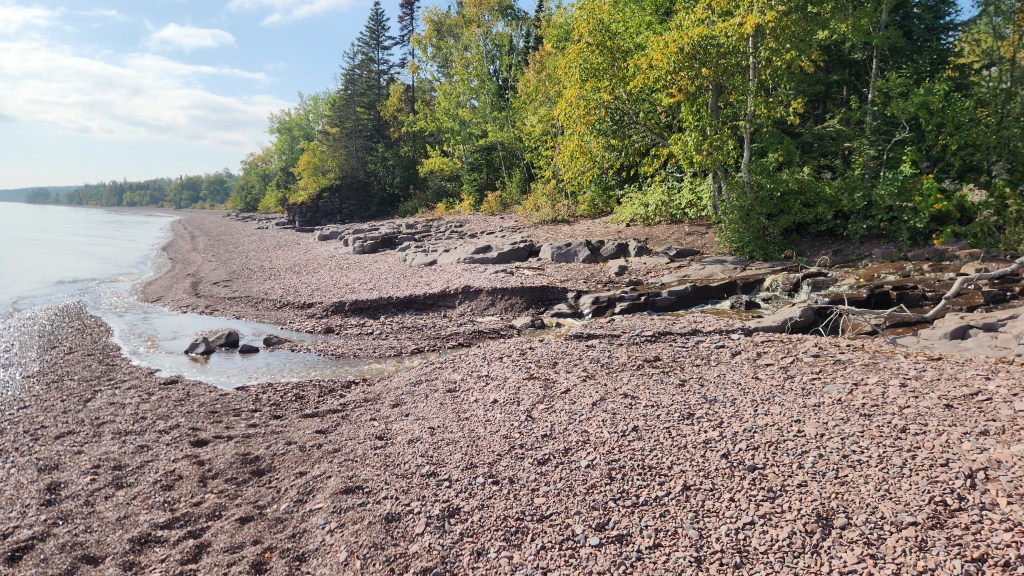
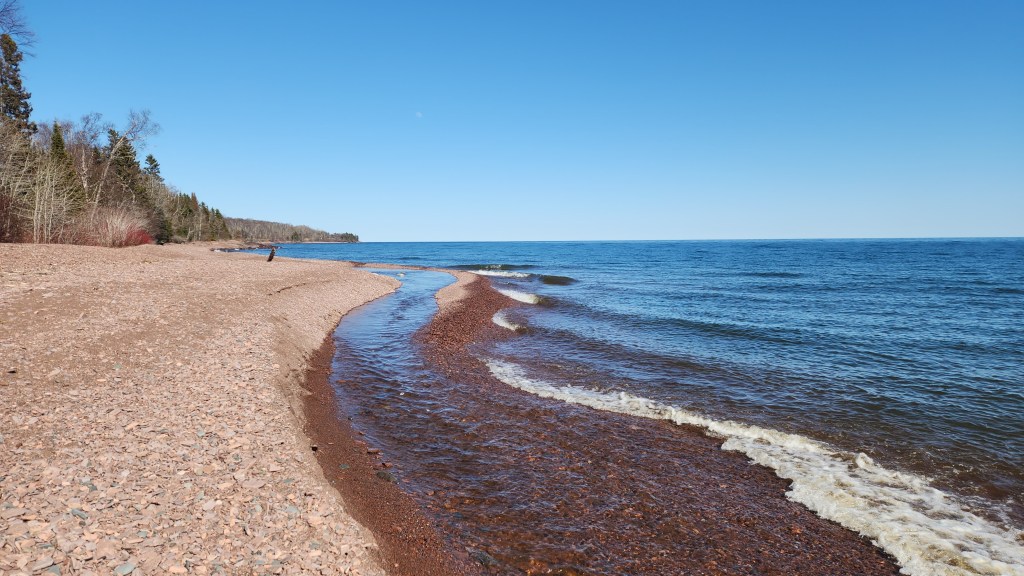
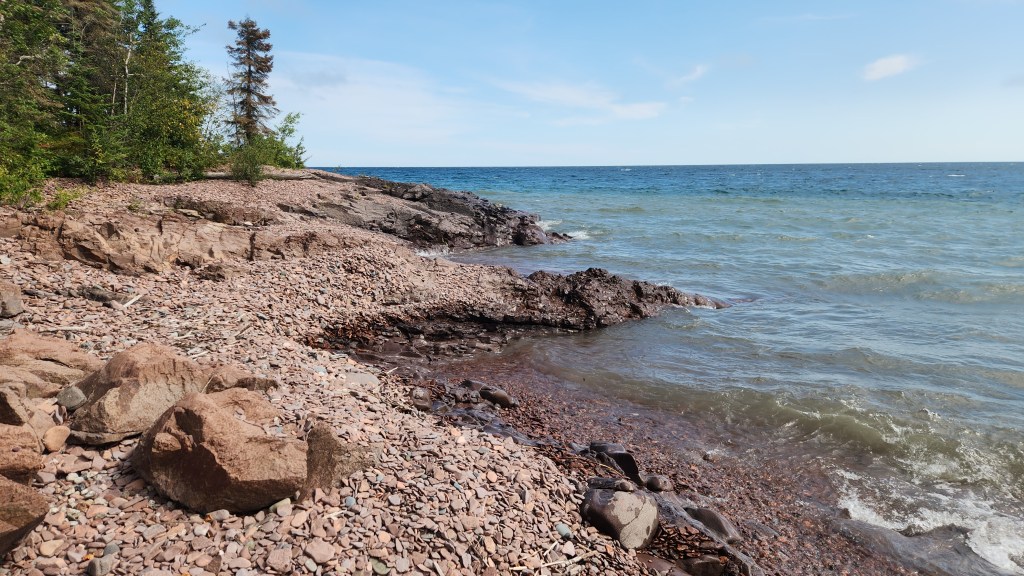
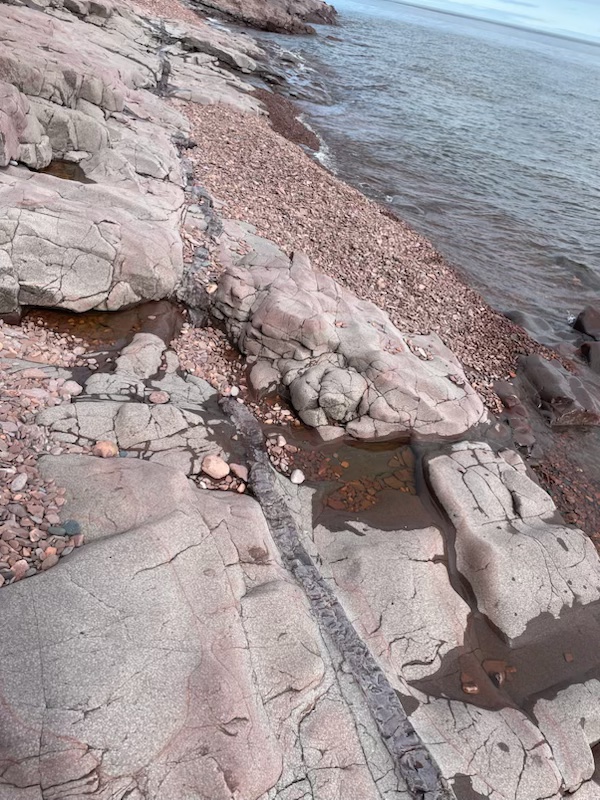
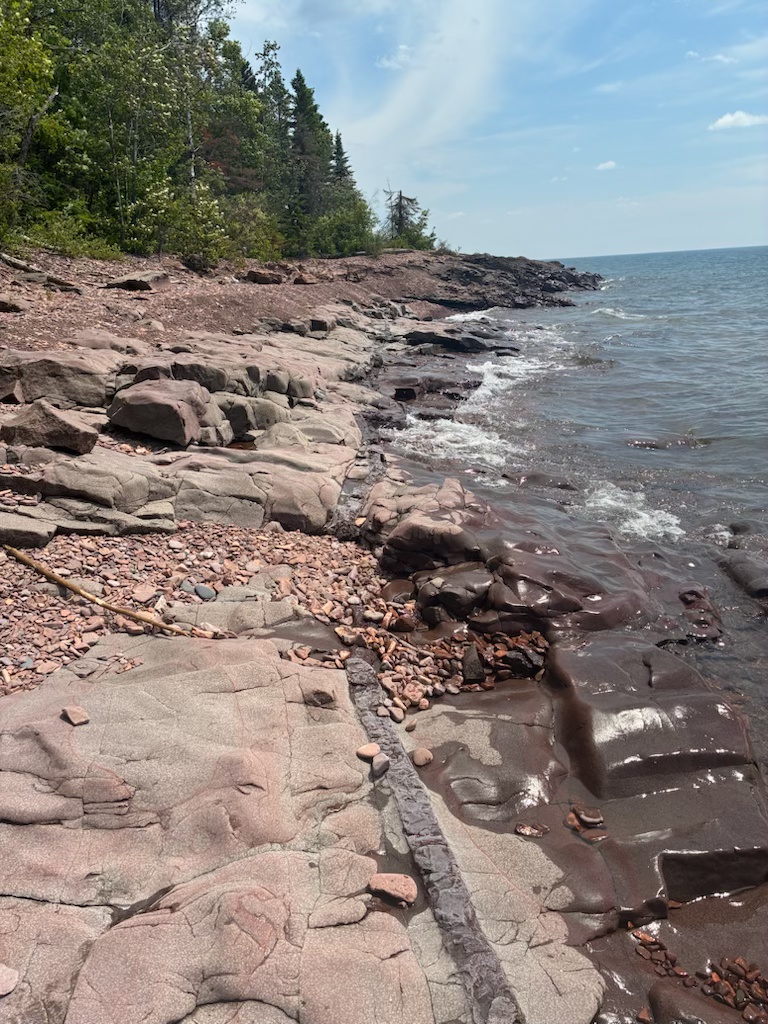
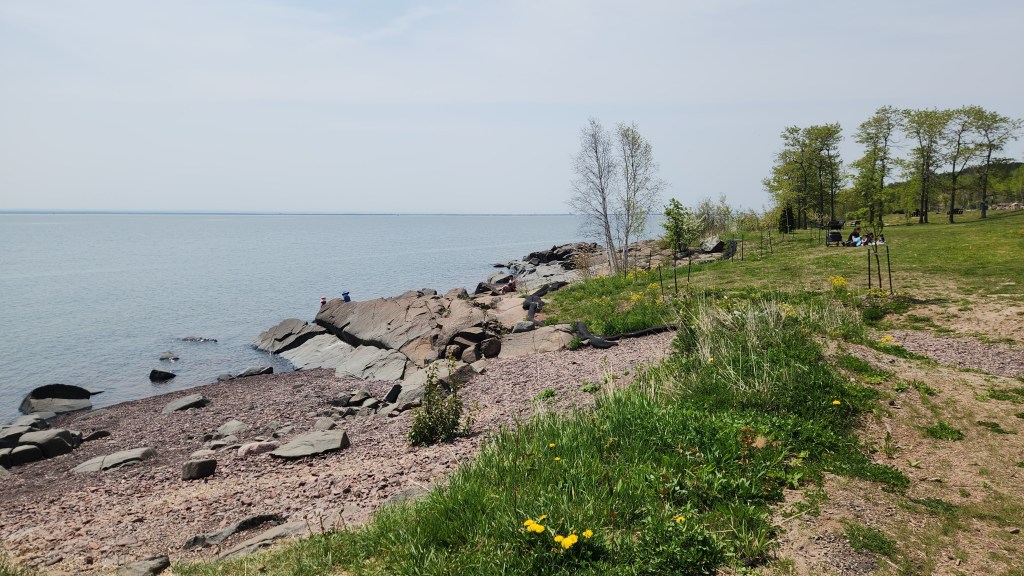
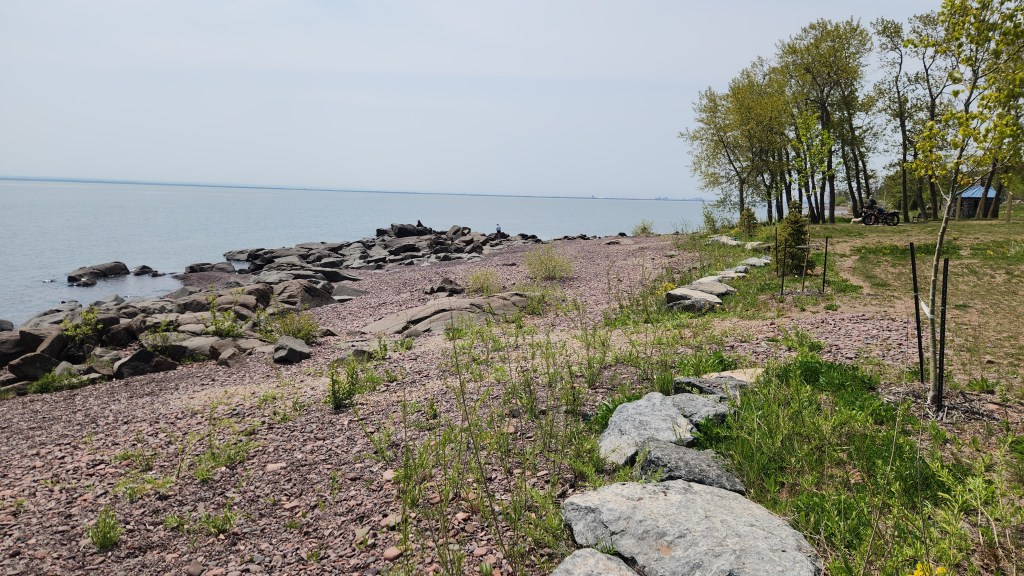
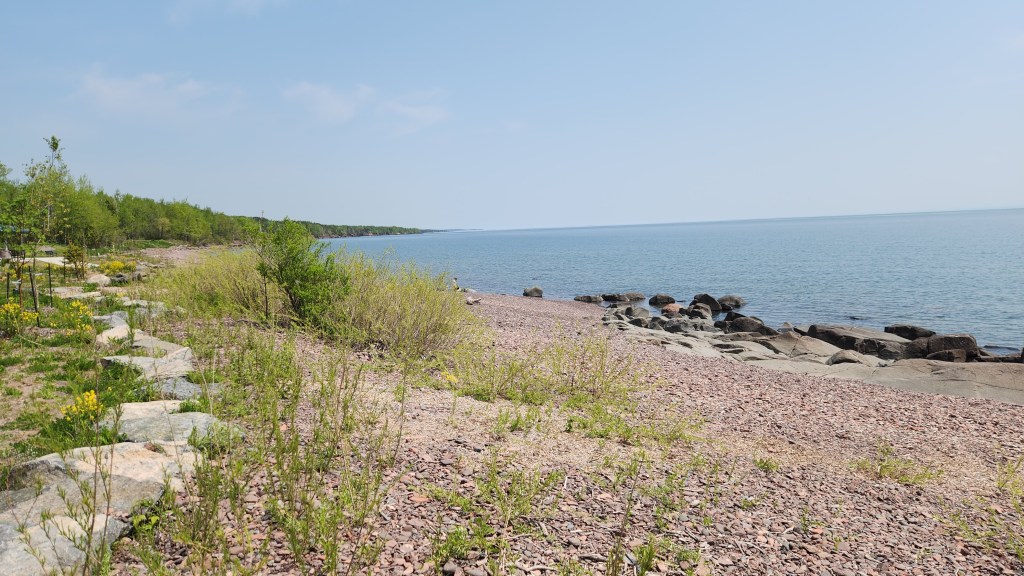
I’ve sketched in another interesting feature to the east of Durfee Creek, which I call “The Seam.” Along this stretch of Lake Superior, the billion-year-old bedrock which forms the shoreline is generally covered over with stones, most of which are flat and really fun to skip along the surface of the Lake on calm days. Here’s a photo looking eastward showing a typical configuration of these stones. However, the wave action routinely spreads the rocks around in many different ways, so that the shoreline can look completely different from one day to the next.

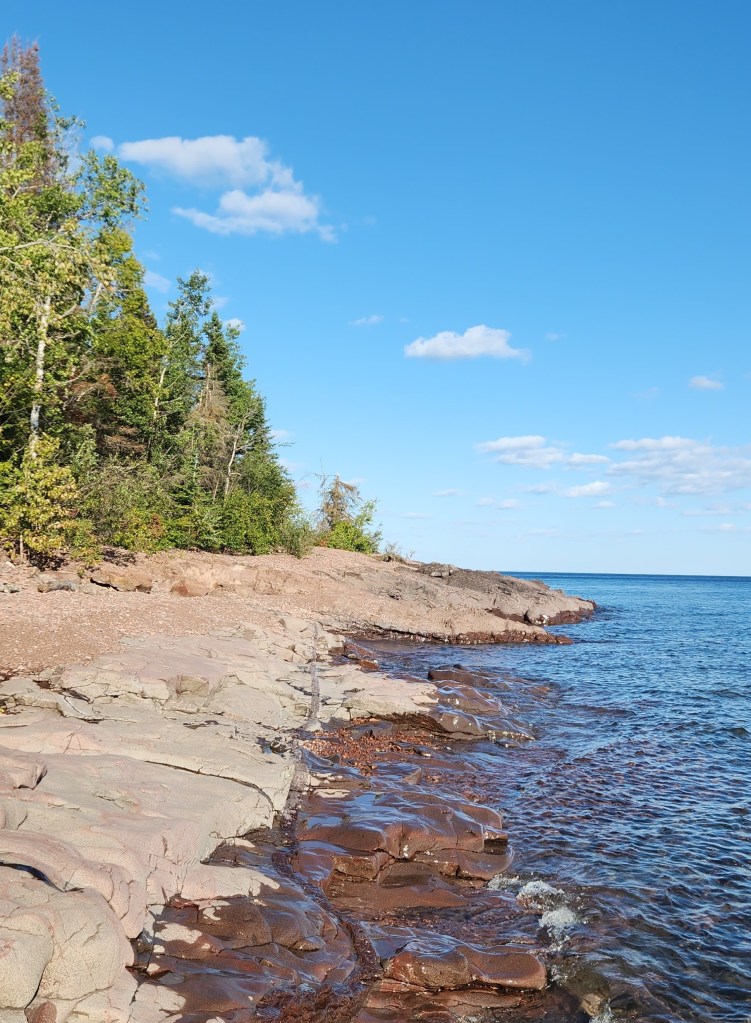
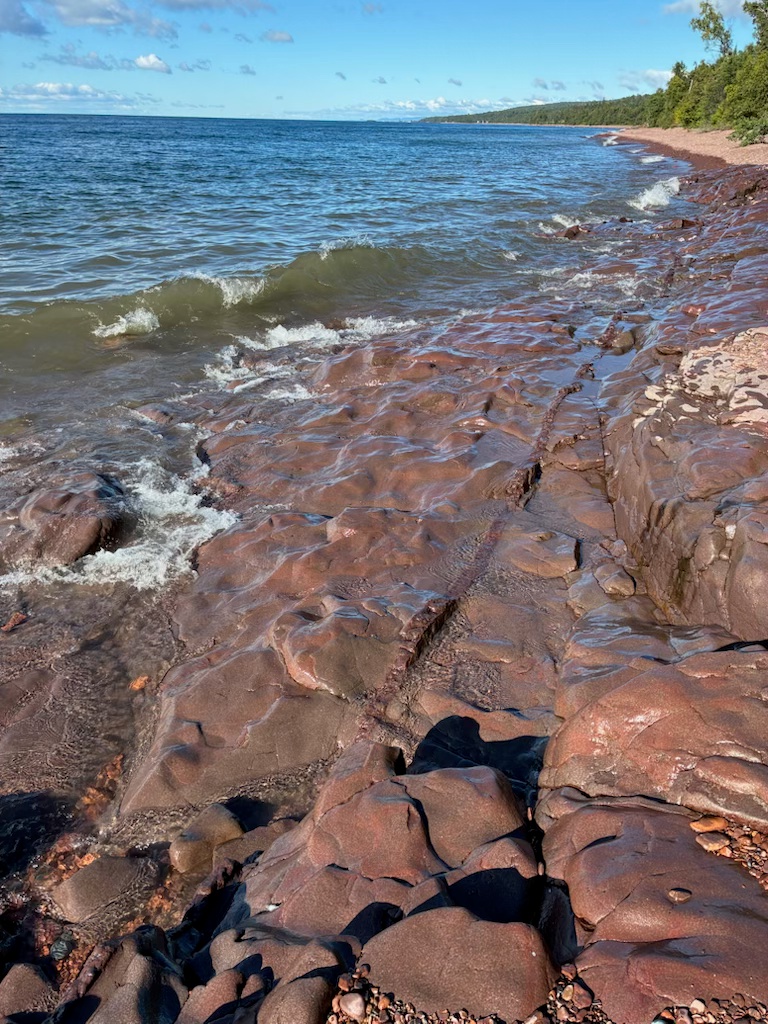
Sometimes, the waves remove most or all of the covering stones to reveal the bedrock. When that happens, you can see The Seam. I’m not a geologist, but to me it looks like a place where the rock cracked open in ancient times, and lava flowed from below to fill in the gap. I absolutely love the days when The Seam reveals itself for my enjoyment.

Stones Covering Bedrock on August 29, 2024
Bedrock and Seam Exposed, August 25, 2025
The Seam on May 23, 2025
The Seam on July 2, 2025
The Seam on August 23, 2025

These three features of the ever-changing Lake Superior shoreline near our Summer Sanctuary have thrilled me for nearly fifty years and never fail to make the summer months especially rewarding.

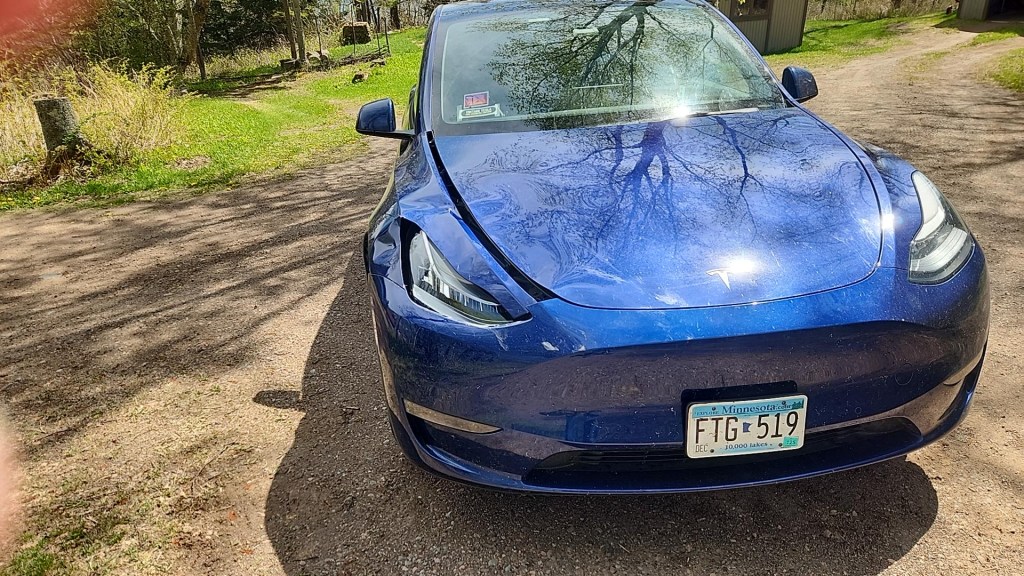
A Lapse in Attentiveness: Unfortunately, there was one aspect of the summer that was not a positive. For the first time in nearly sixty years of driving back and forth on Highway 61, I hit a deer. It was all my own fault. It was a sunny afternoon in May and I was returning from a trip to Duluth with son Brian. As we neared Two Harbors, he began yelling “Whoa! Whoa!” Not expecting to see deer at that time of day, I had failed to notice four of the critters ambling across the highway. I slammed on the brakes and almost managed to stop in time, but I caught the lead deer’s hindquarters with the right front bumper of the car. I imagined him laughing at me as he loped off into the woods.

Damaged by Deer, but Still Drivable

While the damage appeared minimal, it still required a trip to the Tesla Repair Center in Eden Prairie. I dropped it off there on May 29 and had to leave it there until June 12, leaving us with only one car for a couple of weeks. As a big promoter of electric vehicles, I have to admit that the paucity of repair facilities is one downside of Tesla ownership. (I guess that’s an example of what Brian calls a first world problem.)

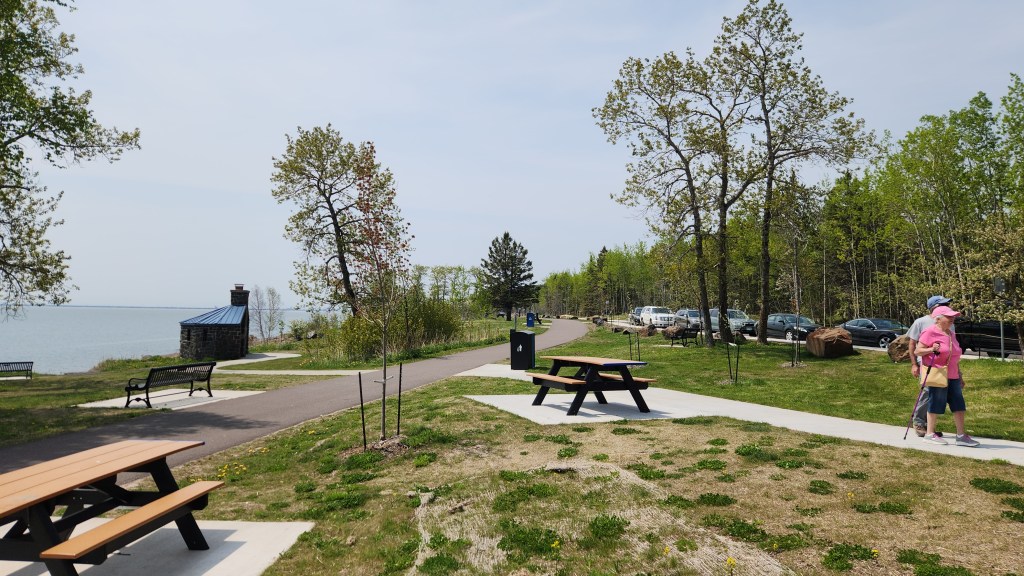
Kitchi Gammi Park: Pat and I stopped at this nice park on the east end of Duluth on our way back to the Summer Sanctuary on June 2, after dropping the damaged car at the repair shop. The park was recently renovated, improving the access drive and adding rest rooms, picnic tables, and children’s play areas. Here are a few photos.

Kitchi Gammi Park
Kitchi Gammi Park
Kitchi Gammi Park
Kitchi Gammi Park

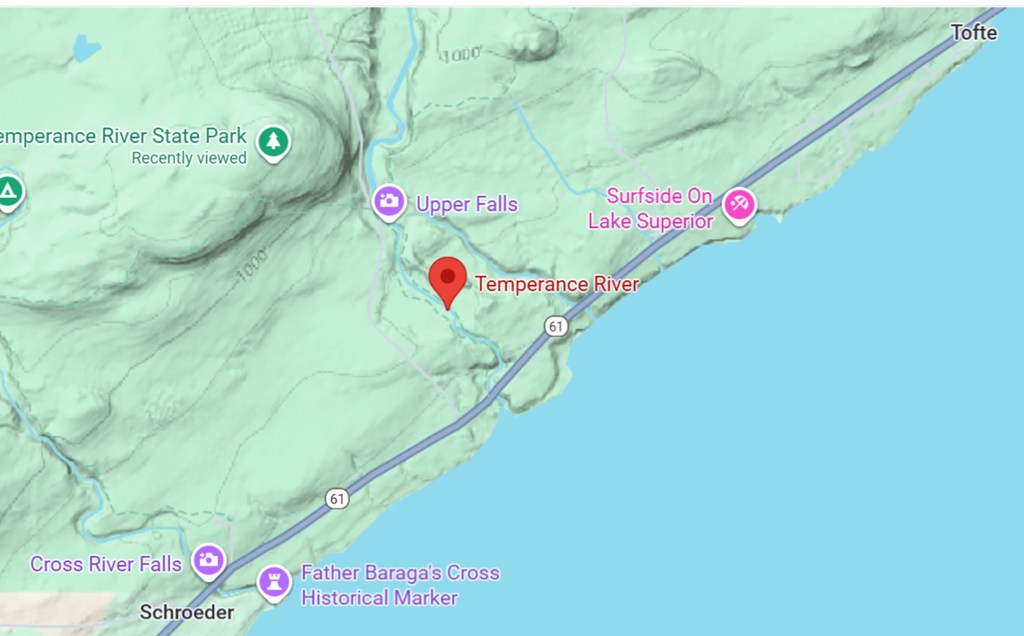
Temperance River: Temperance River State Park, located along Highway 61 between Schroeder and Tofte, is one of eight state parks along the North Shore.

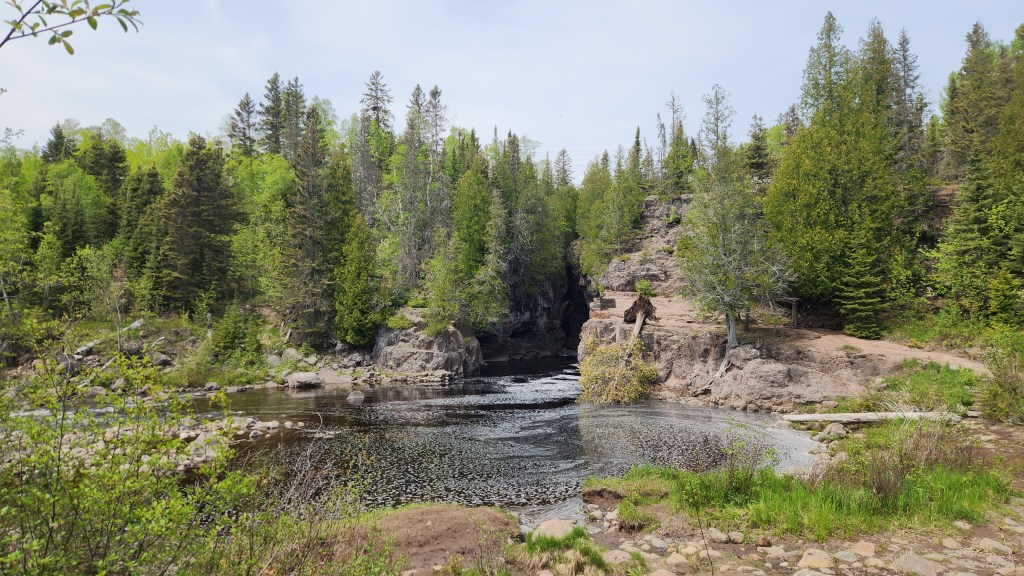
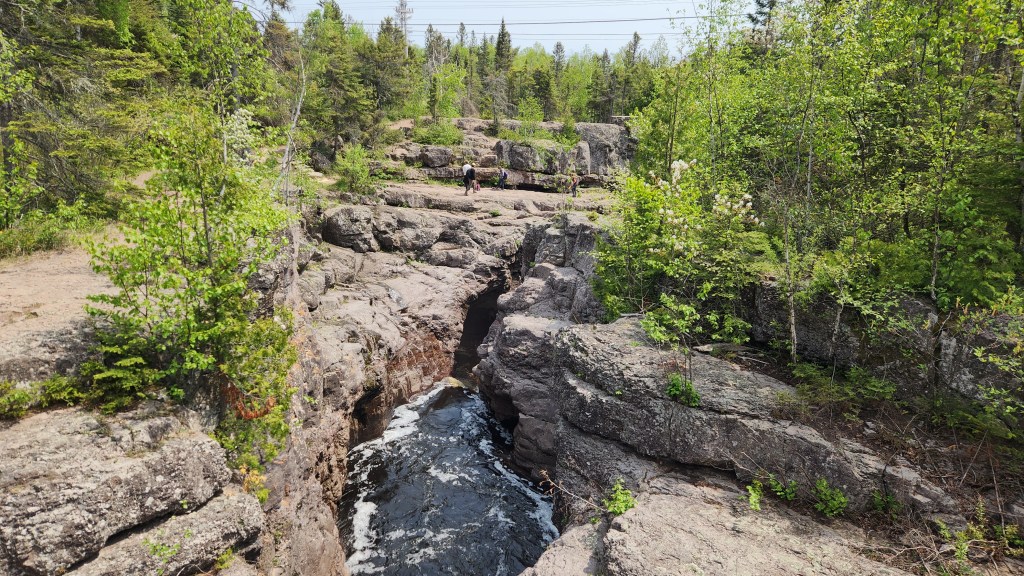
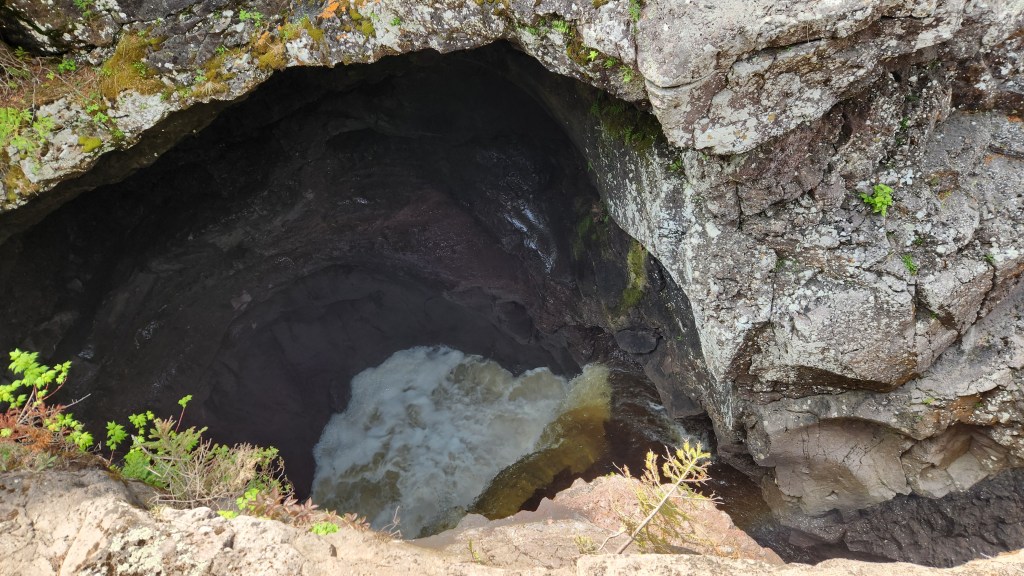
The river owes its name to the fact that it is the only river on Minnesota’s North Shore that has no bar at its mouth. We stopped there on June 2 and spent an hour or so on the hiking trails both upstream and downstream of the highway. The upstream part of the river canyon is extremely rugged, with multiple potholes initially gouged out of the bedrock some 10,000 years ago by powerful torrents of glacial meltwater.

Temperance River Upstream of Highway 61
Pothole in Temperance River

The downstream portion becomes more serene as rapids give way to the gentle river mouth, with no bar as promised by the river’s name.

Temperance River Downstream of Highway 61
Hiking Path Near Mouth of Temperance River
Temperate Mouth of the Temperance River

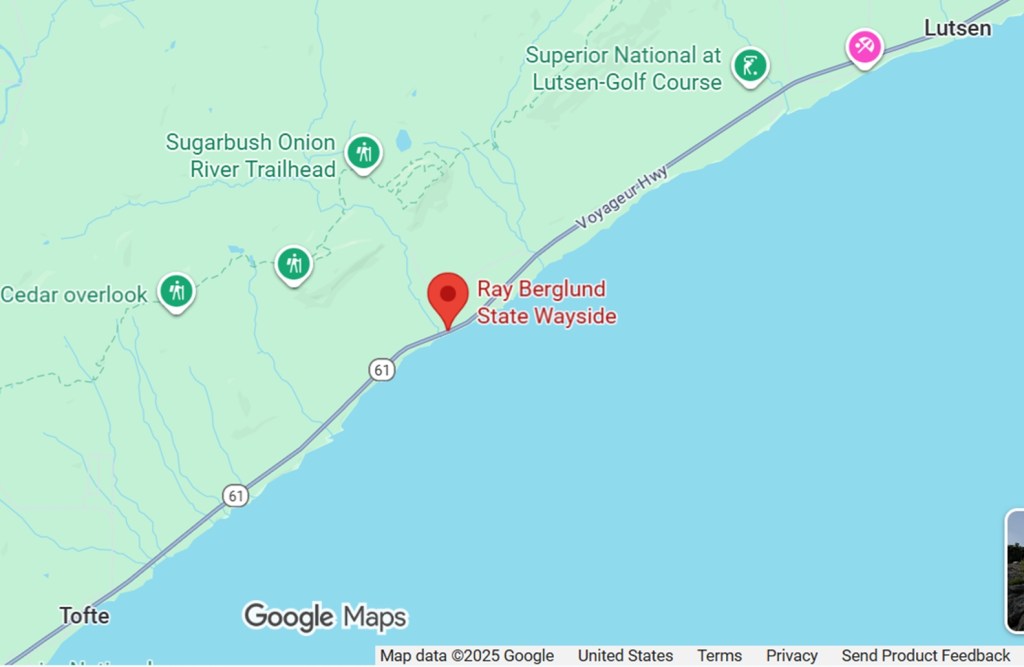
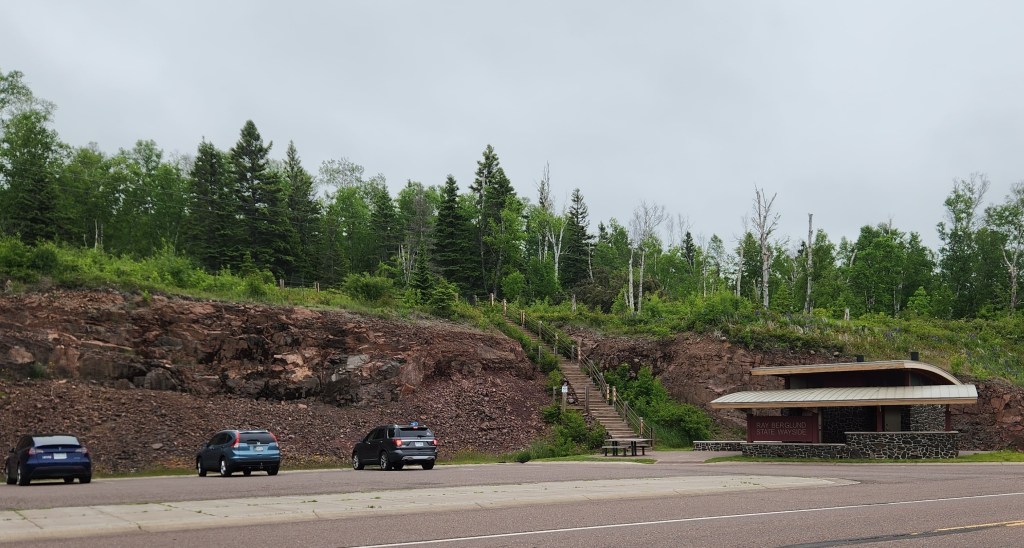
Onion River: The Onion River Trailhead starts at the Ray Berglund State Wayside, located along Highway 61 between Tofte and Lutsen. We drove there from the Summer Sanctuary on June 22 and walked alongside the Onion River for about three quarters of a mile to a bridge where the Gitchi-Gami State Snowmobile Trail crosses the river. The walk through the forest is peaceful and scenic, with limited views of river, until reaching the Onion River Falls, which were flowing very nicely on the day of our visit.

Ray Berglund State Wayside
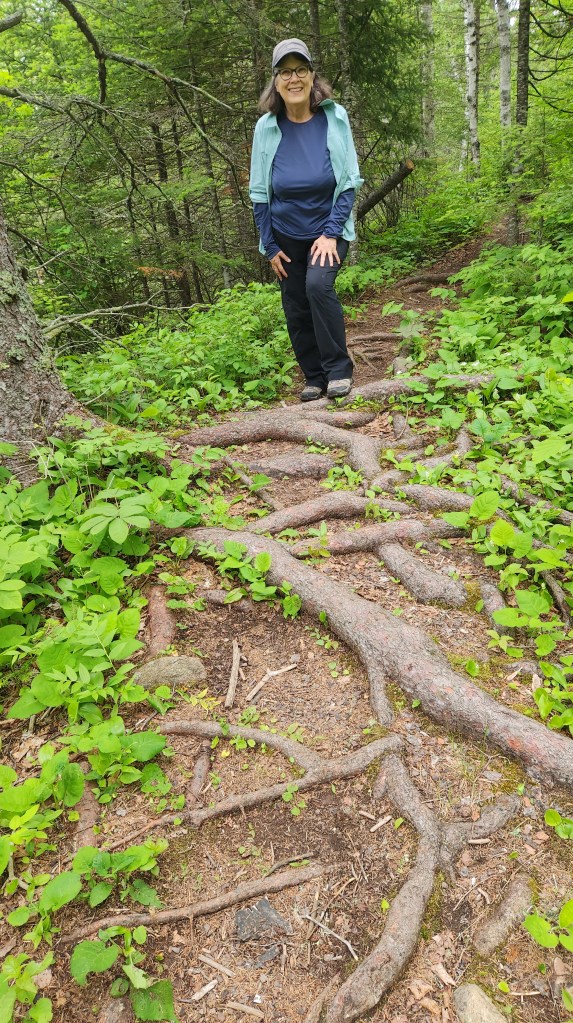
Roots on the Onion River Trail
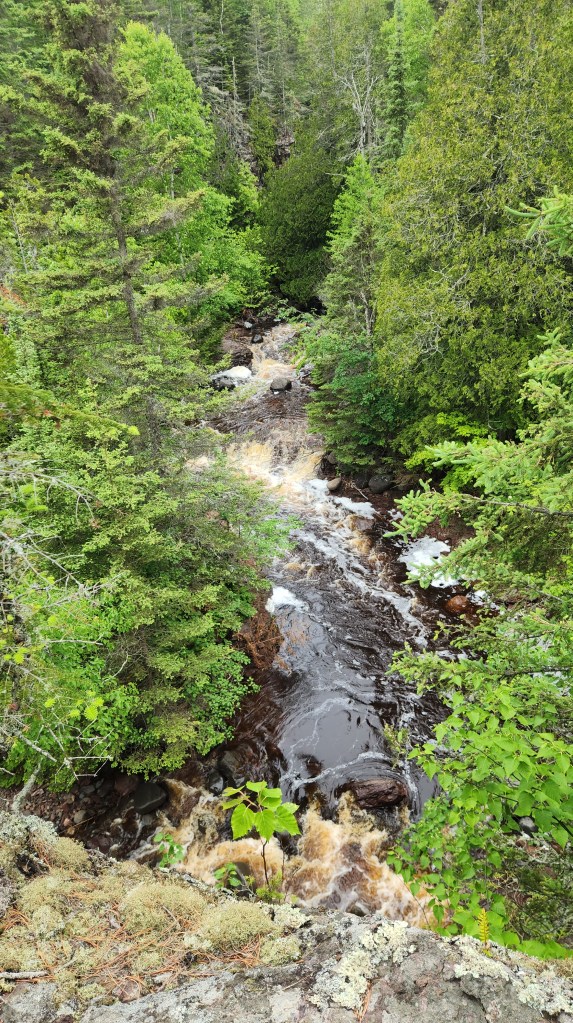
View from Onion River Trail
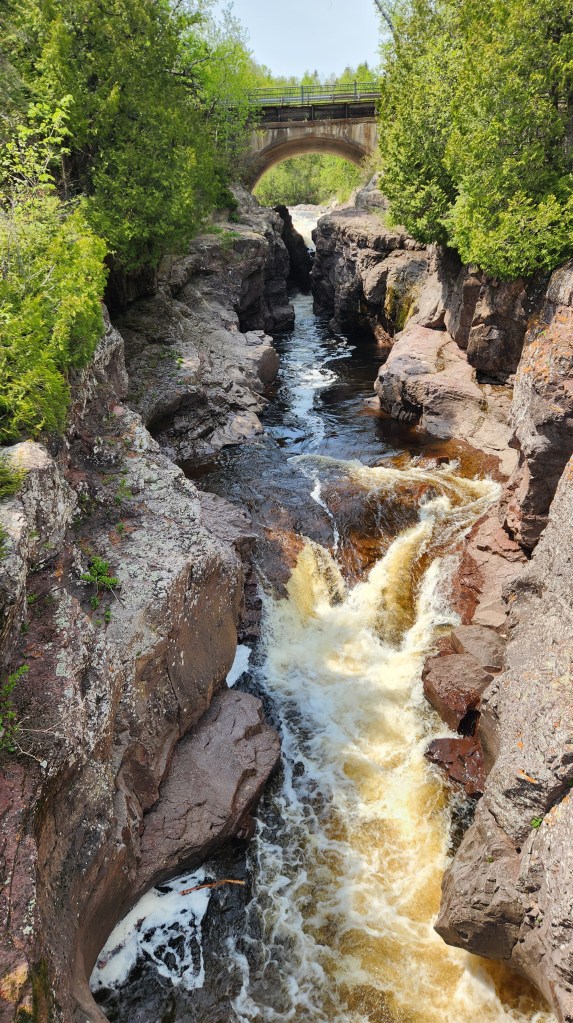
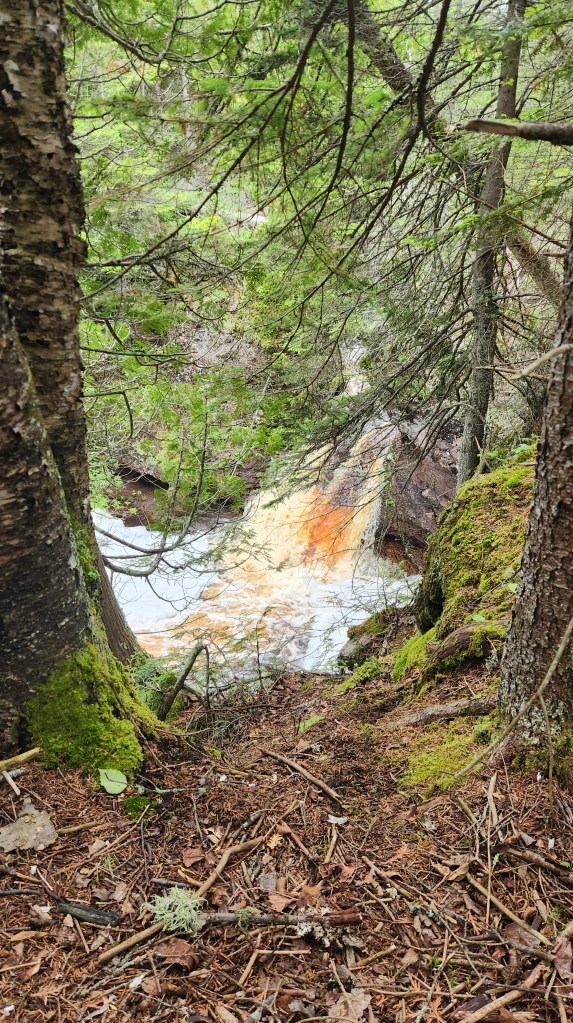
Onion River Waterfall
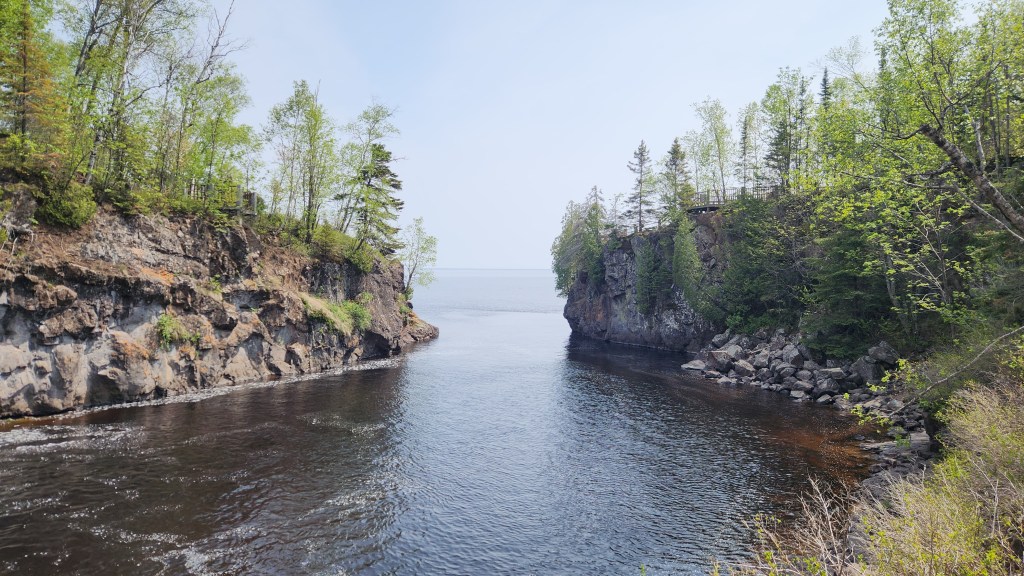
Onion River Seen from State Trail Bridge

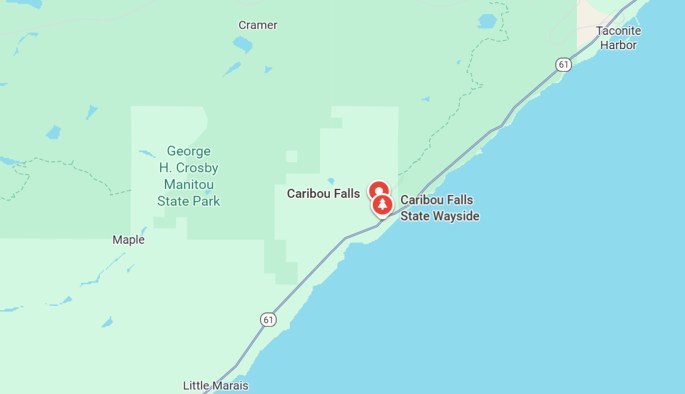
Caribou Falls: This is another nice place to stop when driving to or from the Summer Sanctuary, located between Little Marais and Taconite Harbor along Highway 61. The State Wayside has a nicely paved parking lot and a rest room (handy for those days when too much Dr. Pepper is causing a bloated bladder). A trail heads north from the parking lot to the Caribou Falls. Here are some photos from June 30, when Pat and I stopped for the 1.3-mile hike and were rewarded with a spectacular view of the falls from an excellent access stairway.

Caribou Falls Trail
A Gentle Pool in the Caribou River
The Caribou Falls
The Caribou Falls

OK, that’s it for Part 1. Thanks for reading, and stay tuned for Part 2, in which I’ll cover several more highlights from the summer season.

Pat and Dave’s Winter Warmup – PART 3: Road Trip Home

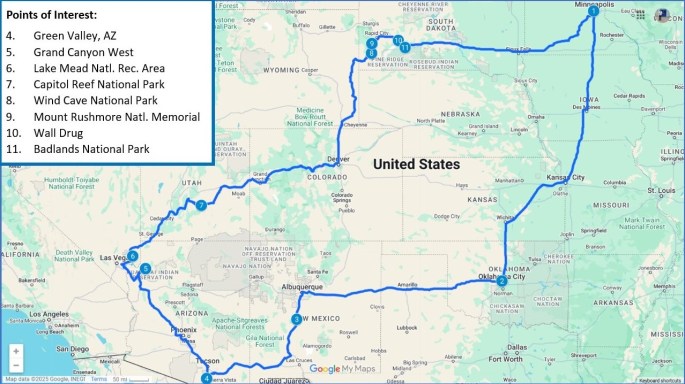
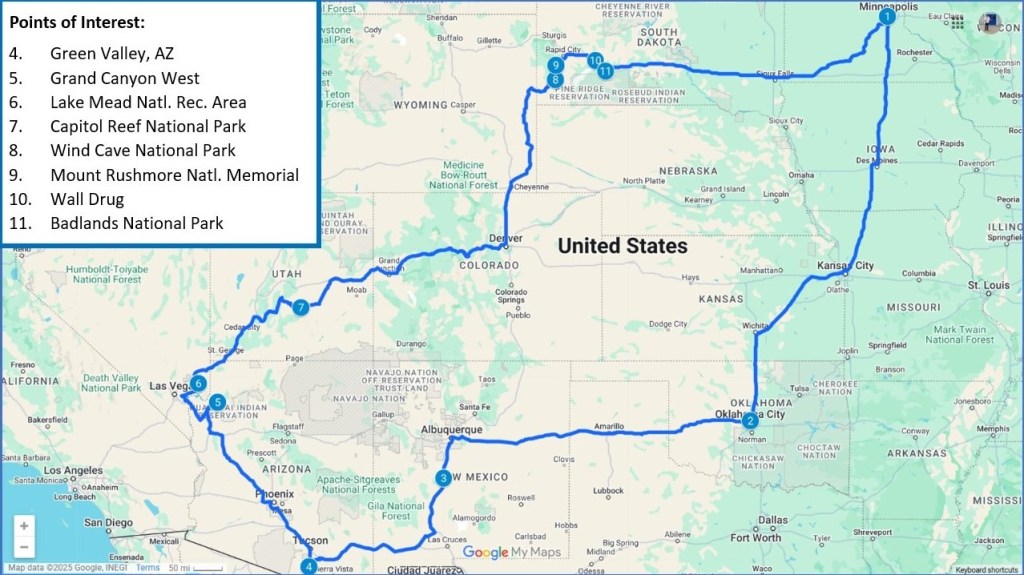
Part 2 of this travel blog series described the places of interest we saw in and around Green Valley, AZ. This final installment describes the fun stuff we did as we drove back home to Minneapolis. As a reminder, here is a map of the overall journey, including the main points of interest covered in this installment:

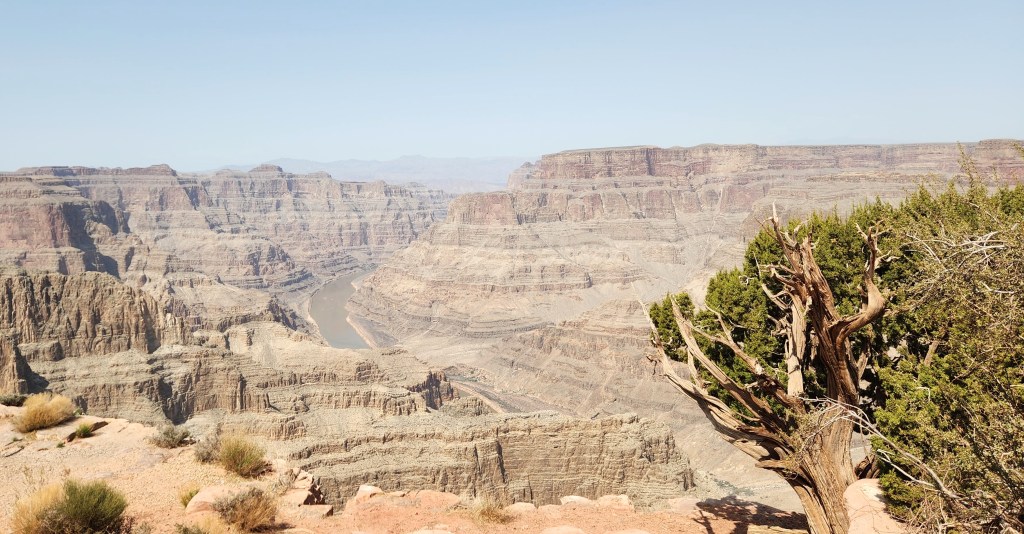
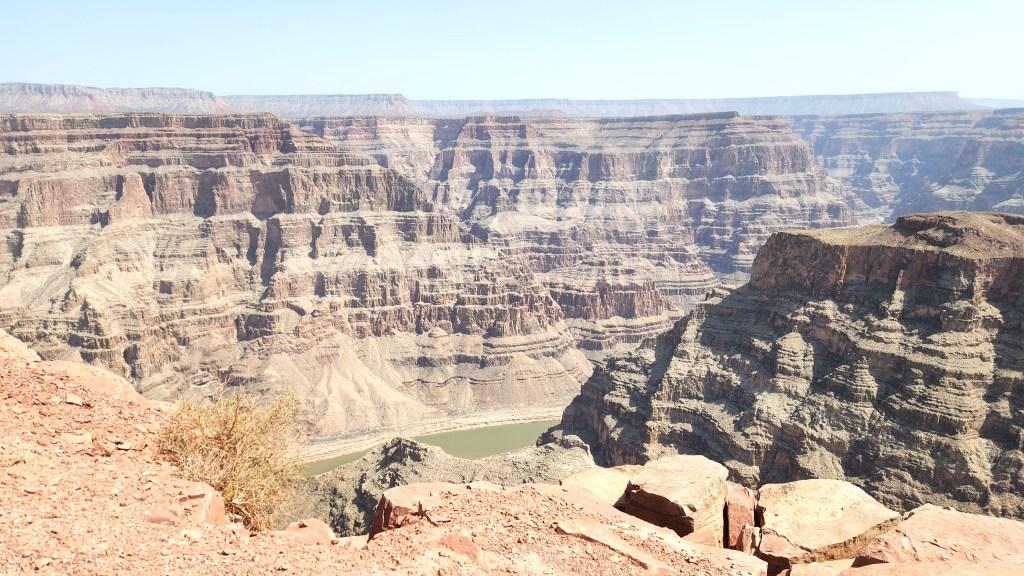
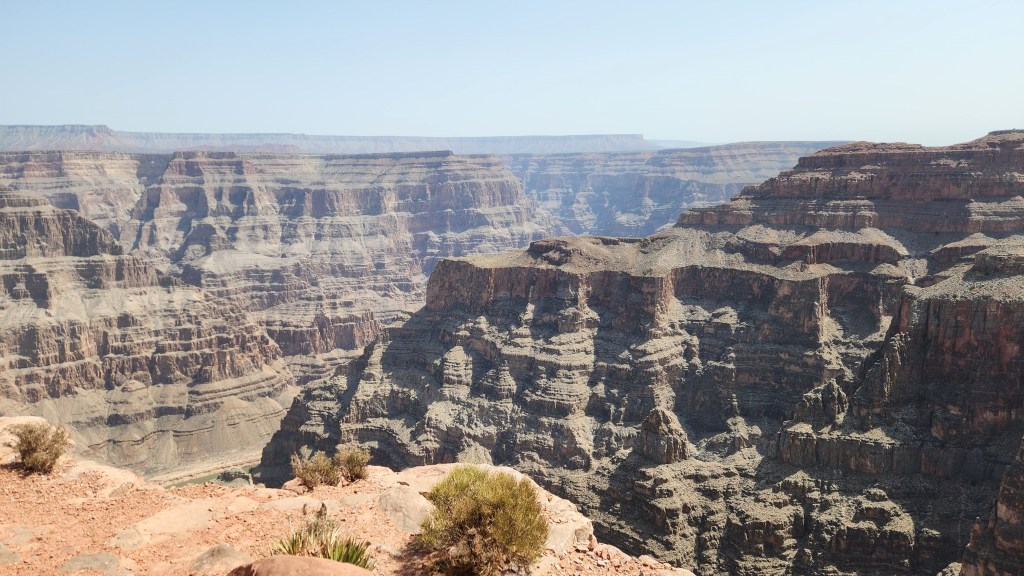
Grand Canyon West: We departed from the Canoa Ranch Golf Resort at 8:30 AM on Friday, March 28, heading northwest toward Kingman, AZ, where we stayed the night. On Saturday morning, we drove north toward Grand Canyon West, the recreation area owned and operated by the Hualapai native American tribe and best known for the Skywalk, which is billed as “a horseshoe-shaped bridge made of glass allowing visitors to walk 4,000 ft above the canyon floor.” (More about that language later.)

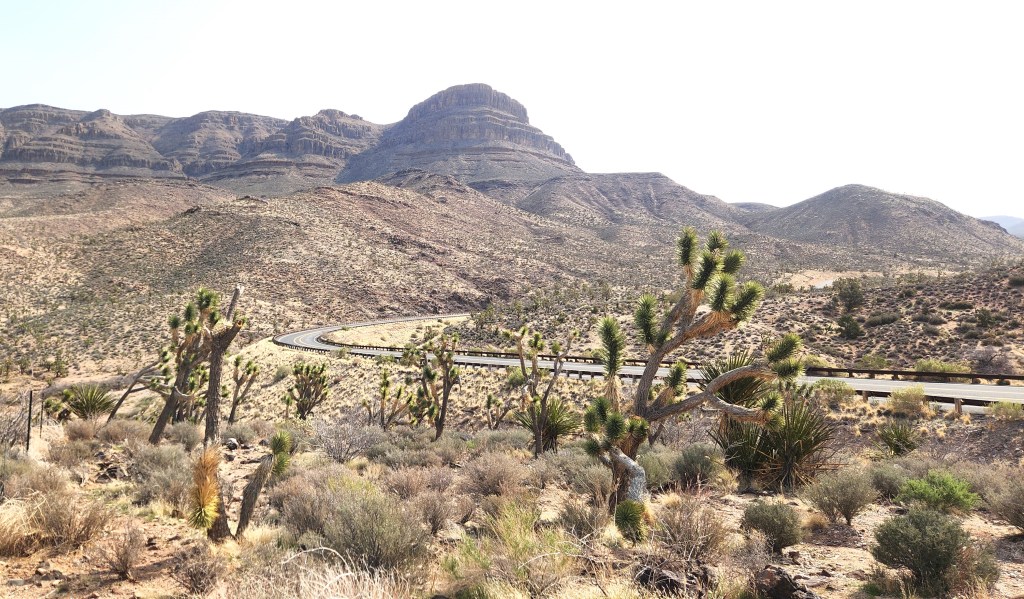
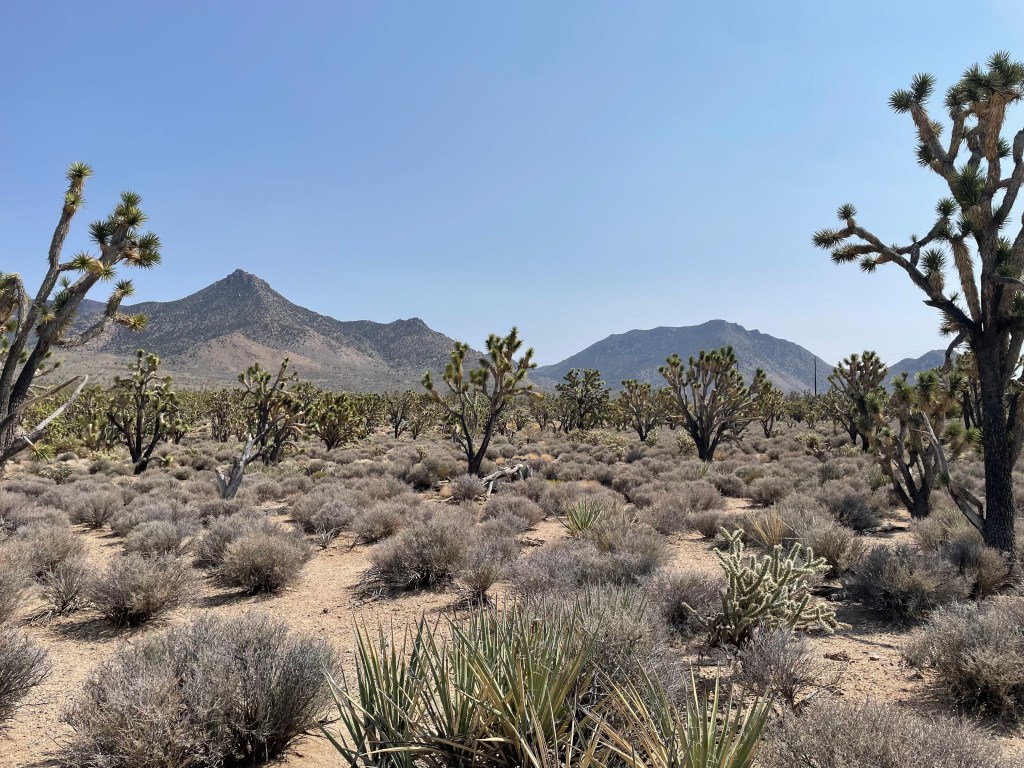
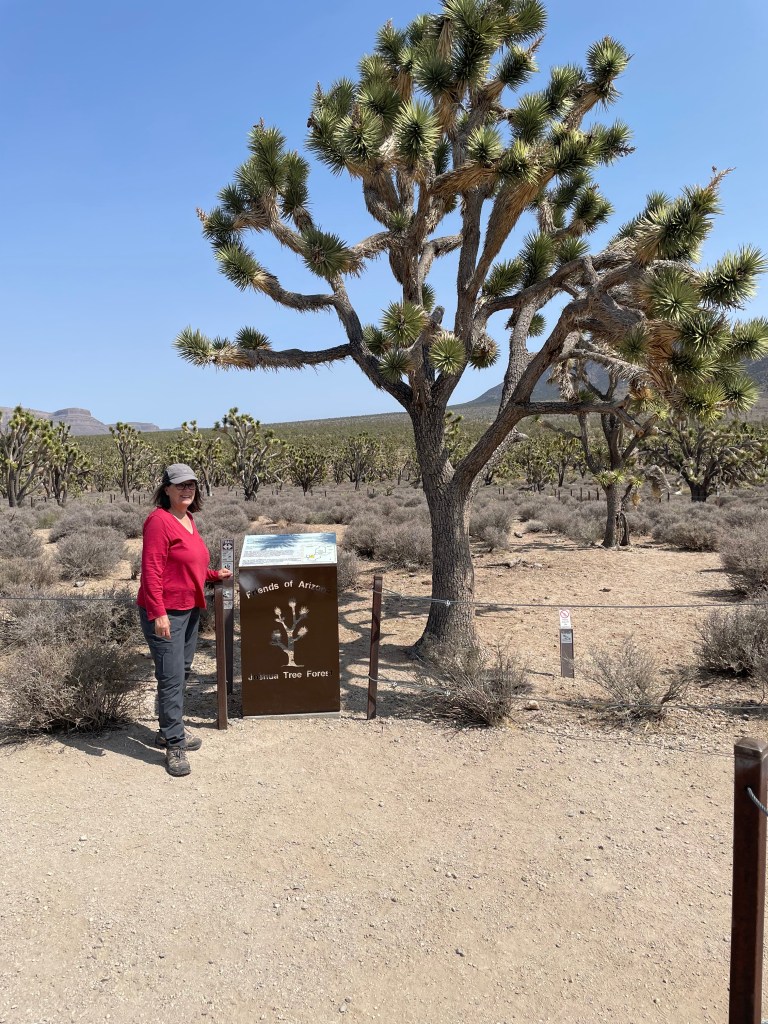
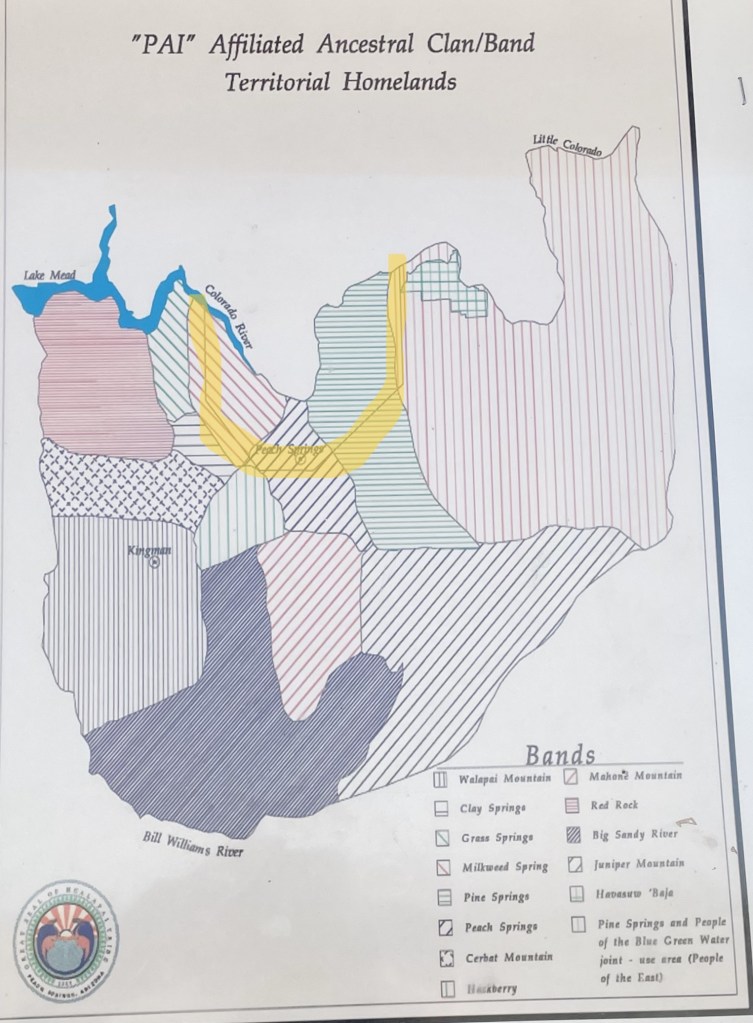
After driving for some 40 or 50 miles through dry scrubland which seemed to be used almost exclusively for cattle grazing, we were quite surprised to find ourselves driving past Joshua trees, then what appeared to be thriving orchards growing nut trees of some sort, perhaps walnuts. As we continued in a northeasterly direction toward Grand Canyon West, the Joshua trees became more and more abundant, until they completely dominated the landscape. Road signage informed us that we were in the Arizona Joshua Tree Forest, which seemed to me to have many more Joshua trees than the more well-known Joshua Tree National Park located 230 miles to the southwest in California. We stopped at a nice little nature preserve where we admired the trees and other desert flora and also learned something about the Hualapai tribe.

View from an Overlook in the Arizona Joshua Tree Forest
Nature Preserve in the Arizona Joshua Tree Forest
The Joshua Trees are Healthy and Robust
Map of Former Hualapai Territorial Homelands (Current Hualapai reservation approximate outline is shown in yellow)

We arrived at Grand Canyon West at about 12:30 to find the huge parking lot something like 10% occupied by vehicles. We strolled over to the Visitor Center, where the electronic tickets I’d purchased the day before were scanned and we boarded a bus to take us a few miles north to Eagle Point, the first of two stops near the canyon rim. Its name derives from the huge natural rock formation resembling an eagle with outspread wings. Once there, I scanned my ticket to enter the famous Skywalk, while Pat wandered around nearby – she was too much of a chicken to go on the Skywalk.

Eagle Point Visitor Center
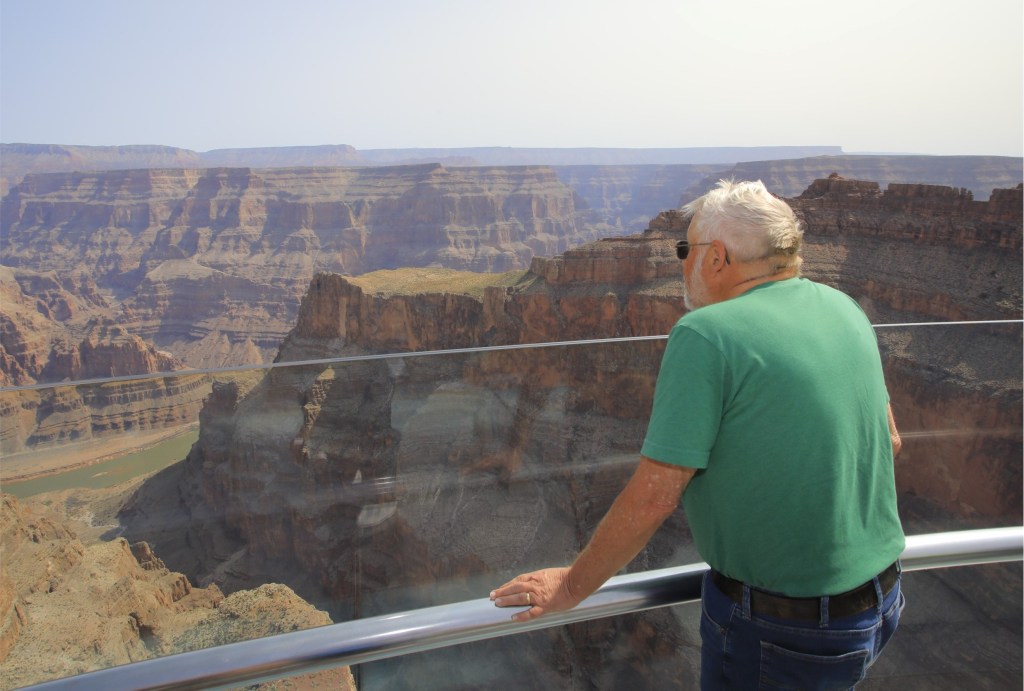
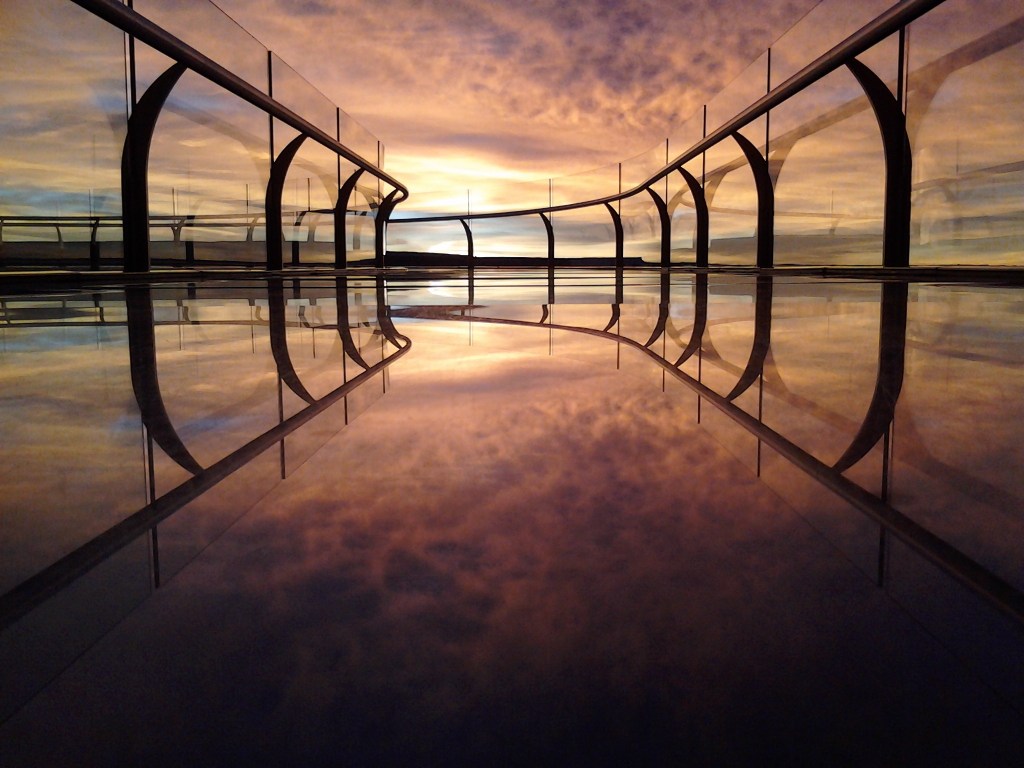
Admiring the View from the Skywalk
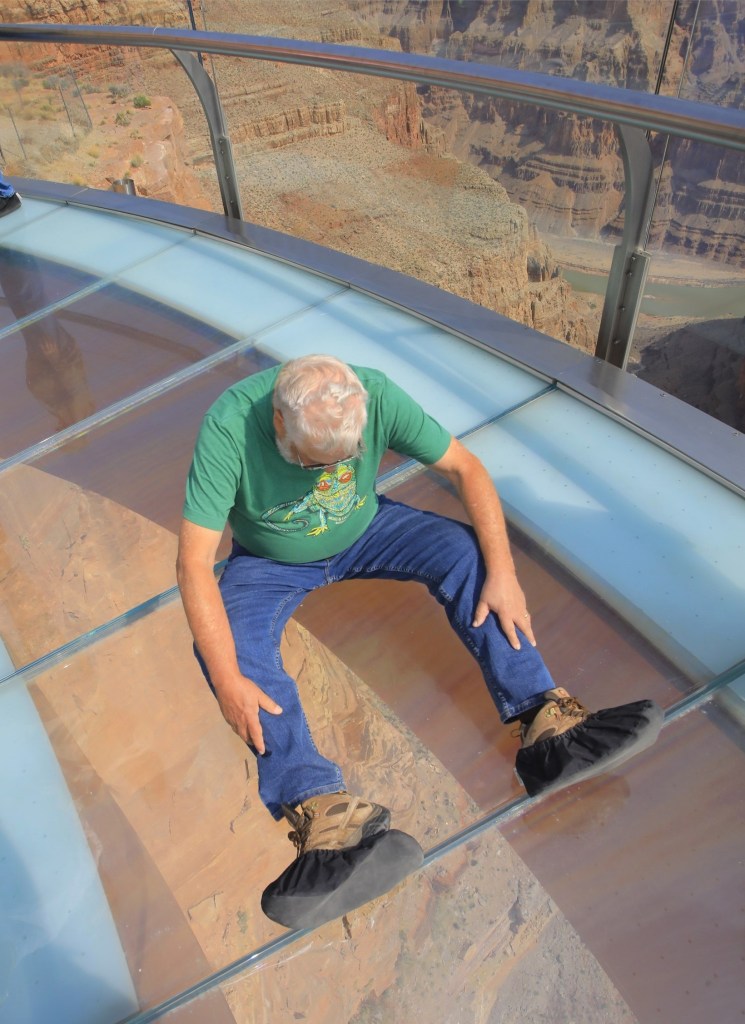
It’s actually not scary at all
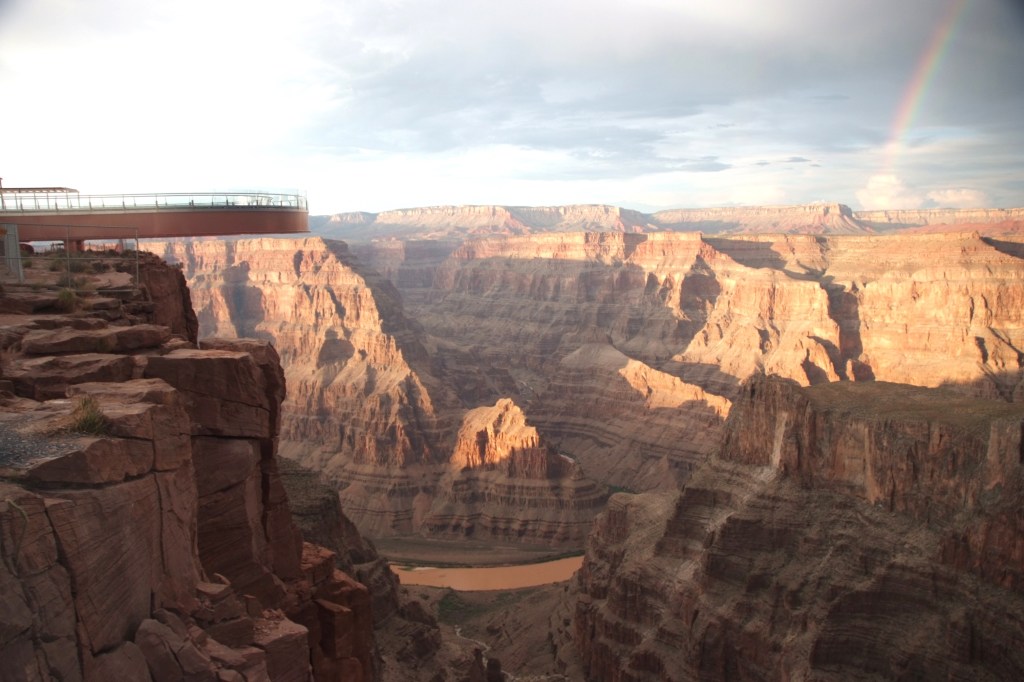
Marketing Photo of Skywalk by Hualapai Tribe
Another Marketing Photo

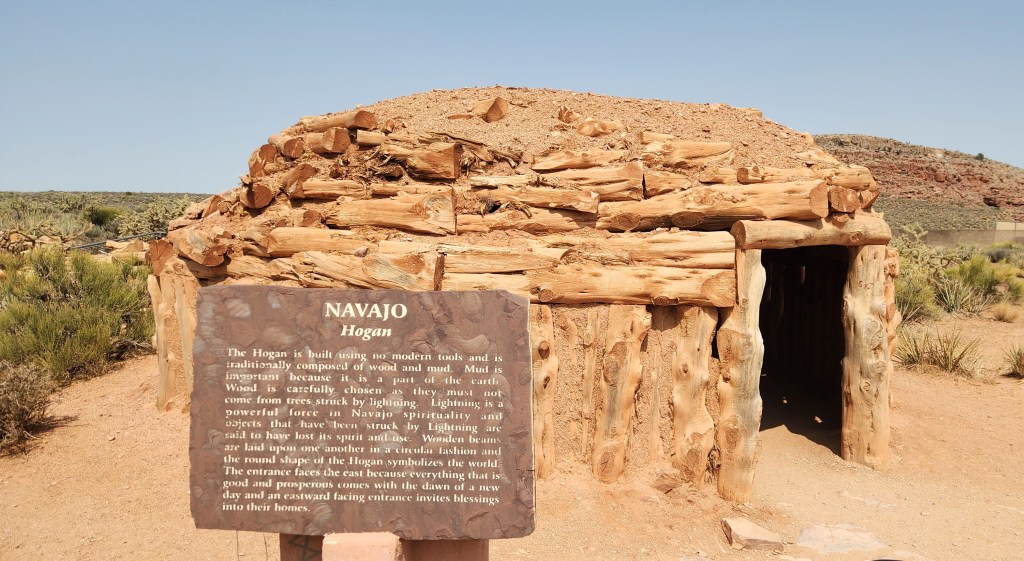
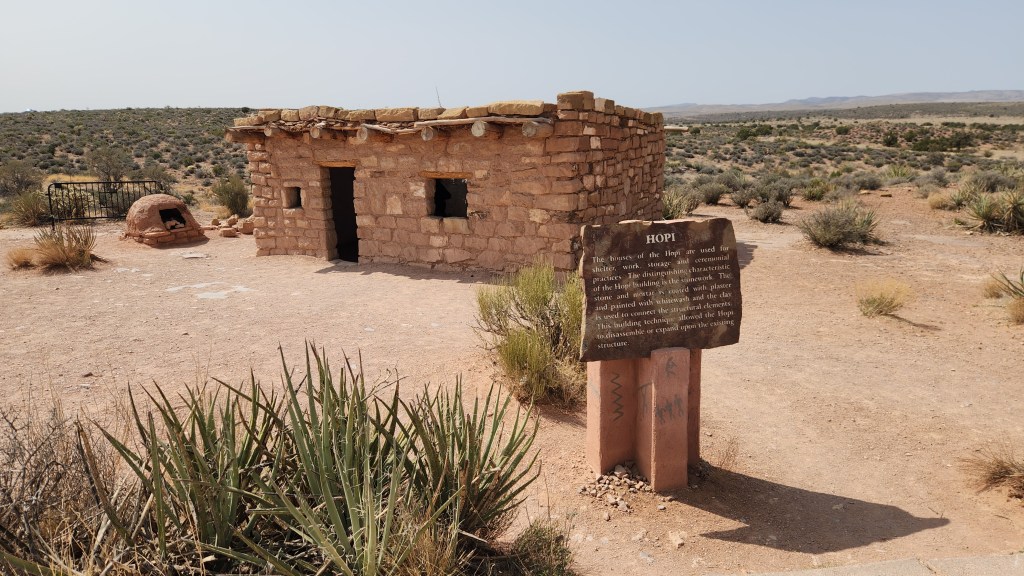
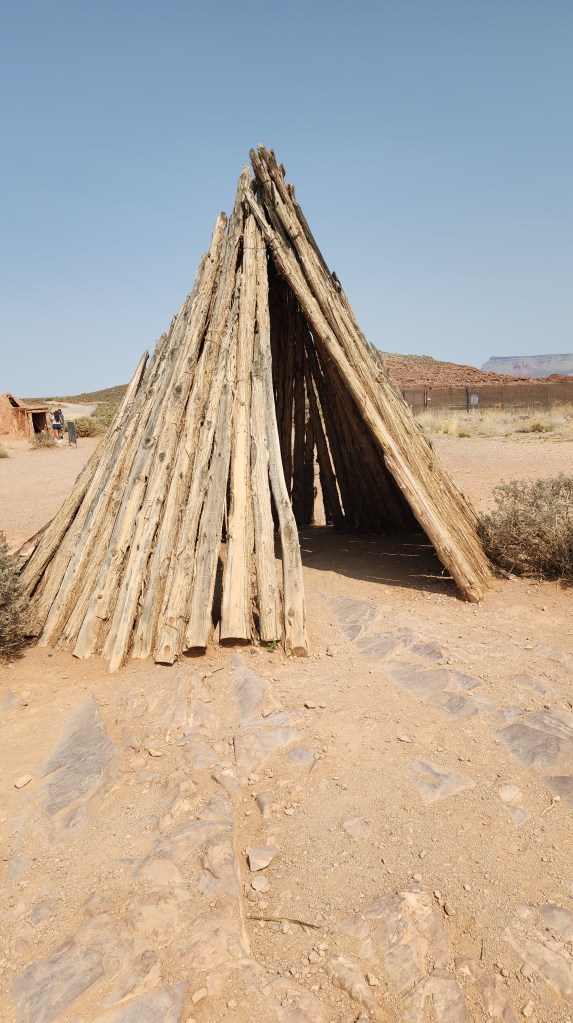
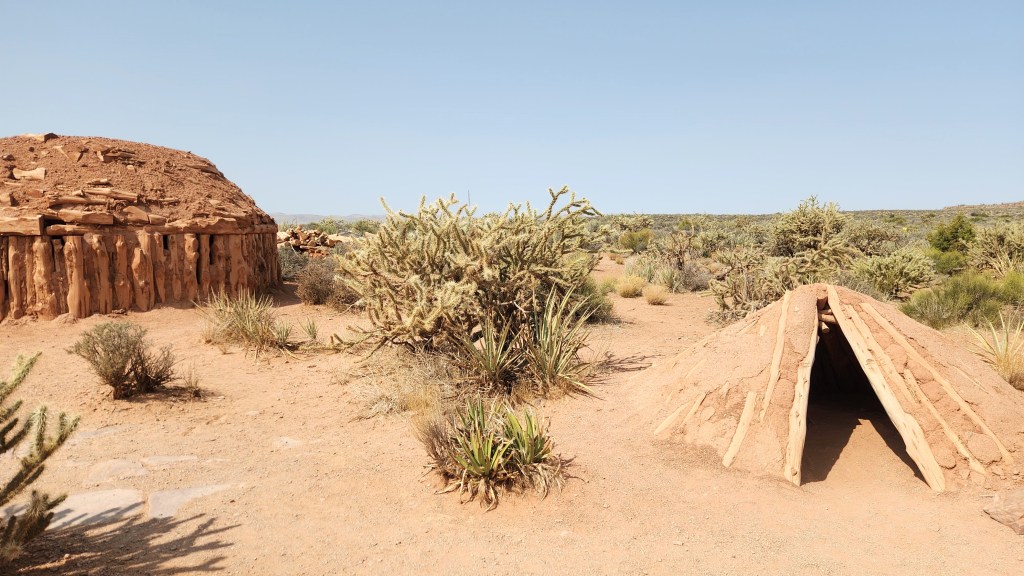
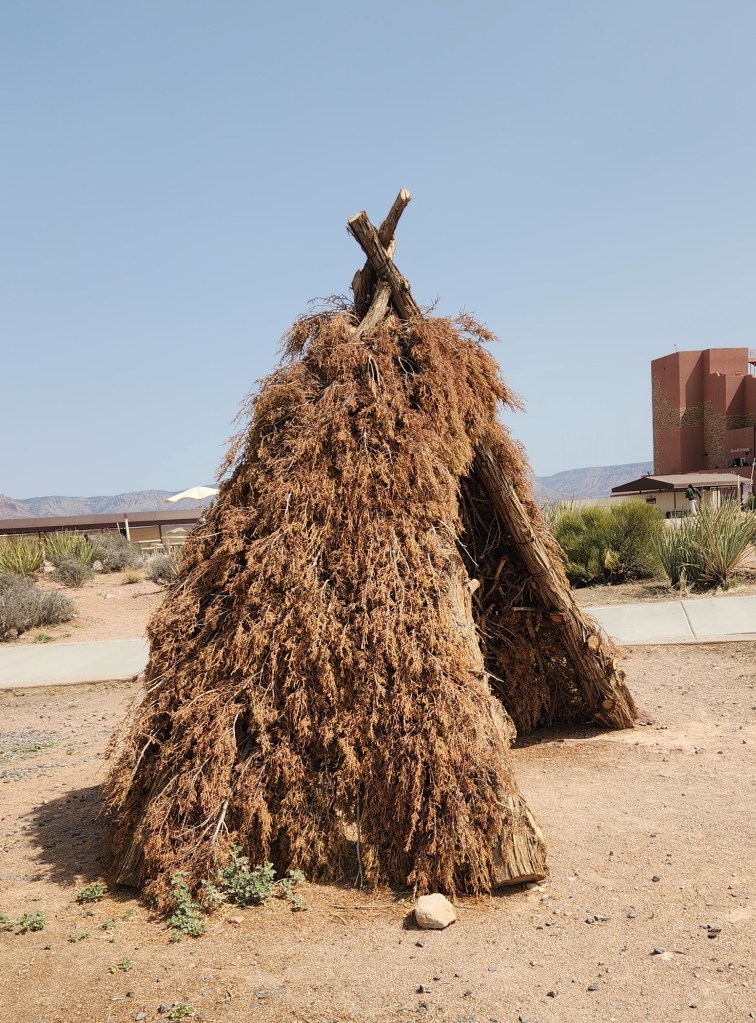
After the Skywalk, we walked along the canyon rim and then along a loop trail that passed by several types of traditional native American dwellings and structures. Pat and I both felt that the Hualapai tribe has done a very nice job of providing educational materials honoring the cultures of their own and other neighboring tribes.

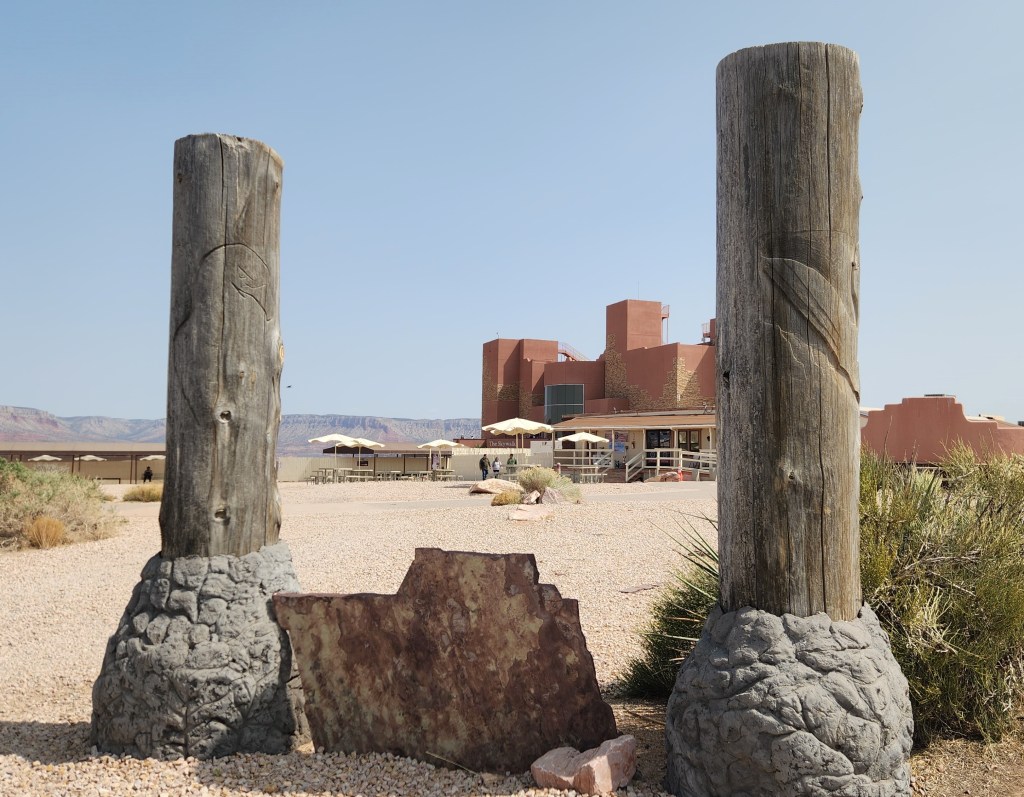
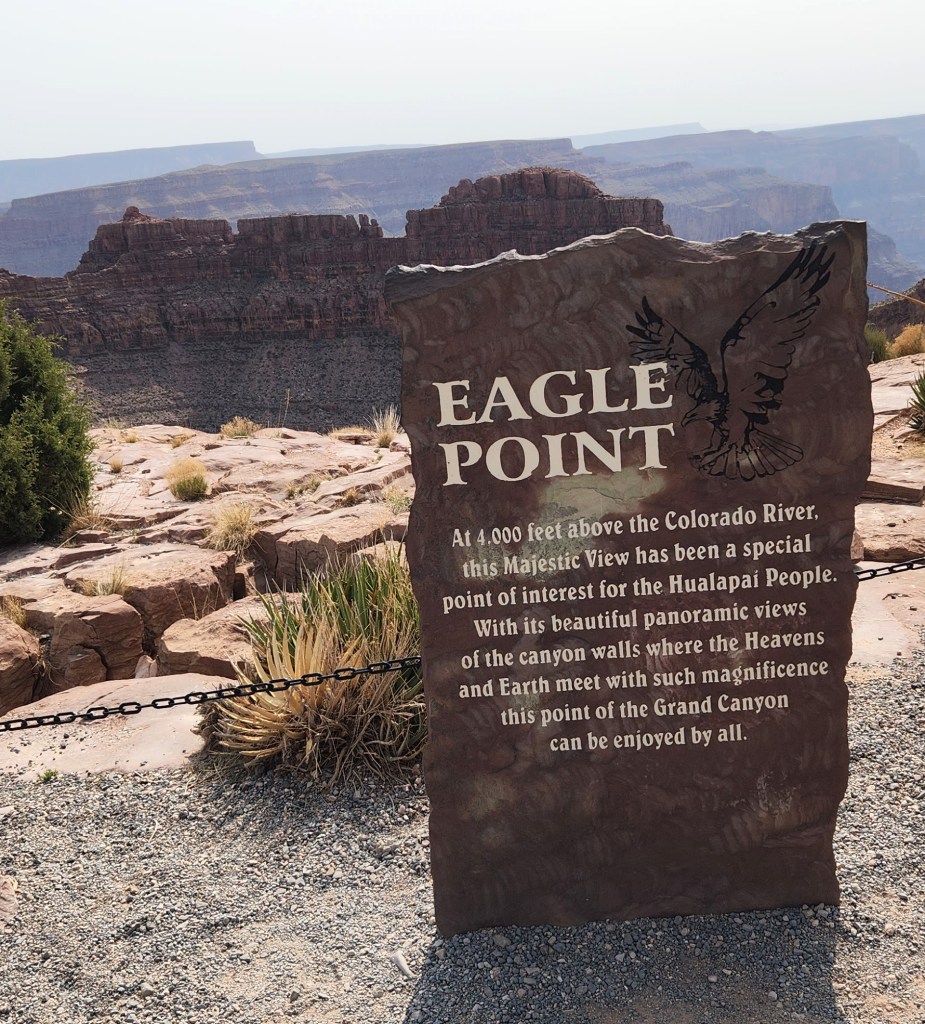
Eagle Point Marker in front of Eagle Rock Formation
The Eagle’s Head is in the Middle, the Wings Outspread to Either Side
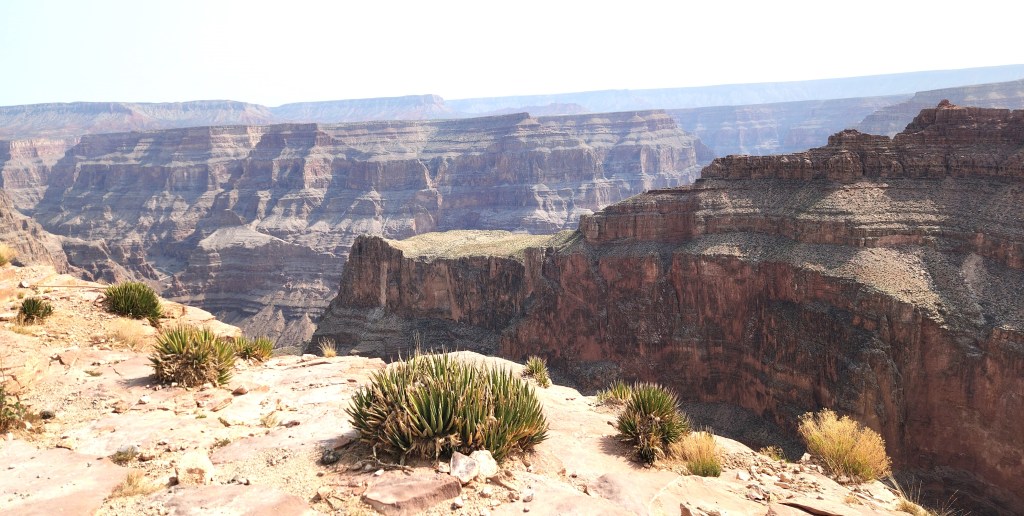
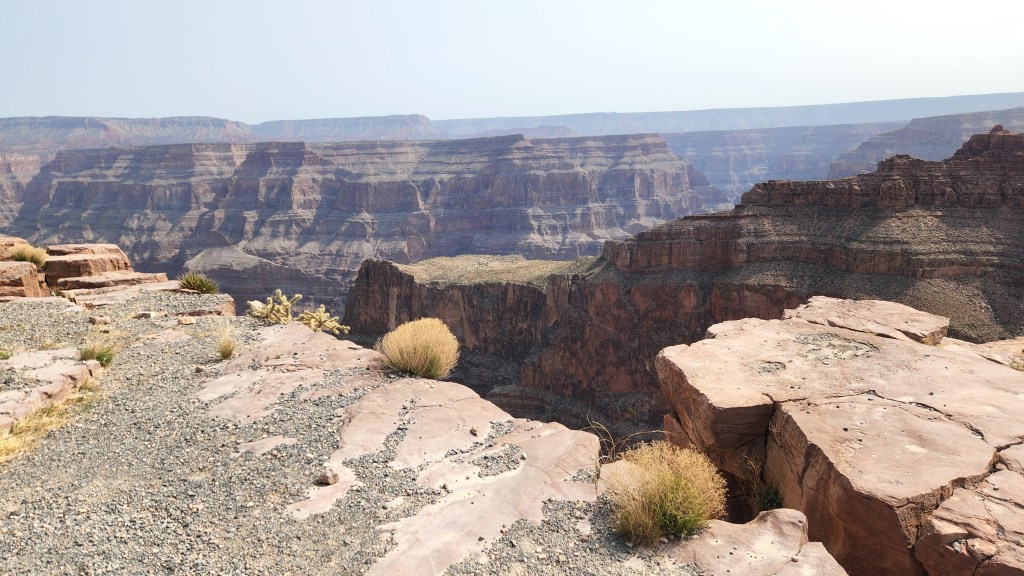
View from Eagle Point Canyon Rim
Navajo Hogan on Eagle Point Loop Trail
Hopi Dwelling on Eagle Point Loop Trail
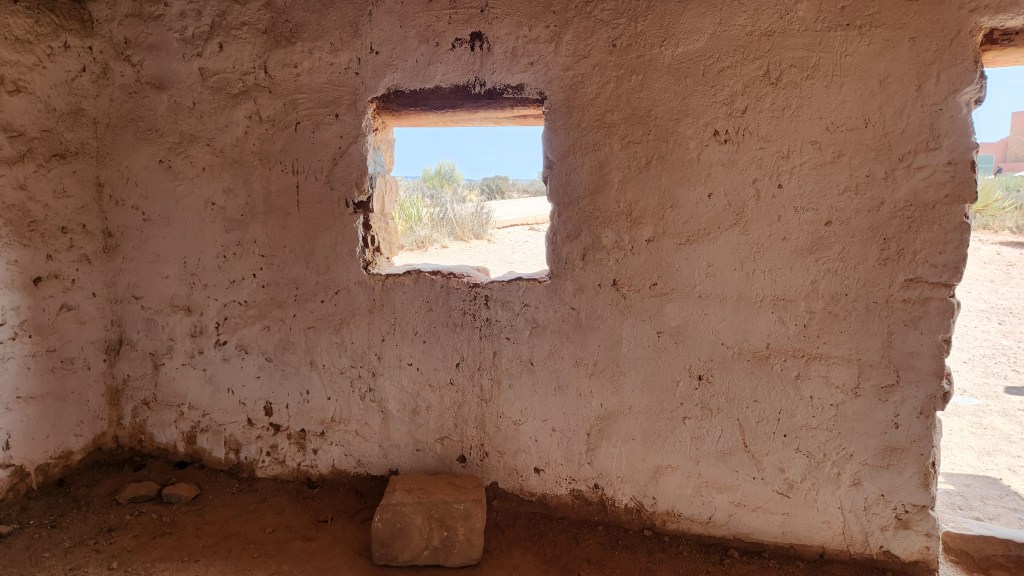
Interior of Adobe Dwelling
Dwelling Structure on Eagle Point Loop Trail
Interior View of Dwelling
Along the Eagle Point Loop Trail
Dwellings on Eagle Point Loop Trail
Dwelling On Eagle Point Loop Trail

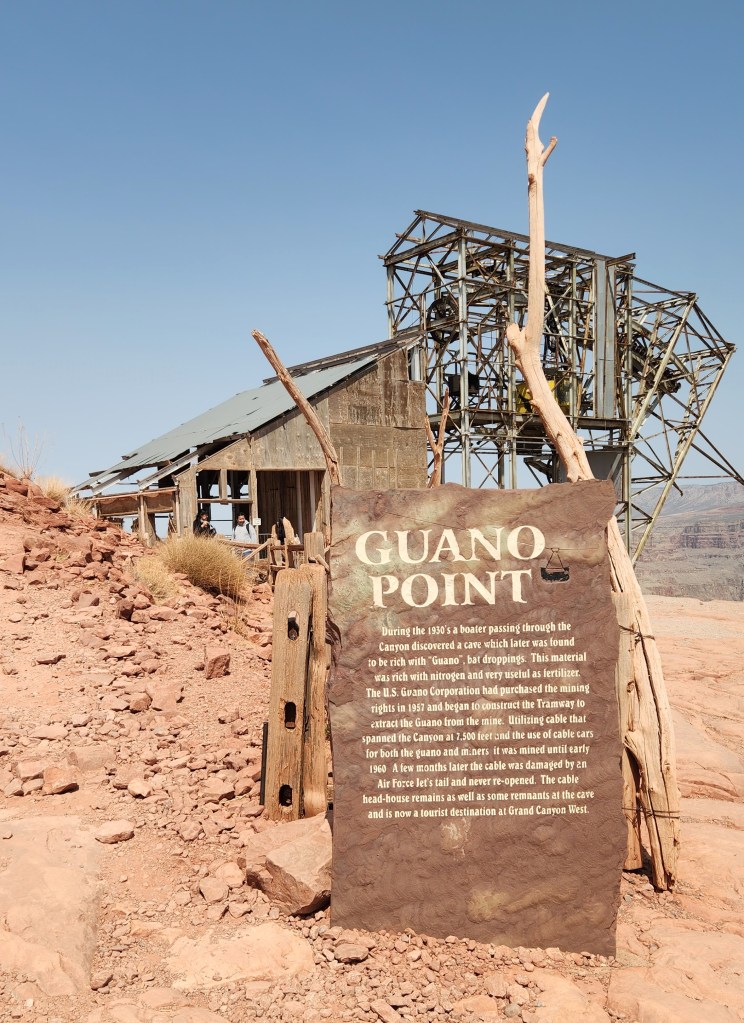
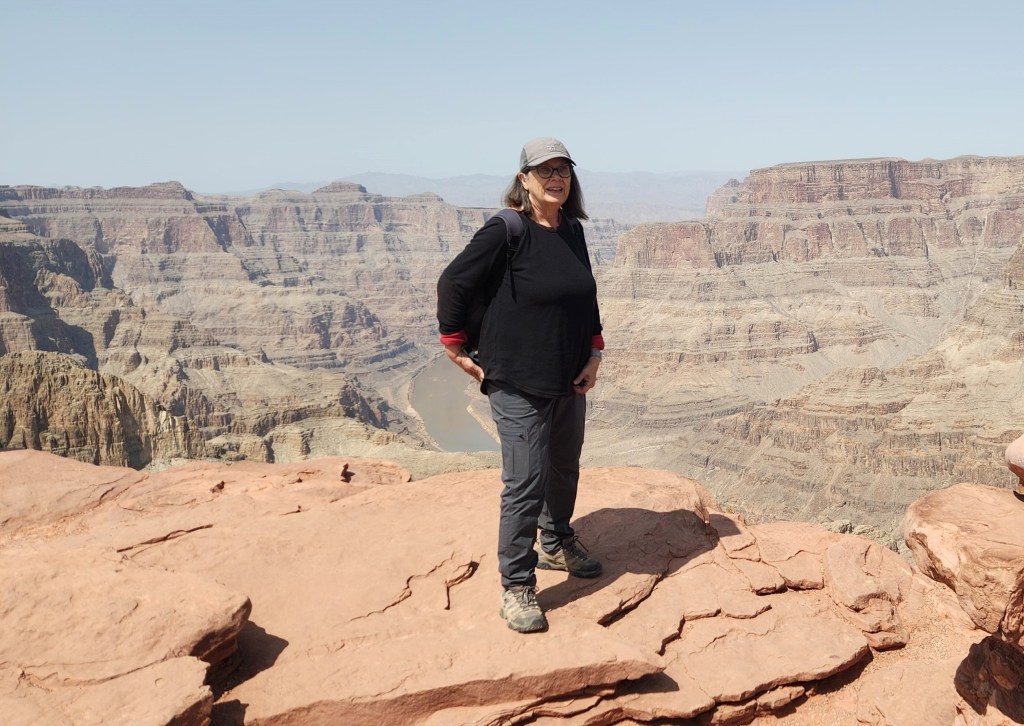
We then boarded the bus again for a short drive to the second stop, Guano Point. This name came about as a result of a bat cave discovered by boaters on the Colorado River in the 1930s. They successfully sold their dream of riches from guano mining to the U.S. Guano Corporation, who constructed a tramway system to extract guano from the cave to the canyon rim at what became known as Guano Point, as well as roads to transport the valuable shit to market. The cave’s guano supply, having been vastly exaggerated by the original discoverers, ran out in 1959. To add insult to injury, a U.S Air Force Top Gun wannabe wiped out the tram cable while hot dogging in the canyon some years later. Presently, the tramway structures have been left intact as a monument to man’s attempt to mine the Canyon, and the roads built by the mine operators are now used for Grand Canyon West tourism buses. At any rate, we disembarked at Guano Point, had a nice lunch of pulled pork and coleslaw, and walked around the site with our mouths agape as we took in the stunning views.

Guano Point Tramway Structure
Guano Point Canyon Rim
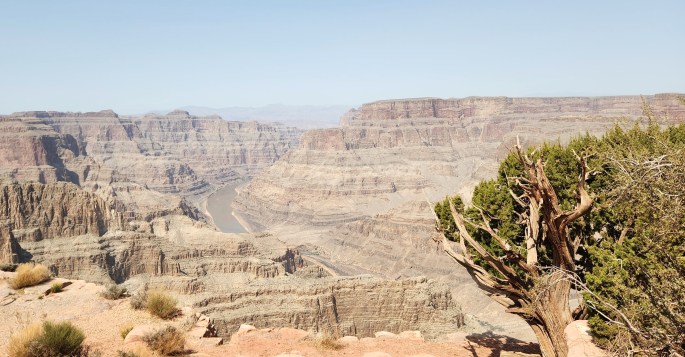
View from Guano Point Canyon Rim

As we were leaving the recreation area, the Visitor Center had become jam-packed with people and the number of cars in the parking lot had probably quadrupled or more. This bore out the advice we had heard that the busiest times were between about 1 and 4 PM.

Before I move on to our subsequent points of interest, let me say a few words about the Skywalk and the recreation area in general. Perhaps you will have noticed from the words I quoted above that the Hualapai do not actually state that the Skywalk overhangs the Grand Canyon, although I suspect most people think it does – until they actually visit the place. You’ll notice from the pictures above that the Skywalk, while in fact some 4,000 feet higher than the Colorado River, does not actually extend beyond the canyon rim. Once I thought realistically about it, I realized that it would probably be impossible to construct such a structure – it would need to be extremely long, would probably cost billions, and would probably cause irreparable damage to the natural beauty of the canyon. The Skywalk does provide beautiful views of the canyon from an entirely safe vantage point, actually much safer than walking near the canyon rim, and does provide a feeling of being suspended in the air. It’s a great marketing “hook” and probably is the primary reason that many people go to the recreation area. In fact, it’s what hooked me.

At first, I was a bit annoyed by this discovery, but the sheer beauty of the rugged overlooks at Eagle Point and Guano Point were well worth the price of admission. Our experience at Grand Canyon West was much more intimate than our visits to the Grand Canyon National Park. The crowds were smaller, there were no CCC-built walls along the rim, leaving a much more natural view, and the vistas were as spectacular as anything at the National Park. If anyone asks me which of the two places to visit, I’d say go see both. They each offer something a bit different and very rewarding. Oh, and I failed to mention that the Hualapai recreation area also has a zipline for the adventurous, which both Pat and I were too chicken to try.

I’ll add one final note regarding the Hualapai tribe and their great success in drawing tourist dollars to their reservation. I learned that Guano Point is sacred to the Hualapai for a very poignant reason. In 1874, the U.S. military forced the Hualapai people to march from their traditional lands in western Arizona to a relocation camp at La Paz, on the Colorado River Indian Reservation. This journey was physically demanding and resulted in many deaths due to disease and lack of resources. Many Hualapai weren’t able to escape the “Long Walk to La Paz.” These tribespeople, called the lost souls, jumped off the canyon edge to their deaths at what is now called Guano Point rather than be captured by the military. The tribe was eventually given their own reservation, a small portion of their ancestral homeland, and allowed to return. I find it very hard to begrudge a people so resilient as to have reestablished themselves once again and discovered a way to thrive in the modern world. Far from feeling “fleeced” by the slight deception regarding the Skywalk, I’m thrilled that Pat and I got to experience this special place.

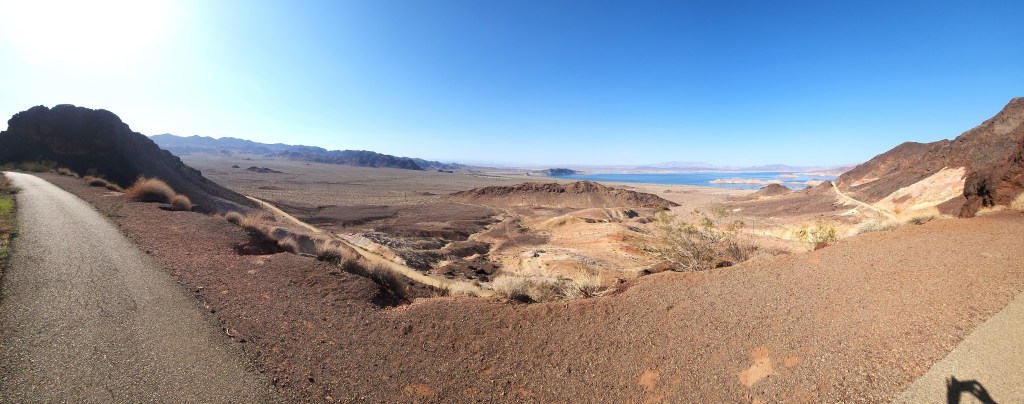
Lake Mead National Recreation Area and St. George, UT: After leaving Grand Canyon West, we drove to the Hoover Dam Lodge, overlooking Lake Mead, to spend the night. On Sunday, March 30, we drove to Richfield, UT, via St. George. Rather than take the faster freeway route through the Las Vegas area, we drove through the Lake Mead National Recreation Area, using my priceless Senior National Parks Pass for free entry. We didn’t actually stop anywhere except at St. George to charge the car, but we thoroughly enjoyed our leisurely drive (pulling over frequently to let impatient drivers speed past) and the beautiful scenery around Lake Mead, which we have visited several times during previous travel adventures. The mountain passes following the Virgin River into St. George are also absolutely gorgeous, so that Sunday’s travels were among our most enjoyable of the entire trip.

Lake Mead View from Hoover Dam Lodge Trail

So, why aren’t there more pictures? Since I did most of the driving, I couldn’t be taking pictures, and Pat doesn’t like to take pictures out the car windows because they usually turn out to be disappointing. Sorry.

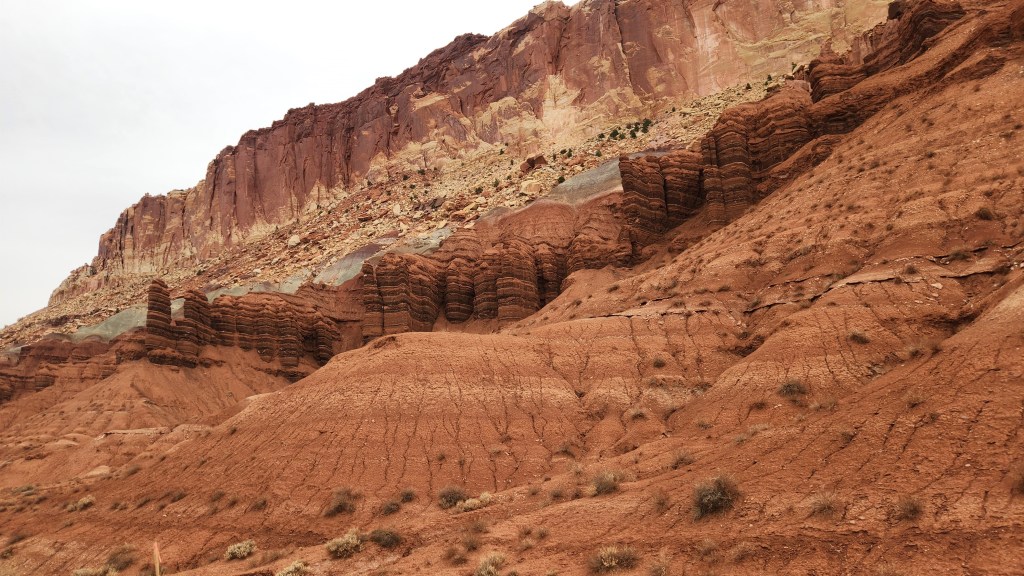
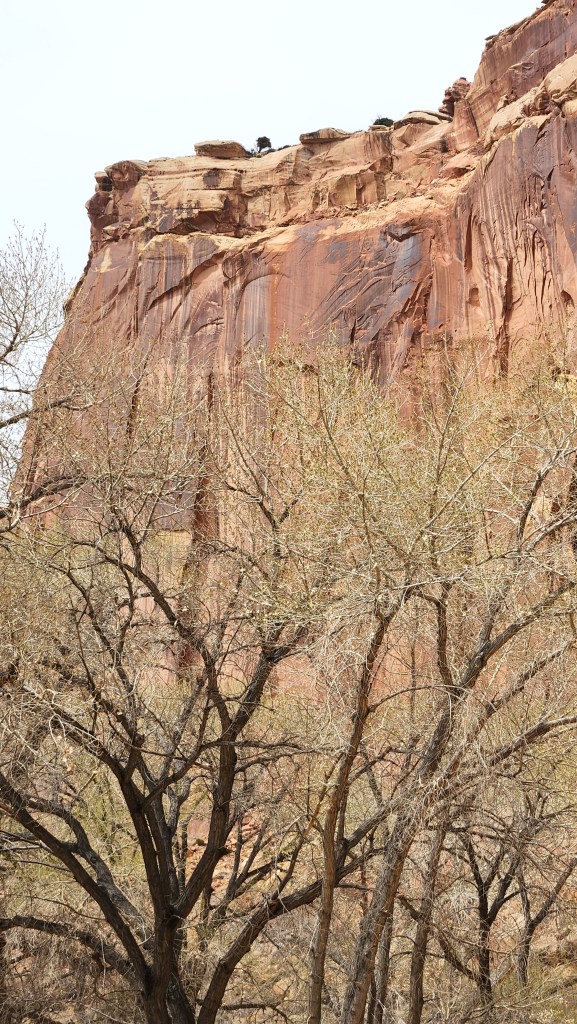
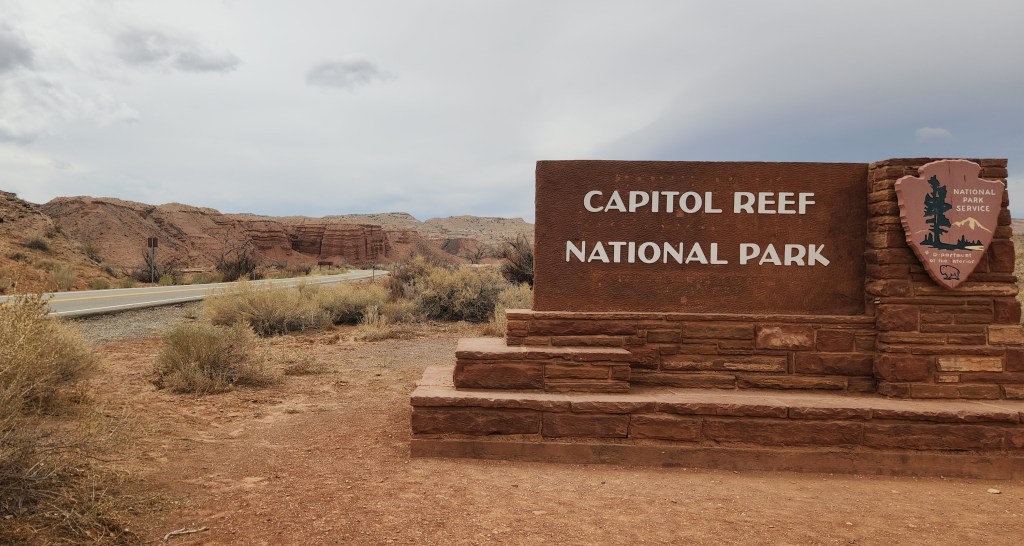
Capitol Reef National Park: After spending Sunday night at a hotel in Richfield, we drove to Capitol Reef National Park, the 29th National Park we’ve visited so far and the only one in Utah that we hadn’t visited previously. The park takes its name from white domes of Navajo Sandstone that resemble the dome of the U.S. Capitol building, and a formidable ridge of rocky cliffs that early Mormon settlers, who settled in a town they named Fruita due to the fruit orchards they established there, likened to a “reef.” Per the National Park Service brochure:

“Capitol Reef’s defining geologic feature is a wrinkle in Earth’s crust, extending nearly 100 miles from Thousand Lake Mountain to Lake Powell. It was created over time by three gradual yet powerful processes: deposition, uplift, and erosion. The result is a classic example of a monocline, or one-sided fold, in the otherwise horizontal rock layers.”

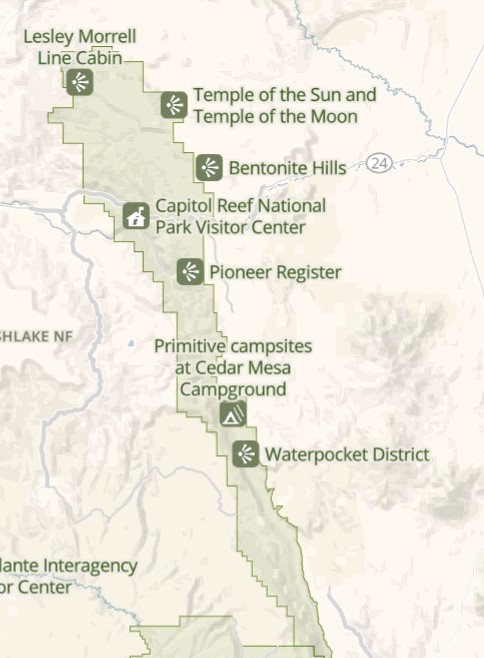
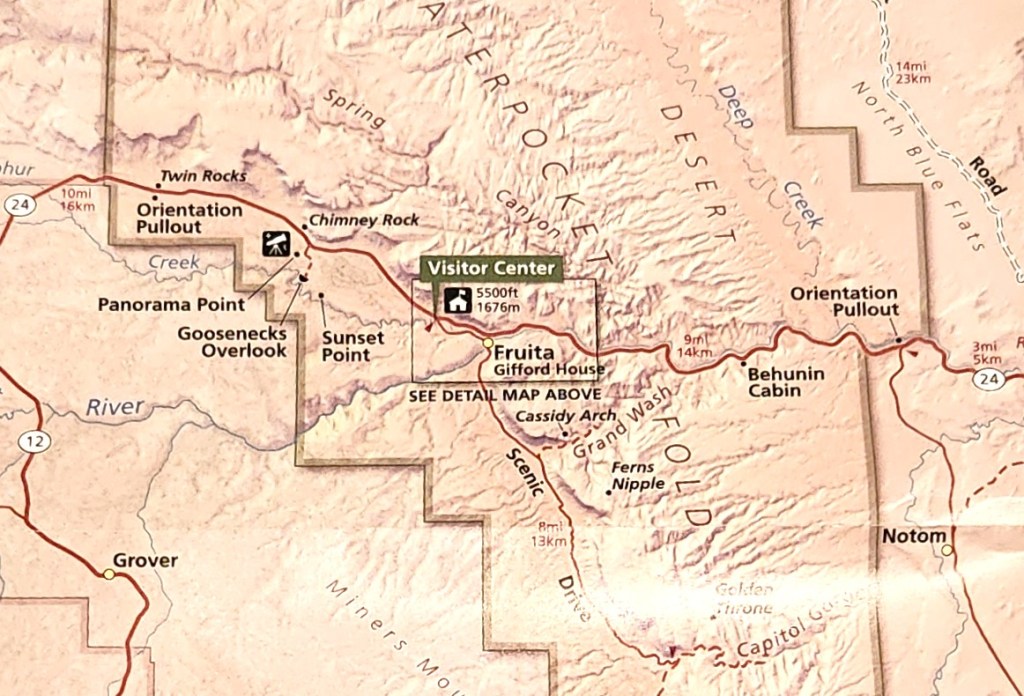
This “wrinkle” is known as the Waterpocket Fold, and it created a land of fascinating and spectacular scenery. The National Park is very large, comprising nearly a quarter million acres. The maps below show the entire extent of the park and the portion that we explored over several hours.

Capitol Reef National Park
The Portion we Explored

We drove into the park on Highway 24 from the west and stopped at the Visitor Center to watch the National Park Service video overview, then drove 8 miles south along the Scenic Drive until the pavement ended. Along the way, we stopped to hike along the Grand Wash trail and then stopped at multiple overlooks along the rest of the Scenic Drive. I was jumping in and out of the car like a jackrabbit and snapping pictures like a crazed documentarian, and Pat was doing her best to put up with my antics. After the tenth or twelfth stop, she suggested that maybe she could drive and I could just gawk out the windows.

View of Capitol Reef from Scenic Drive Overlook
The Road to the Grand Wash Trail
Rock Formation Along Grand Wash Trail
The Grand Wash
Peek-a-boo, I see Pat …
The new knees are great, but … I couldn’t make it up to the cozy resting spot
View from Scenic Drive Overlook

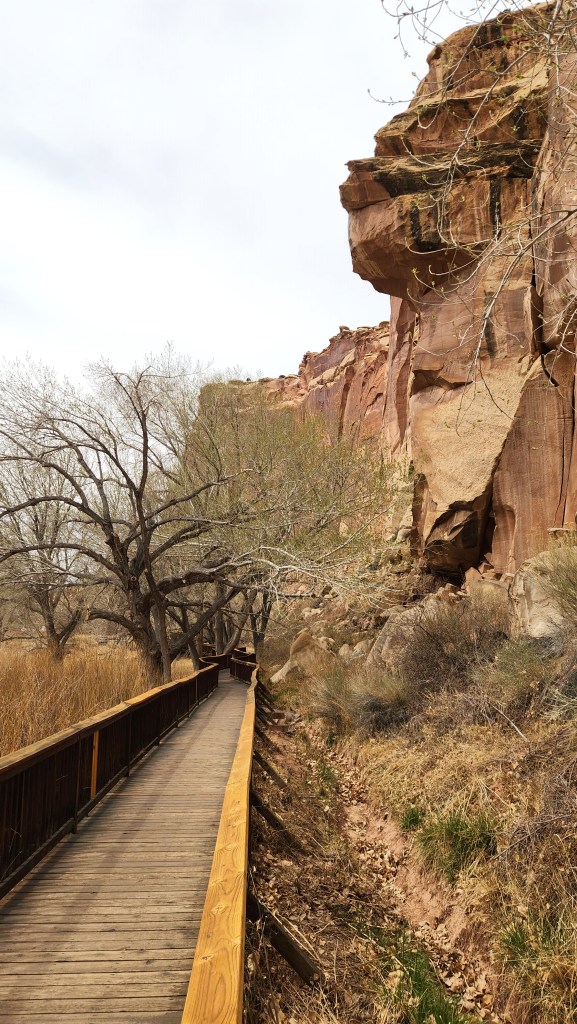
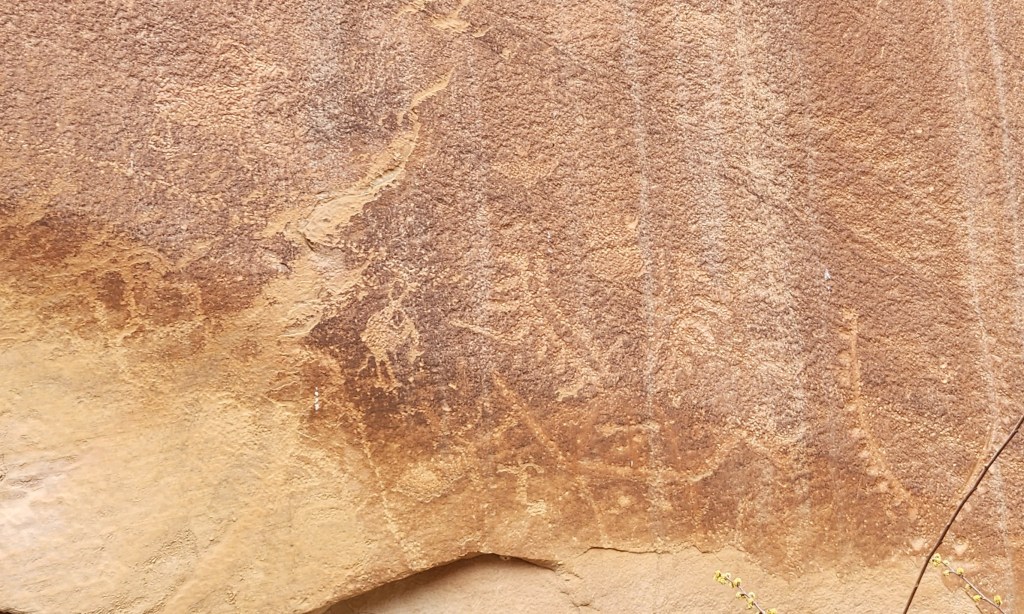
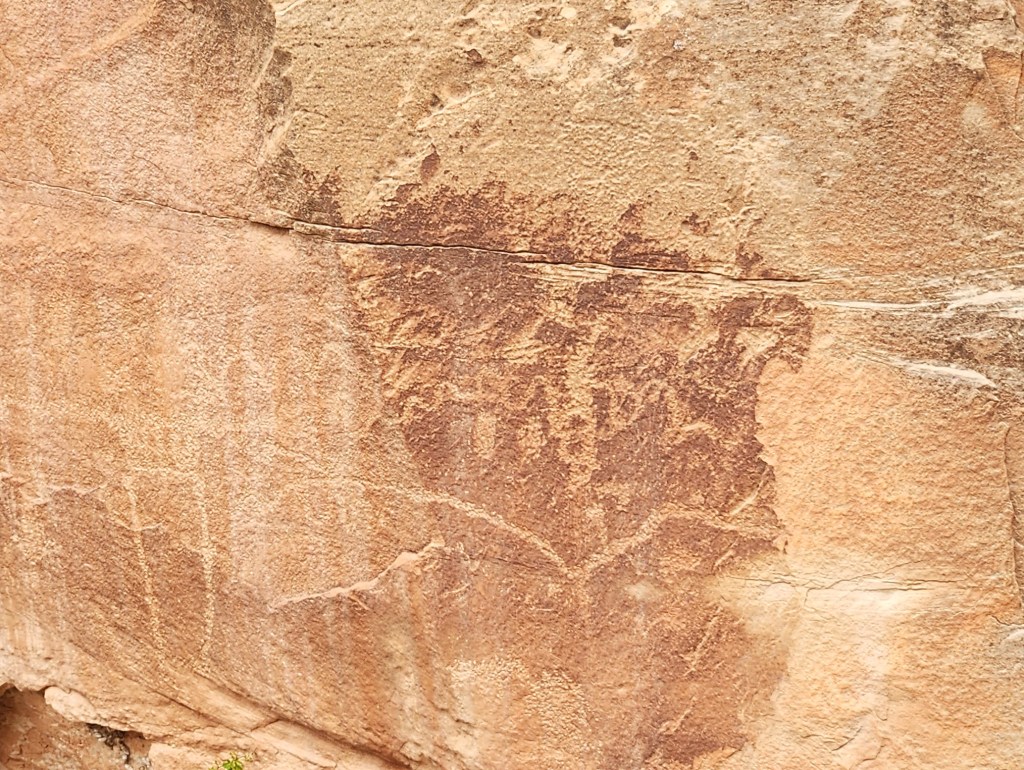
With Pat at the wheel, we returned to the Visitor Center area and stopped to explore a walkway with views of a cliff containing ancient petroglyphs.

Cliff face North of Fruita
Walkway for Petroglyph Viewing
Ancient Petroglyphs
More Petroglyphs

We then headed east again on Highway 24, and I contented myself with window gawking until we made one last stop at the eastern entrance to the park before heading on toward our next hotel in Green Valley, UT. Incidentally, we passed by those Capitol dome-like mounds along the way, but I failed to get a decent photo from the car, so you’ll just have to use your imagination.

The East Entrance on Highway 24

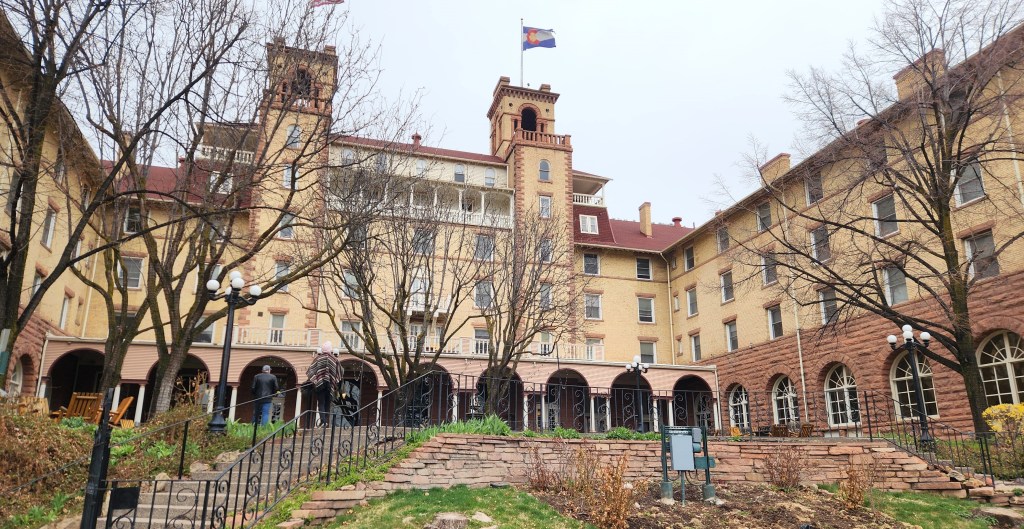
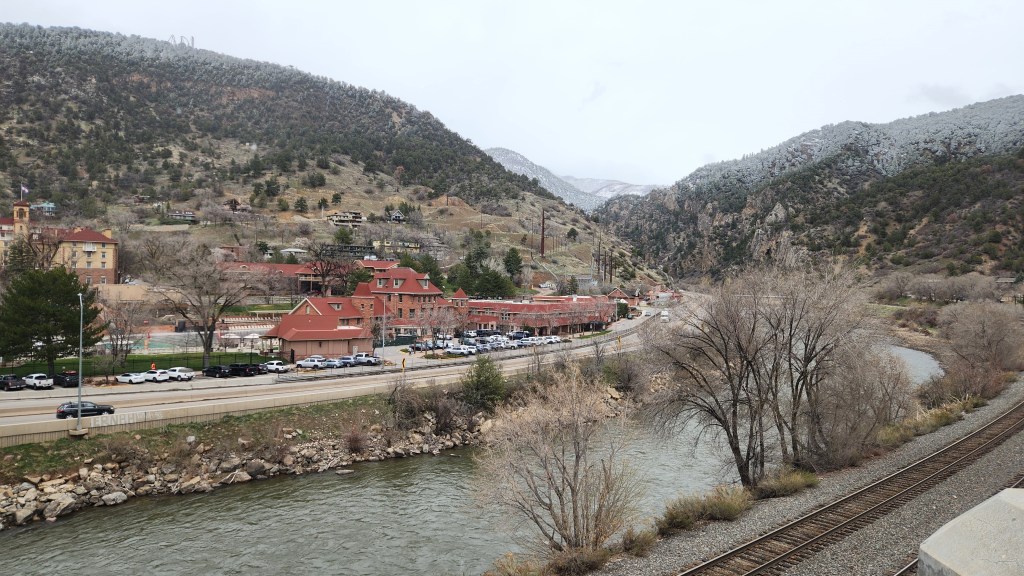
Glenwood Springs, CO: Our original plan for Tuesday was to drive from Green Valley to Golden, CO, for our next night’s stay. However, weather reports indicated that a heavy snow storm was developing in the Vail Pass, complete with avalanche warnings. The prospect of battling the elements as we navigated the high altitude crossing through Colorado ski country was a bit unsettling, so we changed plans and booked a hotel in a cute little town called Glenwood Springs instead. We got there around lunchtime and spent a couple of hours walking around before checking into our Holiday Inn. We had lunch at the Colorado Hotel, a grand old place founded in 1893 and now included on the National Trust’s list of Historic Hotels of America, before wandering off to the nearby railroad station and passing by an impressive Hot Spring and Spa.

Hotel Colorado, Glenwood Springs, CO
The Colorado River flows through Glenwood Springs
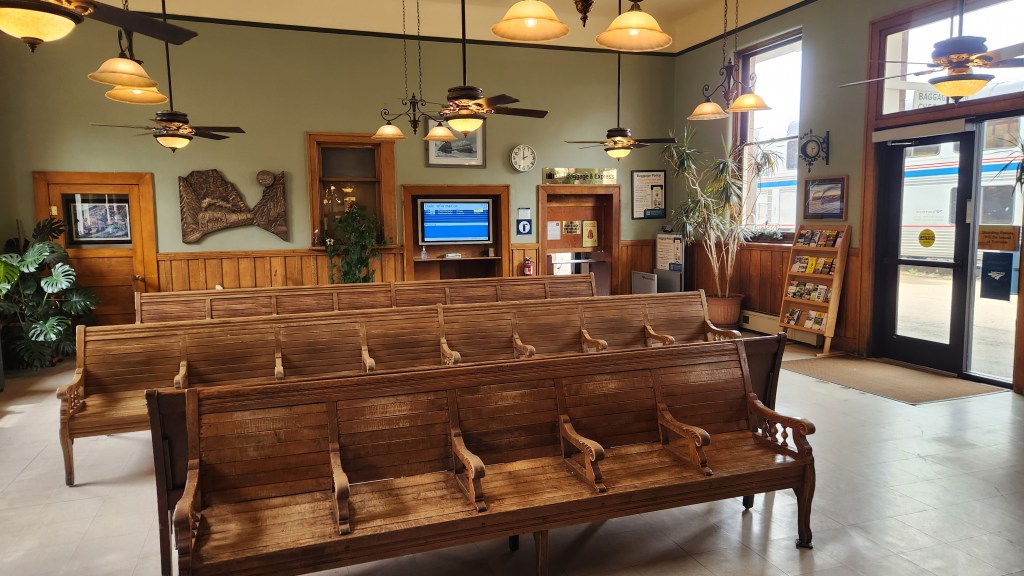
Interior of Glenwood Springs Railroad Station
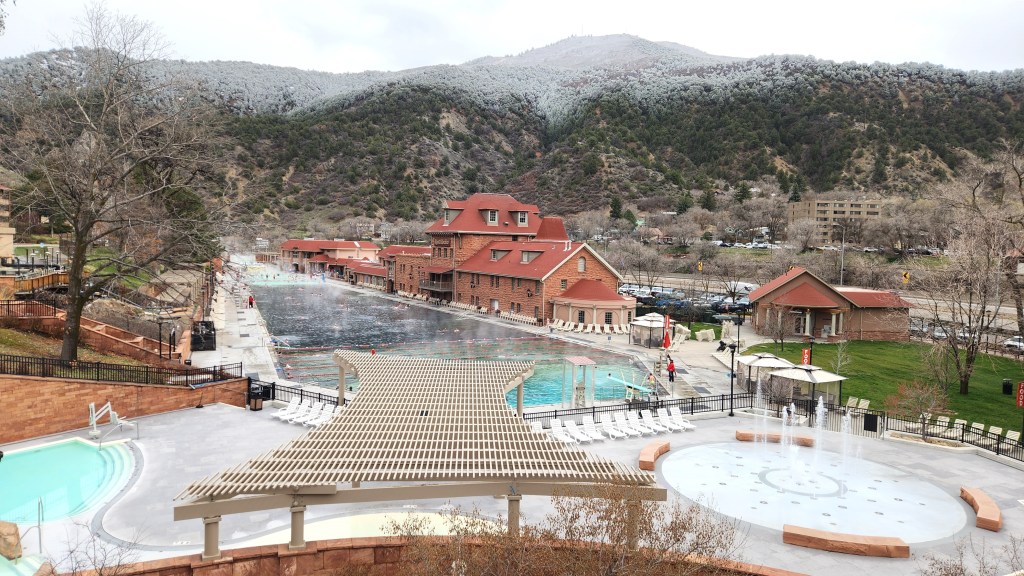
Spa and Hot Springs at Glenwood Springs

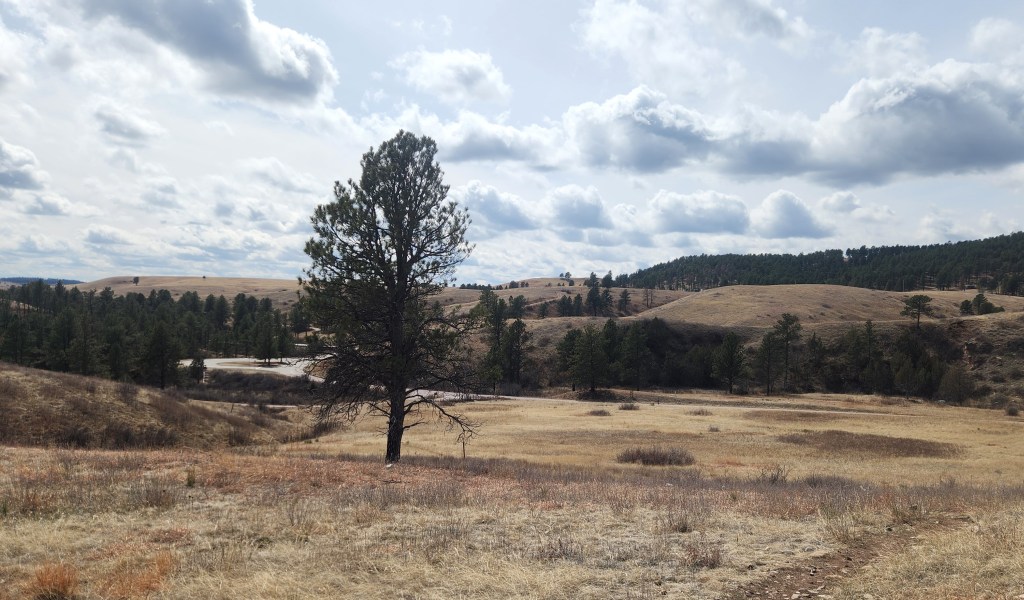
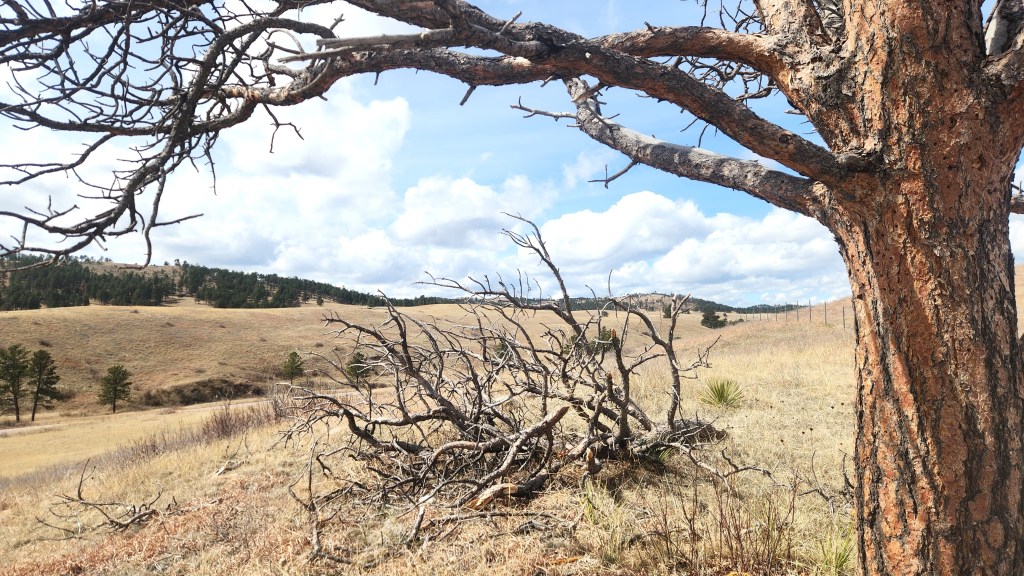
Wind Cave National Park:  On Wednesday, we resumed our eastward journey along I70, passing through the remnants of the storm in the Vail Pass and beyond. We passed a number of snowplows clearing the shoulders and experienced a few spots where the road was still icy, but by the time we reached the Eisenhower-Johnson Memorial Tunnel through the Continental Divide (11,132 feet elevation) all was clear. We drove on to a hotel with a destination charger that we had stayed at last October in Wheatland, WY, then drove on into South Dakota on Thursday morning and visited Wind Cave National Park. Unfortunately, all the cave tours were sold out for weeks in advance – we should have made on-line reservations before leaving Green Valley, but didn’t have enough foresight for that. As a result, our visit to the National Park (number 30 on our list) was limited to the Visitor Center, a short hike along a trail near the center, and a brief jaunt along a portion of the scenic drive. At least we saw some interesting rocks and some friendly animals. We’ll have to go back there some time to see the cave, which is said to be the seventh longest cave in the world with 154.2 miles of explored cave passageways (as of 2021) and the third longest cave in the United States. The cave was discovered in 1881 by a pair of brothers due to the sound of a strong wind blowing out of the hole (it blows in or out depending on the atmospheric pressure) and subsequently developed for tourism.

Nature Trail at Wind Cave National Park
Count those stairs, old man!
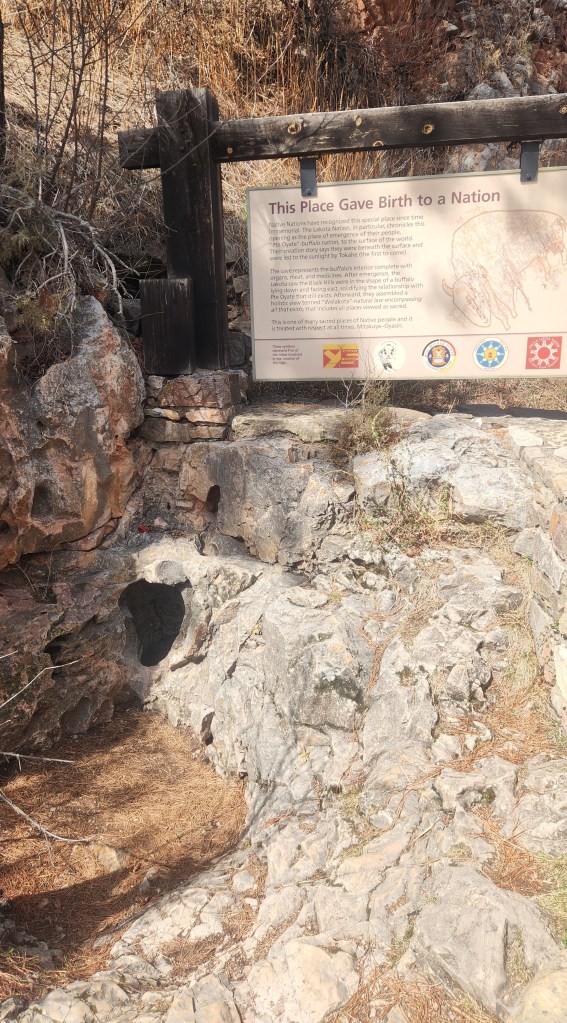
Sign Near Original Cave Entrance
The Original Wind Cave Entrance

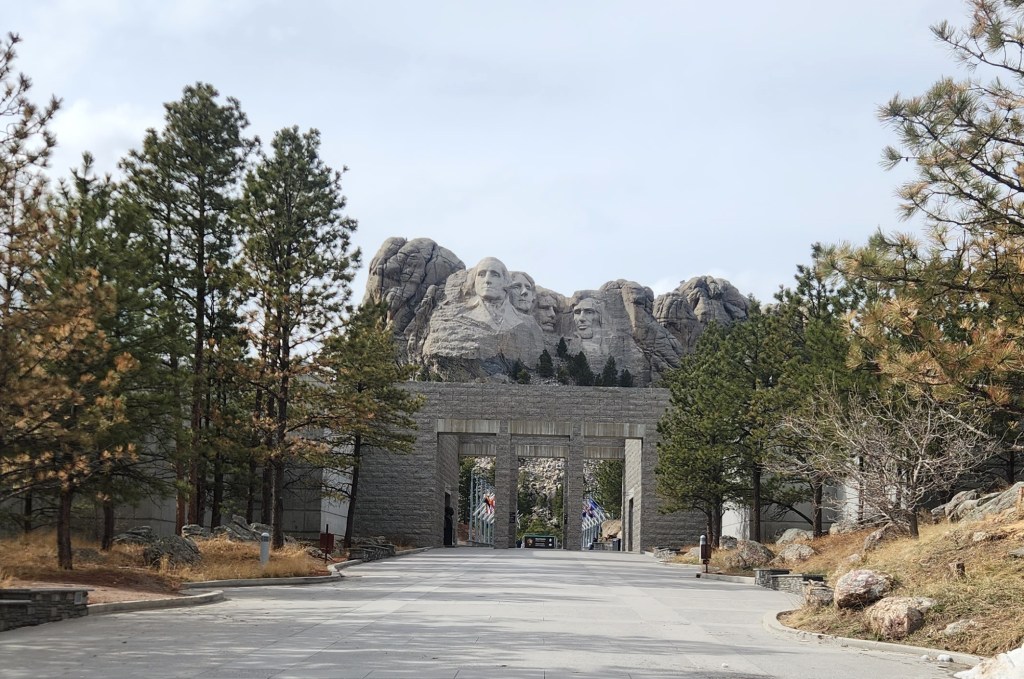
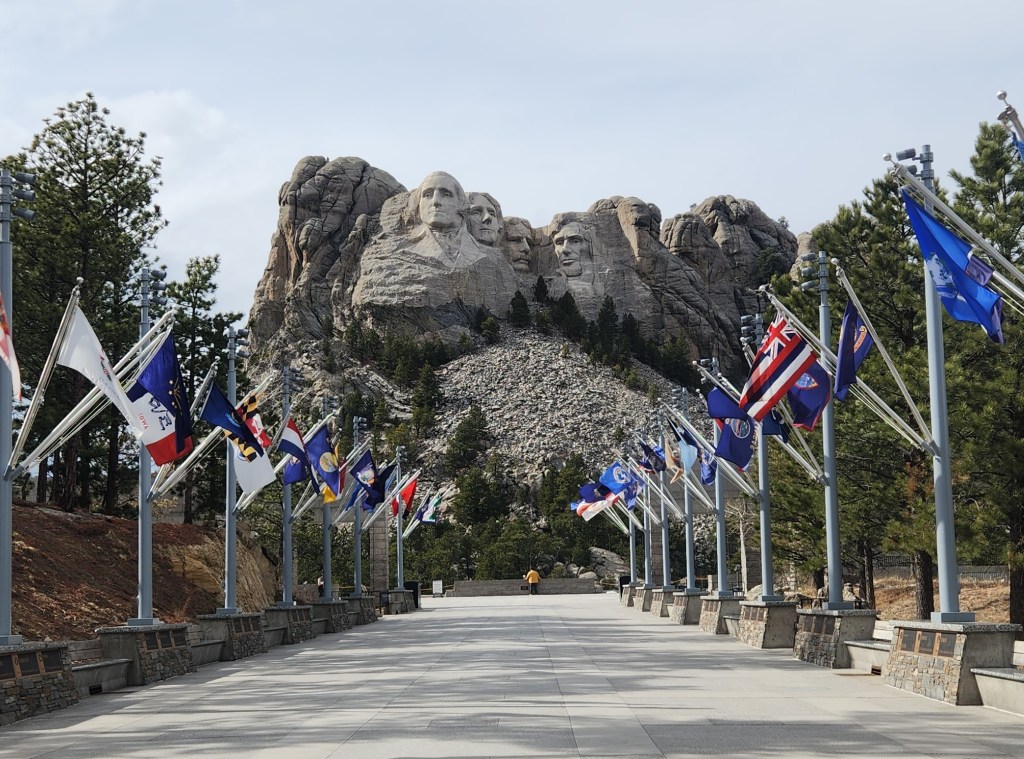
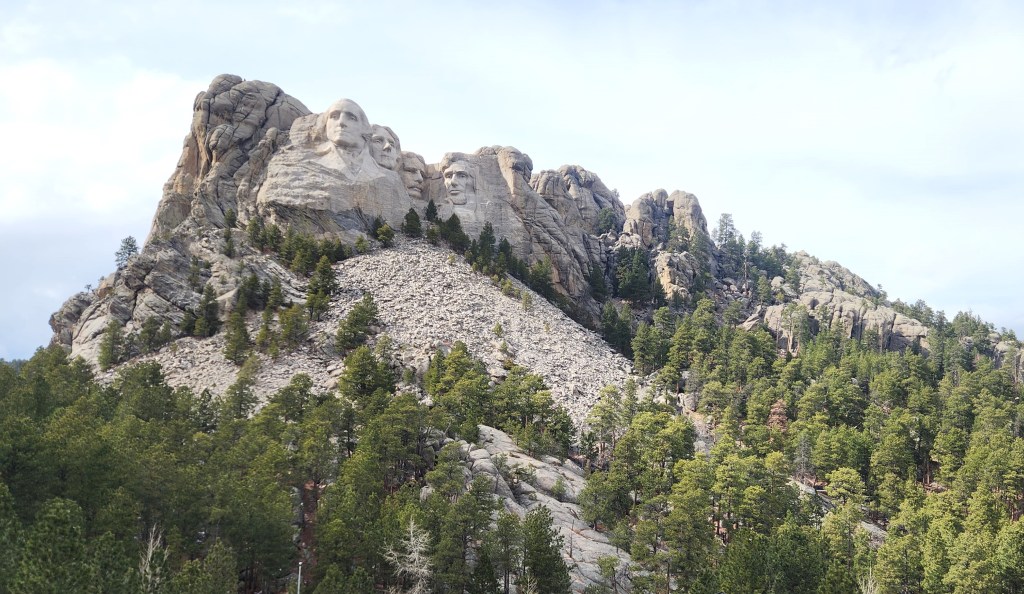
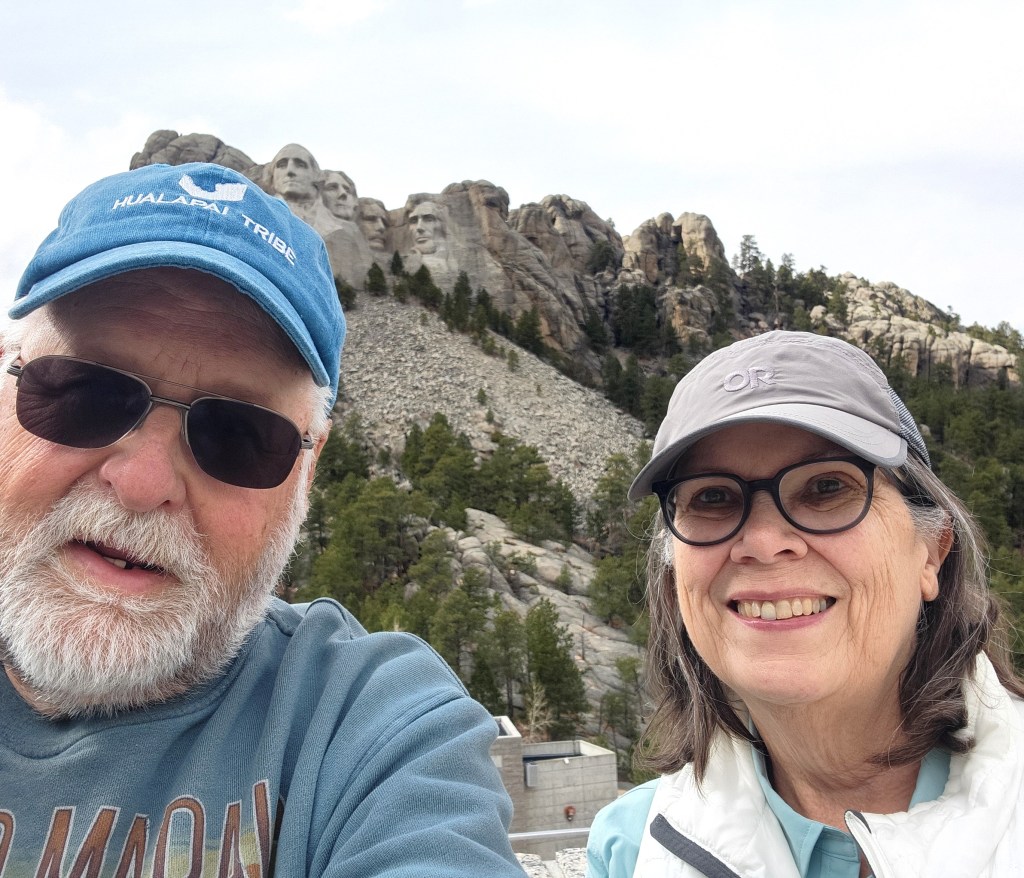
Mount Rushmore National Memorial: Since we were so close to this iconic piece of Americana, we had to stop and check it out. Unfortunately, the temperature was falling precipitously and the wind was rising, so, lacking appropriate cold weather wear, we didn’t spend a whole lot of time checking it out. There are some nice trails there, but they were closed due to the weather and we were too cold to go on them anyway. We did sit by a fireplace to watch a nice video and have some refreshments before leaving, though. One neat thing: it cost us only $5 to enter and park the car (half-price for seniors), and our ticket is valid for an entire year, so if we make it back out that way during better weather, we’ll stop in again.

Entrance to the Mount Rushmore National Memorial
An array of U.S. State and Territorial Flags leads to the viewing area
In better weather, we could have walked up a trail for a closer view
Just so you know we were really there …

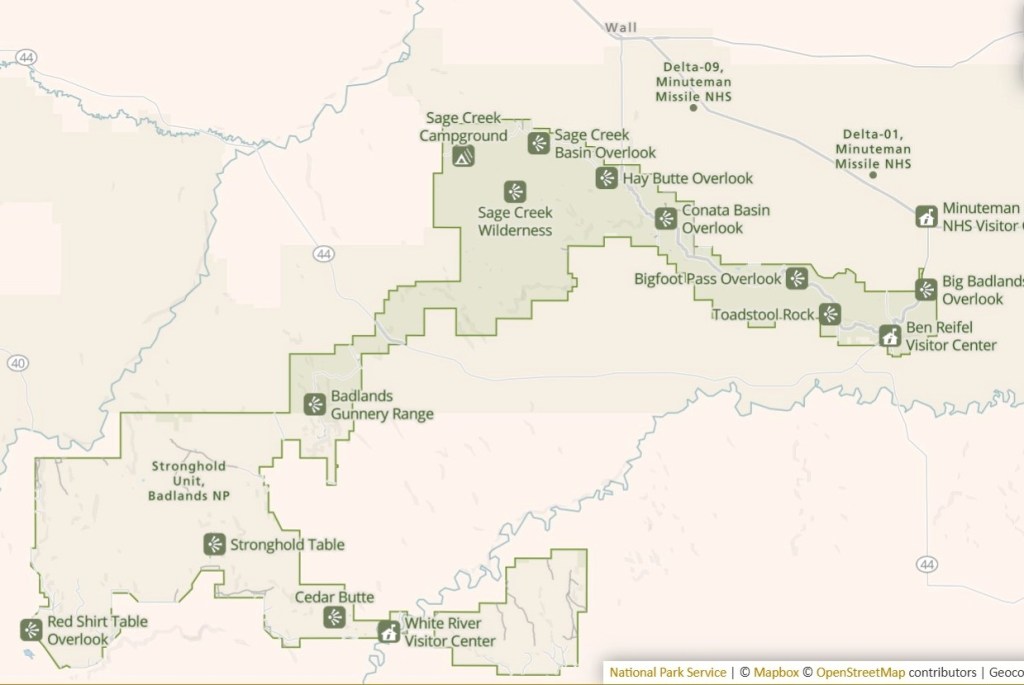
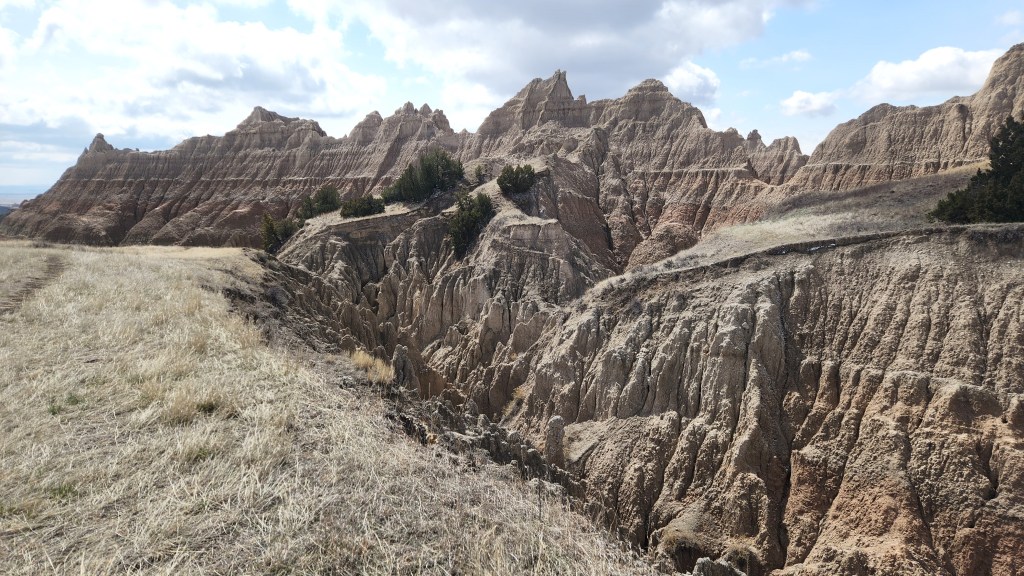
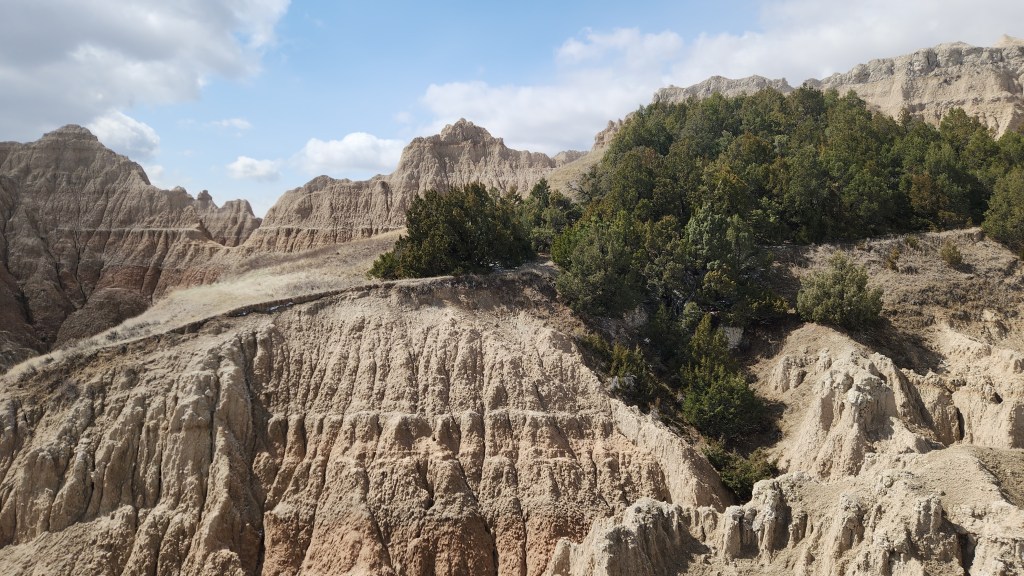
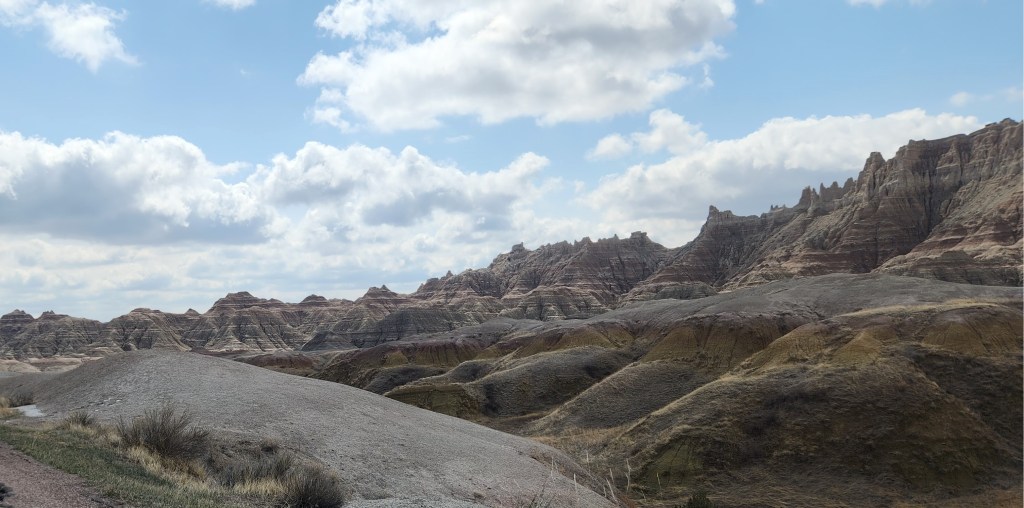
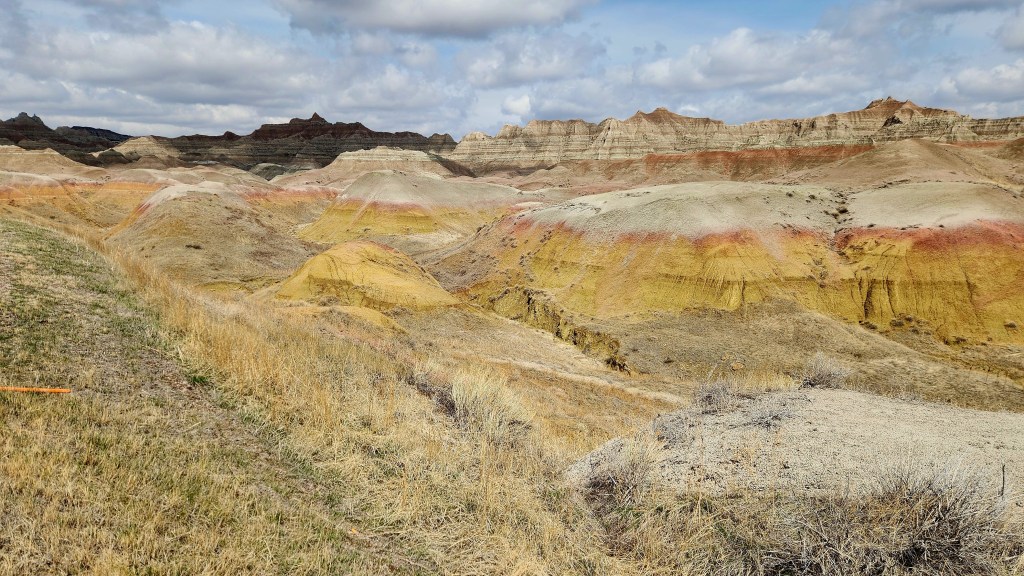
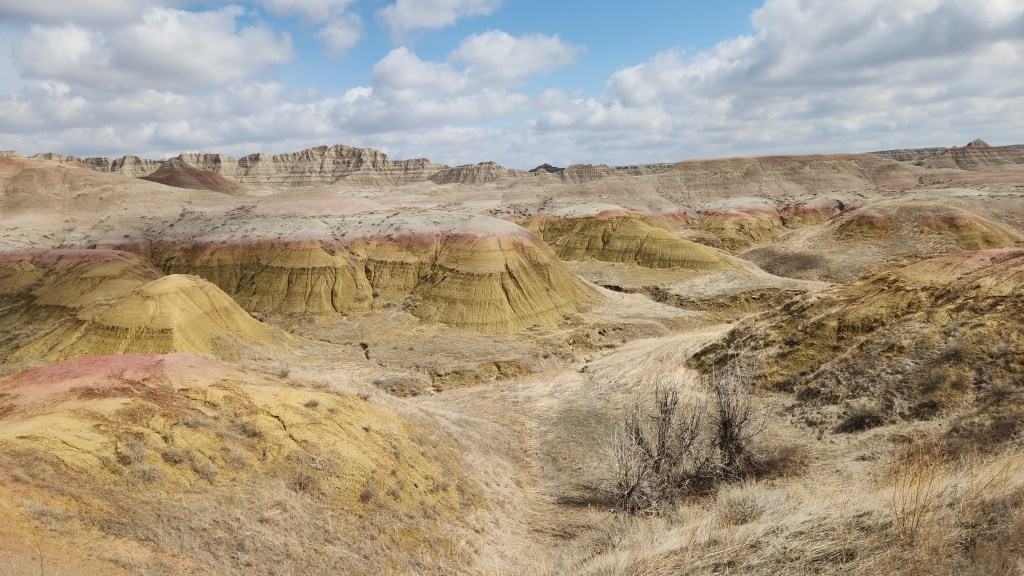
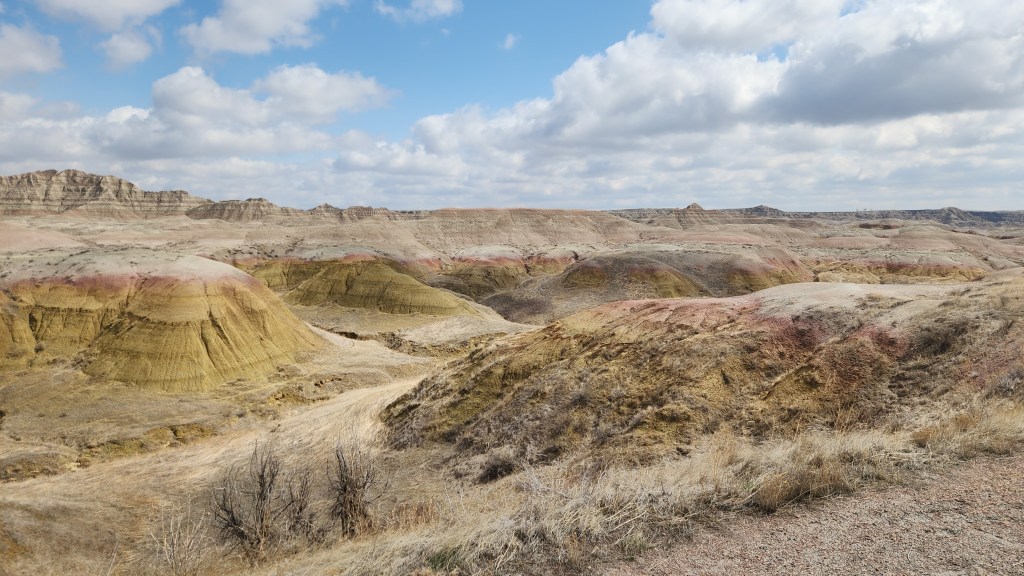
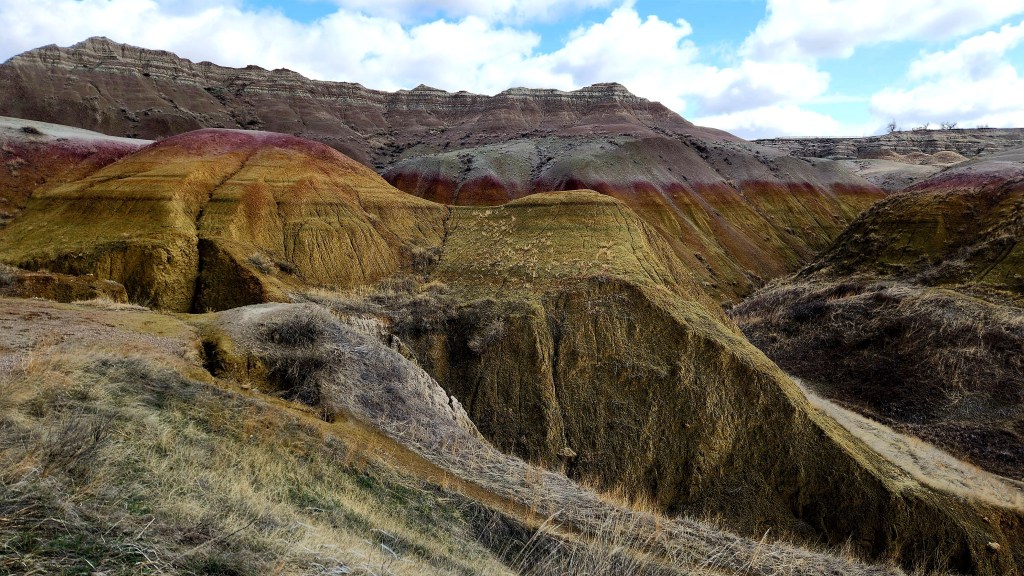
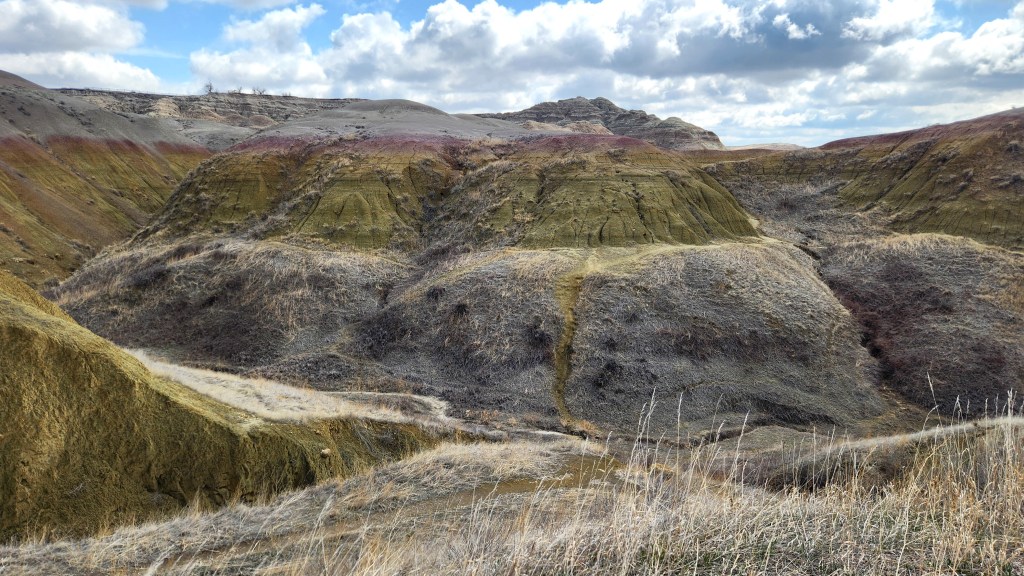
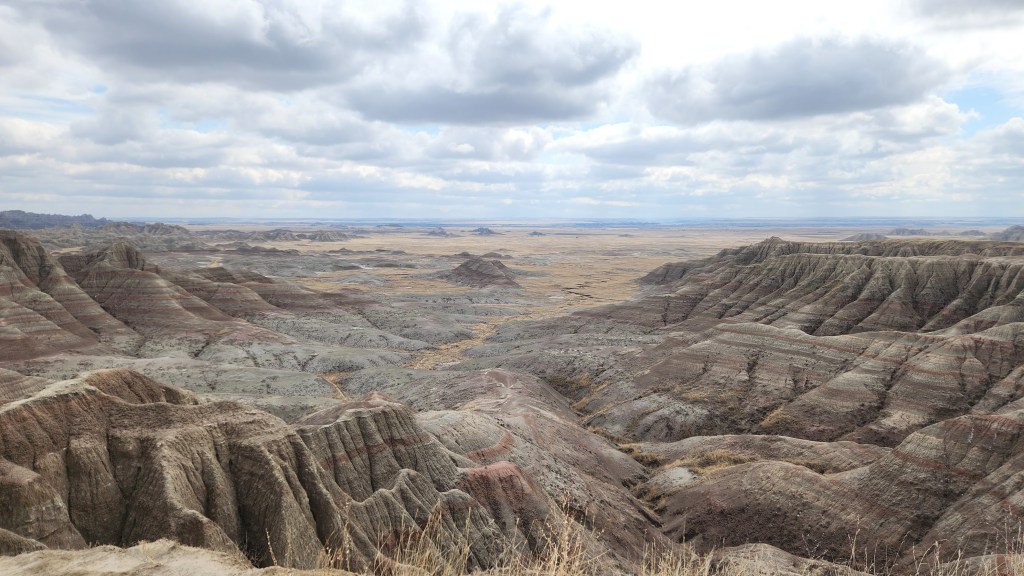
Badlands National Park: Afterspending Thursday night in Rapid City, SD, we drove to Badlands National Park, which brought our total number of National Parks to 31 so far. As you see on the map above, we failed to avoid Wall Drug as I had planned, but the only reasons we went there were: 1) to charge the car, and 2) to get on the road that enters Badlands from the north. I’ll admit that we did go inside – to use the rest rooms, not to bathe in the kitsch. At any rate, after surviving Wall Drug, we drove south to the park entrance.

Map of Badlands National Park

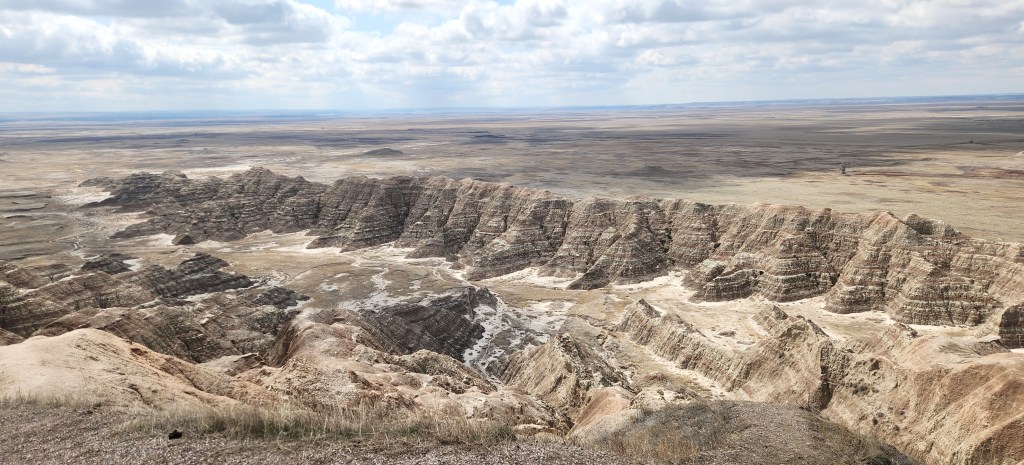
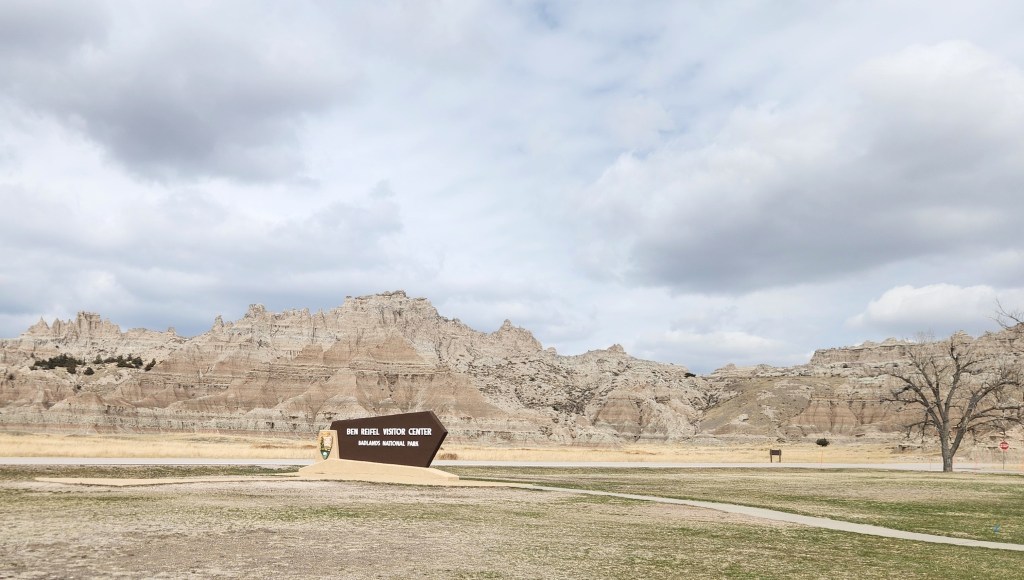
After stopping at the entry gate and showing my Senior Parks Pass, we headed southeastward through the park to the Ben Reifel Visitor Center. We had somewhat of a repeat of the Capitol Reef experience – jackrabbit Dave, Pat growing impatient until she took over driving, and Dave gawking and taking crummy pictures through the car windows. At the Visitor Center, we watched a video (of course) and perused the exhibits before heading off to the east toward Sioux Falls. If I can sum up the park in one simple statement, I’ll use a quote from the video, which was something like: “Badlands is a geologist’s wonderland.” As is sort of becoming a pattern with these travel blogs, I’m running out of gas, and you probably are, too, so I’ll just finish off with pictures.

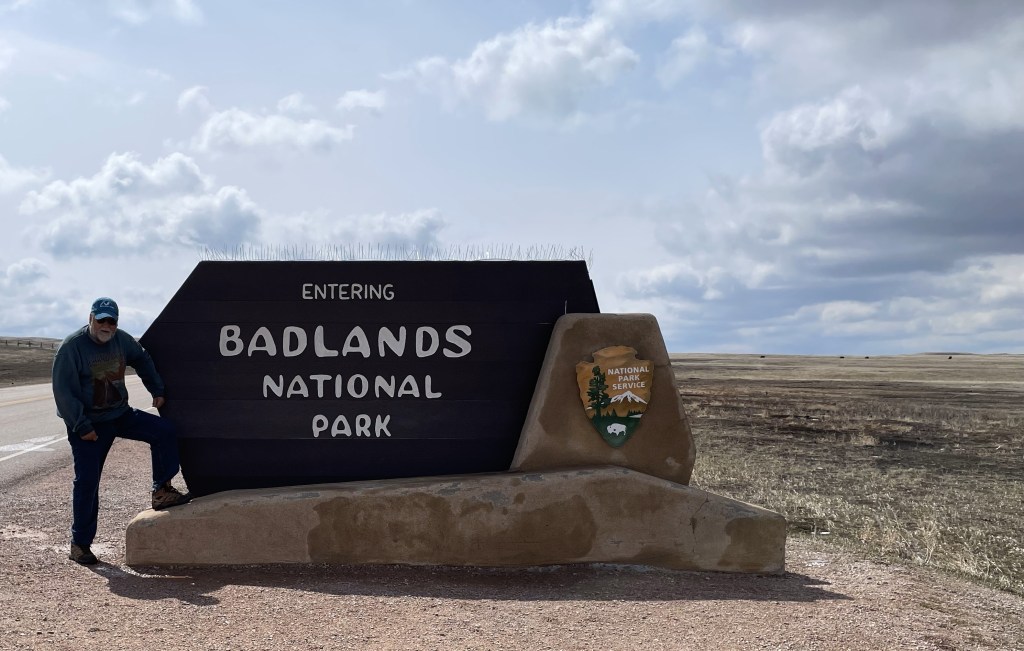
The North Park Entrance
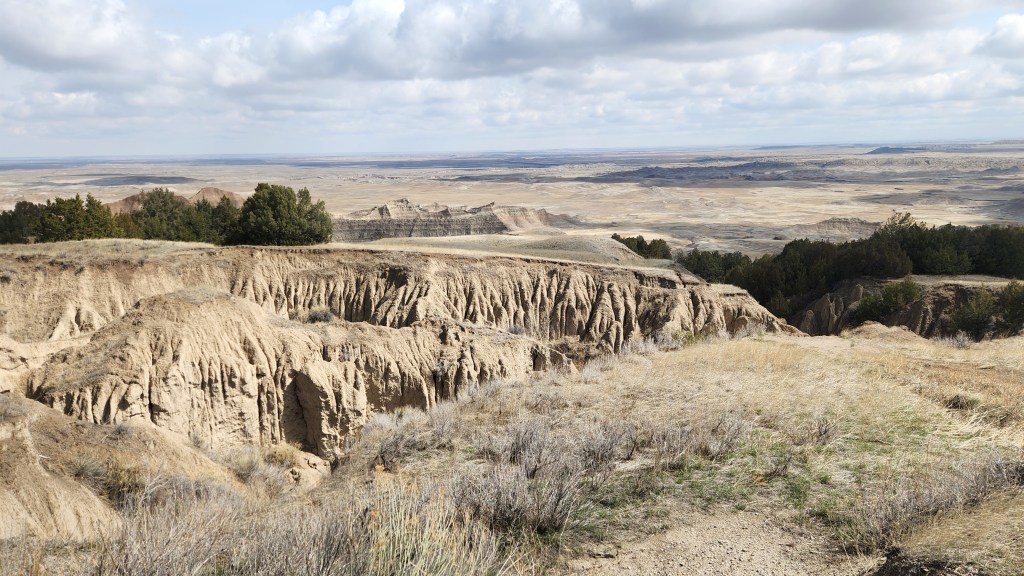
View of Badlands National Park from Scenic Drive Overlook
View from the Ben Reifel Visitor Center
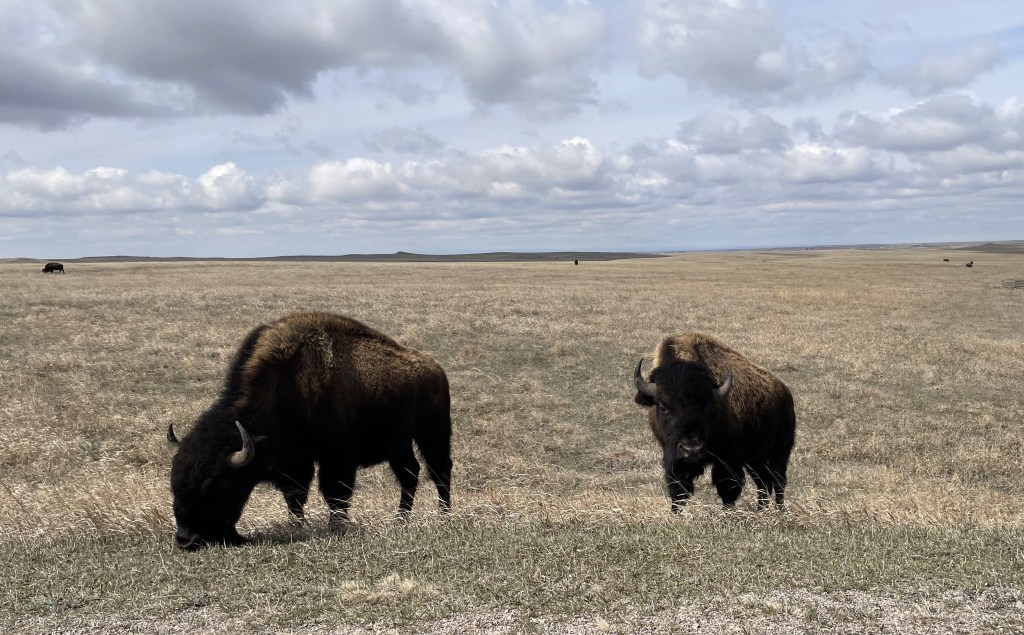
Bison have a beautiful Home on the Range
Pronghorn are also abundant

Okay, that’s a wrap for Pat and Dave’s Winter Warmup. After a night in Sioux Falls, we arrived safe and sound back home in Minneapolis on Saturday, April 5. We once again enjoyed traveling to the beautiful southwestern United States, visiting some familiar locales and some new ones, each and every one interesting and enjoyable. I hope readers enjoyed sharing the adventure with me!

Our next planned travel adventure (no doubt to be documented in yet another travel blog series) will be in October and November of 2025, when we go on a Viking Ocean Cruise with pre- and post-cruise extensions. This time, Viking will be escorting us from Baveno, Italy to Athens, Greece.

Thanks for reading! Bon voyage, until next time …

Pat and Dave’s Winter Warmup – PART 2: Green Valley and Surroundings

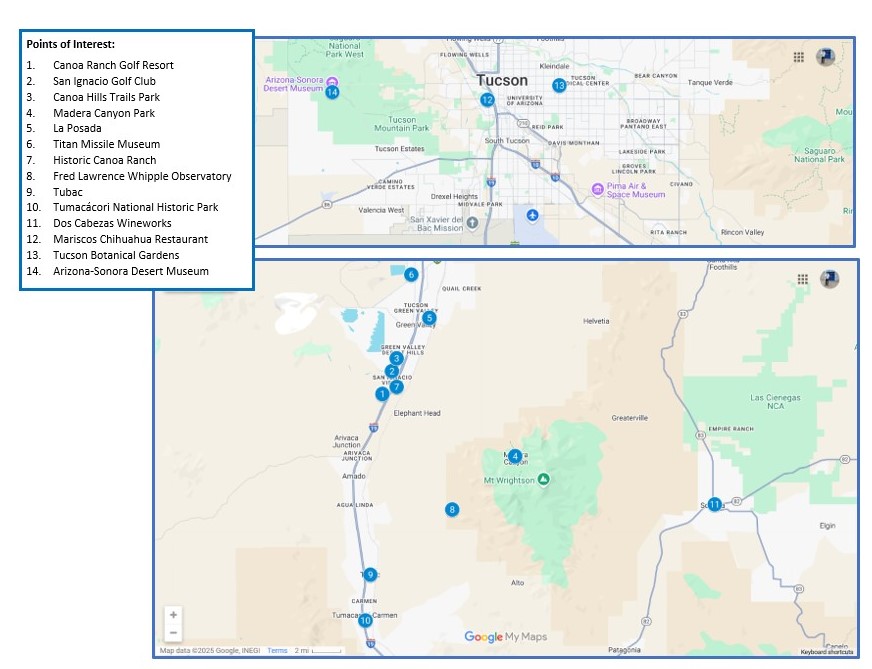
Part 1 of this travel blog series told of our decision to head south to escape the Minnesota winter and described our travels to Green Valley, AZ. We arrived at the Canoa Ranch Golf Resort at 7:30 PM on February 17. We spent a total of five weeks at the resort, and except for about ten days during which first I and then Pat came down with rather severe upper respiratory ailments (the first real illnesses we’ve experienced in about five years), we thoroughly enjoyed our stay. During that time, at least during the times that I wasn’t out golfing at one or another of the many courses in the area, Pat and I visited a number of interesting places in the surrounding area. Here’s a map of the main places we visited:

This installment describes these places, in no particular order. So, without further ado, here goes.

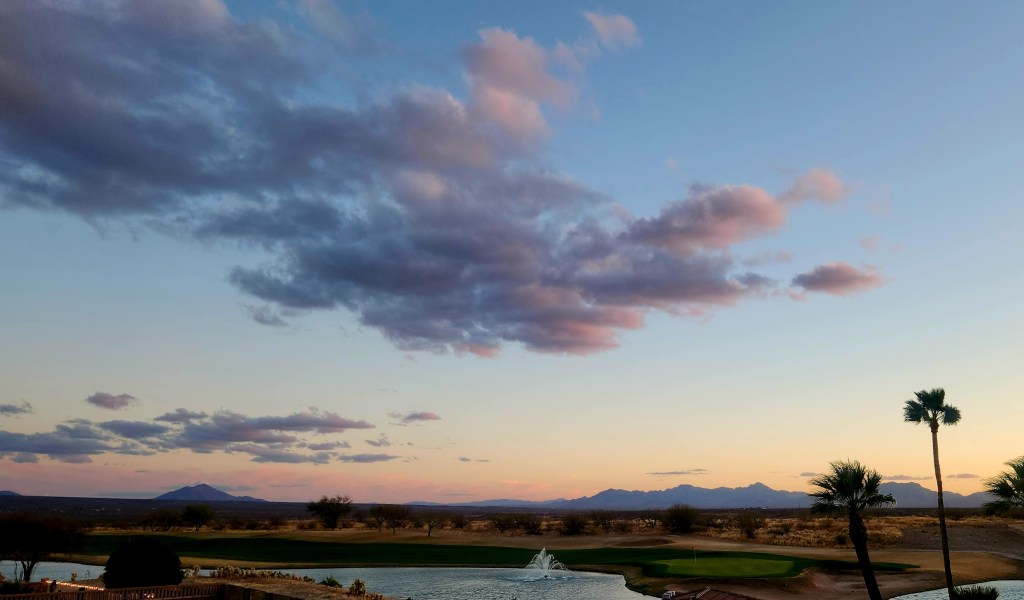
Canoa Ranch Golf Resort: The resort has a total of 98 rooms located in about eight buildings distributed around the site. Our accommodations, which we had reserved five months in advance, consisted of a nicely furnished suite complete with a kitchen, living area, bedroom, shower and bath, multiple storage closets, and a laundry closet with washer and dryer. A balcony accessible via sliding doors from both the living room and bedroom overlooked the ninth hole of the golf course and provided impressive views of the mountains to the south and east. A full-time housekeeping staff provided daily refresh service if desired (we rarely used that) and once-weekly thorough cleaning (on Thursday afternoons in our case). Free breakfast was provided daily in the main resort building, only a short walk from our building. Outdoor parking was available in front of our building, and the staff even marked off a parking spot for us with access to an electric outlet for charging our EV.

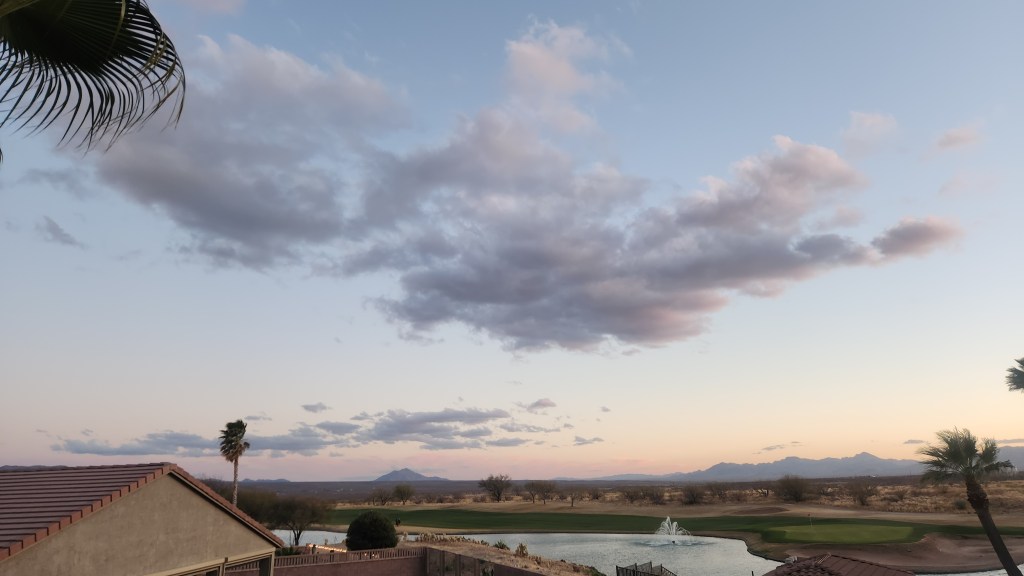
View from our Balcony
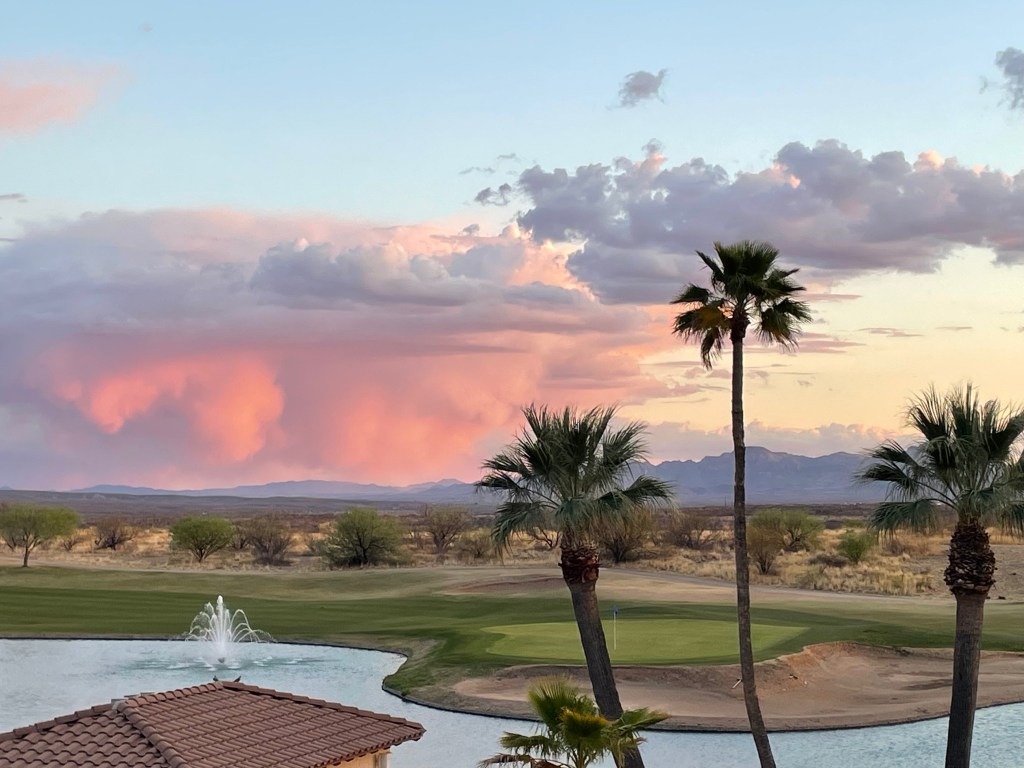
View from Neighbor’s Balcony (Photo by Jared Sour)
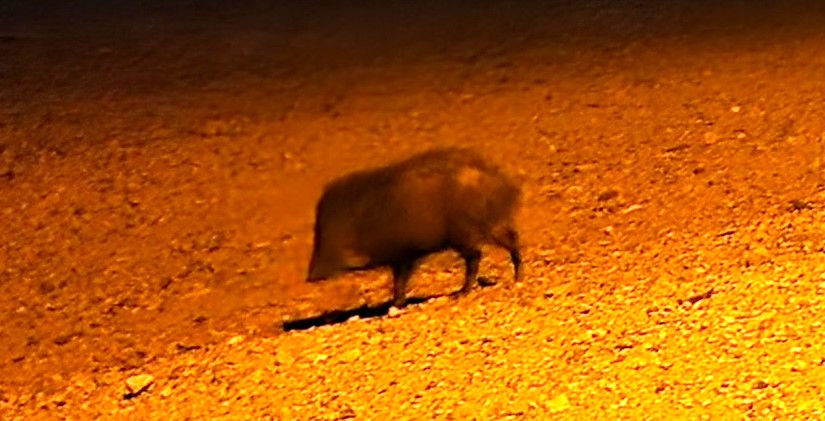
A Javelina checked me out one evening as I was plugging in the EV
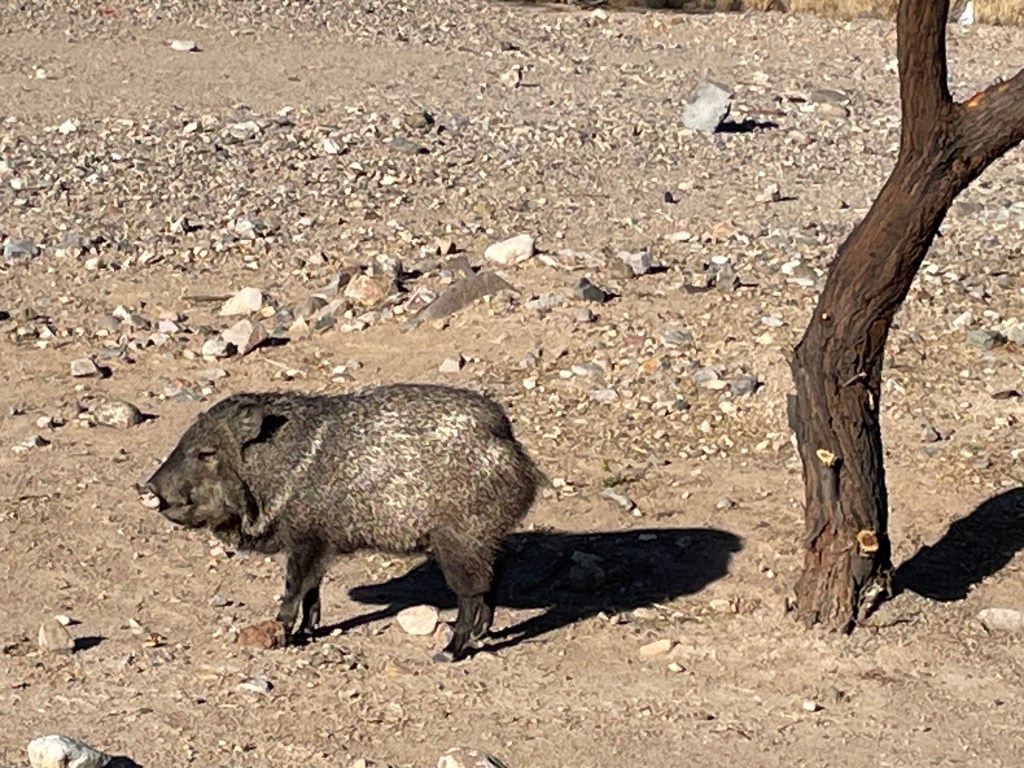
And maybe the same guy visited our neighbor in the back yard? (Photo by Jared Sour)

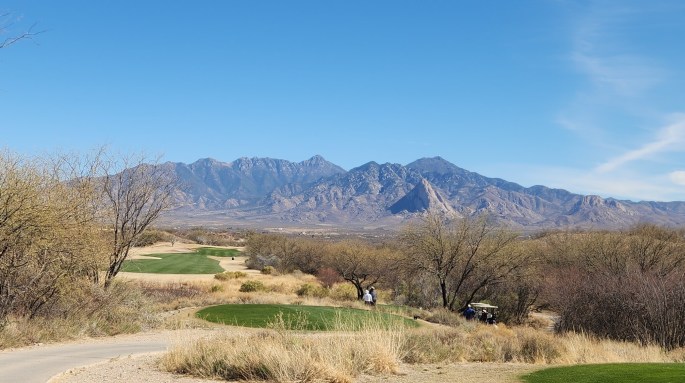
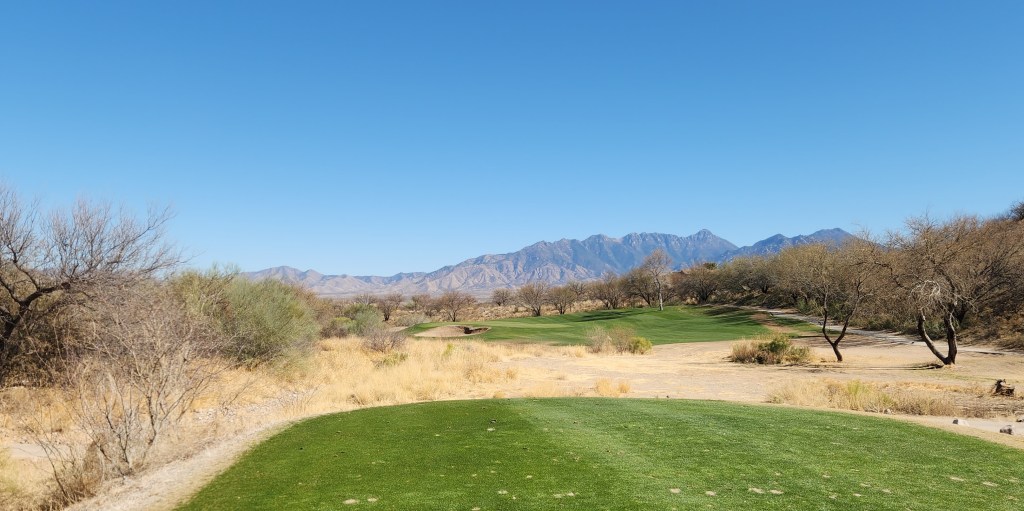
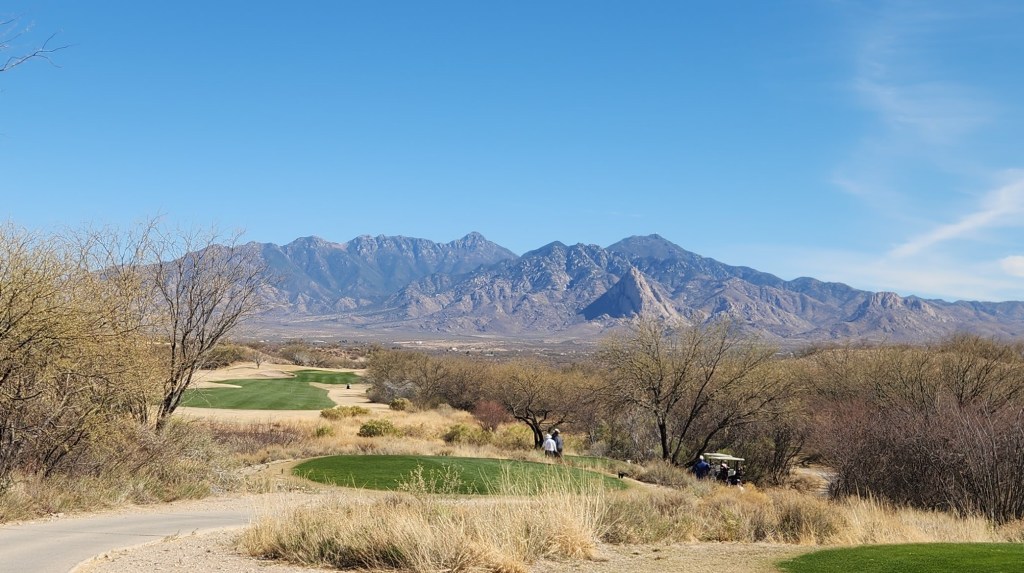
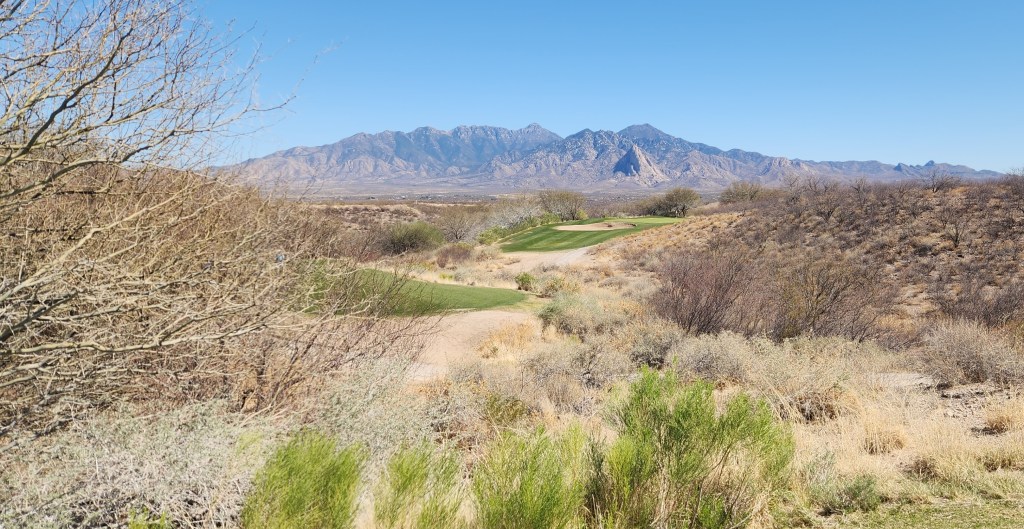
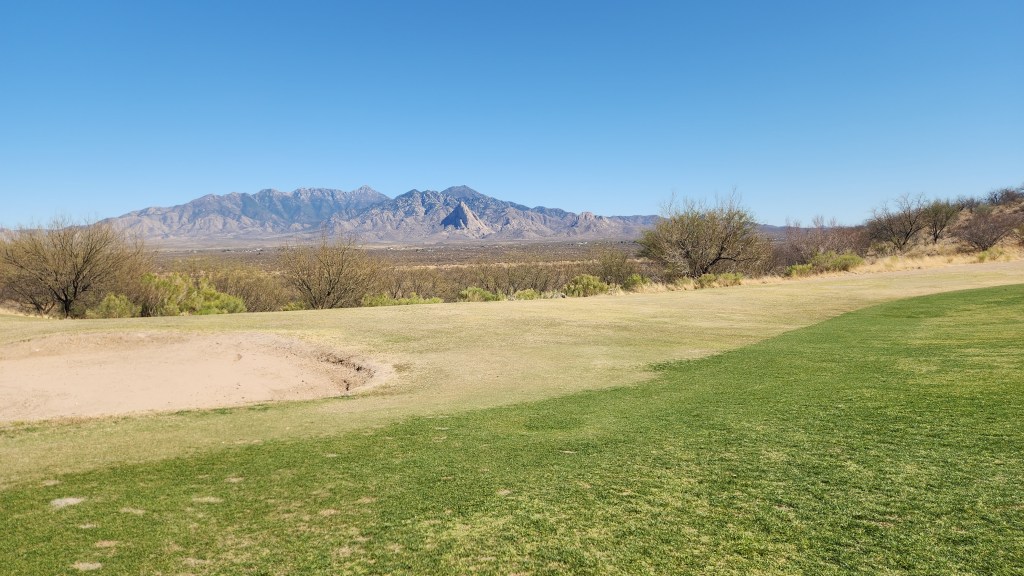
Golf Courses: I spent a fair amount of my time playing golf, primarily at the course owned by the resort. I played a total of seven 18-hole rounds at the Canoa Ranch Golf Course, one round at the San Ignacio Golf Course, one 18- and one 9-hole round at the Haven Golf Course, and one 9-hole round at the Torres Blancas Golf Course. The Torres Blancas outing was intended to be 18 holes, but I abandoned ship after 9 because the wind was blowing so fiercely on the particular day I tried it. With that one exception, the weather was quite nice, with temperatures ranging from the upper 70s to mid-90s with little or no wind on the days I played. (My Gunflint Hills Senior League partner Steve, who joined me for a couple of rounds as he was visiting relatives in the area, found the 90+ degree afternoon temperature at Canoa Ranch excessively debilitating after escaping the frigid Grand Marais winter, but managed the mid-70s morning temperatures at Haven much better.)

Canoa Ranch was my favorite of the lot, with beautiful mountain views and interesting hole layouts. San Ignacio was in slightly better condition, especially the sand traps (which were almost unplayable at Canoa Ranch), but had a much more noticeable housing-development vibe. It also cost more and I was only reluctantly allowed on the course in my blue jeans (and was told not to wear denim if I ever came back). Although I had procured some non-denim pants in anticipation of this classist and outdated policy, I instead opted not to show up there again and instead played happily in blue jeans at the other courses. Torres Blancas was also a nice course, where I would have played again except for time lost due to my bout of illness. Haven was rather uninteresting compared to the others and suffered from many wet spots due to a leaky watering system, but was the easiest in terms of scoring.

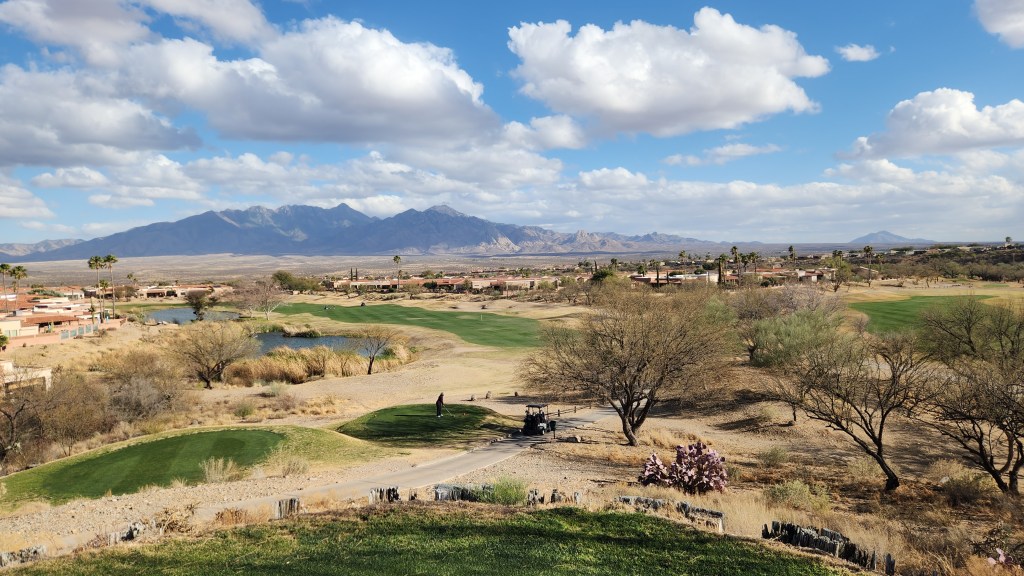
Here are some photos to provide a flavor for the two nicest courses:

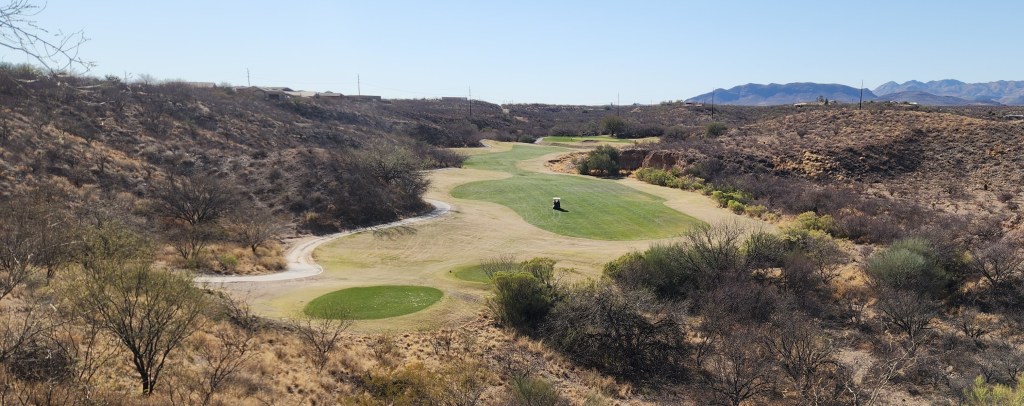
Canoa Ranch Golf Course — 15th hole
Canoa Ranch Golf Course — 4th hole
Canoa Ranch Golf Course — 3rd hole
Canoa Ranch Golf Course — 2nd hole
Canoa Ranch Golf Course — 11th hole
San Ignacio Golf Course — 17th hole
A Fan at San Ignacio Golf Course

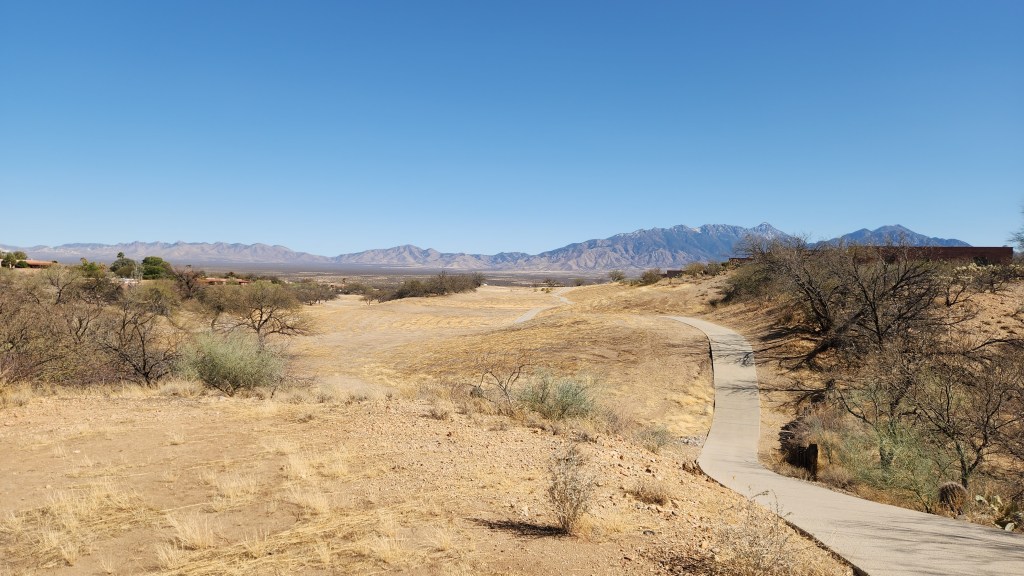
Canoa Hills Trails Park: This site is essentially a golf course that has gone on to its version of Valhalla. Once the site of the Canoa Hills Golf Course, it was purchased by Pima County and turned into a very nice walking park when the course developers went belly up. Pat and I went there a couple of times and walked around on the former cart paths, thoroughly enjoying the beautiful scenery.

Canoa Hills Trails Park

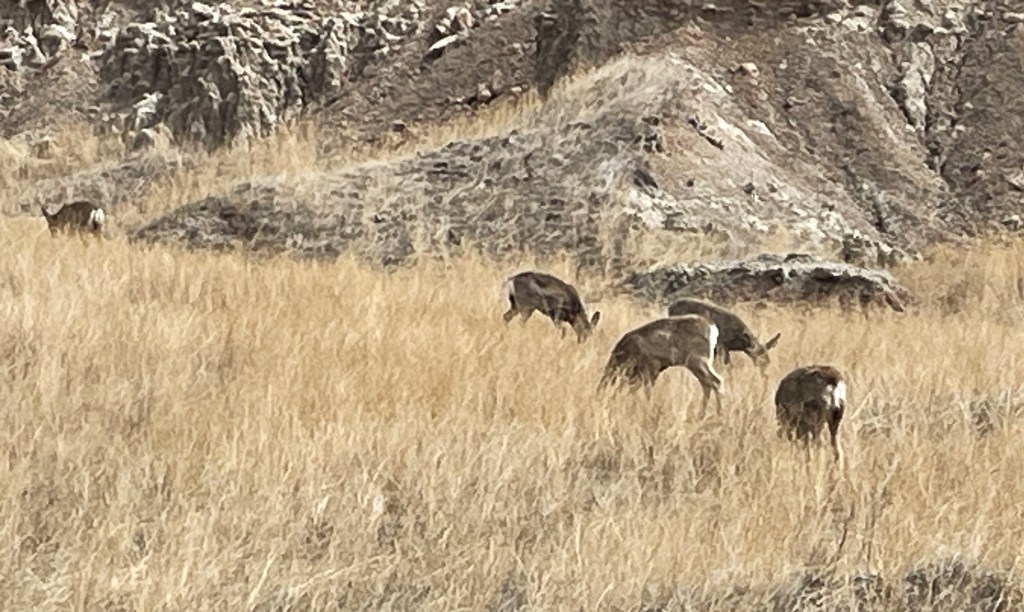
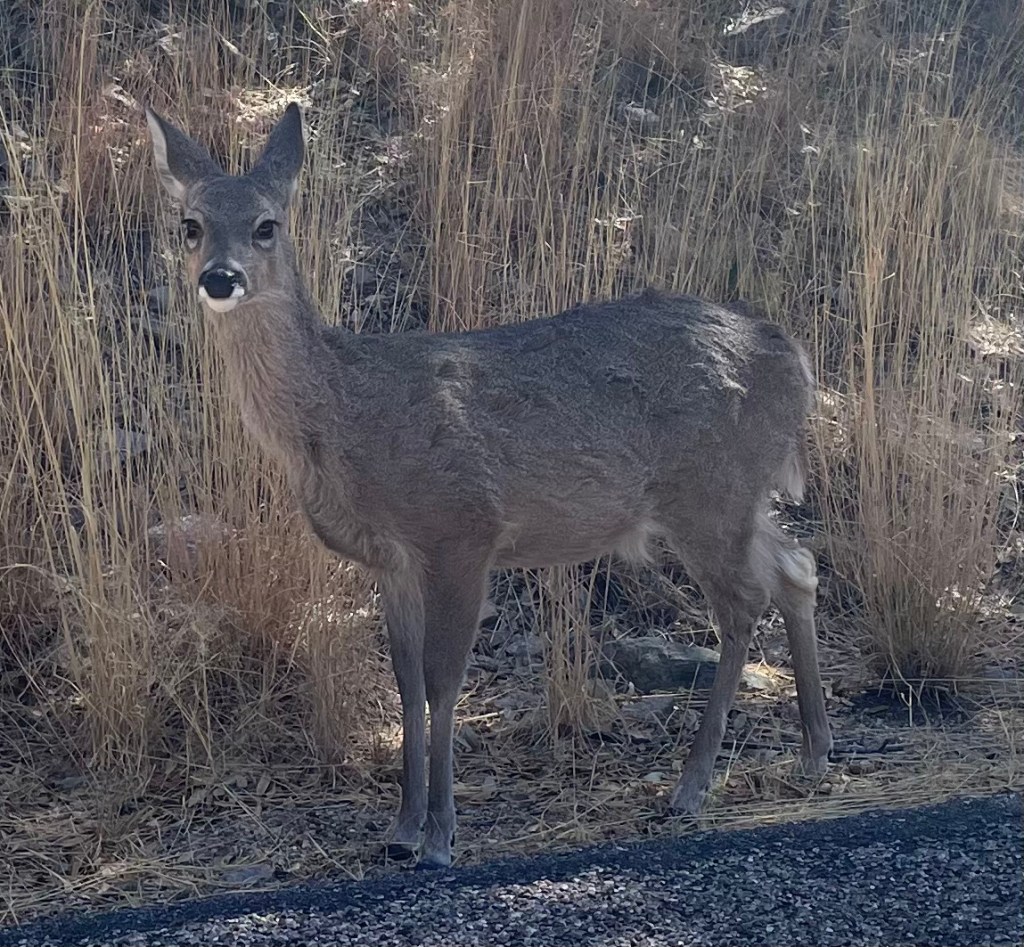
Madera Canyon Park: Madera Canyon is a recreation area within the Coronado National Forest, owned and operated by the National Forest Service, which includes several picnic areas and hiking trails. Pat and I spent an afternoon hiking and driving around there, although we only managed a mile and a half or so on one of the trails before turning back, as it became steeper and rockier as we went along. We enjoyed seeing some large bluebirds and some friendly deer during our meanderings.

Hiking Trail at Madera Canyon
Campground Area at Madera Canyon
Friendly Deer at Madera Canyon

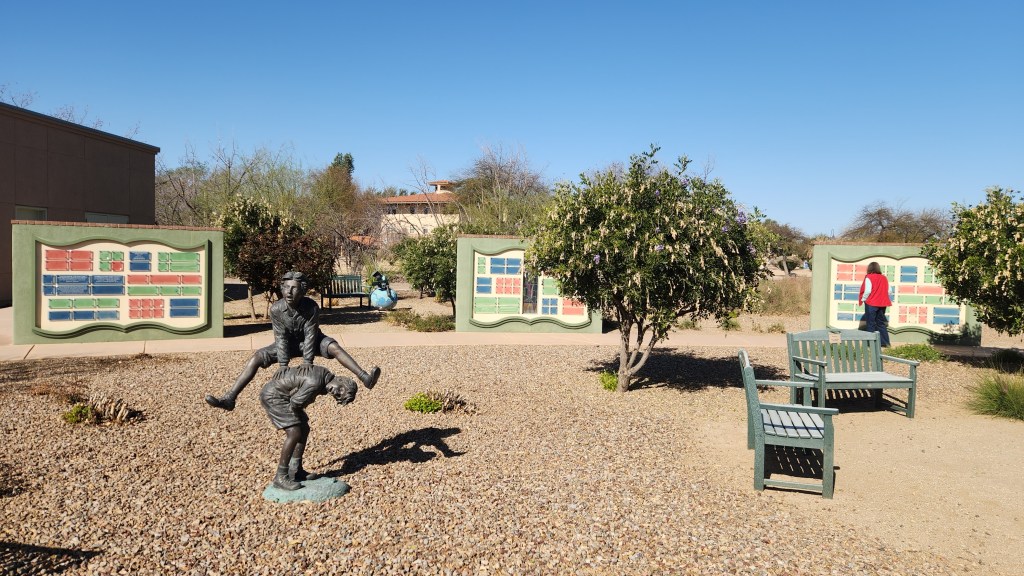
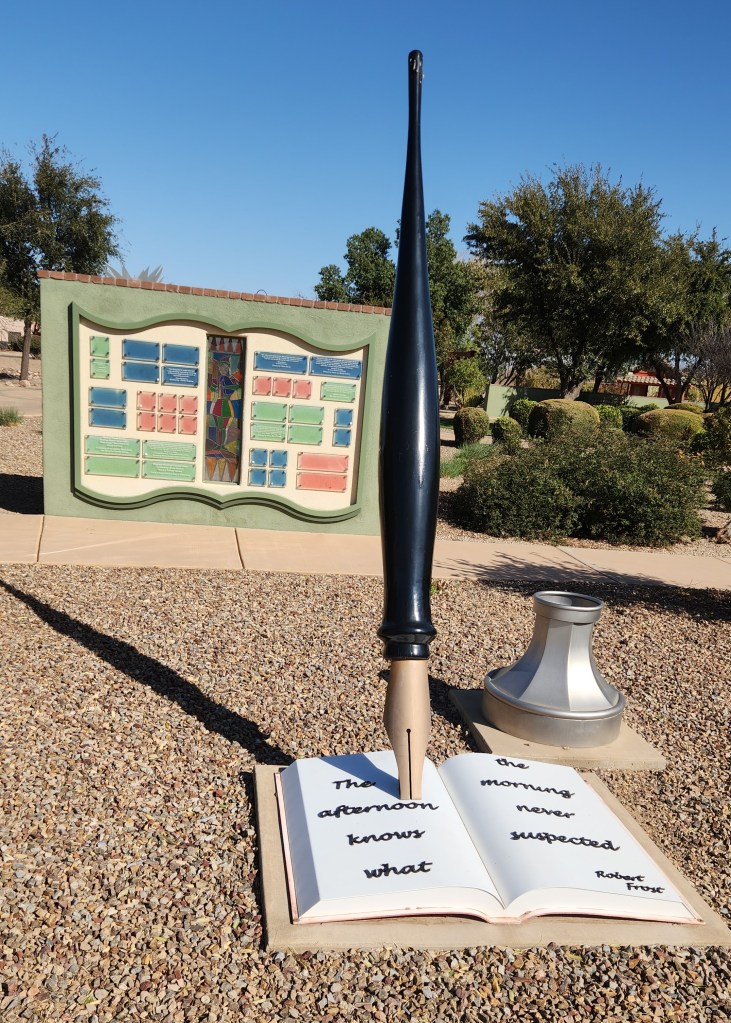
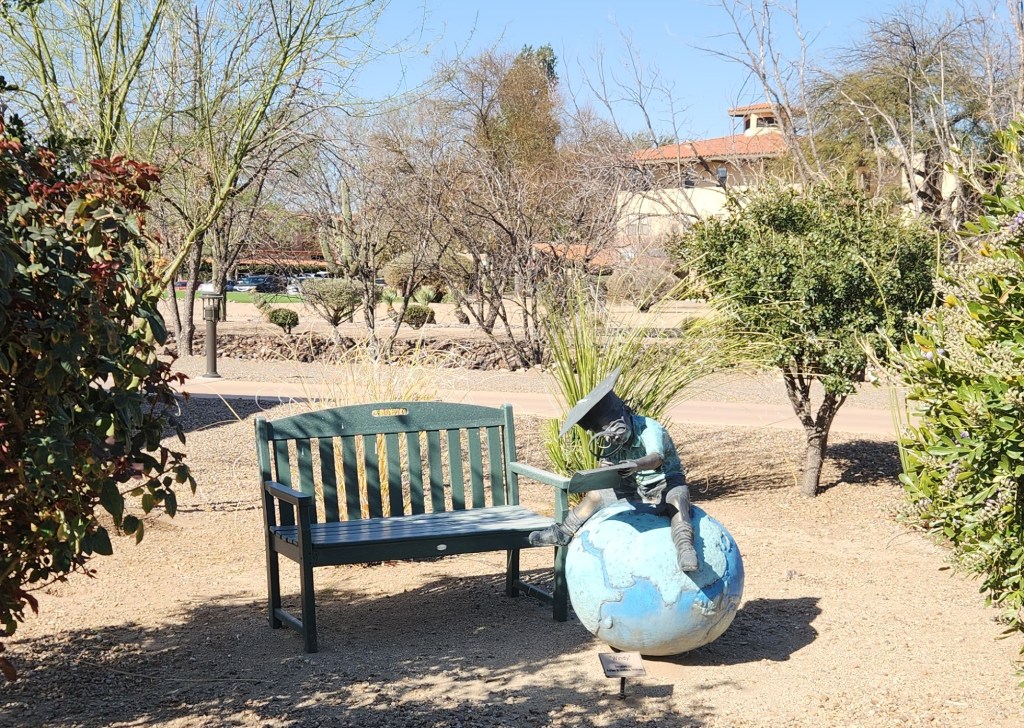
La Posada Central Park:  This park is a part of La Posada, a retirement community on the eastern side of Green Valley, located next to some large pecan orchards. It contained an interesting collection of art works scattered throughout the well-groomed grounds, and even had a fun little mini-golf course along with a supply of putters and balls. (I had a much better score there than at Canoa Ranch or San Ignacio.) As a bonus, there was a very nice coffee shop in the mall next to the park called Posada Java — I had a hot chocolate on our first visit and a milk shake the second time while Pat had lattes.

La Posada Park
La Posada Park Artwork

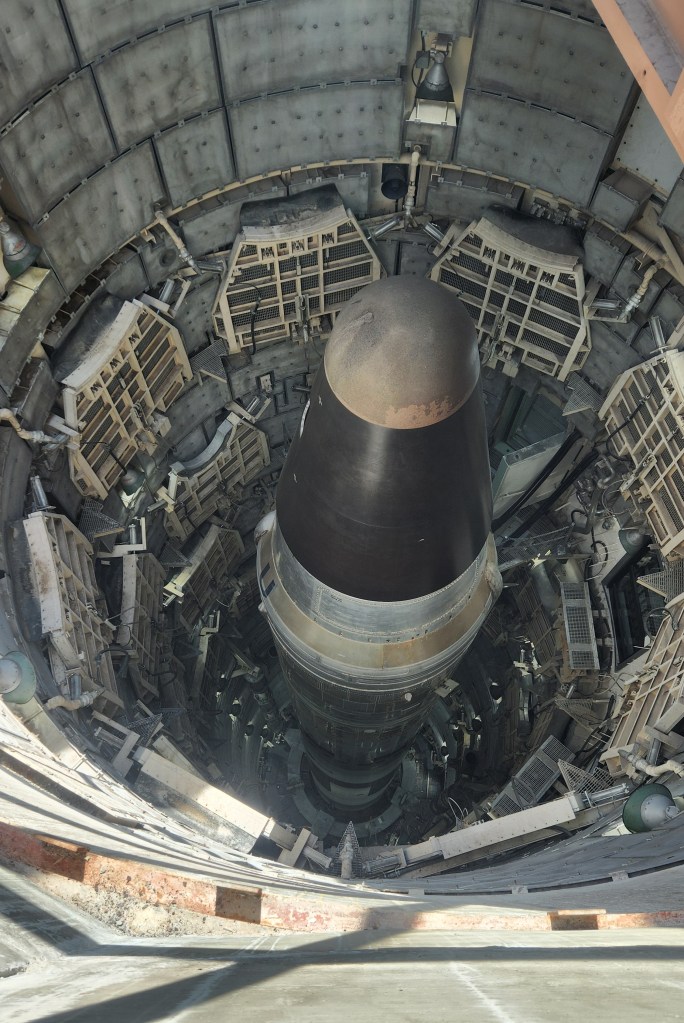
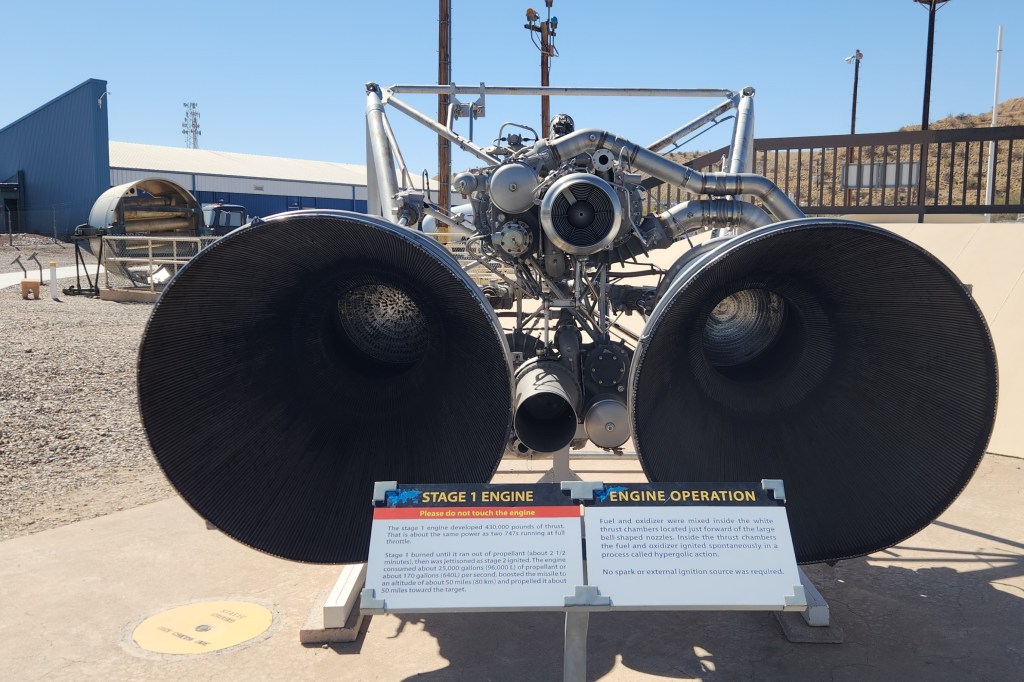
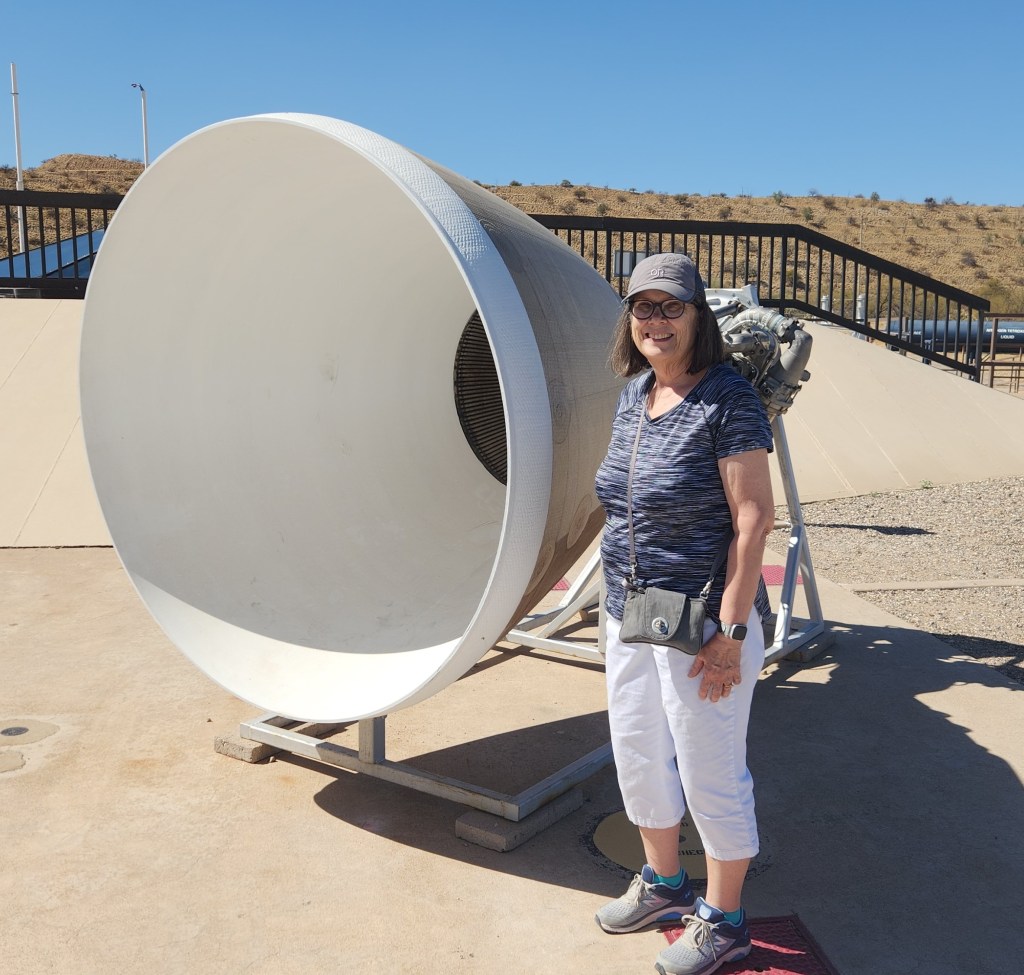
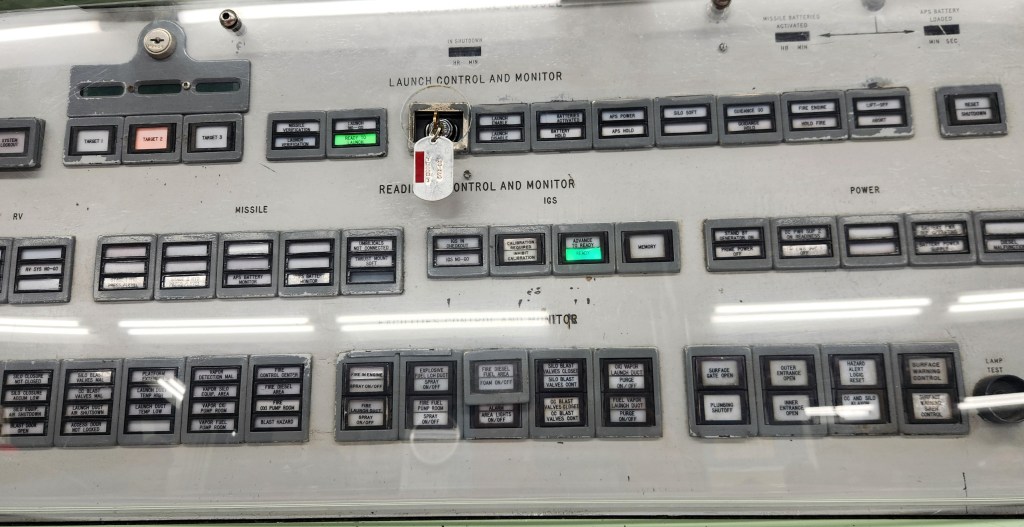
Titan Missile Museum: Located just off of I19 about halfway between Green Valley and Sahuarita, this place turned out to be an impressive surprise. It was established as a museum after the Titan II ICBMs (which stood in continuous, ready-to-launch condition from 1963 to 1987) were deactivated as part of the US missile modernization effort leading up to the SALT II treaty negotiations. The museum was chock full of interesting exhibits explaining the history of the Titan II missile program, and the missile in its silo and the adjacent underground launch control room have been maintained in a non-functional condition for educational purposes. We took an exceptionally informative tour of the underground facilities, including a simulated launch of the missile. I was lucky enough to sit at the command control station and act out the process of coordinating with a second volunteer at a nearby station to send the missile screaming toward its target, presumably somewhere in the USSR. “My God, we just destroyed the world,” I said to him safter the demonstration was over. I felt a sense of awe as I realized in a visceral sense how close the world was to the so-called mutually assured destruction (MAD) that loomed constantly during the cold war.

Deactivated Titan II Missile in its Silo
Exhibit at Titan Missile Museum
Titan II Launch Control Panel

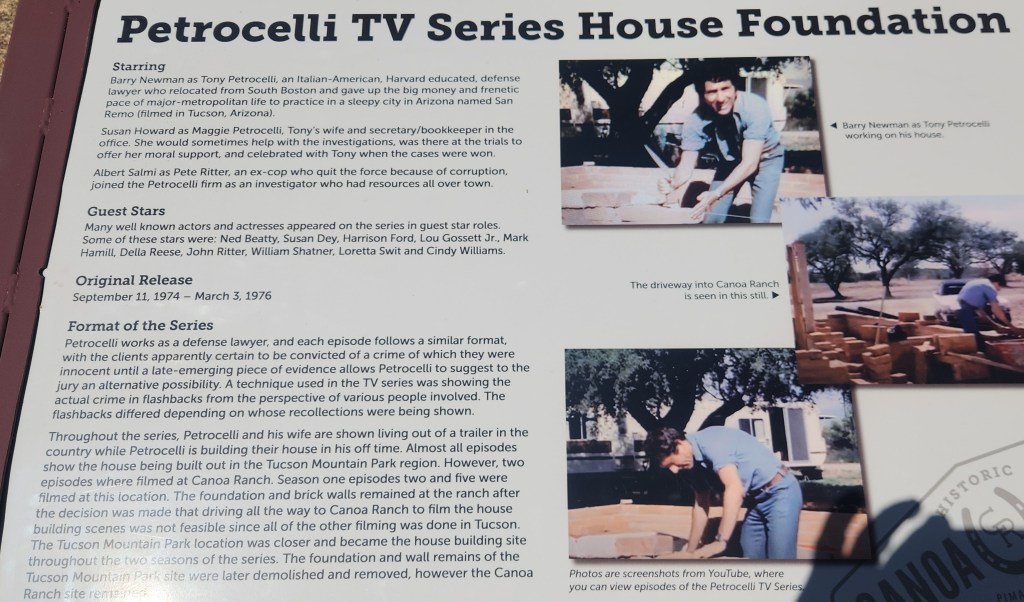
Historic Canoa Ranch: Located just to the east across I19 from our resort, this 4,800-acre site is owned and maintained by Pima County and is listed on the National Register of Historic Places. It is a portion of a site originally known as the San Ignacio de la Canoa Grant, given to Tomas and Ignacio Ortiz in 1821, shortly after Mexican independence from Spain. The Canoa Ranch functioned as a working cattle ranch from 1820 until 1970, and is still well-maintained and a popular site for public tours. The Juan Bautista de Anza National Historic Trail also runs through the site – in 1775 de Anza led an expedition of settlers and soldiers from the nearby Presidio of Tubac to San Francisco Bay and established the famous Presidio of San Francisco. The site also includes a lovely lake that supports a myriad of waterfowl and plants. One interesting factoid is that the site was used for filming several scenes in the 1970s TV series Petrocelli, the discovery of which prompted me to begin watching the old series. (So far, I’ve watched 13 episodes of Season 1 on YouTube – a nice respite from my other lawyer-show obsession, Perry Mason.)

Lake at Historic Canoa Ranch
Waterfowl at Historic Canoa Ranch
Ranch House at Historic Canoa Ranch
The de Anza Trail
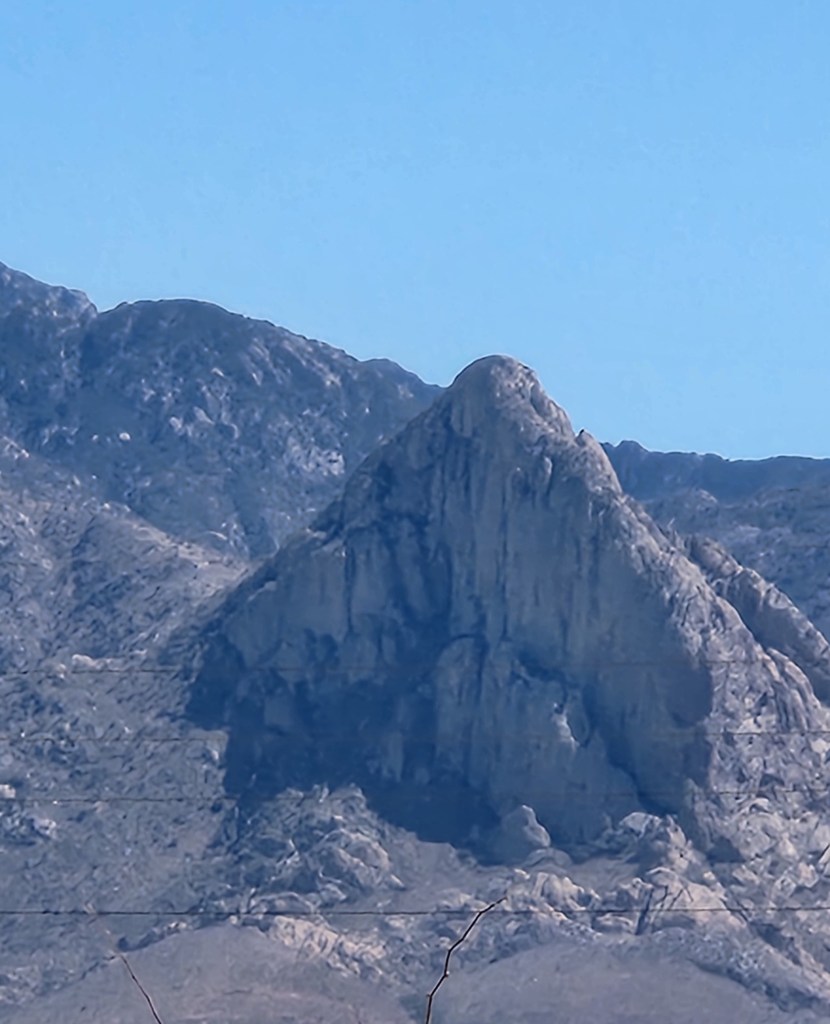
Close-up of “Elephant Head”
Petrocelli Exhibit at Historic Canoa Ranch

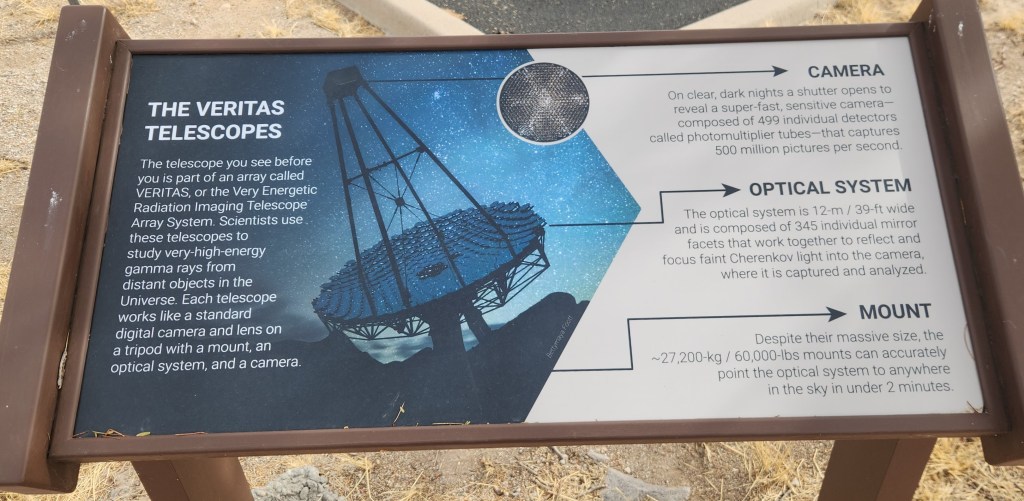
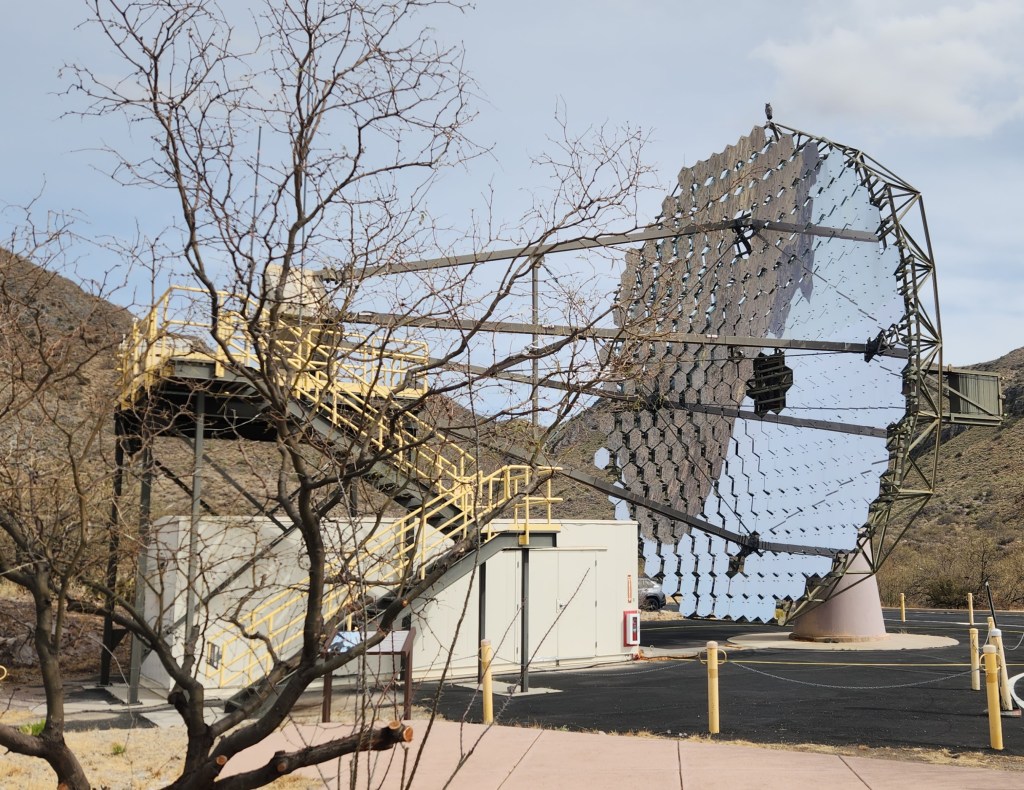
Fred Lawrence Whipple Observatory (FLWO): This facility, operated by the University of Arizona and the Smithsonian Institution, is located near and on top of Mount Hopkins in the Santa Rita Mountains. The observatory on top of the mountain, visible from our balcony at the resort, is the site of the 6.5-meter MMT telescope, while the facility near the base of the mountain is the site of the Very Energetic Radiation Imaging Telescope Array System (VERITAS) gamma-ray observatory.

Pat and I attended a lecture by the FLWO director, given at the Green Valley West Social Center, at which we learned many fascinating details about the observatory. For example, the original telescope was built in 1979 using six 1.8-meter mirrors, the largest that could be made at that time, to create an effective telescope diameter of 4.5 meters. This unique construction was the source of the telescope’s name – the Multiple Mirror Telescope or MMT. Innovative mirror construction technology developed at the University of Arizona allowed the six mirrors to be replaced by a single, 6.5-m mirror in 1998, and a novel deformable secondary mirror was added in 2002, providing the ability to make corrections for atmospheric interference. The combination of the large mirror, the high altitude, the dark skies in the area, and the adaptable mirror make the MMT one of the premier ground-based telescopes in the entire world, providing image quality comparable to space-based telescopes such as the James Webb.

Enthused by the lecture, we signed up for a tour of the VERITAS observatory. Tours of the MMT on top of the mountain are currently unavailable due to the logistics of transporting visitors along the narrow mountain road, but the VERITAS tour seemed like the next best thing. Unfortunately, our tickets were for a day when Pat was suffering from the above-mentioned malaise, so I went on my own. The tour was fascinating and absolutely perfect, except for one small detail – I found the other tourists to be very annoying, what with talking while the guide was explaining things and then asking questions which he had already answered in detail. I suppose that’s why people call me a curmudgeon.

Anyway, how about some pictures?

Exhibit at FLWO VERITAS Site
One of the Four VERITAS Telescopes
View of the MMT Atop Mount Hopkins

Tubac: This town, about 15 miles down I19 from the resort, is a popular tourist destination with lots of restaurants, galleries, and shops. We ate at a well-known Mexican place called Elvira’s, which lived up to its reputation, before strolling through the town and to the Tubac Presidio Historic Park, the home of the first fort (established in 1752), the first European settlement, the first American mining community, and the first printing of a newspaper in Arizona. Returning north on I19, we passed through a border checkpoint staffed by dozens of border agents and boasting about thirty or forty fancy looking Government vehicles. Agents stationed on each side of the three traffic lanes prominently displayed their holstered weapons while casting surly looks into the vehicles crawling along the freeway. Ferocious looking dogs were also in evidence, but we didn’t see anyone actually being stopped. Pat and I were flabbergasted by the scale of the thing, just about thirty miles north of the border crossing at Nogales. Did they think they were preventing people from sneaking past the Mexican border and then hitchhiking rides on the freeway? It struck us as a massive waste of resources, all for show.

OK, I’ll stop grousing now and offer more pictures.

Tubac, Arizona — One of Many Galleries
Tubac Artwork
Tubac Artwork
Dinosaurs at Tubac
Tubac Presidio Historic Park

Tumacácori National Historic Park: This place, located about four miles south of Tubac on I19, is at a cultural crossroads in the Santa Cruz River valley, where O’odham, Yaqui, and Apache people met and mingled with European Jesuit and Franciscan missionaries, settlers, and soldiers, sometimes in conflict and sometimes in cooperation. We watched an excellent video describing the history, and one of the most poignant moments was when an O’odham speaker said something like “Of course we welcomed the Europeans when they came, but eventually visitors can overstay their welcome.”

A Jesuit mission was established on the site in 1691 by Father Eusibio Kino, who worked tirelessly to gain the trust of the native peoples, many of whom adapted his Christian teachings to their own religious beliefs to create a sort of hybrid religion that is still practiced today. A Franciscan mission was built on the site in the late 18th century after the Jesuits fell out of favor with the Spanish, and its ruins are what sit on the site today.

The ruins and the museum on site contain many excellent artifacts and interesting information about the various native and European cultures. I was especially impressed by the beautiful basketry work by the O’odham people.

Franciscan Mission Ruins at Tumacacori National Historic Park
Mission Ruins at Tumacacori
Native Structure at Tumacacori

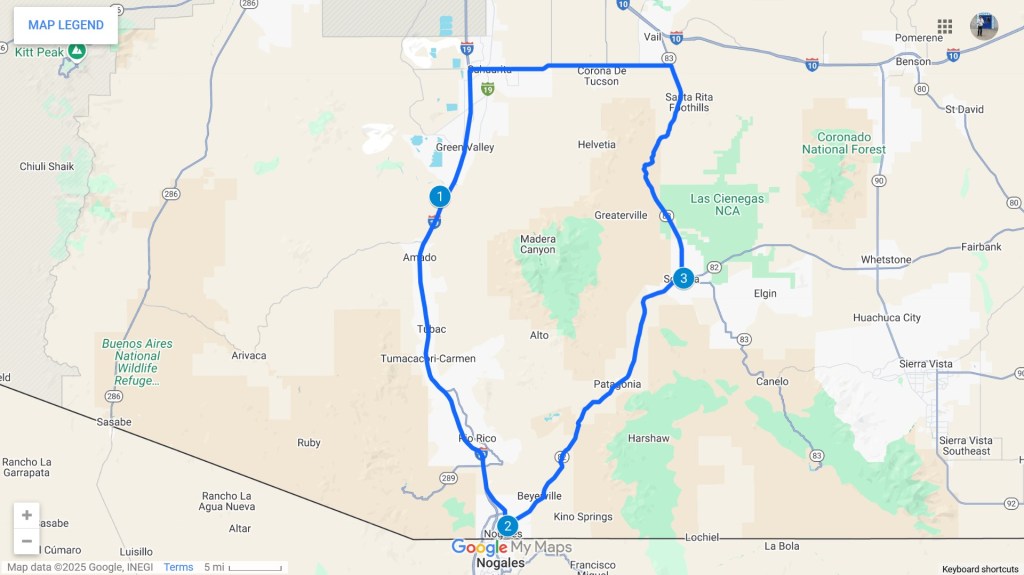
Dos Cabezas Wineworks: This place is located in Sonoita and can be reached by means of lovely drives in either of two manners: 1) heading south on I19 toward Nogales, then northeast on Highway 82 to Sonoita, or 2) heading north on I19 to Sahuarita, then east to Highway 83 and south to Sonoita. In order to maximize the scenic experience, we made the trip into a loop, going there on the southerly route and returning on the northerly one.

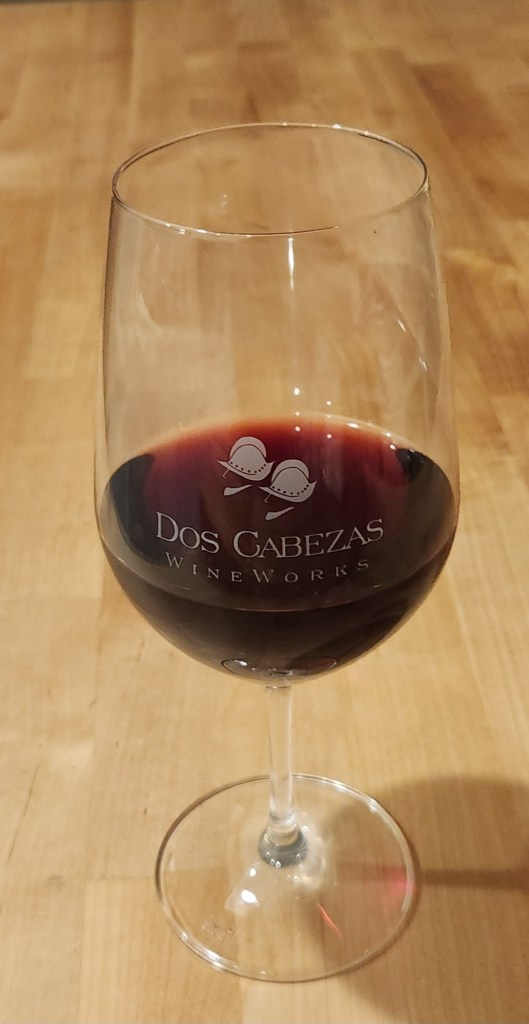
The wine works is also known as Pronghorn Pizza, as they serve a menu of delicious pizzas as well as Arizona wines from the Dos Cabezas wineries, a defunct one near Sonoita and an active one in Willcox, AZ. To go with the pizza, I opted for the wine tasting menu, which included a souvenir glass and five selections of the local wines, while Pat stuck with water, still feeling the effects of her illness. We enjoyed the experience so much that we bought two bottles of wine, which we eventually shared with our condo neighbors on their balcony at the resort.

Canoa Ranch Resort to Sonoita Loop
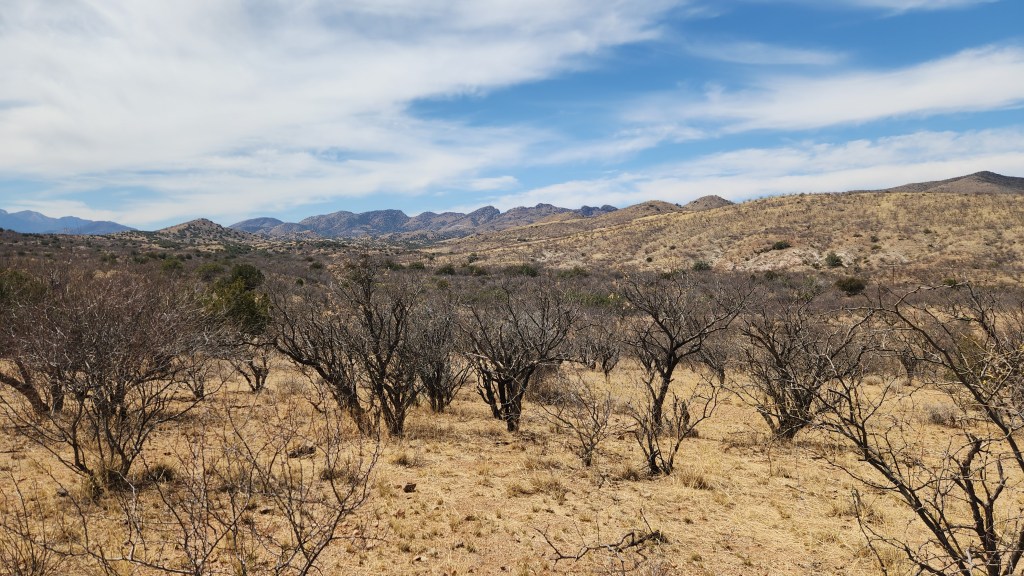
Scenery Along the Sonoita Loop
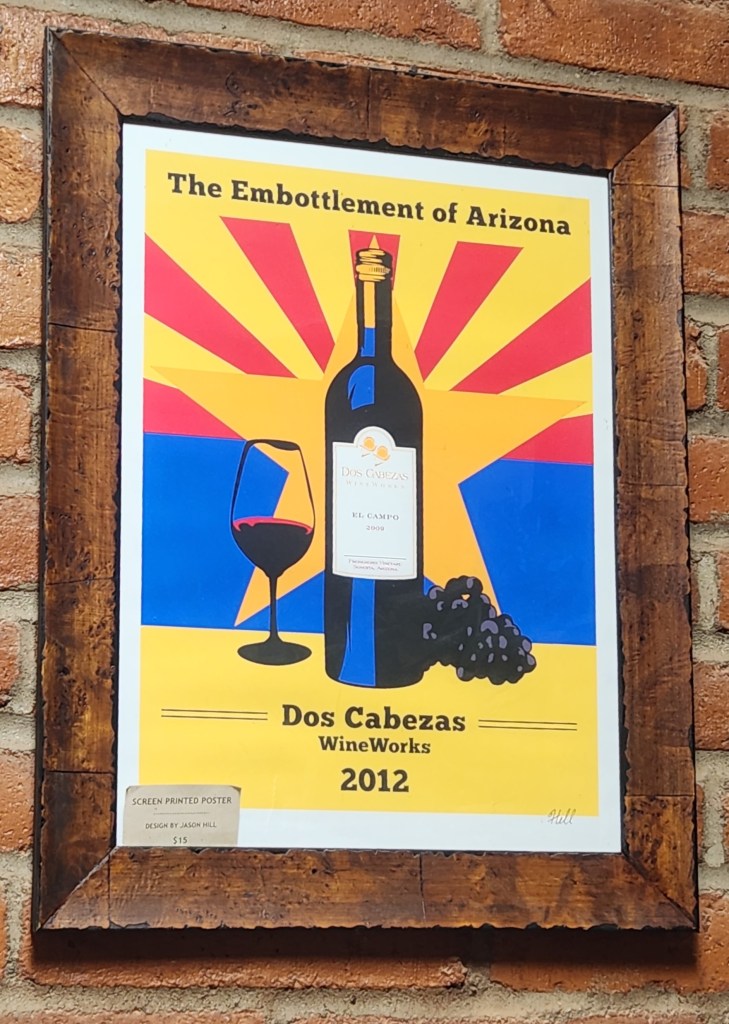
Poster at Dos Cabezas Wineworks
My Souvenir Wine Glass

Mariscos Chihuahua Restaurant: I have to include a mention of this place because I’ve been enamored with it ever since we first discovered it on an RV trip back in 2018. We visited again several times while staying at a Tucson RV park in 2020, and naturally I had to go back again on this trip when we visited some places in Tucson. Faithful readers will guess what I ordered: Camarones Rellenos – shrimp stuffed with cheese and wrapped in bacon. I talked it up so much with our condo neighbors that they also tried it and gave their thumbs up as well.

Tucson Botanical Gardens: While in Tucson, we also visited the Botanical Gardens, which offer a marvelous display of desert flora native to Arizona and other places with similar climates, such as various South American countries. Since I’ve been blathering on for quite a bit, I’ll refrain from further commentary and just go with pictures.

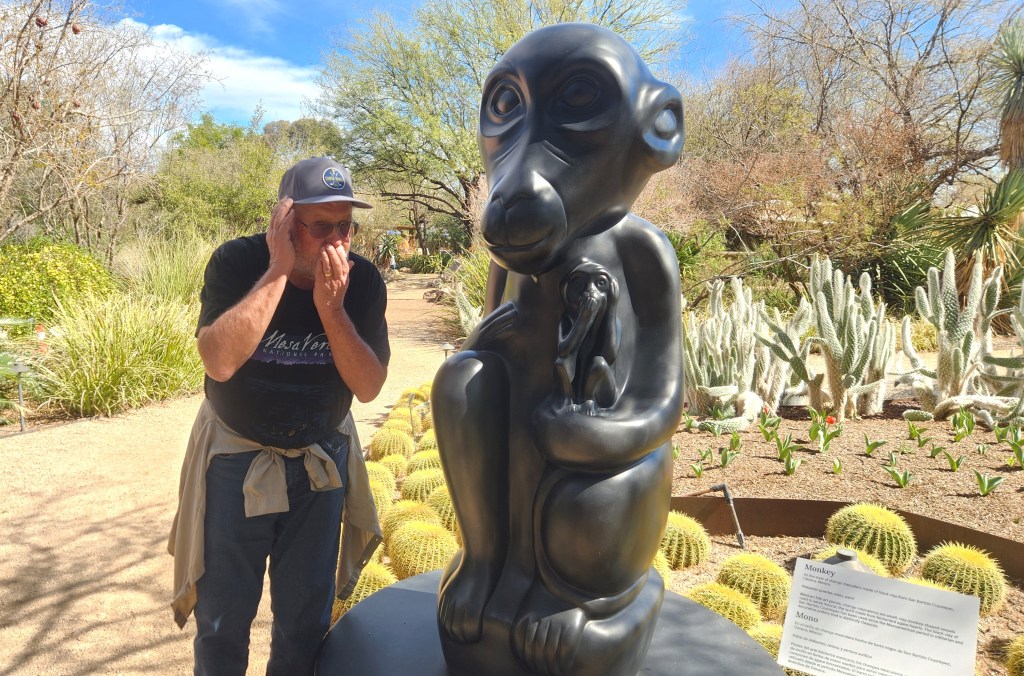
Tucson Botanical Gardens Artwork — Hear no Evil, Speak no Evil
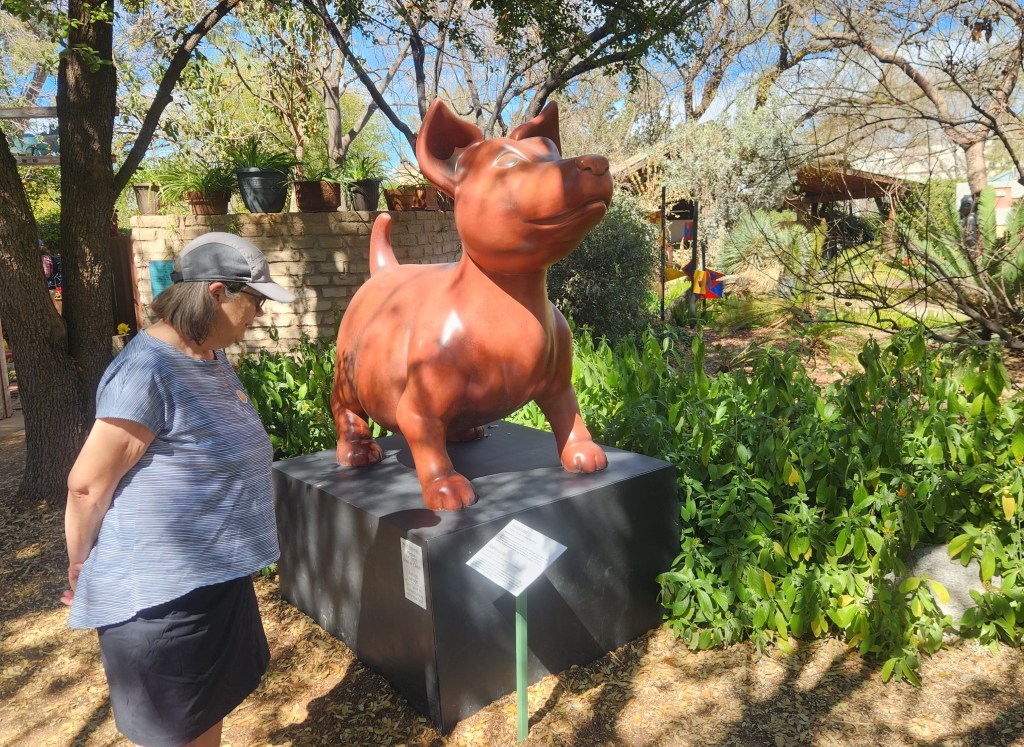
Tucson Botanical Gardens Artwork
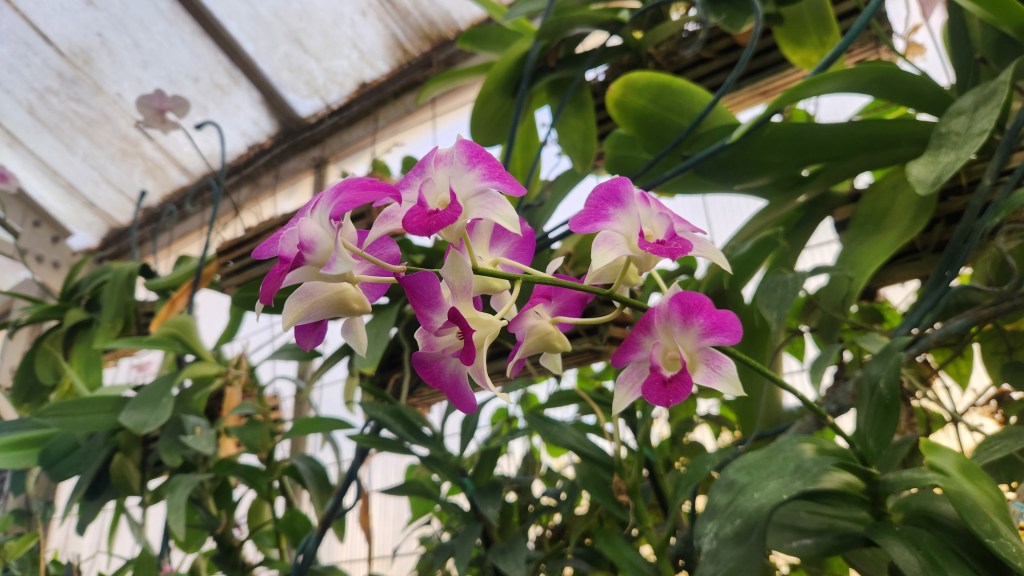
Tucson Botanical Gardens
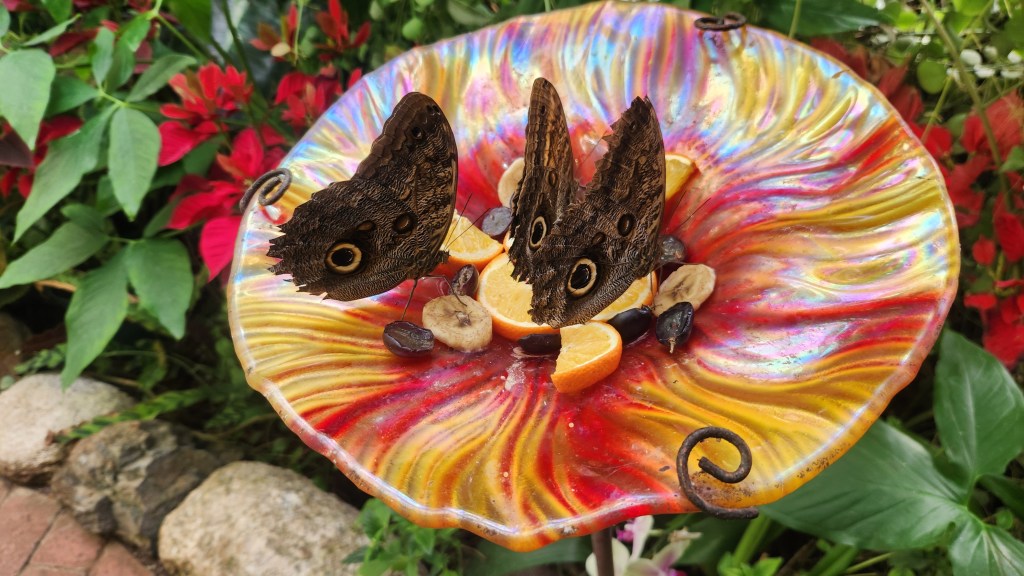
Moths at Tucson Botanical Garden
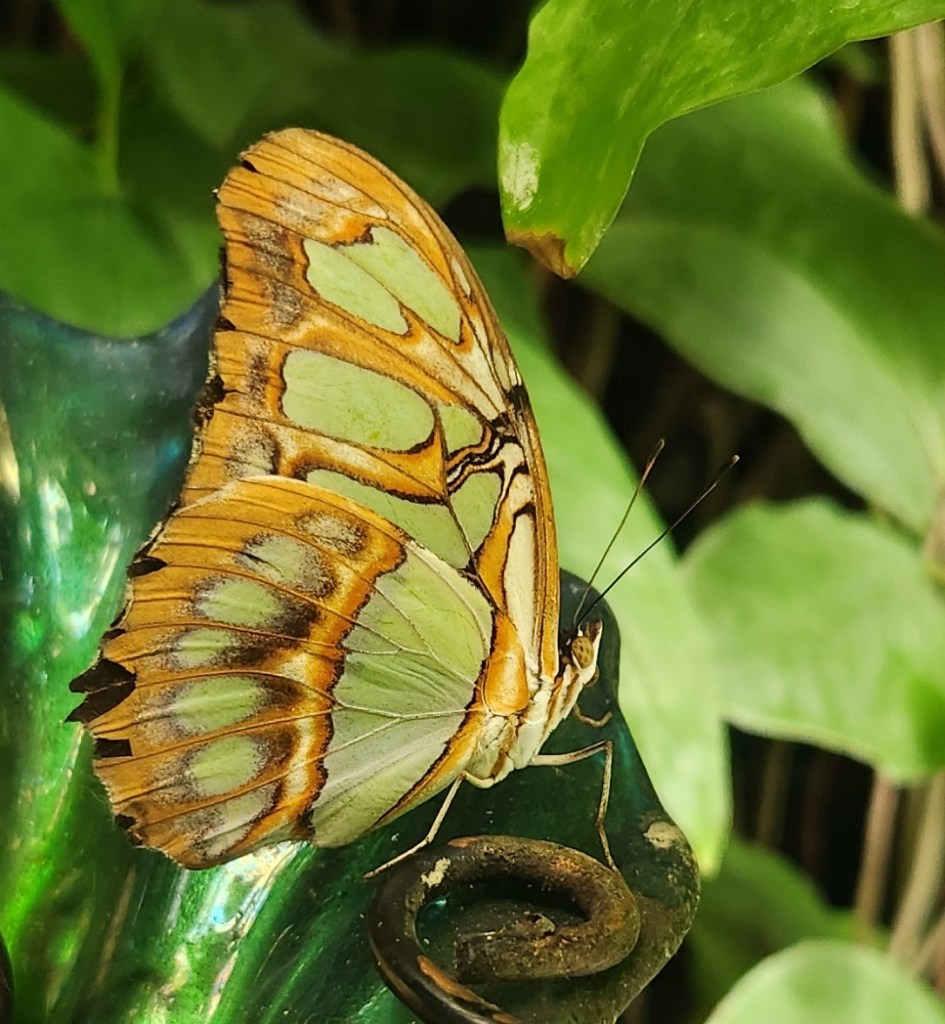
Moth at Tucson Botanical Gardens
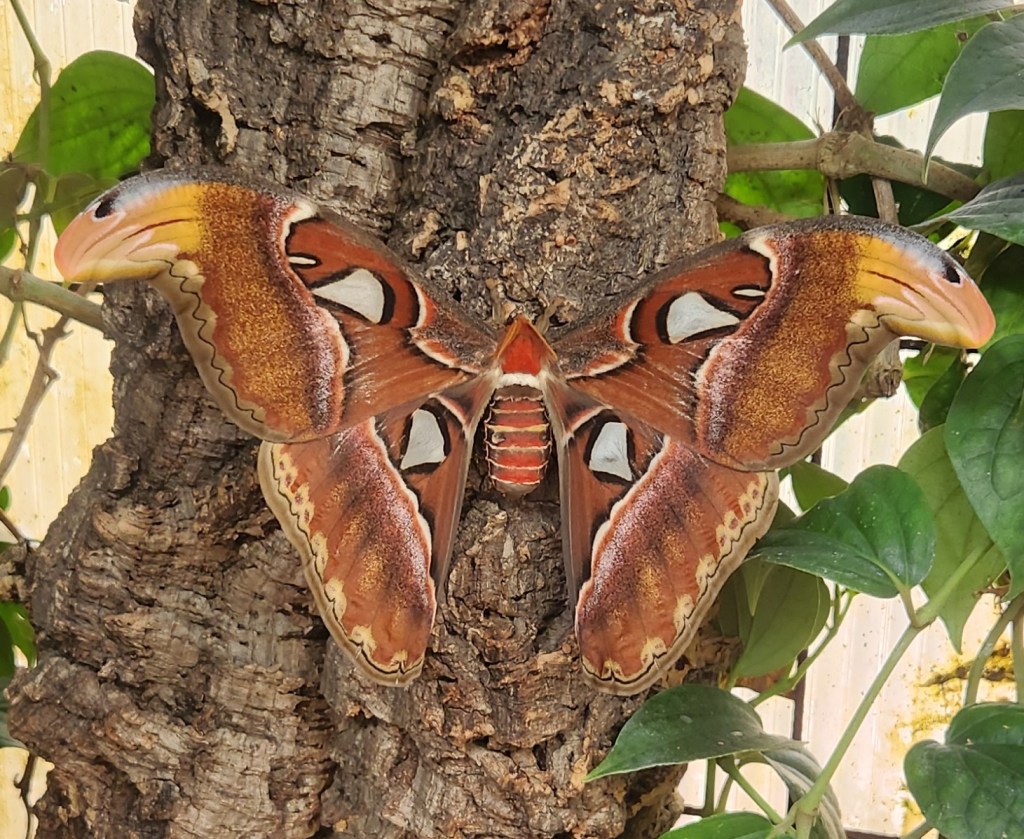
Giant South American Moth at Tucson Botanical Gardens
Tucson Botanical Gardens

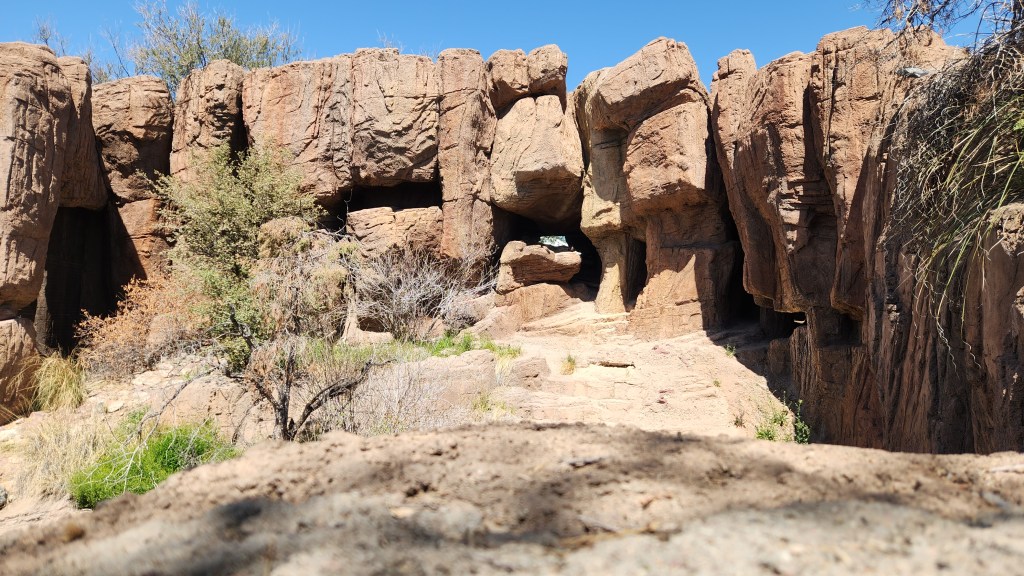
Arizona-Sonora Desert Museum: This is the last place I want to talk about, located adjacent to Saguaro National Park West. According to the museum map, the 21-acre museum includes two miles of walking paths through various habitats, 230 animal species, 1200 types of plants and 56,000 individual specimens, comprehensive regional mineral collections, and world-class art exhibitions. We spent several hours strolling along the winding paths through the exhibits, which include:

  • Warden aquarium
  • Reptile, invertebrate, and amphibian hall
  • Earth sciences center and cave
  • Ancient Arizona and Sonorosaurus
  • Mountain Woodland
  • Desert Grassland
  • Desert Loop Trail
  • Cat Canyon
  • Riparian Corridor
  • Birds of the Sonoran desert
  • Life underground
  • Hummingbird aviary

We visited a majority, but not all, of the exhibits and were delighted by the variety of flora and fauna we were able to see, including real live (animatronic) dinosaurs! Not only that, but we had a great lunch, including the most amazing hot dog I’ve ever eaten.

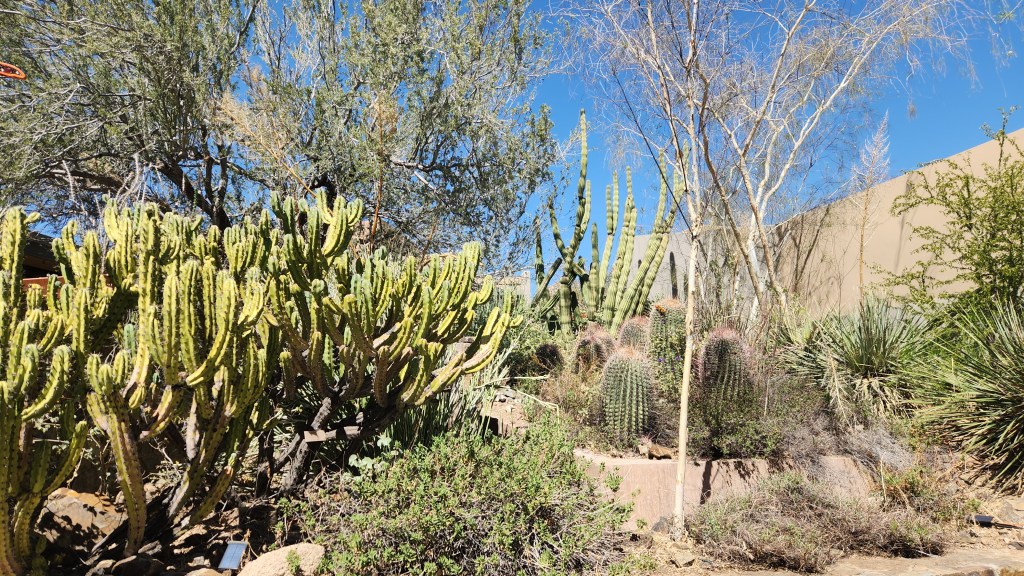
Cacti at Sonoran Desert Museum
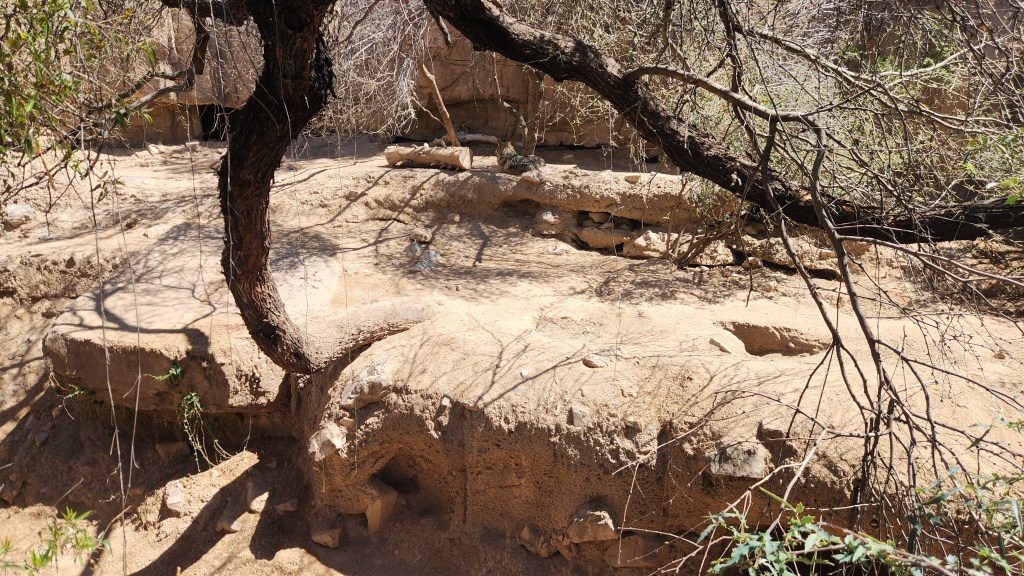
Mountain Lion Exhibit at Sonoran Desert Museum (he’s sleeping)
Deer Chilling at Sonoran Desert Museum
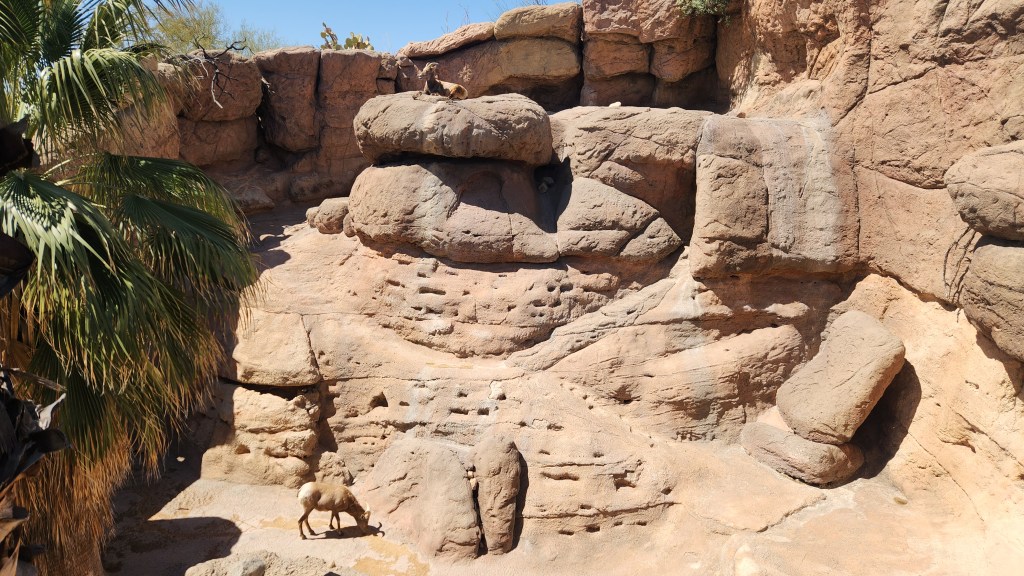
Pronghorns at Sonoran Desert Museum
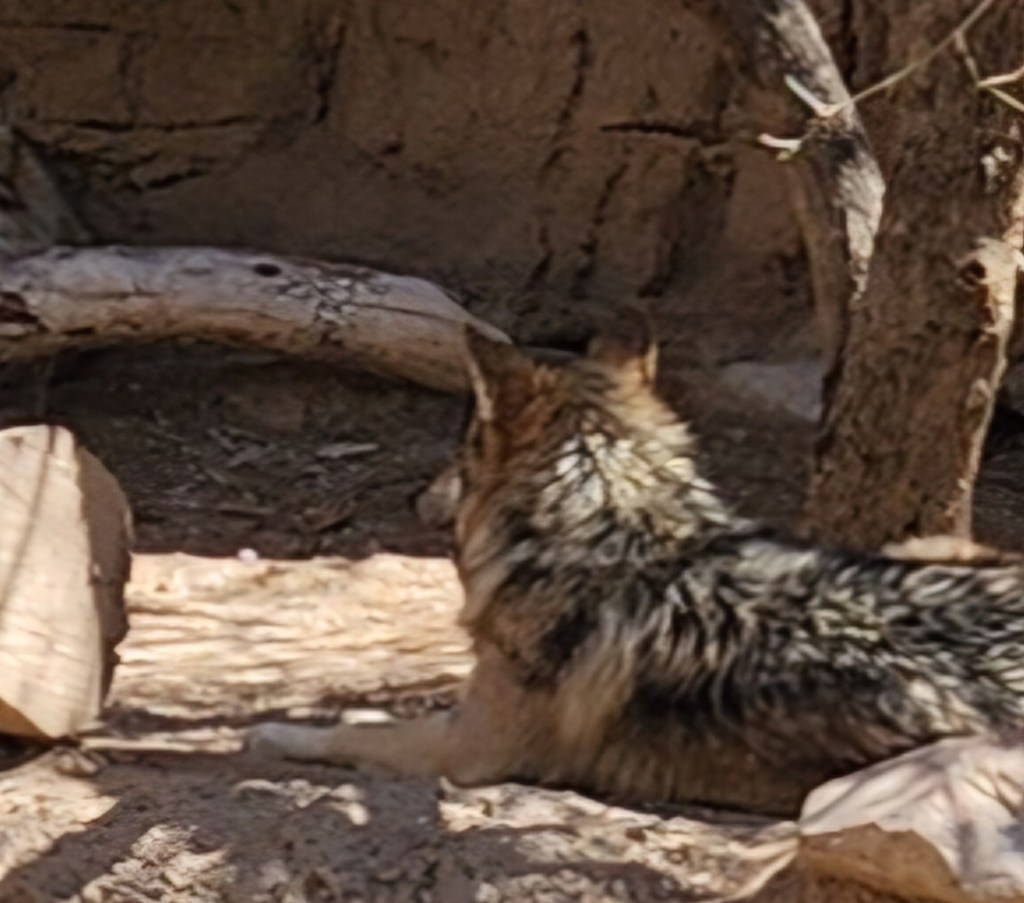
Grey Wolf Exhibit at Sonoran Desert Museum
Zoom-in on the Wolf
These Guys are Pretty Feisty
That could have been me …

Okay, that’s it for Part 2. Stay tuned for Part 3, in which I’ll describe the interesting places we visited during our road trip back to Minneapolis.

Pat and Dave’s Winter Warmup – PART 1: Overview and Starting Out

While we truly love our homes in the great state of Minnesota, a condominium in Minneapolis and a cabin in Grand Marais, we love them a lot less during the winter than the other three seasons. By the time February rolls around, we’re usually tired of the snow and ice and cold weather, so we start looking for a getaway to someplace a bit more hospitable to human habitation. This year, we hit on the idea of trying an extended stay in one place as well as a bit of a road trip. In fact, the extended stay idea was implanted in our brains by some friendly upstairs condo neighbors who have taken to spending time every February and March at a resort in Green Valley, AZ. This implantation occurred in April of last year as they regaled us with tales of the lovely accommodations and the many fun things to do in the area. They explained that a long-term stay (more than 30 days) qualifies a guest for a reduced rate, as the short-term hospitality taxes and fees are waived. Pat was sold on the idea rather quickly, and suggested that I take charge of getting us a reservation for February and March of 2025.

“So, what’s this place called?” I asked. “The Canoa Ranch Golf Resort,” our neighbors replied, and provided me with the contact information I’d need to make said reservation. Upon hearing the word “Golf,” I immediately agreed to take charge. “I’ll get right on it, dear,” I told Pat.

Fast forward to September 20. I was at the cabin in Grand Marais while Pat was back at the condo, and I suddenly realized that I had not yet “gotten right on it,” having forgotten to call for the promised reservation. After a bit of telephone tag, I finally managed to complete my assigned task, although due to my procrastination no rooms were available until February 21. Better late than never, I told myself, while trying to craft the proper words to gently break the news to Pat.

Luckily, we had a great fall travel season, as documented in my earlier blog posts, Pat and Dave’s Nifty National Park Lark and Pat and Dave’s Intrepid Iberian Interlude, which helped us to forgive my less-than-stellar performance in securing the Canoa Ranch Resort reservation.

First off, here’s a map of our overall journey, to set the stage for this narrative:

We had planned to depart on February 18 and spend four days driving to Green Valley, but a big snowstorm hit the Midwest, causing us to delay our departure and shorten our travel time to three days. Fittingly, as we rolled out of the condo parking garage in our EV on Wednesday, February 19, it was a bone-chilling negative 4 degrees Fahrenheit.

It felt good to be heading to warmer climes, as the high temperature hadn’t reached positive figures for two solid days. However, as we drove south to our first overnight in Olathe, KS, in suburban Kansas City, it didn’t warm up at all. When we resumed our journey on Thursday morning, we had to scrape snow and ice off the car and the thermometer read negative nine. We passed a herd of about 100 cows standing in groups on both sides of the highway as we departed Olathe. “Are those cows even moving?” I asked Pat. “I don’t think so,” she said, studying the miserable-looking, immobile beasts. “Maybe they’re all frozen solid.”

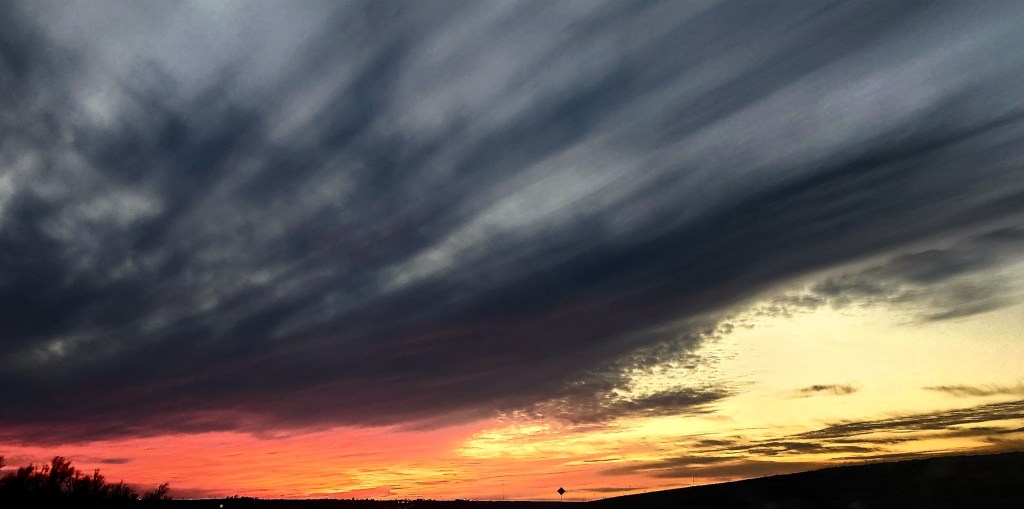
It didn’t get much warmer until we passed through the Texas panhandle, and when we reached our second night’s hotel in Tucumcari, NM, it was still only about 20 degrees. During the second day of driving, it finally began to warm up, reaching into the 50’s by the time we reached Willcox, AZ, and finally into the 70’s as we rolled into the Canoa Ranch Golf Resort at 7:30 PM. I won’t say much about the drive to Green Valley, since all we did was drive, charge the EV, eat, and sleep, but I will offer this photo of the lovely sunset we encountered near Amarillo, TX, on Thursday evening.

Sunset Near Amarillo, TX

I’ll be writing two more installments for this adventure. Part 2 will cover the five weeks we spent in the Green Valley area, and Part 3 will describe the beautiful places we visited on our way back to Minneapolis. But first, I want to say a few words about our EV. (Those readers who are tired of my EV proselytizing can just skip the rest of this installment and come back for Part 2 in a few days.)

Some of my prior posts have provided detailed information about traveling with an electric car, because I want to help readers to understand the real-world aspects of joining what I like to call the EV Universe. In those posts, I have been effusive in my praise of the specific brand of car that we drive, but for now I’m merely calling it an EV. Why? The overriding reason that we have purchased two EVs and no longer drive a gasoline powered car at all is our desire to do something to help stem the tide of global climate change. Electric cars are the future, and I have tried to provide useful information to readers based on our real-world experience. Unfortunately, one individual (whose name I shall not mention), after becoming the world’s richest man by successfully developing the US electric car industry, has now revealed himself to be an unspeakably disgusting, corrupt man who doesn’t even believe in the mission of the EV Universe – he merely exploited a market opportunity to amass enormous wealth and power which he is now using in an attempt to destroy the very soul of our great nation. Many people now say we should get rid of our EVs as a protest against this man. But as a fervent believer in the goal of the EV Universe, I urge readers not to abandon your EVs. Fellow owners of American-made EVs, please keep driving your zero-emission vehicles. Join the mass protests against the man, put a protest sign on your car, urge your members of Congress to send him packing, but don’t let him destroy both the EV dream and the US Government.

Love the Car, but not the Man

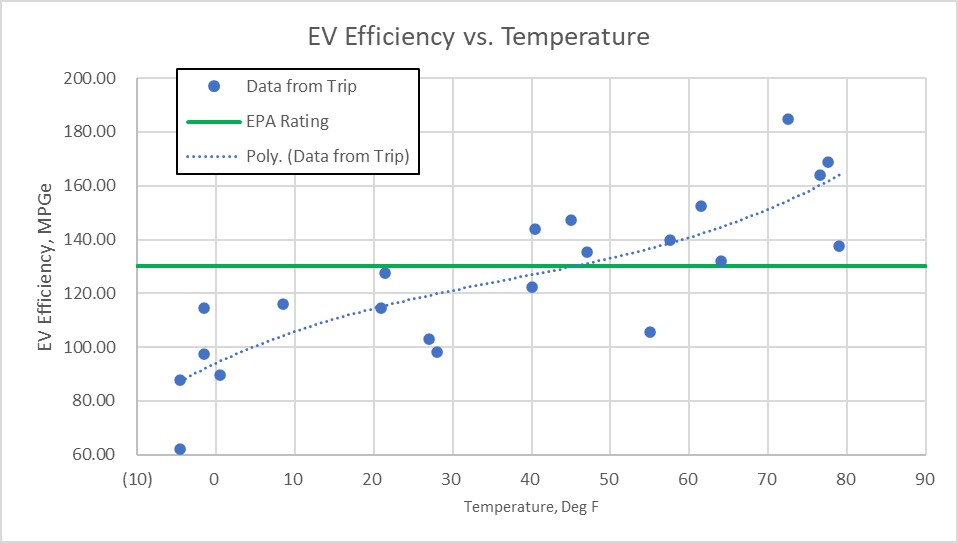
Okay, I’ll calm down now and provide some information about our EV that will hopefully be of interest. It was quite obvious during our drive from Minneapolis to Green Valley and back again that the performance of the car was noticeably reduced when the temperature was low and was very good when the temperature was high. So, I decided to compare the car’s efficiency during the drives between our charging stops (based on my records of actual miles driven and energy added during each charging session) with the air temperatures at the various charging locations as documented by the Weather Underground website. Here’s what I came up with:

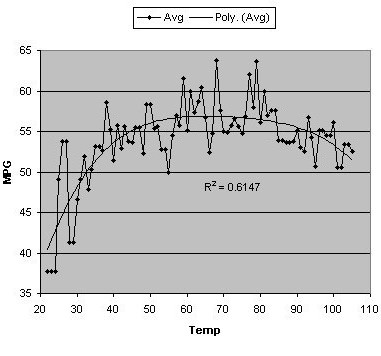
Although there is significant scatter in the data due to other variables that affect performance (terrain, wind, driving speed, heating or air conditioning usage, etc.), it is clear that the actual efficiency was lower than the EPA rating at low temperatures and higher than the EPA rating at high temperatures. This bears out the general wisdom I have heard that EVs are good warm-weather cars and not-so-good cold weather cars. To put this data in perspective, I also spent a little time trying to find a comparable analysis for a gasoline-powered car. For the most part, I could only find general statements about the temperature impact, but I did find this interesting chart posted on the Fuelly.com website by the owner of a 2009 Honda Fit 1.5 RS CVT:

The Honda owner is clearly one who takes measures to maximize fuel economy, since his calculated 55 MPG vastly exceeds the 31 MPG EPA rating for that car, but the interesting aspect of the above chart is that is shows a decrease in efficiency for the gas-powered car at lower temperatures that is comparable to what I found for our EV. It also shows a decrease in efficiency at elevated temperatures, which the EV data does not show. While a comparison of calculations by two individuals for two cars is not in any way a sound scientific analysis, this interesting anecdotal data shows that the temperature impact for the EV efficiency is no greater than that for the gas-powered car.

Okay, that’s enough for Part 1. Stay tuned for Parts 2 and 3, which will feature more pictures and less pontificating.

A Once Proud Tesla Owner’s Lament

Once upon a time, not all that long ago, most people in the United States – even a few Republicans – still respected science and engineering and the earnest, hard-working people who studied and practiced in those fields. A seemingly brilliant and altruistic engineer named Elon Musk was well along in his admirable quest to build a world-class electric car company. With its high-tech American-built cars and extensive nationwide charging network, Tesla was the absolute best choice for anyone interested in abandoning an eco-unfriendly gasoline-powered car in favor of an EV capable of long-distance travel. When we purchased a 2020 Tesla Model Y in January of 2021, the shining, stylized “T” on the front of the car felt like a badge of honor. At that time, we still had an ICE (internal combustion engine) car for backup, but we primarily used the Tesla for the next several years.

Three years and 45,000 zero-emission miles later, we were still in love with our Tesla. Our youngest son’s fourteen-year-old Toyota Corolla was on its last legs and had to be replaced, so we transferred our backup ICE car to him, having decided to replace it with a second EV. Reviewing our needs at that time, it was clear that Tesla was still the best EV choice for us, with its advanced features, long range, and charging network needed for travel between Minneapolis and Grand Marais as well as for long distance travel around the US. In addition, the 2023 Inflation Reduction Act (IRA) had expanded the number of EVs eligible for Federal tax credits, and we believed that a 2024 Tesla Model 3 would meet the tax credit criteria. With enthusiasm, we purchased our second Tesla and began driving it all over the US – to the Great Smokey Mountains, back and forth to Grand Marais, to National Parks and Monuments in Utah, Colorado, Montana, and South Dakota.

However, even before buying the second car, black clouds had begun to gather. First, the formerly brilliant Musk had seemingly lost his mind with the purchase and wreckage of Twitter. Second, while the Model 3 was eventually added to the list of eligible IRA vehicles, since we hadn’t waited until the pronouncement was official, we got no tax credit. Finally, Musk has devolved even further into a completely despicable being, buying the presidency for Donald Trump and eagerly seizing upon his so-called mandate to destroy the US Government. His Gulf of Mexico sized ego seems to have driven him to abandon all pretense of what I had misinterpreted as altruism in favor of enriching himself to a level never seen before in human history. Instead of the man who created an eco-friendly American EV industry, he’ll now be forever known as the man who seized the opportunity to loot government coffers while pretending to champion “efficiency.” (Sometimes as I toss and turn at night, I dream that co-President Trump will become annoyed with playing second fiddle to Musk. After all, he has his own foray into Corruptocurrency to worry about. Perhaps he’ll send Pam Bondi and Kash Patel to arrest his former ally on some sort of presumably Trumped-up charges …)

But I digress. Given these tragic turns of events, that shining, stylized “T” has now become a scarlet letter of shame. So, what’s a once-proud Tesla owner to do? I hear many competing voices in my head. “Sell the cars? Donate them to Trump sycophants? Torch them in a grand, public display? Drive them off the rim of the Grand Canyon, ala Thelma and Louise? Replace them with VWs, Hyundais, Porsches, Volvos, or some other alternative?” Pat seems ready for one of those options, but none of them seems right to me.

I remind myself that there are many good, hard-working people still employed by the evil Muskrat, still working to produce high-quality, eco-friendly EVs. Surely many, if not most, of those people actually believe in the EV mission, even though Musk clearly doesn’t. Shouldn’t I still try to support them rather than abandoning ship and letting Musk have the last laugh?

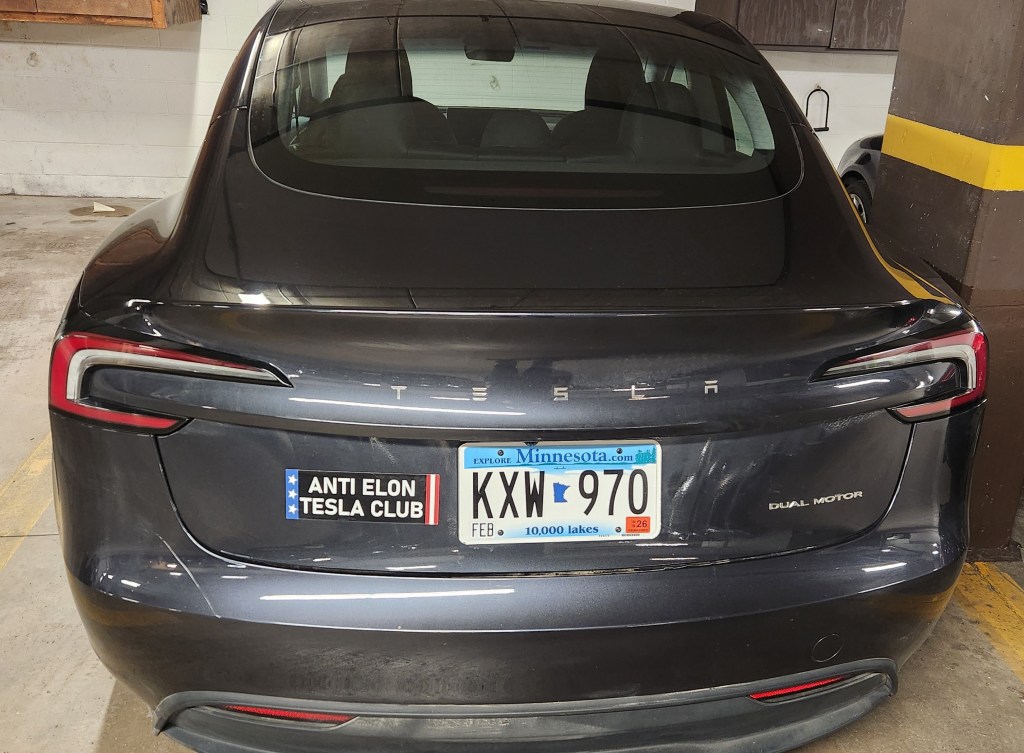
So, I’ve at long last come up with a plan. I still love both cars and am proud to be driving zero emission vehicles (by now up to a total of more than 65,000 miles). I have purchased two bumper stickers which I will prominently display on both cars:

If people stop to engage me in conversation about these signs, I’ll text them a link to this diatribe. Although, if they seem to be Trumpites or Muskmen, I’ll probably rickroll them instead.

Pat and Dave’s Intrepid Iberian Interlude – PART 4: Favaios, Lamego, Porto, Quinta Da Aveleda

Welcome back for the final episode of this narrative of our recent trip to the Iberian Peninsula. Part 3 described three of the shore excursions we took during the river cruise, leaving off in Pocinho on November 15th. This episode describes the last four shore excursions and our trip back home.

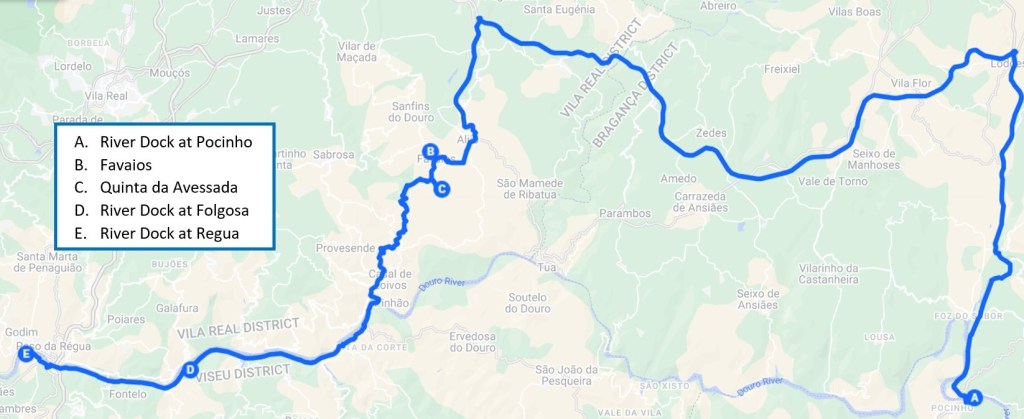
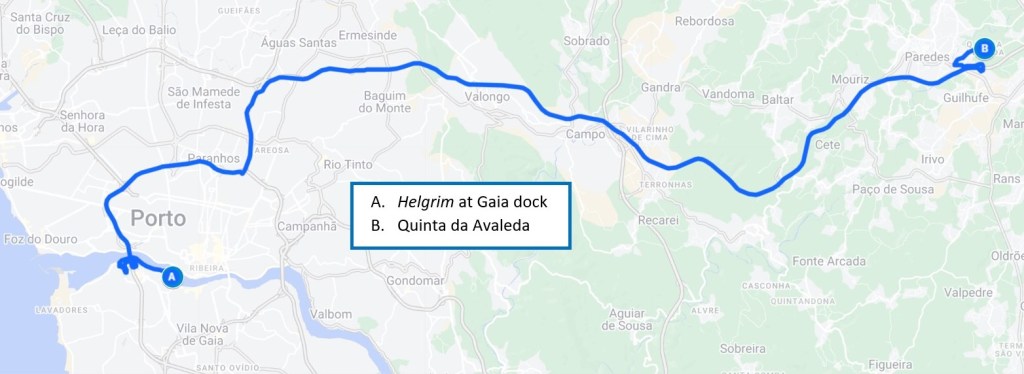
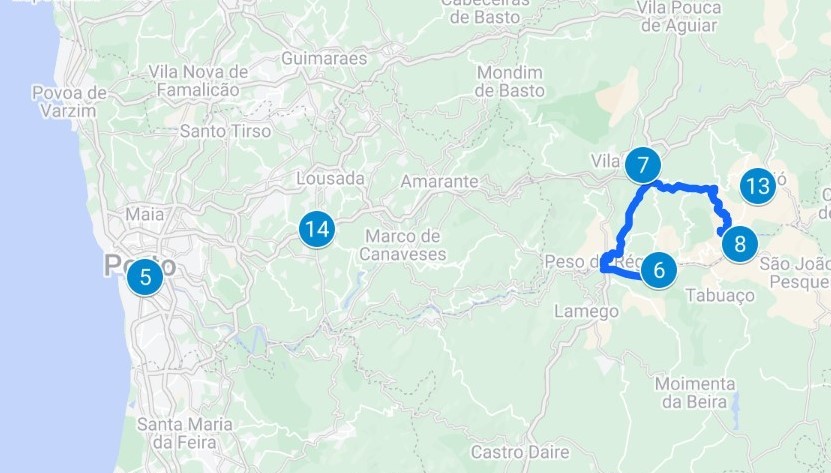
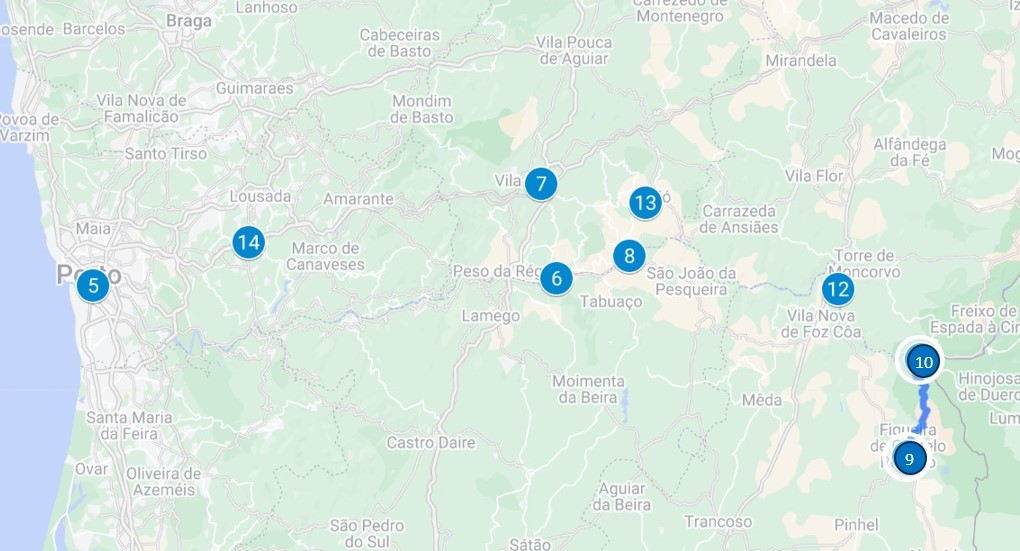
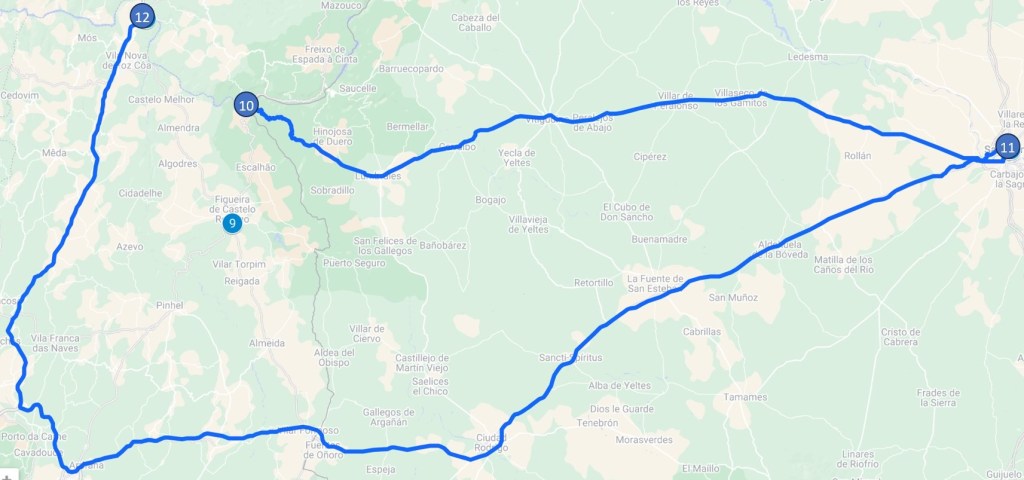
Favaios and Quinta da Avesado (November 16): On Saturday the 16th, we disembarked from the Helgrim at 8:30 AM for a 50-mile bus drive through the beautiful Douro valley to the town of Favaios. In Favaios, we visited a wine producing cooperative, a bakery, and a museum, before traveling to the Quinta da Avessada, an impressive vineyard where we were served an excellent lunch. After lunch, we returned to the ship, which had sailed downstream from Pocinho to Folgosa while we were on the shore excursion. After reboarding, the ship sailed on to Peso da Regua where we docked for the night. Here’s a map of the day’s travels:

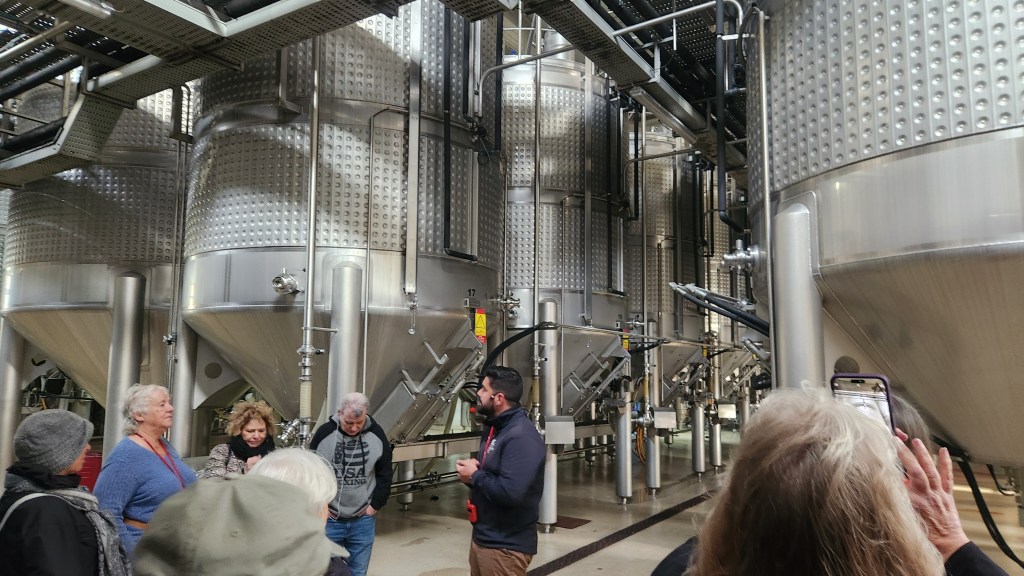
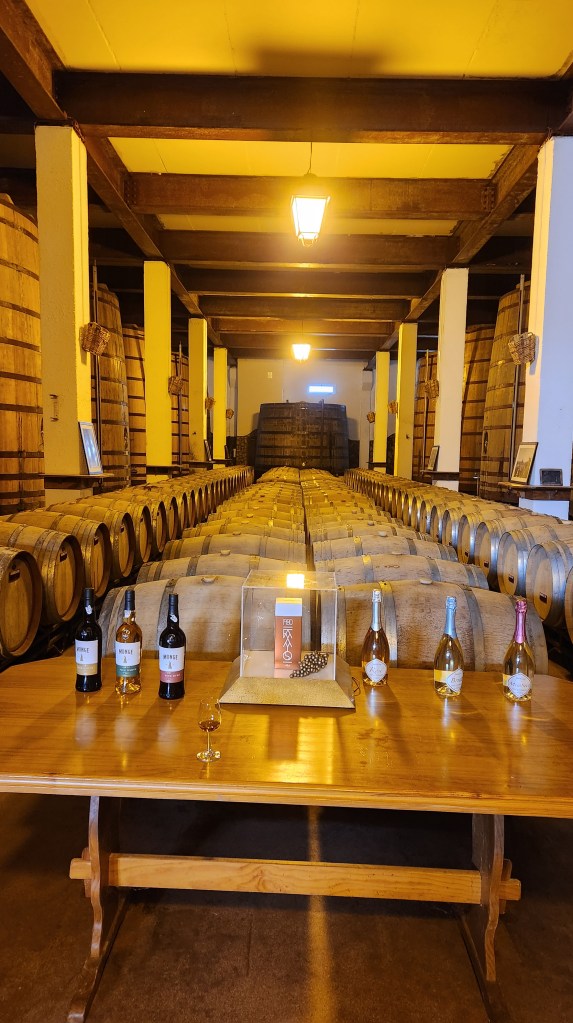
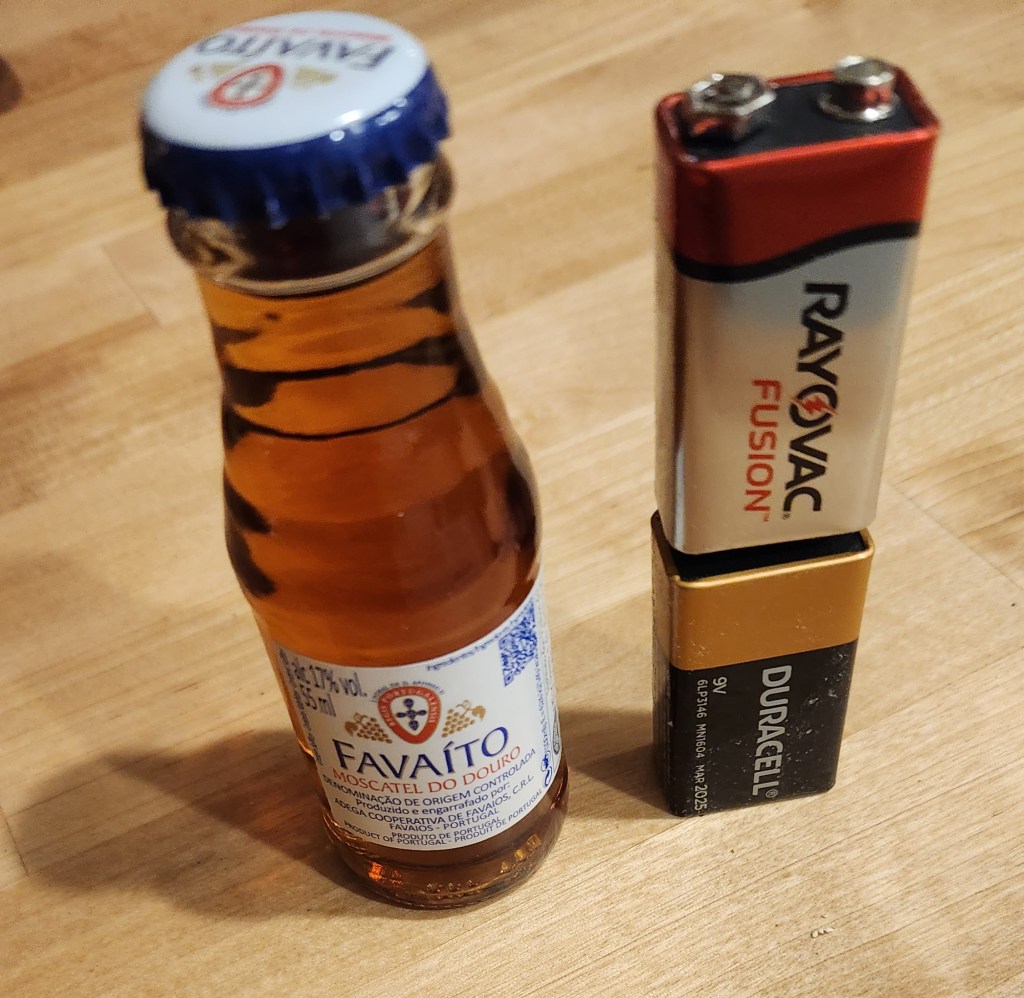
Favaios is the home of the Adega Cooperativa de Favaios, which was our first stop on the excursion. Adega is a cooperative that produces a popular fortified wine known as Moscatel, produced from the Muscat grapes that thrive in the plateau more than 1,000 feet above the Douro River (Favaios lies at an altitude of 1,800 feet). The cooperative includes some 100 member vineyards that supply the grapes during a short harvest season, typically from late September to mid-October. The cooperative has developed an ultramodern, computer-controlled processing facility that produces well over a million bottles of Moscatel each year, although the majority are the very popular 55 ml “shot” sized bottles that the Portuguese love to mix with beer. The cooperative has an aggressive expansion planned to add another hundred member vineyards and double the processing capacity to account for the ever-shorter harvest season due to the undeniable impact of climate change. The process is similar to that for Port wine, which I described in Part 2 of this series – the highly-sugared grapes are fermented in large stainless-steel vats before fortification with aguardente and then aged in wooden barrels for several years. Our tour of the facility concluded with a tasting of several glasses of Moscatel; we were sufficiently impressed to buy a couple of the little “Favaita” bottles to take home.

The Adega Cooperative in Favaios
Fermenting Vats
Aging Barrels and Sample Wine Bottles
The Delectable Favaito Muscatel

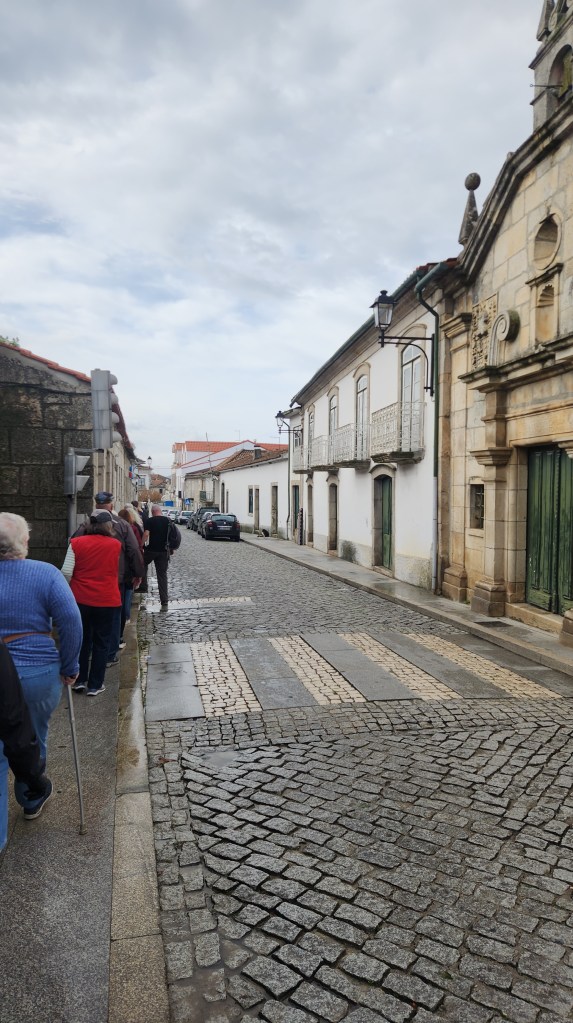
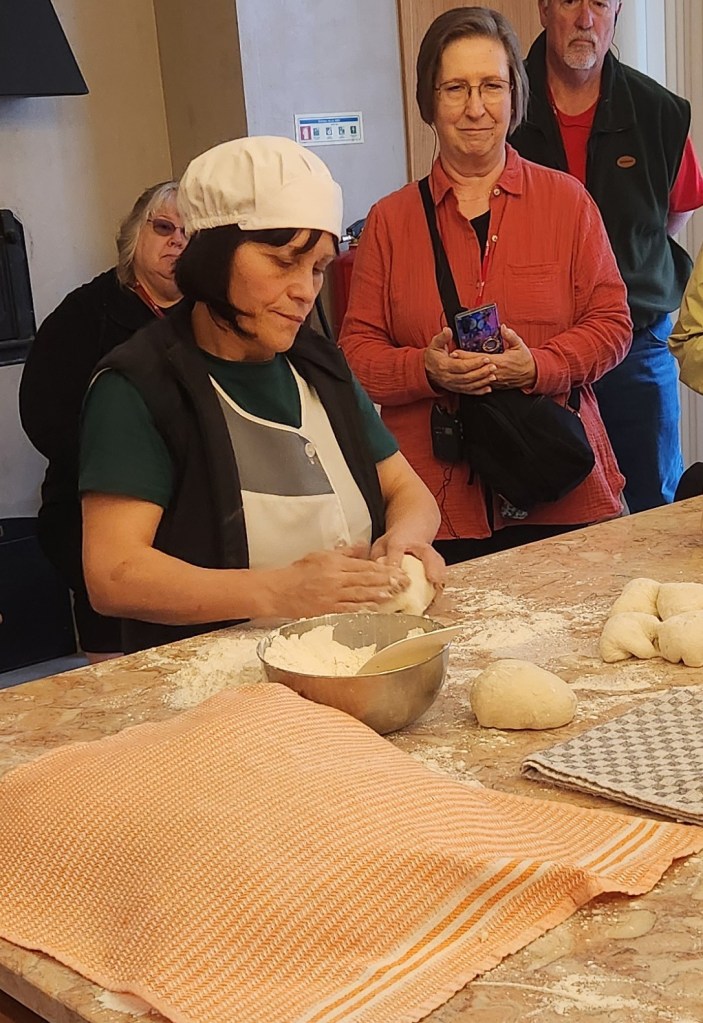
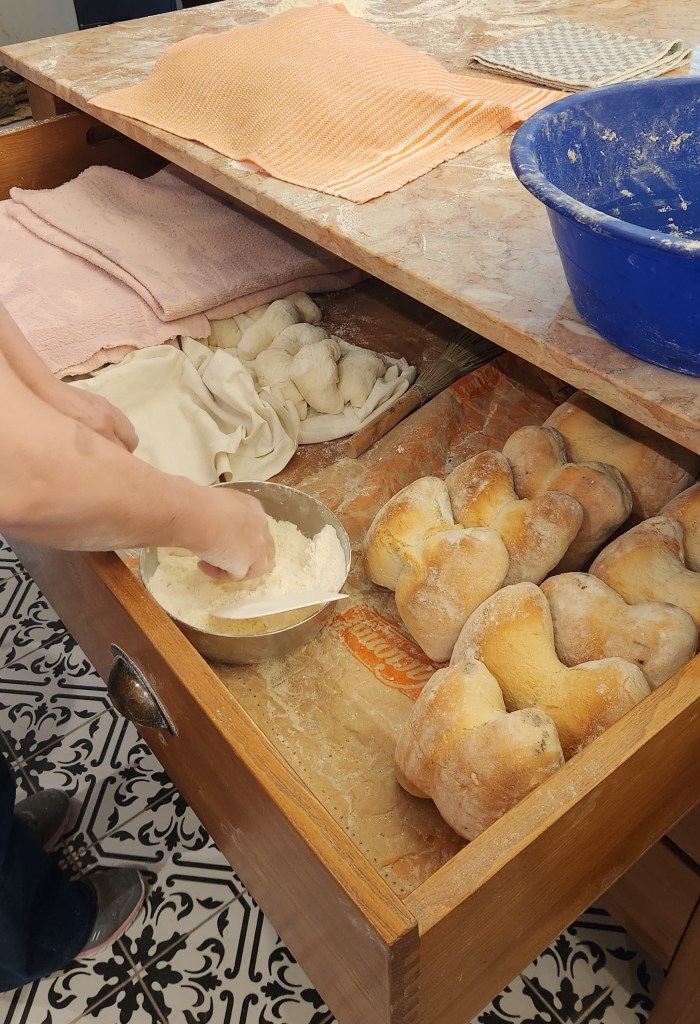
After the wine cooperative, we strolled down the street with a local guide to a bakery where bread is baked fresh daily. Eight bakeries in Favaios create 8000 loaves of the famous Four Corner Bread daily, by hand, using only four ingredients, and bake them in ovens fueled by pine branches. The loaves are distributed by the bakeries to bread shops throughout the region, and they sell out the entire lot every day. We watched as a skilled baker demonstrated the time-honored technique for kneading the dough into a time-honored shape. After witnessing the demonstration, I was delighted to sample the freshly baked bread and satisfy my watering mouth.

a Favios Street
The Favaios Bakery
Four Corners Bread Dough

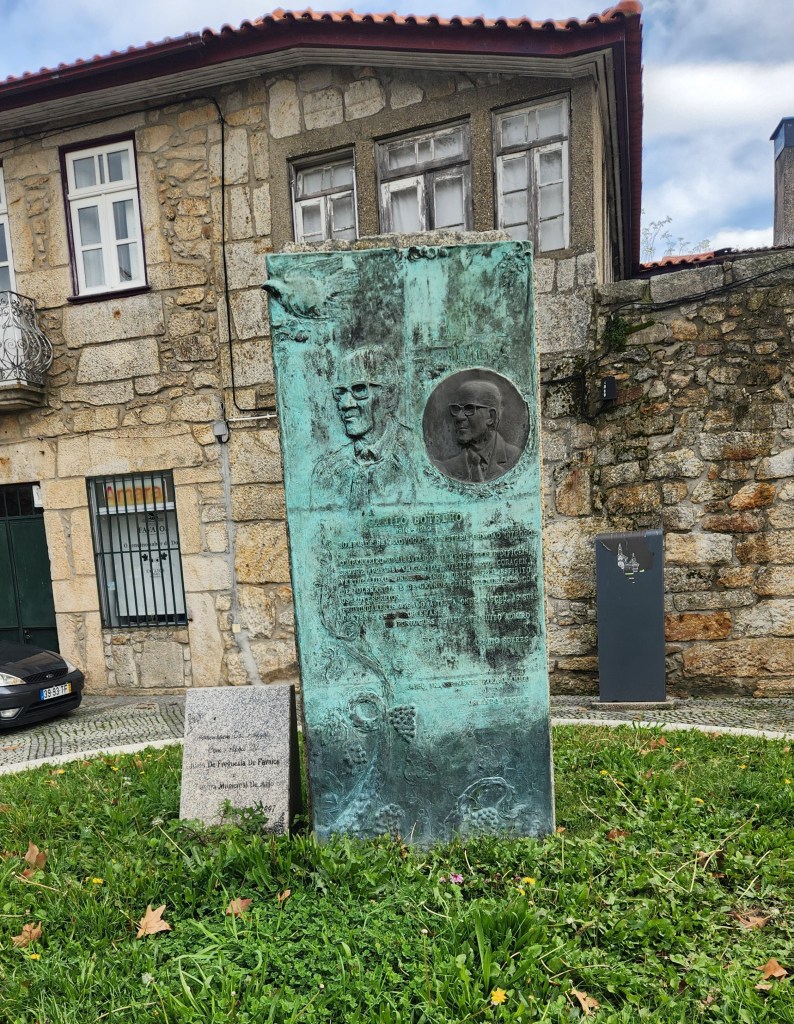
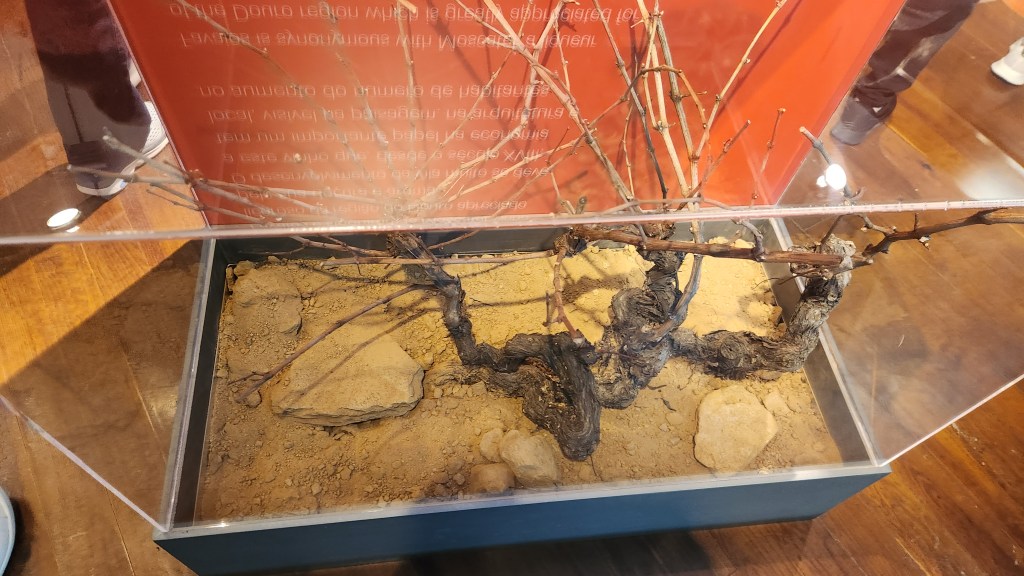
The final stop in Favaios was at the nearby Core Museológico Favaios, the Bread and Wine Museum. Among the exhibits there was a display of the thick grape root stock from America, to which the native wine plants were grafted in the 1800s to combat the deadly infestation of the phylloxera worm that nearly killed the wine industry.

Near the Wine and Bread Museum in Favaios
Museum Display — American Roots for Grafting Native Grapes

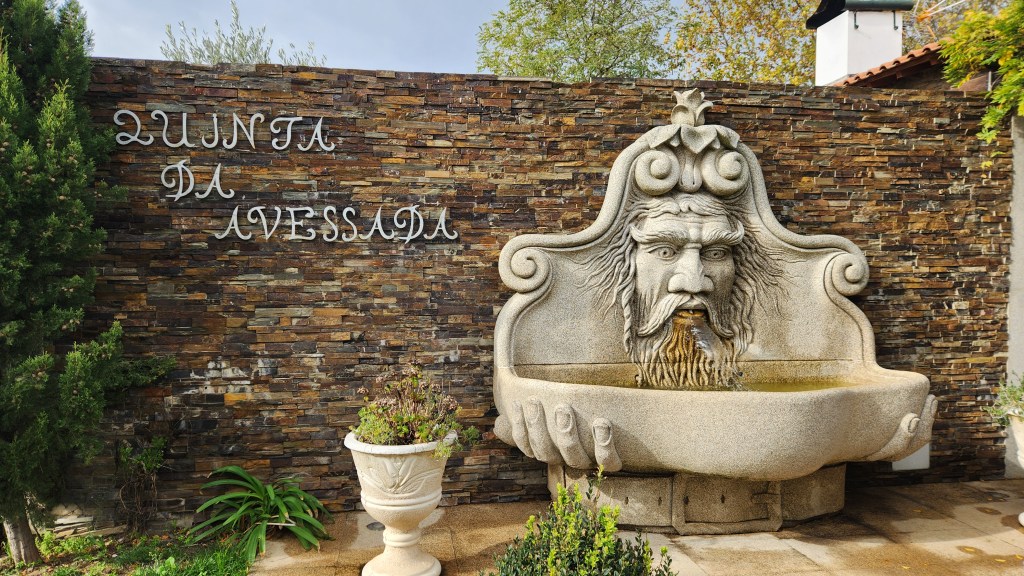
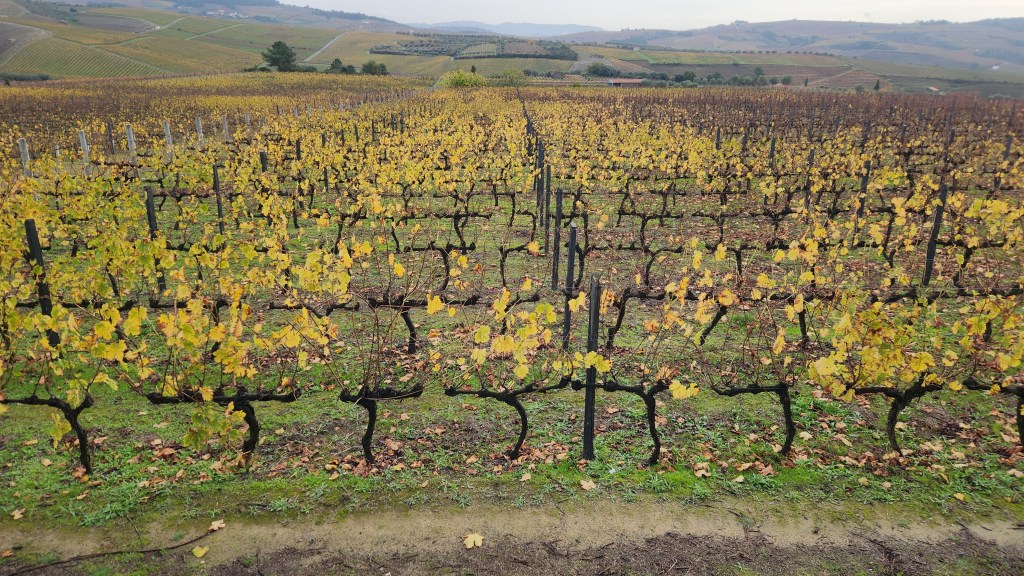
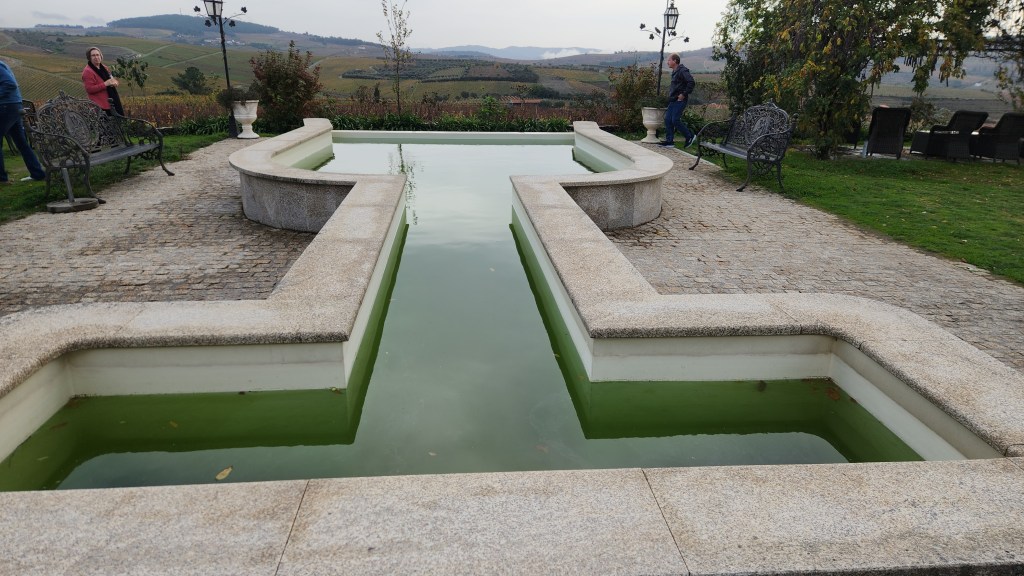
We then rode the tour bus for about 18 miles south to a beautiful vineyard called Quinta da Avessado. This winery is located at the highest point in the demarcated Douro region (1970 feet altitude) on a large, flat plain. Over 90% of the grapes grown on its 60-plus acres of vineyards are supplied to the Adega Cooperative for production of Moscatel. The vineyard and its facilities (including a 100-year-old building) were very beautiful, and we were treated to an excellent lunch, naturally including some of the wines produced from the grapes grown there. As a bonus, we were serenaded by an accordion player as we ate (luckily he had a better technique than my father).

Symbol of the Quinta da Avassado Winery
Quinta da Avassado Vineyards
Wineglass-shaped Fountain at Quinta da Avasseda
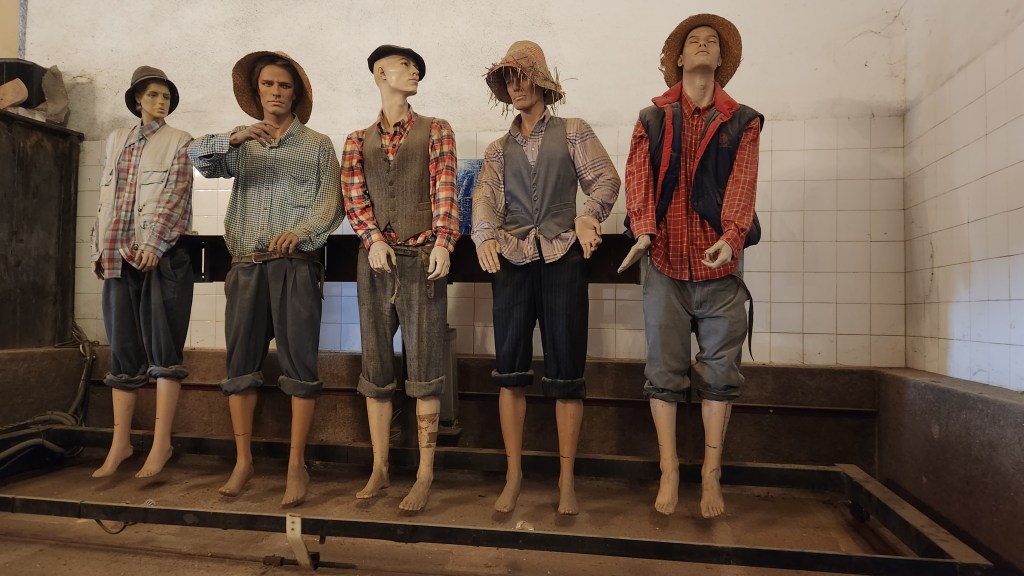
Homage to the Olden Days
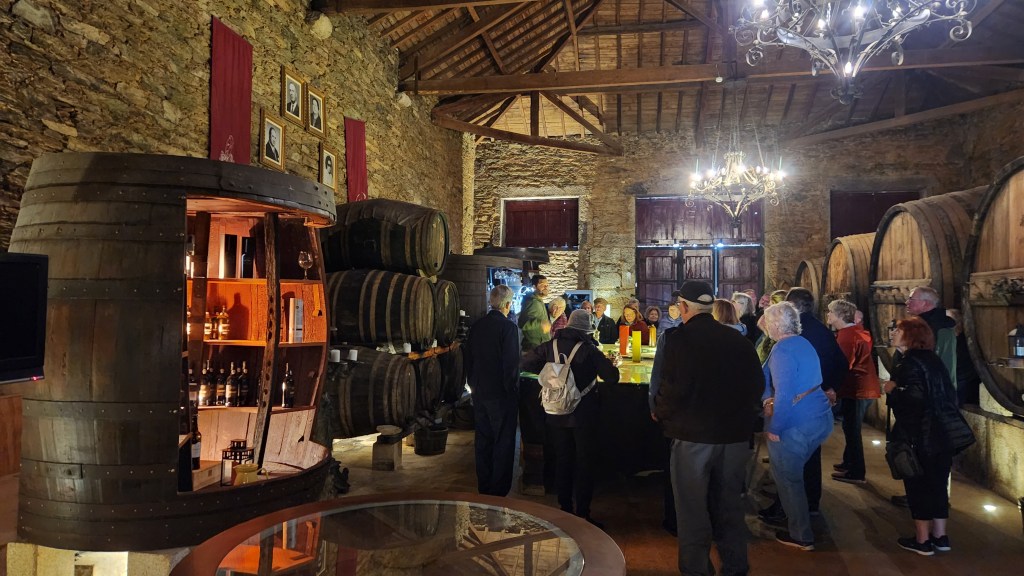
Wine Tasting in the Aging Room

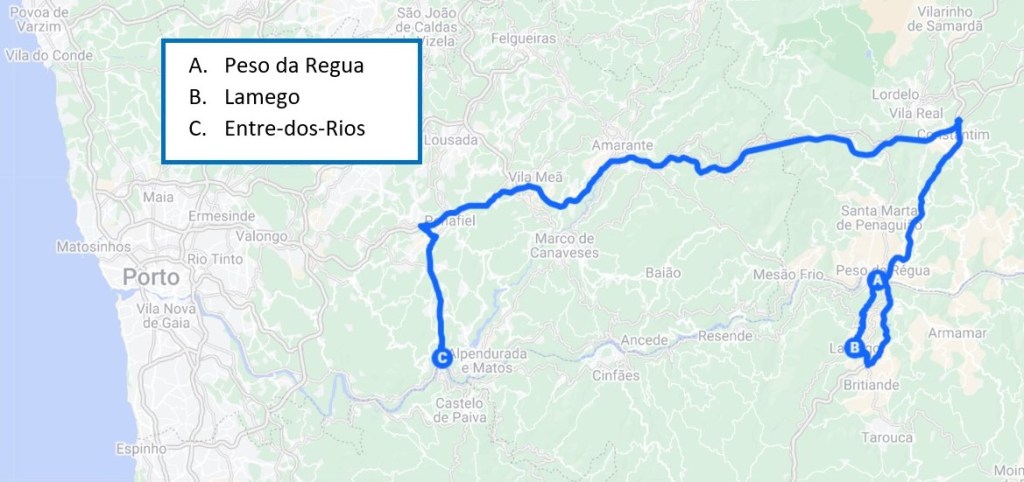
Lamego (November 17): After a night at the Regua pier, we set off at 8:30 AM for a tour of the town of Lamego. While we were enjoying the excursion, the Helgrim set sail again, moving downstream to Entre-os-Rios, where it waited for the excursion participants to return at 12:45. Here’s a map of our shore excursion journey:

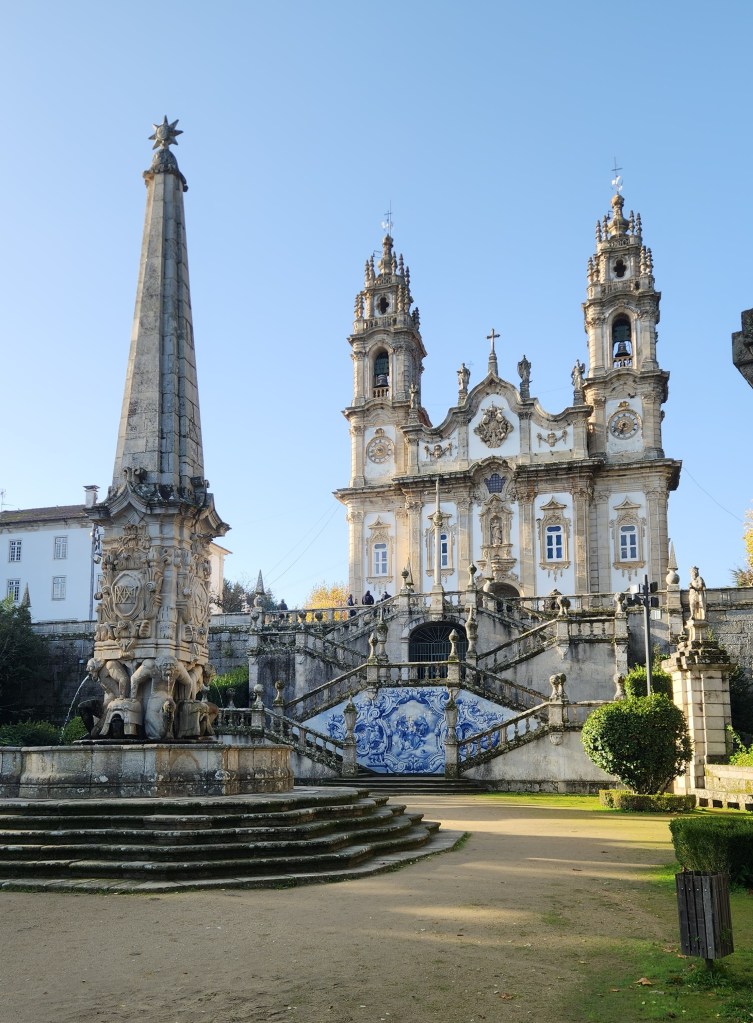
Lamego was first settled before the Roman occupation of the Iberian Peninsula and is known for its historic city center. Legend holds that the first Portuguese Cortes (an assembly of nobility, clergy, and bourgeoise) was held in Lamego in 1143, proclaiming Alfonso Henriques as Portugal’s first King. Subsequent Cortes were called and dismissed by the King at will at places of his choosing.

Our first stop was the Sanctuary of Our Lady of Remedies, built in 1750. The church houses an unusual and somewhat controversial statue of a breast-feeding Madonna commissioned at the request of the Bishop of Lamego in the 16th century, initially intended as a shrine to ensure fertility and later seen as a cure for various diseases. The Sanctuary sits at the top of a hill overlooking the city center, accessed by an imposing staircase with 686 steps and beautiful porcelain artworks depicting various historical or religious scenes. Pilgrims hoping to be blessed or cured would climb these steps on their knees to show their devotion before reaching the Sanctuary and kissing the Madonna statue. The church includes many other artworks as well, including a statue of baby Jesus that the nuns carefully dress from head to toe, including stockings.

Sanctuary of Our Lady of Remedies
Inside the Sanctuary
Artworks in the Sanctuary, including Baby Jesus Statue

After touring the Sanctuary, we descended the steps to the city center, which provided the stunning views pictured below. Nerd that I am, I tried counting the steps on the way down and came up two off from the official 686, though I’m sure the guidebooks have the correct number.

View from the Sactuary Plaza
One of the Ceramic Tile Murals
View of the Sanctuary from Below

Once in the city center, we visited the Cathedral, which was founded in 1129 and still serves as the seat of the diocese of Lamego that was originally established in about 570. From the city, we had a good view of the medieval castle built in the 12th century by Ferdinand of Leon.

Cathedral of Lamego
Artworks in the Cathedral
Hilltop Castle in Lamego

In the city, we bought a purse and a wallet made from cork — Portugal is the world’s leading cork producer, accounting for over 60% of world supply, and Lamego had a lovely shop that specialized in cork products. As we were leaving town, I noticed some odd-looking trees, which are a type of oak with no leaves. Cork-producing oaks are the most valuable type in Portugal, but there are also many evergreen oaks and quite a few of these Dr. Seuss-like ones.

Unusual Oak Tree in Lamego

After a long drive through the impressive Portuguese countryside, we reboarded the ship at Entre-os-Rios. Once all the excursion passengers were aboard, the Helgrim resumed sailing downstream to its starting point at the pier in Vila Nova de Gaia where it docked for the night.

Porto (November 18): On Monday the 18th at 8:30 AM we left the Helgrim at its dock in Porto for a short bus ride to a bridge across the Douro River linking Vila Nova de Gaia, or just Gaia as the locals call it, and Porto. There we met up with a local guide who led us on a walking tour of the city. The map below shows some of the interesting places we saw on the excursion.

Our tour stops and points of interest included the following.

  • We began by crossing the Luis I bridge (location 4 on the map above) from Gaia into Porto. Here are some photos looking downriver and upriver from the bridge.
The Luis I Bridge connecting Porto and Gaia
Looking Downriver from Luis I Bridge
Looking Upriver from Luis I Bridge
  • The Cathedral of Porto (location 7). Construction of the Cathedral began in the second half of the 12th century and work continued until the 16th century. There were major Baroque additions in the 18th century, and further changes were made in the 20th century.
Porto Cathedral Viewed from the Northeast
Porto cathedral and Monastery Viewed from the West
Cathedral Interior
Cathedral Altar
Monastery Cloister with Ceramic Tile Murals
Monastery Room with Ceramic Tile Murals
Ceiling in the Monastery
Is she looking for the way to Santiago de Compostela? The shell symbol marks the route.
  • Sao Bento Railway Station (location 8). This is a major rail hub serving all of Portugal.  Construction of this building began in 1904, and the entry hall includes beautiful ceramic panels illustrating the history of Portugal.
The Railway Station
Railway Station Entry Hall with Ceramic Tile Murals
The Murals Illustrate the Story of Portugal’s History
  • Various streets of the city, including Rua des Flores (Flower Street), a major shopping boulevard. Here are some photos illustrating the architecture, especially the lovely balconies and ceramic tiles.
On the way from the Cathedral to the Railway Station
Shop and Apartments near Flower Street
Restaurant and Apartments near Flower Street
Well-kept or renovated apartments sell for six figures in Porto
  • A plaza (location 9) dedicated to Prince Henry the Navigator (1394-1460), regarded as the main initiator of the Age of Discovery during which Portugal explored much of the world.
Prince Henry the Navigator

After the walking tour, we took a water taxi across the Douro River and walked back to our ship moored at the Gaia Pier, arriving about 12:15 PM.

The Water Taxi Dock

Note that the map above also shows the location of Graham’s Port Lodge, which we visited back on November 12 as described in Part 2 of this series.

Quinta da Avaleda (November 18): After lunch aboard the Helgrim, we disembarked for our final shore excursion at 1:45 PM. We rode a tour bus with a small group of passengers to visit the beautiful winery of Quinta da Aveleda and its amazing garden.

The main building was built in 1671 by a wealthy Portuguese family. Manoel Pedro de Guedes, an important Porto politician, inherited the property and established the estate in 1870, including the vineyards and the incredible garden. The Guedes family still owns the estate and uses the main house for family gatherings, but the estate is open for public tours and has become a highly popular tourist destination. After touring the garden, we sampled several wines produced under the Casal Garcia brand from grapes grown throughout Portugal, but the garden was the truly amazing aspect of the estate, including granite buildings, vineyards, a lake, a teahouse, fountains, gothic ruins, streams, oak trees, camelias, azaleas, eucalyptus, and sequoias. I’m sure readers are getting tired of my verbose descriptions, so I’ll just leave off with some of the photos I took.

The Commercial Winery Building with Gift Shop
Beautiful Rhododendron (I think)
The Camellias were Blooming Early due to Warm Weather
Stairway to Heaven?
An Old Oak Tree (but no yellow ribbons …)
Strolling Down the Garden Path …
Hunting Lodge and Fountain
Hunting Lodge Ceiling
Vineyards seen form the Garden
Vineyards by the Garden
The Family Home, originally dating from 1671
A Lovely and Appropriate Mascot

The trip home (November 19-20): Why did it take two days to get from Porto to Minneapolis? Well, we had a glitch, the one and only disappointment of the entire trip. We left the Helgrim at 3:30 AM on Tuesday the 19th, boarding our Viking bus and heading for the Porto airport to catch a 6 AM flight to Frankfurt, Germany, from where we were booked on an 11:15 AM Lufthansa flight to MSP. All went smoothly through boarding at Porto, but once all the passengers were on board and the doors closed, the pilot announced that our flight would be delayed due to a problem with one of the runways in Frankfurt. So, there we sat, for well over an hour, and by the time we finally took flight and arrived in Frankfurt, our MSP flight was long gone. After attempting to navigate some incredibly long lines at several Lufthansa service counters, we received emails explaining that we were now booked on the 11:15 flight the next day and that we were receiving vouchers for an overnight stay in a nearby Frankfurt hotel. Off we trudged to find the hotel shuttle bus, which deposited us at the Intercity Hotel at 12:22 PM. Unfortunately, our luggage was still in the baggage queue at Lufthansa, including our clothes and toiletries as well as my medications, so we had to go without. Luckily, Pat had a travel toothbrush, so at least Pat didn’t have to abide my schnitzel-tinged breath all night. Thankfully, the voucher did cover dinner and breakfast, but we had to pop for our own lunch.

The only upside to this glitch was that our Wednesday flight to MSP was only about two-thirds full, so we were able to spread out comfortably. I watched a couple of movies while Pat dozed across the aisle, and the flight was uneventful. Once at MSP, we had our first test of the Global Entry system that we enrolled in last spring. After landing, we each submitted a request using the Global Entry apps on our phones, receiving electronic receipts that allowed us to whisk through a special customs line in a matter of minutes – definitely worth the $100 fee, which is good for five years and also includes the TSA PreCheck system for boarding flights.

After another Lyft ride from MSP, we made it back to our condo at 5:01 PM on Wednesday, a mere 31 hours after leaving the Helgrim, rather tired but exceedingly pleased with our Intrepid Iberian Interlude. I hope readers have enjoyed the journey as well.

OK, that’s a wrap. Thanks for reading, and stay tuned for more adventures in the future!

Pat and Dave’s Intrepid Iberian Interlude – PART 3: Mateus Palace, Castelo Rodrigo, Salamanca

Welcome back for Part 3 of this narrative of our recent trip to the Iberian Peninsula. Part 2 described our travel from Lisbon to Porto, via Coimbra, and our journey up and down the Douro River. In this episode, I’ll describe three of the shore excursions we took during the river cruise.

Mateus Palace and Gardens (November 13): On Wednesday the 13th, after sailing from Vila Nova de Gaio to a pier near Lamego, we disembarked at 2:30 PM for a 20-mile bus drive to the Mateus Palace located in the Mateus parish of the city of Vila Real. After touring the palace and its magnificent garden, we drove back to the ship, which by then had sailed further upriver to Pinhão and docked for the night.

The Mateus Palace was built around 1740 on the site of an estate originally built in the early 1600s by a family of wealthy vineyard owners. The third-generation owner, António José Botelho Mourão, had it designed and constructed by Nicolai Nasoni, an Italian architect widely-known for his work throughout Portugal. It was designated as a National Monument in 1910 and is now a major tourist attraction. The interior decoration includes intricately carved chestnut wood ceilings, furniture from several periods, 17th and 18th century paintings, and an impressive library with hundreds of books.

The Mateus Palace and its Reflecting Lake
Wing of the Mateus Palace
Decor, Including Painting, Cabinet of Drawers (with secret codes for opening each drawer), and Chairs
Oak Carving above Window
The Library
Library Artifacts
Oak Ceiling

The palace is surrounded by an immense garden originally planted in the 1700s, then modified in 1870 and expanded in 1930. In the 1950s and 1960s, the garden area was extensively modified and a lake was added to act as a mirror reflecting the manor house. A dense planting of chestnut and oak trees was added in the 1970s. Amazingly, the garden is overseen by a single, full-time gardener, though our guide told us that he has help from multiple volunteers.

One Small Segment of the Enormous Garden

We arrived back at the Helgrim at 7 PM, just in time for the usual sumptuous Viking dinner.

Castelo Rodrigo (November 14): We spent the morning and early afternoon of Thursday the 14th sailing upstream to Barca d’Alva, then disembarked for a tour of an ancient town called Castelo Rodrigo.

It is believed a castle and village were founded on the site in the 6th century and subsequently inhabited by Romans and Moors before being conquered by King Alfonso IX of Leon in the 1200s. Alfonso had the city fortified and the walls reinforced, placing Count Rodrigo Gonzalez de Girón in charge of its defense, and he became its namesake. It was incorporated into the Kingdom of Portugal in 1297, ceded by Leon to King Denis after extensive battles. The fortress and walled fence were rebuilt, and 13 turrets, a keep, a fortified entrance gate, and moats were constructed by Denis in the 14th century. It has been listed as a National Monument since 1922. Our tour group strolled through the town on the cobblestone streets, visiting among other places a medieval church, the ruins of an ancient synagogue, and a lovely shop where we bought some delicious roasted almonds.

Castel Rodrigo Keep
Mothyer Church of Our Lady of Rocamadour
Doors — made as small as possible to conserve heat
Building with Ancient Hebrew Inscription

The church, Mother Church of Our Lady of Rocamadour, located on the path to the famous shrine, Santiago de Compostela, and marked by images of seashells, was established in the 12th century by the Brothers Hospitallers. It contains some interesting artwork as shown in the photos.

Church Altar
Was the Conqueror a Giant, or was he Riding a Pony?
St. Sebastian is honored in the Church

On the way back to the ship, we passed by acres and acres of almond and olive trees, both of which are major products in the areas outside the Douro Valley. Back on the ship, we were treated to a Flamenco Dance exhibition by a trio of professional dancers to cap off a lovely day.

Orchards near the Agueda River (Portugal/Spain Border)
Closeup of Orchard (sorry for the blur — the bus was moving fast)
Flamenco Troupe Visits the Helgrim

Salamanca, Spain (November 15): On Friday the 15th, we left the Helgrim at its dock in Barca d’Alva at 8:30 AM for a bus ride to Salamanca, Spain. While we and a majority of the 102 passengers traveled to Salamanca, the Helgrim began the return journey down the Douro, and we eventually returned to the ship at its overnight position in Pocinho at 9:20 PM.

The earliest human habitation of Salamanca occurred in the first millennium BCE, and the earliest stable settlement in the 7th century BCE. As throughout Spain, the city was subsequently occupied by Romans, Alans, Visigoths, and Moors before being recaptured by Alfonso VI of Leon in 1085. It is known for its two Cathedrals and for the University of Salamanca, and these were the primary focus of our tour. The Old Cathedral of Salamanca was built between 1120 and 1236. The adjacent New Cathedral was built between 1513 and 1733. The first school buildings were established nearby to the Old Cathedral in 1134, and it was officially founded as a university in 1218, and many of its current buildings were constructed from 1401 through 1611. Here’s a map of the Old City:

After strolling to the Plaza Mayor with our Viking guide, we had some free time to explore the area before joining a local guide at the entrance to the New Cathedral. This was far and away the biggest and most magnificent church we saw on the entire trip, rivaling anything I’ve seen anywhere in Europe. Maybe the photos below will give you a feel for it, but the scale was so grand that I couldn’t really capture the essence of it with my puny little cell phone.

Plaza Mayor in Salamanca
Statue Commemorating Salamanca Artisans
And One for Salamanca laborers
New Cathedral of Salamanca
New Cathedral Door
New Cathedral of Salamanca
New Cathedral Organ
One of Many Shrines in the New Cathedral
The Cardinals’ Seats in the New Cathedral
Crypts in New Cathedral Floor
Altar in the Old Cathedral
The Old Cathedral of Salamanca

After the Cathedral, we strolled with our guide among the University buildings where our guide told us some interesting stories about the history of the place. Many of the building walls sported names and dates inscribed with bull blood; these were written by doctoral students to celebrate and commemorate the day when they survived a days-long period of isolation and intense study followed by severe questioning by the professors to earn a degree. (And I thought my Ph.D. orals were tough!) The University Chapel has exceedingly ornate carvings around the entry door, including a skull on top of which a frog is perched. Many of the carved images, including the frog, were intended as a warning to the students that misbehavior of any sort while attending the University was forbidden (I didn’t quite “get” the frog connection myself). This frog became world famous, and souvenir frogs of all sizes and colors are sold at gift shops throughout the city and in the wider region around Salamanca.

One Building of University of Salamanca
Inscriptions on the Walls in Bull Blood
The University of Salamanca Chapel
Detail of University Chapel Facade (with famous frog highlighted)

We then followed our guide along Rua Mayor back to the Plaza Mayor before boarding the bus back to the ship, catching a glimpse of the crumbling old walls as we drove past.

The Old Walls of Salamanca

OK, that’s it for Part 3. In the final episode, I’ll describe the last four shore excursions we took during the river cruise and our travels (and travails) getting back home to Minneapolis.

Pat and Dave’s Intrepid Iberian Interlude – PART 2: Coimbra, Porto, and the Douro River

Welcome back for Part 2 of this narrative of our recent trip to the Iberian Peninsula. Part 1 left off as we completed a walking food tour of Lisbon on November 11th. In this episode, we’ll head north to Porto, with a stop at Coimbra along the way, and begin sailing along the Douro River.

Coimbra (November 12): On Tuesday the 12th, we set our luggage outside our Lisbon hotel room for collection by the Viking team at 6:45 AM before heading down for our final excellent breakfast at the Corinthia. We boarded our Viking bus at 8:15 AM. During the two-hour, 130-mile drive north to Coimbra (with a rest stop for snacks and the all-important restrooms along the way), our Viking guide gave us some background on the history of Coimbra and the places we were going to visit. The city, located on a hill by the Mondego River, was originally founded by the Romans during the reign of Augustus (63 BCE – AD 14). It was later conquered and ruled by Germanic tribes including the Visigoths beginning in the 400s and then by the Moors beginning in the 700s. It was recaptured in 1064 by the king of León. The subsequent king, Alfonso VI of León, gave Henry of Burgundy stewardship of Coimbra and the surrounding territories when he married Alfonso’s illegitimate daughter. Henry’s son, Alfonso Henriques, later rebelled from of León, consolidated power in the territories and had himself declared the first King of the newly independent Kingdom of Portugal in 1131, establishing Coimbra as its capital and continuing to expand Portuguese territory by driving the Moors out of the south. Coimbra remained the capital until 1255, when it was relocated to Lisbon.

When we arrived in the city, we first had a short break as we strolled down a long, commercial street. Our guide suggested we stop at a pastry shop to try Coimbra’s famous custard tart, the Pasteis de Santa Clara, or St. Claire pastry, originally invented at the Santa Clara convent and popularized when the nuns began selling them to University students. However, when I asked for a “Saint Claire pastry,” the clerk sold me an éclair instead, so I unfortunately didn’t get to taste the proper thing.

Commercial Street in Coimbra
How one Coimbra Restaurant Adapts to the Hilly Terrain
Christmas is Big in Coimbra, as in all of Portugal

The University of Coimbra was founded in Lisbon in 1290 but relocated to Coimbra in 1308 and transferred to the premises of the Coimbra Royal Palace in 1537. Since then, city life has revolved around the state-run university, which we toured during our visit. Of special interest was the Biblioteca Joanina, or the Joanine Library, founded in 1717 by King Joan V. It is home to more than 70,000 volumes, including many priceless historical documents and first editions. It is registered as a National Monument. The library is carefully climate controlled and taking of pictures was forbidden, so you’ll just have to believe me when I say it was a beautiful and impressive place. A resident colony of bats protects the books from termites, but this aspect of preservation does dictate covering the tables at night and daily cleanup before tours are admitted. Some say that the library was used as the Harry Potter film set for the Hogwarts library; it was not, but its appearance is quite reminiscent of the movies. Also, the University students’ traditional uniforms are said to have inspired the Hogwarts uniforms in the Potter books, as author J. K. Rowling resided for a time in Porto.

Here are some photos of other parts of the University.

Main Plaza of the University of Coimbra
Overlook of Coimbra from the University Plaza
Entrance to the University Jail formerly used for Recalcitrant Students
Entrance Door to University Chapel
University Chapel
University Student Wear — Said to be the Inspiration for Hogwarts Students

After visiting the University, we stopped for an excellent lunch at a restaurant called Republica da Saudade. As we ate, we were entertained by a trio of musicians performing what is known as Coimbra Fado – a genre of music born of the late-night love serenades made famous by university students over the centuries. Here’s a sample:

Fado Singer and Musicians: a nice extra touch for our lunch

Porto (November 12): After lunch, we boarded the bus again and headed north for some 80 miles . We arrived at the river dock in Vila Nova de Gaia (a suburban city across the river from Porto) and boarded our ship, the Viking Helgrim, at about 4:30 PM. After we settled into our stateroom and walked around the ship a bit, we were called for a mandatory safety drill during which all 102 passengers reported to the lounge area with our safety vests for instructions should an emergency occur. Once properly trained, Pat and I and a dozen or so other passengers departed for an optional tour of Graham’s Port Lodge, a major wine production house built in 1890 by a Scottish wine importer and located high on the nearby bank of the river.

At Graham’s we learned about the history and production of Port wine. First and foremost, a wine can only be called Port if it is produced in the Douro Valley. The Douro valley was defined and established as an official appellation in 1756, making it the third oldest wine in the world (after Chianti, 1716, and Tokaj, 1730). It is named for the city of Porto, where much of the wine is produced and from where much of it was initially exported to England. Port wine is produced from grapes with a high sugar content, which are fermented in large wooden barrels. After several days of fermentation, the wine is fortified by the addition of a tasteless and odorless grape spirit known as aguardente (78% alcohol content) which stops the fermentation, leaving residual sugar in the wine and boosting its alcohol content. The wine is then stored in barrels. This technique for producing so-called fortified wine was developed in the late 17th century to prevent spoilage during transportation by ship from Portugal to England. These two kingdoms first signed one of the oldest existing trade agreements in the world, the Treaty of Windsor, in 1386, establishing terms for the trade of English cod for Portuguese wine. English and Scottish merchants subsequently set about perfecting the methods for producing wine – and eventually Port wine – in the Douro Valley.

There are three major types of Port wine:

  1. Ruby Port is filtered after fermentation and stored in steel or concrete barrels to prevent oxidation and preserve its bright red color and full-bodied fruitiness. Once bottled, it does not age further. Once opened, a bottle of Ruby Port should be consumed within three to four months.
  2. Tawny Port is aged in wooden barrels after fermentation, allowing it to mellow to a golden-brown color and pick up nutty flavors. These wines are typically blended to produce a desired style and character, then filtered and bottled. As with Rubies, Tawny Ports do not age further after bottling. Once opened, a bottle of Tawny Port should be consumed within three to four weeks.
  3. Vintage Port is made only in certain years when the growing conditions are deemed to be of the highest quality by the Instituto dos Vinhos do Douro e do Porto (IVDP), a government organization overseen by the Minister of Agriculture. A wine producer may decide to declare a Vintage Port if they believe the wine from a specific harvest year meets specified criteria. The producer then submits samples of the wine to the IVDP for analysis. The IVDP assesses the samples, and if the wine receives a rating of 9 out of 10, it is certified as a Vintage Port. The wine must then be bottled by the end of the year of certification, but it is not completely filtered so that it continues to age in the bottle. A Vintage Port may be aged in its bottle for decades, but then should be consumed within three or four days after opening.

Here are some photos of the Graham’s climate-controlled production and storage facilities:

Port Fermentation Vats at Graham’s
Aging Barrels at Graham’s

After our tour of the facilities, we were treated to a tasting of five Graham’s wines: a Ruby, two Tawnies, and two Vintages (2000 and 2014). Various member of our group preferred one or another of them, but Pat and I were in agreement that the 2000 Vintage was the best, so we bought a bottle to bring home. (Now all we need to do is decide what special occasion to choose for opening it.) To close out the evening, we were served a fantastic three-course dinner in the restaurant on the top floor of the building, which provided a spectacular view of the Douro and the cities of Porto and Vila Nova de Gaia.

Douro River with Porto on the Left and Vila Nova de Gaia on the Right

Douro River (November 13-18): On Wednesday the 13th, the Helgrim cast off and headed upriver. Here’s a map showing details of the river portion of the trip:

Over the course of the river journey, the ship sailed upstream from Porto to Vega de Terron and then back downriver to Porto again. It passed through five locks in each direction. Here are the technical specs for my fellow geek readers some photos of our passage through the lock of Carrapatelo, and a video of the upstream lock gate being retracted (more geeky stuff).

An Eastbound Ship Emerging from the Lock
Interior of Lock of Carrapatelo
Not Much Sideways Clearance in the Lock
Lock Gate Retracting After the Lock is Filled with Water from Upstream
Leaving the Lock of Carrapato

As you can see from the photos, the maximum width of the river ships is restricted by the width of the locks. I determined from walking around the ship as we passed through at least one of the locks that the ship could also not have been any longer. Here’s another one that shows that the height is also limited by various bridges spanning the river, even with the superstructure lowered – the lucky crew member holding a stick is there to alert the captain if the ship is riding too high to fit beneath the bridge — more evidence that the Viking Helgrim was custom built specifically for travel on the Douro.

The Helgrim Passes Beneath a Low Bridge

I’ll close out this episode with some pictures of the scenery along the river as we sailed upstream to Vega de Terrón and back downstream again to Porto.

View from the Helgrim between Porto and Lamego (Nov 13th)
The Riverbank between Pinhao and Pocinho (Nov 14th)
View from the Helgrim between Pinhao and Pocinho (Nov 14th)
View from the Helgrim near Peso da Regua (Nov 16th)
View from the Helgrim between Entre os Rios and Vila Nova de Gaia (Nov 17th)

OK, that’s it for Part 2. In the remaining episodes, I’ll describe seven shore excursions we took during the river cruise and our travels (and travails) getting back home to Minneapolis.

Pat and Dave’s Intrepid Iberian Interlude – PART 1: Madrid, Toledo, Lisbon

Winter temperatures have arrived in Minneapolis with highs in the low teens, though we only have a light layer of snow so far. Fortunately, I can conjure up some warmth by fondly reflecting on our most recent travel experience and writing this latest installment of my travel blog series. Perhaps your first question might be “why are you calling it your ‘Intrepid Iberian Interlude?’ ” So, let’s start there.

The travel blog series was born back in 2018 when, at the urging of family members, I began documenting a 10,200-mile RV trip during which Pat and I visited 11 states, 9 National Parks, 2 National Monuments, 1 National Recreation Area, and 12 or more State Parks in Iowa, Missouri, Kansas, Oklahoma, Texas, New Mexico, Arizona, and California. Since then, I’ve documented a total of fourteen trips. Here’s a list of the travel blog series so far:

  1. Pat and Dave’s Excellent Adventure (12 parts)
  2. Coming Soon to a Blog near You – Another Winter RV Trip (1 part compendium of 4 trips)
  3. The Saaris’ (Sorta) Safe Sojourn (10 parts plus Summary)
  4. Pat and Dave’s Eastern Escapade (4 parts)
  5. Pat and Dave’s Eclectic Electric Road Trip (4 parts)
  6. Pat and Dave’s Post-Covid Continental Caper (4 parts)
  7. Pat and Dave’s Tremendous Tropical Trek (3 parts)
  8. Pat and Dave’s Magical Maritime Meanderings (3 parts)
  9. Pat and Dave’s Easy EV Road Trip (3 parts)
  10. Pat and Dave’s West Coast Wayfaring (2 parts)
  11. Pat and Dave’s Nifty National Park Lark (2 parts)

(For the convenience of readers who may be real gluttons for punishment, the list provides hyperlinks to the final part of each installment.)

You’ll notice that, beginning with the third one, I took to naming the narratives using clever alliterative titles that provide hints about each trip. So, in keeping with this approach, the current narrative’s title includes: 1) “intrepid” because traveling abroad at our advanced ages seems rather bold and daring, 2) “Iberian” because we visited the Iberian Peninsula (Spain and Portugal), and 3) “Interlude” because the last four trips have been in North America as will be our next one (to Arizona), so going to Europe was a sort of interlude. (And because I couldn’t think of a better word that started with I, OK?) Now that that’s out of the way, let’s get on with the story.

The trip was booked with Viking River Cruises, and included pre-cruise stays in Madrid and Lisbon before boarding a ship in Porto and sailing up and down the Douro River, described poetically as Portugal’s River of Gold.

ASIDE: We’ve become huge fans of Viking, this being out fourth journey with them. Previous trips included numbers 6 and 7 in the above list and a 2014 cruise down the Danube before I began blogging about our trips. The beauty of Viking is that all we need to do is arrange one booking, and all the details are planned and executed for us, efficiently and luxuriously. We truly can “travel the world – in comfort,” as their tagline says. (Sort of diminishes that “intrepid” business a bit, but hey.) Just to be clear, I do not receive any compensation from Viking for writing this blog even though I may deserve it; I’m sure they don’t even know the blog exists.

Here are maps showing the main places we visited along the way. I’ll provide more detailed maps of specific areas when appropriate as the story unfolds.

We left our condo in Minneapolis on Wednesday, November 6 at 7:28 AM CST, catching a Lyft ride to MSP airport, then flew to Chicago O’Hare and then on to Madrid on Iberia Airlines, arriving at 7:45 AM CET (Central European Time) on November 7.

Madrid and Toledo (November 7-9): On Thursday the 7th, Pat and I were met at the Madrid Airport by a Viking driver, who drove us and our luggage to the Hyatt Regency Hesperia Hotel in the Paseo de la Castellana neighborhood of Madrid. There we met our Madrid Viking Host, Susana, who explained that we were the first of a dozen Viking tourists to arrive for this pre-cruise extension and provided us with a map of the area and suggestions for exploring on our own before meeting with the entire group later that evening. Thus armed, we trundled off to wander the streets of Madrid, observing many interesting buildings and sculptures. I confidently led us off in the wrong direction, but after Pat activated the Google maps app, we made our way to the Retiro Park, established in the mid-17th century for the enjoyment of King Philip IV. The nearby Puerta de Alcala, erected in 1778 by Italian architect Francesco Sabatini, is a triumphal gate that was once the main entrance to the city. It was commissioned by King Charles III (later nicknamed the Best Mayor of Madrid), who was unimpressed by the gate that welcomed him when he first arrived in 1759.

One of the Eclectic Statues in Madrid
The Puerta de Alcala
Retiro Park
Retiro Park

On our way back to the hotel, we passed by a large plaza including a sprawling monument to Christopher Columbus, including inscriptions of the crew members’ names from the famous 1492 voyage.

Christopher Columbus Monument
The Giant Head, near Columbus Monument
Madrid Sculpture

After returning to the hotel and taking a brief nap in our room, the Viking group was briefed by Susana on the plans for the next days before she led us on a brief walk around the neighborhood. Later, we went to a local café that Susana had recommended. The two young men manning the place spoke no English and were convinced we wanted beer, but with the aid of Google translate to decipher the menu and much gesticulating, we managed to order some delicious jamon de bellota sandwiches. The meat was carefully carved in thin layers off a huge pork leg, from a free-range pig fed only on acorns to produce the best Iberian ham.

On Friday the 8th, we had a bus and walking tour of Madrid, during which we visited the Mercado de San Miguel (a bustling marketplace) and the Plaza Mayor, a huge square established in the 17th century by King Philip III, whose bronze equestrian statue stands in the square. We then passed by the Royal Palace and other landmarks before heading to the famous Prado art museum.

Mercado de San Miguel
Plaza Mayor
The Royal Palace
The Prado Museum

We spent a couple of hours in the Prado, including lunch in the cafeteria. Photos were not allowed except in a few rooms, so I can’t show any, but some favorite things we saw were “The Washing of the Feet” by Tintoretto and “Las Meninas” by Velazquez (amazing perspective works), “Garden of Earthly Delights” by Bosch (intricate details, some bizarre and unsettling), and a series of paintings by Goya throughout his career, including the disturbing “black paintings” from his early 70s and his later return to using vibrant colors after moving to France. After the Prado, we elected to return to the hotel on our own by city bus rather than with the Viking tour bus. Unfortunately, we missed getting off at the bus stop nearest the hotel and ended up walking an extra eight or ten blocks. All in all, we found Madrid to be a clean, bustling, pleasant city. That evening, we had an excellent dinner of seafood paella at a restaurant near the hotel called La Gaditana.

Restaurant where we ate Seafood Paella

On Saturday the 9th, we rode a bus some 45 miles south to Toledo, the original capital of Spain before Philp III made Madrid the capital in 1603. Toledo is strategically located on a high hill on the north bank of a bend the Tagus River.

Overlook of Toledo
Toledo Old City

Toledo is known as the “City of the Three Cultures” for the cultural influences of Moors, Christians, and Jews throughout its history. Toledo has long been known for its production of fine steel for weapons and jewelry, so we first visited a touristy factory/retail outlet just outside the town and saw how some of the products are made today. We then traveled into the city and rode to the top of the hill on a series of conveniently located escalators before beginning our walking tour. While the streets of the old city are very narrow, many houses have beautiful courtyards just inside their doors.

Old City Toledo Street
Courtyard of Toledo Home

Our first visit was to the gothic style cathedral, which was begun in 1226 and completed in 1493. Among its treasures is a magnificent gold artwork called the monstrance, made for Queen Isabella in 1515-1523, that is carried through the city during annual festivals.

Cathedral of Toledo
Cathedral of Toledo
Monstrance in Cathedral of Toledo

Another highlight was the Church of Santo Tome, the lobby of which displays the El Greco masterpiece “The Burial of the Count of Orgaz” which commemorates a local legend and is known for its use of multiple schools of art and for inclusion of a self-portrait of the artist as one of the funeral attendees.

“The Burial of the Count of Orsaz” by El Greco

We also visited the Jewish quarter, including a former Jewish synagogue that has been established as a national monument although given the unfortunate name of Santa Maria La Blanca (St. Mary of the White Virgin).

Entrance to the Jewish Quarter
What a name for a Jewish Synagogue
But at Least the Synagogue is a National Monument

We then strolled through the old town area and emerged into a street with modern shops, even one in which Pat and I encountered some friendly inhabitants.

Dave Meets Don Quixote …
… and Pat Meets a Knight in Shining Armor

Lisbon (November 10-11): On Sunday the 10th, we were transferred by a Viking bus from our hotel back to the Madrid airport, where we boarded a flight to Lisbon operated by a regional carrier for Iberia Airlines. We were again met by Viking representatives and were driven to the Corinthia Lisbon Hotel, where we met our Viking Cruise Director Tamara and the local Viking Host. We spent some time wandering around the neighborhood and ate a light lunch in one of the hotel restaurants, then joined the Host at 3:30 PM for an introductory walk-and-talk, then attended a welcome session by Tamara at 6:00 PM for an overview of Lisbon and plans for our time there. After a short walk to a nearby restaurant for a delicious meal, we retired to our hotel room. My only complaint about the elegant five-star hotel is that the electronic safe in our room did not operate properly so we could not store away our passports.

Courtyard of the Hotel Corinthia

On Monday the 11th, we headed off on a bus and walking tour of Lisbon, during which we took in the sights and learned quite a bit of Portuguese history. (Now known as a well-functioning democracy, Portugal was actually ruled by a dictator, António de Oliveira Salazar, from 1932 until he died in 1970. His successor was deposed in the bloodless Carnation Revolution in 1974, and Portugal transitioned to a constitutional democracy by 1976). We drove through the hilly city to the tourist area called Belém near the Tagus River – the very same river we saw in Toledo, by this point grown very wide before discharging into the Atlantic – where we saw the Belém Tower, a 16th-century fortification that served as a point of embarkation and disembarkation for Portuguese explorers and as a ceremonial gateway to Lisbon. It was built during the height of the Portuguese Renaissance, and is a prominent example of the Portuguese Manueline style, but it also incorporates other architectural styles, such as the minarets inspired by Moorish architecture.

The Belém Tower

After visiting the tower and a surrounding park, we moved on to the Maritime Museum, dedicated to all aspects of the history of navigation in Portugal. Our guide pointed out many of the interesting features and explained how Spain (Castile at the time) and Portugal signed the Treaty of Tordesillas in 1494 to divide the world in half – Portugal was given the lands to the east and Spain those to the west of a line of demarcation. The two countries explored and claimed much of the world, with Portugal establishing colonies in Africa and India and conducting trade as far east as Japan beginning in 1543. Portuguese explorers continued to sail the east coast of North America – an inscription carved on Dighton Rock in 1511 supposedly commemorates Miguel Corte-Real – but did not settle there in accordance with the treaty. Portugal was allowed to establish their colony in Brazil since it lay to the east of the treaty’s demarcation line, although the western part of what became Brazil is actually to the west of that line.

World Map in Maritime Museum (Line of Demarcation Highlighted)
Replica of Dighton Rock Inscription
Ceremonial Boat in Maritime Museum

Following the museum visit, we had free time to visit the Jeronimos Monastery, erected in the early 1500s near the launch point of Vasco da Gama’s first journey, and nearby shops, including the Pastéis de Belem bakery, established in 1837 to make the original, world famous Pastéis de Belém from an ancient recipe developed by the monks of St. Jerome at the monastery. The recipe remains secret, and these delicious custard pastries are made every day “by hand,” supposedly using traditional methods. Amazingly, they produce and sell 20-40,000 of them per day. Pat and I each had one, and they more than lived up to their reputation. We explored the nearby Vasco da Gama Garden while savoring them, before returning to the tour bus.

World Famous Famous Bakery
Vasco da Gama Garden

Another stop on the tour was the Parque Eduardo VII, the largest park in central Lisbon, covering 62 acres. The park was named after King Edward VII of England, who visited Lisbon in 1903, and provides a gorgeous view of Lisbon and the Tagus River.

View of Lisbon Overlooking Parque Eduardo VII

Once back at the hotel, we spent some time exploring a nearby park before heading off on a 3 ½-hour walking tour of Lisbon restaurants, where we sampled a variety of Portuguese delicacies and libations. One of the spots was called the Pastéis de Nata bakery, where they make a custard tart very similar to the Pastéis de Belém, using a non-secret recipe well known to millions of Portuguese. We were told by our Viking host that the Portuguese people are divided on which of these delicacies is better. For my part, I thought they were equally delicious.

Our “Taste of Lisbon” Tour Guide
The Other Custard Tart Bakery Logo
Lisbon Street View During our Tasting Tour

OK, that’s it for Part 1. Thanks for reading, and stay tuned as we head north toward the Douro River and our ship, the Viking Helgrim, coming in Part 2.