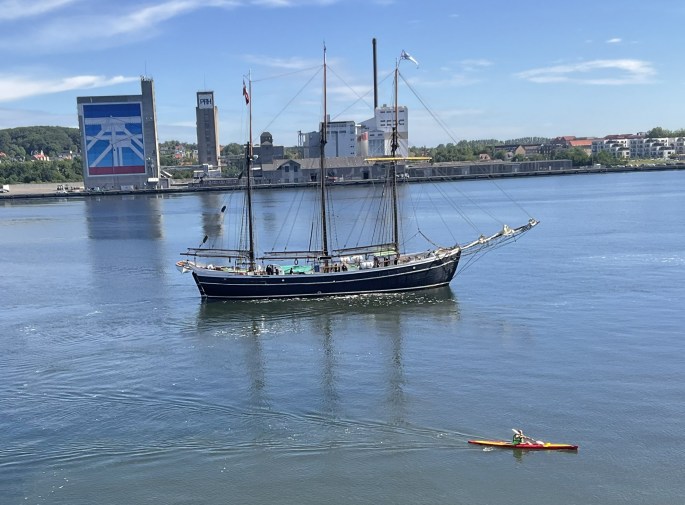
Pat and Dave’s Vibrant Viking Voyage – PART 3: Denmark and Germany

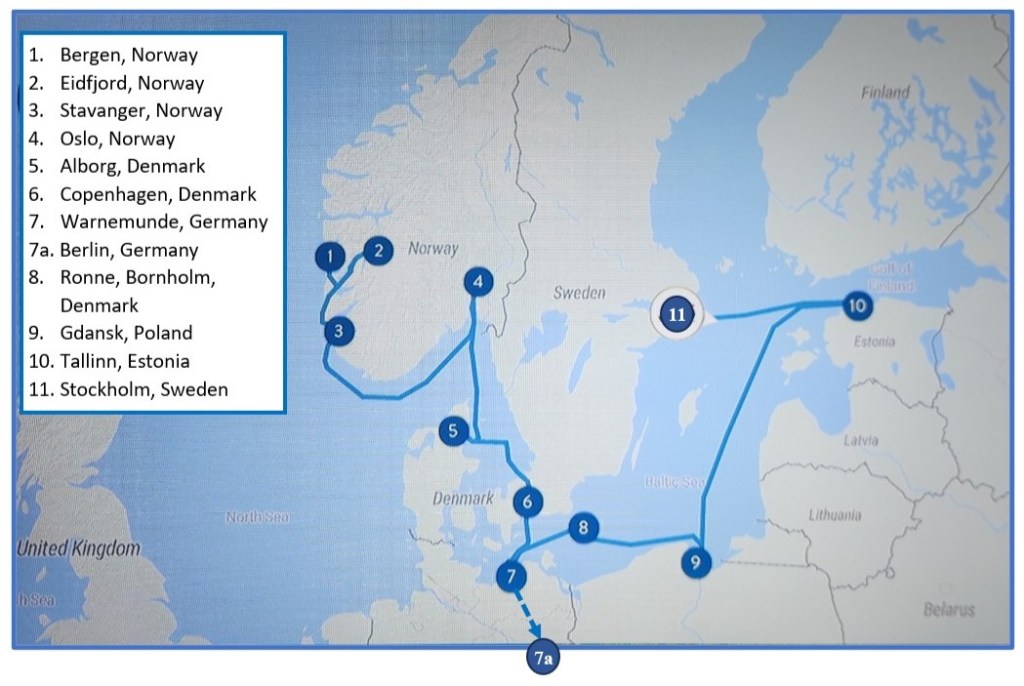
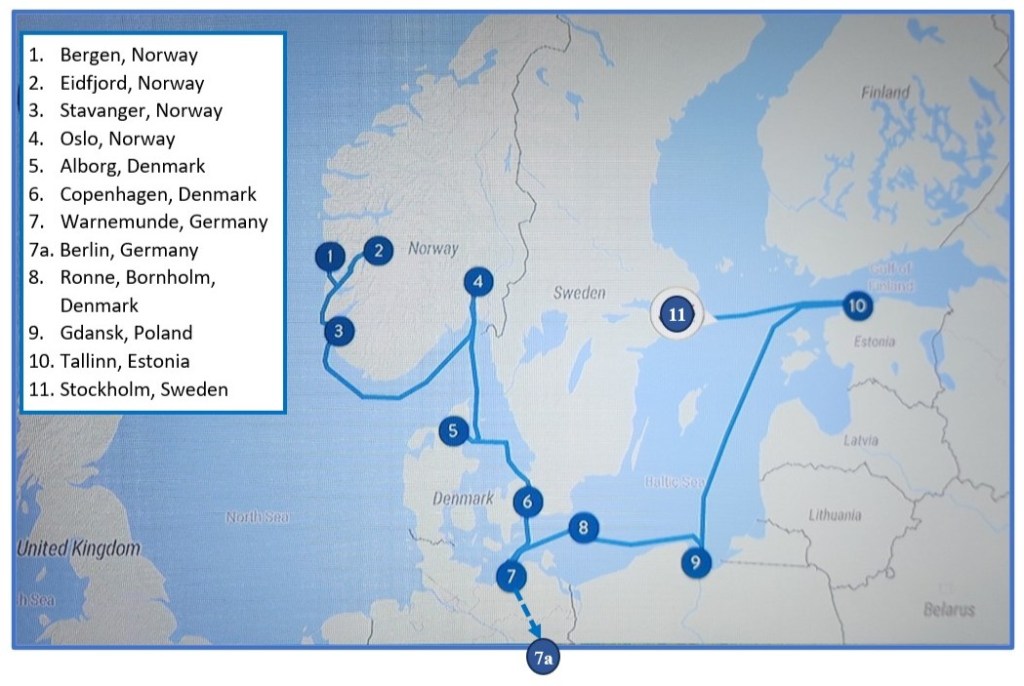
Welcome back for Part 3 of my travelogue describing our recent Viking Ocean Cruise entitled “Viking Homelands.” Part 2 left off as we were departing from Oslo, Norway. This episode will cover our stops in Denmark and Germany, including locations 5, 6, 7, 7a, and 8 on the map of our itinerary:
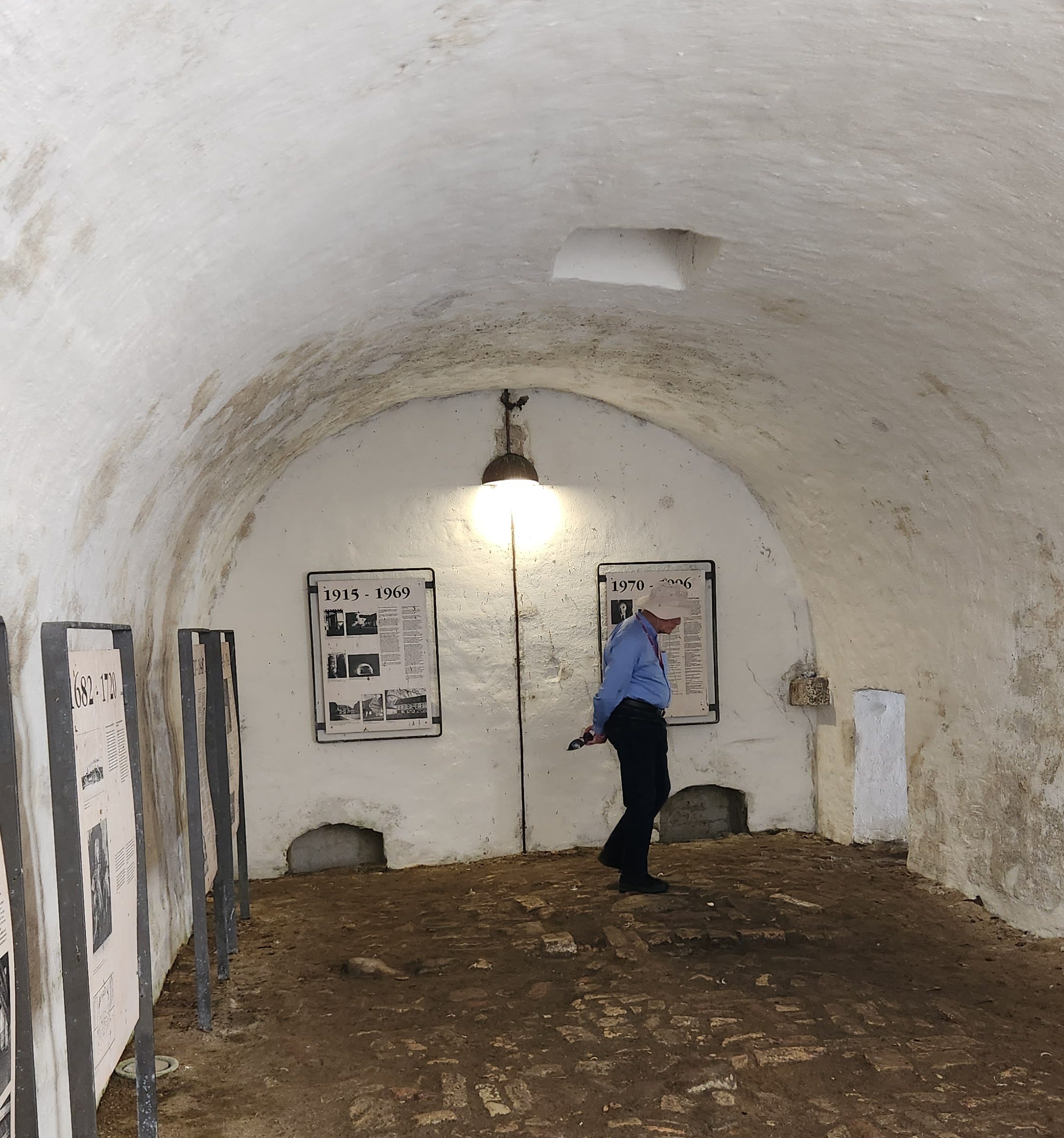
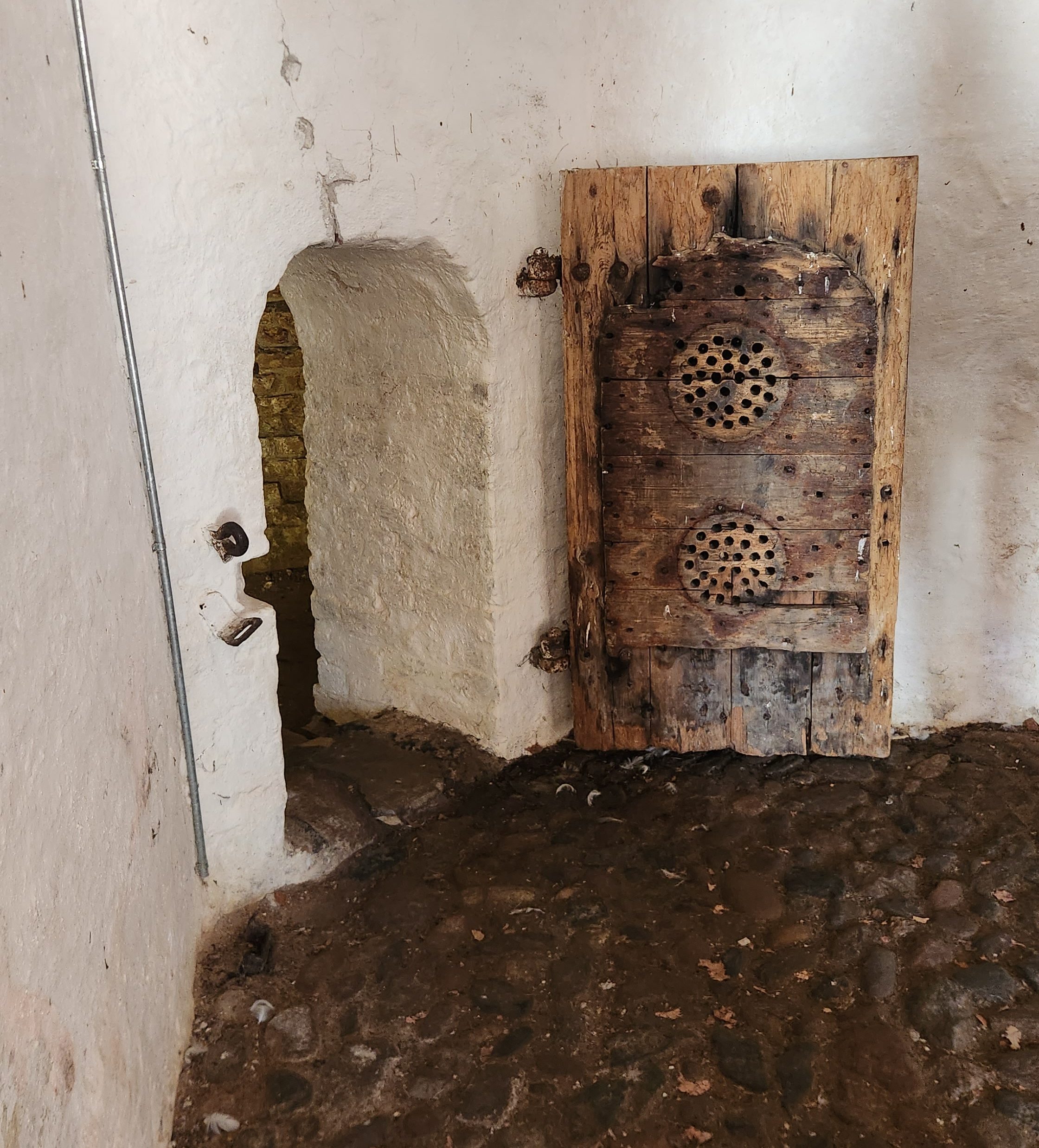
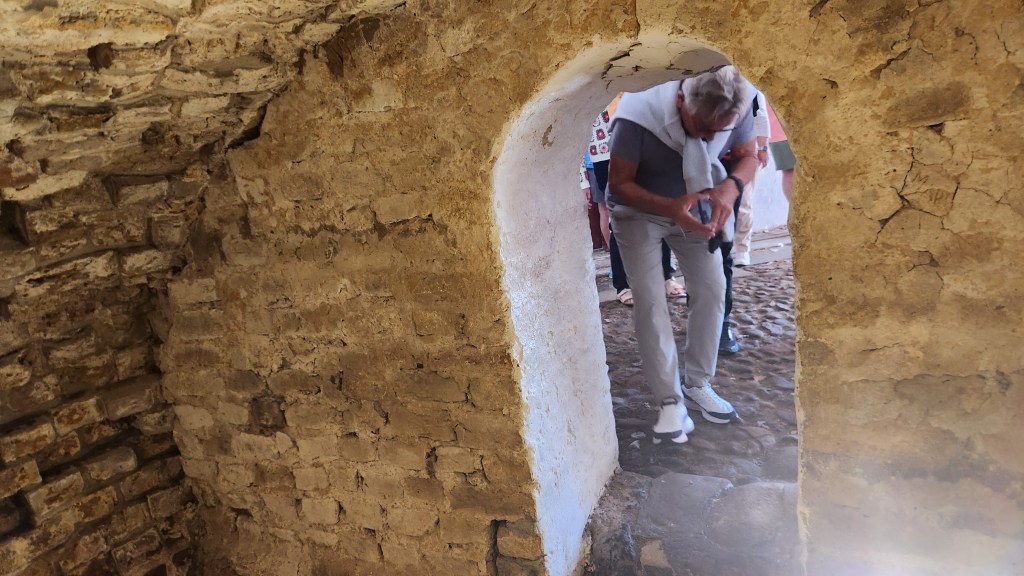
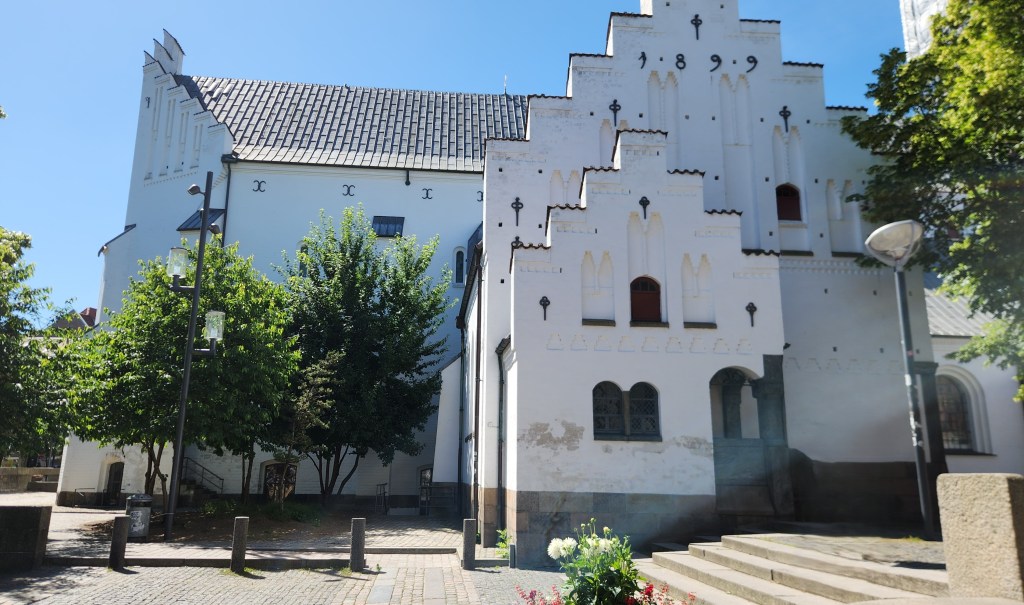
Ålborg, Denmark (Tuesday, June 23, 2026): Our ship arrived in the Ålborg harbor at 10 AM Tuesday, and we were soon off on a walking excursion through the old town to discover its trade roots and Viking heritage. Ålborg is the fourth largest city in Denmark, dating back to its founding as a Viking trading post during the late 900s. Our tour first took us to the Ålborghus Castle, a 14th-century fortress built using the traditional half-timber technique. Some of the dungeons have been preserved to provide visitors with a feel for the conditions in the old fortress, and a series of placards describes the castle’s history.
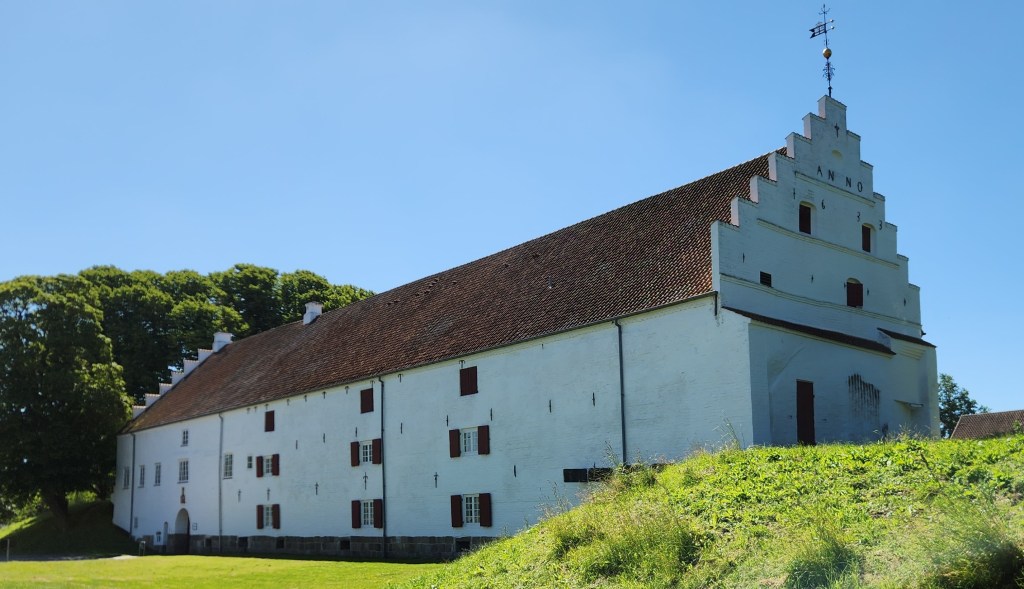
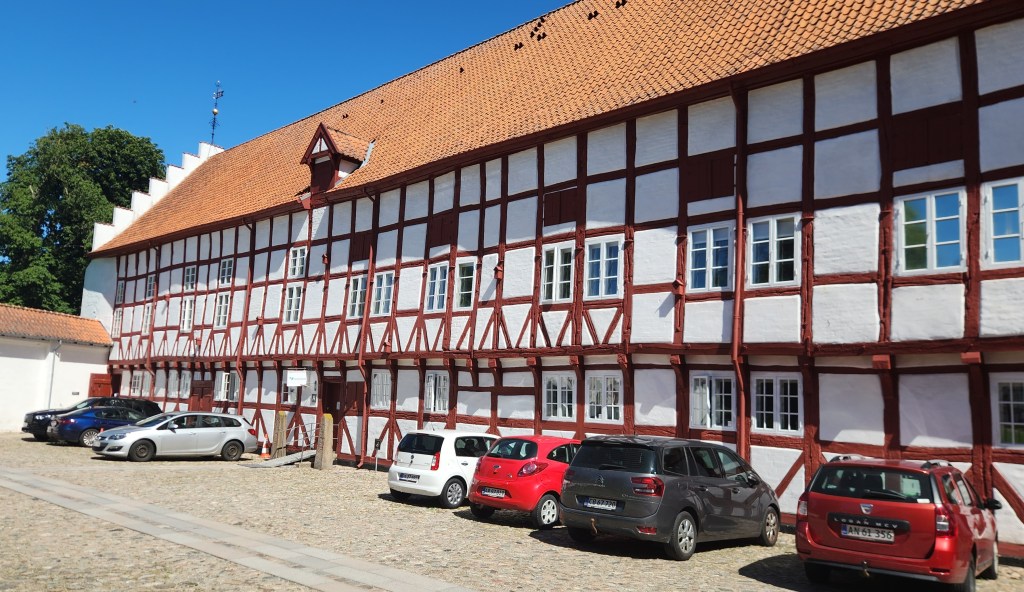
Ålborghus Castle seen from the back
Ålborghus Castle seen from the front
Storage Room in Ålborghus Castle
Exterior of Dungeon Cell
Looking out from the cell

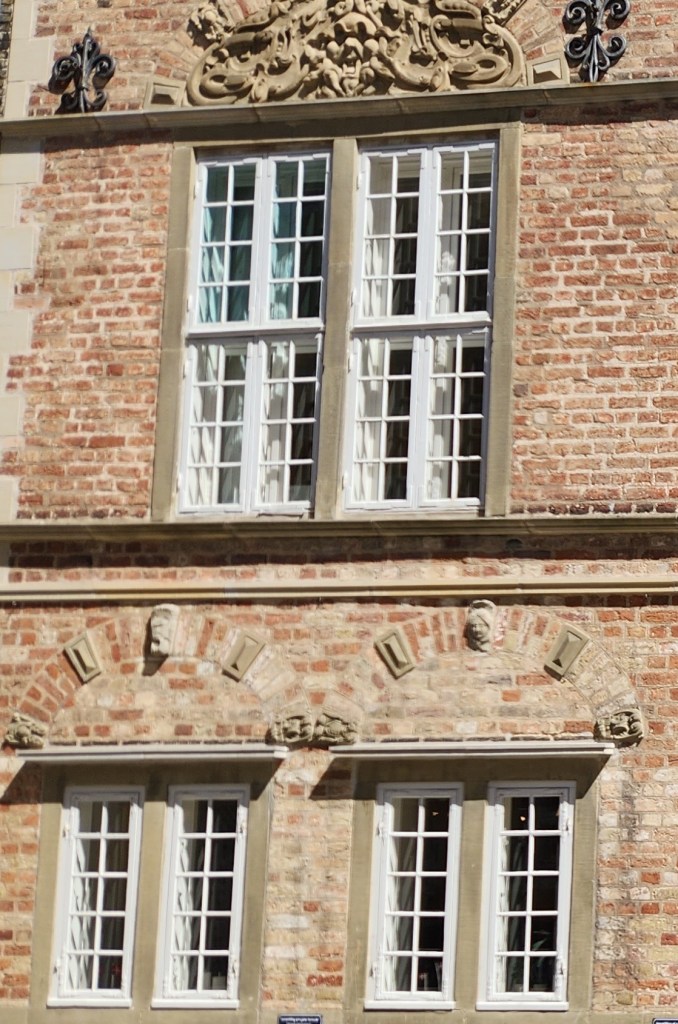
We then passed on to the Nytorv Square, a pedestrian plaza established in 1604 in the historic center of the old town. The Jens Bang house, built in the Nytorv Square in 1624 and noted for its gables, sculpted window décor, gargoyles, and a sculpture of Bang sticking out his tongue, is considered the finest privately owned Renaissance building in Denmark. Bang was famously snubbed by the town’s government and his statuesque renaissance home was never approved by the local gentry. The house has also housed the city’s oldest pharmacy for more than 300 years.
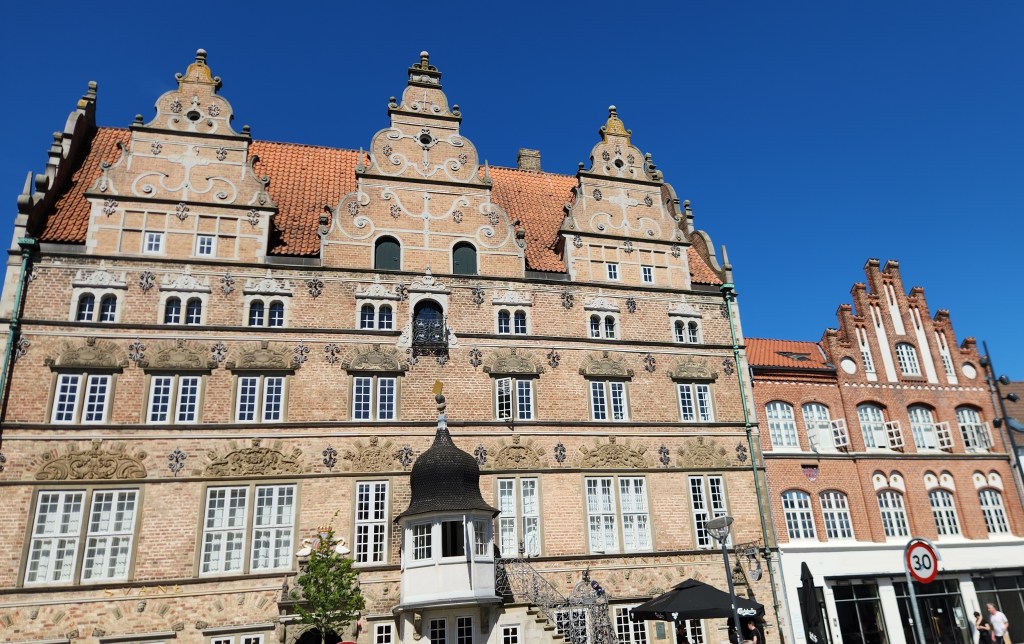
Jens Bang House
Details of Jens Bang House

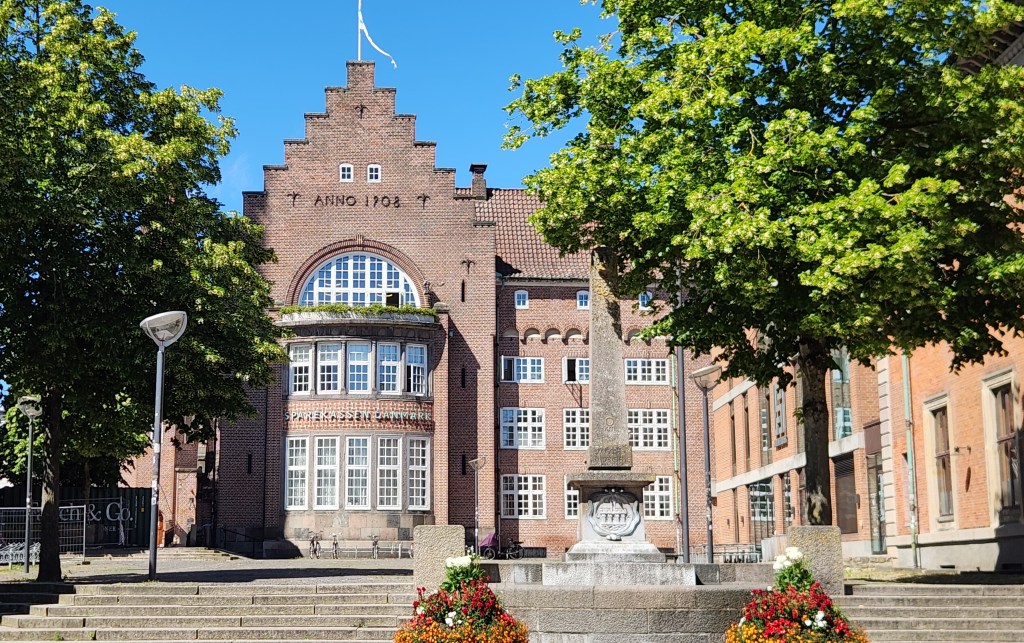
We passed by many other historic buildings located in the central part of the old town, including the Old City Hall (built in 1762 in a Baroque and Rococo style), the Post Office/Telegraph building (1908), and the Budolfi Church or Ålborg Cathedral (dating from the 16th century) which now serves as the seat of the Lutheran Bishop.
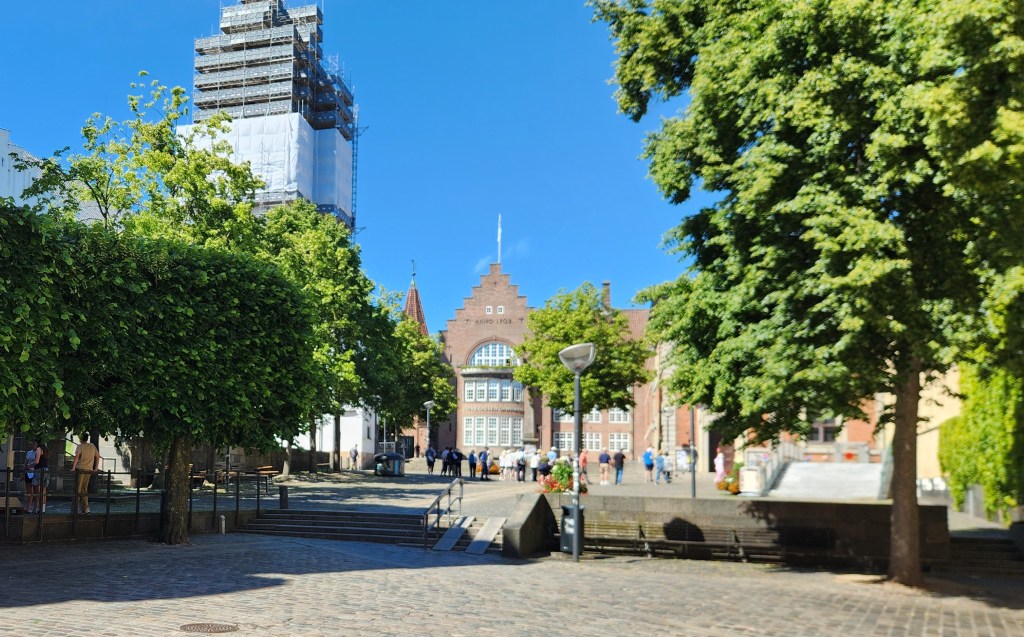
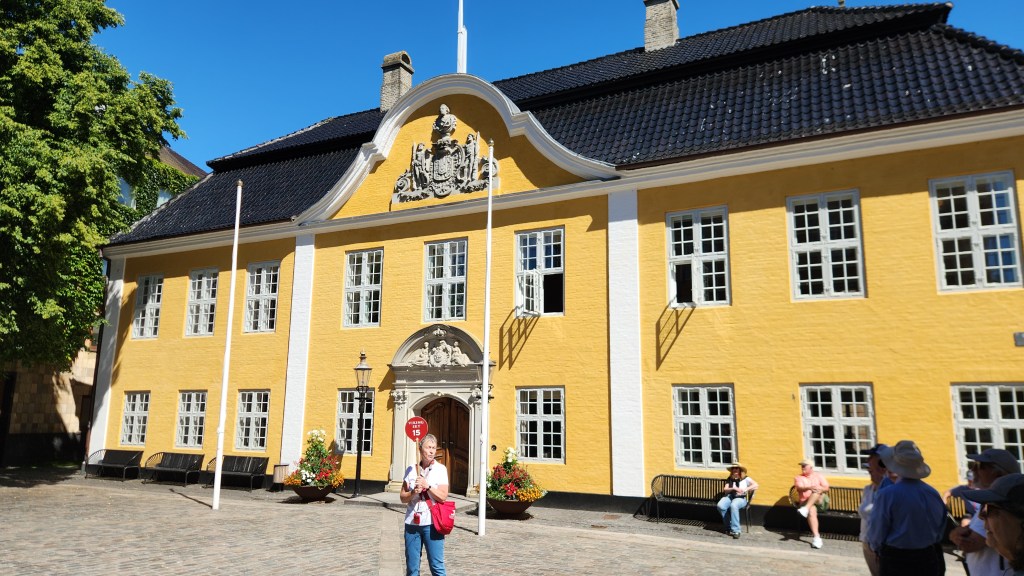
Central Square of Old Town
Old City Hall
Budolfi Church
Budolfi Church
Post Office/Telegraph Building

We spent a fair amount of time learning about the Monastery of the Holy Ghost, a medieval monastery dating back to 1431 which also served as a hospital for more than 500 years until the 1950s. While most of the monastery buildings have been converted to modern housing for senior citizens, the oldest part – the School Wing – has been preserved in its original state from the 15th century.
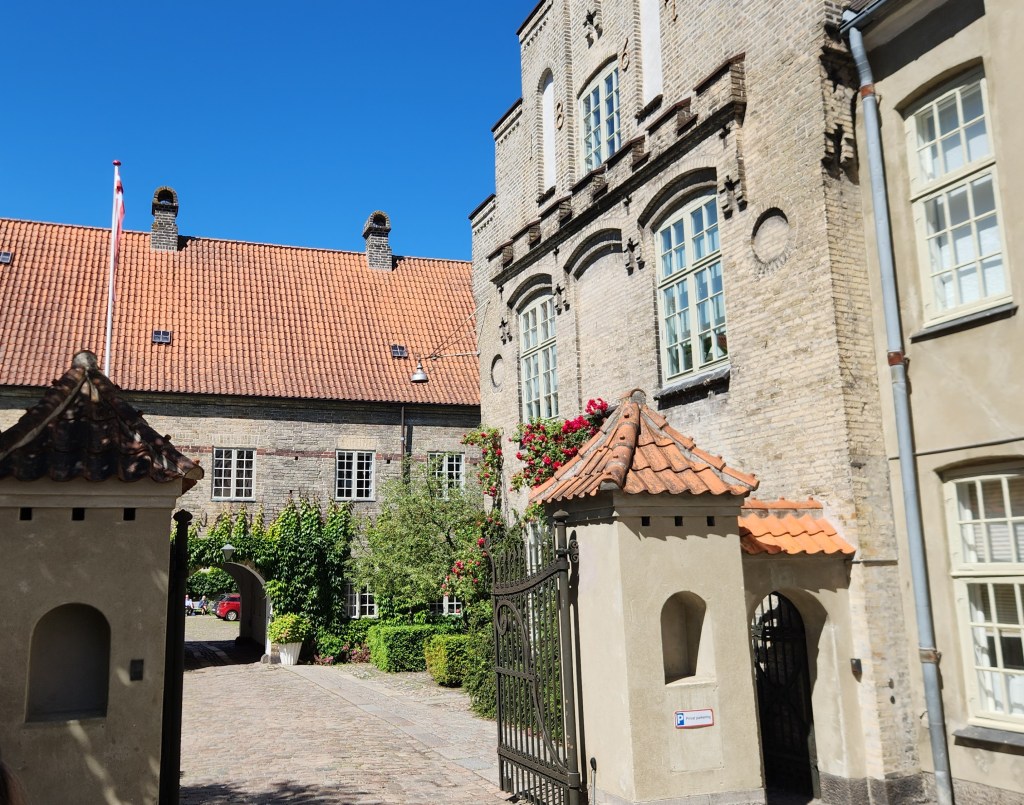
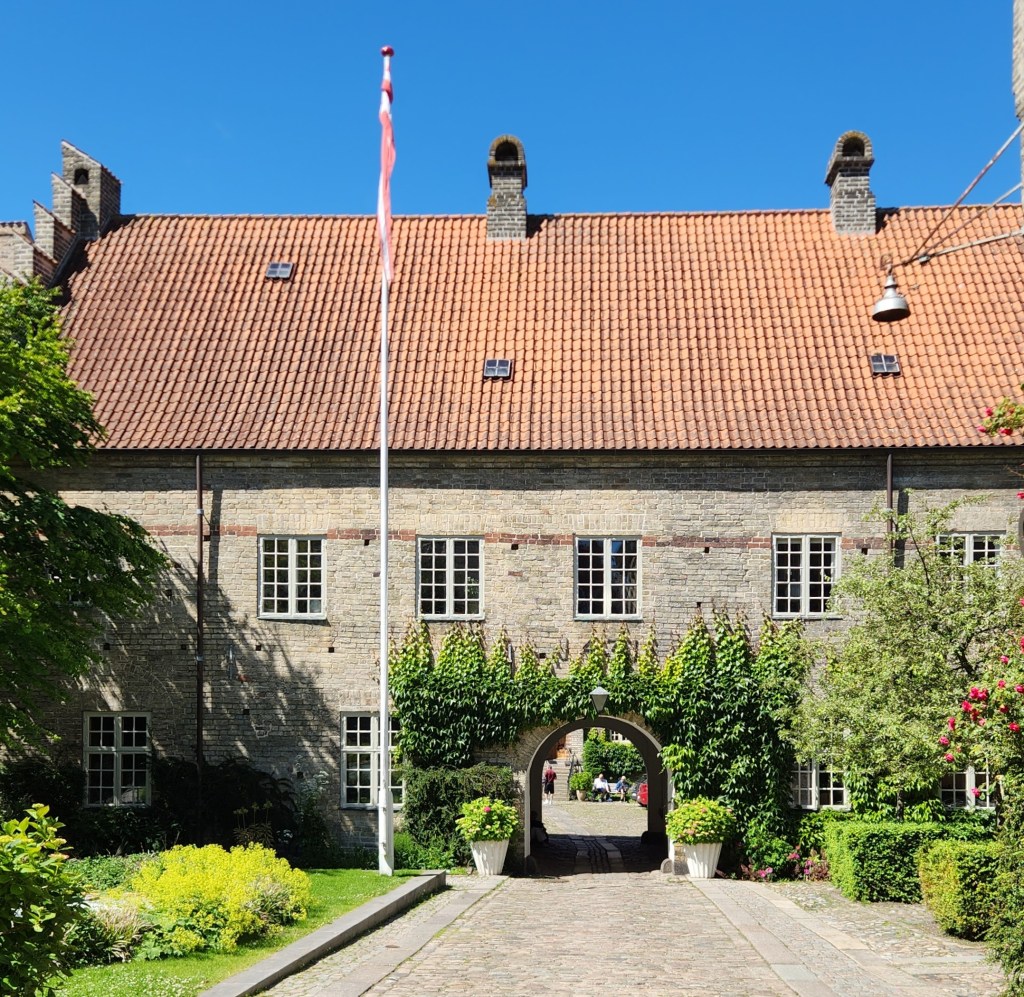
Monastery of the Holy Ghost

During World War II, a group of eleven grammar school students formed the Churchill Club, a secret resistance movement. Two of the boys lived in the monastery as their father was the vicar at the Budolfi church. The students used the monastery to plan sabotage missions against the occupying Nazi forces and to hide weapons stolen from the German Army, inspired by the acts of Norwegian resistance soldiers. They succeeded in carrying out 25 acts of sabotage before they were arrested by the Danish police on May 8, 1942, as Denmark’s official position was to cooperate with the German occupiers. Some of those acts of sabotage included stealing weapons and destroying vehicles, blueprints, and plane parts. The boys were fined and sentenced to prison terms ranging from one-and-a-half to five years. Even during their imprisonment, some of the boys managed to escape at night to continue their sabotage activities for some time, then sneak back into their cells before sunrise.
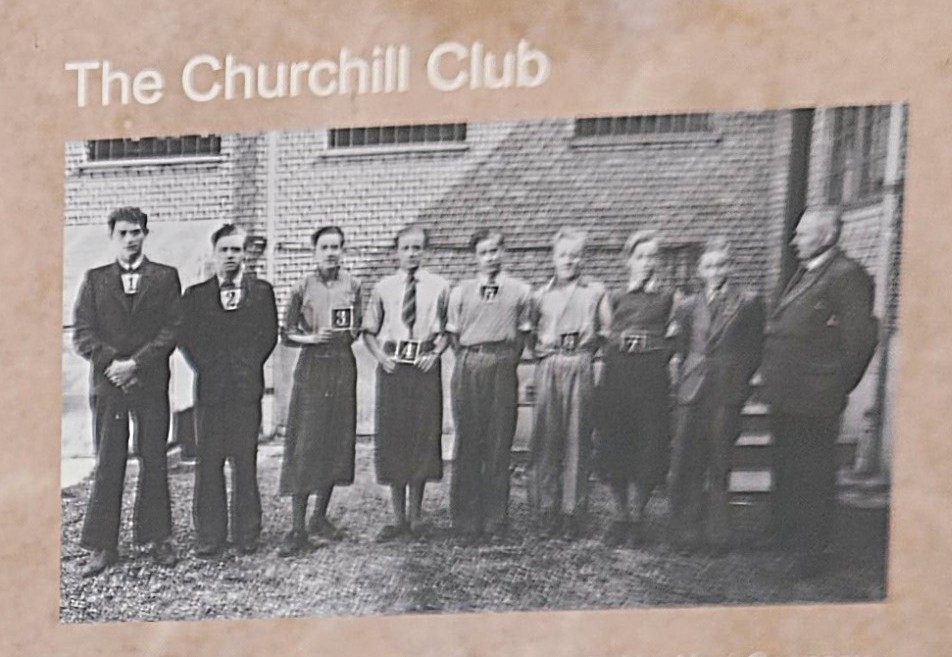
Members of the Churchill Club Secret Resistance

One amusing thing was an inscription on a hospital building reading “Anno 1506.” We learned that it originally read “Anno 1905” following a renovation to the hospital, but historians felt that was inappropriate for such a historic place and so the digits were rearranged.
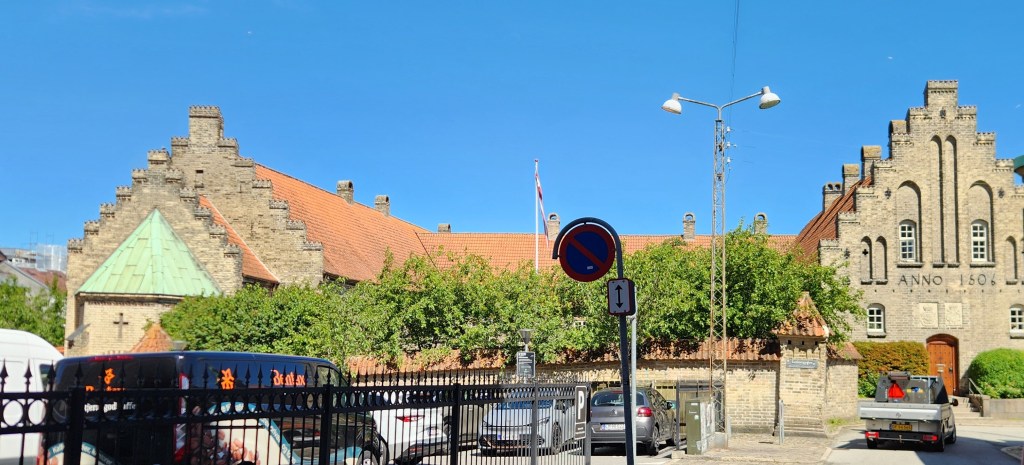
Monastery of the Holy Ghost

After the monastery, we walked through an area of residences and small shops and visited a local Viking market, a somewhat goofy place where people dressed in old-time garb made music and sold various Viking-themed foods and merchandise.
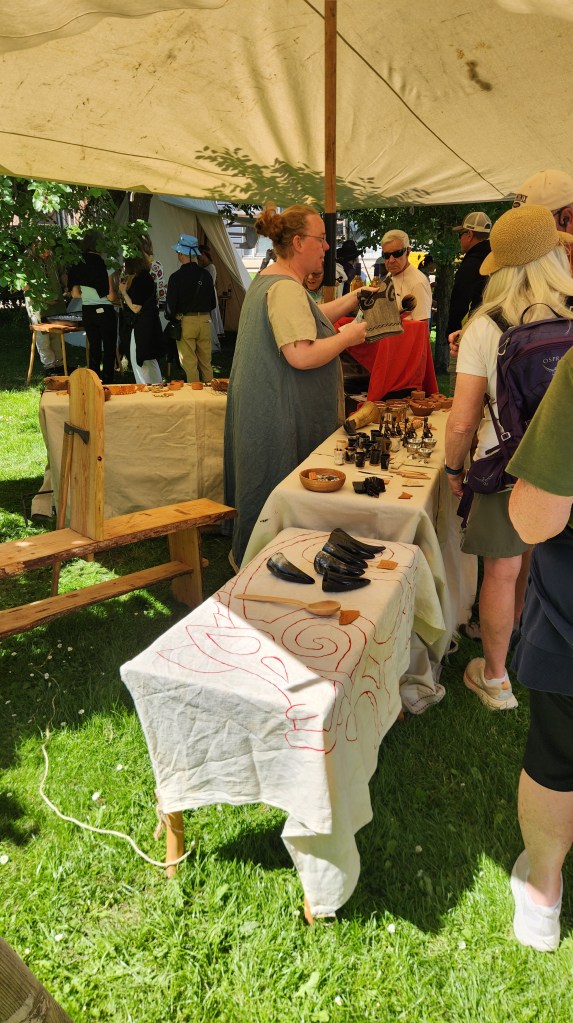
The Viking Village
The Village Piper

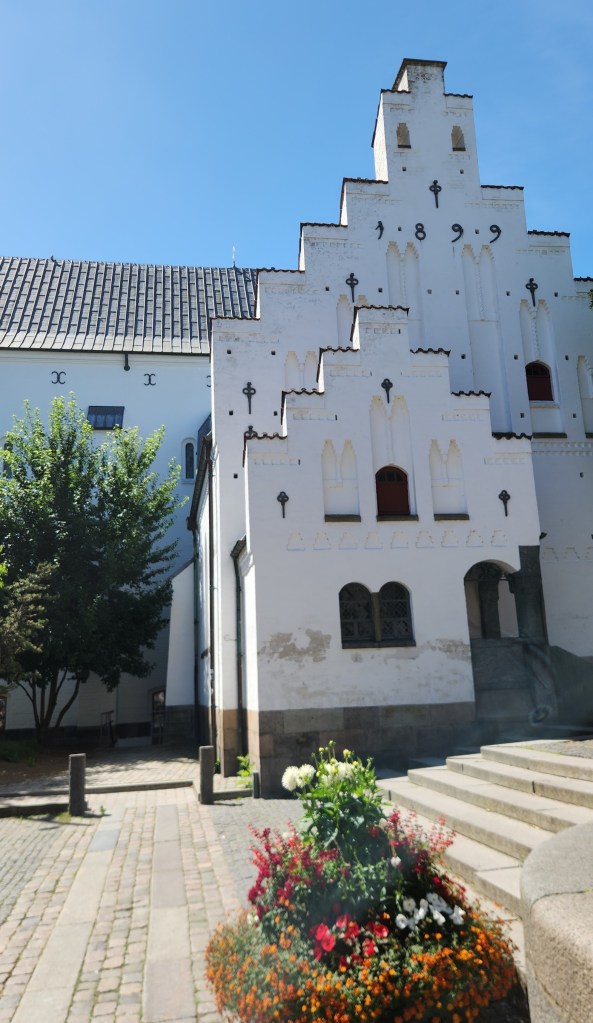
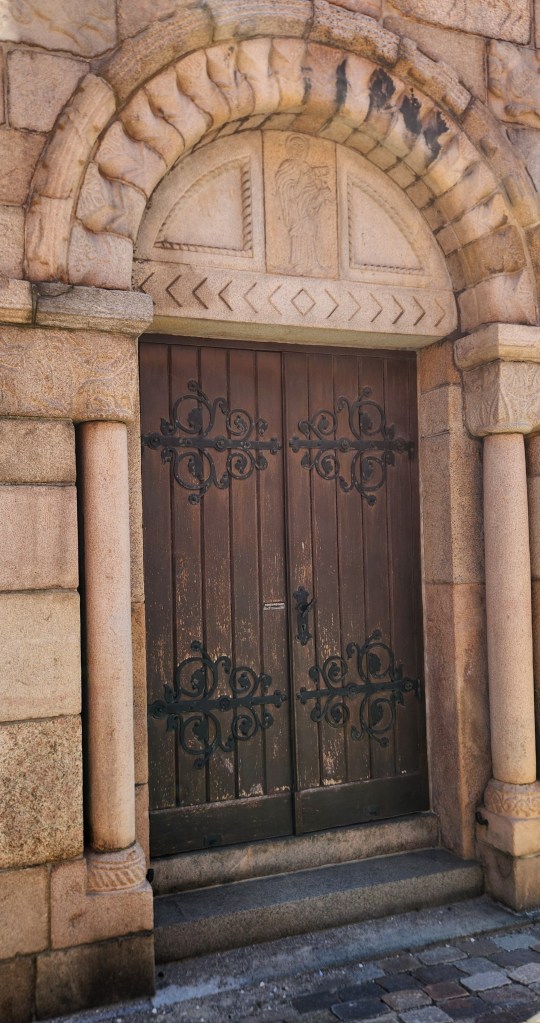
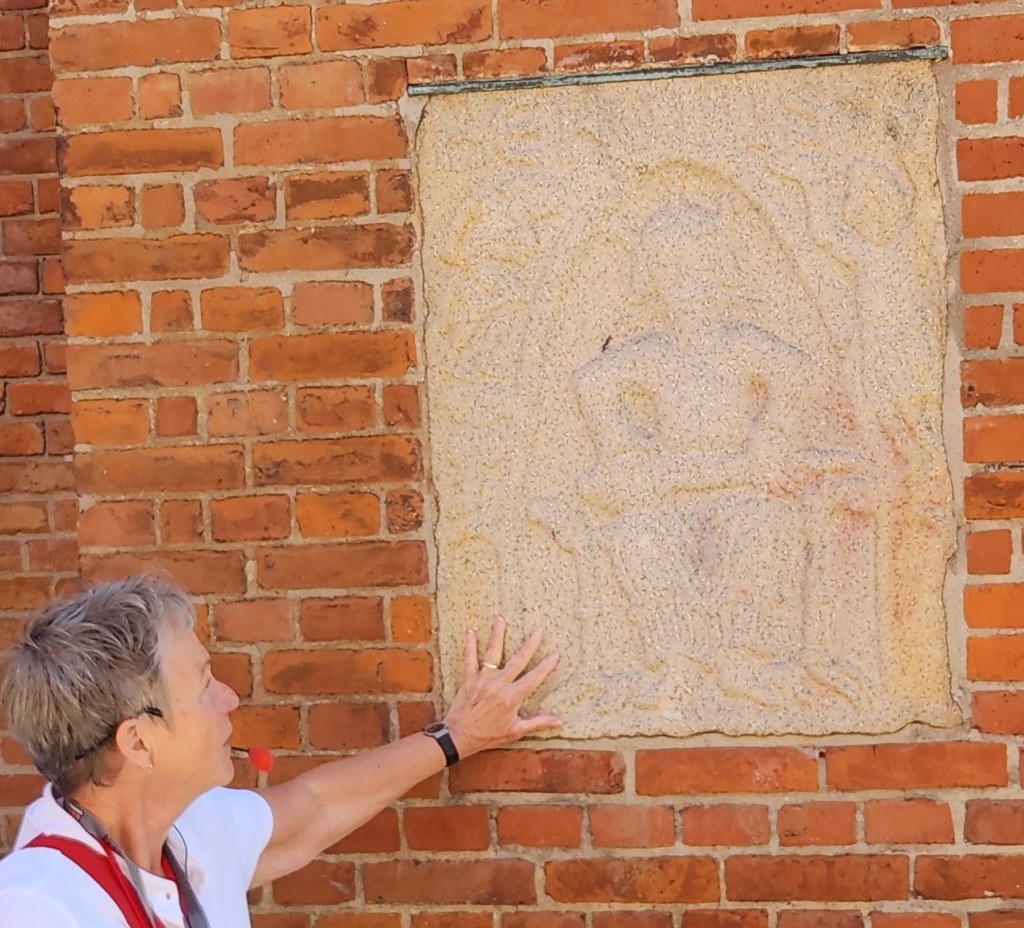
Next, we passed by the Church of Our Lady (Vor Frue Kirke), a Lutheran church built in 1878 on the site of a much older Benedictine monastery. The church is constructed in red brick and includes sandstone relief art and Romanesque portals which may have been preserved from the original monastery. The bell tower also houses one of the original church bells dating back to the 12th century.
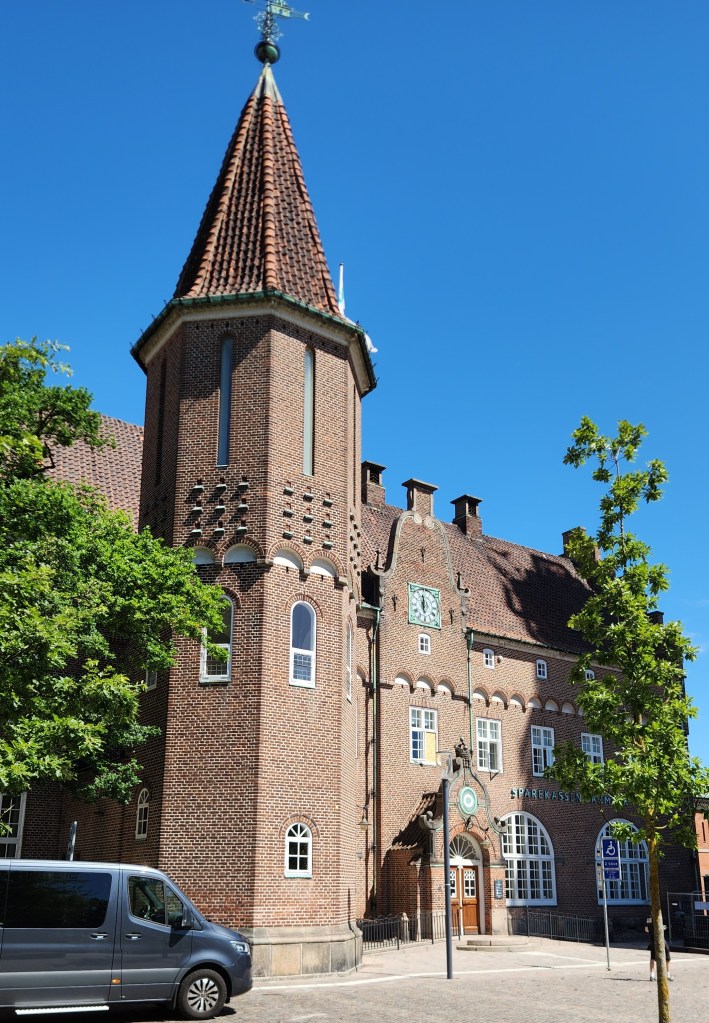
The Church of Our Lady
Sandstone Relief
Romanesque Portal

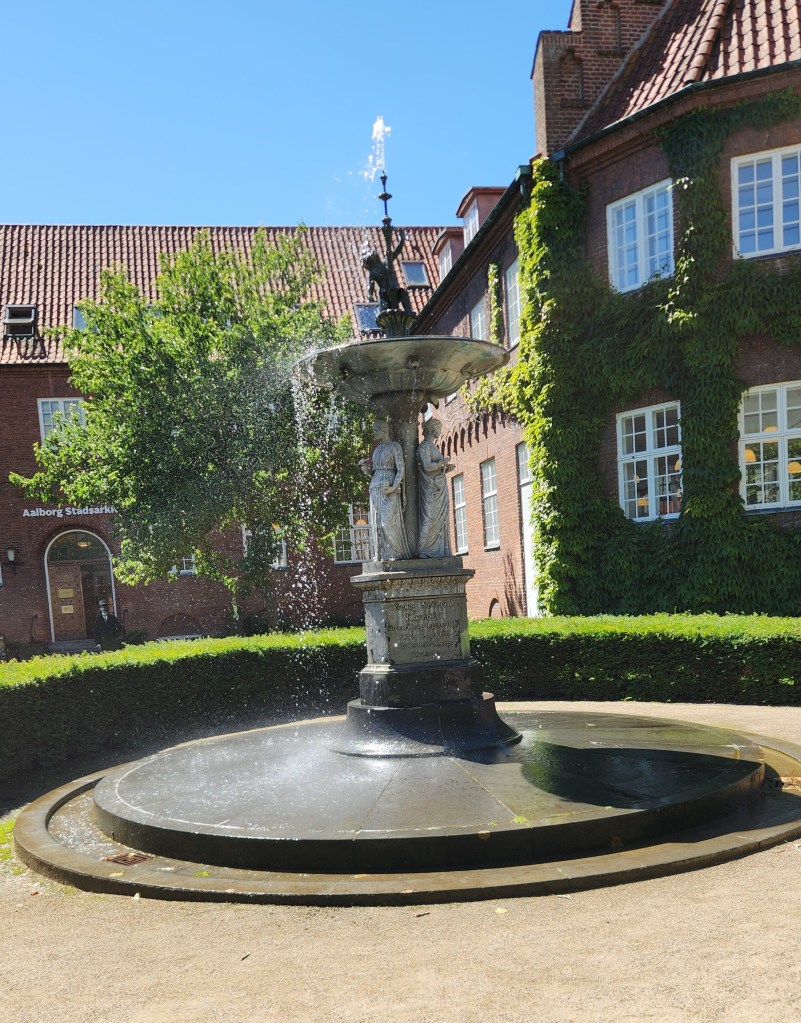
Heading back toward the harbor, we passed by the City Archives, featuring historic timber-framed architecture alongside red brick buildings and a lovely fountain.
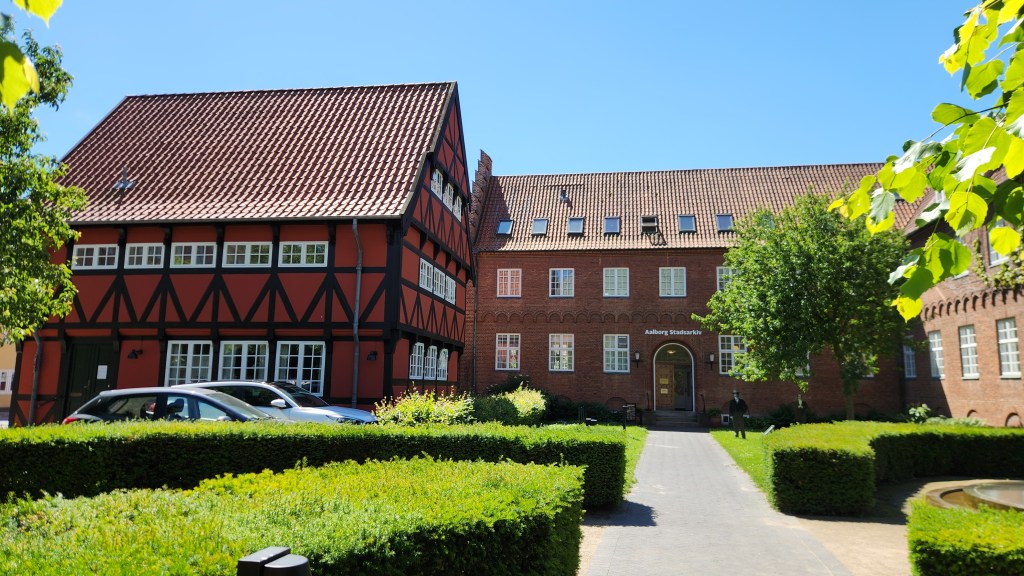
City Archives
City Archives Fountain

I’ll also share a few photos I took of interesting sculptures and murals we saw at various points during the walking tour.
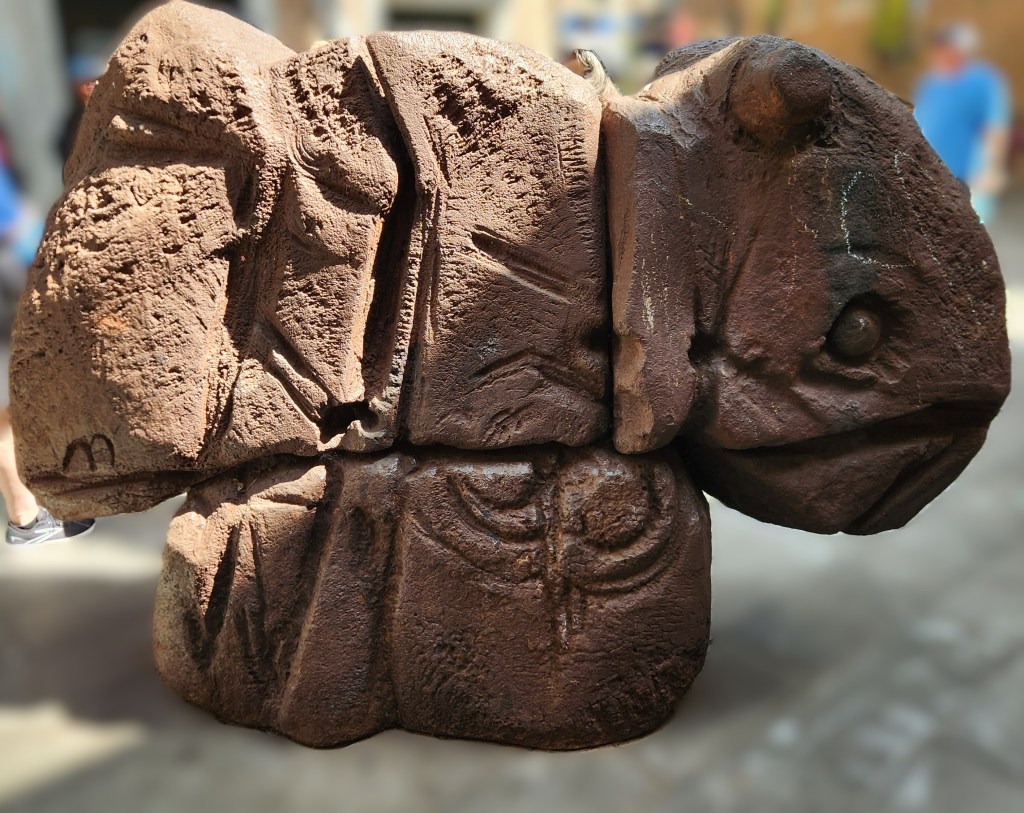
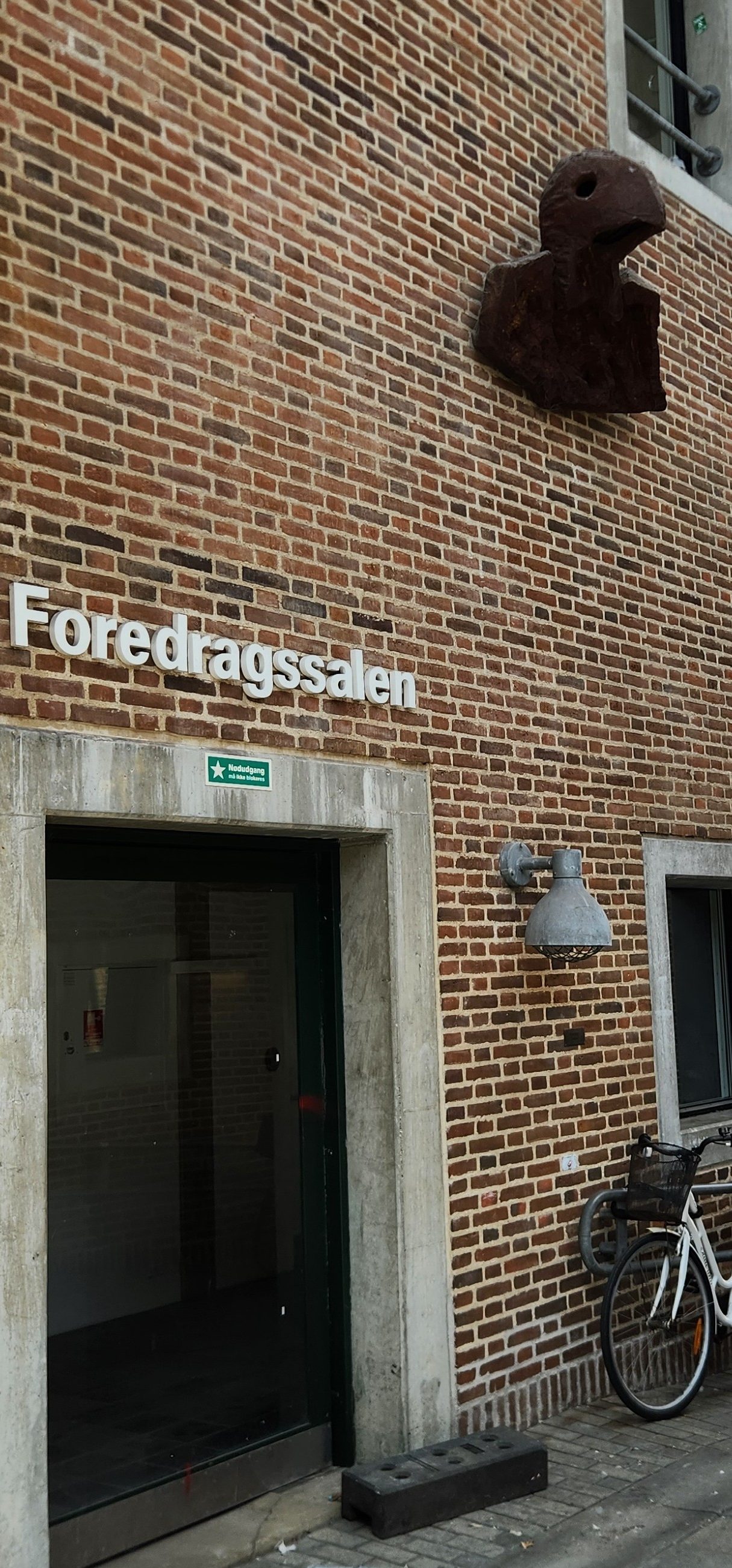
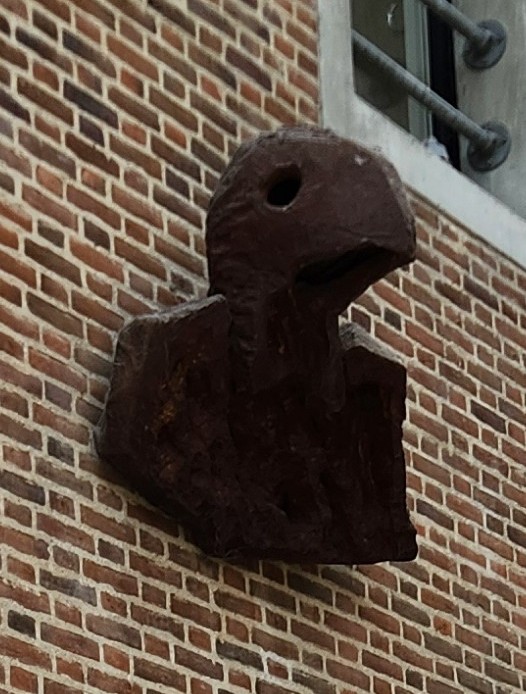
Sculpture in the Old Town
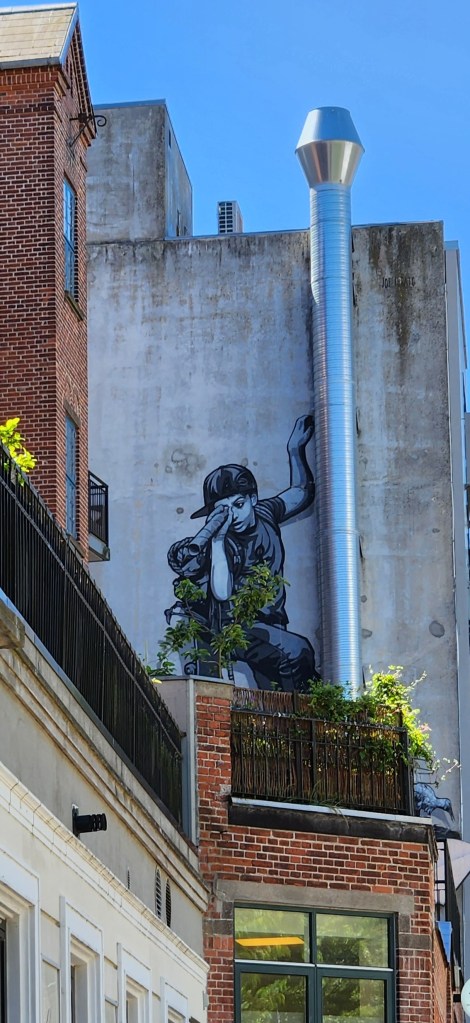
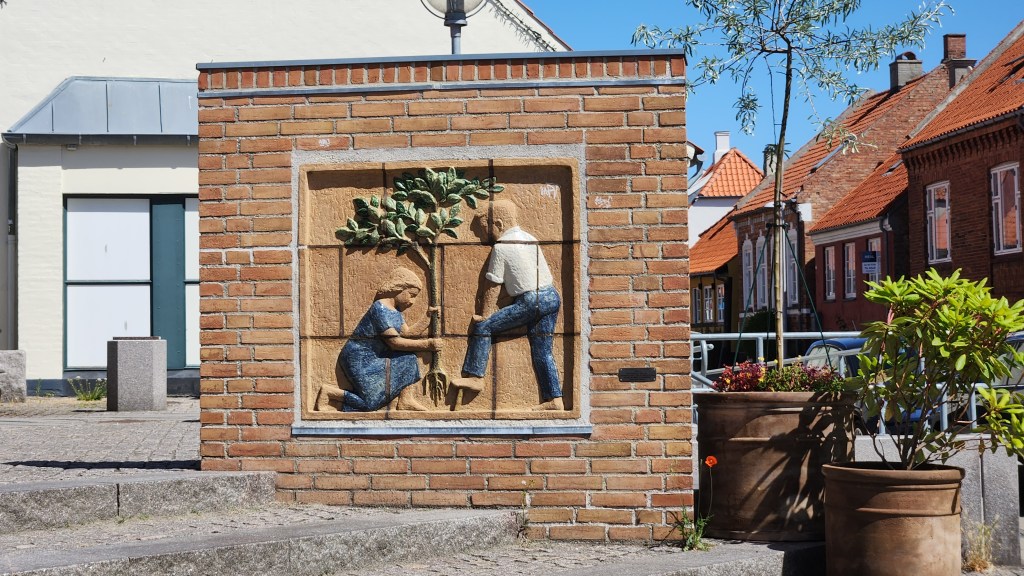
Building Artwork
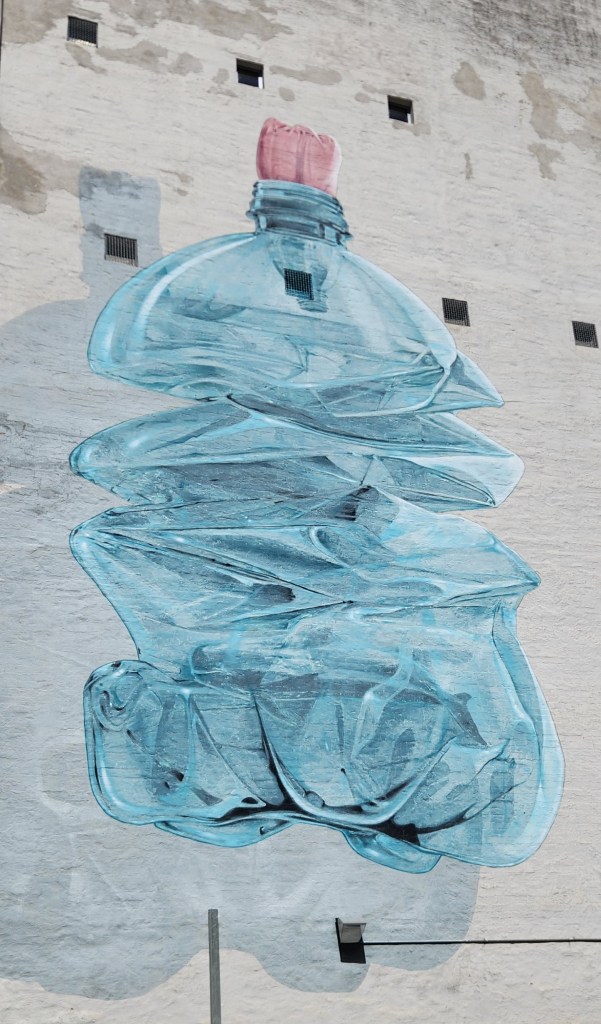
Building Artwork

As we returned to the modern, renovated waterfront district, we passed by the Utzon Center. This ultramodern building was designed Jørn Utzon, the architect behind the Sydney Opera House. The center is directed towards promoting the significance of Utzon’s work and approach by organizing workshops, conferences and exhibitions and disseminating the results for the benefit of the architecture profession and the general public.
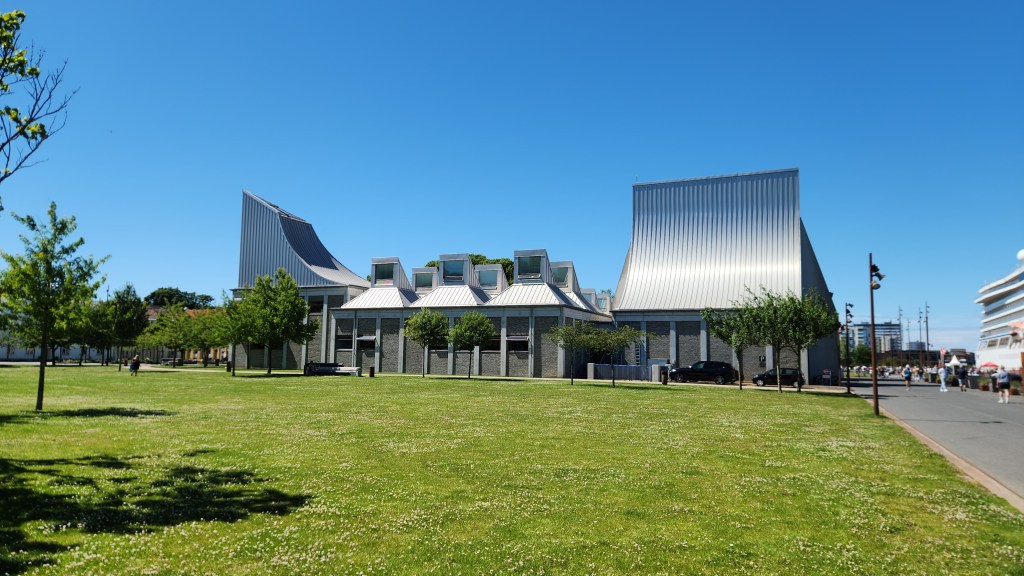
Utzon Center

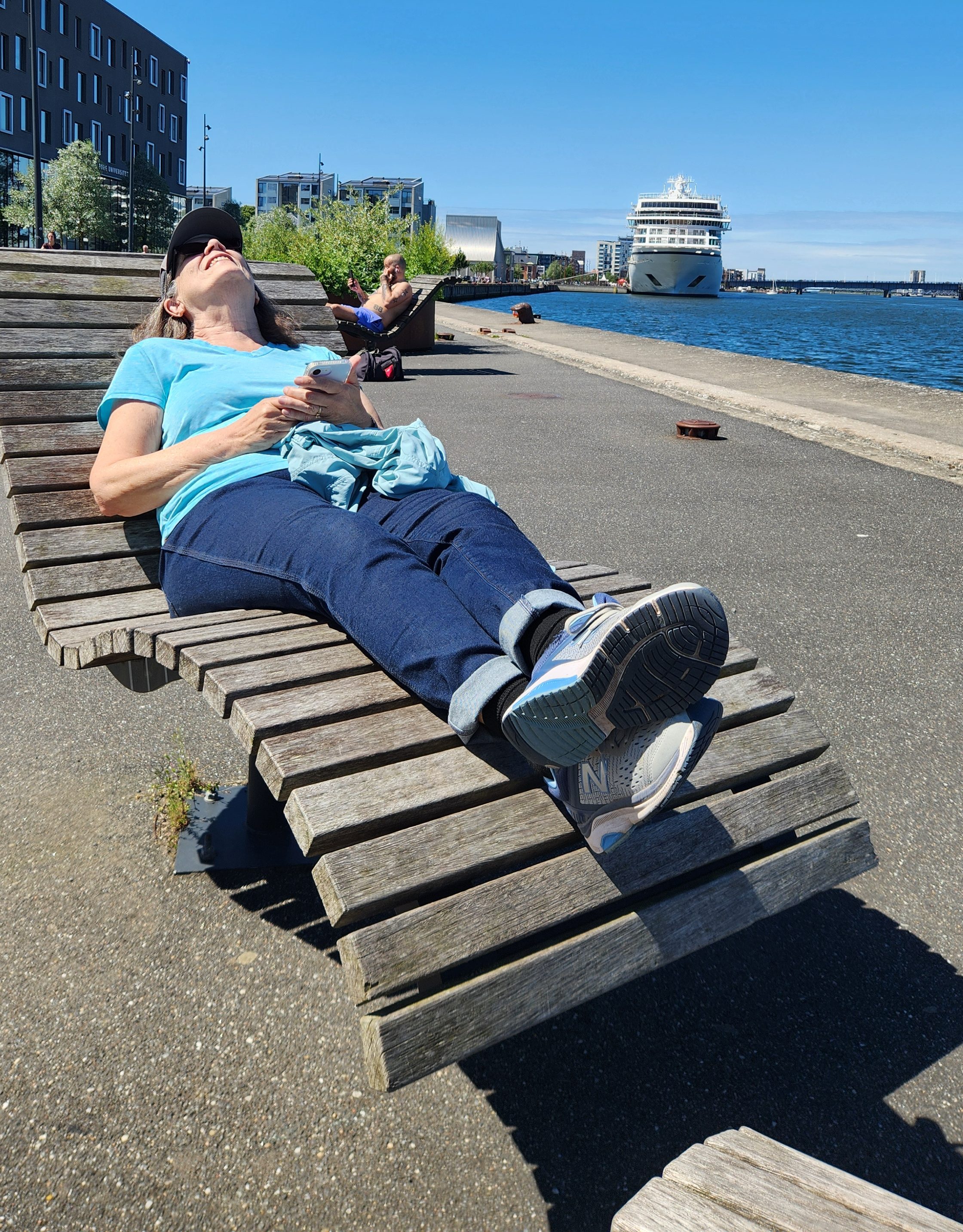
After the tour, we spent some time walking along the waterfront admiring the surroundings, including the Musikkens Hus, a major concert hall and music venue built in 2014 as home to the Ålborg Symphony; it also provides space for the Royal Academy of Music and the Ålborg University. We also sat in some interesting and very comfortable public chairs and admired the boat traffic in the harbor before returning to our ship.
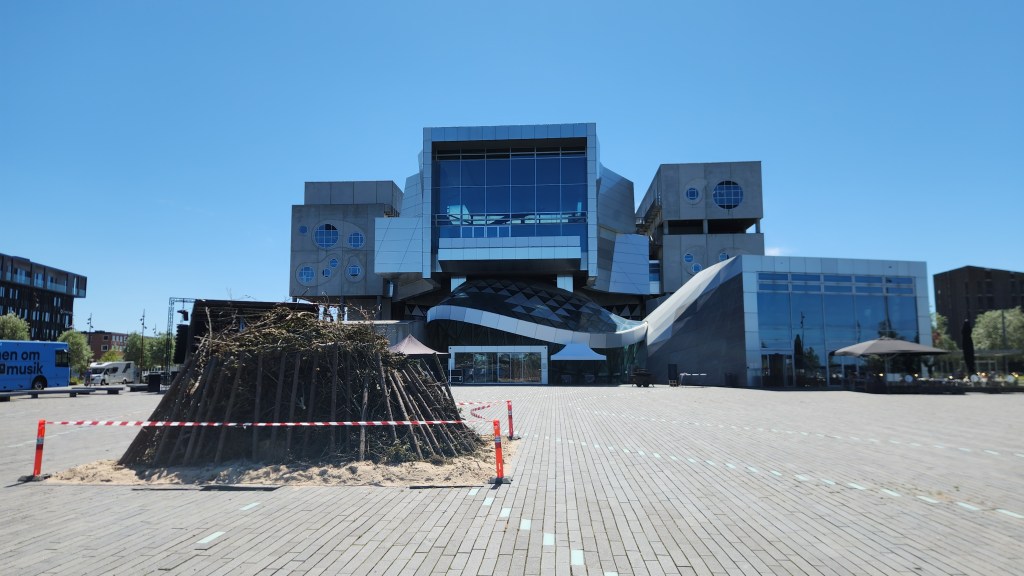
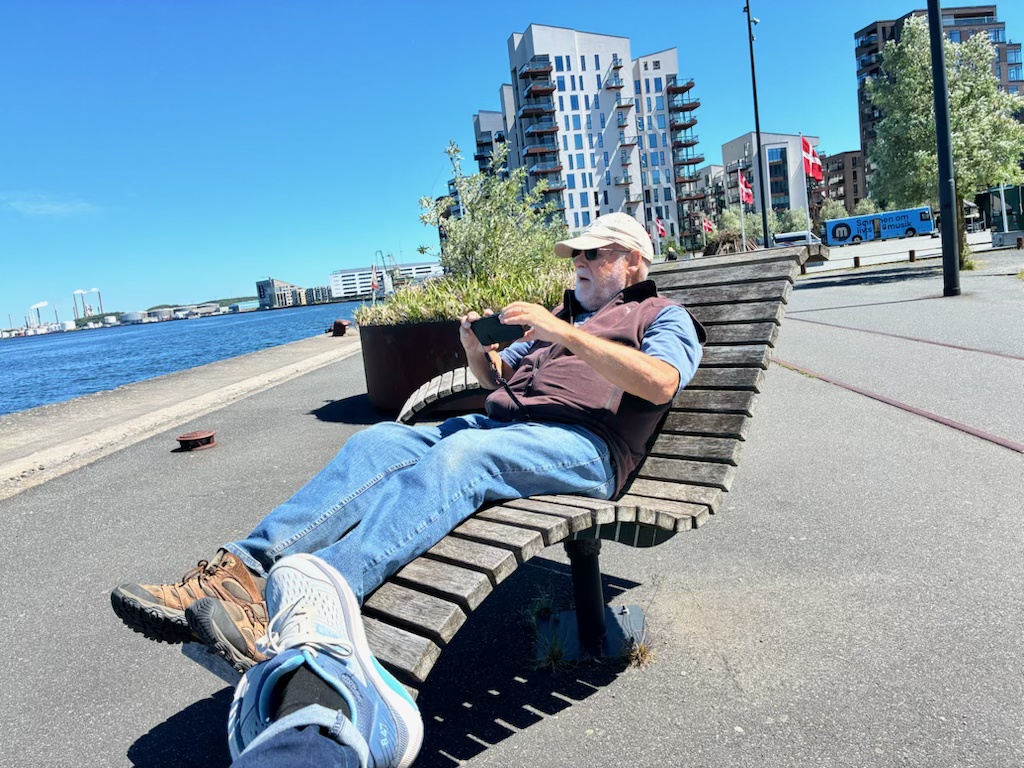
Musikkens Hus, with Bonfire Setup for Summer Solstice Celebration
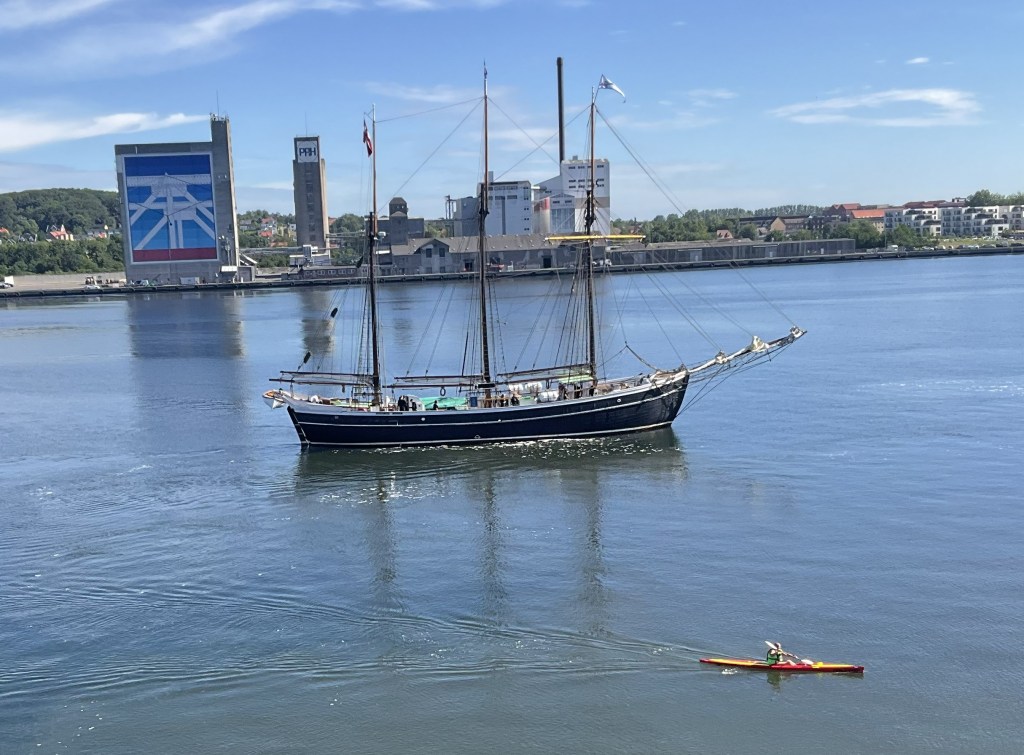
Boat Traffic in the Harbor

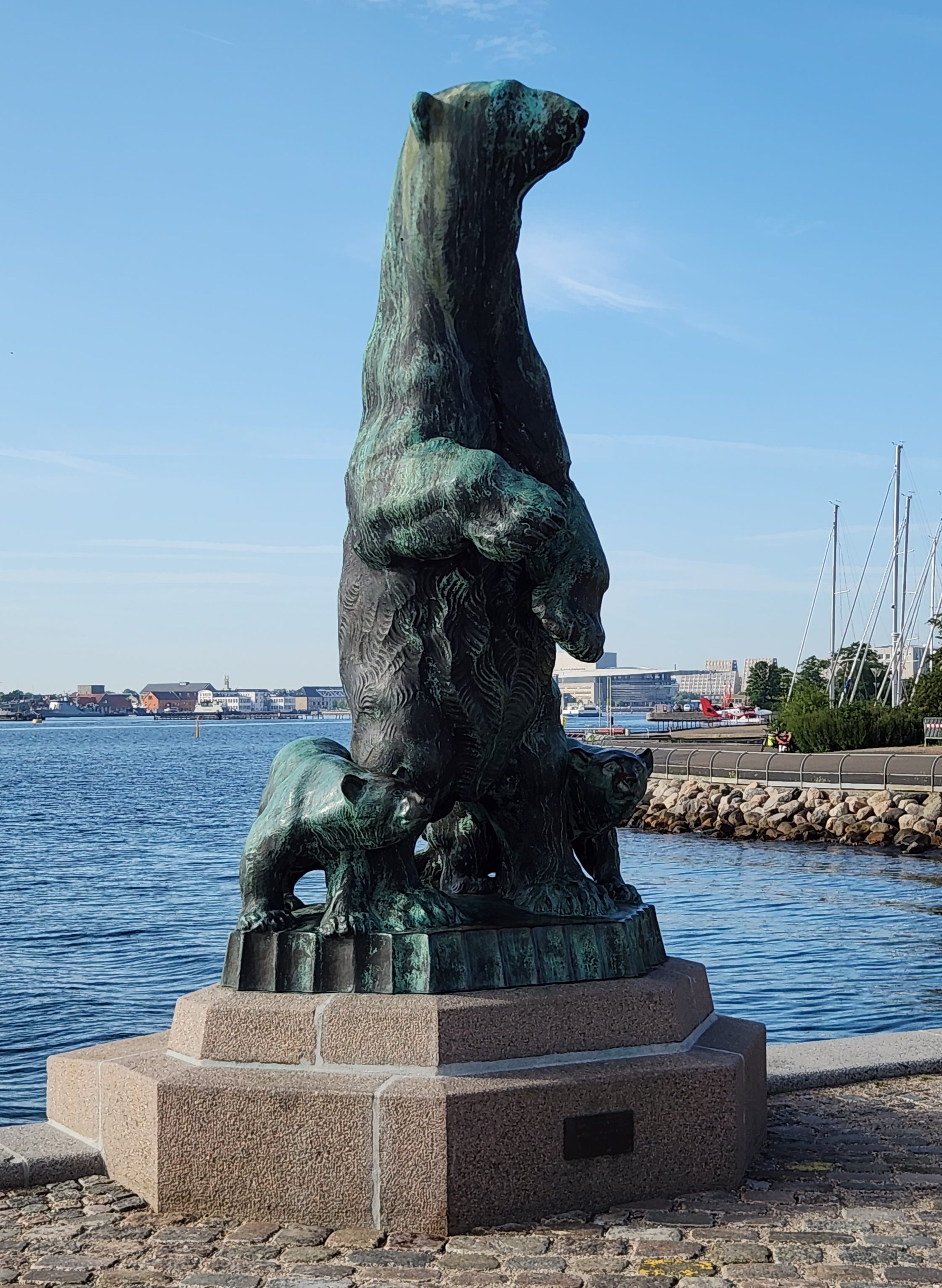
Copenhagen, Denmark (Wednesday, June 24, 2026): Our ship arrived in the Copenhagen harbor at 7 AM, and after the usual excellent breakfast on board we departed on a walking tour. The tour began on the Langelinie Pier where the ship was docked, and we soon came to a couple of nice statues. I’m sure every single reader will know exactly what the second one is.
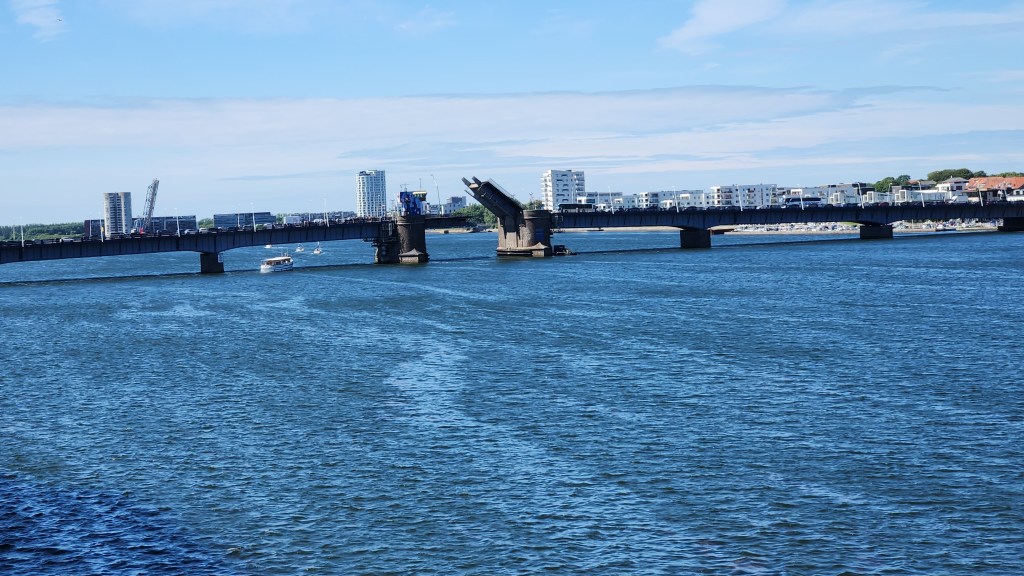
Copenhagen Harbor
Statue of Bear on Langelinie Pier
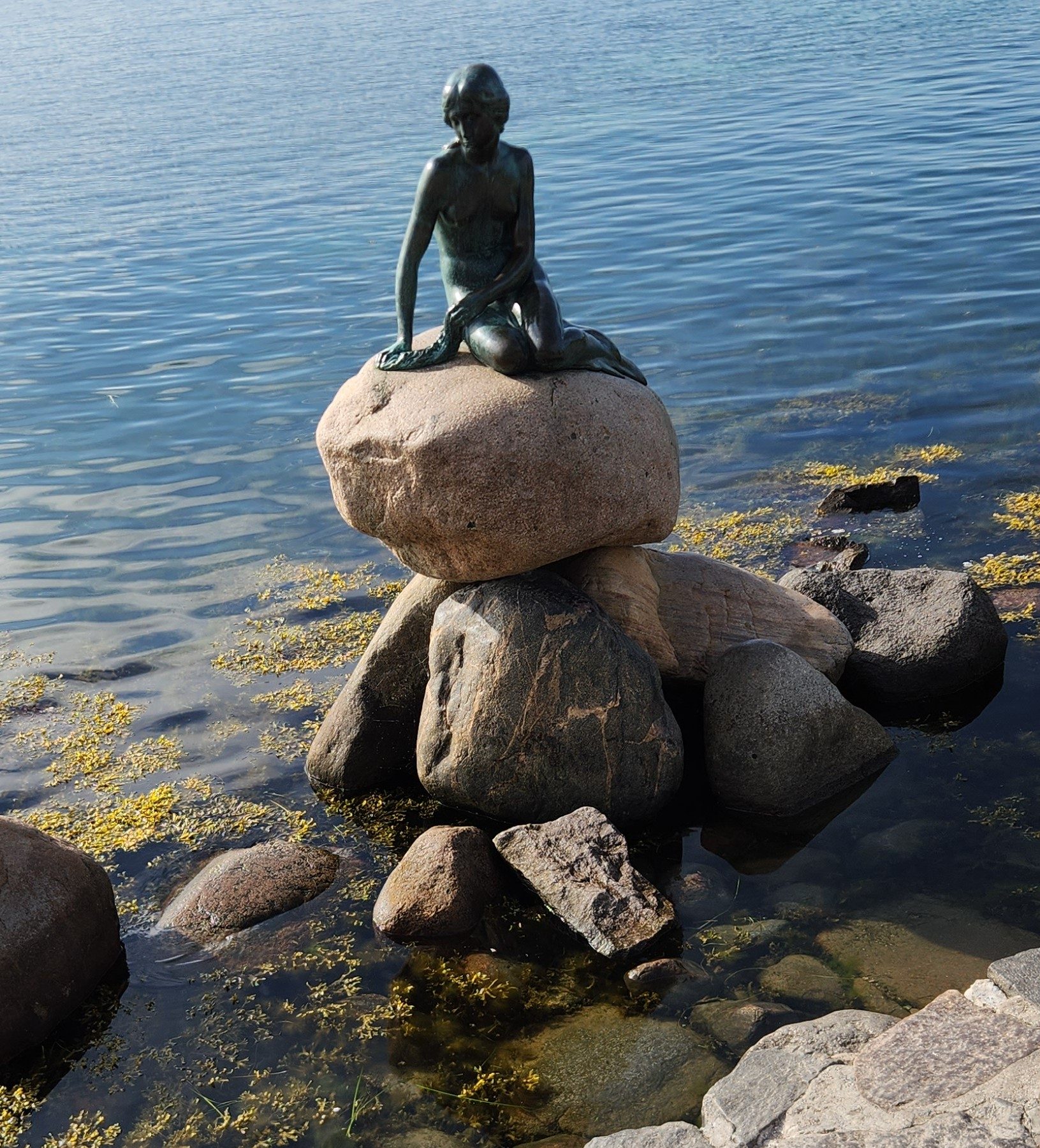
The Little Mermaid

Our guide told us that we were very lucky to have an unobstructed view of the Little Mermaid statue, still sitting serenely in the harbor since its unveiling in 1913, since more than a million people stop to see the statue every year. (In fact, when we passed by her again at the end of the tour the area was thronged with a hundred or more gawkers.) I’m quite disappointed in the quality of my photos – somehow the lighting conditions didn’t allow me to get a good one – but at least the statue commemorating Hans Christian Andersen’s fairy tale was all there.  At various times, since 1964, vandals have: decapitated her twice (the first head was never recovered, and a new one had to be made in 1968); sawn off an arm in 1984; used explosives to blow her off the stone base and into the harbor in 2003; drenched her in red paint protesting whale hunting in the Faroe Islands in 2017; painted her blue and white with the words “Free Abdulle” in 2017; tagged her with the words “Racist Fish” during global protests in 2020; and painted her with the white, blue, and red stripes of the Russian flag in an act linked to support for the invasion of Ukraine in 2023. And yet she endures!

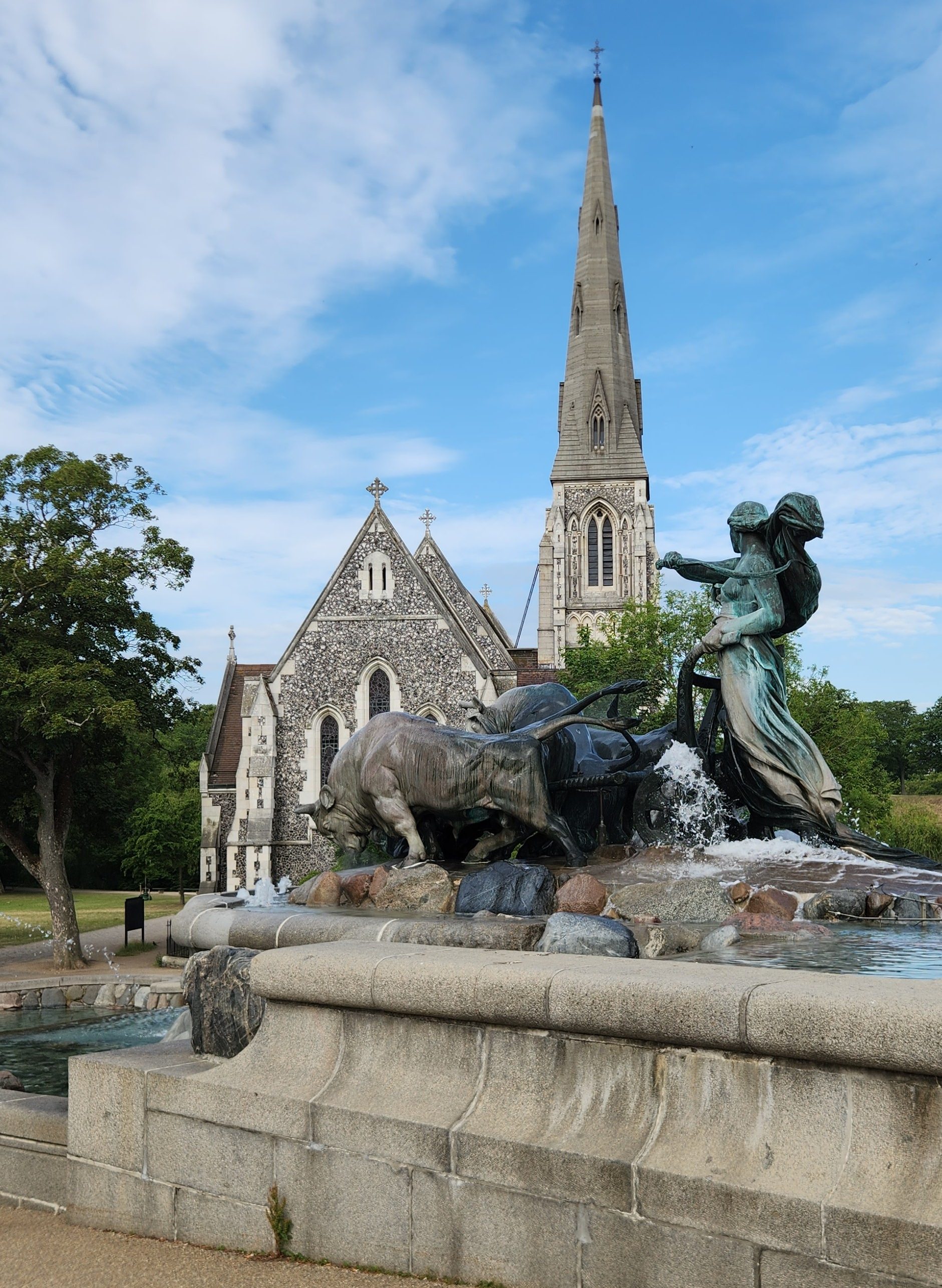
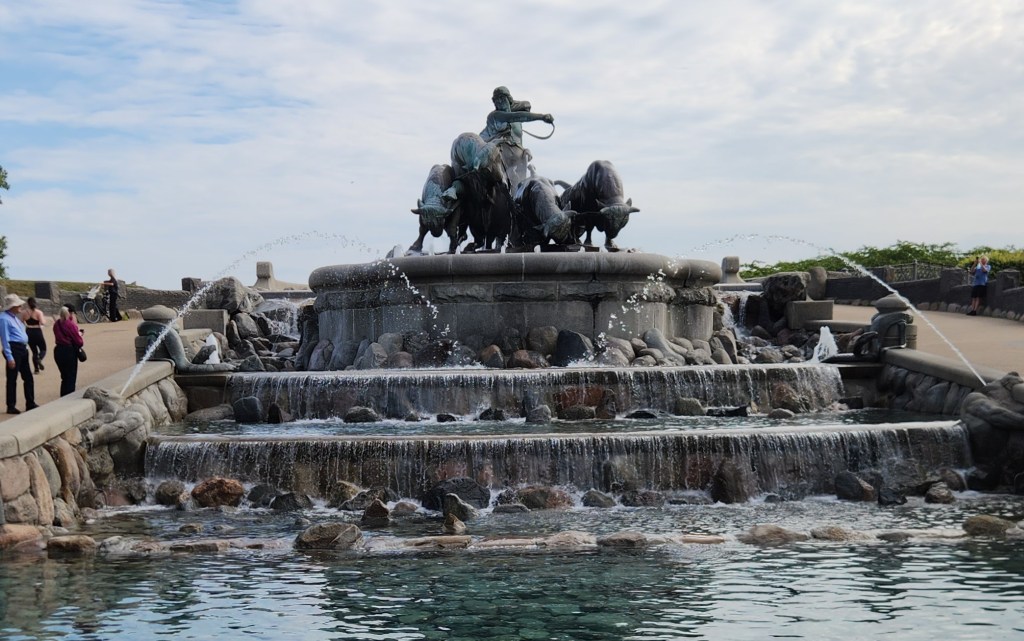
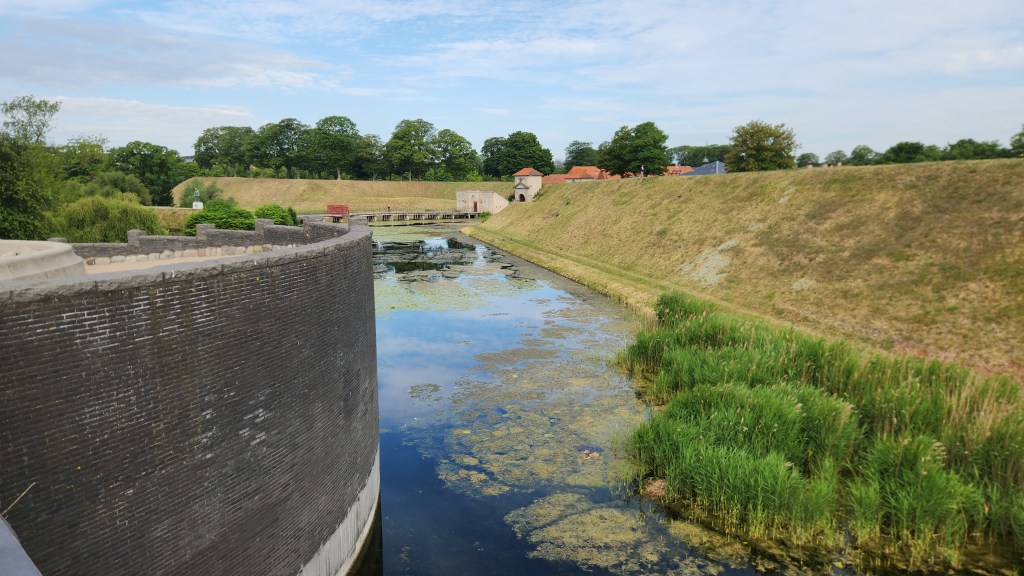
Our tour continued along the pier as we passed through the Amaliehaven, a public garden opened in 1983. We saw the ramparts of the Citadel (Kastellet, a 17th century star-shaped fortress with surrounding moats), Copenhagen’s largest monument (the Gefion Fountain, first inaugurated in 1908, featuring the Norse goddess Gefion driving four oxen), and the St. Albans Anglican Church, built in 1887.
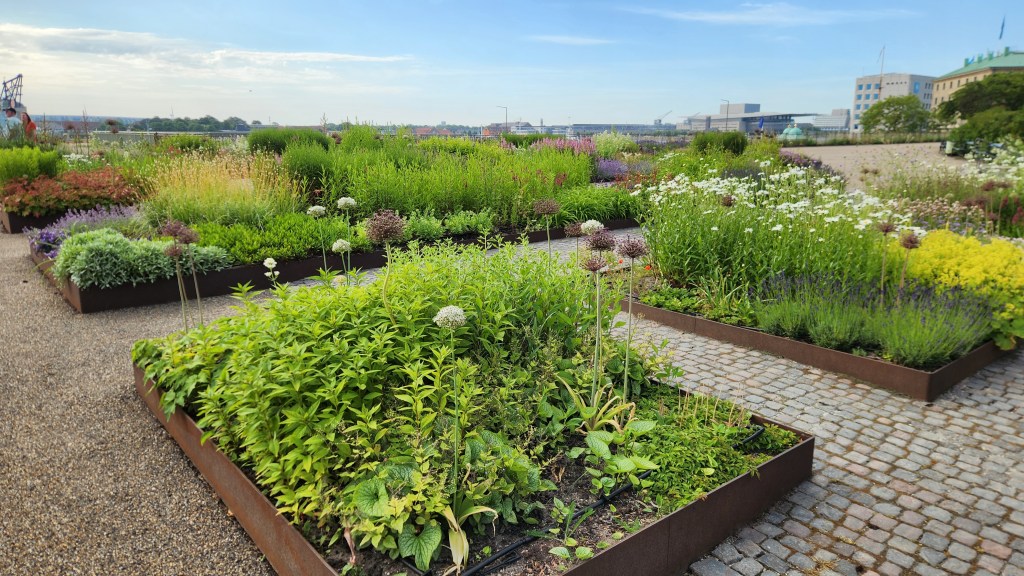
Amaliehaven Gardens
Ramparts and Moat of the Citadel
Gefion Fountain and St. Albans Church
Gefion with her Oxen

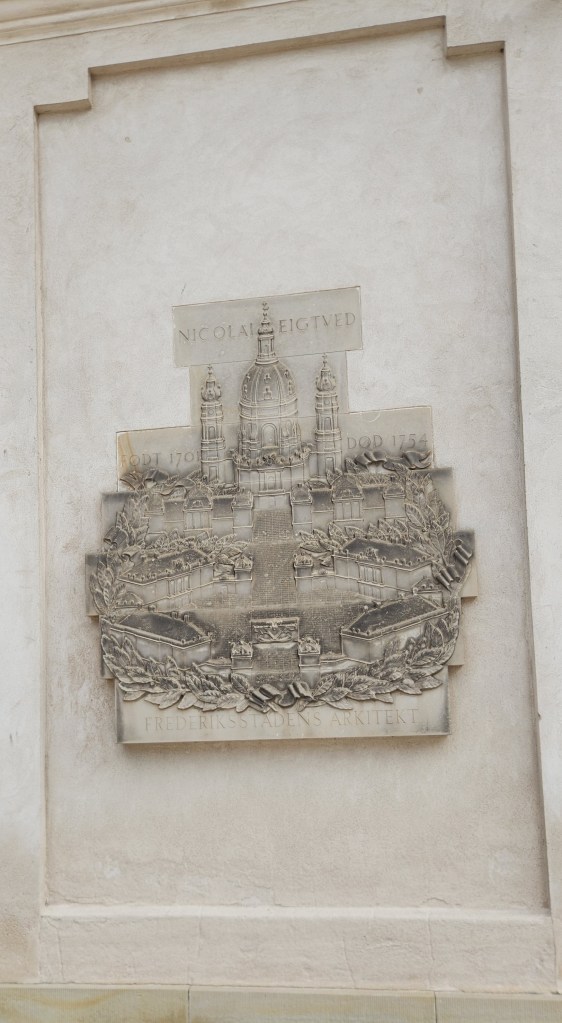
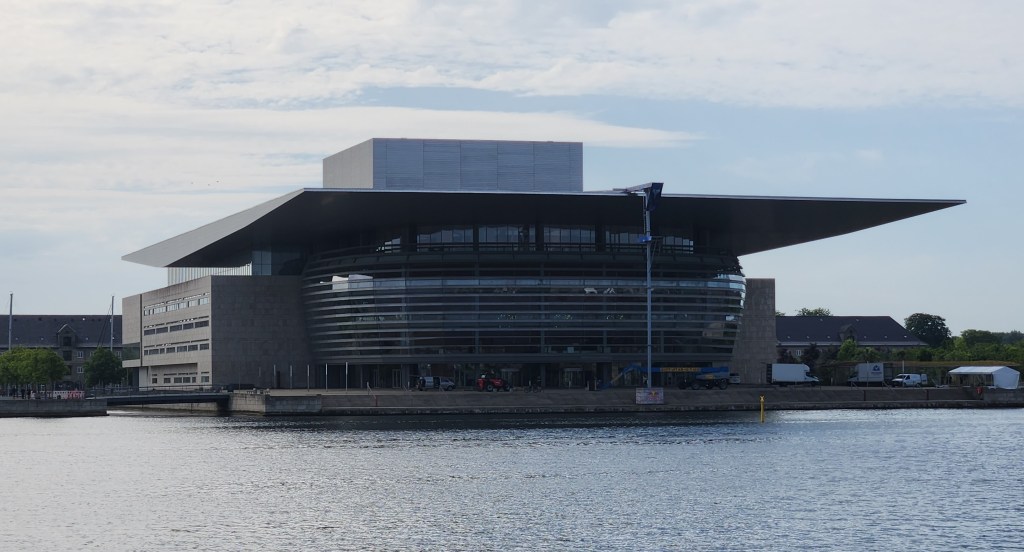
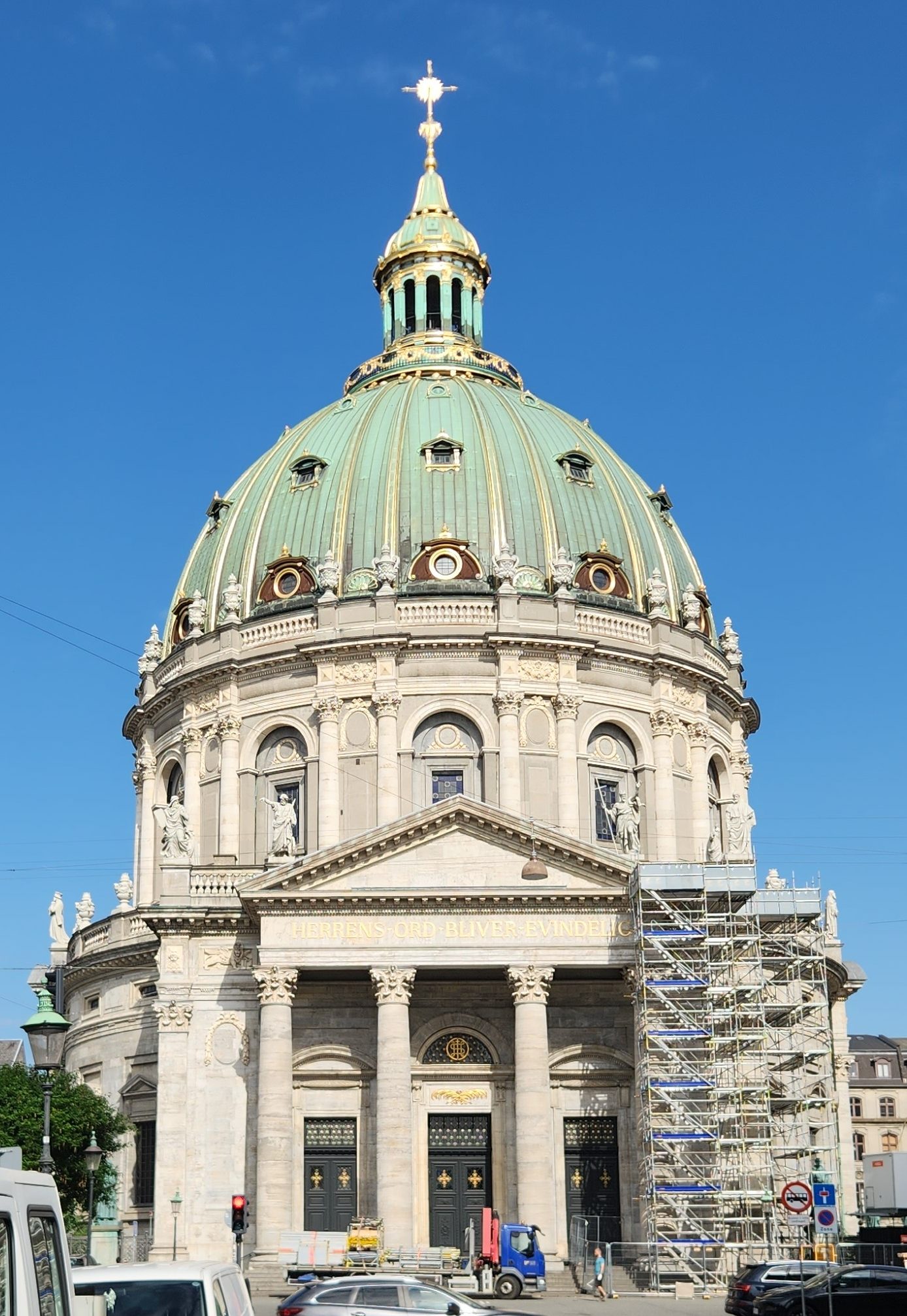
Next came the Amalienborg Palace, the winter residence of the royal family. Four identical Rococo buildings are arranged around a large octagonal courtyard with a central fountain. Amalienborg was originally built for four noble families, but after the Christiansborg Palace (see below) burned in 1794 the royal family bought the Amalienborg palaces and moved in. From the Amalienborg courtyard, we also had a good view of the New Opera House across the harbor, and on our way out of the courtyard we passed by the Marble Church, or Frederik’s Church, an Evangelical Lutheran church built in Rococo style between 1749 and 1894.
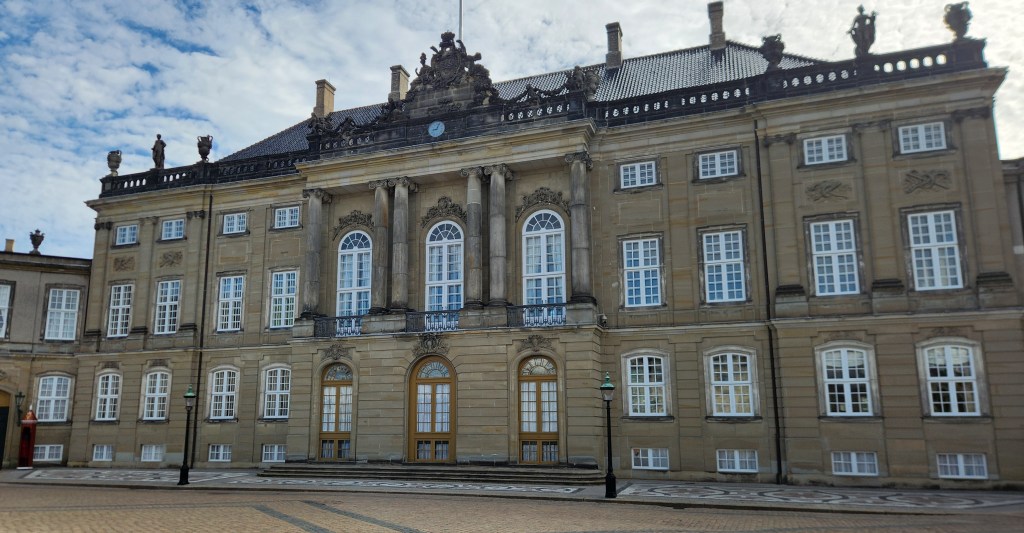
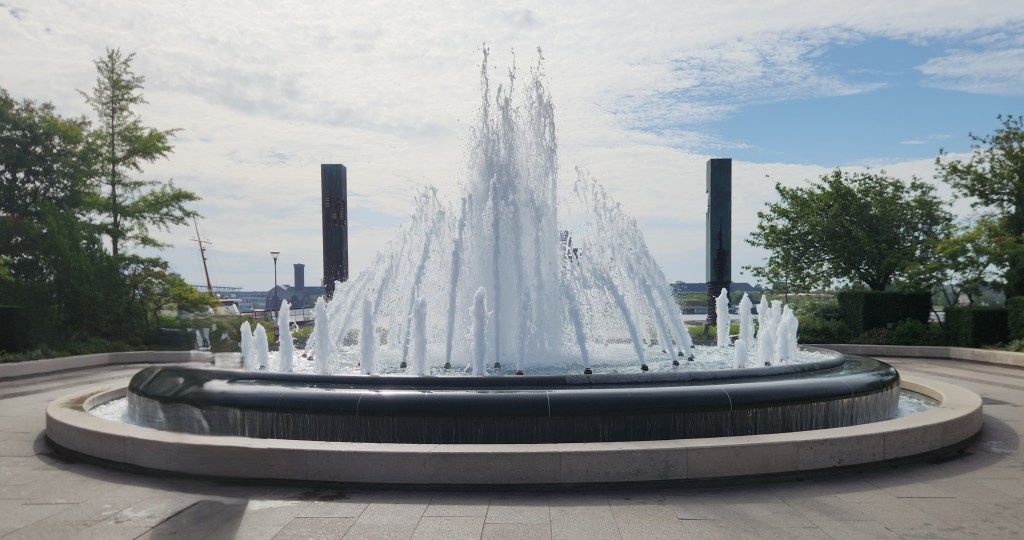
Amalienborg Palace
Fountain in Amalienborg Square
Plaque Showing the Original Amalienborg Layout
New Opera House
Marble Church

After the palace, we walked through the Nyboder district, which includes historic row houses originally built in the 17th century as naval barracks and still used for military family housing today. The buildings are iconic for their distinct “Nyboder yellow” color.
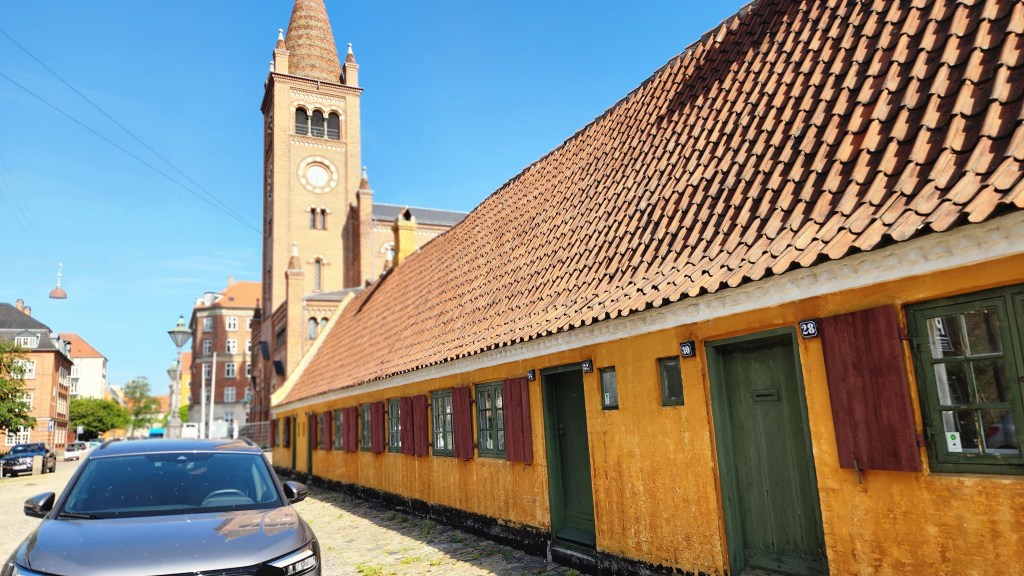
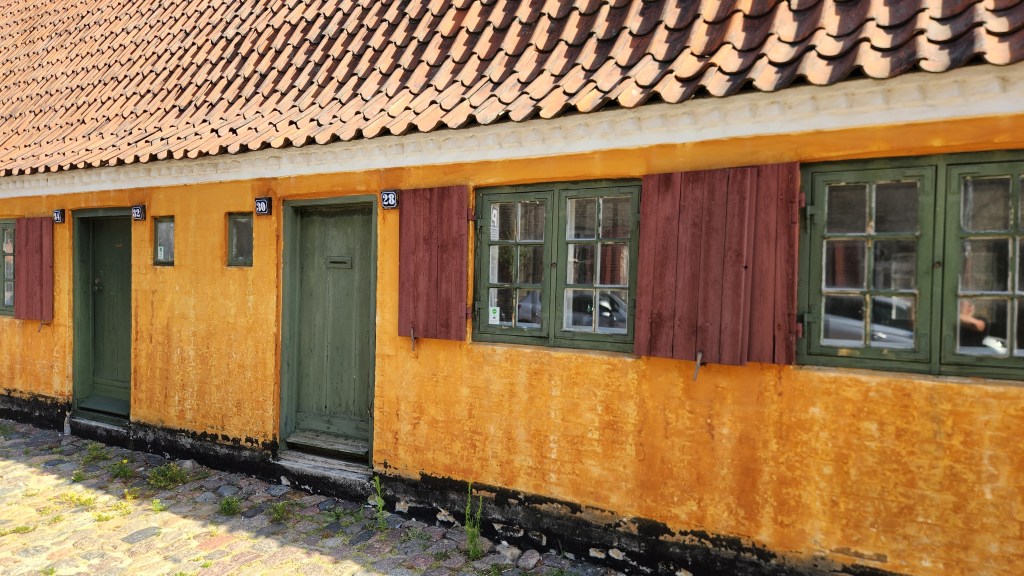
Nyober District Row Houses
Nyober Yellow Military Housing

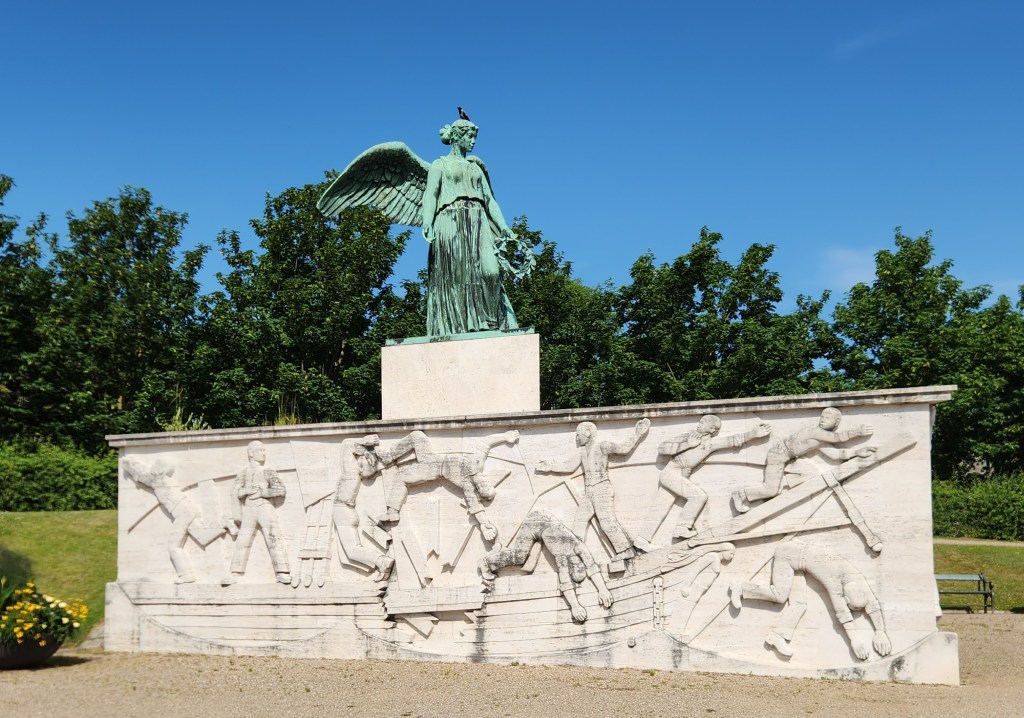
Leaving the Nyboder district, we walked to the public entrance to the Citadel – one of Europe’s best-preserved fortresses surrounded by eight moats, tall ramparts, and cannon bastions – and passed through the fortress to the pier. On the way back to our ship for lunch, we also passed by Maritime Monument (erected in 1928), commemorating civilian Danish sailors killed during World War I.
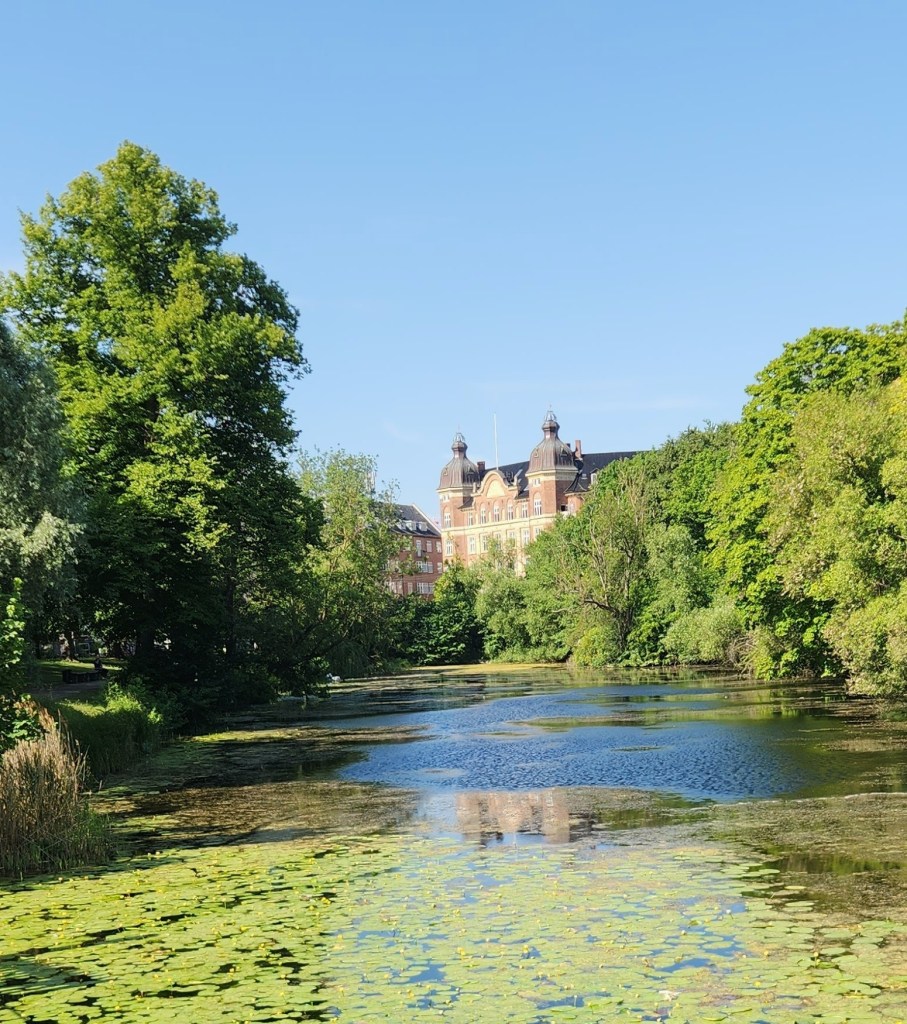
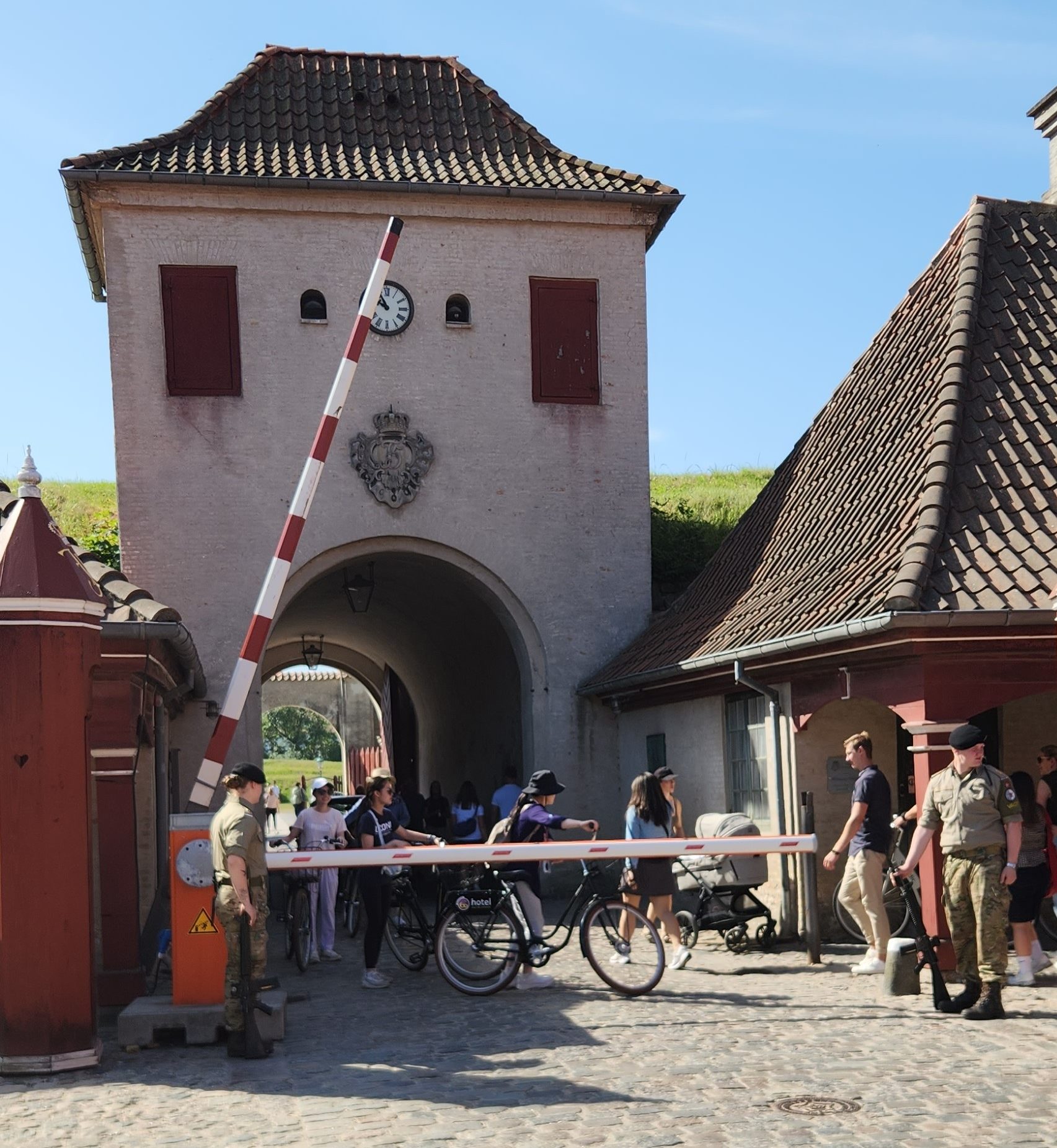
Moat of the Citadel
Citadel Entrance Gate
Maritime Monument

After lunch, we boarded a motorcoach for visits to the iconic Tivoli Gardens and the Christiansborg Palace, the seat of the Danish Parliament and house of the Queen’s Royal Reception Rooms. Along the way, I snapped a picture that says all one needs to know about the popularity of bicycles in Copenhagen, and another of the Copenhagen City Hall.
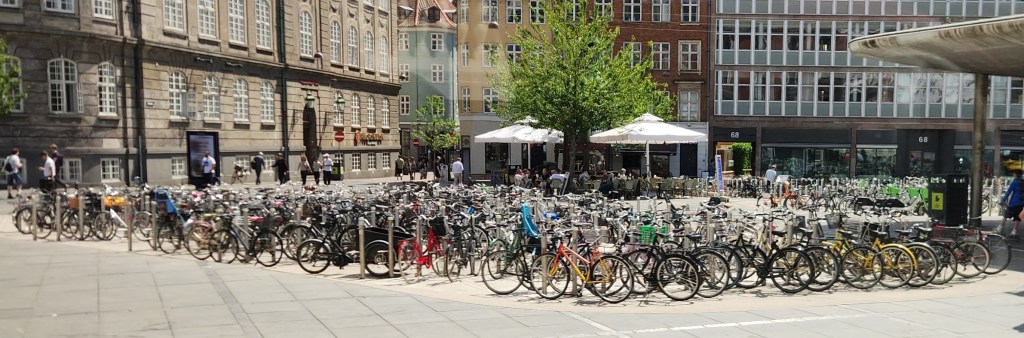
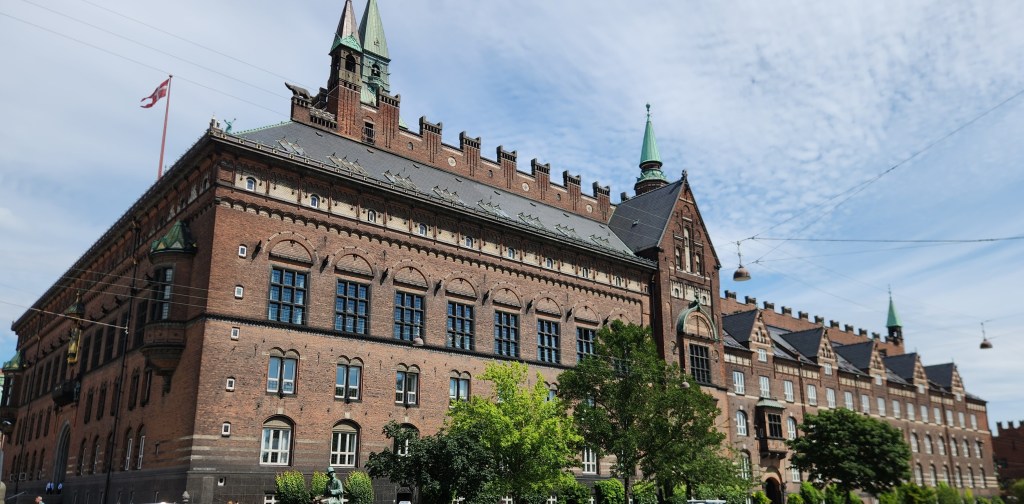
Bicycles seem to be very popular in Copenhagen
Copenhagen City Hall

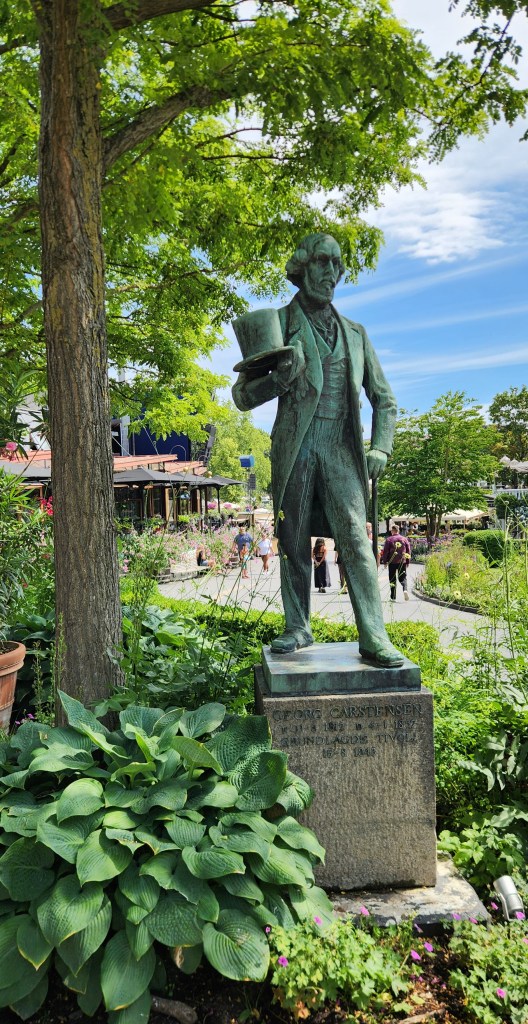
The Tivoli Gardens, the second-oldest operating amusement park in the world, opened in 1843. With 4.25 million visitors in 2024, Tivoli is the most visited amusement park in Scandinavia and second-most popular seasonal amusement park in the world. Our guide gave a brief introduction to the sights, and we were then free to explore the grounds. The buildings and grounds evoke the exotic style of an imaginary East, including the theater, bandstands, and flower gardens.
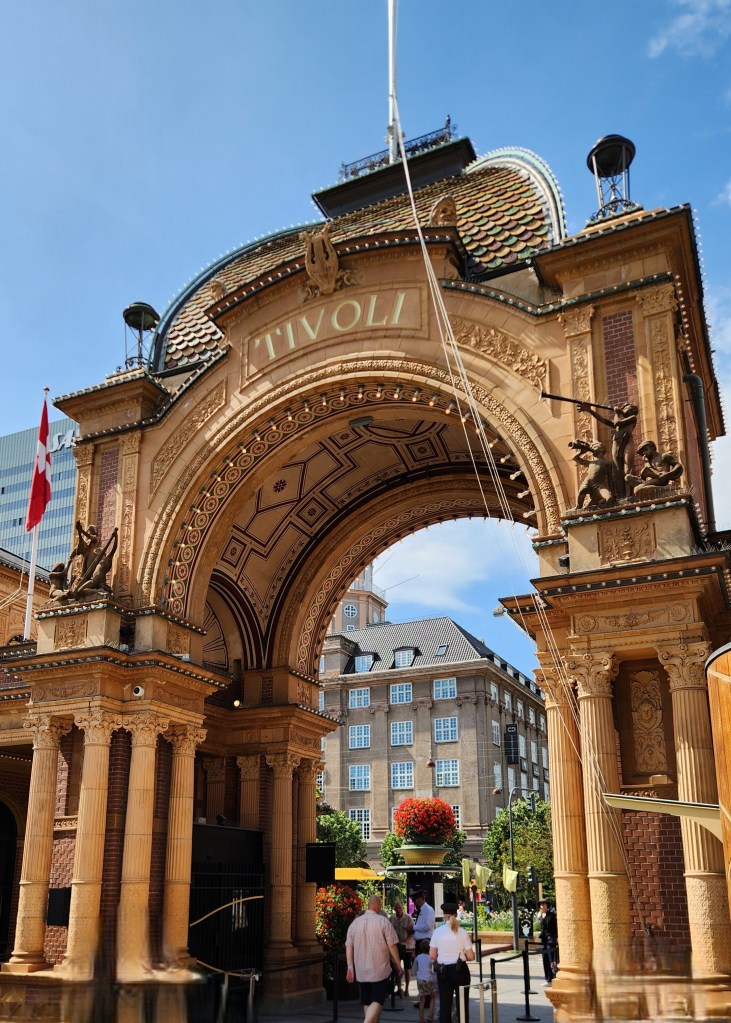
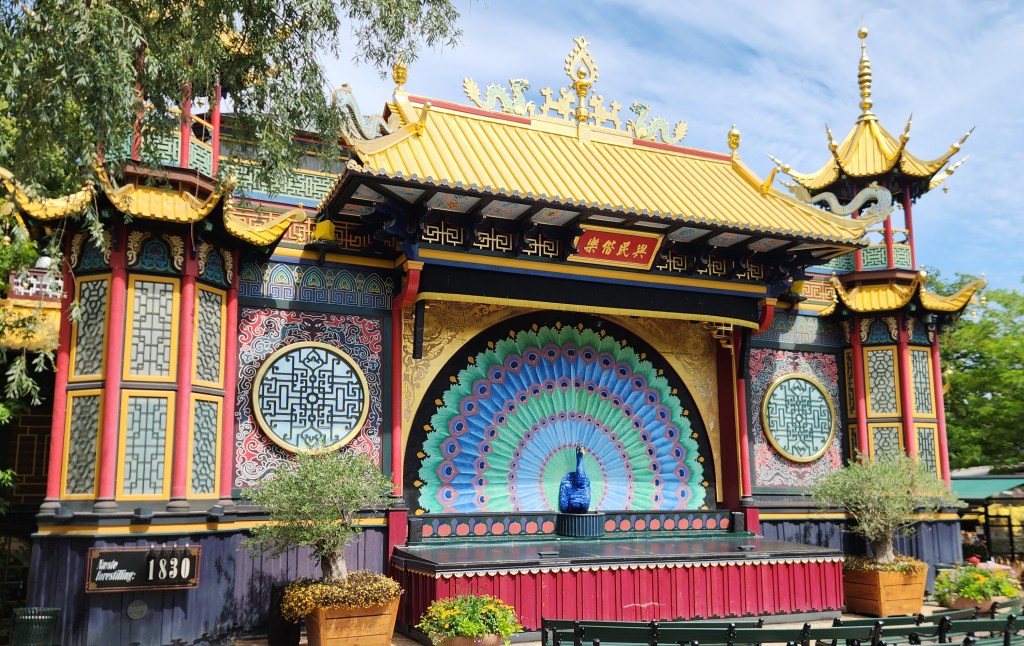
Entrance to the Tivoli Gardens
The Theater at Tivoli
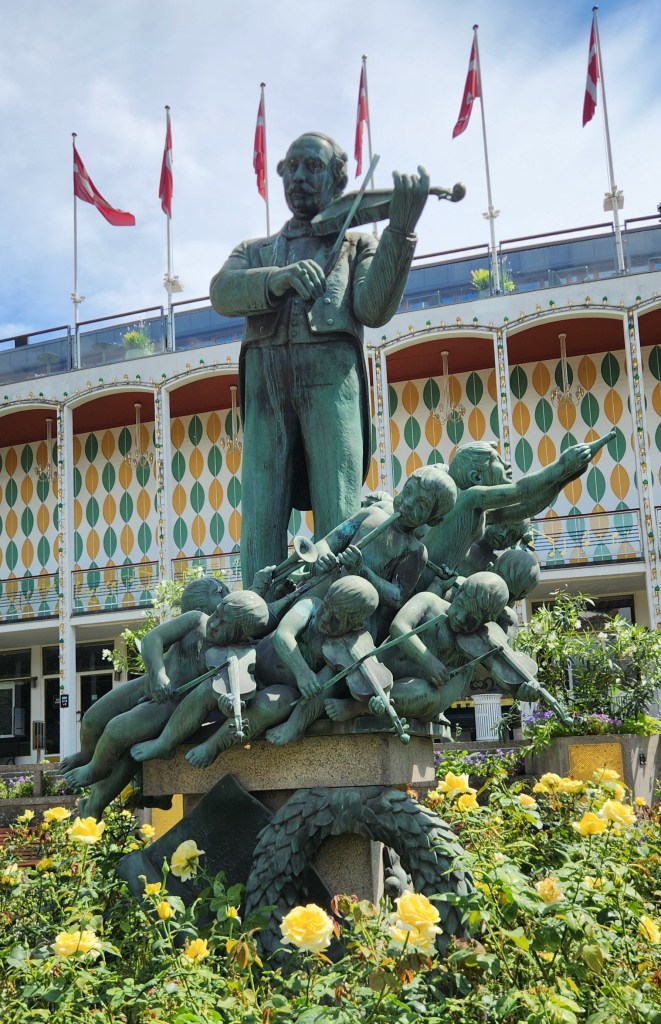
Georg Carstensen, Founder of Tivoli
Statue Near Music Hall
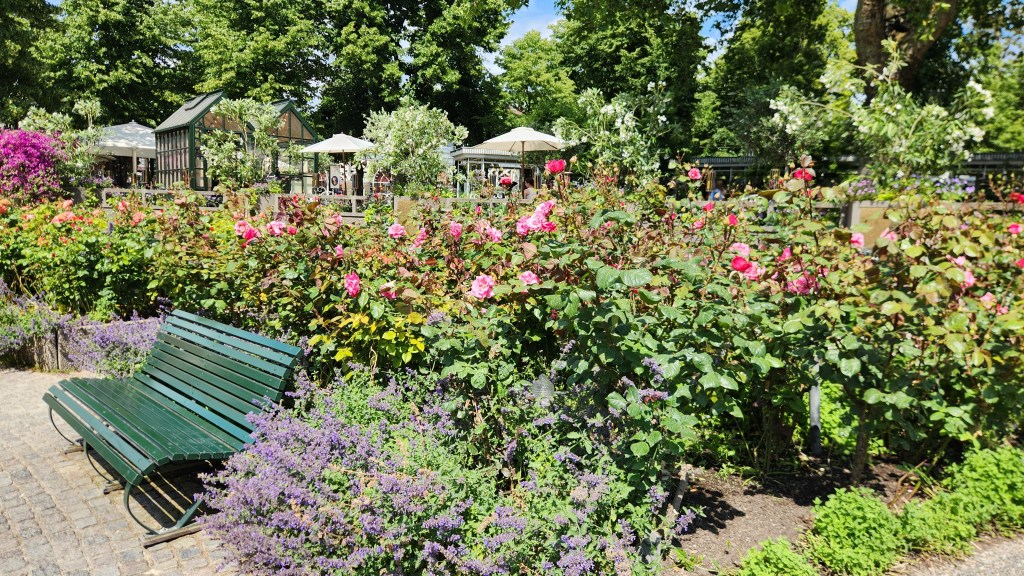
Riotous Gardens Abound at Tivoli
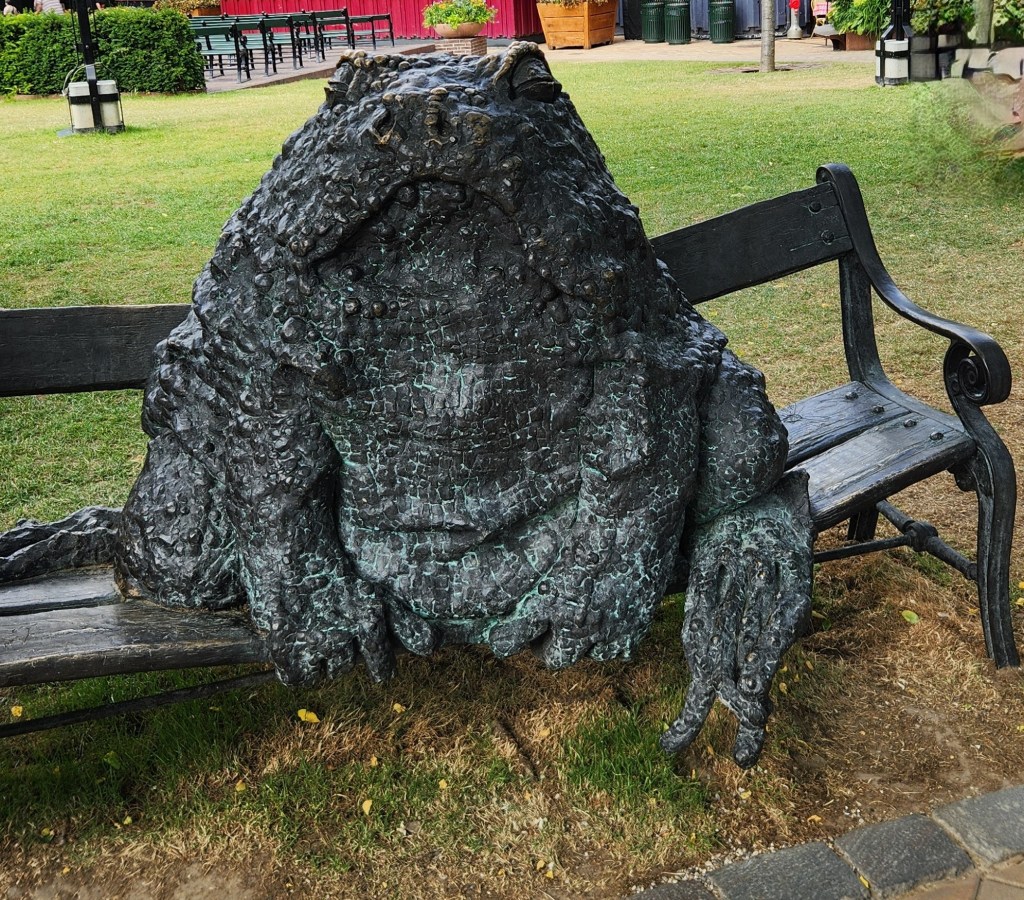
Too much cotton candy, perhaps?

The iconic rides include the Roller Coaster (1914), the Ferris Wheel (1943), the Classic Carousel (1900), and the Vintage Cars (1959). Eschewing those tame attractions, we instead boarded this high-speed trolley for a dramatic race through the park, or at least a senior citizens version of that:
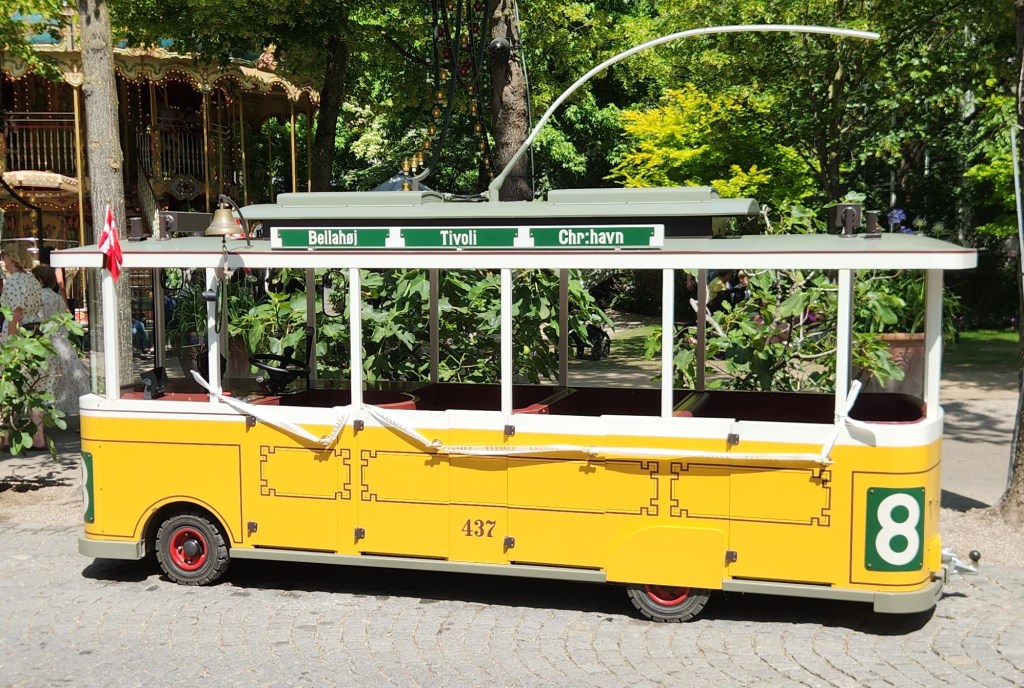
The Ultrafast Tivoli Trolley

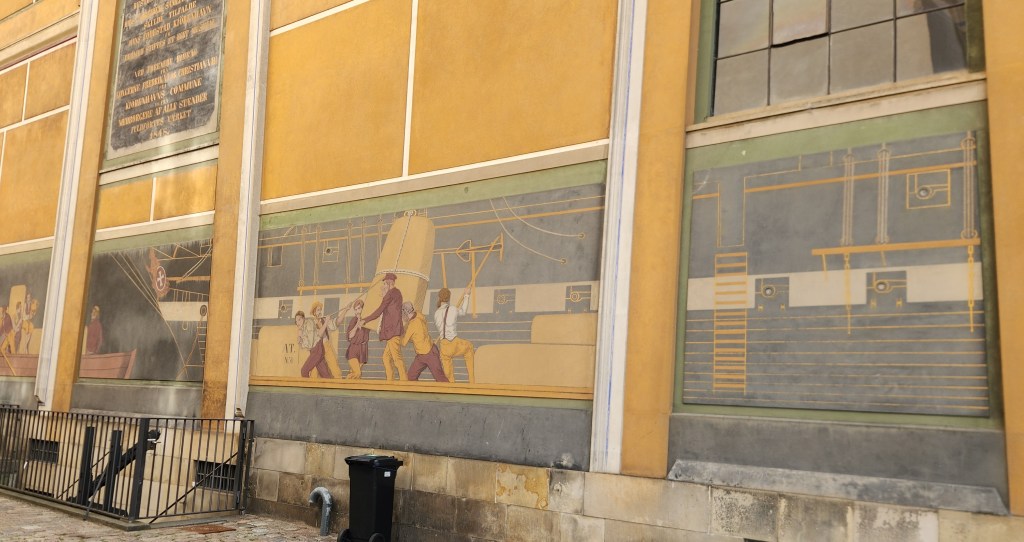
After leaving Tivoli, I snapped pictures of some impressive buildings along the Gammel Strand waterfront and the exterior murals of the Thorvaldsen Museum.
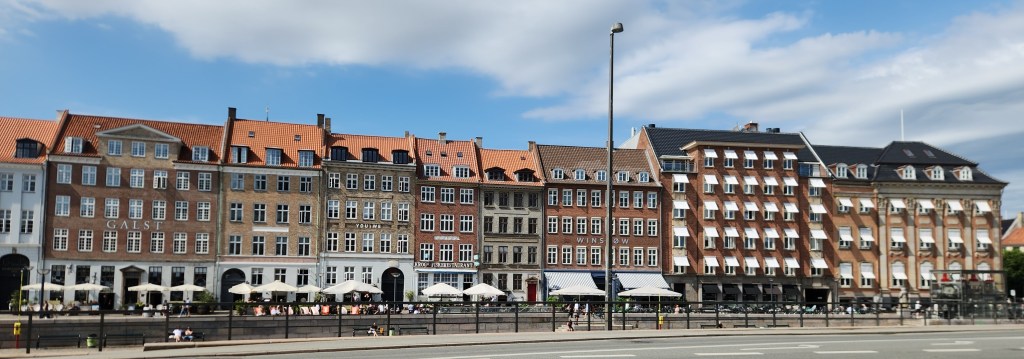
Buildings along Gammel Strand Waterfront
Mural at Thorvaldson Museum

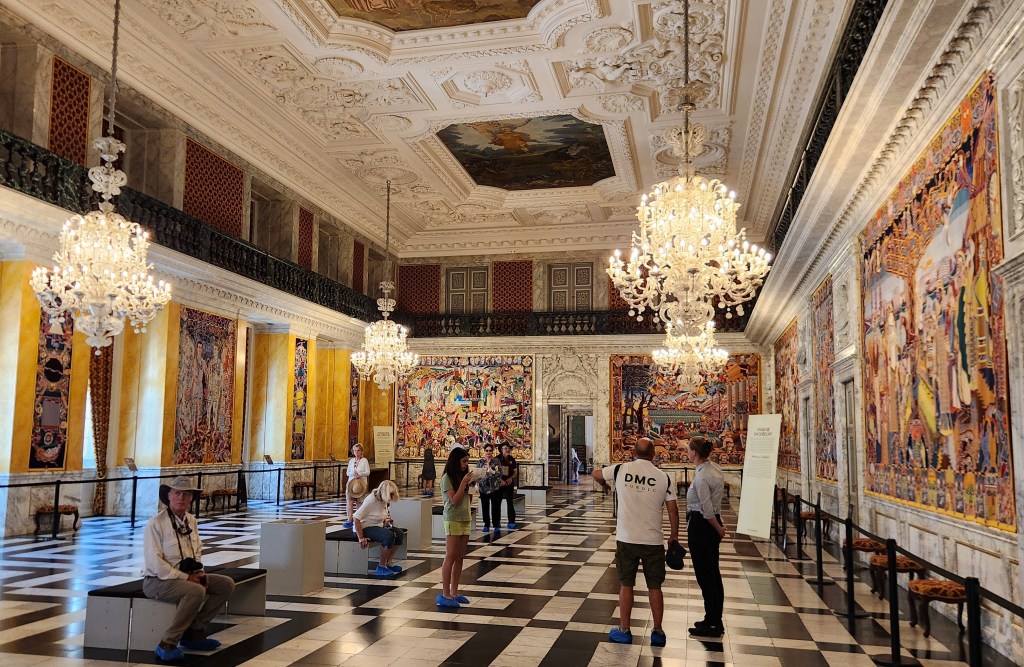
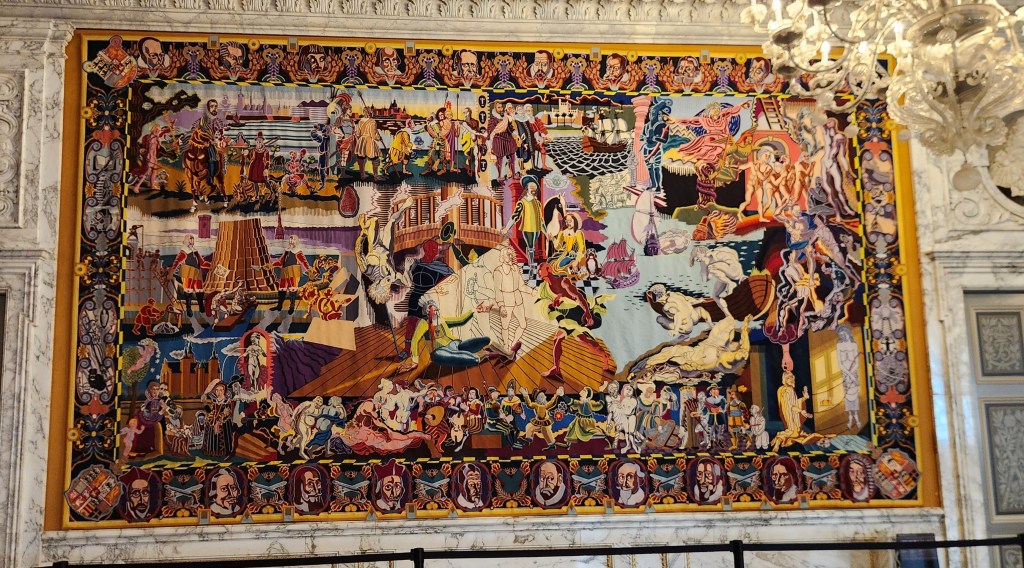
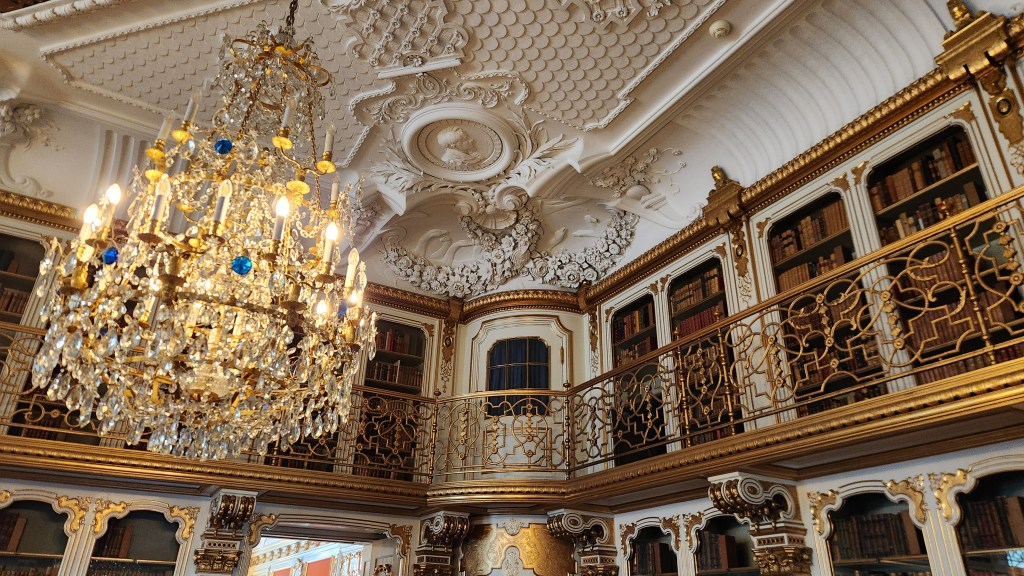
At the Christiansborg palace, we donned special booties to protect the impressive wood flooring before passing through dozens of magnificent rooms used for grand state dinners hosted by the King and Queen, including an entire room filled with tapestries that tell more than 1,000 years of royal history.
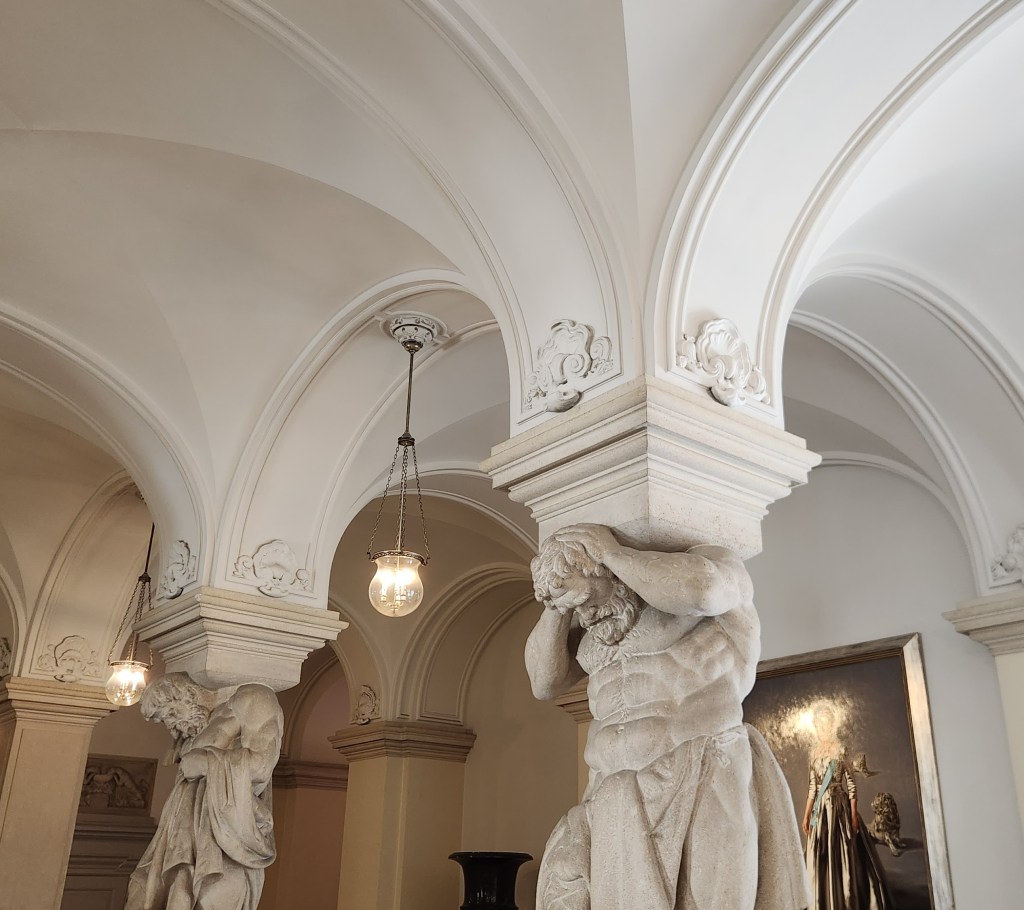
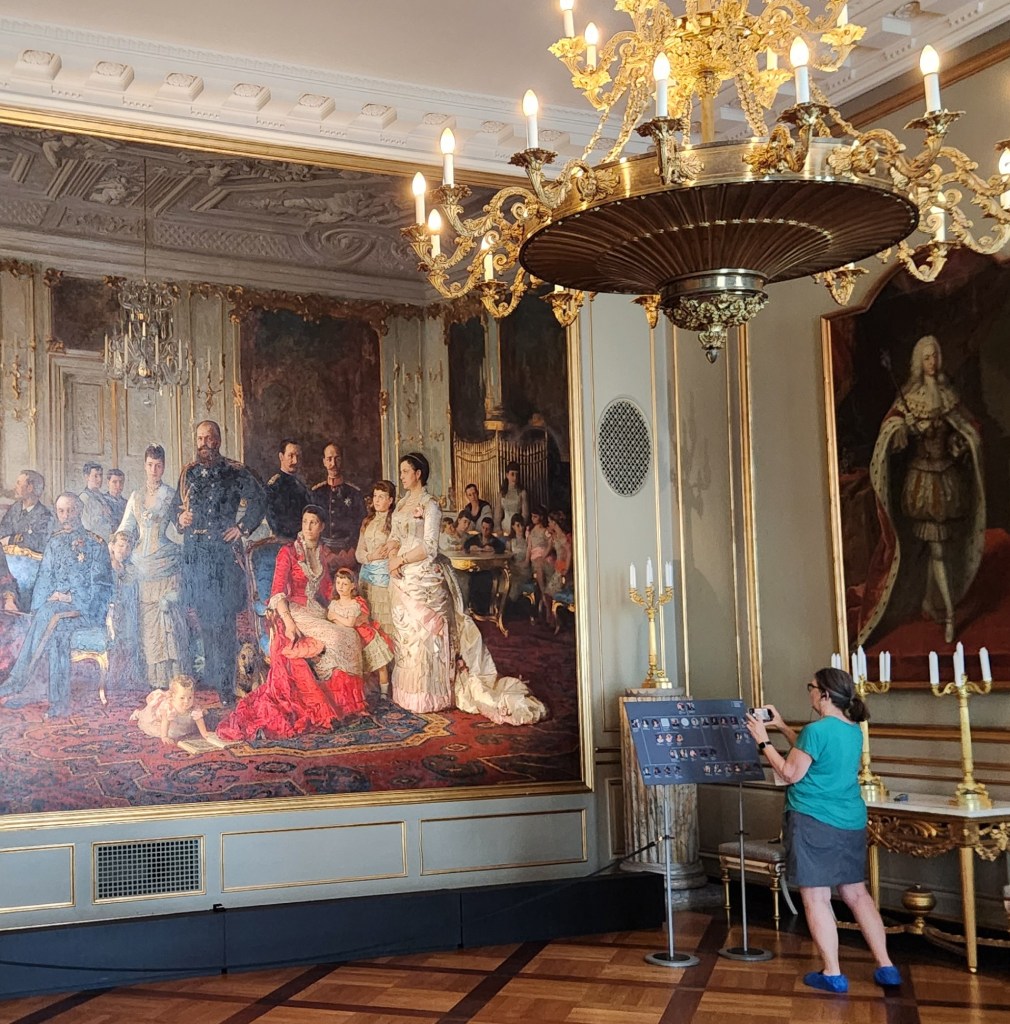
The Entry Foyer at Christianborg Palace
Pat in her protective booties, enjoying the artwork
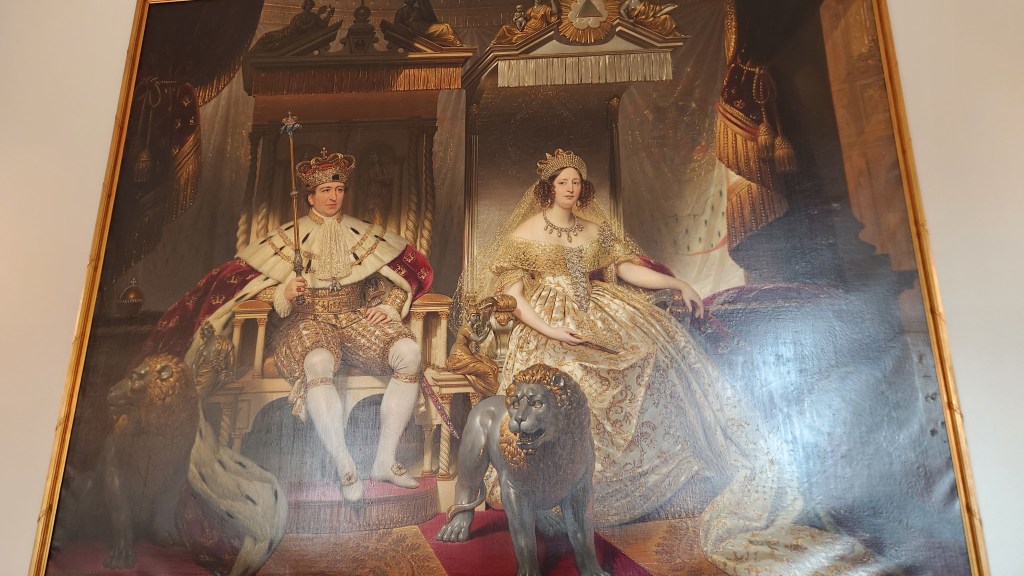
Royal Portrait at the Palace
Tapestry Room at the Palace
One of the Tapestries
One of the many Grand Rooms at the Palace

Finally, on our way back to the ship before setting sail for Germany, I took this photo of the colorful 17th and 18th-century townhouses lining the Nyhavn waterfront:
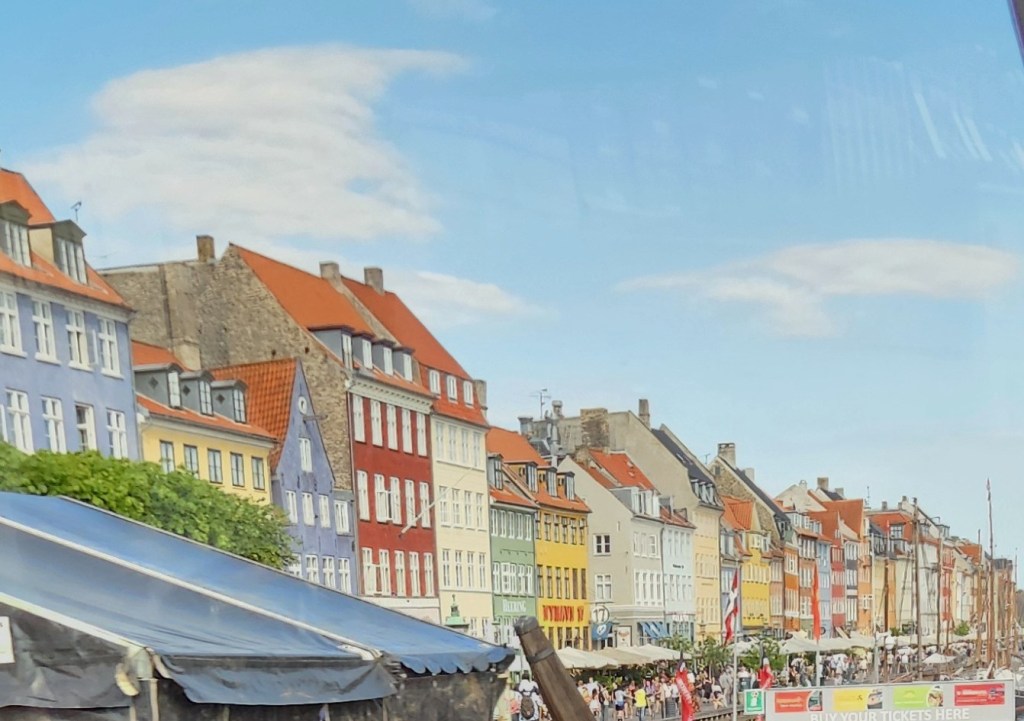
Townhouses Lining the Nyhavn Waterfront

Warnemunde and Berlin, Germany (Thursday, June 25, 2026): The ship docked in the Warnemunde harbor at 6 AM, and after breakfast we left for an all-day visit to Berlin, Germany’s capital city. After a short walk to the nearby railroad station, we boarded a train that took us to the center of Berlin. I didn’t get any pictures of the Warnemunde harbor, and the ones I took from the train on the way to Berlin and back are uselessly blurry, so the description below is focused solely on Berlin.

The first part of the tour was a motorcoach and walking tour during which we saw many reminders of the legacy of the Berlin Wall. I didn’t get many useful pictures due to the heavy traffic and preponderance of construction cranes, but I can tell you that the city was bustling with activity.

Here’s a picture taken in the Alexanderplatz, a large public square and transport hub in the central Mitte district of Berlin (formerly in East Berlin), showing the 1100-ft tall Berlin TV Tower, built in the 1960s, and St. Mary’s Church (Marienkirche), one of the oldest churches in Berlin.
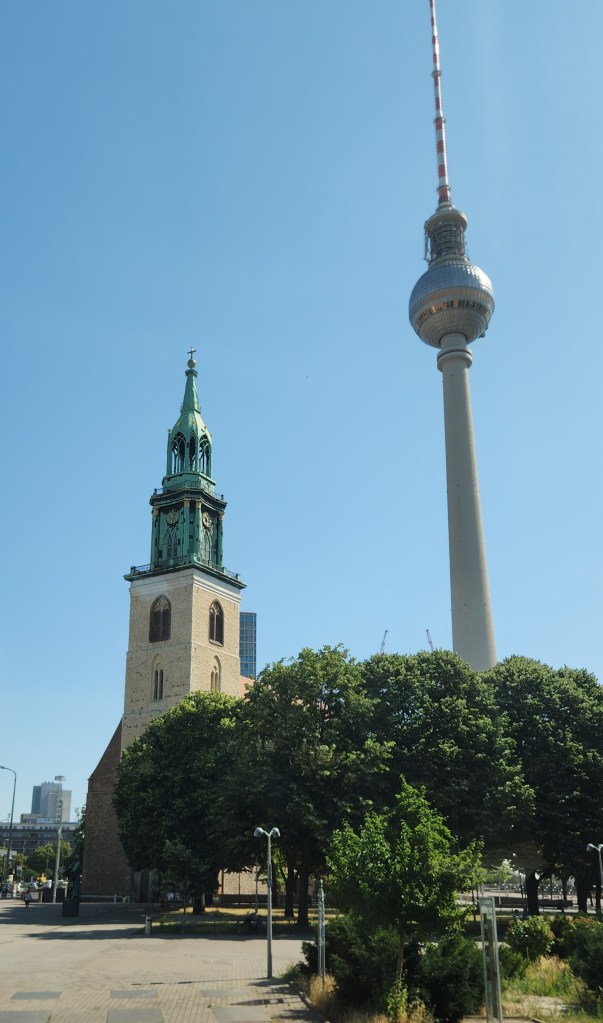
Berlin TV Tower and St. Mary’s Church

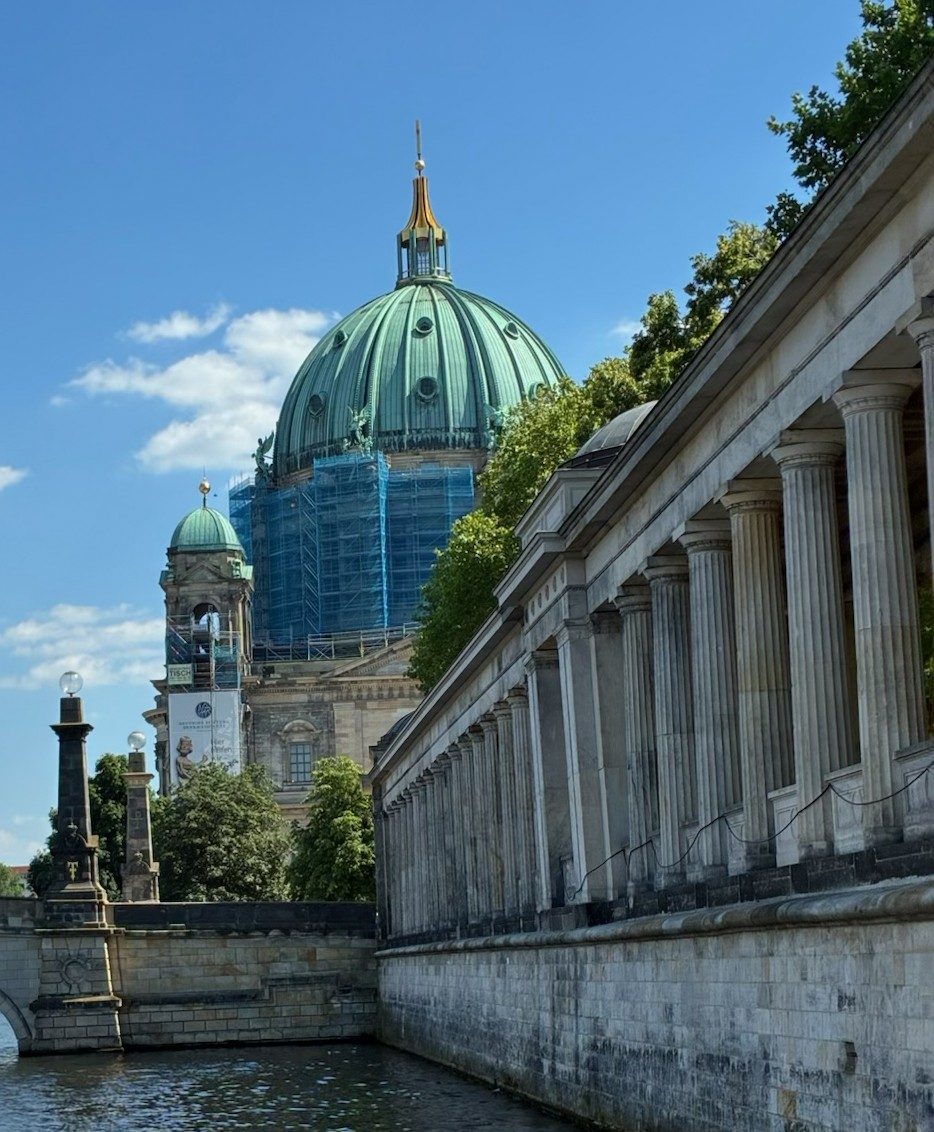
Here is the Berlin Cathedral (Berliner Dom) completed in 1905, the largest Protestant church in the country and known for its massive 320-ft dome. The cathedral is located on Museum Island, a UNESCO World Heritage site.
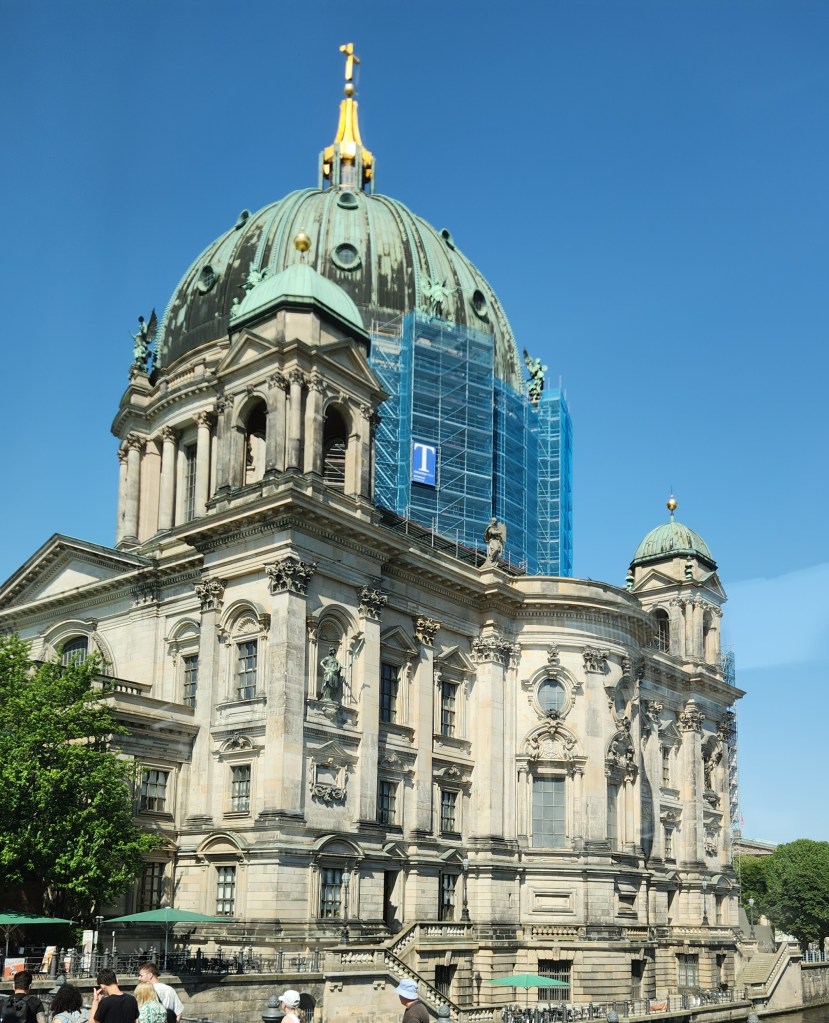
Berlin Cathedral

This is the Berlin State Opera (Staatsoper Unter den Linden), a historic opera house located on the Unter den Linden boulevard. Originally built in the 18th century by order of Frederick the Great, it is considered the oldest state opera in the world. The building was reconstructed in 1951 and 1955 after it was heavily damaged during World War II.
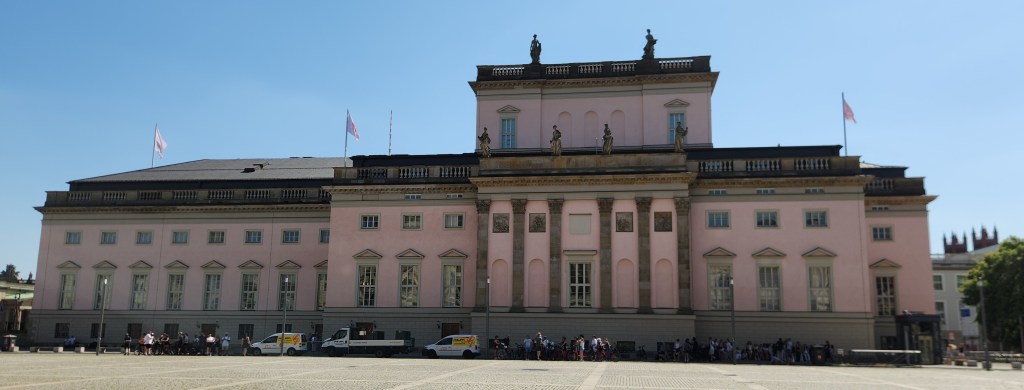
Berlin State Opera

The photo below shows St. Hedwig’s Cathedral with its prominent green dome and the Hotel de Rome, formerly a bank headquarters, located directly on the Bebelplatz square.
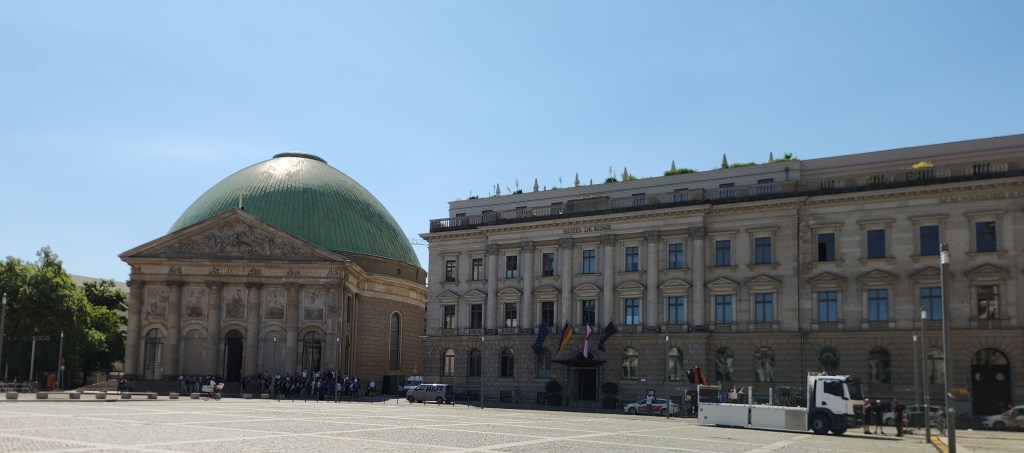
St. Hedwig’s Cathedral and Hotel de Rome

Next is the Old Library building in Berlin, also on the Bebelplatz square, which currently serves as the Faculty of Law for the Humboldt University. Humboldt University was established in 1809 and is recognized as one of Berlin’s oldest universities. It is historically renowned for its contributions to the natural sciences and has been associated with 55 Nobel Prize laureates. The library and the square are notable for being the site of the notorious 1933 Nazi book burning. A memorial now sits beneath the square consisting of empty bookshelves visible through a plexiglass covering to remind visitors of the vile act of the book burning. (My photos of the memorial did not turn out due to the lighting conditions, so I borrowed a photo from Wikipedia.)
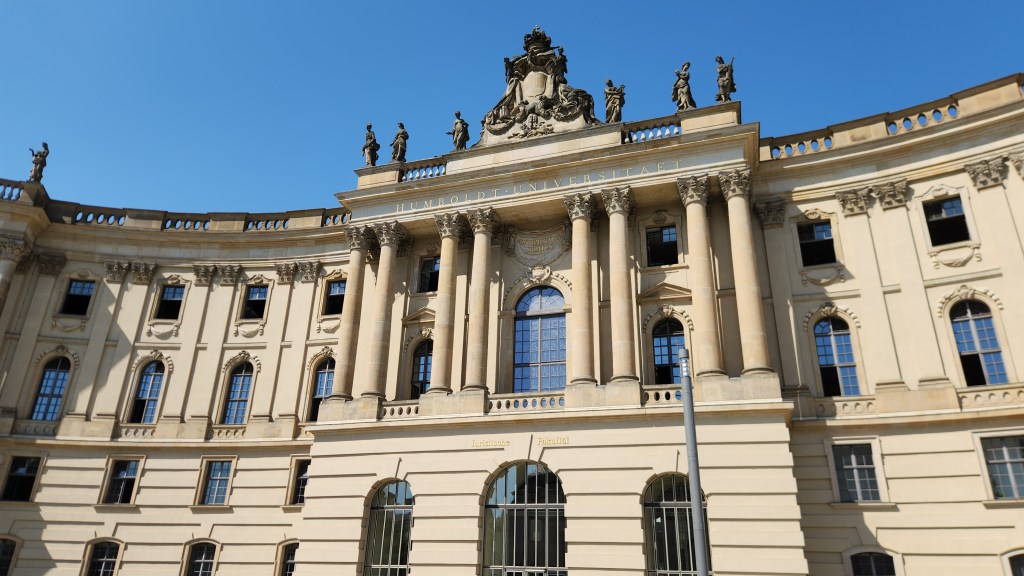
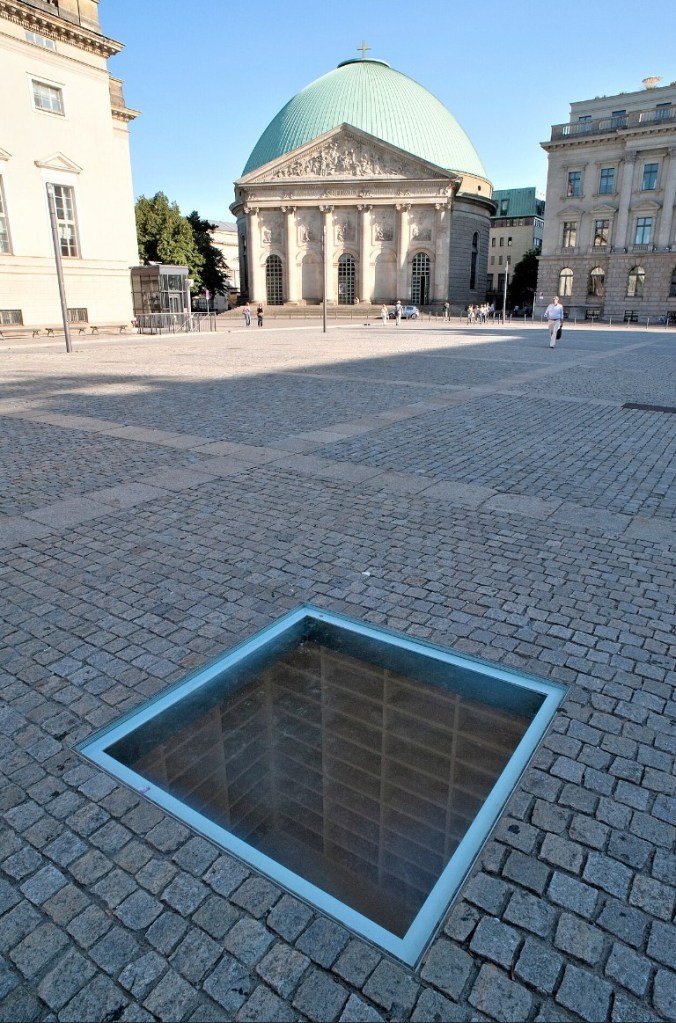
Old Library where Nazis confiscated the books to be burned (now part of Humboldt University)
The “Missing Library” Memorial in the Bebelplatz Square (courtesy Wikipedia)

Some of the most interesting sites we saw were directly related to the Berlin Wall, especially Checkpoint Charlie, the only entrance point from the American sector of West Berlin into East Berlin.
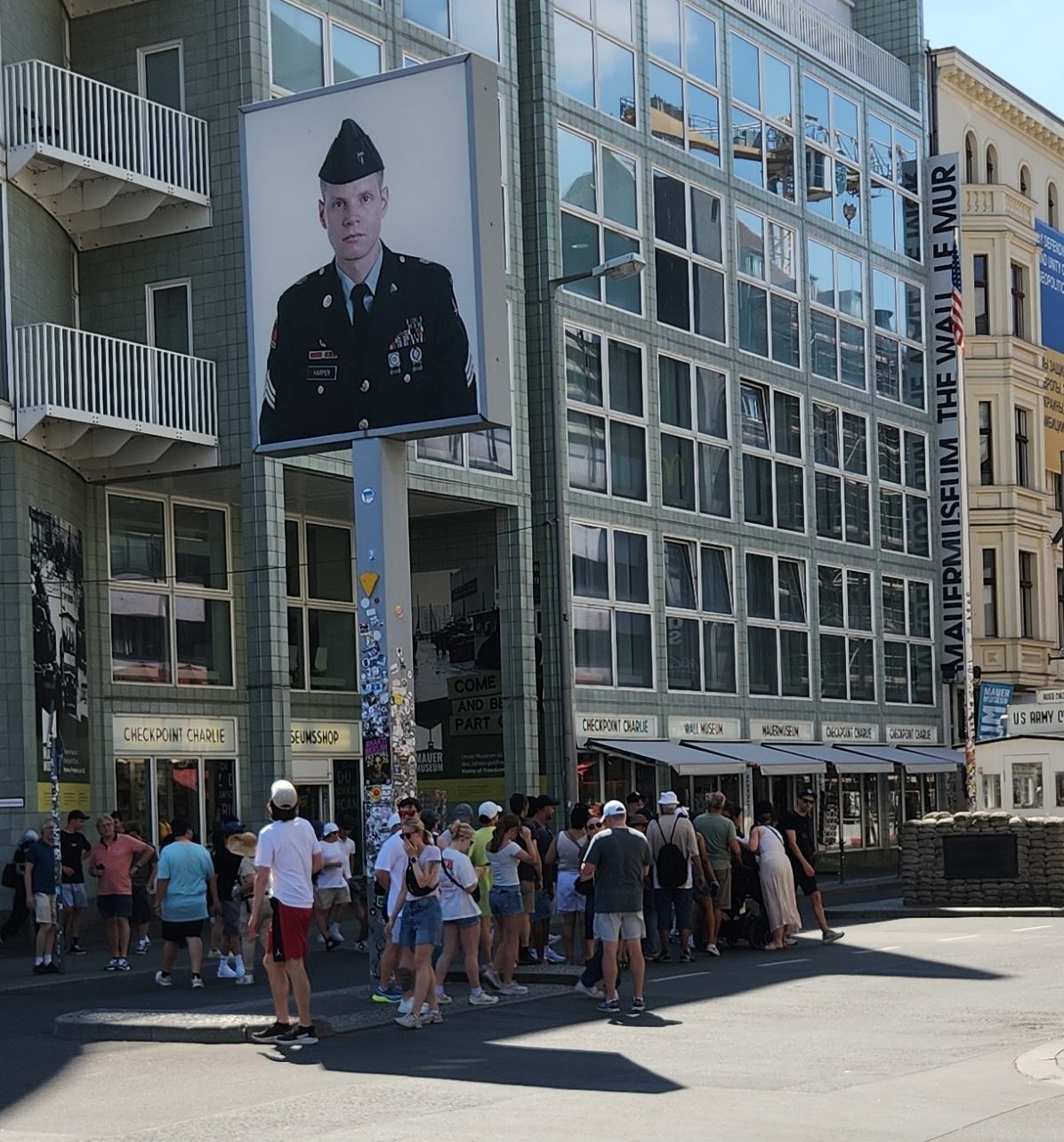
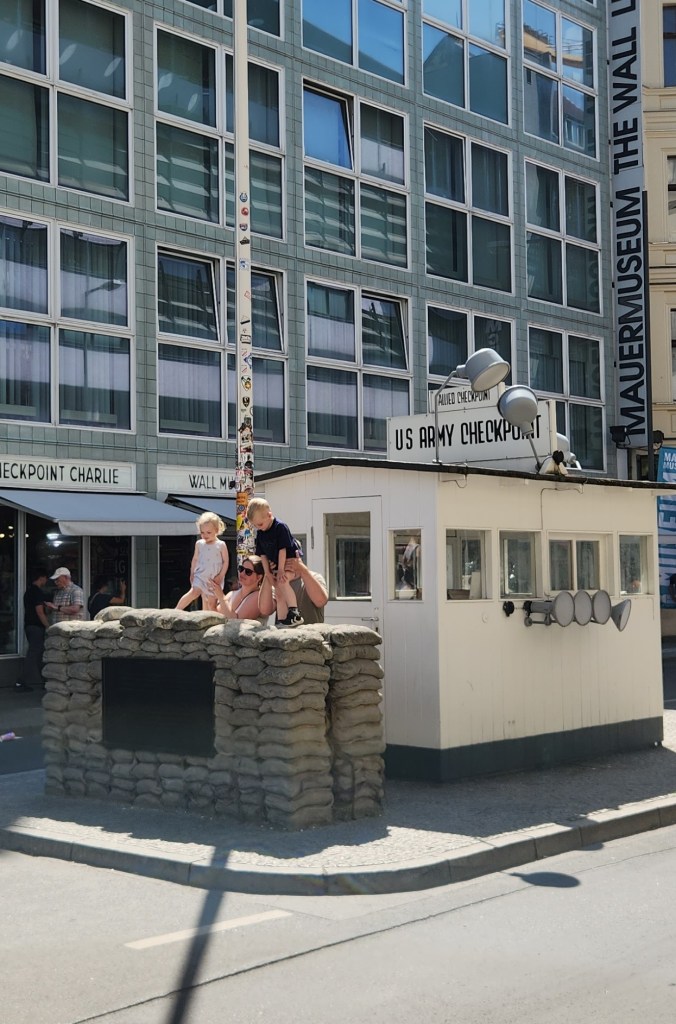
Tourists Gathering at Checkpoint Charlie
Checkpoint Charlie

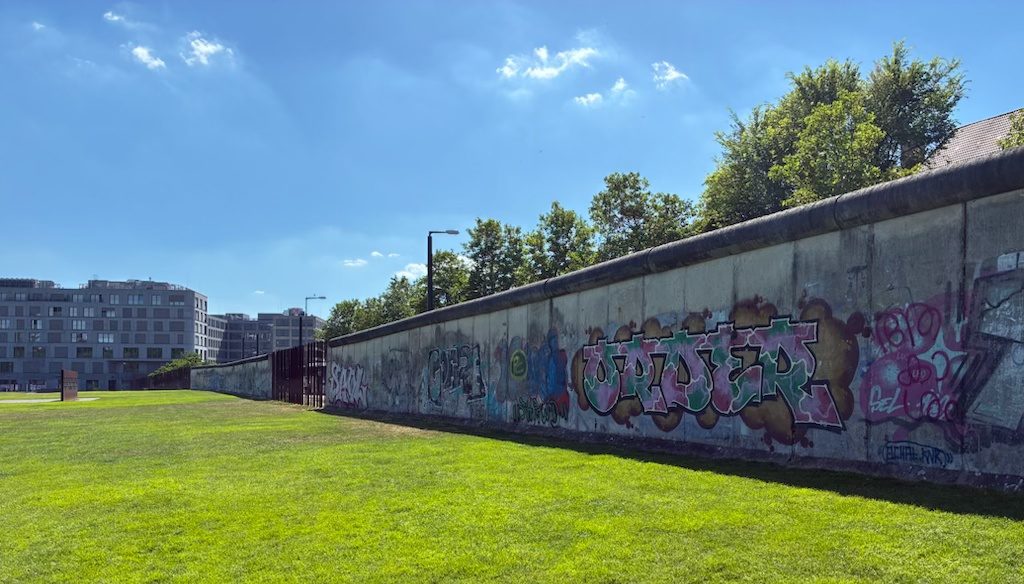
The infamous wall was torn down on November 9, 1989, following a major political blunder by an East German official who announced that citizens were free to travel to the West immediately. This historic mistake caused massive crowds to gather at the checkpoints, ultimately forcing guards to open the borders. The sudden fall of the wall that night marked the collapse of East Germany and paved the way for German reunification, which was officially finalized on October 3, 1990. Since that time, the former East Berlin has been changed by massive public works, infrastructure renewal, and social welfare integration by the German government. However, the former existence of the wall has been commemorated by various markers and lines that mark its entire length. One section of the old wall has also been preserved as part of an open-air museum.
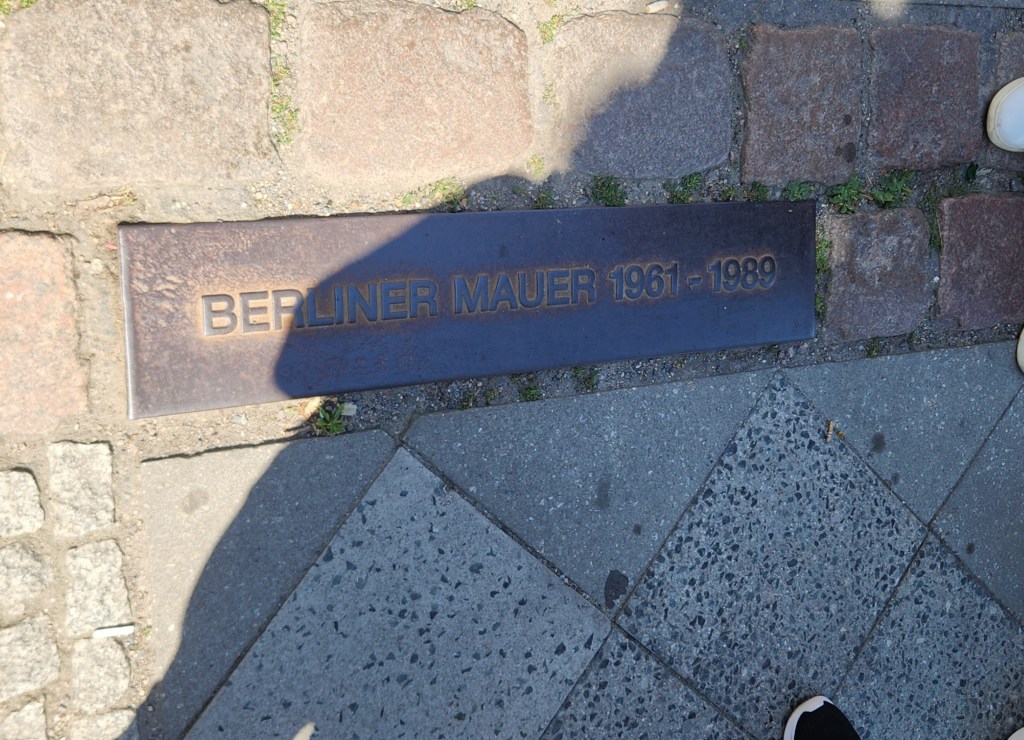
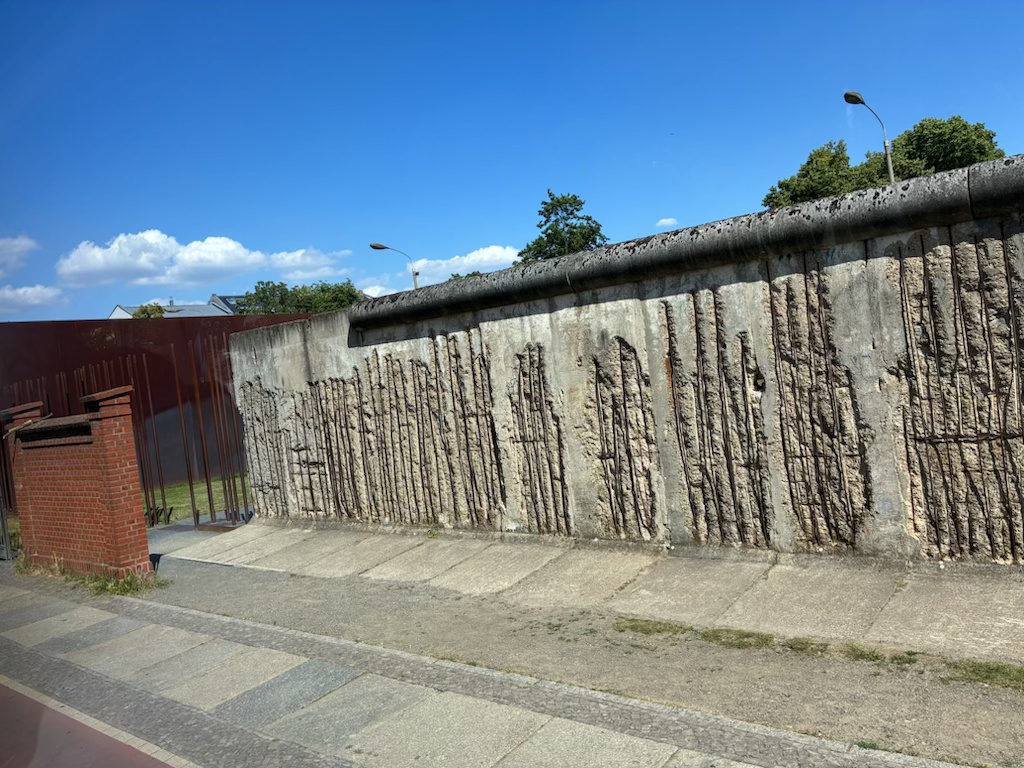
Line Marking Position of the Berlin Wall
Remaining Remnant of Berlin Wall, as viewed from East Berlin …
… and from West Berlin

The Berlin Victory Column, featuring the golden statue of Victoria, the Roman goddess of victory, is located in the Tiergarten park. It was designed in 1864 to commemorate the Prussian victory over Denmark. Berliners often call the winged statue Goldelse, which translates to “Golden Lizzy.” The entire structure stands approximately 220 feet tall.
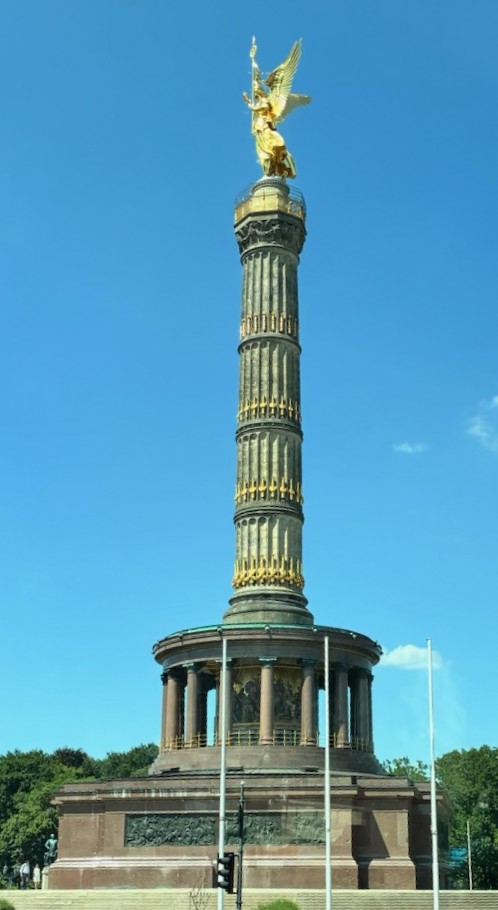
Berlin Victory Column

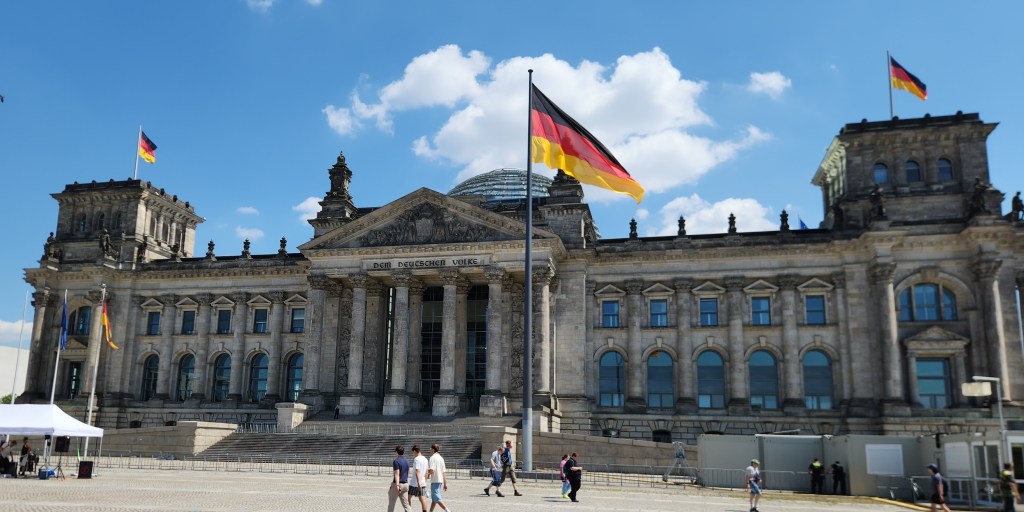
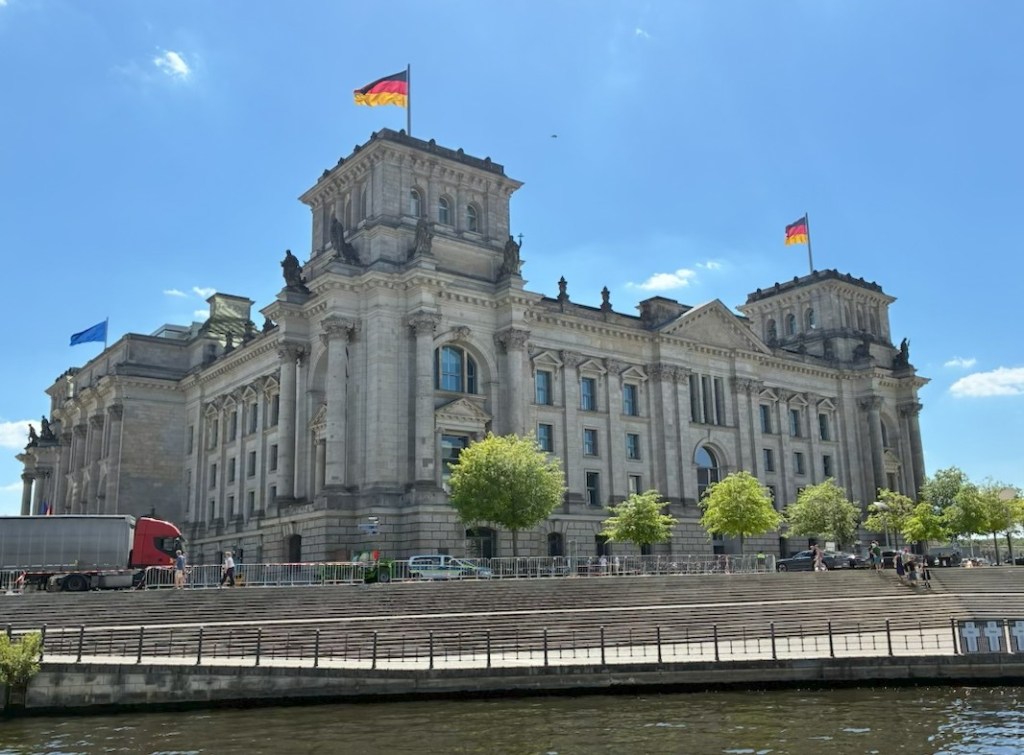
Another iconic site we visited is the Brandenburg Gate, a major site for major historical events. It was built from 1788 to 1791 by orders of King Frederick William II of Prussia. After World War II and during the Cold War, the Berlin Wall obstructed the gateway, and thus was a marker of the city’s division. Since German reunification in 1990, it has been considered not only a symbol of the tumultuous histories of Germany and Europe, but also of European unity and peace. Between the Brandenburg Gate and the Tiergarten stands the Reichstag. The Neo-Renaissance building was completed in 1894 and served as the seat of the German parliament until 1933 when the Nazis set fire to it and blamed the communists as a ruse for Hitler’s rise to power. The unused building was further damaged during World War II and became a museum during East German rule. After reunification, it was restored as the seat of parliament and has since become one of Berlin’s most prominent tourist attractions, drawing hundreds of thousands of visitors each year.
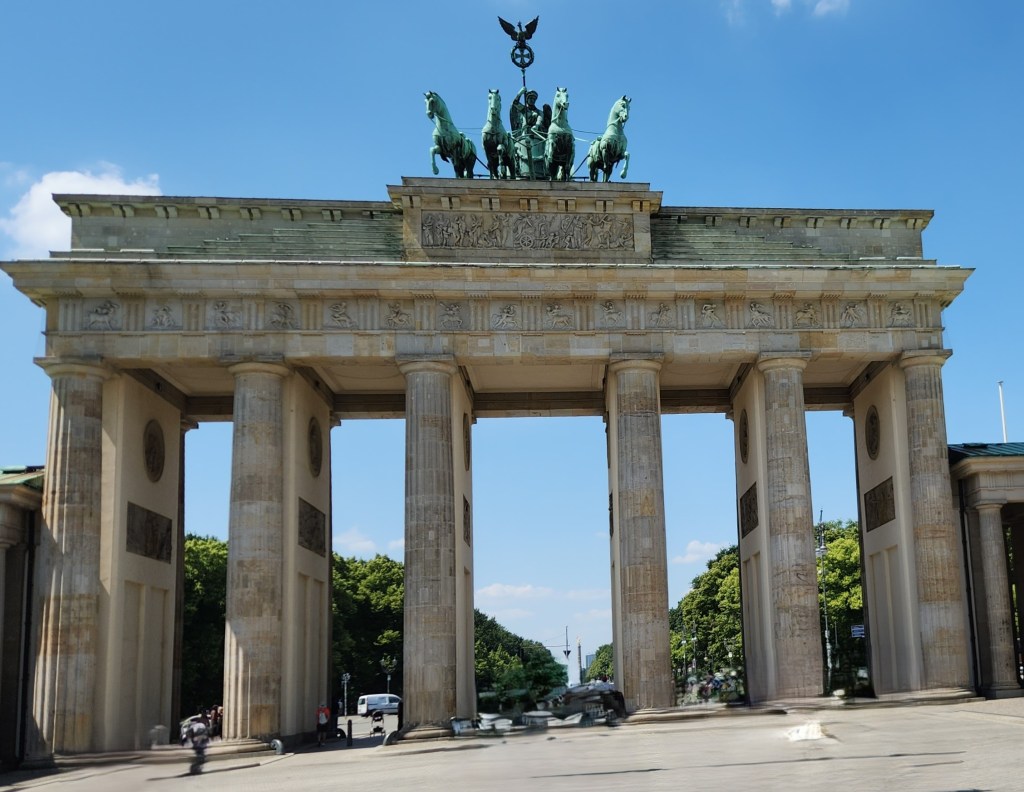
The Brandenburg Gate
The Reichstag

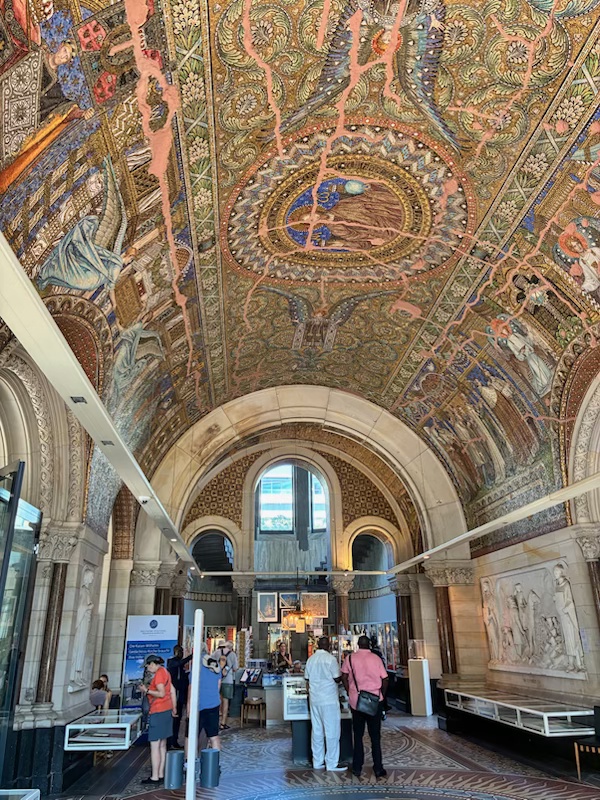
The tour included lunch at a Berlin restaurant followed by some free time, during which we visited the Kaiser Wilhelm Memorial Church, which features a striking ruined spire preserved from a 1943 bombing raid and never repaired so the world would never forget. The original Neo-Romantic style church was constructed between 1891 and 1895. A modern church, completed in 1961, stands beside the historical remains.
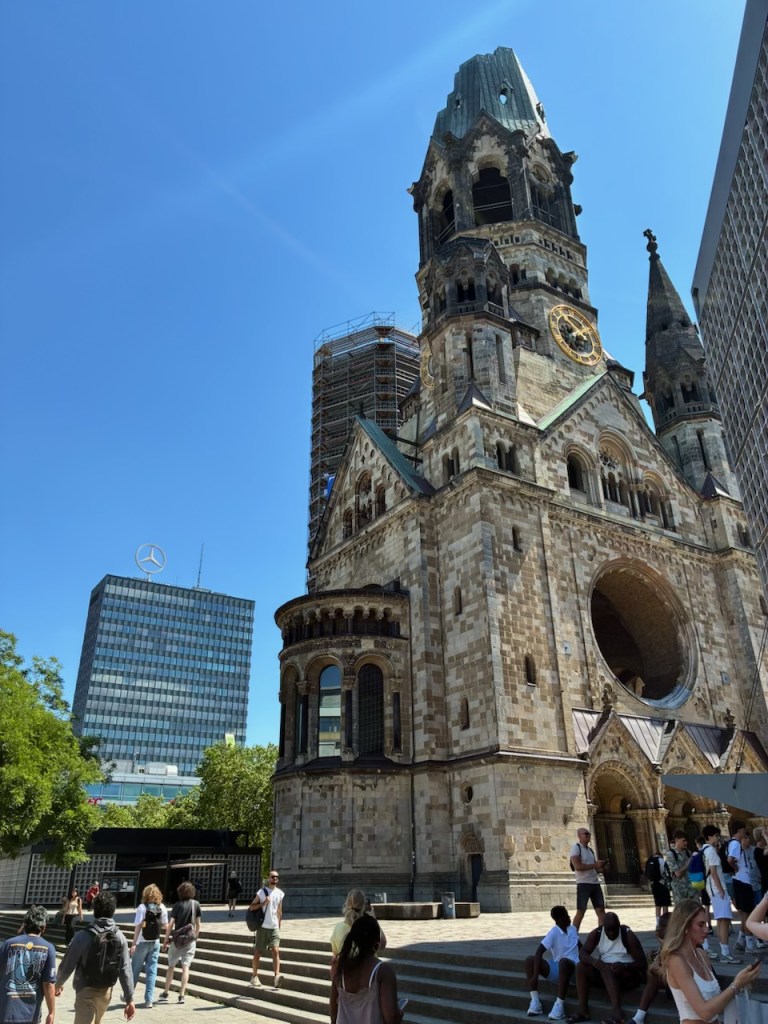
Kaiser Wilhelm Memorial Church
Kaiser Wilhelm Memorial Church Interior
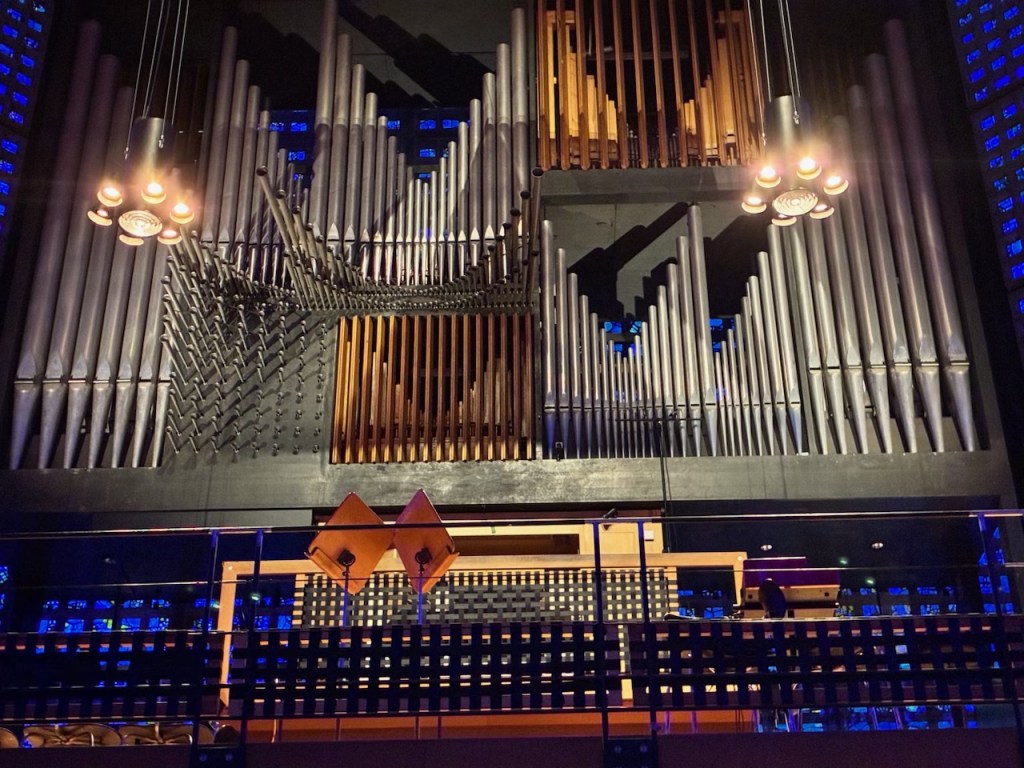
Organ in Modern Church

The last part of the tour was a cruise along the Spree River, drifting past the Berlin Cathedral, Museum Island, the Reichstag and the striking architecture of the new government quarter. It was interesting to observe many of these sights from the different perspective of the river.
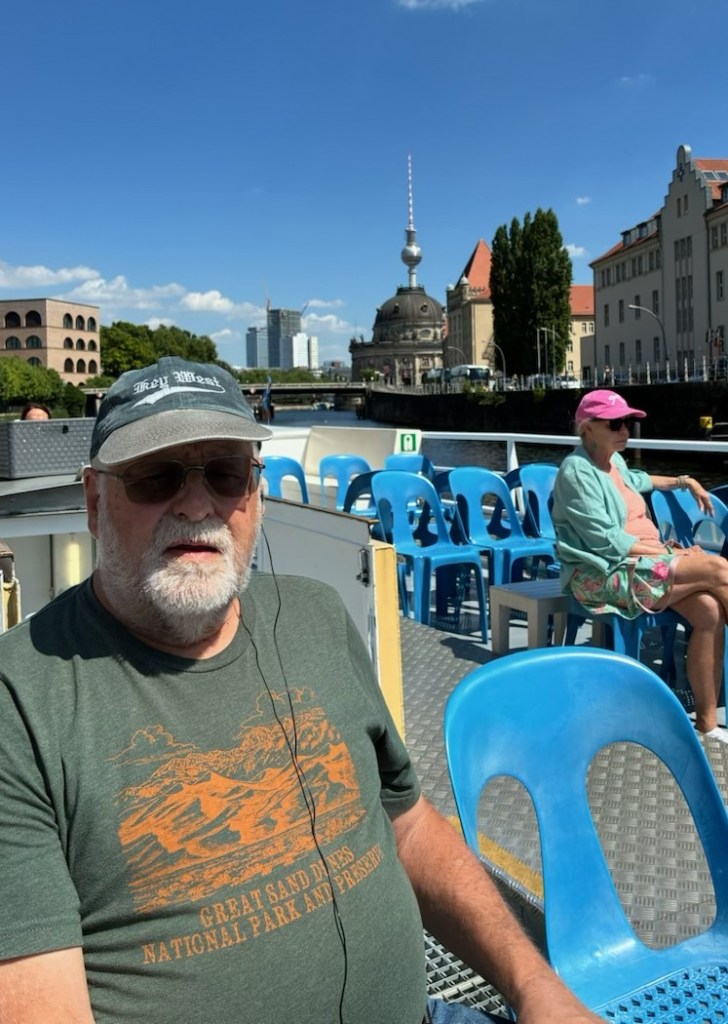
On the Spree River Cruise Boat
The Reichstag viewed from the River Spree
The Berlin Cathedral viewed from the River Spree

After the river cruise, we took the train back to our ship anchored in Warnemunde harbor. I’ll add a couple of final notes from the Berlin tour before moving on to our next destination.

Perhaps the most sobering site we saw in Berlin was the Memorial to the Murdered Jews of Europe, designed by architect Peter Eisenman. It covers 4.7 acres and features 2,711 concrete slabs called stelae arranged in a grid pattern. The memorial was inaugurated in 2005, 60 years after the end of World War II in Europe. An attached underground “Place of Information” holds the names of approximately 3 million Jewish Holocaust victims.
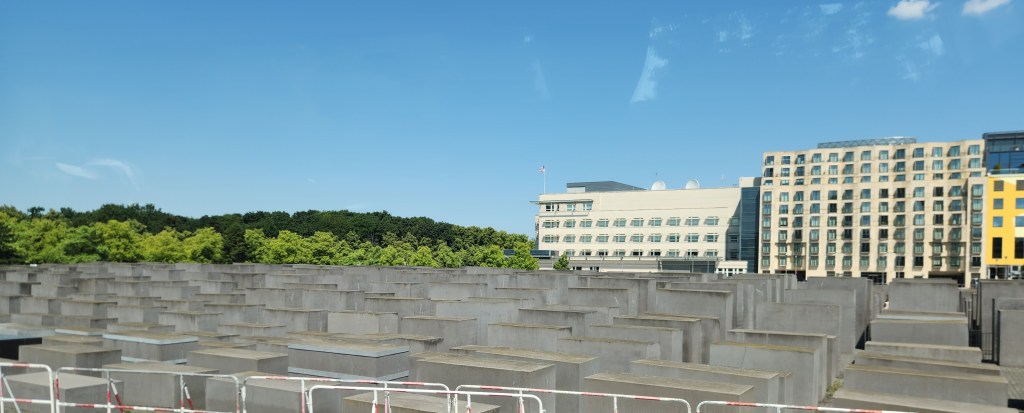
Memorial to the Murdered Jews of Europe

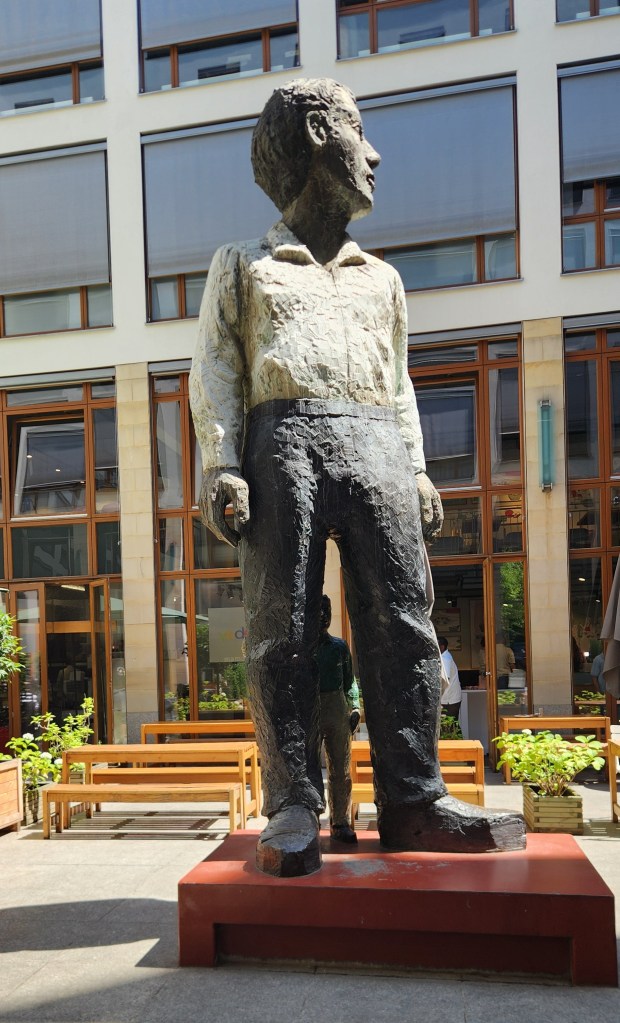
We also saw some more whimsical sites during our visit, including “TrabiWorld,” which commemorates the iconic yellow East German Trabant car and offers tourists the opportunity to drive one, and an interesting statue entitled “Big Man with Little Man.”
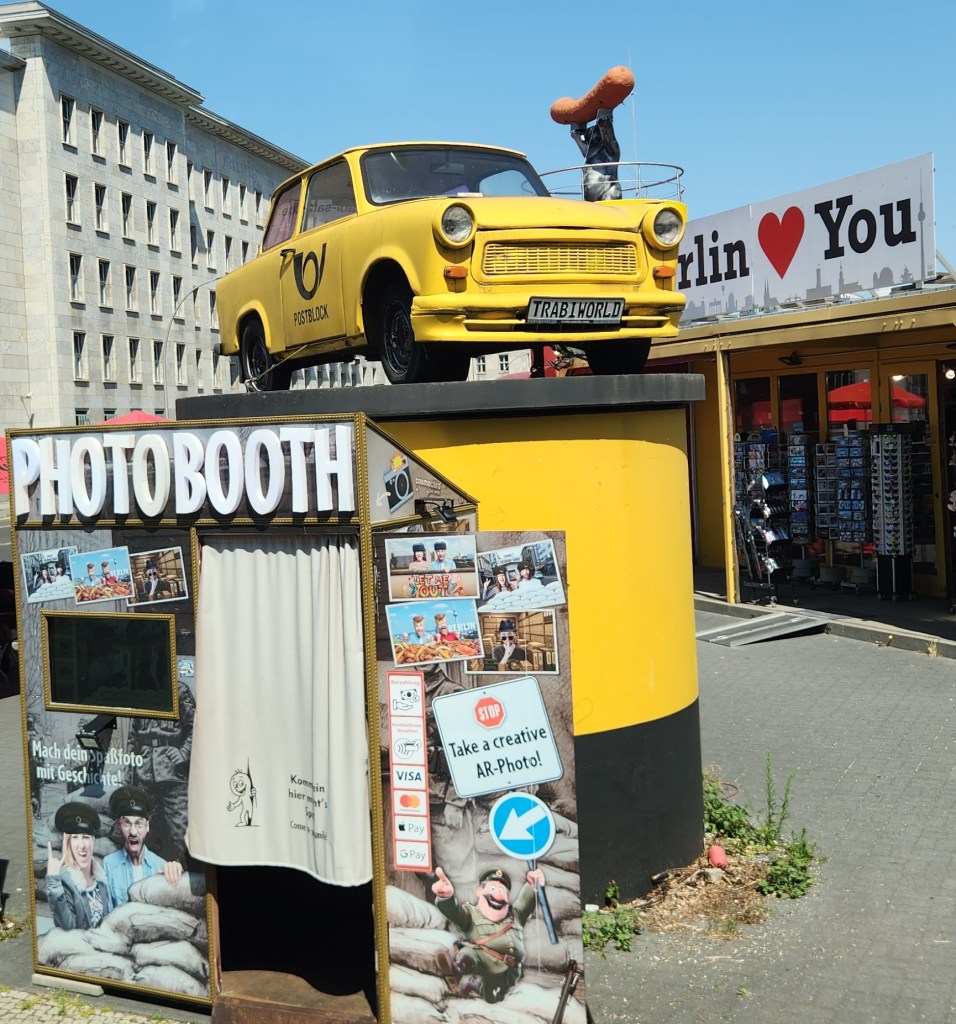
TrabiWorld
Big Man with Little Man

Bornholm, Denmark (Friday, June 26, 2026): Our ship docked in a lovely harbor on this Danish island in the town of Rønne at 8 AM. Our activity for the day was a motorcoach tour of the island where we observed the natural beauty and charming villages of the island. Bornholm is nicknamed Solskinsøen (Sunshine Island) and Klippeøen (Rock Island) for its weather and geology, respectively. The tour began as we passed through the lush green fields of the western coast and passed by Hammershus, the largest castle ruins in Northern Europe.
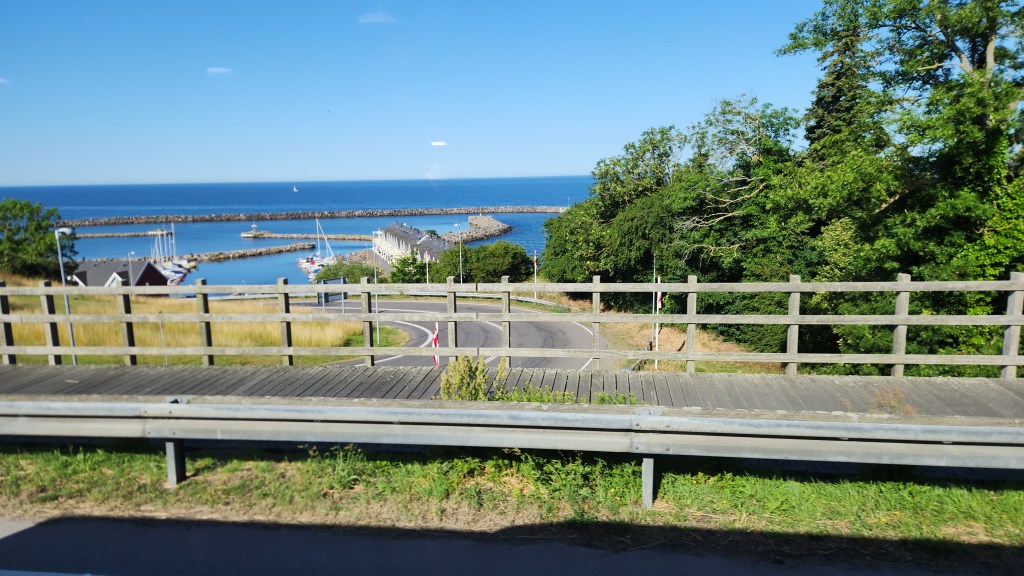
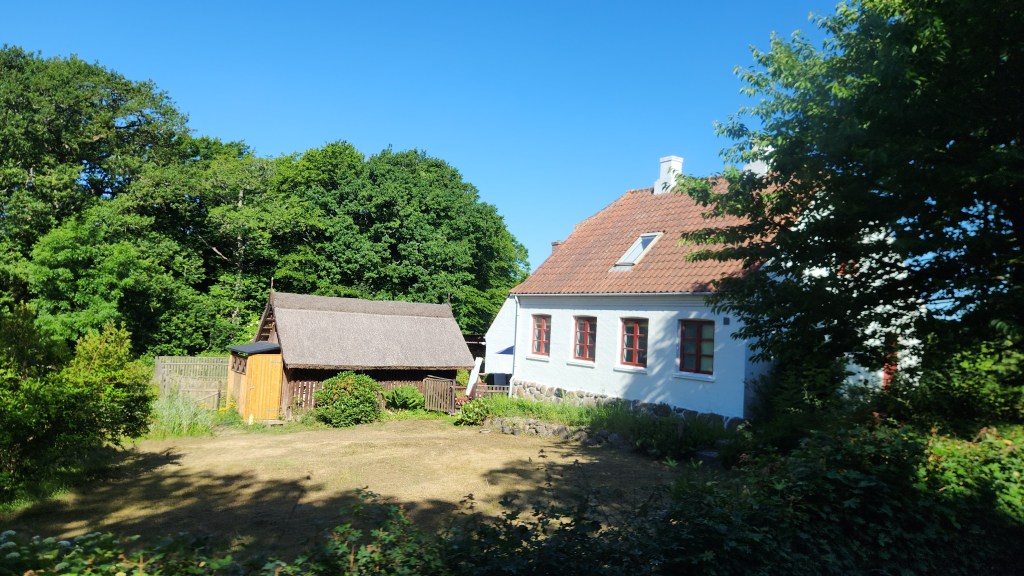
Leaving the Harbor in Rønne
Rural Home on Bornholm
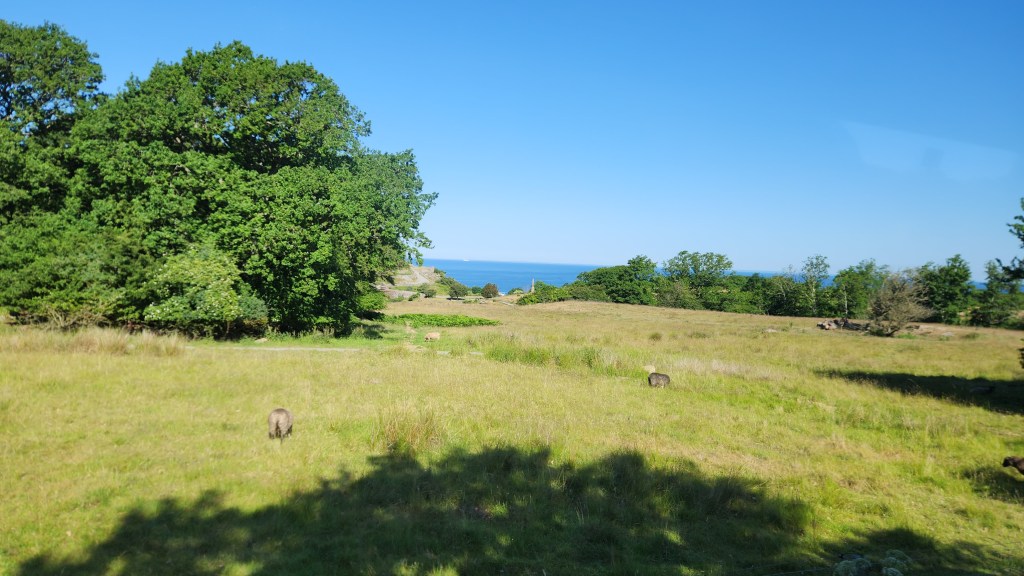
Bornholm Countryside
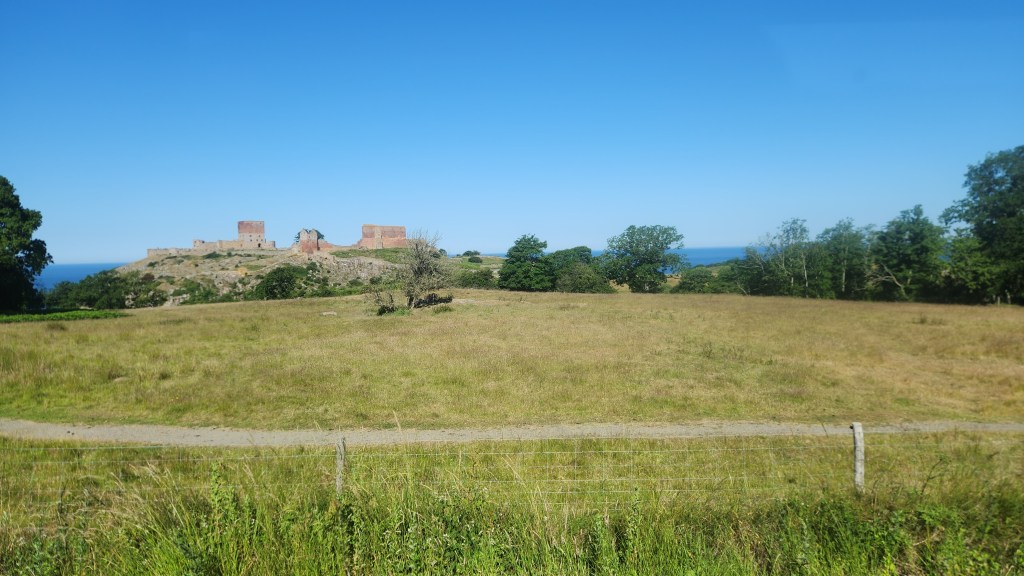
Hammershus Ruins

Hammershus dates back to the 13th century and is traditionally linked to the Archbishop of Lund, Jakob Erlandsen. The castle became a focal point in power struggles between the church and the Danish crown. After the destruction of Lilleborg in 1259, Hammershus rose in importance and became a key seat of authority on Bornholm. In 1522, the castle and the island were pledged to the Hanseatic city of Lübeck as debt security. During that period the fortress saw its last major expansion. Behind the strong ramparts were living quarters as well as a prison, chapel, kitchen, granaries, stables and even a brewery. One remarkable engineering feature is the system of two freshwater reservoirs built high above sea level. As artillery developed in the 17th century, the fortress gradually lost its military value and began to decay. In 1822, the ruins were declared a national monument, starting a long process of protection and conservation.

After the fortress, we continued along the island’s rugged northern side and passed through several small villages.
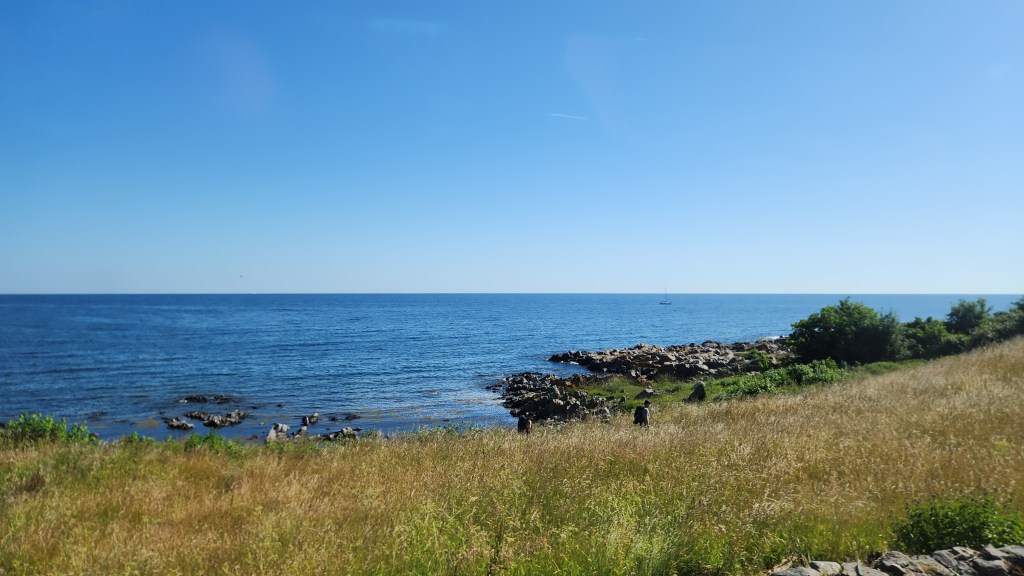
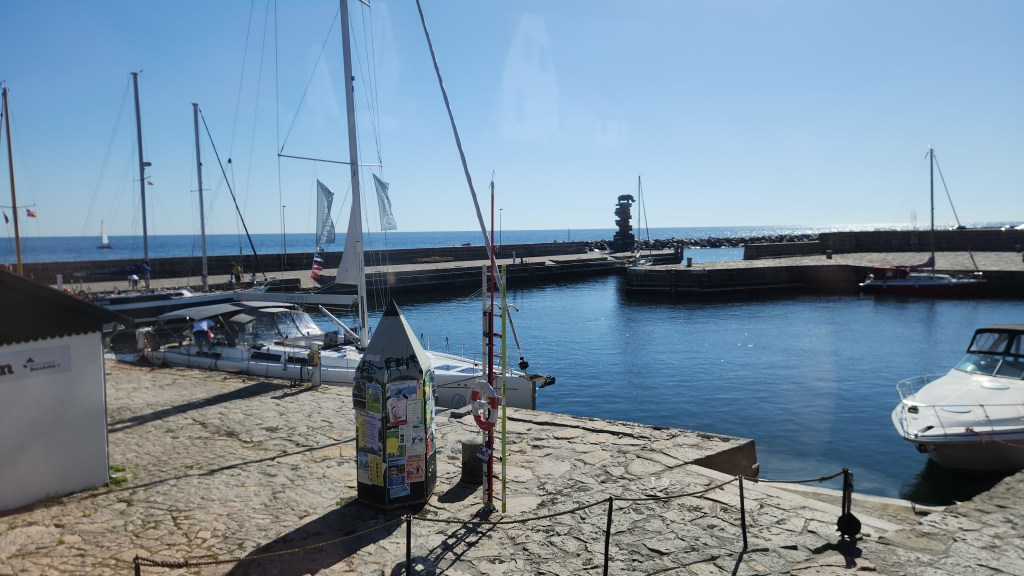
Bornholm Coast
Village on Bornholm
Borholm Coast

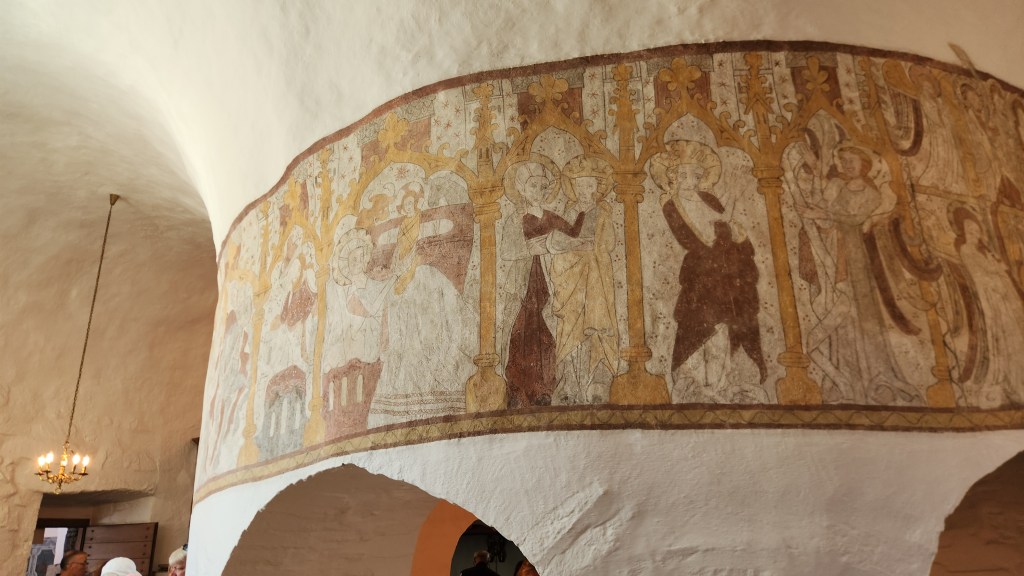
We then left the coastal road and visited one of the four round churches that can be found on Bornholm. These peculiar buildings were not just churches but also served as fortresses during times of conflict. The one we visited is the Østerlars Church, the largest and oldest of the four, constructed around 1160. The unique white, conical-roofed structure was historically designed with defensive features, including a top story used as a shooting gallery.
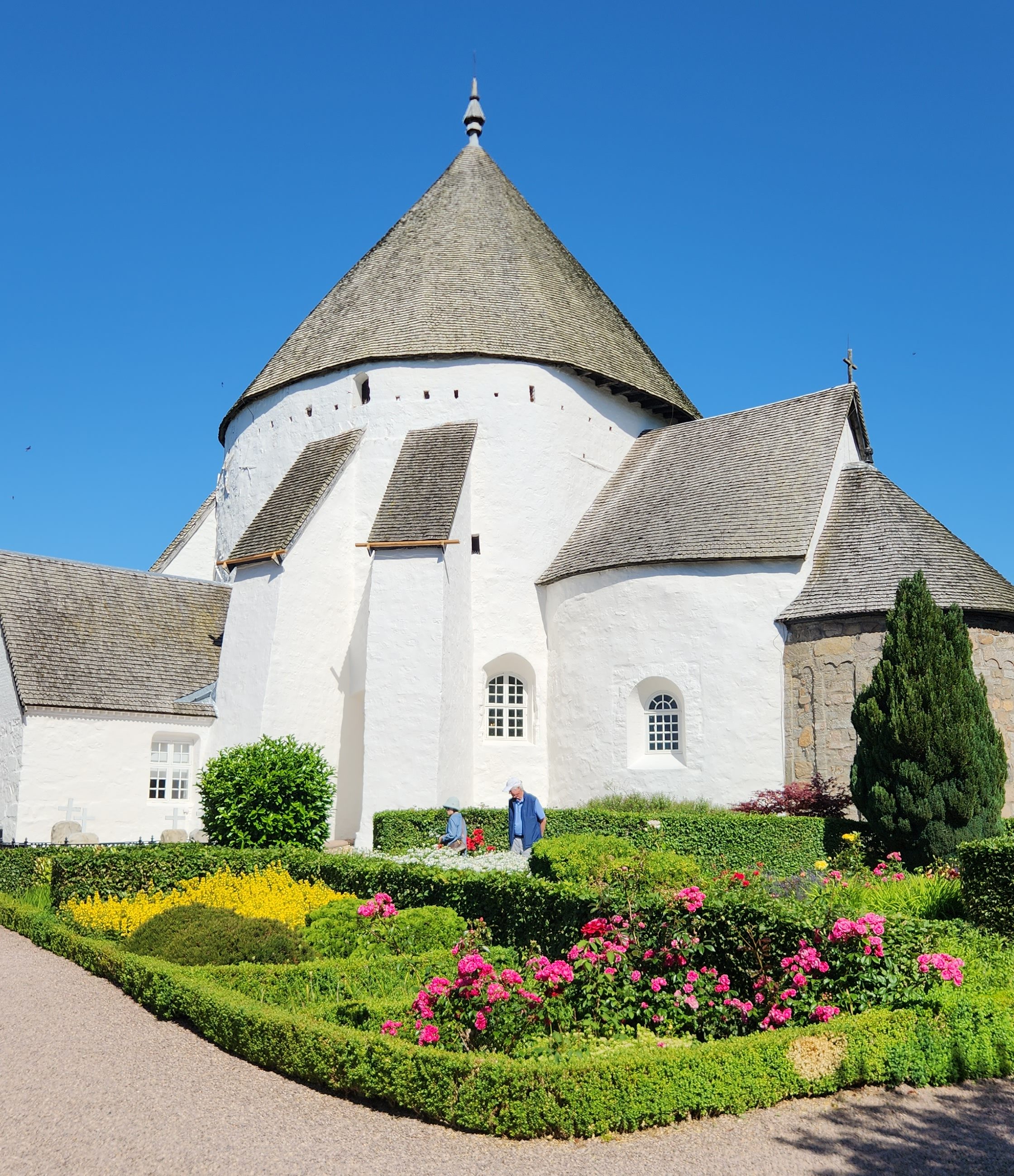
The Østerlars Church
Inside the Østerlars Church

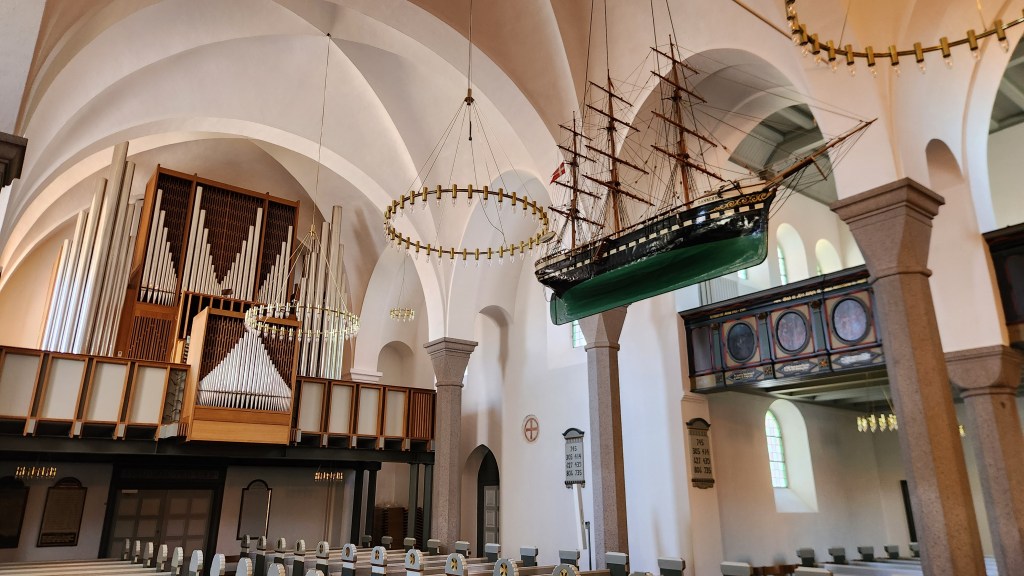
After the church visit, we traveled through the island’s interior back to the ship, then took a stroll through Rønne, where we visited St. Nicolai Church, which was originally built in the 1300s but has subsequently undergone additions and renovations over time.  A distinctive feature is the ship model hanging from the ceiling, reflecting a long-standing maritime tradition in Baltic churches.
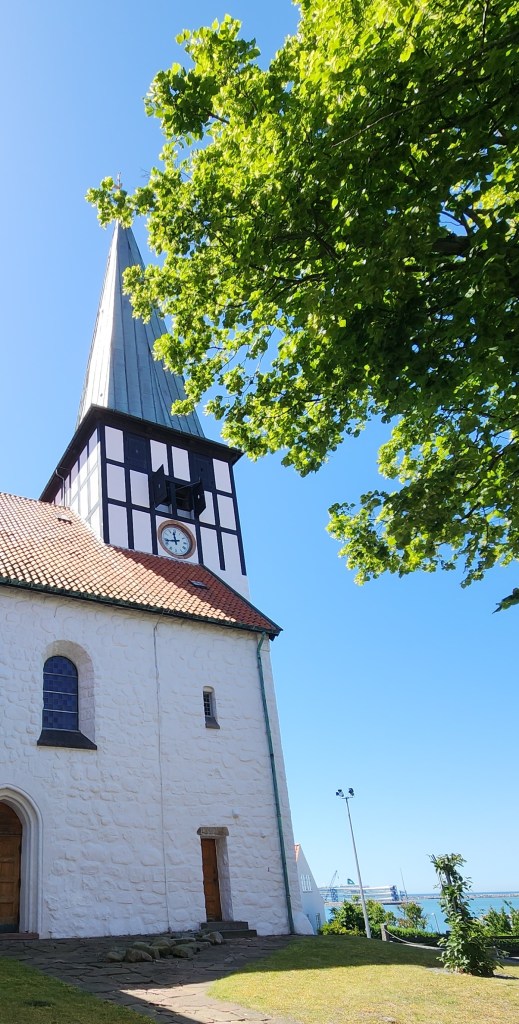
St. Nicolai Church in Rønne
Inside the St. Nicolai Church

I took the following pictures as we strolled back to the ship in time for our late afternoon departure from Bornholm.
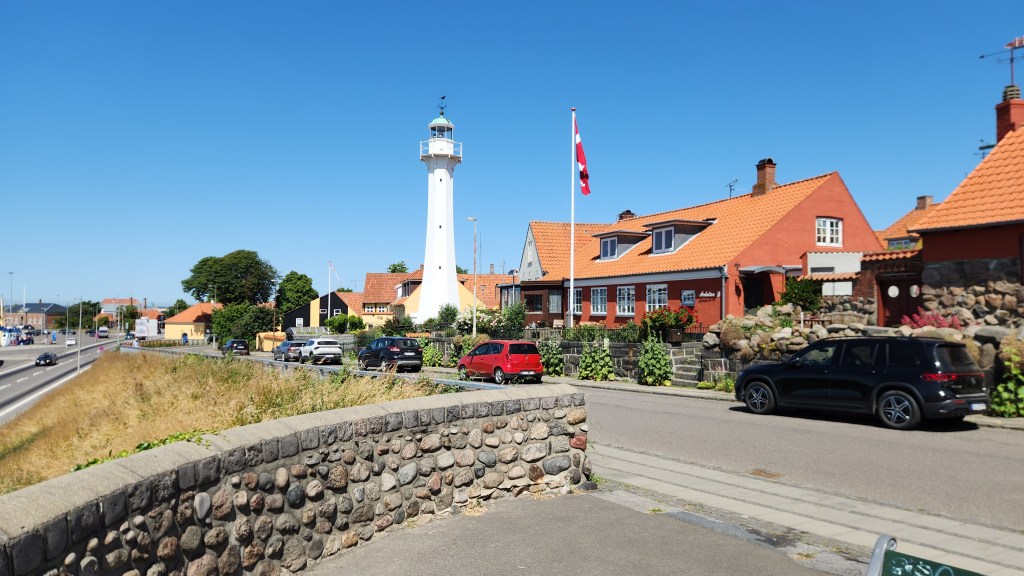
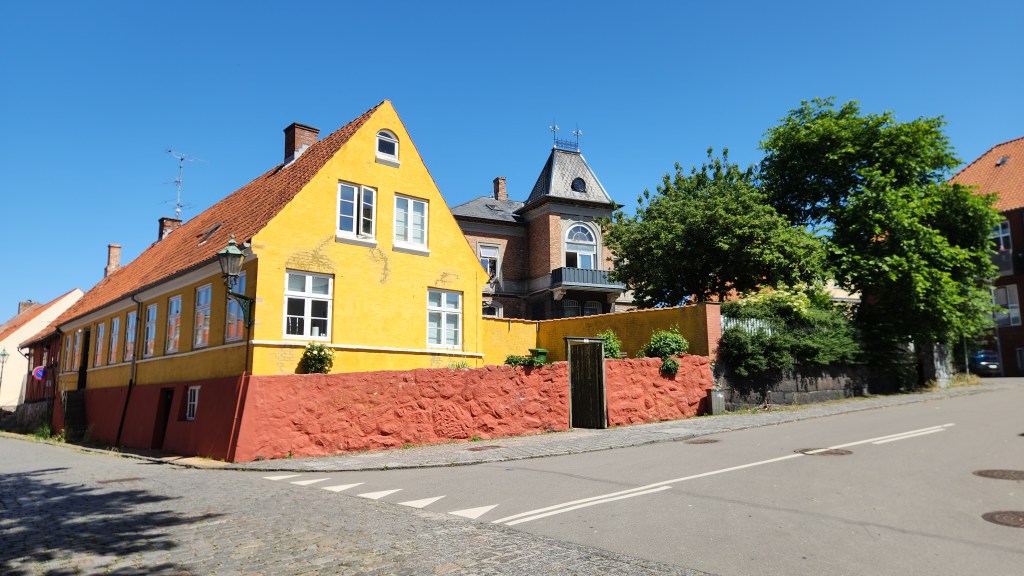
In the town of Rønne

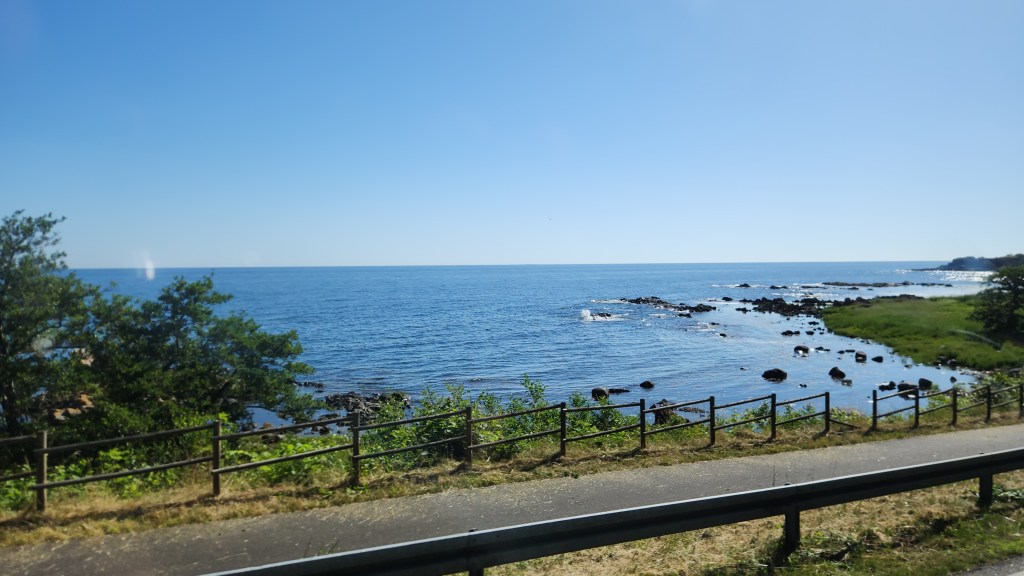
As we sailed eastward on into the evening, I caught this nice shot of the setting sun.
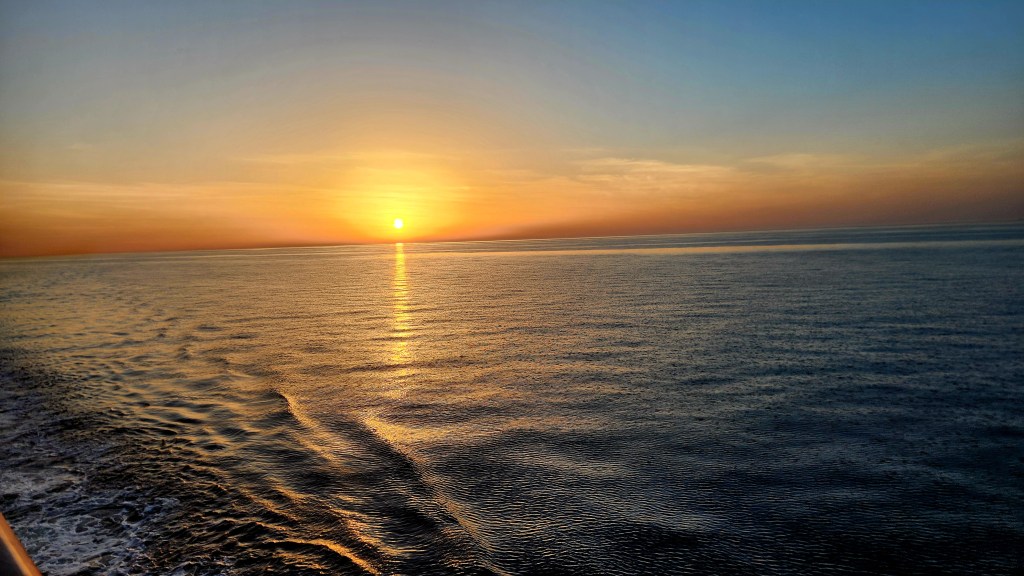
And with that parting shot, let’s end this installment. When Part 4 appears on the website, we’ll find ourselves in Poland.

Stay tuned …
Pat and Dave’s Vibrant Viking Voyage – PART 2: More Norway

Welcome back for Part 2 of my travelogue describing our recent Viking Ocean Cruise entitled “Viking Homelands.” Part 1 described the pre-cruise extension activities in Oslo and Bergen, Norway. This episode will cover the beginning of the actual cruise. Here’s a map of the overall itinerary:

This Part of the travelogue covers our remaining activities in Norway, including locations 1, 2, 3, and 4 on the map.

Bergen, Norway (Wednesday and Thursday, June 17 and 18, 2026): At the conclusion of Part 1, we were still in Bergen on a beautiful sunny Tuesday (rare for Bergen) following our adventures with the goats and trolls on Mount Hoyen. The main activity on Wednesday consisted of a short bus ride from our hotel to our Ocean Cruise ship, the Viking Sky, anchored in the Bergen fjord near the famous Bryggen (wharf), getting the mandatory safety briefing, and getting settled into our cabin, where all our luggage was waiting for us. One of the best things about these Viking cruises is that there is no need for packing and unpacking as is the case with land-based travels. Once settled in, we simply enjoyed the comfort of our cabin and the ship’s amenities for the duration of the trip. As a fellow passenger put it: “they move the hotel to all your destinations.” (The ship is essentially identical to the ones we sailed on in our two previous Ocean Cruises, the Viking Star and the Viking Neptune. I included details about the Star in Pat and Dave’s Tremendous Tropical Trek, which you can take a look at if interested, so I won’t spend any time describing the Sky.)

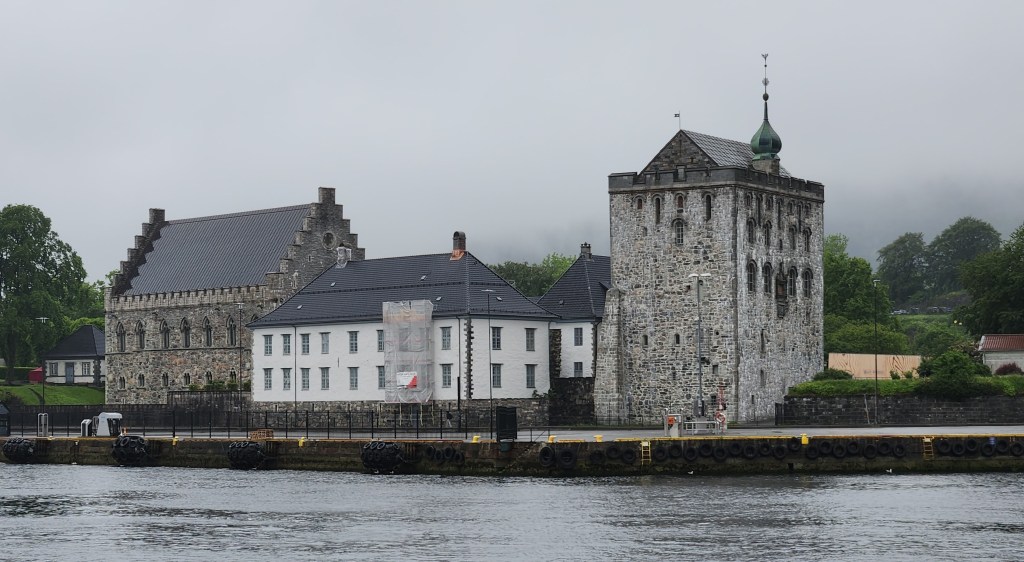
On Thursday morning, we embarked on a scenic coach tour of Bergen, which turned out to be somewhat repetitive after our tour on the previous Tuesday. I did get a better view of the Bergen Fortress that we visited on Tuesday and I discussed in Part 1, from across the harbor:

The Bergen Fortress

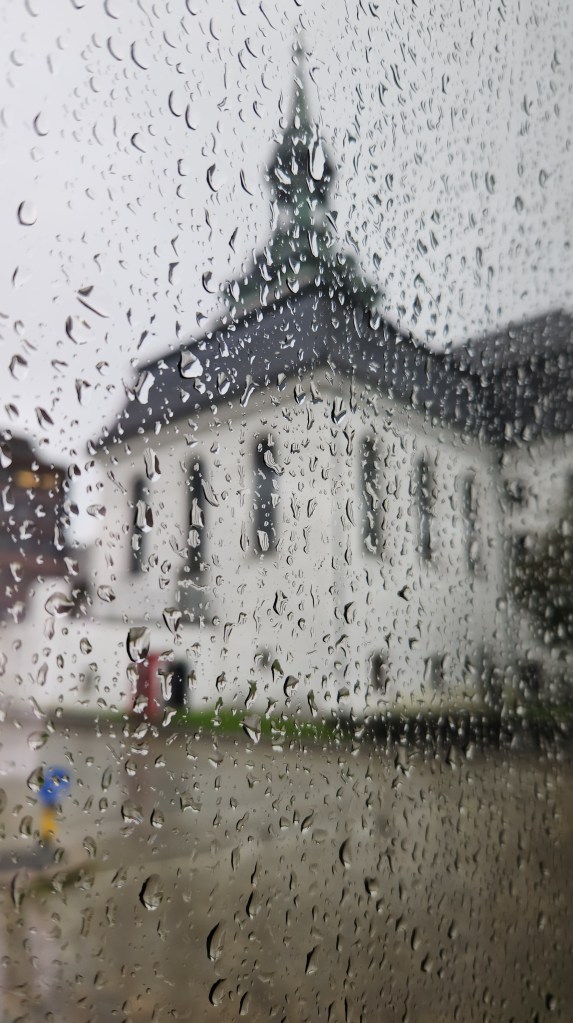
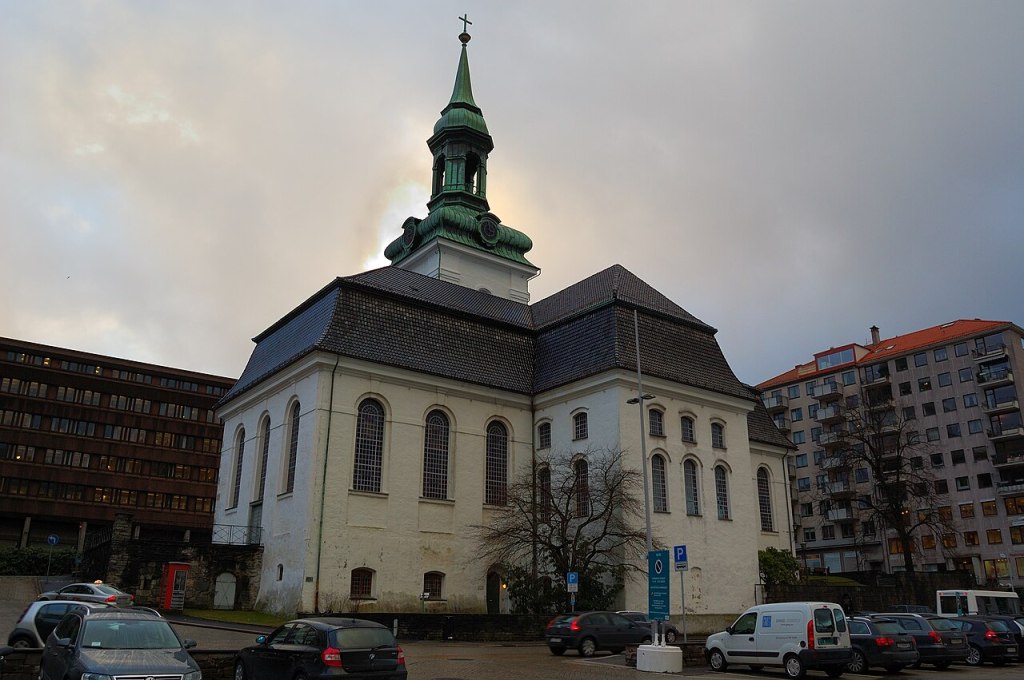
There were some new stops along the way, however. One of these was the New Church (Nykirken). The name comes from the fact that, when originally built in 1621, there were several older churches in Bergen. The church was built on the foundations of the medieval Archbishop’s Residence, originally constructed in the late 1200s but destroyed by fire in 16th century. My only photo of the exterior of the Nykirken illustrates what we understood to be typical Bergen weather, but I’ve added one from the internet to show the building more clearly.

A Soggy View of the New Church
The New Church (courtesy Wikipedia)

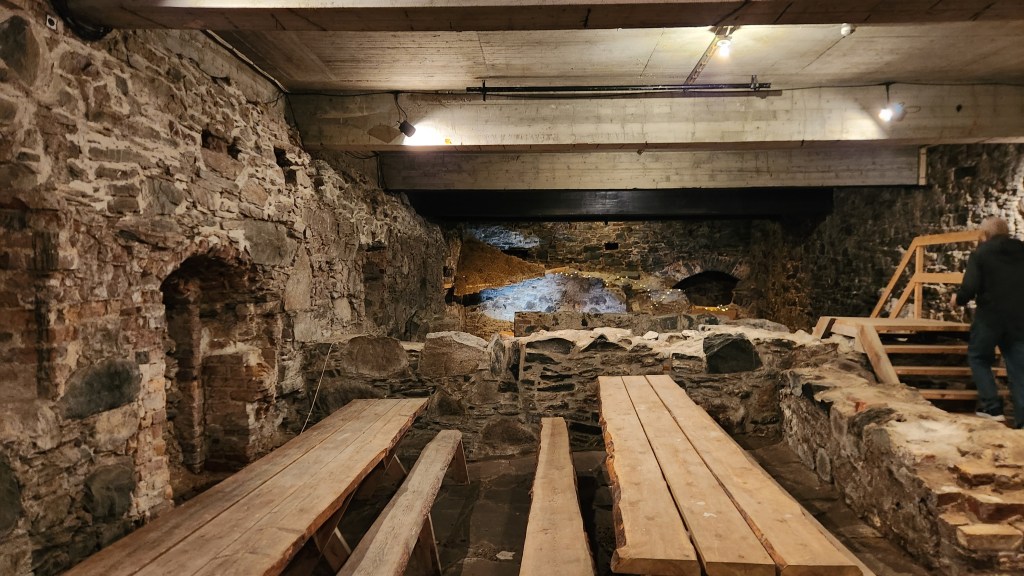
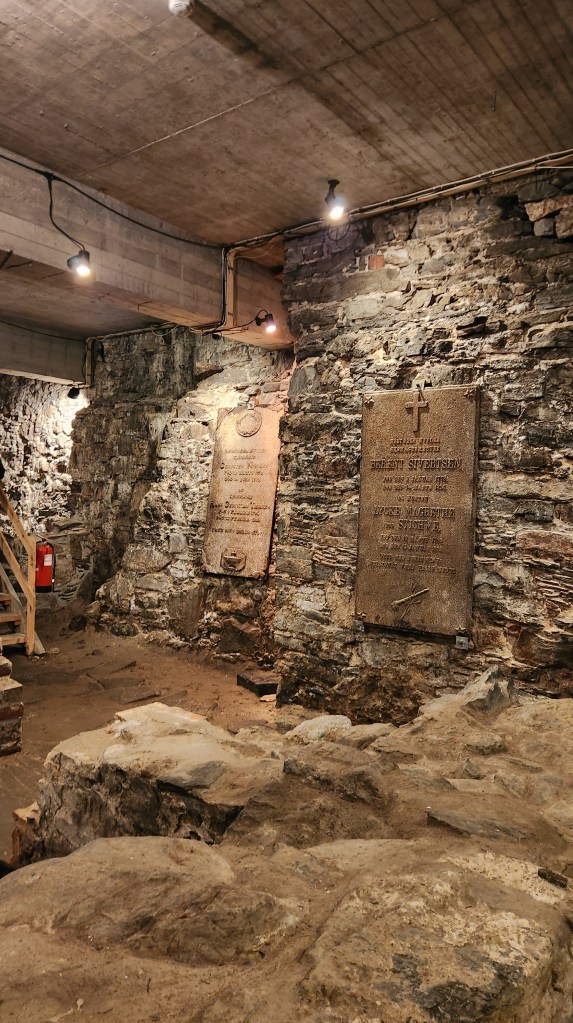
The ruins of the Archbishop’s Residence have been preserved beneath the church, and we were able to go inside to see the interesting artifacts.

Ruins of Archbishop’s Palace

Like much of Bergen, Nykirken has been rebuilt multiple times following devastating fires, most notably after a Nazi ammunition ship exploded in the harbor in 1944, which also destroyed many of the buildings in the harbor area. As an aside, though some claim the explosion was an act of sabotage due to its occurrence on Hitler’s birthday, it was apparently merely a tragic accident.

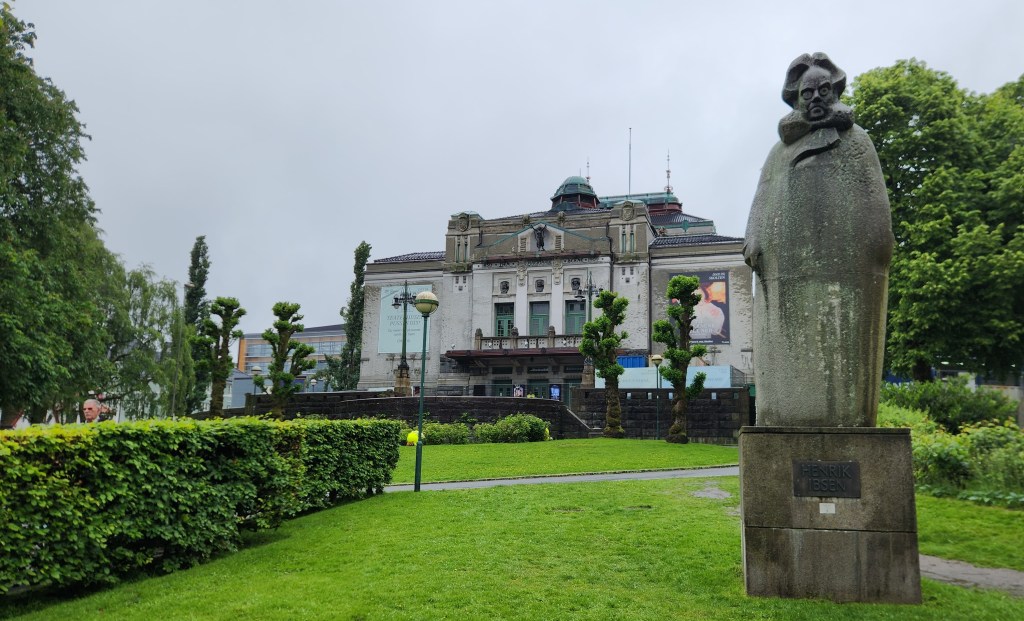
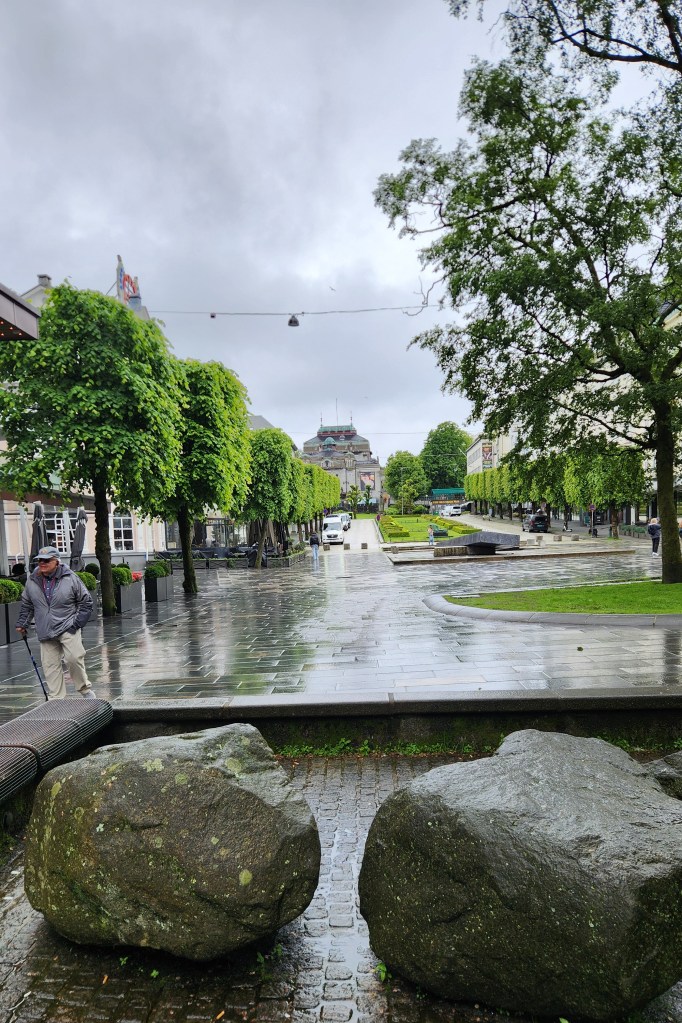
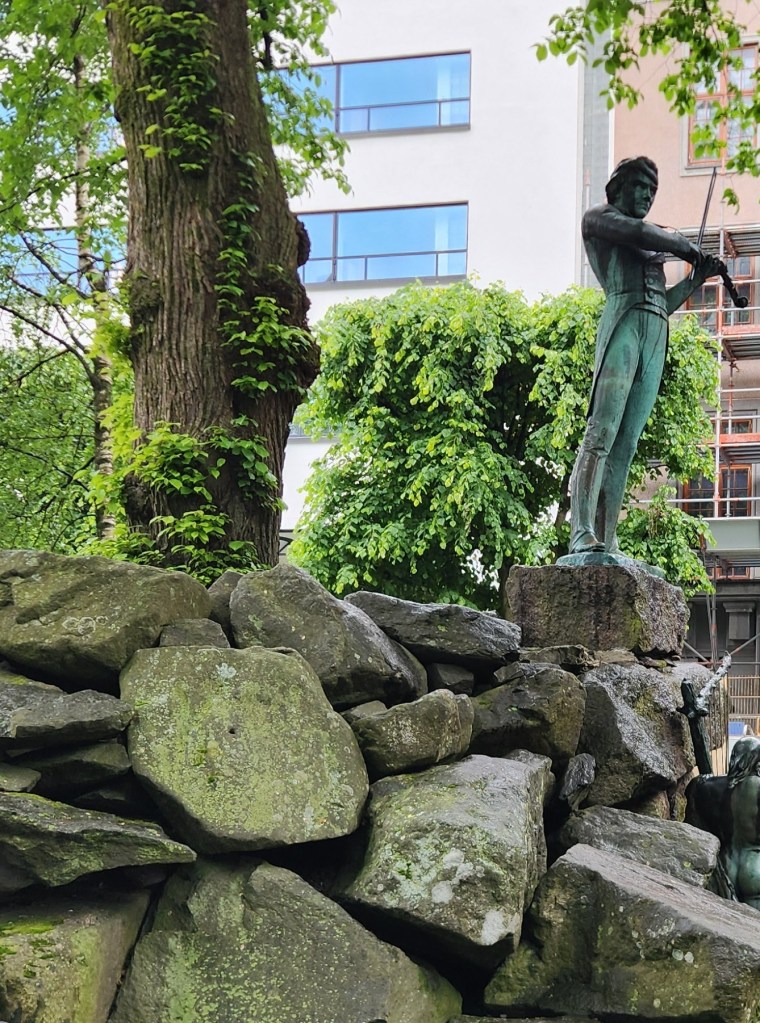
As you can see in the following photos, the rain stopped as we continued the tour. We walked past several Bergen landmarks, including: the National Theater, built with assistance from world famous violinist Ole Bull in 1850; the Telegraph Building, originally built for the telegraph system; and Ole Bull Plaza, a wide pedestrian avenue with a view of the National Theater.

The National Theater, Guarded by Henrik Ibsen
Ole Bull Plaza (National Theater in Background)
Ole Bull Serenading his Fans
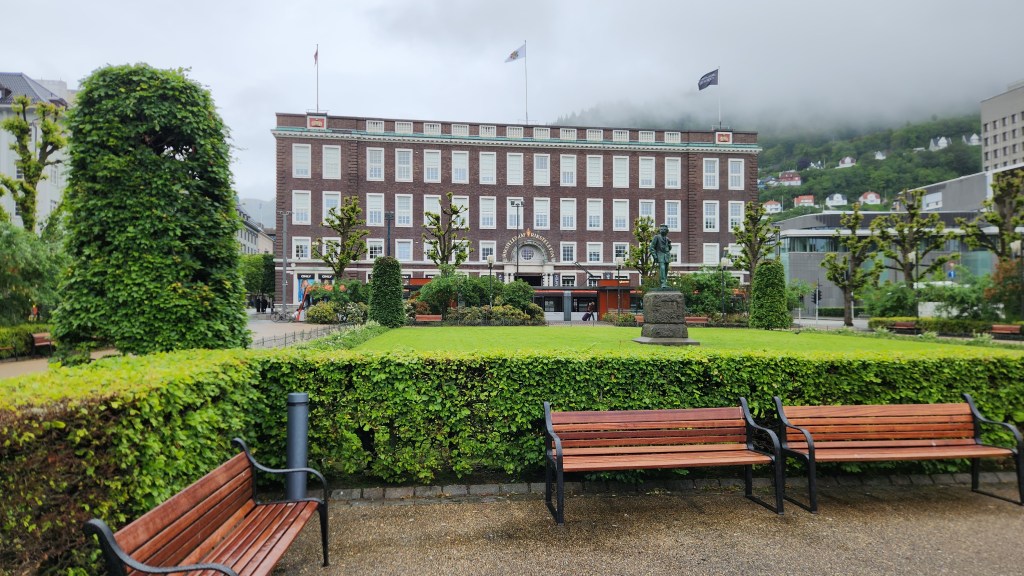
Telegraph Building

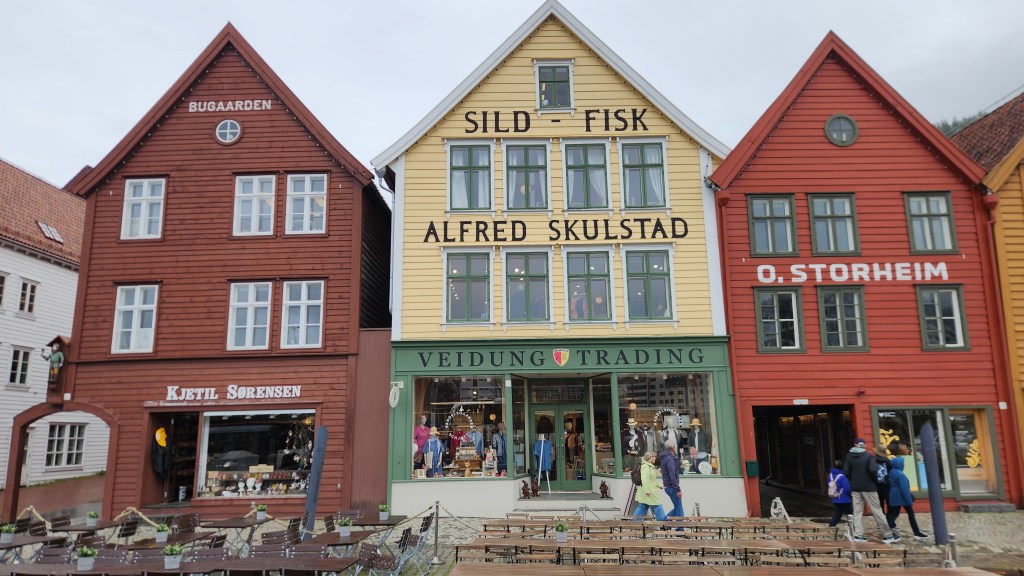
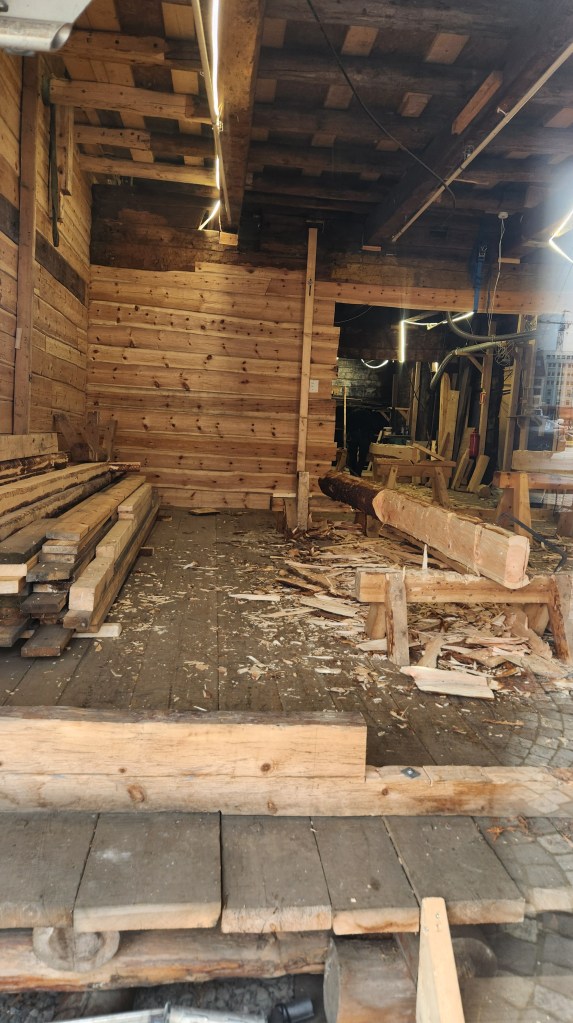
The tour ended at the Bryggen, or wharf, which features the buildings of the Hanseatic League, the powerful medieval confederation of merchant guilds and market towns in Northern and Central Europe. The League dominated maritime trade along the North and Baltic seas from the 13th to 15th centuries through control of major trade routes and secured vast economic privileges. Bergen was one of the four major trading post of the league beginning around 1350. For nearly 400 years, these German merchants dominated the city’s economy, maintaining a strict monopoly over the highly profitable stockfish (dried cod) trade until the 1760s. The iconic Hanseatic League buildings on the Bryggen have been maintained as a major attraction. Restoration of several of the buildings following the harbor explosion continues today, using the original plans and building materials.

Historic Buildings at the Bryggen
Restoration Work on a Bryggen Building (seen through a window)

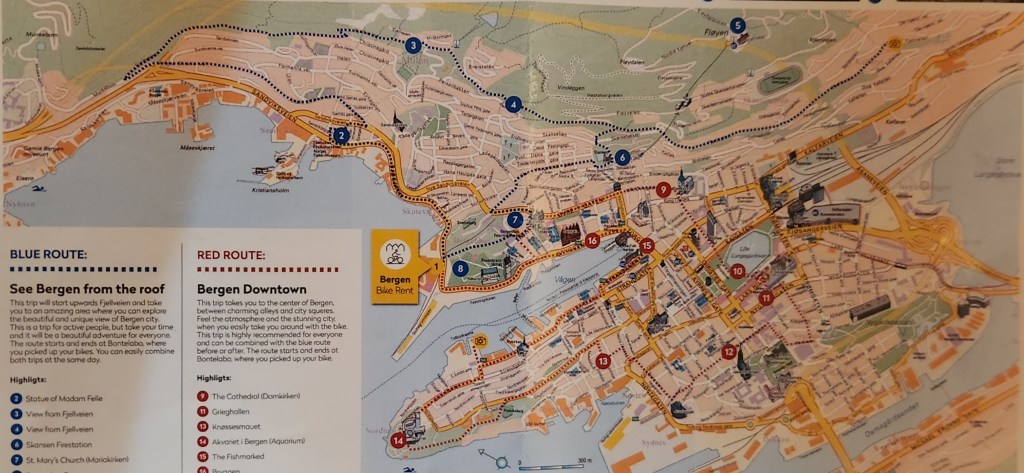
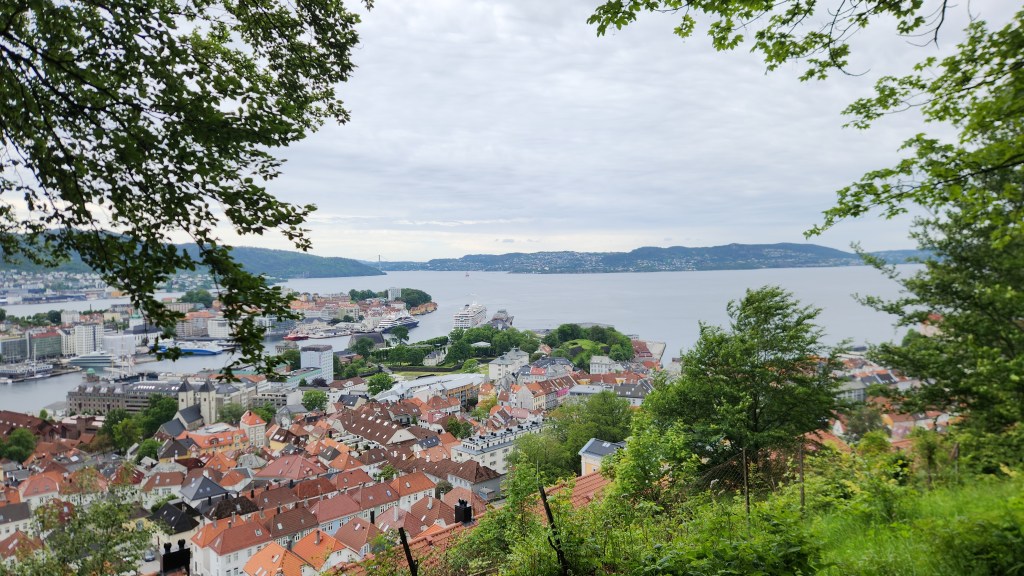
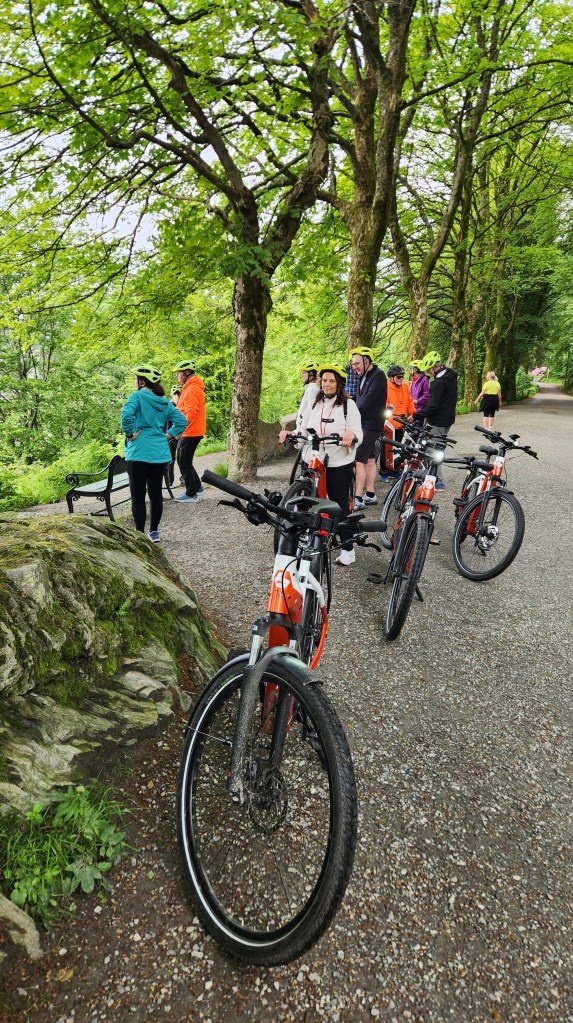
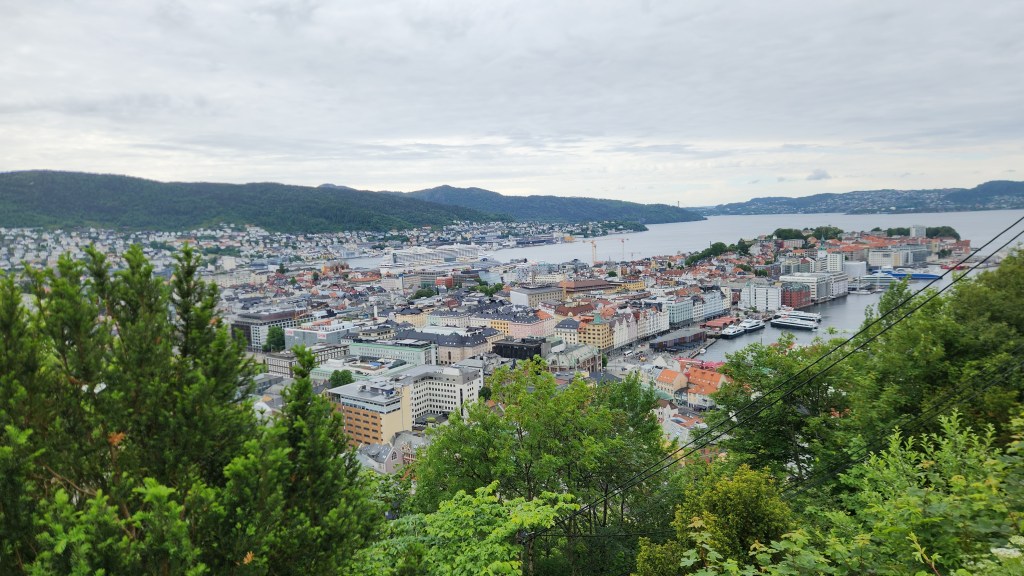
On Thursday afternoon, we went on a particularly enjoyable outing – an E-bike tour of Bergen with about a dozen other Viking passengers. The bikes were excellent and surprisingly easy to maneuver even when we traveled on old cobblestone streets. The tour covered about six miles with a dozen or so stops to gawk at the scenery and listen to our guide, starting from the pier a short distance from our ship, then winding uphill for beautiful panoramic views of the city, then descending back to the city center and returning to the pier.

Map of E-bike Tour — Blue and Red Routes
Overlook on E-bike Tour
The E-bikers at an Overlook

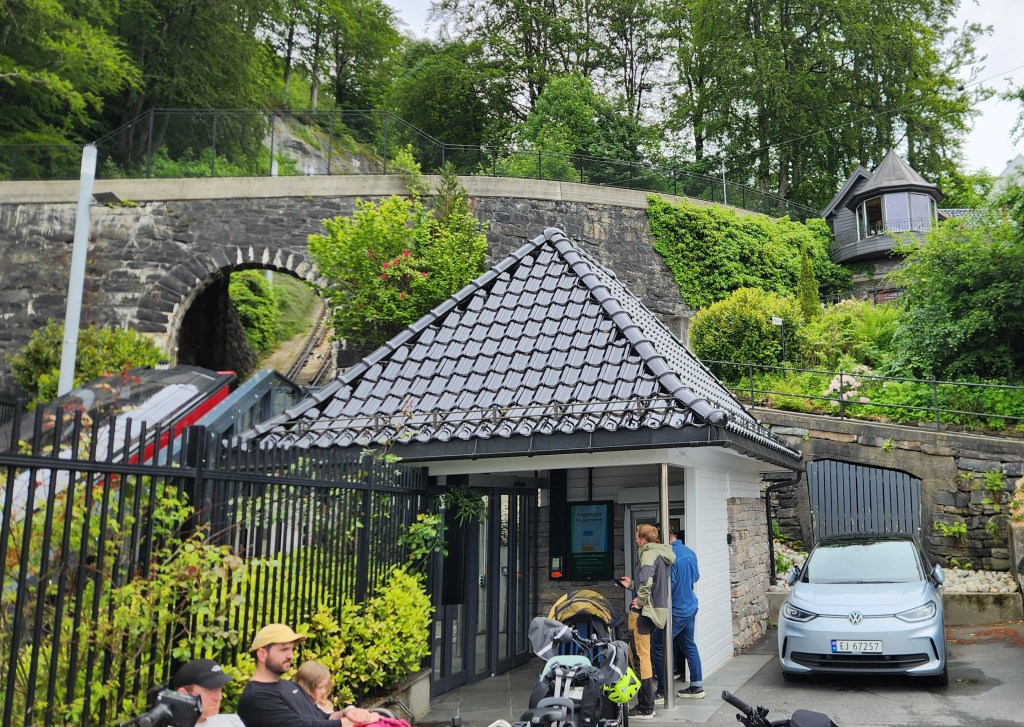
One especially interesting thing for me was when we stopped at a station on the funicular line where several parents were waiting to pick up their kindergarteners who were coming home from their school on the train.

Parents Waiting for their Kindergartners on the Funicular
Overlook on E-bike Tour
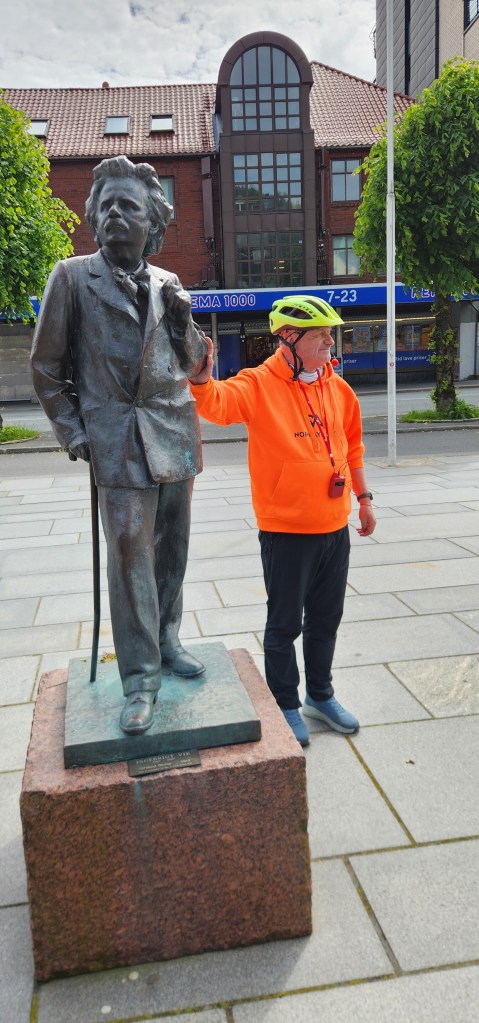
E-bike Tour Guide and Norwegian Composer Edvard Grieg
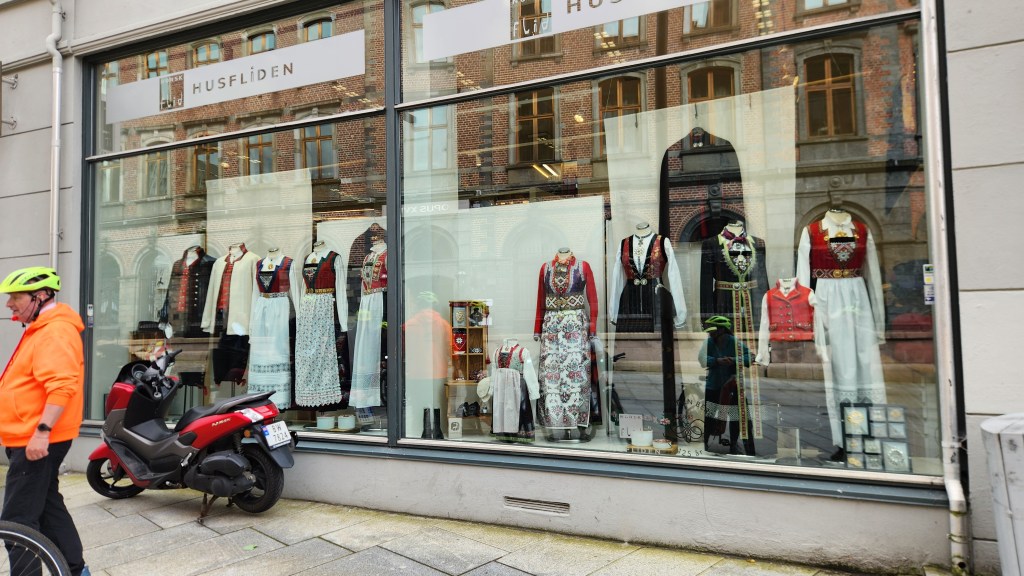
Shop Selling Traditional Dresses — Costing up to $10,000

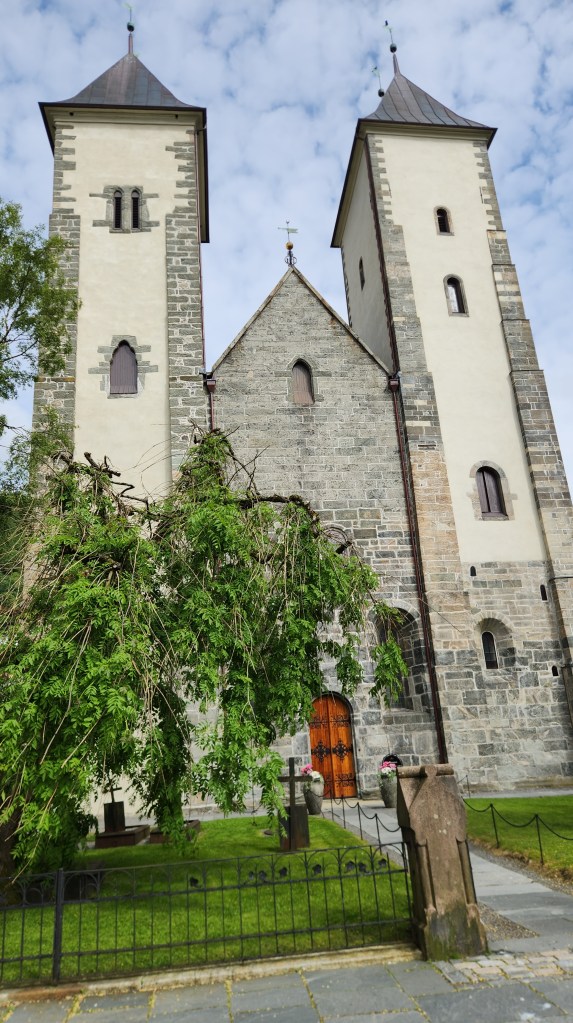
One of the stops was at St. Mary’s church (Mariakirken), a Romanesque style building constructed from about 1130 to 1180, which is considered the oldest remaining building in Bergen. It was historically known as the German church as it served the German merchants of the Hanseatic League.

St. Mary’s Church

Shortly after we were back on board the ship, it set sail for our next destination. I snapped this photo as we passed on into Thursday evening:

Leaving Bergen

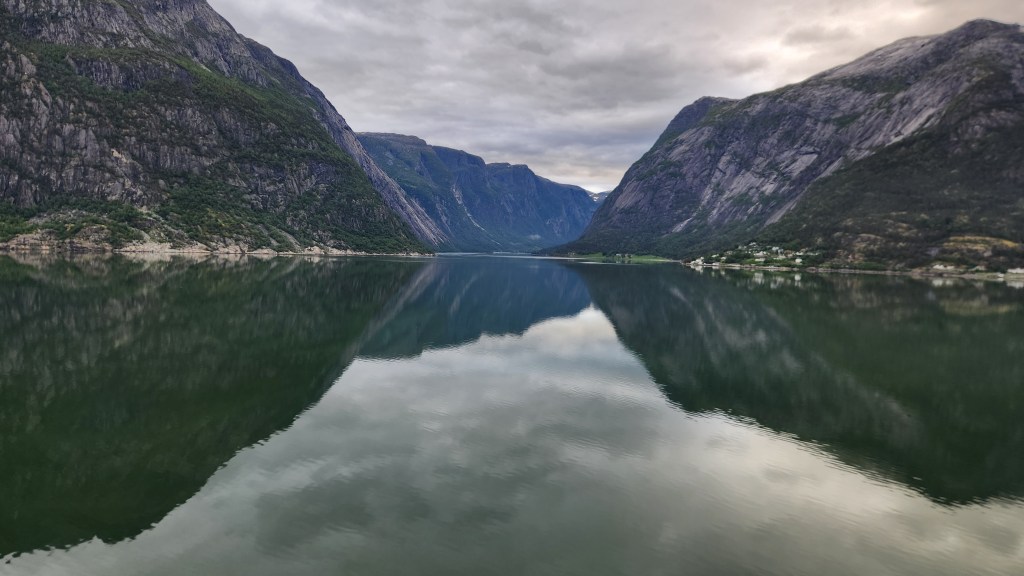
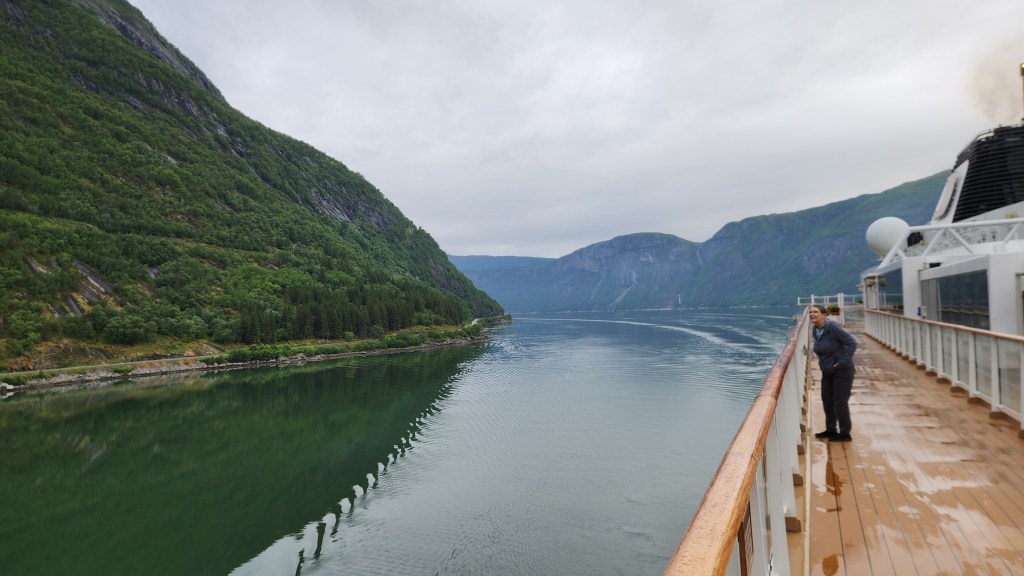
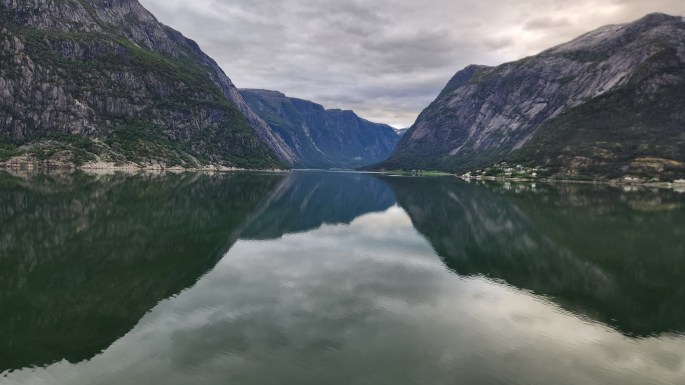
Eidfjord, Norway (Friday, June 19, 2026): Early Friday morning provided another opportunity to gawk and snap photos as we continued sailing along the Hardangerfjord toward our next docking location at Eidfjord.

Sailing on the Fjord Toward Eidfjord
Pat Gawks at the Scenery
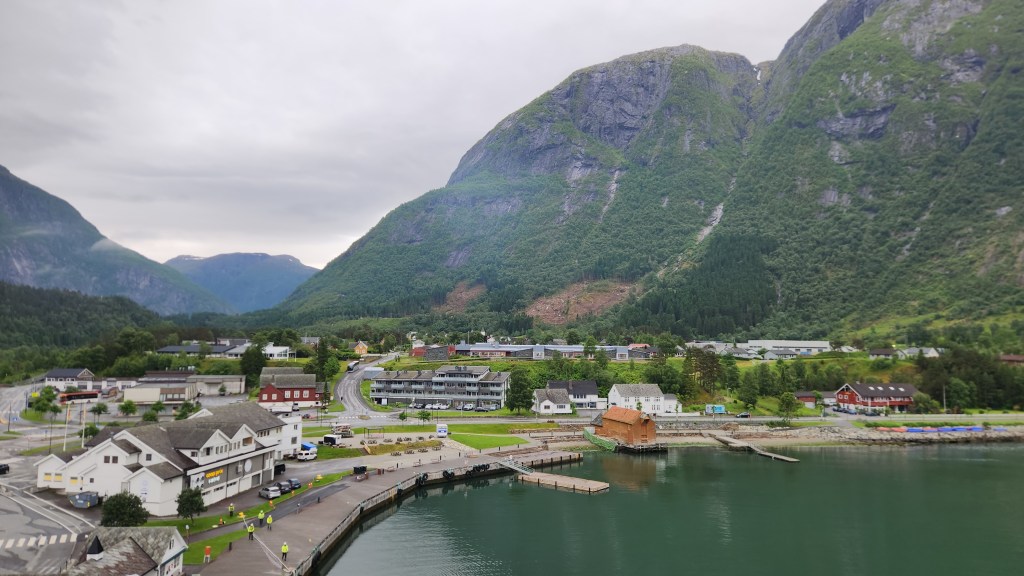
Eidfjord, Norway, viewed from our Balcony on the Viking Sky

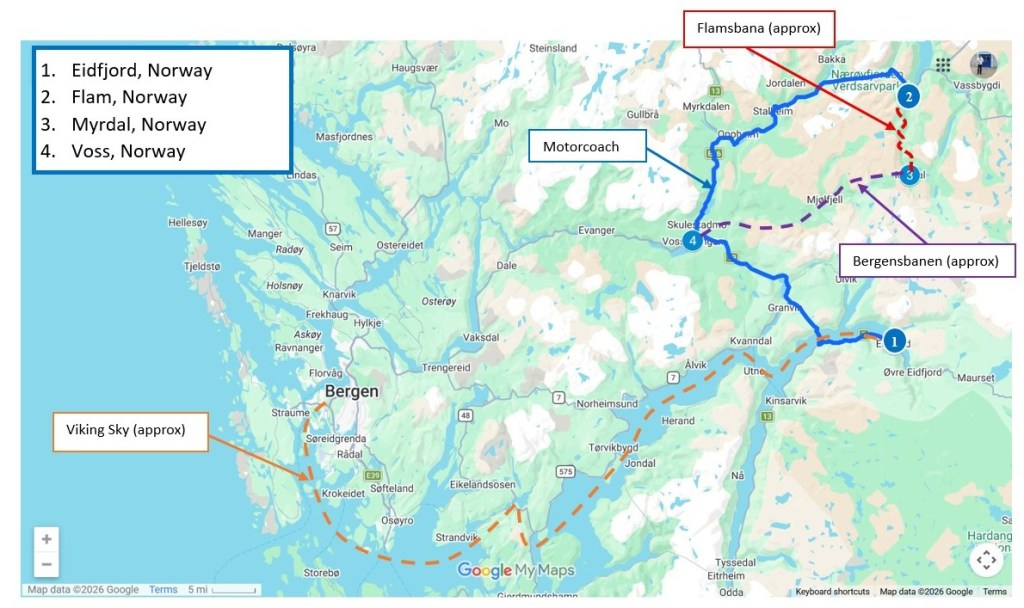
Once the ship had docked, we set off on a full-day excursion to Flåm, one of Norway’s most scenic coastal villages. Here’s a map showing how we got to Eidfjord and how we spent the day:

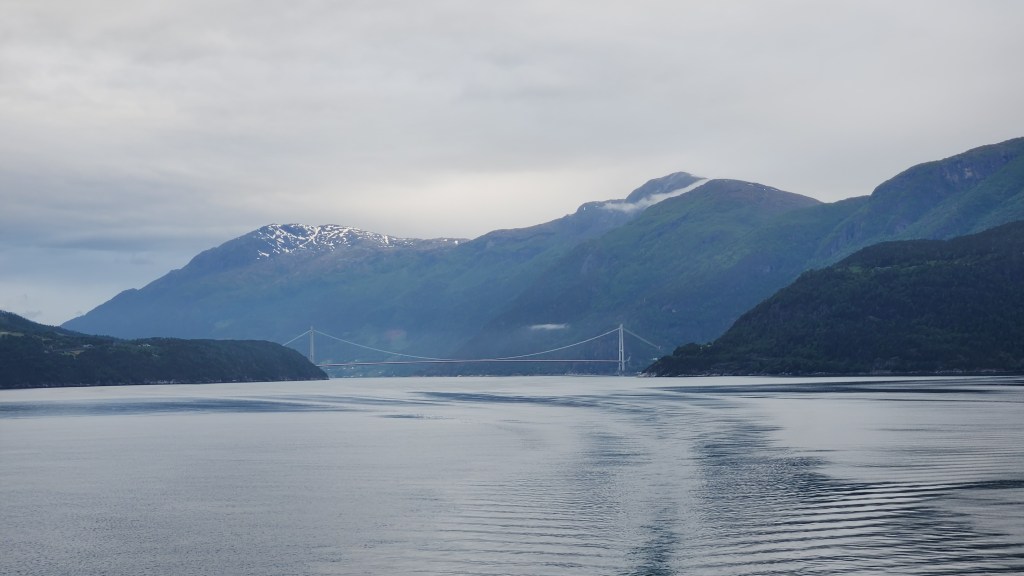
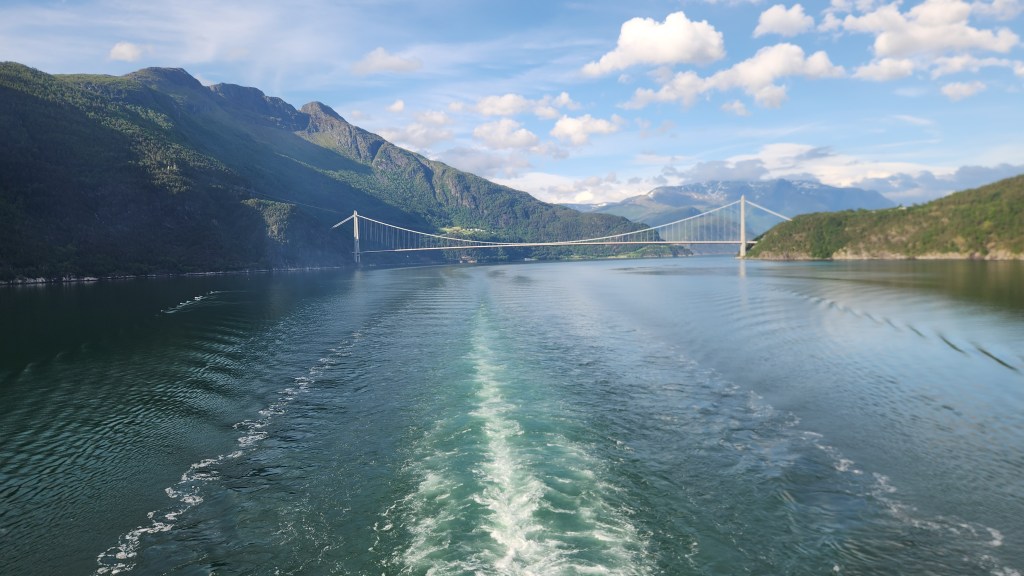
We boarded a motorcoach for a drive from Eidfjord to Flåm, soon finding ourselves crossing the fjord on an impressive suspension bridge and entering into an enormous tunnel – it was so large that it included a roundabout for following tunnels in multiple directions. After what felt like several miles, we emerged again into the countryside, crossing scenic mountain passes and driving through more manmade tunnels. About halfway along, we stopped to admire the Tvinde Waterfall cascading down a steep cliffside.

The Tvinde Waterfall

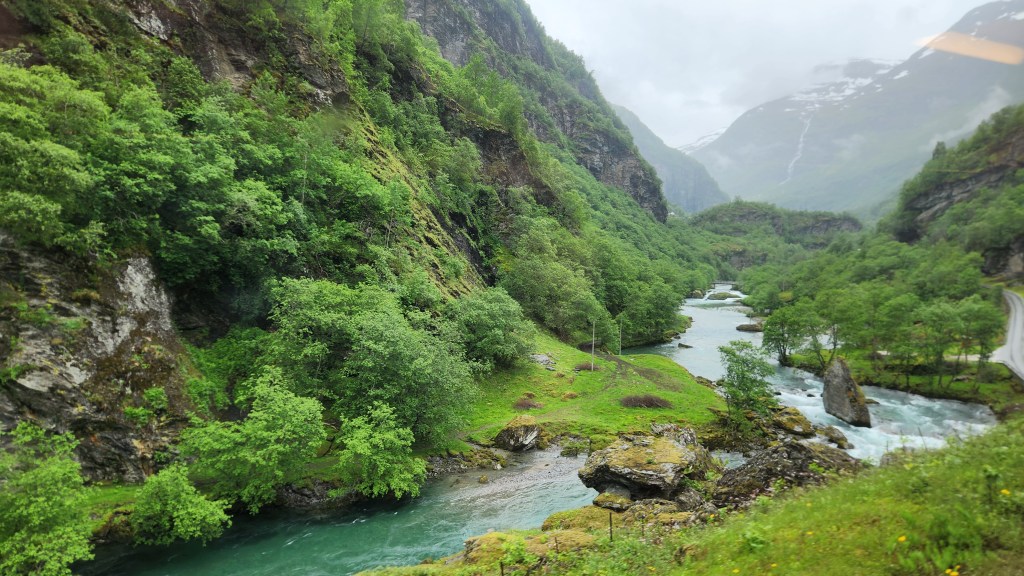
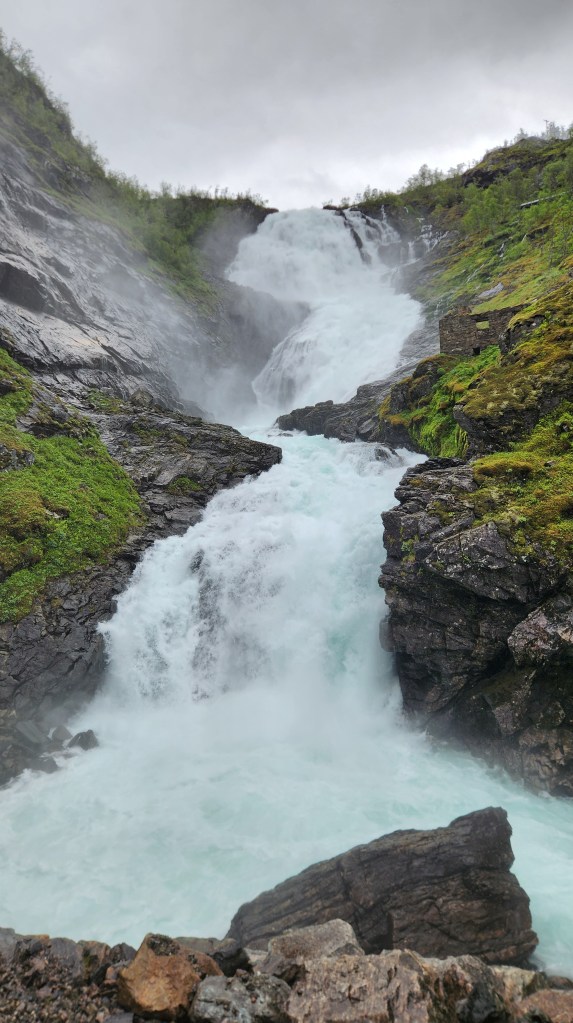
After the waterfall stop, our coach delivered us to Flåm, where we boarded the Flåm Railway – generally known as the scenic Flåm Railway for a good reason. The track climbs nearly 3,000 feet while passing through 20 tunnels and over numerous bridges on the way to Myrdal.

View from the Flåm Railway
Kjosfossen Waterfall viewed from Tourist Stop on Flåm Railroad

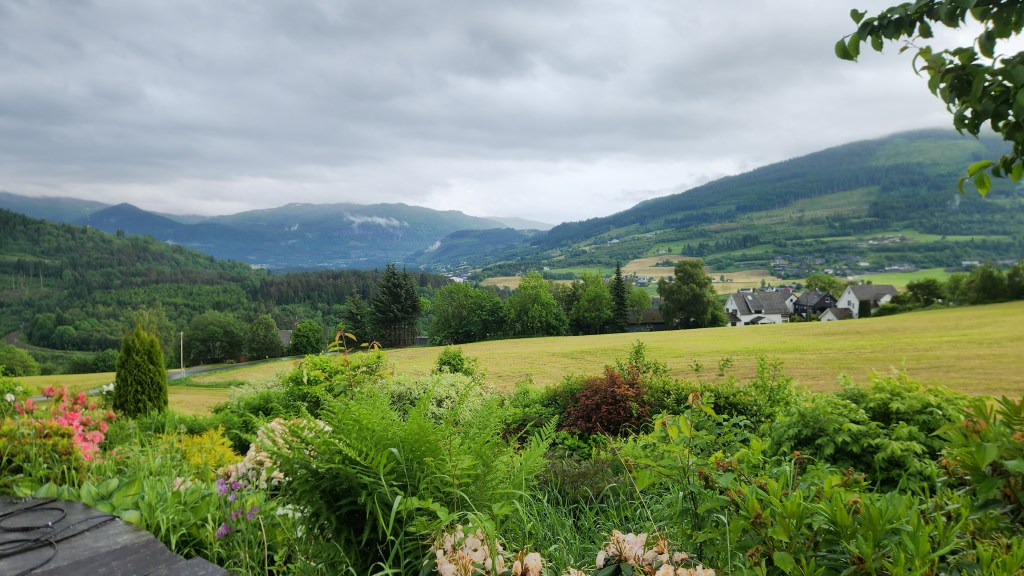
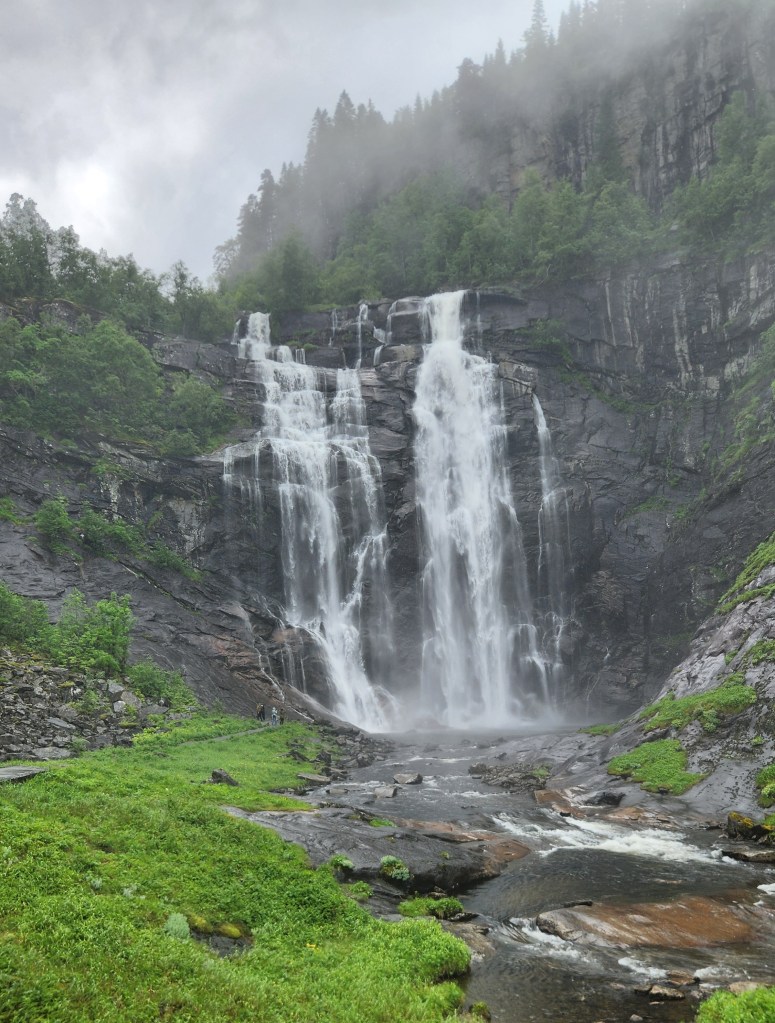
At Myrdal, we boarded the Bergenbanen train, once again passing through the spectacular vistas we saw on our way from Oslo to Bergen during the pre-cruise program. Our train ride this time ended at Voss, where we enjoyed lunch before once again boarding the motorcoach for our return to the ship. Along with the beautiful scenery, including yet another impressive waterfall, we saw a plethora of “marshmallows” dotting the farm fields – the local pet name for bales of hay or straw wrapped in white weather-resistant coverings.

View from Restaurant in Voss
Skervsfossen Waterfall on Route from Voss to Eidfjord
Field of “Marshmallows” Near Eidfjord

As the ship headed back down the Hardangerfjord toward the North Sea, we contented ourselves with more delightful views of the passing scenery.

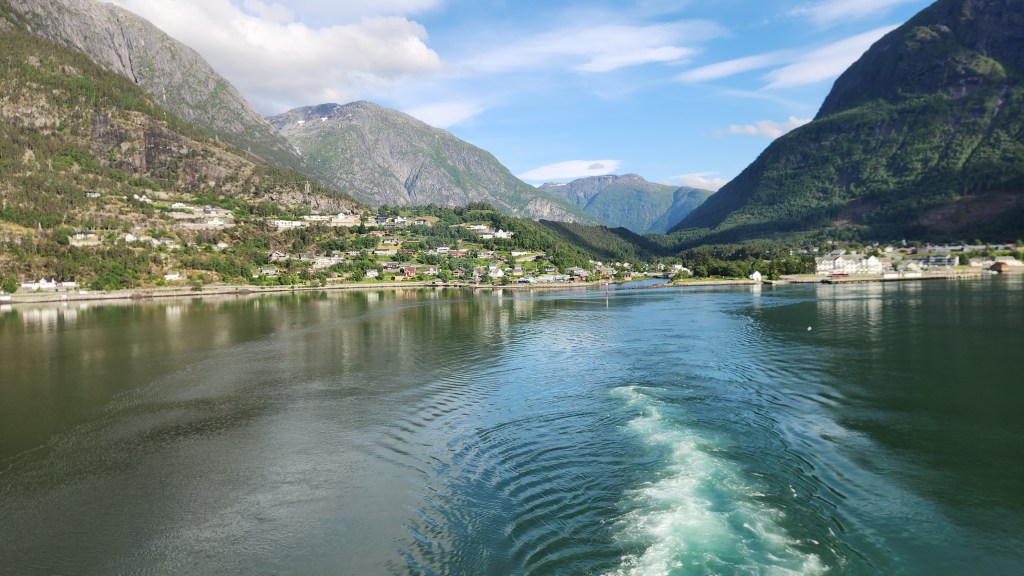
Sailing Away from Eidford
Sailing Away from Eidford down the Hardangerfjord

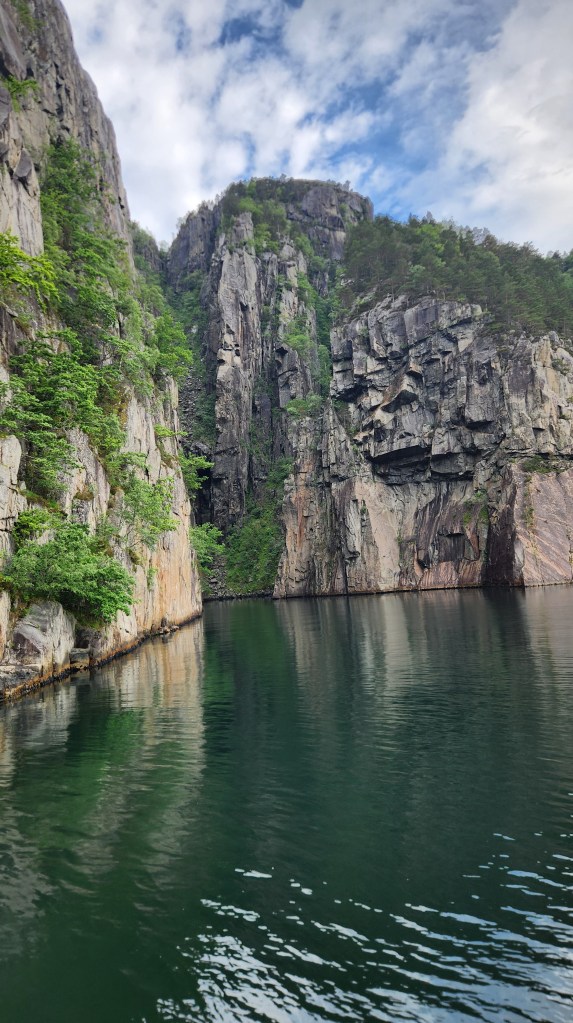
Stavanger, Norway (Saturday, June 20, 2026): After an overnight sail, we arrived in Stavanger at 7 AM for what proved to be a rather quick, half-day stop. While Stavanger appeared to be a lovely city with a world-famous Oil Museum, we opted out of the city tour for an alternate activity – a local sightseeing boat ride up the Lysefjord (“light fjord”, named for the lightly colored granite mountains that rise on each side of the fjord).

On the Tour Boat from Stavanger to the Lysefjord

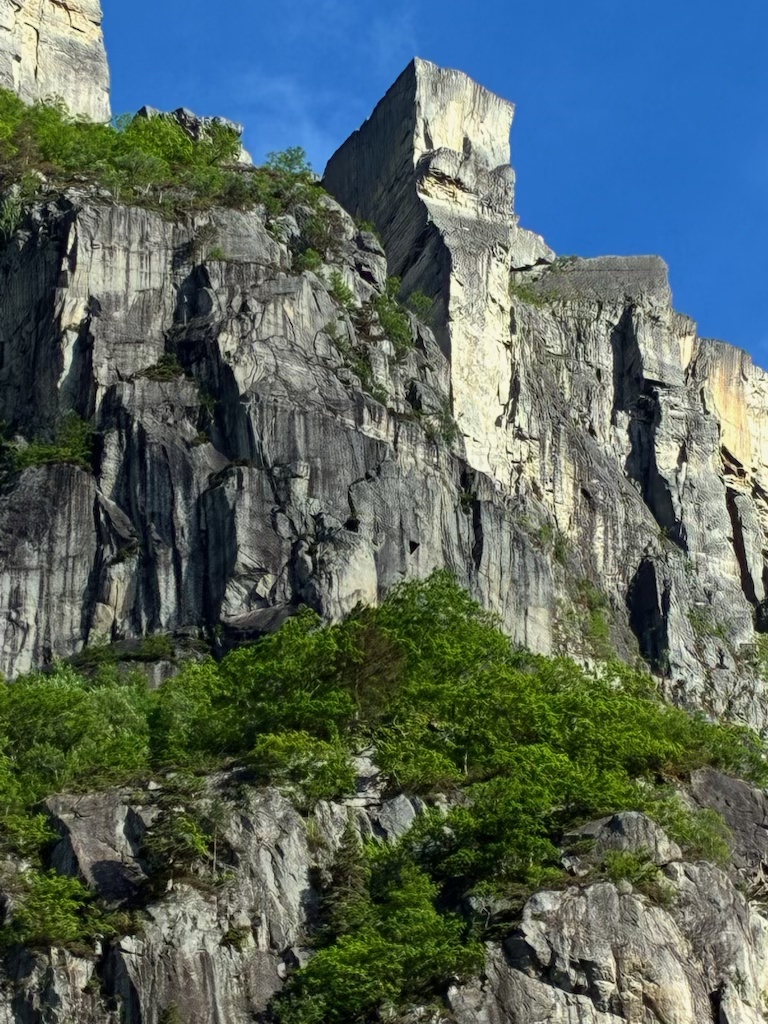
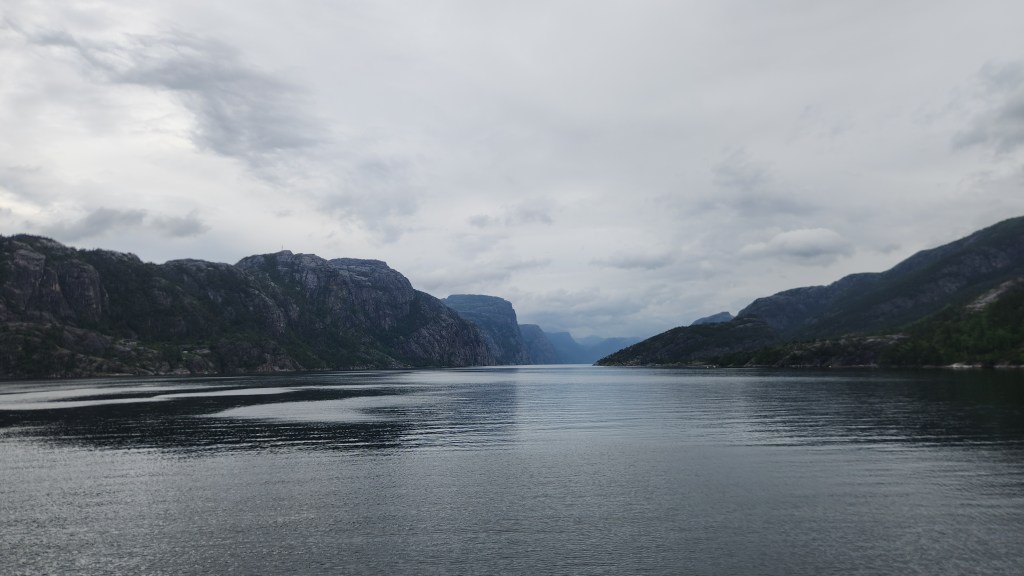
As our tour boat set sail from the Stavanger archipelago, the day was rather dreary, and it seemed as if our visit to the Preikestolen, (Pulpit Rock) might be a bit of a bust. However, as we approached the destination the clouds began to part and we were rewarded with bright sunshine as we passed alongside the famous rock. As you’ll see in the pictures below, the rock takes its name form its resemblance to a church pulpit.

Sailing up the Lysefjord toward Pulpit Rock
Yet another Beautiful Waterfall — this one on the Lysefjord
Pulpit Rock on the Lysefjord

As an interesting side note, we learned that Tom Cruise filmed one of his iconic Mission Impossible: Fallout stunts atop the Pulpit Rock (serving as a stand-in for the mountains of Kashmir), where Cruise’s Ethan Hunt character fights Henry Cavill and dangles from the 2,000-foot-high cliff. The filming required heroic efforts from helicopter pilots to bring in the actors and film equipment in the windy conditions. As sort of a reward for the cooperation of the Norwegian authorities, the world premier of the movie was later shown to an audience on top of the rock.

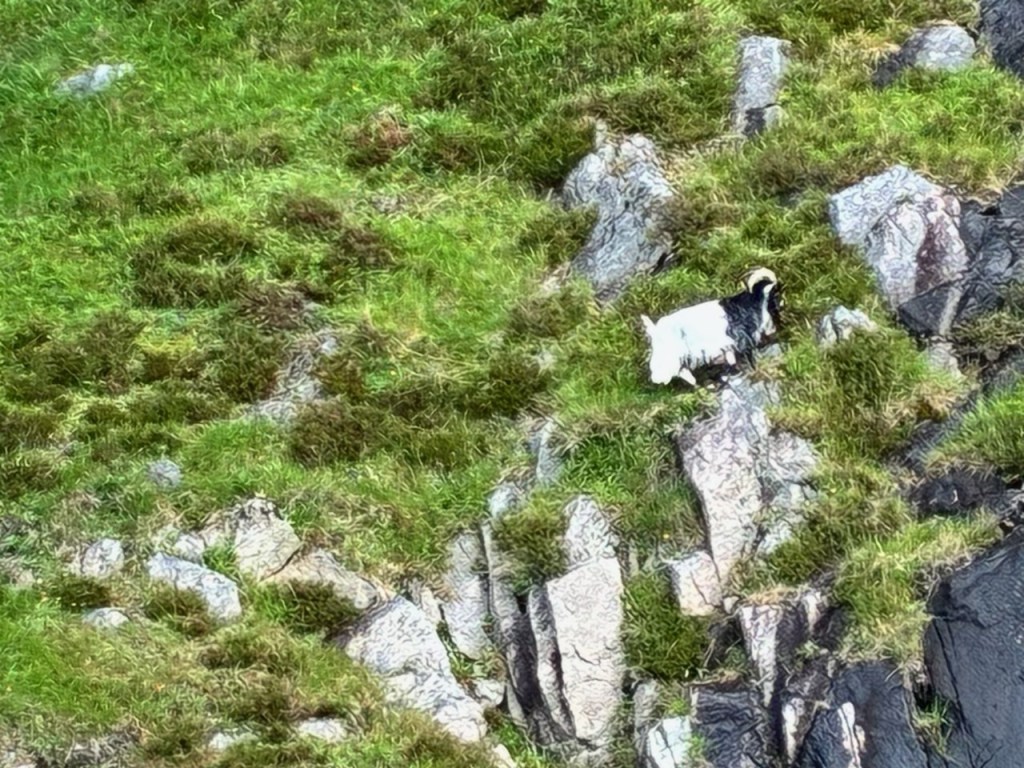
After ogling the Pulpit Rock, we sailed a bit farther up the fjord for a close-up view of an interesting cove as well as the chance to see a pair of goats that generally spend the summer in a cozy spot along the fjord.

Cove in the Lysefjord near Pulpit Rock
A healthy goat has a lush food supply for the summer

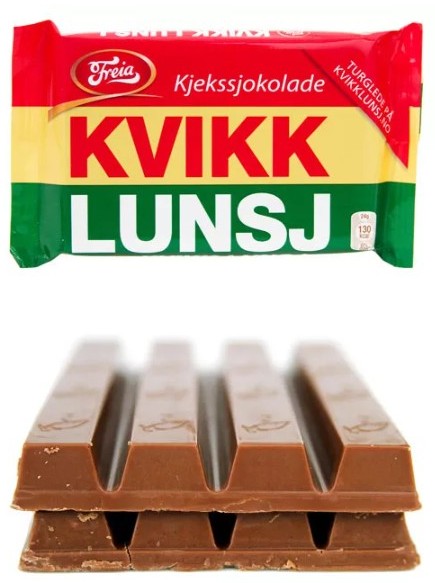
After the sightseeing, as the boat headed back toward Stavanger, we were treated to a lunch of Norwegian waffles with cream and sweet jams. We also purchased a couple of bars of an iconic Norwegian candy called the Kvikk Lunsj, which means just what it sounds like in English and is considered a necessity for hikers in Norway. While some compare it to a Kit Kat bar, any good Norwegian will tell you it is much better. We were told that Kt Kat tried to sue the Freia Candy Company for trademark infringement or some such thing but the court ruled that Kvikk Lunsj was developed and marketed before Kit Kat even existed.

A delicious Kvikk Lunsj atop an Inferior Kit Kat

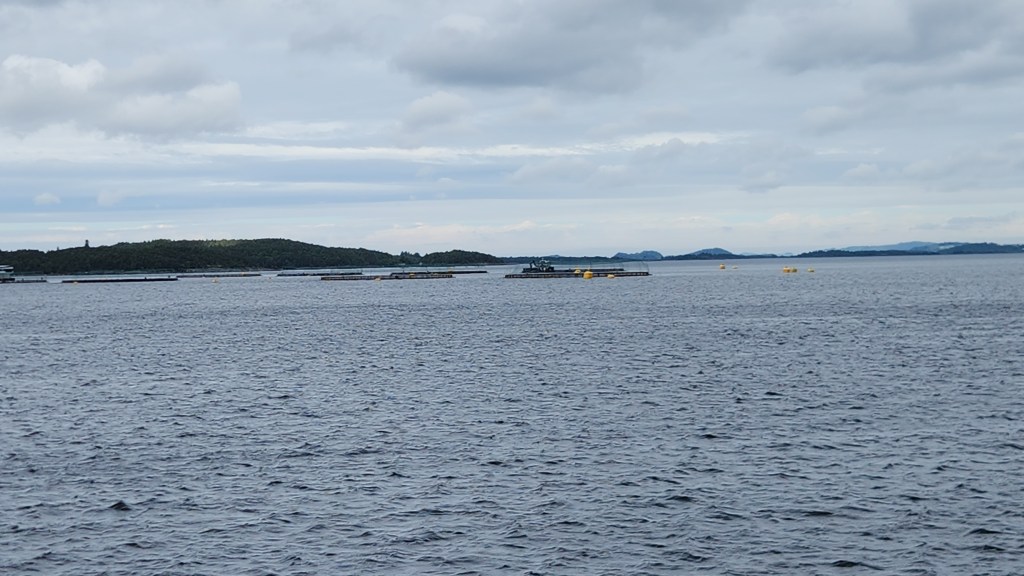
On the way back down the Lysefjord toward Stavanger, we passed by several fish farms, which looked to be quite sophisticated operations.

Fish Farms in the Lysefjord near Stavanger

Once back in Stavanger, we wandered about the town for an hour or so before reboarding the ship. Back on our ship, we headed off in the early afternoon for an overnight sail to Oslo. Here are some photos from the town and one more photo as the ship sailed away.

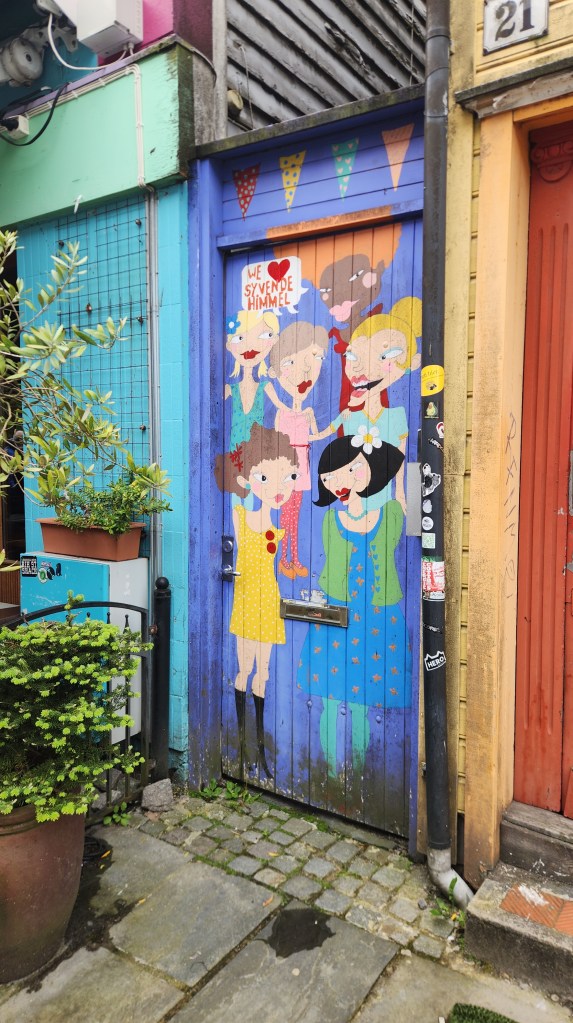
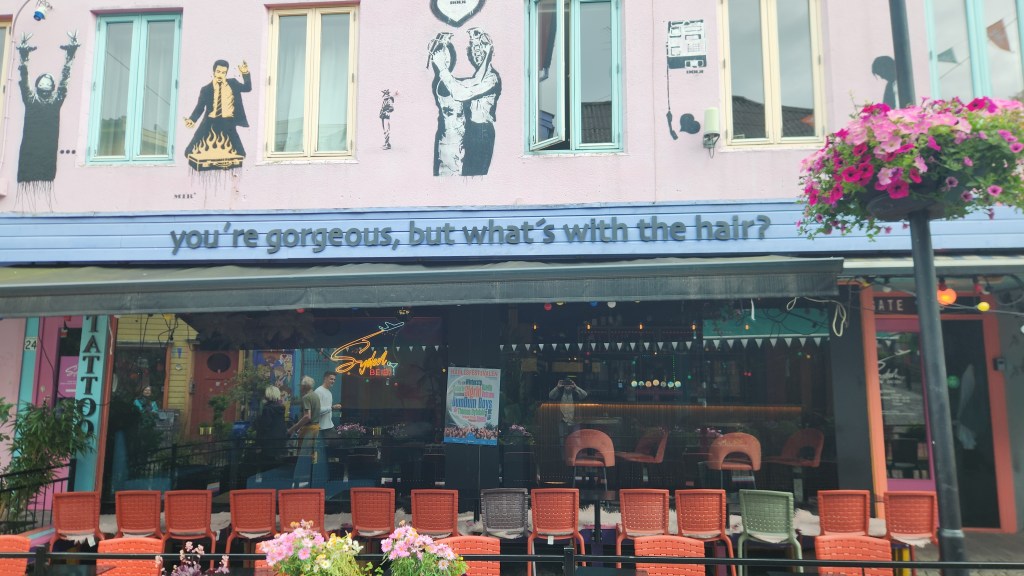
A shop in Stavanger caught my eye …
As did another one …
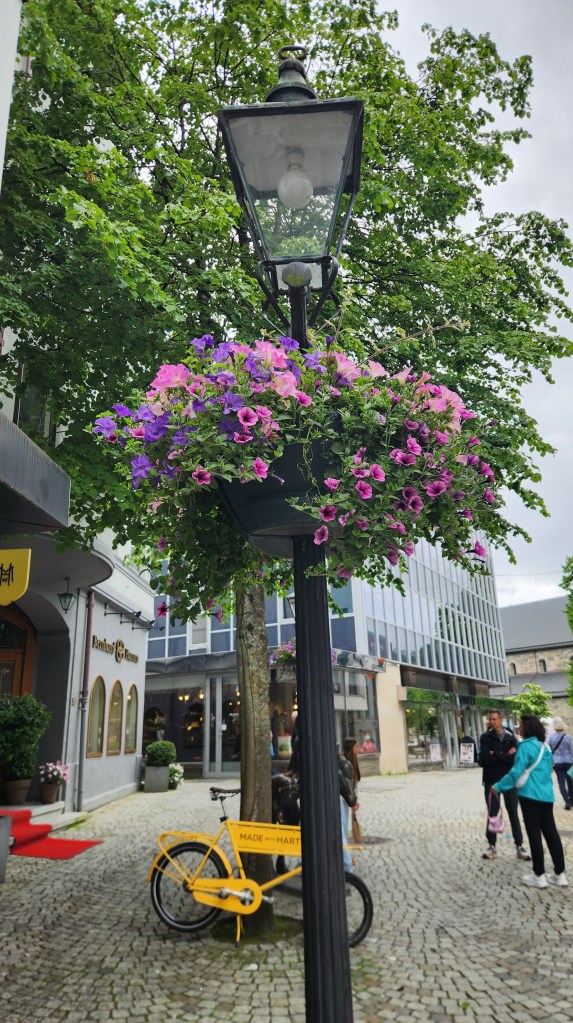
Street scene in Stavanger
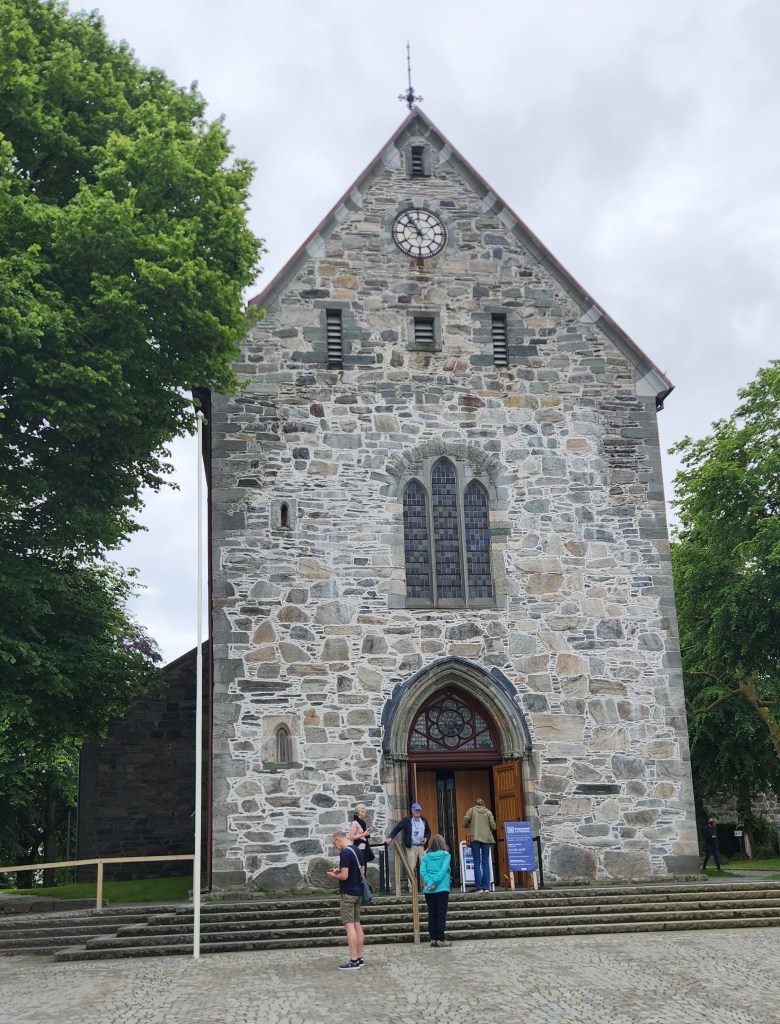
Stavanger Cathedral, established in 1125 and rebuilt after 1272 fire
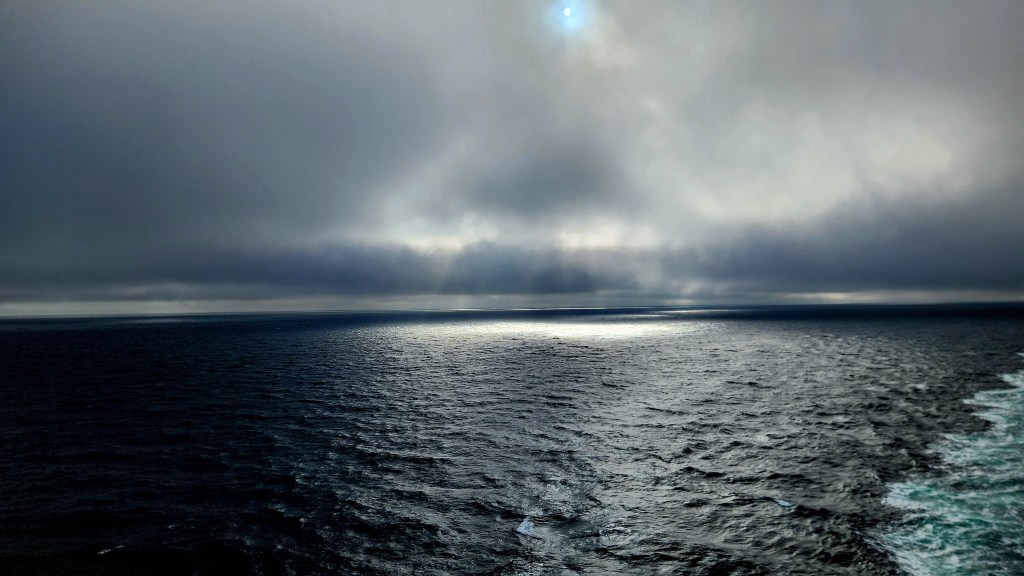
Interesting Sunbeam as we sail away from Stavanger

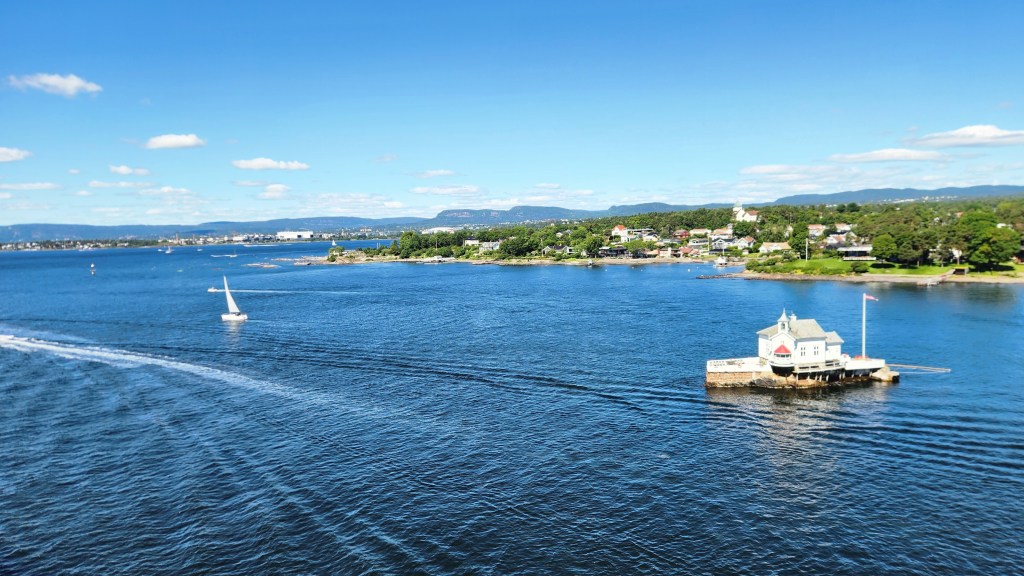
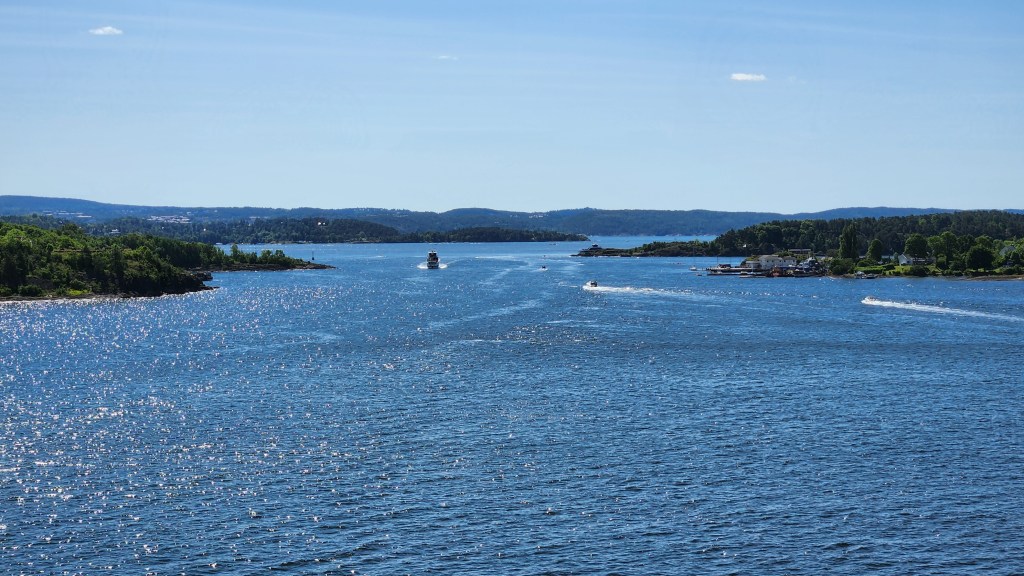
Oslo, Norway (Sunday and Monday, June 21 and 22, 2026): Our ship arrived in Oslo harbor at noon on Sunday. Our previous arrival, for the pre-tour program described in Part 1, had been at the airport, located far out in the boondocks. It was much more interesting to be able to see the Oslo archipelago as we sailed in.

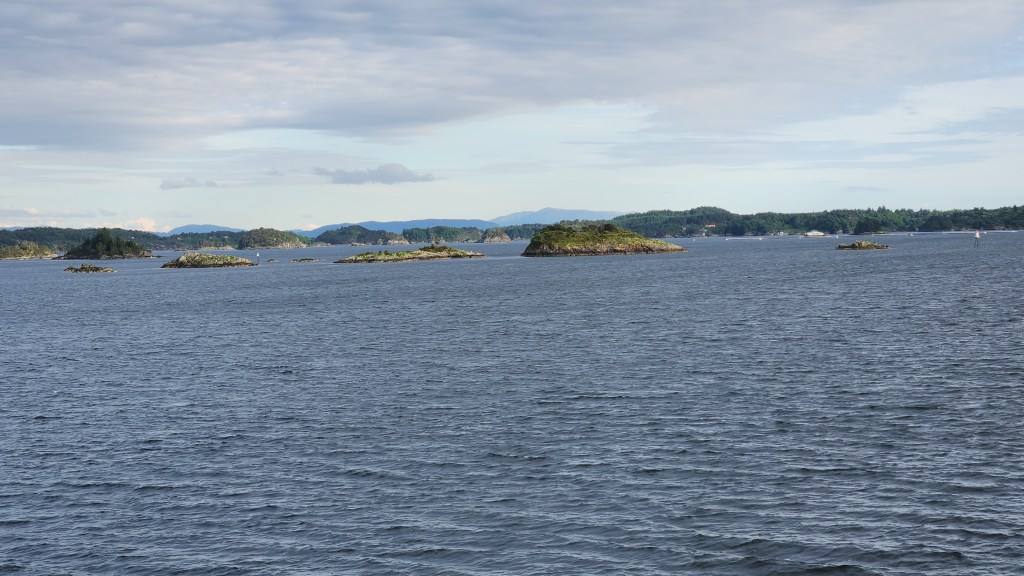
Sailing through the Oslo Archipelago

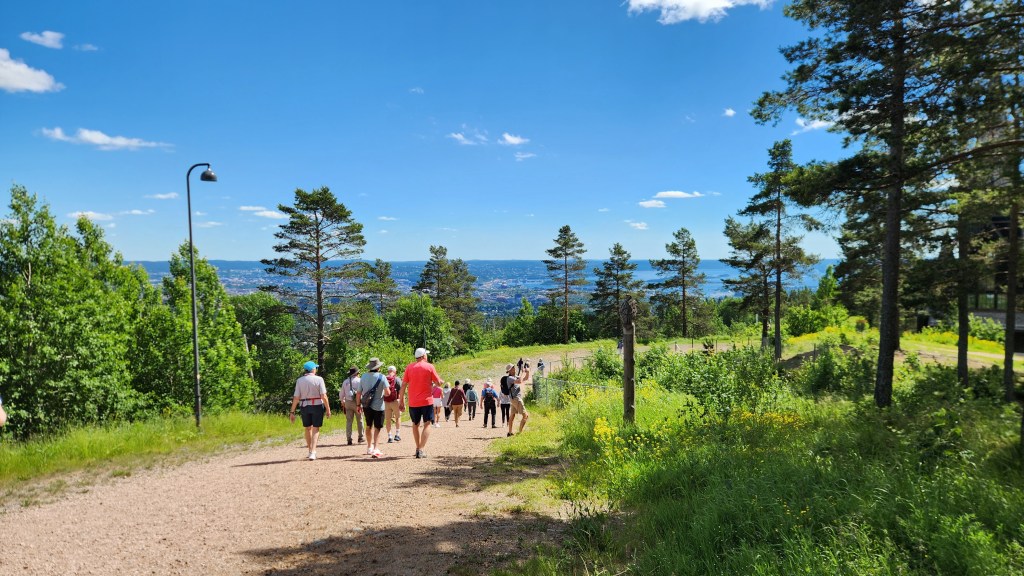
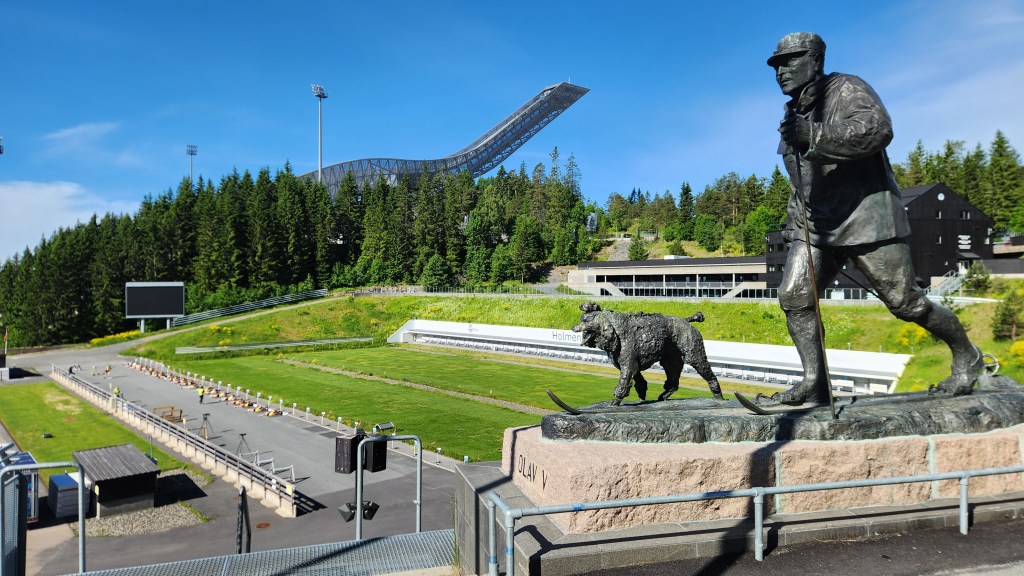
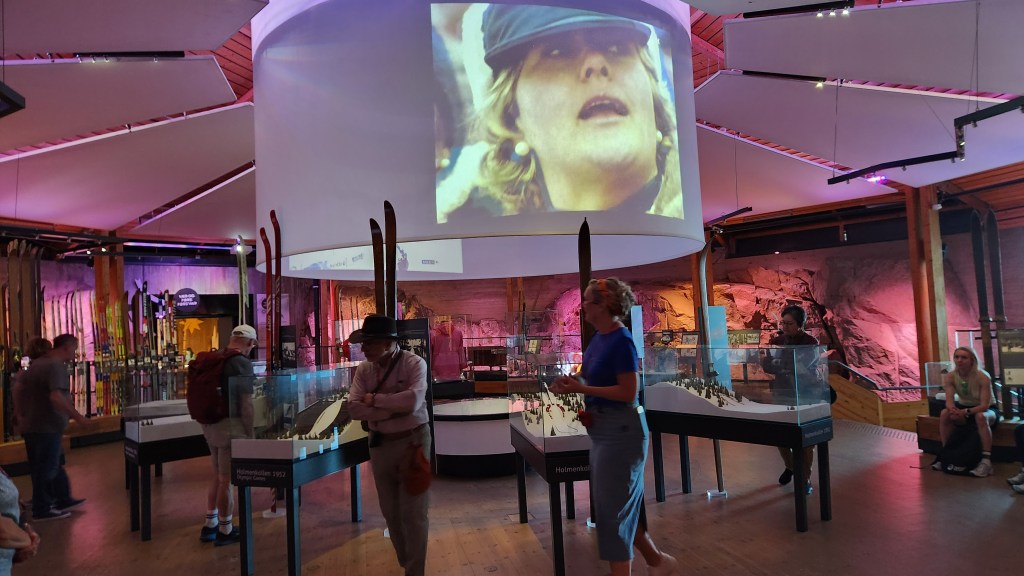
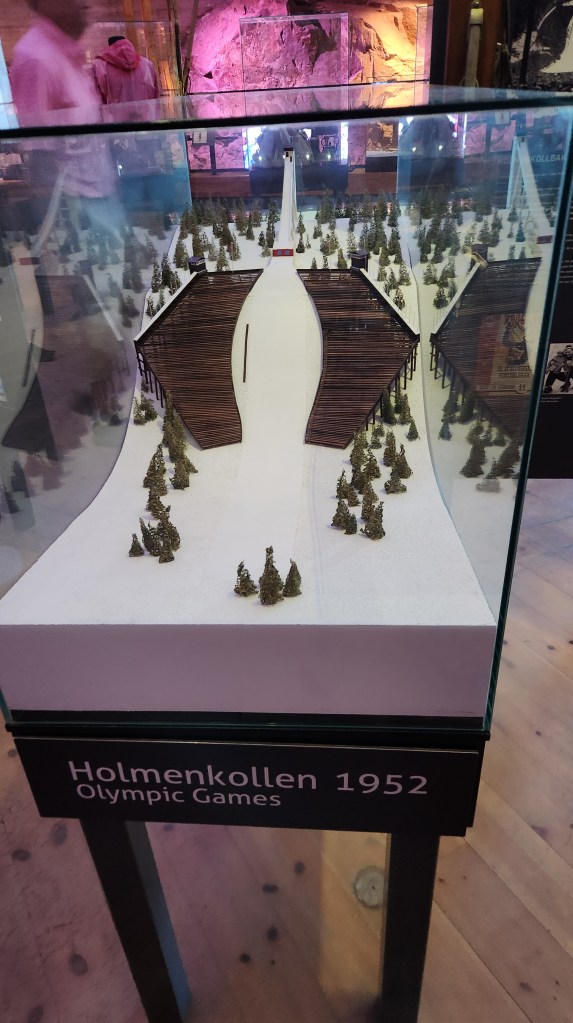
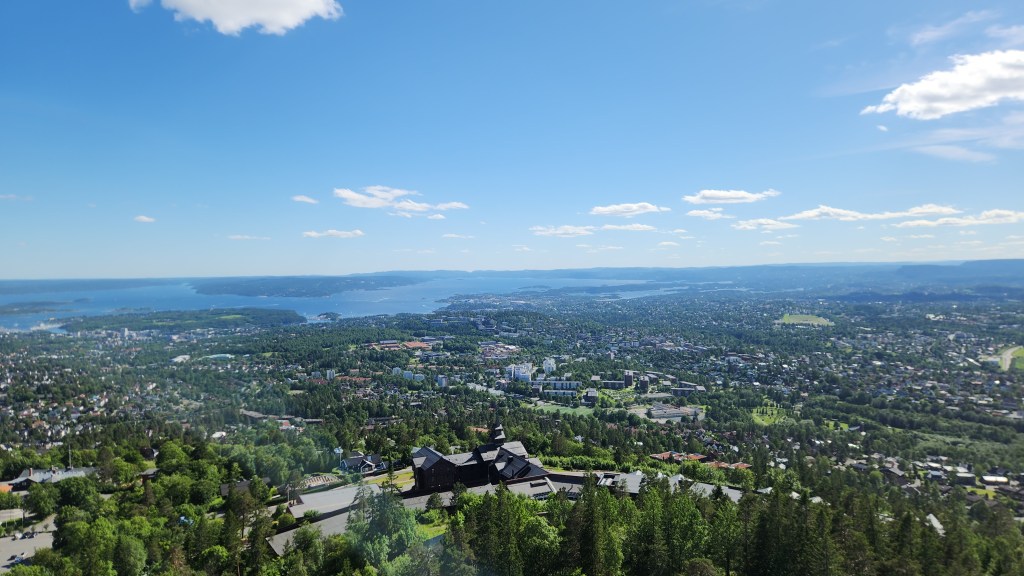
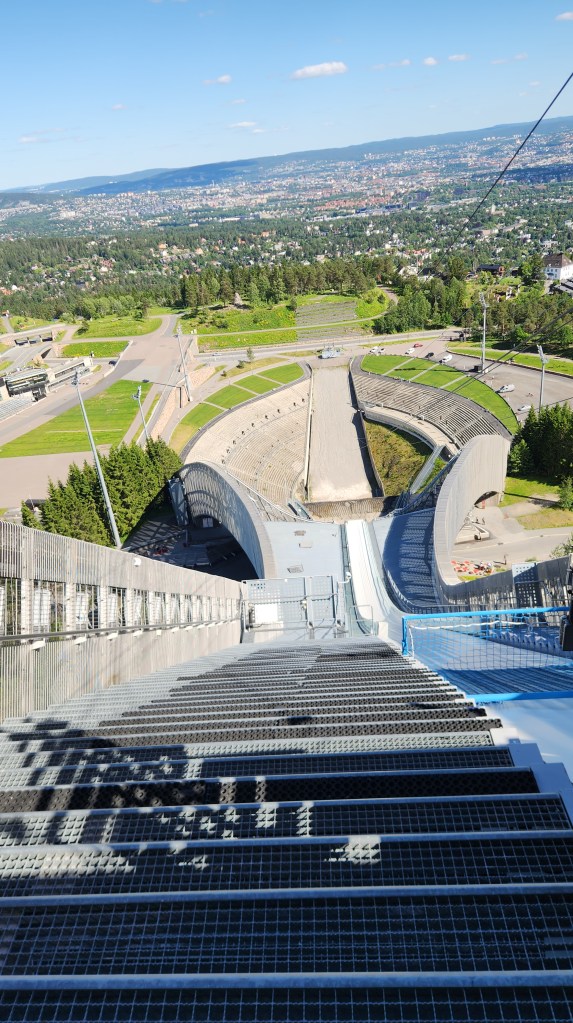
Our activity of choice for Sunday was a trip to the hills above Oslo to the Holmenkollen Park, a popular destination for Oslo residents, especially on a bright sunny day as we had. Our tour group went on a roughly 3-mile, leisurely nature hike through the park, eventually ending up at the world famous Holmenkollen Ski Jump and Biathlon facility. After a tour of the Skiing Museum at the site, we had a nice lunch and a dessert of Kvikk Lunsj bars. (I can confirm that – to my delicate palate – the Kvikk Lunsj was far superior to a Kit Kat bar.) After lunch, we went to the top of the ski jump for a spectacular view of the city, before returning to the ship.

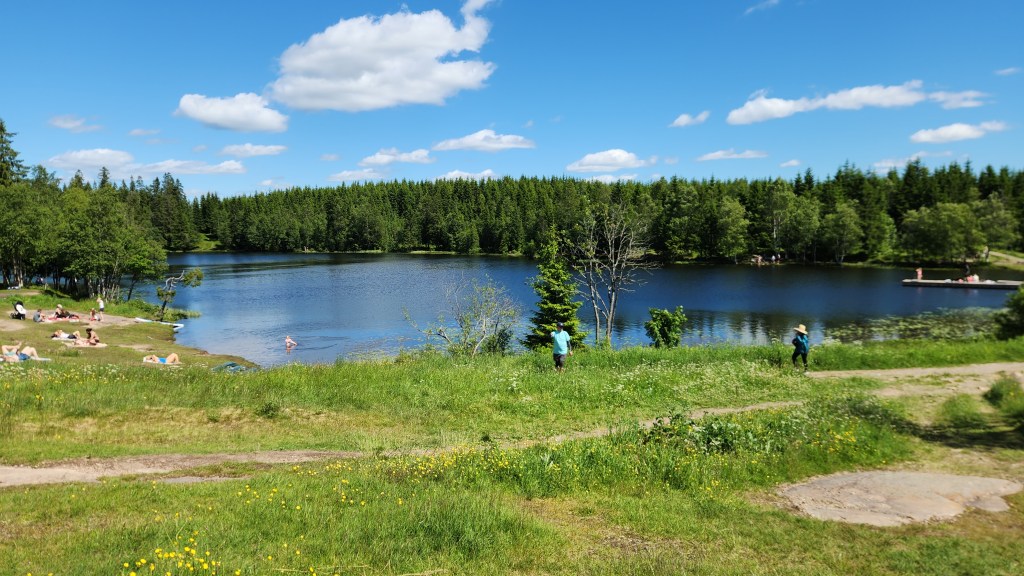
The Holmenkollen Nature Park
The Viking group at the Holmenkollen Nature Park
King Olav V and his faithful dog watch over the Ski Jump and Biathlon Range at Holmenkollen …
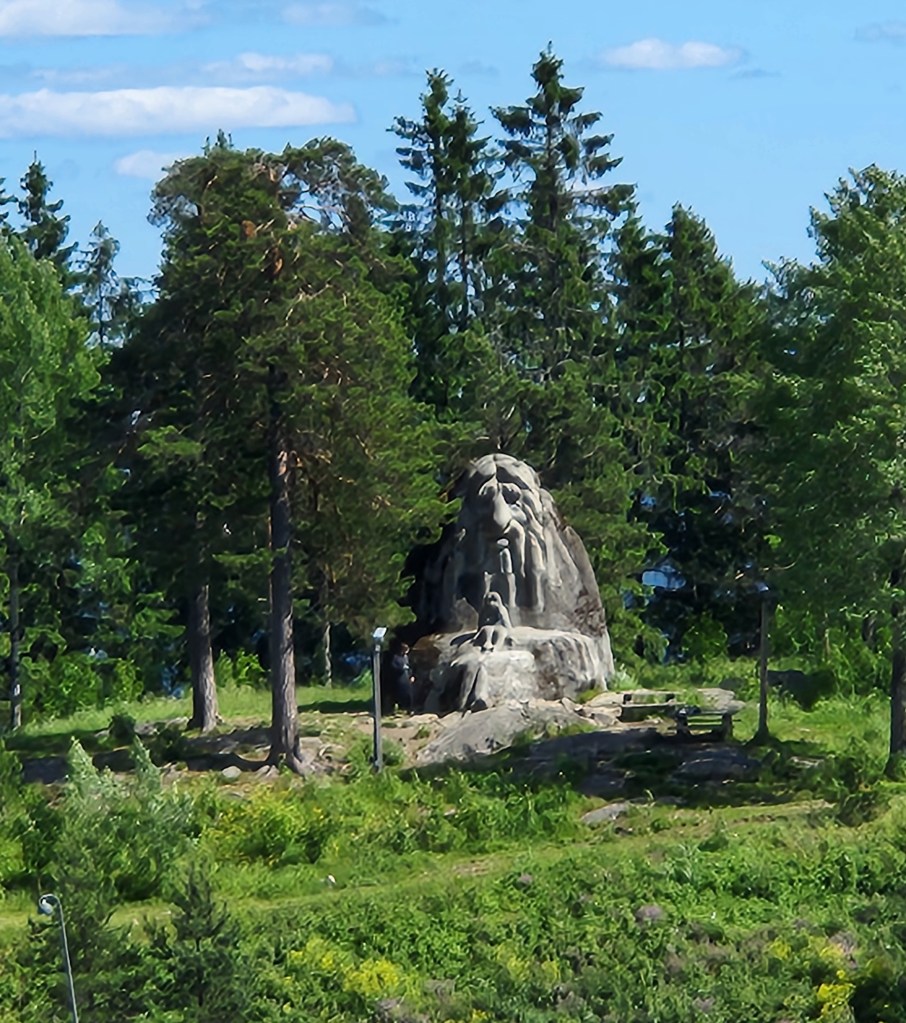
… while a Troll looks on from afar
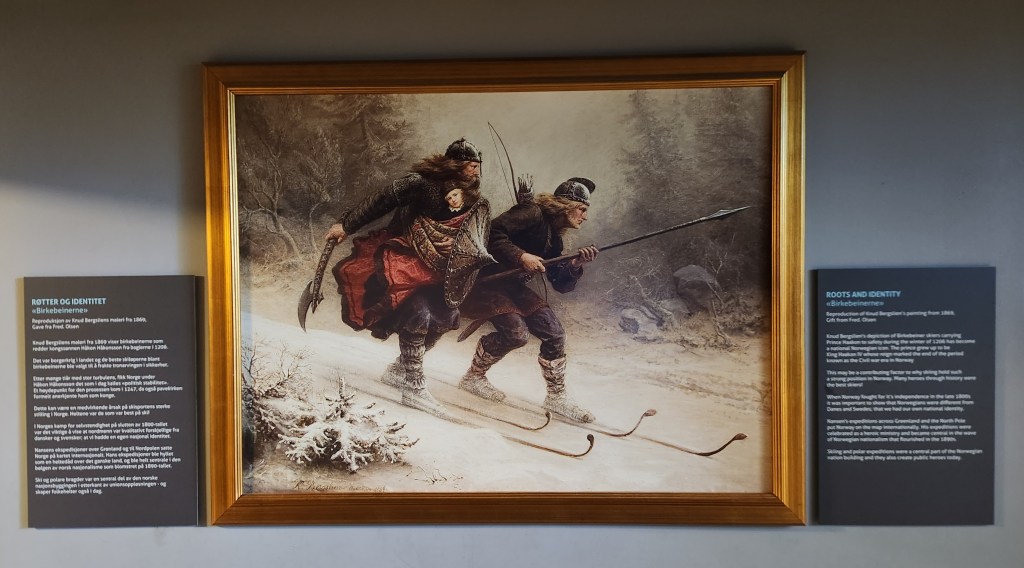
Exhibit at Holmenkollen — Birkebeiners Ski with the Infant Haakon Haakonson to Safety
Exhibits at the Skiing Museum at Holmenkollen
Exhibit at the Skiing Museum
View from the Top of the Ski Jump
A Ski Jumper’s View

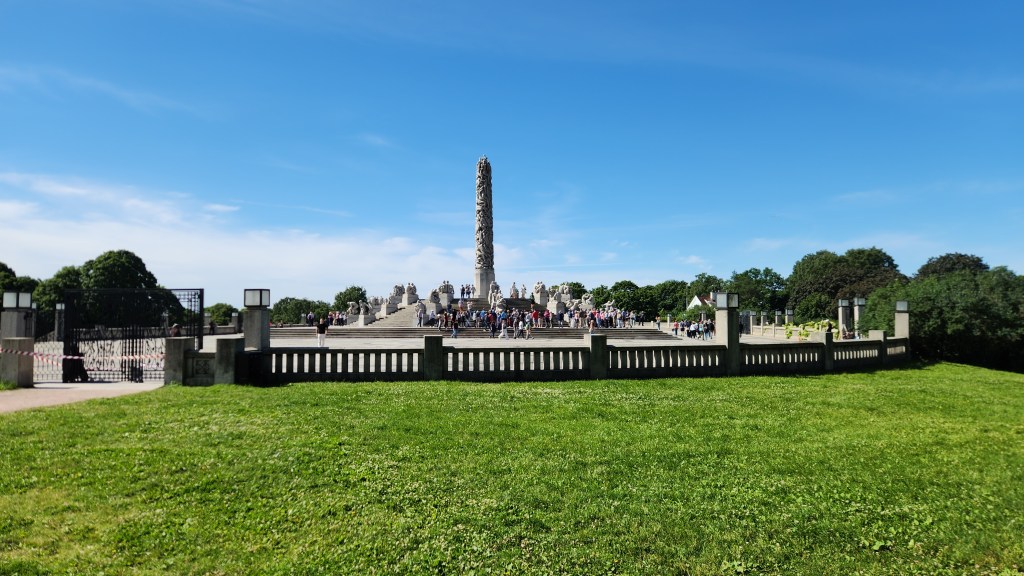
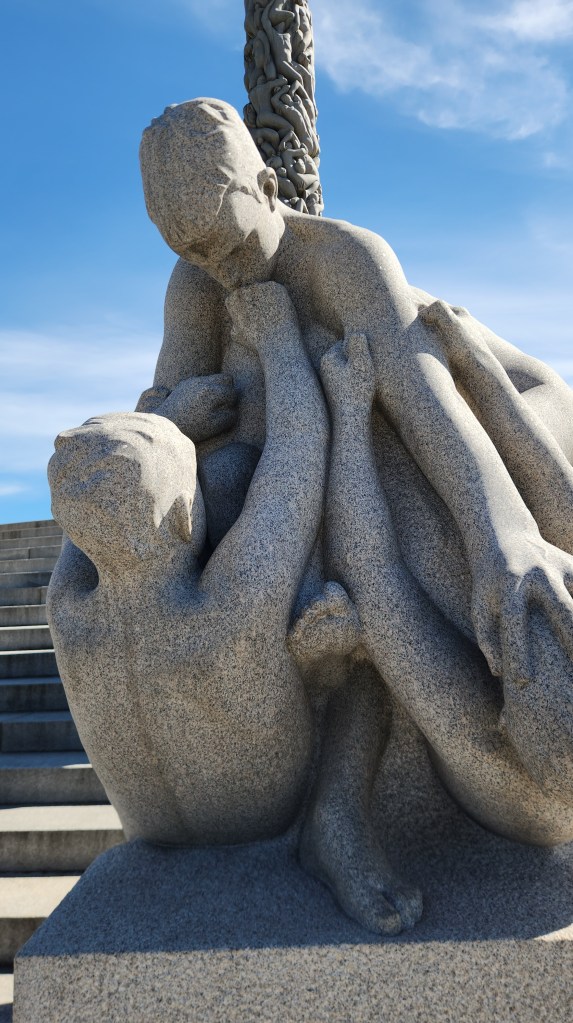
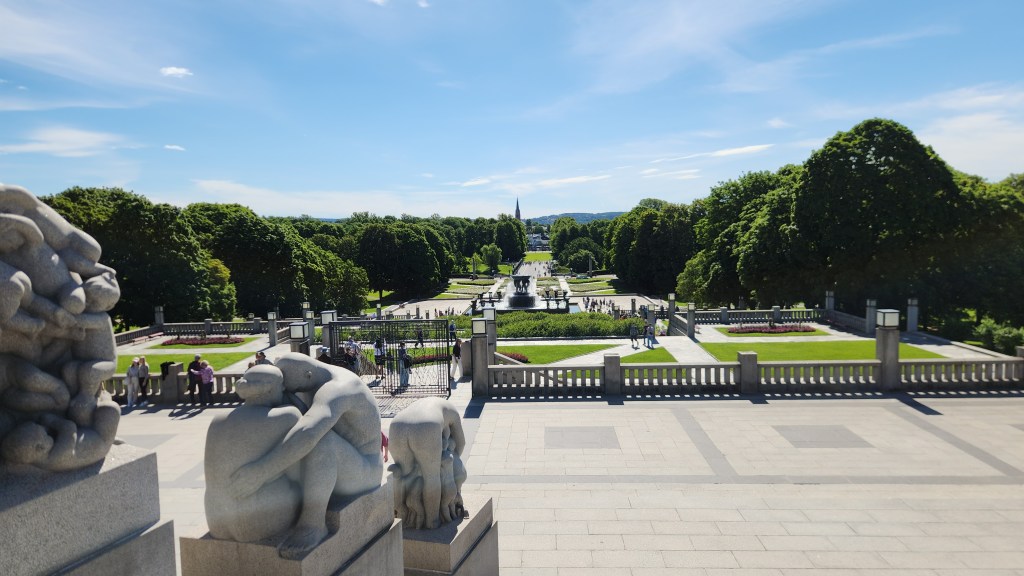
On Monday, our last day in Norway, we began with a motorcoach tour of Oslo including an extensive visit to the Vigeland installation at Frogner Park, which turned out to be an amazing, one-of-a-kind experience. In 1921, Norwegian sculptor Gustav Vigeland struck a deal with the city of Oslo. Vigeland gifted his lifetime’s work to the city in exchange for a combined home, studio, and creative freedom. The result of this extraordinary deal is the Vigeland installation, the world’s largest sculpture park made by a single artist, featuring 212 works by Vigeland. The sculptures are located on 80 acres in the center of Frogner Park and are mostly displayed within several major groupings:

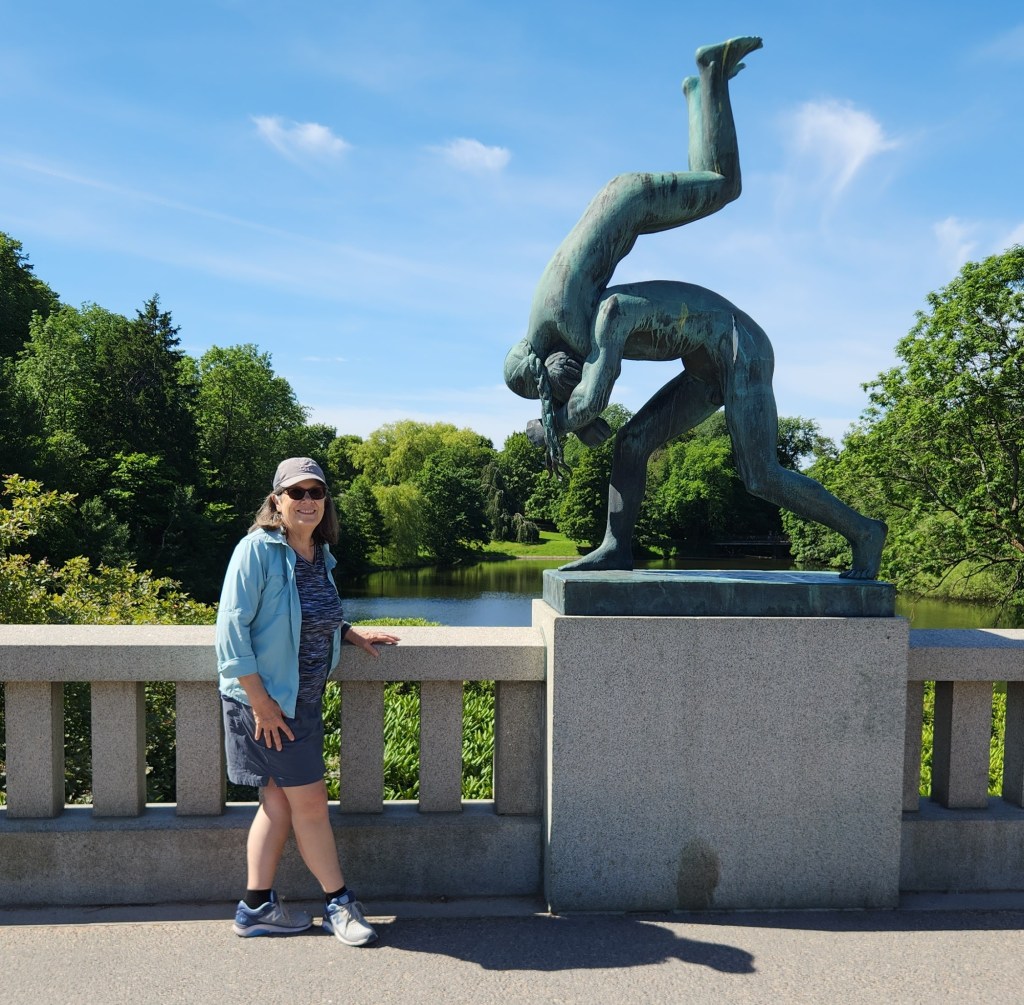
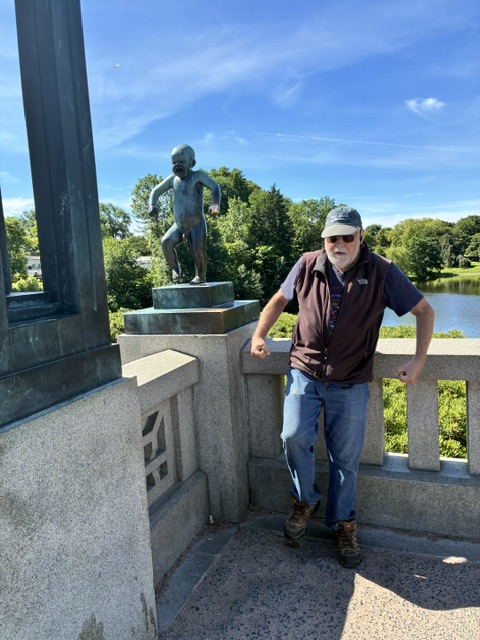
  • The Bridge contains 58 bronze sculptures portraying men, women, and children interacting, including the iconic Sinnataggen (Angry Boy). None of the individual sculpture actually was named by Vigeland, but the Angry Boy has become the popular name, and many visitors touch it for good luck.
  • The Fountain: Originally meant for the grounds of the Norwegian Parliament, it features 20 tree-group figures depicting various stages of life, from birth through old age.
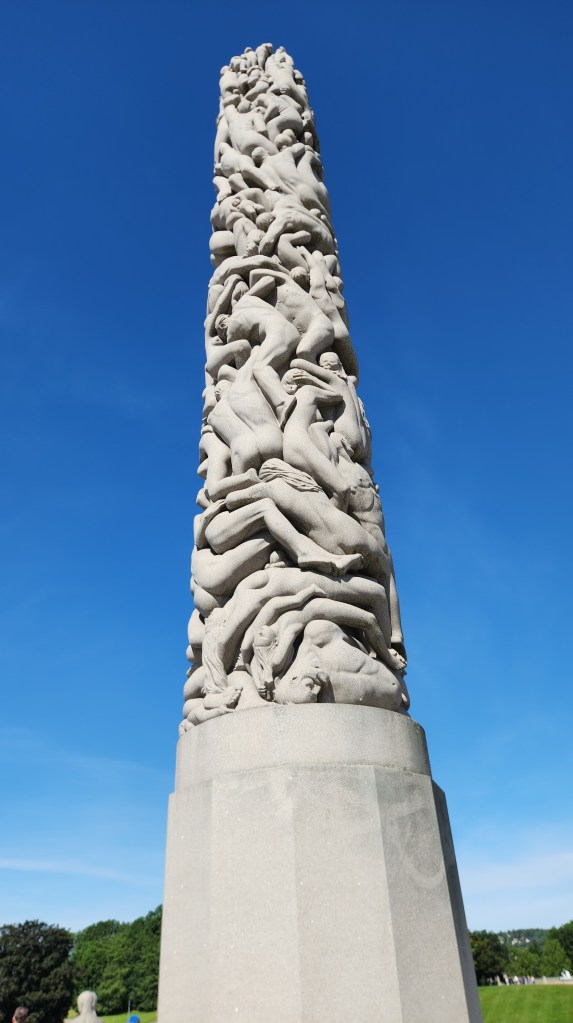
  • The Monolith: The centerpiece of the park, the monolith is carved out of a single massive block of granite. It features 121 entwined human figures reaching toward the sky, representing mankind’s longing for the spiritual and the divine.
  • The Wheel of Life: Found at the far end of the park, this bronze sculpture shows four adults and a child intertwined in a circle, symbolizing eternity.

Vigeland did not live to see the park fully completed before he died in 1943, but what he left behind is simply amazing.

The Monolith and Wheel of Life Groupings at the Vigeland Installation
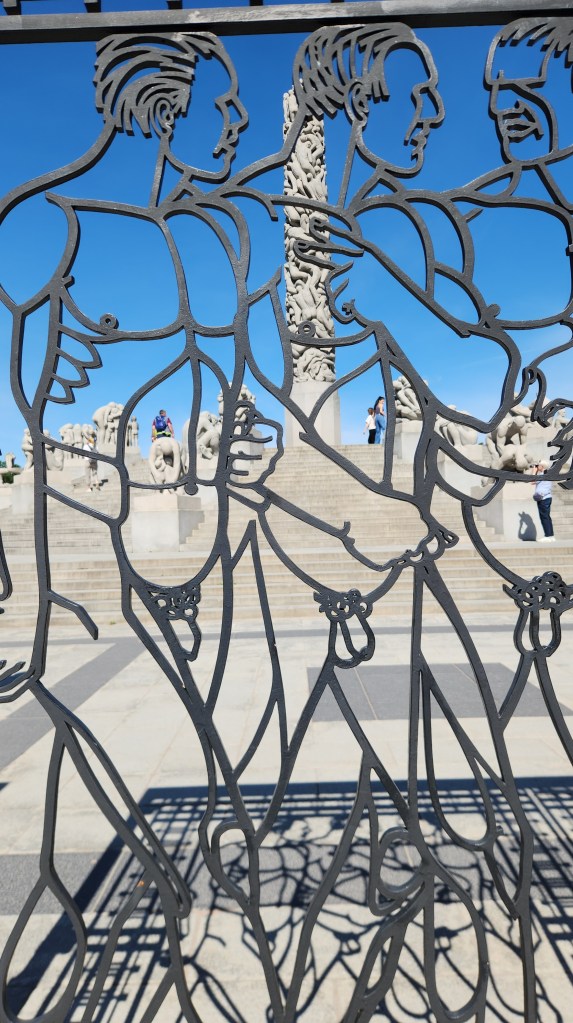
One of the Gates at the Monolith and Wheel of Life
The Monolith
Some of the Figures in the Wheel of Life Grouping
The Fountain Grouping
Looking From the Wheel of Life toward the Bridge
Figure(s) in the Bridge Grouping
Has the Angry Boy found an Angry Old Companion?

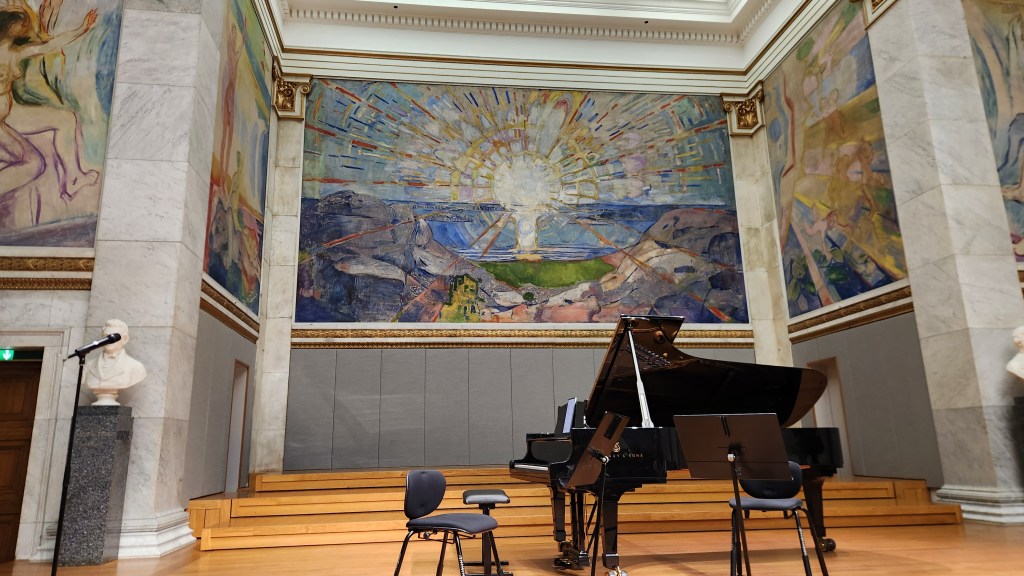
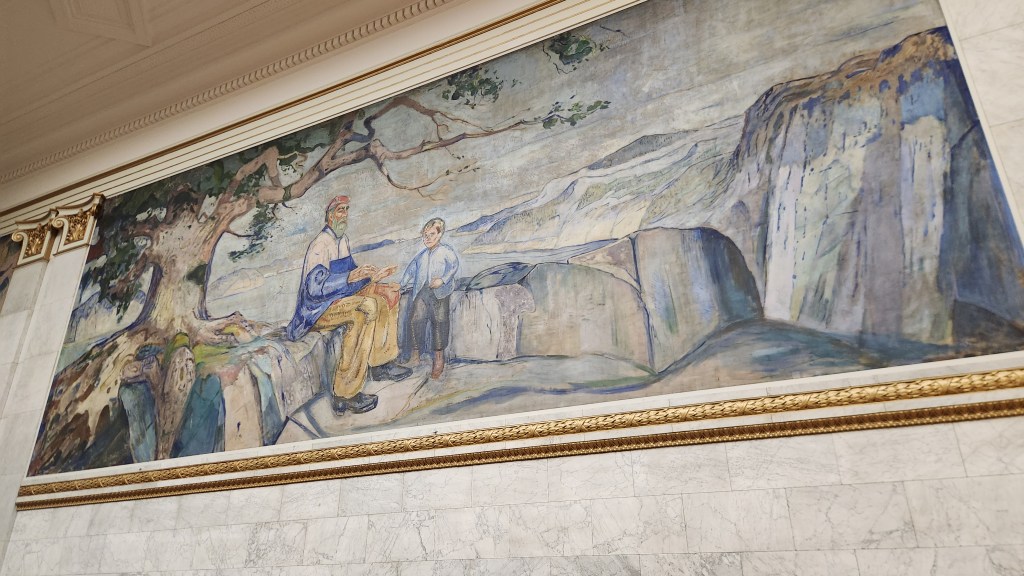
Our final activity in Oslo was a special classical music concert performed for Viking travelers. The University Aula is a prestigious ceremonial and concert hall of the University of Oslo, located on Karl Johans Gate in the center of the city. Built in the mid-19th century, the venue is world-renowned for its interior walls, which feature 11 monumental oil paintings by Edvard Munch, including his masterpiece The Sun. The concert was presented as the story of Peer Gynt, the famous Henrik Ibsen play based loosely on the life of his longtime friend, Ole Bull. The program featured Edvard Grieg’s music written to accompany Ibsen’s play as well as works by Mozart, Puccini, and others.

The Aula Stage and Munch’s The Sun
Another Munch Mural at the Aula
The Concert Musicians
The Concert Musicians and Singers

All in all, we were very impressed by Norway – not only for its stunning beauty and rich culture, but for its environmental leadership. We learned that 100% of new cars sold in Norway are all electric, as are about 80% of all cars on the road. The necessary electric car charging infrastructure is fully in place, providing hope that other countries will eventually be able to do so as well. Norway is powered entirely by green energy, including hydroelectric, wind, and solar. Even though the oil and gas industry is a major part of Norway’s economy, all fossil fuels are exported to other countries. Although only a small country (population 5.6 million), Norway supplies 2% of the world’s crude oil and 3% of its natural gas, and the revenues from these exports are funneled into its sovereign wealth fund for the good of the Norwegian people. The wealth fund exceeds $ 2 trillion and holds stakes in approximately 7,200 companies worldwide, effectively owning about 1.5% of all listed companies on the planet. The fund’s substantial earnings are used to support the national budget including investments in infrastructure, while the large principal value is saved ; the principal is saved to ensure long-term wealth for future generations.

But now it’s time to move on, and when I begin work on Part 3, we’ll find ourselves in Denmark.

Stay tuned …
Pat and Dave’s Vibrant Viking Voyage – PART 1: Introduction and Pre-Cruise Program

Preamble

It’s hard to believe, but it’s already time for another episode in my ongoing series of travelogues documenting our domestic and international travel experiences. As past readers will know, the domestic travelogues have been road trips (either with the RV we formerly owned or with one of our two our electric cars) while the international travels have mostly been with the Viking River Cruise or Viking Ocean Cruise lines. We took our first Viking River Cruise on the Danube River back in 2018 (before I started blogging about our travels), and we enjoyed it so much that we’ve continued to patronize Viking. Just to be clear, I am not a paid influencer and receive no compensation of any type – Pat and I are purely and simply great Viking fans. So here I go again, this time documenting an Ocean Cruise denoted “Viking Homelands.” (Thus the latest in my somewhat goofy series of alliterative titles, using the word “Viking” for both the cruise line and the destinations.)

As sometimes happens, we did not get off to an auspicious start. We were booked on a Delta flight from MSP to Newark at 9:14 AM on Friday, June 12, and a connecting flight from Newark to Oslo. However, at about 7 PM Thursday evening, as we were getting ready to retire before an early morning Lyft to the airport, we received an email notice that the flight to Newark had been canceled. Somewhat anxiously, I called the Viking Travel Emergency number and we were soon rebooked on a 3:55 PM United flight to Frankfurt and a connecting flight from Frankfurt to Oslo. However, when we arrived at the departure gate on Friday afternoon, we learned that the Frankfurt flight had been delayed because the plane could not get to the departure gate – blocked by a Delta plane at the adjacent gate as well as airport construction activities. We finally took off two hours late and – big surprise – missed the connecting flight due to the long line at the passport control checkpoint in Frankfurt. After another call to the Viking Travel Emergency number, we were rebooked again on a later flight. We eventually arrived in Oslo feeling sleep deprived after a very long travel day but ready to start on our Vibrant Viking Voyage.

So, let’s get this travelogue started, shall we?

Pre-Cruise Program

The Ocean Cruise portion of the trip began in Bergen, Norway, on June 17th, but we had also booked a four-day pre-cruise extension program that began with a day in Oslo and included a trip to Bergen on the world-famous Bergensbanen railway and a day of sightseeing in Bergen prior to boarding the cruise ship. This Part 1 of the travelogue describes the highlights of the four-day pre-cruise program.

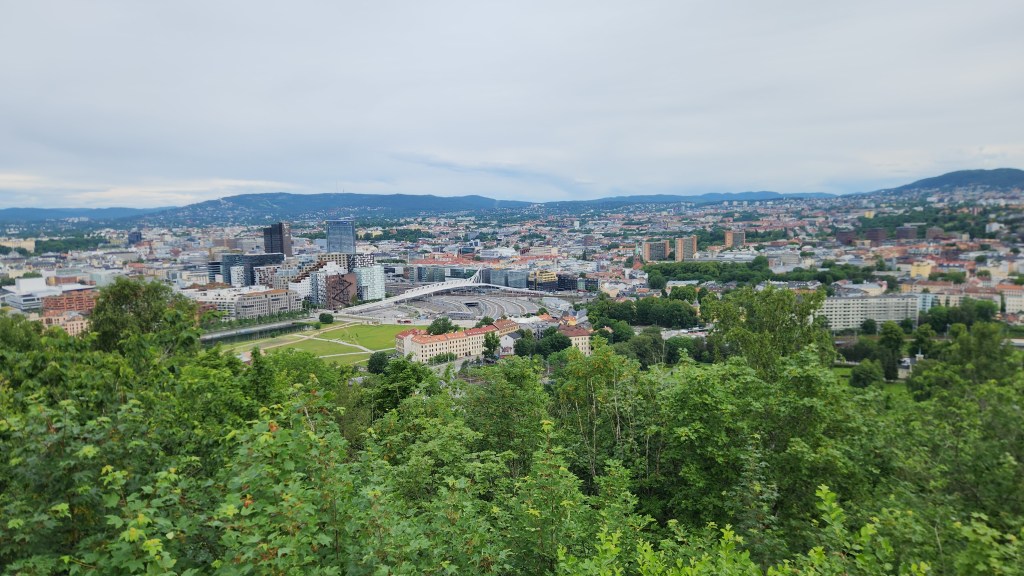
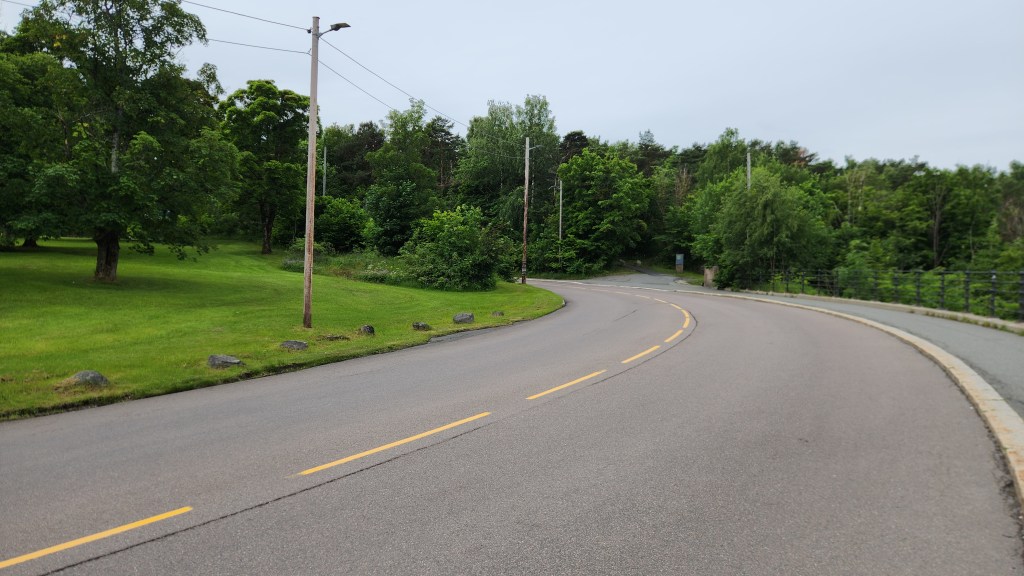
Oslo, Norway (Sunday, June 14, 2026): The first activity was a four-hour scenic motorcoach and walking tour of Oslo. Highlights included a stop at an overlook point with a fantastic view of the city and a visit to the Royal Palace. The overlook is located close to a place in the road referred to as “The Scream curve,” in recognition of the spot where famous Norwegian painter Edvard Munch was walking and came upon an eerie scene of the sunset over Oslo, inspiring his world-famous painting.

Overlook of Oslo
The Scream Curve

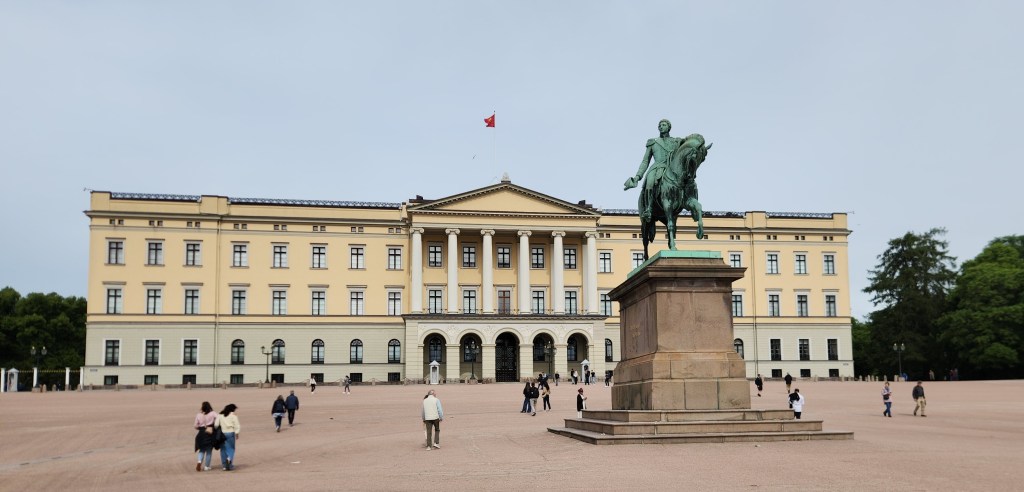
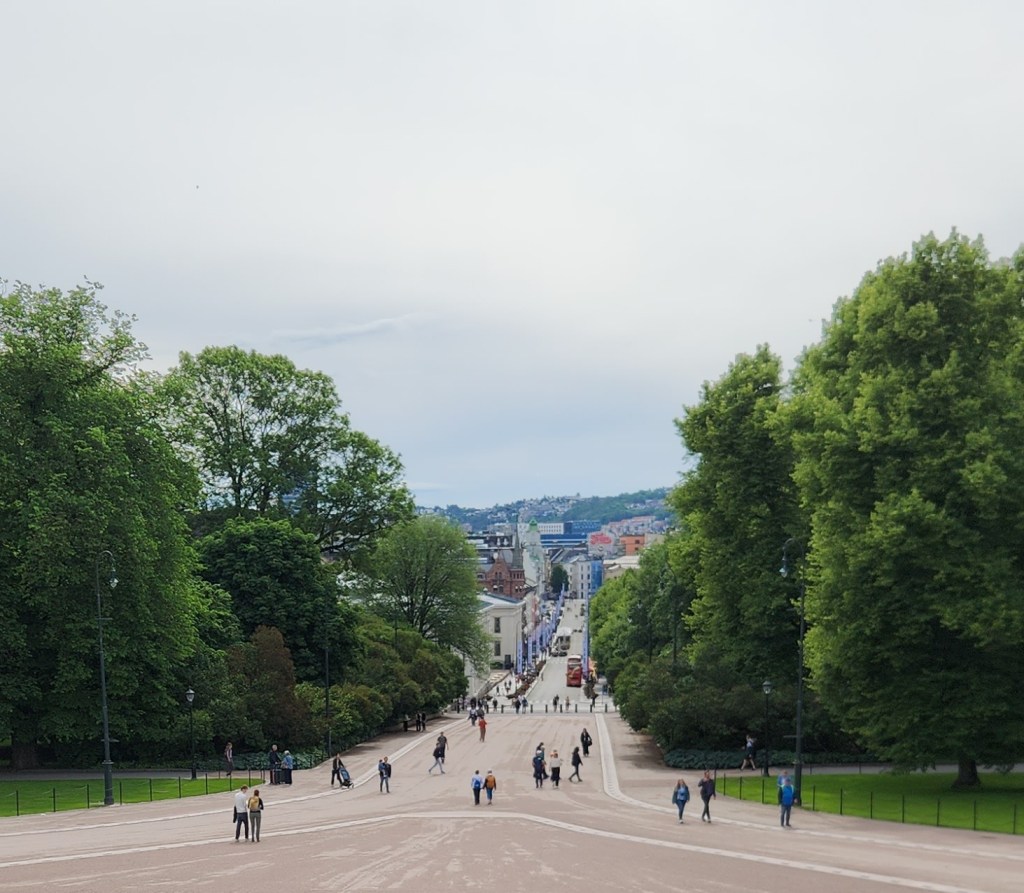
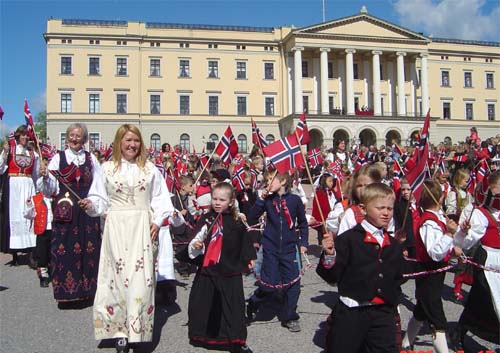
On our way from the overlook to the Royal Palace, home of current monarchs King Harald VI and Queen Sonja, our guide gave us a brief Norwegian history lesson. We learned that Norway had been ruled by Danish and Swedish kings from the fourteenth century until its independence in 1905. However, on May 17, 1814, Norway adopted a constitution establishing the ruling Parliament but retaining the king as a ceremonial leader. After independence, the Norwegian people still wanted a king. Somewhat ironically, Prince Karl of Denmark was asked to fill that role, which he did, but only after a national referendum confirming him as the Norwegian people’s choice. To emphasize continuity with Norway’s medieval kings (prior to Danish rule) he adopted the name Haakon VII. The palace itself was built by Swedish King Karl III Johann, who also became the king of Norway when Sweden was awarded Norway as a prize following the defeat of Denmark in the Napoleonic wars. A huge statue of Karl Johann on his steed stands in front of the palace, facing Oslo’s main street, Karl Johann Gate. On Constitution Day (May 17), a parade runs from downtown Oslo to the palace, with the participants wearing the so-called “bunad,” the traditional costume of Norway. The 54-acre public Palace Garden surrounds the palace, and we enjoyed a leisurely stroll through the garden before resuming the coach tour.

Oslo Royal Palace
Karl Johann Gate viewed from the Royal Palace
Children’s Parade on May 17th 2005 (courtesy Wikipedia)
The Palace Garden

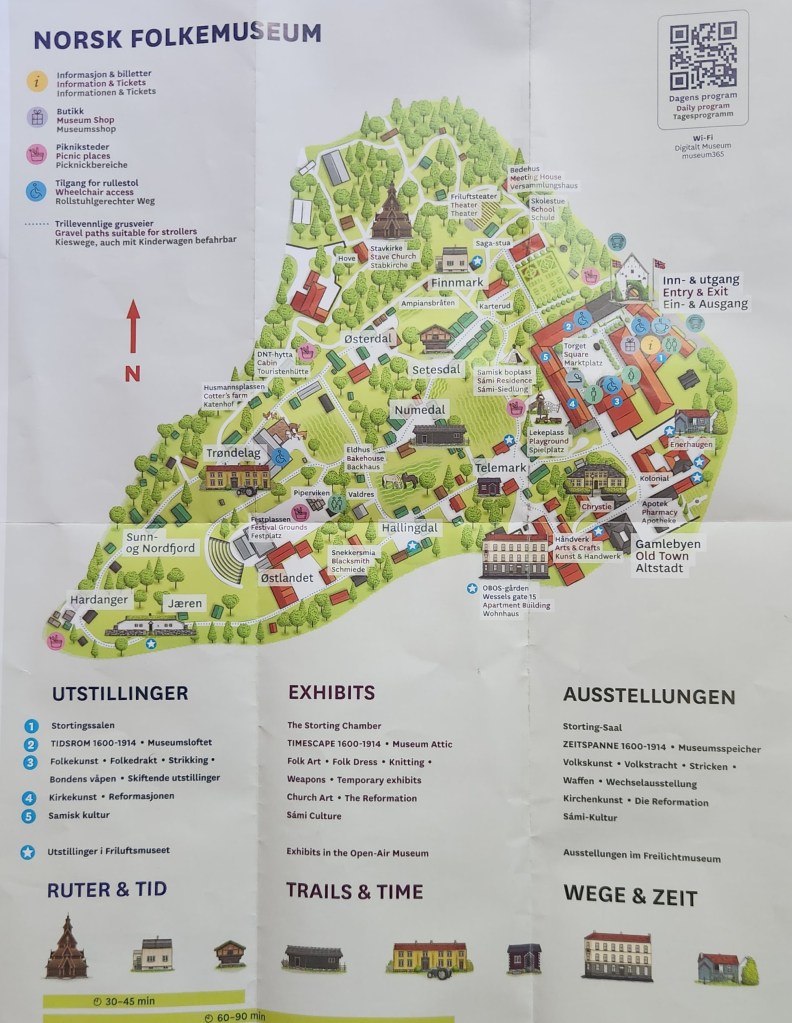
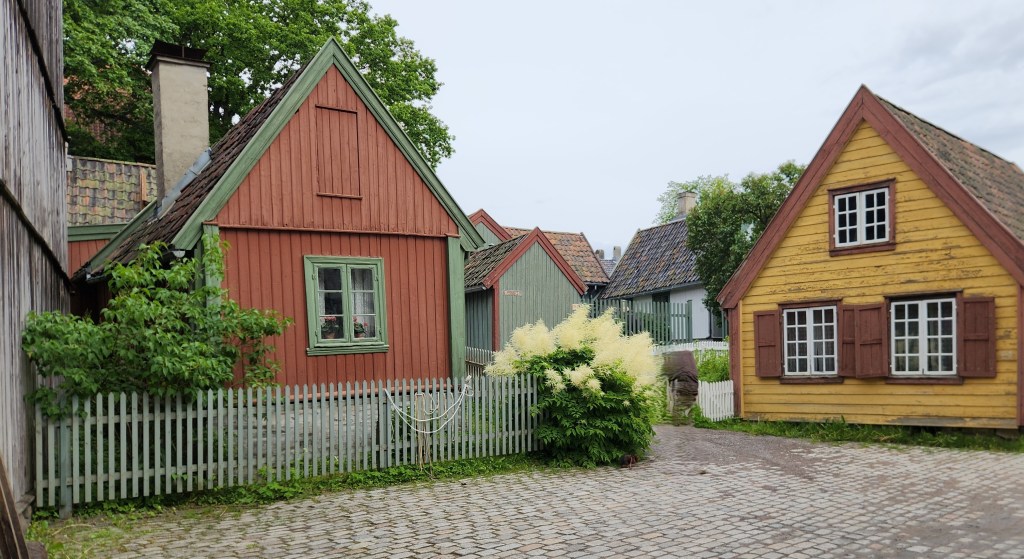
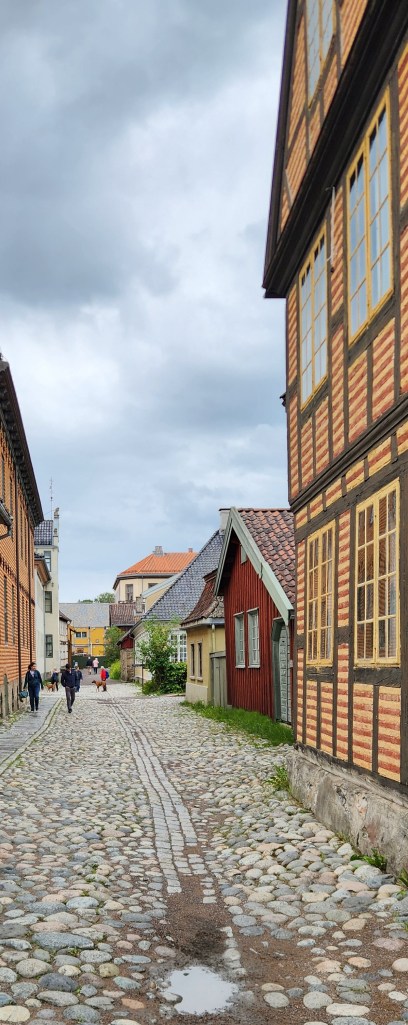
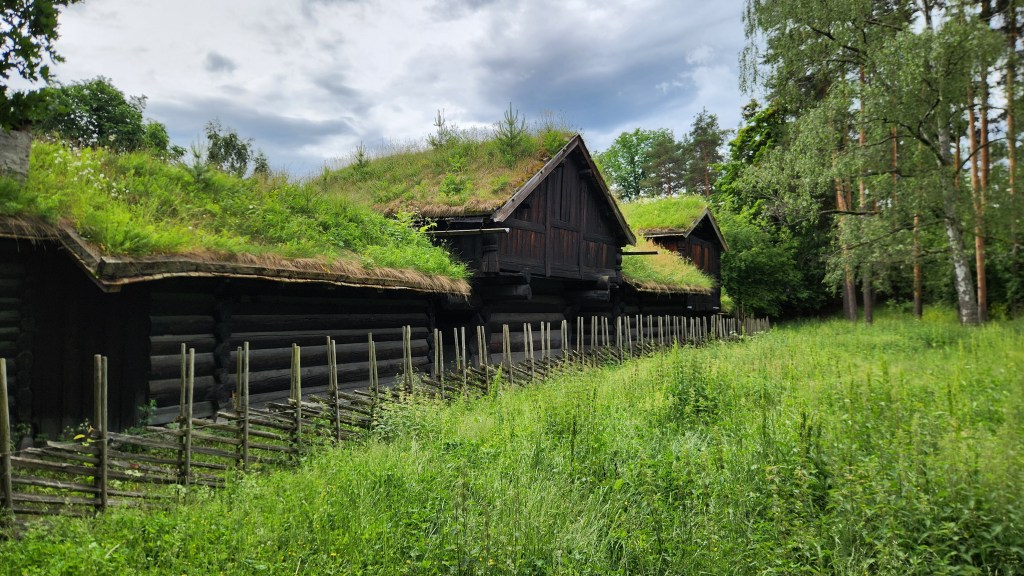
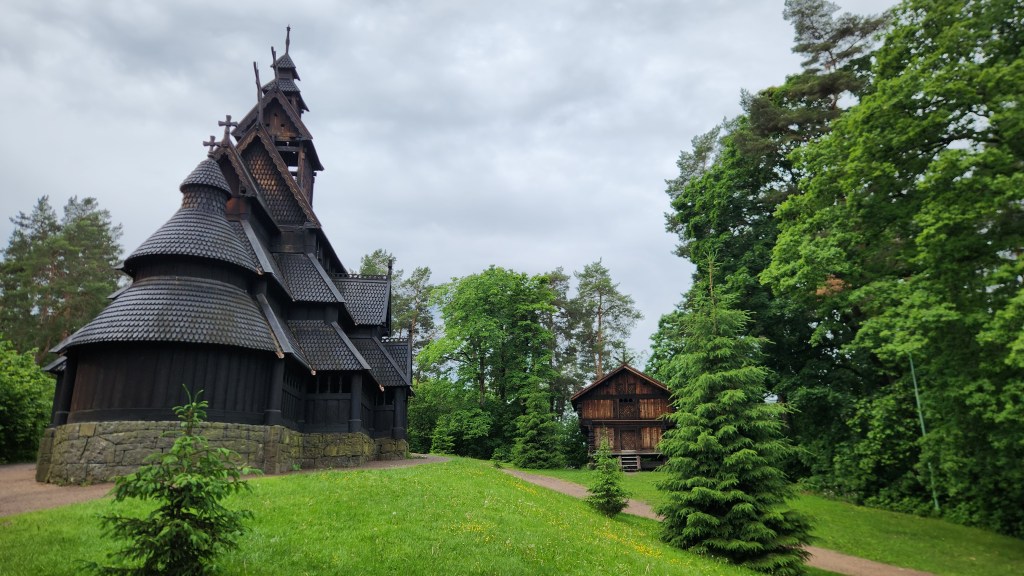
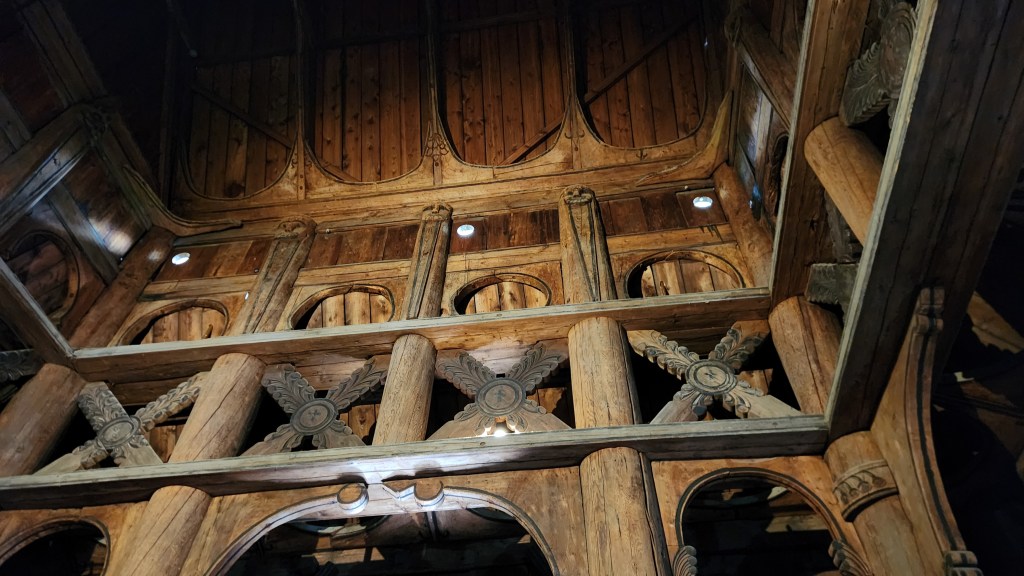
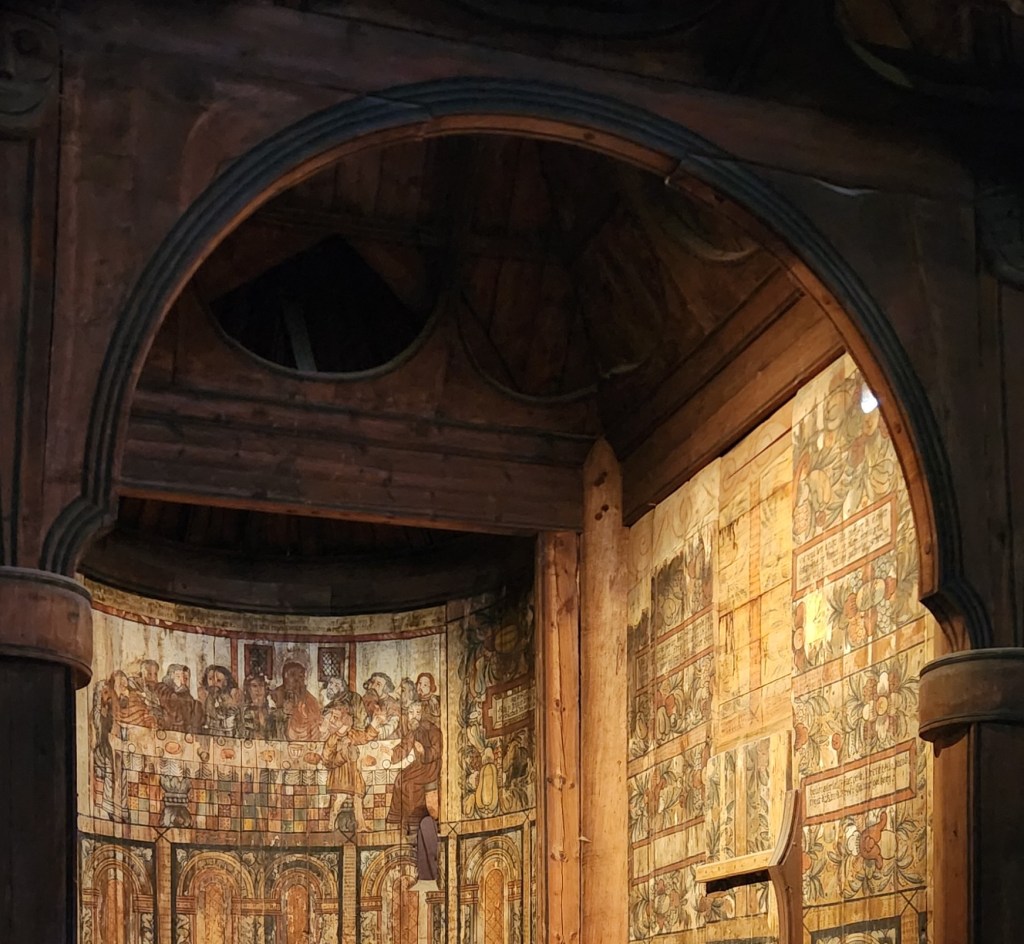
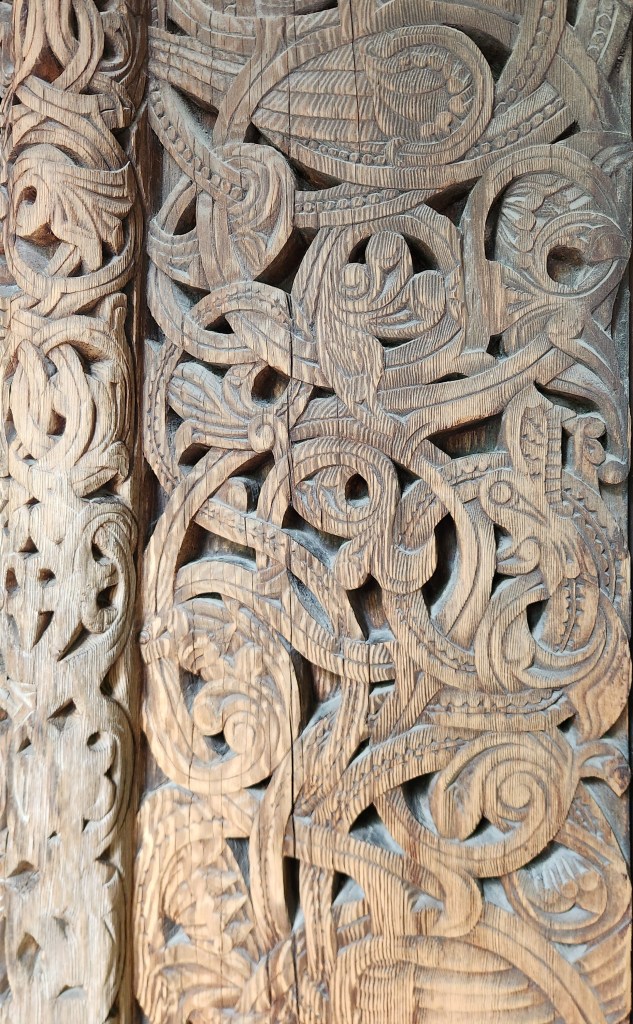
After the Royal Palace, we traveled to the Norwegian Museum of Cultural History (Norsk Folkemuseum), located on the Bygdøy peninsula. This is an open-air museum, featuring over 150 historic buildings relocated from across Norway, including a 13th-century stave church, so named for the “staves” that support the church building.

Norsk Folkemuseum Brochure Map
Museum Buildings
Cobblestone Street
Old-Time Green Roof Technology
The 13th Century Stave Church
Inside the Stave Church
Wood Carvings in the Stave Church
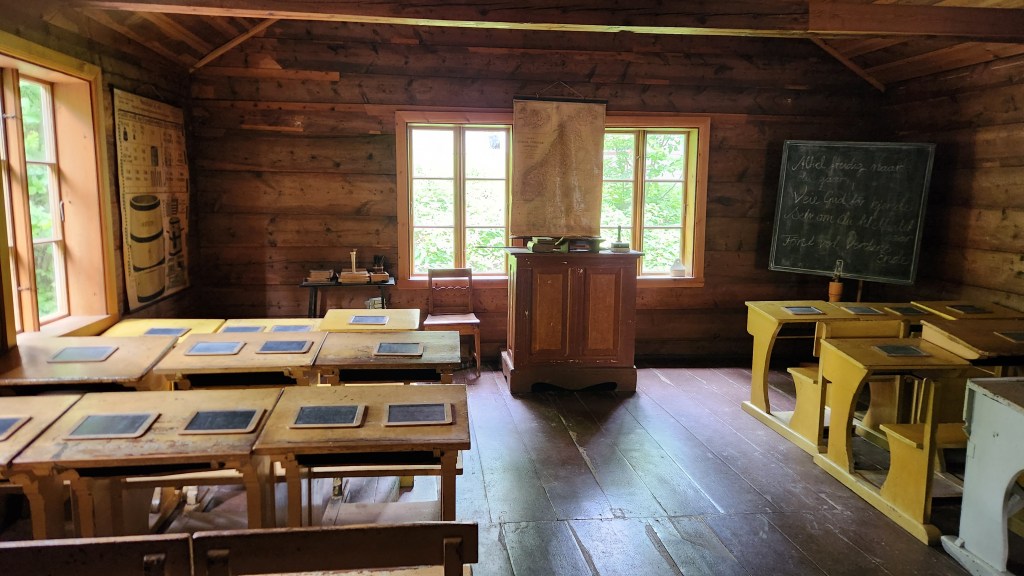
Old School House
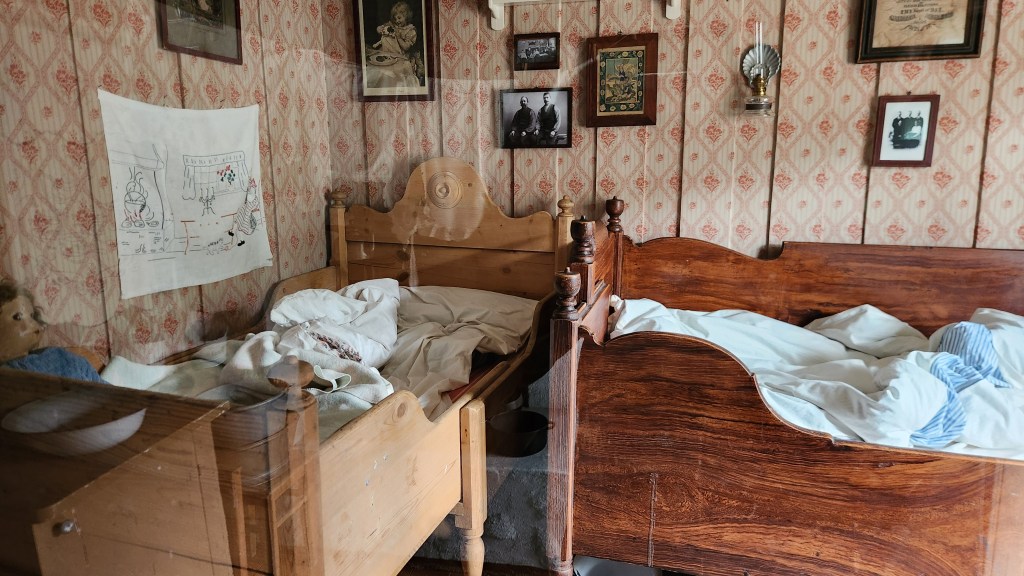
Living Quarters
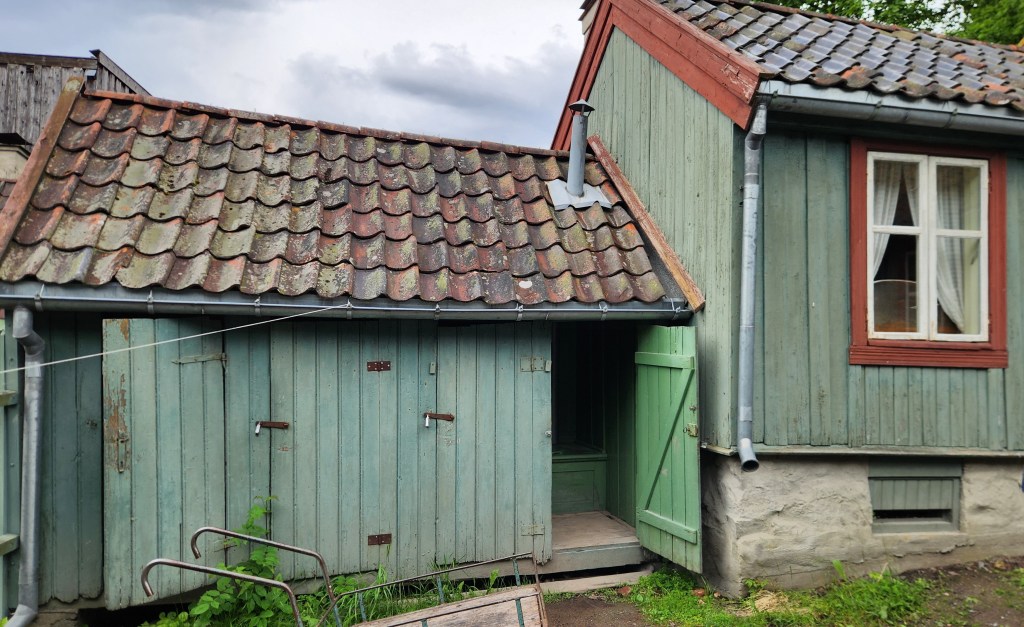
Modern Rest Room Facilities?

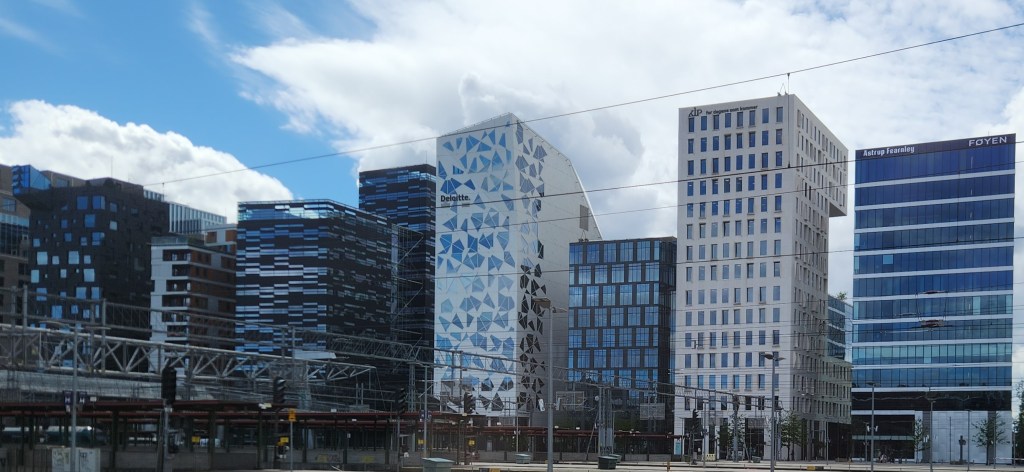
As we drove back to the hotel, we passed by many interesting buildings, including the so-called “bar code” area of Oslo, inspired by the look of the buildings, which include many of Oslo’s financial and technology businesses as well as housing units.

The Bar Code Area

After the coach tour we spent several hours on our own exploring the area around our hotel, including the impressive Opera House and other areas adjacent to the Oslo fjord. (Although we think of a fjord as a deep, narrow, and winding sea inlet flanked by steep cliffs or mountains, which we’ll get to in the next Part of the travelogue, in Oslo’s case it merely refers to the sea inlet – more or less a generic word for “inlet” or “bay.”) The roof of the Opera House is designed for people to walk on, providing beautiful views of the area.

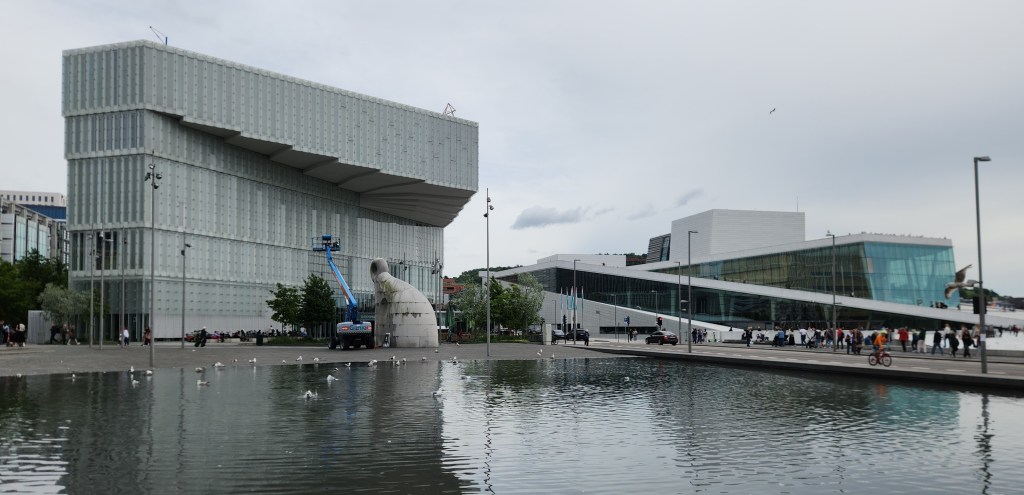
Oslo Library (left) and Opera House (right)
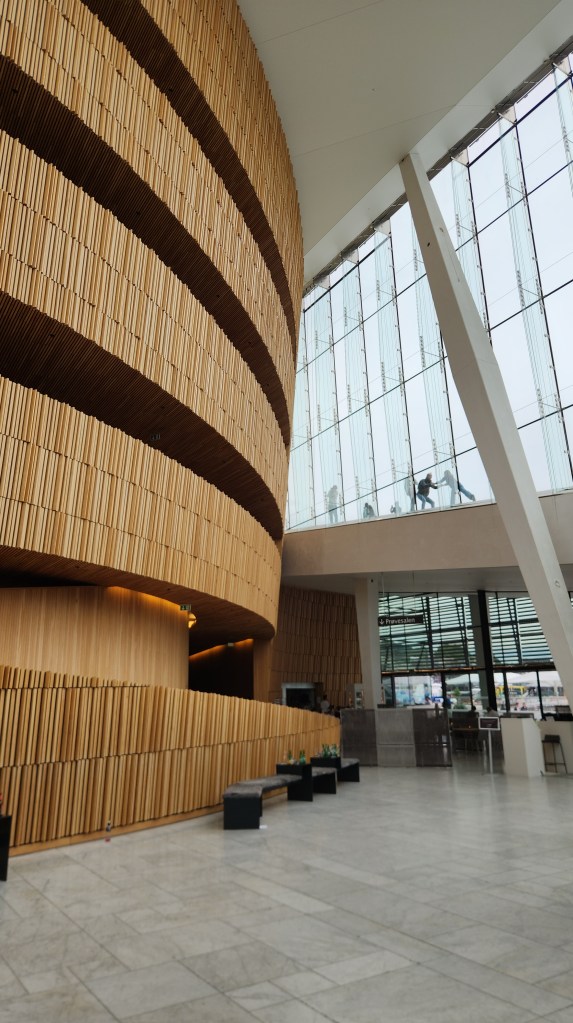
Interior of Opera House
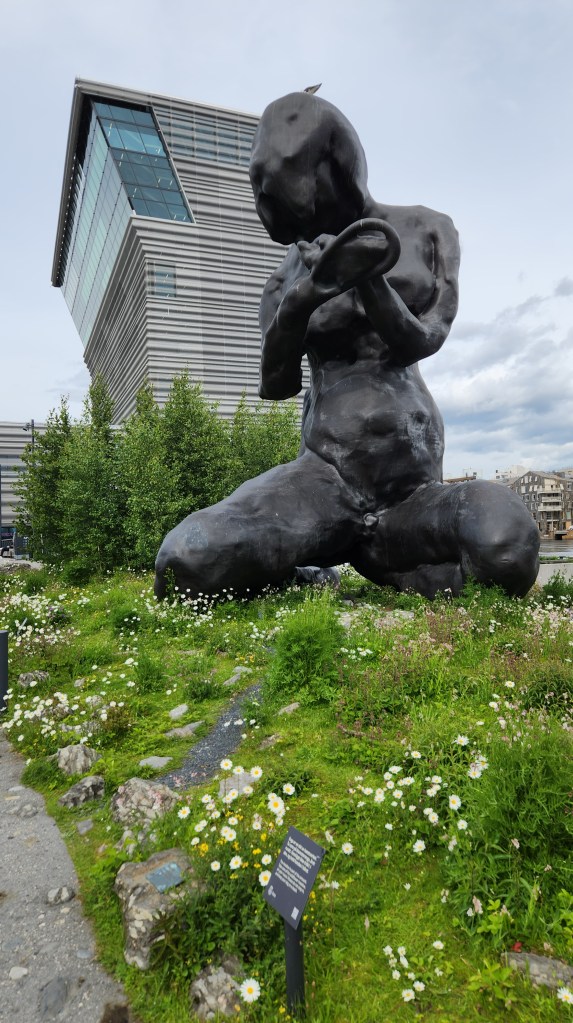
Wildflower Garden and Sculpture (The Mother) by the Fjord
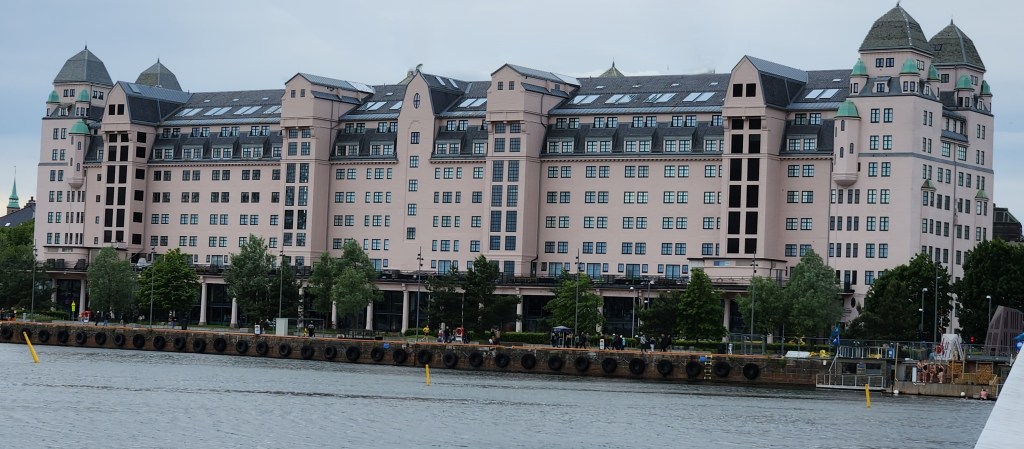
Office Building Across the Fjord from the Opera House

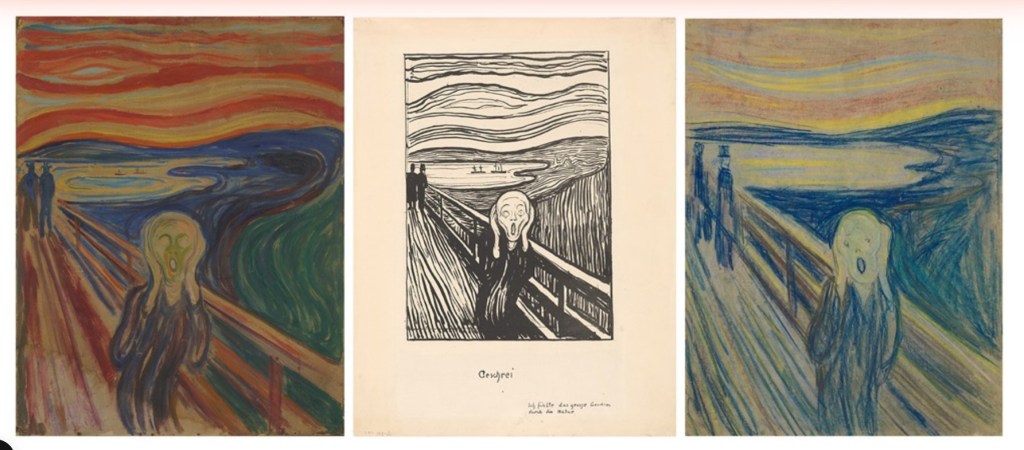
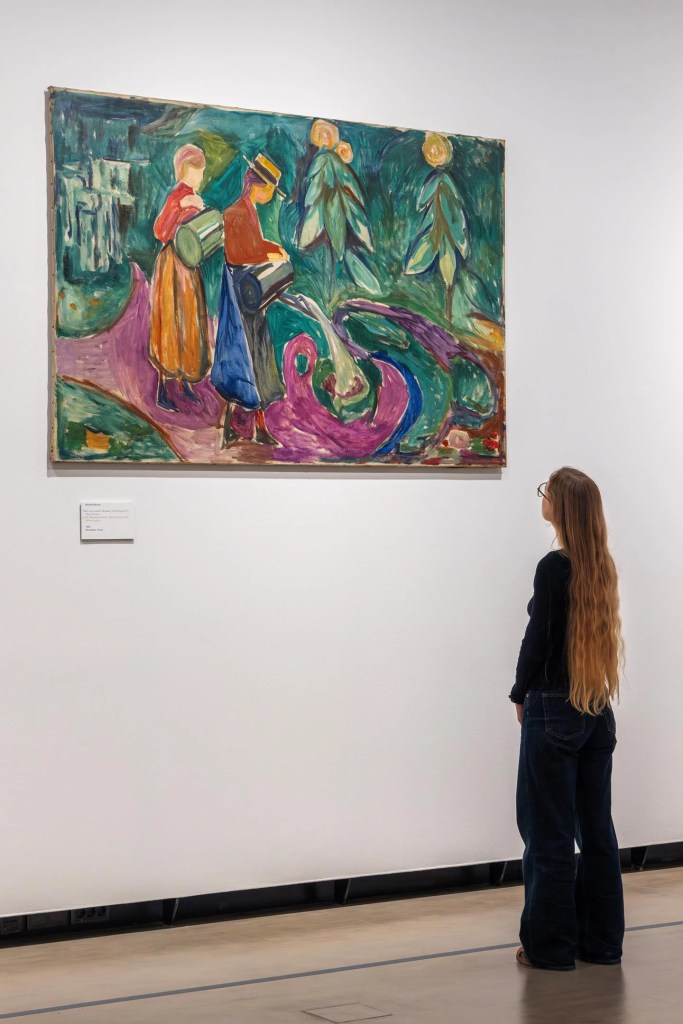
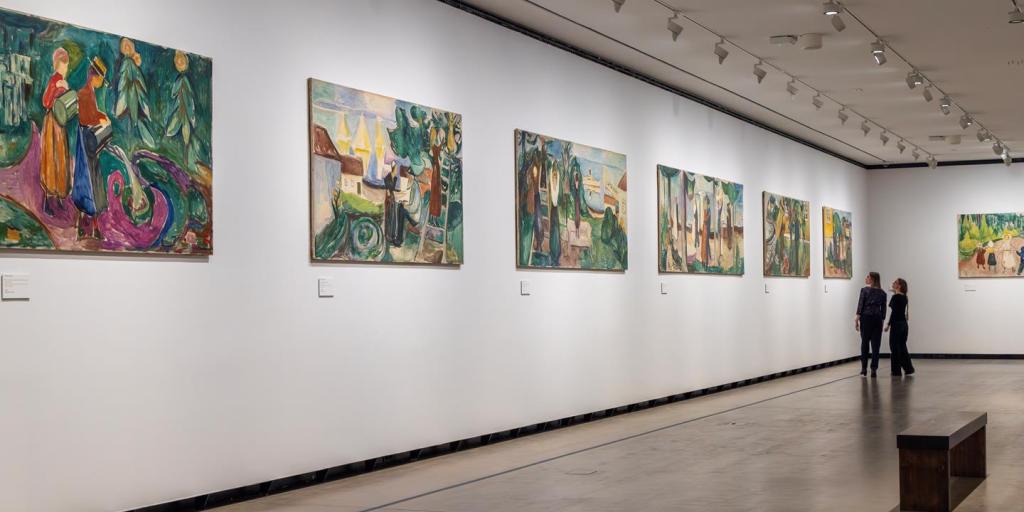
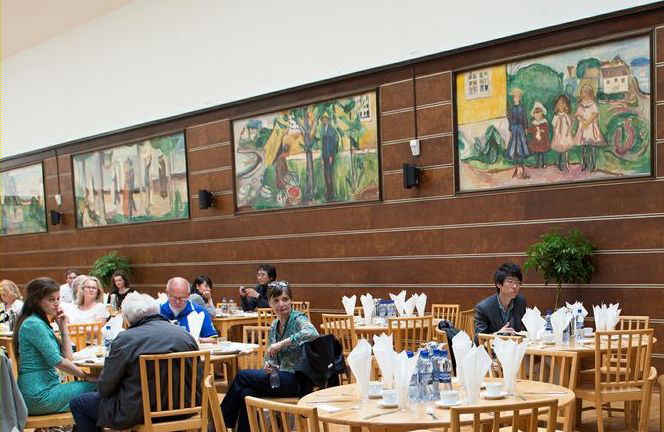
Along the way, we stopped for a couple of hours to tour the Munch Museum. The current museum building opened in 2021 and houses much of the collection bequeathed by Munch to the city of Oslo, including a staggering total of 28,000 artworks and 42,000 unique museum objects. While Munch is best known for The Scream, three versions of which are displayed at the museum, he was a prolific artist who worked in multiple media and formats. Among the most impressive of his works are 12 giant murals commissioned by the Freia Candy Factory to decorate the dining hall for their workers. These were temporarily on display at the museum. For some strange reason, I failed to take any photos at the museum, so I borrowed the following pictures from the museum’s website. (Hopefully they won’t sue me for copyright infringement!)

Three Treatments of The Scream (Courtesy Munch Museum website)
One of the Twelve Freia Murals (Courtesy Munch Museum website)
Temporary Display for the Freia Murals (Courtesy Munch Museum website)
The Murals in the Freia Chocolate Factory Dining Room (Courtesy Munch Museum website)

Although I will bet that most readers are familiar only with The Scream, as was I before touring the museum, the variety and depth of Munch’s works is simply amazing, and I would recommend this museum as a must for visitors to Oslo.

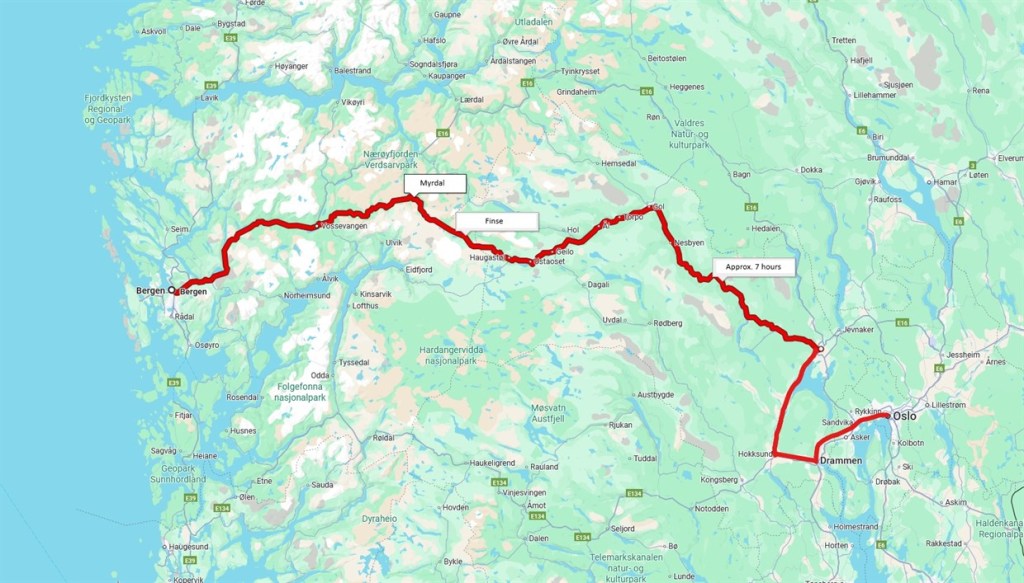
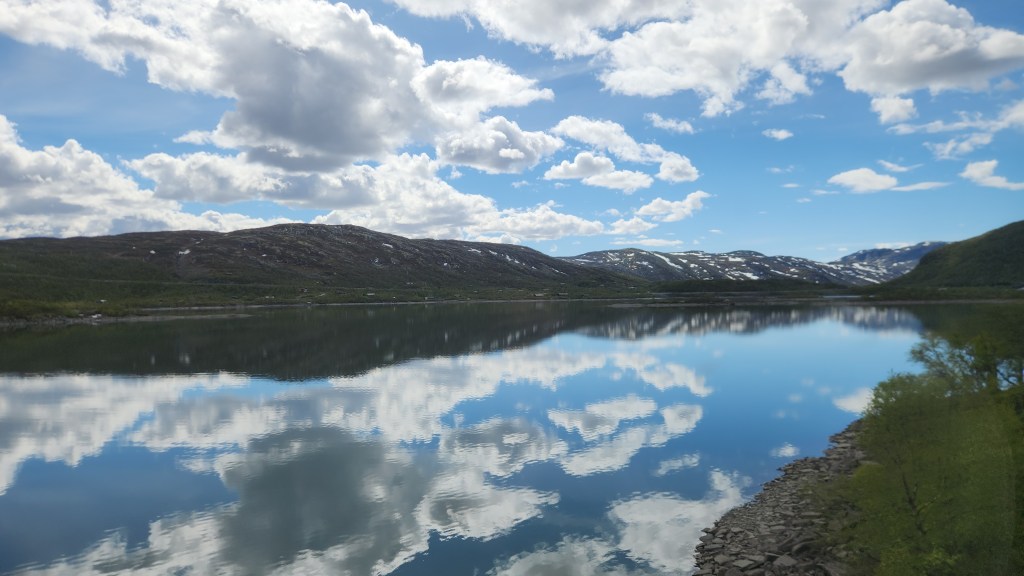
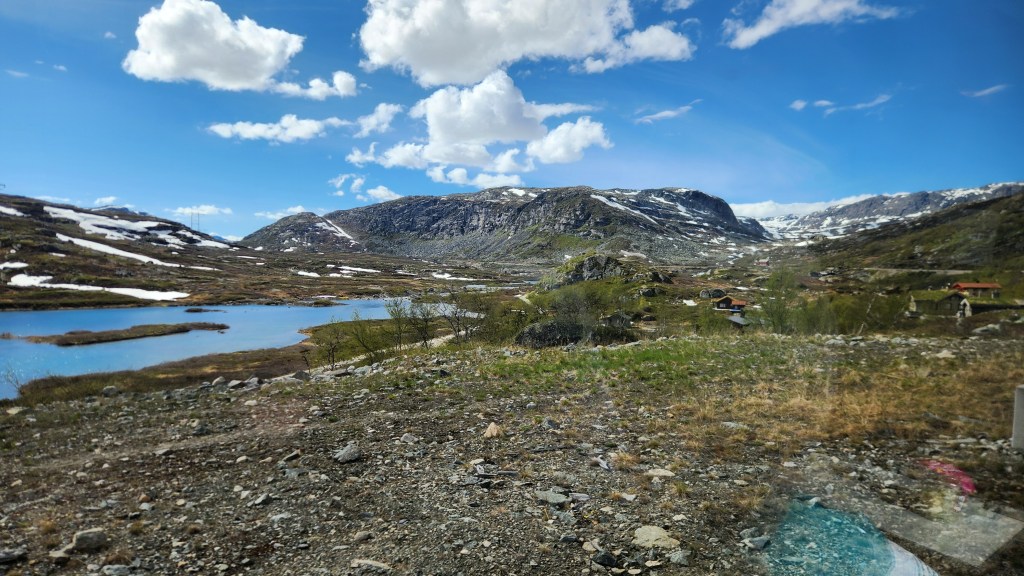
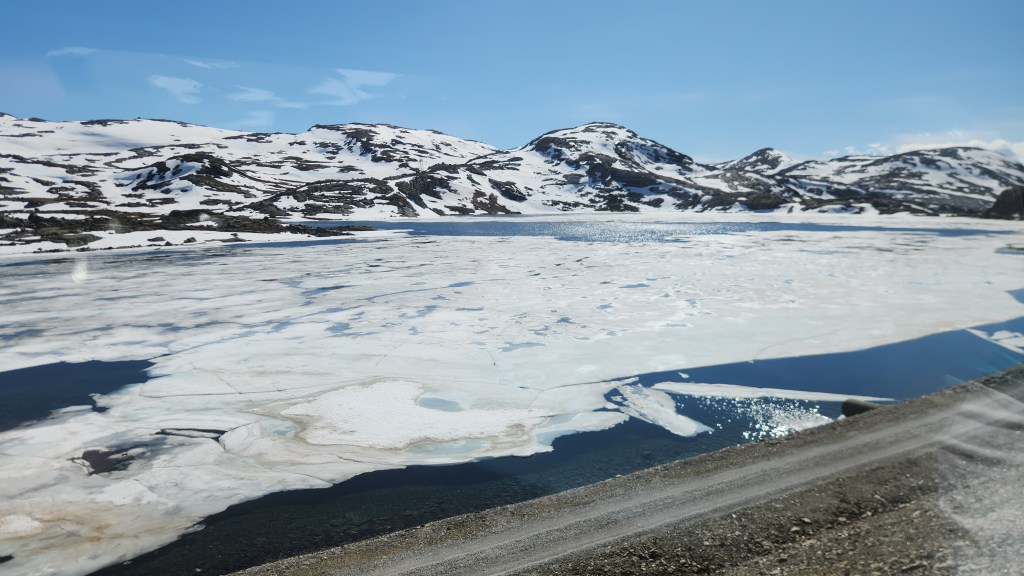
The Bergensbanen Railway (Monday, June 15, 2026): After a lazy Monday morning, we joined our tour group as we walked from the hotel to the railway station and boarded the 12 PM Oslo to Bergen train. The Bergensbanen line is a 308-mile-long railway connecting Oslo and Bergen. It is the highest mainline railway in Northern Europe, crossing the Hardangervidda plateau at 4,058 feet above sea level. The railway took about 15 years to build, officially opening in 1909 as the first year-round transport between Norway’s two largest cities, and was fully electrified by 1964. The route passes through 182 tunnels, the longest of which is the 6.4-mile long Finsetunnelen, which sits at 4009 feet above sea level. The journey took about 7.5 hours and was far and away the most scenic train ride I’ve ever experienced, with breathtaking fjord and mountain vistas. Here are a few photos taken from the train, none of which do justice to the actual views. (There were some spectacular waterfalls along the way, but I didn’t get any decent photos of those as the train raced along, so you’ll just have to go and see them for yourselves.)

Route of the Bergensbanen Railway
View from the Bergensbanen Train
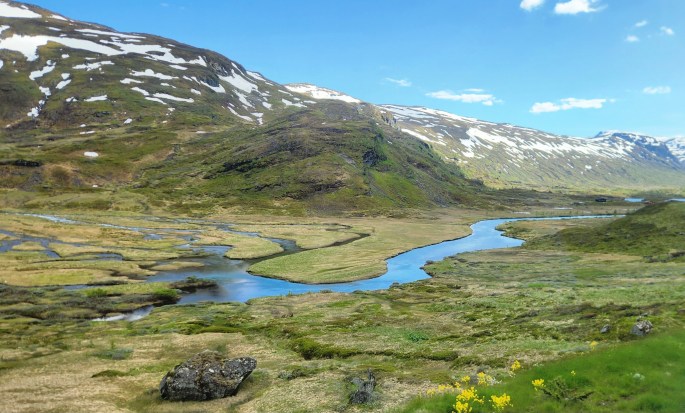
View from the Bergensbanen Train near Hardangervidda
View from Bergenbanen Train

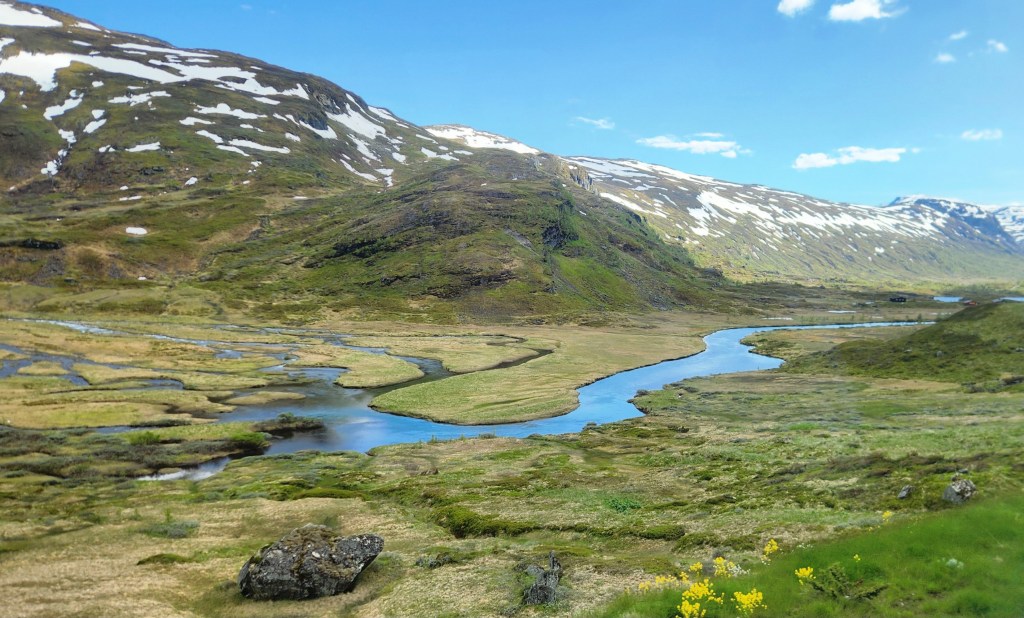
One interesting bit of trivia we learned along the way is that the scenes of Planet Hoth in Star Wars: Episode V – The Empire Strikes Back were filmed on the Hardangervidda plateau and glacier due to its reliably frigid winter conditions.

Bergen, Norway (Tuesday, June 16, 2026): On Tuesday morning, we headed off for a coach and walking tour of Bergen, passing by the famous Bryggen (wharf) area, where the Hanseatic League established a trading port in the fourteenth century, and various points of interest in the city.

The Bryggen in Bergen

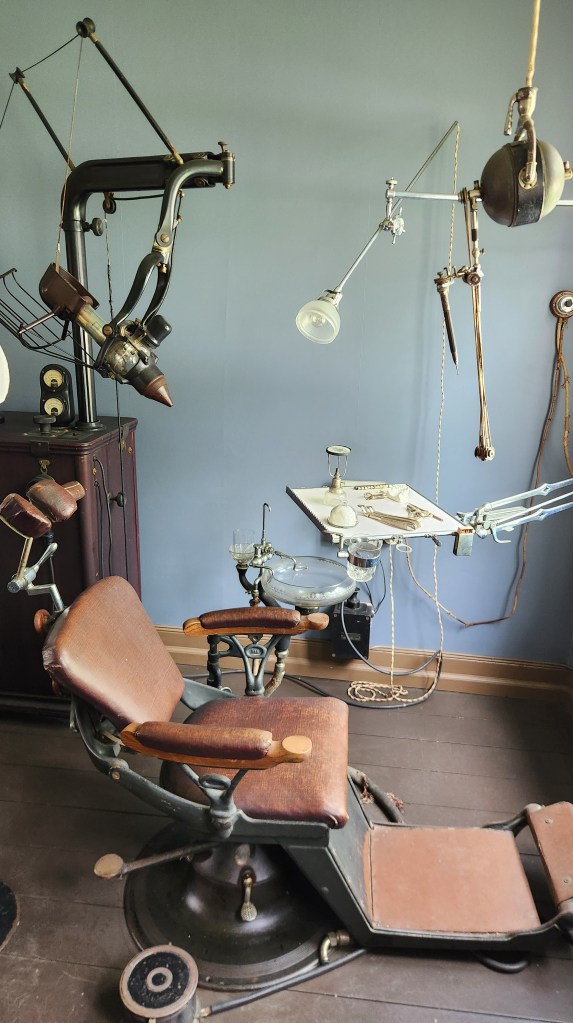
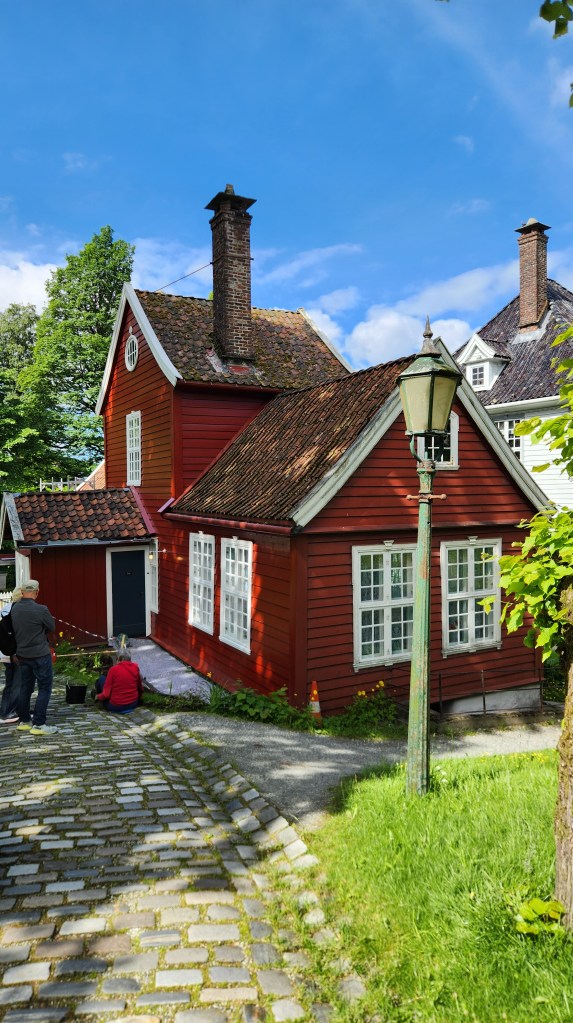
We stopped for a walking tour of the Old Bergen Museum (Gamle Bergen), consisting of some thirty historic buildings (built between 1700 and 1900) relocated from the city center. Costumed volunteers put on a short play in the main square in which a young bride-to-be was forced to have all her teeth extracted by a dentist and replaced with a false set. We learned that this was a common practice in Bergen in the 18th and 19th centuries to avoid problems later in life, and that the patients were generally given cocaine as an early form of anesthetic. After the play, we wandered through the village before reboarding the coach.

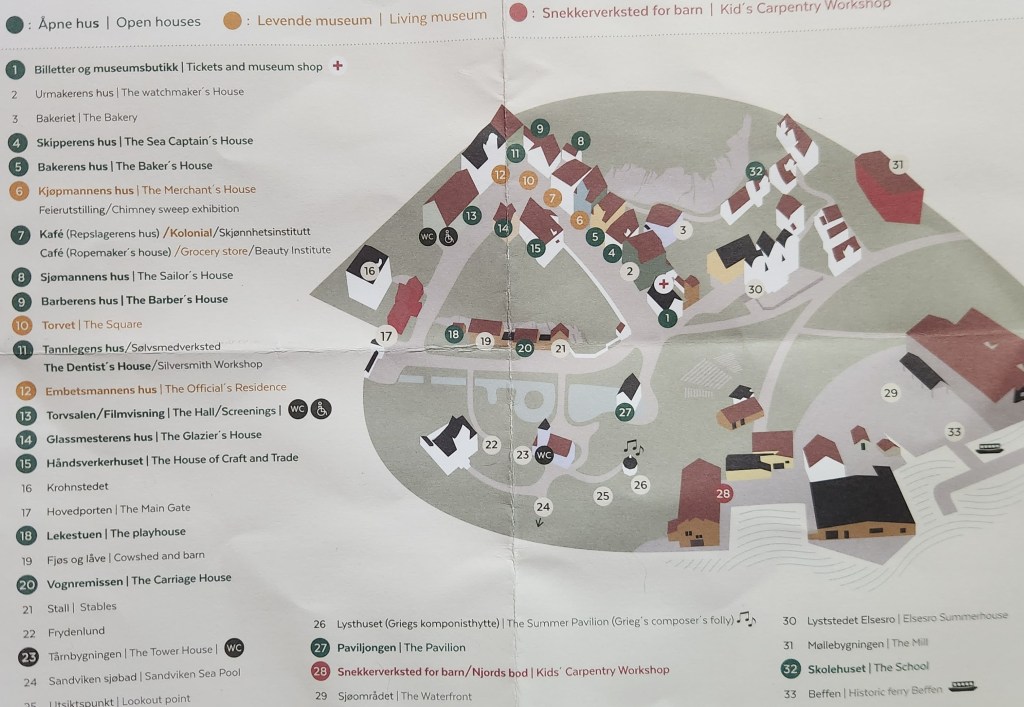
Old Bergen Museum Brochure Map
Old Bergen Museum Town Square
The Dentist’s Office
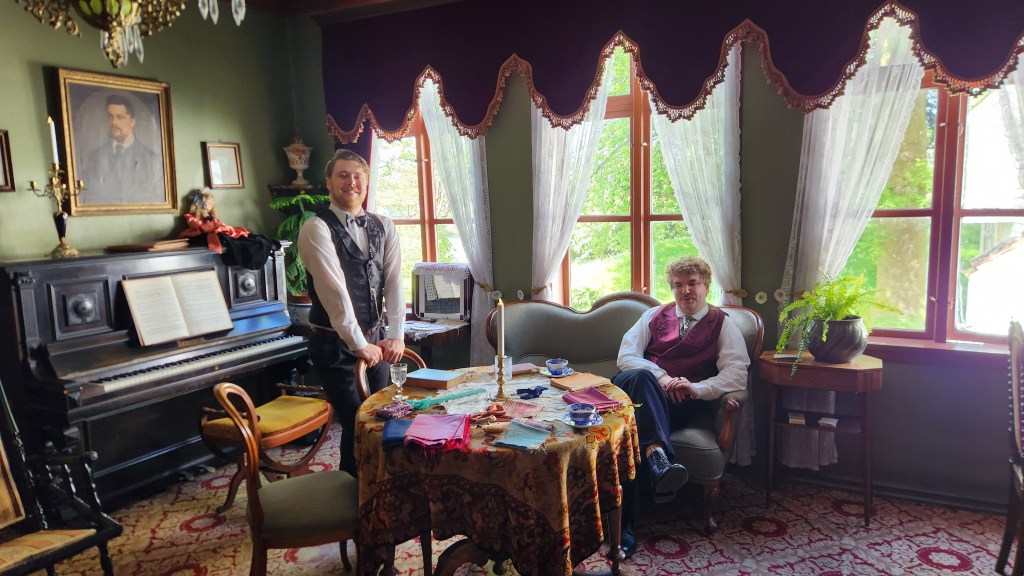
Two Entrepreneurs of the Hanseatic League
At the Old Bergen Museum

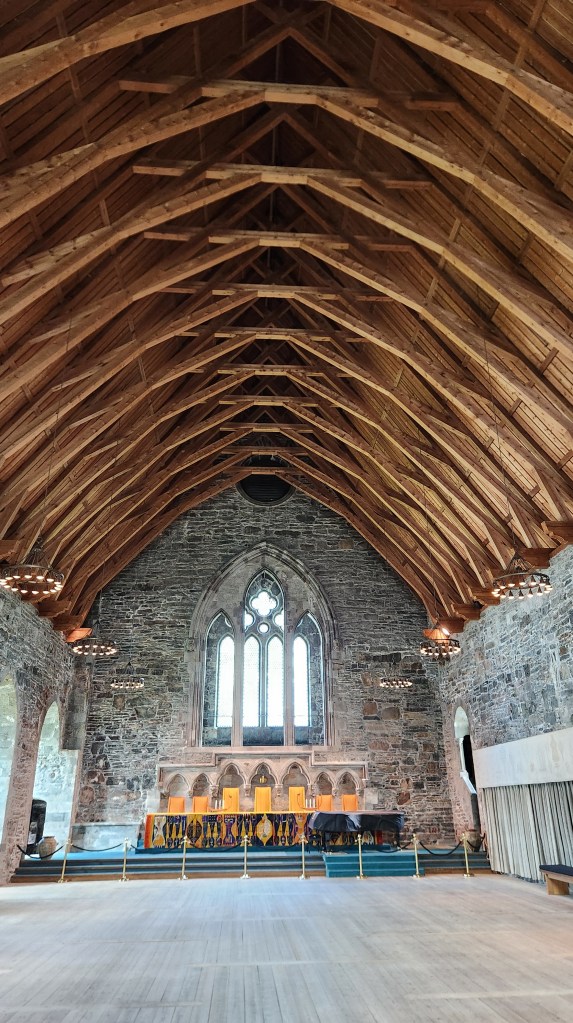
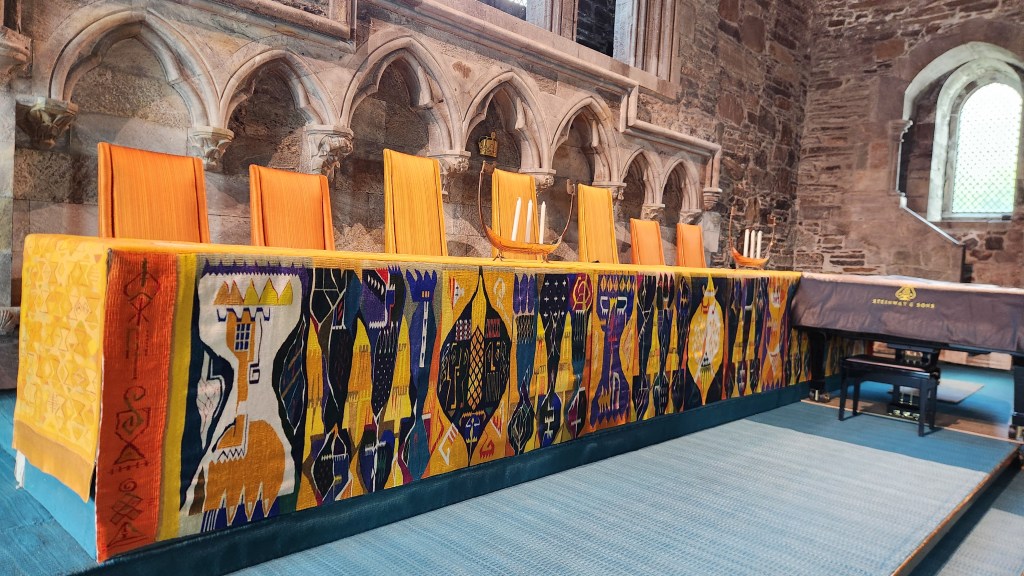
Next, we traveled to the Bergen Fortress, built in the 13th century when Bergen was the capital of Norway. The fortress remains an active military site under the command of the Royal Norwegian Navy, but the grounds are largely open to the public and function as a popular historical landmark and park. The major attraction is Haakon’s Hall, built by King Haakon Haakonsen between 1247 and 1261, a magnificent stone building used as a royal residence and banquet hall. It is the largest and oldest surviving stone building of its kind in Norway. The hall has been beautifully restored and serves as a venue for various Government and private functions.

The Reception Room in Haakon’s Hall

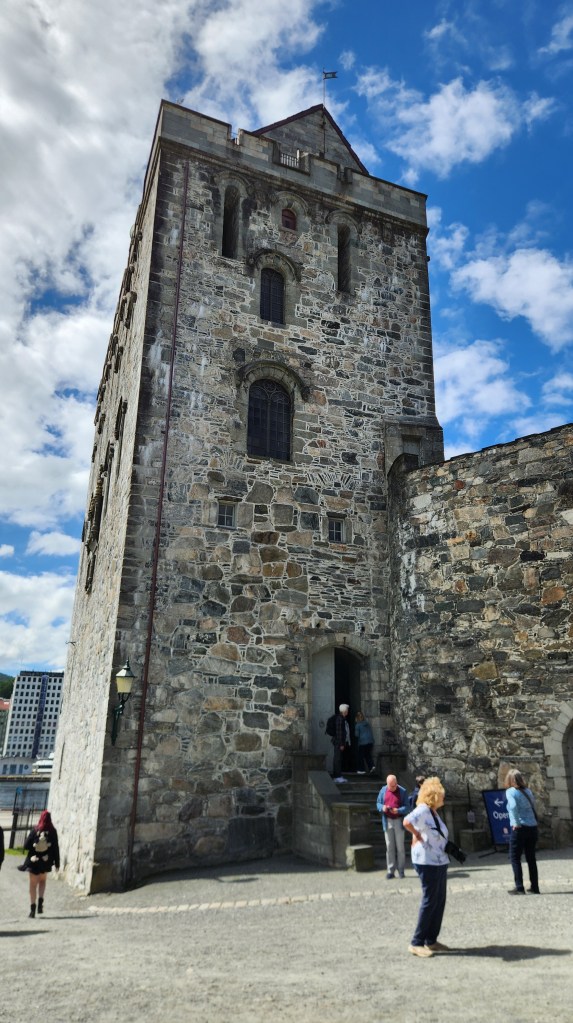
The Rosenkrantz Tower was constructed in the 1560s by Governor Erik Rosenkrantz, incorporating older 13th-century masonry. It served as a heavily fortified residence and a symbol of royal authority.

Rosenkrantz Tower

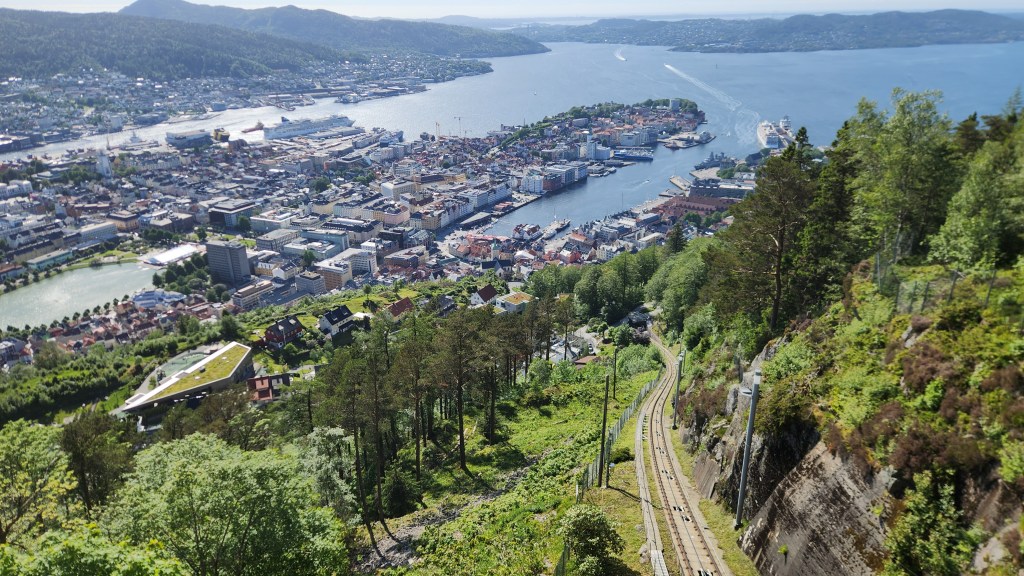
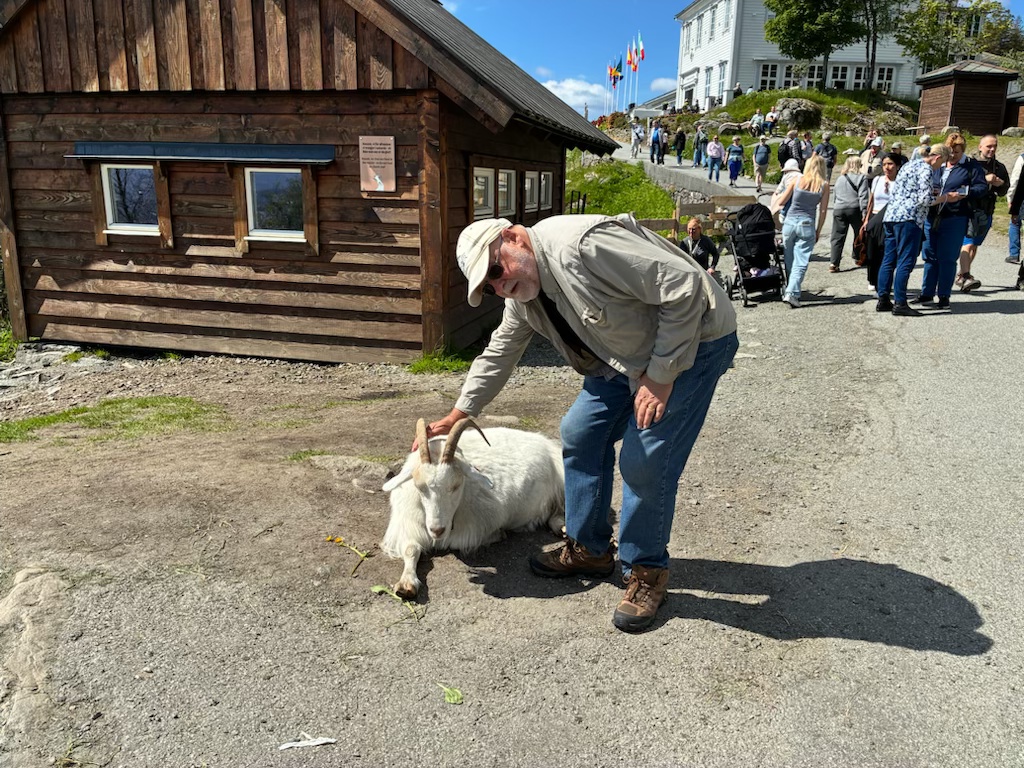
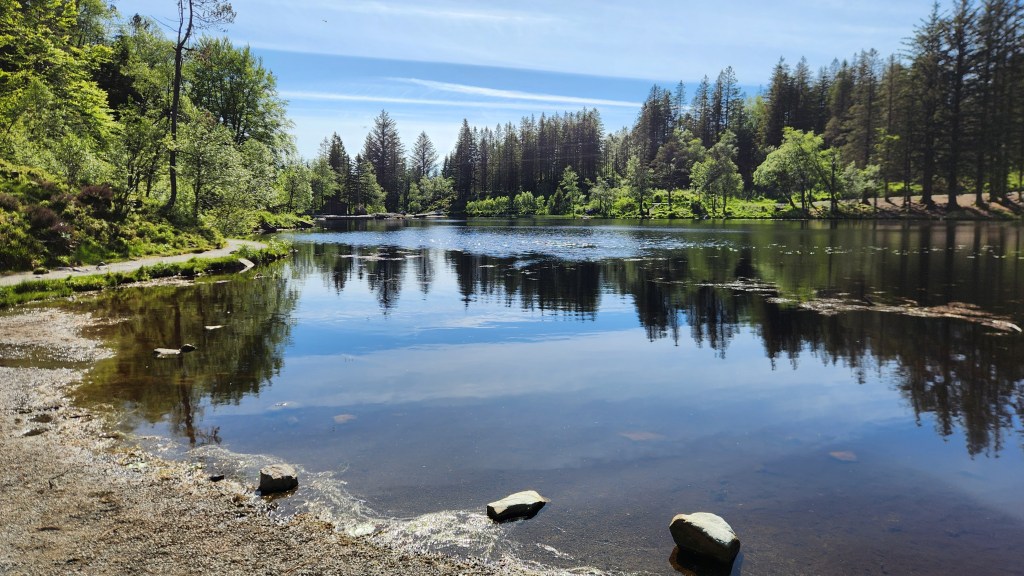
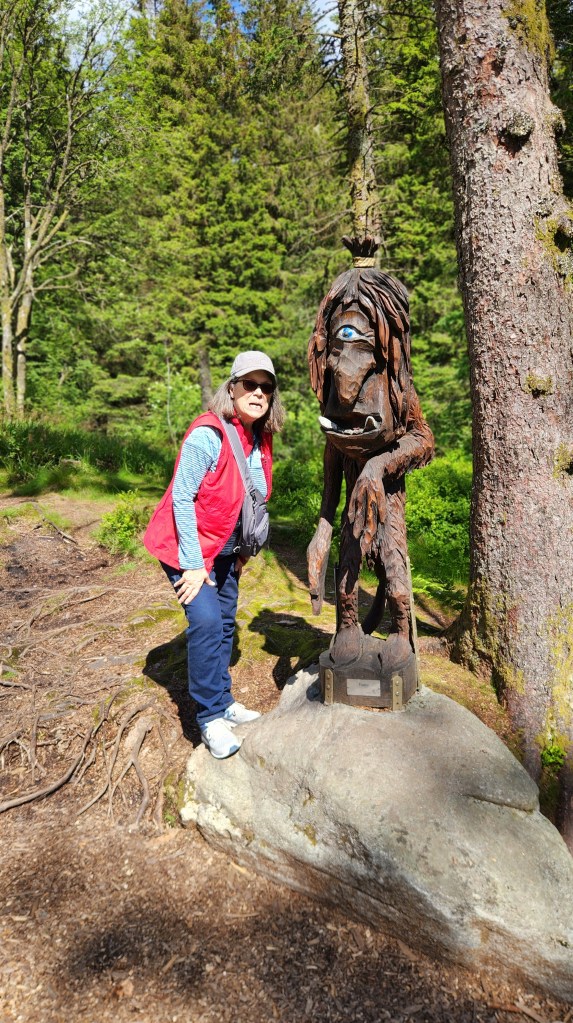
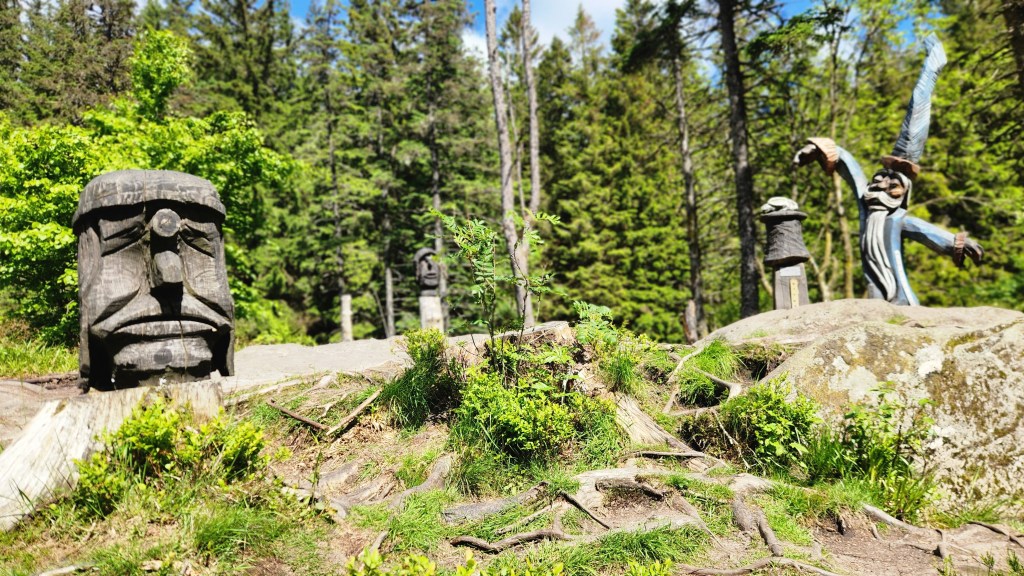
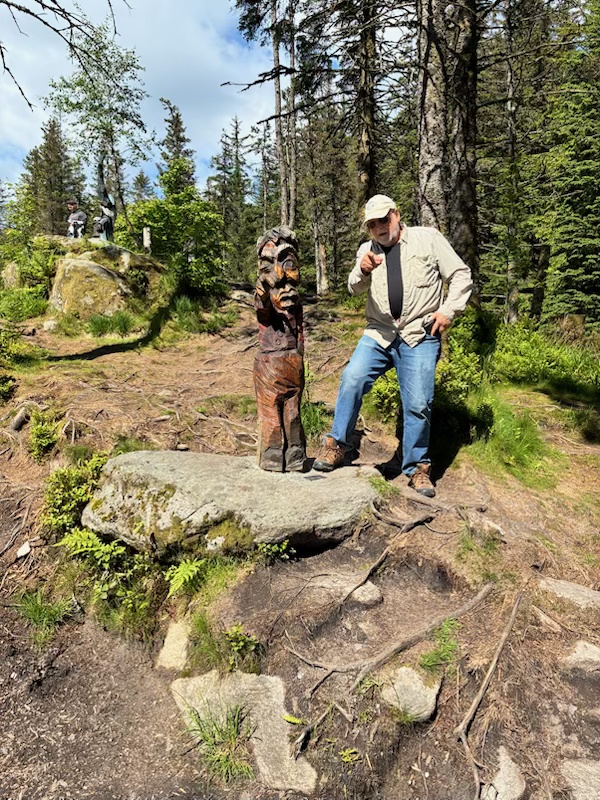
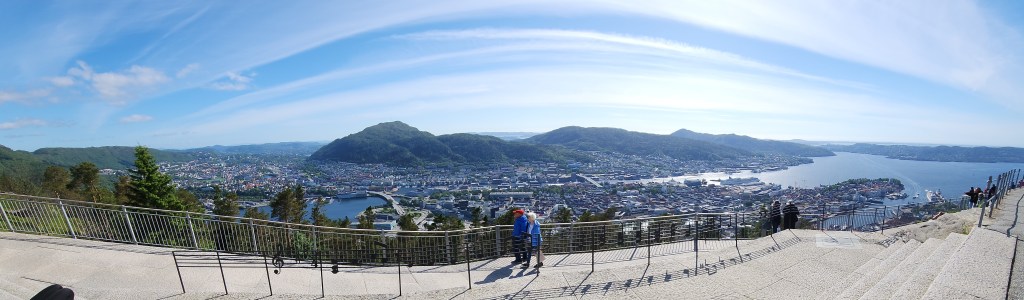
After the tour, we had free time to explore the city. We took the opportunity to ride a Funicular which travels from the city center to the top of Mount Floyen, where we had an excellent lunch (pea soup for me and fish chowder for Pat) before exploring the mountain top area. The scenic views were spectacular – and very lucky, as Bergen has rain for something like 250 days a year – and we also enjoyed petting the local goats, hiking to a lovely lake, and visiting the whimsical Troll Forest. We learned that trolls are very prominent in Norwegian folklore, and the oddly shaped hills and mountains are said to be the remains of trolls caught in the sunlight.

Bergen Funicular Arrives at Mt. Floyen Station
View of Bergen from Mt. Floyen Funicular Station
One of the Floyen Goats (or one old goat pets another?)
Lake on Mount Floyen
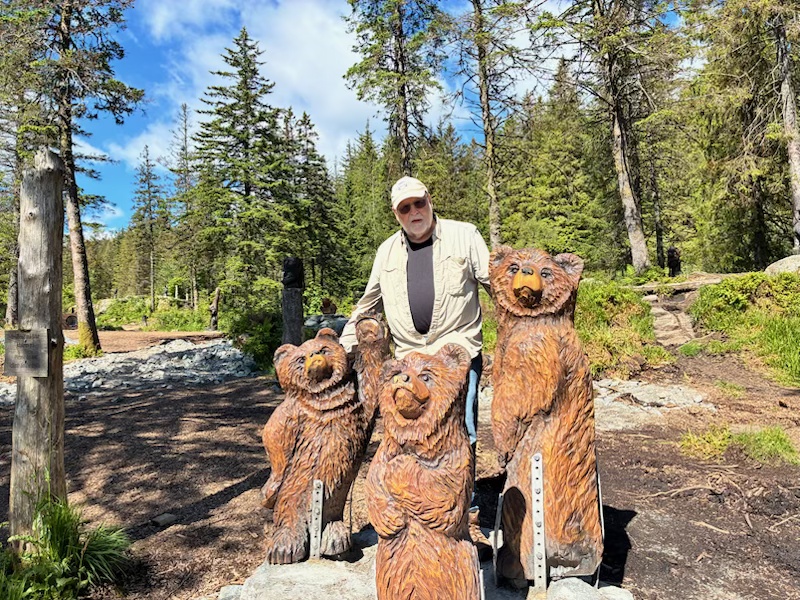
There also were Bears!
In the Troll Forest
The Trolls Rule!
Trying to get on this guy’s good side …
Panoramic View of Bergen from Mount Floyen

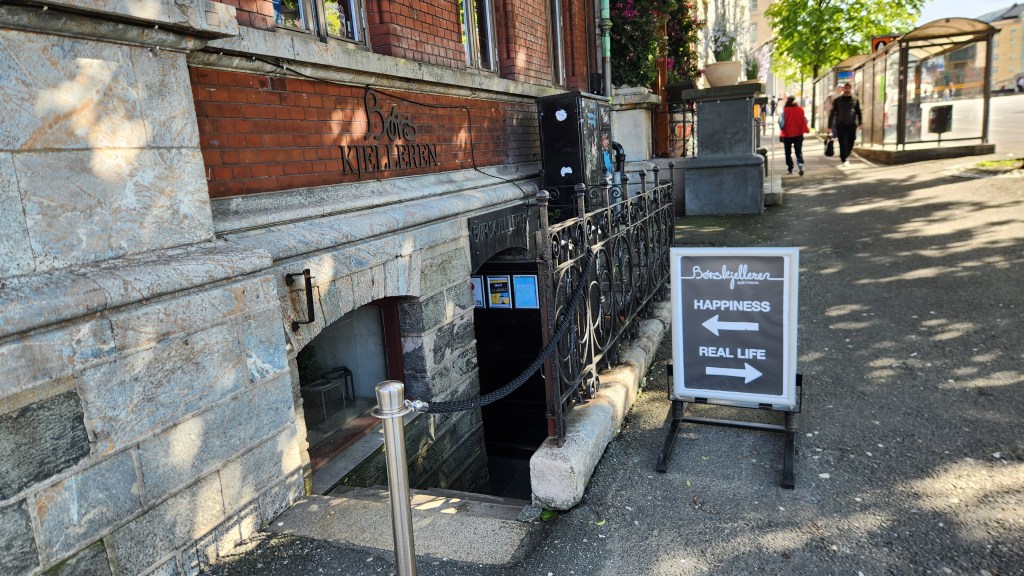
This concluded the pre-cruise portion of the journey, as we prepared to board our ship anchored in the Bergen harbor on Wednesday morning. But I’ll leave you with one final scene of a bar we passed on our way back to the hotel that may capture the spirit of at least some Bergen residents:

Okay, that’s it for Part 1, although there will be more about both Oslo and Bergen in the next Part. I hope you enjoyed the read and will come back for future installments covering the entirety of the Ocean Cruise. Stay tuned …