
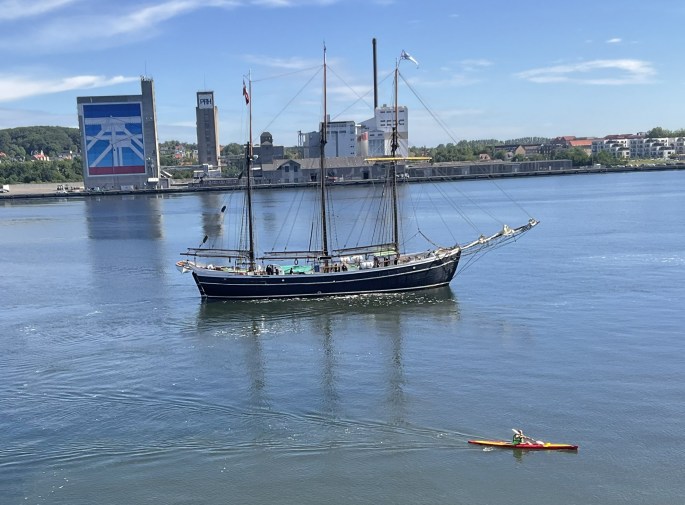
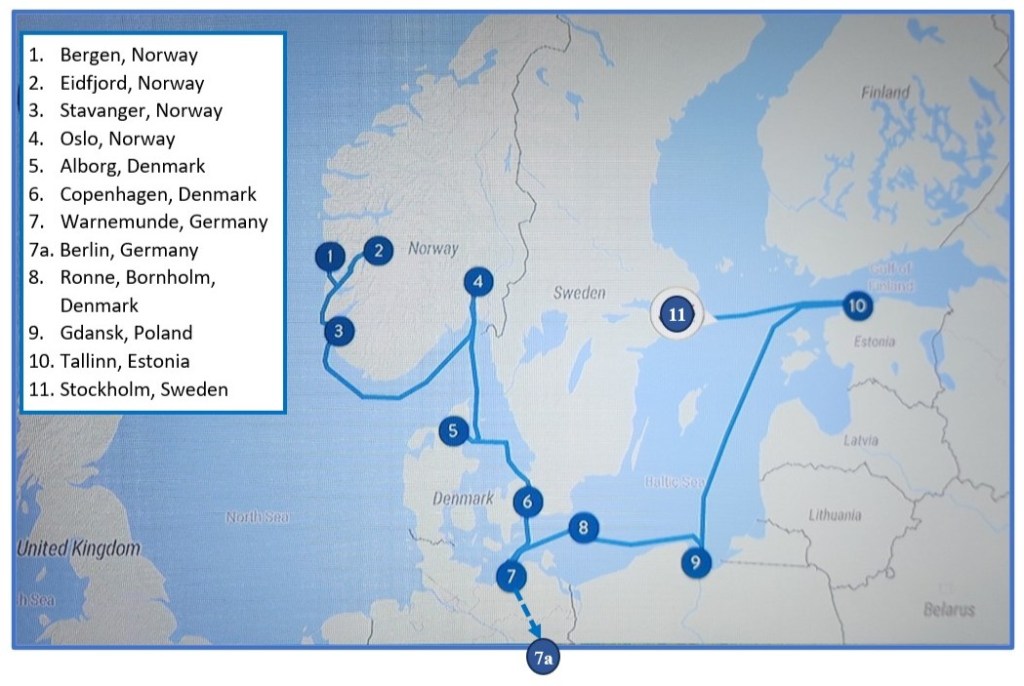
Welcome back for Part 3 of my travelogue describing our recent Viking Ocean Cruise entitled “Viking Homelands.” Part 2 left off as we were departing from Oslo, Norway. This episode will cover our stops in Denmark and Germany, including locations 5, 6, 7, 7a, and 8 on the map of our itinerary:
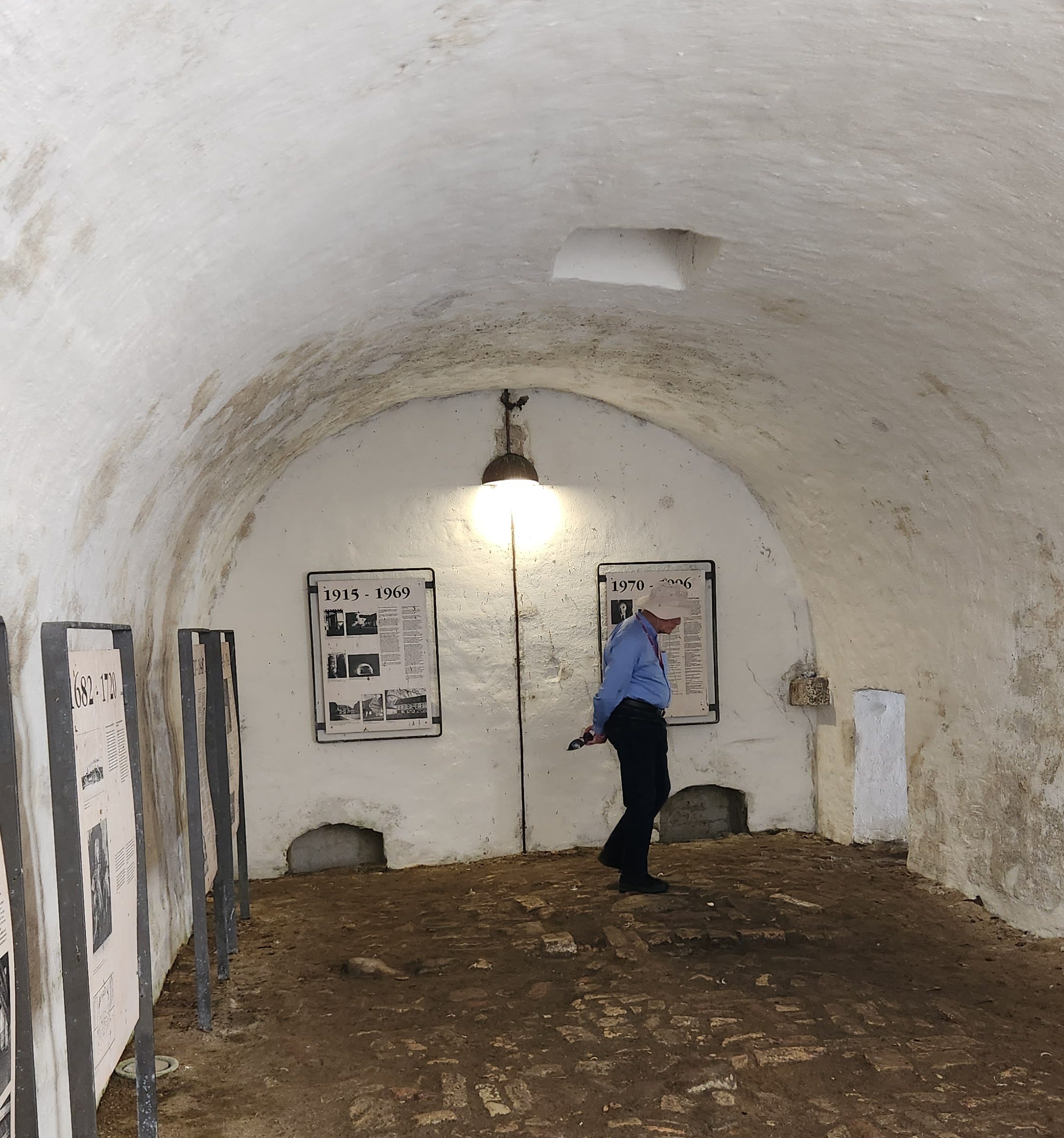
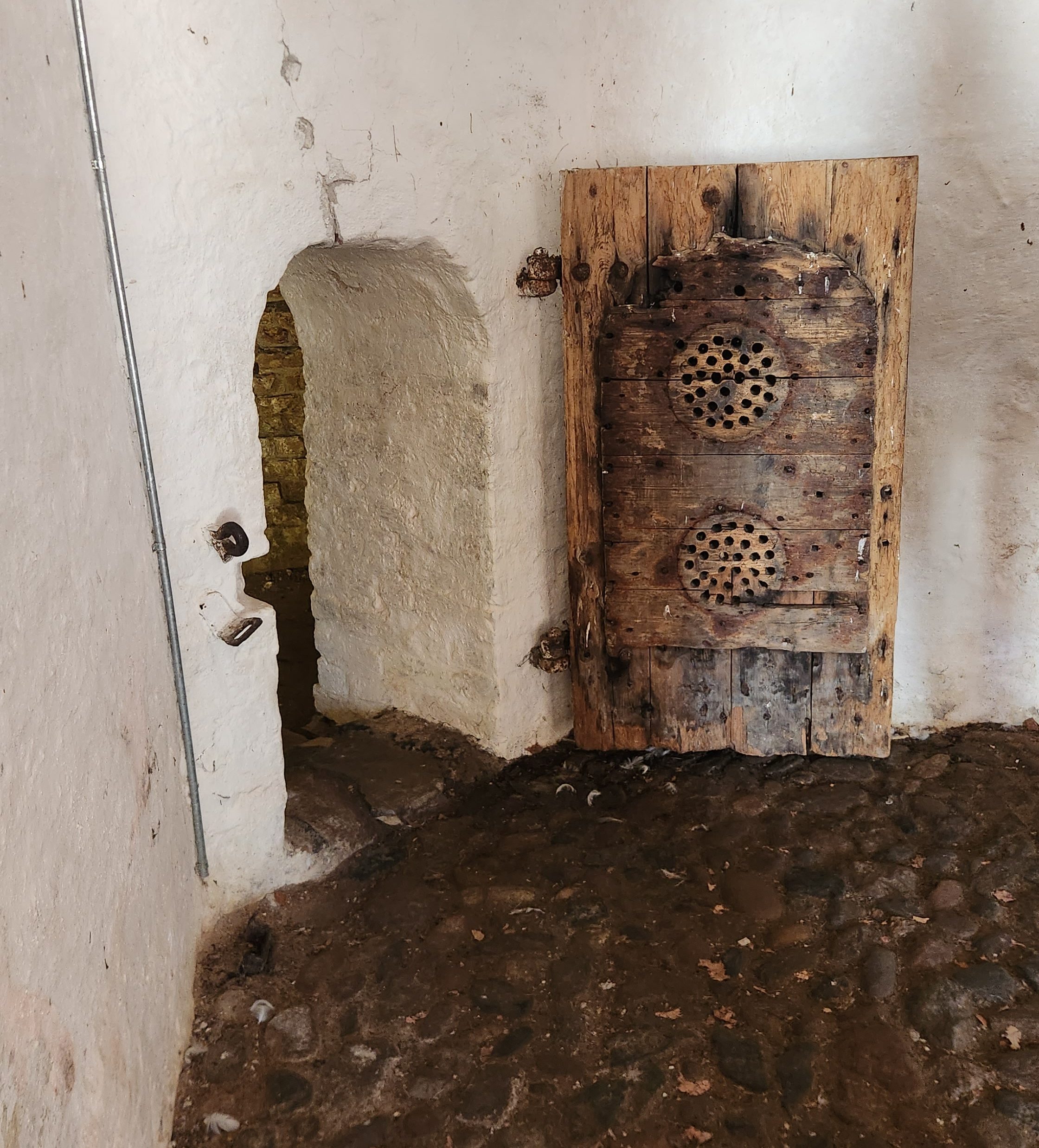
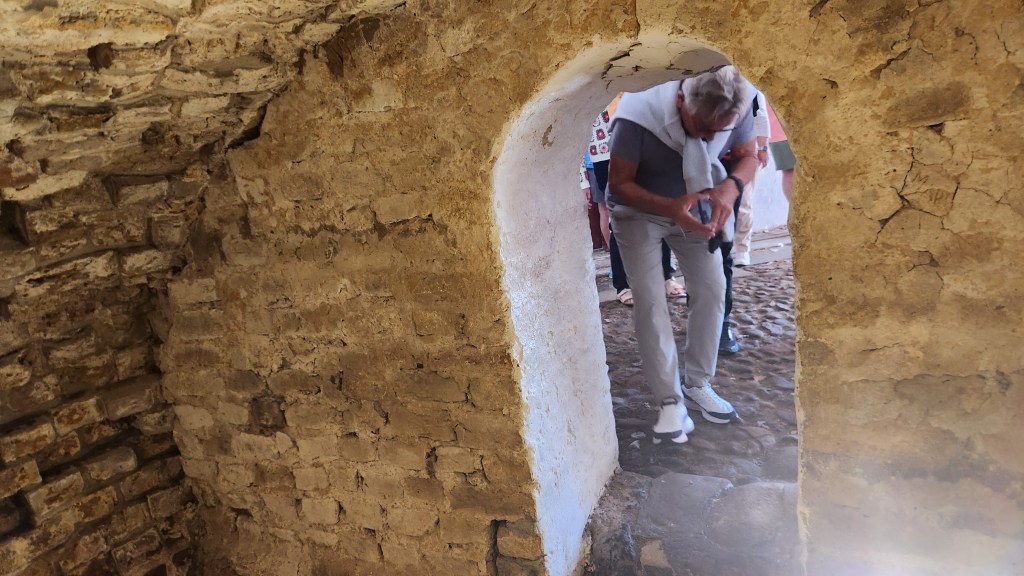
Ålborg, Denmark (Tuesday, June 23, 2026): Our ship arrived in the Ålborg harbor at 10 AM Tuesday, and we were soon off on a walking excursion through the old town to discover its trade roots and Viking heritage. Ålborg is the fourth largest city in Denmark, dating back to its founding as a Viking trading post during the late 900s. Our tour first took us to the Ålborghus Castle, a 14th-century fortress built using the traditional half-timber technique. Some of the dungeons have been preserved to provide visitors with a feel for the conditions in the old fortress, and a series of placards describes the castle’s history.
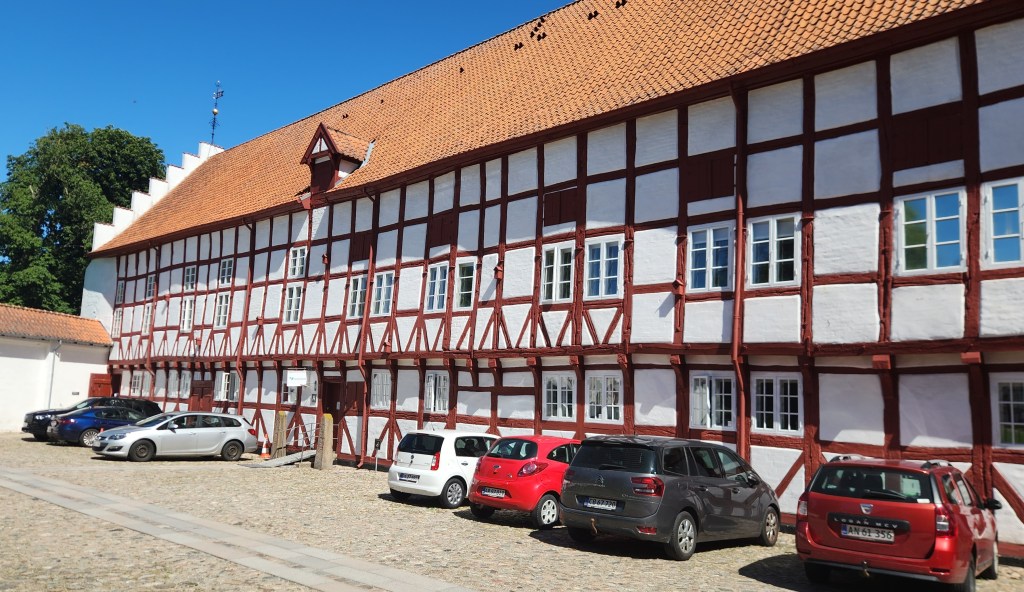
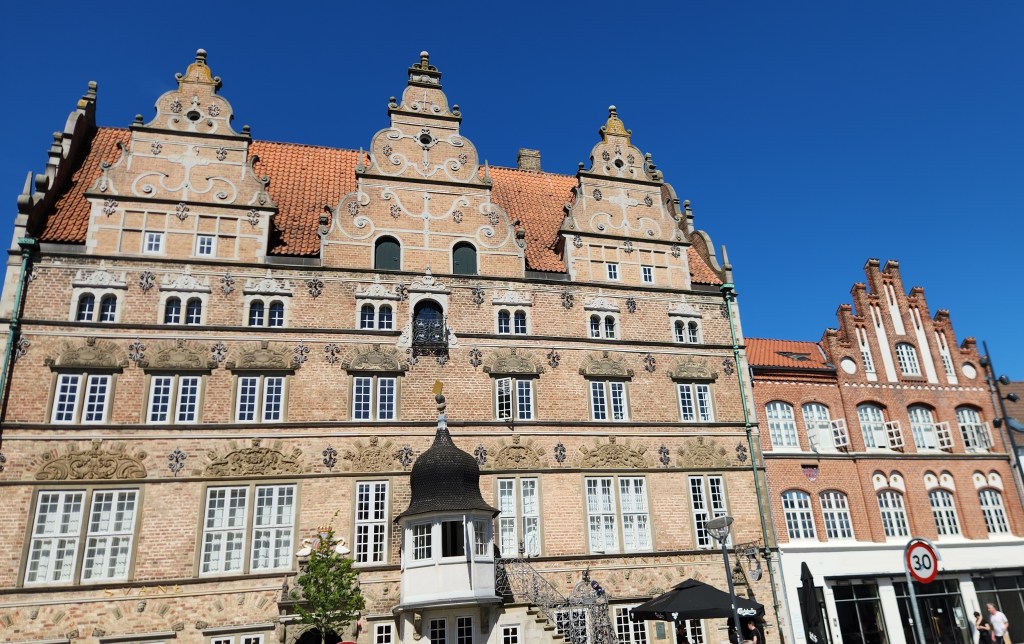
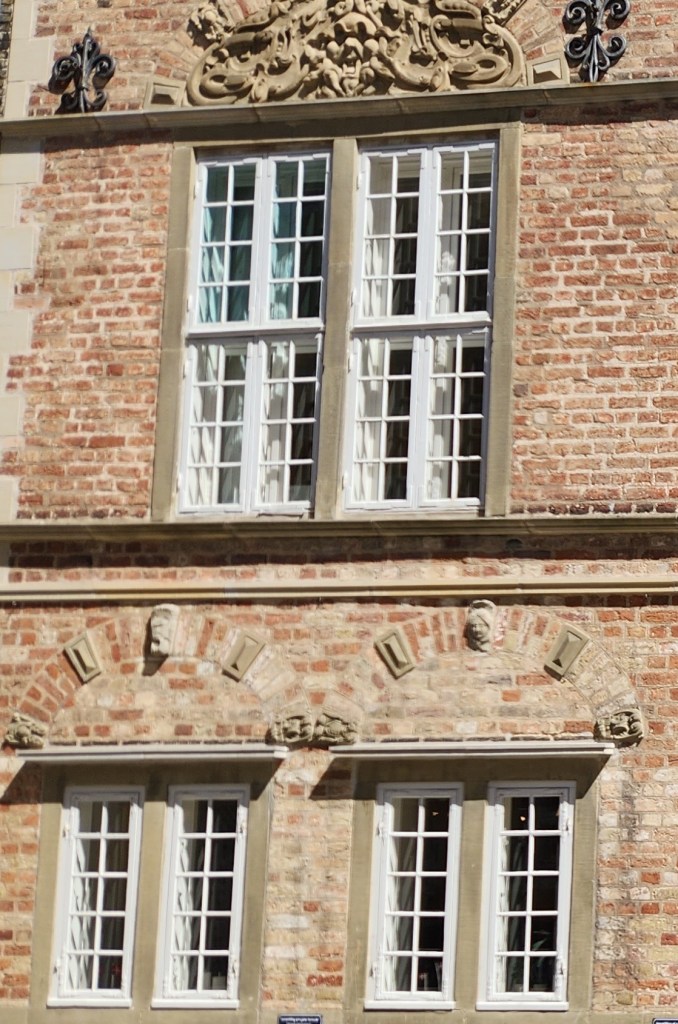
We then passed on to the Nytorv Square, a pedestrian plaza established in 1604 in the historic center of the old town. The Jens Bang house, built in the Nytorv Square in 1624 and noted for its gables, sculpted window décor, gargoyles, and a sculpture of Bang sticking out his tongue, is considered the finest privately owned Renaissance building in Denmark. Bang was famously snubbed by the town’s government and his statuesque renaissance home was never approved by the local gentry. The house has also housed the city’s oldest pharmacy for more than 300 years.
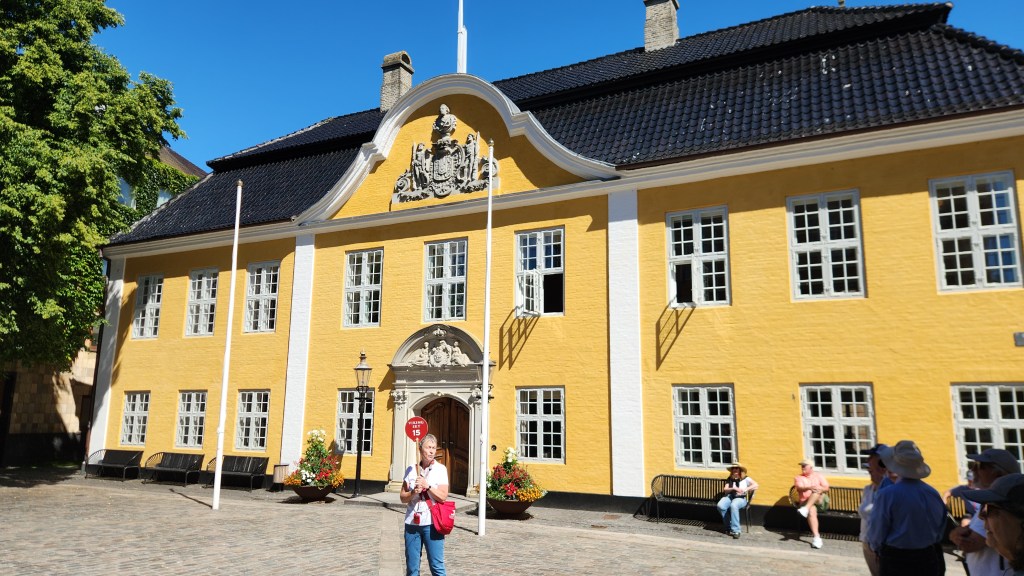
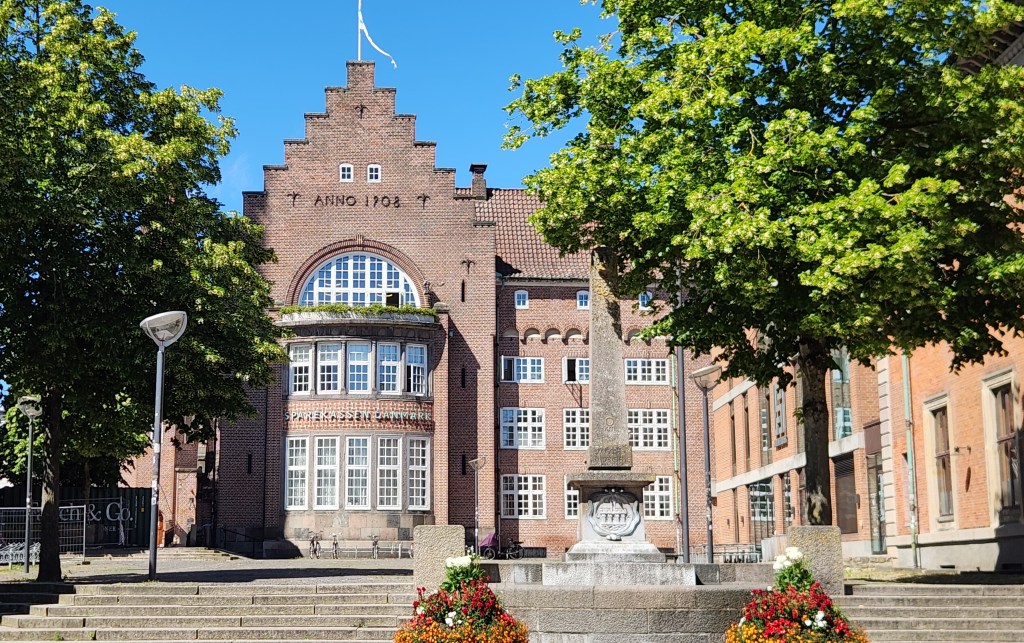
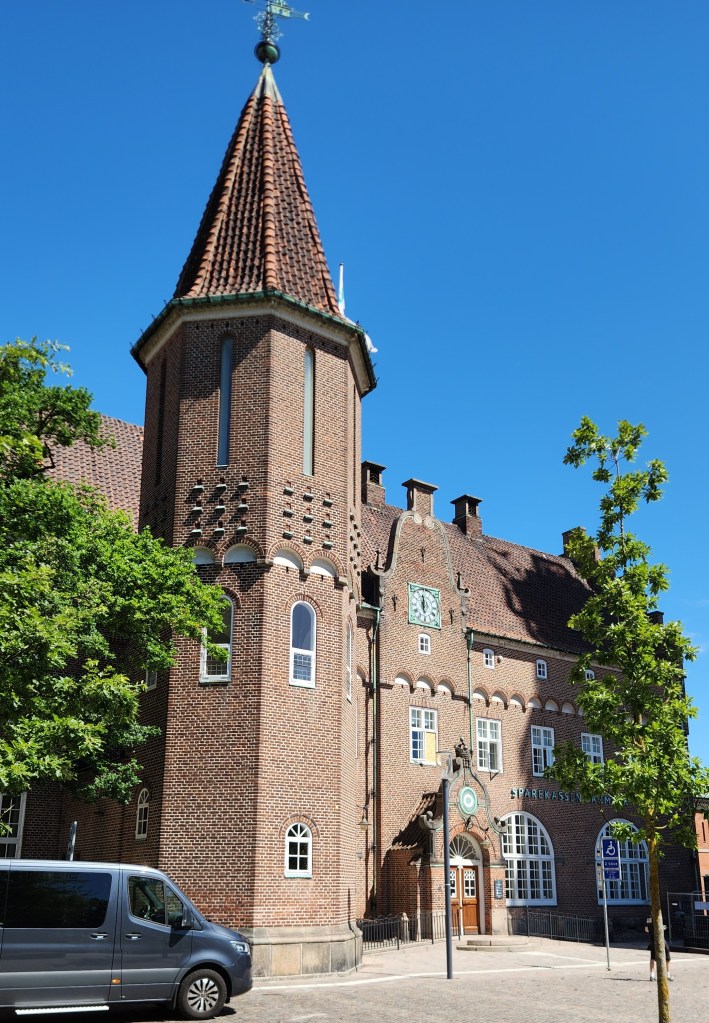
We passed by many other historic buildings located in the central part of the old town, including the Old City Hall (built in 1762 in a Baroque and Rococo style), the Post Office/Telegraph building (1908), and the Budolfi Church or Ålborg Cathedral (dating from the 16th century) which now serves as the seat of the Lutheran Bishop.
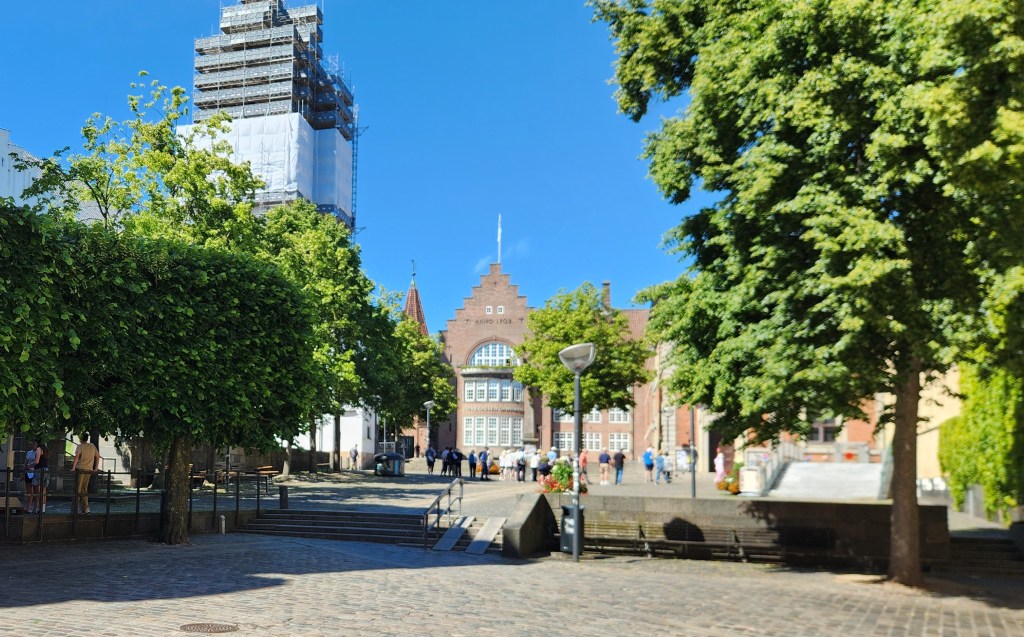
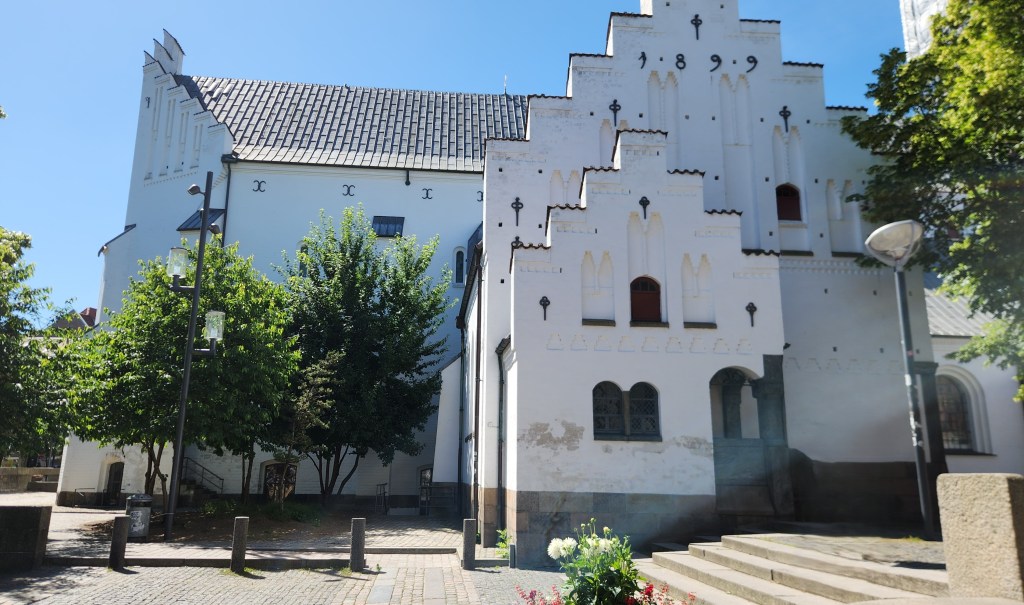
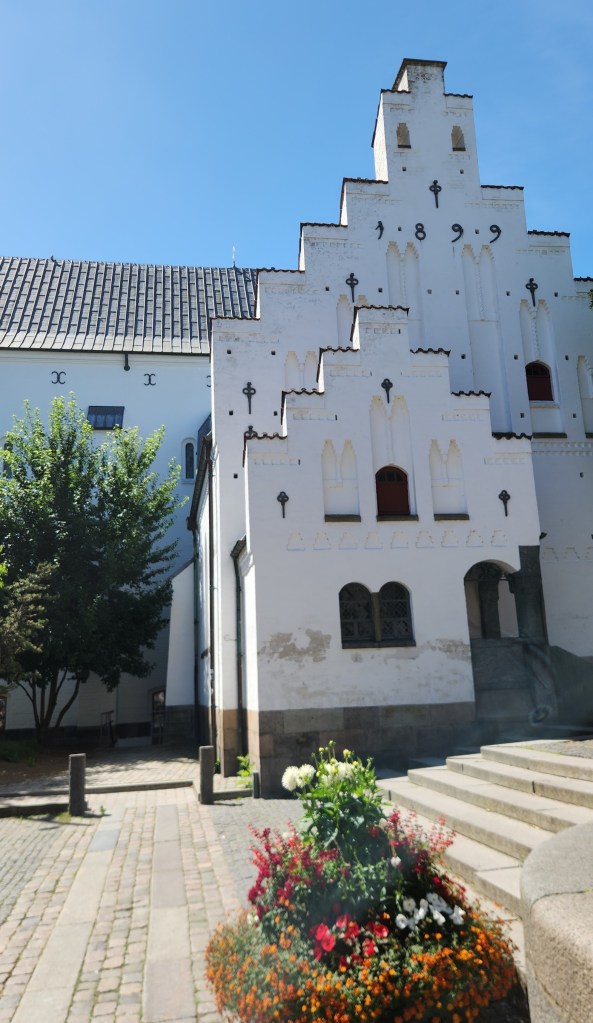
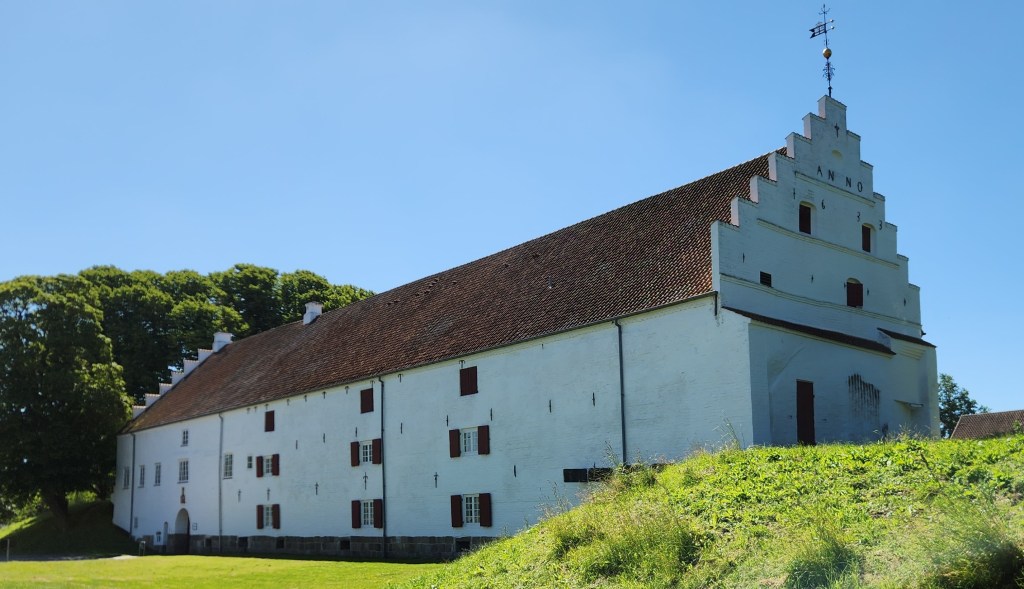
We spent a fair amount of time learning about the Monastery of the Holy Ghost, a medieval monastery dating back to 1431 which also served as a hospital for more than 500 years until the 1950s. While most of the monastery buildings have been converted to modern housing for senior citizens, the oldest part – the School Wing – has been preserved in its original state from the 15th century.
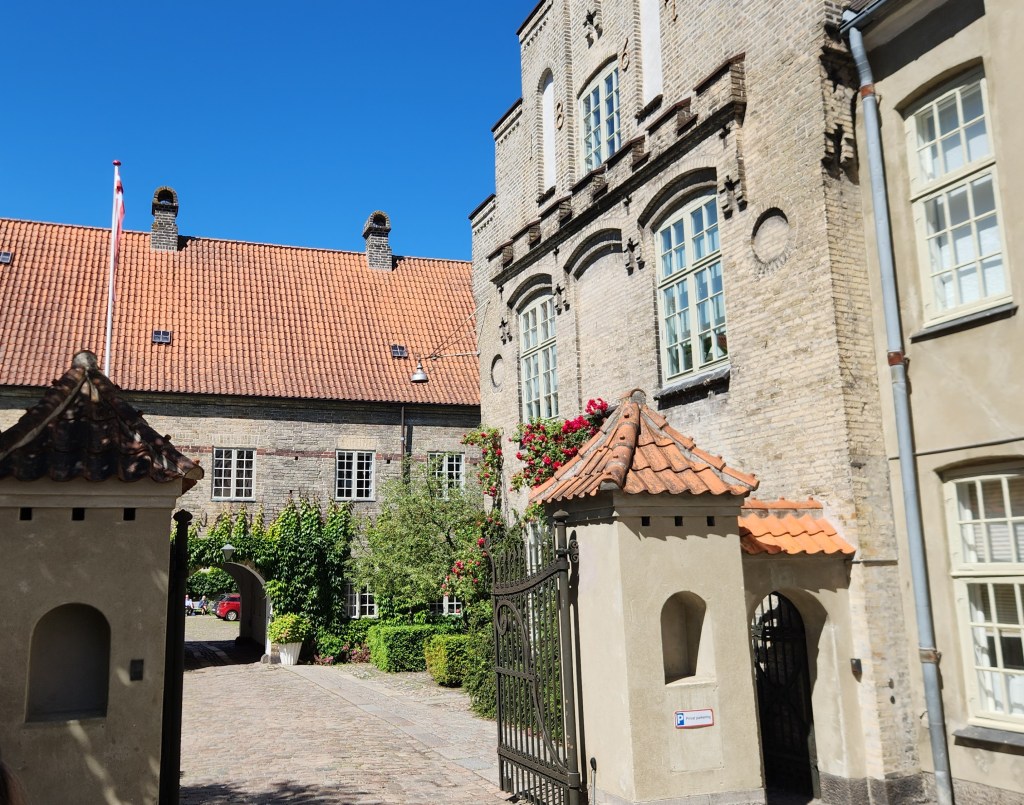
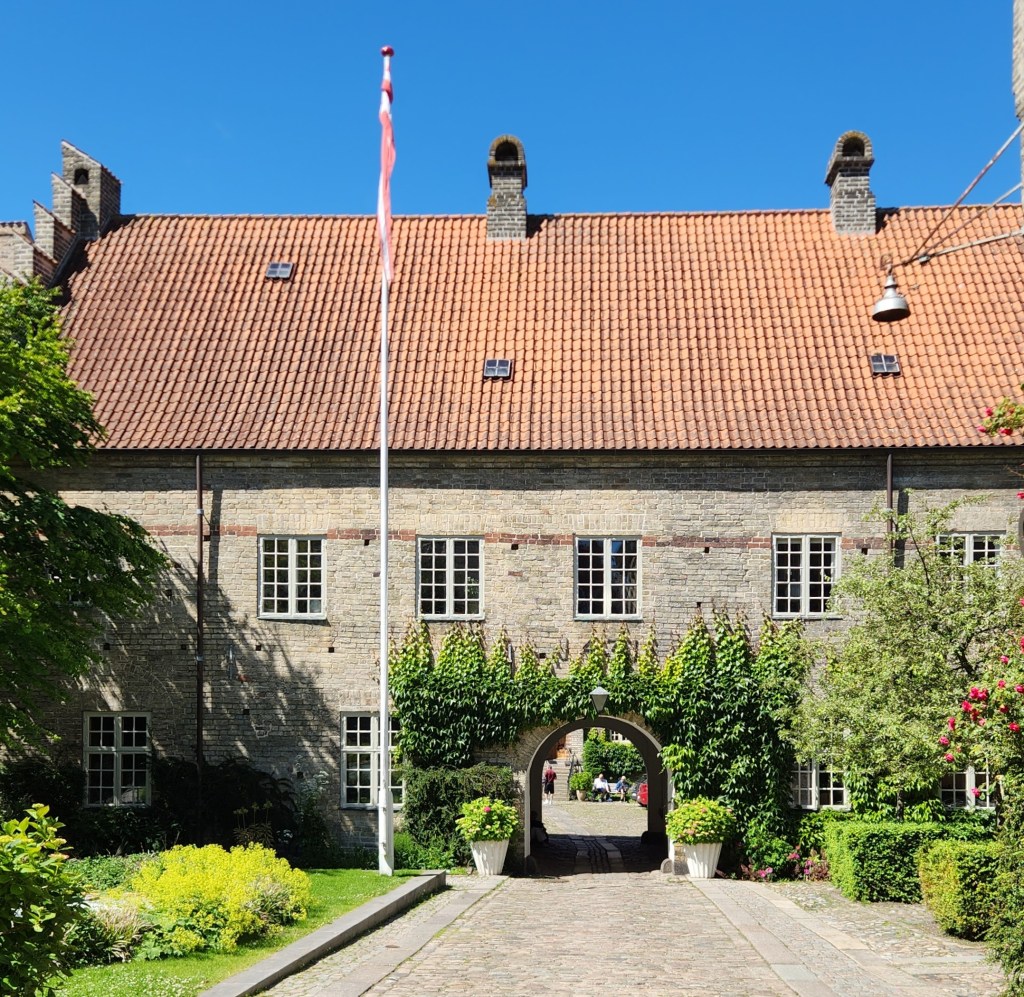
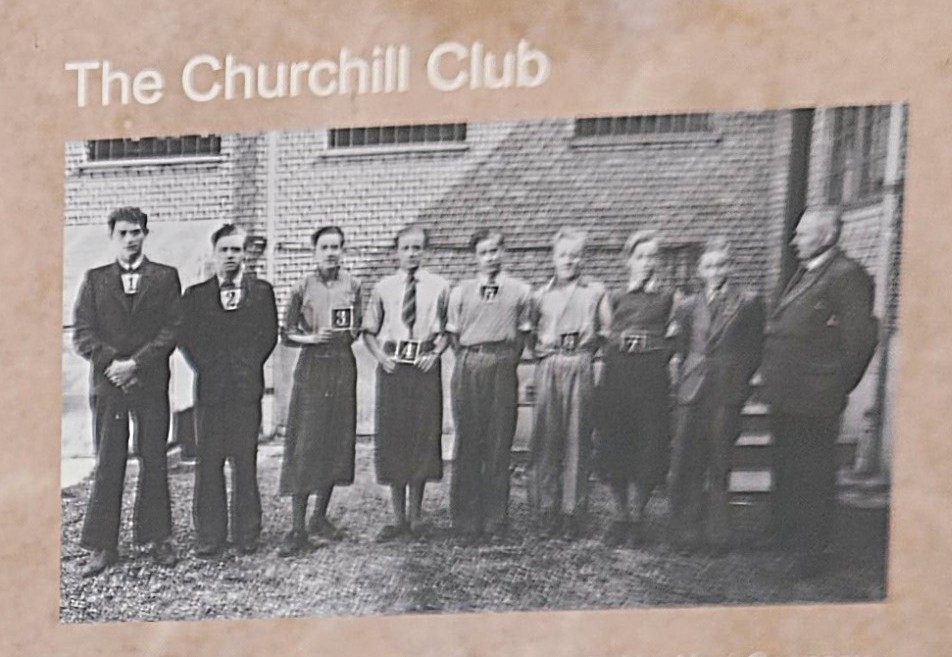
During World War II, a group of eleven grammar school students formed the Churchill Club, a secret resistance movement. Two of the boys lived in the monastery as their father was the vicar at the Budolfi church. The students used the monastery to plan sabotage missions against the occupying Nazi forces and to hide weapons stolen from the German Army, inspired by the acts of Norwegian resistance soldiers. They succeeded in carrying out 25 acts of sabotage before they were arrested by the Danish police on May 8, 1942, as Denmark’s official position was to cooperate with the German occupiers. Some of those acts of sabotage included stealing weapons and destroying vehicles, blueprints, and plane parts. The boys were fined and sentenced to prison terms ranging from one-and-a-half to five years. Even during their imprisonment, some of the boys managed to escape at night to continue their sabotage activities for some time, then sneak back into their cells before sunrise.
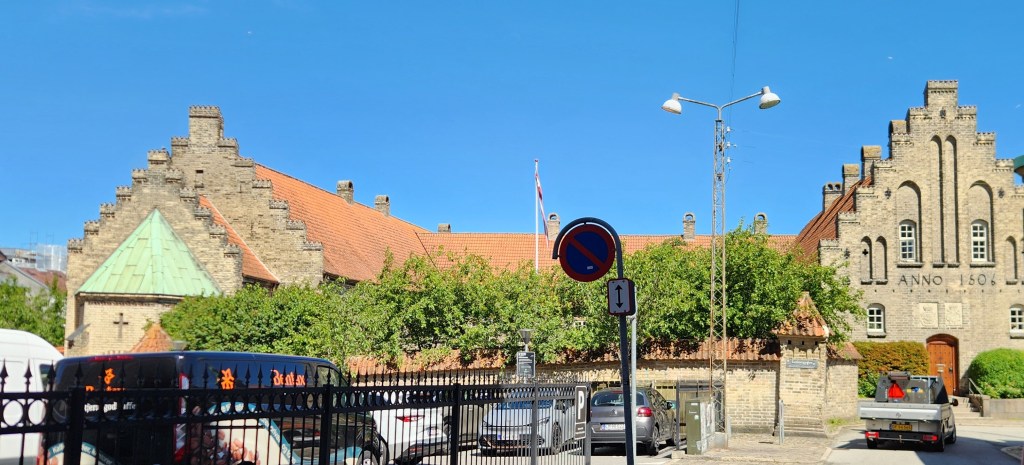
One amusing thing was an inscription on a hospital building reading “Anno 1506.” We learned that it originally read “Anno 1905” following a renovation to the hospital, but historians felt that was inappropriate for such a historic place and so the digits were rearranged.
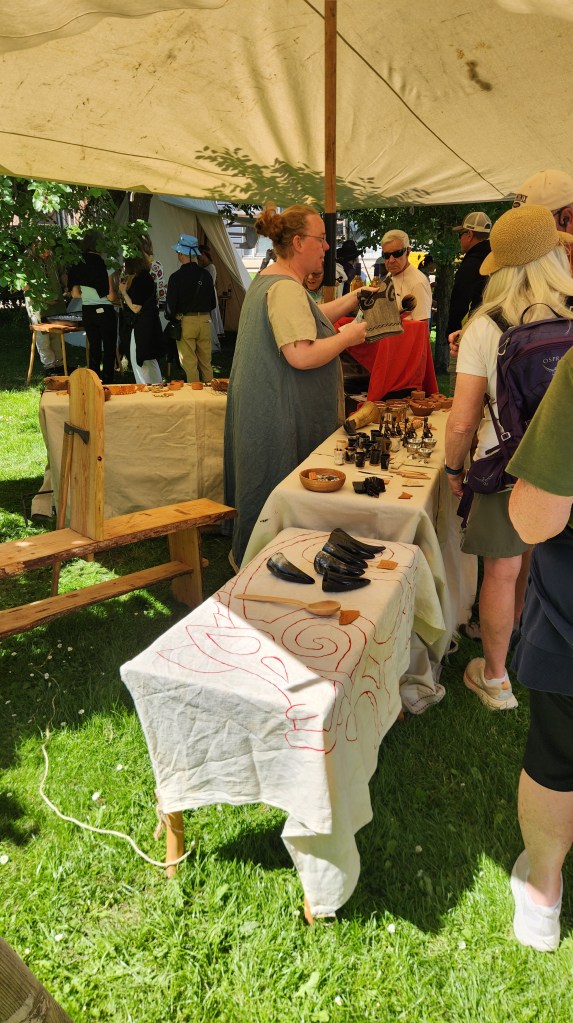
After the monastery, we walked through an area of residences and small shops and visited a local Viking market, a somewhat goofy place where people dressed in old-time garb made music and sold various Viking-themed foods and merchandise.
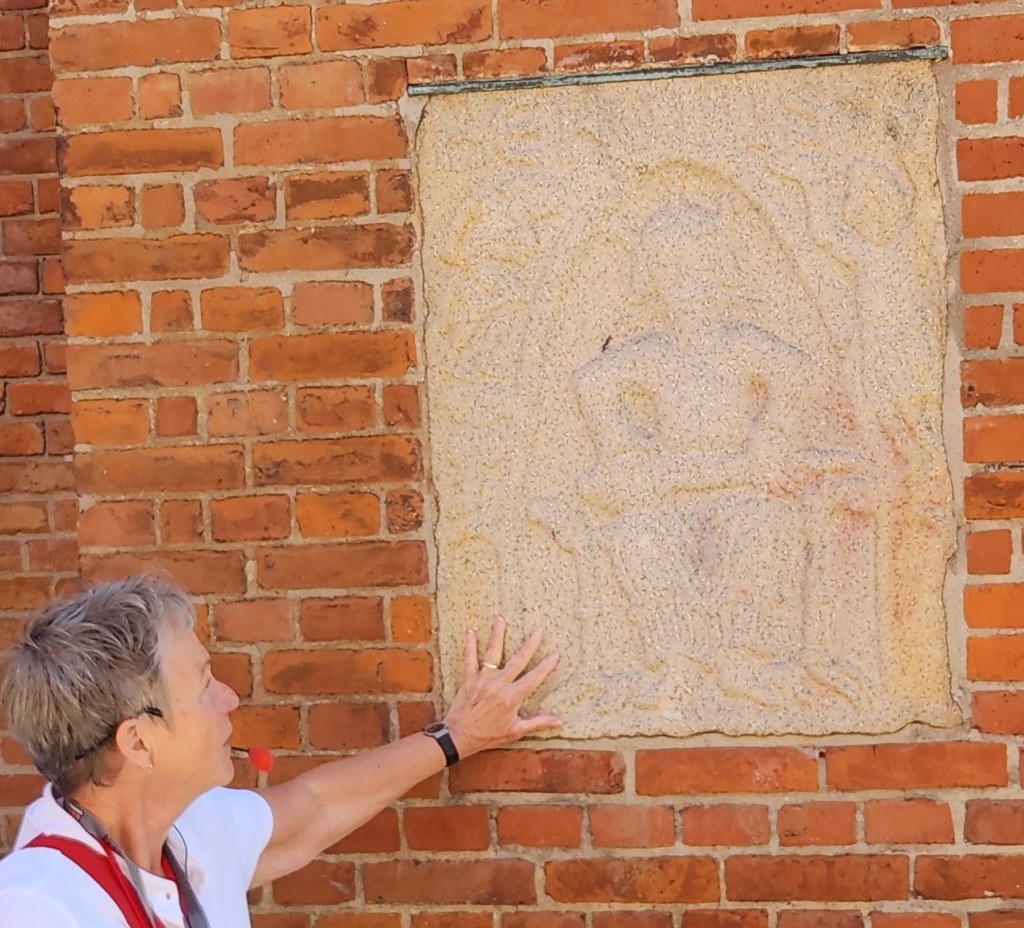
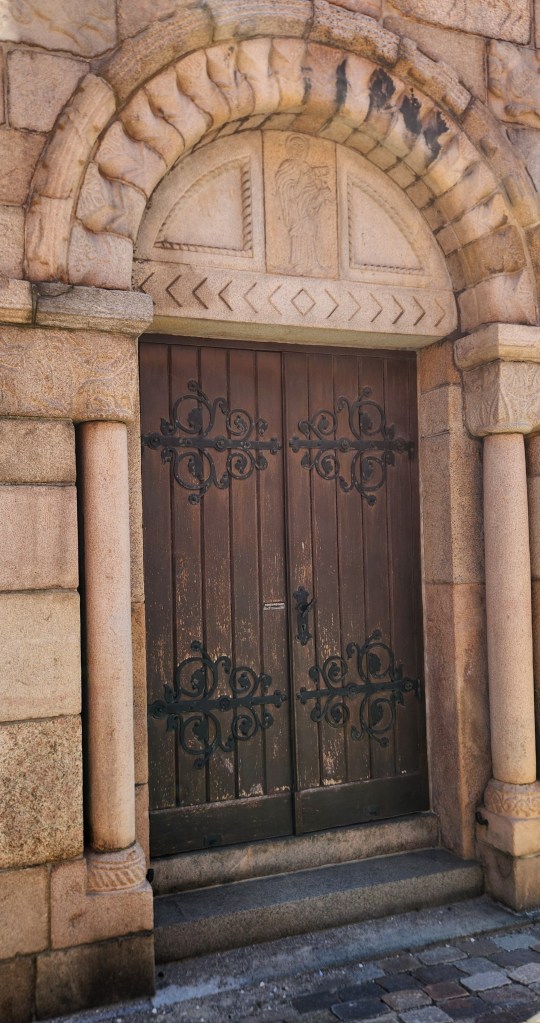
Next, we passed by the Church of Our Lady (Vor Frue Kirke), a Lutheran church built in 1878 on the site of a much older Benedictine monastery. The church is constructed in red brick and includes sandstone relief art and Romanesque portals which may have been preserved from the original monastery. The bell tower also houses one of the original church bells dating back to the 12th century.
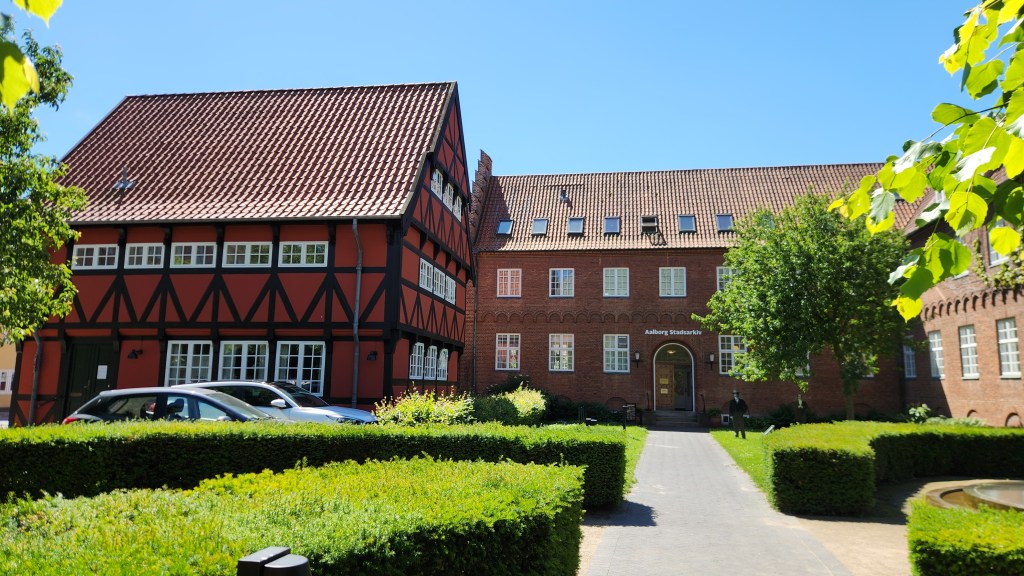
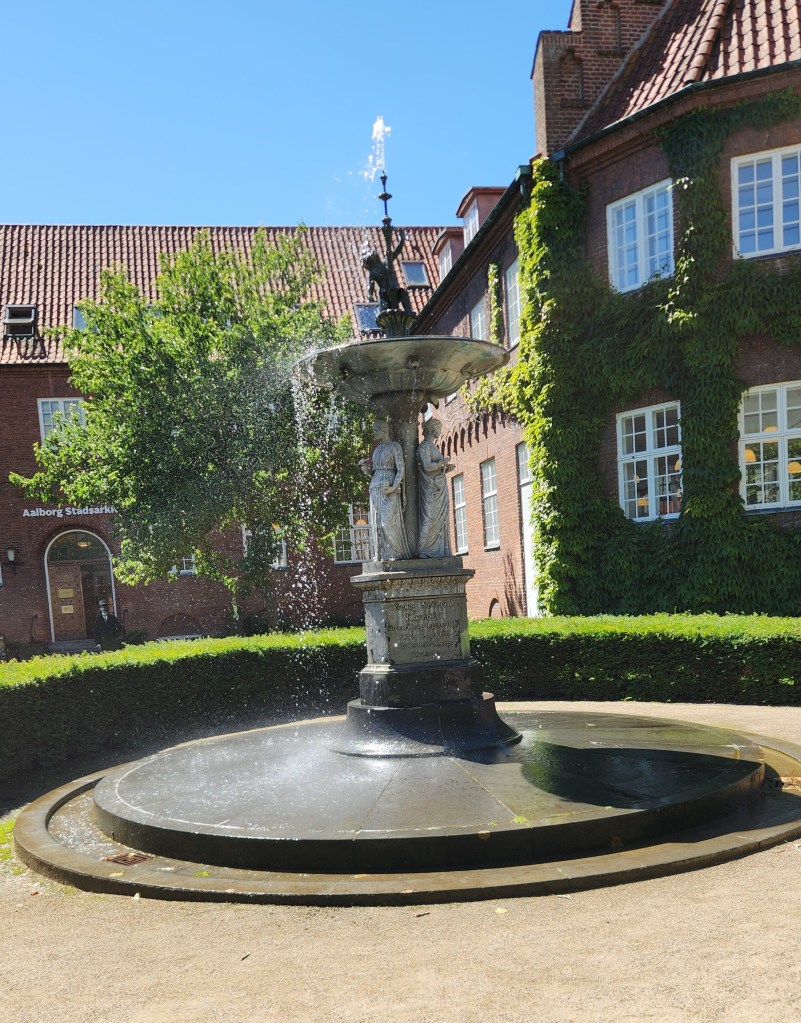
Heading back toward the harbor, we passed by the City Archives, featuring historic timber-framed architecture alongside red brick buildings and a lovely fountain.
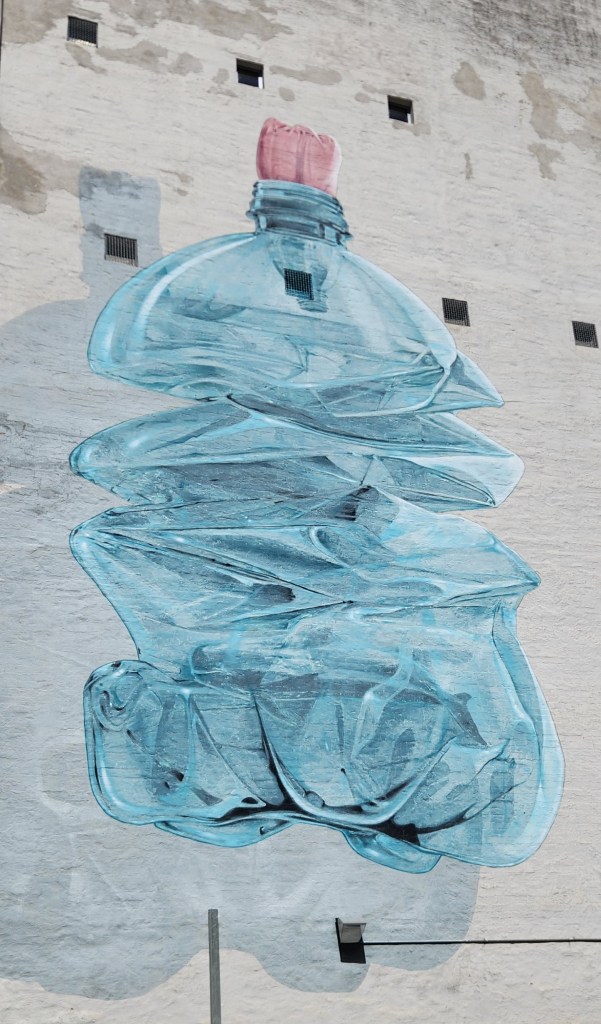
I’ll also share a few photos I took of interesting sculptures and murals we saw at various points during the walking tour.
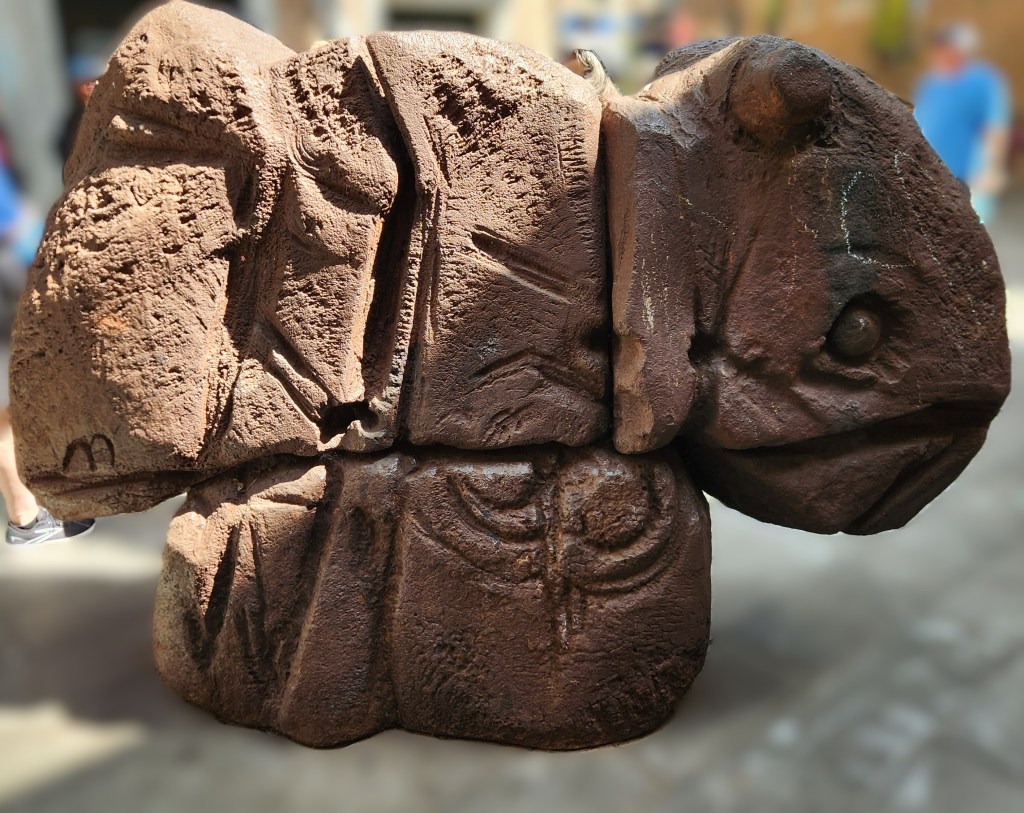
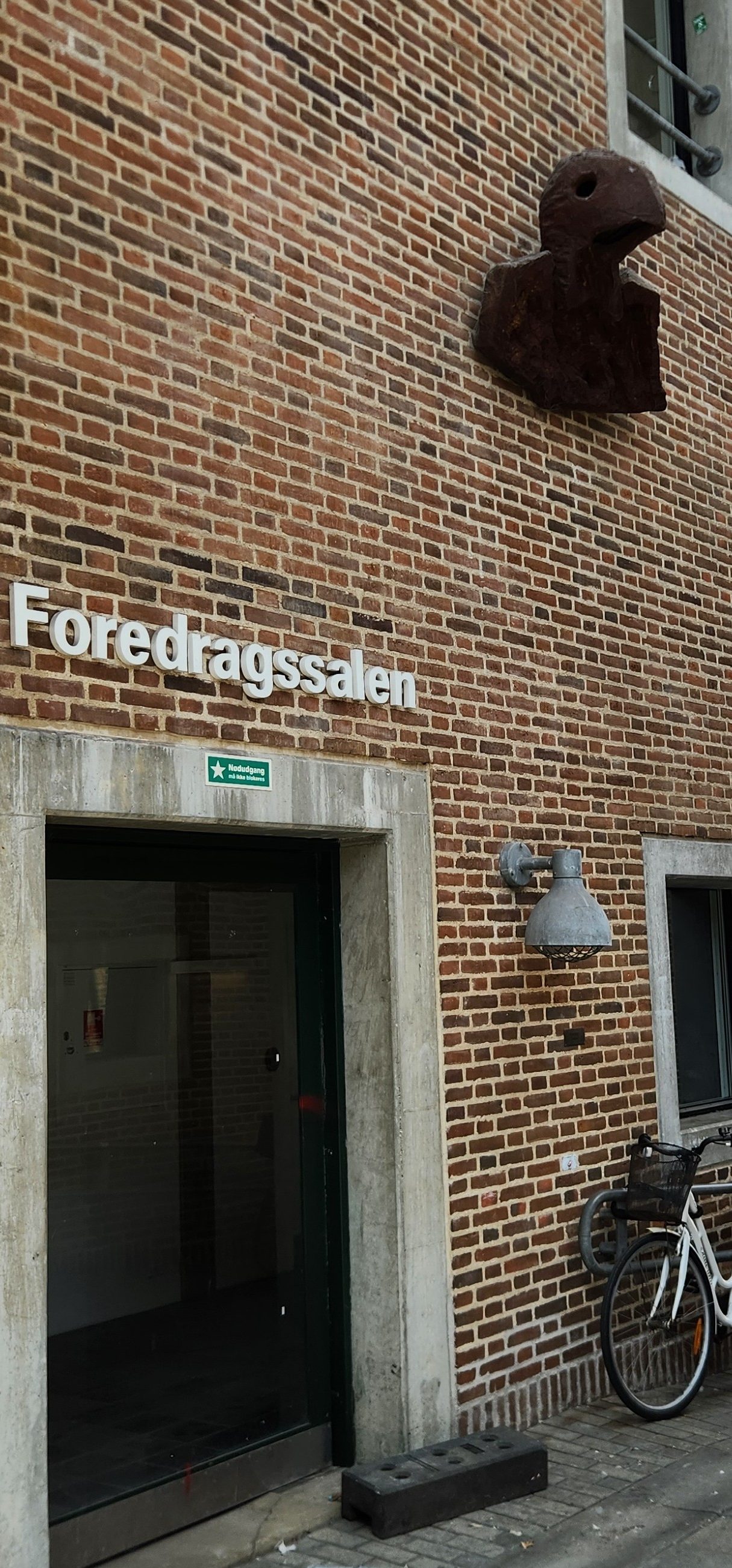
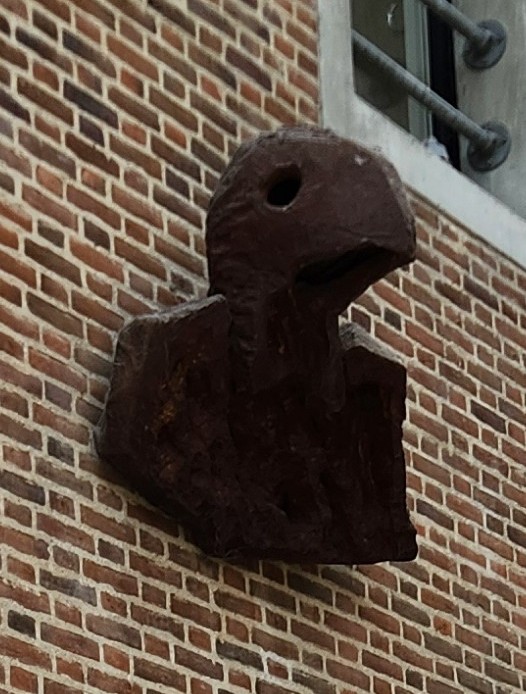
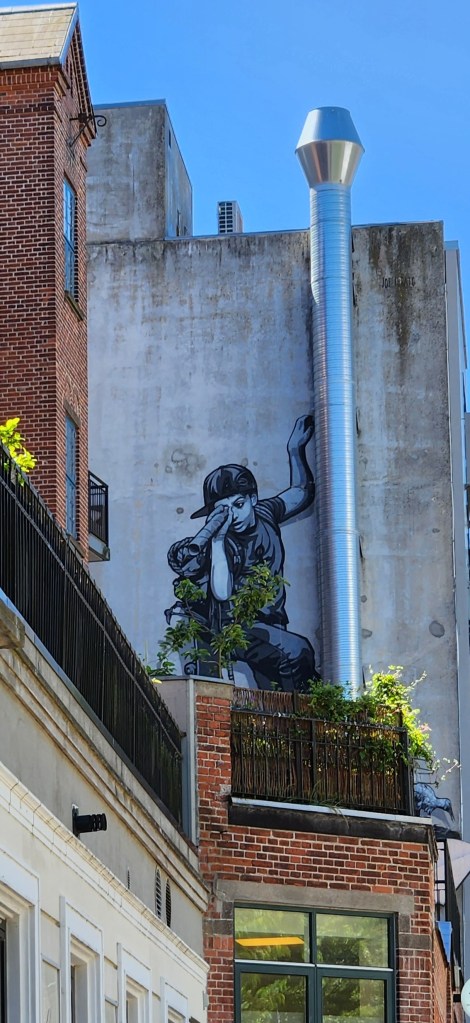
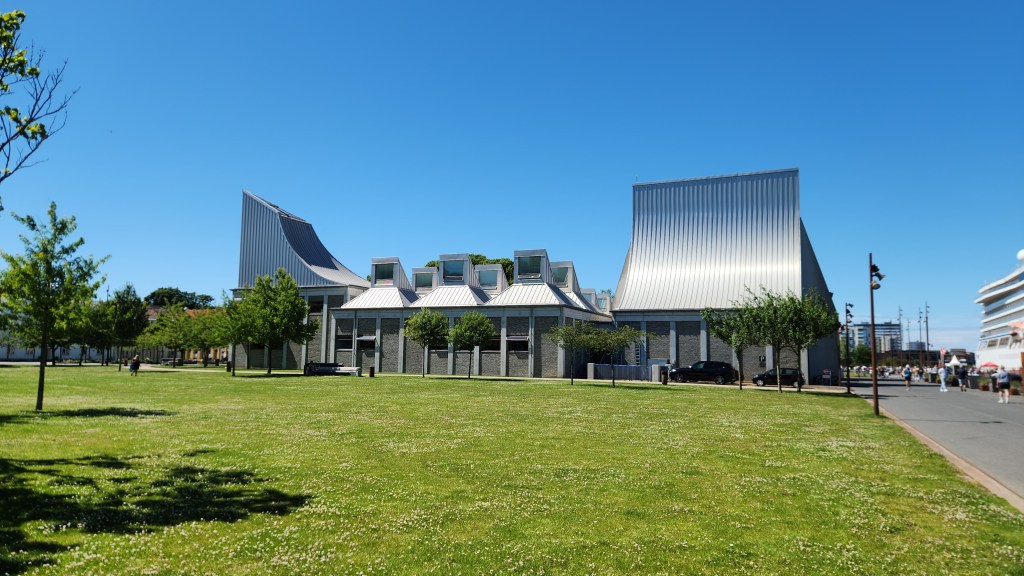
As we returned to the modern, renovated waterfront district, we passed by the Utzon Center. This ultramodern building was designed Jørn Utzon, the architect behind the Sydney Opera House. The center is directed towards promoting the significance of Utzon’s work and approach by organizing workshops, conferences and exhibitions and disseminating the results for the benefit of the architecture profession and the general public.
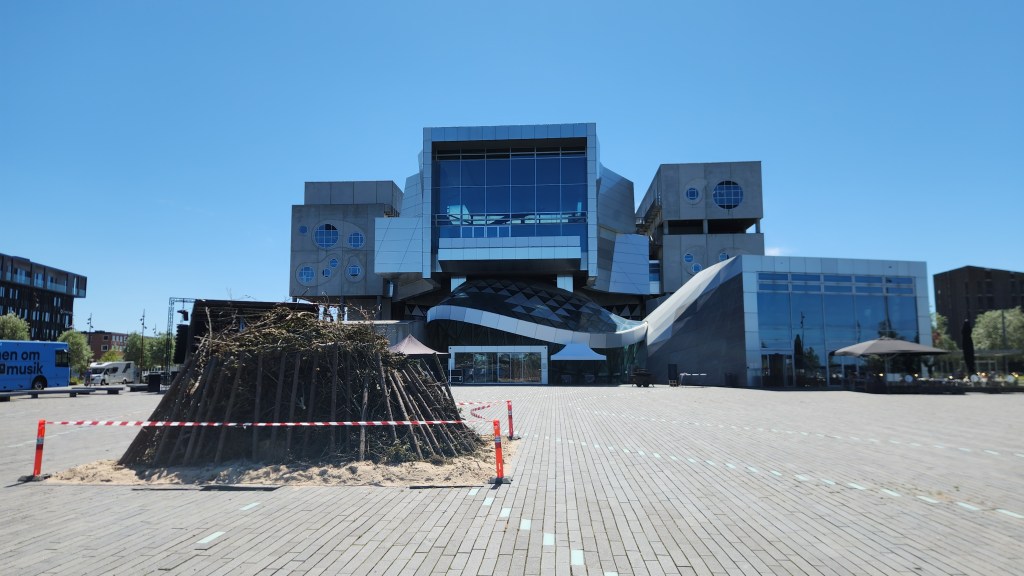
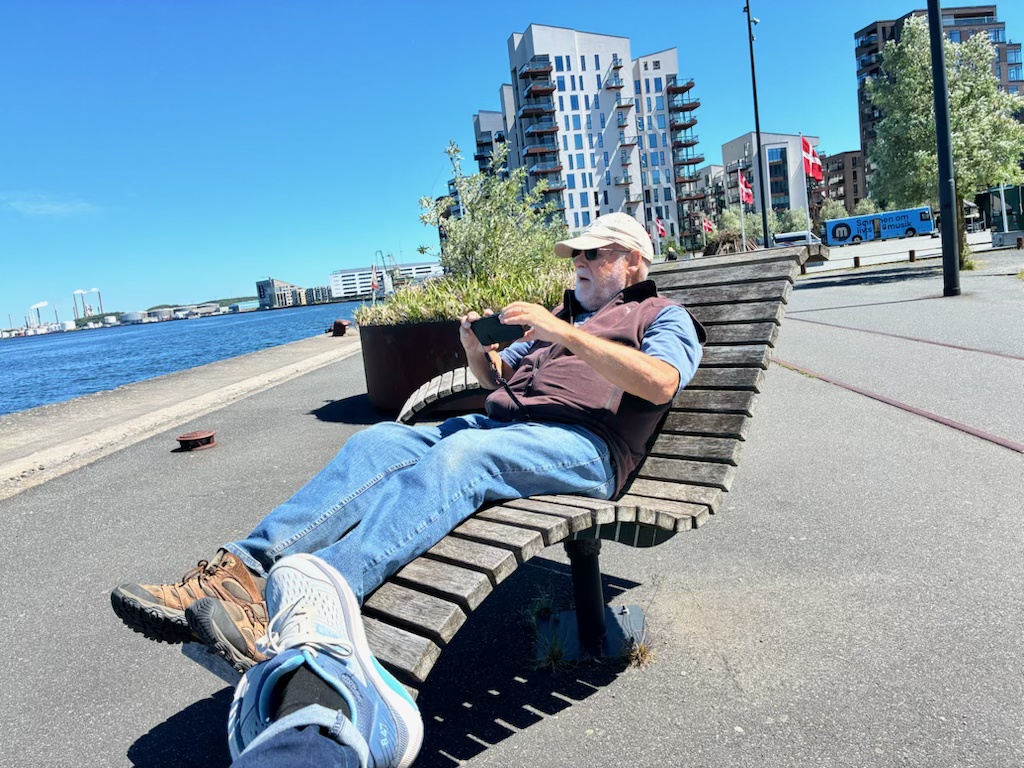
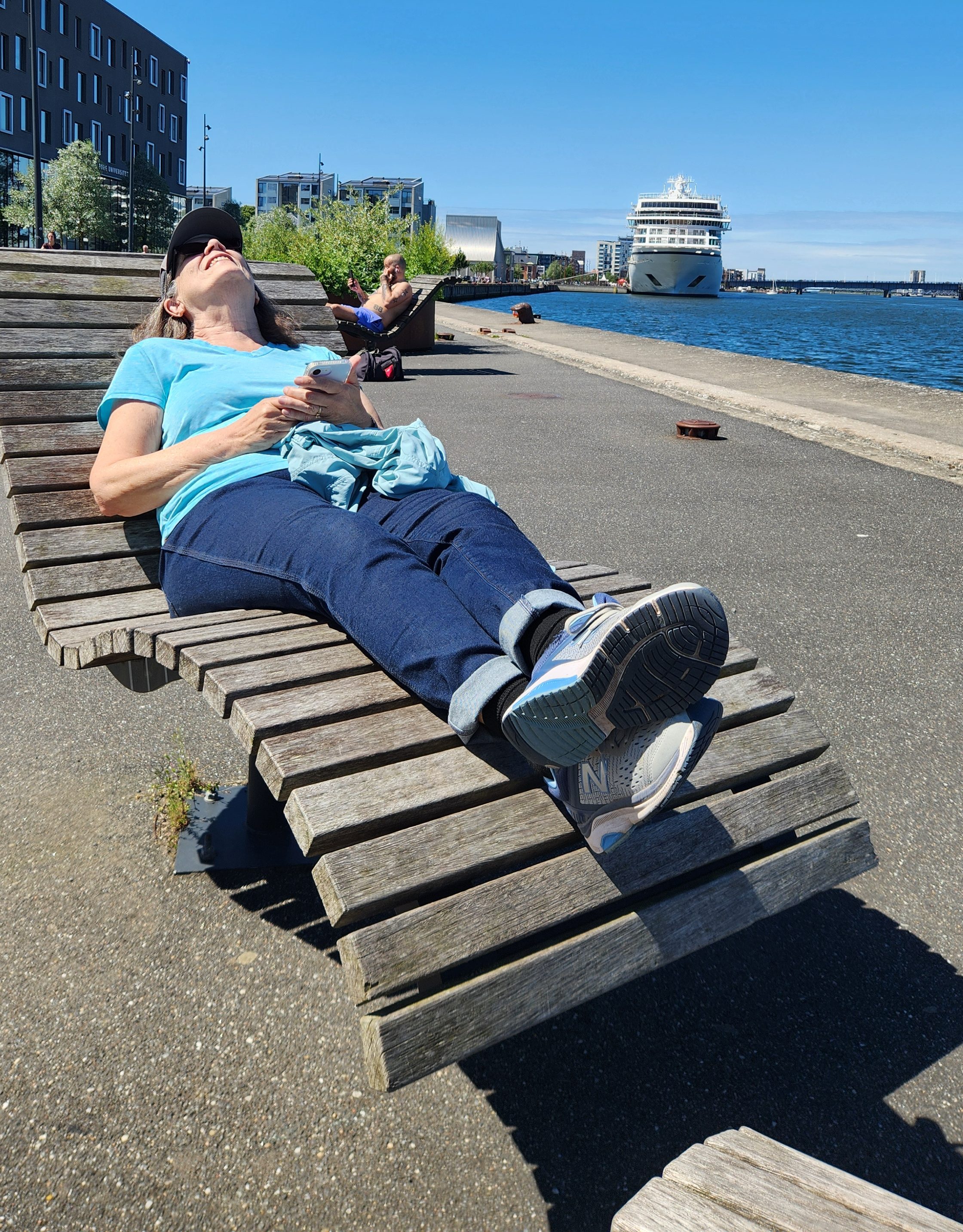
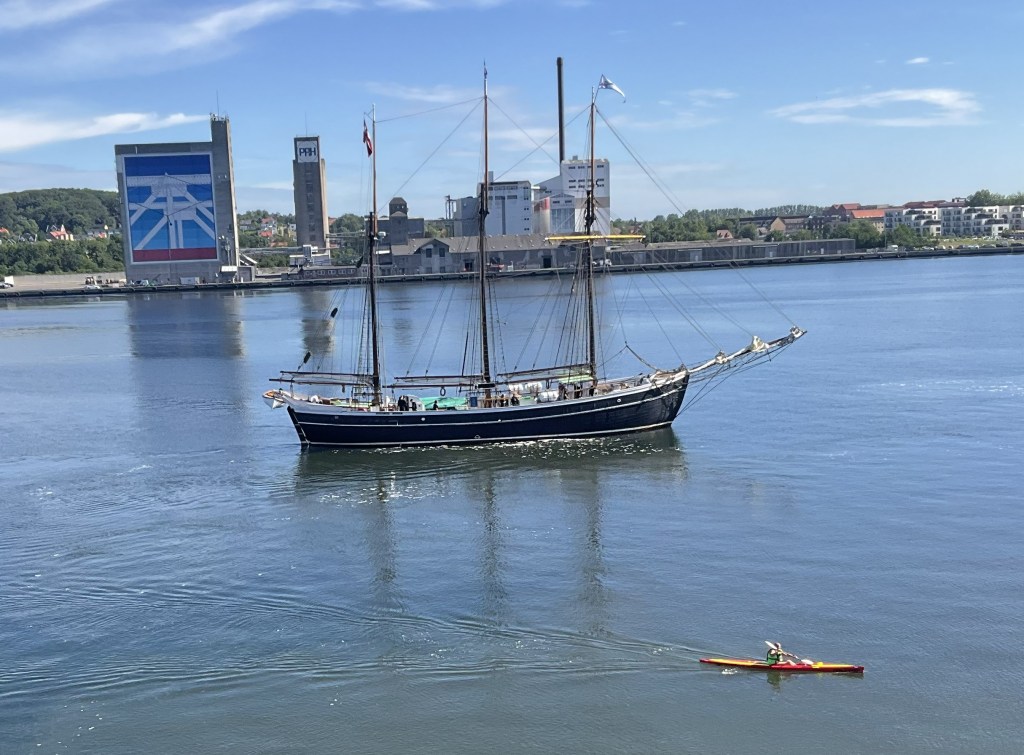
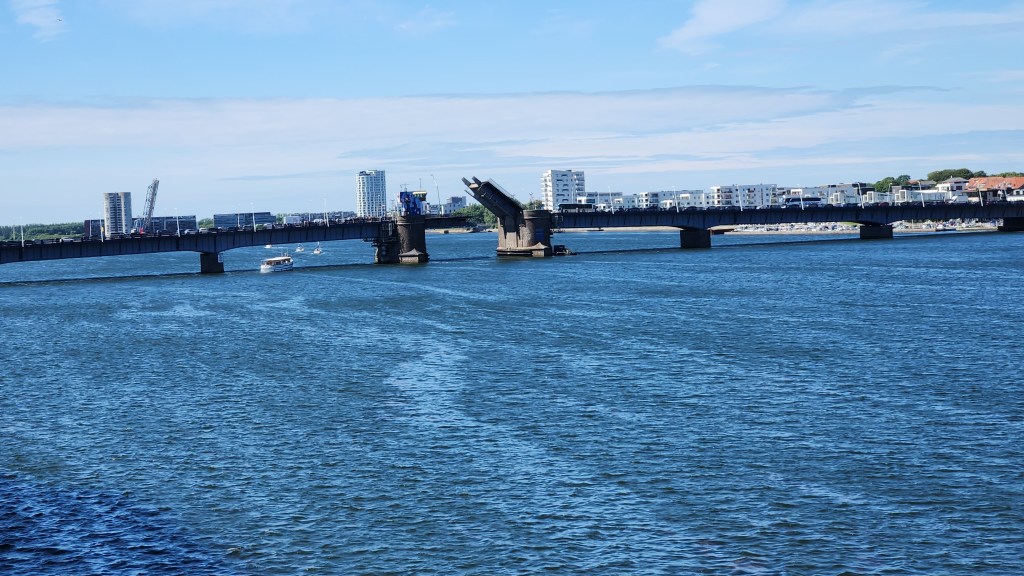
After the tour, we spent some time walking along the waterfront admiring the surroundings, including the Musikkens Hus, a major concert hall and music venue built in 2014 as home to the Ålborg Symphony; it also provides space for the Royal Academy of Music and the Ålborg University. We also sat in some interesting and very comfortable public chairs and admired the boat traffic in the harbor before returning to our ship.
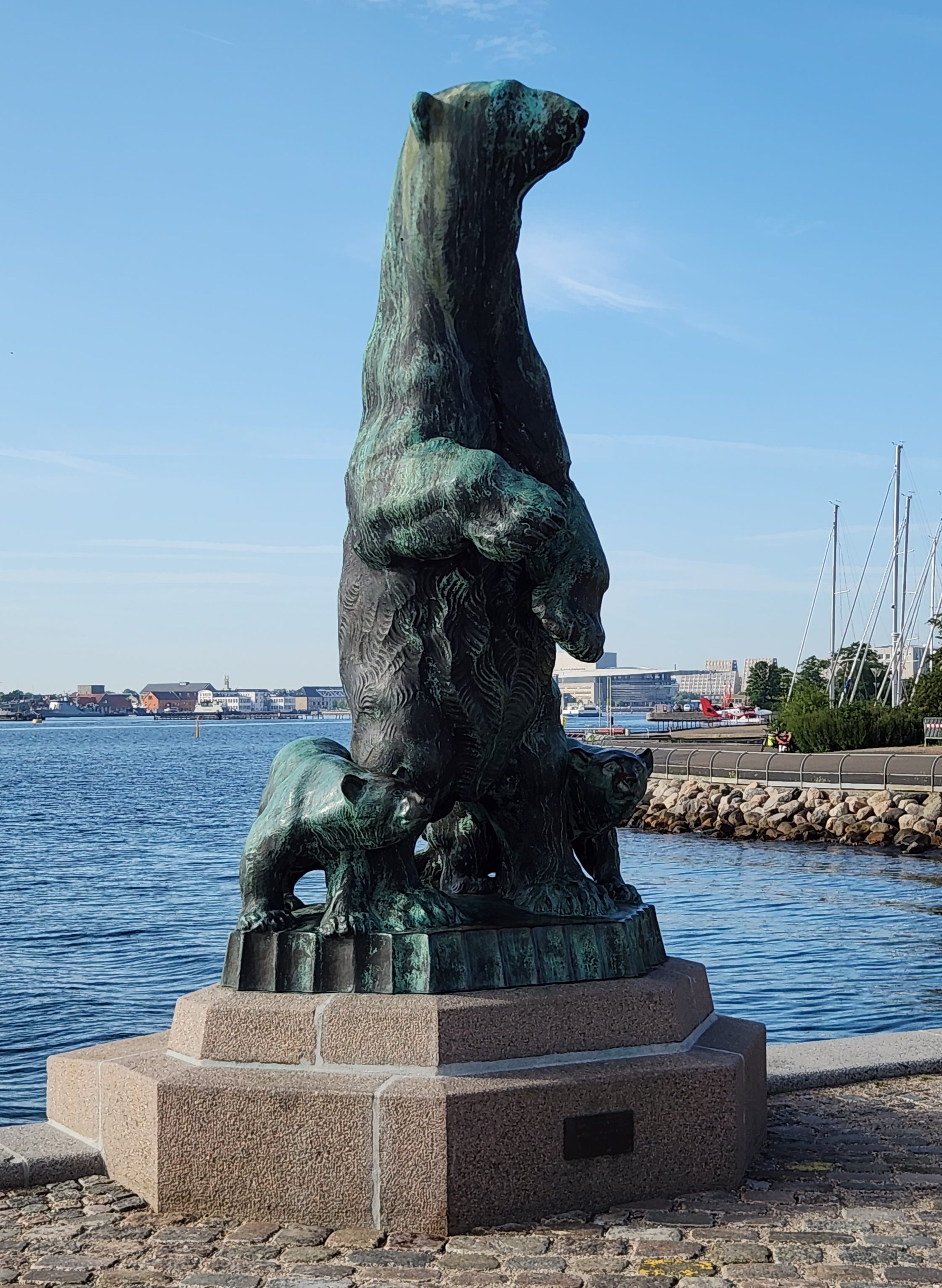
Copenhagen, Denmark (Wednesday, June 24, 2026): Our ship arrived in the Copenhagen harbor at 7 AM, and after the usual excellent breakfast on board we departed on a walking tour. The tour began on the Langelinie Pier where the ship was docked, and we soon came to a couple of nice statues. I’m sure every single reader will know exactly what the second one is.
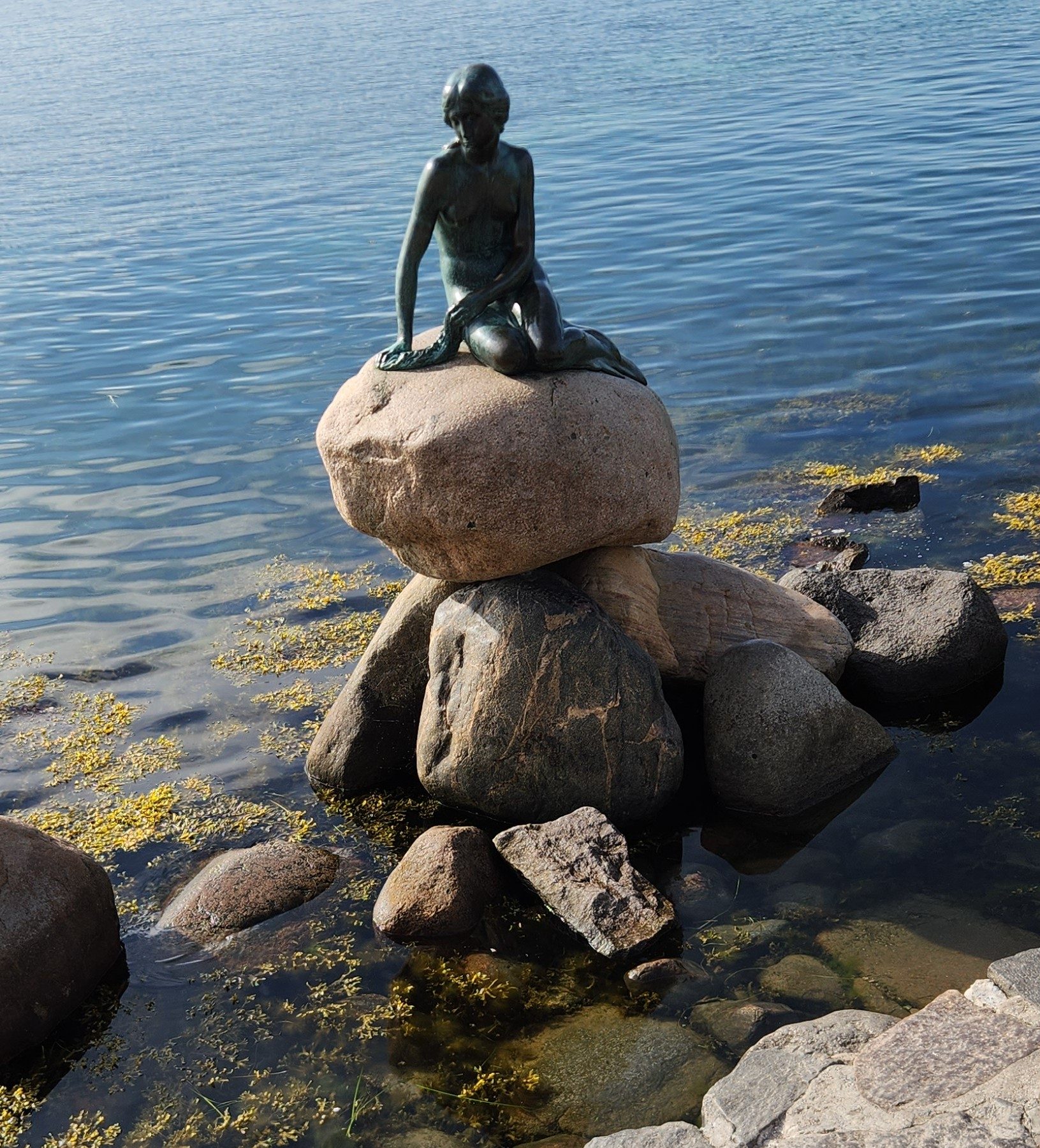
Our guide told us that we were very lucky to have an unobstructed view of the Little Mermaid statue, still sitting serenely in the harbor since its unveiling in 1913, since more than a million people stop to see the statue every year. (In fact, when we passed by her again at the end of the tour the area was thronged with a hundred or more gawkers.) I’m quite disappointed in the quality of my photos – somehow the lighting conditions didn’t allow me to get a good one – but at least the statue commemorating Hans Christian Andersen’s fairy tale was all there. At various times, since 1964, vandals have: decapitated her twice (the first head was never recovered, and a new one had to be made in 1968); sawn off an arm in 1984; used explosives to blow her off the stone base and into the harbor in 2003; drenched her in red paint protesting whale hunting in the Faroe Islands in 2017; painted her blue and white with the words “Free Abdulle” in 2017; tagged her with the words “Racist Fish” during global protests in 2020; and painted her with the white, blue, and red stripes of the Russian flag in an act linked to support for the invasion of Ukraine in 2023. And yet she endures!
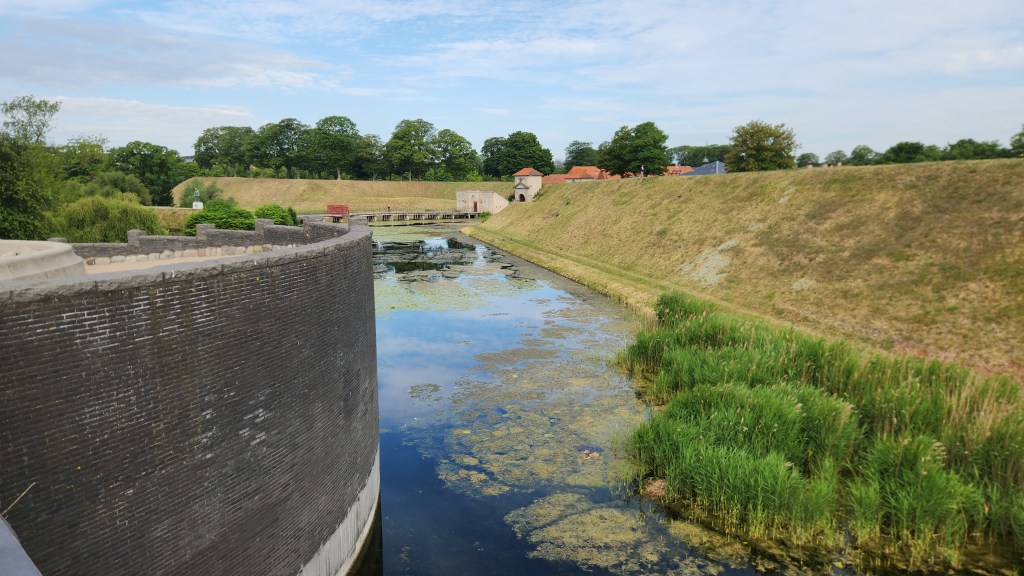
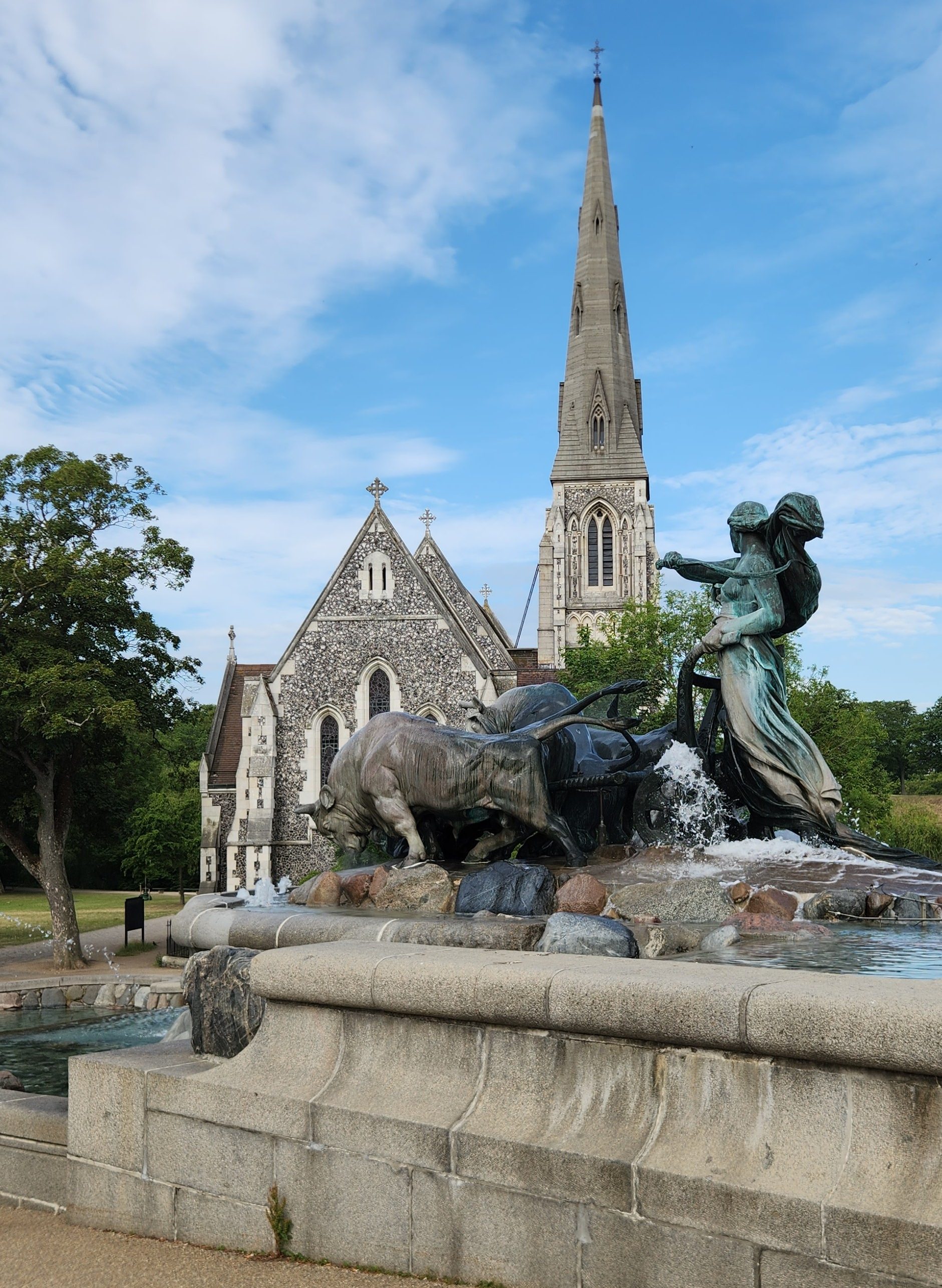
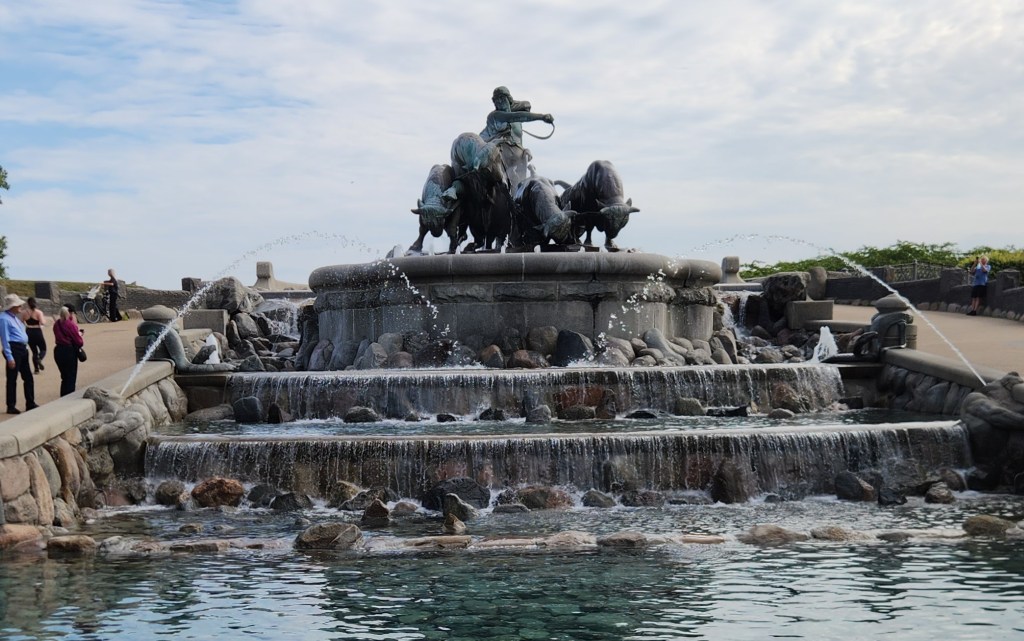
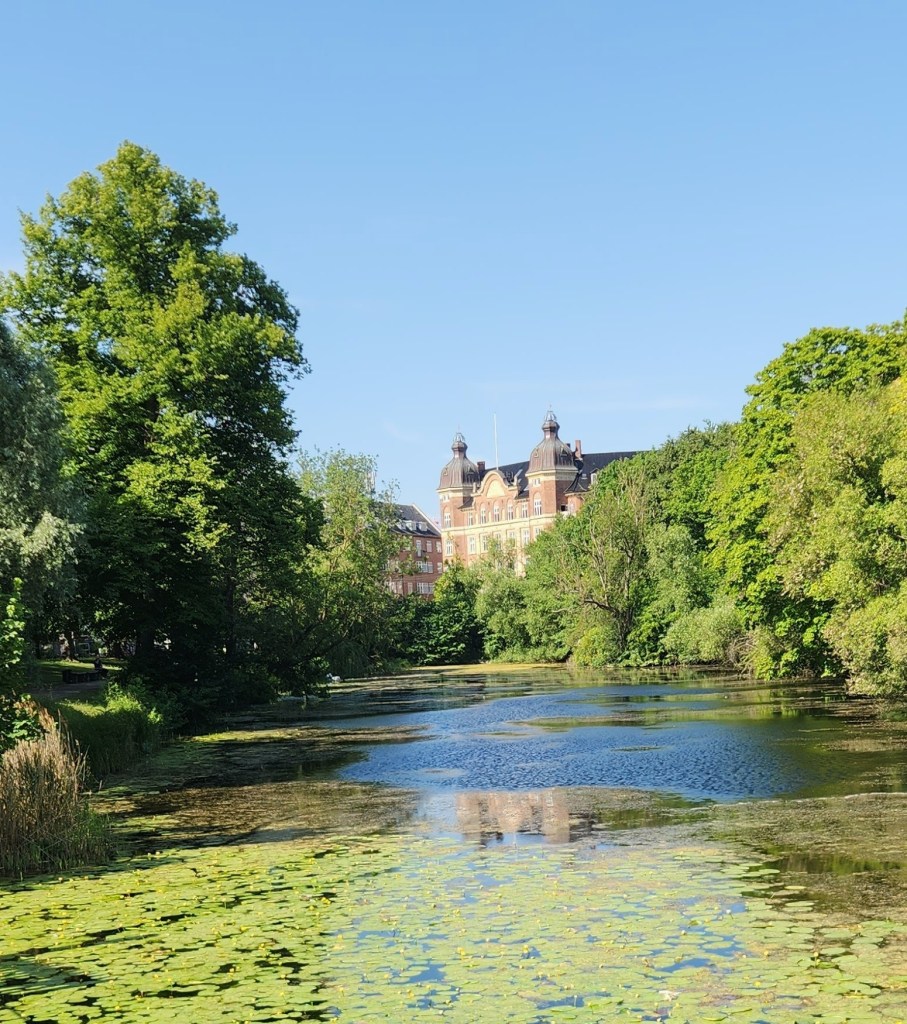
Our tour continued along the pier as we passed through the Amaliehaven, a public garden opened in 1983. We saw the ramparts of the Citadel (Kastellet, a 17th century star-shaped fortress with surrounding moats), Copenhagen’s largest monument (the Gefion Fountain, first inaugurated in 1908, featuring the Norse goddess Gefion driving four oxen), and the St. Albans Anglican Church, built in 1887.
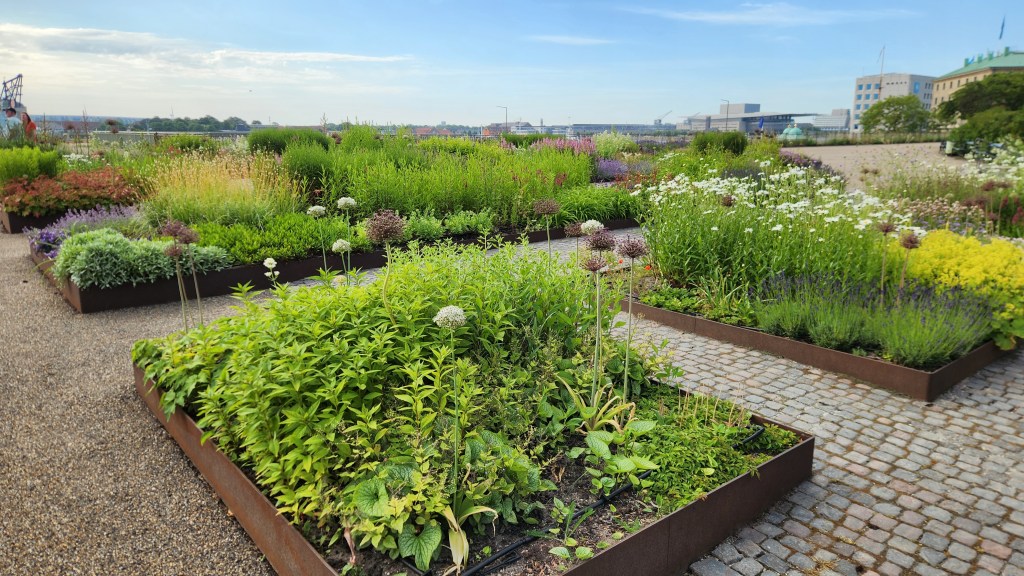
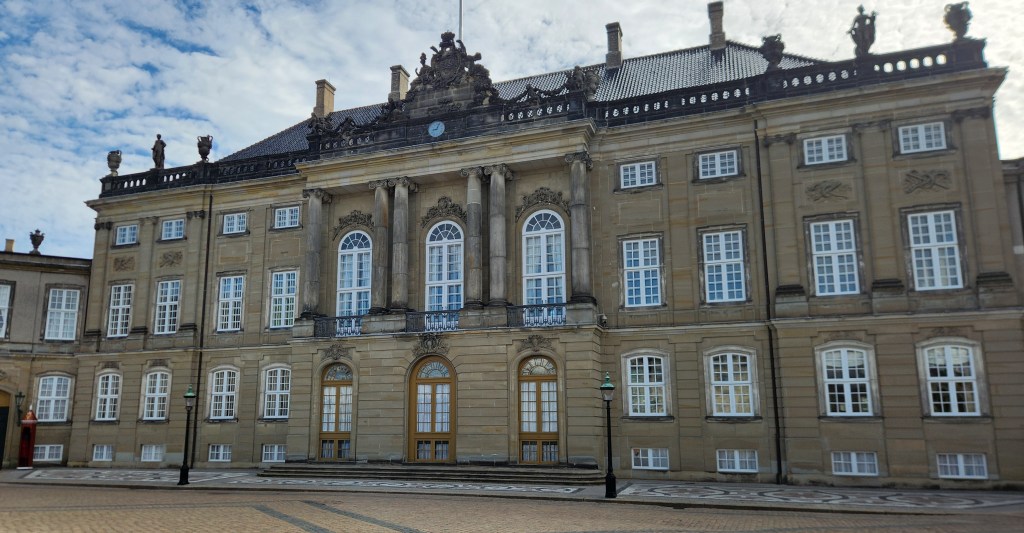
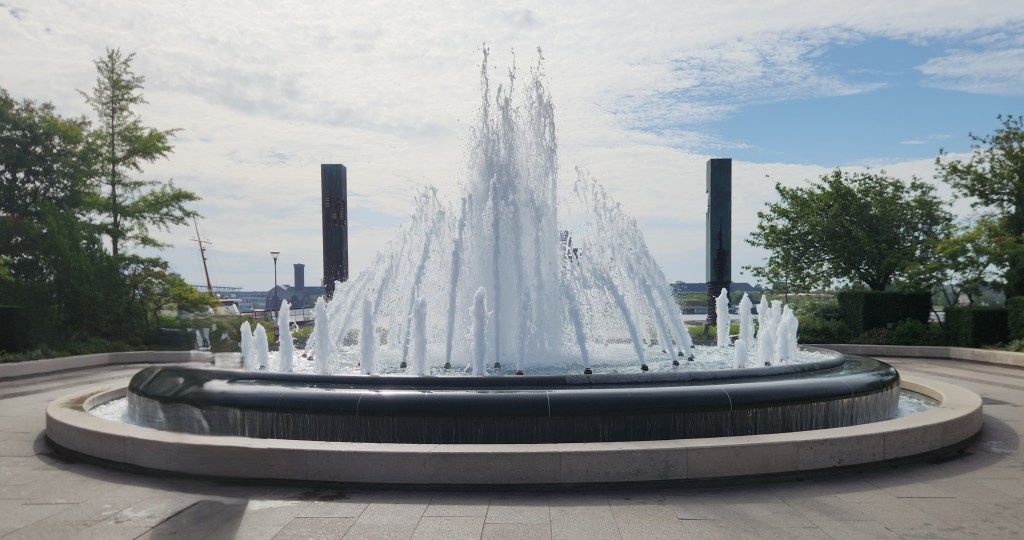
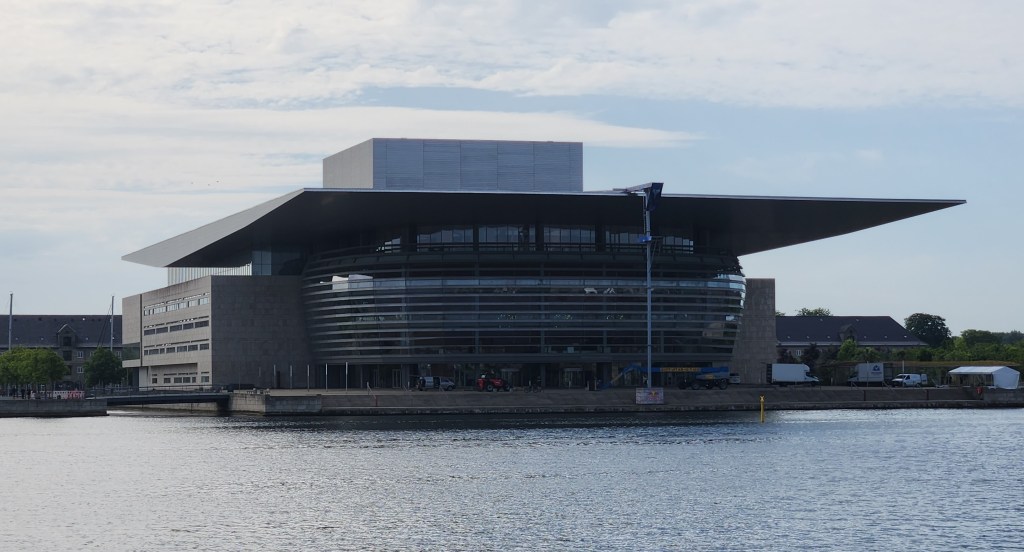
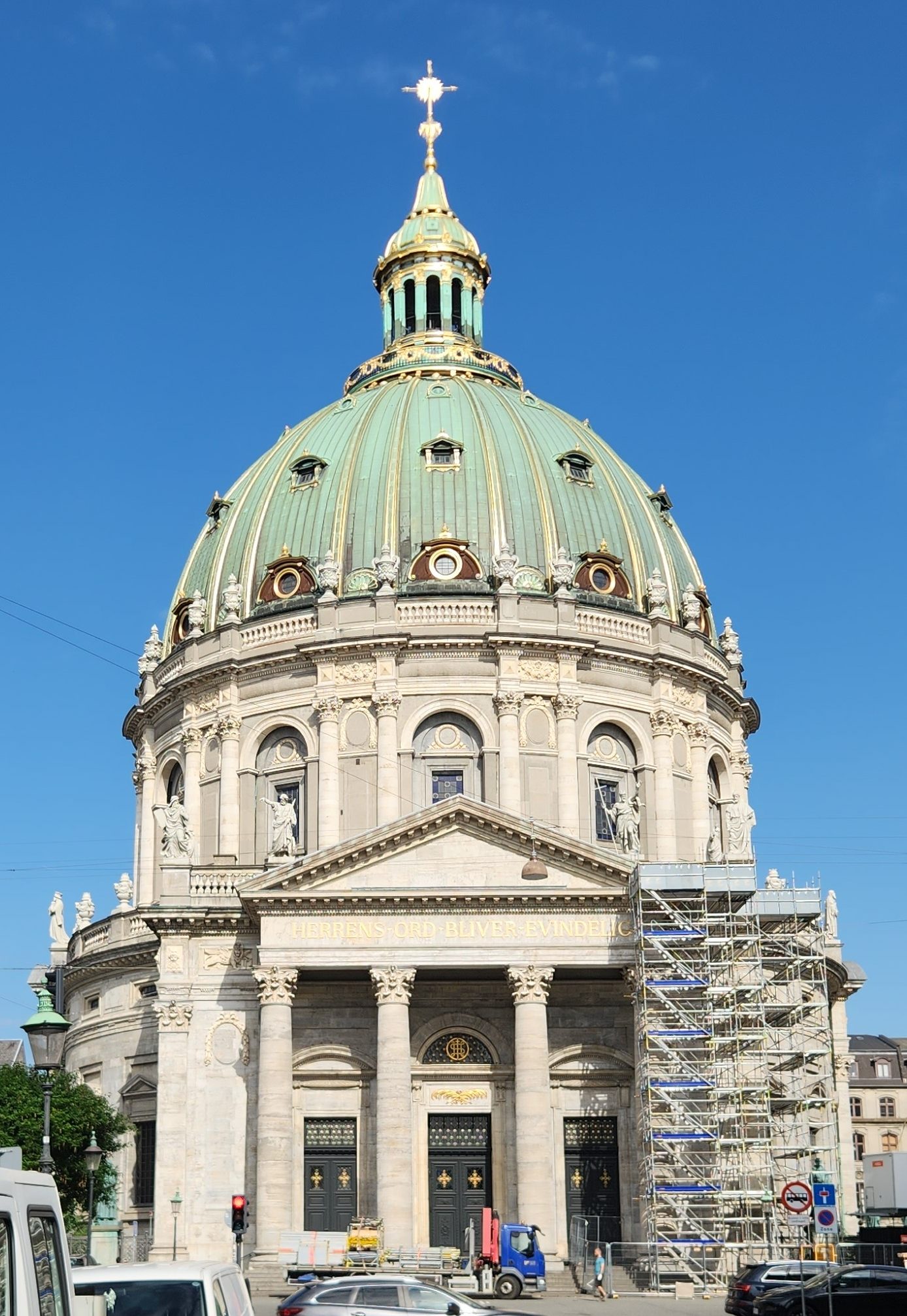
Next came the Amalienborg Palace, the winter residence of the royal family. Four identical Rococo buildings are arranged around a large octagonal courtyard with a central fountain. Amalienborg was originally built for four noble families, but after the Christiansborg Palace (see below) burned in 1794 the royal family bought the Amalienborg palaces and moved in. From the Amalienborg courtyard, we also had a good view of the New Opera House across the harbor, and on our way out of the courtyard we passed by the Marble Church, or Frederik’s Church, an Evangelical Lutheran church built in Rococo style between 1749 and 1894.
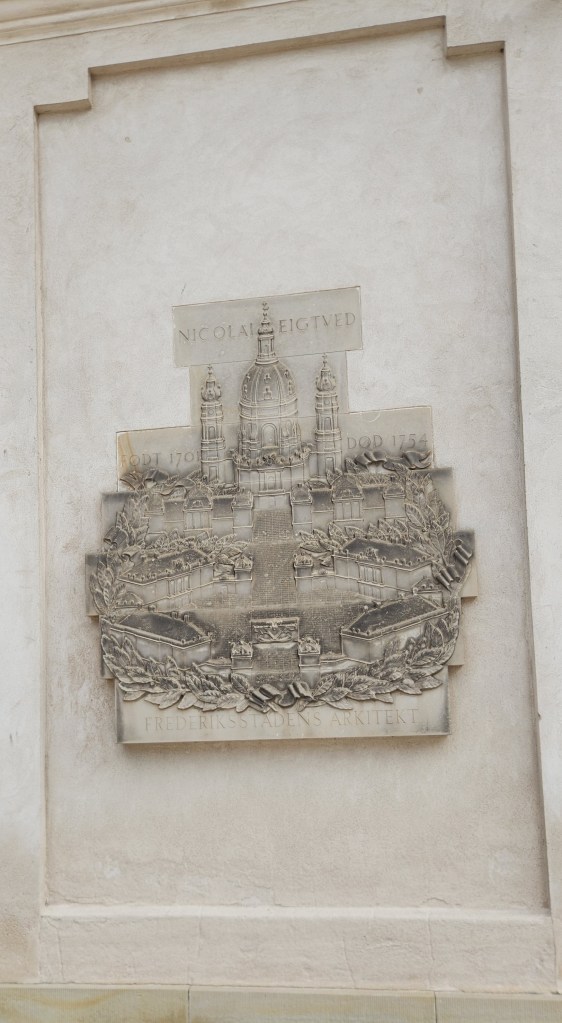
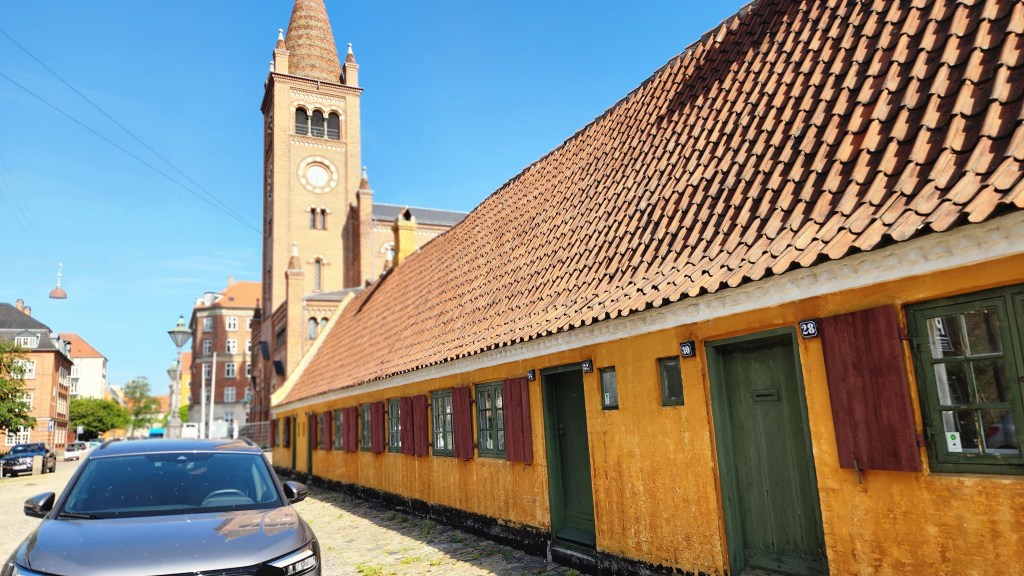
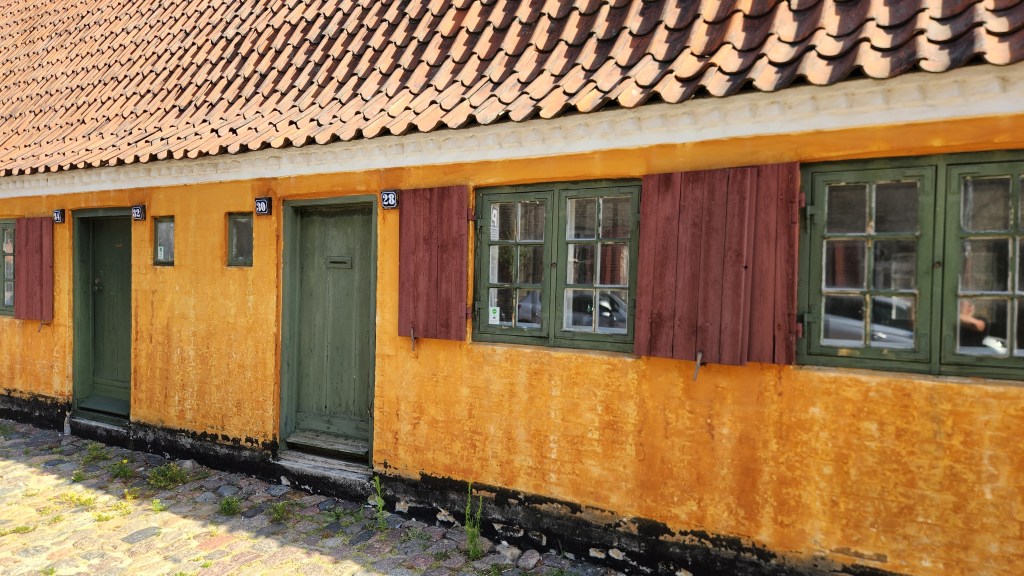
After the palace, we walked through the Nyboder district, which includes historic row houses originally built in the 17th century as naval barracks and still used for military family housing today. The buildings are iconic for their distinct “Nyboder yellow” color.
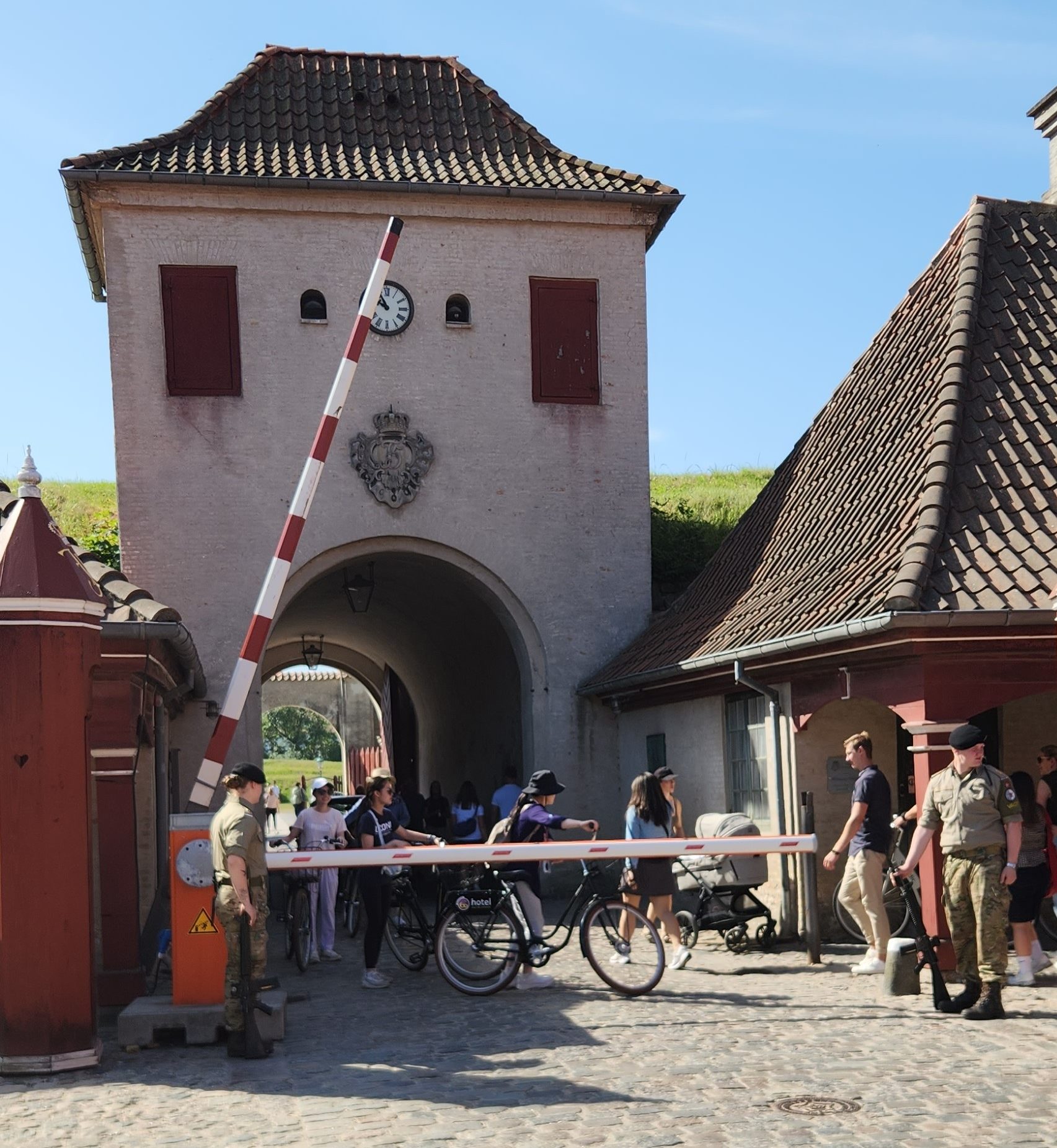
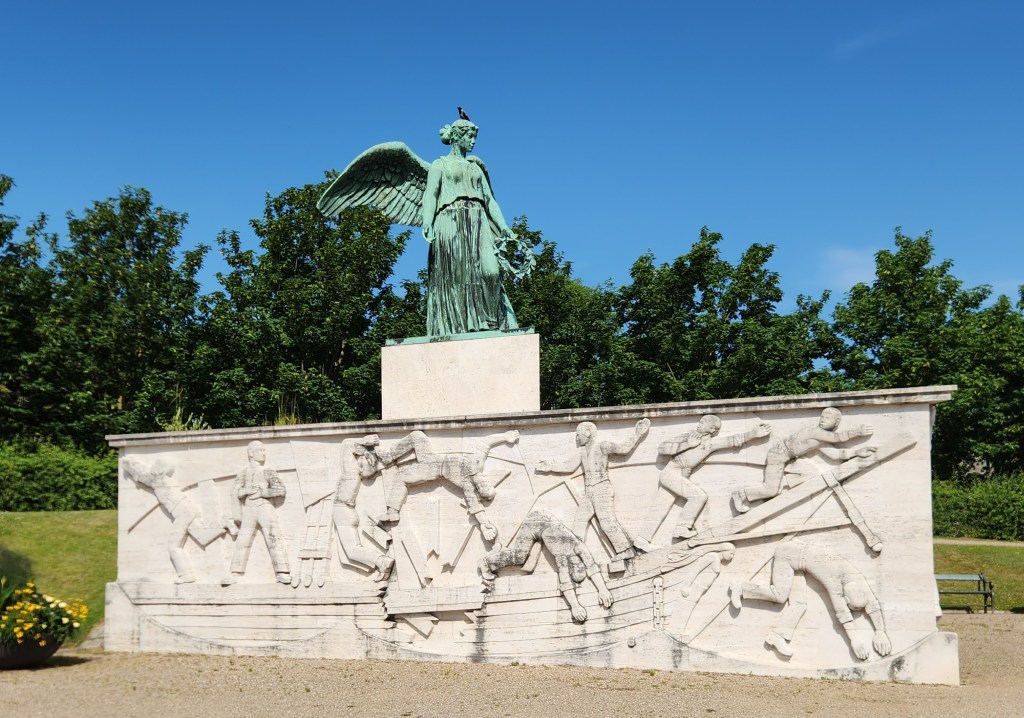
Leaving the Nyboder district, we walked to the public entrance to the Citadel – one of Europe’s best-preserved fortresses surrounded by eight moats, tall ramparts, and cannon bastions – and passed through the fortress to the pier. On the way back to our ship for lunch, we also passed by Maritime Monument (erected in 1928), commemorating civilian Danish sailors killed during World War I.
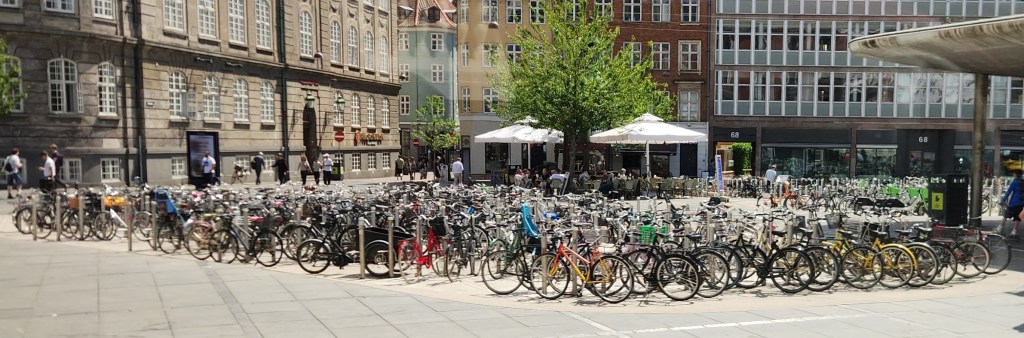
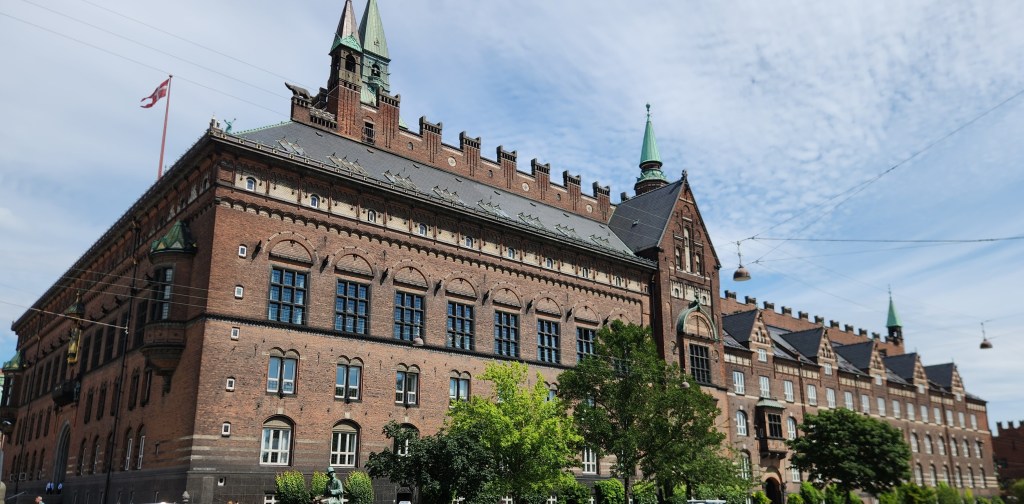
After lunch, we boarded a motorcoach for visits to the iconic Tivoli Gardens and the Christiansborg Palace, the seat of the Danish Parliament and house of the Queen’s Royal Reception Rooms. Along the way, I snapped a picture that says all one needs to know about the popularity of bicycles in Copenhagen, and another of the Copenhagen City Hall.
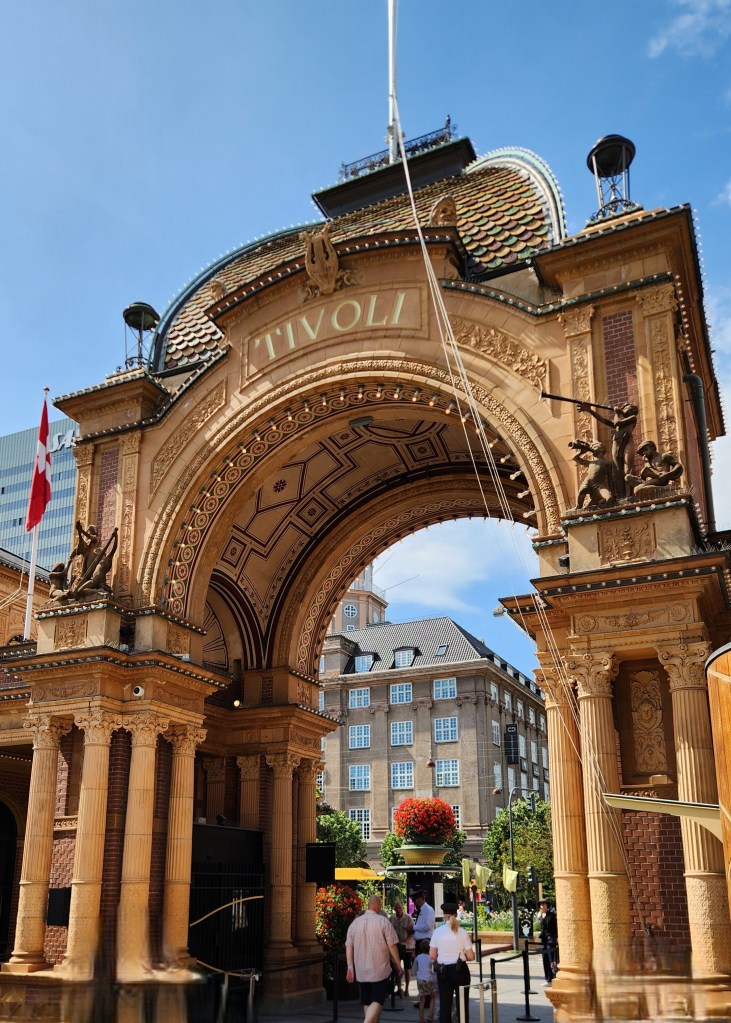
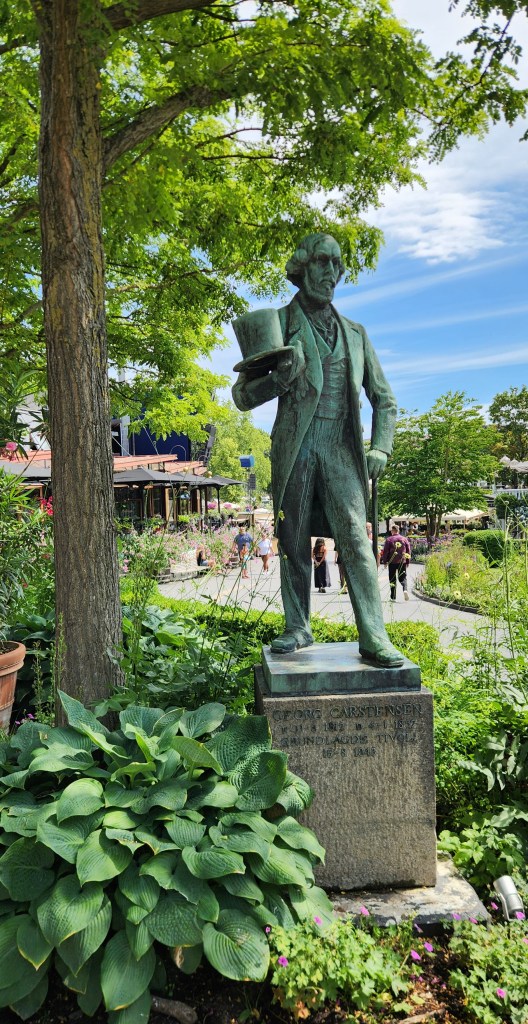
The Tivoli Gardens, the second-oldest operating amusement park in the world, opened in 1843. With 4.25 million visitors in 2024, Tivoli is the most visited amusement park in Scandinavia and second-most popular seasonal amusement park in the world. Our guide gave a brief introduction to the sights, and we were then free to explore the grounds. The buildings and grounds evoke the exotic style of an imaginary East, including the theater, bandstands, and flower gardens.
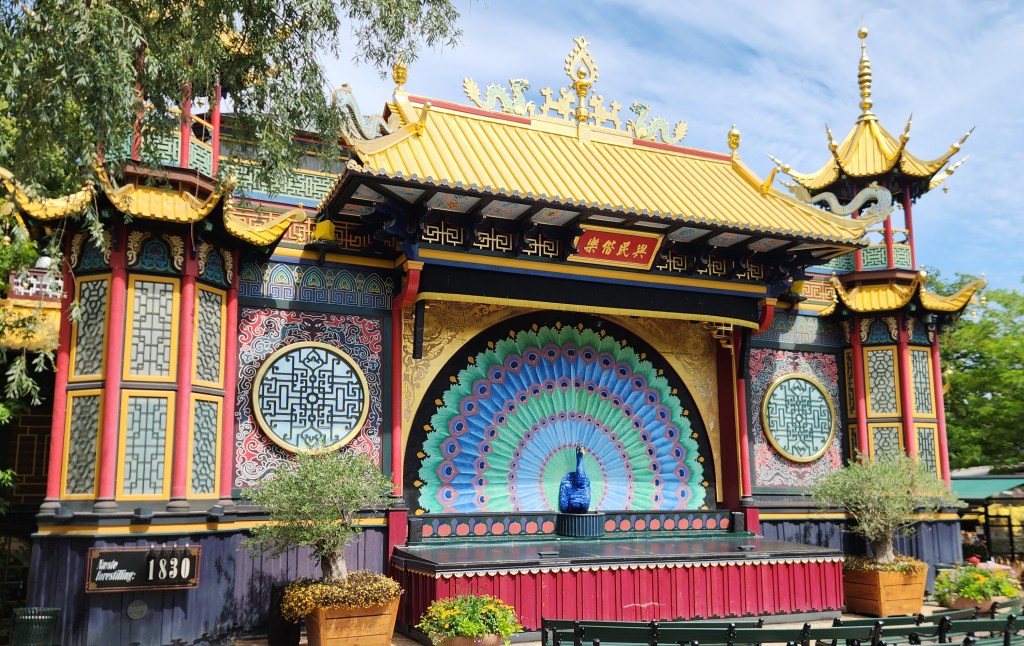
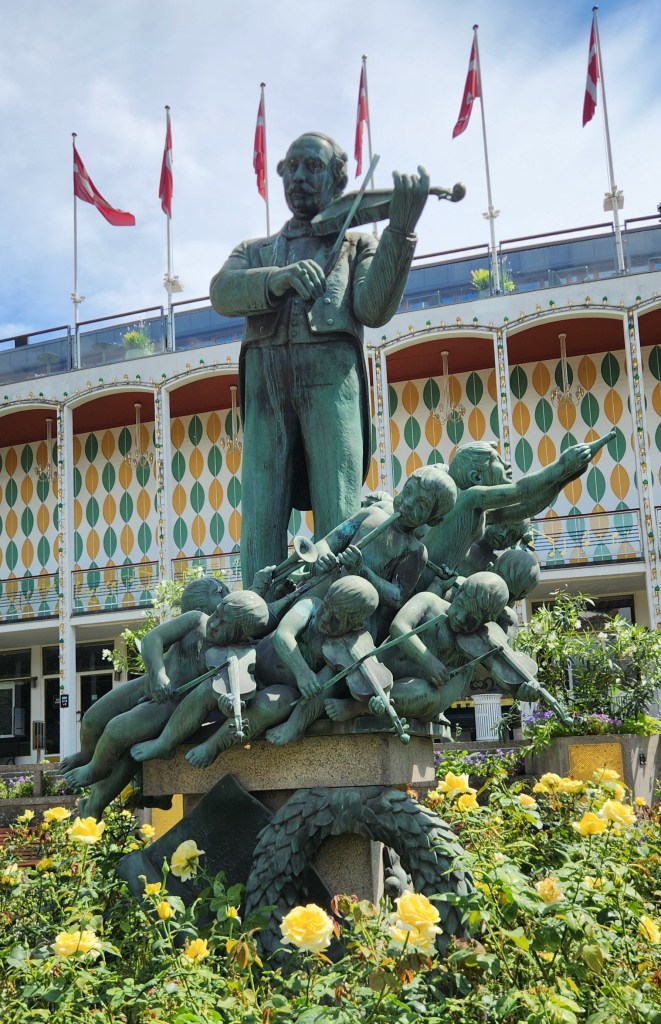
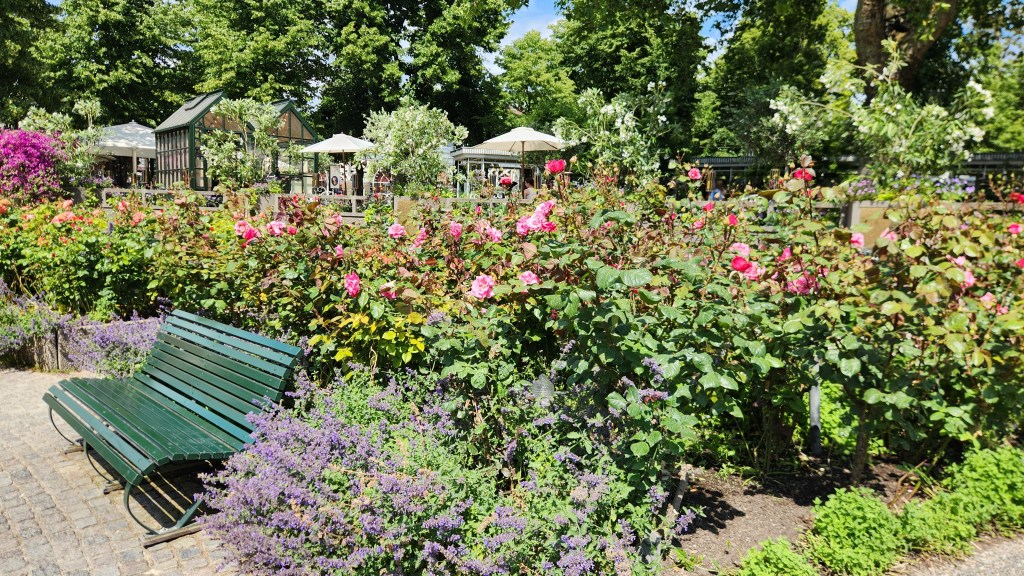
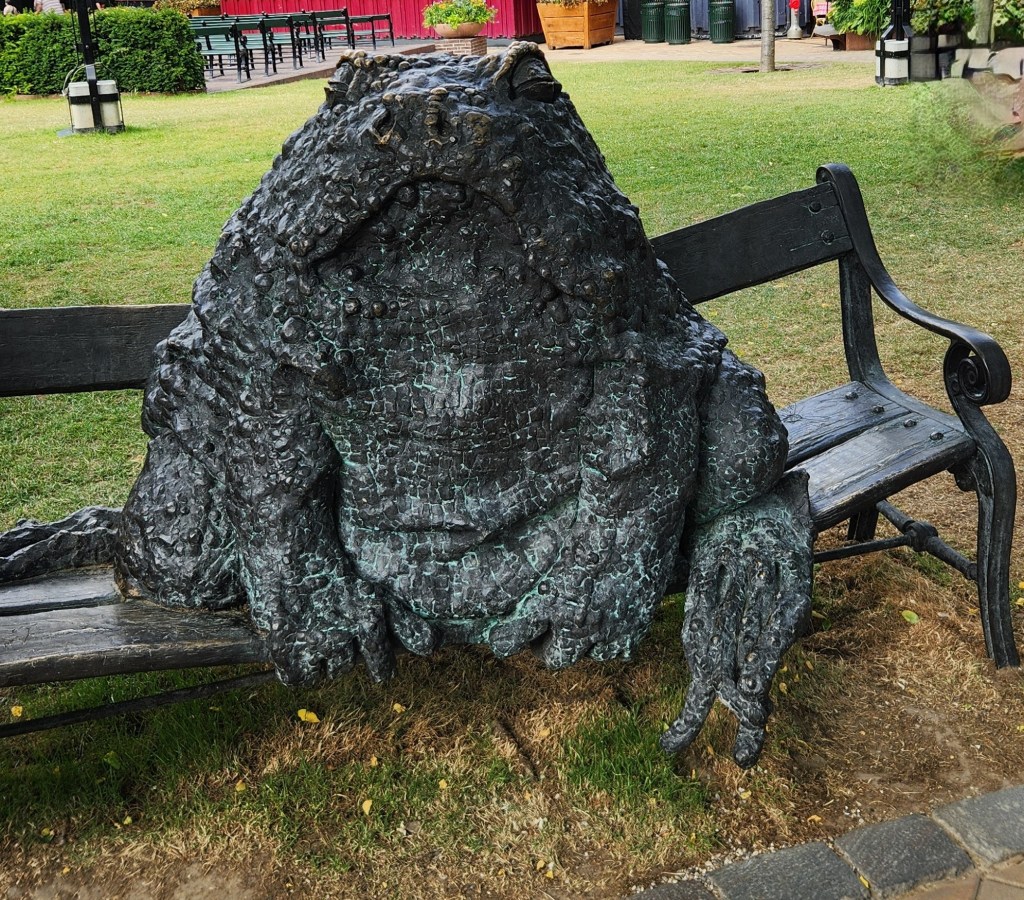
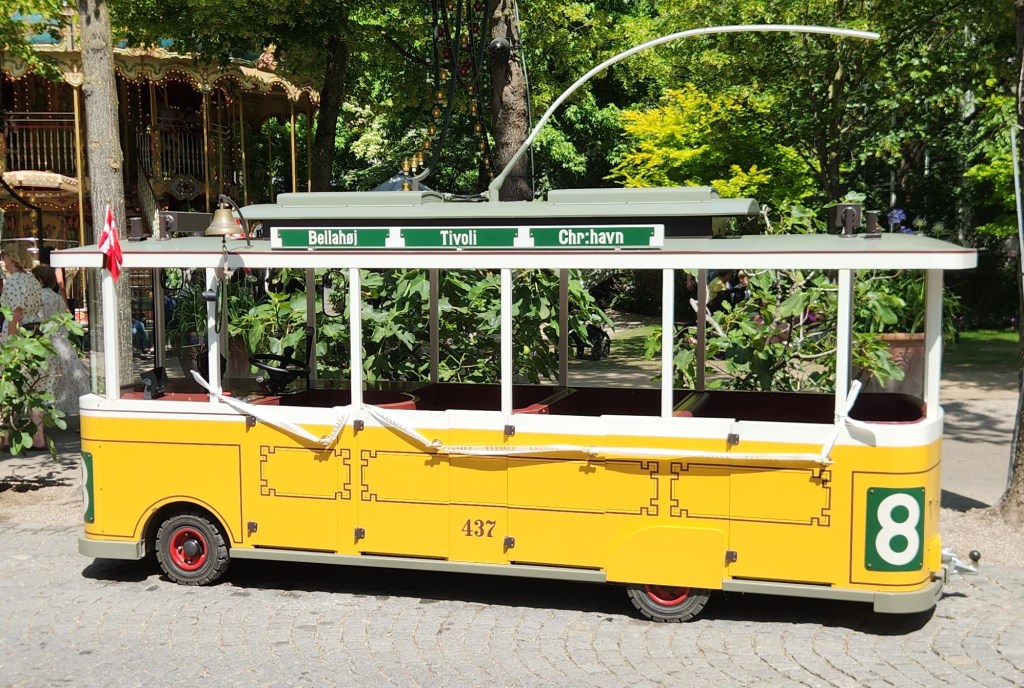
The iconic rides include the Roller Coaster (1914), the Ferris Wheel (1943), the Classic Carousel (1900), and the Vintage Cars (1959). Eschewing those tame attractions, we instead boarded this high-speed trolley for a dramatic race through the park, or at least a senior citizens version of that:
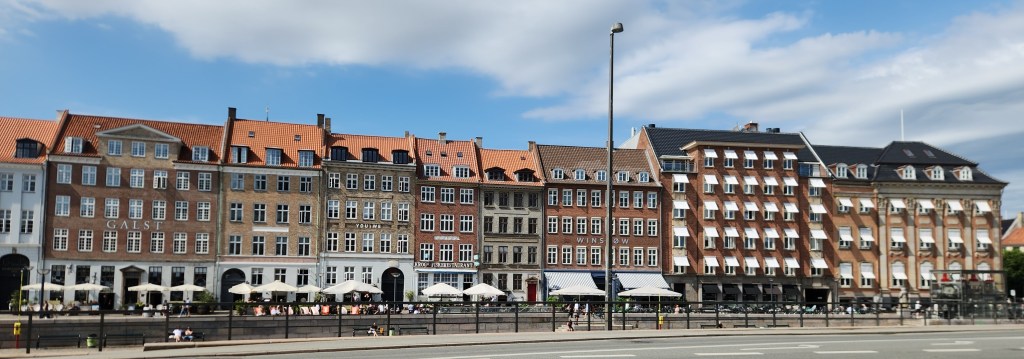
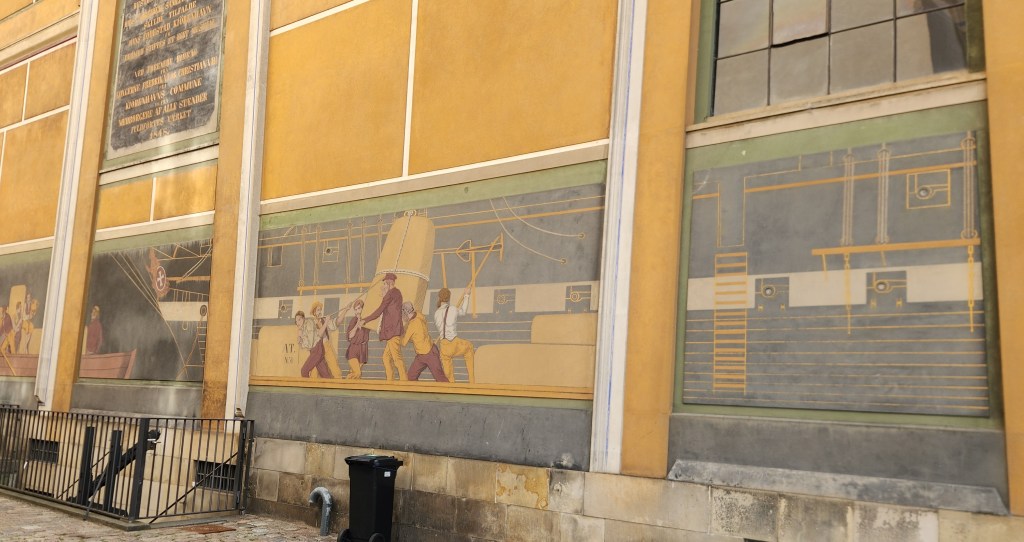
After leaving Tivoli, I snapped pictures of some impressive buildings along the Gammel Strand waterfront and the exterior murals of the Thorvaldsen Museum.
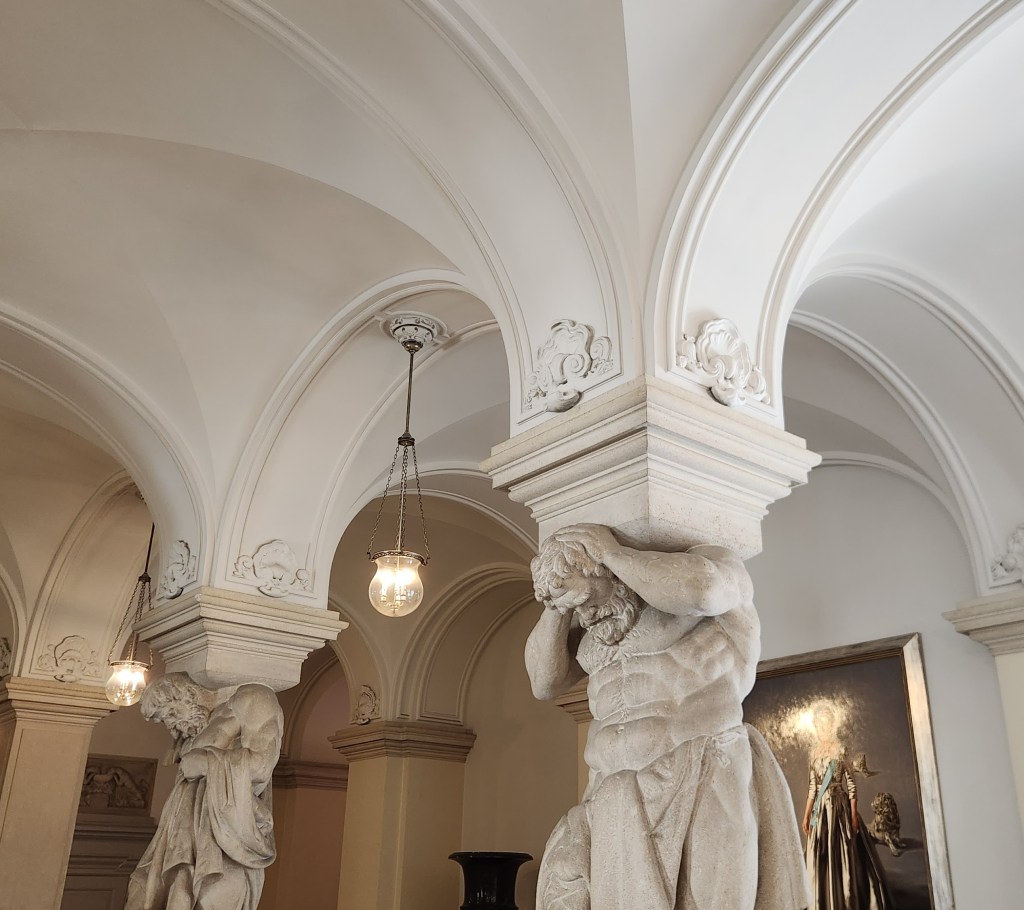
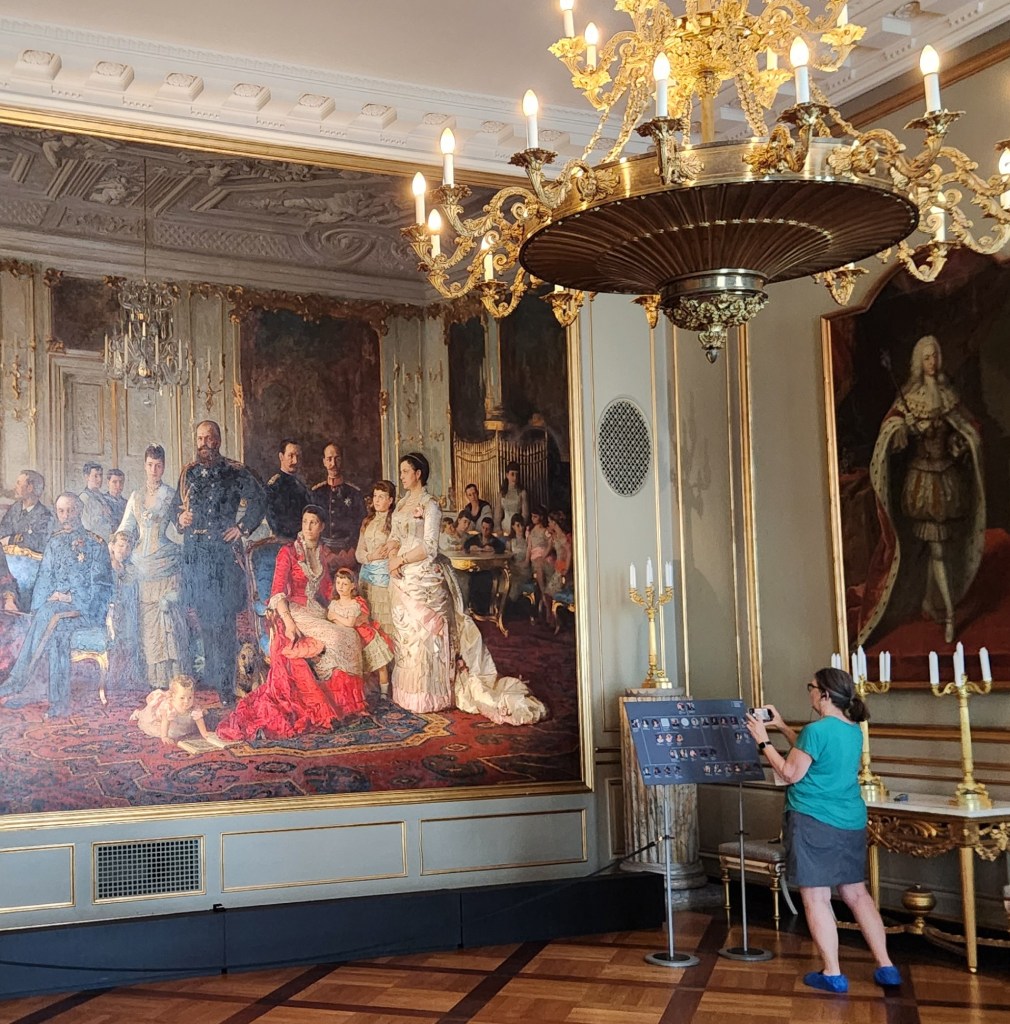
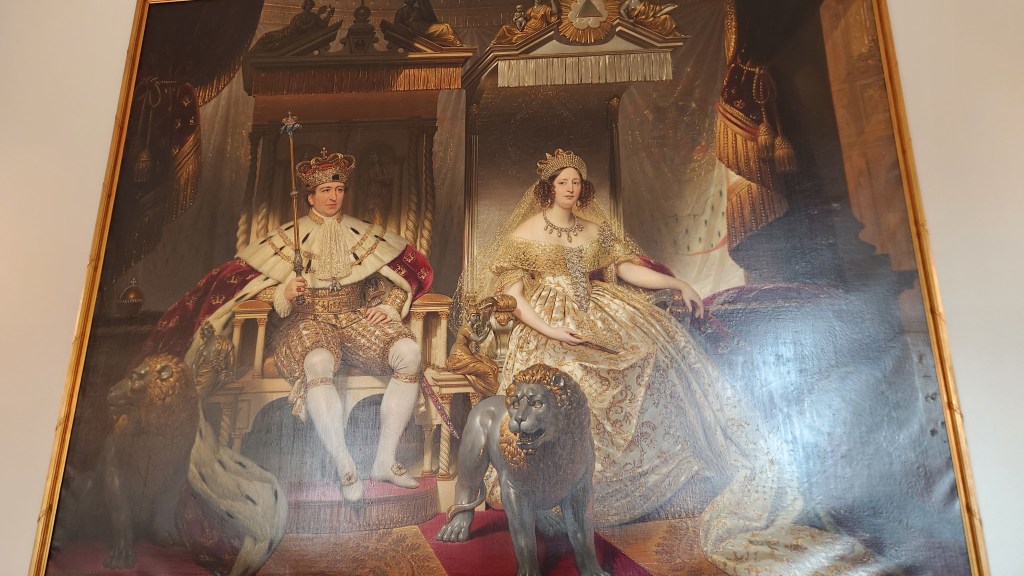
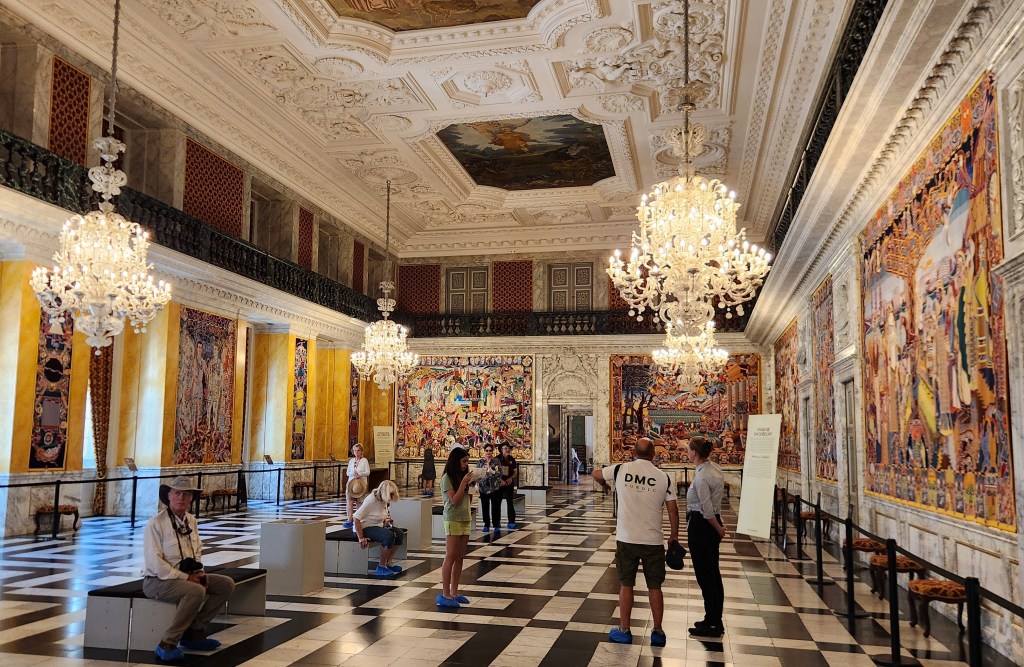
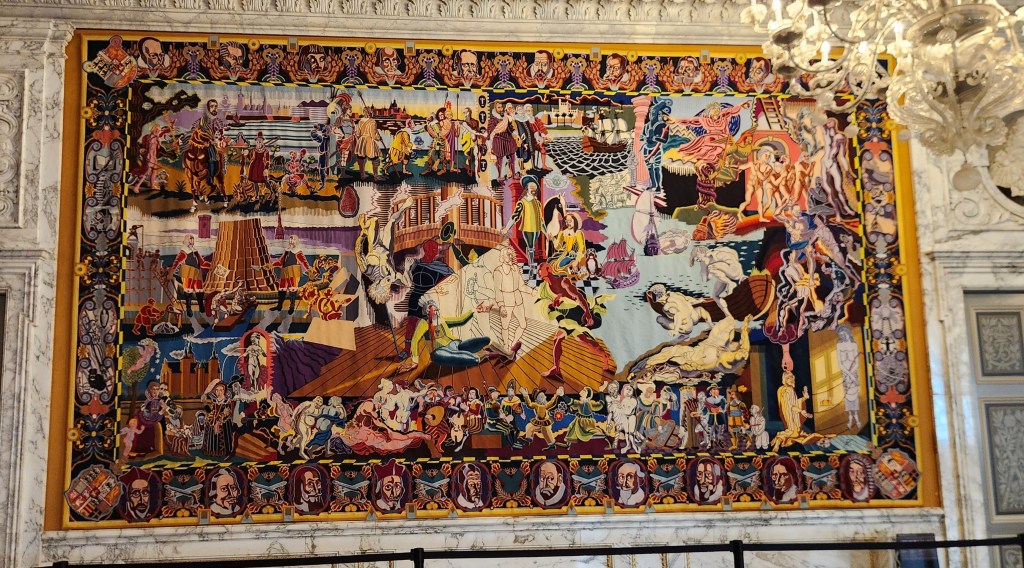
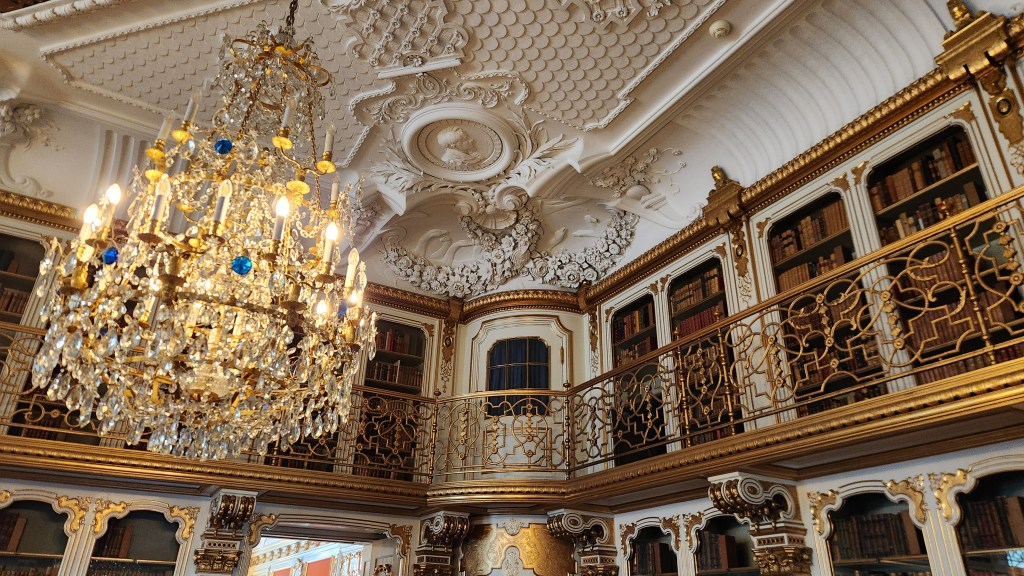
At the Christiansborg palace, we donned special booties to protect the impressive wood flooring before passing through dozens of magnificent rooms used for grand state dinners hosted by the King and Queen, including an entire room filled with tapestries that tell more than 1,000 years of royal history.
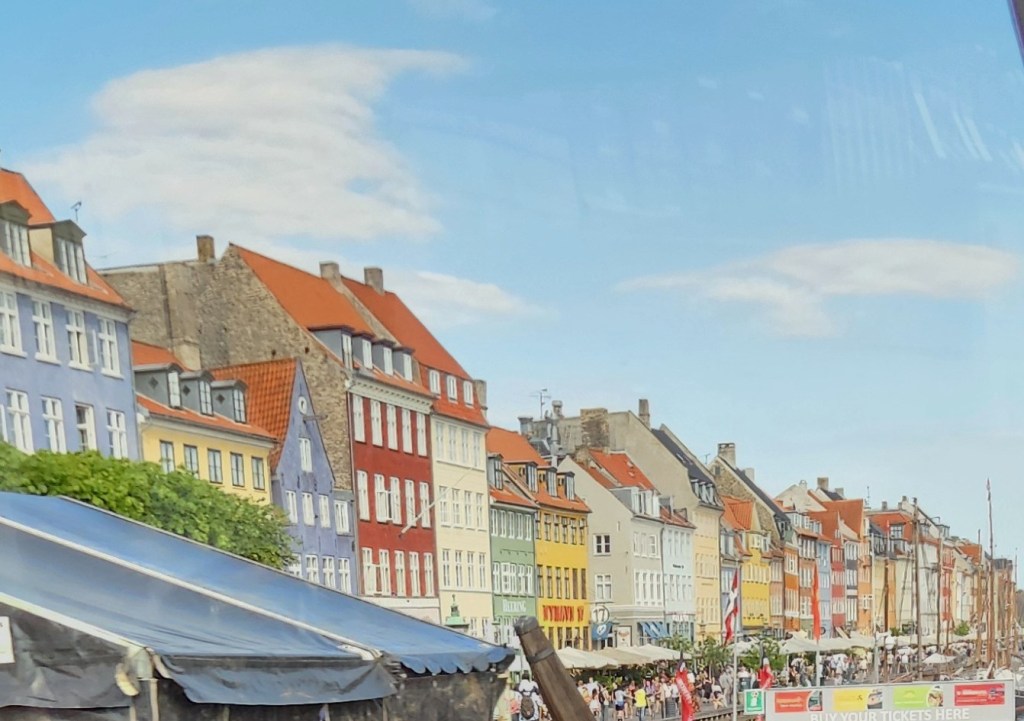
Finally, on our way back to the ship before setting sail for Germany, I took this photo of the colorful 17th and 18th-century townhouses lining the Nyhavn waterfront:
Warnemunde and Berlin, Germany (Thursday, June 25, 2026): The ship docked in the Warnemunde harbor at 6 AM, and after breakfast we left for an all-day visit to Berlin, Germany’s capital city. After a short walk to the nearby railroad station, we boarded a train that took us to the center of Berlin. I didn’t get any pictures of the Warnemunde harbor, and the ones I took from the train on the way to Berlin and back are uselessly blurry, so the description below is focused solely on Berlin.
The first part of the tour was a motorcoach and walking tour during which we saw many reminders of the legacy of the Berlin Wall. I didn’t get many useful pictures due to the heavy traffic and preponderance of construction cranes, but I can tell you that the city was bustling with activity.
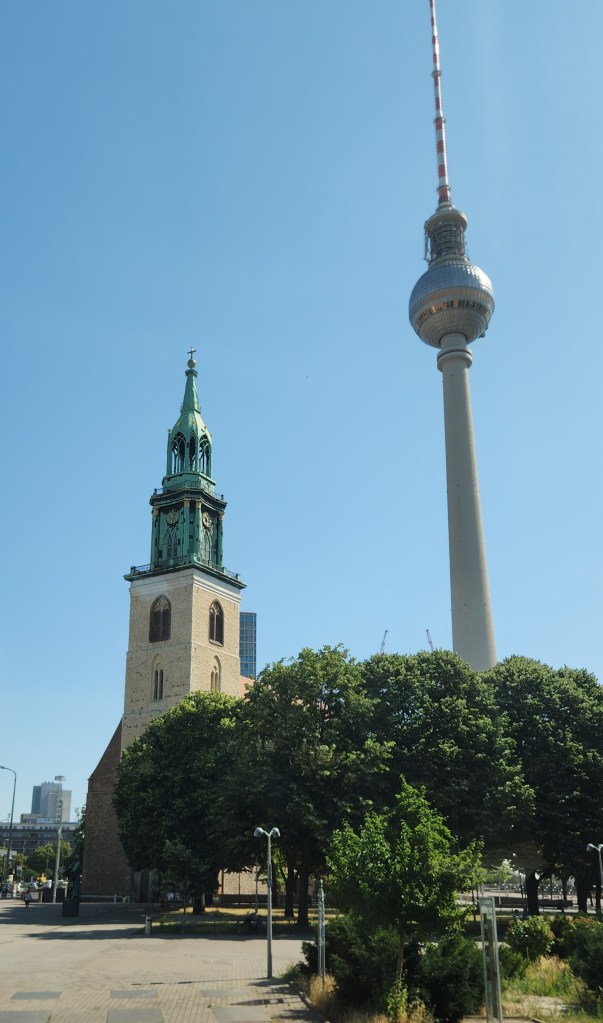
Here’s a picture taken in the Alexanderplatz, a large public square and transport hub in the central Mitte district of Berlin (formerly in East Berlin), showing the 1100-ft tall Berlin TV Tower, built in the 1960s, and St. Mary’s Church (Marienkirche), one of the oldest churches in Berlin.
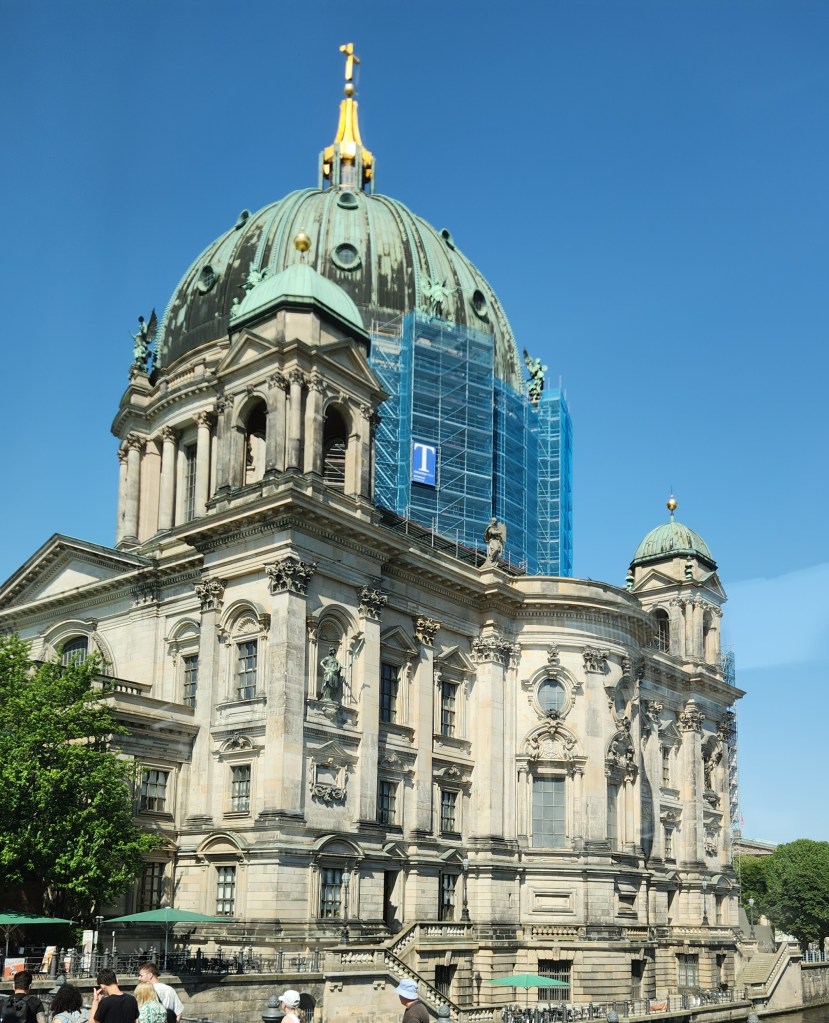
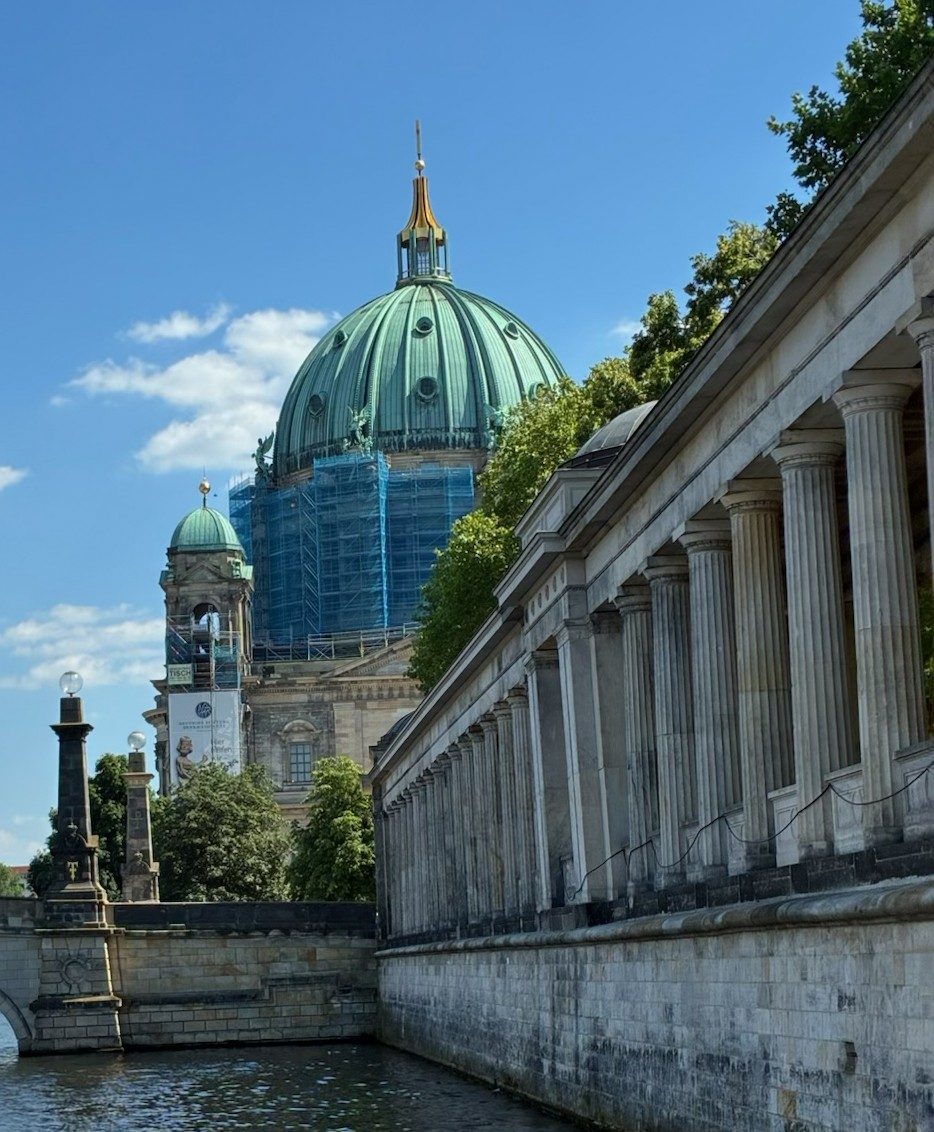
Here is the Berlin Cathedral (Berliner Dom) completed in 1905, the largest Protestant church in the country and known for its massive 320-ft dome. The cathedral is located on Museum Island, a UNESCO World Heritage site.
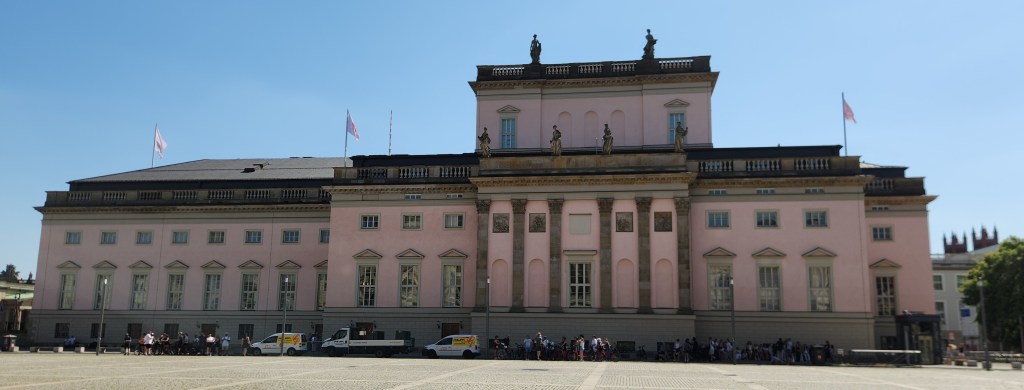
This is the Berlin State Opera (Staatsoper Unter den Linden), a historic opera house located on the Unter den Linden boulevard. Originally built in the 18th century by order of Frederick the Great, it is considered the oldest state opera in the world. The building was reconstructed in 1951 and 1955 after it was heavily damaged during World War II.
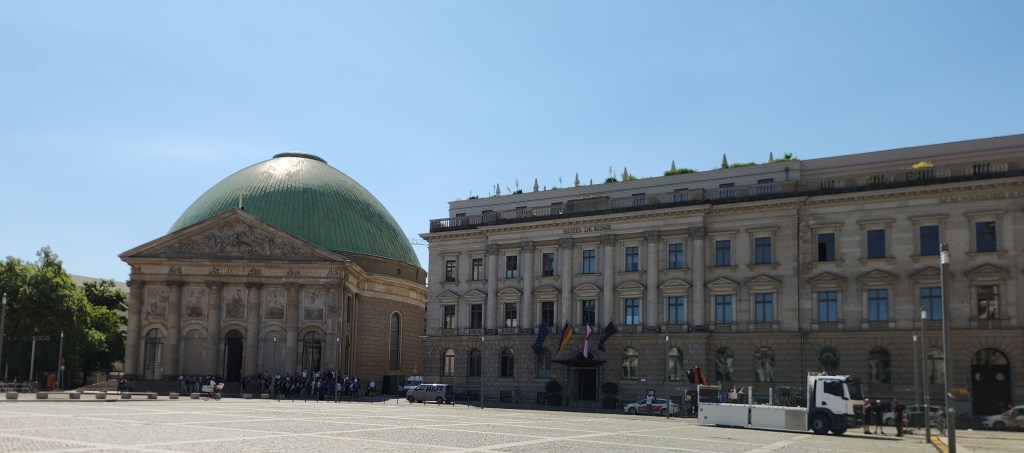
The photo below shows St. Hedwig’s Cathedral with its prominent green dome and the Hotel de Rome, formerly a bank headquarters, located directly on the Bebelplatz square.
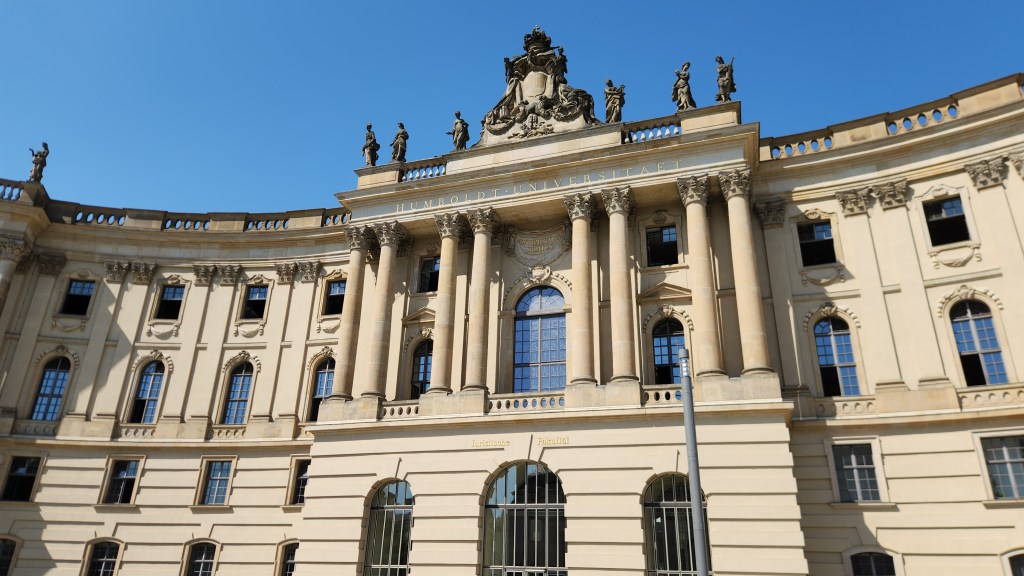
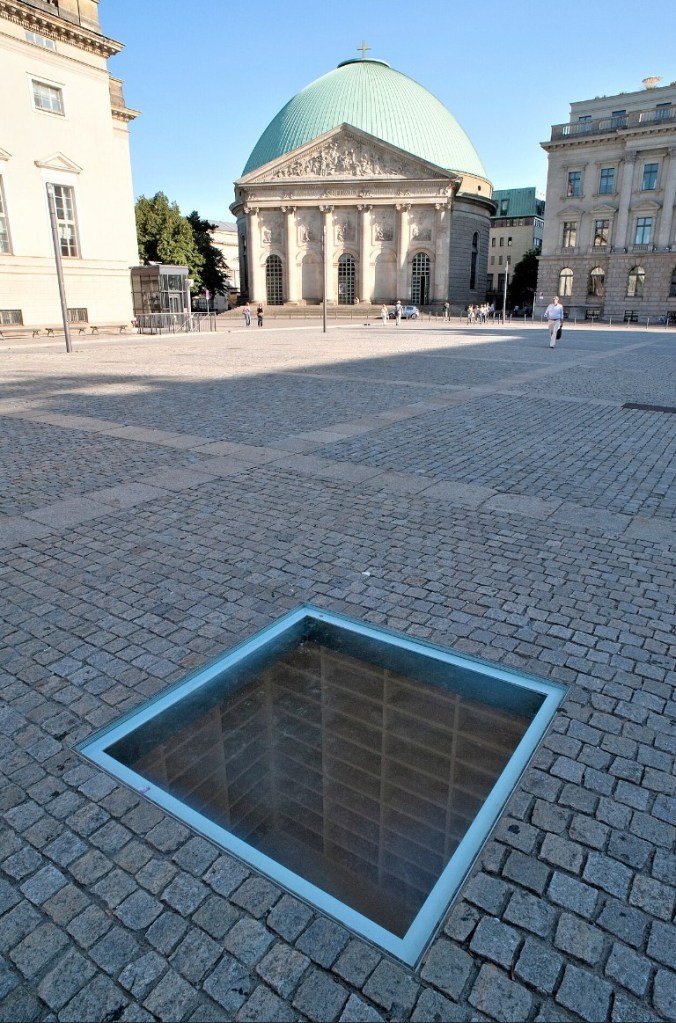
Next is the Old Library building in Berlin, also on the Bebelplatz square, which currently serves as the Faculty of Law for the Humboldt University. Humboldt University was established in 1809 and is recognized as one of Berlin’s oldest universities. It is historically renowned for its contributions to the natural sciences and has been associated with 55 Nobel Prize laureates. The library and the square are notable for being the site of the notorious 1933 Nazi book burning. A memorial now sits beneath the square consisting of empty bookshelves visible through a plexiglass covering to remind visitors of the vile act of the book burning. (My photos of the memorial did not turn out due to the lighting conditions, so I borrowed a photo from Wikipedia.)
Some of the most interesting sites we saw were directly related to the Berlin Wall, especially Checkpoint Charlie, the only entrance point from the American sector of West Berlin into East Berlin.
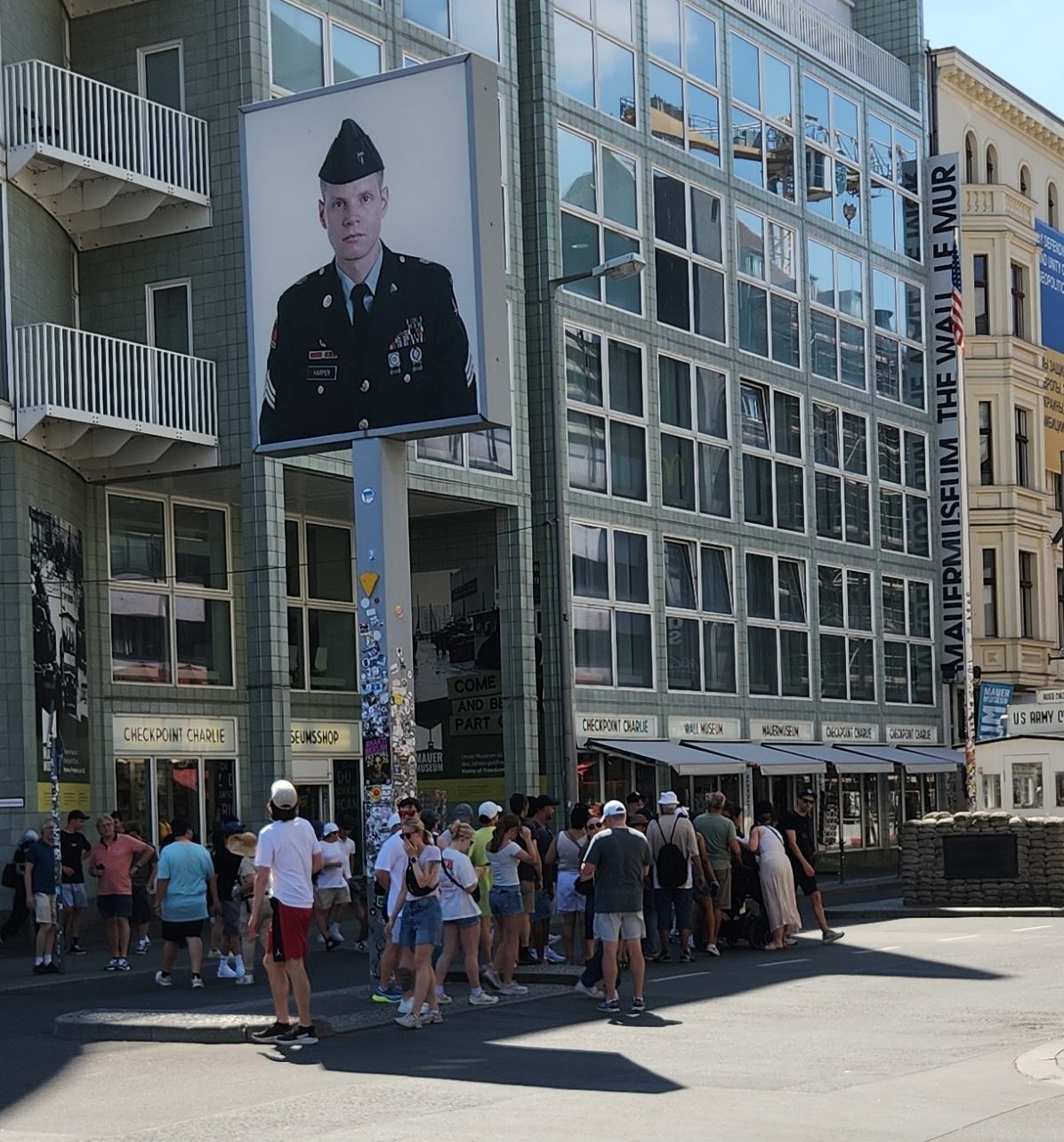
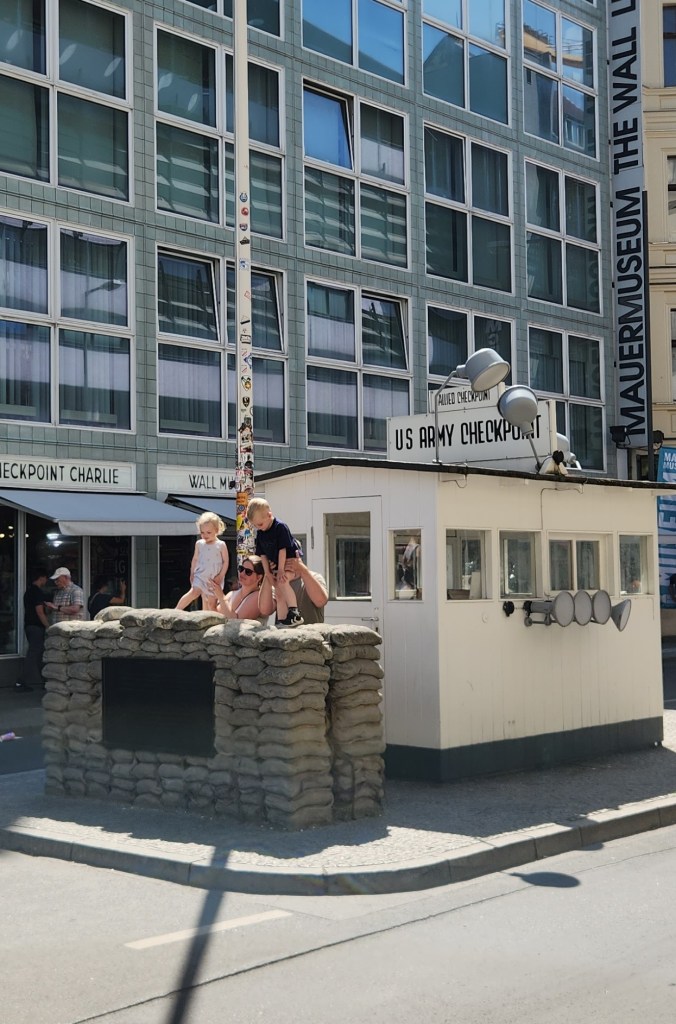
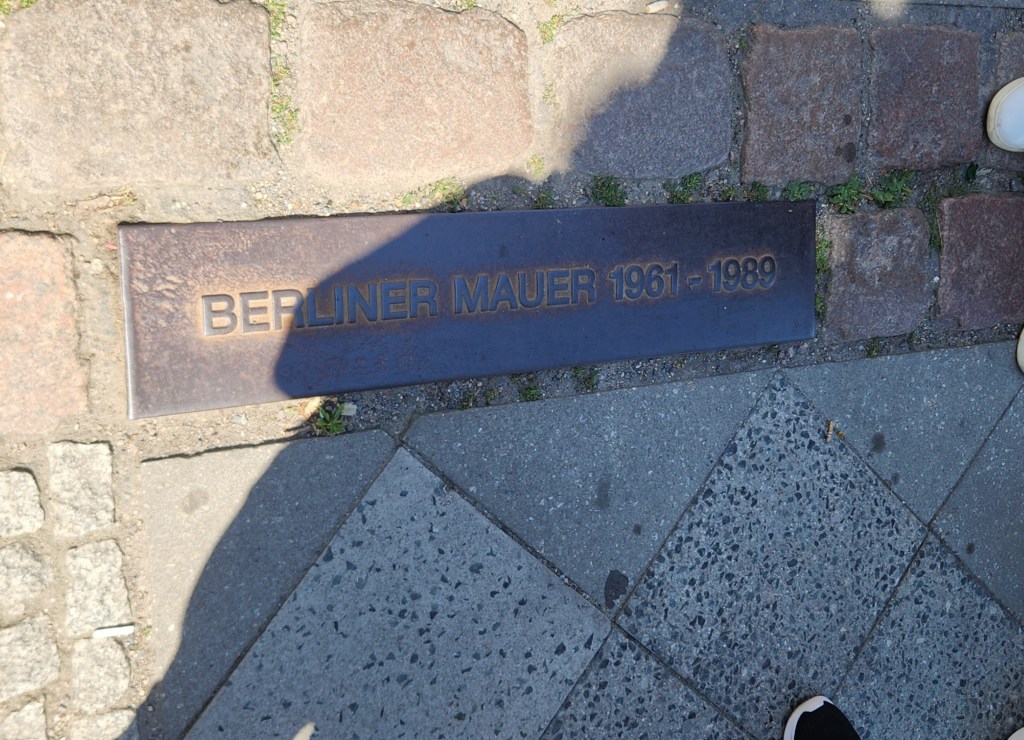
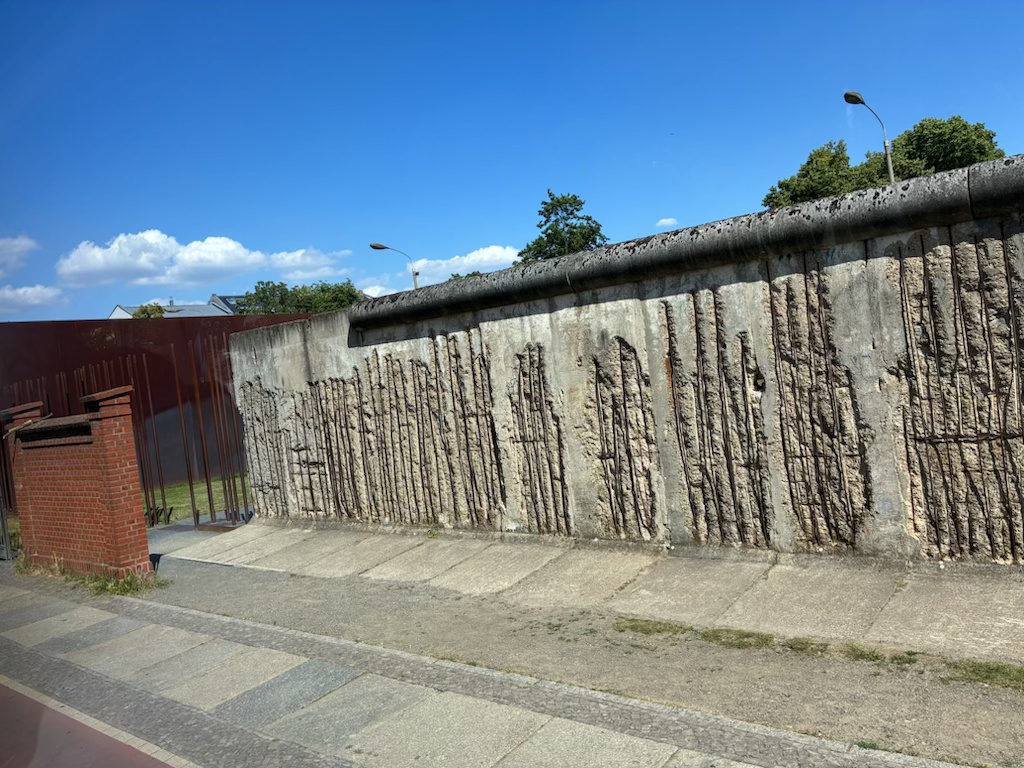
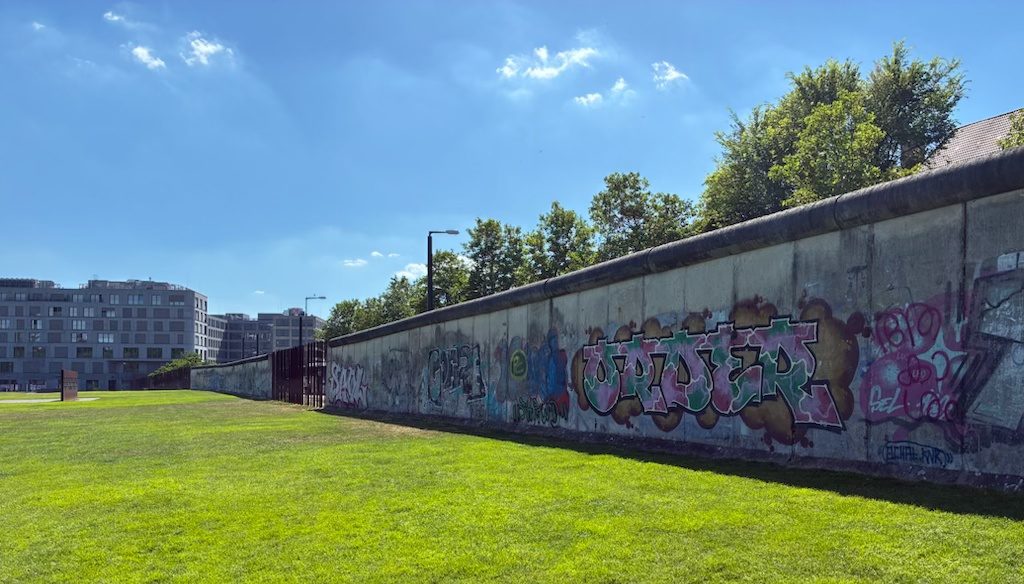
The infamous wall was torn down on November 9, 1989, following a major political blunder by an East German official who announced that citizens were free to travel to the West immediately. This historic mistake caused massive crowds to gather at the checkpoints, ultimately forcing guards to open the borders. The sudden fall of the wall that night marked the collapse of East Germany and paved the way for German reunification, which was officially finalized on October 3, 1990. Since that time, the former East Berlin has been changed by massive public works, infrastructure renewal, and social welfare integration by the German government. However, the former existence of the wall has been commemorated by various markers and lines that mark its entire length. One section of the old wall has also been preserved as part of an open-air museum.
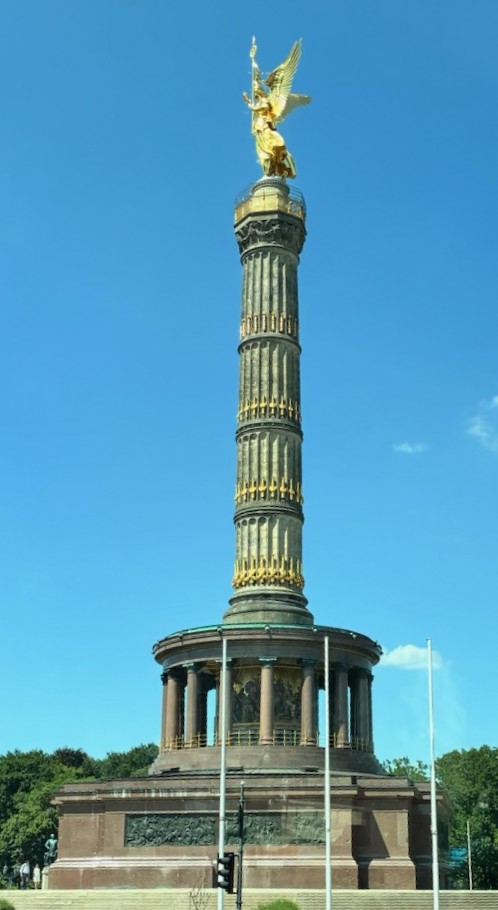
The Berlin Victory Column, featuring the golden statue of Victoria, the Roman goddess of victory, is located in the Tiergarten park. It was designed in 1864 to commemorate the Prussian victory over Denmark. Berliners often call the winged statue Goldelse, which translates to “Golden Lizzy.” The entire structure stands approximately 220 feet tall.
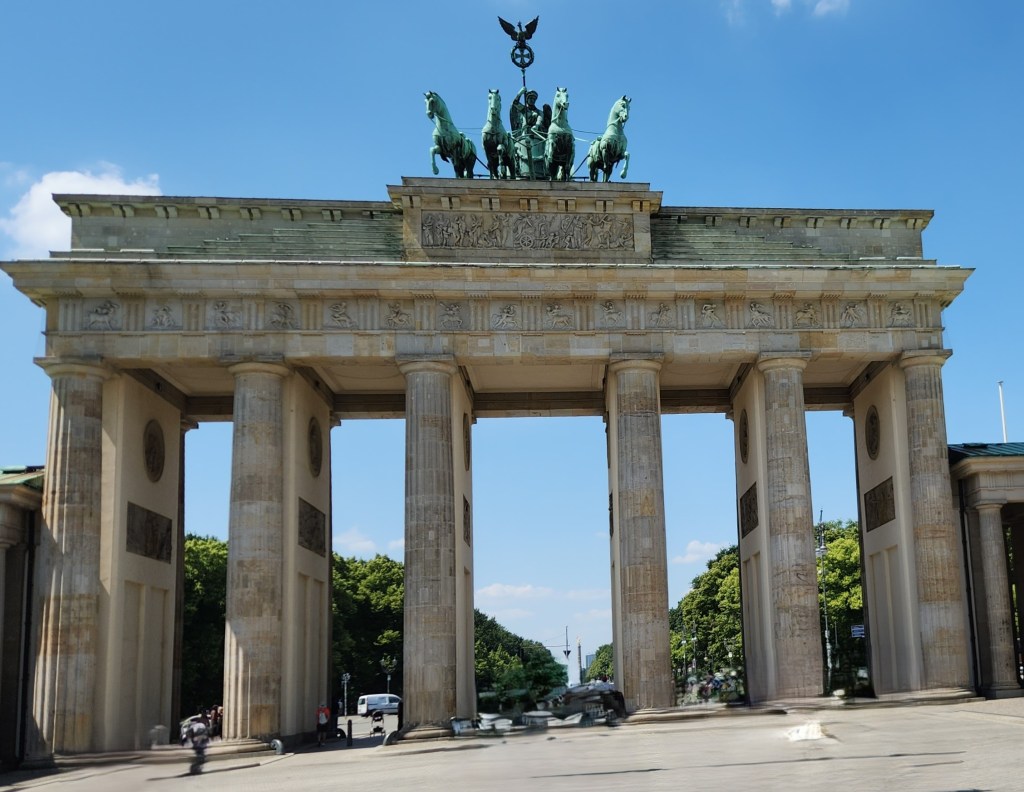
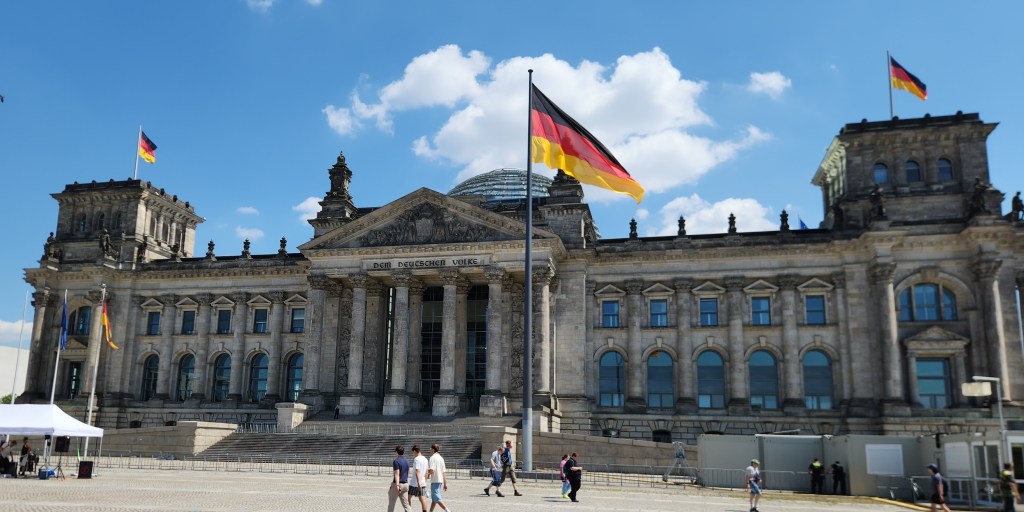
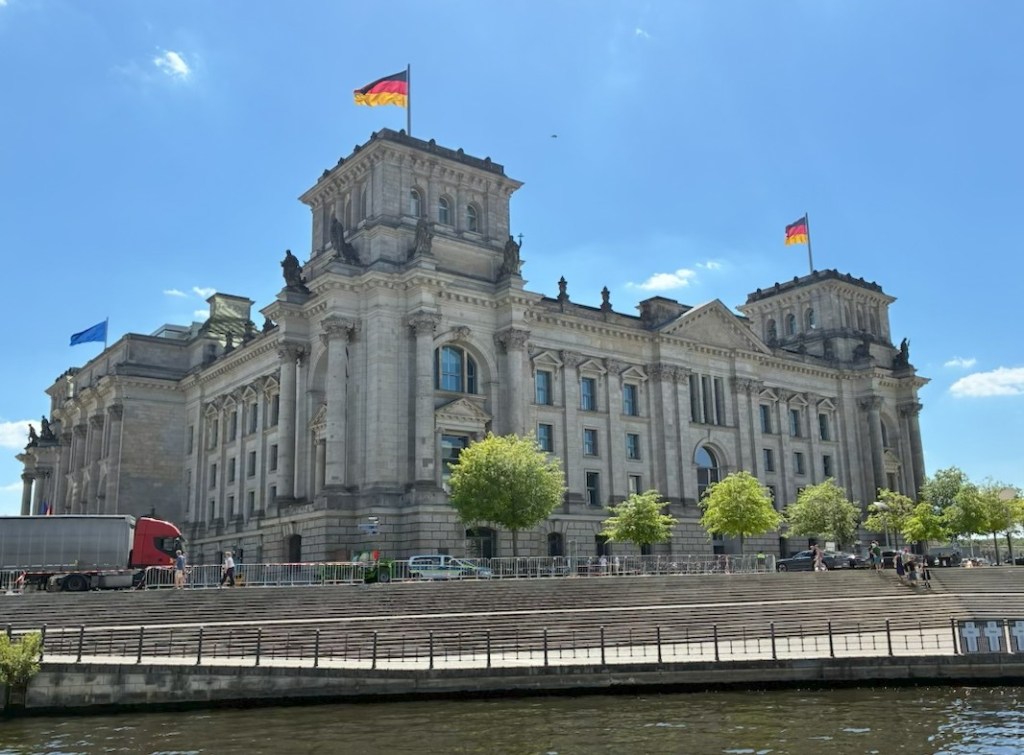
Another iconic site we visited is the Brandenburg Gate, a major site for major historical events. It was built from 1788 to 1791 by orders of King Frederick William II of Prussia. After World War II and during the Cold War, the Berlin Wall obstructed the gateway, and thus was a marker of the city’s division. Since German reunification in 1990, it has been considered not only a symbol of the tumultuous histories of Germany and Europe, but also of European unity and peace. Between the Brandenburg Gate and the Tiergarten stands the Reichstag. The Neo-Renaissance building was completed in 1894 and served as the seat of the German parliament until 1933 when the Nazis set fire to it and blamed the communists as a ruse for Hitler’s rise to power. The unused building was further damaged during World War II and became a museum during East German rule. After reunification, it was restored as the seat of parliament and has since become one of Berlin’s most prominent tourist attractions, drawing hundreds of thousands of visitors each year.
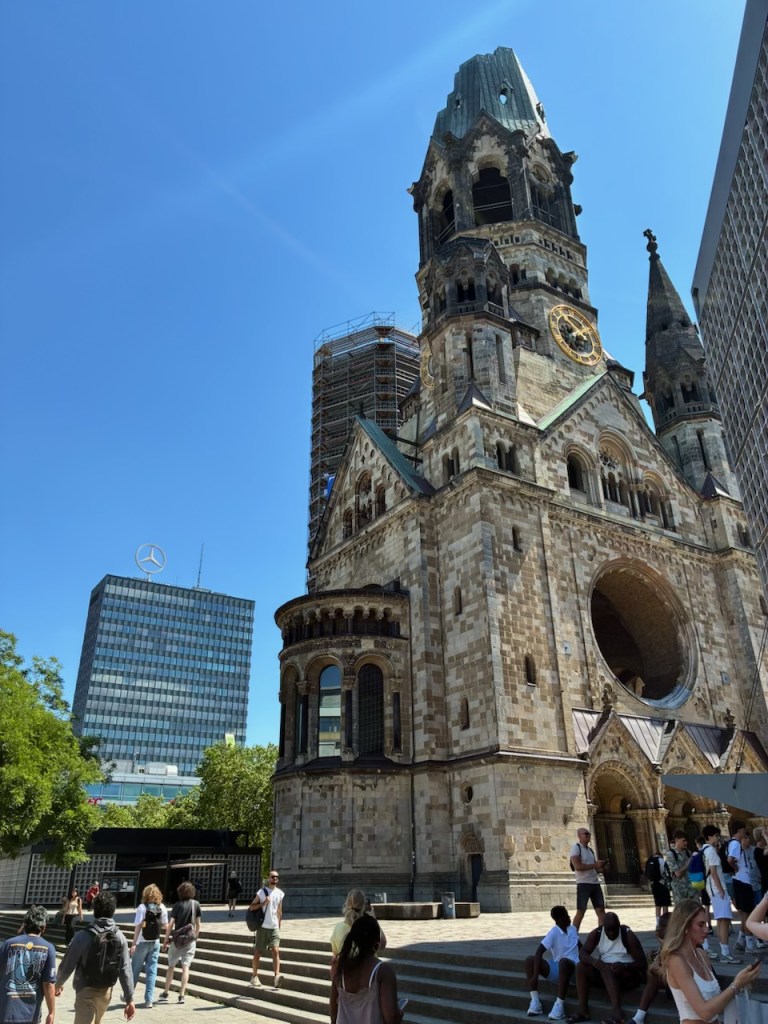
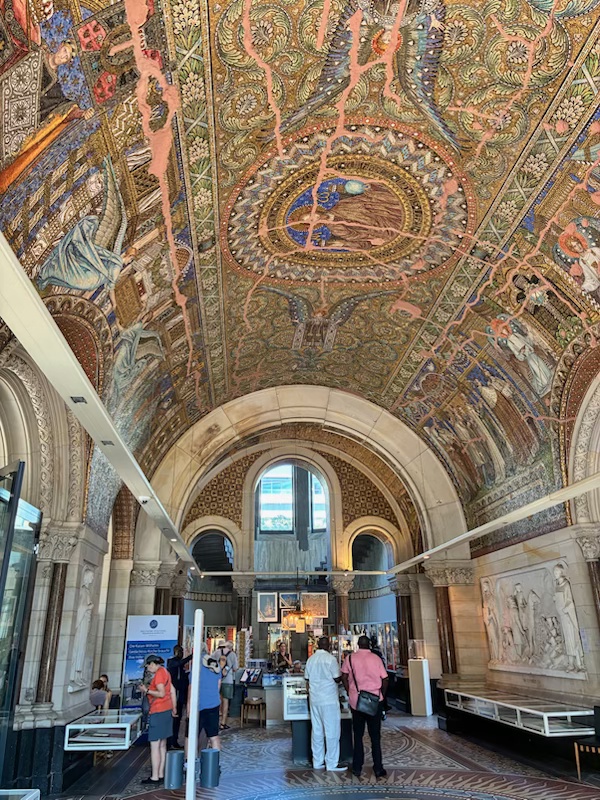
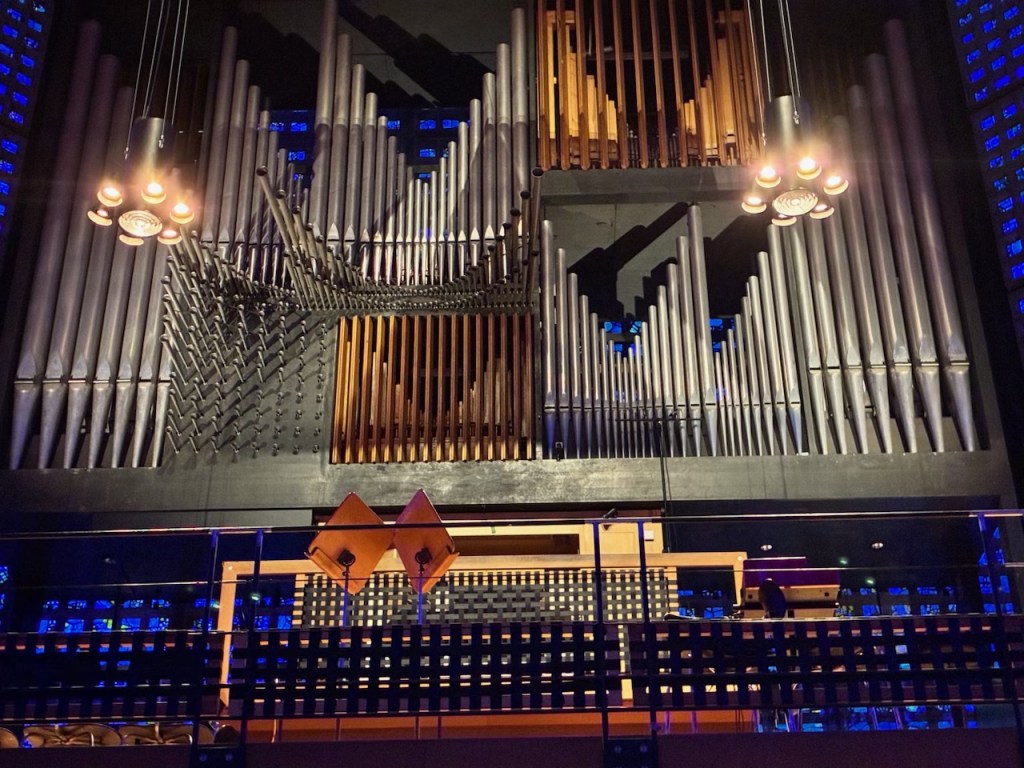
The tour included lunch at a Berlin restaurant followed by some free time, during which we visited the Kaiser Wilhelm Memorial Church, which features a striking ruined spire preserved from a 1943 bombing raid and never repaired so the world would never forget. The original Neo-Romantic style church was constructed between 1891 and 1895. A modern church, completed in 1961, stands beside the historical remains.
The last part of the tour was a cruise along the Spree River, drifting past the Berlin Cathedral, Museum Island, the Reichstag and the striking architecture of the new government quarter. It was interesting to observe many of these sights from the different perspective of the river.
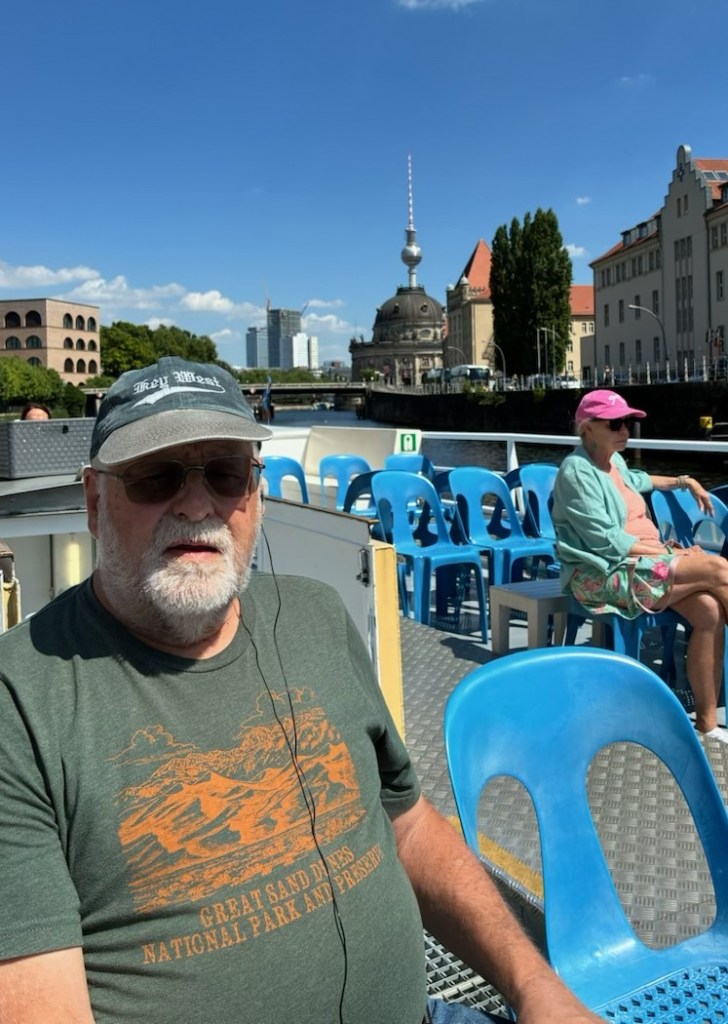
After the river cruise, we took the train back to our ship anchored in Warnemunde harbor. I’ll add a couple of final notes from the Berlin tour before moving on to our next destination.
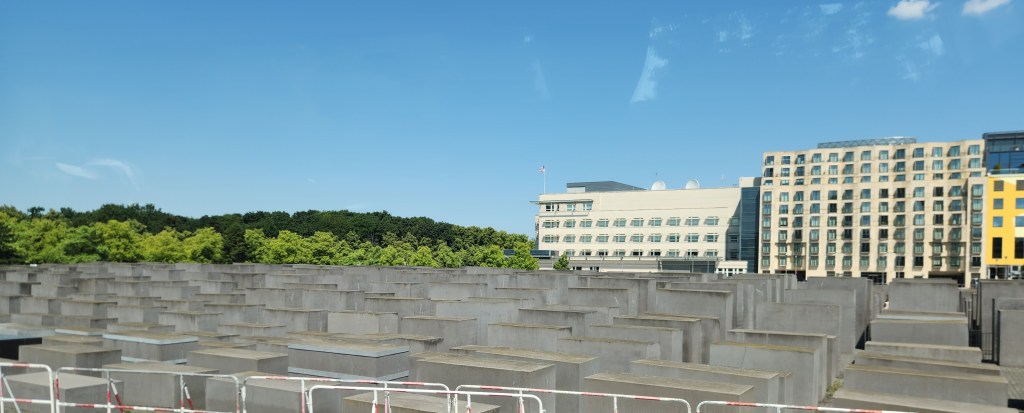
Perhaps the most sobering site we saw in Berlin was the Memorial to the Murdered Jews of Europe, designed by architect Peter Eisenman. It covers 4.7 acres and features 2,711 concrete slabs called stelae arranged in a grid pattern. The memorial was inaugurated in 2005, 60 years after the end of World War II in Europe. An attached underground “Place of Information” holds the names of approximately 3 million Jewish Holocaust victims.
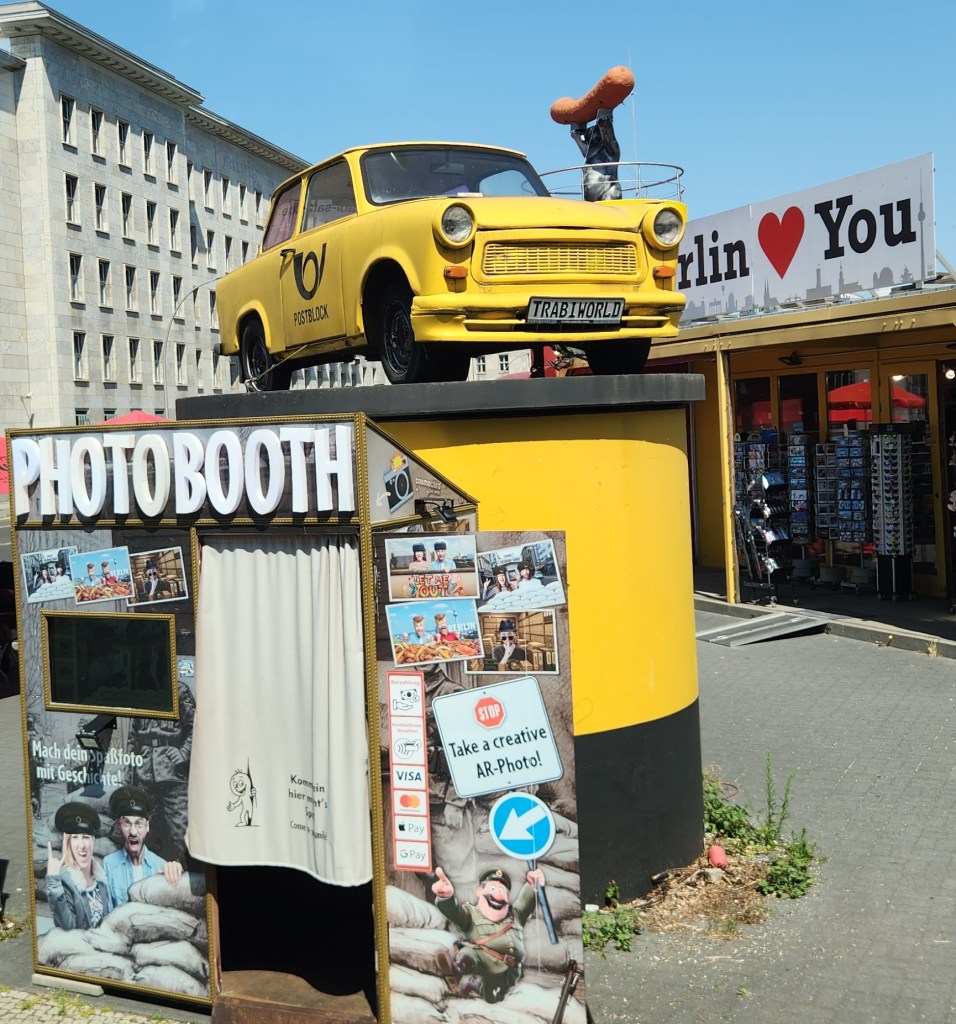
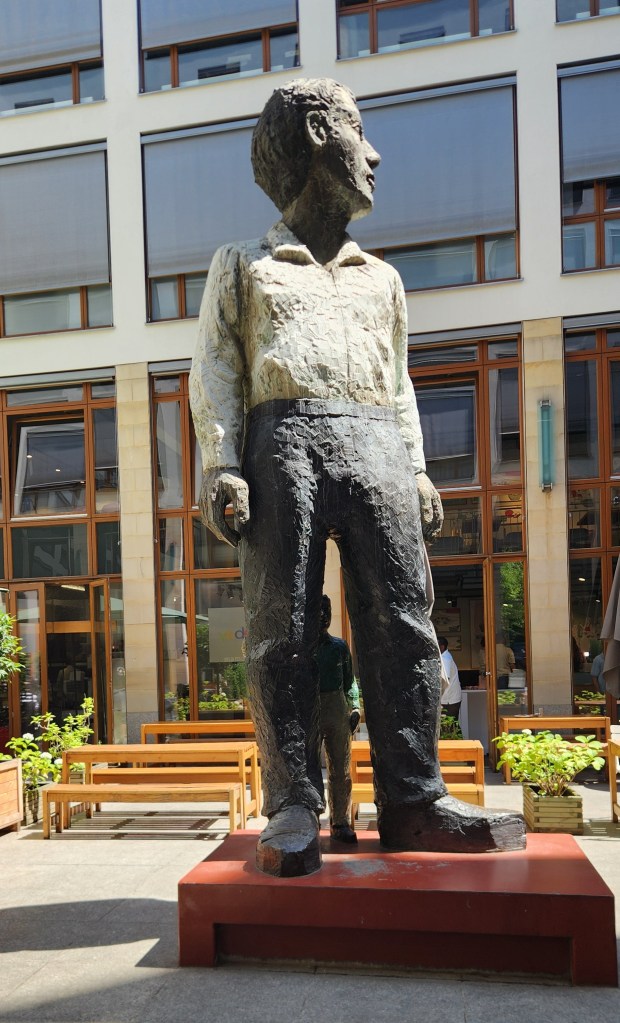
We also saw some more whimsical sites during our visit, including “TrabiWorld,” which commemorates the iconic yellow East German Trabant car and offers tourists the opportunity to drive one, and an interesting statue entitled “Big Man with Little Man.”
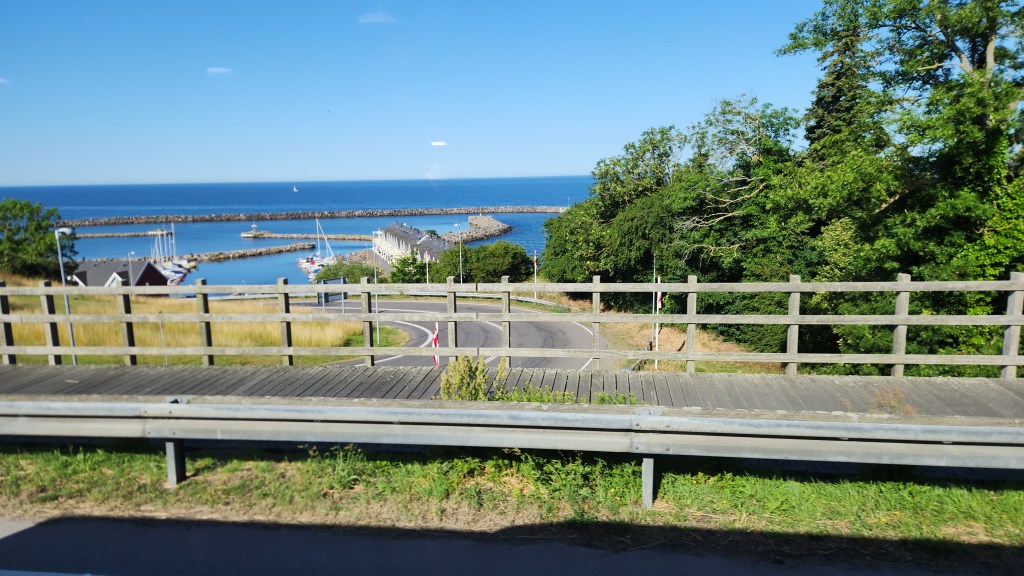
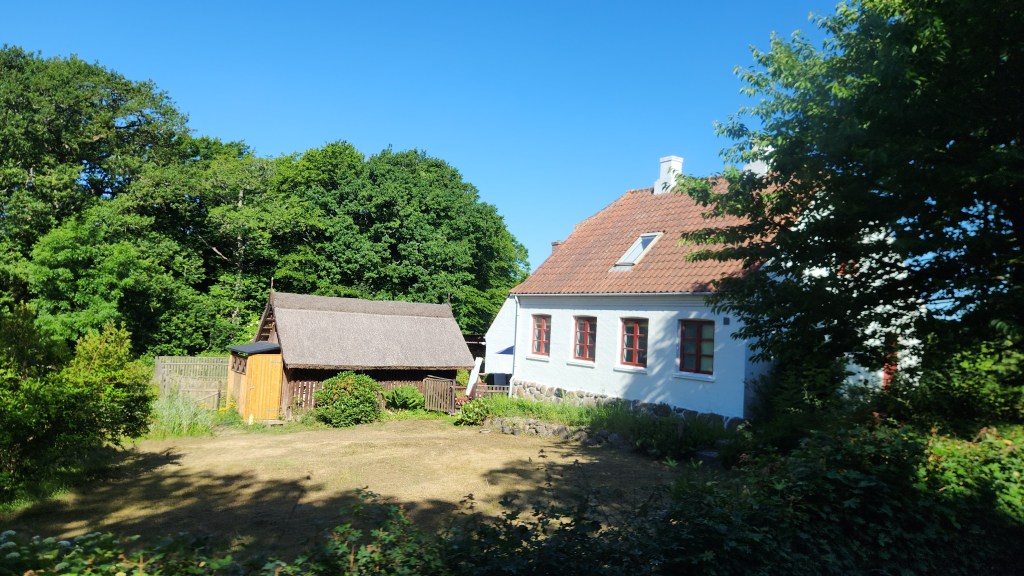
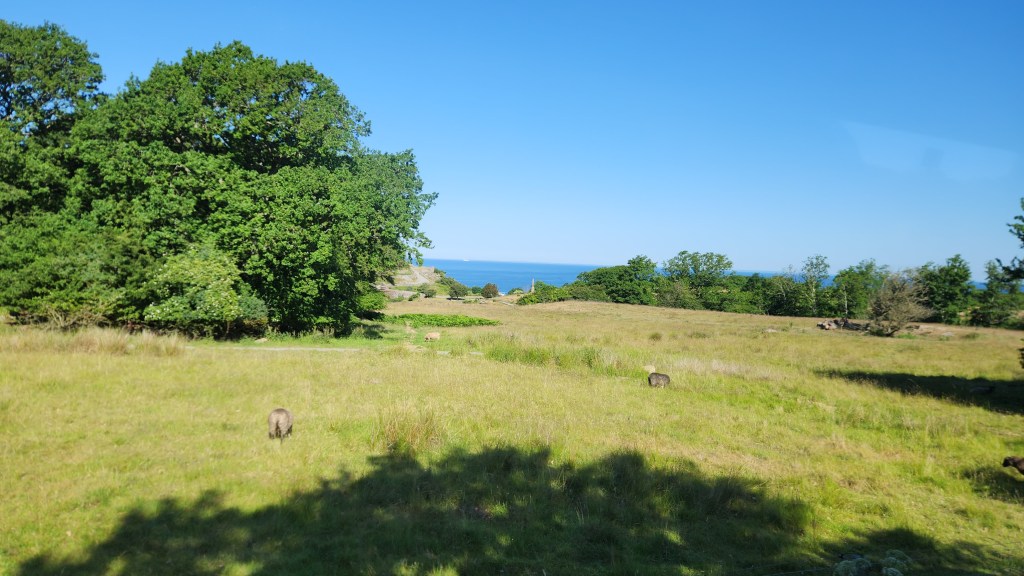
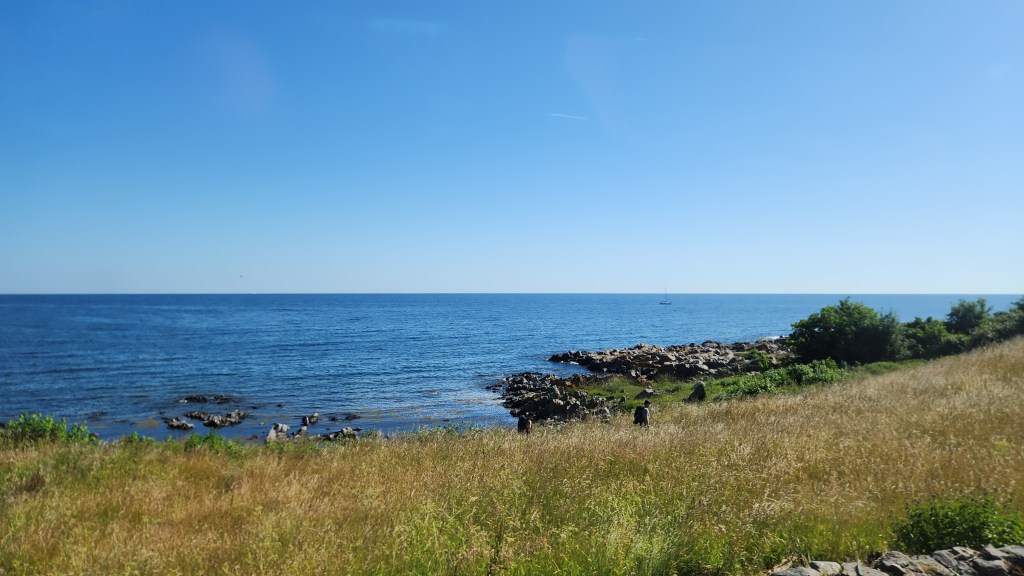
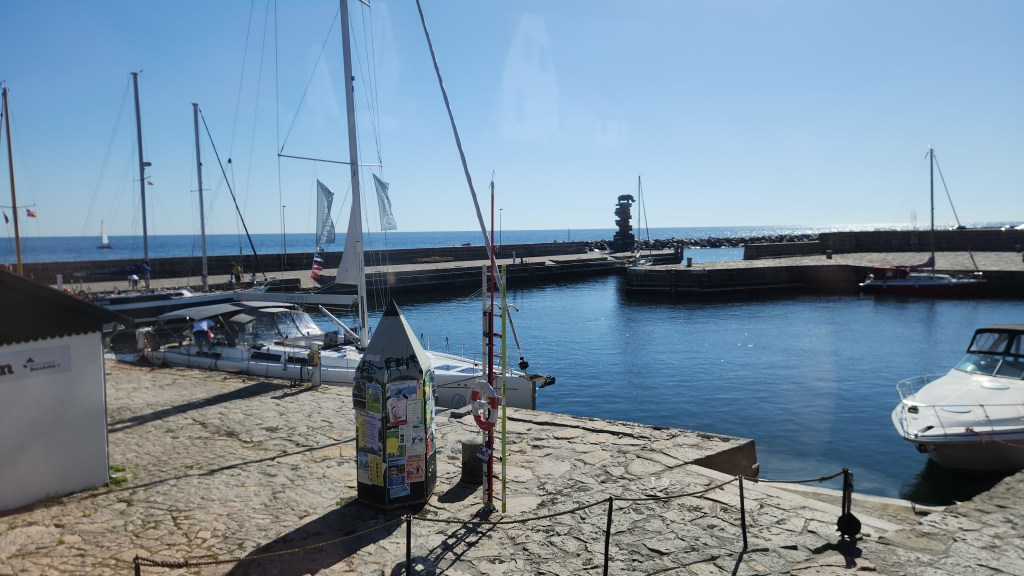
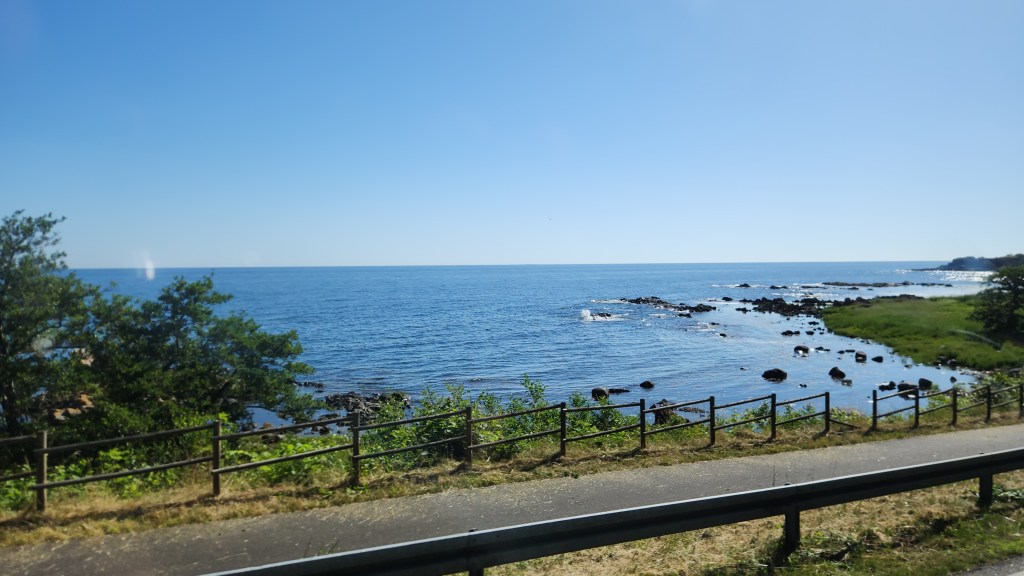
Bornholm, Denmark (Friday, June 26, 2026): Our ship docked in a lovely harbor on this Danish island in the town of Rønne at 8 AM. Our activity for the day was a motorcoach tour of the island where we observed the natural beauty and charming villages of the island. Bornholm is nicknamed Solskinsøen (Sunshine Island) and Klippeøen (Rock Island) for its weather and geology, respectively. The tour began as we passed through the lush green fields of the western coast and passed by Hammershus, the largest castle ruins in Northern Europe.
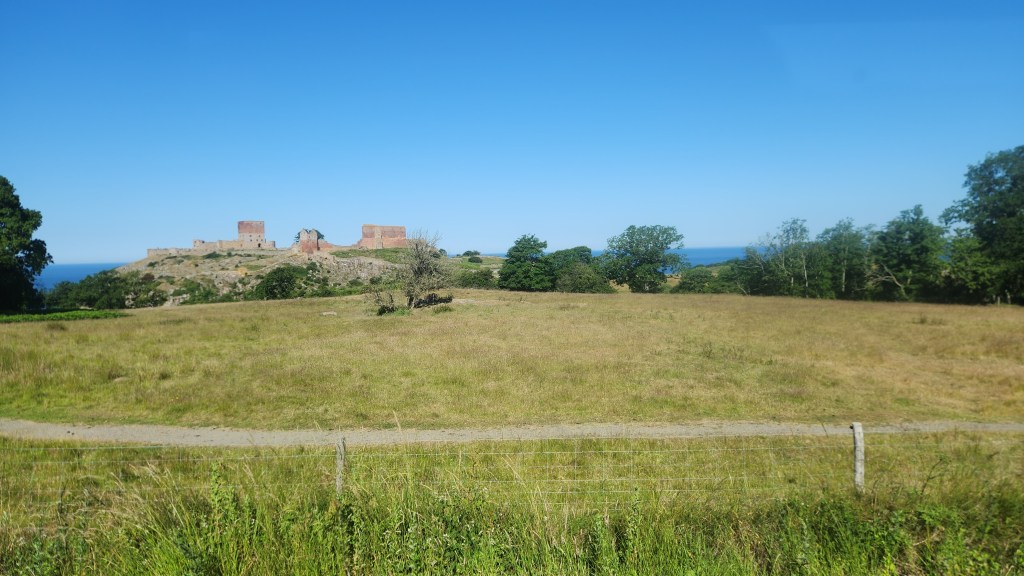
Hammershus dates back to the 13th century and is traditionally linked to the Archbishop of Lund, Jakob Erlandsen. The castle became a focal point in power struggles between the church and the Danish crown. After the destruction of Lilleborg in 1259, Hammershus rose in importance and became a key seat of authority on Bornholm. In 1522, the castle and the island were pledged to the Hanseatic city of Lübeck as debt security. During that period the fortress saw its last major expansion. Behind the strong ramparts were living quarters as well as a prison, chapel, kitchen, granaries, stables and even a brewery. One remarkable engineering feature is the system of two freshwater reservoirs built high above sea level. As artillery developed in the 17th century, the fortress gradually lost its military value and began to decay. In 1822, the ruins were declared a national monument, starting a long process of protection and conservation.
After the fortress, we continued along the island’s rugged northern side and passed through several small villages.
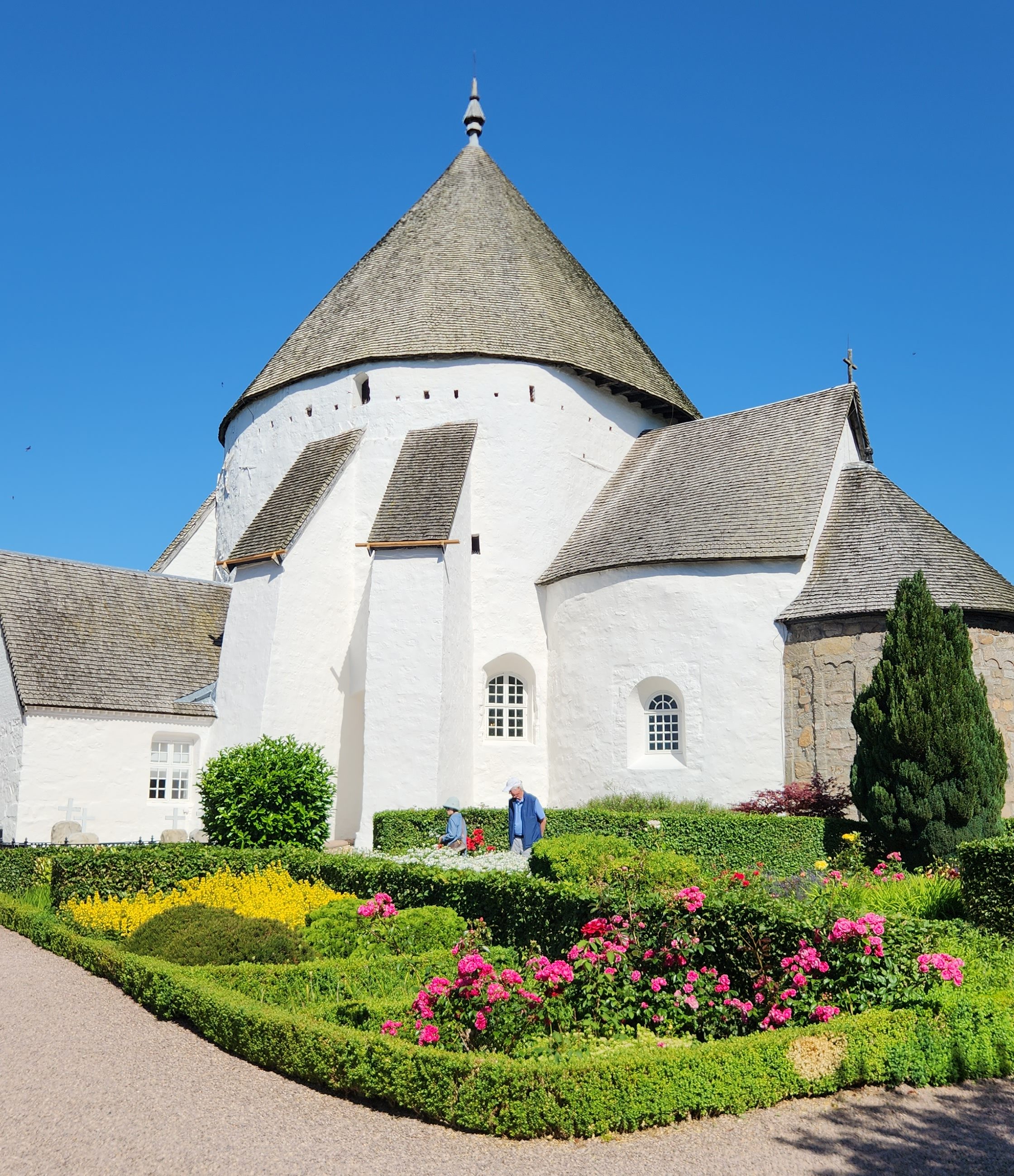
We then left the coastal road and visited one of the four round churches that can be found on Bornholm. These peculiar buildings were not just churches but also served as fortresses during times of conflict. The one we visited is the Østerlars Church, the largest and oldest of the four, constructed around 1160. The unique white, conical-roofed structure was historically designed with defensive features, including a top story used as a shooting gallery.
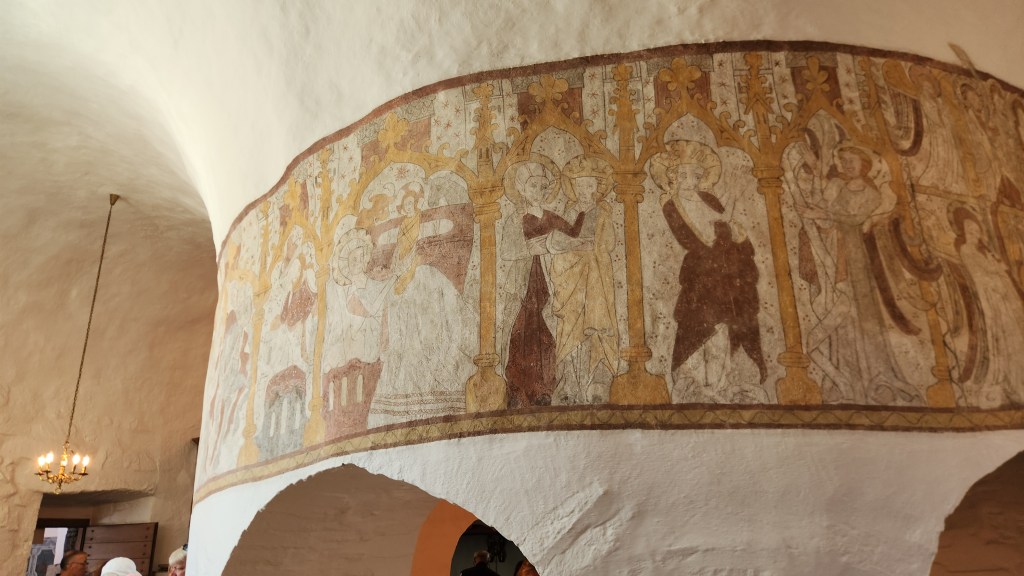
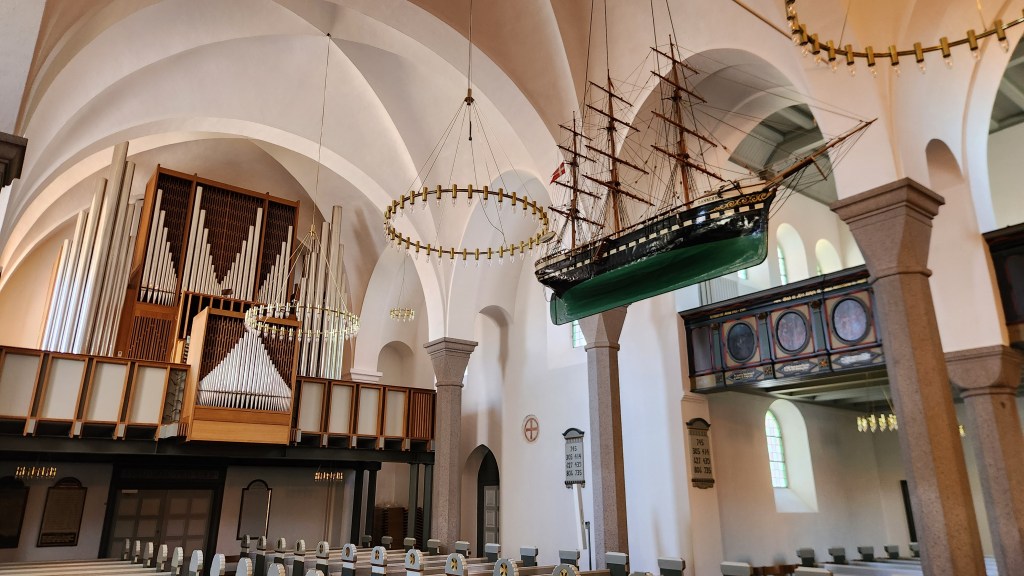
After the church visit, we traveled through the island’s interior back to the ship, then took a stroll through Rønne, where we visited St. Nicolai Church, which was originally built in the 1300s but has subsequently undergone additions and renovations over time. A distinctive feature is the ship model hanging from the ceiling, reflecting a long-standing maritime tradition in Baltic churches.
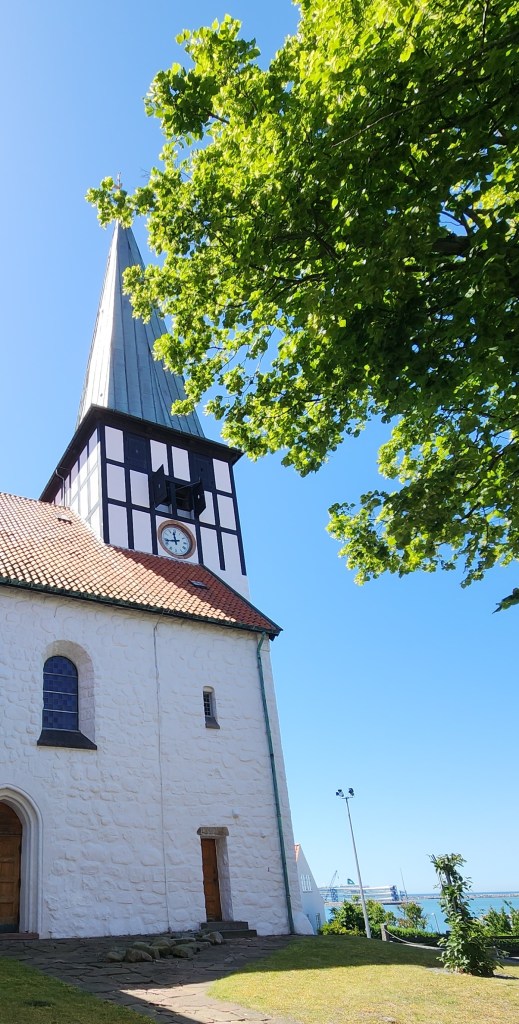
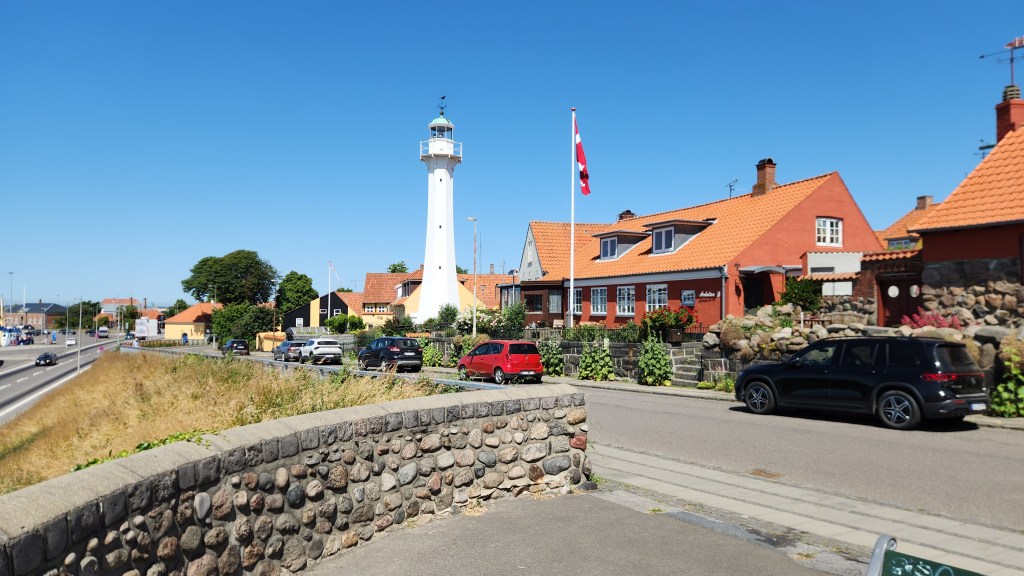
I took the following pictures as we strolled back to the ship in time for our late afternoon departure from Bornholm.
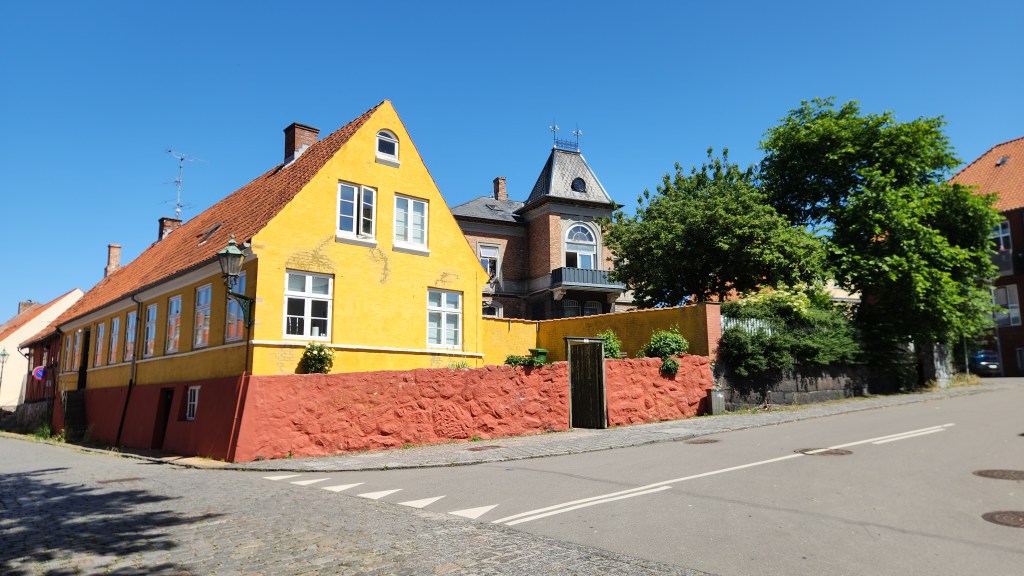
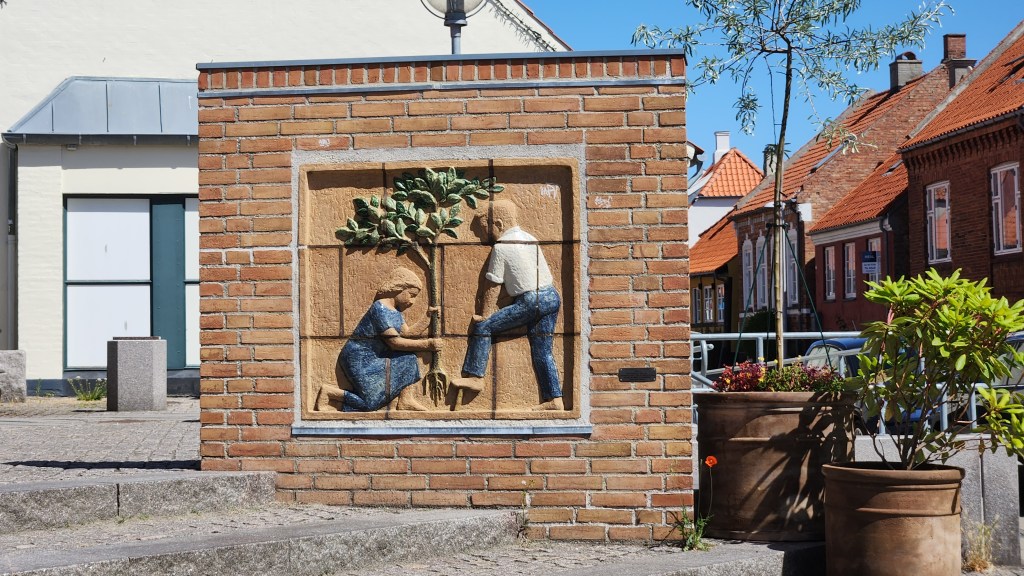
As we sailed eastward on into the evening, I caught this nice shot of the setting sun.
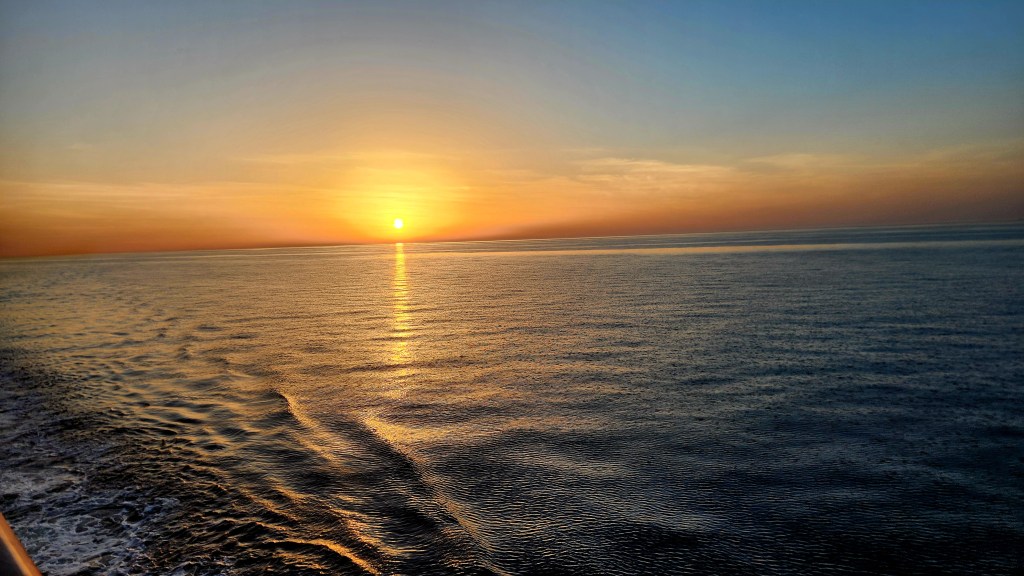
And with that parting shot, let’s end this installment. When Part 4 appears on the website, we’ll find ourselves in Poland.
Stay tuned …

